← The Investor With Joel Palathinkal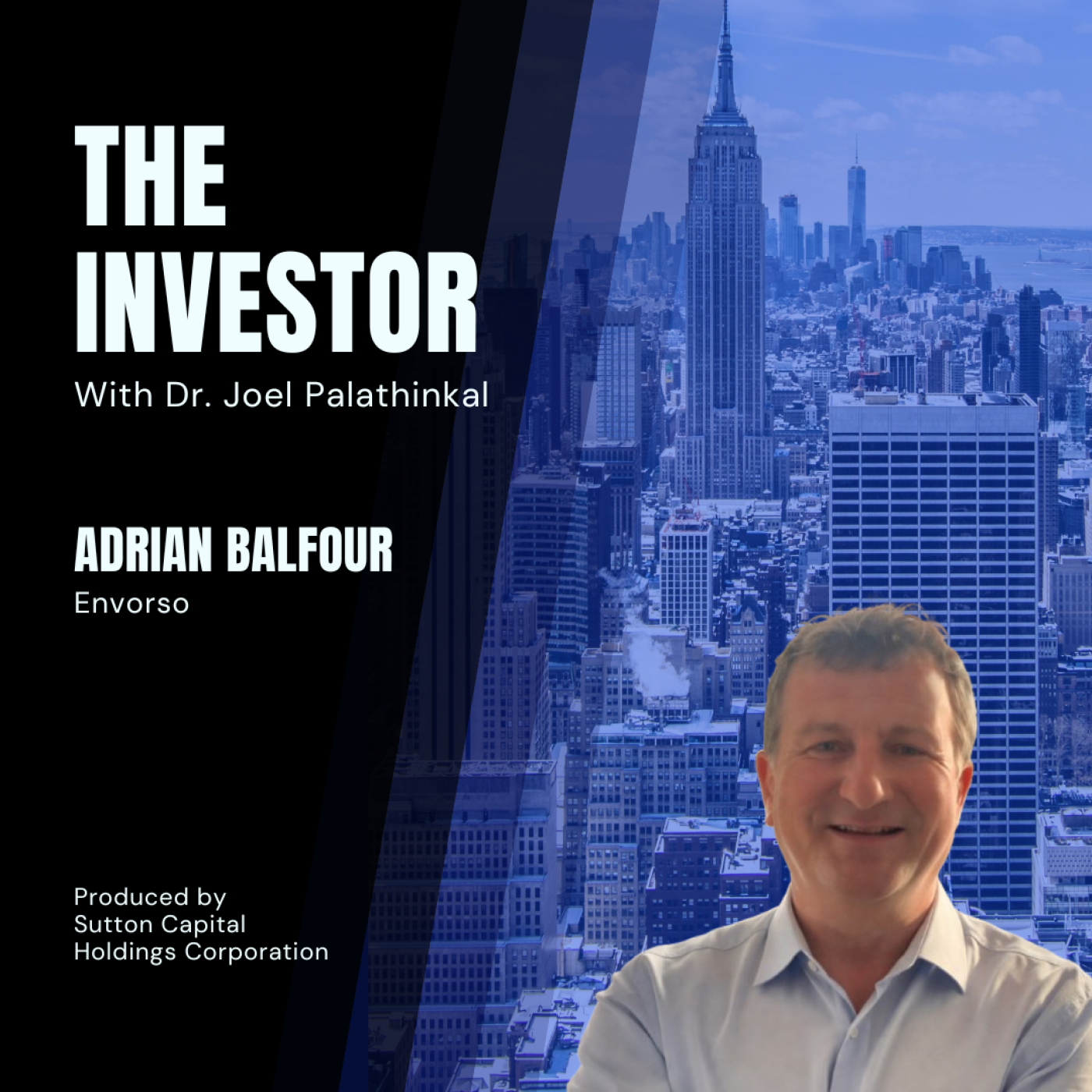
The Investor With Joel Palathinkal
Adrian Balfour: Founder and Chairman at Envorso, Empwr.AI,
00:45:37
Loading summary
Transcript119 lines
- [00:03]
A
Welcome to the Investor, a podcast where I, Joel Palo Thinkle, your host, dives deep into the minds of the world's most influential institutional investors. In each episode we sit down with an investor to hear about their journeys and how global markets are driving capital allocation. So join us on this journey as we explore these insights. All right, so really excited for my guest today. I've got Adrian Balfour on the line. He's a experienced investor, have invest, has invested in, you know, some really well known companies. Also has been an experienced entrepreneur, serial entrepreneur, technology leader. He's best known as a founder and chairman of Envor so, a Seattle based consulting firm specializing in transformation AI software driven innovation. And since 2016 he's guided in Borso in partnering with major clients. I think that's going to be really interesting to talk about the scaling phase of working with the likes of Ariens, Cosworth, Cummins Bose, BMW, Microsoft, and really focusing on enhancing the efficiency to drive growth through advanced technology. Previously, Adrian Co founded PCubed, which is a global project management consultancy that grew to 1,000 consultants under his leadership. He served as CEO for nearly two decades before selling the firm in 2013. And earlier roles included work as an electronic engineer at Francis Telecom Research center and as a systems specialist at Ford Motor Company in London. Beyond tech, Balfour has played a pivotal role in the US professional rugby industry. In 2017, co founded major League Rugby and launched the Seattle Sea Wolves who won consecutive championships in 2018 and 2019. And his leadership has just really helped build a strong rugby community in the Pacific Northwest. He's also been an active investor, has backed more than a dozen companies focused on AI including Empower AI. He also operates regenerative sheep farms in Pennsylvania. So that's pretty interesting. And in Ireland producing sustainable wool products. That's really interesting. And it seems like that's some of the merch. It's for the Sea Wolves as well. It makes sense because you got to stay warm and why not do it with, with wool. And he's originally from County Fermana in Northern Ireland. So I was in Northern Ireland, Kel. I forgot the name of the, the, the, the town that we were in. But it, it'll come to me in a second. But anyways, just have a fond memory of being in Northern Ireland.
- [02:51]
B
It's a fun place. A little, a little rainy, Joel, you know, but it's a fun place to be.
- [02:55]
A
It was rainy when I was there so yeah, I, I, I can relate. But now it's, now it's bugging me. What, what the City is. I'll bring it up during the episode. But anyways, you know, in 2020, expanded in Borso's presence and is really opening, you know, professional services center in Belfast. So excited to kind of go really deep on the ecosystem tech venture, where AI is headed. You know, we just talked about, you know, some of the headlines we're seeing today. But Adrian, tell me a little more about who Adrian is. You know, where did you start? You know, where did, what did you study? What did you think you wanted to become in your career? And how has that changed?
- [03:34]
B
Yeah, I mean, life is not a straight line. So initially I studied electronic engineering in Sheffield in England, and then in France at Ecole Superior Ingenier, which is in Caen in Normandy, and then did my master's, you know, in Belfast, etc. Wanted to become a, a, a design engineer for Intel. That was my original goal. I wanted to do chip fabrication, get involved in that whole thing, intel. If you were back in the sort of late 80s, early 90s, that was the technology at the time. Those things were going crazy. They were powering the PC revolution. So I wanted to get involved in that. I ended up working on cryptography over in France for a couple of years and basically sort of think about it in these sort of terms. Sort of like, you know, security, cyber security work. Yeah. Back in the day, some of the early stage public key encryption systems, you know, all that sort of stuff.
- [04:34]
A
Yeah.
- [04:34]
B
And then I got poached to go work for Ford in Germany working on automation of production lines. So I worked in a system called inline vehicle sequencing, which essentially, basically takes the download from the mainframe. So consumers go to a car company, they buy cars on a Sunday night that's uploaded, or it used to be uploaded to the mainframe. Sunday night, Monday morning, the plant has to be ready to build stuff. So you take the download over the weekend, you, you basically categorize that into batches and you send it down the various production lines for engines and for cars basically, and then marry up. They have to marry up together and the robots all have to be, you know, working on the configuration that's coming down the production line at the time. You know, multiple products come down a single production line. So I built the automation for that in Germany for a bit, joined over to the world headquarters or to the European headquarters in London, and then resigned and set up P Cubed. I was about 27 when I did that. Didn't really know much about business, but I figured how difficult could it be? Yeah, I just built a Global scheduling system for production lines for a major manufacturer. So I figured how difficult could running a company be?
- [05:58]
A
Sure.
- [05:59]
B
Yeah, yeah. Was I in for a surprise, you know. So I set it up in Detroit, moved to Detroit, set it up in Detroit and grew it in the first year to about six people.
- [06:09]
A
Why'd you choose Detroit? Was it just automatically oh, automotive.
- [06:14]
B
Yeah, yeah. I mean I knew the automotive industry. I'd been there for like three or four years. I knew the manufacturing side and then I knew some of the issues from product development into manufacturing. Right. So if you like, for example, There was a 2 liter dual overhead cam engine that the guys were building in pd, but when you tried to manufacture it, you couldn't actually attach the oil filter. You know, simple stuff, you know. So I kind of got into sort of like managing complex projects from that perspective. Founded PQube, which was as a complex program management company, solving those sort of problems and then know, within sort of like by the time I was like 30, 31 years old, I had 150 people working for me. So the company kind of scaled. We branched out to 17 offices in four continents. Basically cash flow from operations. So we took no investor capital at all. It was all cash flow from operations and I didn't have any money to put into it. So literally it was, you know, send your billing out on a Friday, get the payment two weeks later and then pay payroll. It was literally that sort of like dynamic and then just growing and scaling the company across four continents. And I believe now the company is about 5,000 people in total. I exited in 2013 and then used some of that capital to deploy. I was very interested in the new sort of like web 2.0 and also you know, looking at sort of like computer learning back in the day and edge computing. And so I basically took those funds and did some angel investing and early stage investing. Became a limited partner with a couple of different VC firms. Some of them that you'll know in Seattle and in San Francisco and was involved in due diligence exercises. My investing style was very much as an operator. Yeah. So I didn't do, you know, a lot of guys would do 20 or 30 investments, you know, the 50 day to 100k style, you know, put I was more of a sort of like put in, you know, six figure sum and then get involved on how to help the operations guys. Because I actually know having grown a company from scratch, you know, from one person band, I know some of the challenges that people face. Yeah. So I wanted to help others set Their companies up.
- [08:43]
A
Absolutely.
- [08:44]
B
You know, whether it was supply chain work, whether it was marketing work, sales, you know, people culture, that sort of stuff, you know, So a couple of.
- [08:53]
A
Things I want to unpack. So what advice would you have from the investor standpoint along with being a founder in terms of kind of navigating that exit? Figuring out when is a good time to figure out it makes sense to kind of have this exit event. And obviously, you know, there's so many different flavors of an exit. It could be an aqua hire, it could be a blend of shares and cash. And I always, you know, note this reference to everybody. I have a mentor named Mark Ackler, pretty, pretty well known VC in Chicago, but he wrote a book called Exit. Right. And it really just has a lot of wisdom in there. I think he wrote it with, I think it's, I think his past book was with Brad Feld. But, but there was just a lot of nuggets in there in terms of just what you need to think about, you know, even if you have like an earn out, you know, what do you need to think about in that situation? So would love to hear any advice or especially learnings that you're allowed to share with, you know, your exit. And it seems like you had some liquidity because you're able to reallocate some of that. But yeah, anything you're allowed to share about that would be great.
- [10:00]
B
Yeah, no, I mean, I didn't come from much. You know, I didn't have a lot of money to start with. So, you know, being able to do a couple of exits along the way has certainly promoted my liquidity. And then being able to do smart investing kind of helps you accelerate on from there. There's, there's two sides of it. There's the actual physical transaction itself and what that and the mechanics of that and what the implications are for the entrepreneur coming from an entrepreneurial side and then also like, when is the right time? Okay. So as an entrepreneur, you're naturally curious, you're naturally optimistic, so you always think you can continue to grow. And the very moment that you don't grow, it's too late. So if you go through a recession like we did in 2008, all sorts of things will come at you. In the 2008 recession, we got audited by the IRS and by different states because in 2009 our revenue was lower than our revenue was in 2008. But governments, the governments will audit you because, because they want their money.
- [11:06]
A
Yeah, they want, they want the, the healthy tax payments that they're getting.
- [11:09]
B
Yeah. So, so you, things like that, that you have to be aware of. If there's a recession coming, you got to remember you're getting audited, you know, that sort of thing. But if, if the revenue dips, you've then got another three to five years before you can sell. Yeah. So you got to keep that revenue chugging and turning and you gotta have healthy 25, 50% growth as a real sign. Once you get into that, it's then about when is good for you. Yeah. Most entrepreneurs ply money back into the business. So if you've been doing it for five or 10 years, it's probably time to get out. Unless you're gonna scale to a billion dollar company and you can take loans against your stock and all that sort of stuff, but if you're in there for five to years then, and you're not getting that sort of financial reward, then get out. Yeah.
- [12:00]
A
I mean a lot of VC funds will use secondaries to kind of give some liquidity to those founders that were like living on Ramen.
- [12:06]
B
Yeah.
- [12:07]
A
In the beginning and also just deliver some liquidity to their LPs. It's like look, we got some darts on the board, we got some dpi.
- [12:13]
B
Yeah.
- [12:13]
A
As a fund manager. But, but the use case also is just like it's great for the founder to finally eat because it's been like 10 years and, and a lot of times they give them the, the nominal salary because they want to like to your point, pile that back into the business. Yes.
- [12:27]
B
If you're not ipoing and you're not getting a really big acquisition, then you need to try and go out there and sell. But in the five to ten year period, that's kind of your, your sweet spot. Make sure you get your revenue well north of 25% growth per year. And then you're really taking a look at, you know, the people that tend to buy companies are people you already know. So the, the people who are your business partners, the people that are sort of like one stage removed from your business, those tend to be the best acquirers because they know you, they understand you and people buy people. Yeah. So you got to really, you know, put yourself forward as, you know, enthusiastic, bright. You're not going to run away from the business. You know, as soon as you get a check, you're going to be there to help guide and steer it. But you know, you need to, you know, take a look at your network, you know, one stage removed, two stage removed, and really go after those Particular people, brokers can help, the VC company can help, but typically it's on you to make the work happen. Everybody else will assist and provide advice, you know, from, you know, the peanut gallery, but it's on you to make that deal happen. That's the key thing. Yeah.
- [13:43]
A
One thing that I think is important also is just psychologically when an exit happens. So there's, you know, I heard this the, the founder of Tiger Global Speak, and he's shared this on several of his podcasts. But like, a lot of times his community, right. Tiger 21, it's these people that are, I think you have to be worth 10 million in liquidity to, to, to be part of that group. But a lot of those people, they, they sold their company, so they came into some massive event and they, they, they just don't know what to do with the, with the rest of their life because they're just kind of, that was kind of all they did for a living, right? That was their. Who. When you're, when you're not doing work, you're thinking about working, right? So talk to me about kind of, you know, were you immediately ready to build something again or did you take some time off or.
- [14:32]
B
I was going to retire and just be an investor. Yeah. I was going to manage investments, you know, and what I found from the investment side is a lot of guys were passive, and I was much more, if I saw a problem, I want to jump in and fix it. Right? So we had a company that was a security company that we eventually sold, but, you know, they had a very poor supply chain chain that they were, you know, they had a factory in Indonesia. Their supply chain wasn't that great. Their inventory management wasn't that great. Their warehousing was kind of crap. So getting involved in that to try and fix that was, was, you know, so it's like if you, if you see a problem, fix it. That's kind of my, my, my ethos. So I was a very bad, you know, passive investor, let's put it that way. But I got actively involved in all my investments and they all tended to, to hit. So they all were successful primary. And I'd like to think I had some, you know, I had some part in helping those guys be successful because I was able to, to roll my sleeves up and get involved. Going through that exercise, you know, I'd retired, wanted to do investment, realized I was not a good passive investor. I was more an active investor. And then, you know, it was like, you're not retired, you know, you're you're doing this. So continue to do it for the people that you like and the people that you want to help and work with. But then do your own things like set up some new companies and see where that goes. And the initial one I set up in Warso, which as you correctly stated, basically helps legacy companies, you know, adopt AI, machine learning and the new technologies and you know, typically focusing on people that manufacture stuff. So complex businesses that typically ship a particular, they ship a thing, whether it's a brick or whether it's a car, they're shipping something. And over time technology has happened to those people. Like even in Lego blocks. You're getting technology installed in Lego blocks now. So you can imagine the complexity in a car. Yeah, sure. So you know, you have to stand up software development groups within those businesses that are functional as opposed to just systems integrators. Yeah. So you have to build your own software versus you know, just hire someone to do it for you, you know, and that's a different mindset. So that was the genesis of that company. And then also I played rugby for about 16 years over the course of my life as a player and I looked at the landscape here in the US and saw that soccer was becoming a thing and I couldn't understand why no one had a go at trying to set up a professional rugby league to if soccer could do it, then the rugby guys could do it. So. Sure. So you know, that was kind of a simple no brainer type thing and we got a bunch of guys together, we set up a professional league and we've now been operating, we're going into our ninth professional season.
- [17:30]
A
Wow, that's amazing. Yeah, yeah, tell me. I guess, you know, I think it's a couple pieces of advice that I like from you. It's, it's two parts. So like from the fund manager's perspective.
- [17:45]
B
Right.
- [17:46]
A
What should they think about? So we, you know, as I mentioned earlier, we have an incubation program for, you know, emerging fund managers and you know, a lot of them are thinking through their, their fund manager strategy. So as fund managers are kind of developing their skill sets and kind of going out to build relationships with lps, what's some advice you would give to them? And then also exited entrepreneurs, family offices, allocators as they're kind of deciding between passive fund investing versus active direct investing. Any pieces of wisdom or just observations on that front as well would love both perspectives from you.
- [18:28]
B
Yeah, I think if you're looking at, from a fund manager perspective, it's like how do you get in the deal flow? So where are the deals happening? Where are the entrepreneurs coming through? And always go for the team. Yeah. Always go for something more than a PowerPoint, always. Yeah. They got to actually have proven they can deliver something and they've got relationships with clients. They don't actually have to have landed a lot of clients, but they have to be in the game with client. Sure. So I would make sure that number one, the team of guys, guys and gals that you're investing in are sharp, smart, totally motivated, will walk through walls for you. Yeah. Will walk through walls for themselves. Don't sleep. You know that, that sort of energy, high energy. They have to have a tech platform, they have to have something that has proven their capability of delivering. Too many entrepreneurs I see have got some really smart marketing type stuff. They're very articulate, but when you scratch below the surface, they've basically got some sticky tape and band aids around some public code that grabbed off GitHub or something like that. So you got to do your technical due diligence to make sure they're actually worth it. Then they've got to be able to be in the game with some customers, whether it's Microsoft or whether it's Google or whether it's Target or Ford, some brand customers that are willing to give them a shot.
- [19:59]
A
What about portfolio construction? So as fund managers are thinking about the term of their fund, the portfolio construction and their strategy, any observations you've seen recently or just comments about that?
- [20:13]
B
Yeah, I would say portfolio construction, you want to take a look at getting really good families fund. So family offices I think are coming way more important than they used to be. So make sure you get really good family offices so that your LPs are strong and not going to be flaky and give you a hard time and all that sort of stuff. So make sure number one, get your source funding right. Get your family offices because they are becoming way more influential than anyone else at this stage. Get your family offices right. And then sort of like when you construct your portfolio, take a look at the different. You got to be able a bit of a sensei looking into the future, like what does 2028 look like? And when you look at 2028, take a look at the different types and categories and invest in the categories that you're interested. Like what will be the number one thing in 2028 in each of the 10 categories you want to go after? That's the thing. And then go seek. Don't just wait for People to kind of give you stuff but then go seek actively in the deal flow the best companies that are there. I always like to do investments. Being a Seattle guy with somebody in the Bay, I typically wouldn't do an investment that was purely Seattle based. It would be Seattle plus someone in the Bay area. So you get a different perspective. And that's, that's kind of where I would go. And I think getting outside of the bubble as well, like, you know, a lot of customer, a lot of companies will say, oh, I sell to other startups. You know, I've seen that rotating debt. You know, I've played that game before. I want to have real customers that are industrials or retail or financial services. I want to have real customers that are touching. Not just. I've got six startups that have got five guys using my thing.
- [22:07]
A
They're retainer, retainer clients essentially. Right?
- [22:10]
B
Yeah, some brands in there and somebody. Yeah, people that are really know their shit and they're, they're, they're like impressed with what you have.
- [22:17]
A
Yeah, that's a good, that's a good point to bring up. So what have you learned in perfecting kind of corporate clients? I mean, because you know, you've scaled to kind of some really large corporates as clients. So like as you're kind of thinking about the next evolution of your company and that sometimes that's tied to a revenue milestone, sometimes there's private equity strings attached to that. Right. So what are some things you learned? I mean, you know, kind of, kind of building those kind of roster people on your customer list.
- [22:49]
B
I think, you know, the, the, hey, when I was 27, it was hard. Yeah. But you know, I'm in my 50s and all my friends are in their 50s. When I was 27, they were all in their 20s. So it's a hell of a lot easier today. Sure. Let me just put it that way. But it's, it's really just, you know, being resilient and going after with your, taking your product into those big companies, not being scared. They're, they're humans too. The key thing is investing the time so that you understand their problem. Right. So they're just humans trying to solve problems and get the thing done. But they work in a very large company. Their ecosystem is unique, their challenges are somewhat unique. And you got to invest the time to understand where they're coming from so that you can be valuable to them. So the sales cycle is a little longer. But pick your, pick your winners and invest the time. Make your product as relevant to those guys as possible. They get pitched a lot by a lot of people. So they're predisposed to say no. But just because they say no doesn't mean to say they won't say yes. So they're predisposed to say no. And so they will keep on saying no or they'll keep investigating your product to see if there's any hooks that turn them off, make sure you don't have any negative hooks in there, and eventually they'll get themselves to a yes.
- [24:15]
A
Yeah. I mean, to your point, a lot of these big corporate companies, I mean like Ford and gm, I mean, they've got like eight levels of leadership and approvals that probably have to even allow. Allow you to come into the office, you know.
- [24:26]
B
Oh, yeah.
- [24:28]
A
So. So I think you're, to your point, empathizing with that because that might be one of their problems. Right. They may be frustrated that they're the big conglomerate that just moves too slow versus like some of these other fast moving companies.
- [24:40]
B
You got a good point there, Joel. Like, you know, recently, you know, I'll take one of the Detroit three. Maybe the one that's, that's not as big as the other two in Detroit. Okay. They have 900 AI projects they have to review and see if they can implement across the organization. Maybe 120of those are real. Okay. So if you're coming in with a new AI product to those guys, you're 1 of 900. You got to get yourself to 1 of 120, and then you got to get yourself to 1 of 5. So that's the competitive landscape you got to do. So don't enter that game unless you're aggressive and you know how you can win. So you got to get real aggressive and you got to push through the mix that they can select you above all else. That's the important bit.
- [25:26]
A
What are your thoughts on pilots? Like to kind of get in the door and should you, you know, do you think you're devaluing yourself if you just do free pilots, or do you think sometimes free pilots helps to kind of get yourself in the door?
- [25:38]
B
I hate free pilots. Yeah, because you're not valuing yourself.
- [25:42]
A
Yeah, exactly.
- [25:44]
B
Yeah. And if you don't value yourself, how can someone else value. So I just hate. Yeah, I mean, it's, it's. You want to, you want to basically invest at the time to make sure your product is specific to those guys and that they want to do it. Pilots are a great way to move forward, but pilots are also a Good way for it to kill you.
- [26:02]
A
Yeah, yeah.
- [26:04]
B
So, you know, sometimes the best way to do it, like take a look at the way smartsheet did their, their growth. They basically had business users, you know, in the business pop up using their product and then by the time it became aware of, was pervasive. And they couldn't kill it because it was pervasive.
- [26:23]
A
Sure.
- [26:23]
B
That's the way to do it. Get a couple of managers to use your stuff, get a couple of analysts to use your stuff. Start getting it pervasive within the firm, you know, do some enterprise level functions over the top of it so that people can kind of coordinate on it and then, and then it, then you can't be killed. You're too big. You know, like in Warso we actually have a sort of, you know, a lab where we incubate companies. So like an incubator type thing, which is where the empire AI came from. So that's a, that's a product that we basically looked at and said, hey, you know, from a sort of product management, program management perspective, the future of work is going to be hybrid. Okay. So the future of work's hybrid. You're going to have bots and you're going to have humans working side by side. Is there a tool out there that kind of can coordinate both seamlessly so that the manager can get work done? Maybe he's got five employees and 10 bots. Okay, how do you manage that from a sort of project management perspective? So we created Empower AI to kind of do that function and solve that problem, which we think is a really killer 2028 scenario.
- [27:33]
A
I love that. Well, fun topic that I want to move on to is, look, I remember the town that we went to. I DM'd you. It's Kilkeel, Ireland. And then we went to, I sent you the link here. We went to this alpaca farm and we just had an amazing time with our, with our kids. And essentially, you know, their fur is pretty soft, right? So when you kind of talked about the woolery that you formed and I love like that, that's kind of a, it's essentially. So it sounds like you, I guess. Did you create a brand around that? Did you create like actual sweaters and, and swag or are you just actually the woolery that kind of processes the wool and like other, other partners like Patagonia or somebody like would, would use the wool to kind of create their sweaters? Because alpaca wool is pretty soft too.
- [28:22]
B
It's pretty soft too, yeah. So we went for merino wool. So the answer to your question is hell no. Vertical integration the whole way. So. And also, you're right. Vertical integration into rugby hats, sweaters, scarves, people love it, I love that. But we're really going for the outdoor brand of people that want to have wool next to their skin because it's hygroscopic, it's antibacterial. Okay. You know, it doesn't stink. You know, if you wear it on a hike, you know, you take it off, it's not going to stink because it's got that antimicrobial thing to it. And it's that with merino, your micron kind is sub 20, ours is about 15.7. But you're looking at something that's kind of silky in nature. I'm wearing T shirt made of wool right now, for example. Right. So you want that stuff next to your skin. So we, we basically bought a farm, bought a couple of farms in Ireland and over here in Pennsylvania, scaled up, figured out the supply chain, which is really tricky in the wool business. You know, there's really not a lot of oil in the US which kind of shocked me at the time, you know, so, you know, we decided, okay, let's go for sustainable farm practices. You know, carbon capture. You know, this is not sort of bulk feed type stuff, but really get the animals out there in the fields, make sure it's sustainable, get that going and then do the shearing. And then, you know, we currently use a company in Texas to then wash the wool.
- [29:55]
A
Okay.
- [29:55]
B
Which is organic. And then we spin it up in Vermont at the moment or Michigan. And then we actually manufacture the clothing in Brooklyn.
- [30:06]
A
Okay, interesting.
- [30:07]
B
Yeah, we use state of the art machines in Brooklyn to kind of manufacture the thing. And then we sell it on our website.
- [30:14]
A
Interesting. So the website is Fern Hall Estate.
- [30:17]
B
Yeah.
- [30:19]
A
Yep. So you can go there. Let me just pull this up. Look at some of the swag here.
- [30:22]
B
Yeah, you go there and take a look. So we've been doing it for about five years. So getting the sheep up to the numbers you need. Like you need a couple of hundred and maybe even a thousand plus. Yeah. Getting the numbers up gives you, you know, and you know, they breed once a year, so you know, it takes a little bit of time. Right. So you get the numbers up.
- [30:41]
A
I love the brand too. And you know, quality is. And who comes up with the designs? Do you have like a, do you come up with all the designs or do you have a partner that, you know, gives different styles and Designs and stuff like that.
- [30:53]
B
I have a partner who also happens to be my boss in life. Okay. My wife.
- [30:58]
A
Sure.
- [30:59]
B
So she, she was a finance director at Microsoft back in the day, which is when we met. And then she became a, she moved over into product marketing for the Microsoft embedded business and also their mobility business. So she was involved, she was a professional for about 20 years in finance and marketing. So then she's been kind of leading like the logo and the brand and all that sort of stuff. Yeah, yeah, I mean, she leads.
- [31:28]
A
That's right.
- [31:28]
B
She would tell you I'm terrible at naming companies. I mean, you know, P Cubed and Vorza. It should say I'm terrible at it, but what the hell, you know, seemed.
- [31:38]
A
Like he did okay.
- [31:39]
B
So yeah, she's been doing that. So we have a bunch of employees that work on that. You know, we started out figuring out the supply chain is tricky. Getting that working and then producing high quality produce is the key.
- [31:52]
A
And it's just considered one of your incubated companies because this is kind of something that you. It's a new spin out.
- [31:58]
B
Yeah, this is an incubator. It's not in invorso. This is something that we've kind of just done ourselves like, you know, same as we founded Major League Rugby, same as we founded Inora. So this is another company that we founded and we're charging on and moving forward on. And you know, our, our vision is this will be, you know, a premier brand for wool products that are next to your skin. Yeah, yeah. And, and don't itch, don't scratch. They're healthy and therefore outdoors people. So whether you're a sports guy, you know, on a field playing rugby, or you're hiking or you're going skiing, you know, having that, that, that, that sort of like brand next to your clothing, next to your skin will feel comfortable and, you know, you won't wake, you won't go to the bar afterwards and stink. Like everyone want to kick you out, you know.
- [32:51]
A
Yeah. So it looks like this is also a real estate. I mean, you guys have an estate as well. So people can. So, so it's kind of the whole experience tied together. Right. You've got the estate and you can visit the farm and then it's kind of the, the brand is kind of tied to that real estate.
- [33:08]
B
Yeah, you gotta have the. If you're gonna. It's not just a clothing brand.
- [33:11]
A
Yeah.
- [33:12]
B
So it's, it's, it's a clothing brand where you can trace your product to the back of A particular sheep. So you can trace it right back to that sheep. Yeah. And you can come visit the sheep. Yeah. So to create that sort of environment and make it. And make it. Make it friendly for people, either producers, people in the supply chain, or just consumers, we purchased the Johnson and Johnson family estates. So if you look at the JJ Company, their historical estate was in Pennsylvania.
- [33:46]
A
Wow.
- [33:47]
B
And so we purchased that. We spent a couple of years renovating it to bring it back to life. And we have the benefit that. That in the 1800s and early 1900s, that actually was a sheep farm. They've since turned it into a golf course. We had to convert it back to a sheep farm, which the neighbors around us kind of call me the golf killer. I'm fine with that. That's okay. But it's so. It's kind of a cool brand. Right?
- [34:15]
A
So it's.
- [34:16]
B
Yeah. You know, so you can come to the, you know, the former Johnson Johnson State. It's a building that was built in 1916. The walls are like five feet thick with stone. It's a grand old mansion, you know, kind of a European style mansion.
- [34:31]
A
Yeah.
- [34:32]
B
Type thing. And you get out there, you can see that. You can see and interact with the sheep. And you can buy some wool on the way. Yeah.
- [34:39]
A
And you're in pa, so you're just a couple hours away. You know, it's great for New Yorkers to kind of get a little weekend away. So.
- [34:44]
B
Yeah. New York, Boston, Cincinnati, Pittsburgh, you know, even D.C. dinosaurs. D.C. philly and D.C. come up. You know, we get people and they can rent the building if you want to, you know, do like a retreat or whatever. You can kind of rent the building and have 20 or 30, your closest friends, you know. You know, and do the full, you know, live farm interaction type thing.
- [35:05]
A
Yeah. That's amazing. Yeah. That you kind of built that whole ecosystem. It's essentially an entire experiential ecosystem with the brand. I gotta ask you, so what. I mean, you really took it to the next level, Adrian. You're just like, look, it can't be that hard. Right. It seems like you've done every step in your life. Because I. I agree. I mean, things. If you. If you really think about it, everything's hard. Right. It's hard to, you know, like, marriage is hard, it's hard to raise children. Everything is kind of difficult. But when you actually realize that, if you just do it and you kind of have a good attitude about it, everything is figureoutable. But, you know, with different business models, there's different challenges, there's different learnings that you didn't think about. Like, hey, I didn't know that I'd probably get audited after the, the, the recession. But what are some of things that you learned? Building a major league rugby team and then also just kind of the complexities of, you know, essentially managing real estate, event space and a farm and an apparel brand all at the same.
- [36:07]
B
Yeah, well, it's, it's, it's, it's, it's where your passion is. Right. So for me, I'm a tech guy, therefore in Voro, helping change big industrials to become tech first. That kind of makes sense, you know, doing AI startups, you know, incubating them, launching them, getting funding for them. We secured funding for Empower and they're now fully launched off and running. You know, then getting involved. You know, that was my tech side. I played rugby for 16 years. I'm really into it. So, you know, do what you're into, right?
- [36:46]
A
Yeah, exactly. You don't feel like you're working.
- [36:49]
B
Yeah, you don't feel like you're working and you're, you're into it, you're driving it, you're growing it. You, you, you get investors involved. You know, there's, you know, maybe 50 investors across all the teams now. There's probably close on half a billion dollars invested in rugby in North America over the past eight or nine years. We have the World cup coming in 2031, men's, men's in 2031, women's in 33. And people don't realize that the Rugby World cup is the third largest sporting event in the world. Yeah. It's bigger than the Super Bowl. Yeah. So people don't realize that sort of stuff. You know, so, so, so basically going and leaning into that. And then there's a series of micro decisions that you got to do, which I will down to just work hard. You know, you're going to get challenges. As you said, nothing's free in life. Right. Your wife, your kids, et cetera. So, you know, just work hard and work through those challenges and make smart decisions. And the same goes for, you know, the experiential lead, you know, wool products on, you know, the few. Yeah. Fernhall.
- [37:55]
A
Yeah.
- [37:56]
B
You know, again, it's your, it's my passion. I grew up in a farm. Yeah. So it's a passion. So I've leaned heavily into the three things that I really love. Yeah. And I do that, you know, and it becomes, becomes. It's not working. It's just kind of Fun. The difficulty for me, though, is context shifting. I don't know this, Joel, but, you know, you're spinning multiple plates, like, so you got three basic big things, and within those big things, there's mini plates that are spinning like crazy. And so shifting from one lane to the other lane is kind of tricky. And that is a skill that you got to train yourself to do. Sure.
- [38:36]
A
Yeah. Sometimes that could be a challenge. I'm okay at context shifting. I think the challenge that you most likely have and most other people is really just time management, right? Oh, yeah, Prioritization. So a lot of times you, you know, you want to be available and support people, but you also want to manage, you know, priorities and manage time. But as long as you're doing what you enjoy and you got the right people helping you, then your time is infinite because you can kind of duplicate yourself and kind of.
- [39:10]
B
You can get leverage on time. Like, if you get the right people, like, going from. On a startup, going from 1 to 2 is huge. Going 4 to 5 is huge. Going from 24 to 25 is huge. And going 99 to 100. Those are the sort of inflection points that you look at within a business and getting those right people, you know, spend the time to get the right people. If you. If you get the wrong people, I think it was Napoleon who said, you know, an energetic idiot should be shot. Yeah. They will destroy your business. So you got to make sure you get the right type of people and go for it in the right way. So time management is critical. I look at it and go every single day. At the end of the previous day, I write down sort of five things I want to get done the next day.
- [39:57]
A
I love that.
- [39:58]
B
And if I. If I get them done by lunchtime, then I'm going to go skiing. Yeah, sure. If. If I don't get him done till 11 o' clock at night, then I'm working till 11 o' clock at night. I want those five things done. Knock him out the door. Get them done.
- [40:11]
A
Yeah.
- [40:12]
B
And then move on to the next ones. Don't. Don't let things drag. Get. Get things done. Push through, you know, push yourself.
- [40:20]
A
Yeah, I totally agree. I mean, it's. It's very timely. So Pharrell Williams, I think he spoke at the. The Grammys.
- [40:28]
B
Okay.
- [40:28]
A
I think two days ago. And his speech, he was just like, look, never stop working. If you do what you love every day, you'll get paid for free, essentially. Right. Because, yeah, you're getting customers and they're helping you you know, kind of build something great and you're supporting them, but it's like what you really love. So essentially getting paid to do what you enjoy doing, you know, so. Yeah, because a lot of people spend, a lot of people go through life doing things that they don't actually love because maybe they feel that they have to, you know, that's, that's a challenge.
- [40:59]
B
And don't do that. Just don't do that. You know, if I, if I went back to like my 27 year old self, you know, I, I basically said I'm going to set a company up and then I'm going to, you know, sell it in three years. Well, three years in, there was 100 people and I was having a ton of fun. You know, I was a kid from Ireland that was living in Detroit and I was setting offices up in New York and San Francisco and Seattle and Texas and I had an office in Germany and an office in France, an office in London. Like I'm having fun. Why the hell I sell this thing? And then eventually, you know, it gets big enough where, you know, it's like, you know, I had never ran a 2,3000 person company. So it gets big enough that it becomes complicated and you go, I'm just going to sell it, you know, and you do that and then you take the lessons learned and you applied into the next one and the next one and the next one and you just get better and better and you fine tune your skills. That's, that's how the game works. Yeah, yeah, that's, you just, you just kind of move from one to the other and just keep charging, you know, that's important. Never.
- [42:03]
A
Yeah, I mean, I think you had a different situation because you got, you had an exit. I, I've also, I shared this with my team a couple months ago, but like there was a private equity backed CEO, he was on the team before they were private equity backed. And I think the levers that he was pulling to scale and the way that he was running the company was expected to be done differently once he took on some private equity.
- [42:30]
B
Oh yeah.
- [42:32]
A
And you know, the lesson from that is, you know, a CEO that initially ran the company may not be the right fit for like a private equity backed CEO. That's kind of maybe. And you may want to get somebody that's gone through that process already that kind of knows how to play that game. But sometimes, I mean, and we've seen this already in, you know, early stage companies that, that go public a lot of times the founder Is not. The founder's not in the picture anymore.
- [42:59]
B
You move into the CTO role. You know, those types of things. The skill set that, that goes 0 to 1, I call it like 0 to 1 versus 1 to 100. The skill set to go 1 to 100 is different than 0 to 1.
- [43:12]
A
Yeah, I totally agree.
- [43:13]
B
I've been lucky in my, my life, I've been able to do both. Yeah. Which is a pretty transformative skill set to develop. But, you know, most people don't do that. You know, it's, it's. It's a hard thing to do. And I think, you know, the. For me, it was from sort of 2013 to 2017 when I was working with VCs. You know, I was working with some of the large VCs as an LP, working on due diligence, etc. That kind of helped educate me because it is a totally different skill set.
- [43:43]
A
Yeah. Yeah, absolutely. Well, hey, Adrian, I really appreciate this. This is amazing. Really learned a lot. You know, what I usually do at the end of these episodes is I'll just ask for one piece of wisdom. It could be from a mentor. It could be from an old friend from, you know, like one of your. One of your 27 year old friends that are now in their 50s.
- [44:05]
B
Yeah.
- [44:06]
A
Or it could just be someone that you look up to, you know, so just what, you know, whatever you want to share with us as just one piece of advice or wisdom.
- [44:14]
B
Don't give up. You know, just don't give up. I mean, and always the first step is the hardest. Once you make that first step, everything else becomes easier. Sure. And you just got to keep. Keep going. Don't give up. That's. Yeah, that was taught to me a long time ago by a French guy back in the day, and he was right. Don't ever give up.
- [44:39]
A
Well, Adrian, thank you so much. Congrats on all the things that you've built and are continuing to build. And I, I actually am in. I'm on the Airbnb page because we always look at places to get away.
- [44:52]
B
Oh, cool.
- [44:53]
A
So it might be kind of a fun experience. So maybe you'll see me on the farm at some point.
- [44:57]
B
I look forward to hosting you. I think you'd love it. I think.
- [45:00]
A
Yeah. I'm in New York City, so a couple hours away, so it looks.
- [45:04]
B
We have horses, we have pigs, we have chickens, fresh farm eggs. That's. It's a fun place to be. You should.
- [45:10]
A
Amazing.
- [45:11]
B
Yeah, I'll host you there.
- [45:13]
A
Well, amazing.
- [45:13]
B
We'll love that we love coffee and a beer.
- [45:15]
A
I love that. Well, thank you so much, Adrian. This is amazing. And have a great rest of the week, everybody.
- [45:20]
B
Okay?
- [45:21]
A
All the best guys.
- [45:22]
B
Take care.
- [45:22]
A
Bye.