Loading summary
Transcript351 lines
- [00:02]
A
Welcome to the Investor, a podcast where I, Joel Palo Finkel, your host, dives deep into the minds of the world's most influential institutional investors. In each episode, we sit down with an investor to hear about their journeys and how global markets are driving capital allocation. So join us on this journey as we explore these insights. Hey, Nilou, how's it going? We're gonna kick off in a second.
- [00:32]
B
Okay, thanks. I'm just driving, otherwise, I would.
- [00:35]
A
No worries. Feel free to listen, and thanks for joining.
- [00:40]
B
Thank you.
- [00:40]
C
Thank you.
- [00:50]
A
It's also on. It's also on the YouTube channel, just in case. If you drop off, you can always cast a recording there.
- [00:57]
B
Awesome. Okay. Okay. Good to know. Thank you.
- [00:59]
D
Yeah.
- [01:00]
A
Andrew's just putting a shirt on, so. Hey, Andrew, how you doing?
- [01:26]
C
Good. Good. It's been minutes.
- [01:28]
A
I know. I'm flattered that you put on a nice shirt for me. Looking good.
- [01:33]
C
Yeah, it was for my buddy Ira, but, you know, you win.
- [01:38]
A
Cool. So we actually have Nilou as well. She's in our training program. She's listening. And a few people might be popping in, too, but try to keep things.
- [01:45]
C
Okay, Cool. You got it.
- [01:47]
A
Cool. All right, so let me. Go ahead. Yeah, so we'll just kind of keep it casual, just learn about your background, and then we can just talk about a couple big trends in tech.
- [01:55]
C
You got it. Whatever you want to ask. You know, we can keep a counter going, see how long it takes me to hit my first F bomb. Whatever you want.
- [02:02]
A
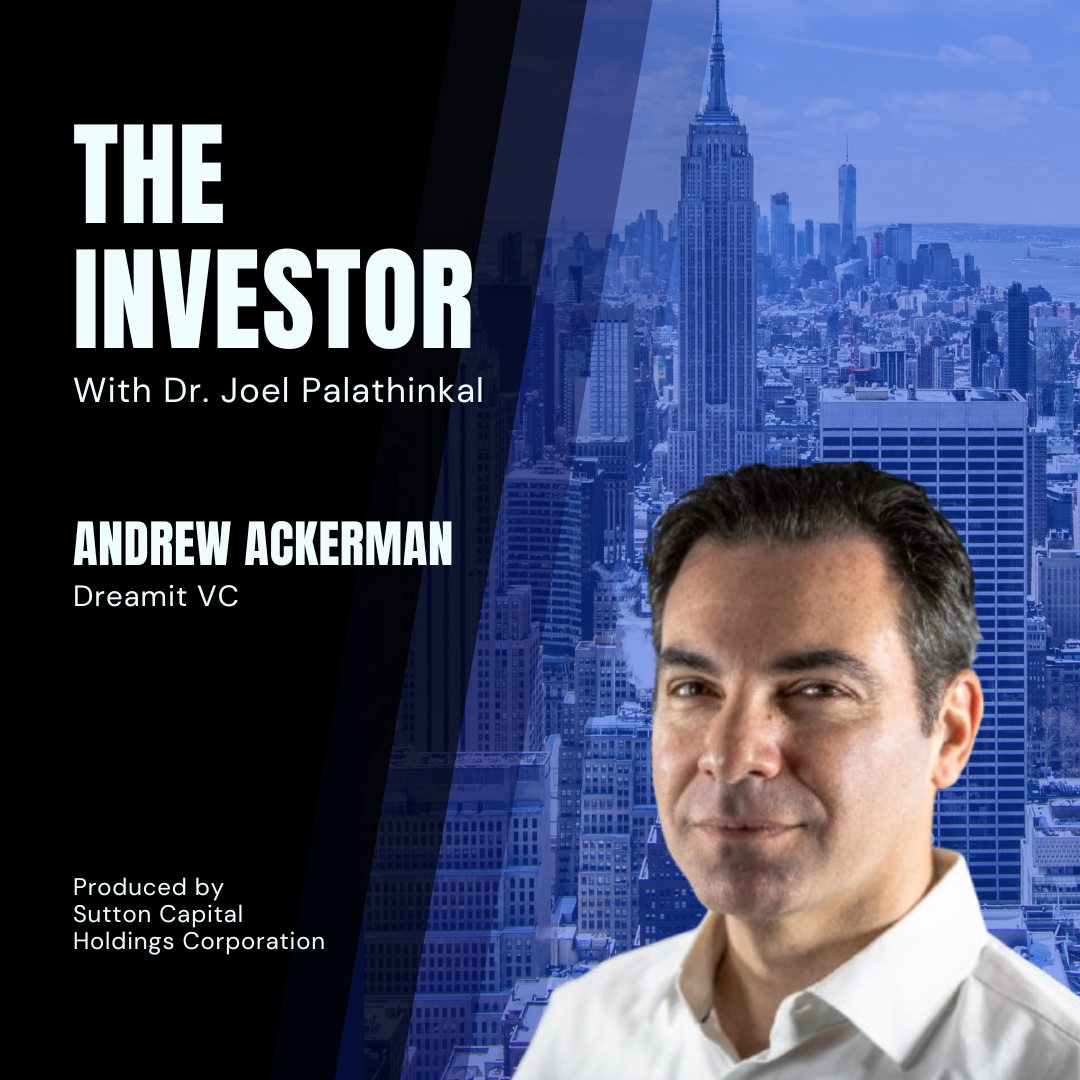
There you go. Yeah, well, I hope there's a lot of them. You know, that's a great way to kind of end up the week. Well, hey, anyways, I think we're live here. We've got Andrew Ackerman from Dream It's. And you've got an interesting background. You were also in the family office space. So you and I have been talking about that for some time as well. So, you know, why don't we kick it off? Maybe you can tell us a little bit about, you know, you. Your career, where you grew up, and how you got into vc. We all have weird stories of how we did, so would love to hear your story and your little bit of.
- [02:34]
C
Totally my pleasure. I mean, I'll try to keep it on the briefer side, and you can, you know, you'll dive in with questions about the stuff that you think is more interesting. Sure. Or more relevant to your audience. So I've been doing what I've been doing for the past six and a half years. So I'm the managing director of Dreamit Urban techs. I've been at Dreamit six and a half years. When I started Dreamit was kind of an archetypical pre seed accelerator program, right? So you know, you kind of close your eyes and I say the word accelerator and you think of like a room. It's got 10 tables, 7,500 square feet. Each table's got three to four or five, you know, people founders at them, all working to get their idea to market and get the first couple of customers. And oh man, it's like 11:30, so I smell pizza and 12 o' clock the speaker walks in. That's what we did for many years. It's the model that basically techstars and Dream built and they still do it. We don't do that anymore. When I started, that's what we did. I did that out of New York for two years and then we went a little later stage by accelerator standards or by VC fund standards, and we went vertical. So right now I'm investing in startups that are in either prop tech or otherwise known as real estate tech or construction tech. So if their customers are like large general contractors or real estate developers, or landlords or architects or brokers, like they're square in our strike zone or you know, B2C in the same spaces. Nothing kind of, we call it urban tech, but it's nothing gov tech. I mean if the government's the only customer, we don't usually touch that. That's what we do. Now how I got here kind of only makes sense in retrospect. I've done both consulting at Fortune 500 companies early in my career. Then I did two startups. One was in the summer camp space of all things. Then I did a stint at a family office that you alluded to. So other side of the table, making direct investments in startups and also managing direct investments into hedge funds and private equity funds and you know, big boring stuff like that. Then I did my second startup and along the way I started getting into angel investing. And actually the guy that I met earlier today who's the reason I'm wearing an actual button down shirt, he came in from Chicago, unfortunately for a funeral. But Ira had started an angel group back then, he and his buddy Mat, and it was kind of a pickup game and I made my first angel investment through them and it did well. And like if you walked into a casino, put money down on like 17 and the roulette wheel came up 17, like you're hooked, you're a gambler. So I started doing A bunch more angel investments on my own. And at the same time, I had just left my second startup. I had started writing for a couple of different publications, and the dream and opportunity came across my plate. So in retrospect, the corporate stuff, because we deal with a lot of. At the time, we had a lot of corporate sponsors and we have a lot of lowercase P partners who are customers to our startups. That came in handy being a founder a couple of times. That certainly comes in handy with what I'm doing. And then the angel investing and even the investing some funds that I've done that also kind of came in handy and all added up to, wow, dreamit's a great fit. But, you know, they didn't add up to anything until DreamIt came along. It was like, wow, three totally unrelated things.
- [06:08]
E
Yeah, sure.
- [06:09]
A
And tell me, you know, being a founder, right. I think what are some important things that you, you know, kind of tied together being a founder and being on the other side of the table. Obviously, you know, most founders that are now VCs are going to obviously empathize with the founder and, and really understand where they're coming from. But just kind of looking back, you're like, hey, you know what? I'm a VC now, but these are like two or three things that, you know, it's a good thing I was a founder to kind of tie back to it. So are there any kind of like lessons or just skill sets that really helped you? Because I think we all have superpowers. Right. So I think that for you could essentially be a superpower of just wearing that hat before that maybe someone else that was just a corporate or an operator might not have.
- [06:50]
C
Yeah. You know, so my ability to leap tall buildings with a single bound has come in handy. Sorry, everyone had to say superpower. I think of Superman, which, ironically, I don't know if people know this, originally he couldn't fly. Like, he jumped over buildings, and he ultimately became able to fly later as his character developed.
- [07:07]
A
Well, yeah, that's interesting because there's a couple different comic books. Right. So I know.
- [07:11]
C
Oh, we're going down the rabbit hole now, aren't we?
- [07:14]
A
We have to, man. So are you talking. Are you saying that. Is that just like one of the comic books or is that.
- [07:20]
C
No, the original. Like the original Superman, like the first couple of episodes, which, of course, I hadn't read. I only heard about. He didn't. He wasn't flying. He literally jumped over buildings.
- [07:30]
A
Are you talking about the black and white Superman? Cause I remember Seeing that when I was like a little kid.
- [07:36]
C
No, I'm talking about, like, when did he get started? The 30s or 40s.
- [07:39]
A
Oh, got it. Okay.
- [07:41]
C
Anyway, but we digress. Right?
- [07:44]
D
Yeah.
- [07:46]
C
I'll tell you, it's kind of hard to put my finger on any one thing. And I just want to be totally clear about something. There are some really great VCs who have never done a startup, and it used to be everybody, but now it's becoming increasingly rare.
- [07:59]
A
Yeah, Fred Wilson, I think Fred Wilson.
- [08:01]
C
Is one of them.
- [08:02]
A
Right.
- [08:02]
C
I don't think he's one of the classic examples. It's been increasingly rare and in part it's been legitimate.
- [08:09]
F
Right.
- [08:09]
C
The legitimate empathy, the original, the legit. Like, I've done this myself, so here, let me help you out. But part is also perceptional. Right. So if you are one of the best startups out there, you have a choice between working with any vc, taking any money you want for the reason you're trying to get value added money. So you're looking at a bunch of different things. And if you have two founders, two sorry investors who are otherwise equal, and one's been a founder, you gravitate to that person. So part of the advantage of having a successful or even a moderately successful startup under your belt is the reception that you get from the other founders. Like, they're like, oh, you get it. And I don't know if that's fair or not, to be honest. I certainly. No one's ever accused Fred of not getting it. There's a bunch of others who. Less successful who definitely didn't get it. But to answer it kind of realistically, from my personal experience, it's the empathy. Right. So if you've never done your first startup, you don't know what it feels like to be a month or two away from not being able to make payroll. You don't know what it feels like to have gone without salary for a year to make your company a success, even while paying other people. And that's a big thing.
- [09:32]
F
Right.
- [09:33]
C
It's one thing if you're a VC to say, well, you got to cut burn. It's another thing if you remember, like, you know, my first startup was 2000, 2001, end of 2001. Most 2002, like cutting burn meant me not taking salary. I wrote myself checks out of savings for, you know, over a year.
- [09:51]
D
Yeah.
- [09:52]
C
So it's a very. Feels different, sounds different. And that's empathy as opposed to sympathy. Like, empathy is like, I feel exactly what you feel. Sympathy as I can imagine how you feel. Yeah, there's a couple of other things there too. And I get this is more of a critique of say corporate venture.
- [10:11]
F
Right.
- [10:12]
C
Venture guys who even they haven't done startups, they kind of get what it means to move at startup speed or they sometimes get it quite well. Corporate venture guys, unless they've come from a startup background or traditional VC background, don't get it because their clock is set at corporate speeds.
- [10:29]
D
Yeah.
- [10:30]
C
So the idea that, and I had to learn this on my first startup, it wasn't intuitive. Okay. You know, you're doing an analysis to decide like, you know, how you want to do pricing or whether or not you want to get into do feature A versus feature B. And at some point you got to kind of stop and say, fuck it, it's not done. But like it's so much better. I just got to do it right. So, you know, understanding when it's good enough. Like what's the balance between going with your gut, which is going to be hit or miss at best on the one end, and doing like a full consulting style analysis, 20 page, 80 page deck. Like for a startup there's a point and sometimes about halfway in between, sometimes it's about 75% towards the gut, where you've got enough information to make a decision and then you just got to go with it. But you know, you need to have enough. That's the key, the key word on both ends. And being a startup founder and knowing that it helps. The limits though, and there's a little bit of humility that comes in is the if you've done a startup, you are, and I get this on the investing side too, you're painfully aware of how much luck or factors beyond your control will play into it.
- [11:47]
E
Sure.
- [11:47]
C
Hopefully in both directions. So my first startup that was summer camps we had. I'll give you a little background because it's kind of the anecdote makes more sense with background. So this is back in 2000. Back then, like parents wanted to see photos of their kids. This was like Shutterfly had just gotten started. It was hard to do that. And the camp directors were worried about like sleazy guys like going on there and like, you know, touching themselves to pictures of kids.
- [12:13]
A
Oh sure.
- [12:14]
C
Worse, like trying to come there and like steal a kid. And it wasn't really a well thought out fear.
- [12:18]
D
Yeah.
- [12:19]
C
But that was a concern. So we had created a system. The first one was a photo gallery. It was password protected at the camp parent level. So if something went wrong, you didn't just change the password for everybody in.
- [12:32]
A
Camp, Which I guess the problem you're trying to solve, too, is, you know, in summer camp, kids are gone for the whole summer, and parents are going to be missing them. And usually the camp is what, like three, three, four hours away? Is that usually?
- [12:43]
C
Yeah, it could be. It could be. And the kids don't have access to electronics.
- [12:47]
D
Yeah.
- [12:48]
C
So, you know, the parents miss them.
- [12:49]
F
Right.
- [12:50]
C
You know, in fact, the photo gallery, we had one parent write in and say, thanks for building this. This is like crack for summer camp. Parents who's on there, like, hitting refresh every 10 minutes, waiting for photos for kids to show up.
- [13:01]
A
And did you kind of build this also for yourself as well? Cause I know you got a couple kids, too, so.
- [13:05]
C
I mean, I have kids now, but I didn't have kids at the time.
- [13:07]
A
Okay, got it.
- [13:09]
C
You know, all of us, we'd all been sleepaway campers in the past, so we knew the experience. And one of my co founders was one of those guys. Super passionate, like, still in touch with his camp buddies.
- [13:20]
E
Sure.
- [13:21]
C
Me, I was like, more of a. Hmm, It's a good idea. No one's doing it. We can do this.
- [13:25]
D
Yeah, right.
- [13:26]
C
Camp. Okay, fine.
- [13:28]
F
Right.
- [13:29]
C
Not the most fun conferences in the world, but I've been to worse. So we built this whole system and did what they needed to do. And then the interesting part is we had talked about, like, well, what about if we let parents, like, write notes on the computer that got printed out at camp? Basically a web form.
- [13:45]
E
Sure.
- [13:46]
C
So one of my co founders, David, sticks his head in and says, hey, you know, the bunk notes thing we're building? Think we can charge for that? And I said, you're not gonna charge for email. And he said, well, you know, it could take another week's worth of work. And I can make. You know, I could build the payment system. And, you know, what do you say we make it optional? Well, cut the camp owners in for percentage if they do it, you know, to defray the cost of printer ink and all that stuff. And I said, well, okay, let's do it and see what happens.
- [14:15]
F
Right.
- [14:17]
C
Turned out that that was our second largest line of revenue that year. So in September, we're looking at, like, okay, bunk notes. Like, someone's got to pay for that. Whether it's.
- [14:24]
A
So this is for the parents to just give some dietary notes or just.
- [14:27]
C
Notes, not dietary notes. Like, I miss you. What's going on?
- [14:30]
A
Oh, got it. So it's a note to their children.
- [14:32]
C
It's an actual letter in lieu of writing, you know, taking out a pen, writing it out, putting a stamp on it. What we found out is dads in particular will go to great lengths to avoid actually getting a stamp. Moms will still do it, but moms will do it and they'll send the note from the computer. Now that I have kids, I see that, I see it myself. I see it in my wife ironically. So it turned out that it was such a big. In that case, this is a pleasant surprise, right?
- [15:00]
E
Sure.
- [15:00]
C
We were like, nah, no one's going to buy it. Let's see what happens. Let's run it. It's a cheap experiment, you know, we're going to build it anyway. Let's see what happened. And we were pleasantly surprised that turned out to be so big. So, you know, it became the second or I think maybe even the largest, single largest revenue stream for us for a while. So there's a little bit of humility there. Like I never would have called that. I thought things like e commerce on pre camp supplies like clothing, canteens, you name it was going to be one of the big revenue streams that turned out to be almost zero for us.
- [15:34]
A
And was that like a more of a subscription or is it like per message that you mix them both?
- [15:39]
C
So we had it where the camps could pay for it, it would be free to the parents where the parents could pay for it and it was free to the camp. And then, you know, you had various methods where it could be an all you could eat subscription or it could be, you know, basically like a virtual stamp.
- [15:52]
D
Yeah.
- [15:53]
C
We played with a tons of different models, so sure. And that's something else I tell my founders.
- [15:57]
F
Right.
- [15:59]
C
You know, you don't know what you don't know to the extent that you can make everything a. An easy experiment. Do it like you'll never. Even if you don't think it's gonna work right, if it's cheap to do, do it like that was it. I didn't think it was gonna work. And it worked out fantastically well. The key thing is going into it, you know, just taking that little extra moment before you try something to ask yourself, okay, how am I know, how am I gonna know if this works right? Where am I gonna get the data to show that this was better than doing something else? You can set up cheap AB tests. You know, it could be subject lines on the email to give a classic example, or it could be different pricing, like another example, like we wanted at the end of the season. We knew that if parents hadn't bought a physical copy of their photo by the end of the season, they weren't gonna, you know, right after camp, you know, by the time it was November, they weren't gonna go back and do it. Yeah, sure, we try. We didn't try to give them any coupons during the summer because they were, you know, they needed it right now. Why discount it towards the end of September when it was like. Yeah, like we kind of were on the downslope of what's gonna happen. We're send out discount codes.
- [17:04]
F
Right.
- [17:06]
C
So we A B tested 50% off versus buy one, get one free.
- [17:10]
A
Oh, interesting.
- [17:11]
C
It's kind of similar. Ish. Wanted to see what would happen. And I think we also did just the reminder with nothing.
- [17:17]
A
Okay.
- [17:18]
C
So we did like an ABC test. We could have just said, oh, let's go by and get one free codes. But then we wouldn't have known if it were better or worse than the alternative.
- [17:26]
D
Yeah.
- [17:27]
C
So for like 4 or 5, 5 or 10% additional work up front, we made it an a B test and we sent it out and you know, we learned what we learned for the next season. And for us it was especially, especially critical because we were a seasonal business. So you know, we could test one or two things, you know, and we couldn't just constantly test. Like by the time it was December, nobody was at camp.
- [17:47]
D
Yeah.
- [17:48]
C
How would we test these things? We had to be very kind of thoughtful about what we would test when what was the most important thing for us to test. So I do talk to startups about having multiple torpedoes in the water, keeping stuff as a series of tests. Like everything you do should be a series of tests and constructed, easy to do. Right. If they're not easy to do, you're not going to do them. But they should be constructed from the get go that you'll know if it's worked or not.
- [18:15]
F
Right.
- [18:15]
C
In fact, in Dreamit we have a saying, this is a success if.
- [18:19]
F
Right.
- [18:19]
C
You got to be able to answer that question before you do something.
- [18:22]
A
Got it. That's a good, that's a good framework. I'm curious which creative did better, the 50% or the buy one go one?
- [18:31]
C
Ironically, nothing.
- [18:32]
A
Okay.
- [18:33]
F
Right.
- [18:33]
C
It wasn't that it did better, but if you think about it, God, you're gonna laugh at me. We were selling four by six prints for $4.
- [18:40]
A
Oh, interesting.
- [18:41]
F
Right.
- [18:42]
C
You know, and that per image. Yeah, per print.
- [18:45]
A
So you would, you would have to mail it then. So there wasn't there a lead time to get through.
- [18:49]
C
We had done. We had done really early. Like, we were one of the first partners with Shutterfly back onto the Internet. Back then, I think it cost like $0.20 or $0.25 a print. It got down to the point, like, years later where it was like 4 cents a print. @ that point, parents like, why am I paying four bucks for a photo when, like, you know, if I load them on Shutterfly, I'm paying like 10 cents.
- [19:10]
D
Yeah.
- [19:10]
C
And we said, well, you know, you got to pay for the camp photographer.
- [19:13]
E
Sure.
- [19:14]
C
Which was, you know, it was a little hard to say. That was a straight face after a while. But again, in 2001, 2002, like, you know, it was legit.
- [19:23]
D
Yeah.
- [19:24]
C
And we had. We built this whole system so we integrated with. With Shutterfly. And the idea was behind the scenes, once the order was placed, we sent them the photos and they would print it and they would drop. Ship it to the customer. But if you think about it, you know, 50% off code sounds great, but then you realize you have to actually double your sales volume to just stay in place.
- [19:43]
D
Yeah.
- [19:44]
C
So if you kind of turn around that way and say, like, man, am I really gonna double my sales volume by sending out this coupon? That's actually a pretty. Pretty high, you know, high threshold.
- [19:58]
D
Yeah.
- [19:58]
C
It turned out that, like, yeah, we sold more photos, I think, which I can't remember as many years ago. I think we sold like 20 or 30% more photos, but it still wasn't enough to make up the lost revenue.
- [20:07]
E
Sure.
- [20:08]
C
In between, buy one, get one free or 50% off. I don't know if there was a statistically significant difference. It's too long, too much alcohol since then for me to tell you for sure. But loud and clear, we don't need to do discount codes. Just sending them the reminder generated a ton of revenue.
- [20:23]
A
Okay, got it.
- [20:24]
C
And then years later, like the second year, we started talking about the pacing of it.
- [20:28]
F
Right.
- [20:28]
C
I send a reminder at this point versus a reminder at that point, or two reminders versus three reminders, diminishing marginal returns.
- [20:35]
D
Yeah.
- [20:36]
C
But everything had to be a series of easy to assess experiments. Otherwise you don't get better.
- [20:42]
E
Sure.
- [20:43]
A
That was interesting. And then in the off season, I guess, when you didn't have the summertime, what were you guys focusing on? Was it mainly like tech and user acquisition?
- [20:51]
C
Yeah, there's a lot of building, a lot of building in the off season. A lot of building, a lot of testing. There were some other features that took place there. Not so much, to be honest. We tried. In fact, we looked at a couple other revenue streams, like elder care facilities. The. You know, you had a not so very tech savvy group of elders there. So the idea that they might want something printed and handed to them.
- [21:15]
D
Yeah.
- [21:15]
C
You know, that was legit. No one really wanted photos of their elder parents, so photo gallery wasn't so popular there. We call those care notes instead of bunk notes. We've looked at boarding schools, but again, the dynamics different. Not that many of them. We even looked at jails.
- [21:34]
A
That's interesting.
- [21:35]
D
Yeah.
- [21:36]
C
And I don't think we actually gave that a fair look through. I mean, kind of wants to go to Rikers and try to sell this, but, you know, we could have.
- [21:45]
D
Yeah.
- [21:46]
C
Look at a bunch of that. But the single biggest thing we did in the off season, we sold. We went out there. We sold it aside.
- [21:53]
E
Sure.
- [21:54]
C
Demos, go to conferences, going to places like Junction City, Kansas. It's called Junction City because there's a junction. Yeah. There's two roads.
- [22:04]
F
Meet.
- [22:04]
D
Yeah.
- [22:05]
C
And the reason it's called a city as opposed to like, I don't know, Junction Town.
- [22:08]
D
Yeah.
- [22:09]
C
They've got a Denny's and a Cracker Barrel.
- [22:12]
F
Oh, wow.
- [22:13]
A
That's.
- [22:14]
C
That's. You know, you've made it in some places if that's what you got.
- [22:17]
A
You got both of them.
- [22:17]
D
Yeah.
- [22:17]
A
I mean, they're probably battling each other for the crowd.
- [22:21]
C
Yeah. But, you know, it's Kansas, so they're very politely battling each other. So. Yeah. I went to a bunch of places that were not the sexiest places in the world.
- [22:30]
E
Sure.
- [22:31]
A
You gotta do what you gotta do. I lived in Iowa for some time and enjoyed my time there. So, you know, what was next after that. So you worked on that and did you raise some money or was it mostly gone?
- [22:42]
C
This is really interesting. Right. So we had a term sheet in hand from a VC fund that was headquartered in the World Trade Center.
- [22:52]
A
Okay.
- [22:53]
C
And we had it. We were actually slow walking it.
- [22:57]
A
This is 2000, 2003.
- [23:00]
D
Got it.
- [23:00]
C
You know, you can see where the story is going.
- [23:02]
D
Yeah.
- [23:02]
C
So we were slow walking it a little bit because we wanted. We wanted to get our numbers in from the summer to kind of be in a stronger position to talk about valuation. Then September 11th hit.
- [23:15]
D
Yeah.
- [23:16]
C
You know, literally the person that we were dealing with, from what I understand, is still fine. I mean, the CEO is handling most of those conversations, but the VC fund and the term sheet literally ceased to exist. So we ended up not raising money. We ended up kind of tightening our belts. We did explore raising more money later. Probably a little too late in the process. In retrospect, having an outside investor would have been a good discipline for us. We were cash flow positive pretty early in the process.
- [23:51]
E
Sure.
- [23:52]
C
But having somebody like pushing us from behind, like, what's going to grow faster? We had an opportunity to buy one of our competitors.
- [23:59]
D
Yeah.
- [24:00]
C
I ran the numbers. I'm like, I'd rather just take over their clients. And that was probably the right thing to do as a, as a small business.
- [24:10]
D
Yeah.
- [24:11]
C
But for a tech startup where you got to hit a certain minimum size threshold before for acquirers even, we'll put in the time. Like, think about it. The due diligence that a corporate has to put into a $5 million company is the same amount of work as it is to put into a $50 million acquisition. So it's just not worth their time when you're that small. It's not a profitability margins that doesn't matter if you're well below kind of those numbers. So had we acquired, even if it might not have been the smartest thing to do from pure ROI perspective, like it want to put us over that threshold to make it worth our, you know, worth the corporate's time, which means that we would have been valued totally differently.
- [24:56]
D
Yeah.
- [24:57]
C
On the exit. So having somebody like. That's just one example. Having somebody from a VC with that perspective would have helped. We also spent a little bit of time on, I don't know, it's like an alumni network for people who got out of camp. Slash with a dating twist to it. Which at the time kind of sort of maybe might have made sense.
- [25:20]
E
Sure.
- [25:20]
C
But we had a lot of internal discussion about whether or not it really made sense to do that. You know, the market wasn't that clear to us, but at the end of the day, the CEO was super passionate about camp. And he was one of those guys that was always in touch and his gut told him, like, there's a market out for it, but it never really amounted to anything. And you know, in retrospect, if I look at. Did we do enough analysis? We probably did not do enough analysis. A VC would have pushed us harder to justify it. So we would have been both more rigorous about where we spent our time, just faster and faster in general, being smarter about kind of big strategic choices. I think it would have been a net positive had we had institutional money in.
- [26:06]
D
Yeah.
- [26:07]
A
And what are your thoughts on just the corporates as VCs? Because I'm thinking you're doing a lot of that stuff with mobility and partnerships. So the corporates, you know, a lot of feedback I'm hearing is there's just kind of the battle between financial return versus strategic opportunity. Are you seeing that as well with some of the corporates that you're working with?
- [26:26]
C
So, you know, I've done two hour presentations on corporate venture and why they work or why they don't work. Yeah, I'm going to, I'm going to spare you that. I'll keep it kind of at a high level. Right. So from the, from the founder's perspective, there's goods and they're bads to them.
- [26:45]
F
Right.
- [26:46]
C
On the one hand, if you're taking corporate money and the parent is strategic to you and they can become a customer, that's pretty alluring. The problem is in many cases that the corporate venture funds move slower, especially if they are investing off balance sheets. So practical advice number one, if you're dealing with a corporate venture fund, ask them, hey, do you have dedicated funds or are you investing off the balance sheet? And if they say it's dedicated. Oh, dedicated. Like is it an LPGP relationship? Meaning is it a separate VC fund, separate from the corporate parent and the corporate parent is one of, or the entirety of the investor base in the VC fund Or is it like, you know, they've allocated funds during the budget process to you, but you're still part of the main company?
- [27:33]
D
Yeah.
- [27:33]
C
And the latter, so the former is an indication that the investors can move fast, they can make their decisions at their speed. The more it's tied to the mothership and it's part of the regular budget process, the more likely it is they have to go up the corporate chain to get approval for things. And that means the more likely it is they are to move slowly. So you can ask those questions. Don't be shy. That's the other thing. A lot of founders are shy. Like, oh, can I ask, like, I don't know, like, you know, the fund, I don't know if they have any money left. You know, just ask them, how much dry power do you have? When did you get your last raise? How close are you to the end of your three year initial investor period?
- [28:13]
F
Right.
- [28:13]
C
Just ask. They're asking you a ton of personal questions. They won't be offended if you ask back. In fact, they'll, they may appreciate the fact that you know enough about their side of the table to ask intelligent questions. So just add a corporate venture fund, like how you structured separate arm's length VC with sole limited partner being the Parent company or are you part of large corporate and you have every year you get budget allocated to you. So number one, they move slower, especially the ones that are in that latter category. The ones that are VC structured appropriately can move fast. They can move as fast as a regular vc. Number two, sometimes they'll put strings on the deal. And that's a problem. It really is a problem. If you want to go out there and run a process to sell your company and they acquirers see that, oh, one of your corporate investors has a right of first refusal, they might not want to dig in at all. It's like I'll spend weeks and weeks diligencing or months diligencing you. I'll put an offer on the table and these guys will swap in and just say, oh yeah, we'll do that. That'd be a waste of time. There's a whole bunch of other things. Even sometimes the information rights be tricky, right? So you know, man, if I got Barclays as my strategic investor, is Citibanker Chase going to want to use me? I'm a big data startup in fintech. Or are they going to be worried the Barclays gets to see their data? Now that's a little bit unreasonable and it's easy to protect against it, but you know, there's, you might want to be careful about information rights even in some cases. So just having them on it raises other issues.
- [29:50]
A
Now, do they have a deeper scope on the information rights? Are they looking for actual access to some of the data or is it.
- [29:57]
C
More just with a corporate venture fund? It's all over the board. Oh, wow.
- [30:01]
A
Okay.
- [30:02]
C
Especially when you get guys who have never done venture and they've been pulled out of the corporate ranks and they've got a corporate mentality or maybe a private equity mentality. You know, they'll ask for all sorts of stuff that's just not normal.
- [30:15]
E
Sure.
- [30:16]
C
Venture level. I'll tell you one of the other things that's a little bit more subtle than those two are the dynamics on the board. So if you're a startup, once you take money, you've got a board of directors, not just a board of advisors. Board of directors. And they're legally your boss.
- [30:31]
F
Right.
- [30:31]
C
They can fire you as the CEO. They can, you know, certainly have governance rights over how much you pay. Key hires, when you make a key hire or not, whether you can sell the company, whether you can acquire other companies. That's normal. There's a normal amount of give and take in your government stocks about that. But choosing who's on your board is important. Usually lead investors get on it. And I will say in the best of all possible worlds, it's you as the CEO, one representative of the big, the largest financial VC on the table and one from the corporate venture fund.
- [31:06]
D
Yeah.
- [31:06]
C
The reason is there's weird incentives on both sides in certain edge cases. So let's say you get an offer to be bought out for $40 million. You haven't taken that much money, so you still own. You and your co founder still own. Let's just make the math easy. Say it's, you know, 50% of the company collected.
- [31:27]
D
Yeah.
- [31:28]
C
So that's $20 million between the two of you. Split both ways it's $10 million. You pay taxes, you'll net 5 million. Like that's starting to get life changing for you. It's certainly a great first at bat. So you might be inclined to take that deal.
- [31:41]
D
Right.
- [31:43]
C
I had a mentor early on in my career that says for your first startup you don't need to hit a grand slam, just hit a solid double or triple and life gets a lot easier after that.
- [31:51]
D
Yeah.
- [31:51]
C
So hey, that's a nice double, maybe even a triple depending on what your values are. I want to take that now. The financial beast the regular VC might look at. It might be like, okay, I put money in at a 10 million post, now it's an 80 million. That's not. Well, let's make the math better. It's a 20 million post, now it's 80 million. That's 4x. That's not bad. But it doesn't really make my fund.
- [32:14]
A
Yeah, it's not going to return the fund.
- [32:15]
C
It's not going to return my fund. It doesn't really move the needle for me. It's a weird time warp or alternate reality in VC where a forex return in three years is actually not that good because it doesn't really change anything. So the VC might say, no, don't sell. I think it could be a billion dollar company, keep at it.
- [32:36]
F
Right.
- [32:36]
C
That's a weird situation where you want to sell and the regular VC will tell you not to. A corporate vc, if they're on the board three years, they've already gotten the innovation juice out of it.
- [32:49]
F
Right.
- [32:49]
C
They've already adapted, they've already customer, they already understand what's going on there. They don't need you to keep working at it. The financial returns aren't that important to them. They're in it for the strategic fit for that look over the horizon of threats and they Might say, hey, you want to take the money off the table, Go right ahead. We'll take the money back, we'll recycle it. My bosses will be happy. No worries. If it's a three person board and it's you and each of those two guys, you have two votes in favor of the exits. That's good.
- [33:14]
A
Yeah, that's a good point.
- [33:16]
C
And then flip it. There are times where the corporate VC X badly.
- [33:21]
F
Right.
- [33:23]
C
It might be, maybe you hit a rough patch and you need to raise an inside round. Like now Covid.
- [33:28]
F
Right.
- [33:28]
C
Future still bright. But like, I need to raise a little bit of money to get through the downtime. You know, sometimes corporates will look at it and they'll be like, I liked owning a piece of you, now I can own all of you.
- [33:40]
E
Sure.
- [33:40]
A
So this instance, you're talking about a dedicated fund, right? So if this is like a. Yeah, got it. Okay.
- [33:45]
C
Yeah. Or any corporate off balance sheet. Right. So they might decide they'd rather own you at that point and not give you the money. Well, a financial VC doesn't ever want to take over the company if he can avoid it.
- [33:56]
F
Right.
- [33:57]
C
What's he going to do? He's got other things to do with his time. If he wanted to run a company, he'd be running a company. So as long as she thinks that you've got a potential there and they've got the dry powder, they would much rather put a little bit in and see if you can pull a rabbit out of the hatters. Or they firmly do believe that you'll turn a corner. So there you've got two votes in favor of keeping going and not selling as a distressed asset. So it's a good dynamic to have. An ideal round is some corporate, some strategic. You get the benefit of the corporate's potential customer base, the branding that comes from having them as a customer expertise, all that good stuff that a corporate can and ideally does provide. And you get all the other stuff on the financial side. And then when it comes down to like those edge cases where you as a founder could be forced to do something you don't want to do, you actually end up with, you know, one of them will be your ally against the other.
- [34:59]
D
Yeah.
- [34:59]
C
Good dynamic to have if you can swing it. But you know, it's gotta be careful.
- [35:04]
A
Because corporate and with, with Dreamit, I guess you guys also. Is that something that you guys do too? You kind of match some of the corporates with the, the startups as well.
- [35:15]
C
We do that with ventures in general. Right. You know, we're later staged by, you know, by fund standards, not by like, you know, later stage sometimes means, oh, you know, it's a hundred million dollar investment from Softbank. No, we're not that late stage. But the archetypical accelerator is putting money into a pre seed round. Like they'll give you like 150 grand for 5, 6, 8% of your company. We don't play that game anymore.
- [35:40]
F
Right.
- [35:41]
C
We're dealing with companies that typically have revenues could be as much as a million dollar plus you know, annual revenue. Those guys aren't going to give you 6% of their company for, you know, 100 grand. They don't need it. I mean they might have a million bucks in the bank. They're very focused on scaling and ultimately raising say a seed extension or series A. So for those guys, the traditional accelerator model just doesn't work right. So the idea that I'm going to go, I don't know, I'm gonna get on stage on demo day and pitch my heart out to, you know, 100 angels or 400 angels, they're gonna write me $25,000 checks. I had to raise $5 million. That's painful. 20 conversations. Why would I do that? The real way, we raise an A rounder with institutional investors with VCs. So we do, we run two weeks, what we call investor sprints. Once we've worked with the company for a good couple of months and they're ready for, we prep them for this kind of format where it's a 20 minute, one on one sit down with each investor. And when there's not a global pandemic or massive wildfires burning on the west coast, we do these in person week on the east coast into the VC's offices so it's super convenient for them or on zoom into their offices if they're not based in any of those locations. Like if they're based in Chicago or Dallas, where we don't go physically, but it's 20 minutes, we prep the startups to be able to present in six or seven minutes. If they're allowed to go through the deck directly, all the way through, by and large they're not allowed to. I mean they just don't. Like if you go and sit down with an investor, the investor wants to hear about it in the order that he or she wants to hear about it. We'll even do a week of practice, VC interviews. And that's kind of a misnomer because some of the Chicago and Dallas guys will end up Coming in for that preview week.
- [37:31]
D
Yeah.
- [37:32]
C
But the idea is like, I'll take a startup through their paces. Like, I'll sit down. Like, he said, joel, man, where do you grow up? And you're like, oh, I grew up in Chicago. I lived in Chicago twice. Where in Chicago? I don't get to get out to Oak park that much. My girlfriend or my fiance at the time was from. Well met. I'll talk about that and I'll go on and, you know, and then like, you know, 10 minutes later, like, though, you know that I'm like, okay, you know, start talking about your company. And then the buzzer goes off in 20 minutes. I'm like, hey, did you get to talk about everything you needed to talk about? And they go, no, ran out of time. I said, why is that? So we spent 10 minutes talking about, like, you know, growing up in suburbs of Chicago. I said, well, whose fault is that? I'm doing it on purpose. I'm burning time. Because they need to know how to manage the clock. Yeah, you need to think. Like, I need to be able to present my deck in any order right now. Some startups like, oh, show me the team slide. I don't know who you are first. And others are like, I don't know what the team slide means until I know what you do. So let's go with the problem first.
- [38:29]
D
Yeah.
- [38:30]
C
Or some are like, hey, I know the problem then inside out. I looked at five companies like this. Can we go to the competition slide right away? So you need to be able to do that and you be able to watch the clock. And you have a mental checklist in the back of your mind that says, you know, by the end of this meeting, I need to have covered all these points.
- [38:45]
F
Right.
- [38:45]
C
To be flexible. I can't be like, no, man, you can't look at the competition side. I've got to do it in this order. Right. You got to roll with it. So you got to be adaptable, right?
- [38:54]
D
Yeah.
- [38:55]
C
But you got to make sure you get through it. You have to be able to say things like, you know, joel, I'd love to talk about that more, but I, you know, my understanding is you have a hard stop in 15 minutes and, you know, you want to talk about the startup.
- [39:07]
D
Yeah.
- [39:08]
C
And then you could say, well, actually, I don't have a hard stop in 15 minutes. I can go a little longer. That's great, right? Or you're like, oh, yeah, you're totally right. Let's get down to it. So to politely steer them back on to what matters. But that's, that's the reality of fundraising. The reality of fundraising, it's across a conference room table. It's conversations.
- [39:25]
D
Yeah.
- [39:25]
C
Sometimes the VC will say, yeah, don't even open your deck. Let's just talk. Just send me the deck later. And a founder needs to be able to do that. And what we'll do at Dreamit is once we prep them for that, we'll curate dozens of those meetings.
- [39:39]
A
Oh, sure.
- [39:39]
C
We have literally thousands of investors in our database depending on the industry the company's in. And we focus on three main industries right now. Urban tech, which I run, which is health. Sorry, which is prop tech and construction tech. Then we also have a health vertical, which is enterprise software for hospitals and insurers. Some medical devices. No pharmaceuticals. It's just a different type of model.
- [40:06]
D
Yeah.
- [40:06]
C
Securetech, which is a cybersecurity, physical security, anti fraud.
- [40:11]
F
Right.
- [40:12]
C
We have within those areas people who are either specialized or active in that space.
- [40:17]
D
Yeah, right.
- [40:18]
C
We'll reach out to those guys and we'll say like, you know, here are the startups that are coming out. Who do you want to meet with? And they'll pick, like, they'll pick. They don't have to meet with everybody. It's like a demo day. They can just pick the ones that look good on the basis of the one pager. And then we bring them in there. We'll bring them all, one after the other. We do all the scheduling. If they choose three companies, it's an hour and we're in and out.
- [40:39]
D
Yeah.
- [40:39]
C
And we end on time.
- [40:40]
E
Sure.
- [40:41]
C
We say we're out in an hour, we're out an hour.
- [40:43]
D
Yeah.
- [40:44]
A
And so they're, they're 20 minute sessions. And how many do you try to in the Sprint, how many are you trying to get through during the week? I guess it's a two week sprint, Right?
- [40:54]
C
It's a two week sprint. One week west coast, one week east coast.
- [40:57]
A
Okay.
- [40:57]
C
You know, the flip answer is as many investor sessions, serious investors, as we can for each.
- [41:03]
A
Yeah, sure. And I guess to make sure they're serious. Do you have some type of qualifying questions as well, or.
- [41:08]
C
No. I mean, we know the funds, right?
- [41:10]
D
Yeah.
- [41:10]
C
And every so often if we find out, like, you know, somebody's just jerking them around or they don't really have powder anymore, they just never seem to pull the trigger. Or they're just bad dudes. Yeah, we'll pull them from the list. They just won't be on the email outreach for next time. But, you know, by and large. They're serious. Right. We're talking about a round, you know, a rounds or seat extensions. Yeah, you had a lot less of the flaky, like, oh, yeah, I'm an angel. Like, turns out he's a service provider.
- [41:38]
A
Oh, interesting.
- [41:39]
F
Right.
- [41:39]
C
Most of the people we're dealing with now are VC funds. So they're structured to do it. And you know, the biggest, I guess, risk is, you know, they're out of dry powder and they don't want to admit it or, you know, they say they're a fund, but they're requesting corporate fund. Yeah, but they're, you know, it's really kind of mostly their own money and they're not really active. But that's edge cases. That's not. The majority are, you know, pretty good that way.
- [42:04]
A
Yeah, that makes sense. And then, you know, and then after the two week sprint, what would happen after that? They would just start talking about term sheets and.
- [42:13]
C
Yeah, traditionally at that point, like, it varies. It varies a little bit now, but usually you're doing the investor sprint towards the end of the program or at the end of the program. So once they're done, we're not meeting weekly anymore. But I tell them, anyone who's raising around now, I'm here. We'll put something on the calendar, like a recurring meeting every two weeks or three weeks to go through their prospect lists, who they've talked to, when, how can I put topspin on it? How do we handle these negotiations? And by the way, not everyone raises right away. So some of the guys come into the program. They've done a seed round just before joining Dreamit. You know, they've got Runway for 12, 18 months.
- [42:53]
D
Yeah.
- [42:53]
C
I had a conversation with one of the startups Yesterday. They have 20 months of Runway. Like, they're just gonna keep going. I said, you want to meet with the investors this November? Like, no, we're good. Sure, let's do it six months from now. But whenever they do it, it's kind of an open after, you know, if they start to raise around, even if they raise like subsequent rounds, like they raised the seed extension, 18 months later, they're raising an A round. A lot of them will come back to me and say, I want to do a tune up on the deck.
- [43:19]
F
Right.
- [43:19]
C
Or I want to go through the prospects again. Yeah, like, right, well, we'll put bi weekly meetings on the calendar for the next couple of months and we'll go through it. And then when they get the term sheet, obviously, you know, we'll advise by that point, there's a lot of data out there and we'll share with them a lot of information, but we'll certainly talk to them. And we see a lot of term sheets, the obvious reasons, but we're investing on the same terms as the lead investor. So we're just very open with. In some ways we're aligned. In some ways we're not aligned. We are entirely aligned. That, like, I don't want you in bed with like a bad guy because you're in bed with a bad guy. Like we're in bed with a bad guy. You know, all other things being equal, a lower valuation is better for Dreamit as an investor in some ways. Sure. And we get to kind of a weird. Is actually kind of a weird. A couple of weird scenarios. So we had a company come into the program a while ago and then a kind of an unofficial almost term sheet from some guys. It's like, hey, you know, listen, you're doing great. We'll back you at, you know, we'll help you do an A round, you know, $16 million valuation. So this company was coming through the program and they're like, you know what, we're okay on the investor side, but it's the customer sprints that we're really looking forward to because if we get one or two big customers out of that, it's totally worth it. And they did. But then it turned out one of the funds that we introduced them to ended up giving them another term sheet for $23 million pre money. Oh, wow. I think at the end of the day, maybe it was 26. The number has been a while, but I think it was 26 million pre at the end of the day.
- [45:00]
D
Yeah.
- [45:00]
C
So they ended up with the term sheet, $10 million higher valuation for their company.
- [45:04]
E
Sure.
- [45:05]
C
And the better known vc. So super. We did a great job.
- [45:09]
A
Oh, yeah.
- [45:10]
C
I also increased the price that I have to pay for their shares by $10 million.
- [45:14]
F
Okay.
- [45:15]
C
Total valuation.
- [45:16]
D
Yeah.
- [45:18]
C
Our general philosophy though is like, if it's good for the startup, it'll be good for us eventually, if not right away. Sure, yeah. So when they get the term sheet, we would devise. Right. I mean, there's no way I was gonna say no, man, you should take the other term sheet with the lower valuation. Yeah, you know, I get in cheaper. No, I mean the right decision is the right decision.
- [45:40]
D
Yeah, yeah.
- [45:41]
A
And it all comes back. It's a small world. I mean, you know, talking about bad actors, I don't know if you've heard about the or if you've seen that new VC review site.
- [45:49]
C
So there's some reviews of them over the years. Which one is this one?
- [45:53]
A
There's a new one that I saw in a newsletter. I'll send it to you later. But it's anonymous and it's only by founders, so it highlights.
- [46:01]
C
I think it was called Funding Tree back in the day. I remember the motif was like, it was all kind of green and ugly. Not quite as ugly as Craigslist, but getting there, it's the same thing.
- [46:14]
A
Yeah, I'm actually gonna pull it up. Cause I posted it on LinkedIn. But while I'm pulling it up, why don't you tell me what you think about that? So what do you think? You know, do you think that's helpful? You know, just as far as just founders. And what happens too is that the VC is allowed to respond as well.
- [46:30]
C
Which I think that's just a little bit like Yelp. And the other one was like Yelp. In theory, it's fair. The problem with review sites in general is they're U shaped.
- [46:41]
E
Sure.
- [46:42]
C
You get the. I had a horrible fucking experience. And like, this is awesome. Yeah, the people who just have normal experience, like, you don't always get that unless you're making a very concerted effort to get a truly representative sample. It can get skewed. Plus, you know, one or two reviews, like at scale, in theory, those things should work themselves out. Not many of them gotten to scale, so I think it's still somewhat valuable because, you know, if they've had a bad experience, it gives you something to ask about or warning about it. Don't rule them out entirely. It's a little bit like no doctors reviews. Oh, I had a horrible experience. Why? I got really sick. Well, you know, dude, you were really sick, right? That happens. Like, you know, sometimes you get the best treatment ever and you just come up snake eyes. Yeah, there's not perfect, right? And then the founders like, oh, they screwed me. We do xyz. You talk to the vc. I'm like, he's a whack job. And I, you know, I. I worked with a lot of companies over the years. I have one relationship that I wouldn't say it's out and out bad, but it's strained because the founder and this is my side of the story. So take with a grain of salt. He believes that he was guaranteed an investment when he came out of the program. And he told a bunch of his other investors that Dreamit is investing. That's not the way we Work. Right. We come in, we want to invest. Right. Otherwise I've wasted a lot of my time. See the terms.
- [48:20]
F
Right.
- [48:21]
C
We have to see the traction. We have to just everything we need to understand all of that. And ultimately we decided to pass. The valuation was just out of whack with the traction and the investors were primarily. It was a good chunk more crowdfunded or angels. There was a VC in it, but it was taking such a small part of that round. And yeah, we didn't know them very well, so it didn't, it didn't entirely qualify in our book.
- [48:47]
A
But he still got the benefit for. He still went through your program and got all your coaching and.
- [48:50]
C
Yeah, there are days where he runs hot and cold. I mean, I think he, you can ask him one of these days, but I think he still respects me and he, you know, he said on a number of occasions that, you know, he appreciated the time that we put in with him.
- [49:05]
D
Yeah.
- [49:06]
C
But not getting the funding at the end of the day really, really poisoned the well for him.
- [49:13]
E
Sure.
- [49:14]
C
And, you know, it bothers me.
- [49:16]
F
Right.
- [49:17]
C
I don't like anyone to be unhappy with their experience. Anyone in a consumer business will tell you, like, you know, bad reviews are painful. You just not only because, you know, people rely on them, but also because, like, you want everyone to have a great experience with.
- [49:34]
D
Yeah.
- [49:34]
C
You want them to be successful. You know, this guy, he's going to think what he's going to think at the end of the day.
- [49:42]
D
Yeah.
- [49:43]
C
And there's no amount of me like pointing to emails saying, you know, no, dude, look what we wrote.
- [49:49]
F
Right.
- [49:49]
D
Yeah.
- [49:49]
C
Or I talked to dozens of other startups. No one got that impression. Like, I use the same wording pretty much every time because I've done it a million times.
- [49:58]
D
Yeah.
- [49:58]
C
It's muscle memory. You know, it's highly improbable that anyone here would have said what you think you remember hearing.
- [50:06]
D
Yeah.
- [50:07]
C
And because there's a lot of, there's a lot of research out there about how memory is actually more fallible and fluid than we think.
- [50:13]
D
Yeah.
- [50:14]
C
If you have a preconception in your mind, you will actually 100% remember certain conversations differently.
- [50:21]
E
Sure.
- [50:22]
D
Yeah.
- [50:25]
A
I was like, I mean, it's, it's really the example of just what was said wasn't heard.
- [50:28]
F
Right.
- [50:28]
A
I mean, it's seems like no matter what you tell him, it's like he still hears, hey, I'm guaranteed funding.
- [50:33]
C
Yeah. And take it with a grain of salt.
- [50:35]
F
Right.
- [50:37]
C
That's my version of it.
- [50:39]
F
Right.
- [50:40]
C
So if anyone Came back to me and saw that experience on VC funding or funding tree, whatever the site was. LendingTree. No, not LendingTree. It's totally different. If anyone came back to me I'd say yeah, here's the story.
- [50:54]
F
Right.
- [50:54]
C
Here's what happened. I know you got a he said she said or he said he said in this case But I've got 30 other portfolio companies in Urban Tech, 17 other portfolio companies in EdTech, 24 I think other companies generalists before, before we went and I've got all these other angel investing, you know. Pick any of them you want to talk to.
- [51:20]
D
Yeah.
- [51:21]
C
Pick as many of them as you want within reason. Don't call any of them but pick four at random. Don't take my recommendation. You pick the ones and talk to them. In fact while sometimes tell people so practical nugget number whatever we're up to. If you have your choice of investors and you're trying to figure out who you want to get in bed with, one of the things you can do is get in touch with the investments that they've made that didn't work out.
- [51:47]
D
Yeah.
- [51:47]
C
And there's a couple of tricks to do that. There's a site called the Wayback Machine, the Internet archives. Look at that VC funds portfolio page a year ago, two years ago, three years ago. Look for the logos that maybe disappeared.
- [52:01]
A
Oh, interesting.
- [52:02]
C
They clear out the ones that didn't make it. Find out what happened to those companies. Get in touch with the founders like you know, search them up on LinkedIn, find the founders network to them, say hey, I want to hear about your experience with Dreamit.
- [52:15]
F
Right.
- [52:16]
C
You can have 20 minutes of your time and just ask them. Like the way a VC treats the companies that haven't made it is a pretty good indication of who they are.
- [52:28]
F
Right.
- [52:29]
C
So some VCs, well, not very many. I think most of us are pretty good. Pretty good people relative to private equity, that's for sure. You know we still want to be helpful.
- [52:41]
F
Right.
- [52:41]
C
We're not going to purposely screw them.
- [52:43]
D
Yeah.
- [52:44]
C
There are a few bad actors, but a shockingly high percentage of the VCs are just, they're toast. So time starved that they will consciously or subconsciously allocate their limited time only to their winners.
- [52:57]
E
Sure.
- [52:58]
C
So if you're struggling and you're like hey, I really need some time to talk things over with you, they may come back and say listen I'd love to but I just don't have any time. Or they ghost you a little bit and you know, it's Not a good position to be in when you're a founder and like you're struggling and need their help. So that's why I say find the ones that didn't make it. See, were these guys responsive? Were they helpful? Did they really go that extra, you know, the extra mile?
- [53:25]
D
Yeah.
- [53:26]
C
And going back to your very, very, very first question, your second question about you know, being a founder beforehand, I think companies that there's a VC funds where the principals had startups in the past, I think they're more willing to do that. I have only my gut on that one. But we've all gone through tough patches in our startups, successful or not successful, even the successful ones all went through tough patches. So if a founder comes up to a VC who was a founder himself or herself and says I'm going through a rough patch, I need advice right now or I need some help on the margin, I think the founder VC is going to pick up that phone faster than the non founder vc.
- [54:12]
A
Yeah, no, that's really good advice and I think I actually just went to Wayback Machine and pulled up like an old website I had years ago and I'll find out if it's still there. I posted that link. So it's VCGuy co. I just found out about it through a newsletter so check it out. Hopefully, hopefully I are not on it. So we got five minutes. Yeah, I know all the good things. Yeah, it's pretty new but I thought it was an interesting concept. But I think it is good that the VCs can respond because to your point. Right. It's good to hear both sides of story as well. So we got about five minutes left. There's a few people in the room. Maybe you can just share one piece of live feedback. I usually do that at the end. So maybe a piece of advice or just something that we can take away with us after this discussion from, you know, the multiple experiences that you had.
- [55:05]
C
Okay. We've done a couple along the way. The people on the call, they're mostly aspiring VC or founders. Who would you think?
- [55:14]
A
Mostly, mostly aspiring VCs that work in finance want to get into VC.
- [55:19]
C
So if you work in traditional finance, the key mental mindset you gotta get through is like there's two real questions that you're asking yourself anytime you do an investment. One is will it work? And the other is what's the right price? So if you're coming from a public equities market side of the fence or you know, just later stage the what's the Right price is the bigger question. Yeah, right. You know, I can make money on any stock, whether it's going to go up or down or even just stay where it is. If I know what that is, I have a good thesis about it. I can construct the right set of options, I can buy, I can sell short, I can straddle, I can do butterfly, I can play any thesis there. And I'm not really worried about will it work. So I kind of know what the status of the company is. Customers, they've been around for many years. The earlier you get, the less important the right price is and the more important will it work? Becomes to the ultimate extreme. Like if you could get into Google's seed round, valuation almost doesn't matter. 6 million pre, 7 million pre. Who cares? The real question you had to answer is, is this thing going to work?
- [56:24]
E
Sure.
- [56:25]
C
So the spectrum, as you get earlier on the stage, the weight of which question matters more or less shifts in favor of one or the other. So if you're coming from a financial services background, want to get into vc, the easier path in some ways is later stage vc, because that's still pretty heavy on the valuation tool set. But you got to start building your muscle around will it work. And especially if you want to go all the way to the earliest stage, you almost got to put away all your modeling skills or they're useful, but only insofar as it tells you how the founder thinks it's not going to give you, like, can't do discounted cash flow there and really start thinking about how do I answer? How do I systematically answer the question, will it work?
- [57:13]
D
Yeah, great. Yeah.
- [57:15]
C
Those.
- [57:15]
A
Super helpful. Yeah, and I totally agree with that. I think the modeling is very minimal. Early stage might do a little bit of waterfall analysis to kind of project it, but again, that's all subjective. I'll just go around the room. If anybody has any questions they can shout out. If not, we can wrap up. So I guess Abdul, Neelu, Susan, you guys got any quick questions for Andrew?
- [57:39]
B
I just wanted to say thank you so much. That was so helpful, but really, really, really helpful to understand everything from when you had the camp idea and how important it is. Timing is just everything. And the rest of the call was just very informative and very helpful. Thank you.
- [57:56]
C
Happy to help.
- [57:57]
F
Great.
- [57:59]
A
All right, well, hey, thanks, Andrew. If nobody else has any questions, we'll wrap up. But hey, thanks again for your time. This is awesome.
- [58:04]
C
Appreciate it. Thanks for having me, Joel, Thanks.
- [58:05]
A
Yeah, absolutely. Catch up soon.
- [58:07]
C
Okay, bye for now, everyone. Be well. Wash your hands.
- [58:11]
A
Bye, guys.
- [58:12]
C
Thank you.