Loading summary
Transcript179 lines
- [00:02]
A
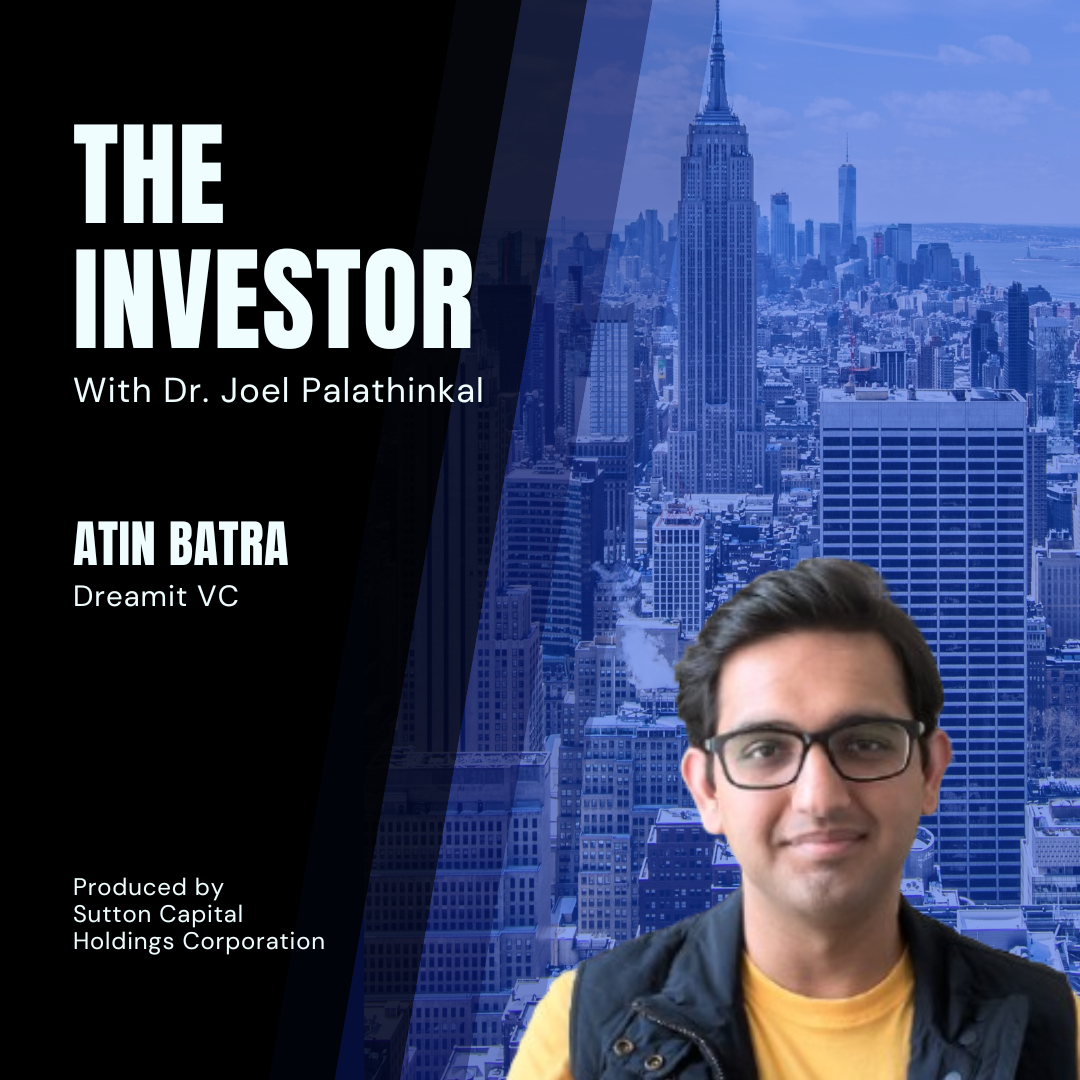
Welcome to the Investor, a podcast where I, Joel Palo Thinkle, your host, dives deep into the minds of the world's most influential institutional investors. In each episode, we sit down with an investor to hear about their journeys and how global markets are driving capital allocation. So join us on this journey as we explore these insights. Okay, looks like we're live here. So Athin, thanks again for joining. You know, super excited to have somebody from the other side of the world. I'm in New York City. Atins in Hong Kong, right?
- [00:40]
B
Yes, absolutely. Thank you for having me, Joel. It's good to catch up.
- [00:45]
A
Yeah. So, you know, I've had some good conversations with Tin. He's actually met some of the people on my team. He's at 27 VC and from what I've learned, he's been focused on ed tech and just wanted to catch up with him. And I think there's some really interesting trends that we can talk about, not only with ed tech, but just VC in general. So I can tee up some of those questions. But before we do that, why don't we get to learn you a little bit more, Kind of learn about your background, where you're from, what did your parents do and how did you kind of navigate into venture and then we can just take it from there.
- [01:21]
B
Sure. So I guess if I have to start the earliest. Born brought up in India, my parents are actually just working class. You know, they worked for the government of India in different departments. They really instilled a work ethic, you know, just work hard and sort of try and be the best you can in whatever you're doing. So that's, that's always been the mantra that I've had, you know, growing up and try and live up to. I've always been a little bit of a non conformist in the sense that I was usually spending more time outside of class than in it, which at some point just ended up me being, you know, let's, let's do something entrepreneurial, let's do something different. And so funnily enough, I left a fairly stable job after my MBA. Maybe about 18 months into the job, I said, no, you know what, I'm going to go and do my own thing. And so that's, that's really the turning point in my life. I went and became an entrepreneur. And as if that wasn't tough enough, I actually also moved outside of India for the first time, moved to Hong Kong and you know, established myself here. So it was, it was a fun time. Did that, learned very quickly I wasn't really, I wasn't a very good entrepreneur and realized that it was a better use of my time to actually help other people be successful. And so I jumped across the table and became an investor. And my first foray into investing was actually as the head of corporate accelerator here in Hong Kong. So it's part of the Swire Group, which is one of the largest conglomerates, 200 year old group here in Hong Kong. And they were running a corporate accelerator and I was hired to run that for them, which is a great experience because we were recruiting companies from all over the world, really early stage, and bringing them to Hong Kong and connecting them with potential customers and vendors here. So that was amazing. Worked with those companies. Really what people call the ground level, I'd say, like we were at the basement. It was really early, a lot of fun.
- [03:31]
A
And what did your parents want you to do? Because look, I'm from India too, and I had, you know, I grew up in America though, but my parents immigrated from India and they always wanted me to be at a stable job.
- [03:47]
B
You know, doctor, engineer. Basically those are the two options.
- [03:52]
A
I did engineering and then I did my doctorate. So I kind of like did everything they wanted me to do, but they wanted me to live in Florida and like buy a house and get married. And I just did, you know, I got married eventually, but live in New York City and it's definitely not what they wanted. You know, they wanted us close by. So I can definitely resonate with kind of like the traditional Indian parents and what they wanted to do. But I guess what was your reaction when. Especially like when you left the stable job, like.
- [04:22]
B
Right. Yeah, that's a fair question. I do have to say though, a lot of the credit actually goes to them because they were never like the traditional Indian parents.
- [04:31]
A
Oh, that's great. Okay.
- [04:32]
B
I was never told to be, you know, a doctor, an engineer. Yeah, they never really forced me through that. And I think it was also maybe, you know, learnings from their own life where they may have gone through that process with their parents and they realized that they didn't want to sort of pass on that to me and to my younger sister. And so we were never really prescribed anything to do. It was always very open. So which was, which was a great, you know, freedom to have. I actually just did my. I used to love math, so I went and did, you know, a bachelor's in commerce, which was the easiest thing to do potentially for someone like me, and then followed that up straight away with an MBA and You know, I'm one of those people who, if I think I want to do something, I always have new ideas. But once I've locked on an idea, I sort of go deep. So at that point in time, my mind was all about media and marketing. And so I went and did an mba, majored in media management, brand management, went and worked for a media house, and then I got bored of it and then I said, no, I'm going to do something else. So it's just the story of my life, honestly. I just move from one thing to the other, whatever catches my fancy. And so far, my parents have been supportive as much as they can. I mean, they're obviously worried about making all these moves, but yeah, no, they've been pretty good with, with supporting whatever is best for, you know, my mental health and personal growth.
- [06:00]
A
I guess I would say, yeah, I would say my parents are pretty similar to that point where they, they eventually trusted. I think they trust their kids eventually. At some point they're like, you know what they're not, you know, they, they'll eventually find their way, things will work out. And I think, you know, as long as you have a positive attitude, I think you can do whatever you want, you know. So, yeah, sounds like you've been able to do that especially. And sometimes it's not exactly how you plan. Like, maybe, you know, if you think the traditional way is, hey, you just get an MBA and then you're immediately a vc. You know, sometimes you have to kind of have some twists and turns before you get to that point, but you make a good point. I mean, if you really say to yourself that you want to do it, I think you will do it.
- [06:42]
B
Yeah. I do have some thoughts on, on people who go become a VC straight after the NBA, but we can talk about that. I think the only thing, um, just to close that conversation out, I wanted to say was I think the, the advantage that I had is that my father, even though he was in a stable banking job, was actually an entrepreneur at heart himself. Yeah, he's one of those guys who always had, you know, who's always tinkering with something in the garage. Back when we did have a garage, so like we were used to build furniture for the house. We used to, you know, repair stuff around the house. So he's always one of those tinkers. And so that sort of has, you know, been passed down to me in the sense that now I also want to keep doing something fresh and something new all the time. So, yeah, it's, you know, Just in Hindi they say virasatma jomila. You know, you, you inherited from, from your father, I guess.
- [07:35]
A
Yeah, I agree. And that's interesting. And then, and then what are your thoughts on just going? I, you know, have a lot of students now that I work with and I get a lot of feedback from what they tell me from VCs and a lot of VCs. And you'll even read this if you read like the business of venture capital. They all say it's like, better to get work experience first. And some of the best VCs worked in some industry for at least five to six years. I have a student that's actually directly in VC. Like she's in college and she's already interning at a VC fund. And her mentors have told her it's like, hey, you should just work in some other space first. It might give you some depth. Yeah, I'd love to hear what you think about that. I don't know if you agree with that or if you, if you think that's, that's a perfectly fine path.
- [08:28]
B
Yeah, I mean, I think so. I'll sort of share two thought process on that. One is it's absolutely fine if you want to become a VC straight after the mba. If you know that that's what you want to do and yeah. And you figured out that your skill is a perfect fit for it, by all means, go ahead and do it.
- [08:46]
A
Sure.
- [08:47]
B
But I think for a large percentage of the population who want to become a VC, like 90, 95% of them will be much more successful if they went and got operating experience, because then they'll understand much better what actually operating a business and taking it from 0 to 1 and then 1 to 100 really entails. Which is why I say you should go and get some operating experience. Um, and the other last thing that I would say on this is this bothers me a little bit, the fact that people are running after VC jobs straight after mba. Because the way that I think about it, this is just a cyclical Trend. You know, 10 years ago when I was graduating from my MBA, everybody wanted to become a, you know, an investment banker.
- [09:32]
A
Sure.
- [09:32]
B
Five years ago. Five years ago, everybody wanted to be a consultant. The KPMGs and McKinsey's were hiring like crazy. And today it's, I want to be a vc.
- [09:42]
A
Yeah.
- [09:42]
B
So this is, I think it's just a trend thing that right now it's trendy to be a vc. And I think it's going to change in another Five years. So I'd much rather people go out and get operating experience, figure out what their niche and their edge is, and then come back to the VC world. That'd be my suggestion.
- [10:02]
A
I totally agree. I would say too. And tell me what you think. I would say a good amount of people who are VCs, number one didn't even know what venture capital was when they started their career and they didn't even know if they wanted to be a vc. And I'm one of those people. I was like an engineer and then I was a product manager and then I later learned about venture and then that's what got me interested. But I was kind of like you. It's like every couple years I was interested in something else. I change industries a few times and that's what I think helped me. I think for me, I think when you move around a lot, what helps is when you're a vc, especially if you're a generalist vc, you have to just jump in and learn something really quickly. And I think my just being forced into changing careers so many times, that helped me a lot. And I'm assuming that probably was similar for you, just kind of having to jump in, understand the solution, the industry, the business, and then even like the tech.
- [11:00]
B
Yeah, I feel like 100%. I mean, to have to have that curiosity and that drive to just jump in and learn something from scratch every single day is what drives you as a vc. Especially as you said, if you're a generalist, but even if you're not, I mean, even like, for example, I'm not a journalist. My firm focuses on ed tech and future of work. Yeah, but even within EdTech, there are so many different business models, there are so many different target markets, there are so many different geographical markets. So it's not like I can specialize in one thing and still be, you know, a great investor. I do have to have, you know, that mindset to want to learn as quickly as possible. So, yes, that jumping around across universities has helped me with that for sure. And I think just, you know, keeping an open mindset and being curious. I think I spend more time reading than anything else in my job. And that's amazing because you learn so much on someone else's expense, to be honest. Why would you not like that job?
- [12:02]
A
I've canceled the Wall Street Journal. I used to read it. And I've just found so many newsletters that summarize the news. And I don't know what you think about that too, but we've Been. And I told my wife about this. I'm like, look, you know, let me give you like three newsletters and you can learn pretty much everything, but more. And obviously we're on the tech side, so we, we obviously want to know a little more about Venture too. But just as far as like, what's. There's a. There's a really amazing substack newsletter called Weekly Synthesis. I don't know if you've read that, but it summarizes. It summarizes like the whole news with all the important things you should know. And it covers like a couple different things, but it's like in bullet form so you could skim it and like literally get up to speed. So there's a bunch of them like that.
- [12:50]
B
You know what, actually that's super interesting that you mentioned WSJ. I am still a subscriber to WSJ, but you know what? There's only one thing that keeps me around. I don't know if you've ever seen this, but they have this one newsletter, it's called the Daily Shot. Comes in every day super long, but it's basically got 50 different charts. So it's like every day you get 50 charts about whatever's happening in the public markets and the commodities markets and, you know, in the financial markets in general. And I find that if I read that before the start of the public trading day, it just gives me so much context and information to then go out and start thinking about public trading. But generally also, even in our private markets world, just how the macro environments are affecting us.
- [13:38]
A
Oh, got it.
- [13:39]
B
So actually it's funny that I'm. I mean, WSJ, that's really. That one newsletter is the only thing that's keeping me around.
- [13:45]
A
Sure.
- [13:46]
B
Otherwise I definitely would have subscribed unsubscribed by now.
- [13:49]
A
Now is that. Do you. Is it the fit? Do you do the physical as well or do you do the digital?
- [13:53]
B
No, just the digital.
- [13:54]
A
I've actually the digital.
- [13:56]
B
I'm. I'm like 100% all reading is digital. I don't buy books. I don't have any. I've been reading the Economist on my iPad for like seven years now.
- [14:06]
A
Sure.
- [14:07]
B
So I completely digital reading, take a lot of notes. I use notability to sort of handwrite notes and mock up and annotate stuff. I've just been all digital for a while now.
- [14:22]
A
So you still read the economists as well? You still subscribe to them? Okay, got it. Yeah. So those. Yeah, I haven't gotten too plugged in the economy, only because they're longer articles. But I wish I just could sit down and really digest it. But what do you do? You just block off time and just read. Read all the articles.
- [14:41]
B
Okay, so one of the things is, I've realized with the Economist in particular, actually, I have to thank my wife for this. But she once said to me, you know, you don't have to read the entire thing from COVID to cover. Pick the things that you're interested in. And that's fine. You don't have to read the entire thing. And so usually on a Saturday, Sunday, that's basically what I'm doing because the Economist comes out just about Friday, Hong Kong time. So Saturday, Sunday, you know, I'll spend maybe four or five hours across the two days sort of going through the Economist, reading some of the other stuff. I was about to say, actually, it's interesting we're talking about subscriptions because I just wrote an article or blog post last Friday. I had been doing a subscription audit for myself. There's so many subscriptions where you're subscribed and then you just forget about it. So I did a whole audit, and then I actually put that post up on my website, just summarizing all of the things that I subscribe to from an entertainment perspective, news perspective, tools and stuff. So been getting some really good feedback on that, saying, oh, yeah, maybe we should also do an audit.
- [15:46]
A
Yeah, I'll pull it. So that's on your website, right, 27.
- [15:49]
B
Yeah, let me know. It's actually on my personal website.
- [15:52]
A
Oh, cool.
- [15:52]
B
Let me share the. I'll share the link.
- [15:55]
A
Yeah. And I posted the. The weekly synthesis. So while you're doing that, what do you think of. I've been okay with doing better with. With ebooks. Not. Not ebooks, audiobooks. So do you use Audible? Like, what do you think of Audible as a medium?
- [16:11]
B
I actually used to love Audible. I haven't used it in a while because I find the podcasts to be so overwhelming in the sense that there's just such a volume of content that I don't. I feel like I don't have time for Audible. And so it's like, I listen to the podcast and read the books and, you know, at least with the books, you know that they're available in another format in written word.
- [16:36]
A
Sure.
- [16:36]
B
And so because I'm. I'm actually a runner, so I do ultra marathons, which means that my training blocks are like 10 hours on a weekend, sort of. So it's actually good to have. I've got. I use Overcast. I don't know if anybody's familiar with it, but I use Overcast as my podcast app. Okay. Just put everything to 2x and then, you know, load up a queue. That's about 10 hours and then just go through it. One single workout session. Yeah, it's always good to actually do that.
- [17:07]
A
What are your favorite podcasts?
- [17:10]
B
A bunch of them. So I think, if anyone's thinking general, just general stuff, 99% invisible is my absolute favorite. It's a lot about invisible design. So things like, why is the Fireman's Escape a certain way? Why is it designed that way? You know, things like, super interesting, 99% invisible.
- [17:32]
A
So it's all about UX and UI and like.
- [17:34]
B
Yeah. In the physical world. Also.
- [17:38]
A
Have you read the. Have you read the Design of Everyday Things?
- [17:41]
B
Yeah. That's really nice.
- [17:44]
A
It's profound. Like, it's just basic things that you don't. You take for granted. Right. Just like a handle on a kettle.
- [17:51]
B
Absolutely.
- [17:51]
A
It's like, why. Why is it round and why is it designed that way?
- [17:56]
B
If you like that book, actually, the 99% invisible podcast is a perfect fit for you. That's literally just that kind of content. Content all the way through. It's amazing.
- [18:04]
A
Got it. So that's not a vc. That's not a VC podcast. It just kind of gets you.
- [18:08]
B
It's not.
- [18:09]
A
Yeah, yeah. Okay. What other ones?
- [18:11]
B
VC podcasts. I. I mean, 20 minute VC is a good one for sure. The. There's one which is by Patrick o'. Shaughnessy. It's called Invest like the Best. It's not really just vc. It's like all kinds of investing, both public and private markets. But he does a fair bit of technology stuff in it, and I really love that. It's called Invest like the Best by Patrick o'. Shaughnessy. So definitely check that out.
- [18:38]
A
Okay.
- [18:40]
B
What else? Origins is a good one. If you're actually. Since a lot of your audience is wanting to become a vc, you should definitely listen to Origins, which is by Notation Capital, the New York firm.
- [18:52]
A
Yeah.
- [18:53]
B
And they actually do a lot of content around the relationship between the GP and the. And the LPs. So it's almost like, you know, peeking behind the curtain of what's happening on the VC side of things, rather than just the VC to the startup. So that's actually a good one. It's called the Origins Podcast.
- [19:10]
A
That's great. Yeah. You know, one thing, when you talk real quick about VCs and LPs, there's a lot of funds now that are just really bringing in the LPs strategically to look at the companies to be involved, some of the LPs. So I did a talk with an African VC a couple weeks ago and many of the LPs are past entrepreneurs, so they just want to be plugged in and they don't want to just kind of be external and just inject capital. So it's nice to do that. And a lot of times the founder will just come in and even the last steps of diligence, like before you write the check, they'll even meet the lp, which I think is an interesting dynamic. You probably can't do it for every single deal, but if you're an emerging manager, it's just a great way to build good relationships. I don't know if you have any thoughts on that because I know you're also growing your fund as well, but just any insights because we got a few people coming in now on just how to build good relationships with LPs and maintain it long term.
- [20:15]
B
Yeah, I mean, I think the way that I would sort of share my thoughts on this is always think of that relationship as a mirror. So the relationship that a VC has with the startup, the ultimate aim for you as a VC should be to have the same relationship with your LP but in reverse order.
- [20:33]
A
Yeah.
- [20:33]
B
So when you say that as a vc you want to be hands on with the founders, you want to be involved with, you know, as many decisions as possible, you want to be helpful and value add and all of that, that's basically what you should be looking for in the LP when you go out and fundraise for your fund. Is the LP value add to you? Are they strategic? How involved are they willing to be? How helpful will they be as you grow the fund? I've actually been pretty lucky to actually have an LP base that is super active. So much so that one of my largest LPs, he and I speak maybe once every two weeks. We're always messaging each other. He's actually an ex entrepreneur, much like you were referring to. This new breed of LP is he's an ex entrepreneur himself. Been in the education space for 20 years. I'm investing in edtech. And so between him and I, we're just always chatting about what's going on in the education space, where is it moving? And then I send him a number of my deals. Like I just send it to him and say, you know, what are your thoughts on this?
- [21:35]
A
Sure.
- [21:36]
B
Do you have any unique insights that you can share. And yeah, that relationship is so valuable for the fund. Also in terms of he's not making decisions, decision is still being made by me. But to get that person that I can lean on, his experience of 20 plus years is just amazing to have as a sounding board.
- [21:57]
A
Yeah, that's really helpful.
- [21:59]
B
The other thing that I will add is you don't just have to have LPs as your sounding boards. I've got a panel of advisors that I speak to on a regular basis who I also, again, ask the same questions about specific deals or just, you know, growing the fund and operating the fund. And again, I've touched what I've been very lucky with, you know, having a group of people that are super open and with sharing their insights. So if, if you're an emerging VC or someone who's just getting into this space, definitely look for LPs, but you can also just go and find the right advisors who will spare their time and share their insights with you. Yeah, whatever, whatever works to build that learning loop for yourself.
- [22:42]
A
That's really helpful. So that's. Yeah, that's great. And since we're, you know, getting into edtech, you know, you, you alluded to this earlier. Edtech is not just one lens. Right. It probably breaks out into multiple things. I mean, a few things that I can think about is just the future of education, maybe like content delivery systems. I'm trying to think of some other ones. Just the whole model of engineering. I mean, the model of education. Right. Like, should we all just be apprentices just going into a company and learning how to do something instead of just classroom work? Like, how is the modality of learning changing? Those are some thoughts I have just as far as like, segmentation. But I'd love for you if you can just kind of educate us, no pun intended, and unpack it a little for us.
- [23:36]
B
Yeah, no, definitely. So as with any industry, I think with EdTech you can sort of slice and dice it a couple of different ways. One way that I think of EdTech is sort of what you were alluding to is that there's the content and curriculum piece, then there's the delivery and engagement piece, and then there's the admin piece. If you think of edtech as a whole sector, those are the three kinds of technologies that are coming in in terms of innovating on what the infrastructure is today. So whether that's different kinds of content, curriculum or delivery mechanisms, engagement mechanisms, or it's admin work. So LMSs and analytics tools and those kinds of things. That's one way to sort of slice and dice it the other way, and this is our preferred way at the firm is to think about it in the form of what's the functional value add that we're providing. So the way that we think about it is 10 years ago when edtech as a term first became used, was referring only to stuff like Khan Academy and EDX and those kinds of tools where all you were doing was putting content up online in a video format. Yeah, that's it.
- [24:58]
A
Right?
- [24:58]
B
That's really, when you think about it, that's really all it was.
- [25:01]
A
Sure.
- [25:01]
B
And then five, seven years ago you had the Baiju's, the VIP kids and the Itutor groups of the world that came in and said, you know, just the videos is not enough. We need to do one on one interactions with actual live humans on the other side in real time.
- [25:15]
A
Yeah.
- [25:16]
B
So then suddenly you had this proliferation of companies that were saying let's do one on one classes and you find a time and you do that. That's all great but the, the current crop of edtech companies, they actually, their thesis and so, so is our funds thesis is that that model is also outdated where it's just one on one. Because students today, learners today, they don't want just one on one interactions with the teacher. They want the peer group support, the community functions and features that you have in a real time classroom. They want that in a digital format. Because the current learners, I mean the Gen Zs, they're actually more digitally native than any other generation ever. Right?
- [26:02]
A
Sure.
- [26:02]
B
They in fact if anything might prefer building relationships online than in real person. I mean I know so many people spend so much more time on Fortnite and talking to their friends than actually calling people up. Right?
- [26:15]
A
Sure.
- [26:16]
B
Or meeting up in person. So for that kind of a generation it's much more about building a community piece. And so that's the kind of companies that we're looking at at the fund is the companies that are trying to go beyond the content and the curriculum and the delivery piece but actually saying how do we bring the community aspects of in person learning but bring that into the digital world. So our portfolio companies, one of our best performing company is a company called Fiveable which the listeners are welcome to check out. It's just Fiveable me. And basically what they've built is an online high school course. So you'd have one class a week but it's everything around that one class in the week, whether that's the TAs, the readers, the Slack community, the quizzes, the assignments, all of that piece where you're working with a peer group, that's what actually adds value to the product.
- [27:08]
A
Sure.
- [27:09]
B
And so that's how we're thinking of edtech is how are we building, how are we going beyond the content, how are we actually bringing the community aspect into the digital realm? That's what we're focusing on.
- [27:21]
A
So the high school education, would that be. Is their vision to replace high school and have that as an alternative or just a supplement to high school?
- [27:31]
B
Yeah, fair question. So Fireball right now is a supplement. It's actually saying, because they're only focused on AP subject courses. And so the idea is that AP teachers just. I mean, that you don't have enough of them, basically.
- [27:46]
A
Yeah.
- [27:46]
B
Across the country. And so that's. They're focused on actually supplementing education. But I have seen other companies that are trying to replace high school. In fact, I've got a call tomorrow with a company that's pitching to us. Very interesting, because they've actually just gotten accredited by the government regulatory authorities that they can actually start giving out high school credits for online courses. And that's one of the things that we've been looking at from an EdTech perspective is now that we have the content and the community and everything online, how do we bring credentialing online?
- [28:20]
A
Yeah, I don't know.
- [28:21]
B
If you read it with this company, that's going to be that.
- [28:24]
A
That's really interesting. So just this reminds me of Fred Wilson's post, I think maybe about a month ago with Duolingo. Did you see that post? So that's just crazy. So it's just crazy how, you know, this pandemic now is providing a necessity to use the technology. So I think what it was, the article was about was, I think it was to get the.
- [28:47]
B
To replace toefl. They can actually do the English language certification.
- [28:51]
A
Yeah. And it's just people physically couldn't do it and Duolingo had the qualifications to do it, so that kind of forced them into the realm. But the problem is like the. I would say, like with New York, there's challenges with the incumbents and also just the school board, there's a lot of friction there. So I think those are some of the challenges if you're trying to like replace high school. But maybe the regulations. I'm assuming what you're saying is there are opportunities, maybe in other markets.
- [29:21]
B
No, I mean, I'm actually talking about the U.S. by the way, I think with the regulatory environment it's the same all over the world and it's always tough and it will never be easy. But I think we've got these pioneers in different geographic markets that we're looking at. So the one that I was referring to earlier that's gotten the accreditation is actually San Francisco based company is actually giving out high school credits across the U.S. sure. A couple of months ago I actually spoke to a company in New Zealand that's doing the same thing, but for New Zealand ecosystem. So they can actually give out New Kiwi high school credits.
- [30:00]
A
Yeah.
- [30:01]
B
So there's, you know, there are these highlights and these sparks in different ecosystems that are just sort of coming up now. And I think it'll spread faster and faster now that we're, we're sort of starting to take that half and three quarters of a step towards that.
- [30:17]
A
Yeah, no, I agree. That's great. Yeah. I mean, and I guess it's, it's a slow moving process, but you know, you start with the AP credits and then you kind of slowly expand and then you just do it virtual. So that's great.
- [30:30]
B
What do you think AP is actually the most difficult thing to do because of the incumbent College board is just so, so heavy handed in the way that they deliver AP content. That's actually the toughest one. But generally I think high school credits that give another five years, especially you know, the tailwinds generated by the COVID crisis and the whole study at home situation that we've been in for the last year, I think give it another two years in three years and you'll see 20 companies that are doing high school credits online.
- [31:03]
A
Yeah, no, that's great. And I guess so the ap just. So for the education purposes, the AP classes, they're owned by the College Board. Is that what it is? And I guess when you get, and the benefit from what I remember in high school, the AP credits I think you get, they're just more challenging classes. And then if you get those credits, then can you actually use them towards college? Like, do you. Yeah, you can actually, like if you take calculus, you can actually just save some money and not have to take calculus in college.
- [31:35]
B
Exactly, exactly. So you set that off against your college credits. And which is also why ap, you know, it's a, it's almost like a closed ecosystem in itself because College Board is the only one that can give out the credits.
- [31:47]
A
Sure.
- [31:48]
B
So with Fireball, a portfolio company, the idea is that they are actually helping you study for it. They're not the ones that can give you the Credits So you still have to go and you know, take the exam that is being set by, by College Board.
- [32:01]
A
Sure.
- [32:01]
B
But what is great is the results that they've been delivering. So I think it was last school year they had a 94% pass rate exam.
- [32:12]
A
That's massive.
- [32:14]
B
And which was I think double what the students were originally getting in terms of the score before they joined Fiverr. So sure, yeah, they're doing amazingly well when the founders and the founders and X AP teacher herself. So she's very familiar with it.
- [32:29]
A
Sure. What are some other things that we should think about when it comes to tech? I think a few things are maybe just along with education, what do you think of just kind of the hands on, you know, learning? Maybe like a simi. Some of the schools now, like NYU and Columbia, they have this program, it's kind of like an interactive program where you can actually do a consulting project with Deloitte or with a company. So I don't know if you see any opportunities or if that's kind of a trend that you see with, you know, possibly partnering with companies because on the company side they're already getting a flavor. It's a little further than like an internship because they're getting to kind of like meet people in school and work with them for a few, few months. And then I think with school. The problem with school too is you're not always guaranteed an internship. So there's a lot of anxiety and uncertainty. But I know like when my brother was, you know, in pharmacy school, he had like mandatory rotations where he was placed in a hospital. So he got that practical learning. So do you feel like that should be added to like the college curriculum, just kind of like a real opportunity to kind of have it embedded with people to get work experience?
- [33:43]
B
Yeah, 100%. I think there's, there's a huge opportunity in trying to make people or make young adults more work ready. That's really what I start, I've started calling it because you know, even when I graduated from my mba, I did not know how to play with the Excel models as I know today. And that was only because I went into a job and the first two weeks my senior said, well, you don't know how to make a pivot table. What the hell. He sat me down and he taught me how. And I think it's that it's those work skills, those job ready skills that our students don't have when they're graduating from college. And that's exactly what we think. The internships and all of these on job training programs can actually provide. What is really interesting is that there's a lot of companies that are sort of building products in this space, both in the high school and the college space. And they're both struggling for different reasons. So the, the companies that are building similar programs for the high school age group, their problem is that even after you complete your high school, you have to go through the college. So the, the time gap between you working with a company in high school and then actually being ready to work with them full time because you'll have to go do four years of college, that time gap is just so huge that those links get very weak. And so that's their problem when you're there. They're trying to build this on job training programs for the schools, the ones that are focused on the universities. They actually did have a very interesting year last year. A lot of them were getting great results in terms of companies being very, very active in recruiting internships, offering internships to more people. But this year has been a complete washout for them.
- [35:29]
A
Right.
- [35:30]
B
Because physically nobody could actually bring interns on. Most of the companies, instead of trying to figure out how to onboard interns in a virtual manner, just canceled the internship programs. So the number of people that, when I was interning, when I was interviewing for my interns in the summer, the number of candidates that I spoke to who said, oh, actually I already had an internship, but it was canceled two days before it was supposed to start. It's just crazy. And it's. That's what is going to cause a huge. I know, what's the right word to put it. I don't want to call it a disadvantage, but I do think that that will set people back, set these students back when they got in and try and find a job next year. Because the guys who are hiring will say, well, do you have any real world experience? And they want. And so I think what is really interesting is. And to keep an eye on is the companies who are trying to do the, the college level internships, but in a virtual manner.
- [36:29]
A
Yeah.
- [36:30]
B
So that they can fight through all of these exigenous circumstances that we're going through in our world. Yeah, that's what is going to be, you know, something to keep an eye on.
- [36:41]
A
The limitation too, I would say is like the number of students versus like the number of jobs available to do a, to do a paid internship. So I wonder if like a simulation could help offset that. Like if, you know, maybe it's part of the class where you kind of like do some Excel modeling or you do like put together like a prototype, if it's like a product manager job. So I don't know if that would help like offset the student number to the opportunity number.
- [37:10]
B
I'll say two things. One, I don't think there is a mismatch in the number of students and the number of opportunities. I actually think that especially now with, with internships going virtual, there's actually much more parity because now you can. I mean, I had an intern from New York, I had an intern from Milan, I had an intern from London, and I had an intern from New Delhi. Right. So now that you've got those opportunities, I think the, there is a lot more parity in demand and supply from an intentions perspective. But the other aspect that you're referring to, which I think makes a lot of sense, is to use simulations and use project work in, in universities. But the thing with that is that being successful at work is not just about delivering work, it's also about managing relationships.
- [37:59]
A
Sure.
- [37:59]
B
It's also about managing up and then managing your peers. You know, those kinds of EQ stuff, which unless you're actually in a company seeing it and going through it, you will never really learn. That is, in my mind, the value of an internship is actually that much more than learning how to excel model early.
- [38:20]
A
Yeah.
- [38:21]
B
That sort of stuff you can never learn.
- [38:23]
A
Like the concept of like just simple things. Like when you get, when you introduce people and then, you know, you get connected and you bcc someone. Right. Like, I didn't learn that in school. I just kind of had an email sent to me and I BCC that person. I think a few other things that I don't really clearly see in high school or college is just how to manage your money. So. And I don't know why they don't talk about that, but it's like, hey, you know, what are the best practices? Maybe it's a financial advisor that teaches it, but because you have to, you know, you have to be a professional if you're giving any financial advice. But why do you think they don't teach you to just not go in debt and put some money into savings? Put some money into your retirement. Yeah. I don't know. Cause I mean, I had to like literally read a book after college to like really get my act together and really know how to manage my finances.
- [39:22]
B
I don't know what your thoughts are on that. I have a neutral view on it and I have a cynical view on it.
- [39:27]
A
Okay, let's hear Both.
- [39:29]
B
The neutral view is just. It's a difficult subject to talk about. Yeah, it's, it's, it's, it's one of those things you're never really. I'm, I'm not comfortable talking about my finances, even with, you know, my cousins, let's say. Yeah, it's, it's a touchy topic. And so that's, that's sort of what holds schools and teachers and institutions back.
- [39:49]
A
Yeah.
- [39:50]
B
The cynical view, unfortunately, is that I think universities have realized that if they actually teach you not to go into debt, that you won't actually go to the university. Because it's a good point. If there is one fix result that is 100% guaranteed when you graduate from university and that result is that you will have debt.
- [40:08]
A
Yeah.
- [40:09]
B
I don't think there is any student today who can go through university and not have debt on their balance sheet. Yeah, some balance sheets, I agree. And so if the colleges and universities start teaching, why it is a bad thing for you, you go through that process. So anyway, like I said, it is a cynical view. I don't completely agree with it, but I think it just comes back to the fact that it is a touchy subject, which is why people don't like when they feel uncomfortable about it. I completely agree with you that it is a very important subject that we should be teaching our young adults. They should know how to manage their money. I mean, I've seen a couple of companies that are trying to do that. I don't think anybody's been successful yet. I'm crossing my fingers and hoping that there'll be something soon enough.
- [40:52]
A
Sure.
- [40:53]
B
It's, it's long overdue that we had, you know, good curriculum or place to learn money.
- [41:02]
A
I've got it. I've got a three year old and I've spoken to another parent that he found some app that I think you can put some money. It's like a piggy bank app, but it has like three categories. It's like save. I think it's like save, give and invest, something like that. So you can do all three of those. So I thought that was kind of interesting. If you could teach kids early on just kind of to save some money, that could be interesting as well. But hey, this was amazing. I know we have around 10 minutes. I don't know if there was any. I know you said you might have a slide. I don't know if it's worth it to pop up anything or if we covered most of it verbally. That's fine too.
- [41:40]
B
Yeah, I think we've covered most of it. I'm happy to show some of that stuff. This is just from my deck. See if I can share my screen.
- [41:50]
A
Yeah, let me make you a co. Maybe we'll pull that up for a couple minutes. I got to make you a co host. And then, and then we'll just leave the last couple minutes for any questions from some of the people in the group.
- [42:01]
B
Sure. So just let me know if you can see my screen here.
- [42:05]
A
I can see it.
- [42:07]
B
Okay, cool. Let's just do a quick present. Sorry. So that, yeah, so this is just like. I'll just show four slides. They're about edtech and future of work, which is what I focus on. That's my funds thesis and some of the edtech stuff we've already spoken about. But just real quickly, the fact that there's just so much debt, $1.7 trillion plus in student debt alone, it's 78% of GDP, which is ridiculous when you think about it. You know, just such a huge burden on students and affordability has become a huge concern because of that. And then relevance, which is the other thing that you and I have spoken about, which is, you know, people are not job ready when they leave. Those are the two things that we're focusing on when we're investing. And this is the other sort of slice and dice that I mentioned, which is, you know, 2008 you had Khan Academy, Coursera which was all video. And then 2013 you had VIPKID and iTutor group which was one on one. And then now you've got what we call, or at least I at the fun called the EdTech 3.0, which is how do you actually build community online, take all of the other aspects of learning and make them digital.
- [43:22]
A
Sure.
- [43:22]
B
So that's really how we're thinking about edtech and then future of work. I think there are in future work. I think there are two major trends that you should be looking at. One is just how is work changing?
- [43:36]
A
Mm.
- [43:37]
B
Whether that's remote work, whether that's what you know, some people call this phenomena, the hollowing out of middle class because mid level jobs are completely disappearing. You've either got the knowledge work or you've got the gig work. But what's happened, you know, to the, to the mid level jobs, they're just completely going away because they're being automated away. And then the third piece is just this whole passion economy that's become, you know, a resurgence, that's seen a resurgence because people want to Be owners of their own destiny. So that's really one huge piece that I'm looking at, which is just how is work changing? And then the second is artificial intelligence. The reason I put that question mark there is because I don't like the phrase artificial intelligence. AI is not really AI today. There are two ways that AI works. One is either it's just data analytics and machine learning, which is great. We do have investments in that space, so we do believe in it. And the second is that it's an invisible human. It's Mechanical Turk. You know, I don't know if your audience familiar with Amazon's service, Mechanical Turk, but that's basically what it is. It looks like AI, but it's actually, you know, people working the backend.
- [44:49]
A
Sure.
- [44:50]
B
So when we slice and dice again, future work for ourselves at our fund, these are the three things that we look at, which is what is robotics and automation, how are they delivering value? Then the enterprise tools, where you've got the machine learning and the data analytics. And then the last one is connecting humans, which is all about your passion economy or productivity tools, your marketplaces, those kinds of things.
- [45:14]
A
Yeah.
- [45:15]
B
So that's really how we think of future work. I just thought showing these four slides might be helpful. And by the way, this is from our actual fund deck. This is what I present when I present to LPs.
- [45:28]
A
Sure.
- [45:29]
B
This is exactly that.
- [45:31]
A
This is great. And one question too. So what about just the ways to help people just reduce debt? Is that. Would you consider that kind of a hybrid of fintech as well? Because you're helping people just pay down their debt better for student loans? Or is that just kind of a little outside of your scope?
- [45:51]
B
For me, it's probably a little bit of outside our scope. Not so much because it's fintech, but just because it's not a space that I understand very well myself. And so I probably would not invest in something like that. But honestly, if I could choose one other space to invest other than what I'm already investing in, and I love, but if I had to only choose one other sector, then actually it would be fintech. Because I think there is some very interesting stuff that's happening in that space, which very few people sort of have been able to grasp at its fundamentals. And so if, if, if your audience is looking for some references, they should definitely check out what Better Tomorrow Ventures is. Is doing. It's founded by Shield Monot. He used to be at 500 Startups. It's got a very interesting thesis in the Fact, I mean, the way that he defines his thesis is everything is fintech.
- [46:46]
A
Sure.
- [46:48]
B
And I really enjoy the way that he's talking about it. Yeah. I mean, some of you. Some of the guys, if they're interested in finance and fintech, they should definitely check him out.
- [46:57]
A
That'd be really helpful. Yeah, that's. That's a good insight and a good analogy. I had a guest earlier. There was an impact vc, but he felt that paying down student debt was like an impactful investment. So he categorized it as impact because you're just.
- [47:12]
B
I definitely think so. Yeah.
- [47:13]
A
Yeah. So that. That was interesting.
- [47:15]
B
Yeah, for sure.
- [47:16]
A
Well, hey, this was amazing. I think Adam is on the call. I'll let him chime in if he has any questions. If not, we can. We can give you back your time, I guess. Adam, you got any questions?
- [47:27]
C
Yeah. Hey.
- [47:29]
B
Hey, Adam. Great.
- [47:30]
C
How are you doing? I'm just based outside of Tel Aviv, and also I know Joel pretty well now. I work as a contractor for a big US education and technology company. And it's been very fascinating sort of watching them pivot and shift and move with trends over the last few years, whether it be in software or moving more towards video and now into interesting, different areas of student search. I wondered what your thoughts were on kind of areas to do with, like, VR and, you know, holographic representation for education and if you think they're going to be the future or whether you think they're just trends that are going to kind of fizz out.
- [48:20]
B
That's a good question. We've thought a lot about that, especially me, because funnily enough, before this fund, I used to work for another VC firm that was investing exclusively in hardware. So we used to see a lot of VR, Arkansas stuff over that fund. My current stand on this is it is definitely the future for education, but it's too far into the future for us to be investing out of this one.
- [48:47]
A
Sure.
- [48:48]
B
I don't think it's going to come to fruition in the next five, seven years. And there are a couple of different reasons for it. One is just the fact that hardware is still fairly expensive. Oculus, which was supposed to be the easiest and the best, is still a couple of thousand dollars for just a single piece. So there's the hardware piece, the hardware cost aspect, and then the second one is more about the content. I just don't think there's enough content right now to warrant a school or an institution, educational institution, sort of going out and investing so much money and effort into bringing VR into their curriculum only to discover that there's not enough content for us to effectively or, you know, effectively engage the students in that.
- [49:32]
A
Yeah.
- [49:32]
B
So I think that those are the two biggest problems. We are definitely close enough on the hardware piece. I think in another three years we should. The VR hardware should be as cheap as your smartphone. It's the content piece that may take another couple of years beyond that. And that's when. That's what will be the tipping point in my mind. And so when I think about my fund, because our fund has a certain lifetime in terms of investing and harvesting, we're not going to be investing in VR or AR out of this fund. Probably the next one.
- [50:05]
A
Yeah, sure. Yeah, yeah. There was one company that seemed a little interesting. They focus on pair programming. So I guess when you're working in tech, some of the developers like to sit next to each other and pair program. So they kind of had this virtual environment. But my issue with it was at the end of the day, you're just still just using VR to be in a virtual world sharing screens. So anybody could do that. So that was, for me, that wasn't defensible enough. But I think that concept is interesting because I did see developers like when I worked in tech, like they do actually sit next to each other. So that is a need. But. And it seems like it's something that you is not as convenient to do by just zoom and sharing screens. So maybe there needs to be a way to do it. But just offering it as VR is not unique enough or deep tech enough to kind of be a differentiator.
- [50:54]
B
You actually, that's a great example for. For what I would like to share, which is the fact that in most cases the VR or the AR is a gimmick that is added on top of what is a great concept by itself.
- [51:07]
A
Sure.
- [51:07]
B
If that company came to me and said all we're doing is pair programming and we're going to figure out another way to do it, I might actually take a very hard, serious look at it. Just because they've added this VR concept on top. And that's really only because in my mind it's a gimmick. Right?
- [51:22]
A
Yeah.
- [51:23]
B
It's almost like everybody saying we've got a decentralized blockchain at the core of our product when really gives you no value add on top of that.
- [51:32]
A
Totally.
- [51:33]
B
It's one of those things that I just feel like there's a lot of froth and noise. It's not enough signal right now.
- [51:40]
A
But if it was a really Interesting UI though. I think if it wasn't, even if it wasn't the VR, but you're saying if it was an interesting UI and there was a huge developer community and it was integrated in with GitHub and you could virtually check in, you know, that would be really cool.
- [51:55]
B
I definitely take a look at that. That's, that's. I completely agree with that concept. I think it is a good concept. One of our companies most recent investment that we made is actually all about peer groups in CS courses at university level.
- [52:09]
A
Yeah.
- [52:09]
B
So the idea is when you go into a CS course, 40% of students, they drop out because it's too hard for them, especially those from underrepresented backgrounds and minorities. And so the idea is, can you give them the peer support outside of the institutional setup? So not the that you've got in your classes, but outside of that, from people who are actually similar to them, maybe one, two years advanced or senior to them. If you can build that peer network and that mentor group, then that's going to be super helpful. So that's the most recent investment that we made, actually.
- [52:40]
A
Yeah. That's great. Well, hey, this was awesome. I know we're at time, but I feel like I could talk to you for hours. So this was really, really helpful and educational for me and I'm very positive that my community will get a lot of value from it. So thanks again for your time and excited to kind of build this friendship with you.
- [52:58]
B
Absolutely. Thanks so much for having me. This is a lot of fun.
- [53:01]
A
Likewise. Take care.
- [53:02]
B
All right, cheers.
- [53:03]
A
All right, bye.
- [53:04]
B
Bye. Sat.