← The Investor With Joel Palathinkal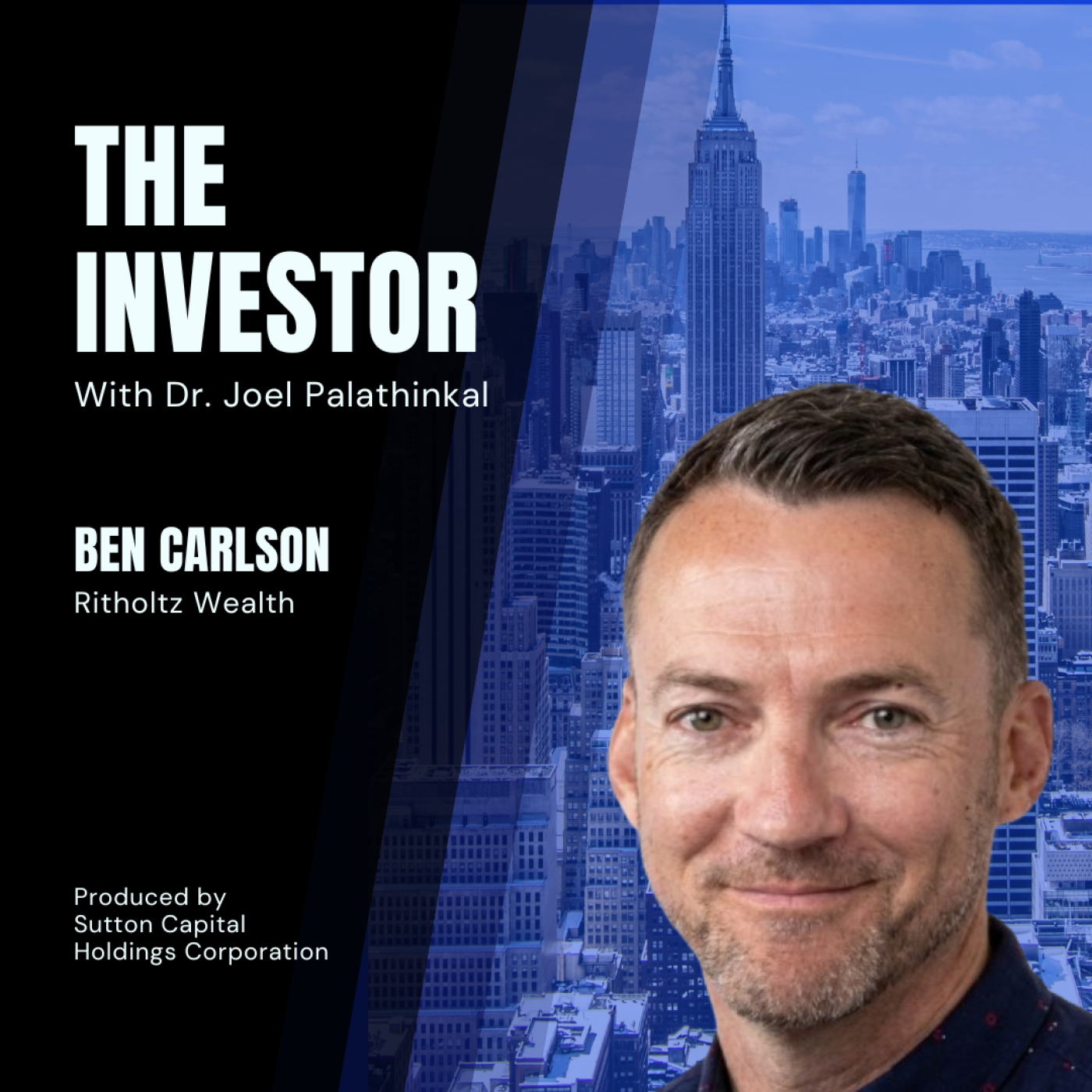
The Investor With Joel Palathinkal
Ben Carlson: CFA, Director of Institutional Asset Management at Ritholtz Wealth Management.
00:52:45
Loading summary
Transcript84 lines
- [00:03]
Joel Palo Thinkle
Welcome to the Investor, a podcast where I, Joel Palo Thinkle, your host, dives deep into the minds of the world's most influential institutional investors. In each episode, we sit down with an investor to hear about their journeys and how global markets are driving capital allocation. So join us on this journey as we explore these insights. All right, really excited for my guest today. I've got Ben Carlson, cfa. He is the director of institutional asset management at Rishold Wealth Management and advocates long term investment strategies. He's the author of four previous books including everything you need to know about saving for retirement and risk and reward, which I do have a copy of. So excited to kind of crack this open and talk about some of the learnings that we have in this, this really great resource, how to handle market volatility and build long term wealth. That's really what risk and reward is about. He's also the creator of the blog A wealth of common Sense where he breaks down wealth management and financial markets and the co. And he's the co host of popular animals animal spirits podcast, which has previously been named in Fortune's best business podcast. So, Ben, you know, thank you for coming on and welcome to the show.
- [01:25]
Ben Carlson
Hi. Welcome. Great to be here.
- [01:27]
Joel Palo Thinkle
Yeah. Well, you know, why don't we kick it off with just kind of you going through your early career, you know, I mean, where'd you go to high school? Where'd you go to college? What got you interested in wealth management? Were you always in wealth management? Let's, let's break down who Ben is.
- [01:43]
Ben Carlson
I definitely wasn't one of the people that was like reading Barron's or the Wall Street Journal on the weekend. I was, you know, grew up playing sports and that was a big thing for me. I went to college and I went to a small, tiny liberal arts college and went away my senior year and did an internship. And that was when I realized, like, I have no idea what I want to do. Sure. And I know I'm an analytical person. I like spreadsheets, I like data. But this is the early to mid 2000s. Didn't really know what I wanted to do. I got an internship working for an investment analyst team in Philadelphia my senior year of college. Got to do that and understand it. And the guy I worked with said, you don't know anything. You need to read the Wall Street Journal, like cover to cover every day and just start paying attention and follow our lead. And so I kind of got to know the markets a little bit. I enjoyed that. It was my first taste into understanding Incentives, because these are the analysts that give like buy, sell and hold calls on stocks. Sure, right. And I remember sitting there in one meeting, I'm kind of off on the side because I'm the, you know, the no nothing intern. But the manager of the team comes in and said, hey guys, we have like three sell ratings on all of our stocks. No one's saying sell. Can, can someone please place a sell rating? And I asked my boss, I said, why? I don't get that. Why are there no sell ratings? He said, because we need to go to these company management to get information. If we have a sell rating on their stock, they're not going to be as willing to give us information. And I was like, oh, that's interesting. It's career risk. And so I learned a lot about that. I didn't really know what I wanted to do from there, but just after school got a job working in the institutional side of things. I was managing money for endowments and pension plans and really got a good background in the ideas of asset allocation and setting investment guidelines and creating a plan as opposed to just picking stocks. I realized that makes more sense to me. I at first thought I was going to be the next Warren Buffett, but realized I'm not a good stock picker. This makes more sense to me. And that's kind of how I got into the sort of nonprofit wealth management type of space.
- [03:42]
Joel Palo Thinkle
That's really interesting. So when you think about the buy side versus the sell side, you're totally right. I mean, there's different incentives. I mean, people that are on the sell side, you know, so I spent some time at pretty well known public financial analytics company and a lot of our clients are buy side clients. And you know, the sell side research, you know, they're just selling editorial content essentially. Right. And they're selling, you know, artifacts that are essentially products. And they get incentivized, I think, with two things by selling the subscriptions to those products. And then also they get a commission off of every trade. Right. If they're actually doing that deal. But they may not always be thinking about if it's an actual good investment. And then, you know, on the buy side it's completely different. Right. The incentive is actually to make money for your clients. Right. If your clients and you know, know a massive endowment or if you're fidelity, you know, you have a fiduciary responsibility to generate some type of return that compounds over time or preserves returns. So what were some of the perspectives that you've seen on incentives at The. At the. The endowment, you know, or just kind of managing the endowment and.
- [04:53]
Ben Carlson
Yeah, no, I. So I joined a new endowment in, like, July of 2007, and I worked for a consulting firm first. We did a bunch, and then I went to one investment office and I joined right as, like, some of these credit hedge funds were blowing up in the summer of 2007. And, you know, it wasn't too much. You know, then Bear Stearns goes under. And then the fall of, you know, 2008, all the other turmoil happened. And the career risk that I learned there was just that when you're dealing with group think and politics, so it was, you know, everyone would have an investment committee, and then there's donors and there's. There's all these people that sort of have their hands in the pie, right, and trying to keep them all happy. And I remember, you know, the stock market was down almost 60% from the highs right from October 2007 to the lows in March of 2009. And me being this dumb, naive kid in his twenties who's reading about Warren Buffett and being fearful and others are greedy and stuff and greedy and others are fearful. I'm thinking, like, this is. Okay. This is the time to, like, really go for it, right? Like, like the. These are the kind of crashes you see maybe once in a career. Once or twice in a career, yeah. And all these other investment funds were going, no, no, no, we have to, like, hedge the downside. This is after the crash, right? We have to hedge the downside. They're looking at, like, black swan funds, and they're looking for ways to offload risk. And I remember a lot of the hedge funds that we were working with at the time. One of the guys said, listen, all of my personal capital is tied up into this. If my hedge fund goes under, I go under. So I'm taking a defensive posture. And I realized, like, oh, okay, it was a career risk thing from that perspective of, listen, if this gets worse, you know, if the financial system really does implode, I'm not going to be the one to go down on the ship. Like, I have to get. I have to. So all these people were investing from the fetal position, even though the crash had already happened. So all these people sort of missed the bull market that came out of that so Situation because all they wanted to do is be conservative. And so I learned that people tend to fight the last war when it comes to these risks, like these big, huge risks. Right, sure. People want to fight the last war. It's like, what do I wish I would have done to prepare for that crash? And I didn't. And that was really eye opening to me to be like, oh, okay. Even like these. And these are really smart people, you know, the people who run these funds, they're highly educated, they have, you know, good credentials, they went to really good schools, all these things. But even they're susceptible to this kind of thinking.
- [07:14]
Joel Palo Thinkle
Yeah, that makes sense. What have you seen in the capital raising space when it comes to aligned incentives? What I've seen, I joke around with some of my friends. There's a whole rise of these communities called collectives. They're not writing any checks at all, but they're collectives of, I guess, some allocators and some fund managers. But, you know, their business model is they just charge like a membership fee. So, you know what, you know, that's their incentive versus kind of actually allocating capital and deploying capital. So what have you seen in terms of kind of just different players and kind of how incentives may not align and how to manage those?
- [07:58]
Ben Carlson
I guess my only thought there would be like, there's always the herd mentality, and it feels better to do something if someone else is doing it with you. Right. So that's why you get in these groups. And yeah, it seems like, well, I don't know about this. It seems kind of risky, but if all these other people are doing it, then why. Why wouldn't I do it? Right. I think that's. There is something to that. And that's. That's what you see with a lot of these groups, like the Reddit communities. Right. Where they all kind of go from one stock to the next or one investment to the next. And I think that there is just, you know, when you get more numbers into something. But it's also interesting how that's impacting the markets too, where you see, like, the money shift from like one hot investment fad to the next. And it happens really, really quickly. And I think in the information age, it does happen faster than ever. So I think it's just like, it's fascinating to watch how that herd mentality plays out in different pockets of the market.
- [08:50]
Joel Palo Thinkle
Sure. What are some of the biggest learnings that you've learned? Managing capital for an endowment and managing more institutional clients.
- [09:00]
Ben Carlson
Yeah, one of the interesting things. So I went kind of from just nonprofits only to now I'm in sort of the wealth management space. We still manage some money for nonprofits, but we also have individuals and people always ask me, like, what's the biggest difference between those two pools of capital. One, of course, is a lot of the endowments have a lot more money. Right. But, but I say it's, it's also just a couple more zeros. Like the, the, the investment principles are still kind of similar. You have to still manage your risk profile, you. Your time horizon, and think through what your goals are. But it's also, there's more of a group decision. And I say managing money for one of these big institutional pools a lot of times is like turning a battleship because you're getting. You have to get everyone on board, right, to make the, make the pivot. Whereas you're dealing with a wealth management client. It could be an individual, or it could be two people that are spouses. It could be a family, and they're more willing to make, you know, quicker decisions with their money. Whereas the institutions, like, have to have all these meetings and then we'll all decide on it together. And if someone.
- [09:55]
Joel Palo Thinkle
They have to have an investment committee and they got to go through the entire process as well. Right?
- [10:01]
Ben Carlson
Yeah. So it just takes a lot longer to make decisions in that. In that arena.
- [10:04]
Joel Palo Thinkle
Yeah. No, that totally makes sense. What are the different types of strategies that you have to curate for different kinds of clients? I know it's a loaded question, but I would say some. You know, we've had a handful of, you know, MFOs on our podcast. We've had a handful of, you know, institutional wealth management firms. And one big thing that I've been hearing is account aggregation. So working with your clients and having them connect all their accounts, they can see, like a healthy picture of what their net worth is, and then also kind of how they should think through, you know, what, there's maybe their risk tolerance, but then their strategy, right? Are they doing mostly alts? Are they doing some real estate? Are they, you know, acquiring real assets? How do you kind of think through that individually with each client? And what's kind of some of the esoteric things that you've seen?
- [10:58]
Ben Carlson
It's interesting because we just went through a big project in the last 18 to 24 months with our MFO group at Ritholtz, where we decide. We've tried a million different providers for this, and it's really hard because you're pulling in data from all these different providers, right? The custodian and the managers. And then maybe there's some outside capital that, like you said, it's private investments or it's hard to, you know, get a valuation on. So we've been doing this and if you can do it, if you can aggregate in one place, it's great because people finally can see, oh, I had all these disparate assets all over the place and now I can see them in one place and better understand what I'm doing and what I'm looking at. And I think that's especially helpful for people in that sort of ultra high net worth group because for a lot of them, it kind of shows them what exactly is the overall plan here. Because you got a little bit of this and you have a little bit of this, you have some of this over here. What's the overarching plan? It's almost like you went through the buffet and just grabbed one of everything and now we can see everything. Maybe we can have more of a coherent strategy instead of just having these little buckets or these little side pockets all over the place, we can place some more constraints on it. So, yeah, that technology, which, you know, I've been in the nonprofit space for 20 years now, it's always been a problem for institutions, for family offices. It's never been easy to have the technology providers all talk to each other, have the performance flow through perfectly. It's not an easy lift to do. So finding a provider that can do that is worthwhile.
- [12:36]
Joel Palo Thinkle
And the nonprofit, just to kind of unpack this a little bit. So when you, I guess, your clients are nonprofits and.
- [12:43]
Ben Carlson
Yep, I kind of work with nonprofits and then a lot of our family office level clients, I guess.
- [12:48]
Joel Palo Thinkle
Got it. So the, the family office is. A lot of them set up their own nonprofit is what you're saying at some points. And what do you think the biggest benefit is to setting up a nonprofit? And you know, I'm assuming there's some tax benefits, there's maybe some strategic benefits. So I think that'll be really helpful for the audience. I know a lot of people set up foundations as well, so we'd love to kind of unpack that. I mean, selfishly, from my own knowledge.
- [13:15]
Ben Carlson
Yeah. And it doesn't always make sense. Like a lot of it depends on your asset level. And for some people it might not make sense financially, even though, you know, yeah, you get the tax breaks. But for some people it's more about a legacy. Right. They say, I don't care if I'm not going to get the huge tax benefits I could give elsewhere and I get the same benefits. But if I set up a foundation and my name's on it and people can see the money flowing through there to the causes that I'm giving, it can be a legacy and a lot of times it's a way to bring family in. Right. To kind of run the operation. So for many people that is more important than any of the financial benefits. Yeah. And there's a lot of people who just decide it's not worth it. Right. I'd rather have a donor advised fund or I'd rather just give to my organizations and get the tax break that way. But I mean taxes are a huge concern for everyone at every stage almost. But that whole idea of like tax alpha is a really big thing in wealth management these days.
- [14:12]
Joel Palo Thinkle
Sure.
- [14:12]
Ben Carlson
People understand that like beating the market is very hard. Right. Beating the market is always been difficult. It feels like it's getting harder by the year. So people decide like, okay, if I can't get traditional alpha or it's hard to come by, how do I get other ways of getting edges? And one of them is like tax Alpha. Right. I'm sitting on these huge gains because we've been in this huge bull market. My business is worth a lot. I'm going to sell it. My real estate's worth a lot. I'm going to sell it. My stock portfolio is worth a lot. Me, I'm going to sell it. Like how do I do so in an intelligent, reasonable manner from a tax perspective. So my net after tax returns are not impacted very, very much.
- [14:47]
Joel Palo Thinkle
Sure. Yeah, that definitely helps. And then the, what are some of the biggest benefits to setting up a foundation?
- [14:55]
Ben Carlson
Yeah, again I think it's just, it's more organized. You can also have more of like you can create your own investment policy statement just for the foundation. Right. Again, you can bring your family in. It's a legacy situation. There's the tax breaks of is kind of difficult and like I said, it requires a certain threshold of assets. And there's also outsourced providers now who will kind of help you do that too. Like that will do it for you because it's not that easy. You have to have sort of a team of lawyers and professionals who will help you run it and see the operations. And there's rules behind it too. Like you have to spend a certain amount. Right. And then you have to get audited. So it's, it's not all fun and games but you know, for the people with the right level of assets, it, it, it can help. And, and it's a good way to funnel in some, you know, you have positions with low cost basis, high embedded gains that you can, you know, donate to the Foundation. It, it's, it offers attack breaks as well.
- [15:49]
Joel Palo Thinkle
And the donor advised funds, I'm assuming, and you're going to clarify, I'm assuming the benefit is you can get that tax benefit by just investing into that fund structure and then the fund structure invests in some of these initiatives that provide tax savings and then you get, do you get some type of statement that you can kind of show at the end of year saying that you, that you invested in some type of charity?
- [16:13]
Ben Carlson
In an aggregator level upfront, we have tax people on our team that know this stuff more than me. But I think the biggest benefit to it, to adapt is just you get the tax break up front but then you invest the money and can kind of give it out of that fund structure over time and not have to give it all right away so it can have some growth. And so yeah, it's a great vehicle for, like I said, let's say you put money in Nvidia eight years ago, you have a huge gain and you decide to give it away. That's the kind of structure you can give it away in and potentially diversify and then give away. But you get that tax break up front and don't have to pay the capital gains taxes.
- [16:45]
Joel Palo Thinkle
Sure.
- [16:45]
Ben Carlson
On the stock.
- [16:46]
Joel Palo Thinkle
Yeah, no, that's really helpful. And then I guess going back to your career background, so you spent some time in the endowment space and then you obviously built a huge career in the, the non profit space. Any other, you know, growth or you know, steps after that that you kind of. Did you make a pivot anywhere else or have you just kind of been an expert in the, the nonprofit and wealth management space?
- [17:12]
Ben Carlson
Yeah, so basically I was working for one specific nonprofit. Like you know, we had a billion dollar portfolio and I, I decided like I would like to branch out a little bit and I'd like to work with different types of clients, you know, sure. For 401k investors and wealth management clients and family offices and the smaller non profits that need help because there's, there's a, that's one of the cool things about working in that space is you realize how many of these charitable organizations that are out there and a lot of them are smaller and community based and don't really have that much help from Wall Street. A lot of them are overlooked because these banks and investment managers would rather work with larger clients. So I started writing my blog to kind of get the word out there and I ended up meeting up with Barry Ritholtz and Josh Brown in the early 2010s and came to work for them at Ritholtz Wealth Management. And they said, hey, come help build out the nonprofit sector of ours. And you can also produce content that's helpful for us, you know, to communicate with clients. And so I've been doing that for about the last 10 or 11 years. So we produce a lot of content, have a blog, did the book. Obviously, as you mentioned, we have Animal Spirits, we have a whole host of podcasts, and we have a YouTube channel. So we. We kind of go and talk to people where they are and share our thoughts about the markets and people like what we're putting out there. It kind of builds some trust, and people come to us, and those are the kind of clients that we work with who kind of get to know us through. Through these channels.
- [18:34]
Joel Palo Thinkle
That's amazing. Yeah. I mean, we had somebody on our podcast yesterday that was a fund manager, and we'd love to hear your take on this. You know, she spent a lot of her time when she built her first fund focusing on her personal brand. But as she's evolved now she's on, you know, her second fund, and she's built a team. She's evolved to kind of the TikTok page, the Instagram page, kind of evolving to be the company's brand. And, you know, for her, similar to the word that you used earlier, legacy, that's kind of been a big thing for her. She wants to build a legacy brand. So what are your thoughts on that in terms of kind of things that you learned with long form with the podcast? I mean, you know, right now we're live streaming, right. But, you know, we try to chop it up and, you know, squeeze a lemon as much as we can and repurpose it as much as we can to be efficient. But what are some of the learnings that you've had building a media platform and also just building a brand?
- [19:31]
Ben Carlson
Yeah. It's funny. When I first set out to write, I didn't do it with the. I did. I think my blog started in 2013. I didn't have the idea, like, I'm going to start a brand and I'm going to build an audience. I just wanted to kind of. I felt like I had something to say. I wanted to explain the complexities of the financial world into, you know, plain English for people who are not in the finance. And I realized it kind of resonated. I had a lot of financial advisors reaching out to me, saying, hey, I really like what you're saying here. Can I share it with my Clients. And that wasn't even my goal at the time. I thought, oh, that makes a lot of sense because guess what? Most of the clients are just normal people too. They don't work in finance. And I think people in the finance world sometimes take that for granted that we're paying attention to this stuff all the time, but other people have a job and family and other responsibilities and they can't pay attention as much. So that was really interesting. And I think just financial services in general, being a service business, it's not like you're going through the manufacturing product process and at the end you hand someone a finished product, right? Here's your widget or whatever, take it, you're done. It's like a process. So there's a lot of trust involved. And I think what we realized is that through these different channels, and especially like the live stream, the YouTube podcast and stuff, it's a really great way to build trust with people. And it's not like people just come to us and throw us their money and say, hey, I love you guys, take my money. But it's a way to kind of break down the barrier of someone reaching out. And when they have a life event, right, they get some stock options from their company, they get an inheritance, they have, they get married, they get divorced, whatever it is, they have a life event that causes them to seek financial advice. Who should I reach out to? Oh, I've been following these guys forever. And so it's, it's, it's a way to build trust. And we decided to go that route as opposed to golf outings and, you know, town hall meetings and that sort of stuff. And the Internet sort of allows you to unleash a lot of these things. And yeah, for us it's been, it's been a business model and it's, it's, it's, it's worked really well.
- [21:23]
Joel Palo Thinkle
That's amazing. Would love to walk through a couple different profiles and you know how they should think about wealth management. So you sold your company for 50 million, right. So what should you be thinking about? You know, where do you start? You came into some massive amounts of life changing liquidity.
- [21:43]
Ben Carlson
Yeah, it's interesting at that level of wealth, the, the funny thing is, is that that's like these are the easiest client to work with or the hardest client to work with. Okay, right. Because it almost like obviously there's a lot of things from the financial planning perspective you have to do, right? Estate planning and tax planning and insurance. And there's a lot of things Outside of managing the money, that makes sense. But from a. Just a portfolio management perspective, you have $50 million, you can invest in just about anything and you'll probably be fine. Right. You could put all of your money in T bills and you'd be good. It's funny, there's two billionaire families where I live in West Michigan that founded a company and both it's two founders, they went to high school together, they founded the company, they both became billionaires, and they both have diametrically opposed ways of investing money. One of them would put all of his money into treasury bonds. He was very conservative. The other one would put all of his money into private equity deals, venture capital. Right. They, they had, you know, coming from the same background, but they just both had two different risk profiles. And the thing is, they were both fine with the way they invested. Right? Yeah. Because they had so much money. I think that when you have that much money, the hard part is actually putting like limitations and guidelines on yourself. Right. Because you can't invest in. And you have people coming into your pocket all the time, hey, why don't you invest in my startup? Why don't you invest in my fund? Why don't you do this? And I think having some sort of like limitations and buckets and things that will guide your actions, that's the hardest part. Because the world is your oyster. When you have that much money, you can do whatever you want, essentially, and you'll probably be okay. So I think just kind of having some guidelines and placing some limitations on yourself is the most important thing of. These are the areas that I'm going to focus on. This is what I'm going to invest in. These are things I'm not going to invest in. Right. Those investments may be good for someone else, but not for me. I think that's the hardest part at that, at that level of wealth.
- [23:32]
Joel Palo Thinkle
Sure. And you know, obviously they say you meet one family office, you meet one family office. Right. So everybody's kind of different in terms of like what their goals are. But what are some, maybe some common threads that you've been seeing with family office clients and how they're thinking about their plan? And obviously there's gen ones and gen twos and gen threes. So there's, you know, there's that complexity as well. The family dynamic.
- [24:00]
Ben Carlson
Yes. And that's a big part of it. Right. Because at that level of wealth, you're not just investing for yourself, you're investing for the next generation and possibly the generation after that. And so I Think, you have to think through it in terms of like multiple time horizon streams. Right. I'm investing for myself and what I'm going to be spending the money. But also my kids, they have a way longer time horizon than me and the grandkids have an infinitely longer time horizon than me. So I think you have to think through that. And so the conversations have to involve the whole family. Right. Because they're all part of it too. And, and so the estate planning becomes really important. It's funny, Sure. A lot of people come to a wealth management firm and assume that they, they're coming because they want to get investment advice. And that's certainly part of what any good wealth manager will do for you. They'll create a great portfolio, they'll invest you the money for you, offer you good due diligence, all these things. That's important. We do that too. I'm on our investment committee, so I'm part of that process. But most of them realize fairly quickly that the biggest value add is on all the financial planning aspects. It's the estate planning, it's the insurance, it's the tax planning. And that's not just like doing tax returns. It's like tax forecasting in terms of like you talk about like giving away money, when to spend it, when to sell something. All of these sort of financial planning aspects of like your financial plan, which is a process and not an event. It's something that is like, takes place over the course of many, many years. And so that's, that's the thing I think people realize is like, you have to have expertise in all these different areas. If you, if you want to work with a client of that size and level of complexity, you better have expertise in all these different areas, otherwise you're not going to help fulfill everything that they need to get done.
- [25:34]
Joel Palo Thinkle
Sure. No, that really helps. And you know, tell me, what was some of the motivations to. Obviously you've built a great platform on various channels. What got you inspired to write the book? I'm assuming it's, you know, a next graduation point after writing a lot of blog content. Right. And writing editorial content. The next step is probably just combining that into a resource that has it all consolidated. But walk me through that journey of becoming an author.
- [26:07]
Ben Carlson
Yeah, that is part of it. I feel like a lot of the book is the stuff that I've been thinking about for the last 10 plus years, you know, and it's then taking all of these ideas. Someone once told me that writing is figuring out what it is you really think about something. And that's part of the process that I like about it is just distilling all these ideas I have in my head about the way the world works and how markets work and how to think about risk and then putting it down on paper and. Yeah. Then taking all those ideas I've created over the years and sort of putting them together in a coherent, you know, outline for the book. And that. That was kind of the idea. And just thinking through the idea of risk and reward. Why call it that? It's just, I just think that investing for anyone is, is. Comes down to trade offs. Right. It's like risk reward, yin and yang. It's, it's. If you want to have higher returns, you have to be willing to accept volatility or risk in some form. If you want to decrease your volatility and decrease the chance of loss, you have to probably have lower expected returns. And thinking through those types of trade offs and how risk reward are attached at the hip, that. That's kind of the way, and I view it through the frame of, you know, the last hundred years or so of market history and looking at all the bad stuff that has happened just to remind people that there are, there are these painful periods of discomfort that can and will happen. And, and you have to kind of prepare yourself for those just as much as you prepare yourself for the upside.
- [27:29]
Joel Palo Thinkle
Yeah, no, that really helps. We'd love to learn a little more about portfolio construction strategies. So when you build a portfolio. And again, these could just be a couple archetypes. Yeah, that'd be a good one. So, couple different archetypes. How would you think through maybe. Let's go through maybe three of them.
- [27:46]
Ben Carlson
Right.
- [27:47]
Joel Palo Thinkle
There's a certain archetype like an endowment. There's a family office. There's maybe a. Let. Let me think of another one. Right. There's maybe a foundation or something. Right. How would you think through a portfolio that's relevant to them? You know, I'm assuming mostly public markets exposure. If you're like a foundation, and I'm assuming that's because there's liquidity, but then there's probably some, some allocation to private equity, venture capital being under it to be able to generate some outsized returns. But again, would love to hear from the expert because you're going to know a lot more than I do.
- [28:23]
Ben Carlson
Yeah. We typically work with smaller nonprofits. We work with a handful of larger clients. But the way that we work with all our clients is we say that our philosophy is universal and the strategy for your individual circumstances has to be unique. That's the way we think. We have this broad way we think about things. We think that the markets tend to work long term. Markets are hard to beat. Typically we like to keep costs low. We're long term investors. But we understand that you have to survive the short term. So yeah, you're right. We tend to skew more towards liquid markets because they're simpler, they're less complex. There are certainly clients that we have that come to us with private equity investments and we're happy to manage those, but we keep things relatively simple. And so we kind of say we're the liquid side of your portfolio. And if you have these other private investments, the illiquid things like we're a good complement to them. Especially if you have a, you're talking about the ultra high net worth type of space. A lot of them will have outside investments. And again, that could be friends and family members that have startups that they've invested in. It could be private equity funds, it could be venture capital funds. We like to be that more liquid portion of the portfolio for them. And we just like to do that from a simplification perspective. And I learned early on when I worked in the endowment space, if you don't have the expertise to invest in private markets and private funds, it's going to be really tough going because the range of outcomes in those spaces is very wide. So if you took the top quartile in a public equity market versus a bottom quartile, you're probably going to be doing fine either way, Right? You're going to be within a ballpark there. There's not a huge variation between the best public equity manager and the worst. But if you look at the best private equity managers and the worst, there is a huge variation. Same thing with venture capital. If you're not invested in those top quartile, top decile, your, your results can be really, really poor. And the problem is because of the illiquidity, illiquid nature of those strategies, you're stuck. Like you. Oh yeah, you can't, you can't get out. And there's operational headaches there. So if you don't have a team, a lot of these big huge endowments at Harvard and Yale, these Stanford, these big huge endowments that have multi billion. They have experts in all these areas, right?
- [30:41]
Joel Palo Thinkle
Sure.
- [30:42]
Ben Carlson
They have hedge fund investors, they have people who invest in hard assets. They have the private equity people, the venture capitalists. If you have a smaller endowment or foundation and you don't have that level of expertise. It's really hard to understand what you're investing in and how it's working. And then it might take you 10 or 12 years to know whether one of these funds actually is doing well enough for you. Right. Because it takes a while to draw the capital down and then to get the distributions to come back. So it's a very challenging way to invest if you don't have the level of expertise that's needed.
- [31:13]
Joel Palo Thinkle
Yeah, no, and I would say to a lot of allocators, they just re up if a manager is already doing well because it's just they don't have the team or the infrastructure to underwrite a new manager. And you know, underwriting means, you know, several hours of diligence and, and you know, underwriting the risk of not knowing the manager and not knowing if the performance is going to be consistent. So it takes, you need a staff to do that. Right. You got to go through the investment committee, which is hours and hours of work. So to your point, you know, that's, that could be a constraint at some point sometimes, right?
- [31:49]
Ben Carlson
Yeah. And, and you have to kind of diversify not only by like manager type, but also vintage year. If you just happen to put your money into a fund at the worst possible time because it's a bad. Like if you put your money into a venture fund in 2021, that was a bad time to invest, unfortunately.
- [32:02]
Joel Palo Thinkle
Sure.
- [32:03]
Ben Carlson
Right. Through maybe no fault of your own, just because the valuations were so much higher. So you have to understand, like, yeah. And then it's hard to know, boy, I invested in fund one, fund two came out two years later and I don't even know if, I don't know if the fund's good yet. We're still investing, but they want me to re up again. And so that's the challenging part is like the portfolio management side of private investments. Now, of course, there are some private investment funds that do really, really well. Right. There wouldn't be that much money in them if there weren't some that did really well. It's just, I think it's getting harder and harder to access those best performers. Right. A lot of them, depending on how big you are, they might not want you. Right. I invested a 1 1/2 billion dollar endowment fund. A lot of the best funds, even at that size, wanted nothing to do with us because they were investing with these 10 and $20 billion funds that could do a bigger allocation. And so that's the problem is like getting into the Best funds. That's hard too.
- [32:57]
Joel Palo Thinkle
Yeah, no, I mean, I totally agree. I mean a lot of those funds get over subscribed and there's a whole concept of GP staking now. So sometimes GP stakes, LPs, they'll also try to secure their allocation and build that relationship for Fund 2 and Fund 3. I want to double click on this book that you wrote. Right. So we talked about a little bit of the origin story, but would love to kind of unpack some of the nuggets of the book. I love the quote from Morgan Housel so obviously he wrote the Psychology of Money, so saw a nice little really cool call out there on the front of the page. But you know, maybe just if you could break down a couple lessons that we could take away from the book, that'd be helpful. And then I might actually flip through and pick one of these chapters too. But would love to. I mean, maybe I'll start with a quote from Charlie Munger.
- [33:49]
Ben Carlson
Right.
- [33:49]
Joel Palo Thinkle
Big money is not in the buying or selling, but in the waiting. So maybe we start with that and then talk through some other nuggets.
- [33:56]
Ben Carlson
Yeah, it's interesting. I do think that there's always a really good reason to buy or sell an investment, right? You buy it because you're a value investor and it went down in value. Right? You buy it because you're a momentum investor and it went up and so you're trying to catch the wave. Or you sell something because you made a bunch of money and you want to take a profit. You sell something because it's down and you think it's going to keep going down. But holding I think is the hard part for a lot of people. Right. It's hard to know when something is down. Am I holding it because I'm being disciplined or am I being, you know, not flexible enough to get rid of this and invest in something else? I think that's a really hard part. That's one of the reasons why I like simpler strategies is because I think it's easier to lean into the pain and rebalance and keep putting money into something when it's down. Whereas something that's more complicated and hard to understand, it might not be as easy to put more money into it. So. So I do think that whole idea of holding and being patient and having a longer time horizon, which, it's funny, that's probably one of the biggest benefits of like we talk about private equity and stuff of those types of funds, is that you're forced to be a long term holder, like one of the reasons people build wealth in their houses is because they're, they're just forced to be a long term owner. Right. You can't buy and sell your house on a weekly basis. You can't trade it, you have to hold it. And when you hold an investment for a longer time, guess what, you're it decreases the potential for mistakes, it lowers the transaction costs. And so I think being a long longer term holder tends to help. It's just really hard to do psychologically.
- [35:22]
Joel Palo Thinkle
Yeah, no, I totally agree. I think and you know a lot of the compounding happens within, within holding. Right. And you know a lot of people just statistically they do you do better performance wise investing into an index than trying to pick them your yourself. I mean just historically there's been some data around there but wanted to hear your thoughts about that in terms of kind of actively managing versus just kind of investing into a, an index of indexes.
- [35:54]
Ben Carlson
Yeah, I think it's proven out that indexing is really hard. And I think you could probably make the case that in public markets the last 10 years or so has been maybe one of the hardest times ever to outperform just because of the concentration in the MAG7 stocks has been so great. And so if you didn't have an outsized position in those stocks, you got run over essentially. I think a lot of people who did underweight them were looking at it from a risk management perspective. Right. These stocks have had such high returns. How can it keep going? And it does keep going. But I talk a little bit in the book about how the concentration of returns in the stock market is actually kind of the norm. Right. People think that if you look at the very long term, the majority of the gains in the stock market have come from a handful of the biggest stocks. It's almost like a power law. It's funny, it's almost like the stock market is like a venture capital fund in some ways where most of the stocks are aren't that great over the long term. But a handful have just these enormous gains. Apple and Amazon and Nvidia and Microsoft, you know the names. So I think.
- [36:58]
Joel Palo Thinkle
No, I mean you're right. I mean if you really think about it, if you just think about the multiple, right. There's people that have gotten into a secondary transaction and they may be 2x once it goes public. Right. And then there's a lockup. With the lockup they get a 2x. Right. But if you just bought the company when it was, when it went public for like $8 a share, you would have probably gotten a 5X.
- [37:21]
Ben Carlson
Right.
- [37:22]
Joel Palo Thinkle
But if you held it for 10 years similar to venture, you probably would have. I don't think you would 5000x in most instances, but you may 10 to 20 or 30x. Right. Which is still really good cash on cash returns. So to your point, sometimes you can get outsized returns with different flavors of different strategies.
- [37:44]
Ben Carlson
Yeah. And. And I think one of the beauties of indexing is just that it forces you to hold the winners. Right. The winners kind of rise to the top. The way that I have always looked at actively managed funds is I think it's especially in the public markets, it's increasingly hard to be a discretionary fund manager. It's really hard. I think it's probably easier than ever to be more of a quantitative rules based. That's the way that I typically like to look at actively managed strategies is I'm investing in different types of stocks, whether it be value stocks or momentum or high quality or dividend, whatever it is, setting some rules and guidelines and allowing those rules and guidelines to pick those stocks for you as opposed to trying to be discretionary about it and do it yourself. So that's kind of the way that we think about being active. And again, the rules based strategies are easier to factor strategies easier to rebalance into the pain when they underperform. Because everything underperforms eventually.
- [38:41]
Joel Palo Thinkle
Yeah, no, totally. What would you say is another. Maybe we can walk through a couple other nuggets that maybe would be good to call out from the book.
- [38:55]
Ben Carlson
Sure. So I talk about how important the idea of loss aversion is. I think it's one of the most important concepts in finance. And Daniel Kahneman was the one who kind of quantified this. And he asked people all over a range of different topics about money, just, you know, how do losses impact you more than gains? And what he found was that losses sting twice as bad as gains feel good. And I think anyone who has a favorite sports team understands that you remember the losses more, they sting more. So Andre Agassi talked about how when he won Wimbledon for the first time, he had a bunch of losses before then he said winning didn't change anything for me. The losses were still just as painful. And I figured, I learned that the losses were actually more painful than winning felt good. And I think it's a good finance lesson for people that like getting what you thought you wanted sometimes is like a non event. Right. I had this goal and once I had a net worth of a million dollars, then I'M going to be happy. Then you get there and you go, well now I need 2 million or now I need 3 million. And I think that idea is really important and just how you handle that and how you deal with loss I think is also just one of the more important things that, that you can do as an investor. And it helps you understand yourself, like how are you going to deal with discomfort and pain.
- [40:07]
Joel Palo Thinkle
Yeah, I mean I had an allocator Share this quote which always sticks with me when it, when it comes to allocation into funds. There's so much fomo, right? I mean there are, A couple years ago there was a bunch of FOMO around web3 and crypto and you know, this allocated. What he was saying is like, like I, I, I'm okay missing a wedding, but I definitely don't want to attend a funeral. So I'd rather miss a wedding than attend a funeral. Which makes sense. You know, I mean it's, it's kind of like it's better to miss maybe some returns than suffer massive loss. Right?
- [40:42]
Ben Carlson
Yeah, I, I like that. That's a new one for me. I like that one. And the thing is there's, it's never been a better time to be an individual investor because there's, there's strategies and you have access to different types of investments more than you ever had in the past. Right. And there's, there's strategies that would have been available only to hedge fund investors and ultra high net worth investors 10 or 20 years ago that now individuals can invest in in like an ETF tax efficient forum. And so from that perspective it's great, but it's a double edged sword because there's, you're talking about, to hop onto your analogy, there's weddings all over the place. Like there's always something that's doing well that you go, oh my gosh, why didn't I, how did I miss this? Why am I not in that? And I think that's, it's never been more tempting to try to like tinker with your portfolio and change and try to try to hop on those waves and follow them. And that's the hard part about putting some filters on your process. Like you have to have some sort of constraints otherwise like the world is such, there's so many things to invest in these days that you can just get overwhelmed.
- [41:40]
Joel Palo Thinkle
Yeah, you're like a kid in a candy shop. I mean, you see, you know, the next rope, the next Android robot company popping up and it's like, man, I got to get in this you know, and then what happens is there's like 20 other companies that do the same thing. You know, what are some things that you're excited about in terms of just capital markets? I think just the future of civilization is going to impact capital markets.
- [42:05]
Ben Carlson
Right.
- [42:06]
Joel Palo Thinkle
I think, I mean, so Vinod Khosla mentioned something a couple days ago in one of his feeds, and he was just saying, like, by 20, probably by 2030, most of the manual tasks, picking vegetables from a garden, will be robotic. And I think there'll be more things for humans to kind of do that are strategic in terms of maybe orchestrating the robots and thinking through how those systems work, and then also thinking through humanity can enjoy life together, I think is a big thing. But tell me what's going on in your mind in terms of just kind of exciting things in humanity that you think will move the market?
- [42:47]
Ben Carlson
Yeah, I think that one of the benefits of AI is going to be it's going to force people to be more creative. I get all these AI, the book came out and I get all these AI pitches and I immediately just delete them all because I can tell that they were written by AI. So I think people are going to have to learn to stand out from the crowd by being more unique and being more creative and not just letting a prompt do something for you. Yeah, there are certain tasks that a prompt and an AI prompt is going to be better than humans, of course. So I think it's. I can't wait to see, like the explosion of creativity. I think it's going to be an explosion of business formation. I think that it's going to be easier than ever for people to start their own company because the knowledge base is just out there and how do I do this and how do I do that? And AI is going to make people way more efficient and more productive. So that, that's kind of like the cool part of it, I think, going to make things easier for DIY investors that maybe were too nervous to ask questions to people before. Maybe they. People who didn't have access to wealth managers because they couldn't meet the minimums. Now they'll be able to have questions answered that they never would have. And so I think the access to information for a big part of the population that maybe didn't have it before is going to be really, really helpful. So I think, like DIY investors are going to benefit hugely from AI, I
- [44:06]
Joel Palo Thinkle
think, you know, so wealth management, I think, will cascade to the Gen Zs and the Millennials, because those people will eventually get into their 50s and 60s. So I think capturing that market early on with more digital friendly tools I think could be exciting to see with wealth management versus kind of logging into a fidelity terminal. Maybe there's other, you know, chat interfaces or other kind of personalized services that can kind of engage with you better to kind of, you know, obviously there's data, right? There's your, your health data, sensor data. You know, Google's dropping this new Fitbit that I think is going to be a fraction of the price. There's no subscription. So there's kind of data that can kind of personalize things around, around what your goals are, you know, and I think that's kind of interesting as well. And then we've got Robo taxis. That's kind of another, you know, thing that, that's going to probably impact the transportation industry. So I think there'll be a whole slew of M and A acquisition I believe. You know, just bigger companies, bigger conglomerates are going to want to buy or do roll ups of like robo kind of automated taxi services. But I don't know, would love your thoughts on just kind of macro trends.
- [45:23]
Ben Carlson
Yeah, no, I mean the future is going to be wild, I think. And it's funny, one of the big macro trends you keep hearing people talk about these days is like we're in a fertility crisis. Right. People aren't having kids as much anymore. They're waiting to have kids. And so I think in a lot of ways we're going to need robotics to help out there to like fill, you know. So I think, I actually think the fact that I know people are concerned about what AI is going to do and there's certainly going to be industries that are going to be impacted and people whose jobs are going to be impacted, you know, that would not shock me. But I also think that actually the robotics revolution, if that's the next step here, is going to be kind of necessary. We have 70 million baby boomers. A lot of them are going to need to be taken care of in the years ahead, right? Sure. So I think having more robots to help out in things like healthcare and these sort of things is going to be probably necessary for our. And so I think technology is probably going to solve a lot of problems in the years ahead for us and maybe it's a lot of stuff people wouldn't have wanted to do anyway.
- [46:17]
Joel Palo Thinkle
When you talk about fertility, how much of it do you think the issue is caused by maybe environmental factors where we're just not allowed. We're not able to, you know, have kids like we used to versus just the financial burden. Do you think it's, do you think the driving factor is, you know, heavier on one of those, one of those aspects or.
- [46:38]
Ben Carlson
Yeah, yeah. The fact that it is, you know, I had three kids that went through daycare. It's really expensive. Buying a house is way more expensive these days. That's certainly part of it. Another part of it is just people are more highly educated than they were in the past. So people are putting off becoming an adult until later. Right. People aren't settling down and getting married right out of high school like they did in the baby boomer generation and the silent generation. So I think that's part of it. So I think there's a lot of factors, but it's. The crazy thing is it's happening all around the globe too. It's not. This is not just a US phenomenon. So yeah, it's interesting. The ramifications, you know, could be huge if people don't start having kids. And it just, I think part of it is too just a wealthier society now. Right. And, and, and that tends to happen in wealthier societies where you have fewer children, you know, because back in the day there was so much infant mortality that people had to have seven kids because three or four of them might not survive. And they had, they were working on the farms, they needed almost the labor. And now we're in a more knowledge based economy. You don't need as many people for the physical labor as we did in the past. So. So part of it is like a, a sense of progress. Part of it is. Yeah, people are worried about these other things.
- [47:46]
Joel Palo Thinkle
Yeah, no, absolutely. Maybe we can go through one more bullet from the book of just kind of one takeaway. If you got one more.
- [47:57]
Ben Carlson
Sure. So one of the big things I talk about in the book is just the impact of the psychology of inflation. And I think that's one of my big lessons from this decade is just how much inflation can impact people's psyche and the sentiment. And we had inflation for the past 40 years, of course, but never a spike quite as big as we had in 2022 where inflation got down to 10%. And I think we're still seeing ramifications of it, how angry it made people and seeing the sticker shock of what prices can be. And now we have gas prices rising again and maybe inflation is rising again because of the war and such. I think it's just interesting to see the psyche of it. So I talk a lot about the psychology of inflation and how, you know, wages have more or less kept up with inflation this decade. But people look at wages like it's the fruits of their labor. And people look at inflation like, no, that was the government, they did this to me. And so I just think that following the psychology behind inflation is fascinating. My whole thing in the book is, listen, this is the reason that you invest in the first place. You invest your money because you want to increase your standard of living or keep up with the inflation rate. If you bury your money in the backyard and don't take any risks with it, a 3% inflation rate is going to cut your money in half in like 20 years. Right? So the whole point of it is like, yes, you can hate inflation all you want, but you have to actually do something about it. Because as long as the economy keeps growing, the debt keeps growing, inflation is probably not, it's not going to slow down. So you have to then do something about it. You can't just sit there and complain about it.
- [49:27]
Joel Palo Thinkle
Sure. Well, you know, you talk about inflation. I'm looking at chapter three here. I was chuckling for a second because the quote is, people who buy things are suckers, right? And then, you know, pillar one is a good job. Right. So the three, the three hedges, right. So good job. Or I would just say some type of active income. Right. So if you got a business, you got some active income that's coming in and then a home with a fixed rate mortgage, I think that's a big one right now with so many different variable mortgage rates. And then, and then there was a third one. I'm just trying to pull the third one here.
- [49:59]
Ben Carlson
Yeah, Third one. Third one is just over the long term. It's a stock market.
- [50:01]
Joel Palo Thinkle
Yeah, right.
- [50:02]
Ben Carlson
The stock market is compounding. Yeah, yeah, it's compounding. And the stock market has grown over the last hundred years at like 6% over the rate of inflation. And it's a long term bet. So I think a lot of people try to figure out ways of like short term hedging against this, the inflation. And there's always going to be, there's always going to be some asset that does well against inflation and some that doesn't. Right. Sometimes gold works, sometimes it doesn't. Maybe bitcoin works sometimes, sometimes it won't. But, but I think like to your point, like having a good job, like people kind of personal finance, a lot of personal finance, people talk about saving and paying off debt and how to be more frugal. But the way that you supercharge your finances is you make more money, and that allows you to save more. Right. That's. That's the whole thing.
- [50:40]
Joel Palo Thinkle
Yeah.
- [50:40]
Ben Carlson
And I think.
- [50:41]
Joel Palo Thinkle
Look, I mean, I see the evolution, too. A lot of people get more into public markets, and, you know, they do some real estate. They want to hold some assets. But public markets, you can get out if you need to, if you really need to. And also, it compounds. And then you see a lot of people hoping and betting, you know, in their 30s and 40s and venture hoping that, you know, there's one or two of those home runs that kind of make up for it. But I think just kind of thinking through, like, just different parts of your stages in life, I think is important as well, because as you get older, you're starting to decumulate and, you know, do that efficiently, I would say.
- [51:17]
Ben Carlson
Yeah. And you have more money, too, so the losses are more painful when you have a bigger portfolio. Right? Oh, sure. Yeah.
- [51:22]
Joel Palo Thinkle
Well, I know we got two minutes left. Ben, this was awesome. I really enjoyed riffing with you on this. Maybe you can leave us with just one piece of advice. It could be from a family member. It could be from a past boss that you worked for at the Endowment. It could be just a colleague, you know, but just what one piece of learnings or advice you want to have us take? Take back with us?
- [51:44]
Ben Carlson
Sure. One of my bosses told me it's okay to be surprised about what happens in the market, because this decade alone has been very surprising. We've had the pandemic. We've had high inflation. We've had liberation day. We've had war, all this stuff. It's very surprising. Everything that. It's like, everything that's kind of. But he also said, don't be surprised that you're surprised. And I think that's the lesson of history that, like, stuff comes out of left field at all times, and you just have to kind of be able to deal with that. The fact that you're never gonna be able to predict what the future holds, and. And that's just part of the, like, irreducible uncertainty that investors have always been faced with.
- [52:17]
Joel Palo Thinkle
Yeah. Well, that was so amazing, Ben. Really appreciate it. Thank you for your time and what you do for the community as well, and everybody else. Have a great day.
- [52:24]
Ben Carlson
Thanks, man.
- [52:25]
Joel Palo Thinkle
All right, take care.
- [52:39]
Ben Carlson
Sa.