← The Investor With Joel Palathinkal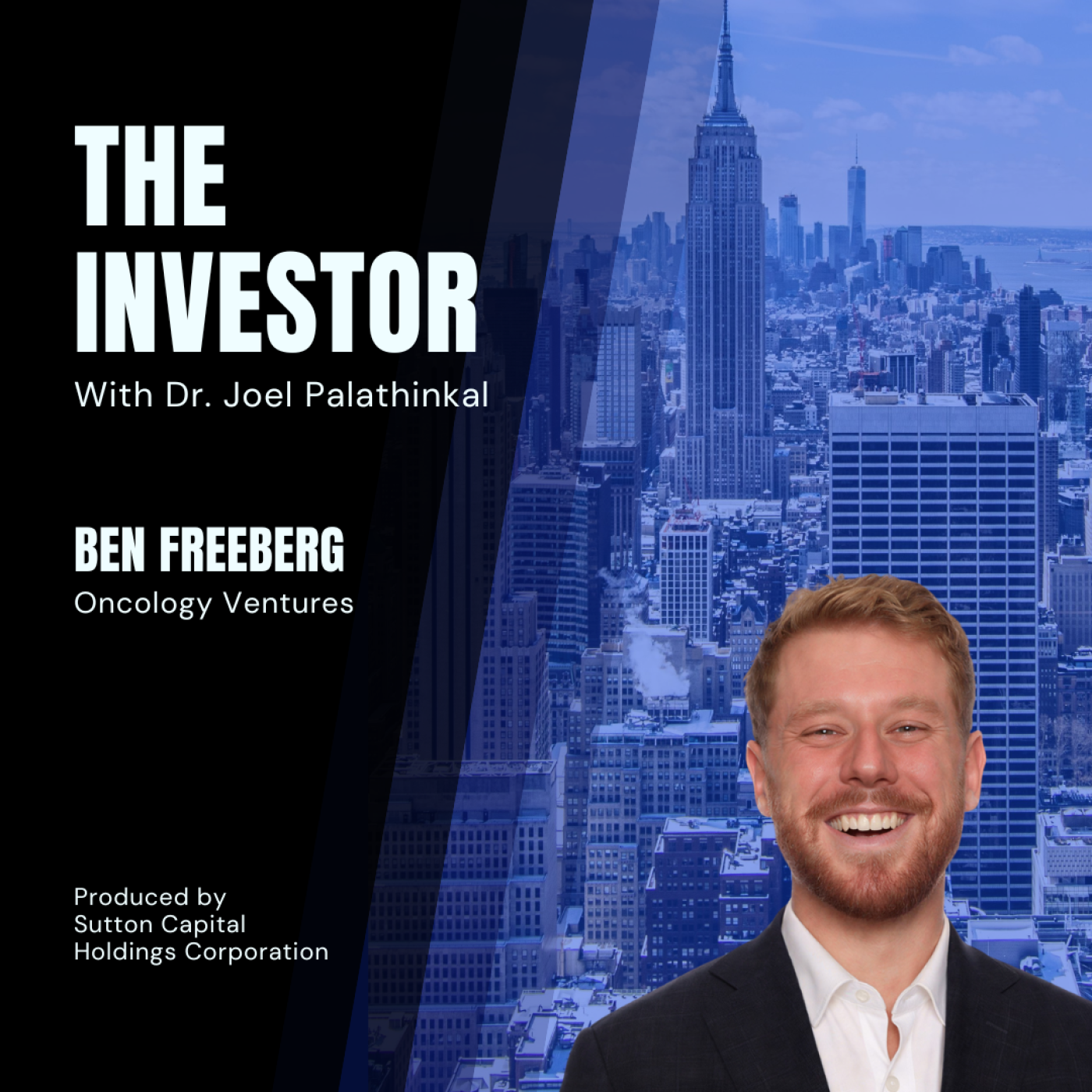
Loading summary
Transcript80 lines
- [00:03]
A
Welcome to the Investor, a podcast where I, Joel Palo Thinkle, your host, dives deep into the minds of the world's most influential institutional investors. In each episode, we sit down with an investor to hear about their journeys and how global markets are driving capital allocation. So join us on this journey as we explore these insights. All right, so excited for this guest on my podcast today. He's been a longtime friend. Ben Freeberg is the managing partner at Oncology Ventures. Got to know him a few years ago. He went through our Sutton Capital Fund accelerator program. It was just really great learning about him, his story, having fun with other managers in the program and also other LPs. And he's also given back a lot too, you know, sharing a lot of with the ecosystem, specifically in the healthcare space. He's got a really heartfelt story of just kind of his career and kind of his background and the impetus of building Oncology Ventures. So I'll just give a quick overview and then have Ben go into more detail. But Ben Freeberg, Managing Partner, Oncology Ventures. He's uniquely positioned for being an expert in cancer focused venture capital. He's invested in it, he's built it, he's lived it, he's. He's invested in healthcare technology startups at two venture capital funds. He was a VP at Optum Ventures, where he worked closely with key UnitedHealthcare and Optum stakeholders. And he was the first employee at Alpha Partners. He helped build a value based cancer technology startup, essentially healthcare health plan partnerships and operations at timecare. And he lived it as a cancer patient, which we're going to talk about if you're comfortable with it. And he's now six years cancer free. He's also a New York comedian. So Ben was the emcee at one of our institutional fund manager events and also mixed in some great comedy. So I think laughter is the best medicine. It's what brings people together. It's what some of your biggest memories come from. So excited to go deep and maybe slightly emotional too, Ben, if that's okay. I love it.
- [02:21]
B
Thanks for having me, Joel.
- [02:22]
A
Yeah. Well, Ben, you know, tell me in your own words just a little bit about who Ben is. You know, we usually when we meet each other, we're grabbing cocktails and, and you know, it's good to kind of just go a little deeper on your story and this time we're kind of sharing it with the community. But tell me a little more about kind of your education, your upbringing, you know, what did your parents do? What did you think you wanted to get into. And then, you know, what are some of the surprises that you had in life with your career?
- [02:52]
B
So I grew up in Long Island. That's one of the big debates is whether or not you say in or on Long Island. And I went to Duke undergrad. My first job was technically teaching tennis at local clubs in the New York area, which was so much fun. Still getting to play a lot, but not as much as I used to, being on the court for eight hours a day. And after Duke came back to New York, did investment banking. And I'm really glad I got that training to understand the financial side, how markets work. And you honestly, you learn how to work, how to not make mistakes, the attention to detail component, the long hours. There's a lot that it's just almost packing 5, 10 years of training into. Into a few month. Few month time period. So I'm very glad I started there. I always knew I wanted to start something. I have always been fascinated by entrepreneurship and always been inspired by entrepreneurs and people building companies and just going and creating and adding something to, to the world, which has been, which has been incredible. And I have, as I'm sure, as I'm sure you do, and a lot of others probably listening a list of company ideas and startup ideas on your phone. And Oncology Ventures was the first one that I was like, wow, this really does feel like this is the perfect thing for me to start. One of the things I think you have to reflect on is the why me? As you're thinking about building a business. And it just that, that, that felt so easy to answer for this one in particular in terms of my family, my father's an accountant, a CPA by background. He's doing our CFO work now for Oncology Ventures. My mother is an interior designer and still working with quite a few interesting clients. And then my sister's in fashion.
- [04:51]
A
Nice. Well, tell me a little more about what you did after college, maybe your first couple years on the job, and then kind of a little bit more about your story and the origin story of building oncology ventures 100%.
- [05:06]
B
And then just very quickly, Joel, can you hear all of that background noise outside?
- [05:09]
A
Yeah, it's okay. We're all in New York, so it's fine.
- [05:12]
B
Hold on one sec. I'm going to close this.
- [05:13]
A
Okay, cool. Yeah, no worries. Yeah, I had, I had a podcast one time. We were going live and I had somebody fix like a socket and it shut down all the power. And then I. And I had to kind of re. Refire up the podcast and you know, we, we figured it out, we edited it, but I get it, man. I mean, there's drilling that's happening all the time, especially in our building. So you're trying to, trying to work through it, but it's fine, it's, it's more authentic. You know, it gives people the, the experience, the. What do they call it? Asmr. Right. So yeah, exactly. Awesome.
- [06:00]
B
So yes, your question was about some of the jobs I had in college. I interned with the Council for Entrepreneurial Development in Durham, which was really cool. That was where I really started to see what entrepreneurs lives are like. It's not all glamorous. It's a lot of people testing and trying new things, new business models, new pricing, new strategies, new customers. And then I worked for Susquehanna Growth Equity. I'm doing an internship on the growth equity side. So those were both fascinating. And then moved into venture after banking, as you mentioned, was the first hire at Alpha Partners, which we partner with all early stage funds to help fill pro rata rights in Growth Stage, which for those listening, the idea is that you as an early stage investor are able to earn pro rata rights in follow on rounds, which means that if you own 5% of a company early on, they go and raise another $10 million at $100 million valuation. You're allowed to invest up to that amount to maintain your 5% ownership or whatever that is. And so once these round sizes, as you know, companies are staying private longer, some of these late stage rounds are what IPOs used to be. And so if you have a $20 million early stage seed fund, you can't fill your paradox with just the fund. And so the idea was Alpha would come in, be that partner, let that early stage VC keep their name on the cap table, and then share Carrie with them as an incentive to stay on. So it's a really smart model, really interesting way to meet the VC ecosystem. And then after my cancer diagnosis, I just needed to move more into healthcare in particular.
- [07:39]
A
Did that happen? Did your diagnosis happen when you were at Alpha? Is that when you kind of found. Got it. What advice would you have for men that are in their preference, probably early 30s to 40s, just holistically on health and obviously getting checked and stuff like that. What are some of the learnings through going through that experience?
- [08:01]
B
It is amazing how few people have a pcp. Get a pcp. It's such an easy thing to go to the doctor once a year for testing and just to see what the latest things are. You might not know and they might be able to do some comprehensive blood panel testing. You do qualify for certain scans. So there's a whole host of different things that just relying on googling and your own D2C type work, I don't think it's the right way. So number one, even though you feel invincible as a young active person, especially in some of these big cities, just get a PCP as part one and then check yourself. I had testicular cancer, didn't even think to check, and ended up getting diagnosed at stage three. I went and saw chiropractors. We thought it was back problems. There were so many different pieces and it's, it's hard and overwhelming to engage.
- [08:56]
A
Yeah.
- [08:56]
B
The other piece of it is just lifestyle wise. Like we've seen blue zones. Like there are literally places in the world where cancer prevalence rates are lower. And if you look at what they do, they eat fresh, they walk every day, they have community, they're outside. And so, yeah, we're never going to be able to truly avoid cancer. It's a product of aging and of, of just the way our body and cells divide and replicate. And hopefully we do make it become a chronic disease. But the, you know, don't, don't use a tanning bed. We have more skin cancer caused by tanning beds than anything else. Don't smoke cigarettes. Like, it's all of those things that sound pretty simple. It's just such an easy way to reduce risk. But also, I never did any of that and I still got diagnosed.
- [09:45]
A
So.
- [09:46]
B
Sure, it's, it's a little bit luck of the draw as well.
- [09:49]
A
Yeah. I mean, and a lot of those small things too, to your point, you know, they compound over time. The thing is too, it's like when you're living in a city like New York or San Francisco, you know, it's quite easy to, if you're, if you're moderately healthy, to just focus on your career. Yeah. And you know, you're like, ah, you know, I'll schedule my PCP or my physical in a couple months. And then before you know it, it's like a year passed by and you didn't get a chance to do your physical. So that's super important too. You know, I, you know, with my family, you know, heart disease is a huge thing. And I'm seeing a lot of my uncles and aunts, just random. I mean, some of them unfortunately passed away. One of them that passed away, you know, their, their spouse tried to just
- [10:31]
B
got
- [10:34]
A
a heart attack and they had to go and do an emergency procedure. So a lot of times too, it's like if you feel okay, some of these things might creep up on you as well. Just from years and years of not even just crazy lifestyle decisions, just maybe the things that you eat. And if you eat those same things, it just kind of compounds over time. And you just don't make time for monitoring that proactively because it's just you got other things going on. Yeah.
- [11:01]
B
And you'll feel better like if you do, if you exercise in eva, like you will literally feel better than if you don't. So it's kind of a win win.
- [11:12]
A
Yeah. I totally agree. And then tell me a little more about the. The origin story of oncology ventures. I mean, you alluded to it in the beginning and you know, what are some of the things that you learned when you started setting up the fund and building the platform that you built? And then we can go deeper on the thesis and all the different sectors of cancer as well.
- [11:38]
B
So one part was just looking at the numbers. Costs are actually breaking. It is now employer's top driver of health care cost. Cancer, it's growing at 3x other disease states. It took over MSK musculoskeletal as the top driver. It's health plan's most expensive disease state. So it's all of these pieces where at the same time patients that the latest stat is 42% of folks diagnosed with cancer lose their life savings within two years of a diagnosis. So all of that is absolutely unsustainable. And at the same time, it's kind of this tale of two cities where you have different outcomes if you get treated at Memorial Sloan Kettering in New York City than you do in some parts of the community and rural hospitals in the country. Sure, that's insane. Like that the idea that we have drugs and technology and medical expertise to treat someone, but depending on where they go to get seen and what health insurance they have, et cetera, they'll have a different outcome. None of that is going to be solved by another net new drug. We already have the drug. It's how do we help distribute those outcomes more evenly? And so I was like, okay, know what if all of that's true, if we have to reduce costs today, we have to improve outcomes. And there is this opportunity to better utilize data, AI interoperability, all of these pieces in a way that we've never seen before. What if we just focused on that? Like, what if we just focus on an expensive, difficult to treat and understand disease state that, you know, I, I think one of the things that people don't fully understand is we're, we're not going to be able to ever cure. I don't say never, but there's no cancer is so many different disease states. It's thousands of different types of diseases. To be able to do an all in single drug cure for cancer is very, very unlikely. But the ability to treat it and have it become a chronic disease just like we treat diabetes and some heart disease, et cetera, that's really interesting. And so how do we build a fund with that, with that thesis I thought had some legs. And then I started just interviewing hundreds and hundreds of entrepreneurs, executive strategics, leaders, ops and seeing whether or not they thought there'd be interest.
- [13:52]
A
I would say too, just to compliment you, I think the way that you've laid out your website really breaks out some of these segments. Right. So when I'm looking at your website here, let me see if I can share this real quick. If you're cool with it.
- [14:04]
B
Yeah, please,
- [14:07]
A
if I don't make this more confusing. But anyways, you know, Oncology Ventures, it looks like you've got a couple different pieces here. You've got investing through the cancer journey and then that breaks out into early detection, treatment phase, survivorship, supportive care. And then it looks like the other pillar is AI in the care and then it's kind of more of the digital infrastructure. So for anyone that kind of wants to unpack this a little more, highly recommend to look at how they've organized their portfolio under these segments. And I think if you're a fund manager, really having a strong handle on the landscape and the ecosystem that you play in, to not be all over the place. So to kind of have a really repeatable structure in terms of how you're deploying capital efficiently. But can you maybe walk through those three pillars and then kind of learnings that you've had from each of the, you know, some of those portfolio companies.
- [15:04]
B
Yeah. And then the other quick call to action for anyone listening is the Oncology Ventures substack on a monthly basis. We'll write all of this out. We write the investment theses, they're linked there in their portfolio too. But my goal is to make cancer easier to talk about and to understand so that way we could have more folks involved and pushing forward. So hopefully that.
- [15:23]
A
Oh, that's great. Yeah. So actually if everybody goes in each of these deals, hyperlinks to a substack. So that's actually pretty, pretty interesting too. Yes, that's great. Yeah. So if you guys go to the portfolio page and then you go to like Gabby. Yeah. I mean, you've kind of open sourced the entire thesis, which is really great.
- [15:41]
B
Yeah, exactly. Right. So the idea is that how do we, we want folks to know why we're investing into certain opportunities. We don't really have anything to hide in that front. And we want to make sure that if you're a cancer center, maybe you want to see that first bucket of how do we leverage data to improve care delivery, to improve early detection, to help with recruitment, with retention, with transitions of care? If you're a health system or plan or even other community oncology centers, that second bucket where how do we leverage AI to help reduce administrative burden? I mean, we talk about burnout of providers and administrators all the time. AI is really helping with that. A lot of those kind of more difficult rote tasks could be, you know, could be, could be fixed a lot of ways so that physicians could spend more time with their patients. And then that last bucket is more for the pharma biotech, CRO clinical trial side where we need to be more innovative with the way we're bringing new drugs to market, giving them the tools to do so. So yeah, we want to make that easy. And hopefully that also answers the question of how, you know, folks coming on, coming on board could, could work for some of these startups too.
- [17:01]
A
Sure. No, that's helpful and I think that's important to kind of open source what you're learning. I mean, everybody has been building in public, you know, when it comes to building a venture firm. But I guess can you unpack some of the learnings in terms of maybe we'll start with, you know, just investing through the cancer journey. Right. So there's early detection. Maybe walk through some of the companies that you invested in, maybe, you know, on the early detection treatment and looks like you're going through supportive care and survivorship as well. So maybe just a couple nuggets from each of these deals that you did.
- [17:41]
B
So the first one, Empath, is an interesting opportunity. The letter M, P A T, H. It's early detection for lung colonial cancer and more. And so again to your question earlier of what, what should folks do in some, I mean, these are patients that have data and insight into the, in the EMRs, the electronic medical records. And Empath is going to these health systems and finding unscreened patients that are due for screening, educating them and engaging them. And it's not necessarily that everyone should be going to get a cologuard test or a colonoscopy or whatever else for colon cancer. But there are certain people, based on certain parts of their lifestyle, stage risk, et cetera, that should be getting a certain test. And so that company, again, it's not. We're not taking FDA risk, we're not taking regulatory risk. We're saying there's data out there that we have access to and there's next steps available. How do we bridge that gap? So that's, that's kind of bucket one from, from the carer delivery on the early detection front. And, and the best thing we could do is find cancer early. I mean, the outcomes for breast cancer if you find it at stage one is 97%. Stage three and four, that drops to below 30%. The only thing that's different in those cases is when you started treatment. That's unbelievable. And that could be a few months, years, depending on the case and type. But that's what you just want to stay on top of it. And so how do we help engage? And that's what Gabby in our portfolio does in that treatment journey phase. We're trying a few different parts of at risk type contracts with health plans like Daymark in our portfolio. That's helping better manage folks, keep people out of the emergency room. Reimagine care helps people get treated at home. Why do you. Every single time you go into a cancer center, you're neutropenic, which means you don't have enough white blood cells. That's what I was like for a lot of my treatment. You don't want to go into a room of sick people. What's the worst place for you to be? How can we help you? And now we have more oral chemotherapy so you don't have to go and get an infusion every day. And so better managing those folks outside of a sick, dirty, stressful, dark place sometimes is, you know, in the comfort of your own home while you're watching TV or reading a book or whatever else could, could be really beneficial. The transition to survivorship, I think, is a fascinating opportunity because your pcp, who you should continue to see, isn't perfectly well trained always in cancer care. And so you have this person who knows you just went through something. Your oncologist is treating the next patient. We need a smoother gap and you don't want to. I remember a few months after cancer, I would have a headache and I was like, oh, no, it's back. Obviously it wasn't a headache. Isn't coming back none of this is medical advice, but, but it was this idea that you should have someone to help you with that. Transitional.
- [20:39]
A
Sure.
- [20:40]
B
Part of your, of your journey. And so that's what uncovery care does in the portfolio.
- [20:44]
A
Yeah, I mean, everybody doesn't have a tribe that they belong to. Everyone doesn't have the type of family support system as well. So sometimes, you know, for the people that don't have that, because, I mean, everyone leans into different things. Right. Whether it's just spirituality or things that they believe. But you know, if you don't have that, I think just kind of having some type of support definitely helps. So.
- [21:06]
B
Yeah, 100%.
- [21:07]
A
Yeah. You know, one thing that I've always thought about is just like, it would be good to just know overall, like, am I healthy? Like, you know, there isn't really like a overarching dashboard. Maybe there is. Right. Because I'm not really, you know, that deep into digital health. But you know, you go to the doctor, you get a physical and you get your blood work done.
- [21:30]
B
Right.
- [21:31]
A
But that never really tells me if I'm like green or red. Right. There's a bunch of different things that talk about different values and there necessarily isn't something that does a holistic viewpoint and you know, just health, like a health score. And then, hey, these are the different tests that you should do for all the different types of cancer. So when you were saying PCP just for the audience, can you share what that PCP test entails?
- [22:03]
B
So I mean, I meant PCP like your primary care physician.
- [22:06]
A
Oh, primary care. Okay, got it.
- [22:08]
B
There are like multi cancer early detection blood tests, like the gallery test.
- [22:12]
A
So you just saying do the annual physical just once a year.
- [22:15]
B
Those numbers, you know, you could, you could spend all your time in the doctor's office. I mean, we have these concierge clinics that people are paying a nice little premium for. That's, you know, we have one of our companies, SpotDoc, right now when I go for my annual cancer checkups, I do the skin cancer screening too. And it's a guy standing really close to me taking photos with a digital camera while turning, looking at the screen of what it was last year. SpotDoc. You walk in and it's almost like a, it almost looks like, like the TSA screener. And in one second, comprehensive body using AI to make it easier. And so I, I think things like that are really interesting and like, yeah, if we can get all of this down to a few one second things for you to do in 10 minutes. Yeah. With a Blood test, whatever. Like, yeah, that would be incredible for peace of mind. The issue is, for a lot of these, the sensitivity and the specificity aren't yet there, which means that you can't tell with 100% certainty that if yes, risky, it's cancer. If no, it's not, we're not at a point where both of those are true. So we're having false positives, which are people that actually are totally fine and think now they're on this crazy journey to find out what's wrong with them when nothing was, and false negatives, where someone actually does have something wrong with them and need to get checked, and they just got peace of mind where they shouldn't because they win. And so that's why I'm hesitant so far to tell everyone, go get this test right now, because it. It's not perfect yet. I think we will get there, But there's a lot. A lot to go with. With the science.
- [23:55]
A
Yeah, no, I totally agree. And I think the efficiency is a big thing. So I think, even including me, I mean, I think a lot of people just don't get their annual checkup just because they've got a block off, like a half a day. Right. If they work somewhere, they've got to, you know, go through the process of trying to call the provider, make sure their insurance is covered. Zocdoc has been a pretty decent platform. I mean, I think it's pretty efficient. But there's probably many more because ZocDoc has been out for the last 10 years.
- [24:23]
B
Right.
- [24:24]
A
But just make it, you know, trying to find a doctor that has some good reviews and, you know, focuses on the specialty and the support that you need. And then just getting that appointment booked is probably an hour's worth of work. And then now when you have to go to the appointment, you know, there's time that you got to block off to be in transit to go there and then actually sit in the doctor's appointment and then transit to get back. So you're essentially just blocking off an entire day in some. In some instances where sometimes when you sign up for life insurance, Quest Diagnostics would just come to your house, they do the blood work, and everything is done. So I feel like there's some. There's probably people that already do this, and maybe that's kind of like the. The concierge thing that you're thinking about, that you're mentioning, but I just think the ability to kind of get the treatment that you need, you know, on demand. They already know they Already have all of your insurance info. Do you feel that there's, there's a market there or there are already companies doing that. They're just kind of giving you holistic, proactive, you know, insights. Function health has been another one that I've been looking at just because it looks like there's some, like there's a dashboard that you get in the app that tells you some, some insights. But what are your thoughts on that industry and just that sector of just analytics and preventative medicine from the digital side?
- [25:45]
B
I mean truly the best thing you could do is live a healthy preventative lifestyle. Like everyone is going to tell you to just eat cleaner food, try to limit microplastics, try to spend time outside, try to spend time with community. Like if you do all of those things, I think that's the lowest hanging fruit I do. I think rather than spending a lot of your time getting a bunch of tests and getting nervous or whatever else, like a clean, easy lifestyle solves most of it. But like also not everyone's like you started it by saying I normally see we're like having a drink. Like I still do that. Right? Like I still do go and have cocktails and sometimes you do treat yourself to some, you know, fast food type of meals. But it's that, that, that's my. That's the first bucket. The second piece is it. I'm hoping we get to a point where it becomes truly personalized. Like there are some people that should be really get eight people in their immediate family that have had cancer recently. You should be thinking about what your certain type of cancer risks are. But if there's a history of cardiac disease, should have that. So it is genetic, it should be personalized. But as quickly as you can getting which again your PCP I think could and should help with. But getting into those different swimwims of proactive care, I think that's the best you could do.
- [27:12]
A
Sure. No, it's really helpful. And then kind of moving to the second pillar here, just AI in cancer care. So you know, just my, with my just kind of limited knowledge, I'm assuming there's a lot of opportunity with just basic billing and workflows and just kind of taking a lot of information and organizing it better where human errors could happen. But it looks like you broke this out into Radiation Oncology prior authorization and then obviously AI and ML development and you listed Luminous RISA and Health Universe. So maybe just a couple learnings from some of those investments.
- [27:49]
B
Yeah, and those are just some buckets that we've done so far. So I think there's still a bunch of openings, areas we haven't done anything in ambient scribe and note taking. And yeah, people are using like tools all the time now for meetings and things like that, which some are interesting, some aren't. I think the act of note taking is very helpful. But when you're in a physician's office, not having to take those notes means I could talk to you and make eye contact with you and be face to face and like this, this idea that you could actually spend more time with patient, I think it's really interesting. I think there's a lot of ways that AI copilots as conduits to better easier care is really interesting. Let's take Risa for example. It's an AI copilot for prior authorization. And so prior authorization for those listening, if you don't know is you can't right now. You can't just, if you have a churn, you can't just go into a hospital and get an X ray and have that covered. You need a physician, pcp, whoever else to submit a prior authorization request saying this is medically necessary for Joel to get an X ray right now. And then that has to get approved. And so that process for one off events like broken bones, whatever else is pretty straightforward. It's frustrating, but it helps control cost and use for cancer. I was on 40 different medications. Chemo, you're talking to a surgeon, you're a medical oncologist. Everyone else, you're flying through prior auths and any second delay your cancer is spreading. And so what they do is for cancer in particular, go over evidence based medicine and guidelines. What is medically necessary, what is the eligibility of the patient and how do you help the administrators do that in real time. And so they're freeing up real full time employee time and actually helping folks get to their care quicker. I mean if you look at it for cancer, I think the Latest is like 98 to 99% of prior auths that get submitted for cancer care get approved. Why are we still going through that process if it's such a big headache? So expensive, whenever. Also how could they maybe help? It's called gold carding providers where maybe certain providers for certain tests that are on certain pathways don't have to go through prior auth because they trust it. So those are the types of opportunities we're looking at.
- [30:21]
A
Yeah. And then one more piece is just, you know, I was looking at an AI radiology company years ago and my thesis was just that the, it just even though so innovative, I think you're just fighting against the incumbents, right that want to have the billable hours and have radiologists, you know, still manually look at those, those images. But I think to your point, the copilot is a huge thing. I have a family friend that's a radiologist and I think he's, he, he can work from home but he's got some really high powered screens and I think they're connected to like a, a super Ethernet or something like that. But he, he has kind of high res diagnostic tools to do his job. But the thing is, you know, I think I could in some lengths detect if there's a dot on, on a screen and use some computer vision technology. Thinking about now when we've got Teslas that can completely navigate a road using computer vision, I think the technology is there, but I think the issue is just, it just is not of interest to the incumbents, you know, financially and incentivized. But I think the copilot could be a great tool to supplement what the doctors are doing. So just wanted to hear if you have any reactions to that and if you think the future will change with more workflows being taken over by AI instead of the doctor.
- [31:45]
B
Yes, I mean we've seen, we're now seeing a oncologists get pitched which is really interesting. I think there's so many different, there are so many different parts of the workflow that could be supplemented. I think a lot of the back office rcm like the revenue cycle, payment processes, really interesting scheduling. Oh my God. I mean there's so many interesting scheduling platforms that I think are, you know, continue to take off emr. When a physician sees a new patient, they have to go into the emr, the electronic medical record, extract the data, summarize it, read it, etc. There are companies that are helping do all of that where before Joel into the office in real time, helping pull the records, summarize it and give action items. Oh my God, that saves full hours.
- [32:36]
A
So the traditional fear is the, the safety and the efficacy. And if you think about it, right, like Uber, if you take an Uber from midtown to the Lower east side, it's like 20 bucks, right? But if there was a waymo that doesn't have a human driver, but it costs seven bucks, what do you think people are going to eventually be doing? Especially when they know that waymos are safe and you know there's going to be a convergence point. Elon was talking about this where there's going to be a statistical analysis that shows that just robotic drivers are just statistically more safer than human drivers. So when you hit that convergence and when you start getting into healthcare and the level of safety is about the same, but the cost is lower, people may start veering in that direction because you have to. Right, because you mentioned this early in the call, like I mean the price to get this type of treatment, people are burning their life savings. The way that you can get those efficiencies hopefully is by some augmented human being or just completely replaced human being.
- [33:40]
B
So what I think is so interesting is. Well, there's two parts of what you're saying. One, I think it's going to get to the point where it's actually going to be irresponsible not to use AI. Like I think it actually will be like not maybe it's not as far as medical malpractice, but get to the point where if you're not like fact checking or using that as support, that's actually worse. Like what you were saying, with drivers, it's safer, they're going the speed limit, they're following the rules, they're following regulations, they're following guidelines. That's part one. Part two is I think we should always have that human in the loop. I think where we're spending our time is not for AI to actually get real reimburse necessarily for specific medical decisions, but help give the oncologist all of the time in the world where let's say they're spending 90% of their time doing something that AI could do and then 10% of their time treating the patient and thinking and doing that medical type diagnosis and decision making. How do we flip that where they only have to give a little bit of their intention to the things that they just have to sign off on because AI is so easy and ready and then on the actual medical decision making part, giving them autonomy there. So that's, that's where we see opportunity, at least for now. But yeah, I mean some of these AI oncologist plays in particular, if even if your PCP now starts to use that, it could be really interesting.
- [35:05]
A
Yeah, I mean they're probably using it. I mean they're definitely using behind the scenes to probably answer some of the messages that we asked them. Right. I mean, because there's part of it is communication. I mean, I asked my doctor a basic question and then he responded with like a really brief DM and it didn't really answer my question. So maybe some AI would have helped him Message it a little more detailed and thoughtfully. So I think there's some communications, you know, augmented support that can be there. We got about 15 minutes left, so I think we can talk about maybe just the fund practice and, you know, developing that skill and that discipline. So, I mean, I think one of the first questions is, you know, what advice would you have for someone who's thinking about building their first firm? Obviously we've built a pretty exciting platform of alumni of fund managers. So, you know, maybe are there a couple things that you learned in our cohort from some of the LPs and GPs in the community? And then what other advice would you give to kind of building community and kind of, you know, institutionalizing that? Fun.
- [36:18]
B
It's also, it's still interesting to me to be in the giving advice part of this journey. I still feel like I'm seeking advice from so many, so many people. I think it's the best job in the world. I truly don't think there's anything else I could do to make more of a positive impact and financial returns than building, managing and choosing something in a market I care about. I am personally incredibly biased, but you should build a specialist fund. I think that maybe it swings back the other way. But the thing that resonates the most with our limited partners and with our potential investments and portfolio companies is our true help and understanding of the market. And I also think it's going to lead to better returns. We've seen 100 different early detection for cancer startups. We've picked two so far. So it's hard if you see all 100 to pick the worst two, hopefully all else being equal. When some folks running a generalist fund are making their one or two bets in different areas, it's hard to know that they've comprehensively looked at the landscape. So advice number one is really figure out what that, what that specialist focus is. And it doesn't necessarily have to be an industry, right? Like it could be pricing. Like what if you just built a fund that you were the person that helped them perfectly price their product and make LTV to CAC look incredible because of this go to market sales motion that I think is really interesting. There's D2C focused funds, there's, you know, deep tech broadly and then you go into specific pieces within it. So I think it's all interesting learnings. But I would Part one is figure out what your niche is. Part two is it is a really welcoming community. I mean, I'm a solo gp. There's a Lot of other solo gps or just a few founders working together to build unique funds. And I mean you see it with the sudden capital cohort, you see it with cool water, you see it with some of the others where it really is a community of folks that are all like, I don't believe we're competing for LP dollars. I know there's probably a little bit of that, but I don't think that if someone does my fund, it means they're not going to do something else's. Yes, there's limited allocation. Yes, there's only a few spots per year. I just think it's a bit short sighted to think that way. So anyway, I think you also, you give what you get sort of thing there too. And then third is just start like start doing it. If you want to start by doing. We started before I launched the fund formally. We did an SPV for a company just to see can I raise money, can I write a compelling enough investment memo, can I get access to a deal, can I negotiate all those pieces? And that was honestly, that was great. We ended up oversubscribing that in two days. That gave me the confidence early network to say one, this is what a not drug cancer deal looks like. And this is how you now go to market.
- [39:13]
A
Yeah. So we met when you were on Fund one. So what were some of the things that you learned maybe from our cohort on just portfolio construction, maybe from LPs too, as you were talking to some LPs and how did you take that into fund two? Especially now kind of thinking about the next strategy or evolution of firm building.
- [39:35]
B
So right now we're thinking about a few different parts of that strategy. And we ended up investing into 18 companies at a fund one. I think that was kind of a perfect number for a fund. Fund one was 32 million gave us enough exposure but enough opportunity to pick the few that we're tripling down on just based on what we've seen in the market. So I, I think there's a lot of merit to some of the really concentrated funds where you have 20, 30% ownership in early businesses that you like really take a stake in and maybe you do four to five. Also there's a lot of successful funds that have done 40, 50, 60 deals. I think it completely depends on the model for us not really taking board seats and being helpful for one specific part of customer development. I think 18 was right. We're exploring a few different things like some toehold positions in new investments and things like that. But I Think overall, building a portfolio where those three buckets we talked about on our website, having roughly a third, a third, a third in that and doing five to seven in each, I think is an interesting opportunity.
- [40:37]
A
There's some funds that have just kind of done the exact same strategy, same size as a solo gp and it's working. And there's like, we don't want to, we don't want to break what's already working. So they do the same thing, right? So once you start increasing your strategy and kind of the infrastructure that you're trying to build around, you know, you're, you know, everybody says it right, Your fund size is your strategy. So you have to change things and make sure that those changes are thoughtful and gonna help actually the overall outcome of the platform. So I think that's, that's important too, just to kind of lighten things up a little bit because we talked about a lot of serious things. Let's talk about comedy. Like how did you, you know, get into New York? Stand up comedy? Some of your YouTube videos are, are out there. I've watched a few of them and they're, they're quite funny. But how did you get into. Why did you want to be a comedian? And, and what, what are some things that you've learned and gained from being a comedian?
- [41:40]
B
100%. And there's also. When does this go out, Joe?
- [41:43]
A
It's live right now.
- [41:44]
B
Oh, great. So on if any of you are in Austin, Texas next week on March 4, doing a really fun show with entrepreneurs, stand up comedy at the Redford Society. So, yeah, share friends who are in Austin. So I actually moved down here a couple months ago and are building the comedy scene and network here. So that should be really fun to get on stage with some other.
- [42:12]
A
You're in Austin. I didn't even know that. Yeah, okay, got it.
- [42:15]
B
It's been great. And so I started about 9ish years ago. I do it very much for fun on the side to keep me creatively engaged. I love writing on the oncology ventures substack. To the extent folks are on it, half of it is always a comedy bit. So I use it as a way to write, not just on stage. I love doing events like I did for and with with your team. I've done a bunch of cancer events. So I think the kind of why behind it is it's just so many of these are so serious. These like vc, LP rooms sometimes and cancer conferences and others where it's just, it's people like everyone is a person at the end of the day, like, when you leave your job, whether it's a 9 to 5, whether it's something that's all encompassing, whatever else people are going to, comedy shows are going and like, laughing with friends. So, like, why not bring that during the day? Why do these things have to be serious? I was just moderating a panel at Vive the conference. Yes. Two days ago. And I started with some audience engagement and some fun. It was fun. And you could see mood shift just because we're talking about something serious. It was on the personalization of cancer care. Yeah. Let's make sure the meat is there. Let's make sure we're not actually making light of anything, but let's bring some. Like, this is, you know, at the end of the day, like, it's like people on a rock.
- [43:46]
A
Right.
- [43:46]
B
Like. Like, let's have. Let's have fun and enjoy what. What we're working on. So anyway, I would. The other thing I would very much encourage people to do is, like, just start writing and go to an open mic. Because what you'll do is when you start writing that set, everything that happens to you, you end up looking at from a. Huh, how can I make this funny? Yeah, sort of. Sort of lens, which is always exciting.
- [44:10]
A
There was a video. I'll try to find it and post it on this episode. But Aziz Ansari is actually really data driven. Like, he'll. He'll listen to, you know, bits that he has, and he can see the analytics of when the. When the laugh went really high. So I think with everything you can. You can measure and track which things hit. You know, maybe something hits better in Austin than it does in New York. Yes. Because we're, you know, traditionally we're. We're all no nonsense over here. Right. But. But I guess what, what are some. And I would say too, you know, I've been doing this pod for like five years, and I just go live. And that's really helped me with stage fright, with just trying to listen to people a little more. And it's just helped me to, you know, I mean, just in, you know, 40 minutes, 40, 50 minutes, I feel like I've become a lot more smarter on just the future of oncology. So I think that's helped me to gain knowledge really quickly, but also just improve my communication skills. So I can imagine comedy. I mean, you're putting yourself out there. You know, a lot of these comics that have gone on to be really successful, there's going to be nights where they've bombed Right. So what have you kind of learned as a comic and how has that impacted your. Your holistic life?
- [45:27]
B
Not just having a ready to go, end to end script for anything you have to. The audience in real time will let you know what they're feeling and what they want more or less of. And it was. It was Jerry Seinfeld advice. But stay in the bit. Like, if you have them laughing on something, like, if you're talking about computer technology, Absolutely loving it. Don't just switch and now talk about the financials of whatever. Like, stay with it.
- [45:57]
A
But what made you decide to be a comedian? Did your family think that you were funny? And they're like, hey, Ben, you know, you should just go out and, you know, do comedy because you're hilarious. You're cracking me up. Or was it just something that you just enjoyed doing?
- [46:09]
B
I. There were three things that happened all roughly at the same time. One is, I saw an amazing show. Like, I saw this show. It was. Mark Normand was, like, doing this, like, random room in New York City, and he had the whole audience belly laughing for like, 10 minutes.
- [46:24]
A
Sure.
- [46:24]
B
And I was like, well, I just want to be able to do that. Like, if I could do that for one room of people at one point in my life, that would just be absolutely to. One of the things I have the most fun doing is laughing with friends and create a lot of that. And so why not put a little bit more intention behind it?
- [46:40]
A
Yeah.
- [46:41]
B
And then third, I was looking for. I think in the finance venture world, we get pretty stuck in a routine set of tasks. And I was just looking for a creative outlet.
- [46:53]
A
And it's a great pattern or interrupt. Because what do you do when you go to an LP event? Even some of the ones we host? Right. It's like, hey, here's a panel of lp. What do you look for in emerging managers? Right. So pattern interrupting gets people's attention. Yeah, People remind you, too, we got about five minutes. I mean, I want you. You shared a lot of wisdom. You shared a lot of advice. Just looking back now on just all the learnings and, you know, obviously building something quite amazing and something that's quite intentional and creating a lot of impact. What are some nuggets of wisdom that you'd like to share with us? It doesn't have to be about finance, it doesn't have to be about anything in specific, but just maybe things that you picked up from a mentor, maybe things from a relative, maybe something from a past employer. Are there just a couple nuggets of Just learnings that you want to share with us.
- [47:51]
B
This is very emotional. This whole like starting your own thing is emotional. It is like you, you are going to feel very excited for the highs and you are going to be. Feel very down from the lows and whatever you could do to stay emotionally regulated. And that's like, that's work life balance. That's continue to spend time outside exercising with friends and continue to know that like it, it's who was might have been like a Tom Hanks quote. I think it was Tom Hanks, but it was this too shall pass like the lows, like you're gonna be fine, but the highs you're gonna go back. And so whatever you could do to stay emotionally regulated as you're, as you're working through building is incredibly, incredibly important to people. Are everything you can't successfully. Maybe people have talked about like, maybe we're about to see the first billion dollar company with one single employee or, or no employees. Right? Like AI doing it. But more often than not, especially in the venture world, you're going to need at least one other person to help you in some way, shape or form. So be present, be available, be thoughtful. And third is persistence, like for you, literally. Like, I mean, I forget what percentage of it, but most podcasts don't make it past episode five. That's because they don't record past episode five. Yeah, just keep recording. Like, just don't, don't be so blinded. Like, if everyone's like, why are you still doing this? No one wants to hear it. But if you have guests want to be a part of it and people listen, then just commit to continuing because you're going to learn so much more by taking action and by rep. So those are probably the few.
- [49:37]
A
Yeah, there's two pieces. You know, it's kind of timely, but I saw something in my feed about Jay Leno and Jay Leno was like, what's your key to success? And he's just been doing the same thing for decades. But one of the big things that Jay Leno shared was he's never really had an ego. Like, people would tell him the lights are horrible, and he'd be like, okay, well, well, what should we do to improve it? And he'd get like the best light guy. So he would surround himself with like people that were smarter with him. And he had no hubris saying that, hey, you know, who do you think you're talking to? I'm Jay Leno. I, you know, my lights are great, right? But if you can kind of lower down your your ego and just learn from other people that are smarter than you. I mean, that's essentially what I'm doing right now. Right. And that's served me well and given me a lot of goodwill. But, like, that, it's kind of interesting to just kind of be an expert in what you do and just keep doing the same thing over and over again. And the consistency is what could probably outperform in a lot of instances as well. So.
- [50:46]
B
Awesome.
- [50:46]
A
Yeah. Cool. Well, Ben, thank you so much. Appreciate it. And, you know, hopefully we meet each other either in New York or Austin in person. It was good seeing you a couple weeks ago, too.
- [50:57]
B
Yeah, 100%. Thanks.
- [50:59]
A
All right.
- [51:00]
B
Bye. Thanks, Sam.