Loading summary
Transcript99 lines
- [00:03]
A
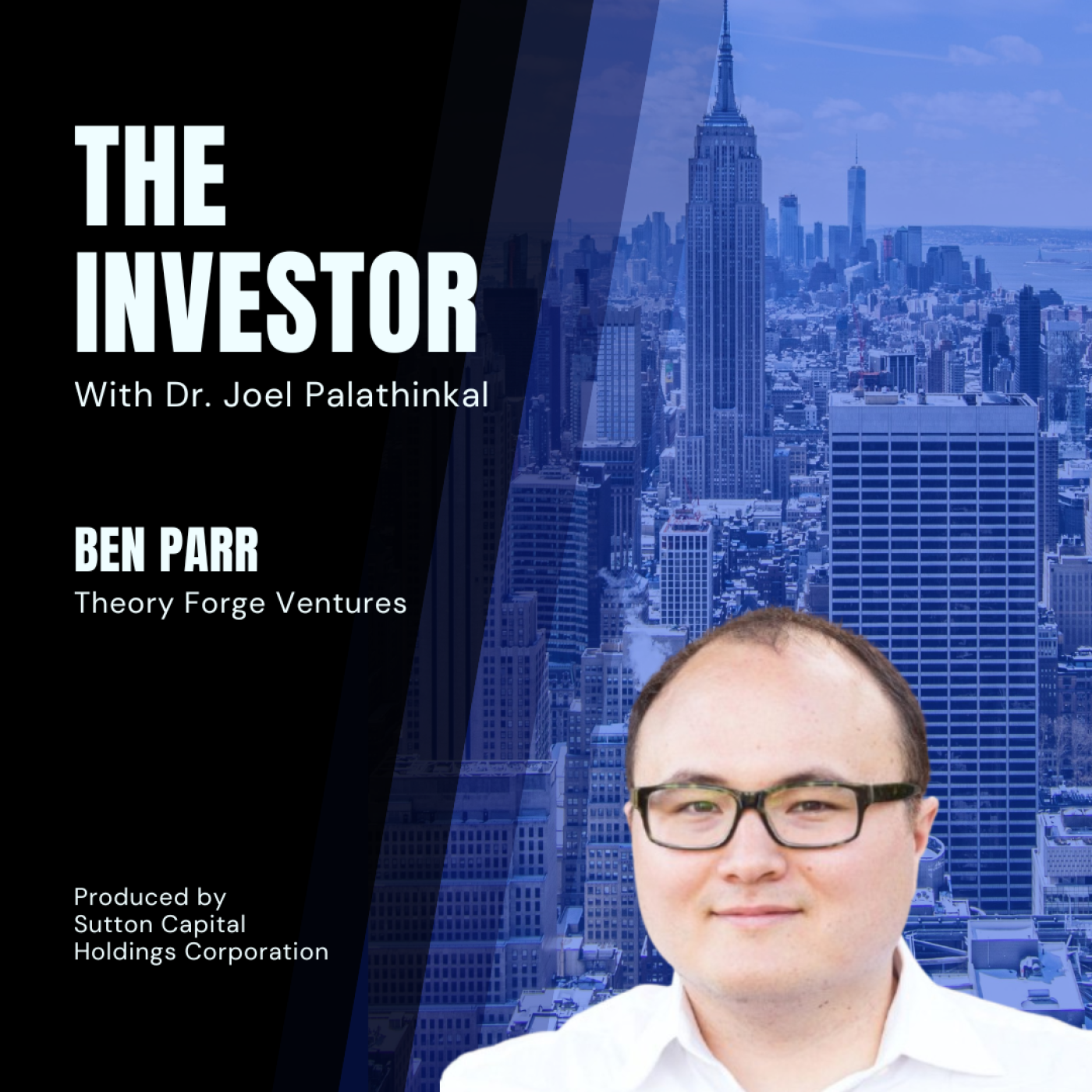
Welcome to the Investor, a podcast where I, Joel Palo Thinkle, your host, dives deep into the minds of the world's most influential institutional investors. In each episode, we sit down with an investor to hear about their journeys and how global markets are driving capital allocation. So join us on this journey as we explore these insights. All right, super excited for the Investor podcast episode this week. A good friend of mine, Ben Parr, who's the general partner at theoryforge, he is an AI founder and investor. He's the president and co founder also of Oqtane AI. It's a profitable AI platform that powers conversions for e commerce brands. And he started his career as co editor and editor at large at Mashable where He wrote over 2,400 articles and was a technology columnist for CNET. He is the author of the award winning book Captivology the Science of Capturing People's Attention, which all of us could use. Right. Because attention is a new currency. You could be horrible at whatever, whatever you do, but if people know about who you are, maybe you'll get some customers. Right? So Parr sits on the board of directors for the Layla Johnna Foundation. He is a member of The Forbes the 30 under 30 and an alum of Northwestern University. One thing is, look, I'm a huge fan of Layla Johnna as well. Doing good by doing good. So we'll talk about that in a second. But Ben, welcome to the show. Thanks for jumping on with me.
- [01:36]
B
It's good to see you again. It's been a little while. We were just saying that before the show started.
- [01:40]
A
I know, Yeah. I mean, it's always good to meet people virtually and then finally meet them in person. We actually met in person and we've hung out a bunch of times in person and hopefully do it again. But we're here virtual. But good to see you, man. I know there's been life updates that we talked about, so I want to talk about it all in the limited time that we have. But look, I mean, I hope I did an okay job with the professional bio, but would love to have you in your own words, just take us back, man. Talk about your early days in high school. What did you think you wanted to do when you were a professional? Tell me about your family. You know, what did your, what you did, does your family do, what did your mom and dad do for a living and, you know, what was their influences on your career? And let's walk through all of that and then talk us to, you know, talk about the journey heading to where you are now. And then I might interrupt you periodically as well.
- [02:30]
B
Well, the year was 1637 and I was born. No, I'm not immortal. I grew up in a small town in the middle of nowhere in Illinois. Like it's called Princeton, Illinois. I think there's 23 Princetons or something ridiculous like that in the country. And my dad and my grandfather were in insurance. My grandfather was an entrepreneur. He started his insurance agency that my dad ran after he passed. And my mom was an OBGYN nurse for decades. Which is very useful when you have a baby. I have a six month old as you know. But the audience may not very helpful to have a mom who's so good with little babies. But high school, I was honestly the, I was honestly the overachiever type. I was in band, saxophone, I was a drum major, I played football. I was council president, valedictorian. I know I'm just like doing things. I was always like the overachiever type. Like I did scholastic bowl. I just tried to like. But I was also like trying to permeate across like it doesn't matter what click or whatever. I just wanted to be everybody's friend and like, you know, work with everybody. And so I got like that sense in my high school of I feel like it was not even 600 people total. And I think the big thing that drove my like experience was I, I'm an Eagle Scout. I don't think it mean, it's unfortunate, it doesn't mean the same thing given what's happened in the last like decade to the Boy Scouts. But I worked hard to, you know, do everything but learn how to survive in the wilderness with nothing but some matches and an ax and some rations in the winter to learning how to give service and do service projects and like lead teams. And I feel like I've always been driven to do things for like I, I always said this in college, I still say it now. It's like I have the ability and thus responsibility to change the world for the better in some way. And in the past it's been like, you know, build I like with Bash, what was like build my network, report on what's happening, you know, speak about the truth. Build a company that would help people and would grow stuff, you know, invest in companies that are doing cool stuff. I just met up with one of my entrepreneurs for the first time in IRL called X& therapeutics. They're building AI models to create neuro therapeutics to treat and cure neurological disorders. I feel like the more I could write checks into companies like that. The more I can go and help the world. So anyway, that's like a long version of like I did a bunch of shit in high school. I went to college in Chicago at the big purple school, Northwestern. I've always been a little bit of an overachiever and I compliment really well with my co founder Matt, my co founder for both Octane and the fund who my co founder him is. I did not go to college. He, he joined a company called Ustream instead of going to college and that worked out really well as he led product there and helped him get acquired by IBM. And then I always like to say he went to the University of Y Combinator as he was part of YCS12, the legendary Coinbase apiary Instacart class.
- [05:54]
A
Well the parallel that I'll say is, you know the book by Layla Jana was give work and you know there and you know, I mean VC is apprenticeship business. So there's a lot of jobs and a lot of careers where you just need to kind of learn how to do the job and you could get in. You don't necessarily always need a four year degree. It helps and you know, you never know who you're going to meet within the ecosystems that you become part of. But.
- [06:18]
B
You know, I wanted to explain. So for those who don't know, Layla was a extraordinary woman who I first met when Facebook had a FB Rev fund. They had a small venture fund that was run by Dave McClure before he started 500 Startups, that's how long ago it was. And Sama was the 1 non profit in there. It was, the goal was to give work and to help create you know, Internet style jobs for people in Uganda, places like that. And she was an extraordinary woman. She passed way too early from cancer just before the pandemic. It was like, it was hard because I had to help write. It's a very weird thing because I was on like I was on the board of SAMA during the transition to the Janna foundation and I had to help write her the announcement of her passing which is a very weird feeling because you can't like have emotion until like you get the thing out because there's like hundreds of people who are depending on like the way you talk about that and like you announce that and then you like announce and you get through that and then you like break down and she was an extraordinary woman and her work continues both with sama which provides the AI data training with for lots of top car Manufacturers, lots of top people across as well as the Lila Jana foundation trying to like provide, promote, you know, the idea of Give Work and Give Work is a great book if you go pick it up on Amazon. I've read that too.
- [07:48]
A
Amazing. Yeah. Well, okay, so you're at Northwestern. Sorry to get you off track here, but let's get you back on track. Yeah, the whole point is it's having tangents. Right. But okay, so you're at Northwestern. What do you, what was your major?
- [08:02]
B
I had two majors and a minor science and human culture and political science are my two majors and then a minor in, in business institutions. So my main major, science culture was the study of how science affects his has affected history, society, technology, economics, like the broad range of human experience which I feel like was a perfect major for my main role afterwards, which was as the co editor of Mashable. I've always had this lens of how does science and technology affect the world, affect the way we perceive things and how I bring that too. When I think about AI and I write about AI, you know, I have a newsletter, Ben Par.com where I write about, where I call it the AI Analyst, where I dive into like the impacts of AI and how we as a society think about this new technology and how it's impacting us.
- [08:56]
A
So how was it? You know, so, so then, you know, after I guess walk me through college and kind of like, did you do some internships and what, what did you think you were gonna do out of college? Did you just kind of decipher that you wanted to be an editor?
- [09:09]
B
Well, no, God no. I never. Even when I was out, I didn't think I was going to be an editor. I my, I thought in the Ridge I was going to be an astronomer and I was going to be a physicist. I started in physics and physics is great, but I realized I didn't want to be on the research end of science as much as the management end. I wanted to make decisions. I'd still love to do more of the like scientific research side in some, in some cases I also like admit like the, I'm decent at math, but the kind of math, the kind of math you have to do for physics is a whole nother level. So I said science, even culture. I was like, you know, I thought then I'd go into politics. My first internship after my freshman year was for Congress. I worked for my home district congressman, Congressman Jerry Weller, where I also realized among like learning tons about politics, I didn't want to be a politician. Or work in Government street off the bat. Because I saw how often not just my congressman, but all Congress people like, would have to leave the Capitol building to go to the nearby cat Congress congressional offices to do fundraising phone calls because you can't do them in the halls of Congress. And just how much time was spent on fundraising, which I was like, I'd rather be able to have my own money to if I ever got into politics or ever ran for office. Yeah, I didn't have to spend all my time just fundraising. I could actually like, you know, not quote unquote, be bought. And that kind of led, you know, on the flip side to like my entrepreneurship, which was sparked by my two mentors. My mentor, Troy Heineke off, who ran techstar Chicago and ran runs a venture fund which my other mentor, Mark Ackler, he's taught an entrepreneurship class for only juniors and seniors. And I convinced him that I as a sophomore should take that class. And I did that by reading front to back, Accounting for Dummies and learning all of accounting as much as quickly as I could. And he allowed me in as a result. And that sparked my curiosity for entrepreneurship. Like I was always, always, I feel like entrepreneurial as like even a little kid. Like my first hustle was selling origami for a quarter in second grade to my classmates. My mom taught me how. But it was definitely that class that like sparked like, oh, this is how you build a business. This is how you make a financial model. This is how you ideate all these different pieces and got me towards a path of, you know, going to Silicon Valley. Mashable being the thing that opened the door to the rest of Silicon Valley for me.
- [11:41]
A
Sure.
- [11:43]
B
That's great.
- [11:43]
A
And then talk to me about Mashable, I guess. Did you spend a lot of time with Pete?
- [11:47]
B
Pete Cashmore it When MASH will first When I first joined Mashable, it was all remote and it was mostly all remote for my time there. So Pete was in Scotland, he had been in San Francisco. But I was the only person in the Valley. Like, I joined Mashable as a part time writer.
- [12:02]
A
Sure.
- [12:03]
B
After college I was like, I had another job in web health that I didn't really love. And, and I was writing on the side for Mashable. My articles did well and I just decided like I had to move to the Valley to pursue the tech dream and like be a part of the conversation. I didn't have a real plan. So I like, I quit my job and I told Mashable that I was going to leave and look for a startup job. And they said, hey, do you want to work for us instead? We'll give you pay, but you'll be able to do X and Y. And I'm like, yeah, let's go and do that. So I did moved across the country and because I was the only masterful person there, I built up a lot of. I was the only. I was the person sent to do every major event. So like Facebook, you know, my first time was Facebook was launching the new office. So I was there talking with Mark Zuckerberg and Sheryl Sandberg or Google had an announcement like I'd be there for like the launch of like Google or the new Android phones or all these other events.
- [12:58]
A
So you're covering, you're covering a lot of those events? Pretty much, yes.
- [13:03]
B
Which for someone 24, 25 is a dream.
- [13:06]
A
It's a dream job.
- [13:07]
B
Relationships. You get to know the reporters, you get to know VCs, you're invited to dinners. It was an extraordinary opportunity. And I wrote a lot of articles in my time at Mashable and I'm very thankful for that. And, you know, eventually got to hang out a little bit more with Pete and friends. Is like, they consolidated, they had a. We opened a New York office, we opened an SF office. We like scaled the team, we hired more people. I got promoted several times, eventually to co editor and editor at large. It was an experience, an amazing one.
- [13:42]
A
So how do you think AI is going to impact the editorial industry? Right. I mean, so look, I mean, I have a little bit of a shared experience. Very, very minor. But I mean, I worked in product management and I used to work at Hearst Magazines. Right. So I was at a big publisher. So there was always a whole difference between church and state.
- [14:05]
B
Right.
- [14:05]
A
So you don't want to make sure the editorial voice isn't muddied up with like ads, right. And just kind of like an advertorial. But obviously there was no AI and you know, platforms that could kind of come up with the content. I mean, people were still manually writing that. Right? There's no, you know, so you still have to kind of think about SEO and think about that. But I just feel that, look, there's detection technologies that can, you know, and I'm sure Google is on top of can. They obviously can detect if blog posts and content is AI written, I'm assuming, and they'd probably, you know, give priority to more organic content. But you're the expert here, so we'd love to hear your opinion on like, you know where editorial is going to go.
- [14:48]
B
So I think I wrote something about this early on on Penfire.com I have to remember. But like it almost doesn't even matter whether it's AI or not. You know, there's this like content is. Was already getting easier to create and so there was AI already being built to report on little league games and things like that. And that does not require a lot of thinking. This is just plugging the numbers so that people are informed.
- [15:16]
A
Sure.
- [15:16]
B
That kind of journalism has, is being automated and it is definitely taking some jobs. But the ones that are really thriving have been able to build their own audiences, their own brands are at breaking stories. So you know, I think about like some of my friends like Alex Conrad and Alex Cantrowich, like and they built new, their own new publications. They left like buzzfeed and Forbes and things like that. And they're breaking stories. And that's not something that AI can really do because that requires people work, investigative work, sourcing, talking over coffees, getting people drunk, you know, all that sort of thing. And that kind of reporting section probably even more important and even more difficult to do. The writing part's the easy part in some ways.
- [16:05]
A
Sure.
- [16:05]
B
Of journalism. It's the actual sourcing of the core story and what's the narrative and what's the behind the scenes going on.
- [16:14]
A
Yeah.
- [16:15]
B
So I think that there's a section and then the other one is, I thought that's always been good is like the right kind of opinion. Because AI is not great at coming up with like a new opinion on the world just because it's based off of. Especially elements are based off what happened in the past. That's literally how it's trained. It's not based off of like, you know, what is the future in the same way. And so I think that some like great opinion writers and are in good shape. And like Kara Swisher is an example of someone who like people value or pit her. Her opinion has built an audience, has built a career. And I've known her forever. She always hates it when I try to hug her because she's not a hugger. But it's the kind of thing that if you are building your own audience and brand. I've told this to like journalists at like Northwestern at the Medill School. That's what you got to go and do. But it's obviously a fact, like there's less jobs than there were before. And it's just true. Not just of journalism. It's true across the Spectrum and certain jobs are being affected. More like standard copy jobs, standard like image generation jobs. Those were first. More is coming. There's a huge adjustment period happening. New jobs are obviously being created, but I don't think in the same rate. You know, that's a whole different societal question of what do we do? But the technology is already here, it is progressing. And I tend to think of this stuff as we have to figure out how we adapt to the technology. You can't really say like we're going to stop the technology that just doesn't work because you can say that in one region, maybe even one country, but others are going to keep going. And so you have to figure out how do we reinvent society around this new technology?
- [17:54]
A
Yeah, no, that makes sense. And I think, you know, a lot of that is going to evolve, but there's also going to be anti AI software that hopefully should evolve to kind of help delineate, you know, the difference or you know, I mean when you see an ad.
- [18:07]
B
Yes, yes. And it exists, but it's, it's, it's often riddled just like, you know, know detects things that are not actually wrong and errors. It's, I think it's less like, but like, you know, I've talked to a lot of teachers who have adapted, you know. Yeah, more like handwriting of essays in class, you know, more of leveraging, have like, you know, I know some teachers who are like using AI to create information like, like write essays about certain people and then the job of the student is to figure out where the errors are. And, and like the AI is the one that came up with the error. So like the AI is not going to help you find the errors.
- [18:41]
A
Sure.
- [18:42]
B
I find that there's again, this is like the adaptation of things. And yes, anti AI. I'm not going to call it into AI software. It's like, it's security software, it's plagiarism software, it's more advanced. But that's a different kind of race that's also very hard to go and do. But we as a society find ways to constantly adapt. We've adapted to the industrial revolution, to the creation, to the farming, to all these other things where there are some, lots of pros and some cons and we figure out how to adapt to it. And society over the long arc of the world tends to get better, even if we have bumps along the way and issues along the way, which we always do.
- [19:21]
A
I totally agree. And I think AI and some of these tools are going to eventually almost be as commonplace as just using Excel. Right. It's just kind of a typical office tool that you use. It may be integrated in with a lot of your products too and it just may also be a normal form factor. Right. I mean you're going to just get used to having a prompt to do things instead of a search box. So I think over time it'll just. I mean would you agree I mean that it just will kind of be.
- [19:47]
B
Part of the use happen like exactly like how many. I think it's a vast majority of college students are using ChatGPT like once a week or once like some ridiculous amount and then they're going to be using it when they go into the office. And I think even now like if I don't have the stats in front of me but I know it's a very large amount of. And the daily usage is just continually increasing.
- [20:07]
A
Yeah. Switching to development obviously a lot of us have been playing with Lovable and replit and I've had a lot of fun with my son building just like these fun little shooter games. You could build them on Lovable and if I want an update or if I want to move a button literally I just ask the agent and it'll just respond and move the button in real time so I don't have to ask a developer to make that update. I'm assuming for more complex technologies you still need like a backend team, a front end team and if with this much more elegant infrastructure I'm assuming the vibe coding stuff is not there yet.
- [20:47]
B
No. Yes and no. So like one like you can vibe code a lot of stuff like my co founder I don't know if you follow me should everyone should x.com mattprd he's in that like my top point 1% of vibe coders on the planet. Yeah he's been doing this since the very first like private beta for open AI. Like he was building stuff before chat like with GPT3 before they're like like before there was a chat GPT and he built an entire like AI system to audit the world scientific research papers that's like backed by Reid Hoffman and a bunch of other billionaires. He's built entire social network for teaching people how vibe code with cursor you could build a lot of stuff. Now I don't think of it as either like the octane AI team there's the entire engineering team uses Claude code to help write code and that is a part in partial by coding. It helps with a lot of stuff with the Output of the Octane AI engineering team is well more than double. I think it's 2 1/2 x. I think I got the numbers from our CTO recently. It's significantly increased. We've been able to create new features Rapid fire in a way that we weren't able to go and do before. It's not like a vibe code or not, it's like a part of the system. Obviously, there's certain things that you have to edit or change or that you can't do purely with Claude code or whichever system you're using, but it makes you so much more efficient. And so it's a part of almost, I think every smart engineering team. That's why OpenAI has been able to ship so fast. They have Codex and they're all using codecs internally to build these features Rapid fire. And you saw that with OpenAI Dev Day, which as of this recording was a little over a week ago. But, yeah, it's a part of everything. You can't build everything with it. But I think of it more like it's already an integrated part of the Octane AI team's development structure. And I think every single. I know every single one of our portfolio companies is using cloud code or something like it to build their products too.
- [22:53]
A
So before we get to the Octane AI part of the story, look, you're working at Mashable. You're very senior, got promoted multiple times, got invited into rooms that a lot of us would dream about. I think you had a stint at CNET as well.
- [23:09]
B
I had a column for cnet. I worked for Jim Landzone, who now runs Yahoo, writing a column on the future of technology, which was awesome. And going on CBS every once in a while as well.
- [23:23]
A
Okay, great. And then, and then was that the final role in kind of like the editorial space before you built, before you transitioned from.
- [23:32]
B
Well, there was. There was the column. And then during that time, I wrote my book Captivology on the Science and Psychology of Attention. And that book came out in 2015. And after the. So, like, you know, I interviewed, like, for this book, I went through the science and psychology of attention. In fact, I think I have it here. The science and psychology of attention and why we pay attention to certain people and products and how to utilize that science to captivate others. So, yeah, for those who can't see, is they the Harper Collins put my face on the book. It was not my decision. I was not opposed to it. They actually used Kishner's photographer. I spent five hours with this person to get this one photo. They had me hang up on monkey bars and stuff.
- [24:16]
A
I love it. It looks great. I just posted the the link here, so hopefully the community can check it out. Did you, have you also done the audible for it too?
- [24:24]
B
I had a amazing guy to the audible. I kind of wish I had done the audible, but it was so it's.
- [24:30]
A
A lot of time.
- [24:31]
B
It is. I. When I do my next book, I will definitely do that. I have ideas for the next book. I'm in back and forth convos on that. So yeah, stay tuned on that one.
- [24:39]
A
That's amazing. Yeah, well, hey, thanks for sharing that. And I just shared that with the community as well. Then my next question is because I know that you've written a bunch of code as well, you transitioned to writing code. What was the pivot point from writing thousands and thousands of lines of editorial content to now thousands of lines of code?
- [25:03]
B
Well, just to give like the timeline here, I wrote the book, interviewed the world's greatest PhDs in attention and memory, interviewed amazing people like Sheryl Sandberg, Steven Soderbergh, David Copperfield, Shiger Miyamoto, the creator, Super Mario, toured the country, did a lot of speaking all across the world and got to meet a lot of CMOs and others. And my co founder Matt and I started to realize that like this is 2016 when we started our company Octane, which we still own and run, that marketing was moving away from this like one to many email blast towards like conversation. Matt, my co founder, had traveled to, had traveled to China with his now wife Ben fiance, and saw like how many people, like how much all of commerce was happening over WeChat. And we realized that chat was going to be the way that you had conversations with people, with brands, not just people. And that AI was required to facilitate those things. And that was kind of like part of the inspiration of the first version of Octane AI, which powered before it was an E Commerce, the AI platform for E commerce. It powered the chatbots for the world's biggest celebrities and for brands like l'. Oreal. We powered the chatbots for Rick Ross, Jason Derulo, Kiss, Aerosmith, I can tell you, Lindsay Lohan, I can tell you a lot of stories about all of these like celebrities and working with them. You know, we had tons of users, we raised money from General Catalyst, all that sort of thing. And like we started like building out this company. So like the trans. I don't think it was like a transition is more like, you know, the skill set from being a Reporter works really well for I think both being a founder and being an investor. Being a founder being like the ability to sell yourself to fundraise, to tell the narrative. I think the narrative storytelling that you have to do as a founder is widely underestimated because the best founders are able to tell a narrative not just to the press, but to investors, to prospective hires, to their team and the ones who are best at that communicating that end up I think building bigger companies. And it's a really, it's not an inherent skill set for a lot of founders. It's one of the reasons frankly like founders come to mat and me and have us on their cap tables in those over subscribed rounds because we have this like deep experience in media and storytelling that others simply don't have.
- [27:35]
A
Sure.
- [27:36]
B
So like I know it's a long way around, but that transition was just like it felt natural to me. I have like when you look at my resume like this is a crazy career of like, of media and like book writing and like then the next thing is build an AI company. You know, like seven years before chat. GPT is a thing.
- [27:56]
A
Yeah.
- [27:56]
B
But in my brain like it like all kind of flows to together. It's like kind of the same like through line of storytelling and communication and communicating what the future is, whether as a reporter or as an entrepreneur or as an investor.
- [28:12]
A
No, I totally agree. I think being able to communicate the messaging clearly and helping people understand what problem you're solving as an investor or as a founder. And then also just dealing with difficult situations. Right. Handling those things most people deal with. Com.
- [28:31]
B
The.
- [28:31]
A
The biggest reason I would say in my opinion that people have conflict is because there's just bad communication. Right. What was said was not heard. Like somebody said something and somebody heard something else. Right. So I feel like that's a huge cause for sometimes just miscommunication or conflict. And that can happen in any room. Right. Whether it's investors and LPs, you know, founders and investors and then just you know, founders trying to communicate what they do to the world. Right. And you only have like 120 characters to. To do it or like a elevator pitch.
- [29:03]
B
I literally had one entrepreneur with the floor and I'm like, this is a real life elevator pitch.
- [29:07]
A
Yeah, go.
- [29:09]
B
Which you know, you got sometimes you gotta do under pressure, like literal elevator pitch. I was like, ah, my first literal elevator pitch. Good. Check off the list as an investor.
- [29:19]
A
Yeah. So let's talk about kind of like the, the you know, octane AI a little bit. You Know, would love to hear a little more about the origin story of that, you know, so kind of. Yeah.
- [29:30]
B
So like, you know, like I said before, we. We realized that chat was going to be the interface that brands and humans communicated and we were trying to be on the bleeding edge of it. The first version of our software was built on top of the Facebook platform, Facebook messenger, which 1. Great distribution, but 2. Facebook changes the rules way too often that it's hard to build on top of their platform. And they know it and I know it. We moved towards Shopify though, where we had a couple of customers who are using our software to create guided shopping experiences. And these were like big brands in the Shopify ecosystem. And that worked out like, you know, we realized that we should double down on Shopify in 2018 and 2017. And I feel like that was a very good decision, you know, or 2018, 2019, a very good decision in retrospect. And that was a matte vision thing where we caught the e commerce wave. We realized like where Shopify was going to. We realized where E commerce was going. I don't think we all knew what would happen after Covid, but we've built what is the like conversion AI platform for e commerce. We're best known for our quizzes being able to do guided shopping experiences. Think like, find my skincare routine, Find my fit. These big brands like Jones Road Beauty and Thrive Cosmetics and Laura Geller and like Hardy and T Sons and we have like brands across like every spectrum. Beauty being our biggest vertical that use our software to connect more with their customers and learn more about them and use that to personalize the shopping experience from the emails they get to the text messages to the copy on the website. We just announced like we have over 5, 000 customers using our software. We've been profitable for years now and we've raised, you know, we've raised money from General Catalyst, Javelin, Bullpen, Boost vc, our first investor, M Ventures, Top angels. We've been through the gambit. We should. Octane AI should be dead. It's been like less than two weeks from death multiple times. I think that's honestly something that appeals to the entrepreneurs who like when we chat with them, like we've been through the hell and back and the trenches. We know how to fundraise. We know what kinds of things these founders should be doing and saying in these like rooms with seed series A, series B investors, we know who they are. We've built relationships by fundraising from them. We know how to build sales and marketing Teams, because we've done it. We know how to enhance the operations of a team and how to recruit. Because we've done it. We can provide, I'd like, it's really like we can provide this really practical tactical advice to our founders in a way that is really hard for investors who have not gone through the hell of building a company. Especially for us, we build AI company, we can talk on a very deep product level. Matt can go back and forth with a founder on the intricacies of the OpenAI API or on vibe coding or on all sorts of subjects.
- [32:44]
A
Yeah, no, I totally agree and I think, you know, what you're saying really resonates with me because people observe how you react when obviously times are good, but then when things are, you know, going to shit, how do you handle it? Right. Are you able to kind of maintain your composure and figure a way out of it or are you going to go down a downward spiral? Right. And I think, you know, some of those things just build character and it helps you be less anxious the next time it happens. Right. And, and you know, you have those, you know, life gives you challenges but you have the tools to figure them out.
- [33:18]
B
Right.
- [33:18]
A
And I think if you can handle them in the right way, that's a good indicator of being a good founder and also a good investor as well.
- [33:24]
B
It's both anxiety but also lessons. So like, you know, you figure this is like part of why we've been able to increase like the bank account because we know what kind of things can happen.
- [33:35]
A
Yep.
- [33:36]
B
Or we really understand how like we understand the idea of like over hiring. Like it's especially in the like 2021 kind of era of everything was going up in the right, everyone over hired, you just don't need as many people as you think you do. And AI is obviously changes. So like you could be really lean as an AI company and we really advocate for that with our portfolio companies. Until you found really deep product market fit, stay really lean, minimize like how much overhead you have so that you can find that real product market fit. And when you really find it like, and most of the time you think you found it, but you haven't. When you really find it where like demand is just coming at you in a way you can't handle, that's when you start to go and scale. That's when it makes the most sense. That's when you raise the bigger dollars because otherwise like I've just seen it time and time again, companies like Series A, like they raise a bunch of Money and then they, they go out of business a couple years later. The, you know, someone raises like a large seat amount, they end up spending too much money on hires when they needed to use that money to really nail product market fit before, you know, scaling up their sales team or their marketing engine or something like that.
- [34:52]
A
Yeah, no, I totally agree. And then, you know, the final chapter, which I think is exciting to talk about, is just kind of, you know, building your career as an investor. One thing that I really appreciate is like bigger conglomerates, bigger entities that now have like a strategic investment arm. And you know, sometimes it could be a completely separate platform, a separate entity. But you know, I went to an event, you know, I think a couple months ago, it was like a large whiskey spirits conglomerate that was from Japan, right. And then that conglomerate talked about their, their corporate venture arm, right. And it, and it makes sense, right, because you want to be able to invest in technology that is going to number one, complement your business and give you more market share, but probably innovate out some of your other competitors as well. So there's a lot of reasons for people to have operating companies and then also for people to also build an investment firm around the side of that. But you know, we'd love to hear kind of your, the impetus for you kind of building. We already talked about why I think you did, but we'd love to hear kind of, you know, this, this additional career move for you.
- [35:58]
B
Matt and I started our fund last year and what happened was honestly like a bunch of VCS after the ChatGPT came out and AI came out like asked us for help on AI deals because we sure we were seeing these deals very early. We've had long relationships. We, you know, we're known entities in AI and like CRB asks a scout, you know, blood scaling assets, be advisors. Some big firms wanted us like to help them with due diligence. And my co founder and I are a little bit of pirates. We're like, why would we just scout? Why don't we just start a fund? And it's something honestly Matt and I have wanted to do for a long time. And so we reached out, you know, to some of our good friends across the valley, you know, top GPs at major firms, top founders. And a shocking number of people said yes. And that kind of started the like spark for our fund, which you know, is a little over $10 million pre seed and seed, you know, AI founders backing AI founders. I think one thing we've learned from this process is that the top AI Founders, what they really want to have on their cap tables is other AI founders who really understand like, like how to build these things and what to build and how to gain attention. And those are things that I think Matt and I are especially skilled at. And we have backed since we started our venture fund, 20 companies. So we're going for 35 to 40 out of this fund. You know, a little wider spread when you're doing pre seed and seed, but already nearly half of them are marked up. You know, several race series. A, we were early to Gumloop, which has been on fire and powers like the AI automation for all of Shopify, all of Instacart, wordware which we invested in before they started Y Combinator and ended up raising $30 million during YC from Spark and Felicis. During YC, there's a couple of the crazy companies. Like we just find these founders who that are, are tinkerers who are really understand their customer who are obsessive about something who we think have a really strong strength and go to market, you know, because we can help, we can help an E A founder with the press side and how to build a marketing team in those pieces. But you have to have the raw materials there, someone who you could put in front of the camera, someone who can sell, someone who has a vision. You know, those two pieces coming together. I feel like we've seen like really great results when we've had that. And so it's been really great to for madam me to have the like ability to back these amazing founders and to write 200 to 500k checks into their businesses. You know, for us, the earlier the better. But we've also, you know, joined some amazing rounds. You know, we're early, we're investors in Sunflower, which is, you know, the early Facebook designer Bobby Good Latte's company. We, but also on the flip side, we were the first check into payman, which is the AI infrastructure for AIs to pay other AIs and AIs to pay humans. And Matt was the one who hunted that one down. Saw we have a firm belief that AI would need infrastructure to pay other AIs and aid that eventually that instead of humans paying AIs to work for them, AI, it's a work for the AIs. And they end up raising, you know, they raised 10 million from Freestyle and Coinbase Ventures. They just went, they went through HF0. They're doing amazing stuff. I don't know, I'm really proud. It's great. We in fact like last Week during SF Tech Week had the first like Theory Forge founder dinner. So we brought as many of the founders we could together and a couple of our lps for dinner. And it was just really great for some of them I hadn't even met in person yet but it was really great to just like hear their stories and have them meet each other and have them help each other. Because I think also it's not just found the like VC helping the founders. You can build an ecosystem where the founders help other founders. Yeah, there's a couple of firms I can mention that do that too and I really like those firms where like you just want to have a founder community that can help you because it's really hard to know what the fuck you should do and how to not screw it up. Because very few people have gone through that journey of being a founder or actively in that journey and have raised money from top VCs and tried to figure out how to find product market fit and figure out how to go and hire or how to fire all things you have to do really rapidly when you are a founder. Especially you when you're building a rocket ship company.
- [40:40]
A
Yeah, totally agree. I just want to switch gears real quick and just talk about a few things high level. So I want to know your reaction to just the macro trends of venture with now seeing Goldman Sachs, you know, acquiring industry ventures. Right. For almost a billion. So I guess what was kind of your reaction to that?
- [41:00]
B
It feels like consolidation has been almost a inevitable in venture. So okay, so like look, one venture isn't built in the same kind of way, to quote unquote. Acquire like it's easier to acquire a company where like you acquire the shares. Acquire the shares. Yeah, it's a, like it's, it's not a com as common a practice in venture because it's not designed in the same kind of way. You can work pretty well independently. But we're starting to see a little bit more of this acquisition. General Catalyst is doing that had did this too recently.
- [41:28]
A
They had a roll up strategy as well.
- [41:31]
B
Right. I. There's definitely been historically too many funds and historically it's made sense. I think actually it makes sense what Goldman's doing. I think that you'll probably see a few more of these especially for funds where they're like there's a really talented partner or two they really want to bring on board. I can see where acquiring a fund maybe they make them like they're like leading their seed practice. Maybe it's something else.
- [42:00]
A
Yeah, it's Almost like a finance aqua hire.
- [42:03]
B
Right.
- [42:03]
A
Because they're bringing in 45. They're bringing in 45 employees.
- [42:07]
B
Right, right. It's both that. It's also, you know, obviously they might. They value the assets of what industry is invested in, which is both, like, you know, on the direct side and the fund side.
- [42:19]
A
And then there's a revenue from the management fee and carry as well.
- [42:23]
B
This is. This is true. And then there's also that piece. And it can make sense, I think, for. For a gp, like, Bootstrap Labs was also acquired, I feel like. Like a year ago or so.
- [42:31]
A
Yeah.
- [42:32]
B
So it's happening more often. It is a trend. I think you're gonna see more. I don't know, like, it's gonna happen more. I expect the consolidation to happen more. It makes sense. The biggest factor, of course, is how many more people. How many partners do you want to have.
- [42:49]
A
Yeah.
- [42:49]
B
At a firm. But the flip side is you acquire the right people, the right firm, you.
- [42:53]
A
Know.
- [42:56]
B
You can accelerate your work and your vision and some, I think, incredible gps. You're going to only be able to recruit if you acquire their firms. And I think you're going to see that happen with some of the more traditional venture capital funds over the next few years.
- [43:11]
A
Yeah, I totally agree. Well, we got a couple minutes left. Ben, super grateful for all your time. You know, I usually like to leave every podcast episode with just maybe one piece of advice. It could be from a mentor.
- [43:22]
B
We're both. We're both.
- [43:23]
A
We're both, you know, fans of Mark Ackler. Mark Eckler has been a mentor to both of us. But, you know, it could be anybody. It could be a relative. It could be one of your co founders, it could be a friend. It could be your life partner. But just one piece of advice you got for us.
- [43:38]
B
I like, I think I hear Adam Draper's Be the cockroach in the back of my head, but my version of it is Just don't die. Like, if we had given up on Octane Ey and there was, like, a time where we should have been dead after Facebook. Cambridge Analytica decimated the Facebook platform and we couldn't launch our Shopify app, we should have died. We found a way to not die. We found a way to get, you know, our investors believed in us back to when we were in our darkest corner. If we had not done that, we hadn't gotten to, you know, the AI boom. You know, we wouldn't. I wouldn't. Wouldn't be here right now. We Wouldn't have a fund. We wouldn't have an AI company with team members in 14 countries. We wouldn't have 5,000 customers. You can't do that if you give up or you die. Now, that doesn't to say just keep working on the same idea when it's not working. You have to really be thoughtful, pivot constantly, look for product, market fit. But if you are tenacious enough, you can find your moment and you keep your burn low. You can find your moment.
- [44:45]
A
Yeah.
- [44:45]
B
And sometimes, you know, a part of startups is luck and timing just as much as tenacity.
- [44:52]
A
Yeah.
- [44:53]
B
And so sometimes you might be a little bit early. Stay alive so they can get your timing. Be tenacious. They have a thousand other pieces of advice, but that one always comes to mind because we just, Matt and I refuse to let octane I die. And now it's bigger than ever and we get to do this amazing job where we get to back amazing founders and spend time learning from them just as much as we teach them the things that we've learned. Yeah. And I feel really grateful to be able to sit in both roles. And I hope that Matt and I are allowed to invest in great companies for the rest of our lives. And our goal is to build a fund that is here for the next a hundred years, however long I'm alive, plus then, you know, build an institution that we can pass, that we can pass on something like that that lives beyond us, that is helping entrepreneurs, that is helping the world. Yeah, that would be amazing. And we're working towards that.
- [45:58]
A
Yeah. No, I totally agree. And I think, you know, I agree. I mean, I think even in your darkest times, having that positive mentality and just trying to have hope and trying to figure it out somehow and to your point, be flexible and you might have to kind of go a path that is much more painful, but in the end, you still survive. Right. And I think little also literally not dying too. Right. So don't impact your, your health as well. So you got to take, you know, if you're healthy, you can, you can do anything. If you lose your health, you can't do anything at all.
- [46:31]
B
Working out matters. Mental state matters. Having the right team matters. I is like blessed to have an incredible team that we've curated over the years. A lot of team members have worked there for four plus years. You know, we've promoted from within. I trust, you know, our team, you know, to execute on marketing, on product, on engineering, on partnerships, on these things. Like, yeah, I don't have to go and check in every couple minutes. And obviously, like certain things, especially the product vision and is like, driven by us and certain things can only be done by a founder. But in the end, like, part of this job too, both in VC and in startups, is if you, like, curate and you hire the right team and you are a great recruiter, you can do really well in almost any job. And I think the ability to storytell and to recruit as a result of that is an undervalued asset as well.
- [47:25]
A
Yeah, I totally agree. Well, hey, Ben, thank you so much. I'm so happy that we got to catch up and we're probably going to be doing some events in the in the next month or so. So I'll keep you in the loop and hopefully we can catch up soon.
- [47:36]
B
Hopefully see some of you out there at one of those events. I wear usually a big panama hat for those things, so I'm very easy to find whenever I am out in the wild.
- [47:47]
A
I love it. Well, hey, have a great rest of the weekend. Goodbye to everybody else.
- [47:51]
B
See ya.
- [47:51]
A
All right, take care.