← The Investor With Joel Palathinkal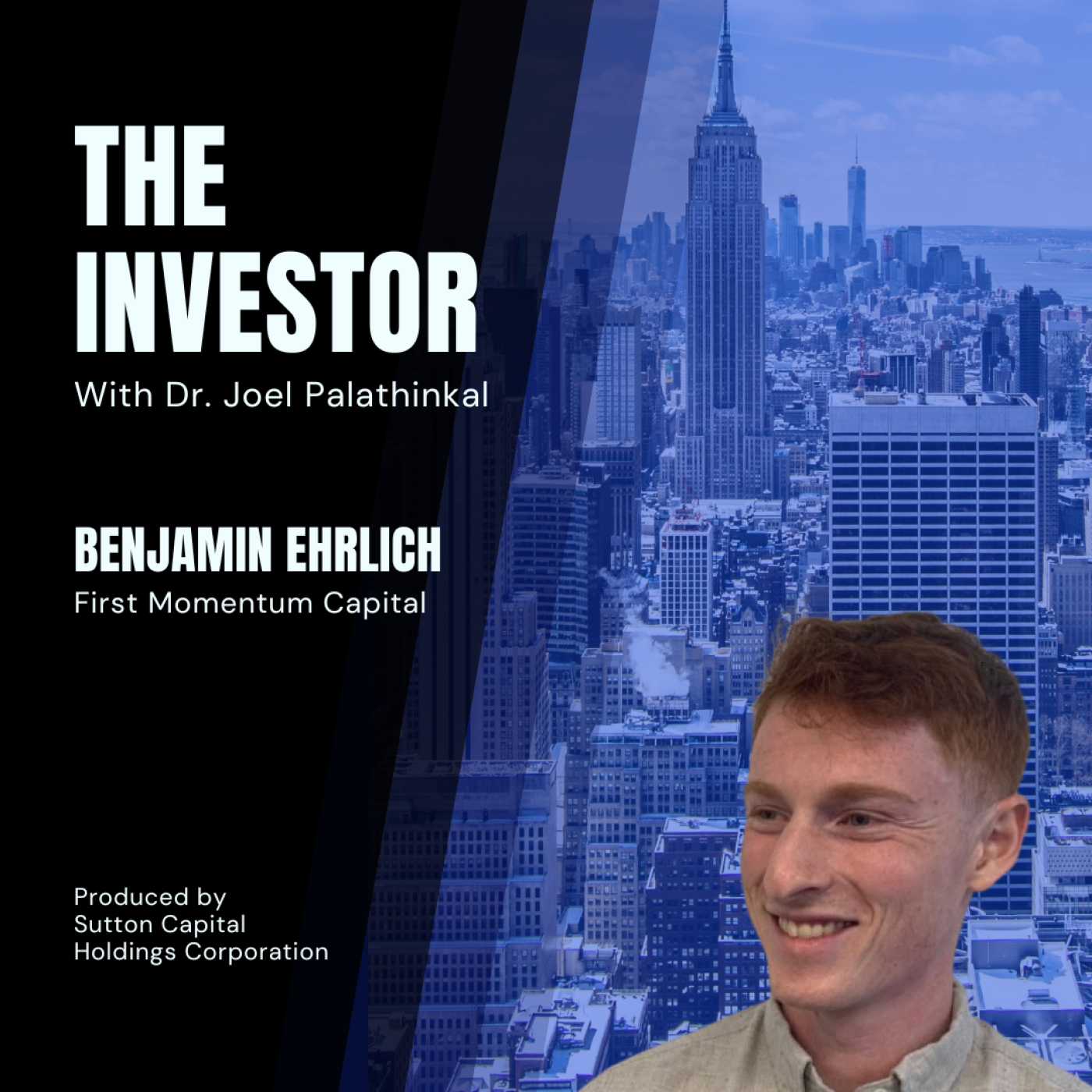
Loading summary
Transcript174 lines
- [00:03]
A
Welcome to the Investor, a podcast where I, Joel Palo Thinkle, your host, dives deep into the minds of the world's most influential institutional investors. In each episode, we sit down with an investor to hear about their journeys and how global markets are driving capital allocation. So join us on this journey as we explore these insights. All right, really excited for my guest today on the Investor podcast, we've got Benjamin Ehrlich. He's an lp. He founded First Momentum Capital. They're a fund of funds focused on investing in the best emerging VC funds and their breakout companies. I think that's really important because you're essentially creating a diversified vehicle that asset allocators can kind of get a mixed bucket of the best deals and just kind of getting that diversified, sometimes it's thematic. Right? So there's some LPs that a lot of them that I've talked to, they really, really like concentrated managers, you know, managers that are really, really focused, high conviction on a certain sector, maybe they came from that sector. So, you know, excited to nerd out on kind of how you think about this, Benjamin. But, you know, number one, thank you for giving us your valuable time coming on the show. And welcome to the show. So why don't we start, Benjamin, with you just kind of telling your origin story, just backing up to maybe your early childhood. Where did you grow up? What did your parents do for a living? Were you familiar with venture when you were a child? And how did you learn about venture? How did you develop your skills? And how did you break into the industry? And then we're going to talk about firm build, firm building after that.
- [01:51]
B
Yeah, absolutely, absolutely. And thank you for having me on. I'm really honored. You have some pretty exceptional people on this. So I don't know really what you're doing interviewing me, but I guess we'll try and find out. So, yeah, so I, you know, like everyone, I didn't know that I wanted to work in venture. I didn't know that I wanted to work in startups. Like, you know, it wasn't my dream as a little kid. I was going to be a hockey player. That didn't really work out. Then I was going to be a vet. And then I was like, oh, I'm allergic to half the animals. So neither of those career paths were really available to me. But I really credit this to being able to go to the University of Michigan. So I grew up mostly, I'm originally Canadian, but I grew up mostly in Ann Arbor, Michigan, and I wasn't the best student. But when you go to Ann Arbor high schools, the chances of getting into the University of Michigan are much better. And so really kind of got this leg up where I was able to go to one of the top tier universities and surround myself with just truly exceptional and really driven people. And really, I credit this to a friend of mine where on my second or third night at university, someone walked in my dorm, was like, hey, there's this, there's this entrepreneurship event happening. You know, I don't want to go alone. Do you want to come with me? And I was like, I didn't even know what that meant.
- [03:01]
A
Yeah.
- [03:01]
B
At the time, but I was like, let's do it. Ended up going to this house and just like, surrounded by just such exceptional energy.
- [03:09]
A
Right. And I was talking, was it like a frat house? It was like one of those, like, dorms. Some people buy homes, right. And then they turn them into.
- [03:18]
B
It was called shift. And it was just like a house for people who wanted to build companies in Ann Arbor and at the university and they would have these events where people would just come and talk and like, you know, you'd bring people from Detroit and people from all over Michigan would kind of come. And like, there was a, you know, maybe 10 to 12 people who lived there. And I just like, it was just such an infectious energy.
- [03:39]
A
Right.
- [03:39]
B
And like, you know, you'd go to the pre med classes and you talk to people who want to be a doctor and they're like, I'm going to work, you know, I'm just gonna look at my textbook and study for 10 years. And then you talk to people, go into investment banking and they're like, well, I have a 4.12 GPA, but I need a 4.13 to get to go to Goldman Sachs. I was like, but what are you gonna do at Goldman Sachs? And they're like, well, I'm just gonna make a bunch of money. And like, neither of those things appeal to me. But then when you go and you're surrounded by entrepreneurs and investors and you feel this, like, truly amazing energy, it's very inspiring. And then there was also this wedge, which I'm, you know, I'm always very practical about myself, which is. I knew I wasn't the smartest person in the room.
- [04:14]
A
Yeah.
- [04:15]
B
But I knew that I could work very hard and I was willing to try a bunch of different things.
- [04:19]
A
Sure.
- [04:19]
B
And it was the only community that I found where I was like, look, I don't, I don't know what I can do for you, but like, if you want me to help you write, you know, taglines on a website, people would just let you do it. Like this is amazing.
- [04:30]
A
Sure.
- [04:30]
B
This is a totally different community. And for someone like me, where I knew that I was going to work hard, I knew that I was going to push myself to limit, it was a truly amazing community. So got totally indoctrinated into the like startup know this was, this was the early 2000 and tens. So like startup, like move fast, break things. Facebook was like the hottest company.
- [04:48]
A
So this was like a meetup, like the first kind of interaction was just kind of like a cocktail event with a bunch of entrepreneurs.
- [04:54]
B
Exactly, exactly. And you know, I went to a bunch of these different things for a bunch of different career paths. Cause I had no idea what I wanted to do. Like I don't know any 18 year old who really does. And this was the I thing that kept coming back to me and the, and the people and the energy and my friends too, sort of just became this group of, of this group of people who wanted to work in startups or wanted to work in vc. And so right after college, ended up getting a job for a company called Cribspot. It was amazing. YC I didn't even know what Y Combinator was at the time. YC backed company. I came in and they were like, hey, we need to figure out, you know, we have no marketing. Do you want to do marketing for us? And I was like, I don't know what that means, but let me just call some reporters like at the local news and see if we can figure out to get a story because that'll be marketing. So I ended up getting.
- [05:39]
A
Essentially building your own PR practice kind of.
- [05:42]
B
Right, exactly. And I was like, I don't, I didn't even really know it. Like I cannot undersell how little I knew about how any of this worked. I was like freshly graduated. I had a degree in economics and political science, but I barely, you know, I kind of, you know, wasn't the top of my class, neither of those things. And so I just started calling people and saying, hey, do you want to come down? And ended up getting, you know, someone from CNBC to drive down from Detroit and the Ann Arbor News and ended up kind of becoming an integral part of this team. I then ended that company, ended up getting acquired and I ended up going out to San Francisco and working for a bunch of different, basically trying to figure out what I wanted to do. I worked for a really, really great marketing agency called the Outcast Agency. Tremendous people was not a fit for me because I don't listen to hierarchy very well. I was like, this is, you know, there's like 20 people between me and the client. I don't really understand why that happens. Yeah. And eventually I'll kind of cut this boring part where I was lost and you know, doing soul searching and all those types of things. Or else what I want to do. But I know I want to be in this around these people.
- [06:44]
A
It's tough. I mean, I would say that time too. You don't, you know, you're. I think there's a couple things happening, right. You've got other friends that work at IBM or like Deloitte. They're making 200 grand a year. So you don't want to talk about being an entrepreneur around them because they just think you're. They just think you're someone that just doesn't know what he's doing in life. And then you're kind of hanging out with these entrepreneurs. You don't know if you want to be an entrepreneur. You don't even know what that means. Right. So I totally get it. You're just trying to figure out, you know, and what's helped me is just kind of figuring out what you're good at and what you enjoy doing. Right. And that's kind of a start a little bit. Right?
- [07:21]
B
Exactly. You know, my mom's a teacher, my dad's doctor. They had no idea what this was. You know, a lot of my, some of my friends were in investment banking, consulting and like you said, making money and having nice lives, although they were working. But eventually the thing that really I would say changed, changed my life was a cold email and kind of put me on the path that I'm on now, which was I'd heard about this project called the Long Term Stock Exchange, which was this, like, it was one of the first companies and now I've met a lot, but it was one of the first companies. Where I read about it. I was like, this is a truly exceptional idea. And the idea was it was very simple. It was that wouldn't it be great if there was a different option for companies that wanted to be public in the United States and to emphasize focusing on long term and long term growth backed by innovation and you could do in the public markets of the private markets. And I was like, that is one of the most exceptional things I've ever heard of. I want to go work with that. And so I sent a couple of cold emails and eventually ended up getting connected with the Founder of Long Term Stock Exchange, which is a guy named Eric Reese, who's famous in Silicon Valley for writing a book called the Lean Startup.
- [08:28]
A
The Lean Startup, yeah.
- [08:30]
B
And I'll never forget, I had sent a couple cold emails, and I had a couple calls being like, who can get me into this? And then one day, I'd moved to New York at the time, by this time, I got a call from this number. And the call said, hey, my name is Steve Goldstein. I saw your email. I work at Long Term Stock Exchange. How fast can you be at this office in Midtown? Because Eric's going to be in town. I want to talk to you, and I think he'll want to talk to you.
- [08:55]
A
Sure.
- [08:56]
B
And I was like, excuse me, Eric Reese? You mean like the guy who wrote. He's like, yeah, yeah, you've been trying. You've been wanting to try and work with us. I've seen these, like, 10 emails from you. How fast can you be here? And I was like, I was. I remember I looked at the Trans. Like it says 40 minutes on the A train. I'll be there in 39 minutes. You know, like something stupid like that.
- [09:13]
A
Yeah. So they gave you a one hour lead time.
- [09:17]
B
He said the phone call was literally, hey, this is Steve Goldstein. I work with Eric Reese at Long Term Stock Exchange. Eric's coming to town today. Here's an address. How fast can you be here?
- [09:26]
A
Wow.
- [09:27]
B
I was like, this has to be.
- [09:29]
A
Yeah, I'll be there in 30 minutes.
- [09:30]
B
Yeah, I'll be there as fast.
- [09:31]
A
You know, you can track my. You can track me in real time. Here's my.
- [09:34]
B
Yeah, exactly. You know, I will run faster than the New York marathon sprinters to get here. And so I ended up, you know, going down there, having a long conversation with Steve and then getting to meet Eric. I was super nervous as anyone was. And we ended up hitting it off, and we talked about life, we talked about strategy. He was like, you know, what do you want to do? I was like, I don't know what I want to do. I just want to have a really big. I just want to work on something really big. That was. That was the thing that I kept on saying again and again and again. We had a couple conversations over the next couple days and ended up, you know, Eric coming back to me and saying, look, I don't know what I want. You don't know what you want to do. I don't know what I need. This seems like a great connection. Why don't we just work together for a couple Months. And then we'll. We'll figure it out.
- [10:17]
A
Yeah. You know, like, if I can interrupt. So there was a. I forgot. Who was the guy that founded Gumroad?
- [10:24]
B
He's amazing. Yeah.
- [10:25]
A
So he had a post about, like, paid trials, and I thought, that's brilliant. So, like, you bring somebody on, you give them a project, kind of like when you hire somebody on upwork. But, like, that's a great way to hire somebody because you give them a few things to work instead of, like, you know, sending them an employment contract and then sending them like a, you know, the whole, you know, legal agreement, it's like, look, why don't we do a. Why don't we do two or three projects? You know, I pay you, you know, a couple thousand bucks, and. And that way, no harm, no foul, you got paid in consulting. You could build that as your portfolio. You can put that on your LinkedIn that you're, you know, maybe have a. You have an LLC that does some services, and we get to kind of test to see if it's a good fit. Right. So is that kind of some. Is that kind of like maybe a loose kind of engagement model that kind of worked for Eric, or just kind of like, let's get to know each other?
- [11:15]
B
Absolutely. And it's actually something that I've adopted over time, which is. And I realized that I was like, oh, I'm so special. Eric wants to work with me. And I realized, no, this is something he does, which he says, hey, let's try something. Who would have thought the guy who wrote Lean Startup likes Iteration? And, you know, it's crazy, but so ironic.
- [11:32]
A
Yeah.
- [11:33]
B
But it is actually something that I've learned and just something I try and integrate, which is. Okay. Well, you know, we seem to like each other. There seems to be something here. Why don't we try this one very simple thing first and be respectful. And, like, don't, you know, don't. Don't ask someone to work for free. You know, I get paid. And when I work with fund managers now, I say, look, like, here's the things that I'm looking for here. Here's my thesis around this. If you get to this point, then we should talk again.
- [11:55]
A
Right?
- [11:57]
B
But it creates a really fast feedback loop, and it allows you to build a relationship much quickly, much more quickly. Because instead, to your point, coming in with an employment contract and this whole thing, it's like, no, no, you are there to execute on one thing, and. And you are there to build a relationship with one person. And if you succeed, then you can layer on all the other more complex things. And so, you know, we, I think I succeeded. That was seven years ago. And we still work together to this day. So I think, you know, we're still. I think I did pretty well on that first, first deal. And I'll never forget again. You think about like the moments that, that change your life and set you on your path. I had gotten into a Columbia graduate program at the time because I can, you know, what do you do when you're 24 and you don't know what to do with your life? Is you go back to school. Yeah.
- [12:44]
A
And, and also when there's a, you know, I think when times are tough, right. People go back and educate themselves. They get, they get into the ecosystem, they try to kind of. And I think that's going to be very prominent as we look at the next couple of years with AI. Right. There's going to be jobs that are going to go away, that are never going to come back. You know, if you're trying to study engineering, good luck. Because a lot of the development work is going to be automated. So a lot of those people are going to have to reskill and probably go back to school or maybe not go back to school, but get accelerated education for the skills that they need to get back into the workforce.
- [13:20]
B
Yeah. I think we're sitting at a really, I'm very optimistic person in general. And I think what you bring up a very good point, which is when you, you don't know it always in the moment, but you hit a lot of inflection points in your life, in your career. And I think like one of the most important skills that you can build, and this is something I believe in and I talk to fund managers about it and founders about it, is like, you want to be adaptable because when you hit these inflection points, you need to be able to change for where the inflection point is going. So I think like, the people who are going to be really successful in this AI era are the people who are creative and flexible and can say, okay, I have this really strong foundation in software engineering, but cloud code does my job better now. So how do I become a better manager of, you know, 13 different clog code agents versus just being a brute force engineer. And like that adaptability and that flexibility is going to become more and more important in a world where the, you.
- [14:17]
A
Know.
- [14:19]
B
Someone said this, so I can't, but I can't remember who. It's like the era of declarative memory is over.
- [14:24]
A
Sure. Right.
- [14:25]
B
We don't have to know things off the top of our head anymore. It's gone. But we need to know. But the era of procedural memory, which is the part of our brain which is, okay, if I do these, these three things, we can get to an answer that's going to be very, that's becoming very important.
- [14:36]
A
Well, this is how I address it. Right. A lot of people ask me, oh, is AI going to take a, you know, impact vc? This is what it is, right? You're sitting in a boardroom and there's five people and you're about to close on a deal. You know, they ask you a question, you're not going to have to state all of the terms of the term sheet, you know, off the top of your head. Right. But you're going to need to know kind of in general why this opportunity is a good opportunity. You're not going to be able to, like, pull up your laptop, search a prompt, and then turn the laptop around to recall that. You're going to have to still think quickly on your feet and be able to answer questions. It's okay if you don't know the answer because you can say, hey, you know, that's a good question. I don't know that. Let me get back to. But a human still has to do that, right? You can't just completely talk to a robot. There's still that relationship management that is still going to be prominent. There's still going to be negotiations, and then there's going to be just that quick thinking on your feet in a boardroom in real time that, you know, it's just, you can't, you can't replace that with anything yet. You know, don't talk to me in a year, maybe it'll be different, you know.
- [15:39]
B
Yeah, the scaling law is a little frightening, but I think you're right. And I think, like, being able to do, like, principled based thinking is much more important now. Right. Because if, and understanding incentives. Right. Because like, if you think about a negotiation, it's like, okay, well, I don't mean I may not know the right structure. I may not know the exact word to put in this, in this contract that we're talking about. But I know that from a first principle standpoint, we should be, we should be trying to optimize for X. And that's the type of work that's going to. First of all, that's the type of work I love to do and I think is more fun anyway. But I think that's the work that's going to be, you know, going to become even more important in a post AI world where it's like, look, I can type into Claude and it can give me infinite variations of the same confidentiality clause in a contract.
- [16:20]
A
Yeah, right, Absolutely.
- [16:23]
B
So there's just no point anymore in figuring out which is the best. But the point is. Okay, but what do we actually want the terms of this relationship to be? And how do we make sure that as we continue to grow this thing, it's going to be really good. And again, I think that's for someone like me who I think I value adaptability and I enjoy creative problem solving. Like, I'm excited. Yeah. But anyway, I'm gonna fast forward through the next like seven years to get to where so.
- [16:48]
A
Okay, so you went to business school, you did a couple projects for Eric. Right. And then tell me what happened after that.
- [16:53]
B
Oh, and then I remember it was like my first day of class and. And the day before my first day of class, Erica called me and said, look, I think we're working really well together.
- [17:00]
A
What?
- [17:00]
B
I still don't know exactly what it is that you're, you know, you don't have a job title. Like, you're just helping me do a bunch of stuff.
- [17:06]
A
Sure.
- [17:06]
B
Call it chief of staff. That sounds great.
- [17:08]
A
Well, what were you doing for him? I guess, were you helping him with what were some of the things that. I guess whatever you're allowed to share, I don't want.
- [17:16]
B
My first project was helping. They were in the middle of raising a Series B.
- [17:19]
A
Okay.
- [17:20]
B
So my first project was, hey, build the slide deck for the Series B.
- [17:23]
A
Great.
- [17:23]
B
And I was like, I don't know anything about this company. And they were like, Eric was kind of like, well, what questions do you have? Because you got to figure it out because you're going to be building this slide deck. And so, you know, we built that. We ended up having a pretty successful Series B. And then we be extension both. Both of which went quite well. And then, you know, so that was sort of the first project. And in that you, like, you learn. I learned so much about the business and the storytelling business. Right. Because there was three distinct business units. And there was a piece with the SEC that was going on. There was a software piece and there was a consulting part of the business and being able to kind of bring that all together and tell it in a cohesive story and also just like work with a bunch of investors. Not, you know, I wasn't the one pitching the company, but being on all these calls, hearing Eric, who's one of the most visionary speaker. I mean, to this day, I'm still one of those visionary speakers that come across. You know, you just. You learn. You learn a ton of stuff. And so they, you know, we had the successful Series B and. And went sort of at the end of that fundraising period was also the end of my contract and was also sort of the beginning of business school. So it was all these different companies.
- [18:25]
A
All the things kind of the timing aligned to kind of have good continuity.
- [18:29]
B
Exactly, yeah. And so, you know, I had this conversation with Eric the day before my first class, and he was like, look, I don't, you know, come work for me. You'll spend some time. He's like, I've got some personal investing that maybe we can spend some time on. That'll become more important later. We've got some lts. He's growing. We've got this fresh powder. We need to hire a bunch of people. Come help me build this thing. I was like, okay, I need to think about this. I need to think about this. I'm someone around who makes these decisions. I agonize myself over these decisions. But this was actually the easiest one, because the next day I went and sat down in my first class at business school, and it was about technology. Building a technology business was kind of the class. And the professor gets up there and he goes, hey, guys, just, you know, like a lot of other people have long course lists for this. There's only one book that you're going to need to read for this class.
- [19:18]
A
Yeah. The Lean Startup. Right.
- [19:19]
B
Lean Startup by Eric Reese. And I remember because I. It was like the most decisive I've ever been. I got up. I was in the back of class, thankfully, got up left, called Eric. I said, I'm in. Yeah, I didn't know. You know, I didn't really. Even at the time, there was no jd, There was no sat. Like, no, like, nothing. It was just like, this is the right thing to do. And that was 2018, 2019. So, yeah, six, seven. It's been six, seven years. It's been an amazing journey since then, but sort of fast forwarding because we launched the first new stock exchange in 50 years, got the first new multiple listings since the creation of nasdaq. It was a tremendous journey. I can tell you all about how hard it is to build a stock exchange and why it's a really bad business and why it's a really good business. But put that to the side because I want to talk More about the fun stuff. Is that my job. It was an amazing job. It was about 85% LTSE building the company, all that. But then there was this 15%, which was. Eric was saying, okay, look, let's look at companies together, let's look at startups together, let's look at funds together. And just like. Because I was interested in it. And he was like, great. Well, if you're interested in it, I don't have time to look at everything. Why don't we. Why don't we partner on this? It wasn't like a formal family office.
- [20:29]
A
Yeah, but you're essentially almost like an associate for his. His private investing arm. Essentially.
- [20:35]
B
Exactly. It was. It was like, you know, hey, I met this founder. You want to talk to him? Tell me what you think? It was great.
- [20:39]
A
Well, you know, if you think about it, right. I mean, there really isn't, you know, even. And we're going to talk about emerging managers, but, you know, a lot of these firms, they're figuring it out as they go. And that's, you know, that's the main reason why I built this platform, you know, I mean, years ago, just because I was still trying to figure out I had insecurities, I was trying to figure out, like, if I. I was still sounding stupid or not, you know. So what helped me was just kind of just doing it. And, you know, I worked at a couple of firms and then just kind of surrounding myself with other people. And most of those people were not judgmental because they're probably secretly insecure and they're probably trying to figure it out themselves as well. So then after a while, you get this hive mind, right? Because a lot of people are just sharing what they've learned, what works, what doesn't work. So, you know, loosely, you got to look at a company and just decide if it's a good investment, right? And there's the market, there's competitors, there's, you know, compet. There's essentially the unique, you know, selling proposition. But beyond that, you know, you're still. You're still using your instincts to choose and decide to invest. Beyond that, Right?
- [21:43]
B
Yeah.
- [21:43]
A
And it's.
- [21:44]
B
It's not. A lot of data helps, but the data can be very misleading.
- [21:49]
A
Yeah, Right.
- [21:50]
B
And that. That was sort of the thing that I learned very quickly is that, like, all the things that you think matter most of the time don't actually matter because some idiosyncratic event or some weird thing happens or company pivots and turns into something amazing. And so what really matters I had this whole thesis when I was first filling out. What's the market sizing, what's the tam, how do you do this? And what I realized very quickly as anyone who does any of this is that it's really about, particularly at the early stages, about the people, people in the management team. And I mean it was, it was amazing. Like we had, you know, we had some early wins, we had some, you know, companies that I was like, okay, we're going to invest in this series B of this company doing 100 million revenue. There's no way this company goes to zero. Literally next year it goes to zero. Had this, had the opposite to where it was like, yeah, I invest in this company 10 years ago. Who knows if it's gonna be now. It's one of the keys.
- [22:45]
A
Well, this is the other thing too. So you, you know, you're, you're doing what you learn in business school. You learn like what you learn from all the blogs. You're like, I'm going to do top down analysis, I'm going to do bottom up analysis. And based on that I think the market size is like 200 billion. Right. But the founder is like the founder saying it's a $2 trillion market. And then you talk to like 10 other VCs, they have their own calculation. So at the end of the day, like everyone is wrong until 10 years from now. Right. Until you actually find out what happens. Right.
- [23:12]
B
Yeah. And what you want to do, and this was like a huge learning again from Eric is like, you just say, what's my hypothesis around this? Like why could this work? What is my belief? And I do this with funds now too, where it's like, what are those factors of success that this person's going to have with their fund? Because it's different in each case.
- [23:28]
A
Right.
- [23:28]
B
And with, because with founders have different, you know, I don't believe in like there's only one type of founder that's going to be successful. I think there's, I think, you know, history has shown there's, there's no archetype.
- [23:37]
A
Yeah.
- [23:37]
B
For it. And so what you want to do is build a hypothesis around it so that you can understand where your thinking went wrong the last time. Because the only thing that you know for certain is that it's not going to work out the way you think it is. And you know, I've talked to a lot of fund managers now who are sort of on that first fund or pre, first fund and they're like, I'm going to fundraise for three months. We're going to do our first close. We're going to invest in six companies, then we're going to do our second close. I'm just like, this is great. I'm going to screenshot this slide and I'm going to talk to you in six months. And it never works out that way. And I always say it's not a big deal. Right.
- [24:10]
A
Sometimes it's good to be able to download the deck as well versus the DocSend because you can actually see if the deck is cool, changed and you have that, you know, that old deck on file. Right. To see actually what, what happened.
- [24:23]
B
Yeah. And, you know, I try and track all of those things as best I can try and I, you know, take rigorous notes on everything that I can, but, you know, you never really know and that it just. Anyway, the, the long story short is that the part of all of this stuff that I was doing with Eric, which led me to what I'm doing Now with emerging VCs, is I just fell in love with that investing part.
- [24:45]
A
Yeah.
- [24:46]
B
And I didn't. I fell in love with it because you were helping people.
- [24:50]
A
Sure.
- [24:50]
B
Right. Eric wasn't the biggest check in a lot of these rounds or in these funds, but he was a very, he's, you know, he was a huge name and he could lend his credibility and lend his network. And so it felt like, hey, we're making, we're, we're making a monetary commitment. Yes. But we're also making an energy, reputation and sweat commitment to these founders and to these fund managers. Sure. And. And that was a part that I really loved. And the other. So the first piece was just like, okay, I really, really enjoyed doing this. And the second piece was on the fun side. We caught some really good funds. If we caught some, you know, some funds that were giving DPI back in year three and are now sort of sitting at 7.8x overall and had caught some really, really great companies over this time period.
- [25:34]
A
Yeah.
- [25:35]
B
And Even whether the 20, you know, the 20, 21 downturn with, with a lot of success. So, you know, in sort of late 22, I was like, huh. So I found something I really enjoy doing.
- [25:46]
A
Yeah.
- [25:47]
B
Clear path to making some money here. This feels like the perfect confidence. This is the thing I've been looking for for the past 10 years as I've been trying to, you know, navigate what I'm doing with my life. Well, I found it. And so I went to Eric, this was probably summer of 22, and I was like, look, I Have to have a really hard conversation with you. He's like, oh. I was like, I'm going to quit and I'm going to go start. I found out that there's this structure called the fund of funds. Didn't know what it was until like a week before. Sure quit. And I need to start this because this is what I love and I want to do it. And I had this whole speech prepared and I was ready to have this whole argument with him and he goes, great, can I be your partner? Can I invest? When are we doing this? Let's get this thing up and running. And so that was really the genesis of verse momentum was to say, okay, you know, found what I love doing, found someone I enjoy working with, found something that's pretty good and can make money. And so we raised a small friends and Family Prototype Fund 1 and I've been off the races ever since.
- [26:46]
A
That's amazing. So let's talk about. And this, these are you. Have you earmarked a portion to do some direct investing as well? Or is that just kind of.
- [26:59]
B
We don't, we do that via spv. This is a big learning. I mean I've learned so much in this, in this time period. But this, this is a huge one that my LPs have also pushed me on is that I want to. We're in the next, the next fund. We'll, we'll, we'll have some. In the first fund we didn't have any dedicated capital for, for directs. We just did the SPVs.
- [27:18]
A
It's also difficult with the fees and also just kind of how you're, you know, positioning your offering because you know, like what is the right percentage? You know, you might as well just run. You know, hopefully you get to the scale where you just do two funds in parallel. Right. One there because I mean once you start thinking about like a closed ended pool, you need to really think through how that that is organized. And you know, if it's kind of getting intermingled, it can get, it can get kind of messy sometimes I'm assuming.
- [27:45]
B
So I think an investment period, right, it's like, okay, so you're going to invest in funds over three years and so they need like two years for co invest opportunities. So the, you know, the fun life very quickly turns to 25 years. Don't always love that even if you're giving great returns. So there's also that like real, real dynamic of okay, you know, we're only going to invest in, you know, our pool. You know, let's say you do 15 managers. Well, you do five in the first year. You assume 20 companies of fund like and then 80% of those you're not even going to want to invest in anyway. And then you only get access to 5%.
- [28:19]
A
Sure.
- [28:21]
B
So you know, you, you want to balance these, these things.
- [28:26]
A
Yeah.
- [28:26]
B
And in the first fund that we raised, you know, I didn't really have a, really have a track record. Eric has angel investing, you know, success. We had done pretty well on the, on the fun side, but it felt like let's, let's do the thing that we think we're going to be really good at. Yeah.
- [28:41]
A
I wanted to show, I just wanted to do a, a quick little demo. This is just a little fun model builder that I built and I wanted to kind of do some brainstorming with you. So like when you're thinking about the reserve, let's talk through some of these. I think this would be a fun little, you know, master class here. But like, you know, obviously probably, you know, like a fund one is what, like around seven to eight years ideally.
- [29:05]
B
I mean, I think.
- [29:06]
A
And then probably or you think, you know, some of the funds I've seen, you know, they've, they've gone as little as like three years. So like look, it's a, it's a prototype fund. Right. So what, what would, what would be a good period for like a prototype fund? I've mainly seen kind of like the smaller $5 million funds that are doing like, they're doing three years. They're like, look, we're going to deploy these many companies. Our assets are like 5 million, 2%, 20. And then at that size, how much reserve should they think about? If it's high conviction.
- [29:36]
B
Yeah. So you're assuming 3 year deployment period, 2 and 20 fee structure. 5 billion.
- [29:43]
A
Yeah.
- [29:45]
B
So with the really small funds, it's interesting. There is a, in the LP world, it kind of feels like the early debates of the Catholic Church around two items, which is portfolio construction. You know, how concentrated should you be, how diversified should you be? And the other point is reserves. And so what I always say is like my, my general baseline is that smaller funds should not reserve anything.
- [30:10]
A
Sure. Okay, that makes sense.
- [30:12]
B
Or should reserve basically reserve basically nothing. Because at the end of the day the two. The thing that will matter if you're raising a five or seven million dollars fund is the initial MOIC on a check is going to be the huge, gonna be the biggest returner.
- [30:24]
A
Yeah.
- [30:25]
B
You're just not going to be able to play in a $30 million Series A. Like even, even your most impactful.
- [30:31]
A
There just won't be enough capital even if you had a winner to double down on that. Just because the AOM is so small.
- [30:37]
B
So, and, and so, you know, do you like it doesn't mean you don't follow on or put together an SPV or bring into your LPs. But it's like when you look at sort of the actual numbers and I built a portfolio, an ugly portfolio modeler that I'll kind of work through with people is like say like, you know, if you're a $7 million fund, you have a chance to write another 250k check into a company versus putting 250k into a Series A that's valued at 100 million. There's no point in putting that. That 250k check is not going to be meaningful. Maybe it defends your ownership percentage a little bit, but not in a super impactful way. That changes when you get to about 25, 30 million in fund size. You say, okay, now you've got a little bit more capital to play. Maybe that argument starts to change. But I think there's also like a broader argument here, and this goes into my also philosophy on picking fund managers is the thing that made you a really good pre seed and seed investor is not the same thing that will make you a good Series A investor.
- [31:33]
A
Sure.
- [31:34]
B
Those are actually two different, two very differentiated skill sets. It's a different type of underwriting. It's a different type of momentum play.
- [31:41]
A
Sometimes there's a little more competition too. The Series A. Right. I mean there's maybe one or two co leads in the Series A, so you're kind of competing a little more versus the seed. It's like, you know, that deal still has probably a couple million left in the round. So there's plenty of room. And sometimes, sometimes the investors are trying to help their founders close the round.
- [32:00]
B
Exactly.
- [32:01]
A
So I think that's in my opinion that's like the biggest differentiator.
- [32:04]
B
I mean you nailed it, right? It's, it's the, I think being, being a really good precedent seed investor is about finding people before it's obvious and.
- [32:11]
A
Backing them and securing the allocation, you know, if it's not over subscribed.
- [32:17]
B
Exactly. And Series A, it just, it's just changes. It's a different skill set. It's a different subset of things. It's not to say that I haven't seen people who are good at both, but again that's why my baseline for the Funds that we look at is say, look, don't, don't either. Reserve a very, very small amount for opportunistic. You know, if there's a, you know, defend your position if there's a down round and you still believe in the company. But at the end of the day, we try, you know, I tend not to, not to love reserves because again, like, you want to have every. You want to have. Maximize your shots on goal and maximize your ownership percentage relative to fund size. The best way to do that is to reduce your reserves.
- [32:50]
A
Yeah, absolutely. So what advice would you have for maybe tech professionals, consultants that are thinking about their fun one. They want to go out and you know, or anybody in corporate America, they're like, looking. I've been. Or just people that have been working for a big franchise for a decade. But like, look, I worked at, you know, I worked at Bessemer for, for almost six years now. And you know, I get my annual raise, I get some carry, which is kind of phantom carry. Right. But I think I want to build something on my own. I'm in my late 30s, early 40s. Now is the time for me to build. How do you think people should kind of think about that in their mind? And then let's talk about that minimum viable fund, kind of. What does that look like?
- [33:41]
B
Yeah, Well, I want to take that second piece first if I can, because I actually think there's been amazing work, both done by Joel Yu. I mean, I want to give you some credit here. Just helping.
- [33:50]
A
Thank you.
- [33:52]
B
And there's a lot of other programs too. You know, varying, you know, amount, varying stages that they focus on. But there's. There's been a Cambrian explosion of these programs to help people get off the ground. Yeah, I think so. I think actually the, the MVP fund has actually been come down to a very, very manageable size. I mean, I'm seeing, you know, we invest in a fund that's 1.8 million. Right. I mean, that's not, that's not a huge amount. And so I think, like.
- [34:18]
A
But it's easier to see DPI when the fund is so small, just proportionally. Right. Because it's like a small little markup that actually shows some real darts on the board versus, obviously, if you get a mega fund or if you're under fund three, you're going to have to really amplify the returns to show something.
- [34:37]
B
I mean, so we closed at the end of 22. So our first close was the end of 22. So we're now three years in from our first close, that $1.8 million fund is the only one that's getting given meaningful DPI back.
- [34:46]
A
Sure.
- [34:47]
B
I mean, it just, it, you know, we've gotten bits and bobs here, but, like, that is, you know, that is what. What the, what the situation is. And so I think, like, I'm really. And I think this is really, really exciting and why I'm, you know, I'm happy to be talking with you in your, in your community is that, like, I think this is actually a good thing because it gives people an opportunity to do the. Do the job, which is supporting amazing founders.
- [35:10]
A
Yeah.
- [35:10]
B
And people. And gives people who are the best at supporting amazing founders the opportunity to do this work versus the people who are the best fundraisers. Because sometimes those skill sets are the same, but not always. And so I think, like, you know, when you're. My advice to people is always like, what do you think if in this, I'm actually going to credit Roy Behat for this at Bloomberg Beta, because he gave me some early advice. He said, I always say people like, what's your snap your fingers amount of money that you have? Right. So Tomorrow you send 100, you send five texts, and you have your fund size. What is that number? And be very, very real and critical with yourself about what that number is and decide and start your fun process there.
- [35:49]
A
Is that based on how much you could raise? Is that what you're saying? So, like, if I probably push the envelope, I could probably hit these people up and get that, or is that just kind of the capital that you think you can deploy?
- [36:01]
B
No, it's capital I think you can raise in like a week and a half. That's kind of the way I think about it, where it's like, I know that these people have always wanted to support me. This guy will write 100k check. This person will write a 500k check. I know, I, you know, without running any process, apart from just hitting up a couple people, I can raise two and a half million dollars.
- [36:16]
A
Sure.
- [36:16]
B
Right. And starting with that and having a very honest discussion around that with yourself and saying, okay, because for some people that answer is 10 million and for some people that answer is 500K.
- [36:28]
A
Yeah.
- [36:28]
B
Right. And so starting your fund, your fundraising journey and your portfolio construction journey and everything that's going to be downstream of that is say, what is the actual fund size? Where if I absolutely fail at everything else, that I'm actually going to be able to raise and deploy.
- [36:42]
A
And that makes sense because at the.
- [36:44]
B
End of the Day. Your fund size is your strategy and what you're actually able to raise will determine what you're actually able to do. And so that's sort of the first conversation I have with people. I just talk them through and say, okay, so if you think you can raise 10 million bucks in a very short period of time, that's great. So maybe you want to end up at like a 25, $30 million fund. So let's map that out and let's map out the different situations and say, okay, what is this? What is your portfolio? Downstream portfolio construction actually looks, look like if you think you can only raise 500k, well guess what, you can still, you know, Angellist makes it really easy so you can still do a fund but maybe it's like, okay, we're going to do this a part, as a part time thing. We're going to raise a million and a half bucks. We're going to do maybe a rolling fund structure or maybe we're going to do via SPV or whatever it is and we're going to actually have a different strategy and then go and raise that 10 to 20 million.
- [37:26]
A
We've had people from, you know, pretty big institutions, you know, refer to the term synthetic fund. So like, you know, you could cobble together those 10, 15 SPVs. Maybe that's like a couple million in assets. And you know, you can kind of, hypothetically you can work with your, you know, if you do have a fund admin or you know, obviously like a cfo, you could actually put that together and actually thoughtfully showcase the performance off of those deals. It is not a single pooled structure, but just you can show the markups and, and, and kind of, you know, represent what that could be if it was one, one pool of capital. But I've seen people do that, especially when you don't, when you don't have that track record. You got to build it that way, right?
- [38:08]
B
Exactly. And angel investing track record is great, is a great tool. I actually wrote a piece with David Joe, who's amazing. You should have him on if you.
- [38:15]
A
Oh, David's awesome. Yeah, he's got some really good stuff. Yeah, you guys have, was going to mention earlier, you guys have done some great content together and I think that's a really great community building technique to just kind of, you know, join forces with people. I mean it's not really a competitive space. I think people are doing a lot of great stuff together. People are doing networking events together. So I think if you can kind of bring in good people Together and do good stuff together. You're, you're doing good by doing good, right?
- [38:41]
B
Yeah. And I think it's always a balance. Right. With these, with these content pieces. And I actually am curious to see how you think about this, where it's like, I, I want to be a really good actor in the LP space.
- [38:52]
A
Right.
- [38:53]
B
I, I don't always, you know, sometimes I'll miss email, sometimes people will drop off my CRM. It's not perfect. Even though I like affinity, it's not perfect. And so some of the work that we do, like with David, and David's much better at this than I am, is let's think about things that are common questions that come up and actually make my life easier. How can I make it so that when I meet a fund manager the first time, it's actually a much easier conversation and it's a selfish thing that also benefits everybody else. This is what I'm looking for. And so I've been trying to do a little bit more of this. And David's been a great ally in this. Say, okay, look, here are the things that I look for. Here's the process that I run, here's the general way that I think, and it's actually turned out to be much more beneficial. I mean, I think one piece we put out and I had like 95 inbound, or maybe it was 90, but now somewhere like 90, 95 inbound fund managers. Yeah, just, just from that one piece. So again, it's, it's, you know, it's a bit of a selfish decision to say, okay, this, you know, helps create deal flow and helps me have better conversations. But I hope, hopefully it's also helpful to the community. Say, look, if you have an angel investing track record, here are the things that I'm going to look through and here's what to do and what not to do.
- [39:59]
A
Right?
- [40:00]
B
Like, I, you know, it's, it's hard. Like, sometimes you'll see something where someone's like, look, I, I, my angel investing Track record is SpaceX.
- [40:06]
A
Yeah.
- [40:06]
B
And it's like, okay, but you invest in SpaceX two years ago and you're saying you have pre. You will focus on pre seed companies. So just help me understand that.
- [40:13]
A
Right?
- [40:13]
B
And so hopefully we can sort of shortcut those conversations.
- [40:16]
A
I think too. It's like, you know, sometimes content is like, you should do this, or here's the top five things that you, you, that you should do. I think if you just say, hey, here's what I did and here's what Worked. People can't really get mad at you or criticize it that much because it's what you did. But if you try to prescribe something sometimes, like, hey, well, who the hell is this guy trying to tell me what to do? You know? So what I've done is, like, a lot of times for me, I'm just like, look, here's. Here's a couple things that I've seen. Here's what I noticed that this person is doing. Then we have a content team that'll just. They'll write a blog about it, and some people comment on it, some people. Some people don't say anything. And that's good to know. But, you know, I think. I think what's worked for me is just kind of, you know, this podcast is live. It's live streaming. We're not going to professionally produce. Well, we will produce it later. But, yeah, I think just getting it out is half of the battle. Right? Just kind of like, literally, you know, if you're thinking about something, if it's, hopefully it's thoughtful, there's some research around it, there's some reasoning behind it, and if you get it out, you know, you. You actually got it out. Because, I mean, there's some people that, like, do so much research and analysis, and they get like one post out every, like, three months or something. Right. So I think you're doing the right thing. Just kind of getting. Getting your thoughts out there and then, you know, getting feedback from that.
- [41:33]
B
Yeah, it's. It's an interesting. It's an interesting strategy. And it leads to, like, it has led to higher fidelity conversation or higher quality. Not fidelity. I don't know where that works. Higher quality conversations. Right? And that, that was sort of my, My. My hypothesis around this is I said, look, if I content the people who take the time to look at it and read it, hopefully those conversations will go better. And I think that is. That is better. And to your point, like, it's. I talk and David and I talk about this a lot. It's like, let's just write about what we. What we think. Yeah, we're not telling anybody. You have to do this, you have to do that. It's just, hey, this is what. You know, when I look at an annual investing track record, here are the three things that I would look for.
- [42:14]
A
Doesn't mean I've also used it. You know, I don't know if you've ever done this, but I've done this to just bookmark something. For example, we put together this is a deck template. Hypothetically, it's like a fun two template. But I just built it so that I have some template I can give people and then I post it. That way, if I'm maybe putting together a deck, I'm like, hey, these are the things I need to think about. I can just refer back to that sometimes. And you guys probably do this too. You just create a resource that you can use it. It might be your actual IC checklist. And you're like, oh, where's that checklist? Oh yeah, it's in our blog archive. So a lot of times when I put together something, it's just because it's like something that I want to just bookmark for myself. It's like, oh, what are the 12 questions you should ask when you're doing an IC? Oh yeah, we actually wrote our own blog about it. So it's kind of a dual use where it's your own kind of bookmark. But hopefully some other people get some value out of it. If they don't, maybe they tell you a few things to improve. I've gotten that in the past where somebody's like, hey, you know, I got a suggestion. You should add these three more things. So, hey, that's a good idea. That's. I'm adding it right now. It's really easy to fix, you know, so.
- [43:24]
B
Yeah, absolutely, absolutely. And I think too, and this is why I also love the fund of funds approach, is that the data in this market in particular is so hard to come by and so low quality.
- [43:36]
A
Sure. Right.
- [43:37]
B
Is that like. It's just very hard to find actually interesting, good content about what's going on, both at the allocation decision level, but also to the innovation level level.
- [43:45]
A
Yeah, Right.
- [43:47]
B
So I think, I think putting content out about how you think is helpful for everybody and hopefully it encourages others to do so. And I, you know, like, one of my favorite things is reading when I can get a portfolio company update from a fund manager.
- [44:03]
A
Right.
- [44:04]
B
Like when I can get the actual update from a portfolio company because, you know, we pick our managers because they're better at finding founders and better at, you know, specializing in certain areas than I am. And so they're finding really sharp and smart people. And when I get to read what those our managers, I think are smart too. But when I get to think read the updates from the, from the portfolio company level and sort of see what's going on there, that's the absolute best.
- [44:28]
A
Yeah.
- [44:29]
B
As you just learn so much and you get so much insight into what's actually happening on the ground. And I think, you know, when we were starting this, a couple of my LPs were sort of asking me. They were like, look, we like you, we want to back you, we'll do this weird thing. But like, like, why do you want to be an lp? Like, you don't, you know, you don't actually get to see anything. I'm like, but at the end of the day, you get to see way more.
- [44:49]
A
You do? Yeah. Because we hosted this, you know, every quarter we do this thing called the Allocator Summit. And this one was really crazy because we had a couple managers present. One of them was a fund to fund. So the fund to fund talked about one of their funds and then, and then we had one of their funds, portfolio companies present as well. So we had the full stack. We had the lp how they think, you know, a couple managers, what they're thinking. But then we actually had a founder speak as well. So if you really think about it, you're at the top of the food chain because you're kind of at the fun level. You have peers that are LPs, and then it's very easy to go top down. I think sometimes it's tough to be in the rooms when you're the founder. Right. It's tough to actually, you know, you'll never get into a room with the LPs, but, you know, let alone get into the room with, with the VCs. So I think it is a really good position to be because you can, it's very simple to kind of get that look through down because a lot of the manager is going to be talking about their portfolio company updates and you know, they want to make sure they're really good updates because they're, they're coaching their founders to do a good job too. So I think to your point, I think you really get a, the best look through possible from the, from the level that you're in.
- [46:01]
B
Yeah, absolutely. And I think for our LPs, they love that look through as well. Right. So like for, we had our AGM a couple weeks ago, sort of end of October, and we, you know, I brought a couple founders. Well, I brought one founder and I wanted to bring another and then they got sick. But you know, like we opened up the whole thing with a discussion with one of the founders in the portfolio level and people, you know, people said that that was their favorite part because again they, you get, when you actually talk to people who are doing the work on the ground, you learn the most and you get the most, like, sort of high quality data. And as an lp, that also helps you choose. When you're looking at other gps, you're like, well, I know that the founders were talking about this, and you're talking as a gp, you're talking about something completely different. So then you get to kind of bridge that gap and do that work. That is pretty fun. It's putting together pieces.
- [46:49]
A
Yeah, totally agree. Well, hey, we got two minutes left. I always end every podcast with just a piece of advice. Could be from Eric Ries. I mean, look, you've already given me a lot of wisdom about him, but maybe it's a mentor, maybe it's a friend, maybe it's just yourself looking back from this year, but, you know, just give us a piece of learning or advice that we should take with us. And, you know, you're like me, you've kind of had different, you know, career paths and, you know, you kind of found yourself going through those different career paths and taking you to where you are now. Yeah. Oh, man.
- [47:22]
B
Piece of advice.
- [47:24]
A
Could be from a relative. It could be from. Yeah, a mentor.
- [47:30]
B
I would just say, like, the one thing that I always try and remember is that nothing is inevitable. Yeah, just. Just really.
- [47:35]
A
A good way or a bad way.
- [47:37]
B
Yeah, exactly. Like, people, you know, all the AI doomers, all the optimists. There's. There's like, we get to choose, and so you get to choose, like, and so I tell myself that all. Every single time, I'm like, you know, the anxiety is rising. You're looking like, wow, this is just like, this is going to go so badly. Like, there's not. There's nothing in the world that is inevitable. I think that's what makes allocating and investing so fun, is you get to make a hypothesis about the world and then see if you were right.
- [48:00]
A
I totally agree. Well, Ben, this was amazing. Hopefully I see you this Thursday. We get to hang out.
- [48:05]
B
Absolutely. Absolutely. Joel, thanks for having me.
- [48:07]
A
Yeah. Really appreciate it. And we'll catch up soon. Thank you so much.
- [48:10]
B
Absolutely. Thanks.
- [48:11]
A
All right, take care. Bye.
- [48:19]
B
Sam.