← The Investor With Joel Palathinkal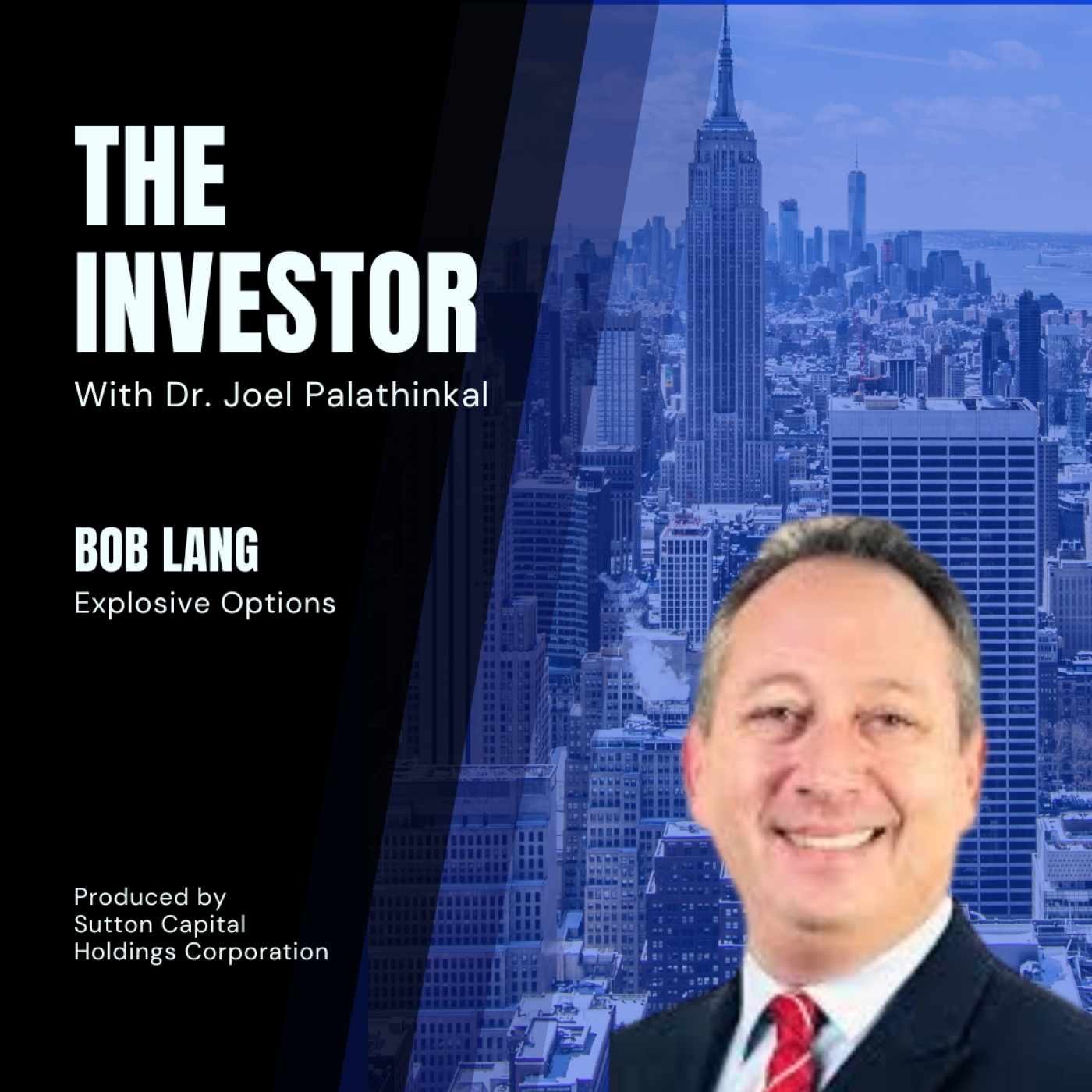
The Investor With Joel Palathinkal
Bob Lang: The founder and chief options analyst of Explosive Options.
00:47:47
Loading summary
Transcript65 lines
- [00:03]
A
Welcome to the Investor, a podcast where I, Joel Palo Thinkle, your host, dives deep into the minds of the world's most influential institutional investors. In each episode, we sit down with an investor to hear about their journeys and how global markets are driving capital allocation. So join us on this journey as we explore these insights. All right, so super excited for my new guest on the Investor. We've got Bob Lang, who is the founder and chief options analyst of Explosive Options. It's an options trading and educational platform that he launched in 2011. He's a veteran technical analyst, options trader and market educator known for delivering actionable trade ideas based on technical analysis and real time market conditions. He is a veteran in the industry. You know, he's managed in the past institutional portfolios, pension funds, hedge fund strategies. He's previously ran as that Capital, which is a hedge fund focused on equity and options markets. And over the course of his career, he worked across asset management, portfolio strategy, and derivatives trading, and a little bit about Explosive options. At Explosive Options, Lang provides subscribers with trading strategies, market commentary, options focused education designed to help investors generate income and navigate volatile markets. He's also a contributing market commentator and has been a longtime contributor to financial media outlets where he covers mostly technical analysis, option strategy, and market structure. So, Lang, really excited to have you on the platform. It seems like you've just built an amazing community, but also just coming in, you have that institutional background to back it up. So really excited to have some conversations. Look, we started almost like a pseudo podcast and started kind of going back and forth and I'm like, man, we got to get this recorded and get it on the pod before we start with anything. I feel like it's important, you know, to understand who Bob Lang is, you know, going a little deeper on. Look, where you grew up, what were your earlier influences when you were maybe a teenager going up to high school and you know, what did you choose to major in in college and how were some of those things critical, informing who Bob was and, you know, obviously your first, you know, steps of your career at the institutional level. So I think this is a great opportunity to kind of go deeper on a lot of that and, and have some fun conversations around it.
- [02:36]
B
Well, it's great, Joel, thank you for having me. I really appreciate the time and the interest as well too. So if I had to go back to the beginning of where I really had some interest in the stock market, it's really kind of funny story. My dad was a stockbroker back in the 60s and early mid-70s. Probably one of the worst times to be a broker in the stock market. The markets were terrible back then, probably mid-60s to about 1975. And I remember the days that my older brother and I, my dad would just say, okay, get in the car, we're going to go pick up the Barons. An issue of Barrons would come out about 4 o' clock in the afternoon and in Southern California, Sunday.
- [03:27]
A
The Sunday, the Sunday edition.
- [03:29]
B
Right? That's right. He had to get, he had, he had to be like the first one out there to get, you know, to go to the newspaper. You know that little, that little box where you threw the through like six quarters in and then lifted it up and, and, and, and I, so I always loved it to jump out of the car and grab the barons for my dad. And you know, he tried to start explaining to me a little bit of what it was all about. I, you know, I probably wasn't more than 10, 11 years old and you know, I had, I had the interest of, I had the attention span of a NAT back then. So I probably would have only listened for about five minutes and then I got bored and did my own thing. But that's where he really, you know, he started doing that. We did that every single Sunday.
- [04:11]
A
Sure.
- [04:12]
B
And going, going to get the Barons.
- [04:14]
A
And so read it, I guess. Would you guys all read it independently and share, share insights?
- [04:20]
B
Well, it was dad really mostly reading it. My mom had no interest in it and he would start trying to read it to us and telling us what was things all about and you know, he'd tell us about the, you know, Allen Abelson column. Oh, this is a really important column. This guy really knows a lot of stuff. And he was of course the editor of Barron's. And you know, eventually it caught on for some interest here because I really, I wanted it. I love my dad and he's still around today, thank goodness, thank God. But he, you know, I really, I wanted to emulate my dad. I wanted to, you know, do that he did and that he found an interest in. And so it's easier for me to step in there with a little bit of assistance from him. But that was really kind of where it first started. And then when I got into junior high school, we had a contest in middle school, you know, learning about the stock market. And so I figured, you know, I, by then I have everybody else beat where these, you know, 13, 14 year olds, there's no way they're gonna, they're gonna beat me because my dad taught me for, you Know, through, you know, lightly in a couple of years about, about the stock market and how to pick stocks. So our job was to pick a stock and see how. See it through to the end of the currency. And we had a contest to see who picked the best one. And I, you know, my dad. So my dad said, you know, why don't we. Why don't we pick Halliburton? This is probably back in 1979 or 1980. Okay, we picked Halliburton and actually finished second in the class. And not first, but second. But, you know, again, that really got the juices flowing because every single day I have to look in the paper to see how did Halliburton do for six months and just to see how well, well, my stock was doing. So, you know, that was really where, you know, kind of really where it first started in my interest in the stock market and finding. Finding something that I can really tangible. My hand on and to pay attention to.
- [06:22]
A
And what were, what were things that your dad was talking about? What were some things that your dad mentioned, you know, in those, in those sessions, I guess. How long would he read the magazine? So he would just kind of digest the magazine and then just kind of give you guys an overview and then just kind of stimulate the discussion. Did he ever push you to. And your siblings to kind of go through the ritual of reading it and kind of sharing. Sharing your insights? And did that evolve as you got older?
- [06:50]
B
Absolutely. And, you know, he would. He would. He would get a. Every. Every couple. An issue of the daily graphs that would come out and. Because my dad loved to love to chart way back then. And, you know, he did. He did work in the same office with William o', Neill, who famously started Investor Business Daily and William o' Neill company back in the day. And he loved charting, he loved technicals and would show me how to chart these things. He would actually get a pencil or a pen out with a ruler and show me how to chart on these daily graphs. And that was really super helpful in learning about patterns and. And so forth. But as far as Barron's is concerned, you know, he would read stuff out of there and share it with us and how important it was to be aware of what's happening in current events and what stocks are important to buy. He'd also talk about the investment landscape and risk management and diversification, all these sort of principles that. Foundational principles that we're supposed to know, we're supposed to understand to be successful investors and traders. So, yeah, so all those things Were certainly paramount and discussed at length with my dad, with my family. My brother went a different path. He decided not to do anything in financial markets, although he does dabble a little bit. But for me it was really, hey, yeah, this is really what I want to do.
- [08:23]
A
Sure. No, that's amazing. And then how did that cascade into your professional career? So you did that as you were growing up and then what did you pursue? What did you, what was going on in your mind as a maybe a rebellious or non rebellious teenager and kind of getting into, you know, thinking about college.
- [08:40]
B
Well, right when I got into, I transferred from Santa Monica College to San Diego state back in 1987. It was a very interesting time period. And again, another event happened that really was extremely, truly fascinating to me. I had some money in the markets, about $10,000 with stocks. I wasn't trading options back then, but again, late 80s and I'm in college, my first semester at San Diego State. And we had an event happen in October of 1987. I'm sure you, you know your history, that market crash back in October 87. And was fascinating to watch what was going on. I could, you know, I was losing money because I mean, I had, I had stocks, but so were a lot of other people. Not my student, not my colleagues or students that were near me, but other people. And I was watching what was going on in tv, Joel, and seeing the rampant fear and it was palpitating. And the people who were scared and nervous and worried about losing their money. And again, which is from a psychological standpoint, it was fascinating because I thought, well, you know, it's probably just going to bounce back. Why are you so scared? Why not just jump in there and start buying more stocks? And literally in two weeks, 80% of the losses were recovered on the Dow and on the S&P 500. So again, this was another event that, a life changing event for me and watching what was going on in the markets because I realized, you know, every single day, week, month and year the market is giving you opportunities to take advantage of some, some unfortunate souls. Poor judgment. Right. You know, selling when you shouldn't. Cause a lot of people were selling way back down in 1987 because they, well, maybe they got margin calls or something like that, or maybe they were just scared and they thought, oh my gosh, I've got money, I don't want to lose it all. It was a very similar feeling from back in the late 1920s, right before the market crashed back then. But if you had a steady hand back in 1987 and 1988, we did go into a recession after that. But if you had a steady hand and just waited for prices to recover and just took a deep breath and waited for that moment, you not only came out at least even, but you probably real well made money.
- [11:14]
A
Yeah, no, I totally agree. And I mean, for me, it's been really interesting to look at different ways that people allocate their capital. I mean, there's pros and cons with everything, right? So with venture, you're hoping that you get a, you know, 5000x return, but you may not know if you're going to get that type of return until maybe 10 years. With private equity, you know, there's a lower multiple. But, you know, obviously you're investing, you know, if you're doing buyout, you're more into a tangible business where you can actually see those results. And then the issue with both of those, if you're in a fund structure or if you're in a direct deal, is that you can't cash out. And that's what for my. Well, for me, I think what's interesting is kind of investing or looking at the hedge fund, the hedge fund structures, because they're more liquid, some of them allow you a redemption within a quarter, some of them allow you a couple days where you can, you know, cash out if you need to. I think the good, the good managers that are doing hedge fund strategies or if you're doing like some type of prop trading desk, the good platforms are the ones where your performance is doing really well. You're compounding capital and the LPs don't even have a, a reason to pull out because they're just, it's doing better just sitting in that account and compounding capital. So wanted to kind of. And then obviously there's real estate. Right. People are investing in real estate. I think the difficult thing that people don't realize with real estate is if you want to sell, you don't know when that instance could happen. And then if you do sell, there's, there's obviously a taxable event. And I think that you are, you are kind of taking an approach where you could have a private equity strategy with real estate where you're buying a bit, you're buying the property or the, or the complex and you're adding value to it and it does appreciate and there's cash flow. So you could run it, I mean, essentially as a real estate private equity strategy. But you're an owner operator, but you know, you're Always in the game. Right. Even if you sell that property or do like a 1031 exchange, you're back in the game.
- [13:20]
B
Right.
- [13:21]
A
You're not really retired yet. So wanted to kind of hear your thoughts on just kind of all the vehicles and how people think about that. Maybe some of the people in your community, you know, some people are just all in on active trading and then there's other people that kind of have a couple different strategies. They're a multi asset strategy approach. And you know, I'm assuming, you know, some of the pension funds and you know, institutional investors that you worked for, they probably have that multi asset approach, I'm assuming, but would love more color from your perspective on that.
- [13:52]
B
Yeah, you know, I mean, as far as private equity and ventures is concerned, you know, you, you as an investor and I invested in these when I was making pension money for Sunkist back in the late 90s. A great time to be bullish. The markets were just going straight up every single day until they ran into a bulldozer in 2000. But we had private equity investments too. And the philosophy there in those investments is you've got to take a long term approach to returns you're going to get, probably going to get good returns. Because look, I mean let's, let's face it, Joel, private equity is, you know, along with small business. But you know, private equity is the lifeblood of the growth in the economy. And I could, I will tell you that, you know, I mean it is these companies that are young, smart, innovative and they bring people out from college, they bring people up from, you know, whether they're from there's Stanford or MIT or Harvard or wherever they're from and they have these unbelievable great ideas, but they just don't have the do it without any funding. And they seek people like you or others in the business. They pitch a look, we may not change the world here, but we're going to change part of it and we really want to bring it out. We need some funding. We need some funding and we need some patience. Can you stay with us long enough to make it worth our while? I mean, you know, I'm sure years ago, Joel, you know, there was, there were people who invested early on in anthropic and OpenAI. Right. And oh yeah, without the idea of the success that they're having today. Obviously it was just a dream for Sam Altman and the other guys over at Inter, dream that they were going to get there. And I know with, you know, with the backing of somebody like Jensen Huang, who's been a believer in AI for years and years, even the guys at Google, you know, it was just, it was just a matter of time before it came together. But if you were on board early with a concept like that, you're going to make a big, big amount of money.
- [16:15]
A
Yeah, no, I totally agree. And I think what's, what's really interesting is the convergence of public markets and private markets. You know, there's the ability to invest in anthropic before it's public. You can still invest in SpaceX before it's public too. And obviously you're not going to get the same outsize return, but you could buy shares at a certain price for a certain number of shares, very similar that you do with the stock market. The only thing is it's not as technically, you know, the ability to technically offload the shares is not as easy as just hitting a buy or sell button. You know, you have, obviously have to work usually a lot of times with the broker and kind of find a buyer and you know, there's a matchmaking process. But I think, I think there's opportunity. There have been some platforms that have attempted to do that. Obviously there's some side effects that I'm not going to mention on here, but there's some side effects with that. When you, when you have private market data and, and you're trying to kind of sell to investors, there could be some issues. But, but, you know, so tell me a little. And then, and then kind of you walk me through kind of the, the jump off point from high school to college and kind of what you majored in and, and how that kind of landed into your first career in, in institutional investing.
- [17:35]
B
So I was a finance major at San Diego State and was a traveling salesman for a cookie company. You've probably heard of Keebler cookies and oh yeah, they were bought by Kellogg some years ago and part of their.
- [17:50]
A
So what were you selling on behalf of Keebler? Was it like, was it like Enterprise
- [17:57]
B
cookies, crackers and chips?
- [17:59]
A
So who are you? Like, who are you? Oh, you're selling it to grocery stores, like to put them on the shelves?
- [18:05]
B
Yeah, yeah, yeah, that's right. And okay, that was a really first, you know, big job after college and you know, I was able to have some pretty flexible hours. So I managed to get my master's degree from the University of Redmonds while I was working there. And once I got that master's degree, this is a funny story about. So once I got that back in 1996, you know, I decided to take a look at some ads in the, in the paper for a new job. I figured, okay, well, I don't really need a master's degree to do. I've been here for three years. And it's time to try to find something a little bit closer to, you know, a career, what I wanted to do. And so I used to have things in la Times and probably other newspapers called the tombstone ads. You know, they look like a big tombstone and on the page they huge printed ad. So one for some kids growers, they're looking for a investments pensions manager. So completely unqualified. I knew I wasn't qualified, but I thought, you know, let me just give it a shot. So I called up and they booked an interview for me. And I met with the trigger, and I was really rather nervous coming in there. So I walk into his office, let into his office, and he's not there. And I'm looking around his office, I'm like, is there anything here I can identify with? You know, I see he's got golf trophy, he's got UCLA stuff. And like, I'm a sports guy. I thought, oh, this is good. I can, I can, you know, if I'm, if this interview is going nowhere, I can just bring up some sports stuff and we can start talking. So he comes in there, we. He comes and sits down with me, Joel, and we start talking a little bit about, a little bit about the job. But then I, you know, the, the Lakers were playing the Bulls in the NBA Finals. It was around that time. And I said, well, what did you think about that? You know, we started talking about that and we started talking about golf and we talked about other stuff and we just became, you know, friendly for 45 minutes and we talked about the job for 10. It was less than an hour interview. We didn't barely talk about the job. So. So I left thinking, okay, well, that was a nice guy. We had a nice, I'm not going to get the job. And so, you know, I'll just chalk it up to some experience. He called me back four days later, offered me the job that, here, Bob, we want you to be the best pension. And I was literally, I fell off my bed thinking, when I took this call, I'm like, you got to be kidding me. So I got the job. I was investments pension manager for three and a half years. We had a great time. We had a great year. 97, 98, 99. Through the Russian ruble crisis, through the Asian crisis, and also through Long term Capital management happened during 1998. So there were a lot of crises that happened during. We did really well. I started with a pension goal with about $220 million. My left is about 340 million. And that's after withdrawals from the pension fund. So we had a really great time with a really well diversified portfolio. That's a private equity venture capital. We had some real estate along with different long and short managers, different sectors, small cap, large caps, that sort of thing in European stock. So we have very well diversified portfolio. But we ended up having a good, a good couple of years over there. And then, and then I left in 1999.
- [21:41]
A
Well, look, I want to go deeper on the pension fund and what you learned, but funny enough, I want to learn about what you learned selling Keebler products to grocery stores. Like what were some of the, you know, I'll tell you this, like some of the formative skill sets that I've had in sales. And you're going to laugh, but like I worked at the mall at like a jewelry store and it was essentially like a sales. I mean, I was just manning the booth, but still you have to kind of learn how to work with people and, you know, maybe upsell and you know, I got a commission, but like that was like my first sales job. And there was just a lot of basic things in terms of just like, hey, connecting with someone. Right. So what did you learn the most from selling Keebler products to grocery stores?
- [22:25]
B
Yeah, so I, you know, it was just more the relationships that you build with people, you know. And, you know, the guy hired back in 1992, you know, still reaches out to me from time to time. He lives in Laguna and Laguna Beach, California. And 30 years later, he still sometimes reaches out to me and sees how you doing, Bob, how are things going, how's your family, that sort of thing. And you know, you build relationships with people in sales if you want to have a successful career in sales. I think, Joel, we're all salesmen certain extent. Right? I mean, we're all trying to sell ourselves or sell, sell something. So, you know, I think that that experience, you know, me become better at, you know, building relationships, communicating with people, following through, getting orders done if something's not right, fixing it sort of thing. But sort of self management principles that I was able to learn on the job.
- [23:25]
A
Yeah, no, absolutely. And then walk me through some of the things that you've learned as an allocator, you know, kind of deploying capital for pensions. It sounds like you've you've invested in all different types of strategies. And what are some things that you've observed have changed since when you were deploying capital?
- [23:43]
B
Well, when I was at Sunkist, you know, the investment portfolio, that's the company, right?
- [23:49]
A
Is that the orange juice company? So their pension fund?
- [23:52]
B
Yeah, yeah. Lemons and oranges. Well, it's mostly fresh fruit, Joel, but they also have juice and so forth. It's a. Sunkids was just a marketing company. Nobody owned them other than the growers. And it was just a marketing company. It was around. It's brown around for 140 years or something like that. It's a very high quality brand. It's one of the most identifiable out there. So. But it was an old company pension fund that they were required to have managed with the assets and keep in line with distributions that were to be done for all the retirees. So my job for the growers was to try and build the pen fund up as much so they didn't have to make contributions. And we did that every single year, which is they loved me because they didn't have to pour money out of their pockets to fund the pension as they're obligated to do. So we had a diversified portfolio. But when I first got started, Joel, with that, the portfolio needed a lot of reworking and structure in structure and in size of pension investments and in certain areas and groups. So, you know, I had to go around and start firing managers because they weren't doing a good job or else we needed to, you know, again, deploy that money elsewhere and in certain areas. And, you know, I would fly around the country, you know, going to Chicago, Philadelphia, New York, obviously Boston, other places, Tennessee, Texas, and finding managers who could good, good high quality, hungry managers who would fit our criteria for investments. And I was looking at the hungry guys who needed to do everything they could to get a good return and to earn the money I was getting. We're dropping 5, 10, 15, $20 million on all these managers. And we really had to be careful about who we went with. Had really strict criteria. Again, I met with a lot of really talented people, but, you know, I had to, I had to have a high bar for them to get our capital in order for us to get a good, safe return on our, on our investments. Again, we were, you know, we were in a lot of the areas that you, that you specialize in in venture and private equity. We got some really good, strong returns in that area, real estate as well. So we went had money with this company called REEF rref I'm sure you know who they are. And you know, the diversification was really the focal point of success of the pension fund and concentrating it in certain areas that we thought were going to do real well. You know, that was back in the time dot coms when you know, a lot of called it the dot bombs, the dot coms where a lot of companies were getting a lot of capital from ventures and so forth, but they had no prospects of making money into the future. Zero. And you know, they were taking from venture capital and not. There was no, there was no, they had no path to making money. So. So it was a matter of how long you last before the music stopped.
- [27:25]
A
Yeah, that makes sense. And then tell me what happened, I guess what was the next stage after that, after you left the institutional pension fund.
- [27:35]
B
So I left there and I started my own hedge fund in January without. My timing could not have been worse. We started coming back down. I was pretty bullish going into the end of 2000 and you know, after the whole Y2K thing happened, which turned out to being a false alarm, a lot of liquidity dried up and a lot of these stock companies that were, you know, had prospects that even prospects for making money or not even making money, they all went by the wayside and went to zero. Several names did survive, obviously like an Nvidia on Amazon. But a lot of these, you know, they went away. So I started dabbling in options trading. Didn't really have a lot of experience doing it, but I tried it and my dad helped me learn how to, how to do how to trade options a little bit here and there. But it really took Joel for me to learn. I learned from the school of stocks on this one. And there was no really no real educator out there, any mentor of mine up until about four years later that got me going and really helping me learn how to do it. But I will tell you that the greatest experiences that I've ever had were real experiences of winning and losing an options trade.
- [28:57]
A
Sure. What advice would you have for new hedge fund managers? Developing a strategy, obviously building a pipeline of LPs and then obviously following best practices for execution.
- [29:12]
B
So as a fund manager, basically funds manager, I suspect that the ideal policy that most would have, Joel would be take a look at which companies deliver the best Sharpe ratio. And Sharpe ratios were really important for me as well. And it should be very important. That's basically for all those folks out there, sharp ratios or risk adjusted return on your investment. And so, you know, it's all about the diversification and so you know, managing your risk and diversification for a manager these days because you just don't know what's going to happen. You know, especially you know, in these times have a, you know, we have a president who's very unpredictable and was very unpredictable back in his first well too it was, it's and it's very difficult to be, be on top of things and trying to trade best in the macro is very, is, is hugely challenging. And if you're, and if your time horizon is long like yours or usually mine, then you really have to worry about those things. However, it does make one a little bit uneasy when things are going in your, in your favor and you just don't see any light at the end of the tunnel for success, for successful investment and successful trade.
- [30:49]
A
Yeah, no, absolutely no. That's really great advice. I mean so walk me through kind of what happened after that. So you built the hedge fund, you deployed some capital and then you know, how did that go? And then tell me what happened after that.
- [31:04]
B
Well, you know, I mean in 2000 we had a good year. The first year we got up to a rough start. In 2000 we had a good year and we actually finished up 9%. Markets were down and I told, I route to all of my investors telling them look, you know what, it looks like we're heading into a bear market in 2001. I'm going to be some shorting and we're going to be, you know, I just not really comfortable with this and we have a high levels of cash and would you believe I got a lot of Joel and said well, shorting stocks, that's really not unamerican, isn't it? And I'm like what are you talking about? So I mean it was just a first level response here, Joel. And I said you know what, I think it's better for me send you your money back. So a lot of people, I sent their money back and to people and I ended up. So I just didn't have enough capital to stay in business, Joel. And so set my timeline to close up the fund in September of 2001 actually ironically right before 911 happened. So anybody who stayed with me, I doubled their money because I doubled my money back in the summer of 2001 of the markets were, were down a lot in June, July leading into.
- [32:21]
A
You doubled it through shorting. You doubled it through the shorting strategy. Okay.
- [32:28]
B
It was incredible.
- [32:29]
A
Doubling the money. Doubling the money doesn't sound too un American to me.
- [32:32]
B
So I know Listen, you know what that you're short, you know, money shorting and, and, or going long. It's all the same to me. It all looks the same to me, doesn't.
- [32:42]
A
I don't know if you watch, I don't know if you're a follower of, of the, I don't know if you are a fan of the show industry. But like the latest season, there's a PM and it's really great. I mean I think even for new fund managers, they should watch that show because it's, you know, she's, she's meeting a bunch of LPs and that woman, Harper, she left kind of the bigger bulge bracket bank and she went out and launched, I mean she set up an activist short only fund. And you know what they do is they find bad actors and they, you know, find the alpha. She, I think she had like one or two anchor lps. But it's really interesting to kind of just see how you can take them a pool of capital and then just deploy it across a different type of strategy. Right. So like whatever your expertise is, whether it's options, whether it's shorting, as long as you're generating some alpha with that expertise that you have, then you know, at the end of the day it's like the numbers can't lie.
- [33:36]
B
Well, one thing I learned about just, you know, while I was running the hedge fund, I had some personal money that I made a good chunk of money back in the late 90s. And again, I didn't have the knowledge of managing risk back then that I do. That was 26, 25. I'm a much better risk manager today. But if I had. So if I had those skills, the skill set back then, I probably would have done a lot better. But I, I had, there was a moment, Joel, that I wanted to share with you. It was back in July of 2001. So I had a lot of shares of this company. I'm not sure if you remember a name called Broad Vision. Does that sound familiar to me? Sounds familiar.
- [34:20]
A
Yeah, it sounds familiar.
- [34:22]
B
It was a Bay Area company. I had a lot of shares of that company and I didn't have any short calls against it. I didn't have any protection. I had a large amount of shares. So it was a Friday afternoon, it was in July and I was living in Southern California back at the time. And it was about, I was trading the stock, I was just holding onto it. I get up in the morning, Joel, at 5:30, the market's opening up at 6:30 and I'm looking at the ticker on CNBC and Broad Vision down 10 bucks. I've got 7,000 shares of the stock.
- [34:57]
A
Wow.
- [34:58]
B
Unprotected. And I'm like, I'm sweating. I'm like, what? What the hell's going on? And look, scouring the. Scouring for news. What happened? Right? Why is it all of a sudden going down? I mean, I couldn't believe it. So I'm looking around, and maybe. I think they lost a contract or something like that. American Airlines, it just got worse all day long. Here's a Friday I'm ready to go to actually go to Las Vegas for the week to meet my parents. And stock ends up down like 15. And I'm like, I gotta get rid of it. So I cut the stock. You know, Obviously, I lost $100,000 on this stock again. No. No protection at all. And I was like, I got on the plane, I get off the plane, and my. I'm literally ghost white, right? I'm so upset. And my mom says, like, what's wrong? Looks something wrong with you. But what happened? Like, well, mom, I just lost $100,000 on the stock today that bombed. Well, don't worry about it. Just. Let's just have a good time in Las Vegas. It was the worst weekend of my life. I could. I just could. I couldn't. I could not have a good time. I couldn't relax. And so that was the one trade, one experience that kept me from overexposing myself to risk in a. In a bad way. Because, I mean, I had zero, zero protection on that. You know, So, I mean, if anybody who. More recently, there was a company called Avis, which, you know, symbol is car, the stock has just been going. Is on fire to the upside. A month ago, $200. Now it's like 700.
- [36:42]
A
Wow. You mean the rental car company?
- [36:45]
B
Yes, the rental car company.
- [36:47]
A
Okay. So they went from 200 to 700 in weeks. Joel, what do you think was. What do you think drove the price?
- [36:56]
B
Well, it's a couple of hedge funds that. That. That basically own all the shares. And I think they own like 108% of all the shares outstanding. Something like that, obviously, because the short. The reason why it's underrated. The short sellers. And the short sellers have just been getting squeezed like it's nobody's business. There's no funnels that. That support this company. It's maybe worth $50 a share, not 700, not even 200. But, you know, they. This is one of those situations much gamestop a few years back. You remember that one? And they, they squeezed, they squeezed the short, the, the short sellers on that. Same thing happened with this here. And you know, these, the. If you're not prepared and ready to take a loss, you know, if you're, if you've been short, this, this, for instance, all the way to. All the way up, you're just, you're in a whole world of pain right now.
- [37:45]
A
So, yeah, I'm like, re. I'm pulling this up right now on Yahoo Finance, it says like this Avis short squeeze is real, just like it was last time. So. Interesting. Yeah. So this is kind of hot off the press right now. Interesting.
- [37:58]
B
I mean, it's a, it's unbelievable how many people are going to get hurt on this thing. And, you know, you've got it, You've got it. I guess, I guess my, the story is that, is that you've got to have an exit. You got to have a parachute on and say, you know, you've got to know when to rip cord and say, look, you know what? I'm, I'm done. I've. I've. I've lost enough money. I'm moving on to the next. Hopefully I can make some money the next summer.
- [38:23]
A
Yeah, well, tell. And then, and then, I guess, you know, after that. Is that when you kind of built the, the platform that you're managing now, or was there kind of a, you know, with, with explosive options? Was that kind of the next chapter after building the hedge fund?
- [38:37]
B
Yeah. So, you know, after the hedge fund, I went and found a guy who lives in Kentucky and he was running these services. So we started a couple of them together and they did really, really well. It's bigtrends.com and I worked with him for seven years. And then it was time for me to move out on my own and I started expensive options in 2011, got site going and started writing my articles. Along the way, Joel, I was working with Jim Cramer on money and doing technical off the shelf.
- [39:13]
A
What was it? Yeah, tell me what it was like working with Jim Cramer.
- [39:17]
B
Jim's great. I mean, you know what it all comes down to sending me an email and say, hey, Bob, got anything interesting this week for off the charts? I said, yeah, sure, let me write it up. And I just write it up, send it over to him and the producer and the writers, and boom, there it is. You know. And then.
- [39:33]
A
So he had a separate platform called off the Charts that was gathering kind of insights. And then you would, and then would he compensate you for that or was that just more of like kind of a knowledge sharing, you know, relationship?
- [39:47]
B
Part of his television program Mad Money and this segment on Money. So he would, he would, he would mention My name, 12, 13, mentioned my company. The book that I wrote, know your options. And, and that was great advertising for me.
- [40:02]
A
Oh yeah. I mean, what I would say with like being a high performer, it's about, even if it can get boring over time, it's just being the person that just repetitively has the same level of quality, same level of performance for decades. I mean, I used to watch him when I was a kid, maybe 20 years ago. I mean, I had, when I first moved to New York, I had a brief stint on Wall street on a trading desk as a stockbroker. And everyone would just be reading. We would read Barron's every Sunday and then we'd have to debrief on Monday and we would see, we would see Mad Money all the time, just throughout the day. So it's crazy to kind of feel and I think, look, I mean, that has transformed into kind of now instead of having to be on the TV network, now you can kind of build the same type of experience on short form content on YouTube and kind of with like the same kind of community and platform that you're building. So, you know, you, you built like a really great name for yourself and you also kind of complemented some of these, these titans. What are some of the things that you've learned from building explosive options and obviously from building community?
- [41:14]
B
Yeah. So I mean, it's all about learning and about teaching. I love to teach, love to teach about options because I didn't really have anybody who taught me and so forth. And I will tell you, Joel, I've just about made every mistake there is. And I teach everybody what I've done wrong. And hopefully they can sidestep that because the last thing I want people to do is lose money. It's hard to. You start with $100,000 and you lose 50,000, 50 grand. You need 100% return just to get back to even, you know, it's not, it's not easy. It's very difficult environment and everything. Every day is a different opportunity. Every day is something different. I know some of the times rhyme, but they're not, they don't, they're not, I, they're not identical. And you know, as long as you go in with it, with the notion that, you know what, I could, I can make some money today if I, if I'm diligent, I Work hard and keep my risk management rules intact. That's the thing. I try everybody to manage risk properly in a very profound way. And, and I'm constantly reminding people, are you proper selling here? Do you have a, It's a constant reminder in people's ears because you know, listen, trading is a lonely, trading is a lonely business. I'm sitting, I'm sitting here, my desk and looking at the wall here. I don't have anybody guiding me or telling me what to do. People are in the same spot so I try to guide them and help them through our chat room to do the same thing.
- [42:53]
A
Sure. And what have you learned? What advice would you have for someone who's trying to build their own community? Whether it's for a certain strategy or just in general getting investors in the room. What are some pieces of advice that you'd have for those people that are looking at? Maybe raise money or just be with like minded people. Sure.
- [43:14]
B
You know, I mean, I think it's the genuineness that you give to, that you give people the honesty and the willingness to share ideas and your knowledge and what's in and not, you know, charge anything for it. Listen, you know, we're all, I'm not going to get any points for accumulating all this knowledge when I'm, when I'm dead and gone. I haven't shared it with anybody. So I think the idea is to try and, you know, create a community of people who are interested and take you for, for, for who you are. It's the realism of trade and investing again, you know, I mean not, not many of us were reared on, on Wall street and really understand the, the components and what's involved with trading, trading on the Street. We're only trading in front of our computers and this has only been, you know, over the last 10, 15 years we've been able to do this. So. Sure. You know, it's about, you know, self control, discipline, using caution. And if you're, if you're able to share what you know with people, you're going to gain some people's allegiance and respect. And if you're showing some genuineness in what you do, that's what, that's what matters the most.
- [44:31]
A
Yeah, absolutely. Well, look, I always wrap up every podcast with just one piece of wisdom. I think you've shared a lot of nuggets, but you know, just if you could share one piece of wisdom, it could be from a family member, could be from your father, could be from one of your previous bosses, it could be one from one someone that you mentor. Right. A lot of times we learn from people that are, that are maybe 10 years younger than us and they just are on top of the trends and the insight. So just maybe one piece of advice for, you know, could be life advice, could be professional advice. Whatever you got for us.
- [45:04]
B
Yeah. So, you know, there's a lot of people who try to make this transition from the working world into trading and they're not successful doing it. It's because they don't understand the rules. They're, they treat the options market like it's Las Vegas. You know, there's a, there's a place. If you want to go to Las Vegas, you can go there and gamble and get drinks. You know, that's not what the options market or the trading market is all about. It's a place where you can, if you're very, if you're very disciplined, you can make a living doing what you do. So I think it's all about learning, Joel. It's about learning and experimenting and putting yourself on the line in moments where you can be successful. I think trading is very similar to high stakes no limit poker. There was a guy who won the World Series of poker back in 2001, Robert Barconi, and they asked him, what makes you so successful in poker in no limit? And he goes, well, it's just the patience because it's hours and hours of boredom and moments of sheer terror and different than trading. You know, you look at ideas and you throw a, toss them out. You look at ideas all the time. Then there's some lulls in this six and a half hour trading where you get bored and all of a sudden something lights up and then volatility starts to kick in and then, wow, there's an opportunity there. So if you're, if you're parent and ready for those moments, that's, that's where you're, that's where you're going to be. You're going to show the greatest amount of success. Not about being perfect. I mean, trading is not about being perfect. Nothing is. I think what you, what you learn the way will help you become a better trader and better investor down the road.
- [46:51]
A
Amazing. Well, hey, Bob, really enjoyed all the insight, the storytelling and, you know, compacting all this wisdom in one session. So I'm very confident that our community is going to get a lot of value and just take away a few free nuggets. And look, thanks for all that you do. I'm sure Jim Cramer thanks you, but you know, you're creating impact with the community. You're helping people kind of stay on top of their game. So thanks, like I said, you know, appreciate all the impact and. And for spending time with me. Really appreciate it.
- [47:21]
B
Thanks. Appreciate you spending time with me as well.
- [47:25]
A
All right. Take care, everybody else. Have a great day. All right. It.