← The Investor With Joel Palathinkal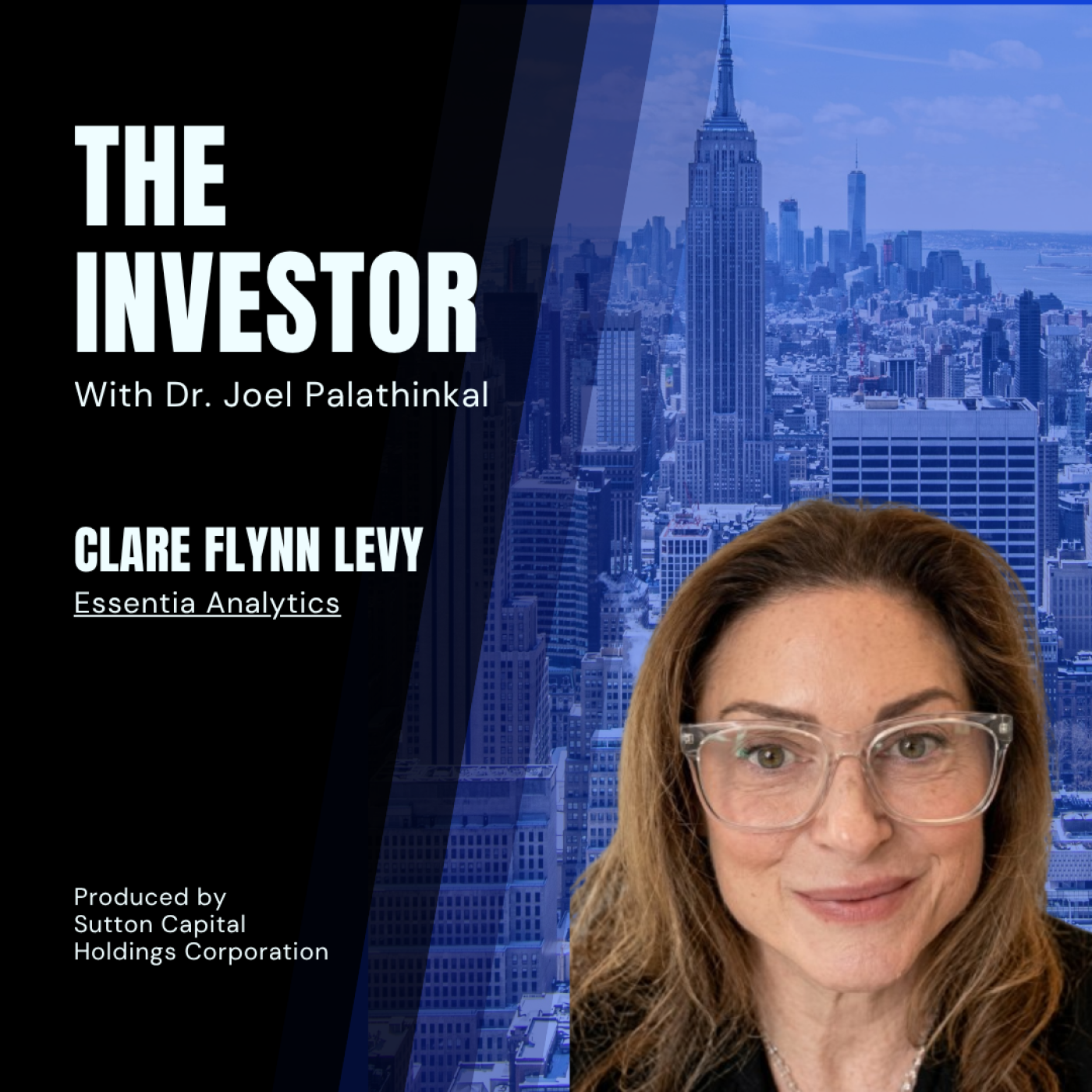
The Investor With Joel Palathinkal
Clare Flynn Levy, the founder and CEO of Essentia Analytics.
00:44:20
Loading summary
Transcript121 lines
- [00:03]
A
Welcome to the Investor, a podcast where I, Joel Palo Thinkle, your host, dives deep into the minds of the world's most influential institutional investors. In each episode, we sit down with an investor to hear about their journeys and how global markets are driving capital allocation. So join us on this journey as we explore these insights. All right, I am live here with an amazing guest. Her name is Claire Flynn Levy and just excited to hear her background. She's been an institutional investor for large pension funds for the longest time, but currently she's the founder and CEO of Essentia Analytics. It's a fintech firm that uses decision attribution analytics to help both fund managers and allocators of capital identify investment skill and bias and continuously improve their decision making. So as I alluded to earlier, prior to founding this company, Claire spent almost a decade, over a decade as a fund manager, portfolio manager, specifically running over a billion of assets. She worked at Deutsch Asset Management and later was a CIO of Avocet Capital Management, which is a London based technology hedge fund. We were just joking about what we see on TV and you know, the theatrics that you see on shows like Billions, you know, it's not really what happens. So we're going to talk about what, what it's really like. And she's passionate about understanding the human behavior through data. She spent the last decade analyzing the investment decision making of professional investors and she is also the co author of Stock Market Maestros. So what this book talks about is a winning habit, Strategies and mindsets of the World's best investors. And it just dropped, I think this, you know, a week ago. So this is insight into, into the world's most successful investors, revealing the unique mindsets and techniques they use to consistently beat the market and they dive into what the most skilled investors do differently. So, Claire, you know, welcome to the show. Thanks for giving us time and excited to go all in on all these topics. We have a lot to cover.
- [02:23]
B
Well, great. It's great to be here. Thanks.
- [02:26]
A
Well, let's, let's go back, Claire. I mean, you told me you listened to some of my podcasts, so you know the drill. So tell me, you know, what was going on in your mind when you were maybe a small girl, you know, evolving to maybe high school, thinking about what you want to study in college and, and how that had evolved, how that evolved into your first role and maybe we can skip a couple years and kind of go through, you know, being an institutional investor working at a hedge fund and, and all that. Good stuff. And I'll probably pop in with some comments and questions too.
- [02:56]
B
Okay. Okay. Well, I think the, the young girl version wanted to be a newscaster.
- [03:05]
A
And why do you want to be a newscaster?
- [03:09]
B
I don't, you know, I don't. I think, I think that I was very used to watching Jane Pauley on the Today show with my mother when, you know, this is the 80s and I really admired her. That was a role model for a young girl. You know, she was taken seriously, she was doing something important and she, she looked great and she was, you know, she met all the different ideals. So I think that's probably why I was interested. But then by the time I went to high school, I went to boarding school and I was already, I had grown up in Connecticut, you know, sort of surrounded by. At that time it was, everybody's dad was a broker or they worked at IBM.
- [03:56]
A
Yeah. Now I worked at IBM.
- [03:59]
B
Yeah.
- [04:00]
A
Okay. So it was the main. What part of Connecticut were you living in?
- [04:03]
B
In New Canaan. And there was a, there was a big IBM.
- [04:07]
A
Sure.
- [04:08]
B
Headquarters nearby, I guess.
- [04:09]
A
Yeah.
- [04:11]
B
And I mean it's funny because now the equivalent is pe.
- [04:16]
A
Sure.
- [04:16]
B
I have a kid who's in high school and all of his friends. Dads are in pe.
- [04:20]
A
Yeah.
- [04:21]
B
And so he's very interested in that career path. So I think that's what happened to me. I saw that my, my friends who had the nicest houses, their dads were brokers and worked in the stock market. And I didn't necessarily know what that meant, but it made an impression. And I had been sort of programmed maybe to be self sufficient and you know, sort of want to make money for myself.
- [04:52]
A
So yeah, absolutely.
- [04:53]
B
I went off to boarding school in New Hampshire and my dad used to make comments about how his share price better go up if he, if I want my tuition to be paid. Next.
- [05:07]
A
Sure.
- [05:08]
B
He worked for International Paper Co. Which was a, at the time the world's largest paper company. And so, but that led to me, you know, be like, what do you mean by that? And show me where can I track this.
- [05:23]
A
My father in law, I was just going to plug this. I think it's funny, my father in law is a pretty successful stock investor and you know, a lot of times we go out to brunch, you know, when they're, you know, he's overseas right now, but when he comes over here we'll, we'll go out to brunch. And it's funny because he's just, he's so adamant to pick up the check because he's like, oh, the stocks are up. Like, you know, it's payday. So it's. It's funny, you know, he always wants to kind of treat us when the stocks are doing. I mean, he treats us anyways. But he gets super charismatic when. When his portfolio is doing well, you
- [05:53]
B
know, he's had it.
- [05:54]
A
You can probably order a couple extra rounds of drinks and it'll be okay.
- [05:58]
B
Yeah, nice.
- [06:00]
A
The 20. $20, 25 New York drinks, right?
- [06:04]
B
Yeah. Well, in. In my case, it was, you know, if you want to stay going to the school, then this better happen. And sure. So I started paying attention to that and I subscribed to the Wall Street Journal. This is all, you know, this is in the late 80s, very early 90s, and. And that's how I got interested in the stock market. And in school, I then started taking economics. I had, you know, a professor that. That really sort of lit a fire under me around economics. And I went off to college and studied economics, went to Barnard college in. In. At Columbia University. So, yeah, I was in New York. You know, I had been at Exeter in New Hampshire, like, middle of nowhere.
- [06:53]
A
Yeah.
- [06:54]
B
Reading my Wall Street Journal. And now I was in New York City. And I had time on my hands because my workload had been actually much greater in high school than it was at university. And so I thought, all right, I should get a job. And I basically worked in a variety of different internships before that was really a thing. Like now that's the common route. But, yeah, I. Being in the right place, physically the right place was definitely important, I'd say, to my career. Beth?
- [07:29]
A
Sure.
- [07:31]
B
I started out working in the. In the mail room at Gabelli funds in Rye, N.Y. filling, putting prospectuses in envelopes, like paper prospectuses.
- [07:42]
A
Sure.
- [07:42]
B
And then answering their 1-800-number. And, you know, I was a college student, so just worked my way up until I was doing some, like, sales work. I was doing desk assistant work for the portfolio managers. And. And so I got a taste of, you know, what goes on. Eventually I went to be a junior analyst for a woman called Liz Bramwell, who was Mario Gabelli's investing partner. And now, in retrospect, I mean, a female fund manager back then was such a rare, rare thing. And so for me, it was a privilege, but also probably a real asset to be able to go to work.
- [08:28]
A
Would have been just an amazing mentor and. And probably also just a huge inspiration, I would say.
- [08:33]
B
Yeah, yeah. And I. So I learned about the buy side from being There. And then during one of the years of college, I did an internship at what was then called Kid or Peabody in equity research. So I learned a little bit about the sell side there and I learned a lot about what the investment banking people had, like the, the people my age in the corporate finance jobs. And that made me not want to do that because it looked. Yeah, just brutal. Sure. But I could see that being a fund manager was, you know, where it was at on the buy side. And therefore that's what I wanted to be sure. And I, I, you know, had been trading stocks pretty much ever since I started working at Gabelli. Actually, I started dabbling, you know, pa. But in 1995, I was doing like the, the milk round as. I don't know if they call that that in America, but, you know, like graduate interviews. Street. And I wrote a letter. I had been to England for my junior year abroad at the London School of Economics and I really wanted to stay in the UK if I could. That would be awesome. But, you know, I didn't think I had much of a shot. My dad encouraged me to write to the alumni department of Exeter and get a list of people who lived in London who were in finance and. Right. People.
- [10:08]
A
Yeah.
- [10:08]
B
And so that's what I did. And there was a woman, another woman. I mean, it is actually interesting how I. I end up being a story of women helping other women, which, you know, wasn't. It wasn't deliberate, it just worked out that way. But anyway, called Nicola Horlick, who was the head of firm called Morgan Grenfell Asset Management, which at the time was a big. The UK had a big pension fund industry and they were like one of the top two managers. And she ended up, you know, interviewing me and, or taking my meeting anyway and then giving me a job. And so I moved to England right out of college and ended up staying there for 25 years, which was never the plan necessarily, but I loved living in London. It was great. I got a job that was like my dream job, which was to be a graduate trainee at a fund management company. And I was super up for it in a way that the British equivalent graduate trainee just attitudinally was not in the same place as the American version, which was much more like, I'm gonna make the best damn photocopies you've ever seen. I was really keen. So I ended up getting pushed to the front and to the top and I was in the right place at the right time also because of tech. And I guess this is where I segue into where I turn into the tech world. I had been the first generation of student to grow up with a computer in their dorm room and then at Exer, and then I had it at Barnard. But you know, this is in the times of CompuServe and yeah, well, it wasn't like anything, the, the web barely existed. But when I got to England, it was 1995, the web had started to exist. I was full of it, of, you know, excitement about, about the Internet. And so I came and did lots of presentations and talks about it because I was the only person there who knew anything about it because they were five years behind because there was no, you know, so there I was in the right place at the right time from that perspective and I was naturally like very interested in the topic. So I ended up, you know, becoming the go to person on the team for tech. And then tech started to take off and so my. I, some other things happened in the, in the company that there was a scandal and you know, chips fall where they fall and when you're junior in that situation, you know, sometimes people think, oh, you know, when things are going wrong, I should get out of Dodge. Actually it depends, like if you stand there with your arms out, open wide and wait to see what falls in your, into your arms, sometimes it's really good opportunity when heads are rolling at the high levels, you know. And so that's what happened to me there. There were big reorgs that happened and I ended up getting a bunch of responsibility to run. I was running over a billion dollars when I was like 21 years old.
- [13:30]
A
Sure.
- [13:31]
B
Terrifying.
- [13:32]
A
So talk me through that. So when you, how did you ramp up to a billion? I mean, so when you say you're running it, and this is just for the audience for from my understanding, a PM is essentially managing a book, right. And there's obviously risk levels that you have to be careful that you don't exceed because there's compliance, right. That comes after you. But like, how do you work up to a billion and how do you kind of prove your worthiness, I guess to manage a billion? Right. They're not going to take any kid off the, off the trading desk and say, hey, you know, here's a billion, right. Do you have to start with like a, a small amount, improve some type of performance before you kind of build up to that? Or do they just.
- [14:13]
B
I mean, let me start by saying this was a different time, so that would never happen now.
- [14:20]
A
Yeah.
- [14:21]
B
Not least because what we were managing was large corporate Pension funds, defined benefit pension funds which barely even exist anymore. So yeah, world moved to 401ks and companies don't have these assets. They, if they do, it's remnants of that time. So you had, so the, the taster was like, oh, here's a 40 million dollar pension fund for you to run. Yeah. Now, oh, you're doing a good job. Here's another one. This one's up for. They need somebody new. 150. Oh, this is a new one. We just, you know, made the short list. Let's put you up in front of them and see if you can't win that one for us. And if you do, then you're going to be the fund manager.
- [15:02]
A
Sure. I guess it's a much different dynamic than being a quant or doing a short strategy because I'm assuming all those, all those weightings are already kind of established and it's kind of probably, I'm assuming like rebalancing and kind of, you know, re recycling or reallocating. I'm assuming right. Versus like actively, you know, like actively, you know, managing every day. I'm assuming right. But you're gonna, you're gonna correct me and give me more clarity.
- [15:32]
B
So what we were doing was definitely fundamental active fund management. So analyzing companies and then saying, you know, I think this is undervalued and therefore.
- [15:40]
A
Yeah.
- [15:41]
B
And sort of old fashioned style. Now of course, you know, if you're starting an investment strategy today and you want to trade the public markets, you might well want to do it based on fundamentals. But you would definitely have a quant.
- [15:56]
A
Yeah.
- [15:57]
B
At least quantum mental approach to that.
- [16:00]
A
Sure, absolutely.
- [16:01]
B
And a lot of people don't even look at fundamentals. So you know, you could run a fund just based on your, your genius quant model that looks at volatility and other things. But for those people trying to build a track record and get money, you know, a billion dollars is a way bigger and that's a much, much harder thing to get to.
- [16:24]
A
Yeah. Well, I would say too with the convergence of AI, you know, qualitative data can essentially translate to being quantitative as well. Right. Because it's synthesizing that quant, that qualitative information and then it's essentially turning it into quant data in my, in my opinion. But would you love to hear your reaction to that comment?
- [16:42]
B
Yeah, I mean I'm, I'm with you. What so fast forward, you know, blah, blah, blah. I was a fund manager and I was a long only fund manager. Then I launched a hedge fund I became a long, short tech manager.
- [16:56]
A
What sectors in tech were you looking at back then?
- [16:59]
B
What we called tmt. So it was like they still called that.
- [17:02]
A
Yeah, technology, telecom, media and technology.
- [17:06]
B
I mean, like, arguably, if I were going to do that strategy today, I would do it very, very different and not involve all of those. But. But at any rate, I did. I ended up coming to a realization which was that I did not actually have the means to improve as a fund manager. I had been taught some stuff from, like, the guy sitting next to me for so many years and watching my colleagues. But, you know, it's not like they put us on training courses and we learned by doing and then by looking at our performance and being like, oh, I performed well, everyone's patting me on the back, I must be good or I perform badly, I must be bad. And actually, probably neither of those was true. You know, maybe or both of them were true on some level. So what I wanted, and I didn't ask myself these questions until my performance had turned down was something that gave me better visibility into what I was doing that was helping and what I was doing that was hurting. You know, just help me maximize my return on energy expended. That was, that was where it was coming from. Because I was working 24 7.
- [18:22]
A
Yeah.
- [18:23]
B
And I kept thinking, oh, I'll consume more information that will help. No, that, that, you know, if anything, their science now shows that it can have detrimental effects. So, yeah, I was looking for. All right, fine, then, so could somebody just tell me what it is that I should do differently and I'll do it, but you have to give me evidence, like data evidence to back it up. Don't just give me your opinion.
- [18:46]
A
What are your thoughts on, you know, so you want data, right? So what are your thoughts on, like, Ray Dalio's approach using the. Have you heard about that? The DOT collector.
- [18:55]
B
Yeah.
- [18:55]
A
So, like, essentially, I mean, I'm a fan of it because I just like, you know, just working at the places that I worked in the past. I just love data. Right. So it's. So it's very, you know, I think if you sway away from that and there's different management styles that don't stick to that and there's. They use that to gaslight you, then that's not really being true to the data. But what I like about his approach is like, you know, if you're a junior analyst, you can rank Ray Dalio and say that, look, you know, your, your recent comment lacked clarity. Right. And it's essentially like A, a review system. And when you, when you pull back, he showed a demo of the doc. Look, you can, you can pull back and actually see how many times you were actually right versus having your, your hubris and your ego kind of like pound the table and drive a strategy home. That may not work. Right. So sometimes, you know, saying what you really mean, although there's hesitation to, that could actually just give more transparency to improve performance. But wanted to hear your thoughts on just Ray Dalio's approach and just transparency and building culture if you were to build another hedge fund on your own.
- [20:06]
B
I mean, I, I'm a fan of his work in general and the, the concept of the baseball cards and, and all of that for the same reasons that you are. Right. Because we like data and are willing to be objective. But I also have worked with a lot of fund managers over the last 13 years and can say the vast majority of people are too emotionally fragile to handle that type of work environment. And as a result, I mean they're, they're based just a few towns over from where I live.
- [20:44]
A
Yeah.
- [20:44]
B
I know lots of people who've worked at Bridgewater and you either made it, you know, past two years or you didn't. And nobody ever says bad things necessarily,
- [20:55]
A
but they're probably not allowed to. They, they signed some pretty crazy agreements and, and NDAs, so I don't think that.
- [21:02]
B
Yeah. And they, there are lawsuits, you know, that, that do come up. So. But the people that, that have worked there for a long time, even if they don't still work there.
- [21:13]
A
Yeah.
- [21:14]
B
Will always, at least in my experience, say good things about that system. Yeah, they, you know, they were attuned to it. They were that type of person.
- [21:22]
A
It's a filter, I think, for that type of person. But at the end of the day, as much as anyone wants to be upset about it, they, they are, I mean, I guess you know, more about the performance. Right. But they're, they're the revered is one of the top brands. But this is the truth about it. Right. They're. I, I looked at some data. You know, they're not actually the top performing fund. You know, their, their, their performance actually aligns with most of the benchmarks. But this goes out to every single fund manager. It's really about the fund manager and the brand. Right. People, people know Ray and they, they want to invest in Bridgewater. They want to say that they've got, they got an allocation to Bridgewater. Right. No matter what the performance is. You know, they're all weather. Portfolio it's difficult and it's over subscribed to get into that platform even if it's not, you know, the top performance. So I think the brand carries a lot too, but wanted to hear your thoughts on that.
- [22:15]
B
Yeah, I mean I think that's, that's an amazing thing. And, and people, you know, they underestimate the power of sales and marketing in the fund management industry at their peril. Because it's not actually all about investing. You'd like to think it, it was if you're a fund manager, but actually if you don't have aum, then you're wasting your time. So you need the aum and it's not only about your track record. Yeah, I mean you need to have the track record. And Bridgewater did for a while there was like the biggest, you know, game in town and so had lots of, of headlines. Plus you had Ray as a character, you know, who was up for expounding on things and had an interesting way of explaining things and that, you know, it's like you never even hear about them now. It's sort of, you forget about that. But you remember the brand as being good.
- [23:13]
A
Sure.
- [23:13]
B
So you know, I'm not surprised that it's still over subscribed and all of that because that does have a duration to it.
- [23:24]
A
Yeah, no, it does. Okay, so then, so then you're kind of thinking about performance and, and what's the ascension model once you surpass being a portfolio manager? Is it like shareholder or managing director? Is there kind of like a development path once you. Because it's, I'm assuming it's. Is it, what is it like analyst, junior pm, pm. I mean walk me through kind of the, the career progression model at a hedge fund.
- [23:53]
B
Well, so I started out on the long only side where it was like, you know, analyst, junior pm, pm. And then like management. On the hedge fund side. I left the loan only firm to start my own hedge fund. So I was already the founder and cio, which is sort of. That's the top.
- [24:13]
A
Yeah.
- [24:14]
B
And we, I launched with $85 million, which was a huge launch back then. And I think at most I ever had, you know, eight people or something like that. So. So if you were coming to work for fun like that, you're coming in as an analyst, you might be an ops person. You know, they might have a couple of ops people. But these days people outsource most of the, the back office and they're hiring analysts.
- [24:46]
A
Yeah.
- [24:47]
B
And then you know, maybe you, you eventually get to run a Book, you know, as a sleep, you run a sleeve as an analyst, and then maybe they give you a book. But honestly, I think for most people, once you get to the stage of like, I want to do this, I want to be the top, I want to be the boss, that's when you leave and you either join a platform in the hedge fund space, you know, you join one of the big platforms, or you start your own fund and, you know, go out there and raise money, which, as we were talking about earlier today, it's not easy to do.
- [25:23]
A
Yeah. What were some of the biggest things that you learned going out and raising money? I mean, and how do you think that's changed now when you talk to some of your colleagues out in market?
- [25:33]
B
I mean, first of all, what I learned is that raising money for a hedge fund is a very different thing than raising money for a private company. So, you know, fast forward past the hedge fund. In the end, I, I shut down the hedge fund because I, I could not see how I was actually going to improve. You know, I felt like.
- [25:59]
A
Improve? You mean deliver higher alpha, deliver better returns?
- [26:02]
B
I couldn't, I couldn't tell what I thought was me doing it. I was now no longer convinced. I thought, oh, maybe I just got lucky.
- [26:11]
A
Yeah.
- [26:11]
B
And that's why I performed so well. And now I'm not lucky and I'm not performing well and I'm working my butt off. So, you know, that seems like a waste of my life and maybe I should not bother. I'm a sort of continuous improver type of person, so I need to see a path forward or at least my brain just goes there. So I thought, you know, screw this, there's no point in me doing this. As it happened, I'd also been approached to do a turnaround of a software company that made software for hedge funds.
- [26:44]
A
Okay, cool.
- [26:45]
B
And at first I had been like, you know, I don't know.
- [26:48]
A
That's a pretty hard pivot, I would say, from doing public market investing to now essentially being like, almost like a pe. Turnaround professional, right?
- [26:57]
B
Yeah, well, more like a. Yeah. Software salesperson in the end, because that's. Anybody who works for a CEO of a software company ultimately is going to be a software salesperson.
- [27:06]
A
But I would say, look, if it all went to. Went to zero, right. If you could sell, you could. I feel like you could get back on your feet. Right. If you could, you can get a new job, you know, you could, you know, find a life partner. You could get a job. You could, you know, I think as long as you can. And it's not like in a sleazy sales way, but it's essentially just solving problems. Right. And like talking to people and figuring out how you can support them and, and, you know, give them a solution. And I think that's really the main thing with sales. It's. It's not like being like a used car salesman, but it's about kind of like, hey, you know what, being a, being a consultative person, you know, understanding the gaps and then look, if you can provide some solution, you know, just walking them through that, I think that's. That's huge.
- [27:54]
B
Exactly. I, Yeah, I mean, I think I didn't, I, you know, I didn't appreciate that until much later in my career journey. But I ended up, I took this job, I knew a lot about what, what fund managers wanted because I was the customer.
- [28:11]
A
Yeah.
- [28:11]
B
And I definitely think that, that pivoting to, to doing something where you used to be the customer can be great. And it's huge.
- [28:21]
A
You want. Because it makes you empathize with the customer.
- [28:23]
B
Exactly. And you just even. And know how to talk to the customer. So in this case, the customer was hedge funds, and they would withhold payment and, you know, sort of play silly buggers with. With that stuff because that's, that's just like what they're like. And yeah, the techies were always afraid of them, and so would sort of keep doing custom work for them and not draw a line.
- [28:50]
A
Yeah. And then this is what I learned, you know, working in portfolio analytics, right. We had, you know, we had public market clients. What I learned is if you can build a product that is so sticky, right. That they have to, they have to go to that product to do their job. Like, think about Bloomberg, right? Imagine if you, like, just shut off, you withheld payment to your Bloomberg terminal, and then Bloomberg's just like, okay, you know, well, your account is suspended. They can't, they can't do their job. But I think to go beyond Bloomberg and, you know, I mean, a lot of people buy Bloomberg just for the chat, right. It's just like the chat community interface. But I think if you can make it so integrated into your own holdings, where some of that secret sauce or data that you add on top of there, that layer, you know, I feel like it's essential. It's like so super sticky because they're so invested where, like, it would just. The lights would be shut off if, if you turned it off. But tell me about that, because I think that's an interesting conversation Sorry to cut you off, but you know, the, this, the software people are kind of scared of their clients, right is what you're saying in some instances. So how do you, how do you change that frame to, to pivot from like just kind of being someone that's afraid of your clients? Like, you know, the clients are threatening you every day to, to stop paying or what, or you know, ask for a refund or something?
- [30:14]
B
I mean, I think it's about being empathetic and transparent. So, you know, the world has long on the corporate side been as sort of things are on a need to know basis and we give away as little information as we possibly can. And okay, there's something to be said for that. But in the end, if you are a software or supplier of anything to a hedge fund and you explain to the, the person at the hedge fund what your business model is, how it works, how they fit into it. Here is why we can't do you know, if we keep doing this for you, you have lost making for us. That means that, you know, we have no incentive to service you. Like just be honest with them in business terms and they're like, oh, okay, fine. But you know, you wouldn't necessarily do that unless you were one before and you knew that's how do you get through them. So that worked very well for me and that turnaround was very successful and we sold the, the business. And then, you know, fast forward another few years. I went back into working for, for a different hedge fund for the financial crisis, which was interesting and definitely a learning experience that brought me back to the fact that not only. So if you think about, I wanted a feedback loop on my decision making. You know, in the end, if you're a fund manager, whether it's a public equity one or a PE or anything else, your job is to make decisions. Some of those decisions result in trades or investments. Some, some of them don't. But your job is to make skilled decisions. So do better than what would be achieved by randomness because otherwise people may as well just like put their money in the index and be done with it.
- [32:08]
A
How do you do it traditionally? So you, do you have like a review with your, with your MD or something like that in terms of like, hey, you know what, like you did horrible with this trade and do they, do they do like post mortems, I guess currently in the industry?
- [32:22]
B
Well, so there's a huge spectrum of what's been going on out there around reflecting on what's working and what's not working. You know, in the long only fund management industry, historically, the information that people have made available is monthly performance. So you look at the performance, you're like, oh, they're a good fund manager or they're a bad fund manager. And then there's lots of science that says, no, no, no, that doesn't tell you whether they're a good fund manager or not really. If, well, and then you have a whole school of academia that's gone down the route of, well, let's see if we could decompose that monthly performance and compare it with the market and isolate the factors, we can come to a conclusion about how much of this was skill and how much of it was lucky.
- [33:14]
A
Sure.
- [33:14]
B
Okay, that's, that's a great way to do it if all you have is the monthly performance. But if you were the fund manager, it's a bit like being the athlete in sports. You know, you could, as the athlete you have access to all the data about everything that goes on for you in your training, in your life. And you know all that as a fund manager, you have access to all the data about what you know, what you've done at a trade level. But also arguably all that goes back to your point about text data. You know, all the unstructured data as well is potentially useful if you could connect the dots between what you were thinking, what you did, and then the outcome of what you did.
- [34:00]
A
Almost like a Grammarly for your trading terminal, right? So like if you spell something wrong in Grammarly, it in real time says, hey, you know what? This is bad punctuation. So it's like if you kind of made a certain trade, it's like, hey, you know what, that was a, that was an okay trade. But you know, I don't think you covered your losses well and doesn't look like you mitigated your risk. So you know, look, based on your past history, you could have done a lot better, you know, if you, if you kind of just kept this in mind. So I think that maybe real time feedback that your PM or your reporting may not, it may just be too late by the time you get that data out. And the data is very static, right? I'm assuming like it just gets like, what are some of the KPIs when you get a monthly report? I'm assuming like the Sharpe ratio and some of those other just common statistics, right?
- [34:50]
B
Well actually, no, it's not common statistics. So actually this is a good segue to this book stock market maestros, which, I mean, first of all, the Background here is that there is a guy. There is a guy called Lee Freeman Shore. He wrote a book 10 years ago called the Art of Execution. And it was very popular amongst fund managers because of all this sort of genre of book. It really resonated. It talked about the fact that actually it's not about getting it right more often than getting it wrong. It's about how do you behave when you're right and how do you behave when you're wrong? So the execution is, you know, as important, if not more important than the actual idea. And that was the sort of takeaway of this book. So he was approached to write the follow up, and they said, look, we want you to, like, go deeper, interview people who have, you know, exemplified this, because people want to know, how do I. How do I put that to work?
- [35:51]
A
Yeah.
- [35:52]
B
So Lee, I knew from, you know, from reading his original book and the fact that we were interested in the same. The same field. He approached me because I had the data and I can go through and look not at sharp ratios and risk, because the big difference here is we're looking at the daily holdings of the fund rather than the monthly performance. So we're saying, okay, let's look at every single day that you held, every single stock you held, and what did you do and what changed? And now let's evaluate three things. One, how often, what percentage of your positions have actually added value? Sure would say, you know, added value, relative added value in absolute terms, whatever. But idea, that's your hit rate. That's like your batting average.
- [36:49]
A
Got it.
- [36:50]
B
You know, ideally that would be over 50%, but actually it doesn't need to be. And the average skilled fund manager has a hit rate under 50%. You know, you. It's not about do you get it right more often, it's about how right do you get it when you're right and how wrong do you get it when you're wrong? That's what we call a payoff ratio.
- [37:11]
A
Sure.
- [37:12]
B
Like a slugging stat. But it takes the average P and L, or relative P and L, if you're looking at it relative of your average winner and divides it by the P and L of your average loser. And says, okay, so you could be wrong a lot, as long as when you're wrong, you're only a little bit wrong. And when you're right, you're very right. And that's a very legitimate way to make money. So the third stat is what we call behavioral alpha score. And that's, that's something that, that my company Essential analytics developed over many years. But in the end what it does is it takes apart every, every position that you've held and says, all right, let's just look at the stock picking decision. Now let's just look at the entry timing decision. Now let's look at how fast did you build the position? Because each one of these is an important piece of the puzzle. If you're good at all of them, you're definitely going to be making money. Sure, if you're not, you could have a great stock pick but be really bad at sizing and really bad at timing and you're not going to make, you're going to lose money. So let's measure how much value have you added through these different types of decisions versus what would have been achieved by chance. So that gives you a behavioral alpha score. So the, the hit rate you ideally would be over 50, but it doesn't have to pay off really needs to be over 100%. Your winners have to be doing at least as well as your losers have lost. And your behavioral alpha score needs to be over 50, which is basically saying you are demonstrating skill in your decision making over and above what would have been achieved by chance. So what we did in this book was go through a long list of award winning funds, only equity funds, public equity funds, and go. And for some of them I already had the data but for many of them I didn't. And so went to the managers and said look, if, if you give us your data, we'll analyze it and give you a free report and if you're, if you are good, we're going to put you in this book if you want to be. So that's where, where this is actually all come back to. It's like I, I went down through this thought process for myself as a fund manager of like what could I be doing differently to get a better result? And where it's led is to developing an analytics company that measures that, you know, and then writing a book with Lee that is about. Here are examples of people who have done that and here's what it looks like in their stats. But here's also a bunch of case studies of, of stocks where because I have the data, I can see, you know, here's an example of this person getting it wrong and how, what did they do? How did they behave? Why is that better than how a normal person would behave? That I think for somebody who, who's a, you know, stock market investor or an aspiring stock market investor is like gold dust because yeah, you just don't hear these stories straight from the mouth of a fundamental, you know.
- [40:15]
A
Yeah, I totally agree. Well, everybody check out the book. Is the book also available on Audible yet?
- [40:22]
B
I know it's out of the next week.
- [40:27]
A
Exciting. Yeah, I, I listen to Audible whenever I, when I go for, go for a run. So I will pick that one up and then I ping the, the link. So everybody check it out. I think it's gonna be an amazing read. So a lot of wisdom packed up in there from a bunch of experts. So look, Claire, you know, congr the success and all the great things that you guys are building. I know we're right at time. I always end every podcast episode with just one piece of wisdom. So out of all the things that you learned, maybe you can share one that's from a mentor, a coworker, it could be a family member. What do you want us to take back after this podcast at the end?
- [41:12]
B
I think that in the end, career wise, what you're really looking for is the intersection between what you're good at, what you're passionate about, or you enjoy doing what the market wants. That's, you know, part of an existing model. But I would also add who you know to that because I think in this day and age it's very easy to change careers or. Well, not very easy, but, you know, it's doable in a way that it wasn't a million years ago. And it's doable enough that people think about it a lot and that's a big decision actually to be making. So if you can do it with ticking all four of those boxes and then who, you know, box is extremely helpful.
- [42:01]
A
Yeah.
- [42:03]
B
Then, you know, you can get through a lot. You're ever considering being an entrepreneur, whether that's as a fund manager or as a, you know, software entrepreneur like me. It's very important that you're passionate about the thing that you're doing and that you, you like truly intellectually turned on by this thing because it's a rough road, ups and downs, and if you don't have that, you know, it's, it's like having faith. You know, it's like you either do or you don't. And if you don't, its problem for the way forward. So, yeah, I think I've learned a lot over the years and a lot about things that go your way and things that then don't go your way, even if it works really hard. And therefore you can't be solving just for short term wins or financial gains, you need to be looking at it more holistically.
- [43:02]
A
I couldn't agree more. I would say the only thing I would also add is, you know, I think when you have the right people that, you know, I think it also just gives you a little bit of time travel, right? Because you could probably make that shift to that pivot on your own. It just will take time. I think you'll definitely get there. But I think if you know that right person or kind of you got someone to support you, I think it just kind of accelerates that a little bit because it cuts through some of the steps because you have someone guiding you versus trying to figure it out on your own in the dark. So I think the fact that for you, you did a software turnaround, you essentially were kind of, you know, building yourself the skills to kind of do that pivot. It was the education that you needed. From my perspective, it seems that. That way.
- [43:49]
B
Yeah. Yeah, that's right.
- [43:51]
A
Great. Well, hey, Claire, thank you so much. And everybody else, have a great weekend. And this was great. It's a lot of fun.
- [43:58]
B
Yeah. Great. Thank you.
- [44:00]
A
Take care. Have a good one. Bye.