Loading summary
Transcript29 lines
- [00:03]
A
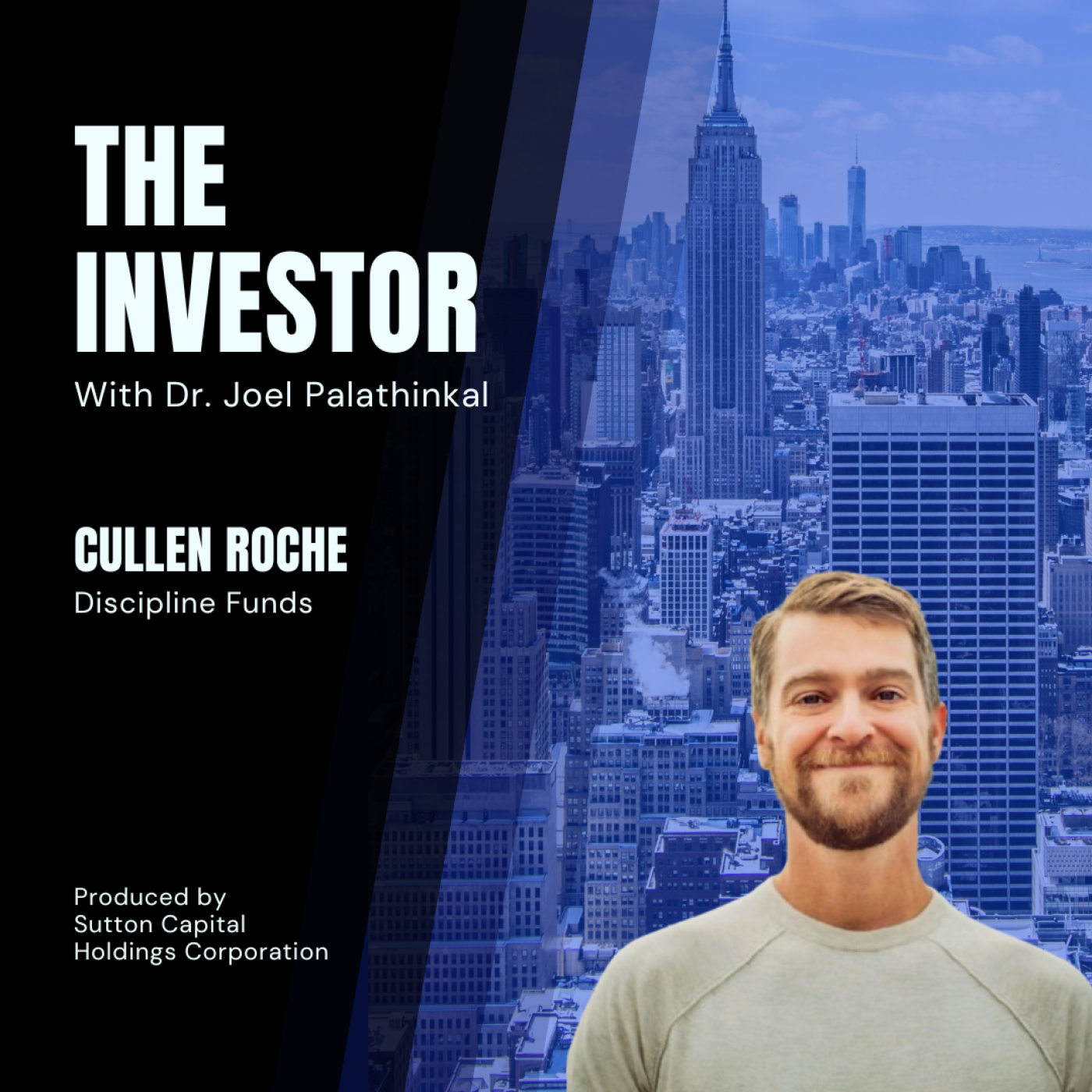
Welcome to the Investor, a podcast where I, Joel Palo Thinkle, your host, dives deep into the minds of the world's most influential institutional investors. In each episode, we sit down with an investor to hear about their journeys and how global markets are driving capital allocation. So join us on this journey as we explore these insights. All right, so welcome to the Investor podcast. Really excited about my guest today. I want to introduce you to renowned financial strategist Cullen Roche. He's the founder and chief investment officer at Orcam Financial Group and Discipline funds. They provide holistic advice and he draws on two decades of experience building investment firms and advising clients to help discover the strategy that fits. Their goals are temperate and they're and life. The temperament and life. And his book is out. He's got the per. It's called you'd Perfect Portfolio. It's the ultimate guide to using the world's most powerful investing strategies. So when it comes to finding the right investment portfolio, it's a lot like finding true love. What works for someone else may not work for you. So it's about the best portfolio and it's about the one that's best for you because everyone has different goals. So this book, we're going to talk about a couple hot topics in terms of this, this ecosystem and just kind of the thoughts around portfolio management. But you know, essentially the book is blending timeless investing wisdom with modern research. You know, he outlines 10 essential principles. We'll touch on a couple of them really when it comes to portfolio construction. And he dissects more than 20 of the world's most influential investment strategies from the likes of Warren Buffett and you know, just the approach to kind of momentum driven tactics of trend followers. So Cullen, just welcome to the show. Excited to have you here and congrats on the book and excited to, you know, go go through all things portfolio construction and what we should think about when we come to, you know, analyzing the port the perfect portfolio.
- [02:09]
B
Hey, Joel. Yeah. Thanks for having me. This was a fun one to write. I wrote a, a different book, very different book 10 years ago. So it took me, it took me 10 years to write my second one. But my first one was very sort of textbooky and a little wonky and dry. It was pragmatic capitalism and it was, for people who have read it, it's more of like a macroeconomic book. So a real, a real put you to sleep type of book. This one was a lot more fun to write. It was, you know, written in a much more conversational tone, I think. Much more approachable and written for more of a mainstream audience. Because the main goal of the book is that over the course of my career, I've really discovered that we in, especially in the investment community, we spend a lot of time promoting certain strategies that we like as experts. And we oftentimes recommend or build model portfolios and try to plug and play people into these different strategies. And oftentimes what you'll run into is that the, the client needs something very customized, very tailored to themselves. And so I wrote this book with a, you know, casting a really broad net, covering a lot of ground, trying to emphasize that there is no perfect portfolio. Really, the only portfolio that's going to be perfect is the one that's perfect for you. And that has to be a customized sort of portfolio that you can stay loyal to. And we. One of the, my favorite quotes in the book was from Bill Bernstein, who said that the suboptimal portfolio you can't stay with will always be worse than the, the optimal, or, sorry, the optimal portfolio you can't stay with will always be worse than the suboptimal portfolio you can stay loyal to. And so, sure, that's, you know, that's really useful from a personal investing perspective because it, it emphasizes that reality that perfect is sort of the enemy of the good in this endeavor of building a portfolio. And oftentimes, I think people are saying, seeking out something that is sort of, you know, something they're never going to find something that they think is perfect that's out there, that they have to accept the reality that you, this is a process that is going to involve suboptimal environments and, you know, trying environments that challenge you and expose the reality that this whole process is very imperfect and that you need to find something that's, that's good enough for you, that you can stay loyal to.
- [04:31]
A
Sure. I totally agree and excited to double click on that. I want to take a step back and just reflect. You know, we're coming into, you know, a new year, so as you're reflecting on maybe 2025, I want you to reflect a little further back on just your early life, you know, where you grew up, some of your influences, and how did that drive kind of your first career moves. And then obviously, you know, some of that, I'm assuming with the practice that you built cascaded into motiv to write your first book. Right. So we'll love to kind of hear that early chapter of your formative years. You know, a lot of the, a lot of the people that come from institutional Investment backgrounds, they were active in sports when they were younger and some of that competitive spirit helped. Another big trend I've seen is, you know, some of these children, their parents were business people and they, you know, started looking at financials at an early age. So some of that kind of evolved into them becoming money managers. But we'd love to kind of hear a little bit of your origin story and then we can kind of take it from there.
- [05:38]
B
Yeah, I mean, I grew up on the east coast in Washington D.C. and I, I think I had a little bit of an unconventional education. I went to actually a farm school which, you know, 25 years ago, this school now is very, very popular. But 25 years ago this was a, you know, almost unheard of. I mean, there was a small school and the emphasis of it was really that we were, they exposed you to lots of different things. So it was a very sort of unorthodox sort of education where we were learning about lots of different socioeconomic backgrounds and emphasizing really the open mindedness of approaching the world. And you know, so it wasn't this very rigid sort of curriculum. And I, I think I really, I learned a lot from that and developed this very sort of open minded perspective about how to approach the world. And that's a lot of the emphasis of the book is that you have to be super open minded. And I'm trying to, you know, when I go through the, each strategy in the book, I emphasize that you have to look at the pros and the cons. You can't just look at anything and dismiss it outright because you, maybe you think it's not a good strategy. You have to try to prove yourself in someone else's shoes and look at it. And, and you know, I ultimately, I went to school in D.C. i went to Georgetown University, met my wife there. We both were finance majors and we sort of explored the, you know, moving to New York versus moving somewhere else. And ultimately we decided to do something pretty open minded. We ultimately ended up moving to California in our 20s and trying to find a better work life balance than what we looked at from the sort of standard, I think Wall street mentality. And, but at the same time our careers were, you know, we were 100% in the finance industry. And so I, I ultimately worked at Merrill lynch for a few years and I'm doing the sort of, this is 20, 25 years ago. So we're doing sort of old school stockbroker type stuff. We're slinging stocks and bonds and we're selling products for Commission in a world that almost like doesn't exist anymore today. And I, I didn't love any of that. And this was the, the kind of, the very beginning of the world where ETFs and low cost indexing were really starting to become popular. And I was the young guy in the firm, in the, in our partnership and I was the guy who was trying to do a lot of research and be a little bit more forward thinking. I was very active in Internet marketing back in, you know, this is the early 2000, so like the early, early days of the Internet still and doing a lot of online marketing and a lot of work with ETFs and you know, trying to build more sort of indexing based strategies and you know, casting a really broad net through, through that. But my, my practice was always very retail oriented, very client facing, talking to individuals and understanding their personal needs and realizing that this whole process of portfolio construction is a very personalized process. And so I ultimately I left Merrill because I, I didn't love the, the way we were structuring things. And I knew that I could leave on my own terms and sort of build my own practice by, I mean I essentially left and you know, cut fees by half and started running my own practice doing something very similar actually. Ironically, I, I left and started doing a stock trading strategy for about five years that the strategy worked brilliantly for literally about five years. And then during the financial crisis, everything stopped working. All the correlations went to one across the, you know, basically the entire financial space. Almost every strategy broke. And I went about a year where I didn't make any money and I realized I needed to sort of like, you know, redo everything and start from the ground up and you know, rebuild the investment strategies I was working on and became very, at this point became very macro oriented. And so I, my career in a lot of ways is a series of jumps from different strategies across time where I, you know, I start as a God in college. I was a Warren Buffett like stock picker. And then I, you know, learned a little more get to Merrill lynch. We start doing, you know, more stock bond trading and you know, real asset allocation leave and then I'm running only a stock picking strategy for five years. And then after the financial crisis I turn into sort of a macroeconomic investor and I'm building portfolios that look more like, you know, kind of like a Ray Dalio Risk parody type portfolio, something like that. And so my, my personal career, my personal portfolio to that point had looked like a series of Sort of like one night stands where I couldn't really stay loyal to anything. And over the course of that time I realized you have to build something that's more robust, something that you can married to. And that's the, one of the sort of analogies in the book that I use is that, you know, like you mentioned in the intro, the process of building a portfolio is a lot like trying to find a spouse. You have to, you know, you're going to date people, you're going to find what works for you, what do you like, what do you not like. And ultimately you want to find something you can stay loyal to for the long term. And you know that all that'll serve your best interest. It'll serve, you know, everyone around you best interest too. So I, I ultimately have sort of arrived at my own personal, you know, strategies that I like and have you remain loyal to now. But at the same time I know that everybody's different and everybody needs to sort of build a portfolio that is something that they can stay loyal to. And that's sort of been the story of my investing career and experience is that I spent a lot of time on one night stands and it took me a long time to find out and build something for myself that was customized and personalized for me that I know that I can stay loyal to in the long run.
- [12:00]
A
Sure, that makes sense. And you know, just to clarify, so when you were working for Merrill lynch, it sounds like you were a sell side trader. So did you have to build your own book essentially build your own list of clients? And, and were you also offering, you know, because I, I have some experience kind of in the wealth management space. Essentially you're selling investments and insurance and then some of that comes with like a holistic plan. Right. So were you selling these investments and then also kind of giving them some advisory support to kind of think about a holistic plan? And then, and then if so, were most of your clients retail or were they also. Some of them were like institutional as well?
- [12:44]
B
We had a handful. I mean, this was back in the early 2000s. We were running a pretty big book back then. It was, it was about 500 million back then. Which, you know, back in those days was a, it was among the bigger, especially even on the east coast, it was among the bigger Merrill lynch teams. I mean, my boss was, my boss was a brilliant guy who, he was always one of the top producers at Merrill and. But yeah, we were, you know, in a lot of ways it was a. And I think this was the, the conflict that I felt inside of the business was that we, one of the partners was a financial planner, a cfp and I would sit down with him and we would go through really rigorous financial planning processes. Whereas the older school guys, the guys that had been there for a long time, you could tell they were, they were really trying to drive production. And that was the emphasis of the firm was how much are you producing every month, every quarter, every year? And you know, that basically meant how much commission are you generating? And that there was a, an inherent conflict of interest that was very apparent inside of that business model where you're trying to build something that is in the client's best interest and the client's financial planning needs, but at the same time you're also generating commission. You know, and that's part of why I think that world has sort of, you know, almost been eliminated from the financial services industry, that commission driven sort of perspective. Because I think we all sort of realize like that's it's a bad way to do business, basically, it's not necessarily in the client's best interest. And so, you know, over time, you know, we were, we were always very retail facing and you know, we did work with a handful of institutions, but the prime, the primary people we worked with were household people that they were just looking for, you know, the ability to retire in the future and the ability to fund their, you know, retirement planning needs and things like that. And so ultimately, you know, that was one of the main reasons why I struck out on my own was because I, I knew in the back of my mind that I could do this in a way where we could build a practice that was financial planning based but not necessarily commission driven. And you know, so that's where I spin off and I start doing something that's much more ETF and indexing based and charging fees that are more, more aligned with financial planning needs of the, the investor rather than generating profit for the firm solely.
- [15:25]
A
Yeah, and I mean, look, we, you know, one of the things that we've incubated at Sutton Capital is a fund manager accelerator. So we've seen hundreds of different fund managers also. We've seen them go through our program and you know, some of the more established managers, I mean, you see them and I mean the game is really just asset gathering, right? So you're gathering a bunch of assets and you know, the more assets you gather, you know, the fees are higher, right?
- [15:49]
B
Yeah.
- [15:50]
A
But you know, if you don't do it the right way, where you're in the best interest of the LPs and you're obviously hopefully delivering returns. If you're not doing that, then there may not be a next fund, you know, and that's kind of the big thing too. So it still is a very long game. And you're also just really thoughtful about aligning incentives on both sides where there is a way where everybody can win. Right. There's a win win where you can, you can grow your practice and build a great business and, and do good by doing good. Right. Helping people, doing well, but then also making your clients be the hero of the whole situation and yeah, make them become successful as well. So I think that that cascades across even just kind of the, the advisory practices as well, where you're, you're getting incentivized based on performance and you know, you're managing a holistic plan. So you're, you're obviously delivering value and customized white glove service versus being, being a big huge franchise that everybody knows about. So.
- [16:44]
B
Yeah, and I hope that's a big part of the book too, is that I, I think that the book is going to be really useful for financial advisors and institutional investment managers who are looking for strategies that they can plug and play into a, you know, a financial plan for retail investor. Because there's, you know, that's one of the interesting things in the course of my career is that I've always, I'm sort of a weird bird in that I've always traversed both the financial planning world and the investment management space. And in a lot of ways these two worlds are very segregated. The, the way that a CFP approaches the process of asset allocation is very different than the way that a cfa, a certified financial analyst, might approach the, the world of, of, you know, investment management. And the, the conflict there is that oftentimes the investment manager is trying to generate or build the optimal portfolio. They're trying to build what, you know, the nerds in our world would call the alpha generating portfolio, the portfolio that beats the market. And I think, you know, that conflict exists because the certified financial planners of the world, they don't really care about alpha. They don't really care about beating the market necessarily for their clients. The goal is what do I need to do to help my client retire comfortably? And you know, if you walk into a certified financial planner's office, they're probably never going to tell you that one of your financial goals should be beating the market. And so there's this inherent conflict that exists between these two worlds that is, it's really hard to blend. And when you can build a portfolio for someone that is tailored to their needs, you can sort of have your cake and eat it too, in a lot of ways, where you can build a portfolio that is potential potentially, you know, it's, it's optimized in a lot of way. It's risk optimized theoretically. And sure, you know, it's a portfolio that is sophisticated, that it may beat the market. Maybe that's, it's one of its main goals. But you can also plug and play that sort of a strategy into a financial plan where you're having the best of both worlds, where you don't necessarily have this conflict that is causing behavioral biases for the underlying client or anything like that. And I think, you know, that's, I hope one of the really useful takeaways from the book is that by studying all of these different strategies and understanding them, you can then start to integrate these strategies in a way that better blends with the way that real people think about their financial planning goals.
- [19:18]
A
Sure. So tell me what happened after Merrill Lynch? So is that when you immediately started your own practice, or did you get some experience at a couple other places and then, and then I guess when, at that point did you launch the first book? Would love to kind of hear those sequences.
- [19:33]
B
Yeah, so I, it was funny. I, you know, I'm running, I'm running my own limited partnership for five years after I, I leave Merrill lynch, and I'm running a very active stock picking strategy that I didn't actually know it at the time, but it was basically taking advantage of what we now know of as the overnight effect, which is the, the fact that stocks oftentimes tend to outperform in the aftermarket or the actual trading session. And so this strategy, you know, whether it was lucker, you know, me being a little bit smarter or whatever, trading well, I don't know, but it, it does, it does really well over the course of a period where the stock market actually did not perform very well between the sort of like 2003 to, to 2010 period, basically. And obviously you had the, the financial crisis in the middle of this. But sure, the, the financial crisis was really formative for me because when the, when the crisis happened, I think that this was the second time in my life where I had seen a really big macroeconomic trend sort of sideswipe everything. And the first time that this happened to me was in college when I'm trading stocks, you know, out of my dorm room, and the NASDAQ bust is just ripping through everything. And sure, it almost didn't matter what stock picking strategy you had at the time. The, the bear market of the NASDAQ just collapsing month after month after month for three years. It sideswiped everything. It almost didn't matter what type of investor you were, it just, it knocked everything down. And the financial crisis was very much the same thing where you just had this sort of seismic macroeconomic Trend that for 18 months it just ruined everything, halted the entire financial world for, you know, that entire period. And you know, unless you were a short seller or something, someone doing something very unusual, very unconventional, it was just a really hard, hard period to make money in. And so during this period that was transformative for me in large part because this is actually the point where I started. I was writing an online journal called Pragmatic Capitalism, which was a website that I used to run. And the, the website becomes very popular because I'm writing about a lot of the monetary, the sort of, the mechanics of the underlying monetary practices that the central banks are implementing, things like quantitative easing. And I weirdly start this website and the website goes from like 0 viewers to like 2 million viewers over the course of 24 months. And I kind of caught lightning in a bottle there and ended up, you know, being able to not only make a decent amount of money just from the website, but I ultimately was able to turn that into my first book called Pragmatic Capitalism as well. And so, but the point that was really transformative for that was that I think you have to be able to think about the world in this very macroeconomic sense, this very top down sort of sense. Whereas I'd always approach the world from a more of a bottoms up approach is what they call it from like a, you know, a stock picking world is where you, it's almost like a microeconomic perspective where you're trying to look at the, the specific industries or companies inside of the economy and try to pinpoint what are the best sort of, you know, single entities I can choose in a sort of Warren Buffett like strategy to then develop a portfolio. And the, the NASDAQ bust and the, the GFC really, you know, proved to me that you have to, you have to be able to understand the macroeconomic trends inside of all these things and understand the world from more of a, a top down approach as well as understanding, you know, a bottoms up approach if you're utilizing that. And so the, the financial crisis creates this very formative period for me because it, it is where I started, started to develop the more holistic, broad macroeconomic perspective of the world.
- [23:47]
A
No, that's amazing. And then, you know, so any, I'm assuming marketing has completely changed, Right. People are using short form content now. So back then I think, were you relying mostly on just, just creating good content that would just get optimized by SEO and, and search?
- [24:04]
B
Yeah, you know, so what I'm doing, which was really interesting back then, was that so many of the policies that were being implemented back in 2008 and 2009 were, they were unknown in the United States. And I, I, weirdly, I had a, you know, a family friend and a client who was based in Japan and Japan had been doing a lot of these things for, God, 20 years before this. Things like quantitative easing and you know, these very unconventional monetary policies that were, they were new in the United States but were old hat in Japan. And yeah, you know, I'm talking to these guys in Japan and they're telling me, you know, not only what these things are going to do, but they're describing them in very, very, you know, detailed accounting perspectives and showing me from a, you know, a very detailed accounting perspective that, you know, hey, this is what this policy does and this is the, this is the evidence of what has actually happened in Japan. And a lot of what they were saying was very counterintuitive and very different from what you were hearing in the United States where the narrative back in 0809 was, oh, this is all going to cause, you know, hyperinflation. The dollar is going to go to zero. And the, you know, the Japanese guys are telling me, no, no, no, no, no, this does the opposite. This, this actually causes deflation. It causes interest rates to go down. And it was all very counterintuitive. But I'm relaying this and writing about this on my websites and whatnot and I'm, I'm more so educating. And that was the cool thing about it was that I'm writing about all this stuff not necessarily from, I mean, God, I guess the goal was ultimately to try to make money from it all. But the.
- [25:44]
A
Sure.
- [25:45]
B
One of the main goals for me was writing about this and trying to educate people about this because the, it was so clear to me that the, the way the mainstream media was interpreting this and communicating it was hyperbolic. It was sure almost seemed more fear based. And you see that a lot today still. The, yeah, you know, so much of the media has become, you know, eyeball grabbing rather than, you know, trying to educate people from a really practical perspective. And so it was interesting the way that people latched on to the website back then because they, I think, appreciated the educational perspective that I was bringing. And it was this again, this sort of very, I think, open minded perspective where I'm trying to attack something more from like a, a first principles perspective rather than just relaying a narrative or you know, trying to capture eyeballs for the sake of capturing eyeballs. I was really trying to write about this and, and show people, hey, this is how the accounting of quantitative easing works. This is how the evidence in Japan has played out over time and this is what we can learn from their experience. And I think people, people really appreciated that perspective because it was a, it was an unusual perspective. Especially back then when, God, during the financial crisis, everything seemed scary, every headline was terrifying. It really felt like the, the world at points was falling apart.
- [27:15]
A
No, absolutely. And I think that's a good platform to build, to kind of build community as well and, and build that thought leadership and, and, and I'm assuming that's what kind of led into building, you know, your practice. I'm assuming. Right. The orcam financial group and, and the discipline funds.
- [27:34]
B
Yeah. So ultimately, you know, I, and I think that was a big part of building trust with people too, which obviously in the financial services industry is so essential. It was, it was also a really interesting perspective because the, my business is largely organically built through the Internet. So it was, you know, it's kind of funny thinking back to my, my very early days at Merrill and whatnot where I, I thought the Internet was going to be really powerful and I, you know, took, probably took me 10 years to actually build something that became an organic lead generator and you know, client driven sort of model where people find me rather than, you know, I don't, you know, back in the, the early days of my career, I was, you know, was knocking on doors and picking up the white pages and sure, you know, the white pages, for people who are watching this who don't know, you know, the white pages was a big book of, you know, names. Literal, literal book of people's names with their phone number in. And we would filter through it and call people and I'd spend half my day on the, you know, the phone back then just, you know, calling people out of the blue and trying to convince them that hey, you should come invest your money with Merrill lynch or whatever. And the world now is completely different. And it's great because people can, they can read my research and vet me and try to understand, hey, do I trust this guy to, to give my money to and to you have him invest on my behalf. And so it's a, It's a totally different world now than it was back when my career began. And it's a, I think it's a vastly improved world too. But because it's, it's a world where it's not so reliant on the ability of, you know, the salesman to sell things into the marketplace. The, the, the customer has a lot more control over who they work with, who they trust, and who they're going to pick to, to allocate their assets with.
- [29:31]
A
Yeah, no, I totally agree. And I think, you know, the best marketing, I would say, is from, in my opinion, and want to hear your reaction. This is really from your customers, right? Your customers, if they're happy, they'll be singing your praises. And then I think also just giving a lot of value for free because that's essentially, you know, a sneak preview into kind of your, your authority, your thought leadership, your expertise, and also just your pay it forward mentality. So I think people lean into that and they're getting value, they want to learn more, and they, you know, want to get closer to you and, and, and hopefully just take that next step to get the, the more detailed advice. I would say, you know, give everything, give everything away. And then what you're really selling as a service, which is manual time and effort, is the execution. Right? So it's kind of like, hey, you know, here's, here's what our insights are. Here's tools if you want to do it on your own. But we're here if you need kind of someone to hold your hand. And also we're here if you want the community. Right. So I want to know your reaction to that.
- [30:36]
B
Yeah, totally. And, you know, it's, it was, it's interesting, you know, writing the book in that context too, because I think that, you know, the, the process of building a portfolio, it, it really, it begins with understanding who the investor is. And, you know, I've spent so much of my career building a portfolio and then trying to convince the client that this is gonna work for them, because I think it works. You know, what's really interesting about that is that there's been a lot of times in my career where I've started working with somebody. And, you know, you run through the, the typical sort of like, risk profiling process. And, you know, you're, you, you can run a financial plan for somebody, and if you run into a market environment where they either aren't comfortable with a certain asset class or a certain instrument, it can buck the entire strategy. And I think that is a really important thing for, especially for investment managers and financial advisors to understand because you do have to build a strategy that the client ultimately is comfortable with. And you know, I've, it's funny because I've, there's a lot of strategies inside of the book that I don't necessarily agree with that maybe they're overly complex or like I come from a world where I'm, I'm sort of very, I don't know, like academically against things like dividends, for instance, like this. Today the income generating strategies are super, super popular. And there's a, you know, there's a new ETF that's a yield, you know, generating type of ETF coming out every single day. And people like income because I think they obviously they especially retirees, they like income because income gives you comfort. It feels like, you know, you're getting something tangible. And the interesting thing from like a sort of academic perspective is that when you're deriving income from a portfolio, oftentimes these strategies, what they're doing is they're, they're generating the income by taking principal from the portfolio. And you know, so there's a, from a, from a tax perspective especially getting income today is potentially far worse than getting income from say selling principal later. Because from a tax efficiency perspective you're generating say short term capital gains or ordinary income taxes versus the ability to defer taxes and generate long term capital gains. And so from a, a sort of very like rigorously academic perspective, that's why buybacks have become so popular is because buybacks are something that they put the power of the, the tax gain into the shareholders hands that you can, you can sell the shares and obtain cash from the company you want to rather than the company imposing a dividend on you and forcing basically a shorter term potential capital gain on you or you know, income gain on you in the short term. And so you know, from a, from a sort of theoretical or academic perspective, income generation is actually suboptimal because it, it is basically imposing income on you now even though it might be giving you some level of comfort. But it's interesting thinking about this from the, the client's perspective because people like income because it's behaviorally comfortable. And so sure, that's something that for me I've had to really embrace over the course of my career where a lot of the times now when I'm building a portfolio for a client, I will Tell them outright I say, hey, I don't build income generating portfolios. It's not the, that's not the core goal. But if income is something that is very important to you, I will build an income generating portfolio for you because I know that this is your perfect portfolio. And you know, so it's, it's interesting blending those worlds of sort of like theoretical and academic finance with the world of behavioral finance, where you have to understand somebody's behavior to understand what is going to be their perfect portfolio.
- [34:50]
A
Sure.
- [34:51]
B
And that's, that's where this all begins. It begins with what is the, what is the client comfortable with? What is the investor comfortable with? Because if you can't build something that they're comfortable with, you're going to run into behavioral biases in the future that will expose that this is not their perfect portfolio. And that's really the, that's the thing you want to avoid because that ultimately leads to a portfolio divorce, that who knows what happens. It ends up, it ends up selling into bear markets. It ends up doing a lot of the destructive things that people don't, that they really shouldn't be doing. And so you've got to start with understanding the client and understanding their needs. And that might even means sacrificing some of your own core beliefs in the investment management practice to, to build something that works for them, that, you know, they can stay with in the long term.
- [35:44]
A
Yeah, no, absolutely. I think that's helpful. One thing I want to go a little deeper on is the 10, you know, pillars that you talk about in your book. You know, so that's something that I'm excited about. Just kind of talking about some of these, you know, you know, topics that you're covering in your book. And I think There was like 10 different, you know, thoughts around that. And then you also cover some, some investment strategies from some of the, the titans in the finance world. Right. So we'd love to maybe, you know, hear some of those strategies and best principles. Right. And then, you know, if not all 10 of those principles, maybe just a couple of the ones that come to mind that you, that you really live by and that you really are passionate about. And, and maybe we can flow those into a couple investment ideas as well.
- [36:36]
B
Yeah, yeah. So I went through 10 sort of essential principles and these are, you know, very, very high level ideas. The book is really broken down into two parts. The, the first part is the 10 principles and the, the second part is the actual portfolios that I studied. And so just so people kind of understand, I, I went through basically the 10 principles and then 20 different really famous portfolios. And this covers from the, the Warren Buffett strategy to the 6040 stock bomb portfolio, to things that are more sort of, I would say institutionalized things like the endowment portfolio, the sort of Yale portfolio, the risk parity portfolio, which is sort of the, the Ray Dalio type of portfolio. But I study these 20 portfolios with the goal of, you know, helping people understand a lot of these famous strategies so they can put things in perspective and say, hey, okay, I like a piece of this. Maybe for my own portfolio, who knows, Maybe I like this whole strategy as my entire portfolio. But the 10 essential principles are really the, they're the main building blocks of the whole process of portfolio construction. In the, the first one that I covered was this idea that is sort of a weird one in finance, which is that when I wrote my first book, I kept running into a really sort of weird problem, which is the word investing doesn't have a consistent definition across these two worlds. And in finance, investing basically means that you want to try to make money. In the world of economics, investing means to spend money for future production. And it's, it's basically what firms do. When firms spend for investment spending, what they're doing is they're, they're building factories, they're, you know, maybe they're hiring employees, they're, they're investing in their company with the endeavor of trying to generate future money. But the, the difference is that when an investor actually buys stocks and bonds, what they're doing is, is not technically investing. From, from an economic perspective. They are, they're not spending for future production in the same way that a firm is. And what they're actually doing is they're actually allocating their savings. And so this is something that I try to emphasize with people because the difference between allocating savings and allocating into what we call an investment portfolio is a different mentality because I think that people sometimes they allocate their assets with this idea that it is this sort of, I think, sexy get rich quick sort of endeavor, which is oftentimes what investing is trying to do. Firms are trying to invest money and build a business and build revenue quickly. And the reality is that when we're allocating our savings, this is a long term process, it's a thoughtful process, it's a prudent process. And so I try to emphasize in the book that when you're building a portfolio that you can stick with, you should think of it from the perspective of allocating your savings. And this is a process, it's a, it's a planning based process. And it's not something that necessarily is going to be a, a get rich quick endeavor. And I think if you get into that mentality of this being a get rich quick endeavor, you, you set up all sorts of pitfalls for yourself where you know, you're, you're going to succumb to things like being impatient and the volatility of the market because you're impatient. And so, you know, that leads into essential principle number two, which is that you're your own worst enemy when it comes to managing your portfolio. And if you set everything up with this false pretense, you are going to expose all of your own behavioral biases, your impatience, your undisciplined approach. If you don't have a process that is something that is a, you know, rigorously planning based process, the failures in that process will get exposed over time. And so, you know, I try to emphasize a lot of this because this portfolio process construction is, it has to be very planning based. And so I try to emphasize that, that concept of being a saver and not necessarily, you know, building something that's going to be a get rich quick sort of portfolio. And so I, building on all of that, I try to emphasize that part of that process should involve things like diversification and understanding that costs are hugely important inside of all of this. That when you're generating say 6, 7% returns per year, if you're paying 1% management fees inside of this, that's a huge amount of fees to be paying. It's a huge amount of your total return that you'll be paying out over the course of your investment lifetime. So you have to be aware of costs and the ability to diversify so that you're creating different return streams that are working against each other. Where you, you diversify yourself away from that. You know, what I mentioned before, which is that the macroeconomic trend that can sometimes sideswipe a portfolio where you're diversified across enough asset classes that you aren't necessarily exposed to the sort of seismic shifts that occur every once in a while in the financial markets. And then one of the, I think most important principles that I discuss is that risk is uncertainty of lifetime consumption. And that bleeds into the next essential principle that I call asset allocation. A temporal conundrum. In that time is really the, it's the most essential aspect of everything we do in portfolio construction because time is the thing that makes investing hard. We are all Trying to build a portfolio that generates the highest return in the shortest amount of time. And the truth is that a lot of financial instruments, they just don't work that way. The stock market, for instance, is, I try to emphasize that the stock market is a, it's a long term instrument because it's aligned with the way corporations work. Corporations are inherently long term entities. They're a corporation. I mean, typically by the time it even gets introduced into something like the s and P500, it's a decade old, maybe decades old, before it's even built up a business that can even be introduced into that type of an index. And so corporations by their very nature are long term entities. It takes a long time to build a big successful business. And when you're buying stocks, you're buying a piece of a business and you're buying part of an underlying revenue stream and income stream that is inherently very long term. And so I think sometimes people think of the stock market as this place where they can get rich quick. And the reality is that it takes a long time for corporations to generate their cash flows. And so when you try to build your own portfolio, you have to think of your portfolio across different time horizons. And, and me personally, like I've, I've become, you know, very enamored with portfolios that are very sequentially time based, that are, you know, I call this in, in the book, I call this defined duration investing. Because what I try to do with people is I try to define time horizons, horizons over which you have certain financial goals and yeah, you have to match certain assets to different time horizons. And in this sort of a perspective, the stock market is typically a very long term sort of instrument. Whereas something like a money market fund or a, you know, a high yield savings account or a Treasury bill, it's a very short term instrument. Your cash is a very short term instrument that you can, you can match that very specifically to short term assets and, and short term liabilities and needs in the short term. And when you think of your portfolio as a time based thing, you create greater structure inside of a financial plan and an asset allocation where you actually understand the role of specific instruments inside of a portfolio as it pertains to your financial plan. So I love thinking about different strategies and different components of a portfolio across very specific time horizons. Because at the end of the day, that's the goal of all of this, is we're all trying to navigate time. We all have a finite amount of time here and we're trying to navigate the ability to have a certain amount of money to meet certain goals across different time horizons. And so yeah, can think of your portfolio as this sort of time based thing. I think it's very helpful from a financial planning perspective and a portfolio construction perspective because it gives you, it gives you a real understanding of the way that certain assets inside your portfolio are actually serving very specific needs.
- [45:33]
A
Sure. No, it's helpful. Well, I think I appreciate you going through, you know, most of those principles. I know we got a couple minutes left, so I always like to ask this question because there's always some wisdom that comes out of like a little nugget of advice. But you know, would love to hear maybe a piece of advice from a mentor, a family member. And the advice doesn't always have to be about finance. It could be about your career, it could be just about love. But like, you know, if you were to leave us with some type of advice, what would, what would you leave us with?
- [46:05]
B
Yeah, you know, one of my favorite parts of the book was I wrote about a, a hack that I like to use with my own portfolio. And I call it the Victor Frankl hack because it's from a book called Man's Search for Meaning. And Viktor Frankl was a, he was actually a, he was in the Auschwitz concentration camps back in World War II and he's a prisoner there. And he writes this book that very famously talks about how he, he, his mentality couldn't be dictated by being a prisoner, that the Nazis couldn't dictate how he felt about anything on any given day. And he, he, in the very worst of environments somehow found this ability to, to be optimistic. And the, the, the hack there was that he didn't let his mentality get imposed on him. And I think that having that mentality is a superpower in the investing world because the, the media and other people are going to constantly try to impose their own narratives, their own fears, their own mentalities on you. And the ability to sort of ignore that and say, hey, you know what? The stock market seems really scary today, but I don't have to be scared unless I let myself get scared. And that's the ability to sort of pull yourself out of the narrative and say, and look at it objectively and say, you know what? Nobody can make me feel a certain way about anything unless I allow myself to, to feel that way. And when it comes to investing, you know, this is, I write about this in the very first chapter of the book that one of Warren Buffett superpowers is that he's impervious to this sort of stuff. Warren Buffett doesn't let anyone make him feel a certain way. And in fact, Warren Buffett oftentimes, you know, he bucks the trends where, you know, he's the guy that is, is being greedy when everybody else is fearful. And that ability to not allow the market environment to impose its will on you and impose its emotions on you more importantly is arguably the ultimate superpower. And it's one of the things that I think made Warren Buffett who Warren Buffett is, because he's, he's got this ability to, you know, stand outside of what the media is saying and stand outside of what the common perspective is and take a totally different sort of contrarian perspective on everything. And so I think that, you know, especially in today's sort of media frenzy driven world, this is, I would say, by far one of the most important things about being able to build your own perfect portfolio is that being able to be have a really robust mentality when it comes to being exposed to especially fear, because fear is the fear is the most destructive part of any portfolio construction process. Being really robust to that and impervious to it is one of the most valuable things that any investor can do.
- [49:04]
A
Sure, that's helpful. Well, hey, thank you so much for the wisdom and I know I learned a lot and I'm pretty confident that most of the community that we have in our investor podcast ecosystem really enjoyed all the insights and I'm excited to check out the books. Everyone check out Colin's book and there's a lot of wisdom in there. It's called you'd Perfect Portfolio the Ultimate Guide to Using the World's Most Powerful Investing Strategies.
- [49:34]
B
Thanks. Great talking to you.
- [49:35]
A
Thank you. Appreciate it.