Loading summary
Transcript69 lines
- [00:03]
A
Welcome to the Investor, a podcast where I, Joel Palo Thinkle, your host, dives deep into the minds of the world's most influential institutional investors. In each episode we sit down with an investor to hear about their journeys and how global markets are driving capital allocation. So join us on this journey as we explore these insights.
- [00:27]
B
Cool.
- [00:28]
A
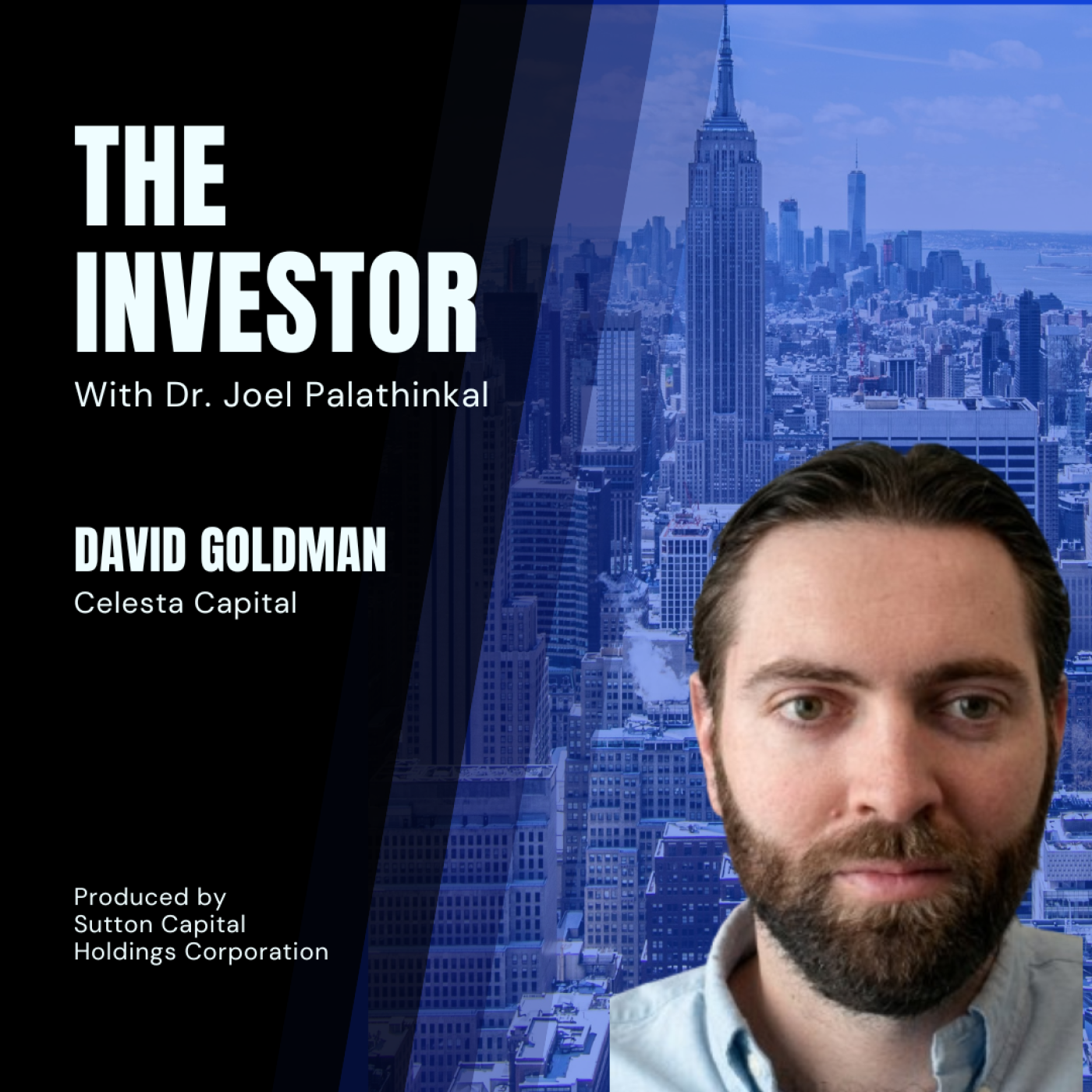
Cool. Great. So awesome. So I'm really excited about my guest today, David Goldman, he's at Celeste Capital. He's a partner at Celeste Capital. Celeste Capital is a global deep tech venture firm investing in the brilliance at the forefront of science and engineering. Celeste primarily invests in early stage infrastructure technologies throughout the stack. From semiconductor systems to breakthrough biology. We seek out the physics defined code, reviewing breakthroughs, crowed rewriting breakthroughs that will power the next decade of technology advancement. David has spent his career at the intersection of early stage infrastructure tech, working directly with founders to take things like AI, infrastructure, semiconductors and bio convergent tech from prototype to market. So he's picked up real world lessons from cross border finance role spanning from the US to India. We'd love to talk about India as well. You know, we've invested there along with the Middle east. And he's got board experience steering category defining startups. He's also got a clear pulse on the macro VC trends shaping global tech funds, global tech hubs. And his investment focus stretches from enterprise software all the way out to construction tech through medical imaging and AI. So very broad investment experience, global experience. So David, welcome to the show.
- [01:53]
B
Yeah, thanks for having me, Joel.
- [01:54]
A
Yeah, well, you know, excited to kind of go a little deeper. As we've seen with many of the guests on our channel, we start with the origin story. You know, how did we get from where we are now? How do we get to where we were to where we are now? A lot of people have different career pivots. A lot of people have different journeys. So we'd love to go a little deeper. David, I know it looks like you're based in San Francisco, but, but would like to learn a little more about kind of your early years. Maybe, maybe start with high school, you know, what did you have interests in? Tell me about, you know, maybe your early years with your family. Where did you think you were going to become? Were there influences early in life to get into venture? It's interesting, you know, we see students now in high school learn about venture. Some of them have venture competitions. There's a, I forget the name of the competition, but there's a national venture capital competition that starts in college. So some people know about Entrepreneurship early on. I know I didn't. Right. So I kind of picked it up a little later in life. But what were some of the earlier influences? What did you think you wanted to do? What did you do in college? And then how did that kind of, you know, gravitate towards investment management and venture? And then we'll just take it from there. And I might pop in periodically and ask questions and maybe take our discussions to somewhere else.
- [03:14]
B
Yeah, absolutely. I had, I don't think I had heard of a venture capitalist in high school. Certainly not growing up. I didn't know anything about entrepreneurship actually, to be honest.
- [03:22]
A
Sure.
- [03:23]
B
I grew up in the suburbs of D.C. and Bethesda, and both of my parents are attorneys, but they very strongly encouraged all their children not to become attorneys.
- [03:33]
A
Why so? But I guess what, what, what? Why were they not wanting to you for you to do that?
- [03:38]
B
Their view is that bright students who pursue a liberal arts degree often default into becoming attorneys because it's a high achieving pathway, but that because it is by nature based on billing, it is a bad lifestyle for people. And that to be successful you often have to give very meaningful trade offs for a long time in terms of time. And unless you're very passionate about the law, just getting yourself into that track by not thinking really about what you want to do and just going into liberal arts and then like, oh, I'll do law school. And then like now that's your life is a bad way to direct yourself as a young person. And so they strongly encouraged all of their children to think about how what they are majoring in or what they study will impact what they do later on and try and be a little bit more thoughtful about that.
- [04:34]
A
Mm.
- [04:34]
B
And so in high school I was very interested in, let's call it broadly, international affairs. Um, so yeah, I had a subscription to the Economist in high school, which is kind of a weird thing for a teen, but studied Japanese. Visited Japan with my Japanese class. I wasn't a great student of the language, but I was very interested in the culture and I had the opportunity to go to college and get two degrees at the same time. So I was in a program called the Huntsman Program at Penn. And so I was able to do a degree in international studies, but then at the same time get a degree in finance from Wharton, which sort of satisfied my parents view that I should learn some practical skills alongside something that I'm interested in.
- [05:16]
A
Sure.
- [05:17]
B
And like many people who graduate with a finance degree and don't know what they want to do yet. That led me into investment banking because that was sort of the default path that you do if you have a finance background and you're trying to get a business education. Where I maybe diverged a little from most of my peers on the east coast is I came out to San Francisco to work for an investment bank that was doing tech investment banking. That bank's called DBO Partners. They've since been acquired so they don't exist. But where I got really lucky is I got assigned to work with a partner named Matt Hein. And, and Matt had been the head of the semiconductor group at Morgan Stanley before coming to dbo. And when I was working with him, we mostly worked covering amd. And the reason I say I was lucky is that coming into that experience, I didn't know anything about the semiconductor industry. Matt spent a lot of time teaching me about the semiconductor ecosystem, both how they're made, who the various players are, what's the rationale for the deals that we're working on? You know, why is AMD interested in this? Or why is this kind of code company pursuing an acquisition in that thing, talking about what's happening in the industry? And that's I think a little bit unusual in the investment banking world for someone that senior to spend time tutoring on what is somewhat fairly basic stuff to them. But for me it sparked now, pretty much since then, fascination with that industry and that drives a lot of what I do now at Celesta and basically what I invest in. And so during my time at dbo, we, like I mentioned, we're mostly covering amd and in addition to working on the transactions the head of strategy at AMD figured out, because I was a junior banker assigned to the company, he could ask me to do strategy work for them. And you know, I couldn't really say no.
- [07:10]
A
Sure. Well, can we pause for a second? So a couple things, right? So there's, I don't know if you follow this guy. I mean, he's all over the Internet. He's like this handsome lawyer that wears a suit. He's like one of the most, I guess, high profile divorce attorneys. He's got tats on his arms, but he's got like a dress shirt on with a tie and he just talks about all these stories and he was saying like one of the biggest things with him being an attorney was he missed, you know, he never missed the big things, right? Like the recitals, obviously, you know, parent teacher day. But the little things, right, when your kids kind of want to play with you and and you know, they want to play chase the zombies around the house. Right. That's what my two little ones are doing now. There's going to be a point when they hit, you know, 11, 12, 13 years old, they've got their own friends they want to hang out with, you want to hang out with your kids and then they've got their own life. So what he was saying was sometimes you miss, you don't you try to not miss the big things. And hopefully the firm that you work for gives you some type of work life balance, you know, whatever you determine balance means. But he did miss some of those little things that he regretted. So do you feel like that was a driving factor, just kind of the demand for, for maybe the work life balance of both of your parents had obviously working. And I'm not sure what, you know, sector of the legal industry they were in, but, but I can imagine any legal work just can be time consuming because you got to do, you know, if you're doing litigation, you got to do discovery and you got to obviously do a lot of research. So do you feel like that was a driving factor? I feel like ethnic families, sometimes the big concern is just security. Right, Right. It's like, hey, be a doctor, be a lawyer, be an engineer. And that was, you know, definitely shoved down, you know, our family upbringing. Just kind of, hey, have that stability. Entrepreneurship is risky. Right. So just wanted to hear your reaction to that or thoughts to that.
- [09:03]
B
I think there's two endemic problems with law as a career. One is that it's a client service industry for the most part. And so you will forever be at the, I mean not the beck and call but like you're, you're forever going to have your time driven by what is the client's need. And so the fact that it's your kid's birthday party versus like hey, we have to close this deal right now. It is what it is. Like you're working for a client. And that's not only true of law, it's also true in other industries like investment banking.
- [09:36]
A
Sure.
- [09:36]
B
By that is one problem. And then the second one is that there is a built in scoreboard of how much people work. And there's lots of industries where people work hard. Lots of our startups, people work a lot of hours. They don't have to track their hours and they're not being measured on the number of hours that they work directly in the same way because it doesn't have a one to one correlation into the revenue. And so you're Always going to have issues with being measured by facetime and by hours when you have to measure and bill by the hour.
- [10:07]
A
Yeah. And I've got a, you know, bunch of friends who are attorneys and I mean, I think the, I would say too, to your point, you know, you get bill by the hour. But I think a challenging thing too is there's not from what I've learned. Right. There isn't really like a sales team. Like you have to produce, I think to make partners. So not only are you, you know, obviously refining your skills as a great attorney, but the pressure is, hey, you got to go out and build new business and go out there and, and meet new clients because part of the sales cycle also, also I would assume is being consultative. So you're doing sales and fulfillment, which I think is, you know, can be overwhelming. So totally agree with you. And I think what you're saying, I mean, probably from some of your experiences is, you know, congruent to what everybody else is saying. But. Yeah, so thanks for that insight and reaction. Skipping to your points about amd, I just had one more comment and question. So I have a relative, he's obviously, you know, much older now. He's getting ready to retire, but he was in the chip industry. He said that he knew Jensen Huang from back in the day. And obviously my, my relative is not in the same, I would assume not same financial situation that Jensen is in. So, and, and I believe isn't the founder, I guess the. Is the founder of amd. Did he work with Jensen or. I don't know if you know this, but like I, I thought there was some other relation with AMD and, and, and Jensen, but, but you know, CEO
- [11:45]
B
of AMD right now who's not the founder of amd. Yeah, she is, I think a cousin of Jensen.
- [11:51]
A
Yeah, got it. But like my question to you is, what do you think is that outlier factor to building a business? My, my, my relative did also do something entrepreneurial too. And you know, they took their business overseas and you know, did really well. They had an exit. But, but you know, obviously not. He's not Jensen. Right. So what do you think, you know, after obviously backing all these companies and deep tech and obviously we, we've done deep tech as well, so I think this could be something to jam on. But like, what do you think is that outlier effect to make a founder do well in deep tech, especially something that has so many uncertainties, so much capital sensitivity. What do you think the formula is for, you know, backing that type of person. And this is good advice for, for fund managers, right, that are looking to kind of build a deep tech portfolio.
- [12:40]
B
Yeah, absolutely. I think it's a combination of two things. So first and foremost you have to have the technical insight. Jensen has been both right and prescient multiple times over. So originally coming into graphics processing and there being a separate market for accelerated computing outside of x86 CPUs, which was not a consensus view at the time. Developing a software ecosystem to make the use of GPUs much easier, which became CUDA, which again was not a consensus view at the time, and then pushing the use of accelerated computing for things outside of graphics, whether that was cryptocurrency mining, which they sort of discouraged, or AI, which obviously has made the company what it is today. There's the technical insight one and then there's just the absolute maniacal drive that he has. So even to be the CEO of, I think they're a $5 trillion company right now. To have that same fire and to be pushing the company to never cede ground and never be complacent is remarkable. And it's sort of a callback to the Andy Grove style of management at Intel. The need to be paranoid about your competitors because everyone is coming to get you once you are the big company that everyone is trying to be sure. And you can see Nvidia, just because they have won huge amounts of market share, they are still very thoughtful about threats. So they're working actively to make sure that, for example, further disaggregating workloads doesn't become a threat to them. By acquiring GROK and being able to integrate that technology into their servers, they're focused on making sure that networking, if someone else is earlier to them in co packaged optics, that's not going to be a threat to them. By shoring up their supply chain and making investments in the optics supply chain and broadly being very on top of what startups are working in that space. So anywhere they see an opportunity that could give someone else a differentiated edge against them, they are at the forefront of making sure that if that is a real opportunity, they are also taking advantage of it.
- [15:09]
A
That's pretty helpful. What were some of the learnings that you observed kind of in your banking days, kind of doing some of the chip, you know, banking? I, I would assume probably you know, M a sell side transactions. Walk us through kind of some of the things that you learned with those experiences and then maybe how that cascaded into kind of your, your next step and we can Talk about what happened after that, you know, your next career step.
- [15:46]
B
For the most part, I think that chip banking is a lot like other forms of banking, to be honest. You have to have enough knowledge of what's going on in the industry in order to be able to give good advice. So at the like, partner level, where you are directing what material should be made and you're actually trying to advise CEOs, you have to have a really deep understanding of the industry and the technology. But at the analyst level, you know, a lot of what you're doing is still oriented around if these two companies merge, will it be accretive or dilutive? You know, where can we assume that there's going to be some synergies? And then that requires a little bit of thinking around the actual industry itself. Yeah, but a lot of that is still standard. You know, where is there headcount duplication that could be taken out? Or where are there, you know, net operating losses that one company can take advantage of that lowers their tax bill or things like that? And really for me, most of my learnings during that time period were about how these big deals get done. Because there were a couple that I worked on, one that did not happen and one that later on happened, but in a different way than we had originally worked on it. And both times was a really interesting insight into not just does this deal make sense on paper, like okay, what is the strategic and economic rationale for why you ought to do an M and A or an investment? But then when you get past that, into the people reasons and the people issues. So who's going to be CEO? Is that other person going to be okay with becoming CTO or head of strategy or something? Who's actually going to be serving on the board? Are they able to have a good relationship if it's an investment? And then culturally, how do the two companies mesh together? So in one case, I had worked on a deal that didn't happen where Korean company was going to invest into a US public company. And if they had done that deal, it would have been incredible. Like looking back, they would have made, I think 25x on that investment. But it didn't end up happening because the process of doing that deal revealed how far apart the management styles of the two companies were. And ultimately the company receiving the investment decided they didn't want to be in a long term relationship based on the way that the deal was being negotiated with a company like that. And so thinking when you're negotiating a deal, it's not just hey, let's get the best terms for ourselves possible and then when this is all over, we'll all forget about how we acted. No, that is the start of your relationship. And if you're investing in a company that's probably going to be a multi year or even in some cases multi decade relationship. And that extends a lot into what I do in venture now because when we invest at the early stage, we're thinking about a 5, 10 year relationship with a company. And so you need to approach the entire thing as the beginning of a relationship. And yeah, you want to get the best deal possible, but you got to remember that you're kind of marrying the company.
- [19:07]
A
Yeah, I had an amazing experience going to this, this CEO conference and there was a really successful speaker. He was kind of in the E commerce space and had a handful of exits, pretty large exits as well. And you know, he just walked through the process of, of going through an exit, you know, or an M and a transaction. He was just saying, look here, you know, first thing you need to do is, you know, when you hit a certain acceptable, you know, annual revenue plus ebitda, that makes sense in the market. You know, you want to talk to a banker whether it's, you know, J.P. morgan, Goldman, which, whichever, pick one. Right. Whichever one is the great greatest thing, greatest person that you could partner with. And a lot of times it's not, hey, I'm working with JP Morgan, it's hey, I'm working at Bill, I'm working with Bill at J.P. morgan. So it's really kind of enjoying the person that you're working with and making sure that you enjoy that relationship because it could be a long term relationship and could be fruitful over the years. But he, look, you know, find this great partner that can help you find, you know, potential acquirer or buyer. And then there's obviously, you know, the audit process. You want to at least have like about 18, 18 months I would assume. And you're going to kind of fill in the blanks me of audited financials and then obviously you're going to shop that around. But those are kind of some of the top level things, right? Find someone that can help you find strategic partners that could be aligned with your company. Right. If you're an E commerce company or if you're, you know, a smaller emerging chip manufacturer, maybe it makes sense to be acquired by AMD or Nvidia. But, but it needs to make sense in terms of your financials. Right? And you know, how that rolls into the balance sheet of Like a bigger conglomerate, but you know, any other things. And it'd be good to kind of talk about chip manufacturing. Right. And, and to your point, this flows in to getting into VC because you're, you know, obviously as a VC, you're hoping that it's not going to take 10, 15 years to kind of have an exit and kind of rely on secondaries to get liquidity. So thinking through that and obviously coaching the founders in terms of like, you know, how much top line revenue are they growing and scaling up, but also are they profitable or is there some path to being profitable, you know, at some point, you know, maybe it's eight years from now, but would love to learn the insights, number one on how these companies as they mature. Right. Because this is long term how they should be thinking about, you know, at some point finding an exit to deliver returns to you and your LPs, but then also just, you know, from a venture standpoint, how can we have that foresight with such a capital intensive industry like chip manufacturing to find those founders early on? I know it's a loaded question.
- [22:05]
B
I'll start with the first one because I think it's a little bit easier. The biggest piece of advice I give companies when they think about exit is that it's not a binary that comes at the end of your journey. So unless you're exiting to private equity, in which case maybe you can hire a banker and they'll run a process and contact 15 firms and they'll give them your financials in your sim and then people put in bids and sort of that's the end of it. That only works if you fit a certain financial profile. And usually your exit is not going to be the highest dollar value in that scenario because they're all trying to earn a return from what they paid. So they're competing to pay as little as possible to earn the return on the back end. So if you want to get a big exit, that usually means a strategic acquirer. And strategic acquirers don't usually buy companies that they've never met and have no relationship with. So if you think that there are two or three companies who are logical acquirers for you, you should have some relationship or knowledge of why they are, what they think of you and how that's developing over time. And so when you're pre seed or seed stage and you're little and you haven't got your technology done yet, they're probably not going to be paying much attention to you and they're going to wait until you have Something you can show them. But usually it's long in advance of when you actually exit that you start to build a relationship with one or more of these strategics, whether that looks like a partnership, whether that looks like co developing technology together, whether that means you have a relationship with a different strategic. But one of their competitors sees what you guys are doing and realizes that that's a threat to them. You need to build those things in advance and develop them over time and then they're going to be the ones who reach out to buy you rather than you trying to sell yourself to them.
- [23:55]
A
Yeah, absolutely. No, that's really helpful. And then the second question, that's not as easy, you know, how have you built that muscle and skill too? Well, I guess, you know, before we tackle that, I guess let's talk about what happened after you worked in banking. Right. So you did a bunch of transactions, got a lot of great experience I would assume on the, mostly on the sell side, the M and A side, I guess, you know, I mean there's so many different teams when you think about banking. Right. There's a product teams. If you're strictly on the sell side, it could be public markets as well. So you know, I think kind of that chip manufacturing technical side to investment banking I think is a great foundational, you know, knowledge to kind of have those building blocks to kind of think about your next chapter. So what was the next chapter after that?
- [24:48]
B
Yeah, so after banking I went to go work for a multi family office called Paxion and, and there were three principals there. So one was Michael Marks, who had been the CEO of Flextronics and helped build the contract manufacturing industry. One was Jim Davidson, who was one of the founders of Silver Lake, so helped create the technology private equity industry. And last was a guy, Fritz Wolf, whose family is one of the largest multi, multifamily developers, so apartment buildings in
- [25:13]
A
the U.S. wow, three great mentors to have.
- [25:17]
B
Yeah. And they had gotten together and pulled some capital between themselves and some of those friends and then they hired CFO and then two people on the investment side of which I was one to help them with their investments. And we kind of did everything. So we were investors in private equity and venture funds. We're actually an investor into Celesta, which is how I got to know Celesta originally. But then we also did direct investments. So we did venture investments, we did private equity style investments. We owned a chain of car dealerships, we owned real estate. We were looking at buying limited service hotels. I mean it was a Family office. So we were really more oriented around returns than we were around specific thesis. Funny enough, actually, the other guy came away from that experience. He now works in real estate and I went into the venture side.
- [26:05]
A
Sure.
- [26:06]
B
But I originally got to know Celesta through that relationship and looking at co investment deals with them.
- [26:12]
A
That's great. What are some of the things that you learned working at a multifamily office? I met a really interesting gentleman. I was, I was really impressed. I met a really young guy at a conference and he's like, Look, I'm like 25 years old and I pretty much am like the right hand man for this wealthy individual in the Midwest. And I'm pretty much hired and I get paid really well to just be at this guy's becking call. Like if he needs me to get on a plane and talk to a fund, like I, I'm, I'm there. And like that's why he pays me really well, so that there's nowhere else I could go. Right. But he's essentially kind of like the gatekeeper, right? He takes all the meetings. If there's people that are pitching him deals, pitching him a fund, he's kind of like that main gatekeeper. And I was just so blown away because I was like, When I was 24, I had no interest in doing anything like this. I mean, maybe I didn't have the right mentorship, but I was excited to just kind of have fun and travel and party. But you know, I was just so impressed by like how many years ahead of his time he was and the maturity level that he had. And he was like, look, I'm thinking about building this consultancy where I work with families and there seems to be a demand for that, right? Somebody that they trust, someone that's available to kind of field all of the noise, you know, people that are trying to pitch me things, trying to invite me to conferences and kind of have some type of white glove consultancy. And I just thought there's probably some type of market there. I'd say the only issue with that is trying to find somebody that you can trust that is reliable to do that kind of work. Right. Because you can't, you can't service everyone at that capacity with one person. So just with, you know, these titans that you worked for. Well, we're obviously, you know, a lot of the stuff is confidential, but just maybe high level. What are some high level lessons that you learned that is not proprietary or confidential?
- [28:12]
B
I think a family office is actually a very good place for a young investor to hone their skills because you get a little bit of access to how various types of investors look at deals like the way and the things that a real estate investor or a credit investor or a VC investor or private equity investor are going to look at a deal are all unique from each other. And you know, maybe just like to give two bookends like a real estate investor, because they're probably targeting a lower IRR in general, but with a lot more surety, like a lot more confidence in their projection. They're going to be extremely tuned in on small things in their model. So they might say, you know, our estimate of how long the environmental process is going to take, if that's off by four weeks, it's going to have a 20bp impact on IRR. So we need to be really dialed in as to whether or not we're going to have that person at that office on that day making sure that this is approved. Whereas a venture investor is going to say, hey, what? That means nothing to me. If this thing works and it's really big, it's going to be fantastic. If we're off by two weeks on when the environmental review happens, that's going to have no impact on the outcome. So I need to be very focused on like, what are the things that create a very big upside, what are the likelihood of those happening, how do I increase that likelihood versus how do I make sure that all of the details are really spot on so that I can have super high confidence? Sure. And so as a young investor, you get exposure to a bunch of different styles. If you work at a family office, particularly if you can do some direct and some indirect, because then you can see, hey, how does a fund who I'm co investing with, like, I can see their investment memo, how they went through their process. I can try and model some of my behaviors on the way that they're doing things and pick up little tips on like, oh, I hadn't thought about that issue. File that away for later.
- [30:14]
A
Yeah, and I would say too, it's like another piece the people don't mention enough is if you actually start as maybe an LP or a small lp, I feel like that's really great. Learning to learn how good investors manage a fund because you see the cadence of the investor updates. You kind of see how the statements are coming to you, the K1s, you kind of get a flavor for what the customer experiences as an lp. And then you can use kind of some of those frameworks as you're building a professional Investment firm. I had a mentor. Tell me, like, you know, when you're building an investment firm and you have LPs, you know, their experience should be just like logging into a bank, you know, bank, bank portal, right. They come in, they get that professional institutional experience. So kind of like building that, that customer journey and just making it seem professional, almost as if they were dialing into any other institution should be the feeling. But sometimes you get that knowledge and that experience from just being on the other side.
- [31:18]
B
Yeah, absolutely. I think also the world of private investing is very opaque. And so being able to see a variety of successes and failures that are not public to the world because they exist within funds can give you a much better feel. When you are trying to do deals later on, you have a little bit more experience. Like, oh yeah, this actually looks a little bit like something that I remember a fun doing a few years ago. Like, let me go refresh all my notes from that thing and see. Okay, yeah, this has some similar characteristics. Like that sounds interesting. Let me dig in more.
- [31:53]
A
Yeah, and I feel like you just built, you know, your, your foundational experience compounded over time. What was the. And it seems like you, you kind of followed a similar cadence. As many fund managers as they built their practice, you know, they kind of, you know, you kind of crawl, walk and run, Right? So you start with some deals, you know, kind of build a track record, maybe co invest with some other people. But what was that turning point that made you decide that, hey, I'm going to build something? And. And was Celeste kind of the next chapter after working for the multifamily office? Did you join another firm?
- [32:26]
B
So there was one other step in between.
- [32:29]
A
Okay.
- [32:29]
B
So while I was at Paxion, Michael, who was one of those three principals, was the CEO of a company called Katera, which was a startup that was applying the principles of contract manufacturing to construction apartment buildings. Okay. And Paxion was a large equity owner of Katera as well. And I was talking to Michael about my career goals and I mentioned to him that I was interested in an operating role, which she was like, great. What do you think about going to Saudi? Like, we have this terrific leader, Katie, who is setting up our business there. She could really use some help. Go spend a couple months with her. You'll learn a lot. What do you think? And pretty much a month later I was on a plane to Riyadh.
- [33:15]
A
Seems like a once in a lifetime opportunity too. I mean, just the cultural experience I would assume too. Just kind of interacting with people. I'd assume was just amazing.
- [33:25]
B
Yeah, it was a really interesting point in time because I sort of came midway through the cultural shift in Saudi. So it was after MBS had taken sort of control, had started liberalizing. So, you know, they were just starting to get western movies. People were driving, but they weren't yet, I think at the same level they are today. I mean, I've heard from a lot of people that living in Riyadh today is like totally different from what I live. Lived there.
- [33:51]
A
Sure.
- [33:53]
B
So I spent two months helping set up that business in Saudi. So building banking relationships, helping walk banks through and help them understand how our business works, helping build all the tools for forecasting and cash flow management and such. And then I moved back to the U.S. march 1, 2020, thinking that I was going to go back to the family office. And shortly thereafter the CFO called me and said, this Covid thing seems like a really big deal. I'm putting together a four person Tiger team to help me manage the company through it. Will you come back and work on that team? And so I ended up spending another six or seven months basically helping them avoid serious effects of COVID I mean, really tough time for a business like that because you have a job site that gets shut down because of very good reasons, you know.
- [34:44]
A
Yeah.
- [34:45]
B
Disease. You have a lot of fixed costs that are just continuing to accrue and you can't be making progress. And that blows out construction budgets. Sure.
- [34:55]
A
Okay. So then you were on the Tiger team, got another six, seven months of experience. And then what happened?
- [35:01]
B
And then I sort of looked up and I realized that the people I had come to work with were no longer at the company. So Michael had left, CFO Matt had left. And Michael was at that time now spending all of his time at Celesta. And we had a conversation, he asked me to come join them. And that was five and a half years ago. So I started out as principal, moved on to becoming a partner, and I've been an investor with Celeste ever since.
- [35:28]
A
That's great. So for people that are building their careers as an analyst and associate, what are some things that they. What are some soft skills and maybe some hard skills that they should continue to refine and sharpen as they want to kind of move up and become a partner. And, and the reason why I asked too is very timely. There was a fund manager that, that I was an LP and that actually caught up with me. And one thing that they were talking about was not, not so much like meeting new LPs as earlier but it's like I want to surround myself with, with people that have been deploying capital for some time and just be a better investor overall. You know, whether it's, you know, servicing your portfolio companies, you're monitoring your portfolio, you're reporting on your portfolio, you're communicating about your portfolio. There's a certain level of excellence if you want to kind of be identified as like an all star team. And sometimes we lose sight of that because, you know, people are in market, they're going out and raising capital, but just kind of refining that craft of just being a better professional investor. And there's two, there's two, there's a huge difference between being a fund manager versus being an investor. Right. I mean, family offices could be great investors, but they may not be the best fund managers. Right. Because you're, you're servicing clients. So, you know, I guess to get back to the question, I guess, what, what do you think it takes to kind of escalate from associate to partner? Especially if you were looking to kind of bring somebody above and develop their, their skill sets to become a principal and, and hire?
- [37:12]
B
I think a lot of it has to do with building a well rounded skill set. And so it depends a lot on what you bring in as a young investor and where you need to develop in order to build out your portfolio of skills. So you may come in, like myself, with more of a finance investing background, in which case you need to have a lot more understanding intuition about how operations works within companies, areas in which you invest. So that's less relevant if you're a generalist. But if you work at a fund like mine, that's a deep tech fund, you need to spend a lot of time honestly studying the industries that you invest in to make sure that when you meet a company, you understand. First off, does this technology work? Does it seem really differentiated? What are the companies with whom they would be competing working on? Are we talking about a technology where they're showing you something that will be in market in two years and comparing it to something that's in market today, when in fact you ought to be comparing it to something that's two years away from their competitors and then on the sort of like sourcing side, broadly, you need to be able to both find companies that are going to be relevant. So that means figuring out areas that are important to your fund and what companies matter within those areas, building relationships with other investors where they trust you and they want to bring you into deals so that you're one of their first Calls for companies that are sort of down the chain from you. So if you're a series A investor for seed stage investors to make you your first call when companies are raising money and then similarly on the company support side, making sure that you have the two way trust so that when your companies are raising money, you can make warm introductions that will yield investments and you understand the fundraising landscape and can help them navigate who are likely to be investors and make sure that they're able to get those rounds closed.
- [39:20]
A
Yeah, no, absolutely, that's, that's really helpful. And you know, I guess I'd love to learn a little more about the firm. You know, Celeste, kind of what, what you guys are excited about, you know, it looks like you, you know, looked at your website and also looked at your, your profile, looks like you guys have had some interesting portfolio companies and maybe talking about those as well. Again, you know, whatever you're allowed to share publicly, just always good insight on the deep tech space.
- [39:50]
B
Yeah, I'll start with Celeste. Our thesis is that breakthroughs in deep tech are the primary driver of all of the economically important technology advancements. So when you think about something like software or AI, those are all downstream of deep tech advancements in things like processors, memory, power. And so we look for companies at the early stage that build their company around a core technology innovation and that usually comes out of science or engineering, although not always. Historically it's been about 2/3 hardware, one third software. Our big areas of investment are semiconductors, intelligent systems, which is sort of hardware that includes usually a sensing and computing element, AI infrastructure, software, and then what we call bio convergence, which is where technologies like that touch the healthcare medical system. We invest from seed through series B, usually aiming for a double digit percentage of equity. So for us it matters less what we call the round and more what are the characteristics of the round?
- [41:05]
A
Sure, let's unpack that. So the characteristics of the round is obviously a double digit ownership percentage. What are some other characteristics that you think would fall within your criteria?
- [41:20]
B
We like to lead rounds, we like to take a board seat, and that's downstream of the way we operate as a fund. So when we invest in a company, we bring a full firm approach to it. So there's going to be one partner who sits on the board. Sure. But you're going to have multiple touch points as a portfolio company and depending on what stage you are and what your needs are, you're going to be talking to more than one person within Celesta and over time, who sits on your Board may even change if it makes sense. Beat that. You know, for example, if you've moved from an R and D to a commercialization phase and you've been working with someone who's not the person on your board at our fund for a couple of years now really closely, we may swap out those board seats and you're still going to have touch points with both people the whole time. So because we have such a full firm approach to our portfolio companies, to the extent we create value there, we want to be able to capture it. So we need to own enough of the company and we need to have enough say in what happens at the company that we're not doing that work. And it sort of goes for nothing.
- [42:28]
A
Yeah. For fund managers that are looking to kind of get into the deep tech space, especially chip manufacturing, what's some advice that you would give them if they're kind of building a firm from scratch?
- [42:43]
B
I think it's important in the deep tech space to have a mix of backgrounds. And that's one of the things I like about Celeste is having some people. I mean, everyone needs to understand the space at a high level. But having some people who come from either more of an operating or finance background and some people with a good technical background I think is very powerful. If you have all technical people, you're probably going to invest in too many science experiments, and if you have all business people, you're probably going to invest in too many frauds. And so having the capability to say both, is this technology going to work? And if it works, are people going to buy it and we're going to have a successful outcome is really important. And we usually staff deals with a combination of both skill sets on the deal. And then, you know, at the end, whoever ends up joining the board will probably be one or the other, but it doesn't matter because you've got that dual capability.
- [43:38]
A
Yeah. When it comes to Series B. And again, you know, I know we have different terminology for. For a Series B could be a series A to somebody else. Right. What's the criteria for essentially growth equity for you guys is, you know, in terms of, you know, outside of revenue, are there other characteristics to kind of make it a good candidate? Because I'm assuming there's probably a bigger check size if you're getting into the growth equity round. And. And, you know, obviously the ownership criteria is a sensitive thing to manage as well at that check size.
- [44:15]
B
The reason I think we say seed through Series B is because in some of the domains in which we Invest, there will be a longer period of gestation where they're working on developing the technology.
- [44:28]
A
Yeah.
- [44:28]
B
And they may raise a couple of different rounds. So they might get to their third round of fundraising and call it a Series B, but it's not a Series B in the sense that you might have in the software world. Sure. They've been on some ARR number cadence where it's like, okay, three and then ten and then whatever. So usually when we're investing at Series B, it's not a true growth round in the way that you might be thinking of it or that it's the third round of financing, but it meets the other characteristics of what we're looking for. So it's foundational technology. Probably by Series B, it's relatively complete from a technology perspective. And now they need to prove out the product and market risk piece.
- [45:10]
A
Yeah. I think you touched on a lot of important things in terms of refining the craft as an investor. What are some things that we can continue to do as investors to support the founders? I know that you guys have a firm approach and you obviously have the support. Any other things that maybe emerging investors could think about as their, you know, continuing to cultivate those relationships with founders? And I feel also, I mean, some of the best deals come from referrals. Right. So you can get great deals from founders as well. So how can people continue to nurture those founders? Obviously, you know, you're not there to tell them how to run the business, but, you know, maybe some learnings that you've had in terms of just kind of continuing to build that founder relationship.
- [45:57]
B
Yeah, I think the biggest thing is just trying to be selflessly helpful, so thinking about ways that you can create value for someone without trying to capture that value for yourself. And so as you spend time in the ecosystem, if you're talking to lots of other investors and you find out what they're interested in and you've been meeting a lot of companies. Just because we're not investing in a company doesn't mean that they're not a good company or they wouldn't be relevant to someone. Someone else. We have a specific thesis, we have a specific investment style. It's different from others. So being able to introduce founders to investors, being able to introduce corporates to startups that might be interesting or relevant to them that they would not otherwise have been able to find, being able to introduce investors to each other, just trying to make as much value in the ecosystem as possible. And then over time, you'll be able to find Opportunities for yourself or people will do things for you as well.
- [47:00]
A
Sure. Yeah, that's really helpful. Well, really appreciate it all the time. I always have one final question at the end of the podcast. Just a piece of advice that you want us to take back with us. It could be from a family member. It could just be life advice. It could be from some of your amazing people that you worked for. It could be something that you learned last week, you know, but anything that you want to give us, if it's one thing to take back with us to gain some wisdom and walk away from this pod.
- [47:32]
B
I don't know if this counts as advice, but it's something that I think has been very helpful to me and that I've tried to model in the way that I work with other investors and people. So my partner Michael, who I've, I guess now worked for almost eight years, when he asks someone to help him on a project or to help him with something, you'll present, you know, whatever it is you think. And he usually asks or says two things to that. First is, what do you think we should do? And then second is, okay, go do it. And it sounds very simple, but when you're young and sort of building your investment career, you're usually used to giving analysis, but you're not used to being the one to make the decision. And then even more so, you're not used to taking the next step, which is. Okay, how do we actualize that decision? And that's the difference between a junior and a senior person is the decision making and then actualizing. Sure. And so to say to a young person, hey, you did the work on this. Take that extra step, step up in your role from junior into senior person. Tell me what we should do. And assuming that I agree that that's a reasonable thing, you should be the one to go do it also.
- [48:44]
A
Sure.
- [48:44]
B
And that's the key to rising from a junior person to a senior investor.
- [48:49]
A
Yeah. So essentially following through. So taking ownership and following through to. To take it to the finish line, essentially. Yeah. Great. Well, hey, David, thanks so much for your time. I know you're busy, so really appreciate you sharing all this wisdom and sharing your story with the community and everybody else on the pod. Thanks for tuning in and have a great day.
- [49:11]
B
It's great to meet you, Joel. Thanks for having me.
- [49:13]
A
Yeah. Take care, David. Bye.