Loading summary
Transcript73 lines
- [00:03]
A
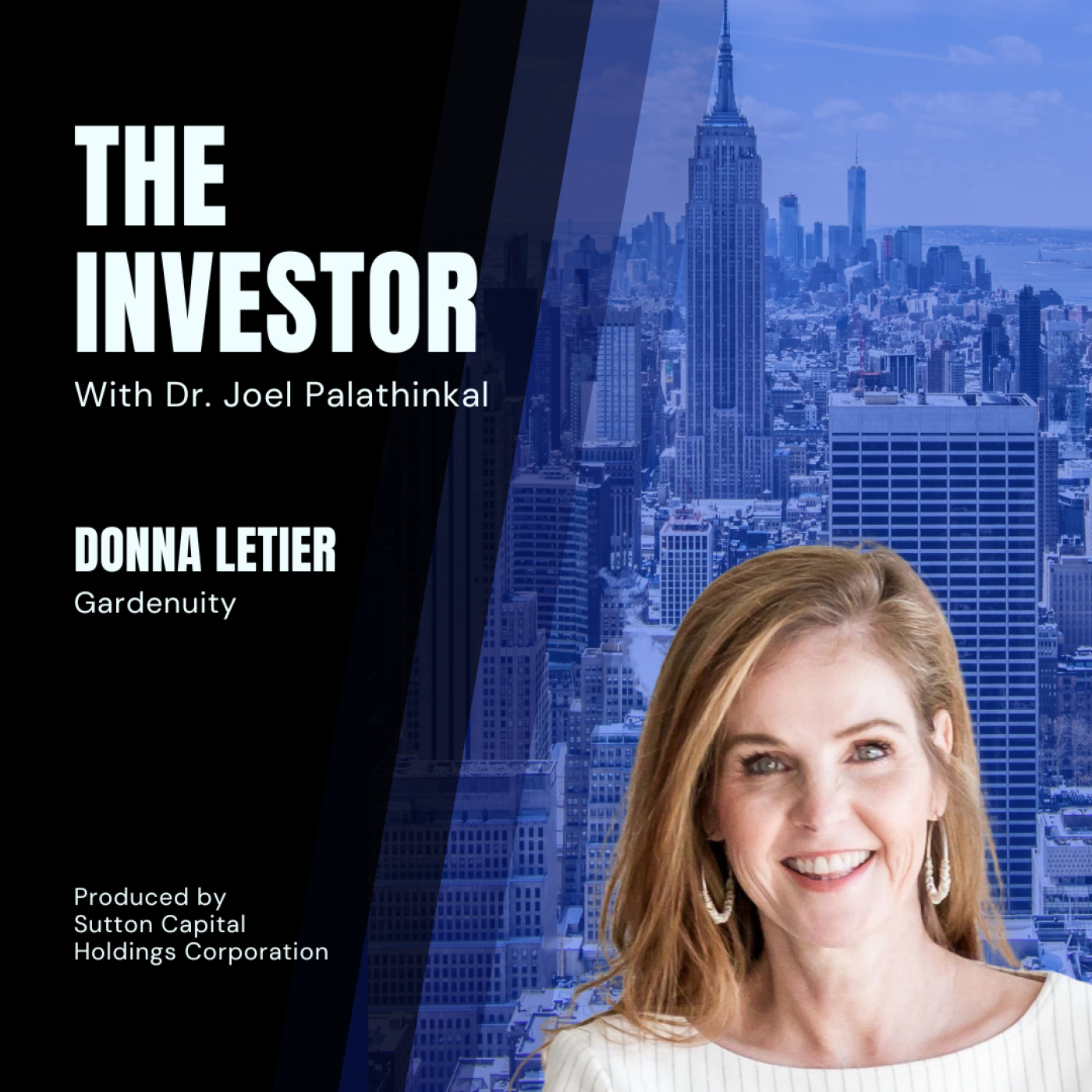
Welcome to the Investor, a podcast where I, Joel Palo Thinkle, your host, dives deep into the minds of the world's most influential institutional investors. In each episode, we sit down with an investor to hear about their journeys and how global markets are driving capital allocation. So join us on this journey as we explore these insights. All right, so really excited for my guest today, we have Donna Lettier. I'm going to give a quick intro and then we're going to go really deep on entrepreneurship, building a business, interacting with institutional investors. But Donna Letier is the founder and CEO of Gardenuity, which is a purpose driven company redefining how individuals and organizations engage with gardening. This launched in 2017 and Gardenuity was built to make gardening accessible and intentional and relevant to modern lifestyles, transforming it into a tool for wellness, mental health and human connection. To dates. Garden Annuity has supported more than 5 million harvests across 500 companies nationwide, demonstrating both strong adoption and scalable impact. The company is backed by strategic investors, including Scott's Miracle Gro, the Hunt family, the owners of the Kansas City Chiefs, and John Ledecky, the owner of the New York Islander. So it's interesting to kind of work with people that kind of have an athletic and sports background. So I think there's some interesting, you know, things to learn about that. But, you know, why don't we start from the beginning, Donna, you know, tell me a little more about, you know, you, who you are, you know, your early education, your first career experiences and how that shaped the way that you think about brands, purpose and ultimately entrepreneurship and then, and then maybe lead into your origin story.
- [01:51]
B
Well, Joel, first, thank you for having me. And let me kind of correct one comment. Scott's Miracle Girl. I'm a huge fan of love everything about their leadership and everything about what they're doing for the industry. They are not an investor. Okay, it's good to know, but we do partner with them.
- [02:10]
A
Sure.
- [02:11]
B
And Bonnie Plants is one of our investors. So excited to be here today. I always love sharing kind of the story of how we've grown and if it can impact somebody else and give them a little bit of confidence to step out on their own, then that's great. You asked about my background and my background really has been in retail. I've been very fortunate to have some incredible mentors throughout my career. And we really, when Julie and I started Gardenuity, we looked at the intersection between wellness, horticultural science and the home and garden, lawn and garden category, and we thought, how can we update it for the way we live Today. And I think when I think about my background, I think really good brands aren't just selling a product, they're actually selling a story and a lifestyle opportunity and one that will make an impact on the end user's life, which I think helps build trust over time.
- [03:21]
A
Sure. That's amazing. So, you know, when you kind of started building this, you know, you built, obviously you built a strong foundation and brand strategy. What moments or insights from that chapter made you realize that you wanted to build something of your own? Tell me a little more about the origin story and, you know, maybe the first version of Guard Annuity and how it's evolved to where it is now.
- [03:43]
B
Okay, Joel. There's actually been a lot of versions, as any entrepreneur I think will tell you. You go in with one idea and if you don't let the data help you create the narrative, then you're not really doing what you need to do as an entrepreneur because the data is full of story points. We, you know, when we started the company, it was the idea of evolving and architecting a really important category. And I think that that's been something Julie and I have focused on. It's taking a category that was really transactional into helping it build relationships with the end consumers. And well being has been a natural foundation from the very beginning with we knew we wanted to make it accessible to everybody. Everybody has always talked globally about the wellness benefits that come from gardening, but the active gardening was not really relationship based. And so we are that invitation to try to build confidence. And I think that it's an exciting opportunity. We get to update a really strong category that has truly some of the nicest people you'll ever meet. But it was time to update it. And I think that we've really built some measurable engagement through each season of gardenuity. So where we thought we were going to really drive revenue growth in one category, we, we read the data and recognized that there's opportunities for revenue through other categories that we hadn't even considered.
- [05:24]
A
Sure. So walk me through kind of the first pathway to revenue and then kind of some things that you learn from the data in terms of like other pillars and other ways to monetize.
- [05:34]
B
Sure. You know, any entrepreneur, I think, who doesn't admit that they've got a little bit of luck. You know, we've been lucky. We've worked really hard, but we've been lucky too. So we got a call from a big insurance company and this is before we were really doing any B2B and they said their CEO has done a deep dive on loneliness and depression and anxiety in the workplace. They were really one of the forerunners in looking at whole human health. And they said one thing that kept coming up as a conduit for delivering mental well being and nutritional well being and holistic health gardening. And so they asked if we would come meet with them. And six months later, after a whole bunch of presentations and meetings, they said, we want to share you with the companies that offer our insurance. And so within, you know, 30 to 45 day period, we had programs set up across the country. And in full disclosure, Joel then Covid hit and they all canceled. And because nobody knew what was going on, well, 30 days after they canceled, they came back and said, can we do it virtually? And so that's really how our B2B virtual programming started. And, and to say that we weren't just at the right place at the right time, nobody could foresee exactly what was going to happen. But we were able to pivot from in person programming to virtual programming. And now we have a hybrid of both, which I think is interesting. So our two clear verticals are B2B and D2C. And both are meeting plan and growing Europe year over year, which is great.
- [07:32]
A
That's amazing. So with the B2B that's virtual, I guess, are they. You know, when I think about gardening and I think of mental health, I think of like the Zen garden, right? The, the sand kind of box and. And you know, I think there's a whole piece to that, right. Just.
- [07:46]
B
And here we've got a desktop sand garden with sand stones and live plants.
- [07:52]
A
So when you did. When, you know, because I, I can think that there's a huge community aspect to this, like especially with a lot of these organizations, they have a whole initiative to plant a tree, right. And there could probably be community building around people going out and planting trees together. And you know, obviously it could be really therapeutic doing gardening. And my parents are hardcore into gardening, right? They've got mango tree, I mean they do real cultivation. They have like actual fruit bearing trees that they've, you know, cultivated in their backyard. So there's a cultural piece to that, right? Different cultures, they really are into gardening and obviously just having the fresh vegetables that they cook with in their backyard versus having to go to the grocery store. But I feel like from a team building standpoint, there's. When you're thinking about just activities for employees to do, that seems like a really great community driven activity, right? People do that together. They plant a tree or they make seeds. And even my daughter from daycare, it was really interesting. She brought back a couple like little seedlets and little mini plants that she, she put together. And I thought that was really interesting. So is that kind of the first angle, which was like, hey, let's, let's do something as a community. And then when you do it, when you deliver it digitally, do you send them like a little kind of kit and then they kind of do it together digitally?
- [09:17]
B
You know, actually, you brought up some really good points. And I don't think companies invest just in good ideas. They invest in misunderstanding, measurable engagement and return. And so the virtual programs that we.
- [09:32]
A
Do.
- [09:34]
B
We will send a full kit to, whether it's to, you know, an office where they're all going to plant together or to people's homes. And we've done zooms for as many as 611 people at one time where they all got a garden. And we actually built it together, together. But we talked about the why, you know, the kids make it successful and easy because the science behind it has been handled, but you have to engage to do it yourself. So it's amazing. When you're with your colleagues, your customers or your peers, and whether you're together kind of digging in the dirt, or you're virtually digging in the dirt, you've got your pets and partners and kids with you, conversations happen. And they don't just end when the virtual workshop ends, the conversations kind of continue on. How's your garden growing? What are you doing with all your cilantro harvests? You know, what, how are your tomatoes growing? Or what's happening with your Zen garden, or those kind of conversations. And I think that it's uniquely powerful, especially now, where burnout's high. Mental health is something that the C suite is talking about, and gardening is a way to bring those conversations up. And it's a tool to combat the challenges that companies are facing. Now.
- [11:00]
A
That's really helpful when you're thinking about building new relationships with customers. What's a piece of feedback that you would give to your fellow founder peers and maybe in terms of, like, how you would share that strategy with investors as well.
- [11:20]
B
You know what, I love strategy and I love data and where they intersect because I think data will help define the strategy. But you have to look at a lot of data to really figure out where that consumer inflection point is and what problem you're solving. From a kind of peer to peer founder council, I would say the best tool you have is persistence. I think that it's really easy to give up, but every day is a new opportunity to win. And I think it's also important to recognize that millions of little wins add up to something big. Right. It's not that one thing that happened that turned your business around. It's a whole bunch of little things. And I think that for me, it's when customers say, oh, my gosh, I harvested my first tomato. I've tried for years and it's never worked, or I got to see come in and slow down and let my desktop garden nurture me. We hear those stories every single day. And those personal wins from consumers kind of keep us motivated. You bet they do. And we as a team have those personal stories. I mean, when I see my daughter, who's severely handicapped and in a wheelchair, roll her little wheelchair out and pick a tomato right off our patio with airplanes flying overhead, the joy she feels is real. So that fuels me to continue doing what I'm doing. So our mission has been to make gardens and gardening experiences accessible to everybody. Yeah, it's that accessibility that plays into the arch architecture of what we're building.
- [13:27]
A
What's like your best seller? Is it like, I mean, for me, I just think it'd be great to have fresh tomatoes or like, you know, basil or mint and stuff. But I guess what when you're working with corporates, what's kind of like the main go to, you know, plant that's like the best for, like the employee profile.
- [13:44]
B
And we've got technology that actually matches the right plants to, to the right season, to the right time of year. So, you know, right now in February, we've got a huge program for global technology company and they're doing the taco toppings garden. Well, in some of the zip codes, it's still really chilly. So they're going to get leafy greens and cold weather herbs. But for the, for their employees, employees who are in Phoenix and Austin, they're going to get early spring tomatoes. And for those in Las Vegas, they might even get a pepper. So it all falls under the taco toppings umbrella. But our AI technology matches plants to predictive weather and time to harvest, which at the end of the day, is all about success. So it might be a group of 500 people online, but we might have a hundred different combinations of plants.
- [14:47]
A
So a lot of our audience is the investor community. So venture capitalists, private equity investors, institutions. And I just think it's really great to have, you know, the founder side as well. But, you know, what advice would you give to founders that are trying to, you know, build a relationship with an investor, obviously position themselves in the most accurate way and compelling way. I think you already hit on some of these pieces with just having data. It's like, look, here's the metrics that we have and then I think you need to solve a problem. Right. So you don't want to present your opportunity and kind of the vision you have to a space investor unless they want to cultivate agriculture on space one day, which I don't think is too far off. I've seen it in some of the movies and there's a whole technology with, with vertical farming as well. So maybe that two part question, you know, tell me a little bit about, you know, the investor landscape and you know, advice to kind of really position yourself from a founder standpoint to really be relevant to the investors and then maybe just some top level trends in like the future of, future of agriculture and gardening.
- [16:00]
B
Oh, that's a whole bunch of questions that I love actually the first one, from an investor standpoint, you've got different levels. Whether you're friends and family raised, just trying to get the door open or you're at a seed stage, you're a level. Raj Shah, one of my investors taught me from the very beginning that he invests in people and that I think translates both for the investor and those who invest their investing. So you gotta like the people. And we walked away from some investing because, and this is not a technical term but I told my husband they were icky. Sure. He goes, enough said. Because it really actually is a relationship that is going to be there for a long time and they're going to be good quarters and they're going to be challenging quarters. Quarters. And I think you need to look at the big picture, not I happen to look at day to day sales because I'm a little crazy. But actually I need to stand back sometimes and look at the big picture. So when you're talking to investors, you know they're judging you, but you need to judge them. Pick people you like, people you can go to. I would rather it's easier to have one big huge check. Right, right. But with that comes some pretty significant strings. Find a group of investors who you can turn to and say I don't know how to navigate this or here's an opportunity, how do I do it? Or what do you think? You know, if all of a sudden you've got 10 investors who actually believe in you and your team, they're going to become ambassadors of your brand. And they're going to make introductions easily. They're going to walk you through how to do certain things you don't know how to do. And as a founder, that's probably been my best lesson to be okay not knowing how to do something. I mean, there are things that I have to call out and say I have no idea what you're talking about. Help. And that's okay. I mean, a good leader is comfortable asking for help. So to circle back specifically be really picky about who you let invest. And they need to like you and you need to like them. I am a big fan of good family offices. I think a good family office is a great resource and they become true partners and they're not looking at it just as numbers. And they know that the path is not going to be totally straight. They know that there's going to be pivots along the way. And there are really good family office communities in every city. And one introduction can introduce you to a lot of family offices.
- [19:03]
A
Sure. And I think it's also, it's a two way street to your point. Right. I mean if an investor is being icky, I don't know what caused that. But obviously if incentives aren't aligned and maybe there's predatory behavior or there's just straight up icky behavior, like you mentioned, it more gets around. It's a small community. What do investors need to be mindful of? Obviously some investors are going to be more responsive than others. But what are some things? What, what's a piece of advice for investors to build good relationships with founders as they're, you know, developing their careers as investors and looking to kind of.
- [19:46]
B
Grow their portfolio, be available and listen without having the answer before you've heard the whole challenge. Some investors start talking before you've gotten the challenge out out there. And so be a good listener and know that it's going to take longer than anybody says it's going to take. And every single introduction matters and a thoughtful introduction goes a really long way. So I, you know, from an investor standpoint, they're looking at people that they like. As Scott Latier with decent capital is said, it's. He bets on the jockey. Right. But we also are doing that. And so somebody that, you know, I were, as I invest in, in companies, it needs to be a category or a product I actually like. Like it would be hard for me to invest in something. I just didn't like the category of invest in something that if you've got an 11 o' clock call because there's a challenge. You don't mind taking it. You know, like I'm not probably going to be an investor in a funeral home because I probably don't want. I have that conversation at 2 in the morning. But will I invest in a new healthy probiotic drink?
- [21:10]
A
Maybe?
- [21:11]
B
Because I think I'm interested in. Just think about who you don't mind having conversations with, good and bad, any time of day.
- [21:22]
A
Yeah, I'm looking at your website. I mean, you've got a lot of great products and inventory. What's kind of one of the most popular? I'm looking at like shop indoor and then it looks like you can shop outdoor as well. What's kind of like one of your best sellers for the outdoor and the indoor?
- [21:38]
B
You know, it depends on the time of year. Like right now in Dallas, because we've had, you know, below freezing temperatures, nothing's gonna match. Right. So you come on and you say you want to do an herb garden. We're not gonna send you live plants right now because they're not gonna match. They won't survive. So in the spring, our outdoor gardens are probably the number one category. Desktop gardens and Zen gardens are doing very well. January is a big month for microgreens. People are trying to get healthy. And then we've got giftables. So, you know, gives. Giving something that grows and brings life and an opportunity to nurture and be nurtured is always a good gift idea. So we built the business, Joel, so It would be 12 months a year. A lot of gardening companies, they make their year between March and May. We actually have an incredibly strong fourth quarter and our first quarter is already off, off beating last year's numbers. So it is. We really built a 365 day a year business.
- [22:46]
A
Yeah. That's amazing. And then it sounds like you've built some. I think you were mentioning earlier that you built some technology that kind of matches the type of product on the season. And then probably. I mean, I think it'd be interesting too if it's like based on the type of business. Right. If you're a SaaS business, maybe you resonate better with like certain types of products versus like an E commerce business. I, I don't know if it's that granular, but you know, I think as you evolve like that matching algorithm, I think there's like, you know, a lot more data that you'll see. And it seems like you're already seeing some of that data. I see you smiling, so I'm a bit of a Data nerd myself.
- [23:20]
B
So, you know, we're all busy, Right. And if I'm a brand new gardener and I'm intimidated anyway, and I go to a fabulous big box retail retailer and I'm a big fan and I see 30 different soils on a shelf, sure, that can be overwhelming. So how do we help them decide what's best? So our platform is based on matching the right soil and nutrients to the plant's needs. Because a succulent has different needs than a tropical plant, than herbs. And so we really want somebody to find success, but we take the guesswork out so that the experience becomes what they talk about and what excites them and what they want to do again and again and again.
- [24:09]
A
Sure. What are some of the. You know, one thing that I mentioned earlier before we started was just the benefit of working with family offices. A lot of them are business families. So a lot of times when they invest, you know, they put their business cap on, a lot of times they can add a lot of value as well because they just have resources. And you know, if you're, if you're looking for support with go to market strategy, you know, they probably have a lot of resources and relationships with marketing and business development because they have a holding company of multiple businesses. What are some other observations that you've seen when kind of engaging with family offices versus just typical venture capital investors?
- [24:49]
B
You know, I think two groups of investors that I really enjoy working with are certainly family offices.
- [24:59]
A
Sure.
- [25:00]
B
But I also institutional investors, you know, somebody who's in your category who can help you navigate this category, you're new in family offices. They have a wealth of knowledge and experience and if you invite them into the, the strategy and the journey, they are so happy to help out. And if they're, if that's not the kind of, if they really have the M.O. we just write checks and hope that one out of 10 hit. If that's the direction you choose to go, great. That's not where we went. We went with people who can actually help us along the way and very fortunate.
- [25:43]
A
What's also interesting is the strategic corporates. Right. So you mentioned a couple of them earlier, but I could see like Cargill, like strategically being aligned with you guys, I guess. What are some other bigger corporate conglomerates that you know could naturally be a great partner for you guys?
- [26:02]
B
You know what, there's so many because we actually are refreshing a beautiful category, one that we're bringing it to the way people live and work and play today. So we're experiential we're about building stories. So whether it's a. A group that invests in healthy foods because we have that nutritional channel, or whether it's something from a mental health perspective, insurance companies, I mean, we've been very, very lucky. We also have just good retail partners. You know, one of our board members is the president of Retail Connection, and he will give me real feedback on certain trends and opportunities that are happening in the retail sector that I might not be privy. Privy to. You know, I think finding the right people is as important as what's on their business card.
- [27:04]
A
Sure, that's really helpful. And then, you know, I saw the Martha Stewart documentary like a couple months ago, and it was just pretty interesting seeing her story. But I feel like the brand that she's built is essentially a more of a media brand and just kind of like a lifestyle brand of just kind of cultivating in, you know, in the house. And I think she built a really huge following around her. She was also integrating in cooking, too. And then that kind of expanded into, I think, a bedding line and multiple other products. But, you know, I think with you, you're taking more of a technology and product approach. So what are some of the innovations that you're seeing in the future of gardening? You know, I mean, I've seen some of the technologies with like, vertical farming, and then obviously there's a whole impact spin to this too, making, you know, plants and food available in areas that are not there. So I'm sure there's a lot of innovations and more effective gardening. So maybe you can give us a little bit of a lay of the land as investors in terms of what, you know, what the trends are that you're seeing in those category as a whole.
- [28:09]
B
Well, I think Martha has done great things for the Pullman garden category. She's made life aspirational and achievement. Right. And she has invited us in to the idea that details matter. And she, she builds a lifestyle over a product. And I think that's what we do. We're not just about a oneand done. We're an invitation to try gardening. You find success, and then you may go on to do bigger and better. We have also found, and there's global research that we are being a. We can draft from. Right. And so one of the things is people who grow vegetables have more respect for the pricing that the vegetables cost. In grocery stores, that's a win for farmers, that's a win for the grocery store retailers, and it's a win for the individual consumer. So when you really think about the future of gardening, you know, I think that it is making it accessible to everybody. So whether you're on a high rise, you have a sprawling yard, or you're in a wheelchair, we are making that experience accessible. And I think that being experience driven brings it from aspirational to achievable. And I love that.
- [29:38]
A
Sure. That's amazing.
- [29:39]
B
There's a lot of cool things happening in the horticultural side. I mean, you know, we know that tomatoes really thrive in warm weather and when a frost comes, they don't do well. Well, there's a whole bunch of research happening right now to make a frost resistant tomato, you know, to genetically modify. Does that mean we're going to be able to have, you know, tomato sandwiches 12 months a year? I don't know. But there's a whole bunch of work going on behind, behind the scenes that I applaud.
- [30:07]
A
There's a lot of innovations too. I mean, this isn't that innovative, but there was a whole business model around. I think it was called Misfit Foods. So they took all the ugly vegetables that had like a weird shape or had a dent in them and. And he sold them. And I think that that company did really well. I don't know if they had an exit, but just kind of pockets in the market where there's inefficiencies and there's waste. You know, you could probably create a home for that. And obviously, you know, do good by doing good. Right. Build a business generating healthy revenue and creating some impact, but also, you know, healthy numbers and data on the, on the P and L. So I think that's pretty interesting. But one thing that's also quite interesting, I'm reading a book and I think Matthew McConaughey was. Matthew mentioned and he for the longest time struggled with him being categorized as like a rom com actor. And he kept getting these offers to become a rom com actor. And like, I think there was one opportunity where like, they offered him 4 million, then he turned it down, they offered him 8 million and then I think it was like 14 million, where that was the tough pill to swallow where he really wanted to create a new identity for himself as a serious actor. And then I think that's when he became. That's when he had his first role as the Lincoln Lawyer. And like, that's when he became kind of a breakthrough actor in like the serious category. But, you know, that was pretty interesting to kind of know when to say no. And, you know, you can't do everything and you you want to kind of be a little more selective in terms of, like, what your core beliefs are and what your product offering is. But I think Martha Stewart went through that same process as well. So she got to a point where I think there were some issues with her business, and then she kind of had a restart where she was supposed to go on a bunch of these cooking shows, and they were just kind of telling her what to do, and she wasn't really authentic to her true self. And then I think she kind of had a little bit of a reboot after that where she kind of started doing stuff with Snoop Dogg, but it was, like, funny, and it was really her true self. Right. And she kind of went back to kind of having fun and really just being Martha versus kind of trying to do things that aren't really authentically who you are and who your identity is, because that impacts your business and in your brand. So, you know, I don't know if you have any reactions to that in terms of, like, having to say no and having to kind of be thoughtful around just kind of the core focus of the business. Yeah.
- [32:36]
B
Yes and yes. And I am such a huge fan that Martha is authentic to herself. I think she's opened up a window for entrepreneurs of any age to have the courage to try. I mean, as we were raising money and someday I need to write all this down, we had somebody say, wow, are you not just old? Shouldn't you want to be home and retired? If somebody say, literally, wow, you have a special needs trial. Shouldn't you, like, be taking care of that child? I mean, like, it's astounding. And I think of somebody like Martha Stewart, and I think she is true to who she is.
- [33:21]
A
Yeah.
- [33:21]
B
And the products are all of a certain level of excellence.
- [33:26]
A
Yeah.
- [33:27]
B
And I think that that's really important. I think she lives the products that she shares, which is cool for me. You know, I think I love product development. But we do ask, does it fall under the garden inspired living category?
- [33:45]
A
Yeah.
- [33:46]
B
You know, does it help create the story? Does it help create the experience? And can we do the product that a consumers want that. But that meets all of our quality control control. And I think collaborations are a great way to introduce new product lines. I think that there's some great brands out there that we would love to work with, that we're having some opportunities come our way now. And I think that's a good note for founders. There's some really exciting businesses coming down the pike. And one of my jobs, I think, is to be an encouragement merger to these new founders. But to say, is there a way we can work together? So that's been really fun.
- [34:31]
A
Absolutely. What advice would you have for marketing and growth? What are some things that you've learned across, you know, I'm assuming media buying and, and you know, user acquisition. Any advice you'd have for founders and I'm happy to share some of my learnings too.
- [34:50]
B
Well, for me it's how many times are they coming back again and again? And our B2B customers, you know, we've got an 85% retention rate where they do several programs every year, year after year. So that means their employees like it and it's tested well from a consumer standpoint. You know, we do have a loyalty program and it's always fun to see people using their Grow Pro perks to get free product. So that means they understand the benefits of working with and growing with gardenuity. You know, media buying, you just have to read the data. I mean, it's not my expertise, but I think that people live their life digitally now. And so research happens online, feedback happens online. And as important as the digital aspect is, I think to have a real human component is important. So when somebody reaches out to our broker and we do weather alert, we track everything by zip code. I mean, we're very attuned to. We even know the PH level of the water in every zip code across the country. So we can really guide people to success. But we have real life people. So if somebody AI certainly streamlines the process. But at the end of the day, if somebody is new to gardening and they want to ask and talk to a human being, we've got that human being accessible to talk to.
- [36:23]
A
Yeah, absolutely. Yeah. I mean, I think you're right. I mean, I think as an investor, there's specifically different KPIs that are relevant if you're a B2B investor versus a consumer or you know, E commerce brand. You know, I would say on the consumer side, you know, what is the cost to acquire a customer? I think for you, definitely, like the repeat order rate is important. And then if you're doing subscriptions, there's definitely a churn rate. Right? So like, I mean, just like look at Netflix, right? I mean, people use Netflix for a couple months and then they cancel, they maybe come back and there could be some seasonality to it as well. So kind of personalizing it to the type of the people that, you know, buy on a certain type of seasonality also. And then with enterprise, I mean, the beauty of like software is, you know, once you have the software, you, you build it once and then you sell it a thousand times or you have the software, there's maybe a back office team that maintains it, but then you can go out and, you know, have an enterprise team that sells that one thing over and over again. So that's pretty interesting as well.
- [37:29]
B
I mean, I think every company needs to assume they're a tech company. You know, how can technology better make the experience for the end user? How can it improve that end user experience? And when you use tech to manage your inventory, then somebody's not going to order something that's not available. When you use technology to speed up delivery, then they're going to be happier at the end to track whether they know their plants are going to arrive safely. So technology is a foundation, but it's real people and real experiences that I think bring our story to life.
- [38:05]
A
Sure. So if we lived on Mars, do you think we could still plant plants in like a contained environment? I guess. Could they ship up, in theory, the seeds to Mars and grow them there? Do you think they'd survive if they were contained in the right environment?
- [38:20]
B
What, they were delivered by Matt Damon?
- [38:22]
A
Yeah.
- [38:23]
B
Wasn't he the one on Mars who drew all the potatoes?
- [38:26]
A
Yeah. That was a good movie.
- [38:27]
B
Yeah, it was a great movie. In theory. I mean, in theory. I haven't really thought about that question a lot. I want people here to experience getting their hands dirty and the benefits that come from it. But where we're going to be in the next, you know, 250 years, who knows?
- [38:50]
A
Yeah, absolutely.
- [38:52]
B
But gardening's been around a long time.
- [38:54]
A
Yeah, absolutely. And I think it really brings a community together, which is one of the big, one of the big sticking points to kind of the mental health and the well being, you know, doing things and being part of a tribe definitely helps, you know, especially when you're, when you're dealing with the stressors of family, you know, your health and then also just kind of the pressures of like excelling in your, in your professional life as well.
- [39:20]
B
Well, and there's science that shows anxiety and gratitude cannot coexist at the same time. Right. And so sure, gardening has been proven to increase your level of gratitude. So that automatically dissipates some of the anxiety. And I think that's important. And I think one of my mentors actually is Arianna Huffington and I learned that through her access without well being is not sustainable. Right. You need to rest and have reflection and gardening is a way to do that even if it's just misting a desktop garden in the morning or going out and checking on your tea garden on the patio for three minutes, you're engaging with nature. And nature, nature will absolutely nurture you if you let it in.
- [40:06]
A
Yeah, that's amazing. Well, you know, to close us out. You know, first off, just really appreciate you taking time to, to share your story. And I think we, there's a lot of really helpful nuggets of wisdom from both the investor standpoint, but then also as you're building and scaling a company that's backed with investors, you know, making sure that you're taking care of your stakeholders. What's one you you've had, you have some really high profile mentors and, you know, really great people to learn from. But what's. If you had to just give us one piece of advice, it could be from a mentor or it could just be from like a family member. What's a piece of advice that you'd want to share with us for us to take back with us?
- [40:48]
B
Stewardship over speed. I think that's important. And persistence. You know, let it be your season. Every season has a reason. I mean, right now, seeds that are underground are resting before spring, but they're not, not engaging in getting their energy ready. Every season has a reason. So let that season kind of draw you in. And I'm all about the hustle. I mean, I, yeah, I think you have to hustle. It's hard, hard, but it's fun. And gather around people who believe and will challenge you are smarter than you and will say no. I mean, my co founder has a power of no. And I want to spend money and, and I beg and plead. I think I have a great idea. She has the power of no and I have to listen.
- [41:42]
A
Yeah. You know, like just, just out of curiosity, this could be an anonymous. But this is just for the investors that are building their skill sets. What, what gives you, what does an investor do that gives you the ick? Oh.
- [42:00]
B
There'S a lot of things, you.
- [42:04]
A
Know.
- [42:08]
B
It'S just a feeling. I mean, my co founder and I went and did a pretty compelling telling pitch when we started and both of us left. They wanted to write a very large check and both of us wanted the money, but we had the ick. And it was a feeling. We just didn't align on how to grow a business. Sure. And so I don't know that there's any one thing, but you gotta like them. They have to like you.
- [42:40]
A
It's a long road It's a seven, you know, seven to ten year road. I mean there's, there's marriages that last. I mean there's, there's business deals or marriages that last longer. Right. So if you're someone that you, that you want to be with, I would say, look, I mean I, I hear from the investors perspective that like founders need to be coachable and I want to, you know, it'd be interesting to hear your reaction to that. But at the same time you made a good point where sometimes you know, the investors are trying to tell the founder how to run the company. And you know, I heard this one time from an investor, investors, which, which I do agree with to an extent depends on which stage you're investing in. But investors should almost be like grandparents. Right. They're giving you a check, they're seeing that you're doing well, but they're not your parents who are essentially you know like making sure you do your homework, making sure you do everything. But they want to hear updates. Right. So you know, monthly or bi weekly investor updates. That's helpful. Right. Grandparents want to, probably want to hear how you're doing but they're not, they're not telling you how to run the company and that's not going to be scalable for them unless they're maybe a venture studio or they're like a pre seed investor that's like super hands on and like that's what is their value add. But I would say, you know, trying to, you know, try to drive the car and tell the founder how to, you know, who they should hire for marketing partnerships and everything like that could be, be, could be a little overbearing. And then I think based on what you're saying to the, it could also be just maybe the terms don't align also. Yeah.
- [44:17]
B
I think one of my biggest assets regarding, is that I didn't come from the gardening space. Right, sure. And so I brought a fresh perspective to a category that has really been the same for a long time and I think that has helped us interestingly enough, I think, you know, looking at it through clean, a clean lens has been helpful. And none of the investors that we have were concerned with the fact that I hadn't spent 20 years in the horticultural arena. They like that. I understand experiential retail and how to make a consumer feel. So you know, working with your investors, knowing what their strengths are. I mean there's some I turn to for introductions and some I turn to, to say check my math.
- [45:14]
A
Yeah, amazing. Well Donna, thank you so much for your time. Really exciting what you're building. And congrats on all the success and progress, Joel.
- [45:23]
B
Thank you. And I'm glad your little one brought a tree home. I hope she's enjoying it.
- [45:27]
A
Oh, yeah, no, it's. It's been great. It's been a lot of fun, kind of doing it with her. And appreciate all that. You do. Good.
- [45:33]
B
Have a great day.
- [45:34]
A
Take care. Bye, guys. See ya.