Loading summary
Transcript36 lines
- [00:03]
A
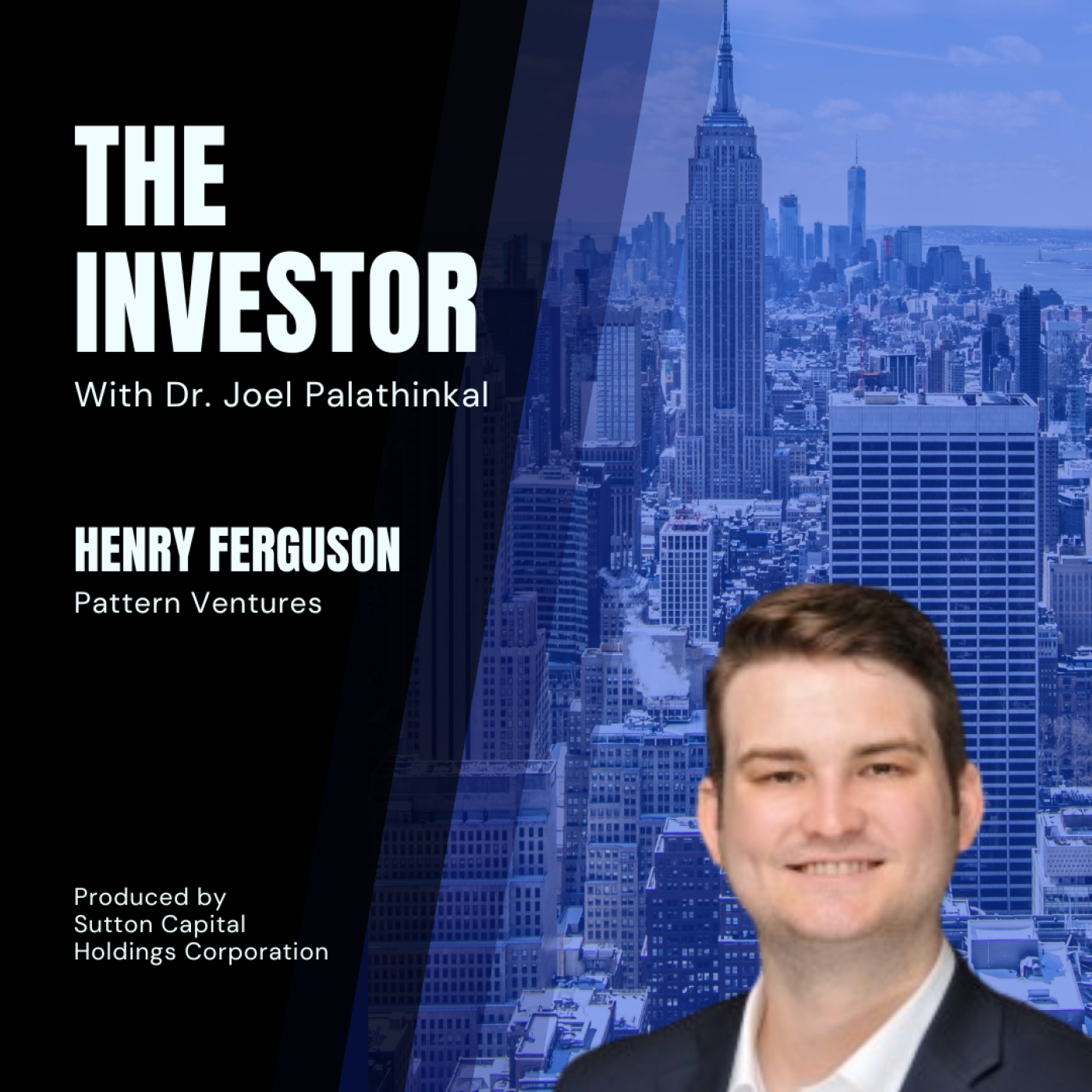
Welcome to the Investor, a podcast where I, Joel Palo Thinkle, your host, dives deep into the minds of the world's most influential institutional investors. In each episode, we sit down with an investor to hear about their journeys and how global markets are driving capital allocation. So join us on this journey as we explore these insights. All right, so really excited to wrap up the year 2025 with an amazing speaker and a new friend. Good, good buddy of mine that's local to New York. I am here with Henry Ferguson. He is an institutional LP part of a fund to fund platform called Pattern Ventures. Pattern Ventures is a fund to fund fund of funds focused on partnering with top tier emerging managers across the early stage venture landscape. And they've also built some really great platforms for people to submit their information. So excited to kind of go deeper and kind of learn about what they're looking for in fund managers, but also just go a little deeper on Henry's career. We all get into venture and private equity and even investment banking from different paths in life. So it's always exciting to hear different journeys and different stories and how people ended up landing in this exciting and lucrative career. So, Henry, you know, thank you for again, you know, making time for us and, and, and sharing a little bit of your wisdom in private markets. So maybe we can start with just kind of you going through your career background and just going through, you know, your early career, what you studied, you know, what you thought you would get into in terms of your career and, you know, some of the pivots that you made getting to where you are now.
- [01:49]
B
Yeah, absolutely. And happy to be here. So I'll take you all the way back to the beginning. I graduated from Santa Clara University back in 2018 with a degree in economics and environmental studies. I honestly had no idea what I wanted to do with my career when I was a senior in college. But luckily I had a professor who I viewed as a mentor and she sat me down and said, there's always, it's never a bad idea to go and get some transferable skills. And the two things she really highlighted in that conversation were sales and finance being two of those skills. And what that looked like for me at the time, being in the Bay Area, being in Silicon Valley, was go work for a tech company in like a BDR or an SDR role in a sales function or going to go work in a consulting or a financial role where you were working for these tech companies, because all of these firms in the Bay Area are working with these tech companies. Had offers to go and do both of those things. And ultimately I decided to go the consulting path and I got a role at Ernst and Young in their San Francisco Bay Area office. The practice that I joined was called, or it is called transfer pricing. And if folks don't know what that is, that's, that's totally fine. I didn't know what it was either. When I basically when you have multinational companies, they need to transact with each other and back in the day companies would go set up a Cayman Islands entity and funnel all their profits offshore and you pay zero tax. The US and other countries got smart and said no, you can't do that anymore. So that's why the role that I was working in even existed in the place first, first place. So we would come in and help both large multinational companies and high growth startups that were expanding internationally to make sure both transacting with their entities from a good business perspective and also from a legal and tax perspective that you're not breaking. That broke down into a few things. On a day to day I was helping with lots of financial related transactions, so building up income statements, balance sheets, getting into the nitty gritty on group audits and being a subject matter expert and seeing what it takes to get a 10k for a large multinational company across the finish line, helping with valuations for intellectual property acquisitions, sitting down with C suite level executives and mapping out their value chains and figuring out how they generate value and just really deeply understanding their business and then from more of a qualitative perspective, understanding macroeconomic trends, industries, how companies operate within those industries and then ultimately it was a client facing role. So there was a sales aspect to it and relationship building aspect and business development and really just the people side of the business. Really enjoyed working at a large firm. It was a great place to start my career. There were a ton of benefits. You get to work with tons of really smart people. Clients are super interesting. There are lots of opportunities to travel. I had the good fortune of going to Buenos Aires for three months and training a team there after Covid ended. And yeah, just tons of learning and development opportunities. But throughout that whole process I really got an itch to go and work with the startups that I was working with as clients. Sure, sitting in the Bay Area, you know, from 2018 through Covid, it was a super high growth period. Tons of exciting companies were going public and it just sort of felt, you could feel the excitement, it was palpable and I just felt like I wanted to go and really understand that world A bit more from more of an insider's perspective. So after about five years I decided that the best way for me to do that was to go and get an MBA and to really use that as a pivot point in my career. Most cases in consulting, that's a natural off ramp and you can in some cases come back to the firm or go out and do something else. And in my case I chose to do something else and really thought that there were three ways that I could approach the startup, the venture capital ecosystem. One was to be a founder, to start something myself. Two was to join a high growth company either at an early stage or sort of at that growth inflection point at series B or C, or to go be an investor and invest in these companies as a vc. The MBA program that I ultimately ended up deciding on joining was the part time Langone program at Stern. It's an amazing program where most of the people who are in it keep their full time job and then do their classes nights and weekends. There's a small portion of that class though that end up quitting their jobs and pursuing something, whether it's starting a company or doing what I did and trying out six different things. Once I reached that point, that was when I really felt like the sort of the catalyst moment for jumping into the startup and the VC ecosystem. So happy to kind of keep going and walking through what I did during my MBA to, to sit in the investor seat ultimately. But you can also pause there if you, if you want to take it.
- [07:15]
A
Yeah, well, I think one thing that I wanted to get your reaction on is, you know, you mentioned sales and finance are two really important skill sets. I've always said for years, you know, sales is, you know, to your point, one of the top skills that are needed, you know, because you need sales if you're starting a startup, you're, you know, obviously trying to get new, new customers, you need sales. If you're trying to get a job and you need to impress the hiring manager and outperforming the interview, you need to sell. If you're an investor, you got to sell your portfolio companies to potential portfolio companies to join your fund. You have to sell investors to invest in the fund as an lp. So you're always, you know, essentially not hardcore selling but just, you know, building, building relationships and kind of engaging with people to kind of get them to come on board. But you know, a new aspect of that that I've been thinking about as an important skill, just reflecting on 2025 is just the ability to, to just learn very quickly, you know. And I, and I just kind of thought about that as you were talking about consulting. Because consulting oftentimes you're working on multiple different projects. You're kind of, you know, drinking from the fire hose. And even if you're an investor, you may not be a generalist investor. Maybe you've only done healthcare, maybe you've only been, you know, on the founder seat, you know, just jumping in and understanding how to be an investor and then just understanding nuances of different industries, different stages and just picking that up really quickly I think is really important. So just wanted to hear your reaction to that as an additional aspect of, of just trying to kind of become a better investor. Just kind of get into the tech or VC ecosystem in terms of kind of that, that skill set.
- [08:59]
B
Yeah, absolutely. I'll start with the sales aspect. Cause I do think that's a, it's sales is misunderstood in my opinion. I think people think that it means, you know, I'm trying to sell you something. It's very transactional, which in some cases it is. You're, you're selling a widget or you're selling a service and you do need to, to do. But in many, I think in the investing world the, the sales life cycles is much more, I would say relationship driven and network driven and also sort of problem solving driven where as a, as an investor you're, you hit the nail on the head there. You're doing two things. You're, you're, one, you're selling returns to your investors and two, you are, you're selling capital or you know, value add to startups or to find in our case funds. And neither of those things are sort of one off transactions. They are, you deeply need to understand the, the needs of your LPs and what they're looking for. In our case, what are our LPs looking for? And then also to the funds that we're investing in. You know, how can we be a value add partner outside of just cutting a check? So I think that's, and that comes boils down to two things. I think it's rooted in human psychology and curiosity and those are things that, to your point, I was trained to, to do those things in consulting where, you know, really going in and understanding the pain points of my clients and you know, how can we as the consultant come in and help generate value for them. So I think that that's really one of my big takeaways from the consulting world. And then two on the, you know, on the investing world, I think coming from a. Coming from the perspective of being curious and understanding, you know, what you know and what you don't know, and knowing what your blind spots are, I think is critical in being an investor. In many cases, the people and the gps that we're investing as a fund of funds, they know much, much more about the spaces that they're investing in than we do. So we never really come in from the perspective of we know everything. And in many cases, we want to be educated and ask the right questions to understand what we know and what we don't know. And I think a critical piece there, too, is understanding when you need to go into your network and find experts that can help validate the things that you're hearing. So I think in many cases, again, you can't be an expert in everything, but you can know people who are experts. And again, that's a skill that I brought from the consulting world where I was working with clients from tech to semiconductors to mining to consumer products and everything in between. I didn't know everything about those industries, but there were definitely people within the firm and externally who I could tap on the shoulder and say, hey, can I. Can I run this by you? Or, you know, can we. Can we talk through this? So I think all of those things wrapped up are, you know, those. Those are all important skills.
- [11:55]
A
Yeah, yeah. And I would say just a professional lesson, too. A lot of times, like when you're working at a big company and you get grilled by your boss in like, a meeting or something and somebody asks you a question, to your point, you don't necessarily. I think it's okay. It depends on who your boss is, but I think it's okay to say, look, I don't know, but I can get that answer for you in three hours. So I think as long as you, to your point, can find the answer, I don't think it's an expectation to know everything and be a human encyclopedia, but just being able to be resourceful and just assure them that you will get the answer from someone who's kind of an expert in that niche. So I totally agree with that. But being able to jump in and just make it, make it work and just figure it out. I mean, you went to, I think you said Argentina, to kind of just go out and train a team.
- [12:41]
B
Yeah, that. That was an interesting experience. We, we had an offshore team who was working in Argentina who was extremely integrated into the project that we were working on, but no one had actually met with Them because they had been hired during COVID So I, you know, raised my hand, said I will go down and meet this team and you know, really make them feel like they're, they're a part of, of the scheme.
- [13:04]
A
Sure.
- [13:05]
B
And it was an amazing experience. Argentina is awesome. I would recommend that everyone go in and check it out. But more importantly, was able to sit down with our practice, our business practice leader and build a business case for why this was a good business opportunity for both the project and the firm. And that was a great experience of just being able to sort of show the ROI on a project like that and go through that.
- [13:33]
A
Got it. And then just to kind of continue your career story. So you're doing the part time MBA and then it sounds like you were just kind of networking in the VC and startup ecosystem.
- [13:43]
B
Yeah. So I, I went at it from three angles. You know, the second I actually got into the Stern program, I reached out to an admissions officer and I said, hey, are there any students who have done what I am trying to do? Has anyone successful who was successfully broken in the VC with a similar background to me?
- [14:01]
A
Yeah.
- [14:01]
B
And I was immediately introduced to maybe three or four. And the common thread with all of those conversations was one, it's really hard to break into venture capital. Two, the best way to get, to get the experience needed to get that first VC job is to go be a VC before you become a vc. So go get some sort of some internship or do a project or go work with a VC in some capacity. Sure. Oftentimes it'll be unpaid. And how do you talk about that aspect? Yeah. And then three, you know, your network is really your strongest resource or your biggest resource in the space. So go and meet as many founders and as many VCs as you possibly can. The way that I broke it down was again, go found something and see if I want to be a founder. Because that's one sort of tried and true path where you go become a founder, you exit your company, you become a vc. The second, go work at a high growth startup and gain some hands on experience as an operator, which you can then leverage becoming a VC or. And then third was go in and go find a VC and go work for them and skip the founding and the operating path and be an institutional investor from day one. Very serendipitously, in that moment or in that time period, I received an email from the GP of Santa Clara Ventures and he was reaching out to alumni saying, hey, I have this accelerator program, do you want to join? Are You a founder? And my brother had actually gone through that when he was an undergrad at Santa Clara a few years prior. So I knew about the program and I responded and I said, hey, I'm not a founder, but I am interested in vc. I see you have some undergrad interns. Would you be willing to. I'm about to start my mba. Would you be willing to take on an intern? I want to learn about the venture capital world. We hopped on a call and a few days later he said, hey, we're actually, our interns are leaving for the summer. I guess we can replace two undergrads with one mba and you can be our intern for the summer while we run this program. It was unpaid, but for me it was an access point where I could sit in a venture capital environment, source and diligence and sort of see the full motion from, from identifying opportunity to writing a check. And you know, that evolved into another role where they were starting this other fund called Santa Cruz Ventures. So I was able to help them start that fund as well and really just take a hands on approach to, you know, sourcing and diligence and all the things that are needed to start a venture capital fund. At the same time, went and started a small company called the Founder Toolkit with one of my classmates. We realized that in order to bring founders to us, we needed to have a value add. And since we weren't sitting in VCs in New York, we thought that for us that could be hosting events and giving really early stage founders the opportunity to meet each other and access resources and meet VCs. So we hosted some brunches where founders could pitch and meet their peers and meet VCs. We ultimately wound that down. There are people out there who are doing sort of that event and newsletter approach and product at a much bigger scale and honestly much better at it than we were. But for us it was about building relationships with founders and with VCs. And we took those relationships with us. And on the operator side, I ended up working with a few accelerators at Stern and helping really early stage founders with go to market, business development, fundraising and just sort of getting that, you know, the hands on operator experience with them. And for me kind of mirrored what I was doing in consulting where I viewed all of these different startups as clients and sort of the discrete things that they needed. But through all of this met a ton of amazing founders, a lot of VCs and ultimately met the individual who was working at Pattern Ventures at the time, who was leaving the role and referred me into the role that I'm sitting in now. So all of these things kind of coalesced together. And you know, I personally did not have it on my roadmap to go and work at a VC fund of funds as an lp. But as I think with many in this industry, it's sort of a zigzag to get where you are. And you know, I serendipitously met this individual through my MBA program and we got to talking and I, you know, he recognized that, you know, what he was doing was well aligned with, with many of the things that I was doing in the, the startup, in the VC world. And you know, he thought I could add some value to the, the fund of funds that he was at.
- [18:25]
A
Yeah, no, I totally agree with both of those points. I think learning by doing, trying to get into the investing role, even if it's like a venture partner role, or trying to, you know, find a pathway where you can just source and screen deals. Even if you're a high growth, you know, founder and you're generating a, an income from a salary. We see a lot of founders building an angel track record. Right. It can be tiny checks into small deals just to kind of show synthetically that you understand, you know, why you invested in these deals. You could write a memo, kind of do all the same practices that you would, you would do if you were working full time at a fund and just kind of get that, get those reps and I think definitely helps. And you know that those are a lot of the aspects of our, you know, venture capital private equity program. We have people actually analyzing deals, which has definitely helped. And then I think the other piece, which, which is really important is kind of, kind of building that ecosystem around you. There's a fund manager that I know that went through our second program. They're now on their second fund, but they started just kind of hosting founder events. And when you host founder events, obviously VCs to kind of remain employed because they need to kind of maintain that pipeline of deals of founders. And if you can kind of serve that up in a curated way where, whether it's just kind of a generalist theme of like top 10 startups that are pitching or if it's a thematic focus, whether it's like a healthcare investor summit or it's like a AI focused founder demo day, I think doing those demo days, I think it'd be kind of a unique approach. We see a lot of these like people that are building businesses trying to sell services to Startups or to your point, like the newsletter approach, which is like a media company. But I haven't seen too many people do like legit demo days and I feel like that could be a really cool, you know, hub where you, you know, you get the founders coming in. You could probably, you know, support them with some marketing services or some type of other professional services. But the biggest thing is if you can get real investors to show up, the investors actually get impressed by the deals that you source. You kind of have an accelerator that doesn't have capital. Right. But it has at least one of the spokes which is just kind of the deal flow. And then you could probably showcase that deal flow to maybe get maybe a small check into the accelerator that goes into those top startups as well. Right. But I don't know, I mean, I think that sounds like kind of a really unique approach, kind of building, building some type of demo day platform with curated founders. I don't know what your thoughts are on that.
- [20:58]
B
Yeah. When I think about why we did what we did with the founder toolkit, the goal was for us to curate two things. One, deal flow that was unique to us that investors who we knew maybe weren't seeing. So finding hidden gems within the mostly NYU community for folks that were starting companies either in undergrad or grad school or in their PhD programs. And then two, really finding high quality and adding value to the individuals who are showing up. I think those two things, whether it's a demo day or a newsletter or whatever it is that people are maybe thinking about starting, if the goal of this is to uniquely position yourself to either go work at a VC or to even start your own fund, I think that's ultimately what LPs are looking for too. It's, it's unique access to high quality deals. Sure. And a vc, you know, if you're going, if you're trying to join a vc, maybe as a junior investor, I think trying to find those high quality deals that are unique that you, you have unique access to and ultimately have a lever to help win that deal, that's a huge value add to a vc because you know, they're probably seeing a lot already if they're a good investor. So if you can show them something that's also equal in quality and new, then I think that's a great way to position yourself as value add to. As a more junior investor.
- [22:32]
A
Yeah, absolutely. What are some things that you reflected on in terms of the interview with pattern? I get whatever you're allowed to share in Terms of, you know, what do you think, what do you think it is that helped you to outperform in the interview? Because any role in venture or private equity is highly coveted and there's fire at least if it's posted on LinkedIn or on Twitter, there's going to be at least 300 to 400 applications. So what do you think is your superpower that you highlighted to really, really stand out?
- [23:04]
B
Yeah, it's a great question. I think the first thing, and this was a little bit more maybe, you know, implicit and I didn't necessarily, I didn't necessarily seek this out, but I had a very warm intro and referral from my classmate.
- [23:18]
A
Yeah.
- [23:18]
B
And I had built a relationship with him over a year prior to even applying to this job. And when he circulated the role with, with the group and when he published it, he was able, you know, I was able to sit down with him and talk to him about the team and the role and what they were looking for. So having that inside information was key. And I think anyone who's applying to a job now, like you said on LinkedIn, you can see 100 plus people have already applied. So if you can get ahead of that LinkedIn posting and meet the people on these teams and really get to know them as people first before they're even hiring, that puts you leaps and bounds ahead of anyone who's, I'd say that's the first thing that's again, very network driven for time and just getting to know people. And then I think during the process really treating it, I was able to treat it like a conversation where I was able to ask them questions as well about what was important to them, what were they looking for and the person that they were hiring. What were the most important things that they were focused on as a fund, both from a business perspective and an investment perspective. Because I knew that they were raising their first fund at the time, so really understanding what would move the needle for them and what they were looking for in this new role. And then ultimately I put together, they asked me to write a short case study, an investment memo about a fund that I thought would be a good investment. So again, doing my research on making sure I was bringing something that was in thesis for them and showing that I had access to these investments that they were investing in, I think set me apart from others who might not have been able to demonstrate that they actually have access to VCs that they might want. And then on the third thing I did was I did some extra work. I put Together an airtable database of about, I think it was about 50 funds where I said, hey, in addition to this fund that I wrote a memo on, here are 50 more funds and here's how I would get access to them if I were to join your team. And they told me after the interview that that was what really set me apart. Quality one, the quality of the work and the memo that I did for them and then the fact that I did some extra homework basically for them and handed it to them and said, hey, you can use this if you want. And you know, showing them that, you know, I sort of took that initiative to, to push it forward one more level.
- [25:43]
A
Sure, yeah. No, I totally agree. I mean that you definitely stand out because you're the only one probably that would do something to that extent. So it just, people remember that. So I think it makes sense. What are some techniques that people can use to, to develop their network if they don't already have one? I mean, I kind of get reminded of this guy that I knew a few years ago, younger guy. I mean, obviously I have, you know, two kids, I have a family, so I can't go to every event, but I knew this guy, young guy in New York, he would go to like essentially like six events a week. And he was like a full time networker. And I feel like if you have the bandwidth, that's really where you get the edge. Because part of those relationships, you can't just mass email a bunch of fund managers or founders. You got to go out and build a relationship with those people, get to know them, get to know who they are as human beings, learn about their family, learn where they went to, you know, where they went with their family over the holidays. Right. They went somewhere warm for the holidays. Right. But I think really just building a human connection. Connection. And I think another piece that you said which was important, which goes into sales is asking more questions and listening versus kind of just selling yourself, you know, because what you're selling may not be relevant to what they're looking for. So I think sometimes they say like, you know, be interested instead of being interesting and just actually showing in a genuine interest in what, what people are, you know, you know, looking for, need help with. But a lot of people, you know, might have done their MBA years ago. A lot of people just don't feel like doing an mba, you know. So what are some other ways beyond just, you know, one, one idea I had is just kind of going out and building those relationships. But what are some other ways that people can kind of get those connections and meet more investors that could possibly, you know, give them a chance.
- [27:35]
B
Yeah, absolutely. And you beat me to it, where I was going to say go get an MBA because it is structurally set up to help you network and meet a ton of people. But it's really, there's a huge opportunity cost to doing it and it's not for everyone. So assuming you're not going to get an mba, and let's assume too, you maybe live in a major city, but maybe you just move there for the first time because everyone has a. I would say start by mapping your existing network of who you probably know more people than you think you know.
- [28:02]
A
Yeah.
- [28:02]
B
And you already have some relationships with, with people who might be able to help you get warm intros to the people that you want to meet. But maybe let's just assume that that's not the case. You're moving to New York for the first time. You know, nobody and I, I would go to the sort of what you were talking about, do the event circuit, but do it in an intentional way where you will meet where you think you'll meet people who have shared interests and where you'll be able to sort of be almost peers or equals with them too so that there isn't almost like a power imbalance of the relationship. But my thought on this is you have to lead with give, give, give before you get or ask. And the only way to understand, I think the important thing is understanding what is a value add give because you could give something and someone might say this is, this is not helpful for me. So the only way you can learn what is actually helpful or value add to that person is by leading with, to your point curiosity and asking lots of questions. And I would say, you know, don't go to events with the express purpose of trying to just fill up your Rolodex with tons of contacts. My approach is to go somewhere and try to meet anywhere from two to three people and really build a genuine connection with them and spend a period of time getting to know them. Yeah. As a person first to your point.
- [29:24]
A
Yeah.
- [29:25]
B
And then if you feel like there's a true connection there and it's non transactional, you know, ask, hey, can we exchange contact information? You know, go home, be thoughtful, think about the conversation you had and how you might, you know, what you learned and how you might be able to help them and you know, follow through, send a thoughtful follow up email or a text or a LinkedIn message or whatever, you know, medium of communication you exchanged. And the goal of meeting them is not to sort of get something out of that first interaction. It's to understand enough that you can add some value and set up the next interaction and go from there. And over time, you'll end up building a pretty big network. And I think most people who are really, well, networked reach a point where that becomes a job in and of itself of just managing the network. And ultimately you'll build a web of people where you can then use or ask those people to introduce you to the next layer of people. Maybe, maybe you don't have direct access to them in New York or in your city that you're in. And that's how you can start to facilitate those warm intros and expand the network.
- [30:28]
A
Yeah, And I think just to expand on kind of the career pivots. I mean, some people, especially through our platform, have decided they don't want to work at a fund. They just want to go directly and launch a fund. Many of these people come from an entrepreneurial background and they've, they've had their nose to the grindstone for like a decade, building a business and scaling it from the ground up. And they're like, look, I. I don't have another one in me. I think I want to build a fund, a platform, so I can invest in other businesses and let those founders actually grow and scale and. And you can kind of support them from a fund investing strategy. So kind of, you know, dovetailing into kind of your, your current strategy and your mandate, working at Pattern, you know, what are some things that people should think about when they're going through your screening process? And it looks like you had a really interesting platform. I was looking at your website. I guess it was the Hardcap VC platform. I'm assuming there's a bunch of screening criteria and you obviously have to probably upload your deck and stuff. So what are some things that you guys look at from a screening standpoint for Fund one? And then obviously when funds are coming in, if, you know, if you look at funds that are also kind of getting into fund two, what are some of the things that you look at at that standpoint too? Cause now they should hopefully have probably not dpi, but just some track record, some markups coming into fund too. But would love to kind of hear a little more. This would be helpful for the emerging manager community as well. The people, the fund managers that are in our platform too.
- [32:01]
B
Yeah, absolutely. So, you know, we at Pattern are a. We're a specialist fund of funds, and our Specialization is small or our small venture capital funds and we define small as funds that are between 5 million and 50 million. And that's really our first screen. If a fund is smaller or larger than that, you know, we will, we have made some exceptions in the past, but the bar to make an exception is exceedingly high. Venture is a game of exceptions. So that's why we, you know, we have a strong guiding principle for the, you know, that preference for 5 to 50 million dollar funds. But I would say that's, that's sort of our first, you know, big screening test. And I would advise any, you know, GP who's looking to go and fundraise to really go and understand the, the mandate of the LP that you are going to pitch family offices, endowments, fund of funds. They're all LPs, but they're all very different. I think in, in what they might be looking for, you know, for us at pattern past the that fund size, you know, approach, we, we don't have any sort of sector or thematic mandate we've invested in. We've backed generalists, we've backed specialists, we've backed generalists that invest thematically. And you know, for us, you know that's, that's something we, we don't have a hard and fast rule. You know, we have to have this exposure in the sector. Geographically we have a preference for managers that are based in the us, that are investing in US companies. But you know, we've also backed folks who will invest, you know, they're here in the us but they have a strategy that focuses on, you know, in this GP's case, European founders who want to move to the US. He himself is from Europe, so he has a strong network of these really early stage founders who are in Europe and want to move to the us. We view that as a unique advantage for him. So we're okay with that. Opportunistic European strategy from a stage perspective. I think your fund size dictates your fund strategy from a stage perspective a bit. So we typically end up investing in folks that are doing pre seed and seed stage investing. Once you start getting into A and B, you start having to write bigger checks and that means you probably have to have a bigger fund. So that's another thing to consider of the stage of exposure that an LP might be looking for. The GPS that we've backed to people have asked me what is the type of gp? Do you like spin outs from platform funds? Do you like operator turned investor? What is your flavor of GP? And we've backed folks across the spectrum of GPS. We've backed spin outs from other VCs, career institutional investors, founder turned investor, folks who have zero institutional or investing experience, but they have really unique access to amazing founders. And then the last thing I'll say too is most of, I think it just so happens that most small funds are emerging managers, but not all are emerging managers. Back to a Fund 4 and a Fund 7 where they both stayed small and they really just believe in the small fund model and they raised small funds and you know, we were very comfortable and you know, we liked what they were, we liked what they were doing. But I think the, the through line through all of the funds that we've invested in is that the GP who's, who's running this fund and has decided to do it has a really deep understanding of, you know, their, their unique edge or their spike and how that ties to their portfolio construction, their fund model and their investment process. There's a clear, I think in the VC world people might call this founder market fit or when you find product market fit, for example, for us it's GP thesis fit. Link between the gp, what they've done, who they are and what they're about to go and do. And it makes sense. And I think that's having a lot of self awareness and doing some reflection as gp to really understand what is that for you?
- [36:16]
A
What are some of the personality characteristics then I'd love to maybe touch on some of the KPIs, especially in that stage. KPIs are going to be different, but what are some of the common threads that you've seen with the fund managers that you've backed? And some of this maybe just goes back to your own ethos, right? Your own, your own thesis. But you know, just kind of what are some things from a human personality standpoint that, that you've seen consistently?
- [36:46]
B
Yeah, it's a good question. I think first, all of the people we've backed are, they're deeply curious, they're highly intellectual, they go and do the work and they get in the weeds and really deeply understand the spaces that they're investing in. But I think at the same time they're also, they're humble and understanding that again, founders who are spending their, this is their life's work to build the single company that they're building probably know a little bit more than the GP does. So again, it's kind of having that balance of being an expert but knowing your limits. Another thing more just on a, on a personality level Starting a fund is like it is starting a business. You're in many cases this is a company that you will run for maybe 10 to 20 years if you raise multiple funds. And it is, especially in the last few years, it has been exceedingly difficult for emerging managers to raise capital. I'm sure folks have seen the charts from Pitchbook and other sources that sort of show where capital from LPs has been flowing. And the majority, I believe, at least in 2024, was, I think about 70% of the capital went to maybe 30 or 40 firms. And emerging managers raised a smaller portion of the total capital that was raised. I think the information recently reported too that there was a smaller number of funds raised in 2025 than there was in 2024, just from a number of funds raised. So it is difficult. And the people who are raising these funds need to be really gritty, they need to be competitive, they need to be able to get kicked in the teeth and get back up and do it all over again the next day. And we look for signals that show us that people that the GPS who are starting these funds have those personality traits. I think I've joked with people about this, but I have this niche thesis idea where I would look for gps who have run endurance or done endurance sports, whether that's crew or running marathons, things that are very, you know, you're really just competing against yourself and trying to compete to get better for the sake of getting better. I think, you know, that's, you know, looking for those tangible examples of people who have done hard things, who are looking or who are choosing to do something hard and have the ability to get through it. And then, yeah, again on the, you know, for someone who's maybe, maybe you've, you've successfully raised and deployed a fund one and going to fund two. I mean, if you're on a two to four year deployment cycle and you're doing pre seed and seed, you know, the average time between A seed and an A round right now is 18 to 24 months, I think from some Pitchbook and card data that I saw. So in many cases you, you may not have, you know, real, you might have some paper markups, maybe you have some dpi, if you have some early exits. But I think the track record for us is one piece of the equation and the piece that we really focus on, and this is what we spend a lot of time thinking about is some of our existing funds that we invested back in 2023 and 2024. Now coming back to Market for their next fund is what did you say you were going to do? Did you do those things? If yes, how did it go? If no, why and how are things changing for Fund 2? And kind of just talk us through your thinking and how things have evolved. And that's really what we spend a lot of time on too is understanding the thought process that went into the fundone deployment and what's staying the same, what's different for Fund 2 and things like that.
- [40:19]
A
Beyond it being a tough market, what are some other learnings that have been passed on to you from these managers? Maybe on fund one, I think there's a lot of aspects when it comes to the back office, maybe choosing the right partners, you know, the whole like, you know, conference circuit, you know, which conferences are a waste of time, which ones are better. I guess any kind of learnings from the whole life cycle of fund management, whether it's capital raising to sourcing and screening, to the back office to year end, you know, getting, getting the K1s to your LPs, you know, end of year reporting any, any kind of top level insights that you have from maybe managers that are chattering in your community.
- [41:02]
B
Yeah, absolutely. I'll start with, you know, yes, it is a tough fundraising environment, but one way to help make it a little bit easier for yourself is to identify sort of the LPs that are, you know, your ICP, if you're an emerging manager or a smaller fund or you know, whatever your flavor of your fund is. Again, not all, not every LP is exactly the same. So you know, if you're raising say a $30 million fund one, I would advise not spending your time with multi billion dollar endowments. The check sizes that they can write are much too big and you're better off finding family offices that want exposure to maybe the sector you're investing in. So that can really help alleviate some of the pressure of fundraising if you can find the right LPs that are a good fit for your fund. On the team side of things, another thing that people have asked us is do you prefer for solo GPS or partnerships? We've backed both. But what I will say for folks who are thinking about bringing on a partner is one, can you envision yourself working with this person for the next 10 to 20 years? Do you trust them? Do you work well with them? And ensuring that it's not a marriage of convenience and that there really is a strategic or a synergistic reason that you've decided to work with this person. There are plenty of Examples, I think of firms that have blown up because the partnership hasn't worked and that can be tough on the team building side of things. Outside of bringing on a code gp, we've seen folks who have brought on cfo, COO type folks who help, both from a fund admin perspective and also from an operational value add perspective to startups. Many times these people are part time or they might be sort of in advisor capacities. So that can be sort of a unique value add that a GP is providing to their portfolio. We've also seen folks who bring on, you know, junior level investors who kind of grow into maybe a GP role over time. And that's a good way again to build that trust and see if it's a good fit for the fund. You know, there's this quote that I've heard and I think it's. I'm stealing this from the acquired podcast and I think they're stealing it from Jeff Bezos. But it's, you know, work, work on things that, you know, make your beer taste better and outsource everything else. And I think in the VC world, you know, those two things are generating returns and providing value to your portfolio and everything else, you know, find people who can help you do those other things. And I think that with small funds it can be tough because you are sometimes constrained by your management fee. So sometimes gps are just wearing all of the hats and that can be a challenge sometimes times. And yeah, from an administrative perspective, you know, we love it when we get, you know, quarterly updates from our GPS and they tell us what's going on and you know, both the good, the bad and the ugly, we view ourselves as partners to the GPS that we've invested in and we want to help them. So the best way we can do that is if you tell us what's happening and we can, we can come in and be that, you know, that partner for you. And I think that's something too, that folks who are maybe, you know, starting to think about raising that first fund, you know, come at it from an. If you're going after institutional LPs, you do have to think about it from an institutional perspective of what they're going to expect from you. And that means, you know, writing quarterly letters, happening unaudited financials or audited financials, depending on your fund size and you know, kind of hitting all of those operational KPIs that, that, that an institutional investor is going to expect from you.
- [44:39]
A
Sure, that's helpful. When I go, I know we got about three minutes Left. So you know, as fund managers kind of think about fund to the ones that are kind of building a team. Maybe you just spend 30 seconds on just kind of things that you've seen fund managers do when it comes to kind of building leadership. I've had some fund managers, you know, hire a coach like on culture and actually do off sites and really organize a way to build align mission. So that's something I've seen but you know, would love to hear maybe one or two pieces of wisdom on just kind of building building an award winning, world class team that's aligned. You mentioned one of the pieces which is just you know, strategy and you know, long term, long term alignment. But anything that you know, you've seen to kind of build culture, maybe it could be in your current firm. And then the final piece, which I always ask is just a piece of timeless advice, could be from a relative, it could be from a past manager in your consulting days. So whatever piece of advice you want to share would be great.
- [45:40]
B
Yeah, I guess starting with the, with the firm building exercise, I think having that understanding that when you're building, let's assume you want to grow your firm and grow a team around you, you are building a business and having that strategic vision for the business is so key and finding, finding people who are aligned with where you want to go I think is so important. Yeah. And I'll draw the parallel to being a startup founder where if you're, if you're finding a co founder, that's you know, one of the most important decisions you'll make for the, for your company and then the next most important decision you'll make is probably your first hire. So I think gps who really think about those things thoughtfully are the ones who are able to, you know, grow the team in a sustainable way that, that it creates value to the business and the fund and the platform in the long term. And you know, I think the beauty of how the venture capital model works is that you really can only expand the team when you raise your next fund or if you grow the platform. So you do have time between Fund 1 and Fund 2 to figure this out. You have a few years. So it's, it's something that you can, you can spend some time being thoughtful about building strong relationships with people in the interim. You know, to your point or to your question around, you know, advice, you know, I think this is something one of the gps of Patter, one of the managing partner, Nico Mizrahi has told me when I asked him, you know, how do we make. We're investing in, in something where the outcome is potentially six to eight years out into the future of, of are we, you know, did we make the right decision? And, and I think startup, you know, GPS feel the same way about startups too, where it's, it's a long tail of knowing if you've made, you know, a good choice. And, you know, his answer to me was, you know, one, first and foremost, we're investing in people, so we want to find good people and have a deep understanding of what drives them. And then two, the numbers tell the story. So really have a strong grasp on, on numbers that you're seeing. Whether that's, you know, from a, a GP perspective, the, the revenue and the cash flows coming out of these startups have that. And then from GP perspective, you know, or LP perspective, you know, really digging into the, the fund performance and, and the numbers that we're seeing on a quarterly basis. So if I had to sum it all up, it's find really great people and have a firm grasp of, of the numbers they tell the story.
- [48:09]
A
Yeah. Well, super helpful, Henry, and thank you. Thanks for giving us time. I know you're super busy, so means a lot before New Year's Eve to, to squeeze in time for us and hope to catch up soon.
- [48:21]
B
Thanks a lot, Joel. Really appreciate it.
- [48:23]
A
Take care, everybody. Have a great one.
- [48:25]
B
By. Sam.