Loading summary
Transcript79 lines
- [00:00]
A
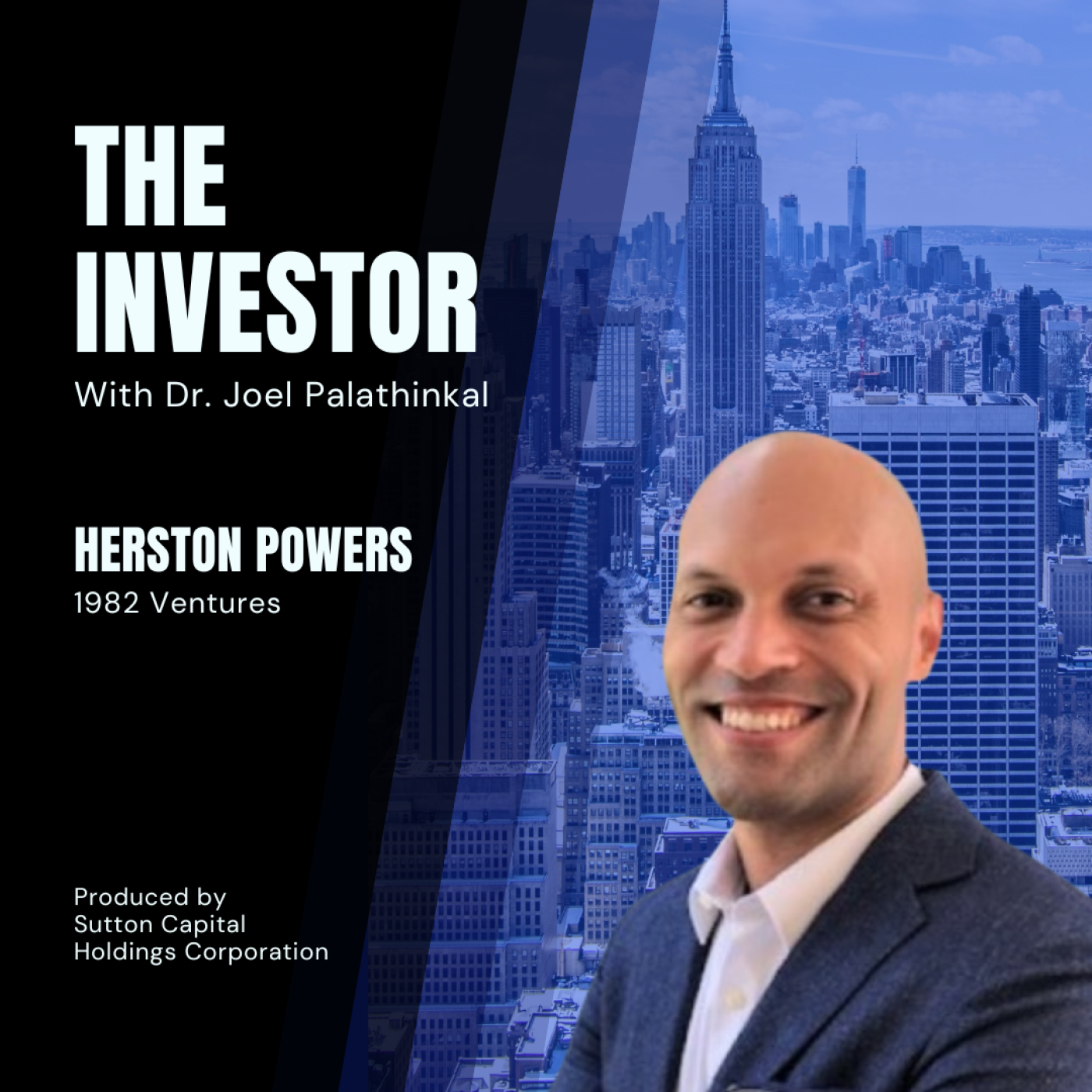
Going live now. I usually never prepare for any of these and I never script any of these. I've been doing so many of these and I feel like I could be more authentic that way. Anyways, how's it going? I hope I'm not interrupting any kind of LP meetings that hate to be the reason, the reason why, you know, you didn't close on, on a certain milestone. So hope, hope, hope this is, this works for you and hope some of those meetings have been going really well. You know, I think this is a really timely topic. Just emerging fund managers, right? So I think those are a couple of things we could talk about. I think also just the ecosystem in Asia and some of the differences that, that you've seen because you've been in the States for some time. I think that could be another great thing that we could discuss as well. But anyways, welcome, you know, glad to have you on my show. So for the audience, here we have Hurston powers, who's at 1982 Ventures. 1982 is the year that I was born. So it's definitely a great year and, you know, excited to learn a little more about your background and maybe you can walk us through how your career started, where you grew up and how that took you to venture capital.
- [01:21]
B
Yeah, sounds good. And thanks Joel and Sutton Capital for putting this together. Happy to share my experience and what I know and join the illustrious alumni that's done this show. So I feel very honored. But yeah, I'm Hursten Powers. I'm one of the co founders and managing partners at 1982 Ventures. We're a seed fund focused on fintech in Southeast Asia. So the aim is to be first money in investing in the best fintech founders across, across the region in Southeast Asia. I've been investing in the region for the past five years. Prior to launching 1982, I was on the investments team at another fund here in Singapore called Tribe, where we were focused on fintech. And my current partner and I, we put together the strategy there and executed the early stage investments again across the region and nearly every country in Southeast Asia. Prior to entering the VC space, I was in banking. So I've been in Asia for over a decade, about five years in Singapore, five years in Hong Kong. And I was a bank of New York Mellon, which some people may have heard of, may have not. It's not one of the banks that you walk into. It's the oldest bank in the U.S. largest custodian, one of the top 10 asset managers. And I was on the ADR team. So American Depository Receipts, helping foreign companies list their shares in the US On New York Stock Exchange and nasdaq. So spend a lot of time in China, bringing a lot of the technology companies from China public to the US Covering dual listed companies in Japan, Australia, India, all over Asia. And then prior to launching the advisory business for BNY Mellon and Asia, I was in New York, which is where I would consider my home away from home. So my family is. And I was mainly focused on connecting foreign companies with institutional investors across the US and then prior to that, I was in research analyst doing macroeconomic research. But I'm originally from Dallas, Texas, which is getting buried with snow at this moment, which is nuts. And that's a little bit about myself.
- [03:45]
A
What do you miss the most about New York?
- [03:48]
B
Oh, that's too hard to answer. I'd say the energy one. There's nothing in the world like it. There's different types of energy. But New York will always be unique for, I think, attracting the best talent, kind of making everybody raise their game. If there's a city that does that, that makes you outperform, it's New York. I miss the streets. I miss my family. I used to live in Chur Chinatown, which is on the street, which was named the smelliest street in New York City. So I even miss that. So just everything about the city I miss.
- [04:28]
A
Yeah. No, I mean, I left New York for, like, a few years to go to grad school, and I just really, really missed everything about it. And I came back. But let's talk about the transition. So that's, you know, I totally feel you. I think if I left, there'd be a lot of just small things that would just compound that I would just think that I missed. But, you know, just transitioning to Asia, you know, maybe walk us through some of the opportunities that you saw in Asia and some of the things that you had to adjust to, specifically in Singapore, and maybe walk us through a little bit of that energy and how that's different from not only New York, but the States.
- [05:09]
B
Sure, yeah. I mean, to be very open with you. When the bank that I was with told me they wanted to send me to Hong Kong, I initially said no. I never thought of myself even visiting Asia. I'm from a small town in Texas. My background, I'm black, I'm Latino. I just didn't really think there was a place for me to fit in Asia. So I was pretty against the idea, to be honest, even though I have a lot of Asian clients. But one of my mentors told me that in Asia, as long as you show value, the clients and the prospects and the ecosystem will respect you. And as long as you are not the ugly American or just talking shit, you can make some really good friends and really good connections. And I found that to be incredibly true. So they sent me out here with a very small budget to learn last a month. I stretched that out for six months. You know, just really trying to be almost in the entrepreneurial mindset. I went to every country in that we covered in Asia, did business in all the rounds, did organized events and just fell in love with the growth here. It was something that was quite wide opening. Obviously I knew the China story, but until you're in Beijing, in Shanghai, in Shenzhen, and actually seeing the pace of change, seeing how people's lives are being completely transformed overnight, you really don't understand it. And then going to markets that were further behind, say like India or Southeast Asia, you are just kind of saying, oh, wait a minute, I'm going to actually see what just happened in China for the last 20 years, but I'm going to see it firsthand. After spending about six months here, I told the bank I was ready to move and they moved me out and that was that. The thing that I would say was I had a bigger culture shock moving from Texas to New York. To be frank, that was actually a bigger culture shock than moving from New York to Hong Kong because I was in a city, I was surrounded by professionals and we were just getting work done and having fun while you're doing it. What I, what I didn't appreciate, and even though everybody says it, is how important building relationships is in Asia and how long that takes and that there's not a quick deal, there's not a quick sale, there's, there's, it's a lot of relationship building. It's not about being pushy and it's about understanding the cues of every different business culture. So in Japan, it's going to be totally different than, than China, which would be totally different than Korea. There's no playbook for Asia. Every market's unique. And that's quite different than the States, I think. I mean, obviously there's difference within the States about how business is done, but not as dramatic as Asia. So I think that that's one thing that you have to keep telling yourself that. Be patient, build the relationships, show value, and then the business will come. When I moved from Hong Kong to Singapore, it was a bit different because I was moving at a point where China and Hong Kong. I would call myself one of the last of the Mohicans, in a sense, one of the last expats to get sent out to Asia to do business in China. At a certain point, they just didn't need you if you didn't speak business Mandarin. So no matter what my specialty was, I could help my colleagues on the ground. But it became clear that where I could add more value within English speaking markets such as India and Southeast Asia. So I found myself being able to connect a bit more, being able to converse in business in English in some of the markets. It sounds trite and superficial, but it's actually in China it's become quite critical to business.
- [09:26]
A
Did you see that? Did you see the trend of people trying to learn Mandarin, be pretty common just to kind of be able to have opportunities? Or do you think that's changing now with Hong Kong being more of a melting pot and same thing with Singapore.
- [09:41]
B
Yeah, this might be controversial, but even I guess I would say six, seven years ago, regardless of how cosmopolitan or international Hong Kong was, the real business was still in mainland China. So it didn't matter what was really happening in Hong Kong for many of the business deals that were being orchestrated, originated and executed in the mainland. So that's just how it is in Singapore. English is one of the national languages here, so it's not an issue. Does that answer your question?
- [10:21]
A
Yeah, yeah, no, I was just curious if. But so it sounds like that, has that changed a little bit now in, in Hong Kong or do you think it's still the same where it just. You really need, if you really want to be one of the big players and in Hong Kong, you really need to be speaking Mandarin.
- [10:38]
B
I think there's opportunities for non Mandarin speakers, but if you want to be in the middle of it and getting the deals done and speaking to the decision makers in China that many of them sit in China, you're not going to just take a course and learn Mandarin. You can get conversational, maybe you can get around, but doing deals and executing contracts, let's call it business Mandarin. I mean, we're talking a long road that probably started way before you even set foot there. But that's just my opinion. There's probably many others, different sectors that could see it differently.
- [11:19]
A
Yeah, that's fair. And then what, what happened after that? So you're a BNY Mellon, you were in the, I guess you were in the Asian office doing a lot of business with still other countries. And then, and then what happened after that?
- [11:34]
B
Yeah, so after doing many of the tech IPOs from China, we saw similar types of companies, let's call it new economy companies in India, starting to flourish. So then I started spending about half my time in India chasing Flipkart, Snapdeal, Oola, trying to get them to list in the us trying to convince the regulators to allow that to happen. And I just fell in love with the country after spending so much time there. But to be very open and blunt, I saw in Southeast Asia less regulatory hurdles to get those pre IPO tech companies listed in the us. So the bank that I was with relocated me to Singapore to set up the ADR presence in Southeast Asia, cover this market, cover India, and we got some deals done. We did the first single listed ADR from Southeast Asia. That was a NASDAQ listing. That was important because that's exactly how every Chinese company lists in the us they do it through a single listed vehicle generally came in or BVI structure. And we did that for a Southeast Asian company to kind of open the door that says if you're a fast growing tech company, more than likely the US is probably one of the best markets for you to either dualist or to go for a straight ipo. And one of the shining examples of that is Sea Sea or Garena, which listed about two years ago. It's done phenomenally well. One of the best performing stocks out there to really pave the way for the next generation of new economy companies and online gaming, online travel, E commerce, to basically go to the US and be a publicly listed company that's just starting in Southeast Asia today. So at that time I was kind of chasing all those companies in Southeast Asia, the Tokopedia, the Travel Locas, all these names that you're hearing in the news now. Still IPO seven years ago.
- [13:43]
A
So were you, I guess you guys were essentially the investment bank approaching them and saying, hey, why don't you let us help you get your ipo? Or I guess what were the other options? There's direct listings as well, right?
- [13:54]
B
Yeah, that wasn't a really big thing at the moment. At the time there were reverse takeovers or RTOs, which got a really bad name after many Chinese frauds. So really the only option was either list in your home market or do a listing in the US or do both.
- [14:14]
A
Right.
- [14:14]
B
Which is for an ipo. The thing is that the ecosystem in Southeast Asia was just getting started. We were just having a number of unicorns, under 10 unicorns at the time that were IPO ready. But the Thing was, in my view, the US institutional investor market wasn't ready. They spent so much time focused on China and India and Latin America that they hadn't really had a deep understanding of Southeast Asia. So that's why it was crucial for a company like SEA to get out there, get the mind share of Western institutions to say, wait a minute, Southeast Asia is growing incredibly fast. There's over 650 million people. It looks like all the other markets that I've just started investing in, but 20 years ago, it's time to go. So I was seeing all of that from I guess that pre IPO and public market stage. While I was chasing those companies, I was speaking to the backers of those companies. So the VC funds, the PE funds, convincing the partners there that we were the right bank to structure these ADR deals. And that's where I got the first taste of venture capital. And I'm just going to be very open with you. When I started interacting with VC partners in India and Southeast Asia, I just got super jealous and I said, wait, these guys are generally pretty cool. There's not this kind of banker arrogance or kind of douchebaggery, for lack of a better term. And I said, I want to be on that side of the table. I want to be solving the problems they're solving. I want to be helping these portfolio companies get that dream of ringing the bell on your stock exchange. So it was when I started interacting more with that community that I had in my mind that I was going to do that. I also in the meantime did a executive MBA in Singapore, our global MBA at insead, and all of those things kind of put together. I was able to move into a perfect landing spot at a fintech fund.
- [16:28]
A
And real quick, before we get into venture, just some of the terms that you mentioned for the audience. Can you please just unpack the reverse takeover? And then I just wanted to get some clarification on the dual listing. So the dual listing is essentially, is it two IPOs where like you're listed as a public company in Hong Kong, but then you're also an actual separate IPO in the US and you know, how would that work? Or if you could just maybe unpack that a little bit for educational purposes, that would be, that would be helpful, sure.
- [17:03]
B
There's, I guess a cautionary tale for the RTOs of the reverse takeovers. It's on Netflix. It's called China, China Hustle.
- [17:14]
A
Oh, nice.
- [17:15]
B
You can learn about the RTO market and some of the frauds that happen there and, and it'll unpack it in a very good way, in an entertaining way. But for some of the Chinese companies or even other companies that probably. And again, this is not all cases, this is just a broad generalization, maybe aren't ready for a traditional IPO or the investor demand's not there at that day. There's a way that they can basically do a backdoor listing by taking over a shell company in the US and then becoming a public company that way. So not necessarily an offering, but becoming public, building investor confidence with that new listing, so to speak, through the shell company and then raising capital later after they've built that. So it can be a viable option for some. Many people have been burned by it. So it's probably not that popular anymore. OB Obviously, stacks are what's crazy popular today. A dual listing is something that's been happening for many, many years. Many companies in Europe, large companies, have had dual listings in the US and that was really to attract investment from North American institutional investors that either had a home bias in where they wanted to trade stocks that were quoted in US Dollar dividends, paid in US Dollars, traded during US Hours, or were prohibited from investing overseas. That was the start of it. You saw many companies, Rolls Royce, AstraZeneca, you name it, having dual listings that were traded on a stock exchange. You could do that by raising capital or you could just do it through a secondary listing. What I was focused on was companies that were raising capital either through an IPO and they could choose to say, for example, Line L I N E from Japan. That was a recent example of a dual listing. So they did an IPO simultaneously in Tokyo and in New York. They decided how much of the float was in each market, and that's how they have a dual listing. So they're able to capture their home market, but then also capture the valuation and attract investors that may understand technology a bit more. In the US what we'll probably see is in Southeast Asia, many of the Indonesian companies doing the same. So whether it's Gojek and Tokopedia, Travel Loca or others, either considering a SPAC listing, doing a SPAC in the US to get that US Listing, or saying, you know what, we're going to do a local listed share on the ID or the Indonesian stock exchange, but at the same time, we're going to list our shares in New York because we know that the investment community there understands our story, we can attract a higher valuation. And for that post listing liquidity, the US Is the Best market in the world. That's just the fact in Southeast Asia, these markets will develop over time. But if you want to do it today and you're a technology company, more than likely the US Is probably where you're going to look.
- [20:42]
A
Yeah. And the SPACs, are they. Are you seeing those pick up a lot more steam in Asia, or do you think it's still going to take time for them to catch up and do SPACs at the same velocity that Chamatha is?
- [20:55]
B
Yeah, I would say the cat's out of the bag. We have local entrepreneurs and luminaries in Southeast Asia launching their own SPACs here that have already IPO'd in the US I think Patrick Grove in Malaysia just IPO'd a SPAC two days ago. So it's definitely happening here. It will happen more. How long is this gonna last? Is this a new feature of the market that will persist? I can't tell you, but it's definitely. It could be a way to unlock some of the private companies in Southeast Asia that have been private too long, in my view. This could be a way to get them listed and open the door for more technology listings coming out of Southeast Asia. Because historically, that's been the biggest, I guess a cautionary tale for investors in Southeast Asia is that great companies, but where's the exit? Where are we going to get the exit? And what we need to see is more of these giants, technology champions in Indonesia, in Singapore, in Vietnam, go for those listings, provide liquidity so we can see the next generation of startups, entrepreneurs, VC funds, continue to develop this ecosystem.
- [22:22]
A
Sure. And so I know I interrupted you earlier to kind of do a little bit of unpacking, but. So you were doing business school, you were hanging out with a bunch of really interesting people. It sounds like some of the collaborations that you're doing in India specifically kind of exposed you to that ecosystem, I guess. Right?
- [22:42]
B
Yeah.
- [22:42]
A
And were they just other VCs that were just actively doing deals and they were just kind of opening you up to that universe?
- [22:50]
B
Yeah, I was basically in direct contact with these partners and helping them figure out the exit path for many of their companies. Because in China, every banker, every VC fund knew how to do this with their eyes closed because there had been so many IPOs from China, but in Southeast Asia, it was really brand new. So it was an education process, working with the funds and everyone that was involved with these companies and kind of explaining what the process was like, what they should expect. And that's when I really got my hands Dirty, for lack of a better term, with the venture capital industry itself. So that's what really exposed me closer to it, being able to be a trusted advisor. And like I said, I had been doing this for over a decade in the us, Hong Kong and now Singapore and India. I wanted a new challenge and I wanted to be on the other side of the table. And that's what made me join the other fund.
- [23:52]
A
So you joined the fintech fund. Can you talk a little bit about that? And, you know, all of us have, you know, I think you and I have spoken about this. We've all pivoted in some way. Right. So what were some of the frameworks that you used to help yourself pivot? And maybe the origin story of how you met, you know, the gp, I guess. Did you come on as a GP or an associate, and maybe how you transitioned your skills into, you know, a different skill set?
- [24:23]
B
Sure. It was an interesting experience because the fund that I was joining was a new fund itself. And that was probably one of the biggest, I guess, levers that allowed me to break into the industry, if I'm being very open with you, because VC is a very small. It's still very cottage industry compared to other financial sectors. So I was able to join as one of the founding team members, but I wasn't a partner, I wasn't a Jeep. And we had a stellar team, many of us coming from different backgrounds. Mine was more banking and fintech. I started a fintech with a buddy on the side. The other partners were from pure technology backgrounds, others from corporate finance. And we kind of just gelled together and said, you know what, we're all kind of outsiders. Let's do what we think is right. Let's study the craft and try to follow what we think should be the path forward. So there wasn't necessarily a framework. It was about what was necessary for the company to succeed. And what we saw is that in Southeast Asia, the opportunity wasn't in buyouts or growth equity. It was actually very early, in the early stages. So we were able to help the company move towards a more early stage of investing. We crafted that investment strategy and once we had the green light from the founders and the board, we got to work. And I would say we were grinding like startup hustlers ourselves. We were digging for what we thought were the best areas in fintech to back. We were looking for founders at very early stage, so building those relationships. And within a span of about a year and a half, we were able to get a number of deals Done. That basically made a name for ourselves where other investors started to take note that these guys understand fintech, they understand financial services. These are deals that either we missed or we didn't understand. And then we saw some of those same investors following our deals later at series A and other rounds. So it really validated that, okay, there's a niche in this market. There seems to be a gap in Southeast Asia for pure seed stage, for investors that are not afraid to be the first money in. And that's what we kind of were able to crystallize. The other thing to note about the ecosystem is that many of the seed funds 5, 10 years ago have now graduated because of the size of their newest funds. They have to do series A and series balance. The adage is your fund size is your fund strategy. So you're seeing seed investors kind of move up to series A, Series B. And there was now a gap in seed stage. There was also a gap in understanding of fintech and financial services. So we were able to exploit that gap, get those deals done, make a name for ourselves. Those deals did pretty well. And then we were able to kind of spin out, leave that firm behind and launch 1982 with a refined strategy that we kind of had built over a few years with the experience at the last fund.
- [28:05]
A
Sure. So some of the team members actually spun out and started in 1982.
- [28:10]
B
Yeah, it's me and my GP.
- [28:14]
A
That's great. And, you know, a couple things that I think would be good to talk about is number one, the ecosystem in, I guess with the earlier fund, did you just focus on Singapore or just all of East Asia?
- [28:28]
B
Yeah, it was all Southeast Asia. It was all fintech. So the deals we did, we did two in Indonesia that were noteworthy. We were the first VC to invest in Islamic fintech. So Sharia finance. So we're the first institutional capital to do that. That really put a lot of, I guess, credibility into that investment thesis, being the first to do it. And then we saw many other VC funds follow that investment. That one was called Alami Sharia. We did a proptech deal in Indonesia. We did deals in Vietnam. We did deals in the Philippines and Singapore. So we had a pretty good understanding of, of the market. Maybe I'm foreshadowing a little bit, but kind of sitting in Singapore. We were also seeing really interesting deal flow from Bangladesh and Pakistan as well, but we were kind of restricted from investing in those markets. And I can remember two really good deals that kind of went by us because we were just, we didn't have that mandate. So my partner and I, when we launched 1982, we said we already know that the opportunity is seed stage, FinTech, Southeast Asia, we've got that. But opportunistically we're going to keep ourselves open to Bangladesh and Pakistan, which are probably 10 years behind Indonesia. So being able to invest in future unicorns in those markets, we've made sure that our LPs are going to get exposure to that.
- [30:02]
A
Sure. And I guess the mandate, I guess. Are you saying you're restricted before? Because in your venture strategy you just didn't share the. That was part of your larger strategy. So you're kind of constrained to not do Bangladesh in Pakistan.
- [30:19]
B
At the prior fund. It wasn't part of the strategy. So I think we as investment professionals, we respect that. Your LPs sign up for one thing, you should give them that as a financial product. But after doing enough scanning of the LP market with family offices, we saw that actually people wanted that exposure. So we. And we believe in, in those markets as well.
- [30:45]
A
Yeah, because I think on the fund admin side, when you're doing your reconciliation and accounting, I guess that's part of the whole administration too that they're checking. I guess if you do like a fund audit, they check that you follow the mandates. I'm assuming as part of the, as part of the process. Sometimes.
- [31:02]
B
Yeah. More, more importantly, we want to make sure that the LPs that back us, continue to back us and that makes sure that they get their co investors and other lp. They're our customer. Right. That's how we look at it. So the portfolio companies and the LPs are the community that we have to spend an immense amount of focus and energy making sure that we do both. Do right by both of those parties.
- [31:31]
A
Yeah, it's totally fair. And also just kind of making sure the communication is never broken because the LPs are expecting something and then you kind of surprise them with some new strategy or something that pops up. They get. I guess it could be kind of a red flag. I think an interesting topic to talk about too is the pros and cons of being a generalist fund versus a, you know, a niche, you know, sector focused fund. Any thoughts on that as far as pros and pros and cons?
- [32:01]
B
Yeah, I guess from a, from my perspective, being specialized allows us to go really deep into our area of focus. It allows us to be able to screen and eliminate business models or deals that we know aren't going to work very quickly. We don't spend a lot of time researching every idea. We understand the markets well enough that we know what we're looking for. And if something pops across our desk that we weren't looking for, we're able to recognize when it is a good thing. So that's what I think is one of the advantages of being a specialist fund. Also, we're built to take advantage of our niche as well. So our network, our LPs, our advisors, our venture partners, everything around us is built for fintech. So that means that the best fintech founders and startups, when they come to 1982, they know that the GPS one, understand their business, two, understand how to help and three, can help. And that I think gives us an edge in deal sourcing or in the sense that the best founders get to choose who their investors are. Right. It's not like they just take everybody's money. We get selected by the founders more than we choose the founders in many cases. So having that specialty, having that expertise, having that credibility really allows us that edge. And I think for a generalist fund, if I'm just being completely honest with you, I think it allows no opportunity to go by. I'm sure there's some amazing opportunities in AI and EV and autonomous vehicles that would be fantastic financial returns. If I understood those models, I don't, and I don't have time to get, to get deep. But a generalist fund, if they can figure it out or get invited to those deals, then they're going to be able to capture more of the market. So what we've done to mitigate that is that we don't just do fintech in Singapore, we don't just do fintech in Indonesia, we cover all of Southeast Asia, we cover every vertical of fintech, whether it's payments, lending, insurtech, regtech capital markets. We're looking at every piece of the fintech ecosystem and that's how we diversify. On top of the size of our portfolio, on top of all of these markets are different, they're not actually interconnected. So having exposure in Indonesia and Vietnam and other markets allows us to minimize the risk of being a purely fintech fund.
- [34:44]
A
Yeah, I'm just pulling this up here. I mean there's actually a link, there's a couple graphics you can look up online for just fintech and if you look up like fintech infographic, I mean just fintech in general is still really, really broad. So it's just that in itself is just such a massive universe. Whether it comes to consumer banking, challenger banks, wealth management. I mean, that's just a couple I can think of. I mean, I would say, would you consider Insurtech as part of fintech as well? You guys look at that as well. So with that in mind, just all of Southeast Asia, what are the hot industries that you're seeing as far as fintech that you're excited about and then what do you think is in the US that still needs to develop in Southeast Asia?
- [35:32]
B
Great question. The last part of that question. Basically everything, everything that's been done in the U.S. in Europe, China, India, even Latin America is really just getting started today.
- [35:46]
A
Okay.
- [35:47]
B
All of the fintech companies that are going public in the US that are unicorn decacorns in Europe or already listed, it's just starting today. These companies are being seeded today. We do not have a fintech unicorn today publicly in Southeast Asia. One of those infographics you mentioned, it has the world of fintech as every region but Southeast Asia. Southeast Asia is the only region that's missing on that fintech map because it's happening right now. So the short answer is everything can move over from a very specific angle. Right now, what is red hot are Buy Now, Pay Laters or consumer installment fintechs in Southeast Asia? Singapore, a few people had started this a few years now there's about five or six players, including some of the unicorns or technology giants doing it themselves as well. So Buy Now, Pay later, not just in Singapore, but across the region is red hot. You see lots of companies either entering the space, founders coming to the space. You see established players like afterpay in Australia, acquiring Buy Now, Pay Laters in markets like Indonesia. So. So it's a red hot market. We invested in one in Vietnam that we haven't announced yet. Vietnam, for particular reasons is a fantastic market for consumer installments and Buy Now, Pay Later. So we're really excited to announce that. Something that I think is extremely interesting is that Earned wage access or EWAs. So I guess in the US it would be companies like even earning wage stream pay active on the more global scale that's just getting started here and in Southeast Asia, particularly in markets like Indonesia and markets like the Philippines is probably even more necessary. People are living paycheck to paycheck just as much, but with less access to financial services in Southeast Asia. I mean, this is trite to say, but you know, half the people in Indonesia don't even have a Bank account. Only 2% have a credit or debit card. So people getting access to their wages when they need Them that's not a payday loan from a loan shark on the street or a digital payday lender which has kind of exploded in most of these markets, is really a great benefit not only for, for fintech but for society as a whole. We invested in a company called Wagely in Indonesia that's doing this and their goal is to eliminate the need for payday lenders in Indonesia, to help eliminate the need for corporates to have to loan money to their employees, just to keep those employees. So now employees, they can access their wages as they earn them in a sustainable, responsible way. It's not a loan, it's 0% for a small transaction fee. And that helps alleviate some of the financial stress that people that are blue collar and even white collar jobs face on a month to month basis. So that's another space that we think is very hot and you see more and more people getting into this, but we think we got one of the better ones. Another one that I'd like to mention is on the infrastructure side. So when you think of Southeast Asia, you think of 650 million consumers being brought into the financial services ecosystem. Most of them have smartphones, most of them have access to wi fi and mobile. So that's what's really driven the E commerce boom. But financial services hasn't really caught up and it's not lack for trying. But it's hard for traditional FIs in these markets to really service the rest of the economy. So what also needs to happen is for these fintechs to be able to service SMEs or small businesses, to service corporates and national champions, to service individuals and households. They need the pipes to work. So in the US you have Plaid or Saltedge or True Layer in other markets in Europe, we don't really have something like that in Southeast Asia or in each particular market. So we backed a company that's basically building financial API infrastructure for FinTechs, telcos, e commerce banks, insurance companies so that they can quickly identify and verify someone's identity, be able to open accounts, be able to credit risk, be able to do everything they need to do to service that individual, to service that SME and get them in the banking sector. So we think this is a huge opportunity for Southeast Asia. And just in the same way that Plaid has done it in the west, we think that the opportunity in Southeast Asia to build pipes, because some of the pipes don't even exist here, is phenomenal.
- [41:00]
A
No, it's great. And with the evolving ecosystem, how many years do you think it'll take to catch up to where the US Is? Do you think it's still a couple years, maybe one or two years. What are your predictions to at least just get to some of the unicorns at par with where we are in the U.S. yeah.
- [41:23]
B
I don't know if we can really compare the markets. I think it's probably you would probably choose other markets like China, India, Latin America as potential costs. Not every market in Latin America, but certain markets. So I think we're catching up fast. If I can say that the ecosystem here has basically the tailwinds of Internet 1.0 and still very fast growing economies, very stable economies, very digital first economies, young rising populations that are middle class. Everything is pushing this market in those directions. I think it'll happen a lot faster than it had happened in other markets. But we're just starting. So we're still starting from step one, but we're going to catch up fast. I have strong conviction in that. Sure.
- [42:23]
A
That was really helpful. So I want to move on to the next topic which I think is really something that I'm passionate about, which is emerging managers. So where are we? Are you seeing some trends now with more emerging managers popping up in Southeast Asia and now with all these different tools and platforms and unbundling of the venture fund. Right. Using SPVs, working with companies like Carta for people to spin up venture funds and Angellist rolling fund. Do you see just a large emergence in East Asia yet with just first time fund managers or is that still something that's slowly developing? So maybe just some high level thoughts on new first time fund managers or just emerging managers in general?
- [43:10]
B
Sure. So I would say two years ago everybody was a fund manager or about to launch a VC fund. So anyone who had a few angel investments was of the belief that they could launch a VC fund. When Covid hit, most of those guys disappeared. The angel investor come VC fund manager kind of went away. They stayed in a corporate job or whatever they were doing before and we saw that in the startup ecosystem as well when capital was just flowing out the doors, everybody was starting a company, everybody was going to be the next tech entrepreneur. When Covid hit, the ones that really didn't believe or have a strong idea or the conviction, they went away. So it cleared out a lot of the companies or the noise I would say and I would say that potentially LPs felt the same way in the sense that not everybody was raising a first time fund because the ones that didn't truly believe in their thesis or the ability to get it done or just. Just didn't want the pain of trying to raise a fund during COVID.
- [44:31]
A
So.
- [44:32]
B
I'd say we're at probably a good amount of new managers coming in. There's still so many opportunities in Southeast Asia that it's not like the US where it's hyper ultra competitive for every seed round, so to speak. We're still at a place where there's enough entrepreneurs that are looking for capital from pre seed and seed investors that I think we can have more managers. We can still see more Series B, Series C funds. We're seeing more funds coming in at that level. So people that have left other more established funds launching first time fund. And I would even say that funds from the US starting to open offices here in Southeast Asia and actually getting serious about deploying. The ecosystem is growing. It's getting better. So it's. Short answer. Yes, there's more. We're probably more two years ago, but I think it's a good thing for the ecosystem. What we don't have is the innovation that you're talking about. Not yet. We're still waiting for a platform that can do rolling funds out here, spinning up SPVs. We do it. It's laborious, there's cost to it. It's not as easy as a place like the US as well. So we're still a little bit behind in that. We're really hoping, pushing, lobbying those platforms in the US to start offering those same products to fund managers out here and investors out here and startup out here. Because we need it just as much as there's homegrown platforms that may be even in a better position to do it. So we're trying to work with the ecosystem to say that we want to make venture and early stage investing accessible to individual LPs, family offices and we need innovation to do that. Sure.
- [46:37]
A
And you think it's because of the tax structures or just kind of the policies with US vs Singapore and how tax flows in. Is that kind of the biggest reason why like Angellist isn't launching in Singapore or they're just other reasons that we don't know about?
- [46:55]
B
I guess I can't say why they're not. The US is such a big market that I can imagine they're plenty busy just doing stuff, Right? Yeah, I don't want to. I don't, I don't know. But I think one of the reasons why we don't see it in Southeast Asia yet is because we're still such a young ecosystem.
- [47:18]
A
Yeah.
- [47:20]
B
And we're we're just kind of hitting that stride of seeing these unicorns, seeing more VC funds and it will happen. It's just give us some time to catch up.
- [47:31]
A
Sure.
- [47:32]
B
I mean the VC industry proper in my mind is less than 10 years.
- [47:36]
A
Old.
- [47:39]
B
In the way that we know it today.
- [47:41]
A
And you were talking about getting your money back, I guess. What are some of the differences that you're seeing with valuation and then just the general life cycle to liquidity in exit? Some people have told me it's quicker in East Asia, but I just would love your opinion because you're on the ground floor as far as the valuation too. Like a typical y combinator, 10 million safe. Is that the same price in Hong Kong or even in Southeast Asia? Or is it the price parity a little lower or higher?
- [48:18]
B
Yeah, I'll speak to Southeast Asia specifically. Short answer, no. I mean the valuations in the US are eye watering to us here or even in Europe. For foresee, if you see product 10, 20 million valuation in the US that's kind of normal. Right. If it's a good company, that doesn't happen here, it's starting to become more acceptable. But it's very few and far between companies. So our target when we come in as a seed investor, 1982 Ventures, is we're getting in at about 3 million US post money. That's generally with a product that's built or ready to be launched, the valuation range can go up to 10 million. But that would be exception compared to probably two and a half to five for really, really strong companies. But after that, the Series A, Series B, Series C, they start to catch up and ramp really quickly. So that's why seed investing in Southeast Asia is so attractive, because we already kind of know what works on the fintech perspective from a buy now, pay later, all these things from all the other markets, we're investing in those same types of companies. At a 3 million 5 million post money valuation, we're getting 10, 15% equity. And then by series B, by series c, we're already 30 to 60x on a seed investment within two years if the company really, really hitting two to three years. So for us, exit for 1982 is quite clear. The Series B Series C investors can't get enough equity from those founders in those rounds. So they start taking out early investors like us and then we get our.
- [50:17]
A
Exit opportunity, all the secondaries and get some liquidate liquidity because you've already 60x anyways so you wouldn't have to wait till the IPO. And you can just kind of, yeah, you can return the capital much quicker to LPs and that helps you maybe build a track record to start the, you know, fund three, fund four, kind of continue the, continue the cycle, I guess.
- [50:38]
B
Yeah. I mean our view is that seed is the best place to invest in venture capital. Yeah, it's where the best returns are. And for Southeast Asia in particular, deal flow is incredible. So Series A, Series B, the good deals become hyper competitive. So you're paying a lot, you're competing with everybody in the street to get in those deals. For somebody that's okay to write the first check like us, it's wide open for us and we have clear exit path for ourselves. With that said, the whole entire ecosystem needs to continue to develop for this to be sustainable. And it is. So four years ago in Southeast Asia it was a series B, as in boy, series B gap. That's what everybody was talking about. Sure, nobody's talking about that anymore. There's enough B investors here. Even some of the growth equity funds are coming into the B rounds and even the battle B investors are going into the Series A rounds. So those are fine. Now it's about getting the companies to ipo. And I think with SEA doing well with the potential listing of Gojek and Traveloka and Tokopedia, we're going to see more.
- [51:53]
A
Yeah, I've seen some of the similar trends in India as well. I have a friend of mine that's launching like a $10 million first time fund and he's been a super angel for the longest time in the Valley. But it's just, it's a similar trend. I mean you can get $20 million companies for like three to four and then you know, like you said, the next round, the next couple rounds, you know, catches up to actual Series A valuation. So getting in at the series A, I feel like that would be really attractive to just other investors where they wouldn't get that. I mean, I know just in America, I mean if you can just get that step up, that's really huge because normally from the seed, if you're already at a 10 per year post, the next round's probably going to be hopefully like a 2X. But if you can skip a couple multiples just because the valuation is a little lower and then gets you to that level, then I see as being really attractive and a really good opportunity. As a cross border investor. I'm doing my first deal, fingers crossed in India and also looking in Asia as well. So excited to hopefully collaborate Yeah, I.
- [53:04]
B
Mean that's what we're built for. I mean we, we understand we can't do it alone. So we're really looking for people that are excited about Southeast Asia, that understand what we're trying to do, that want to believe that, believe in it and then also want to co invest. Right. Because we are confident that we get access to the best fintech deals in Southeast Asia. So for those that want access to the deals that we're doing, or even the investors that say, you know what, seed is not where I like to play, but when your portfolio gets to series A or series B, then I want a piece. If they're a part of our fund, then they get access to those participation and pro rata rights because otherwise they're not going to see the deals. It's just too competitive and those, those founders don't, don't need their money. So if they want to get in, the best way to do it is through almost a feeder fund style or fund to fund strategy with 1982.
- [53:57]
A
Sure, yeah. And I think also do you see South Asia just making the vehicles much easier for US investors to get into. I mean I would say typically at the seed round it's a typical convertible note or a safe. So I'm assuming it's not too complicated for like a typical angel or you know, an early stage VC to just go through that same vehicle. Right. Or there's still challenges with cross border investing with I guess taxation and all that.
- [54:27]
B
Yeah, I don't think that would be the issue because most of the companies and we help a lot of our portfolio or founders do this is we help them set up. A holding company in Singapore is a respected jurisdiction. So there's generally no issues for most investors in investing into a Singapore fund or Singapore holding company. The biggest barrier is not being here, not getting access to the deal. So it's pretty easy to make an investment to wire your money to a Singapore bank account. Whether you're going to get the opportunity to invest in the best startup, that's the challenge.
- [55:09]
A
Yeah, that's really helpful. Well, I know we got like one minute left. I always ask one question at the end and then if you could say if you can give me like one more minute for maybe any final questions, that would be great. But the final question I always ask is just a piece of advice maybe that you've had from a mentor or just navigating in your career journey. Anything that you want to share as far as words of wisdom would be great.
- [55:32]
B
Yeah, I guess if People are looking to get into venture capital and I think especially in the US today, don't wait, just get started. Just start doing deals or start bringing deals to investors. Bring me a deal that I can do and I'll make sure you're rewarded for it. If you bring me an LP or co investor for 1982 ventures, you're on my radar and we'll compensate for you for that. So I would say don't try to figure out this kind of grand scheme of I'm gonna go into banking and management consultancy and learn and then try to apply to become a vc. Just get started, just whatever cash you can, start pulling together, start identifying deals and getting it done. That's what I wish I would have done. I wish I would have just, instead of waiting, just follow my gut and start. Even with nothing, I probably could have accelerated my journey. Overall, I'd say that finding a mentor is incredibly important. But I'd also say if you're not having fun, then you probably need to look in the mirror to see what you're doing. Because it's not necessarily that every day is going to be fun. But if you don't truly love venture capital, it's not easy. This is not an easy job. It's not just kind of putting a thumbs up or thumbs down to do a deal. It's fundraising. Fundraising for the portfolio companies, doing sales for the portfolio companies, managing your investors, managing regulators, and making sure that you're providing financial returns to the people that backed you. So this is not easy. And if you don't love it and completely believe in your ability to make those returns, you're probably better off looking for a different journey.
- [57:37]
A
Great. You got like a one minute for a quick rapid fire question?
- [57:41]
B
Yeah, yeah, I see some. What, some questions? Yeah, yeah, any. Let's go, let's go. Go for it.
- [57:47]
A
So I think Gigi asked, hey, what do you. Oh, go ahead Gigi. You want to ask?
- [57:51]
C
Yeah, yeah. Hey, that's Gigi speaking. So I guess I have two questions. The first one is like what do you look for in fintech companies in Southeast Asia? More specifically, I just wanted to, to know more about the key signs that indicates you a good fintech deal. And the other question as a follow up. So I guess a lot of fintech companies, including the buy now play later that you mentioned, lots of them. They not just focus on single country market in Southeast Asia, but probably just go across different markets because as you mentioned different countries in Asia, Southeast Asia, they are all different with different language and Culture and also probably the way of doing business as well. So how leading tech companies, how do they actually expand into like across different countries and. Yeah, what was your view on that?
- [58:49]
B
Yeah, very good question. So at the stage that we're investing in the founding team and the founders are incredibly important, that's the number one sign of a good deal. Are, is this the team that is going to be able to take this business forward and is going to be able to deal with any adversity and be able to make the right decisions at the right time? Are we backing the right team to get it done? That's the most important thing for us, obviously. Large market, the business model has to make sense, all of these things. Yeah, that's standard. But if I don't believe that that founder and that founding team and have complete trust in their ability to execute, then I'm not doing the deal. That's one risk I don't like to take is founder risk. So there's many attributes and characteristics that we look for within a company, but I would say the number one thing we look at is the founding team and we do that by building relationships with those founders well before it's time for us to consider investing in their company. So even when they're at the idea stage, kind of noodling around with different business models that they'd like to potentially go after, even if they're sitting as a senior developer or product manager within a unicorn today, but thinking about making that step out on their own, we're trying to stay connected, try to give them guidance and then once we've kind of built that relationship, when it's time to make the investment decision, we can act really fast because we've built that relationship. They understand us, we understand them, there's trust and we have full confidence that they're able to get it done. So that would be the key in fintech. One thing that is also important is we believe that regulation is actually good for fintech. So if a founder founding team is trying to go around regulation, does not have a close relationship with the regulators or is taking not putting as much priority on regulatory concerns, that's a big red flag for us. So that's one thing that we look at in Fintech in particular, but the founding team is just incredibly important. The cross border question is a very good question and probably there's many different views on it. So generally what we see is that the certain sectors the founders will go for one market and operate in that market and the most likely market that they're going after is Indonesia just because it's the largest and the most opportunity there, most investments kind of going into that. So if when we're looking at say a buy now, pay later and they're starting out in every market in Southeast Asia, that's not really, we haven't seen that work. If they've kind of conquered or have done really well in their home market, let's say it's Indonesia and now they have the opportunity to start branching out through the right investors in the next round, the right strategic partners and that they can move into a market like Vietnam or somewhere else. Then we see that. But there haven't been too many successful case studies of startups in general, not just fintechs that have been able to go cross border from day one or even at the still in the very early stage, say at series A, being able to expand outside of their home market. So we believe focus is key. We try to back founders that have laser focus on what they're trying to achieve. Understand the KPIs, we, we're aligned with those KPIs. That's how we look at it. On the flip side, if you're not starting in Indonesia, if you're not starting in Vietnam, let's say you're starting in Singapore, having that regional approach from day one and maybe picking which markets to go to first, whether you've launched in Singapore or not. That's another question that I think founders have to ask themselves. I would even say that for Singapore startups, and I'm not just talking about fintech, I think that they should be thinking global from day one. I think the talent level, the name brand that Singapore has established as a fintech hub especially, really allows certain companies attacking certain sectors to be global from day one and just have a headquarter in Singapore. And that's what I would want Singapore founders to really think about is, you know, don't just think about Singapore, which is a very small market and don't just kind of think, oh, I'm just going to go Southeast Asia, go global from day one. And I think Singapore is in a good place to do that. So there's no straight answer for you, Gigi. We like companies that are hyper focused at the very, very early stage. Generally that means attacking one of the larger markets, say Indonesia or Vietnam or depending possibly Singapore. But if you're a Singapore startup, the market's too small here. You need to be thinking about regional from day one or global, which I think is even better.
- [64:14]
C
Cool, thank you. That's really helpful.
- [64:17]
A
Great. Well, hey, Hurston, thanks for sticking over a little later. Sorry for holding you over, but really appreciate your time. This is amazing. For me, it's just a good learning to understand the ecosystem and learn more about you and your story. I really loved it. So thanks for your time.
- [64:33]
B
Awesome. And hopefully all of you guys can come visit us in Singapore and Southeast Asia. You guys can see it, touch it, smell it for yourself, and always happy to collaborate with anyone that wants to get involved.
- [64:45]
A
Yeah, absolutely. And hopefully when all this craziness dies down, you'll come visit me in New York, too.
- [64:51]
B
Absolutely. My mom's missing me, so I have to go see her.
- [64:54]
A
Yeah, you gotta come out here. All right, man. We'll catch up soon.
- [64:57]
B
All right, thank you.
- [64:58]
A
All right, take care.