Loading summary
Transcript54 lines
- [00:03]
A
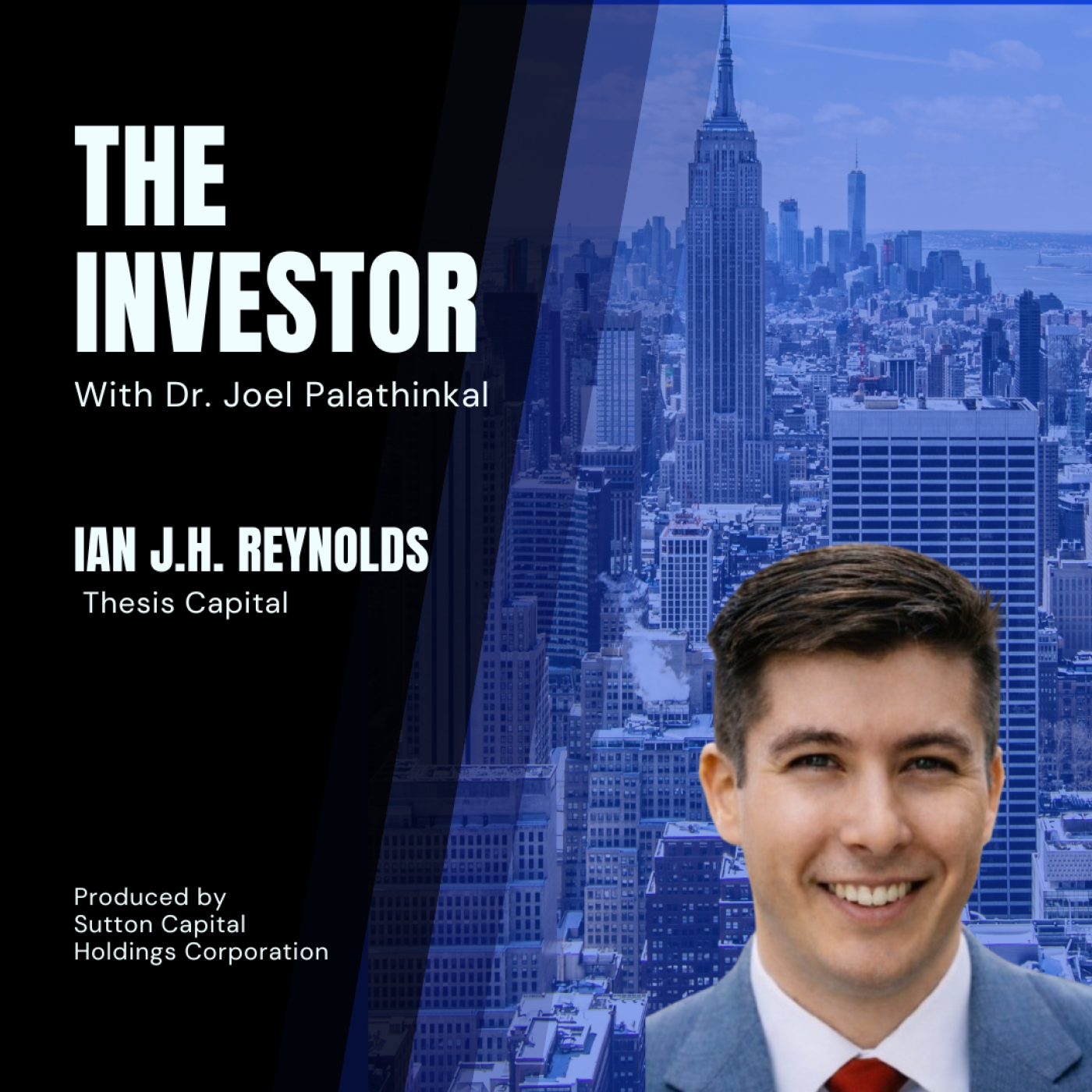
Welcome to the Investor, a podcast where I, Joel Palo Thinkle, your host, dives deep into the minds of the world's most influential institutional investors. In each episode, we sit down with an investor to hear about their journeys and how global markets are driving capital allocation. So join us on this journey as we explore these insights. All right, so super excited about the episode today. We are live here on the Investor podcast. We've got Thesis Capital here and we've got two of the partners. We've got Ian J.H. reynolds, who's the founder and managing partner at Thesis Capital. And then we also have Connor Chekin, he's the partner and head of investor relations with capital formation at the firm as well. So really excited to get two heavy hitters on the, on the stage here. I'm just going to do a quick intro and then we're going to touch on all things private equity and asset management. But essentially, Ian founded Thesis Capital Partners in 2017 and leads the firm's strategy, capital formation, investment oversight across the platform. He's advised on more than 10 billion of M and A and restructuring transactions over the course of his career. And he's the architect of the Thor framework. It's a proprietary system that governs how the firm sources, acquires and builds lower middle market businesses. Before this, he served as head of Venture Partners at Golden Section Venture Capital. And earlier in his career, obviously he had finance experience, commodity trading experience, strategic advisory roles across crude oil and petroleum product markets. And he has an MBA with honors at the University of Dallas and a BA in Theology and Liberal Arts from the University of Dallas as well as. Real quick on Connor. He's a partner and head of investor relations and capital formation. Over his career, he has helped raise more than 4 billion across investment platforms spanning multiple asset classes. Before Thesis Capital, he spent over a decade at Principal Global Investors. Now they're known as Principal Asset Management, where he advanced to Senior Director of Wealth Advisory. In that capacity, he led institutional institutional distribution efforts across private markets, alternative assets and traditional asset classes. And through that process, he built deep relationships with financial advisors, family offices and private wealth platforms nationwide. So both of you, welcome to the show. Excited to have you here and excited to go deep.
- [02:35]
B
Well, thank you, Joel.
- [02:36]
C
Thank you.
- [02:37]
A
Yeah. Well, why don't we start with you, Ian. Tell me a little more about kind of your initial career and, you know, what made you want to get into private equity and, you know, how did you discover the industry and get it, get involved?
- [02:50]
B
Yeah, I, I was, I was late to discovering that I really liked business. In my, let's call it undergraduate academic track. It wasn't until I took some microeconomic classes, you know, senior year, and I was like, oh wow, wait a second. This is this whole other category that sort of wasn't exposed to me until rather accidentally. And so that, that really kind of changed the trajectory for me and worked in a number of startups actually right out of. Right out of school, not, not my own other. Other folks like eight different things to market across a variety of, of scenarios. And you know, really kind of had to pay for perspective. So that was the go back at the mba, do some somewhat of an accelerated program and then work in transactional finance to, to kind of learn the ropes, so to speak. So working for other folks, you know, kind of work till 2:00am conventional, you know, busy, busy, busy all the time type type exercise. But then wanted to kind of get back to my entrepreneurial roots and ultimately founded the firm in 17. And the first early history of the firm, really the first four and a half years of our existence, if not almost five years, was just Ian and I had bought one company. I moved my family from where we are today to run that company. And we grew that company precipitously over the first four and a half years. Had a really healthy exit in 22. So yeah, from 17 to 22, the reality is that it was really just kind of me running my first company. But upon, you know, healthy exit there, we did a couple things in parallel. So sort of venture capital is certainly, certainly a component of that, but really sort of scaling the firm as it is today. And the core concept which we, we still live by is that talent is at the heart of what we do. I'm beating a dead horse in terms of repeating this and I'm sure people will hear me repeat this, but like every team ever is just, you're just trying to build the 90s Chicago Bulls, you know, like, you just, you just want, you know, Jordan and Pippin and these other guys and to play their kind of key functional roles. Certainly I have that in Connor, you know, on my team, which, which really helps. And so we're building out our, our bullpen, so to speak.
- [05:27]
A
Sure. No, that's great. I mean, I think it's, it's all about building an all star champion team and getting the right people at the table. What was the, what was kind of the seeding process when you started, when you kind of built the firm? It sounds like you took some of the seed capital from like your exit and just kind of put that into setting up the fund. And then did you, did you start with like a pilot fund or did you just kind of anchor some of it yourself and then kind of build out a strategy? I mean, usually what we advise fund managers in our community is to kind of really think through your portfolio construction, right? Think about what your check size is, how many investments you're investing in, what's the term of the fund, you know, the fees, all that good stuff. So how did you kind of really think through ideating this concept, you know, directly to go in to launch the fund versus like maybe starting another company?
- [06:21]
B
It's a great question and it's a fair question. You know, structurally we're focused on the U.S. lower middle market. So these are companies that are TEV of 5 million. So let's call it 100 million. There's 320,000 of those, or so the IRS data says. And broad strokes, our view is that it's just a much bigger pool when compared to conventional private equity, which is sort of universally chasing maybe 40,000 opportunities. Everybody's kind of swimming in the same pool. It's a space that we knew because the first company that I acquired was actually a very, very small company. And the dynamics there made it such that the barriers of entry are in a certain respect, operational. They're also talent focused. And we have sort of a talent first again mentality in terms of portfolio construction, in terms of, in terms of what we're focused on. Of course, we have defined internally our circle of competence. So there's certain things we just won't do. I have a background in energy, and we really just try to avoid commodity price risk as sort of a major component in all its forms. That's sort of a number one. But the number two is we're very much in terms of our architecture as a firm process over outcome and a disproportionate focus on opportunity cost. So we built our sourcing engine to be very much focused on. We just want to see everything and then we want to pick the things where we are disproportionately smart. And so that's been a combination of. We've built some really proprietary software over the last 10 years, and then over and above that, just process refinement every day is a small incremental improvement. And I'm sure it grates on the guys a little bit when I make constant small changes. But it's gotten here, so it's been good.
- [08:20]
A
And so you guys do. It seems like you guys are mainly doing buyout as Opposed to growth equity.
- [08:27]
B
We're structured to do both. I would say our disposition is towards sort of control buyout. It just allows us to sort of make the changes sometimes that are, that are helpful inside of an organization. Yeah, that being said, we're oftentimes, you know, kind of driving more strategy than we are driving necessarily, you know, hands on operational improvements. We want the management teams to, to you know, be able to drive that change. We're not a cutnecks, you know, firm. And, and then actually to answer an earlier question that you raised, you know, sort of what is, what is our focus? We would still sort of define ourselves as a generalist, but more focused on Industrials, manufacturing, B2B, B2B services in that space, distribution as well. The bar for healthcare, which we will do, we have done some healthcare transactions is very, very high, but we will also look at some healthcare opportunities. We would consider ourselves, broad strokes, a generalist, but we stick to spots where we have expertise.
- [09:37]
A
Okay, so you, so the companies that you're acquiring, what are the type of industries that you look for? I guess walk me through your sourcing and screening criteria when you look at a potential target for buyout.
- [09:50]
B
Yeah, absolutely. I mean, you know, I think it's a lot of the sort of standard criteria that you'd see across the industry. Our focus is, you know, much more tightly aligned to the, the management team. But let me walk you through some of the high level criteria. You know, we want to see customer concentration sort of less than 20 in your, your top 10 customers. You know, we want to see that your kind of free cash flow really to, to your free cash flow margin is kind of north of 20%. You know, in some cases the EBITDA is a really healthy proxy for that. So it really just kind of depends on what is, what is your depreciation and CapEx schedule. We generally prefer CapEx light businesses. But CapEx can be a wonderful moot because if you have a certain amount of spend, it kind of keeps, keeps competitors out of your backyard, so to speak. So, so there's some flexibility there. We want to see a layer of mid, mid level management. We can do these management transitions, the owner transitions. We're uniquely set up to do that with our operating partner program and our executive and residence programs. But I would say broad strokes, we want the management to have some continuity post, post closing because it's just so much better to bet on a team than it is to bet on individuals. Betting on individuals is very, very hard and getting that skill set, you know, Match. You sort of fill the puzzle piece after you sort of removed a few key pieces is very hard. And so we try to avoid that type of hard problem.
- [11:27]
A
Yeah.
- [11:28]
B
You know, and then another, another criteria that's really important to us is we want to see paths for organic revenue growth. We don't want to have to acquire something and then do a, do a build strategy as a function of the thesis because there's, there's just too much variability tied in that. So we want every investment to be able to stand on its own. And then I can talk about incremental investment criteria as you have interest.
- [11:56]
A
Yeah, walk me through. So it's interesting because we have a platform with a bunch of executives that are looking to obviously pivot into venture and private equity. So walk me through your. It's really interesting. So you have an executive and residence program and you have an operating partner program. Right. Can you talk through that and talk through that program and kind of who you're looking for and what's the DNA that you think is going to be successful to do well in that program?
- [12:21]
B
Happy to. Broad strokes. We kind of categorize things in four different buckets and we really work with people in four different ways. There is, of course, some overlap and some of these things bleed into each other. But first, you have a CEO in residence program. This is somebody who. They've done it. They've been the CEO of a couple companies or their own company. They're looking for their next rodeo and they need a partner to get things done conventionally. They have a particular industry thesis that we're supporting them in both evaluating and executing. So we have, we have those folks.
- [12:53]
A
Yeah. So it's an ex CEO that you could just plug into a new company that you're acquiring.
- [12:58]
B
Correct. I mean, we're, we're. But I'd say for most of those folks, we're working on helping them execute and prosecute an existing thesis that they have. Right.
- [13:08]
A
Yeah.
- [13:08]
B
You know, they say, hey, there's a, still a, still a gap in the market that I've served previously. I want to go here. So we're. Or pursuing that. Then there's our executive in residence program. These are for folks who, they don't necessarily want to be the CEO of a company. In often cases they are. They become the CEO of a particular company. These are folks we're taking from industry. They have been at a sort of a VP or managerial level or often the C suite level. They haven't held necessarily the title of the CEO. What they have Demonstrated, you know, P and L sort of management experience, operating experience from the standpoint of leading teams, leading major initiatives. They're a critical thinker as it relates to capital allocation and ultimately their disposition towards talent. Right. So we look at a number of behavioral elements. We do this for everybody, but we're deep into the behavioral science on all of our roles. And then again, we're prosecuting a thesis with them. Right. This is something that for those people,
- [14:11]
A
they're like, you know, they're managers at, you know, Fortune 500 companies and they're looking to possibly just join a managerial role or a strategic role at a private equity backed Portco and then eventually move up to being a CEO or,
- [14:27]
B
or a C suite role or, you know, when the opportunity presents itself as the CEO, you know, you know, sort
- [14:34]
A
of mutually deemed, you're kind of grooming them to graduate to the CEO title.
- [14:39]
B
That's what we want to have happen.
- [14:40]
A
Yeah, that's right. So it's kind of like, you know, you're an executive in residence and maybe you graduate to the CEO in residence program.
- [14:47]
B
And some folks have, you know, with us, you know, directly stepped into that CEO role. And so that, that is a, it is a core part of, of this. It's, you know, we find the right opportunity. Absolutely. You know, we, we want to facilitate that with, with the right support structure. We provide that. Then we have our, our, we call it our kind of searcher and residence program. These are folks who we like to sort of colloquially say that they will sleep under a bridge and eat ramen noodles. And we're going after smaller businesses where naturally they do need to be that puzzle piece because the seller has to transition. And so those are much smaller in total enterprise value. And we work with those folks in a very different way. And then we have an investment professional program. These are folks who want to come in and sort of build their, their sponsor career. And they may or may not have formal, let's call it investment banking background experience, but they certainly have the disposition towards capital allocation that makes them coachable.
- [15:49]
A
Yeah, yeah, we have a lot of those people that we could probably throw your way. I'm thinking the best way is to just, and also for the audience to just send over your resume, probably to their resume to your website.
- [16:00]
B
That's right. Yeah. Happy to speak to those folks.
- [16:02]
A
Yes, you may. And then the investor in residence program, they would help kind of be an extension, almost like a venture partner, kind of help you with kind of, you know, sourcing and screening and maybe possibly joining on an investment committee.
- [16:16]
B
Exactly right. I mean, so, so you have folks that, you know, perhaps, you know, you're, you're an analyst at JP Morgan, you cover a certain industry sub segment, you know that industry really well, you see some dislocated opportunities and you see an opportunity for that to be a good place for private capital. You know, those, those types of folks can do quite well with us. And what we try to do across all of these four things is expose people to a process end to end. Because we want that, we want that sort of like full spectrum, full spectrum talent. Because ultimately, you know, when you're the CEO or a senior executive in one of these companies, one of the things that we want people to think about is the opportunity cost of making a digital acquisition. You know, sort of managing the capital with the shareholders being front center in the asset. And so we try to, we try to, you know, instill that in everything that we're doing.
- [17:18]
A
That's amazing. Walk me through what you look for when hiring your next maybe principal and you know, walk me through kind of how you retain, I guess acquire talent and then retain talent as you're building this firm and you know, raising assets and building a platform approach, you know, over, over the next decades.
- [17:39]
B
Yeah, I mean inside of, inside of thesis, it's, you know, we're very much kind of in growth mode. So Connor and I have a lot of late night, very active conversations on a variety of things.
- [17:54]
A
Yeah.
- [17:55]
B
What we're looking for in particular is folks that have a sort of disposition towards their inner scorecard rather than an outer scorecard. And they can move, I'd say violently to attack bottlenecks both in target portfolio companies. Sure. And then inside of a process. But we're also at the same time not in a hurry to get rich. Right. Because our sort of capital allocation philosophy is we really should do things that are just hyper rational low bars to kind of step over as opposed to seeking comfort. We want kind of correctness over comfort as a sort of base deposition. And then it's all walks of life. We're not set on people coming from, you know, BCG, being McKinsey sort of backgrounds. Sure. It really is, you know, what is your experience? I mean, I, I came from a very non traditional background. Right. And so we're open to that.
- [19:05]
A
Yeah, I mean, look, I mean one of the most famous venture capitalist, Michael Moritz was, was a writer. You know, he was essentially a, a journalist. But you know, who knew that writing and just kind of thinking through things thoughtfully in written form. Would be one of the most important skills because you got to write it a thesis. And in the day of AI just having a prompt kind of crank out a thesis, I think what really is important is. And what you can't replace with AI is when you're in the boardroom and you're defending a thesis, you can't really have AI do that for you. Right. You can't have an agent sitting in the seat talking through that thesis and why you think you have conviction. That conviction still comes from a human. So look, we can't have any podcasts without talking about AI, Right? So walk me through where you think. And we just had a PE firm come in on Monday that just shared a bunch of pieces of the investment process, especially the investment committee process that is now being augmented with agents. But we'd love to hear your thoughts on just kind of where AI will help and where it still will not support the goals of private equity. And obviously working with people.
- [20:18]
B
Absolutely. I mean, we are using it heavily at the firm and in portfolio companies and we see sort of an arc where we're going to use it more. Our disposition towards AI, however, is not to automate and eliminate processes, but really to augment processes. Right. So every step of every process that we are doing, be it an underwriting or reviewing an asset, we're just. We're just double checking basically using some of these tools rather than really fundamentally change our process. And having that automated second look is a way to systematically reduce error. This is a game of no called strikes. And we're playing baseball and we want to reduce the error rate on the field. It's really just a mechanism for that. I'd say the other area where it is extremely helpful for us, frankly, is actually just logging the data in. In our CRM and other tools. You can send it to one location and we're sort of passing it to the right database. And it just reduces the amount of manual input and it allows us to do the things like this and have conversations and speak with our LPs, speak with our investors, speak with sellers, work with our management teams and not be so focused on just loading stuff into the CRM.
- [21:54]
A
Yeah, no, absolutely. I think the data entry is super important. I think when you even have investor calls. Right. I mean, a lot of times summarizing that into a meeting recap. I mean, a lot of that can be handled, you know, in real time with. With Fathom and then have that get pushed into kind of like your database or your investment pipeline tracker. Right, exactly. What are some. And I would say same thing with fundraising, right. You had a conversation with somebody, obviously there's, there's lead time and there's grunt work to kind of transcribe that and put it into this, you know, salesforce. Right. But if you can capture that in real time and have it just push
- [22:28]
B
in the data, enrichment in particular is very helpful. I mean, it's just, you know, you reduce the amount of time they have to spend in sort of prep time and then a couple settings, you have kind of like a pre call screen that pops up and that's just kind of AI driven. And you know, it's just like, okay, I don't have to go check my notes. It's right there. And so there's these sort of micro improvements that we're making inside the firm. We have full time engineering resources dedicated to literally just find processes and, you know, figure out where you can make them more efficient. And we have, we have one of our core guys actually this week, he's like, hey, I'm not gonna, I'm not gonna push anything. Is that okay? And we're like, yeah, that's, that's great, like do research like this. This industry is moving really fast and we want to, you know, see what learnings we can apply internally and then also to the portfolio companies. And one of the cool ways that we're doing things is we're in some cases building scaffolding at hq and then we will just hand it to the portfolio companies and say, look, we've already solved this problem. Just copy this. And usually they'll get sort of an efficiency gain in that respect.
- [23:34]
A
Yeah, I know, that's amazing. What are some skills that you think are important? You know, as you're thinking about searchers or even just kind of. So the searcher and residence program is kind of also like an investor in residence program too. If they wanted to kind of become an investment manager, I guess that would be tied to that similar type of training as well.
- [23:54]
B
Very, very similar. I mean, the, the, the, the, the disposition is a little bit different in that you have somebody who doesn't want to run the day to day operations and you have somebody maybe with more of an operational background in the sort of our SIR program or EIR program. Whereas you have somebody maybe slightly more from an accounting or finance background, or at least they have that sort of philosophical or personal bend towards that being their interest. But with respect to, you know, kind of who we're looking for and you know, what sort of characteristics they exhibit, it's It's a deep, deep curiosity. They will just kind of be relentless. You know, it's that grit and ultimately somebody that we can partner with. Right. There are plenty of folks who can execute transactions in the space, but we're looking for a certain set of behavioral characteristics that we work really well with. That's sort of part of our behavioral screening process. Because a lot of people can do this just naturally with us. Right. Or also, I should say.
- [24:57]
A
Yeah. And I guess to join these programs, are these, like, voluntary? Do they have to pay, like, a fee to get in or do they just kind of apply and they just join your talent network and just be part of the bench?
- [25:08]
B
Yeah, I mean, it depends really on each of those four sections. Maybe more time than we have to go in. But I would say that in every instance, we want some skin in the game.
- [25:18]
A
Right.
- [25:20]
B
We want to be aligned to those folks. We certainly have plenty of people kind of knocking on the door, asking for a free lunch. And as somebody who has, when we first started, kind of mortgaged my house and had maybe five grand in the bank after the first deal. We want to have alignment with. With folks that we're partnering with because this is. This is entrepreneurship. At the end of the day, it's just a different form.
- [25:44]
A
Yeah, absolutely. So some of the skin in the game would be to kind of actually invest in, like, their first deal.
- [25:50]
B
That's right. That's right. Bring some capital, you know, be willing to invest in the transaction process. Roll up your sleeves. You know, don't just expect us kind of sit around and us to hand you something. Although that has happened in a certain respect. But, but. But it can't be the default.
- [26:09]
A
Yeah, no, absolutely. Yeah. No, I have this information here that'd be helpful. And then I guess, you know, I know we're at about a minute. I guess maybe from both of you guys, it'd be great to have maybe a piece of advice from maybe a mentor or an advisor or maybe a family member in terms of how to. How to kind of build your career in private equity.
- [26:31]
B
Yeah. I think I'll go first and then. Connor, please. But the most important thing that has. That has increasingly been relevant for me is, you know, double down on your strengths and then surround yourself with people who compliment you where you're weak. Right. And so Conor's got the Ying to my Yang. Right. In that respect. And so that helps quite a bit in terms of my sort of natural disposition is to kind of spend a little bit more time with the management team. Go deeper, sort of analytically, think about sort of the strategic elements. And so just know yourself. Like that Greek maxim of know yourself, I think applies so deeply when you're buying, investing, operating a company, because it is really impossible for great things to be accomplished alone. But you have to know who's going to compliment you and what compliments you need to get things done.
- [27:33]
A
Yeah, this is helpful. Well, really appreciate all your time and thanks for all that you do and all the platforms that you're supporting within your portfolio. And it looks like you got a great list of portfolio companies for people to take a look at and see where there's alignment, anything that sticks out or something exciting that you've seen recently in the marketplace.
- [27:58]
B
Connor, how about. How about you?
- [27:59]
C
Yeah, I would say, you know, culture is really number one in our firm. You know, I learned a lesson a long time ago from. From my dad that, you know, life is, you know, less about the destination, more about the journey. There's a. There's a right way of doing things, and, you know, especially in the world of finance. Right. So, you know, putting together a firm that really sits at the intersection of, you know, investors that want exposure to the asset class, hungry operators that are, you know, chomping at the bit to go run these businesses, and broadly speaking, people that, you know, want, need the exposure. We're excited to bring that to the marketplace. And you can see that really radiate within our firm and, you know, makes it a special opportunity.
- [28:44]
A
Sure. Amazing. Well, hey, guys, thank you so much. And everybody that's listening, thanks for tuning in, and I'll see you guys at the next podcast.
- [28:50]
B
So thank you, Joel. All right, thanks.
- [28:53]
A
Bye, guys. And how global markets are driving capital allocation. So join us on this journey as we explore these insights.
- [29:07]
B
Sam,