Loading summary
Transcript43 lines
- [00:03]
A
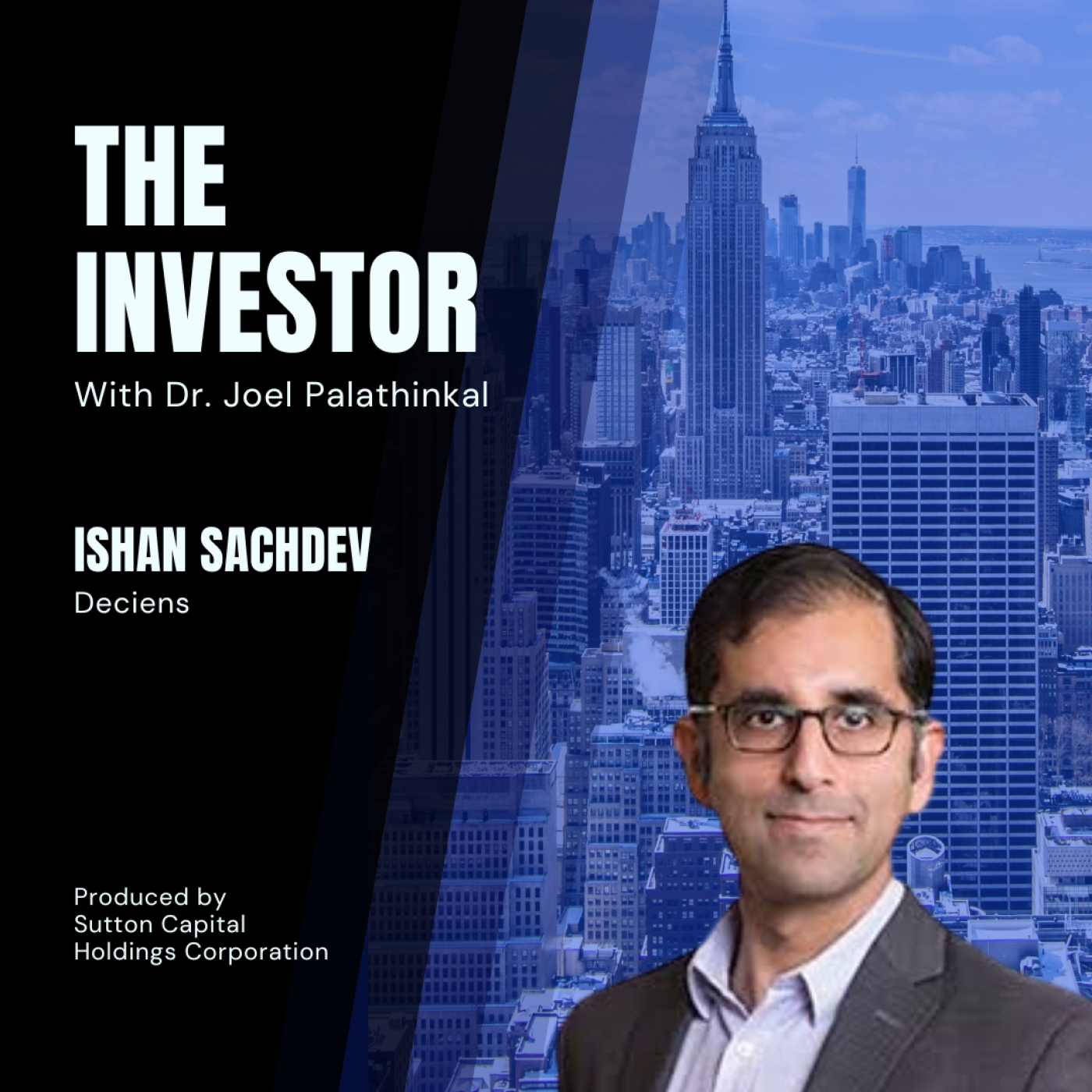
Welcome to the Investor, a podcast where I, Joel Palo Thinkle, your host, dives deep into the minds of the world's most influential institutional investors. In each episode, we sit down with an investor to hear about their journeys and how global markets are driving capital allocation. So join us on this journey as we explore these insights. All right, excited to have my guest, Ishan Sachdev. He's a general partner at Deciens Capital. Ishan, welcome to the show.
- [00:36]
B
Thank you. Great to be here.
- [00:37]
A
Yeah. Excited to really go deep on your background. We really enjoyed meeting you, as I mentioned earlier before we started and hearing about your journey. And I think it'd be really valuable for the community of LPs, GPS angels that are on this podcast to kind of learn a little more about, you know, what it takes to build a firm and what it takes to scale a firm to where it needs to be. So would love to maybe start with your education. I'll do a quick intro. So, again, Sean is a general partner at Destin's Capital, and he went to school at Harvard Business School and then previously worked at psg. He was one of the co founders and managing partners of the MIT Alumni Angels of Boston and then also was a research associate at Harvard Business School. So, excited to just go deeper on your background. Tell me a little more about just your early education and what made you think about, number one, getting into the investment industry and then we'll go into kind of firm building a little after that?
- [01:40]
B
Yeah, absolutely. I was actually an engineer by education, and so I went to MIT for my undergrad and did both an undergrad and a master's in electrical engineering and computer science. And really, for me, you know, I was in high school as the first tech bubble was building and unfolding. And I think it was just really amazing to see what some of these young, at the time, very young founders were building and the impact they were making. And so, you know, my initial plan was to go be an engineer and then go work for a startup. And so really that changed over the course of my time at mit and sort of happy to talk about that and what led me into the investment world.
- [02:25]
A
What was your favorite? I'm an electrical engineer too, by trade. So what was your favorite class and what class did you not like as much? And I'll share mine, too.
- [02:33]
B
Oh, got it. So my favorite class was computer security class, which was taught by Ron Rivest. And Ron was. He is the R in RSA Security, which was one of the original cryptography companies. And I had a. I Had a teacher in high school who taught us things I think were much, very much off curriculum. And one thing he taught us was the RSA algorithm. And so I had always been fascinated by that and by computer security. And then going into college, knew that Ron, luckily enough taught the intro security class. And so that was by far my favorite class.
- [03:12]
A
Yeah, I remember I worked in my first job. I mean, it was in the DoD industry. So I would always get those RSA tokens, you know, and I guess that's kind of one of their key product. So was he. Was he involved with rsa or was he just kind of one of the, you know, really respected experts in security?
- [03:31]
B
Yeah, he was one of the co founders. So there are three co founders. And so the three. There are three co founders in the RSA are each of their initials. And so he's the R in rsa. And he was really is, you know, on the ground building the. Building that business.
- [03:46]
A
So did when he was he teaching kind of like after he retired, or he was just kind of like an adjunct faculty teaching while he was. Well, at what entry point did you. Did you meet him?
- [03:56]
B
So our. So RSA was already a going concern and a big business by the time I got to college. And so I don't know the original sort of story. I believe that he had been an academic along with, I think, the others, and they started it in conjunction with being professors. And so I think he had always been doing both. That may not be completely accurate, but that was my impression that he had been doing both along the way and so had been on faculty at MIT for quite a long time at that point in time.
- [04:26]
A
And then what was your least favorite class in your engineering curriculum?
- [04:32]
B
I think it was probably, it was the intro one of the Introduction to Electrical Engineering courses. So we did both computer science, electrical engineering as a core. And I just remember the professor would write these formulas that would literally go across three chalkboards. We still had chalkboards. And I just realized that was not. That was not for me.
- [04:57]
A
Yeah, that's. I resonate with the same sentiments, you know, the classes that I. Because, I mean, back then you had to really just memorize. So like the way that I got through calculus, I would essentially just memorize the formulas and all the, all the different steps and the sub steps. And then, you know, the test would be, you know, sometimes we get like the old test or kind of, you know, study guides, but the test was essentially a derivative of what you studied in the chapters. So, same way, I didn't really Love that that much. My favorite class was, I think towards the end, like when I was about to graduate, we had like this engineering economics course. And at the end we got to present a business. It was almost like a startup pitch. I just felt I was much more comfortable working with people and collaborating versus being the lab expert behind the scenes, hot wiring circuits and stuff or creating circuits on a breadboard. Totally agree with you. Then tell me what happened after that. Did you work in technology for some time?
- [06:07]
B
I did not. So actually I actually went immediately into investing after college. So I did both undergrad and masters together in the course of five years. And then really in my fifth year is where I decided I didn't necessarily want to pursue a career as an engineer. And I also, along around that same time, got very interested in the financial markets and in investing particularly. And I think just was fascinated by this question of how do people make money in the markets. Started reading a lot about some of the more notable investors over time, and it was just fascinating to see people develop different strategies and so on. And so became really captivated by that and so decided that after school I really wanted to go into investing and learn much more about that role.
- [06:54]
A
With you having a technical background like myself, what advice would you give to people that are trying to get right into investing right after maybe an engineering degree? Should they supplement their electrical or computer science education with some finance books or some coursework or just kind of do some individual reading on their own?
- [07:16]
B
Yeah, I think probably two things, like, if, you know, you're interested, I would definitely do some additional coursework. It would have probably been great had I figured that out earlier on and done more earlier on. But certainly I think there's a lot of value in just getting exposure early on and starting to really think about, internalize those topics if you know something you're interested in. And, and plus, I think it's just a really helpful way to figure out, hey, is this really a thing I'm interested in? You know, I think second, the, the good part for me at the time was that, you know, the folks on, on Wall Street, Wall street was getting more quantitative and, and not even in the sense of quant algorithms, but just mathematical because. Because fixed income was becoming such a big part of Wall street derivatives, all of these things. And so they concluded, hey, it's maybe easier to teach people who know math, finance than the reverse. And historically that's what they had done was go recruit folks who had liberal arts backgrounds and finance backgrounds and bring them in. And they said, let's just go and find these people who really understand math really well. And so I think I got the benefit of that because they were looking for engineers, computer scientists, et cetera. I think the other thing is the way the world has moved. I think that now technology is much more a part of trading and investing than it was when I was there. And so my sense is that whether it's trading, whether it's different types of investing roles, like the things I was doing, especially inside of a bank where I was people who write code and all of those things, it's much more a part of the daily. It's becoming much more a part of the daily job. And so I suspect as well that if you've got that sort of computer science engineering background, those skills are much more directly applicable in a way they weren't back then. Sure.
- [08:58]
A
And you have a unique experience too, because I was looking at your background, looks like you managed the process to sell iPay, which was a portfolio company of Bain Capital Ventures. So how was that experience and what were some of the biggest things that you learned, especially for a bigger organization?
- [09:14]
B
It was great. And maybe, you know, to sort of bring. Bring your audience full circle. So I went, I went to, you know, after undergrad, I went to Goldman. I was a prop trader, invested in the liquid debt and derivative, which was a fascinating both place and market to be, and then decided, hey, I really want to get back to working with technology and startups. And then went into venture, came back to Boston to work for Bain Capital Ventures and was investing in fintech from seed through growth, and then really got very excited about Fintech. In the course of that, my first exposure to the space and subsequently had the opportunity to jump into a portfolio company in the fintech space called iPay you mentioned. And what I pay was doing. It was an investment we made with Spectrum Equity. And really what they were doing was bill payment software suite, selling into small, medium regional banks and moving up market. And so this was the idea that, you know, now you can go to your bank's website, their banking portal, you can do all kinds of bill payment through that. And this was, and this was at a time when the big bank started deploying that and then IPAY built that and was selling it into the rest of the market. And so that was really what the business did. I think, you know, in that sale process, I think what was fascinating to me was, you know, number one, we talked to a large number of financial services and other companies in the space. So both companies you would think are obvious people to acquire a business like that and many that were not. And so I think it was just really interesting to hear both how did these bigger companies think about the market? How, how do they think about expanding their product universe? We have the opportunity to be in the room with some of the most senior people at some of the biggest payments companies in the world. And so it's just fascinating to hear what do they actually care about when it comes down to brass tacks of do we buy this company or not? How is it that they think about what matters to them? I think secondly, it was really interesting to understand how do you actually create value through an M and A process. Right. What's the way to do that in a way to get to the best outcome for the company company from the employees, for the investors and what are the things that one can do to really put yourself in the best place? I think we had a lot of really smart people around the table on that. The board, et cetera was a great, a great learning experience there. And then I think it was really interesting just to see where's the world headed. Right. And part of the reason that people were interested in that business was where they wanted to take their businesses in the future and where they thought the world was going. So I think that was also fascinating.
- [11:49]
A
Yeah, no, I think that's totally important too to understand where everybody's incentives are and if you could make it where it's a win win for everybody. Right. The founder has some type of path tax of whether it's, whether it's cash or equity. And then on the, the acquirer side, if there is an acquirer, if that's the, that's the outcome, you know, how, how do they get incentivized for investing in the company and you know, the multiples and, and what kind of ways should they kind of think about how to return capital to maybe their LPs as well. So like with that, you know, I see kind of this, this advisor role that you took on over the summer in D.C. so that seems like a really interesting role, you know, as the summer policy advisor to the Office of Capital Markets. So tell me a little bit more about that experience and some of the things that you, you learned and maybe some of the interesting people that you met there.
- [12:45]
B
Yeah, for sure. I was at Goldman for the very beginning of the financial crisis and so got kind of an inside perspective on how the crisis was unfolding and so got to sort of see that from the market's perspective. And then even after I left, really became fascinated in the topic of how did this come about? How did the financial crisis both start? How then did it unfold and make its way through all these Wall street institutions? And, you know, you look at all these really large organizations and the idea that how do they end up getting themselves into a position where they were in such trouble? And so became really a passion area for me that I spent a lot of time thinking about and then going into business school, you know, knew. And that summer advisory role came about because I was in business school and knew that, you know, I was interested in exploring that topic further and thought, you know, maybe I'll do research, maybe I'll find a professor to work with. And then ended up meeting this group, Office of Capital Markets. And the Office of Capital Markets was created during the financial crisis. And really, I think the interesting thing about treasury was in the Treasury Department, which is where this group was set up, there really weren't markets people prior to the financial crisis. There were a lot of economists and lawyers and folks like that. And so one of the advisors to the Treasury Secretary and to the administration said, hey, we really need to bring people from the markets in to help us deal with this financial crisis. He convinced one of the folks who was, I believe, partner at Blackstone, running their financial institutions, investing, to come to treasury in the depths of the crisis and start this team. And the team was staffed by all kinds of people from, you know, from Goldman, Blackstone, like those kind of places, but who understood the markets. And so they really advised on everything that was financial crisis related. And so I got there sort of post crisis, so this was in 2012, but they were still working on a lot of the topics that had come about because of the financial crisis and also some new. Some new activities. And so I think, you know, some of the things that I got to spend time on were, you know, number one, we looked at sort of Title two resolution, which is how do you. There's Dodd Frank created a part which said there needs to be a plan to unwind a large, globally systemic institution like these large banks if they get into trouble. And so we worked on certain aspects of that. We worked on certain topics related to derivatives clearing, which was another part of Dodd Frank. And so how do you prevent these derivatives issues from reverberating through the market? We worked on things that were relating to the JOBS act, which was different and unrelated, but things that related to crowdfunding and being able to file S1s confidentially, which had come up and was already being implemented. And so there was sort of a broad set of topics that I got to work on. I think that what was, what was fascinating to me was a. The teams are. It's very lean, right? Like the group, the group was, you know, five to seven people. And the teams generally are very lean. These aren't. This is not an organization with tens or hundreds of, of people in a given group. And so these small teams that are basically working on these huge topics which will impact the entire market. And I think that's really the interesting part is, you know, as somebody involved, the thing, the, the things that you get to work on will have a market wide impact where if you're in an investment firm, you're very narrowly focused on your handful of investments. So that scope is totally different. The other thing that was fascinating is there really is, it's really a SWAT team aspect of whenever there's a crisis that blows up pretty quickly, somebody's got to form an opinion that goes up to the treasury Secretary of whomever. And these are the groups inside that actually are forming that opinion. And so it's some interesting mix of big long term things that you're working on and then also reacting to crises that come up and trying to figure out, hey, what has unfolded and do we make or we actually have a response?
- [17:00]
A
Sure, no, that's really helpful. And then tell me what happened after that. It looks like after that you worked at PSG for some time, you got some really good growth equity experience. And then walk me through kind of the, the origin story of Desiens.
- [17:14]
B
Yeah, absolutely. So that's right. So ultimately I joined psg. PSG was at the time was called Providence Strategic Growth and it was the growth equity arm of Providence Equity, the buyout fund. And they were fully focused on software growth equity. And really the bread and butter of the firm at the time was growth buyouts. And so this was, you know, investing in lightly capitalized businesses, often hadn't raised venture capital, were founder owned and had gotten to 10 or 20 million of ARR. And we're really looking for a partner to help them go to the next phase. And so would come in, buy a majority of the business, partner with the founders, and then help them with professionalizing, you know, go to market financial operations, more capital for product expansion, M and A, all of those kinds of things. That's really what, what PSG did. And PSG has subsequently spun out of Providence. And so they shrank the name from Providence Strategic Growth to psg, but is now a very large and global growth Equity fund and then so, so Deciens. So really my partner Dan Kimmerling founded Deciens in 2017. And Dan had been a founder and in particular in Fintech and he started Deciens really to be the best partner to early stage financial services founders with the idea that it was just going to be a focus on seed and pre seed investing and lead only. And so in other words have a very concentrated portfolio of high conviction companies that you spend a lot of time working closely with and really helping those founders see around corners. Because as you know, financial services pretty complicated, a lot of complexity that is hard to understand if you haven't lived through it. And so there's a lot of value that an investor can bring. And so you know, to roll things forward, Dan did fund one, his fund one as a solo GP and then we really met in 2020 and started, I should say we had met before but we started talking about my joining in 2020 and really as I was thinking about the longer arc of my career and what I wanted to do for the long term, came to the conclusion I really wanted to do three things. I wanted to do Fintech full time ever since my time at Bank Capital had been my passion personally and professionally. I wanted to go back early stage and really be doing pre seed and seed investing and I wanted to help build a fund. And so those are all the things that Dan was doing at Dasseon's and so I joined him at the beginning of 2021. Now we're the two general partners. We then raised fund two subsequently and now we're actually onto fund three and we've built the team up since then and so happy to dig into any aspects of building the firm that would be interesting to your audience.
- [20:05]
A
Yeah, you know, so we have a topic, you know, we run this thing called the Fund Accelerator and one of the topics that we talk about is kind of graduating to Fund two and Fund three. So what advice would you have for people, number one, that are building the firm from scratch and your co founder probably has a lot of wisdom on this. But then what do you think you need to think about when you're ideating Fund two? And then what do you think and what have you heard from other LPs when, when you're thinking about Fund 2 and Fund 3 and beyond, what are the hot, hot topics to really consider?
- [20:40]
B
Yeah, I mean I think, yeah, the 0 to 1, certainly Dan is a great perspective on. I think the first piece is it's really hard, you know, going 0 to 1 just, just like a startup, there's a ton that goes on. I think that probably the biggest piece of it is building a fund. And starting a fund is a lot different than just being an investor at a bigger fund or being an angel because you're building a firm and there's all the things that go along with that. And so I think that's really one of the things that probably, you know, folks doing it for the first time is a surprise of like how much other work there is to be done and infrastructure to put in place and so on. I think number two is it's really about, you know, what's the difference you're going to make in the market. And I think that Dan's strategy is the same strategy we've deployed ever since. And that's a big part of, you know, why I joined was I had the same perspective on how to think about investing, but really it's. There's a ton of venture firms out there, right? And so, and growth equity firms. And so the question is, what are you doing that's different? Like, what's the new thing that you were bringing to the market? Tons of smart people out there running investment firms. But I think that the best firms and the ones that break out really take a differentiated perspective on how they're going to create value, how they're going to invest. And I think that is important both for companies you want to partner with, because those founders want to understand, hey, what are you doing that's different than all the other brand name firms that they know. Then also for LPs, right? Like LPs want to know how are you different than all the other firms that are out there? And so I think really bringing a differentiated perspective, I think secondly, and this comes to your question about funds two and three, you know, building a fund is a long game, right? You might meet LPs in the course of fund one, and then they might not invest for years later. They might Invest at fund three or four. A lot of it I think is LPs want to understand, hey, do you have a strategy? And then if you have one, or can you actually execute on it? If you execute on it, does it work? That can take a lot of cycles. It could take a whole fund to see that. But I think that if you do those things, you're actually ahead of most people, which is being able to deploy a defined strategy, execute on it, show that it works. That I think is the most important thing to show that consistency of thought across multiple funds. And so I do think that's then a big part of what we've done across funds 1, 2 and now into 3 is it's the same strategy and we're able to show what we told LPs even when I joined beginning of fund two, we then went out and did it and built the portfolio that we told people we would build at the beginning of fund two. And we think it's working really well. I think the other thing I would think a lot about too is just, you know, as you're adding to the team and adding partners and other folks is having great alignment. Right. I think that it's so critical that the people you partner with as you go from one person to two to three, that everyone is really signed up to do the same thing and has a belief in the approach that the firm is following. And I think that's where you and really trust each other. And I think that's where you see, you know, partnerships have issues is when there isn't that alignment. And so when you talk to LPs, you know, the biggest thing that they care a lot about in early stage funds is, hey, who are the partners? How do they know each other? How do they collaborate? How do they work? Well, is this a partnership they can see going on for 10, 15, 20 years? Because, you know, every fund could be 10 to 15 years. Right. And so I think that part is super important as well as you, as you think about it. And so I'll maybe pause there, but certainly can talk more about, you know, the Fund 2 and 3 cycle and how that's evolved as well.
- [24:28]
A
Yeah, no, I think that's really helpful. And then, you know, if you can, if you can kind of go into 2 and 3 and kind of thinking through that maybe some of the KPIs, you know. So I met an LP recently that only invests in fund four. And the reason why is because fund three is really when they might start seeing some DPI at that stage. So they kind of meet funds that are kind of in that stage because from some of their previous vintages they might start to determine if there is the possibility for that because they're thinking more long term. So what's your reaction to that? And then what are some of the thought processes that you've been thinking about for Fund 2? And there's a lot of pieces too. It's like obviously a lot of fund managers, when they get to Fund two, their infrastructure is much more sophisticated sometimes as well. Right. They may be moving off of the fund admin that they were using previously and they're now going to a more institutional grade. So are there any other levers that you're seeing to kind of, that you've seen kind of trigger amongst your peers to kind of move into more of an institutional grade mindset and strategy to kind of deliver that experience to their LPs?
- [25:38]
B
Yeah, absolutely. I think it's a great. Two great questions. So I think maybe I'll tackle the last one first. But you know, I think there's in some sense, I would say this, there's a bifurcation, like there are people who want to build institutional grade firms and there are people who don't. And there's not like really a right answer. They're just different approaches. But you're totally right that depending which direction you want to go, you build your firm differently. And so there are people who say, hey, we just want to be a small team of partners, we want to make investments, we don't really want to grow fund size, we don't really care about being institutional, etc. Etc. And they don't need to necessarily build out a lot of infrastructure. You know, for us we wanted to go institutional, we knew that. And so we absolutely started building that out over the course of fund too. And I think that is about number one, who are the service providers you work with? And so you obviously have law firms, accounting firms, fund. And so the first question is having people like that that are reputable and top tier because I think that's a key piece of who you collaborate with and you have a lot of those when you're building a firm. Second is who are the people you bring on? So as an example, one of the early hires that we made after I had joined was VP Finance. And so a like we got it, we had to get Dan out of the business of being in the VP Finance. He was doing everything prior, of course, but then, you know, RVP Finance came out of Vista Equity as an example. So it's used to building and working with institutional grade organizations and, and as you go out and start Talking to institutional LPs and managing their due diligence process and things of that nature, it's a very complicated, intensive thing versus say some family offices where maybe it's a couple of conversations and so having people, and I think the rest of the team as well, who understand that world and can be helpful in building out, both helping us engage with those people and then building out the technology as well, components of that infrastructure. So there really is a real platform. And so I think it's really every aspect of the organization, I think as well, a key question that we see institutional LPs ask in the course of, say, that fund, that early part of Fund two is how are you thinking about building out the team? Because they want to know, are you thinking about the team in a way that suggests you can build an institutional platform or are you not? And so I think that is really a big aspect of it as well as you're making that transition to showing that you've both thought about it and then there's evidence that you're putting those pieces in place. And so that's, I think, really a lot of what it means to go in the institutional direction is adding all of that infrastructure to your point, people understand how to engage with that world. And then, you know, on your other question about sort of this, this Fund four, and what's the reaction to that, you know, fund threes are interesting, right? Because I think fund ones people would say are based on just who you are and maybe your background, maybe your track record. But it's. People are taking a leap into the unknown. Right. In some sense, you've got a narrative. They hopefully buy into the narrative and that's what they're investing into. You know, Fund two is, hey, you did a bunch of interesting stuff in fund one, but it's still really early. But we sort of think that, like, those things make sense to us. It's kind of working. And so, okay, we'll, we'll lean into the narrative. If you did what you said in Fund 1, Fund 3 is an interesting one because you're multiple funds in. But to your point, if you're a seed or pre seed fund, probably like holistically don't have DPI because, you know, average time to one times DPI historically for a series A fund is seven years. So forget a seed fund, which is somewhere beyond that.
- [29:18]
A
Sure.
- [29:19]
B
And so it's this interesting point where you've now got a bunch of things that are in the portfolio, but in terms of like real returns that you can point to, it's still way too early. And that I think is a challenging place often for LPs or for fund managers and for LP is to make that assessment. And so I think that the couple things are, I think one of the most important things is there are different LPs that invest in all these stages. And so I think part of it is as you're having conversations, figuring out, yeah, who are the LPs that are willing to invest earlier on and who are A good fit. And for ones that say, hey, it's a fund four, that's great, build that relationship. So when you get to fund four, you're ready for it. But I think that's also why it's incumbent to get to know LPs early, right? Because if you get to know LPs at Fund 1 and you tell them what you're going to do and they see you do it and they get to fund two or fund three, they have much more comfort in what you're doing because they've seen you over time, right? Just like when we invest in startups, it's way easier if we've seen a company and a founder evolve over time because we know what they said, we know then what they did. And it's always different if you're hearing somebody tell the story retroactively. And so I think it's, you know, for us, that's why even as we meet people and they're like, hey, it's going to be the next fund, you want to find ways to build that relationship, keep them engaged, get them to understand what you're doing. So that way when they get there, they can, they have a better perspective on what you're doing and much more comfort in writing that check. I think the other thing that we think a lot about now is your point, okay? We've got portfolio companies, and especially in a very convoluted time like this, right, where the markets have done all kinds of weird things, if you go talk to LPs broadly in the market, they will generally say, we don't know what to make of venture funds marks or growth equity funds marks, because, like, they're all over the place. So a big thing we think a lot about is how to get LPs to actually understand the underlying performance of the companies. Like, how are they actually doing? Are they making progress? Since the invested, is that progress sustainable? And I think that's the thing that, in a funny way you would think that is an important part of the conversation. But I think especially in 21, 22 LPs were just focused and the market was focused on marks and markups. And I do think that then that extra level of, hey, how do you help people understand the actual underlying portfolio? Which, you know, it's kind of opaque, right? Hey, how are all these companies performing? That I think something that we think a lot about and we found to be really beneficial, you know, once LPs really got a sense of the portfolio and they see, hey, this is how your companies are really performing and we walk them through that, that makes a huge difference. And so I think that is the, I think to us how you bridge the gap between. It's still early, but we've got a lot of companies is being able to walk through how those companies are actually building, performing, et cetera.
- [32:18]
A
And then you know, with you it sounds like you guys have a really concentrated approach. So when you're looking at companies, you know what, what advice would you give for sourcing and screening, especially for high conviction funds that are definitely looking at hopefully heavy hitter deals that are home runs. What's kind of the advice that you would have? And then just going deeper if you have high conviction, I'd assume you have to go much more granular and really understand the industry. So any advice on that in terms of just sourcing and screening deals?
- [32:51]
B
Yeah, absolutely. So I think, yeah, I think number one, it's like have a, develop a real framework for how you think about what's the right kind of business. Because ultimately you want to have something to your point that's pretty tight in terms of like what's really the right fit for you as a fund. And for every fund that box is different and the effects of characteristics. But I think it's especially the pre seed stage, you see hundreds and hundreds of companies a year. And so the big part is how do you sort of sort through that to even figure out not only which to ultimately invest in, but which to spend time on? Because you can't diligence hundreds and hundreds of companies to get to the answer. You have to have a tight funnel to say, hey, how do we go from one meeting to two to really spend time on diligence? Because that's the most important piece is how you spend your time and opportunity costs of the companies you spend diligence on. So I think having that like really good perspective of this is what makes a company that will get us excited that we believe in is really important. I think second is, you know, really sticking to it. You'll meet tons of companies that meet 80% of that criteria or 90% even.
- [33:59]
A
Right?
- [33:59]
B
And I think and because there's so many smart and talented people out there, right? There's no. And that's the fun part of this job is getting to meet all of them. But and I think there's a. You get tempted to go off and direct, you know, to go spend time on those businesses. And ultimately I think as we all reflect, like the ones that ultimately met all of the criteria are the ones that, that worked out well, and those ones where you stretch, you know, sometimes they work, sometimes they don't. But it's a different, I think the problem, the hit rate is lower. And so it's really making sure that you build a tight perspective and you really stick to it even when there are things that are tempting, but not quite. Because again, you know, if you have a, if you have a big broad portfolio, you can afford to have some of those, but when you have a more concentrated one, you really want each one of those to be meaningful and you really want therefore to have the highest conviction you can. I think then also it's, hey, who are the kind of founders you want to be engaged with? Because a big part of it as well as founder driven and who are the kind of founders that will push through and make those companies succeed? Because I think a big part of success is two things, is perseverance. Because startups are hard and they almost always almost fail. Even the big successful ones have all almost failed. And so it's how do you, will you stick through it? Do you want to stick through it? And as the market changes, companies have challenges. Do you have the creativity to kind of navigate through that? Because I think staying in the game is so important. And so for us, part of it, to your point is yes, getting deep on the business, deep on the product, and having a perspective that this is a great place to build a business, this market opportunity. But the other part is, is this a founder that will stay in the game over the long term because you got to stay in the game.
- [35:50]
A
And even in pre seed there isn't much data due diligence either. Right. There's probably no financials. So you know, when you, when you're going into pre seed, I'm assuming you're just really, really going deep on the founder and their networks and maybe their background, talking to their past customers, I'm assuming, and, and probably past partners that they work with. Right. Because I mean, at that point, I mean precede and I had a really interesting discussion with a fund that only does precede. And what was interesting is they just, they do precede because just once you get to seed or series A, most of those deals, the ones that they're looking at, the pool of deals that they're looking at, most of them are pretty oversubscribed. Right. The rounds already closed. So I guess if you're focusing on pre seed, any, any advice on refining that craft?
- [36:38]
B
Yeah, so I'll, so I, I think I would actually look at it slightly differently. I do Think there's a lot of work one can do, not always on the company itself. To your point, the company is that at pre seed that we invest in are pre revenue, pre product, like pre metrics. So I think it's almost two things I would look at is to say we look at it a couple ways. Number one is the market. They're in a really compelling market. And so we have a framework of how we think about interesting markets. And so the first question is like, is it a market? That's the kind of market that we destin think is a great place to go build a business for the next decade. You know, number two is you go down a level deeper of is this the right time to build a business in that market? Cause timing matters so much in venture, right? If you're early, as everyone says, same as being wrong. And then the question is, what are especially like in a B2B context, or if you're solving a problem context, is this company thinking about it the right way? Right. Because often the founder might say, hey, we're not in market, but here's the product I want to build, here's what I think about the problem space. And so you can actually go and say, okay, if they're selling into whatever space we can go and talk to, let's say the buyer is making it up, like the CTO or the CFO. We can go talk to 20 CFOs in that target market and just hear what their issues are. Is the problem the company solving actually a top three problem is the way that they're thinking about solving it, a way that this person would buy if, like they can magically solve the problem. Would this person buy it in a heartbeat when they pay a lot of money? And so there's a lot that you can do to actually at a very granular level, understand markets and timing and the buyer universe to validate, I think, what teams are saying, but also to feed that back in, say, hey, here's a bunch of data we've got about how the market thinks about what you're doing and see how those things line up. And so I do think that there's a bunch of work. I think that then the other piece that we look for is, you know, how are the founders thinking about it? Like, have they done that work? Are they super deep in the weeds of this industry? Right. Do they know all the ins and outs? Have they really thought through, you know, the, you know, sort of like almost that. That sort of five whys question that comes out of Toyota, if you ask the why, why, why have they gone so deep in the business that they understand all the angles and, and it doesn't mean they'll have the right answer, but it's just like they understand it to a level where they're really trying to get to, hey, what's the right answer? So I think all of these are things that we look for in addition to all the things you talked about, about founders, which are obviously, I think, really critical to the equation.
- [39:18]
A
Yeah. And then finally with the, with the next quarter coming up, where we're heading towards, you know, hopefully the holidays, Right. When we hit November, a lot of the fundraising, in my opinion, you know, starts to slow down. Right. Because you're getting into the holidays. So what advice would you have for maybe for founders and for VCs that are either looking to get into their, you know, first close or even just kind of close out their funding round? And what have you seen? And I've seen a lot more activity over the summer, like people at least meeting more and just kind of much more than I think last summer, last year. So I think that's a good sign. But I do feel that probably once we start heading like, you know, early to mid to late November, most people will be wrapping up those discussions and probably punting them to 2025. But wanted to hear your advice because you're on both ends, right. You're kind of seeing the founders perspective and supporting them and also as an investor deciding if you should even invest in those companies too. So you're like, hey, wait a minute, maybe I should push these conversations off and close this round with this founder in January. So would love like, you being an investor, investing in companies and then just advice to the founders and what you're saying?
- [40:34]
B
Yeah, I mean, it's a really good question because the end of the year could be so tough. That stretch between Thanksgiving and New Year's can just be a black hole sometimes. I think the reality is if you want to do a fundraise in the course of this year or have something that closes in, you know, early January, et cetera, you should just get going after Labor Day. I think that, you know, I agree with you. The summer's been busier for sure. But I think even, even with that, people often or everybody comes back into the seat in September because investors are the same thing. Like people want to get stuff done before the end of the year. And so they're kind of coming back saying, hey, like, everything will slow down when I get to the end of the year. And so I've got to hit the ground running. And so I think, you know, if you're wanting to raise, you should be on that cycle, too. Of like, maybe it's not August, but like, maybe it's right after Labor Day. Get out there, start that process, start having conversations and really have the goal be to either get something kind of committed, signed up really before around Thanksgiving, or I think if people are engaged with you by the time that December rolls around, they will continue working on it. Yeah, if you're deep in diligence and there's something they're excited about, they're not going to say, hey, I'm like, it's holiday season.
- [41:49]
A
Yeah, I'm going dark until January.
- [41:51]
B
That's right. That's right. It's more like people are reluctant. It's harder to get people to dig into something brand new in December just because everybody's got, you know, family commitments, all this other stuff comes up and everyone's aware. It's just so hard to then find the time because you're also trying to spend time with others and so on. And so I would say that, like, if you're a founder and you want to do something this year, start that process as soon as possible in September just to give yourself the most cycles to get out there and get something, if not done, kind of deep into the. Deep into diligence by the time Thanksgiving rolls around to put yourself in a position where you won't have to worry about that December stretch. And then I think for investors, it's kind of. I think it's sort of a similar question of, you know, be being sort of. I think it's being cognizant of the fact that, you know, you are going to have other commitments, you know, that go on in the course of that Thanksgiving to New Year's period and just being thoughtful about, okay, if there are things I want to dive into, like, you know, making sure that it's. It's a sort of a small number of activities that you're really going to have the bandwidth for, because I think it's one of those where everyone ends up being busier than they think with other stuff in the course of that period of time. And you want to make sure that if you dive into it, you're really going to have the bandwidth to do it. And so being thoughtful about, okay, like, is this the thing that, like, really makes sense for me to dive in, into now that I'm that excited about and, you know, think could be something that really needs to happen in the course of, like, the next month or so, at the end of the year.
- [43:39]
A
Yeah, absolutely. Well, hey, Sean, this was amazing. Really appreciate you being generous with your time and sharing all of your wisdom in less than 50 minutes. So really appreciate it. And I personally learned a lot, and this is a huge value to the community. So thanks for all that you do, and thanks for backing all these amazing founders as well.
- [43:57]
B
Thank you. Really appreciate that. Great to have the conversation.
- [44:00]
A
Yeah, likewise. It was a lot of fun. Take care and catch up soon.
- [44:04]
B
All right, Take it easy.
- [44:05]
A
Bye.