Loading summary
Transcript48 lines
- [00:02]
A
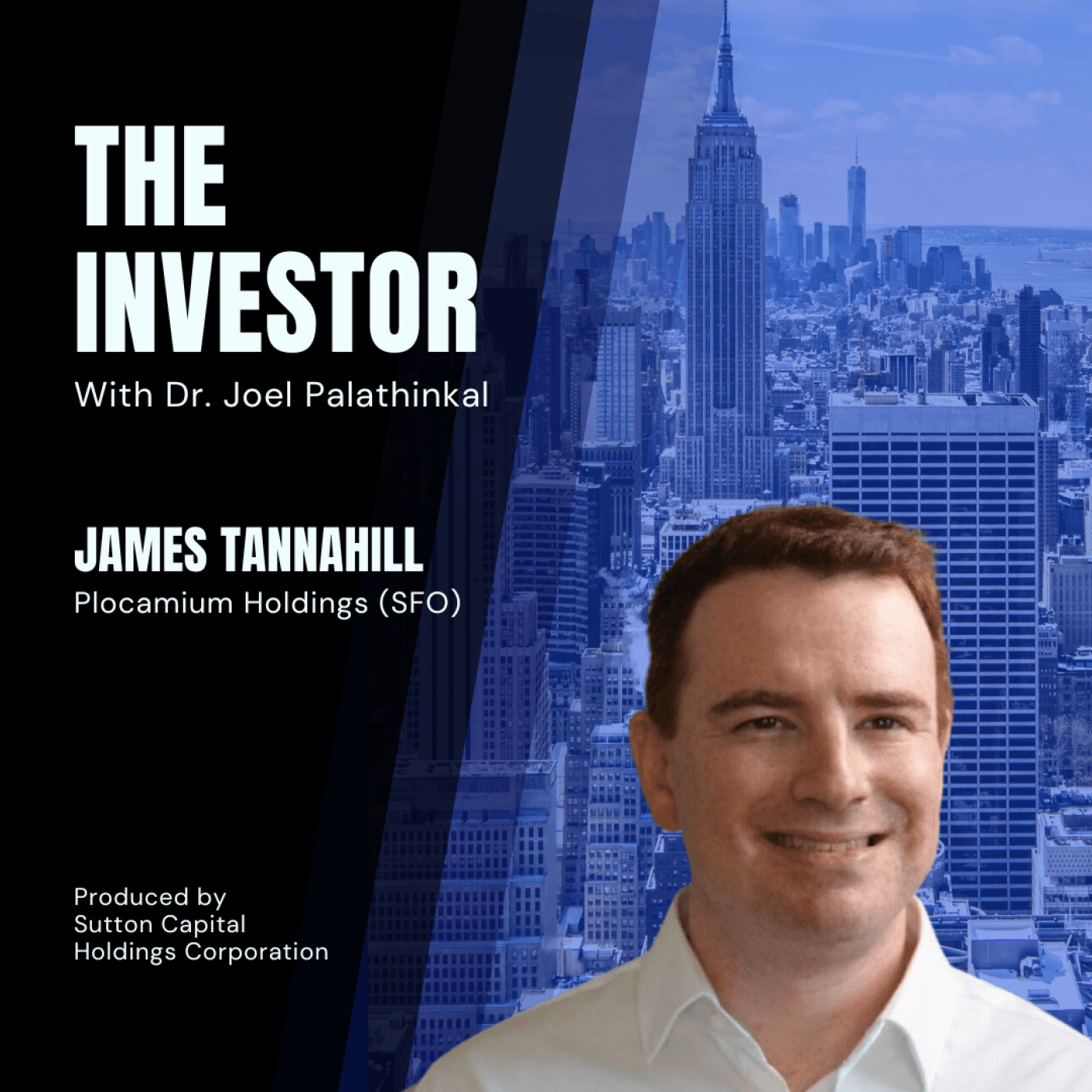
Okay, so I'm excited for our guest, James Tannehill. He's the president and of private equity at PLO Holdings. So just really excited to, you know, learn about what you're doing, James, and just kind of hear a little more about the market. I know you guys are leveraging, leveraging over 70 years of investment experience to drive long term value for your partners and people that you're working with. So some of the things that James's practice supports is really just kind of being an experienced leader focusing on a deep experience and expertise in healthcare, materials, industrial sectors. I think they're backed by a family business that's kind of been in the manufacturing space for a long time. And he mainly leads value creation, growth equity, private equity investments in the healthcare and industrial markets. But James, you know, that's just a high level overview. You know, excited to have you on the show. Thank you for coming on the show and excited to kind of maybe just have you share a little more about your background, maybe your early career and just kind of walk us through you building Ploquium Holdings.
- [01:12]
B
Sure. Joel, thank you so much for having me on your show. I've been following you for over a couple years now and it's an honor to be here. Hi everybody, I'm James and as Joel mentioned, I lead PLO KMium holdings, though I haven't always been leading Plum. I started off doing something else, sort of cut my teeth on Wall street when I was working at an investment bank. Early on, fresh out of school, I was focused on advising clients and institutional investors as well as biotechnology companies on strategy and operations, while at the same time really diving into the financial models and value propositions. And that was an equity research role which I went through a training program and really understood financial modeling. I took that to a startup a couple years later who were trying to work with big data machine learning hedge funds in the private equity world. And we basically created a machine learning product where a portfolio manager, say at a very large hedge fund, a data literate hedge fund, could use this machine learning tool to get a granular understanding of a market segment or a particular company that they were interested in. And I did that for about a year, closely solving problems for clients in the investment community. And I was hired by Jefferies to lead their initiative specifically on healthcare data to pretty much solve a lot of their big corporate clients problems when it came to enterprise data, the healthcare sector and the intersection of the financial community. So that was a lot of fun. I did that right up until Covid and Got a call from a client back when I was at the investment bank called Vaxart and they were a publicly traded vaccine company. And I really couldn't think of anything more exciting than to work at a vaccine company during COVID And so I led their strategic finance and we made a handful of acquisitions. I was employee number, I think 17 and we grew up to 200 people. Then I went off to business school and the past couple of years I've been working at Placamium, which is a subsidiary of a family business that's been in my family for a long time. And what we do is we partner with lower middle market companies and also lower middle market investors to really do deep dives and fix problems, allow companies to become future proof. And you know, it's a win win situation for us. We either invest in a company or we invest our time and energy in a company, get outside the boardroom, get on the factory floor, you know, get beyond the spreadsheet and actually fix operations or enhance operations across different, different industries. And that's what I've been doing and that's really what I enjoy spending time.
- [04:51]
A
So yeah, so I have a little bit of background on portfolio management. You know, I worked in fintech for a good amount of time. I work for a large data analytics company and our clients were massive buy side equity research companies. So I think it'd be helpful for the audience to maybe just unpack equity research. And you know, I'm assuming you're on the buy side, but there's also sell side equity, you know, there's also sell side researchers as well. So maybe for the audience it'd be helpful to kind of just unpack like your, your role doing equity research. Usually from my understanding there's a portfolio manager and then there's a bunch of analysts that are sharing investment ideas and they recommend them to the portfolio manager. But essentially it's the portfolio manager that's handling the weighting and the balancing the portfolio, really thinking about how the news is driving the investment decisions. And I would hear about this workflow all the time. So people would download the research reports, listen to the earnings call calls on their train back home to Connecticut. But you know, tell us a little more about like your, your experience. Does it sound familiar? Or just kind of share your, your experiences of a day in the life of a research analyst and you know, would love to know a little more on if it was on the buy side or the sell side or sometimes you wear both hats.
- [06:18]
B
Sure, yeah. Joel, you are absolutely correct. There are buy side and sell side research analysts. As you mentioned, on the buy side, typically it's a fund and there's a portfolio manager who has under them or alongside them a number of analysts who do produce ideas. And those ideas are investment theses. Whether it's a single stock or a particular group of stocks or a basket, their job is to conduct fundamental research, looking at the financials, but also perhaps even meeting management and figuring out a long short strategy for this particular stock. And I was on the sell side, which in essence I was working at an investment bank. Investment banks have oftentimes the traditional investment bankers that everybody reads about on Bloomberg or in the newspaper and sort of the lesser read about but very important teams on the equity research side that produce investment research for not only the investment bankers, but for the institutional clients of that bank, whether it's a hedge fund. So the buy side research analysts could oftentimes read the research that the team I was working on and myself were producing. So it's a very rewarding career. And I would caveat those who have a technical education, whether it's undergraduate or postgraduate studies, if you're a medical doctor or a scientist, for instance, equity research on the sell side can be a tremendous career path where you can apply your scientific passions and acumen to the world of finance and commercialization of those science concepts. And so I found myself going down that route early in my career and surrounded by very highly educated scientists who were also focused on analyzing publicly traded companies. It's a mix of technical writing skills and financial modeling skills. So it's a very attractive career. Sure.
- [08:48]
A
And you know, tell us a little more about just the healthcare sector, you know, from the times of COVID you know, analyzing vaccine companies, what were you thinking about? And you know, were, you know, outside of just the traditional ones that everyone was getting, where were the opportunities? Were there just mergers happening where like IP was kind of rolled up together into a larger roll up or were there just ways that, you know, just the, the standalone technology was just sold as like a, you know, separate product to like other markets? I'd be curious to know how, how those deals got done and kind of what your screening criteria was before you, before you took those deals to investment committee.
- [09:31]
B
Yeah. You know, during COVID certainly a lot of biotechs, whether you were a, a small to mid cap company or a mega cap company, were evaluating the market for corporate development opportunities or acquisitions. Yeah, in particular we were focused on identifying companies that had manufacturing assets. And that means in the biotech world, bioreactors and machines that take raw material and produce a drug substance. At the end of the process, we were looking at acquiring manufacturing capacity so that we could, in effect, manufacture a vaccine. We were also looking at companies that might have been further along in the vaccine clinical process to acquire as sort of a leg up in the whole regulatory concept of commercializing a drug. One acquisition we completed was for a manufacturing facility that initially wasn't in the vaccine world, but was set up such that during COVID we could get our hands on something that otherwise we wouldn't have been able to get our hands on. So we bought somebody else out strictly for those assets that you alluded to and some of the technical workforce, but they did not have any IP that we were interested in. It was strictly, you know, stainless steel drums that, you know, are bioreactors. And, you know, we also wanted to position ourselves as an acquisition target for a larger, you know, pharma company. And one way that we thought about doing that was having that manufacturing capacity, developing some IP and progressing to a point in the clinic where we were actually more valuable than when we started. And that's a novel mission. Often in biotech, there's a number of risks right throughout the clinical process, and there's also risks that people don't talk about as often that are in the manufacturing process. So actually making the drug itself can be a challenge, not just analyzing how humans react to the drug. And so we were faced with both problems. And so we find ourselves in a really unique situation of having to allocate capital to both of those areas of the business. Sure.
- [12:13]
A
And, you know, what does it take to actually manufacture a drug? Because there's probably a lot of approval processes as well. Right. As you're kind of going through the FDA and of going through all the. The checkpoints that you have to go through to make sure that the drug is approved, I guess. Are you, you know, like, what's the timeline on these deals as well? Because, I mean, I'm sure there's definitely dependencies on having to go through the FDA and go through all these other, you know, compliance requirements.
- [12:46]
B
Absolutely. So, you know, just for the sake of conversation, you know, let's assume this pen is a manufacturing facility. We acquired the pen. We can't start using this pen until this pen is certified by the regulatory body for being able to produce what we need it to produce. And that's timeline dependent. And that could take anywhere between six months to a year to certify a facility. So just because I have this pen now I wrote you a check for this pen. It's in my possession. We're analyzing it, we're figuring out how to use it. We can't use it until you go through the process of regulatory approval. And that means everything about this pen has to be in ship shape, has to be clean, has to be. Frankly, there have to be people on hand that know how to use it, and those people have to be credentialed as well. So when you're making an acquisition, you have two things on your side. You have one thing on your side, and that's the money. You don't have the time always on your side. So during COVID everybody's going after, you know, the target, which is launching a new product. Anytime you tack on additional time to a clinical process, you're including additional risk. And so when you're building your models or just building your conceptual model first about this, it's what's the likelihood of me getting approval to use this pen? I deploy capital, then there's a risk that I might not ever be able to use this. I deploy capital, maybe there's a little risk that I will be barred from using this. And it's sort of weighing the pros and cons. And in biotech, often you don't have control of the regulatory process at all. It's out of your hands. And so it's a huge gamble when you go out and you acquire an asset as a small biotech with limited resources. So there's a lot of risk, weighting risk, adjusting to the models that we build to drive the investment committee decision or the board decision on an acquisition. And so models are important at times. Other times, common sense and developing people skills is more important than the models. But during the global pandemic, you know, it was sort of a mix of both. You had to be people focused, had to have empathy, and you also had to have the ability to show the risks on a spreadsheet.
- [15:28]
A
Yeah, yeah, no, that's great. And then, you know, the talk through a little more about the, the private equity strategy that you guys have in terms of sourcing, screening, execution. And then are you guys structured as kind of a single, you know, partner kind of leading these deals, or do you co invest with other private equity investors too? And how do you, how do you find these deals? So emerging private equity investors, what are some ways that they could kind of think through, you know, maintaining a really great pipeline of proprietary deals in their sector?
- [16:11]
B
Yeah, absolutely. And you know, I'm going to say something that might be Controversial. But you know, finding opportunities isn't hard for us and I don't know if it's hard for anybody, but it's honestly finding the right opportunity. And you know, we get a lot of co investment requests as well. We have not co invested in the past. We try to identify opportunities that are naive. In essence we could be the first institutional capital or institutional service provider that the company has seen in the last couple years and we want to be the only one involved in a particular deal or conversation where we're adding value through our consulting services as well, which is a whole other side of our business. Yeah, we're set up at Placamium as a hybrid private equity firm. We've been investing and owning and operating companies for 70 plus years. We are now trying to monetize some of the skills. The you know, value proposition that we have is we have operating expertise and we want to make that a service for your business. We also have a balance sheet that we strategically deploy and help companies cross a growth threshold and we cross that with them through our hands on strategic finance perspective, lower middle market. We make checks from 20 to about 100 miles. Make one of those a year, two of those a year. And frankly it's been about about being a proactive networker. So you know, you might meet a business today and then five years from now that's when you start working with them or you start working with somebody that they've introduced you to and they remain a friendly connection in your network. So that's how we find opportunities. We screen for opportunities strictly based on, you know, has this company been around for at least a couple years or longer and how do they generate value, is it sustainable? And we want to understand the people at the heart of the business. And that's sort of the final checkbox for us. We go in, meet people, walk the shop floor or the factory floor, lay eyes on the operation and at the end of that we come back, debrief as a team and we decide do we want to work with this company? Are we the best solution for them? Can we actually help them? And if we can't, we introduce them to somebody in our network that we trust. And that works both ways. So that's another angle of how do we source opportunities. Yeah, so yeah, exactly.
- [19:13]
A
That's great. And then when you guys are looking at these companies, what's kind of like the ideal KPIs that you're looking for? I know a lot of people are looking at just the ebitda, you know, they want Companies, especially on the private equity side, middle market, they're looking at companies that are anywhere from like 3 to 15 million EBITDA. And then there's some type of multiple that they come up with after all their research. So can you. And it sounds like you're mainly doing healthcare and manufacturing. Are there any other sectors you're interested in outside of those sectors?
- [19:49]
B
You're exactly right. You know, we are interested in healthcare manufacturing and national security technology as well.
- [20:01]
A
Okay.
- [20:02]
B
Which has been an avenue where we've worked in the past. And frankly, when we go out and search for companies, there's more of. I should say there's less of an EBITDA threshold or benchmark that we look for. And if the company's inside or outside of that, we excuse them. That's not how we operate. We operate on an enterprise value perspective. So we're looking at not only the amount of cash a business is able to produce from their assets or the amount of money that's invested in them. We're also looking at their debt and their equity and the particular market conditions that are at hand. Our enterprise values that we typically work with are between 10 million and about 100 million. And you might say, well, that's quite a spread. And it really is. And frankly, each deal is different for us. We're such a niche boutique shop. We're a small shop. That's pretty much what those words mean when people say it. I'm not afraid to say it. We're a small shop. You know, we might work with one company a year. So that's how that spread works for us. And I understand, you know, certain firms have a tighter spread because they actually have LPs or investors who also have their own set of criteria. We're different from a lot of private equity firms because we don't have LPs. It's our own capital. It's more agile, if I were to use a word. It's trending right now.
- [21:48]
A
Sure.
- [21:48]
B
Yeah.
- [21:50]
A
No, that's great. And I think when you're allocating, there's, you know, I think the. The parameters vary on the type of business as well. So, like, I always like to think about, like, a software business. You know, you talked about national security. So it could be like a cyber business where maybe it's making $30 million a year and, you know, it makes $30 million a year. And it. There's no real labor that needs to occur. It's just kind of the software. And the software does all the heavy lifting. Everything's in the cloud. And then when you compare that to maybe a fashion manufacturing business that's maybe making 200 million a year, but you know, the enterprise value isn't as healthy and there's just so much that goes into actually the execution. You know, some might say the company with lower enterprise value with just more automation is more valuable because you get, you could probably scale it much faster, much easier as you turn on some levers.
- [22:53]
B
I think you're spot on on that. And certainly the levers and the KPIs that, you know, are important when you're analyzing a particular business. And I think they're sector dependent. So yeah, one KPI we look at is, you know, free cash flow from operations. And if it's a SaaS model, you know, we want to understand is there a, you know, market expansion opportunity or maybe there's a product extension opportunity there. And if it's like a fashion, you know, a material, an object, in essence, we also want to understand what are the innovation potentials on that business. Maybe there is an efficiency that we can introduce on the existing line or manufacturing line and that yields more cash flow, you know, to the business and shareholders. In the long run, that could be a scenario that we, we work with that company for a year or two and you know, help them integrate that, that type of, you know, efficiency. And that could be a software platform, it could be restructuring the layout of their factory. It could be looking at synergies and the logistics side of the business or supply chain, which is obviously in the spotlight and rightfully so.
- [24:27]
A
No, that's really helpful and I would say too, it's kind of like really thinking about where the company is heading and you know, companies that you can actually add strategic value to increase the enterprise value by just you coming in hands on. You know, one thing that I've been seeing recently, which is really interesting is the whole consulting for equity model. I wrote a really long post a couple weeks ago, or maybe it was a week ago. But you know, there's a handful of marketing agencies that I've spoken to recently and you know, their model before. And I'm seeing this across the board with other service businesses. I think I talked to you about this over the phone. But like there's, I would say overarching. There's a handful of companies that generate a lot of great cash flow just providing a service or delivering a service. And a lot of times those services are to enterprises and to actual, you know, larger companies. And then what happens is they provide so much service and so Much great support that those companies are growing in revenue and they're losing out because the money that they're making is very static, right? Maybe you charge, let's say you charge a $20,000 a month retainer or like if you own some equity in the company, not only could that eventually surpass your retainer revenue, but it'll continue to compound and grow over time as the company is growing. So I think that's what is really provocative about that. So I've seen these marketing agencies, this is kind of how it works, right? You're a marketing agency, maybe you take on a startup client, you know, you could probably get away with maybe super small companies. You could probably charge a retainer of like maybe two to three thousand dollars a month. And then as you get to like being a bigger brand and you're handling larger accounts, you could probably, you know, be charging, you know, six high six to maybe seven figures at some point a month. But like what? But you know, the marketing agencies that I'm talking to are much less, right? They're probably at the 10 to 20k a month retainer price point. But what happens is maybe that client just doesn't feel that they're getting the growth that they're, that they're expecting for that price. And then they fire you. And now what you got to do is you got to go out and you know, find a new marketing client and you're kind of doing the same thing again. So you got on average probably a three to six month retention and you may have to hold them contractually for the three month period. And that makes those customers really unhappy because maybe in the three months that wasn't enough time to actually prove that you can actually get them the growth metrics that they want. So you're kind of as a marketer, you might be sacrificing some quality because you're just trying to get more volume of customers that are willing to pay for the marketing services. And there's just a constant churn, right? Unless you can figure out some way that you're. The only way that you can reduce the churn is if you're strategically kind of inserted within the company. And then what I've been seeing, and this is what I posted about, there's the new marketing agency is not only doing marketing, they're helping you strategically with like your brand, your positioning, and then they're doing paid marketing. But now they have these services where they'll actually install a sales team and they'll actually go out and have a team that will close the, the sales for you. And then essentially all you have to do as an operator is really just fulfilling the business and like, you know, focus on the customer. So the marketer now they're providing a lot of services as a one stop shop, you can kind of have that one team do everything for you. So I think on the marketing side it's helpful because they now provide much more support end to end and it makes them more sticky, but it also makes them more value add. I'd say the only thing as a founder is you kind of lose control. Right. Because now you're beholden to the marketing agency. But you know, that's kind of the, the pros and cons. So I don't know what your reaction is to that, but that's kind of what I've been seeing recently with like different type of service businesses. They add a lot more to the stack. So it's just irresistible to not want to leave.
- [28:26]
B
Yeah, I think that's a really interesting trend that you highlight in the, in the piece that you wrote in that, what you just mentioned. And frankly first thing that comes to mind is like chief revenue officer as a service. And then under that all the different other pieces, whether it's a marketing or price discovery team and then the sales team as well, they would all report into a CRO or head of sales. But when you're leveraging a third party to do one of those tasks, let's call it marketing, and then they're also closing sales, you are offloading. Well frankly you're introducing a lot of risk to your, your business's continuity, especially if there's a contract involved there. If they were to leave. You don't have anybody internally that has been closing sales. Yeah. Let's just say for the same they.
- [29:30]
A
Could just, and they could also just jack up the prices at like year one. You, that's kind of something that you, and then you're like look, you just pay it because it's like too much of a transition to try to kind of migrate to your own system. Right. You could lose so much revenue from trying to kind of do it on your own. So I think that's another big issue too.
- [29:48]
B
Yeah. And you know what I would also say like going back to like the data discussion or what is data? And you know, look, it's been around for a long time. Data is created, not found. So if that third party is using any type of data, it should be yours. As an entrepreneur, a business owner, be sure that you are able to Lock down your data, even if third parties are using it. Find somebody who understands data from the legal side and get a consultation and try to figure out is there a way for you to own that so that the marketing agency has to go through you to use the data, so then if they leave, you still have access to everything that they were working with and they don't take the whole workflow with them. That could be once one fix or at least a contingency to have as a business owner.
- [30:42]
A
Yeah, no, I totally agree. And I can imagine that's just when you're trying to get acquired. You know, when you, when you look at your enterprise value, that definitely is a huge risk, right? Just kind of seeing that everything is outsourced. So even, even for my businesses, I think it's great to kind of have some added fuel to the fire, or if you can, you know, maybe just hire an independent contractor and make them kind of augment your, your team. But I think, you know, offloading all of that from a, from a buyout standpoint, I would see that as a risk. But I just think for the marketing agency, it's a great upside. So there's some agencies now that don't charge any retainer. They're just like, look, we'll do, you know, we pick a few clients that are strategic. And, you know, now they're doing this thing called, you know, so beyond what I just shared, you know, they're doing this thing called consulting for equity where like, strategically, if you're already generating a certain amount of revenue, you know, they'll take money off of. Sometimes it's usually off the top, so not even off the profit. But what's really interesting is you don't get the profit as like phantom. You know, sometimes when you, when you get a revenue share, it's kind of like phantom revenue share or kind of like phantom based on the valuation. This is kind of like monthly, monthly distributions in cash, you know, so that can be very, very attractive if you've got a lot of clients now that are really growing in, you know, monthly recurring revenue. And it's, and it's, you know, compounding and growing and growing every month, you know, because that means your distribution grows over time too, as you're providing more strategic support.
- [32:18]
B
So, yeah, I, I think that's an interesting model. The other thing that comes to mind is, and I'm forgetting the name of this book, but it's one of the seminal startup books, and in the first couple pages, it talks about how the law firm that you choose to partner with at a very early stage. You know, one way of compensation that startup friendly law firms use is, you know, an equity stake in your business in, in lieu of a retainer or monthly or, you know, a retainer, frankly. So yeah, those models have proved very well for the legal community. So I can imagine they prove well for the marketing community as well.
- [33:02]
A
Yeah, it makes the lawyer strategically aligned. The other thing is you got to find another lawyer to review that agreement.
- [33:10]
B
Right.
- [33:11]
A
Because that agreement's written by lawyer. So that's the only thing you got to, you know, because, you know, at some point there's some type of agreement and then, you know, I think the only challenge is like, you know, if you go out and raise outside, outside capital, you know, what are the terms of that equity? You know, because that equity might get diluted. So sometimes those, sometimes there could be some terms in there that protects, you know, some type of dilution. So just kind of, you know, but, but I'm sure, look, they're founder friendly, you know, attorneys and they're, they're there to kind of, obviously reputation is everything. So they're obviously not going to try to do something that's predatory, I hope. And then I would say even on the, you know, in, in the place I, I play, you know, even on the fund manager side, I look at every single fund manager as a startup entrepreneur as well. Right. You still got to build a website, you still got to meet customers who are LPs, you're building a brand, you're generating essentially, you know, recurring revenue yearly or maybe even monthly based on how much assets you're raising. Right. Which is a sales process. So even, even with that, you know, there's a lot of great fund managers that have grown to be friends of mine that have just done a lot of value add stuff. And you know, both of us are kind of, you know, experimenting with content. I think content is the, the most least invasive way to engage with partners because they're consuming your knowledge, your subject matter expertise and they're also, you know, hopefully getting some value from what you're sharing. So I think, you know, anyone that's like a business owner, I think, you know, social media is definitely a great way to get customers, but in my opinion it's just, it's just much slower. Right. Versus just doing paid ads, you got bookings on the calendar. But like, I think in my opinion, like when you're, when you're, when you do paid ads or you do some type of, you know, demand gen marketing, you know, the social, I feel, is the background check, right? So they had a call with you, they got to know you, but now they're like, hey, who is this person? What is this business? Now they see all these videos and all this free content, all these free downloadable templates. So some of the, some of the attorneys that I partner with for just value add, I'm like, hey, can you give me a free template or can you give me some Excel model that you know, my community can download? Because it's valuable for me because I can just share that. And, and then if I put that, you know, that service provider's logo then now, now there's a click back to their side, they get some attribution and there's, there's some way to kind of, you know, get back to that service provider. But I know we got 10 minutes left. I'd love to dive a little deeper into your research business and kind of maybe share some high level things that you're writing about and sharing and, and happy to, you know, plug it with, with this episode too to kind of, you know, hopefully have people learn about how they can get this knowledge from you and work with you. So maybe share, you know, some of the services that you're providing. And I think that's really cool that you took your practical industry experience and you know, you, you know, you served kind of your employer and now you can pretty much, you know, provide that same access and services to like minded potential clients.
- [36:22]
B
Yeah, absolutely. And yeah, Joel, I also think media production has become more prevalent in the last couple years, especially when you look at the private equity community and all the videos and other types of content that is being produced. And I've tried to get into producing certain types of media, whether it's video media or even content that I've created on our website. We have a part of our firm that's focused on non US markets and we call that team the Global Insights team. And I've written a couple different articles about recent investment trends that we're tracking, but also are just generally good to have as a understanding of the future. And one of those trends is in fact energy and data centers. And I think frankly energy affects every sector. Whether you're healthcare materials or the defense environment. Data affects almost every sector you can think of. Healthcare fashion, anything you can think of. And how do you power the creation of data in the analytics of data is a top of mind question for not only governments, but corporations. And so I've written a couple pieces on that and they're all on our website, bocamium.com and we offer companies a variety of services, pretty much everything from due diligence. We, we perform geopolitical analyses, financial operational products, we advise on transactions as well as, you know, given our network of lenders and other advisors that are needed in a transaction process, we connect companies that work with us with those firms and we do quite a bit of market analysis. So for instance, a private equity firm came to us last year wanting to learn about the national security opportunity in the US and we produced research for them to help them become educated. And then we also introduced a number of companies to them and they ended up investing in one of those companies. And so we worked with them on the value creation side of that as well. So that was a very interesting process. And we also produce studies. So some of our clients have highly technical processes, but also products and intellectual property that surrounds both. They might want to do an academic research project or a study that they have commissioned by an academic institution to further validate themselves as leaders in their space. And so we have a number of scholars and research specialists that come on board as necessary to help these companies produce that type of research. And we facilitate that from start to finish. And we have a general report here that really goes into a deeper dive of some of the services that we provide. Health care, defense, packaging and manufacturing are our sweet spots. And some of our clients have been private equity firms. We've worked with a variety of sovereign entities as well as, you know, small to mid sized family owned and operated businesses. And we've been their advisor for growth for a number of years.
- [40:39]
A
Yeah, yeah. One thing that I've been seeing in my ecosystem too, you know, because we are the accelerator for fund managers. I'm seeing a lot of family businesses that are kind of saying the same thing that the, the marketers are saying. It's like, look, you know what, I supporting all these really great clients, but they just need additional capital, you know, and I would love to kind of provide that capital because I know what type of equity stick I would have and possibly have like some type of buyout, right? So you can get paid like probably three, three more ways on top of kind of the initial way that you're, you're getting compensated if you can kind of do those additional downstream activities and be the one that does it best. So you know, look, we got six minutes left. I wanted to kind of just hit one or two more hot topics. So you know, one thing that I've been kind of semi nerding out on is not life extension, not longevity, but actual health extension. So you know, once you start hitting the age of 40, you know, you, you're supposed to actually do more lifting, you know, because you start to slowly lose some muscle mass. So that's one thing I've been personally trying to get back into just doing a little more lifting and exerting myself more for like health extension.
- [41:56]
B
Right.
- [41:57]
A
Like, I mean, what a lot of people are saying. I already mentioned this in my last episode with someone else that was focused on healthcare, but you know, I personally can't think of the last time I've actually done a sprint. You know, I ran track. And you know, if you think about it, most people don't do a sprint after the 30s. You know, like you probably do it a lot like in college if you, you know, if you play football or if you run track, it's just part of your everyday thing. But you know, going out there and doing like 100 yard sprint, you know, it's not something that you're doing and everybody doesn't have access to a track to do that kind of interval training. But what are your thoughts on what Brian Johnson is doing? You know, kind of, you know, being, being the, the, the person with the, the healthiest biomarker on the planet. So he claims, you know, with a lot of, you know, engineering and some of its experimentation too. But you know, what, what are your reactions to that and kind of where some of your thesis is maybe slowly exploring?
- [42:55]
B
Yeah, absolutely. And you know, similarly to you, it is difficult to find a track, especially when you're traveling and find a good place to stay fit when you're on the road and look, frankly, what Brian is trying to accomplish I think is out of reach for the vast majority of, of people. But I think it's a great, you know, let's, let's call it a great use case or example of what can be done if resources and the cost can go down unlimited. Yeah, absolutely. Yeah.
- [43:34]
A
And I think he's trying to open source some of that stuff and you know, I, I think on the back end he does have some links to go ahead and buy his olive oil and some of his supplements and stuff. So for him I think there is a monetization there. But I think that would be pretty interesting if you had some type of kit or you know, he calls it the blueprint, you know, some type of way. I mean, I, I mean small things, right? Like there's ways that you could pos. I think there's a startup out there where you can actually go out and get your blood work and get some of that data dynamically versus going to the hospital and, you know, downloading the app and seeing that, oh, you know, my levels are borderline. And you get like a DM from your doctor to just, you know, reduce something. Right. So I think there's. There's like, artificial intelligence now that can kind of augment some of the support that you need. And it's not Joe Rogan, but what's the. Who's the CEO of the ufc? What was his name? It's.
- [44:32]
B
That's a good question.
- [44:33]
A
I forgot his name. But. But anyways, yeah, we can look him up.
- [44:36]
B
Something White, right? That's.
- [44:38]
A
Yeah, Carrie.
- [44:38]
B
Yeah.
- [44:39]
A
Carrie White. No, it's. No, it's Dana White. Dana White.
- [44:42]
B
Dana White.
- [44:43]
A
So, you know, Dana, you know, I guess he was sleeping. He was suffering from a lot of sleep apnea, and he was just, you know, he went on some podcast and he's like, look, I don't. I don't go to the doctor at all unless I'm injured. I break my arm. I gotta go to the doctor. But just to, you know, track general health, A lot of that, you know, if you do your blood work and you kind of get some of that data, you could probably figure out if you're doing well or not. And, you know, what he was saying is, like, look, if I just go to the doctor, they're just gonna stuff pills down my throat. So I think, you know, some of that stuff. Just if you have the. Your own data, you could probably, you know, diagnose yourself. There's been times where, like, I've just kind of looked up stuff in Chat GPT and I'm like, hey, how are these levels? It says it's normal, but, hey, can you give me some deeper context in terms of, like. And just kind of some more detail in terms of, like, what it is, you know?
- [45:31]
B
Yeah, I. I fully support that. I think ChatGPT is a great resource for benchmarking and sanity checking. And just one last point is. Yeah. Is our data, our health data actually ours? And that is a whole nother discussion.
- [45:47]
A
That's a whole IP that hospitals are gating as well. Right. So.
- [45:51]
B
Yeah. And we should be in control of our data and our health, to your point. Yeah, that's a good point that you raise.
- [45:57]
A
Yeah, absolutely. Hey, James, this was awesome. We covered so many topics and in such a little time, and it was good getting to know a little more about just your family businesses and just kind of your take on healthcare. And PE and buyout. So really exciting discussion. You know, I can keep going as you know, but really enjoyed it. I'll let you go. I'll let you off the hook and let you enjoy the weekend after. After this one.
- [46:22]
B
Hey, thank you so much for having me and you do the same and we'll connect next week, hopefully. This was a real pleasure and delight.
- [46:29]
A
Yeah, likewise, James. Take care. Have a good weekend. And everybody else as well. Take care.
- [46:34]
B
See you guys. Bye.