← The Investor With Joel Palathinkal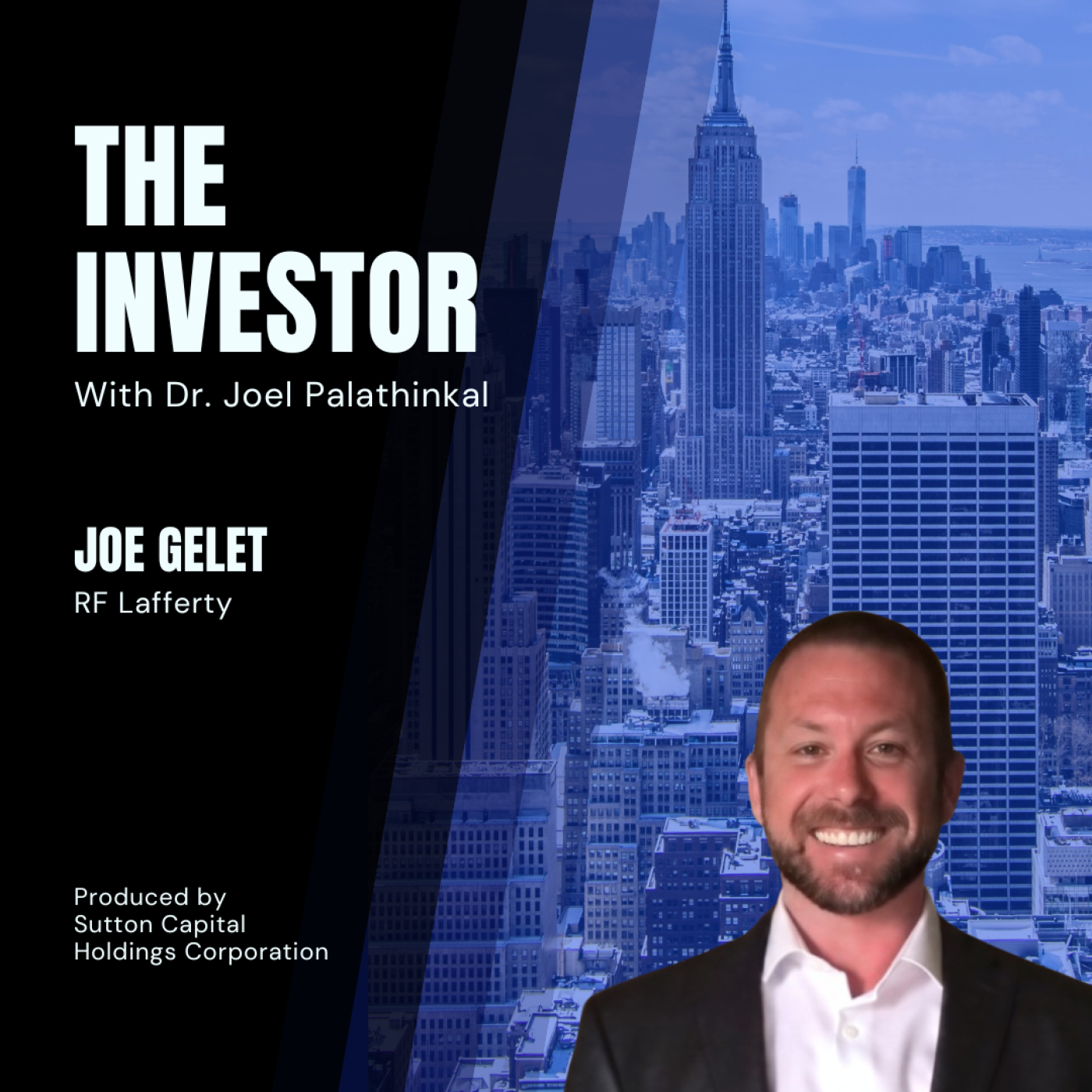
Loading summary
Transcript82 lines
- [00:03]
A
Welcome to the Investor, a podcast where I, Joel Palo Thinkle, your host, dives deep into the minds of the world's most influential institutional investors. In each episode, we sit down with an investor to hear about their journeys and how global markets are driving capital allocation. So join us on this journey as we explore these insights. All right, I am here with Joe Gellett. This is kind of a long overdue conversation. I've known Joe for probably like four or five years. Joe, I think we met during COVID like digitally and just really learned a lot from you in terms of just kind of the secondary industry and just kind of obviously things that need to be done when it comes to compliance whenever you're working with people and collaborating with partners. But I'm just going to give a quick overview and then we're going to just kind of unpack the venture and private equity market. But Joe is an investment representative at RF Lafferty. He focuses on secondary market transactions, capital formation, private placements. He leverages his experience in the foreign exchange and algorithmic trading space and that's really helped him to identify and execute opportunities in global private markets. And as everybody knows, I mean, private markets is just a massive beast, right? I mean, the way that you look at private markets, whether it's early stage growth, equity, now thinking about buyout, there's secondary transactions. Some of these larger franchises are essentially building an ria. So really being the leader managing the business operations, compliance, systems engineering of his division, ensuring high standards of quality and performance is super important. But I've also gotten to know Joe as pretty much like a serial technology founder. He's built so many cool platforms and tools. He's also the founder and president of currency central.com, which is a commodity trading advisor register with the CFTC and NFA member and they offer futures and forex trading to institutions and individuals. He's got over 20 years of experience as an FX trader. So we've always, you know, we've seen some of the key players kind of try to bring trading to private markets and it hasn't always worked. And he's also built this really cool tool in the past called VC Cross. So, you know, excited to learn all about that, Joe. Hopefully that was a helpful initial intro and you're going to go much deeper on your background as well. But welcome to the show.
- [02:46]
B
Thank you. It's great to be here. That was a great intro.
- [02:48]
A
Great. Well, Joe, you know, why don't you start off with just taking us back. What did you study? What did you think you wanted to become, were you like a junior high? I mean, some of these kids that grow up in New York, like when they're in, you know, elementary school, they already know they want to be a hedge fund manager. Not me though. You know, I knew nothing about the financial industry when I was a, a younger child. But tell me about kind of how you saw the world early in your career, maybe even before college, and maybe some of your early influences in terms of the sector that you were interested in. It sounds like you built a really strong career in forex and just kind of walk us through a couple of those steps in your career journey.
- [03:30]
B
I'm an only child and I was born in Los Angeles and I grew up bicoastal in South Florida and Southern Los Angeles. And my, my father founded numero pizza in 1973 and that was a family business and he expanded it. So he was an entrepreneur. I looked up to him, but I didn't want to be in the restaurant business. It's a terrible business. I mean, we, he, he made a lot of money and he was successful. He had like 300 stores, but he was a stock trader and so he got me into trading. So even when I was a little kid, I was always interested in trading and computers is really my thing. So I was really interested in algorithmic trading because what I always say is trading is really tough, but you can develop algorithms that trade for you and indicators and supplements what you can actually do as a human. So I've always been interested in that. And I did currency trading, which is, in my opinion, one of the better markets to trade. I'm not really a crypto fanboy so much because the, the forex markets are represented by the largest banks in the world. So like the US dollar is not going to fail or go to zero. And you know, I, I tried to use Coinbase to send money to another country and I, I like lost $3,000 because I clicked the wrong button. I mean, you could never do that with bank of America or Chase. So. So anyway, I was a forex trader and then I got, I was pretty successful. I had a strategy that basically never lost. And, but around 2012, ish, we had the, we got regulated out of the market and it's basically this situation where the big banks lobby Congress to create rules that destroy all their competitors. So there were, when I was trading like 500 forex brokers and now there's two and they're horrible. It's like dumb. And yeah, in that time all my friends in FX decided to leave the country because the rules didn't apply. And I know I have some friends that went to New Zealand and Malta and different places and they, and they continued. I, I decided to stay in the us so my friend got me into private equity primarily about around late stage secondaries such as SpaceX. And because I wanted to solve this FX problem by opening a bank. Because the solution to this regulatory quagmire is to open a bank. And that's why I formed Currency Central. So I started doing the venture capital and private equity in order to kind of as a means to an end because the market is so fragmented and so disorganized and we, we originally started to just buy, try to buy SpaceX. Just like an investor.
- [06:10]
A
Yeah.
- [06:11]
B
And it was so convoluted and complicated. We realized there's a business here. So I got my Series 7 license. Then I've had a Series 3, all the FX and commodities licenses since 2005. And then when we decided, when I decided to do the unicorns, the SpaceX, I got the Broker Dealer Series 7 and 63 and then I got the 24 licenses and so I attached myself to a broker dealer to do this secondaries transactions and both as an investor and an intermediary and then it fast forward I saw the problems with the market and started building a platform which you can kind of see behind me and I think it's okay to show it because you can't. It's kind of blurry but that's like a screen and that's going to go live in a couple, couple weeks probably. We're just working out some last minute things and it's going to be like a mega platform. Like a platform that links platforms based on firm commitments, for lack of a better word. Like it's not going to be just people throwing, throwing things at the wall hoping that it sticks. It's going to be more about transactions. Because I always say this business is like a mix between trading and investment banking. It's not really trading because when you buy SpaceX it closes like a real estate transaction. It's like buying a house. You know, sometimes there's an escrow involved, there's a buyer, there's a seller. When you want to buy Apple stock, you just click a button. You don't really think about like yeah. So there's an opportunity and at the same time it's a great market because the companies themselves are building amazing things. I've been for the last two weeks using replit to build software. I started A technology, all my technology. I started a company, Macro Tech Titan, and we have a team and we build technology and software and AI and all kinds of stuff. Because Wall street is all technology, really now.
- [08:10]
A
Yeah, it is.
- [08:10]
B
Or at least if you're not using technology, it's, it's. I mean, the second private markets is frustrating because the paperwork and the complications, you've got to augment it with technology. And that's kind of my focus. And things are kind of in a good direction. So it's, it's fun, it's good, good business.
- [08:27]
A
Just because Elon has been in the news recently and you just mentioned SpaceX. Talk to me about your reaction with SpaceX and Xai and just kind of Elon as a whole.
- [08:41]
B
I think I wrote an article that explains kind of. I've spent five years thinking about this topic. I think there's basically two kinds of people in society, right? There are makers and there are takers, and Elon is a maker. So if you look at Elon, he's not only created wealth for himself, he has created thousands of other billionaires. And what SpaceX has created is not that SpaceX itself has created this whole new market for not only rockets, but Starlink and everything else. He's allowed other companies to piggyback on his infrastructure. So he's created, you know, and, and these are based on like serendipity or synchronicity. In other words, it's not Elon directly doing it, it's indirect consequence of this, like, growth.
- [09:30]
A
Yeah.
- [09:30]
B
So like the people are taking the money. Like, I know one guy, like with this announcement, they're a shareholder, they, they own 8 billion worth of SpaceX. So now they own, I mean, it's just, it keeps doubling and the amount of wealth that's created. But what's great is those people are taking that money and then reinvesting it into other startups, which creates jobs. You know, I know SpaceX employees. There's one guy in Tennessee who got like $50 million because he is one of the top rocket designers. And so it's really, I mean, he's created the way you build a civilization is through families and through jobs, or that's our ethos, how we've always done it. Not through charity, not through welfare, just people have jobs. And it also gives you a feeling of you've accomplished something, you're creating something. And SpaceX, I think, is the leading paradigm of the future of business. Not so much in the sense of what they're specifically doing, but the growth model. And, and there's no downside. So let me just mention about the takers. The other side of it. The takers are the hedge funds and the people who are trying to carve up society like Gordon Gekko, where you buy a company, break it up, sell it for, for. Because if you take a car and you sell it for parts, it's worth like 10 times more than if it's a car.
- [10:44]
A
Sure.
- [10:44]
B
Right. Like you can sell a steering wheel for 200 and so on and so forth. So that's kind of like the more private equity approach, which is we're going to buy a business and then kind of cannibalize an industry. And, and that's, that's super toxic. And that's kind of for the last 50 years or whatever. And now we're seeing this new trend which is a value based function of we're creating a business that is not only good for us, it's good for millions of other people. I mean, I use Starlink, I got an rv, we go RV camping in really remote areas in Tennessee. And Starlink just changes the whole experience because you can watch Netflix, you can, I can work and you're in the middle of the forest, you know, surrounded by trees and bears and you can have high speed Internet. And now at night, if you're in the, in a country not in the city, you can see the Starlinks. There's so many of them, you can, you know, just late at night. So what they've done is amazing. And I think with SpaceX, it's really just, I mean I, I think they're working on a lot of things even more than what they can say. Like they're really ahead of the curve. But there's only so much Elon can really, I mean he's, he's kind of leading the charge of a lot of things. So it's, it's, it's a little bit surprising. I mean, the news that he's going to merge it in one way, but it's one way not because he mentioned like a couple months ago he's going to eventually merge all of his companies, maybe X Neuralink, into one like Tesla, SpaceX. But I think it's just a business decision. It's a smart move because you're maximizing all the verticals. Like the argument for XAI is that they have data. Like OpenAI has a bunch of lawsuits that they're taking data like, like scraping the web. Basically. XAI has internal data from X, from Tesla. And they're not like they have all these verticals, they're able to leverage them. It's not just like taking from a bunch of different third party things. So there's a lot of things going on and it's a, it's a great story. And I also think, last thing is, there's going to be a lot of disclosure of technology that's been secretary that's coming out regarding energy, regarding aerospace, regarding a lot of sectors. And Elon, even I think he knows that. And so he's kind of staying ahead of the curve. Now's the time to do this because things are changing so rapidly. Like he said, the, the singularity is here and, and I feel it like, I think the amount of abundance that's going to come into the economy is going to just skyrocket. And I, I, I understand what he's saying. Like people aren't going to worry about saving for retirement. I mean, you don't want to give people bad advice. You want to save for retirement and do diversified portfolio and stuff like that. But I think what he means is, is that as this growth curve accelerates, there's going to be so much abundance that it's, it's, you know, and especially in a case like SpaceX, where they're not hoarding resources, it's like a, like a maker, they're, they're giving to society through jobs, through technology, through different things, products that they make, services. People are going to have not enough time to spend. Money will be worthless. Not in the sense like market's going to collapse, but in the sense like time is going to be your most valuable commodity and your skills. So all this argument like AI is going to put people out of work. I think that the opposite is true. I think it's all just, I don't, I don't even know why that they say that. Because Marc Andreessen said the same thing. It's basically human labor. Creativity is going to, the value is going to skyrocket. So if you're someone who knows how to use an LLM or knows how to cut grass or a plumber or anything, a computer scientist, your, your hourly wage is just going to go through the roof. Because AI, there's even a service that now where AI can rent a human. If you want to do something in the real world, it's kind of funny. So I, I think Elon is really ahead of the curve.
- [14:58]
A
How does that work? So when you mean rent a human, you can, you can have somebody just do a task for you, right? Okay.
- [15:05]
B
Like an AI Agent like there's now AI social media where no humans are allowed.
- [15:09]
A
Got it.
- [15:10]
B
And there's millions of AI agents talking.
- [15:12]
A
Oh yeah, that's, that's mold Malt book. Right, Right.
- [15:16]
B
And one of them wants you to dig a ditch and it can't do that. So I think the future is really awesome. And this, these dark narratives are more, I think they're more. It's coming from the past because when you have paradigm shift, you always have a lot of pain. In the old industries like pharmaceutical, like, I think war will be over. It's, you know, in the near future, like there won't be any more war. The problem with that is you've got millions of people who depend on the war business. War defense contractors and all kinds of, you know, there's a whole machine behind the war business that has to, I mean it'll shift into something else, but that can be a painful process. So I think a lot of these negative narratives about AI or the financial markets are going to collapse or whatever kind of crazy stuff that's online, I think it's just, just the pain of transitioning to a really abundant society where I think have everything you need.
- [16:14]
A
Yeah, no, I totally agree with you. I think there'll be, you know, like, I mean, we don't have a blacksmith anymore, right. We have a machine that can do large scale manufacturing. That blacksmith probably eventually had to scale up and learn something else. Same thing in the future. We're not going to have Uber drivers, we'll have Robo tax season. You know, there's a small percentage because Elon spoke at Davos, right. And he was just saying that there's a small percentage of robotic workforce that's managing some of the Tesla factories and they plan to skill that up and then eventually kind of have a companion that you can buy. But I think what's going to be even crazier is right now with Google you can set up a free Gmail account. I, I see Elon just kind of having free WI fi and it just doesn't make sense to pay for Comcast or any of these providers could because I mean in exchange for your data, in exchange for plugging in, you get free WI fi, which is like a utility. Then with the power of that, there's a lot of data that you can use to train models. I think to your point, you're using replit. A lot of the engineering work is getting automated. If you want to make a change to a website, what did you normally do before you took a screenshot and redlined a button and then you're like, hey, I need this button to the left. And then it takes like three days for, for you to see the button and then it's still in the wrong place. Right. Where like with Replit you like message replit and it updates. Well, what's crazy about Replit, I've been playing with all of them. Replit has a mobile app. So essentially you can like code in real time from the app if you want to make updates to the website. So it's, it's, it's really, really interesting. And then I think. So I think to your point, he's covered everything. If we lived on Mars, we have the hyperloop to kind of get around quickly because it's probably going to take, probably not feasible to do, you know, to build roadways. So there's the hyperloop. If you need payments. You know, I think he's setting up a lot of that infrastructure on X. Right. And communication systems. I think the only thing that he hasn't solved yet is like the food supply. So like, I think in the future we'll have like lab grown meats and, and you know, plant based products that there will be a substitute for, for proteins and vegetables because you can't, you can't bring livestock on Mars. Right. So I think there'll be, there'll be abilities to kind of create some type of, you know, food replacements to kind of address that workflow. But even from, from the health care standpoint, I think neuralink is really interesting. There's been, there's been some proven test cases to potentially solve blindness and get people to walk again because there's nerve damage. So a lot of that stuff is really crazy. But I think what I'm most excited about is the future of care, the robotics and the personal robotics. We've had personal computing for so long with the iPhone, but I think personal robotics is going to be a thing.
- [19:20]
B
Yeah, yeah, I agree. They're gonna make a million optimus robots. And they're, they're, they're, I mean the point is that a lot of this when we talk about it, yeah, it's in a nascent stage. It's early stage stuff, but it's growing so fast. I remember in the 1980s I saw at a neighbor's house, they had a robotic bartender and he would speak in like a droid voice and it was funny, but he could make like a couple hundred different drinks.
- [19:49]
A
Oh, wow.
- [19:50]
B
He never made any mistakes. I mean it was probably like a million dollars back Then, but these, these optimus robots, once the cost goes down, it's like reusable rockets. So there's so many things going on now and it's just accelerating because you have this. I, I started out by mentioning the cause of it. It's like when, when developers and engineers have millions of dollars, it frees up their time to build useful things. And not everyone does that. Some people go sailing. Every, you know, everyone is different. But like what Elon did when he first got his first billion, what did he do? He started SpaceX.
- [20:29]
A
Yeah.
- [20:29]
B
And then after he turned that into something huge, what did he do? He started Neuralink or whichever order it was. Right. So. And you have other people kind of doing the same kind of thing. So there are so many things, like there's healthcare things using AI to create therapies, using it basically for research. That's taking the three year process down to like three days. And things are just, you know, it's really an exciting time to be alive and so it's a fun space to be in. I have kind of a goal that I wanted to do this until I hit a certain amount and then I was going to get into more technology and kind of shift away from private equity, but I've built a platform and so that's going to automate things. And so I, I don't see private markets going away. I mean that's been kind of a big thing is people say, well Carta or some, someone's gonna just make this, that there's going to be no reason to do this business anymore. But I actually see that companies will start to go private versus the opposite. Like in the 90s, your whole thing was you want to get the IPO, but as we've seen with a lot of cases, like even in the case with Tesla and SpaceX. So when Elon started working with the government and outing fraud, the fraudsters obviously were angry as they, I mean logically, if you know you're stopping their fraud, they're going to be angry. So they, they sold Tesla stock, but you can't short SpaceX stock. So SpaceX like Tesla stock was down like 50% for no reason. I mean they actually sold more cars during that period because in support of what Doge. But so public markets are, are very tricky and they can be manipulated to the certain extent, you know, by big hedge funds. So I, I see more a trend of companies going private and more private markets building out more robust framework as far as weeding out these problems of scammers and different you know, situations that, that it's more of a streamlined thing that it's all just above board. So, so I, I see like more interest in private markets, not less like.
- [22:49]
A
In the next five years. And I totally agree. I think, you know, we can automate pretty much everything these days. But what you can't really automate or replace is you know, when you're in a boardroom and you're talking, you know, deal terms with someone and you're building a relationship with someone, you know, that person has to feel that feeling of trust and a long term partnership to be able to actually do a deal. And like, you know, when you think about these endowment funds, pension funds that are allocating to fund managers, fund managers even doing, you know, 2 million, $4 million deals, they're not going to like upload their, you know, they're not going to like connect to their bank account to do a 50 million dollar deal and like not talk to any humans, right? They, they still got to go out, you know, with, with those people, get to know them, see if it feels right. Because if they, if they screw up on that investment that could actually probably impact them having another fund in the future. So it's just so people focused that I just don't think it'll ever go away. But I mean I think to your point there's, there's tools and automations and systems to kind of make some of the, the grunt work go away so that you can just focus on sourcing and screening great deals and building those new relationships and connections. Because a lot of these great deals come from other relationships. You know, they don't always, you know, if it's, if it's on some website or some index, it's probably too late, right? The deal's already kind of closed or the price is too expensive or there's an access issue. Just in my opinion and same thing like with, I feel like finance and healthcare, those kind of high stakes industries, like if you have a stomach pain, you might like message chat gbt, but you're still going to go to a doctor, you're not going to have chat gp like you know, a robot connected to chat gbt, you know, operate on you again today. You know, who knows what'll, what'll happen in the future. You know, maybe it's another thing that Elon builds. But, but yeah, I'm totally with you on just kind of where the future is heading and we're, we're private markets is heading and I think you're right. I mean private Equity. Back in the day, when we think about like, I forgot that movie with Nabisco, I think it was Barbarians at the Gate. You know, that's what people thought private. That's what people thought of private equity. But now when we think about private equity, it's like, hey, we're a growth operating partner. Let's get you to, you know, kind of the next level of like, you know, the next revenue milestone. Like, let's get you to 100 million. And this is kind of what is going to turn on the faucet to kind of get to those milestones in revenue so that you can unlock more capital. Right. To kind of get to another level. So I feel like you, you know, these days, private equity, whether you're kind of an operating partner or if you're actually on the buy side, you're, you're a catalyst now versus kind of like a, like a used parts, like, like a, kind of a chop shop, kind of chopping up the parts and selling them. So, so I'm glad that you made that distinction as well. I want to talk a little more about best practices for building your career as an investor. Obviously you're, whether you're on the buy side or the sell side, I want to talk about, you know, just some skills that you think are important in terms of just evolving as a good institutional investor. And then, and then I got a couple more topics I want to talk about as well, but would love some inputs, you know, because I know you mentor a lot of people as well.
- [26:19]
B
I think the best advice for anyone who wants to be an investor is to. Everyone has a different perspective on, on life. Like some people, I like to make music, kind of like a hobby. Some people like to make art, Some people like sports. You know, there's, there's all kinds of things. So I think that as far as investing, you should develop a plan like a, like an algorithm that is for you and it could be different for everyone. Like, it's what the same advice you give to a trader. You should not be emotional about investing and you should make a trading plan and stick to it. And it might take you three months or a year to make the plan. You know, it could be like if, if let's say that you, you like aerospace, you like planes. You know, some. I know, I know someone who, since they were a little kid, they're a pilot, they just love planes. Now they have a huge great job flying private planes. You focus on aerospace and space and you develop an investment plan that fits your. That's suitable to you and your personality and you resonate with certain companies. And it should be more of an instinct combined with numbers. Because if you look only at numbers, the problem with that is like I, I know a fund that only looks at revenue growth numbers at an inflection point. Like if there's two years of 300 growth at and they have a certain amount market cap that, that's where they invest. And they've had, and they usually do pretty well but they've had two situations where a company did a down round and they, and then another situation where they almost lost all their equity because it was kind of like the numbers were exaggerated. So having only, only looking at numbers in, in private markets, it's maybe it's okay for trading, but for investing you should I think have a mix of like a Warren Buffett approach which is invest with what you know. Like he doesn't invest in like AI for example, because he understands manufacturing, he understands railroads, he understands insurance. And that's the bul. His portfolio, what he understands.
- [28:32]
A
Sure.
- [28:33]
B
And, and I think that that's really great advice. And then, and then the second follow up to that is they did analysis of the public stock markets of people investing and the people who made more money traded less. And that's, that's the Warren Buffett approach. It means you invest in a company and you stick with it for 10 years rather than saying oh, like I, I, I, I even had people in my, in, in SpaceX when they'd see elon negative news, they'd want to sell SpaceX and then they'd say elon positive new then they want to buy.
- [29:07]
A
Yeah.
- [29:08]
B
And by, by second guessing your plan, even if it's a bad plan, you're better off sticking with it and seeing it through. Unless there's some real like dumpster fire situation. So I would say that that's, that's the best approach. You make a customer investment plan that works for you and stick with it. You include data and analytics. But mostly it's looking at companies and seeing the problem that they solve. And I think the best I can recommend something to the general population is watch Shark Tank. It's kind of controversial, but it's actually a free course on venture capital. With these sharks. They ask all. I mean these are things that you and I maybe know. But if someone is new to investing, you can get it on TV free. You can watch all the old episodes. And then what's cool about Shark Tank is you can see after four or five years some of the successes and some of the failures and look at what worked and what didn't work and do all that research and homework. And then like I have a guy I subscribe to and Yesterday I downloaded 10 decks from startups that I really liked, like Revolut, Uber. I downloaded all their seed decks. So these are the seed decks that became massive companies.
- [30:31]
A
Sure.
- [30:34]
B
And then this guy who presented it used AI to just compare what was similar about those and like these are the things you can include in your deck and you can do the same thing with, with investments. Like what, what is it that like, like there are famous cases of people that turn down seed investments. In Airbnb, you know that someone was pitched seed Facebook and they said no, I'm not interested. And someone did and, and, or Uber. And the returns were just astounding because when you're in the, when you're in the early stage of vc, the problem is you don't know which is going to be the outperformer, the Amazon and the underperformer. And the solution is you do a large amount of high quality investments. So y Combinator does 1,000 to 2,000 investments a year, but each investment is multiple millions of dollars. They have huge amounts of cash, billions and billions to invest. So not everyone has that, not everybody can access those investments. But one person correctly said what, what we do as intermediaries is mostly access arbitrage. It means, it's just how do you access a deal like that? So I, that's what I try to do in my job is I try to find hard to access deals and then offer them to investors. The only rule is you have to be accredited. But it's, it's not. You just have to meet the minimum and be accredited. You don't necessarily have to, it's not a huge bar. I mean if you don't, if you don't have a hundred thousand to invest, then you should just, you shouldn't be investing. Right. You should only invest money you can afford to lose. So, so that's what I would say is really invest in yourself, take take courses and develop a plan that resonates with, with you based on your personality, your background and everything else.
- [32:23]
A
Yeah, I totally agree. I think you know, some of the basic, you know, venture math that's, that's discussed on Shark Tank in terms of like, you know, how much percent ownership you want, how big the check size is, kind of doing that. Basic math is super important. Just understand the concept of valuation and, and if you're overpaying or not I totally agree. I want to switch gears a little bit and talk about the emerging fund manager perspective. So if you're, you know, obviously if you're an emerging fund manager or even if you're an established fund manager now, kind of done with your harvest period and you're maybe thinking about fund two and you're trying to get some, deliver some liquidity to some of your early LPs from your fund one, I think that's where you can possibly partner with someone like you, Joe, if there's opportunity to kind of share things. I'm assuming that could be because I've seen a lot of VCs, sometimes they'll offer liquidity to their LPs through some type of vehicle where there's an exit or something like that and they can get some liquidity. Venture funds also they can add value by having side pocket deals. They can put together an SPV and say, look, you know what, this is not one of our portfolio companies. But look, we couldn't pass on OpenAI. So I got to do this. I mean I had a fund manager that I knew that had a $25 million fund. He was, you know, trying to, trying to raise that fund, but he closed 25 million for OpenAI, like much faster. I was like, Bob, maybe you should just, maybe you should just focus like doing SPVs, you know, because you can collect the same level of fees and the deal is done. So what would you, what just kind of high level nuggets would you say fund managers should think about as they're partner with, you know, firms like yours?
- [34:17]
B
Well, I would think about the structure because we focus on single asset SPVs. So it's hard to broker a deal into a mixed fund. Yeah, like if you're, if you're a portfolio manager, like in from my trading world, a portfolio manager is someone who buys and sells some asset, whatever it is, stocks, bonds, gold and, and then you have a return. So that's kind of like a hedge fund. So if you're a venture capital fund, I would segregate the investments into SPVs.
- [34:51]
A
Yeah.
- [34:51]
B
If you want to sell them. It's a lot easier to sell an LP interest in, in a single asset SPV than it is a blended fund is, is. It's not impossible to sell, but it's not a, it's not fungible. So SpaceX shares or SpaceX shares or OpenAI or whatever the shares are. You know, people want exposure to an asset and I'm not against, I'm actually working on a fund that Invests in multiple companies. So I'm not saying that that's a bad idea, but it's just that you want to have the flexibility to give LPs liquidity to, to be able to, to, to let them take a profit. And you have it in the SPV's individually.
- [35:35]
A
Yeah, I think it could be, I think the best use case is maybe like a side pocket deal. You're a healthcare fund and your thesis is just focusing on like, you know, therapeutics and then you're like, look guys, if you're interested I got access to SpaceX and XAI. Here's the deal. If you want, it's a separate vehicle, you know, and it's like 2 and 20, but it's just kind of like a, like an additional kind of optional thing and you know, you can get some fees off of it and maybe it's, maybe the GP has an interest in that, in that deal.
- [36:08]
B
I can, I can give some good advice to gps, like to answer your question, but it involves work. And I remember I gave this advice to one GP and he started laughing and he said I'm not going to do that because I don't want work, I just want to receive my checks. And that is a lot of the, a lot of the funds that have access to big companies, they provide. Like there's one company that told me the shareholder who's getting access to this round and it was really hard to get into round. They gave us 70 of our top engineers who are working on our core product. It's like a recruiting business and they didn't charge us anything for that. Or maybe they paid a recruiter but they gave 70. So companies are, I mean you don't have to do that. Like it's totally their choice. But companies are, I mean in a case like a SpaceX or one of these bigger companies, they have no problem finding investors. So it's kind of like picking and choosing whoever they want. So are they going to choose the guy that brought them a huge satellite deal or are they going to choose the guy sending them coffee mugs? Right, So a lot of these big investors are providing a lot of value. It's kind of like a, in the accelerator VC model, they're doing more than just investing. They're maybe providing some coaching, maybe they find some engineers, maybe they introduce you to strategic partnerships to sell your product. Yeah, but that's happening, I'm seeing at the late stage and that can be a case of like if it's a, a lot of these VCs are investing in every round. So they're providing capital in every round but they're also providing value to the companies. And it can look different for every company. But if the GP is looking for better access, I would say develop a better relationship with the company and see what value you can provide to them. It's no longer company, the companies that are doing well. I mean the one thing about private markets, it's a one sided market that means there's all buyers or all sellers. So in the case where there's all buyers, when a company announces a round, whether it's vast data or pick any, any of these companies, they don't have any problem finding investors because everyone wants to, you know, there's, there's less sellers than there are investors.
- [38:35]
A
Yeah.
- [38:35]
B
So the more you can provide value you can provide to the company. Maybe introducing them to a key partner, a big customer or whatever that may look like. That's, that's gonna, that not only it's gonna help your equity grow because you're making, you're, you know, you're investing in yourself in a way. If you're a shareholder and you're giving the company like contracts, you know that that's going to make the equity of your shares worth more. So it's kind of a win win. That's. So that's good advice because it, it's not easy to do. It takes time, it takes effort. You have to have connections. You have to maybe like I know one investor of SpaceX. SpaceX very rarely gives access to cap table. You know, it's very hard to get on their cap table.
- [39:22]
A
It's usually like at least what, two, two levels in like two levels above that you can get in or can you get in at least like one level?
- [39:29]
B
No, they, no, they, they have a pretty wide cap table. They just don't offer it out to new investors. So you've got like a core that's been there for a while.
- [39:37]
A
Yeah.
- [39:37]
B
And there's not lots of new investors but I know one group, it had to do with the satellite deal. So you know, the more value you can provide to companies, the better it's going to be for the company. And you'll get more allocation in the next round.
- [39:55]
A
Yeah.
- [39:56]
B
So it's just a lot of VCs don't want to do that because they think like, well I'm an investor, I'm not a founder. I want to just write the checks and that's fine. I'm not, you know, say that's, but that's Some advice. If you want to do more, then it can only help.
- [40:09]
A
Yeah, yeah. And the founders talk too, so they'll, they'll share kind of like the goodwill that you provided to, you know, maybe some of these other bigger names. And it can, it can definitely unlock that. It resonated with me when you kind of mentioned the fact that you can't short private market stock. So if anybody wants to kind of like, that's kind of learning a little more about public markets. Wants to kind of learn more. There's a show called Industry. It's pretty, pretty interesting show. And the show, I think they're based in London and it just talks about like, the, the, the public markets trading desk, and it talks about all the different roles, talks about, like, wealth management. It talks about, like, what happens in the trading desk. But the recent season is pretty interesting because there's a company called Tender that's, that's. They're, they're supposed to be like a bank killer. And, you know, there's, there's some arbitrage hedge fund managers that are trying to short the stock, you know, based on news. So that's kind of something that's a little gated with private markets. No matter what the news is, it's still, it's still private markets. But I think with technology that will converge with the marketplace of like, supply and demand, like you said, it's all buyers are or all sellers. So I think there's some convergence that'll happen down the line.
- [41:28]
B
Yeah, absolutely.
- [41:30]
A
Yeah. What would you, what are some best practices if you're trying to put together an SPV and, you know, obviously work with, work with partners and get LPs to kind of come on board. What are some best practices as you're structuring the deal? What, what are some things that you shouldn't do? Some things that I've seen in the past is there's, there's some group that has a deal and then there's maybe like a GP or someone that has a group of LPs and then they get the LPs and then the deal's not there anymore because it took too long. Or there, there's the deal, but then there's no one that's. They just don't have any capital. So then every time. So then there's some trust that's lost. Right. With the LP side or the, or the person that has the opportunity. So any just general advice, because I think if you want to start a fund, I think it's good to eventually just do some deal by deal deals. Kind of build a little bit of a track record. If you haven't worked at a fund before or even if you have worked at a fund, kind of showcase some track record. Sometimes it's done deal by deal. But any best practices on kind of just managing that dynamic because you essentially don't half capital. Right. You have a deal, that deal might expire soon and you're chasing LPs and trying to get it before the deal was closed. Right. Or your allocation runs out.
- [42:55]
B
Yeah, I have a quick solution for that. That's a real quick fix. And, but no one wants to hear that. It's difficult, it's painful. But you basically should not do that. What you suggested, which is you have a deal, you raise money from LPs. What you should do is don't even look at any deals. Raise money from ELPs, raise a million, $2 million and you tell them, I'm gonna try to get shares in these five companies. These are all hot names. They're all gonna do well. I'm not gonna get, don't, don't have them get, give you a price or anything like that. And, and you spend two weeks and, and you're, you're look, you're hunting for a deal.
- [43:35]
A
Yeah.
- [43:35]
B
And, and you find one and you execute it. You call the capital before you even look at any deal.
- [43:41]
A
Yeah.
- [43:41]
B
Because what's going to happen is once you start looking, you're going to see the unique situation. NLP fell down. We've got a million left in this hard to find deal. Because what I've seen happen a lot of times, a deal, it'll be that situation where a company will have an offer and XYZ company and it's a hot deal.
- [44:05]
A
It's a one week, it's, it's like a three day deadline or something like that.
- [44:08]
B
Yeah, well there's, there's that too. But even if it's not a deadline, it's like 50, 50 a share let's say. Sure. And then, and then they raise all the capital at 50 and then it's sold out. Of course.
- [44:18]
A
Yeah.
- [44:18]
B
Now I have another seller, but the price is 60. But they've already had all this capital sign on at 50 a share. They can't go back and say, well now the price is 60 even if 60 is still a great deal. So you've basically.
- [44:30]
A
So is your solution a soft commitment or is it a hard commitment just.
- [44:33]
B
To commit you hard commit with no terms? Okay.
- [44:37]
A
Yeah.
- [44:38]
B
Because like you, you if, if you read the docs of most SPVs, sub docs. I don't want to name names, but some of the biggest funds in their docs, it says we have the discretion to enter and exit any position that we feel is a good investment. Now, they don't do that. It's an spv you're investing in XYZ company. But I think there should be more flexibility. You can make a list and, and just no terms like you're going to commit an amount. You call the capital from LPs, you get a million, 10 million, whatever the amount is. Because that's also going to. This is another catch. It's going to enable you to negotiate better terms. Because like, if I have a hot deal, let's say I have 1 million of the hottest company in the world to sell at $50 a share, and I've got three buyers. One buyer has the cash on hand, but he'll pay $45 a share. The other two buyers have to call capital. It might take them two, three weeks, they'll pay 70 a share. But the buyer willing to pay 55, probably he's going to get the deal.
- [45:49]
A
Yeah.
- [45:50]
B
And so we've, we've created with some partners a firm bid that solves this. The problem is a firm bid doesn't execute on an SPV, like with penalties, the way it does against direct share transfer. So it doesn't really solve that here. What, what solves it is the, the buyer, the investor who is the GP should call the capital and then he's, then he has cash on hand.
- [46:15]
A
Yeah.
- [46:15]
B
And then you can say, well, I'll give you $40 a share. I have, I can wire the money tomorrow once you show me all the details.
- [46:22]
A
Sure.
- [46:23]
B
And, and it gives you more negotiating power rather than trying to find a good deal and then raise the capital. It, it basically, it's a recipe for disaster. And I'm actually surprised that GPS are able to do that. And they do do it. It's not impossible. Yeah, it just, it opens up the g. I know one GP that became so stressed from this circumstance. 10, 20, $50 million deals, he calls the capital, the deal falls apart. There's no other deals, he returns the capital, investors are pissed. I mean, it's, it's, yeah, it's, it's a very, very difficult situation to manage in this market, the way that deals come and go. And so that's, that's what I would suggest. And it's not to say that it's not like a hedge fund. You're still going to invest in one company, it's still going to be an spv. You're just going to give the GP the flexibility that, well, if, if there's some block on the shares or company A just, it's problematic, let's go to company B. Because there is an opportunity here. You have to, you know, the market changes every day. And the strange thing is, even though it's like a slow market that transacts fast, like in the sense that it takes months to settle a transaction, but things can change in a minute. Like two nights ago or last night. I, you know, the last 48 hours have been confused when SpaceX all of a sudden makes this announcement and then, you know, everything changes.
- [47:48]
A
Sure.
- [47:48]
B
And you have to repaper everything. So that's what I would suggest to, to GPS to, to do that. And most subdocs will provide that flexibility. It's just a question of getting the LPS to agree to that. And how you do that, you build a relationship, you build a track record like anything else. And they, if, if you've made money for them in the past and, and, and it should, it can have limitations. Like you're not gonna take the money and buy, you know, Bitcoin or something. You know, it's gonna be like, you know, there's gonna be some rules, it's those specific.
- [48:21]
A
I mean you can limit it to the names, you know, if not the share price.
- [48:25]
B
So right, no share price, just five names, something like that.
- [48:28]
A
And you have to, I mean you technically have to because it's just a moving target, you know, you don't want to be beholden to that price if that price actually does not exist, you know. So, so anyways. Well, Joe, this was amazing. Look, we over by one minute but I want to ask you for a quick couple seconds to just share. You gave us so much advice, but just one piece of final advice. It could be from a mentor or from a family member to take back with us.
- [48:58]
B
I'm gonna, I'm gonna, I'm gonna say two things. The first one is if you have a doubt, you don't have a doubt. If something feels bad, like there's a red flag, you shouldn't do it. Like once, once you start to have that visceral feeling, then, you know, don't do it.
- [49:15]
A
I totally agree with. The second one. Well, that one I totally agree with. So I worked at a technology company in the finance industry and public company, I mean they deal with like, you know, investment data and that's like the thing that he The. The COO said that same exact thing, like, on our orientation, and he's like, if anything feels wrong, just don't do it. You don't want to not sleep at night. So I totally agree with Alan.
- [49:42]
B
Yeah. And the second thing is, in quantitative analysis, do nothing is always an option. So you don't have to make a decision when you're investing. Like, you can just not invest. Right. There's no pressure like that. And that's an investment, too. Not investing is an investment. So if. If something like you don't like, you can do nothing. You're not forced to do anything. And that's. That's kind of the fundamental paradox of the buy side, because a buyer can make any decision he wants. A seller can only do one thing, and that's find the buyer. But an investor, you cannot invest. And, you know, maybe by not investing in one month or whatever, more opportunity will pop up. So do nothing is always, always an option?
- [50:25]
A
Well, absolutely. Well, hey, Joe, thanks so much. Really appreciate you being so generous with your time. And I'm excited to hopefully meet up soon in person.
- [50:34]
B
Absolutely. It was fantastic. Thank you.
- [50:37]
A
Yeah, it's a good time. Take care. Bye.
- [50:38]
B
You too.