Loading summary
Transcript58 lines
- [00:03]
A
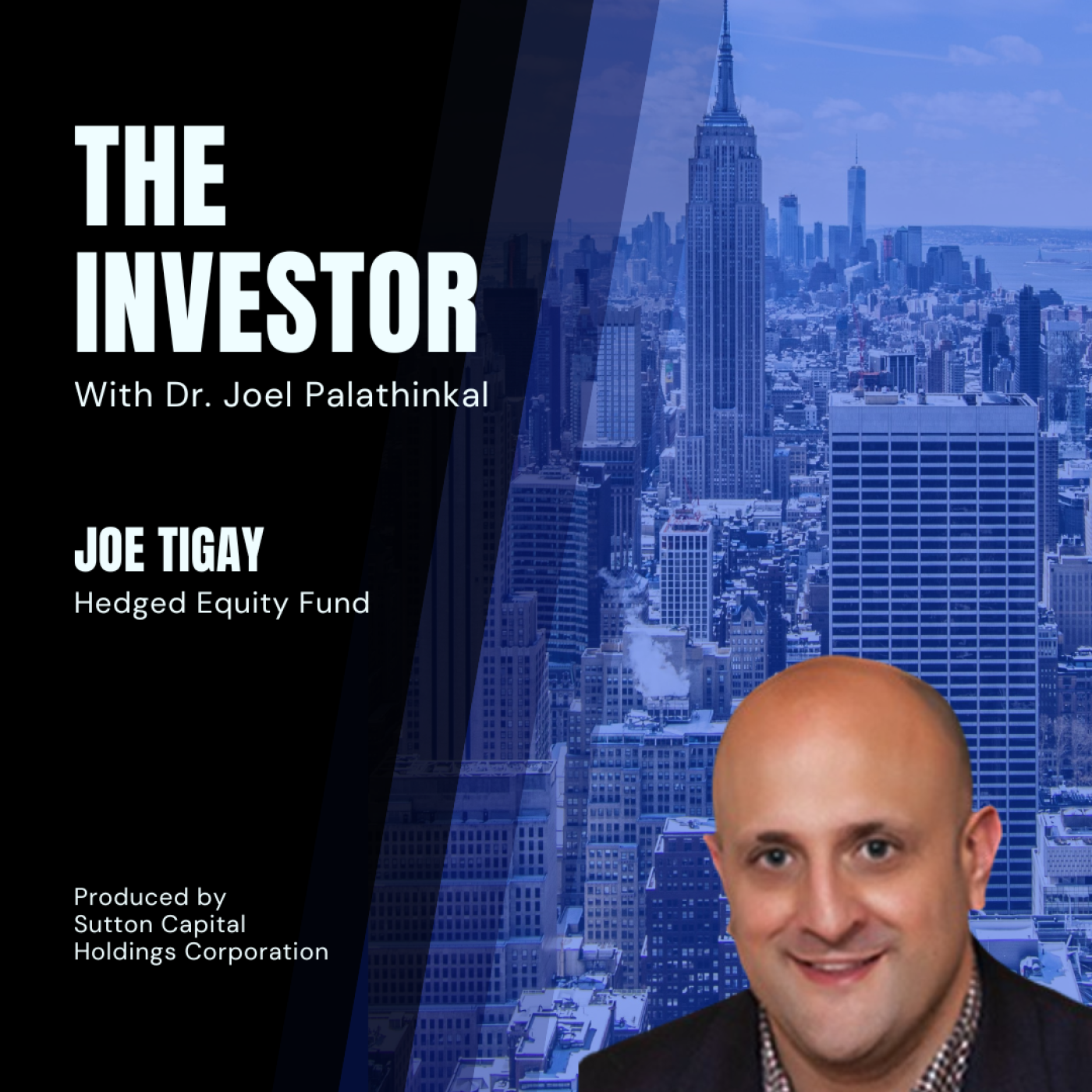
Welcome to the Investor, a podcast where I, Joel Palo Thinkle, your host, dives deep into the minds of the world's most influential institutional investors. In each episode, we sit down with an investor to hear about their journeys and how global markets are driving capital allocation. So join us on this journey as we explore these insights. All right, so we are live. I'm excited to have my next guest on. His name is Joe Tagay and this is the Investor podcast. We interview institutional investors, fund managers every week. We learn about their careers, their journeys, you know, the business of capital. So just to give you a quick overview on Joe Tagay, he manages the Catalyst Hedged Equity Fund and the Rational Equity Armor Fund, both of which focus on risk managed exposure to mega cap tech leaders. Some of the top holdings are Nvidia, Microsoft, Apple, Meta, Amazon, Broadcom, JP Morgan, Netflix and Walmart. We no longer look at the Fang, we look at Mango. Right. So we look at Meta, Apple, Nvidia, Google, and I believe it's Oracle.
- [01:16]
B
Right.
- [01:16]
A
So we're going to talk about further about that in terms of just kind of how things are changing and just furthermore, he's a member of Equity Armor Investments. Joe Tagay began his career with Strutland Equities LLC in 2005 working as a clerk on the Chicago Board of Options Exchange. He became a member trader of the Chicago Board of Options exchange in 2008. As a nominee trader of Strutland Equities, Joe managed and traded a basket of equities as a remote market maker. Additionally, he made markets in the largest open outcry trading pit in the world, the S&P 500 pit of the CBOE. Mr. Tagay also made markets and VIX options and he's a managing member of Tremis LLC. He holds a series three and 63 registration, graduated from Michigan State University with a BA in economics. So hopefully that was a good intro. Joe, welcome to the show. I know that, I know it was a tongue twister, but I got through it.
- [02:13]
B
Yeah. Thanks for, thank you very much for having me. Yeah, it's Equity Armor. We're portfolio managers on a couple of mutual funds now. We got a couple other private offerings also and I think it's just a rare, a very opportune time to be on and to be sharing my story with you. It's really exciting to be on with you just to be out there as a long volatility hedged equity fund. I think we're very unique in that space as former VIX market makers you mentioned. I think it's really exciting to share that story. I think people are going to be excited to hear this.
- [02:45]
A
Yeah, absolutely. Well, why don't we take a step back, Joe, and kind of go through your early upbringing. You know, I know that you went to school in Michigan, but tell me a little bit more about kind of when you were in maybe high school, getting ready for college. What did you think you wanted to do? Did you have some role models that were already hedge fund managers and how did that kind of influence your career and then kind of maybe your know, your early, early formative years as a, as a market maker?
- [03:12]
B
Yeah. So growing up, I am one of six kids, so I got five siblings. So my path to finance, you could say, really started at the dinner table where, you know, my father, he was a psychologist, but he was also an entrepreneur and really took guidance from him and had. Took a lot of values from him. But when you're one of six kids, you learn quickly the allocation of scarce resources. So we were comfortable. I don't want to say like I was starving or anything, but really we learned the value of efficiency and practical understanding of, of how things needed to get split up. And really that might have led my keen interest in economics. But beyond that, I was also a massive jock, if you can believe it. I think this is a different lifetime. But growing up really big into travel sports, big into travel, hockey, traveled across Canada, Midwest. I love the competition. I love competing with my teammates. Just that whole team sports element was really compelling to me. But quickly in high school, I realized that 5, 6, maybe NHL wasn't in the cards for me. So I took a step back from that and, you know, got to play high school sports with my friends. I became a football player. I was captain of the football team for my high school team and, you know, that was a different layer of, you know, learning the leadership and learning, you know, how to win and how to lead teammates in that regard. But just all just still having that team sports competitiveness I think is really important, kind of led me to success in the future in my trading career. But, you know, and then after that, I made my first maybe sign that I was a contrarian trader. I went to Michigan State University. Of course, I mentioned my big family. All five of my siblings went to the University of Michigan. My parents went to the University of Michigan. My uncles, my aunts all went to the University of Michigan. So I was a black sheep and just took a big contrarian step and really stepping outside my comfort zone. I think that was another great area of growth for Me to just see something different, see the world differently, make different connections, and just do something different than what was expected of me. The conventional wisdom. So really, really felt great about that.
- [05:30]
A
No, it's great. And, you know, how do you think being an athlete helped you when it comes to just being competitive in the sport of business and, you know, especially the sport of finance?
- [05:40]
B
Yeah. You know, so I majored in economics, really found a home there. And out of college, it's like, well, what do I do with, like, an econ degree? And, you know, I moved to Chicago and I had an opportunity to clerk on the cbo. And if you remember the SIBO floor, if you know, the SIBO floor, before it moved, you would go up an elevator, and you're kind of this big building. It seemed like kind of quiet. And you go up the elevator and you reach the trading floor. And the second I stood on that floor, I'm telling you, I was hooked. I saw the excitement, There was a buzz, the yelling and screaming. The screens are flashing, you know, the prices are changing, you know, sheets are being torn up and, you know, fighting and all that. And I was just at home. This is like the team sports for me. This, like, I knew. This, like, I knew.
- [06:27]
A
Just like being with your siblings, pretty much.
- [06:29]
B
Right, Exactly. I was at home in this area, and I was like, this is for me. And I fell in love the very first second. It was love at first sight for me when I saw the trading floor, and I knew that's what I wanted to be and where I never was going to make it in the NHL. I felt like being, you know, options market maker on the spx. Being an options market maker in the vix fit in that arena. That was the big leagues for me, and that was really exciting.
- [06:52]
A
That's amazing. So tell me about some of the early lessons that you learned kind of joining the pit. And I think it'd be helpful for the audience to understand the different roles and responsibilities on the trading floor. You know, you talk about the pit, maybe you can unpack that a little more. Just, you know, assuming that people are just kind of new to the industry as well.
- [07:10]
B
Yeah. So it's an open outcry pit. It's, you know, it's different from, like a stock market as you can understand the options. There's thousands and thousands of strikes. It's very hard to have a market, like, electronically for every one of those strikes. So it's really important in a lot of cases to have an open outcry market to get any depth to that book even today, but especially, you know, 15, 20 years ago now when I was getting started here, 2005. So it's really important to have like the market makers on there making these markets for all these options. What goes involved with that and kind of learning, learning the trade is you really have to think a lot differently than a stock trader. You think of stock trading, it's very simple to understand, okay, you know, someone's buying a thousand shares, they probably have a bullish view on the stock. Right. Options market makers have to be cynical. They have to think, well, why is this trader going to doing what they're doing? Are they thinking, is it a volatility trade? Is it the direction play? Do you buy? If you're buying puts on something, what's the reason for that? Are they protecting their long? Are they making a short? So options market makers are very cynical and they're kind of deciphering different clues.
- [08:23]
A
Yeah, no, that makes sense. And then, you know, what would you say are some of the biggest skills that are needed to do well in this role?
- [08:30]
B
Yeah, so as a market maker, it is that like problem solving and quick decision making. So I can remember very clearly as a clerk just kind of watching over the shoulder of a trader just very closely, keenly, just kind of sucking everything in. And trade had come into pit. It was, you know, the Dell or it was the, the Dell ebay pit where, you know, very, a lot of action was going on in this pit. And the trade had come in and it was mid market. None of the market makers really wanted to do it. And then from across the way, you know, the broker who has on the phone, the Goldman trader, decided that he wanted to take the trade and instantly react reactively. The trader that I was following jumped up and said, hey, I want to take it to, I'm going to take my market maker share of it. And I was just like. And no one, no one else in the pit wanted to do it. So he's kind of stepping out. And I was saying, hey, why, why are you making that trade? And he says, hey, that was the Goldman trader that was, that was saying he wanted to do that trade. I want to be on his side because he might have information that I don't know. He might know trades that are coming later in the day. He might know volatility is going to be moving that direction or the stock might be going that direction. In essence, I trust, you know, I trust the market's going to move with this trade. So I want to be on, on that side, the winning side of the trade, of course, that wound up to be. Right. So just kind of knowing the participants, knowing kind of the flow is kind of like a second layer of understanding in the game.
- [09:53]
A
No, that's helpful. And, you know, how do you, you know, obviously we can't have a podcast without talking about AI, Right. So how do you think AI is going to be helping the workflows? I mean, this is not something that's new. I mean, algos have been around for years. I think they have a type of algo that's called genetic algorithms. They mimic the activity of DNA. But there's so much statistical analysis, especially with the AI technology, where you can do quantitative analysis, you can do fundamental analysis at the same time. They have a whole concept of quantum mental analysis, too. I've heard, too. But, you know, how are some of these tools going to help what's already there?
- [10:40]
B
Well, for a modeling perspective, it's outstanding. You'll be able to get a lot more research done faster. And that is really exciting. But from like, the human standpoint, the example I just gave, I don't know if the AI is going to be able to pick up on that level of complexity. It's not going to be able to understand, like, differentiate a different bid from another bid, if that makes sense. Maybe it could.
- [11:06]
A
Or.
- [11:07]
B
But it seems like really hard for me to know if there's a level of intelligence that you kind of need that human to really get. Even if we're talking about super intelligent computers, it's just kind of knowing the direction of the data input is kind of. Is kind of my question. I don't know how to do that. Maybe in the future it's something that is possible for me. It's a great. It's just kind of sign that while it might make people like me more productive, people like you more productive, I don't know if it can ultimately replace a person like me. I mean, and maybe that's just me wishful thinking, hoping my job's not going to be replaced by a robot anytime soon.
- [11:52]
A
Well, I think, you know, humans are still needed to be, I feel like the conductor. Right. So if you're doing a workflow, you still have to command. I think, at this point. Right. My opinion, I'd love your opinion on this, but I feel like humans are still kind of the orchestrator. They're still going to be kind of guiding the AI and telling them what to do instinctually. And then the AI is just going to follow those steps, whether it's Kind of just back office functions or just kind of executing on a trade, if this, then that. But I think you still need some type of brains or you know, leadership to kind of guide the AI or you know, whatever the analytics are to, to perform what's, what's required, I'm assuming. Right?
- [12:34]
B
Yeah. And I'm, I'm maybe, maybe this is my skepticism showing. I'm a true believer in AI, true believer in the, in the transformational technology. But I'm skeptical of like the short term promises that some of the people are making and maybe the fears that people have out there that AI is going to be taking over in like, you know, two or three years or, or even, you know, the, you know, if they make it, everyone will die type of prophecies where, you know, super intelligent computers are going to destroy humanity. I'm more on the side that these are really amazing tools, really amazing software built by humans for humans. And I think it's going to continue like that for the foreseeable future. Maybe that's an optimism, but it's kind of a skepticism of the narrative that AI is going to be destroying humanity.
- [13:28]
A
Yeah. And when you think about portfolio construction, how do you think about that when it comes to obviously all these different holdings? Right. So you know, we all are familiar with all the indexes and you know, like if anyone studies for the cfa, there's a whole volume in the CFA preparation that's called portfolio theory. There's that traditional theory of how you think about your weightings and how you're managing a portfolio and obviously probably rebalancing and re indexing. But to look at a risk managed exposure, what are some fundamental things that maybe a new manager starting out should think about?
- [14:10]
B
Yeah, so we do it a little bit differently. As I mentioned, we're long volatility with our long equity exposure. Now we are trying to have large cap exposure and have close to an S&P 500 exposure on the equity component. But having that volatility component dramatically changes the performance of the portfolio. As you can see, it's a bit of a long, short. Having a long equity component, having a long volatility component. So that really, that really changes how in practice the portfolio functions and how in practice we need to manage it. And it's very simple from a management perspective, is that we just have the philosophy and the conviction that these stocks that we own over the long, long haul they're going to be higher, we're going to buy and hold those and just watch them appreciate, but then have Having this volatility component which is, you know, very confusing to most people, owning VIX and VIX futures and volatility, people think of, you know, think of vxx or the, the products that just decay to zero or something extremely risky to add on to portfolio. It just really takes a unique understanding of the product to be able to, to hold it without a massive decay component to it. But just understanding that, yes, while the equities over time are going to appreciate in value, the VIX and volatility, it will go up sometimes, it'll go down sometimes, but it'll wind up at the same spot. In fact, it's mean reverting. Whenever it's kind of high, it's going to want to go lower. Whenever it's kind of low, it's going to want to trend higher. Just having that understanding of owning both at the same time in a sense, but buying more when it's low and then selling it once it goes higher. When it goes higher, you get that natural rebalance. I don't have to do a lot of thinking to know, hey, the VIX is up at 40 or whatever, it's time to lose these futures. And by the way, when the VIX is higher, great stocks are lower. It's a built in, sell high, buy low component to the portfolio. So that's my strategy. I think if I were going to recommend a strategy or advice to somebody starting out, I would say have an expertise, have an area that, you know, a natural area of edge for yourself to get into the market where you have, you know, something where you can do better than the market otherwise. This just is just so many other competitors out there, it's really hard to make any noise.
- [16:45]
A
Yeah. When it, what about like building a team? So as you kind of mature as a manager and you're trying to find talent, you know, what are some things that you should, you know, think about? A few that I think about obviously is integrity and, and you know, being reliable. But just, you know, in this industry, what are some of the most important things that you look for if you were to find a portfolio manager to, to work for you, if you were to hire somebody, what are maybe the, the, the attributes, the skills and then maybe the personality traits as well?
- [17:13]
B
Yeah, well, I'm, I'm a very positive guy and I, I like that emotional consistency when I'm talking, you know, with my partners. You know, sometimes market doesn't go our way, we don't, we're not positioned or the market's not going the way that we'd like it to, or, or whatever and you know, it's not going the way the model predicts it for instance. And you know, to have that, you know, positivity or understanding where it's not panic, it's not, we're not fighting with each other, we're just saying okay, what's the reality? What's going on? What's not working? Oh, maybe this is an opportunity somewhere else because the model says that this should be here. Maybe, maybe we can take, take a chance here because this will catch up to the rest of the market. Having that level headedness is absolutely critical. If you're panicking, if you're worried, if you're, you know, if you're behind and you're trying to play catch up, that's where it just really starts to combine compound and you really get lost. So having that level headedness, emotional consistency kind of not like, you know, not that like I, I'm not urgent or like really want, want to win. I mean winning is like paramount for me. But it's just like the way to do that is to be calm and understanding, understanding the market without any like fighting or, or, or just urgency to like make something happen like now. It's just like the patience to like let the trade work out over the long, long haul is really critical.
- [18:40]
A
Yeah. And you know, how do you select specific holdings in your balance, you know, in your kind of weightings and your strategy? You know, because I mean we, we talked about Nvidia, Microsoft, most of the, you know, the tech companies. Then we're also seeing Walmart as well. Right. So I think, you know, I know Walmart acquired Jet.com a while back and they're just a behemoth. But you know, what are some you know, kind of high level insights that you're maybe seeing in the market and how would you advise kind of new, you know, new managers to kind of think through, you know, their portfolio, their portfolio theory if we're looking at like maybe a top down approach.
- [19:20]
B
Yeah. So I mean I obviously like growth. I like companies that are, that are beating their earnings consistently. There's certain management teams that I, I gravitate towards, certainly gravitate towards you know, founder leaders where I'm just kind of, they have the vision for their company. And really for me the companies that I like the most are the ones that are less focused on beating this quarter or you know, and beat or you know, generating like the best like short term result. I'm really looking at companies that are, have a longer vision out there. So, you know, I love, I love, I love the big cap tech right now and they have like the cash on hand and they have the, the privilege. I mean they've, they've just earned all this cash and, and they've had tremendous success and they're kind of reinvesting that back into this AI trade and I'm really excited about that. They continue to double down on their capital expenditures. They have conviction on it and I mean it's just a fantastic earning season so far for the AI trade, even though the market's not necessarily rewarding it. Maybe, maybe the multiples are catching up to itself and a little consolidation, which is absolutely welcome. But it's been a fantastic quarter. I love what I'm seeing out of Google, specifically our cloud, you know, growth and if the cloud is growing and they're expanding their cloud, I mean, that's just really exciting to me and it just kind of validates the whole hyperscaler narrative for now. And then the question is going to become, okay, what's going to happen with it? And then I look for companies like Palantirs and, and companies to copy, copy them to take, to kind of take the, the AI to a practical level, maybe use case for companies and, and then, and then we get further down the road of like physical AI, which is really exciting too in a different world. But I, I'm more looking, I think that's two, three years plus away for that. But it's, you know, something we're going to start to see samples of, you know, products that were just, you know, just, just, just, you know, snippets, the Tesla robot, et cetera, so the Amazon robot. So we'll be starting to see that soon.
- [21:36]
A
Yeah, I was actually going to mention Tesla because I didn't see it on the list, but I wanted to get your opinion on just the vision of Elon. Right. I mean, because he's got the robots, he's got the robo taxis. You know, if you think about it, all of this kind of cohesively connects together with maybe living on Mars, right? Like, you know, building tunnels so you can get places faster. You know, obviously if you have a cryptocurrency that's powered on top of X, that's going to be able to, you know, move money much faster because you're not going to have a clearinghouse or ach transactions on Mars. So just want to kind of maybe take a step back and just, you know, hear about your opinions on just kind of the, the bigger vision for Tesla and, and, and you know, where you think that's heading. Yeah.
- [22:20]
B
So obviously the recent news of the pay structure for Elon, that's kind of been dominating the headlines. Bottom line is I would not want to be in Tesla without Elon. Elon is there. I think he's kind of misunderstood. I mean, obviously he thinks a lot of himself. I think he thinks he's the greatest engineer that ever existed. But I think of him as a fantastic salesman and a fantastic futurist. He understands where the market is moving and he's great at selling that new product in a way that Steve Jobs was also. So I think of him like that and I think he's fantastic for the company and I'm kind of excited to see what he does. He's kind of been, you know, awall the past couple years. I think this new pay structure gives him a little bit of focus here, gets him back involved, focusing on, on Tesla here, maybe kind of bringing in some of the, the AI stuff that he's been working on at Twitter or X or whatever, bringing that in, kind of saying, hey, it's my side project. Gonna bring it in. Pair this, you know, you know, pair this AI, you know, language model with the physical AI that, with the cars that we have on here. I think that's a really great pairing. And we'll see, you know, time will tell or we'll see how it looks in a couple years.
- [23:41]
A
Yeah. And I just, I got a little bit of an overview for the other people that aren't caught up. But I mean, you know, based on the headlines, I mean, Elon, Elon's pay package is a potential 1 trillion compensation pay plan approved by Tesla.
- [23:52]
B
Right.
- [23:53]
A
And then I think the, the package was approved by Tesla this month, you know, with, with over 75 voting in favor. So that's kind of the, the main thing that, that Joe is talking about. And you know, I mean, I think you're right. I mean, Elon has mentioned this before. I mean, being a CEO comes with a lot of chores and he's a product person. Right. I mean, I think he'd prefer to just sleep on the couch in, in the Tesla factory and sit with the engineers and solder the circuits himself and build those products. He's a product person. But then I think to your point, the same way that Steve Jobs did, he's, he's a, he's an expert when it comes to showmanship. Like when he has his product release, you know, you've got, you know, robo taxis picking people up You've got robots serving you cocktails. So you know what, what a, you know, product release that is, you know, kind of being able to do that. I don't know anyone else that's really, really done that. So.
- [24:55]
B
No, I know. It does remind me of, of jobs when you know, he'd have the, but wait, there's just, just one more thing. And like you'd surprise everyone with like the, the last, the last component on, on the big releases. So I, I think he has that element of flair, a little showmanship and it's, you know, it's a little cheerleading goes a long way. I think lately with the stock market. I think he's, he's been like the biggest proponent, opponent for Tesla. He's been, he takes on the short sellers directly, he calls them out and he is an advocate for the stock in a way that a lot of other CEOs aren't. And you know, some people don't like that, some people love it, but it is just his style and that's what's made him so successful. And I wouldn't try to change it because he's had a tremendous success.
- [25:42]
A
When do you think we'll have Tesla, like it'll be common for people to have Tesla bots in the house?
- [25:49]
B
Yeah, great question. Elon will say probably next year or coming around next month. I imagine it's going to be a little bit longer than that. I'm probably, I, I'd guess five years maybe. But the rate of change or you know, is just so amazing right now in this tech world. So it absolutely could be, it could be sooner, which is just phenomenal. It's really exciting. Just, we are, we are accelerating really fast. This is just for me. I am just so thrilled with this job that I have that I get to research these companies, research these new things that are coming out because it's just, it's just mind boggling to see what's going on and just, you know, Google is just right. I think that's my favorite company right now actually, just because of everything that they're in, they're in all of this and they also have, I think they have the lead in the quantum, and the quantum computing is just, you know, mind boggling to me. I don't fully, I'll admit that I don't fully understand the physics of it, but it's just like, like the, the computational power is just, is just amazing.
- [26:53]
A
Yeah, no, I mean like, I, I, I love for you to unpack that a little bit because I, I'VE been playing with Gemini and I've also been playing with some of these, you know, vibe coding platforms and it's just crazy. I mean you could essentially build an app or a website in, in minutes. You just need to think of an idea and you can launch it where before you'd need probably a couple hundred grand and maybe a seed round to actually set up the infrastructure to actually build and launch a software company. So for me that's been just groundbreaking. I like to call it the Uber moment. That first time when I saw that Uber car come up on my app, I was like, wow, this is amazing. And I felt that this year when I was like, wow, I need to build a website. You just type in a prompt and the entire website is designed. So that's kind of the new Uber moment for me. But I think, you know, down the line, I think that's going to continue to evolve. And to your point, I mean that's evolved much like there's been a lot of change within one year. So like things that we were talking about a year ago, it seems archaic. I mean I can't even think about building a website using like a drag and drop builder anymore. That seems so like old school, you know, where you can just think of an idea and it comes out. So, you know, I'm familiar with Gemini. Based on my knowledge, I know that Google's main bread and butter is their advertising platform. You're going to have a lot more insight. But I think still when you're running ads for any business, whether it's B2B SaaS or consumer, you still need a campaign manager to run those ads, optimize those ads, change the copy. Where I think the Google Ads manager even meta. All these media platforms that are helping businesses grow are going to eventually probably optimize some of that. And that's where I think the innovation is. But can you just unpack a little more about what you're excited about with Google?
- [28:50]
B
Yeah, well, so they have the driverless cars, they have the cloud, they're really in everything. I think I talked about Elon being a fantastic futurist. One of my all time favorite futurist is Ray Kurzweil on the board of Google. So I think they have a good, they have a really good vision of what the future, what the future could be and you know, the language models. I think when, when it first came out, Google just stepped on, you know, they stepped on the rake and it hit them in the head because they were, they were so far behind at the giggle and they just felt like, well this is just a silly game, like the real stuff is elsewhere. And I think that was just bad marketing, bad pr. But they were right. They, there was so much more to the development of this, this AI game and I think they've, they've turned the corner tremendously. Obviously their Gemini is as good as chat GPT if not better now in my opinion. And they're using it to augment their, their search revenue, uh, which is something that a lot of people didn't think was possible. So it's another, another win for them. Also I really like the deal they have with Apple. It kind of reminds me of, you know, when the dot com thing was booming and Google was just, you know, no one really understood what Google was. They sold their or they, they leased their pro, their software to Yahoo and Yahoo was the big company. And Yahoo said oh you guys have a really good search. I want to use that. Well, Apple using Gemini I think is, is really huge for Gemini because I think that will get Gemini entrenched. As you know, this is the AI brain I want to talk to. You don't think I need to search the web for something. You think I need to Google something. So that's going to be the game. Is it going to be I need to chatgpt something or I need to Google something going forward? So we'll, we'll see that. I think that's the big race.
- [30:49]
A
Yeah. How do you think about, you know, you talked about. So how do you think about like risk management? I think that the fact that you have kind of evol volatile strategy plus kind of a long strategy. I think that, you know, in theory, to me it seems like you're already kind of hedging it with the, the vehicles that you're using. But are there other mechanisms that people can use to kind of think about, you know, managing your downside?
- [31:13]
B
Well yeah. 100 we obviously rebalance quarterly or even frequently. We had Palantir on from like the low 50s and following it very closely. It's had a tremendous run. We have Robin Hood in our portfolio. It's had a tremendous run, is outgrown, it's desired waiting. You know, when things like that happen, you take some off the table and reallocate it elsewhere. But it's, yeah, it is for, it is primarily for us like just kind of accepting the market that we have. We have a market that is, you know, highly valued. We have a market that many call it a bubble. I would attend to agree with that that phrasing of it a bubble. But the question is then, okay, it's a bubble. Does that mean it's going to pop tomorrow or is it going to pop five years from now? Are we in, are we very early in the inflation process of the bubble or are we at near the end? And for me, I'm agnostic to that. I think I'm excited if we, if we go up for another five years. If you go back to the dot com bubble, you know, we look very similar to that. If we're in 95 and we rallied really strongly for another four plus years and the NASDAQ had 700% returns. So if that's the bubble, you can sign me up for that. I'd be really excited about that.
- [32:32]
A
What's the typical hold period when you think about a long investment strategy? Is it five years? Is that kind of a good time to kind of hold on?
- [32:41]
B
I don't know if I have like a desired like time frame for my long term gains. I mean, obviously over a year is a minimum. But yeah, I'm looking, I'm looking for companies for about five years. But the story can change quickly if, you know, management makes a decision that I don't approve of or I can, I can see is, is wrong.
- [33:05]
A
Yeah, no, man, absolutely. What piece of advice would you have for people that are just kind of getting started, they're kind of trying to build their, the reputation in the, in the community. How, you know, what are some tips that you'd. You give people for networking and building relationships and building trust?
- [33:26]
B
Yeah, I mean, the only thing I could say is to be yourself and let yourself be out there, be in the arena, let yourself make some mistakes. It's okay. You'll be able to bounce back. If you have the right strategy, just believe in yourself. You'll be around, you'll be able to bounce back. So just be yourself and just be useful. Be helpful to people. If you're useful and helpful, people will want to reach out to you and say, hey, there is some value in talking to you. So I'm gonna put you on my speed dial and give you a buzz.
- [34:01]
A
Yeah. Early in my career I worked for a stockbroker. Um, you know, and I had to read Business Week, I had to read the Wall Street Journal every week. And then every Monday we had to kind of give a recap on the market and, you know, share our opinions and that was really helpful for me. It forced me to kind of be in the news and kind of stay on top of all the headlines. What's changed since then? So I mean what are some of the, you know, periodicals or resources that you think are important to read every day? I know Jamie Dimon gets up at 5am in the morning and he reads like three newspaper every day. So you know, would love your opinion on just kind of, you know, how do you do the research and then when you go deeper, what are some of the tools that you can use to kind of, you know, double click on some of these potential investment ideas?
- [34:50]
B
Yeah, I mean I have like a Google Trends alert. I get stories about volatility, I gravitate towards those. I have a Bloomberg machine. Not everyone has access to that, but I like browsing through the top headlines every morning and picking out a couple. But you know, I, I, I have tendency to, to, to want to get many different opinions because I don't, it seems like the narrative just, I, I don't, I don't like it. It's always like we need an explanation of why stocks are moving, you know, half of a percent every day. You know, it's just, it's not always, it's not always like definitive one reason and maybe it's, you know, I like to look at the bigger picture, like a week's worth of news, kind of add everything together because you know, yesterday's news is impacting today's market. It's not something, you know, maybe something's a week down the road that the market's getting ahead, ahead of. So yeah, I like, I like multiple different sources. Absolutely.
- [35:52]
A
And.
- [35:55]
B
Just, I just soaking it all up. I think today's, today's media is so rich. You know, I watch, you know, I watch YouTube videos, I watch podcasts, I read. So yeah, there's, there's many, many different sources. But I, yeah, maybe and maybe just the bottom line, just the price action is the most important thing to follow. Just understanding just a little bit of the fundamentals and technicals that the market's going through on a daily basis. You know, last week we came close to the 50 day moving average. Just kind of having that like in your back pocket, like oh, this could be an area of support here as you're following the market.
- [36:34]
A
That's a good, you know, point to touch on. So in terms of the fundamentals and then also some of the technicals, can you just kind of list a couple of the attributes that we should be looking at on both facets of the, the research?
- [36:49]
B
Sure. So you know, on my screen I'm always watching the vix, I'm always watching I'm always watching the S P 500 and the NASDAQ, just kind of watching how they all flow together. Now. There's often, I feel like a stock in particular that's kind of deciding the market. You know, it's very often it's Nvidia lately. Like the market's gonna kind of move and react with Nvidia and just kind of watching that and saying, oh, you know, the price action in this area is kind of leading, leading us. Maybe, maybe the rest of the market's going to follow. Very keen, keen on that. And when it comes to volatility, I really kind of focus on, on that. I really gravitate towards the VIX naturally. You know, that often tells me a lot of clues. The VIX is down or soft and the market's also soft. You know, it's kind of like, oh man, this is kind of maybe an exhausted sell off. Maybe there's not a lot of room to the downside here and vice versa. If it's up when the market's up, I mean, say, oh, wow, there's something is going to happen. There's going to be some movement soon.
- [37:52]
A
Yeah, no, absolutely. And then the other question I have is when you're kind of building these strategies, actually, you know what another question I have is just kind of tell me a little bit about some of your role models and kind of some of the, maybe the advice that they've given you kind of early on as you were kind of thinking about your career decisions.
- [38:14]
B
Yeah, so absolutely. My father, major role model, of course, just kind of, you know, it's thinking about Musk. I mean, it's just like he wouldn't be good if he acted like Bezos or type of a thing, you know.
- [38:26]
A
Yeah, interesting.
- [38:28]
B
Because, you know, Musk, you know, people are just down on him because he's, he's so demanding or so, so strange. And it's just playing your game, doing what you're good at. So I think, you know, I, I take a lot from my father and that just kind of saying, hey, you know, just kind of focus in on what you're good at and you know, the rest will kind of follow and play, play your game. And maybe that's something I learned from sports also. Just kind of, you know, not, you know, if, if our baseball player with that was a home run hitter that was pulling and a coach told me to try to hit it to the opposite field, that would be the wrong advice. So similar thing here just in, in trading just kind of, you know, Stay in your lane, Underwood. Understand what you're good at and. And go from there. So that. That's definitely really good advice I got from. From my dad. And just when it comes to trading, just traders that I currently and still work for and with are Brian Sutland and Luke Ribari, Just two guys that have tremendous experience in options trading. I traded behind them, watch them trade really large books, just kind of soaked up all of their knowledge. And, you know, I think that's where I got, like, the skepticism from and kind of like the thinking of the market more like chess rather than checkers, where it's like, you know, understanding there's different reasons a person might want to put on a trade and understanding. Understanding the market a little bit differently that way.
- [39:49]
A
Yeah, no, that's helpful, I think. Kind of thinking about what the repercussions are kind of two, three steps ahead before you do it, kind of visualizing that play and maybe. Maybe thinking about three different outcomes that can happen, I'm assuming, right? Just like chess. Absolutely.
- [40:03]
B
Yeah.
- [40:04]
A
Yeah. Awesome. Well, hey, Joe, thanks for all the time. I think this was really amazing and appreciate you sharing all your wisdom. I definitely learned a lot and agree with a lot of your points in terms of the market and kind of where the technology is heading. So thanks for all that you do and learned a lot. So thank you.
- [40:21]
B
Thanks for having me.
- [40:22]
A
All right, take care. Bye.
- [40:29]
B
Sam.