Loading summary
Transcript47 lines
- [00:03]
A
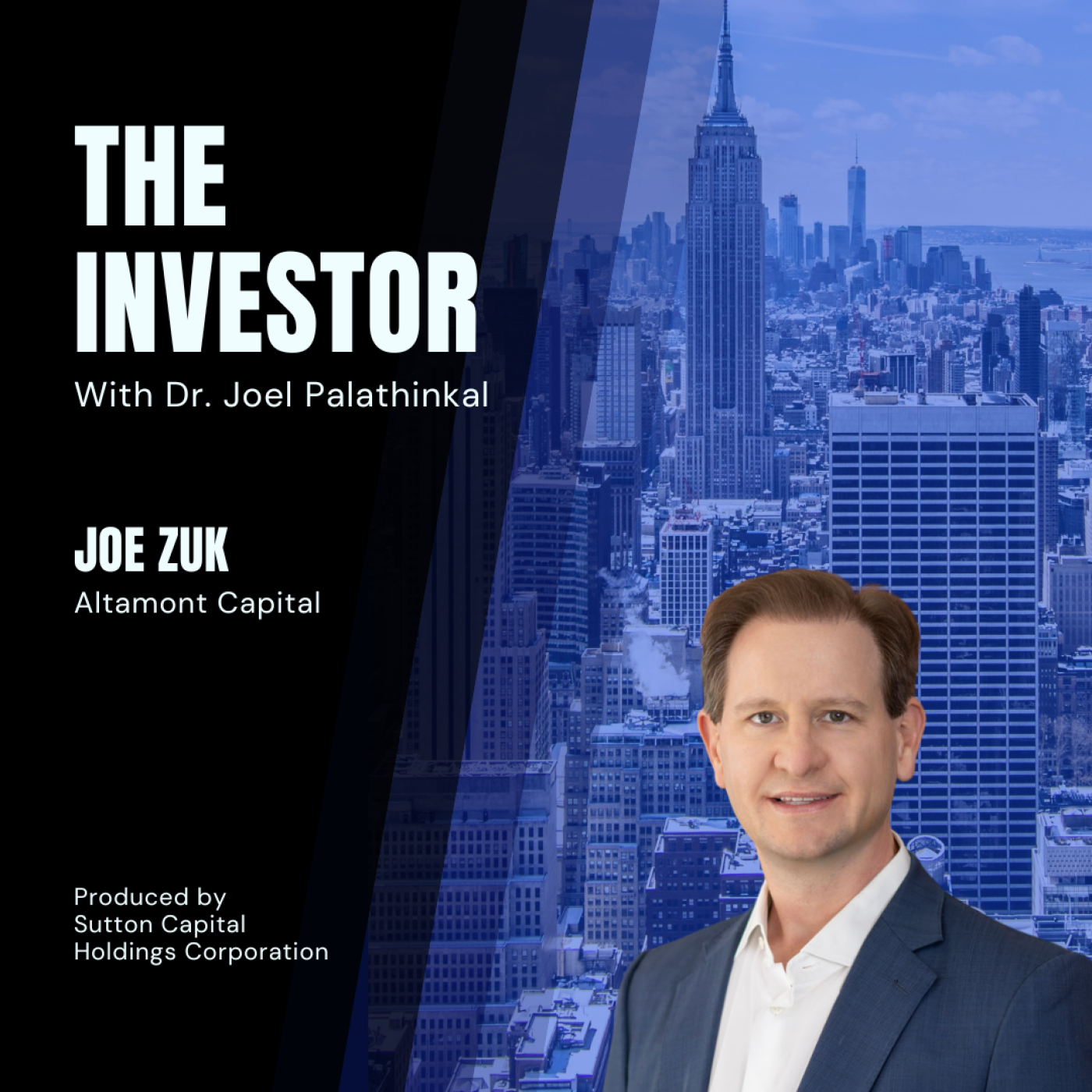
Welcome to the Investor, a podcast where I, Joel Palo Thinkle, your host, dives deep into the minds of the world's most influential institutional investors. In each episode we sit down with an investor to hear about their journeys and how global markets are driving capital allocation. So join us on this journey as we explore these insights. All right, so we are live today with Joe Zuck. Excited to have him on the Investor podcast. Really excited about his background because Joe comes from a strong investment and operating partner background. He's currently the operating partner at Altamont Capital. They're 4 billion plus in AUM. He's worked hands on with leadership teams across multiple portfolio companies, also in the insurance space and financial services space. So I think there's going to be some interesting things to talk about. You know, obviously with my background in fintech, I think there's just a, you know, a lot of trends and you know, just obviously where AI is headed. I think there's a lot of hot topics to cover. But he's, he's created several high growth platforms as experience spans scaling organizations through varying markets, strengthening operational discipline and aligning boards, management teams and capital providers. And a bit more about him can be found on his website. It's Joe Zuck.com so Josie's one of the biggest friction points in private equity. He feels that the disconnect is between the investor's thesis and the portfolio's company's daily execution. You know I, I mentioned this earlier with our community. You know there's, there's a difference between being a, a CEO that's taken the company maybe from 10 million to 100 million and then there's a different type of person sometimes that is needed to run a private equity backed company. There's different requirements, there's different KPIs that are needed once you're backed by, you know, a large private equity entity. So you know, there's probably some, you know, insights that you have around that, but I think really just understanding that gap and then regularly Joe finds that money guys need to develop an operator's mindset. So growth is often capped because private equity teams operate as scorekeepers focused on spreadsheets and compliance rather than being more of a strategy architect, really driving value. And then that value essentially translates to, you know, top line revenue and ebitda. So again, you know, thinking about the modern PE firm is something that is really important, especially with all the tools and analytics and data that we're looking at and that we're tracking. So Joe, hopefully that was a good high level overview And I want you to kind of just, just maybe take a step back and talk about your early days. You know, what did you study? What did you think you wanted to become? Did you always want to become a private equity operating partner? A lot of times in our career we make a lot of pivots. So we'd love to kind of maybe go back to, you know, high school, college, you know, what was going on in your mind and then where'd you go to school and then, you know, kind of walk us through your career.
- [03:13]
B
Certainly, Joel. Well, first off, thank you for the opportunity and great to connect with you today and your audience and that was a really kind intro. Thank you again. Yes. I was born and raised in Los Angeles, California. Always wanted to get out to New York, so I was fortunate to get accepted and attend nyu. Started my career off as an intern over the summer. Was wanting to actually go into investment banking and thinking I'd do a career on Wall Street. Was fortunate that given my uncle ran a publicly traded insurance company, he was able to secure a couple different internship opportunities. But kind of nudged me into the world of insurance and reinsurance. And like most folks in reinsurance, very few outside the industry know what it is. Certainly as a 19 year old freshman college student, so he described it as investment banking for insurance. I was like, sounds cool, maybe I'll try that. So interned between my freshman and sophomore year at a firm called Willis Re at the time and really enjoyed it. They asked me to stick on during the fall semester on a part time basis. And then following the fall my boss left to start a new reinsurance brokerage office in New York where they presented me a full time offer. And so I went to school at night and worked during the day. So at 19 years old I was working full time actually on Wall street, but for a reinsurance brokerage firm. And that was the start of my career. Ended up accelerating my path in university and graduating in three years. And funnily enough, they actually had to modify the 401k plan for me because you had to qualify at 21 years or over. So I was only 19 at the time, so pretty funny. And then first decade of my career was reinsurance brokerage and underwriting and then saw kind of where private equity was starting to gain traction and interest in the space in 2013, which was in the commercial insurance, MJ Insurance Services Retail space with the reoccurring cash flows that insurance brings. And that really was kind of where my first exposure to private equity and investment banking in the Fig Space came, so made the pivot into primary insurance. Working for two MGAs, one on the West coast out in California and then one on the east coast out in Florida. And spent about eight years during that standpoint. My career was brought in a private equity investor into one of them on a minority basis. And that really opened my eyes as to what the power of private equity could do. And then started frankly calling on investment bankers and private equity players who were interested in insurance services and fig and just starting to get to know the investing principles and what the landscape looked like. Joel, during that time, actually, Cole called Altamont in 2015 and pitched them a roll up strategy and idea which I was still naive to what it meant in terms of forming a portfolio company and a platform and what that meant, but certainly started to learn the ropes in late 2019. They asked me to join as an operating partner with a shared vision of building out an ecosystem and insurance part of the financial services strategy here at Altamont. And since that time we've gone from two to nine portfolio companies in insurance over the last six years. So it's been a fun ride.
- [07:07]
A
That's a, that's an amazing strategy to kind of create your own destiny, right? If you want to get into private equity, you want to become an operating partner, reach out, get out there and talk to people. You know, kind of in the new year I was really inspired. I was just kind of getting back from vacation and saw this post from JP Morgan. So sorry. It was Jamie diamond and he was just sitting on a panel and he's like, look, get out, get out, get out, get out and talk to people. You know, we're one of the top banks, but look, we're, we get to know our competitors. You know, it's a very, very competitive space out there. Get out, get out, get out, get out. Talk people, talk to people. Understand what their needs are, understand what their goals are. So I think you did that successfully with Altamont Capital. A lot of people in this audience are, you know, coming from different backgrounds, are looking to kind of pivot into private equity and trying to find that pathway. I've had a guest on the show before that has used a similar strategy. He cold messaged different private equity firms and put together like an independent sponsor deal and he kind of convinced them that it was a good opportunity and I think they put some money behind it. But I think that's a great strategy. What are some of the things that you learned when you were going through that process? I'm sure you probably reached out to a couple other PE firms as well. So what advice would you give for people that are trying to do cold outreach and reach out to private equity firms and kind of make that operating partner come to fruition?
- [08:40]
B
It's a super great question, right, Joel? And I think a few things. One is the old adage of you create your own luck and you can't get discouraged, but also attempting to bring value and showing value with either a piece of thought leadership or a particular take on an angle and being humble and respectful, but also not asking for anything, but really trying to show that, hey, you do have expertise in a given industry or insider knowledge that can be quite valuable to a private equity investing principle. That's one thing too, is to network and be willing to open doors and, you know, demonstrate knowledge in the space and insight. And then I'd say finally is, is getting out there, right? It is certainly about, you know, a numbers game in some way, right? Of, of really understanding the landscape, understanding who's out there, networking and you know, putting yourself in situations where you can be at the nexus of opportunity. And you know, it certainly worked for me and it's worked throughout my career. You know, certainly a lot of hard yards in traveling and flying and hotel rooms, late nights and early mornings, but it definitely pays off.
- [10:09]
A
Absolutely. You know, what you mentioned a second ago, not asking for things, you know, there's an adage that I always live by. It's, it's essentially if you're asking for money, you will get advice and if you ask for advice, you get a job or funding. Right. So a lot of times if you're kind of humbling yourself to your point or adding some value, you know, sharing an investment idea or maybe that person posted something and you have kind of a personalized, you know, take on that, I think that definitely makes, you know, makes it a more meaningful touch point. My comment earlier, in terms of what it takes to be a private equity backed CEO, what's your reaction to that? You know, you have any kind of examples or just kind of comments on just kind of the inflection point where sometimes the CEO needs to be replaced by maybe a more seasoned professional. And then look, historically we've seen this, right? I mean, if you think about Apple, Steve Jobs left, and I think they brought on the, the Pepsi CEO and that didn't work out. So what's just your concept or thought process on just kind of private equity and finding the right management team?
- [11:25]
B
Yeah, no, it's a really good question. It's probably, you know, at Least more than half, if not two thirds of what we do is spend time on cultivating talent and human capital and networking to. You know, I always say, you know, for a lot of our portfolio companies, our teams, you know, frankly just operationally out execute. In terms of the CEO and the executive management team, a lot of it comes down to a couple key things. One is pace. Certainly the pace of play with private equity is faster than in a family run business or a different capitalized business. Two is communication. Being able to understand and share vision amongst with the private equity principals and the various constituencies and really outlining what that vision is and making sure that you're on the same page or if there is a pivot, explain why and present your case. And then three is evolution. Right. Many times with our portfolio companies or what I've seen where I've done independent board work or advisory or consulting is sometimes the team you start with is not the team that you end with. And that's a reflection of the company itself evolves and changes and the skill sets and needs of that company evolves and changes. And a good CEO can adapt and grow with that. However, there's sometimes changes that do need to be made and frankly may go with a mindset of hey, we came in with the CEO, but this company either scaled far more rapidly than the capabilities of that executive team or that management team. And we needed to bring in folks that can manage a more J curve, vertical, growing, venture growing type business and others where maybe it's a more mature business and we need something where a CEO is used to running 5,000 employee firm versus a startup environment. Right. Where every day is a bit different. Those are some of the key things that we've seen. I've been in the position where I've had to go and unfortunately replace a CEO and identify the right talent. And it's never fun or easy, but I think it's absolutely necessary in instances where you know that the company needs to kind of move forward.
- [14:02]
A
Sure. What are some of the characteristics that you think private equity backed CEOs need to have? And you know, let's talk about kind of one of the things that you, you really are passionate about. Just kind of really thinking about that delineation between the investment thesis and the daily execution. Where does that disconnect happen?
- [14:26]
B
Yeah, so I mean I think oftentimes that disconnect happens where the thesis may be written in the conference room. Right. But the execution happens in reality. Right. And oftentimes it may say like hey, let's expand into adjacent markets. But perhaps you have a leader of sales. Right. That's never really, you know, tigers don't change their stripes. Right. And never been able to adapt or change and doing the same thing for the last 15 or 20 years. It doesn't mean that they're a bad individual or they're good at their job. It just means that you may need to change the culture in the organization such that, hey, we're a fast moving organization. We need lateral thinkers here and not just folks that do the same thing. You know, time and time again. I think that firms are often brilliant at identifying what should happen. They're far less interested in and invested in understanding what often doesn't. Right. And we spend a lot of time on that as an operating partner and certainly our investing principles.
- [15:42]
A
Yeah, absolutely. And then you talked about being a scorekeeper versus a true strategic partner. So when you say score, are you talking about just revenue metrics and just.
- [15:55]
B
Yeah, just sometimes the financial metrics don't always reflect what the reality is. Right. And so, you know, as I think about it, and you know, it's not just always, hey, why is EBITDA down this quarter? Right. Well, you know, certainly, you know, good financial reporting and the pulse on what is happening. I don't think that necessarily is a question. Just waiting for that quarterly board meeting. I think we need to better understand like, hey, what's slowing us down? What's changed in our market? Has the addressable market or the competitive landscape shifted in a meaningful way? Has there been consolidation? The ones that are really creating real value are saying, look, let's partner here, let's work. You know, do we need a different skill set in terms of our team? Do we need to make, make an investment in technology? Is there something about our product or program that we need to change? And it's really going from being kind of a caretaker to a, you know, a co inhabiter and builder, which I think is, is really where I've personally shined. But you know, where we spend a lot of time is, is rolling up the sleeves and really trying to unpack and dig into problems and then go out and identify what those solutions are. Sometimes it's just a vendor. Right. And being able to open that door because, you know, the old adage time is money is never more true in private equity. I mean, each day you're on the clock, right?
- [17:25]
A
Yeah. And there's so many different strategic things to consider when it comes to different businesses. Right. So if you think about SaaS, you're building a product One time and then you can sell that a thousand times. Right. But a lot of times the product may have some technical debt and you may need to take a quarter to kind of update the tech. And that may not, you know, indicate the same level of revenue that the investors are expecting. Putting more darts on the board, but strategically, you know, having a lot of AI infrastructure to, you know, I think that's kind of something that we want to talk about as well. Just kind of thinking through how workflows can be optimized. But strategically doing things that kind of might hold on revenue for maybe a month or so, but will unlock revenue in the future. Those are things that may be a blind spot sometimes from the investor lens. Right. Because they're not, they're not tactically involved in the operations. And then when you think about like defense technology or just deep tech, you know, robotics and stuff like that, there's a heavy investment in just the technology and there may not be any revenue for like a year because there's just such capital intensity. So would love to hear maybe some high level insights or just observations on the different sectors that you guys have been investing in and just maybe pitfalls or challenges that you're seeing with some of those different types of companies that you guys are looking at or investing in or coming in at the operator, operating partner stage.
- [18:48]
B
Yeah, no, great, great question. You know, so it depends in insurance or, you know, specialty finance, where we spend a lot of our time here and where I spend a lot of my time personally, I think there's a number of things where one of the adages I was taught early on in private equity, Joel, was, hey, build with the end in mind. Sometimes that means that you don't just identify something that's a short term solve that you want to build the foundation and the fundamentals correctly. That's one thing too is, you know, anticipating what that growth will be and do you have the team that drives that growth? You know, where is technology and AI going? Right. And are we, are we being thoughtful about, are we just kind of patching with, with short term vendors or are we building, right, the foundations that, you know, make this company attractive for its next churn? Right. Whether that's, you know, a private, you know, sponsor or, you know, public offering or whatever that may be. And then I'd say, you know, the final point that, you know, we've, we've often learned quite a bit is, you know, are we actually addressing a need in the market? You know, we don't necessarily mind, you know, large Known markets, for example, the commercial insurance program space. Right. And it's can we bring something differentiated in that space and out execute our competition? And it is something that the customer wants to buy or a service they want to use. Right.
- [20:30]
A
So yeah, I mean I, I had a focus area on insurance tech at one of the past investment firms that I was at. And what I think is really interesting is sometimes the AI, even though it reduces headcount and it provides cost savings, sometimes the incumbents don't care, you know, so there was a company that I looked at years ago where you can just hover over damage and it'll immediately just issue the claim. But when we think about the thesis and kind of the long term opportunities, you know, when you think about your distribution strategy, you know, the team, the investment committee talked to some of the incumbents and the incumbents didn't care. They're just like, well that's great, you know, we'll reduce a headcount, but it's more work for us to try to integrate that into our system versus just paying insurance adjusters. So wanted to hear your reaction to that because that was years ago. And I know one hot topic we wanted to talk about is AI and especially how we're thinking about that in the private equity and specifically insurance space. But just talk to me about AI and just kind of how, especially in a legacy industry, how you think about that.
- [21:43]
B
It's a great question. Right. And I do think you're spot on. I'd love to say that the insurance industry has evolved, but beyond institutional inertia, unfortunately it's still a challenge we face that, you know, legacy tech or existing kind of layers of technology are very hard to still disrupt, especially for new insurance tech. You know, where we've spent time thinking about AI across our portfolio of companies and elsewhere has been, you know, I think three levers. One is speed, two is accuracy, and three is, you know, what's that cost to serve? Right. You know, we work on a margin based business and can we reduce expense using AI? Can we augment for example in some of our companies, the underwriters or the claims adjusters or the processors? So we think about AI as a way right now to close the gap of human capital, which remains still quite scarce in the industry. But two to drive down expense and then three, heretofore I haven't seen AI yet create more gross domestic product. But I think the next evolution is where does AI actually start to produce meaning? Do we truly have an AI agent or bot doing end to End commercial insurance sales, for example. I know some of our portfolio companies are working on it, but as you can appreciate in a regulated industry that there is still quite a long glide path to that. And at the end of the day, what we sell is a sophisticated instrument, specifically insurance that does require a human touch and intervention. So where we're embedding AI in many of our portfolio companies really comes down to, you know, underwriting or claims workflows. How do we get more out of our teams, reduce expense and improve outcomes?
- [23:54]
A
Sure, absolutely. Would love to double click on the role of the operating partner and kind of when they come in, is it better for them to be involved in the entire investment committee process or is it better to come in, you know, post post investment post acquisition would love to know a couple different flavors. And if you were to hire a rating partner, what are the skills that you would look for? Maybe the educational background or just kind of the the skill sets that you would look for if you're trying to bring on talent?
- [24:26]
B
Sure. I mean maybe I'm biased because I've been fortunate to be involved in in most of our portfolio companies since kind of, you know, conception and birth to exit. But I do think kind of early on sitting around with the investment committee and the deal principles and meeting management is really important. That being said, there have been opportunities in other verticals where Altamont's brought in operating partners post the investment and it worked out really well. So I think it just depends and some of them are more versus for example, I'm a domain expert in insurance but some may be more kind of functional in HR or finance or specific element of the operating of the business. And I think that's totally fine kind of post acquisition or investment for a successful operating partner. It's certainly folks that have both built and run businesses and deploy capital into them. I think that dull perspective and I often say what is my job? One is to be a force multiplier and go out and play offense and accelerate the value creation. Two is to be that Rosetta stone between the investing principles and the management team. And then three is really to be that. One of my favorite movies is Michael Clayton that fixer. Whether it's to help solve and identify a key talent acquisition or potential add on or vendor or three, just to go drive the business forward alongside the CEO. I think that's incredibly important. Now what makes a good operating partner is somebody who realizes that every day is going to be different. Nobody's there to tell you what to do and create value. You have to instinctually identify it, but also be very differential to the CEO and management team. And I end up holding a lot of confidences on both sides of the fence, which can get awkward at times. Right, because you know, you become that kind of trusted advisor and you know, folks at the executive management team, you know, confide in on challenges they have and you try to work through those with them, you know, But I think at the same time you need to, you know, be an honest actor and recognize that you aren't, you know, the management team and employed, you know, by the, by the company that you are working alongside both sides of it. And if you're willing to get your hands dirty and be respectful and at the same time really, truly create value, it can be extremely rewarding and lucrative. And every day is a lot of fun. It's like putting a complex, large, complex puzzle together. And you certainly never get bored.
- [27:33]
A
Yeah, and I would say there's probably some handoff where the investment team is doing the diligence. They have the investment committee and then they obviously write the check and wire the money. After that they've probably got to go back and they're probably in, in diligence with four or five other companies. You know, they, they need that bandwidth to kind of continue being on the front office side, you know, sourcing, screening, diligence, 100, writing checks and then kind of just downstream supporting those companies to hopefully get them to the next milestone where you create that multiple of what you invested at. That's a whole different team. But I think that's in my mind that's kind of the main use case and value. It's just so the investment team can be freed up so they can continue deploying capital.
- [28:19]
B
So that's 100% and oftentimes you're their eyes and ears. Right. And also not only in board meetings, but kind of the day to day and certainly raising larger issues or when relevant or taking care of kind of minor things as the investing principles focus on next deals and LPs and so forth.
- [28:44]
A
I think it's interesting too. I mean, there's a colleague of mine that is working at a middle market PE firm. They have a banking division as well. And this person I thought was pretty inspiring. This person didn't have to do the execution, but they wanted to do it. Even though it took more time, it took more travel because it was just a great learning experience to kind of experience the whole process. And so you kind of, you know, pitch the deal, close the deal, handle all of the, the Downstream efforts to kind of actually complete the investment committee process. And then you know, obviously there's those operating partner activities post execution to do the integration support and you know, if you have the bandwidth and you're able to see that full lifecycle, I think it's good career experience, you know, if the firm allows you to do it and obviously if you have the bandwidth right, because you only have 40 hours in the week. So I think it's great to kind of at least a couple times just get that full stack experience. In terms of creating value, can you kind of break that down in terms of different ways that operating partners can do that? You know, probably on the revenue side, on the sales side, on the, you know, just fulfillment side.
- [30:06]
B
Yeah, no, I think a number of things. One is to, you know, sometimes do the most unsexy, glamorous work there is. I think management and the excos of our portfolio companies really appreciate that. Nobody likes doing the tough stuff stuff certainly day one, but that's an instant way of gaining credibility and creating value. Two is going out there and identifying some of the problems or the key hurdles that we need to overcome and going out and sourcing the right people or the right vendor. And then I think the third area too is always on the corporate development and business development side. At the end of the day, what's driving the value creation is revenue growth. And if you can be an instrumental part of that on some key strategic partnerships or sales or relationships that drive the company forward, that's certainly invaluable to the management team.
- [31:13]
A
We talked about AI and insurance for a couple minutes, but we'll love to kind of go a little deeper on just when you're deploying in, you know, into AI, you know, for especially insurance portfolio companies. What are some way, what are some ways that you think you can improve the, the valuation multiples? And, and what are some of the areas? Like you know, we've got underwriting, we've got claims, we've got operations somewhere else. You know, love to learn a little more about that in terms of like the, the, the ripe areas right now for AI.
- [31:44]
B
Yeah, I mean maybe topical, but you know, right now it's been, you know, a lot of focus and, and fixation on. I think that's where the feels like there's just a great uplift both on augmenting claims adjusters being able to deliver faster, better outcomes. There's a lot of highly repetitive mistakes, just not understanding the underlying policy language. And I think LLMs are built perfectly to identify key clauses in a policy form and whether that's what triggers a claim. Worked on an interesting use case a couple years ago where we were working with a vendor who I won't name, but they had pretty powerful LLM and a foundational model that they built which was able to identify sentiment in the claims adjuster's notes and the insured who suffered the loss and whether that claim had a propensity to go into litigation or not. And how fastly could we settle that claim so it didn't get into litigation. I think that's a very durable and long term competitive advantage. And then certainly if I look at more on the prospective in terms of underwriting, I think there's a lot of great, interesting use cases right now in AI and technology. Whether that's bringing in greater risk transparency, whether that's monitoring the development of that risk exposure over time and how you integrate that into your underwriting and pricing is pretty interesting and a lot of fun.
- [33:26]
A
No, that's great. And then what about the investment process? So we've been looking at just some of the new tool sets that are available now for Claude and it's crazy, like you can essentially type in a few prompts and build out like a full model. So just kind of really thinking through like the, the investment process, the diligence process, you can probably get a memo written really quickly. What are some things that you're looking at in terms of just improving the investment process? And then also as an operating partner, what are some things that you think AI or, you know, combination of Claude and Chat GPT can do?
- [34:04]
B
Yeah, no, I mean, well, certainly SIM triage. Right. So on anything new opportunity. Right. Just being able to summarize and synthesize a couple things. Two I think, you know, things like Claude and Gemini are super helpful for preparing to better understand nuances of the management team that you may be looking on a new deal opportunity. And then, you know, obviously I certainly didn't love PowerPoint or Excel growing up in the insurance industry and was not great on the design side. So I think there's a lot of great things that you can do there in terms of graphics and being able to convey a story in a very simple way. But yeah, you're right, it's moving very, very quickly on financial models and we're starting to integrate that. That being said, it's still a cautious approach. Right. Who knows where some of this data is going. And we're trying to use, you know, closed LLMs and so forth.
- [35:06]
A
That's a huge thing. I mean, Because a lot of times private equity deals, you have to sign an NDA. So if you're uploading that into, into the, the open web, what that other people are training on, you know, then that's, that's a huge risk. There's a tool that I've been playing around with called Gamma. So you just type in a prompt and it builds out a full deck. So I know a couple private equity investors that are premium users of Gamma. So it's pretty interesting. So you can type in a prompt and you know, because half of the pain with putting together decks, you know, I mean, that's a popular thing in banking, right? I mean, you got to put together, pitch a deal. It's just the formatting, which is a pain. You know, like one font is 100%.
- [35:44]
B
Yeah.
- [35:45]
A
The template of like PowerPoint, when you merge it into a PDF, the whole thing goes off. So it's like you spend probably, I would say at least 40%, which is
- [35:55]
B
formatting versus think about all of humanity's hours, right. Spent on formatting PowerPoint or Excel or over the years now. It's like, you know, a click of a button, right?
- [36:05]
A
Yeah, because I feel like the content, it's, you know, you could probably. A lot of these decks are what, like 20, 30 slides? Yeah, the content, you could probably come up with that very quickly. Right. You already kind of mapped out a flow of what you want to do. But it's just, it's just the formatting, the colors, the logo is off, you know, I mean, that's, that's what takes out. So I feel like AI could do a lot of that back end kind of 100 formatting to kind of make it a structured document. So that's one cool thing with Gamma. Like if you kind of tell it to size things in a certain way, it kind of automatically does that. But I see that being integrated already and you know, probably the new versions of PowerPoint and I mean, they should, if not, they might as well just acquire some of these smaller companies, I guess.
- [36:49]
B
Yeah.
- [36:49]
A
Talk to me about buyout. So like, when you, when you think about private equity, obviously you're probably thinking about more on the growth equity side, right? Growth capital to kind of unlock a couple pieces of, of new revenue. You know, in terms of milestones, do you guys look at buyout as well as a strategy or is it more, more just growth equity and trying to get them to a higher multiple?
- [37:13]
B
We would certainly. Yeah, no, consider that as well, but generally been focused more on growth equity and you know, like to say that we, we're unique in the sense that we can do startup to scale up and, and hybrid growth, but we have done buyout as well.
- [37:29]
A
Yeah, and what's the, what are some of the entry points that you guys like to get in at? So in terms of your investment thesis, when you're looking at a company and you go through your ic, what's your criteria in terms of revenue, in terms of kind of markets and just in terms of your investment thesis as a whole.
- [37:52]
B
Good question. So generally kind of more mid market focused, you know, looking at businesses that tend to be in the mid teens to low 20s of EBITDA. That being said, we've done things on a de novo basis where we've been able to deploy a lot of equity behind an experienced team and then we can deploy that equity pretty quickly. Generally want to look for a right to win and what that team sees in that market, opportunity, as we talked about earlier in this conversation, does not necessarily need to be a completely green field. It can be a market that is maybe pretty seasoned but lacks a new way of doing the business or there's a clear definable need from a customer standpoint. I always like to use analogies, one of which is I think we're very good at taking companies from their early teens to adulthood and building it up over time and really helping the management team get that company to really operational scale. And sometimes that's a combination of small add ons along the way, but substantial organic growth.
- [39:07]
A
Yeah, I mean there's things that you have to do operationally when you're a $10 million company and then when you're a hundred million dollar company, there's just completely different infrastructure and probably automations that you have to set up so 100%. Any insights kind of the operational differences, the team, you know, enhancements that you need to make. And maybe it's not a hundred, you know, maybe it's not 10 to 100, maybe it's three to five to teens, to, to, to you know, seven to eight figures, I mean, sorry, eight to nine figures. But can you walk through that even like when it gets to like becoming a billion dollar company, what's kind of what happened? What changes in the operational expertise that needs to happen to kind of be prepared for scale?
- [39:50]
B
Well, you know, unfortunately sometimes you know, those companies have to become more bureaucratic and you have to have layers and checks and balances. So you know, to put it another way, you're going from you know, operating off and payroll off of Excel to Using proper vendors like, and really institutional grade, you know, human resources and so forth. But a lot of it comes down to a team that is experienced in running companies at scale and working with that management team to understand what that means. To go from just call it 10 million of revenue to 100 million of revenue, just as an example, and what investments need to be made and checks and balances. But then most importantly, what is that financial reporting and consistency that needs to be done because that becomes vitally important for forecasting. And look back, right? And I think kind of the next sponsor, next buyer of that said company is going to want to see that that rigor is in place and has been in place and so they get comfort with forecasting and budgeting becomes paramount.
- [41:08]
A
Yeah, I mean, I'm laughing a little bit because it's funny because that show Silicon Valley, there is some reality to it. And I, I don't know if you remember one of the recent seasons, but I think Hooley, those young founders, I think they took on some serious capital and then they hired, because Hooley was like the company that they launched, it was some type of audio compression engine. It was like software. And then they hired this seasoned CEO that was like 60 years old. And he came in and they started selling these boxes, like these hardware boxes. So the entire product set changed. And there was like you said, layers on top of layers. But, but you know, a lot of times you need that. You need like a chief revenue officer. You can't just kind of have the sales people reporting to, to the founder. You know, you need to have it, you know, actually have a chief revenue officer. There's a cmo, and then those teams kind of, you know, kind of cascade out into kind of a, a monthly report. What was really interesting, I saw something in my feed with Alex Ermozi and he was saying that the most successful point was not when he hit 100 million, but it was when he was actually off of the org chart. So I think that was a really interesting inflection point too. Have you ever seen that where like just the, the CEO now, you know, is, is just pretty much the chairman and you know, once a month they just get a financial report. But I feel like that would be a, a great place to be, you know, kind of at the, towards the end of your career. Kind of like when you've reached certain revenue milestones to kind of, you know, just kind of get a portfolio view of one of your portfolio companies. Hopefully you have multiple companies that are doing eight, nine figures and you get kind of an. A monthly and annualized report. But was curious if you've seen that before.
- [42:59]
B
I. No, I haven't. I mean we, we definitely, you know, take, you know, more companies where our CEOs are certainly working CEOs. But you know, we, it was funny. It was just coming out of a meeting with one of our portfolio companies on five years and what it's gone from zero to we'll do about 800 million of premium right now at the moment. And the CEO is saying, hey, I just can't have 60 individual reports. That's not a way of running a railroad. Right. So I was having to think about how do you think about building that layer of management and compartmentalize and building the right departments. However, this particular portfolio company is very human capital dependent. Right. And still having that on the ground knowledge and that personal touch to the operators that are really driving the business and producing the income. And it's always a balance, right? I think it's always a balance that needs to be fine. But at the same time, the CEO does need to free, you know, themselves up to, you know, further double the company. Right. In the next couple years. And yeah, you know, can't be having 60 reports or whatever.
- [44:20]
A
Sure. What are some of the biggest areas for optimization that operating partners support? So is it. I mean, I mean there's probably so many different areas and it's. The answer is probably, it depends. But what are some of the common trends? Is it, you know, the org structure? Is it just kind of scaling?
- [44:42]
B
No. So I mean, I think, you know, I put in a couple buckets. One is really thinking about organizational structure and design and the evolution of the company. Right. And sometimes that means bifurcating or, you know, changing the structure of the company in ways that allow it to scale to, you know, I go back to the personnel standpoint and thinking about do we have the right people in the right seats? Are we playing to our team, specifically skill sets and do we need to bring in somebody that's a game changer in a particular area? And then the other areas is how we think about the deployment of technology and the deployment of additional investment in the portfolio company. And as an operating partner, what do I see as having the greatest uplift? And it becomes, Joel, a lot of pattern recognition. You start to realize, from being in businesses and building businesses to investing to being an operating partner and working with a foot on both sides as to, okay, I've seen this before. I think I know how this is going to play out and forming those constructs in your mind alongside management saying, okay, let's make sure we're thinking about this the right way before we deploy that investment.
- [46:04]
A
Yeah, that's really helpful. Well, I'd love to. Number one, I appreciate all your time and support, really sharing your story and kind of sharing all these insights. One thing that I usually like to wrap up with every podcast is just kind of one piece of advice that you'd give to maybe investors, people that are looking to be operating partners. And this could be a piece of advice from a mentor. It could even just be life advice from a family member. So any, any piece of wisdom that you have that you want us to take away with us.
- [46:37]
B
Yeah, really good question. I think one thing I would say is, you know, get closer to the work than you think you need to and really be highly responsive and thoughtful and to don't lose track of who the customer is. And as an investor and operator, certainly love working alongside our management teams. But I often find, like, people are trying to find the answer in the numbers, and it can be simply as just staring right in your face and listening to what the market is telling you and what your end customers are telling you. And frankly, is being responsive and service oriented. The lack of professionalism, unfortunately, that exists in financial services of folks unable to respond to an email or a phone call in a timely manner. And look, we're all busy. The world is moving faster every day. But I think that just human touch really, really matters. And I think if you kind of put that at your nexus on how you view the world, you're going to be ahead of 90, 95% of everybody in the room.
- [47:54]
A
Sure. Well, Joe, thank you so much for your time and everybody else that listen and hope to meet you in person sometime.
- [48:02]
B
Likewise. Thank you, Joe. I really appreciate the opportunity today and I wish you in the audience a great balance of the week.
- [48:08]
A
Yeah, absolutely. It was a lot of fun. And take care, everybody. Have a great one.
- [48:11]
B
Take care.
- [48:11]
A
Bye. It.