Loading summary
Transcript160 lines
- [00:03]
A
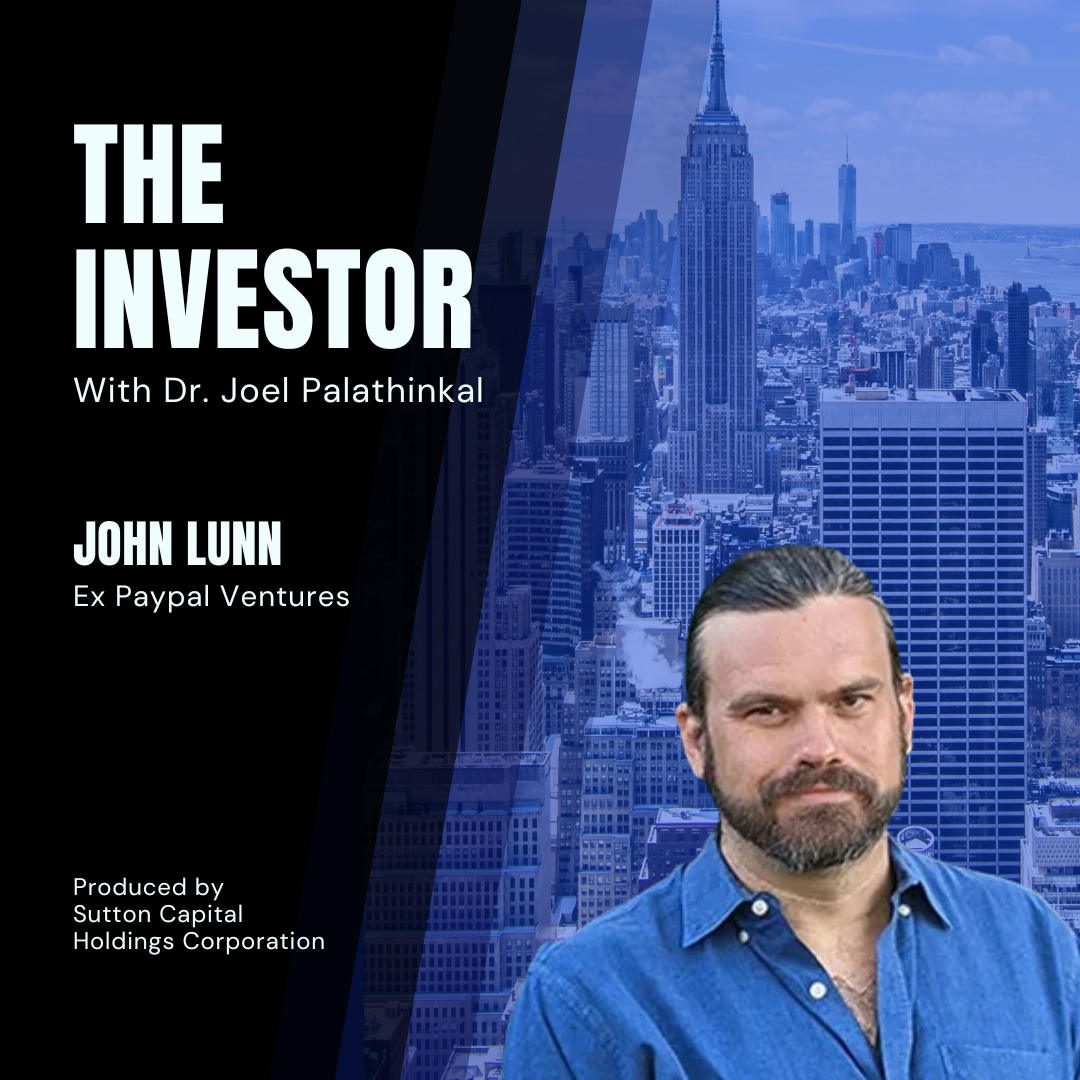
Welcome to the Investor, a podcast where I, Joel Palo Thinkle, your host, dives deep into the minds of the world's most influential institutional investors. In each episode, we sit down with an investor to hear about their journeys and how global markets are driving capital allocation. So join us on this journey as we explore these insights. Okay, I believe we are live now. So great. So super excited about this episode. So, future one, for those of you that don't know, we're just a web show where we have casual discussions, we try not to keep it too scripted, and we just have a bunch of fun with interesting investors, family, offices, endowments, entrepreneurs. A lot of times the VCs are entrepreneurs as well. And I'm going to actually quote you, John, on a funny quote that you told me. And I've used the quote a few times, but I'll just do it now right before I introduce you. But I think you told me like a couple weeks ago it's easier to have a tech person be a VC versus try to get a banker to be a developer. And I'll be honest, I've used that joke at least, like three times to people. So. But yeah, let me introduce you, John. Can you guys still hear me?
- [01:25]
B
Yeah.
- [01:26]
A
Great.
- [01:26]
B
Yeah.
- [01:26]
A
So great. So I want to introduce John Lund. He was employee number four at PayPal.
- [01:34]
B
Not number four, but in Europe. Yeah, in Europe.
- [01:37]
A
Yeah. So in Europe, number four, they needed to open up the office, I think, over a decade ago, and you really just screwed your career there. Also, a serial entrepreneur left a few months ago and now is starting a really innovative fintech payments company. So excited to learn about that. So excited to have you here. Thanks for blessing us with your time. So I'd love to just, with that intro, just maybe kind of get to know you a little more. Maybe you can just tell us about your life, your career, your family, and just a quick overview on how you kind of navigated into. Into PayPal and then later into venture.
- [02:19]
B
Yes. So, you know, believing it's all down to my total genius, but like, like most things, it's 90% love, 10% like being in the right place at the right time. So look, I graduated college as a marine biologist many, many years ago, which, which was a fascinating degree to do, but it turned out that people, people don't want marine biologists that much in the world. And I came out of college right in the middle of recession, so not a lot of jobs around. Pretty difficult to find any kind of work in science. I think I was offered to go dive off some Oil rigs. For one of the oil companies to tell the world there was no pollution fisheries and I don't eat fish or go to the Antarctic on the Royal Antarctic Surveys. There were my three options. So I decided that I was going to go back to something. I'd enjoyed it with my. With my dad as a kid. Like we had the spectrum ZX81s and before the little plastic things you could probably fry an egg on. And, you know, we'd written code and I'd always loved writing code and so decided to do that as a career. And this was 95, 96 and I kind of lucked out. I joined a company called CyberSource, that was probably the first Internet payment company.
- [03:44]
A
And real quick, dad. With your dad? Real quick, John, with your dad. I'm sorry, what? I missed that. So you wrote code with your dad? Is that what you're saying? Okay, yeah. Okay.
- [03:52]
B
When I was a kid, we. Yeah, we. Loading off old cassettes, like that's what you used to use. I was brought up in the mountains in Switzerland, so regular power cuts and of course that you had to start again because everything was.
- [04:08]
A
And was he, was he an engineer? Did he have a technical background?
- [04:12]
B
My dad's a school teacher and a jazz guitarist. So just for fun like that.
- [04:16]
A
Yeah.
- [04:16]
B
That's amazing.
- [04:18]
A
Yeah. My dad's also really into music too. He's a percussionist. So that was a good influence in my life. You know, one thing that I learned too, and you know, sorry to cut you off there, but I just want to bring this up. So Max Levchin, I saw one of his Fireside chats years ago and he said the way that he wrote code, he didn't have a computer, so he would write the code. He would hand write the code. So did you meet those people? I'm sure you met like Max.
- [04:42]
B
I was a year after they all sold and left.
- [04:45]
A
Okay, got it. So this is like after the PayPal mafia? Pretty much, yes.
- [04:49]
B
I was actually brought in to replace one of them. So there was a. I met them all after the fact. Didn't actually have the chance to work with them. Sure. But yeah, so look, I ended up basically self training with books because that's what you used to use in the old days to do coding on Microsoft platforms. And out of that I ended up getting a job at CyberSource and doing pretty well there. So we know we sold cybersource eight years later for an awful lot of money to Visa. And so we went from, again, the role I always Seem to be, which is the techie to running a large chunk of the company. When we got bought by Visa, it wasn't the right thing for me. I'm not a suit and tie kind of guy. So I decided to bail. And I helped found a company with a guy called Louis Gasparini, who was the cto, Wells Fargo, and Bill Harris, who's quite famously founder of Intuit. And we started a company called Passmark Security, which was you logged into your bank and you've seen a picture of something that's your favorite picture. That was the visible technology. But we were doing device fingerprinting and all that stuff way early. We got bought by RSA and we got bought to burn. RSA bought us because they wanted to sell their plastic tokens. We're changing numbers and they were stopping that. And so I literally became the guy on the roof from Silicon Valley. So I wasn't allowed to leave and I wasn't allowed to work. So I started playing cards with some people who helped create the RSA algorithm that had expired. And then the rest of the week, like, just trying to find things to do with my time because they really didn't want me talking to clients or doing very well. After four months of that, I'm like, enough's enough. I had pretty large golden handcuffs, but I just couldn't sit still. I don't like wasting my life or waste wasting time. So I went off and started working again on another startup, actually in the credit space. But while I was still building that, PayPal called me, asked me to join. I told him, no, I don't want to join. Another big US corporate basically said, meet the other three guys in Europe and then decide. I met the other three guys. Great guys. We liked each other. We were kind of corner of the ebay office or the ebay guys looked at us like these weird PayPal people. What do they do? And you know, we started our first client in the uk, ended up signing Harrods right up, right at the beginning. I remember standing in the line outside the store during the Christmas rush with my laptop because their development office was in the top floor of the store.
- [07:43]
A
So I had to wait for the.
- [07:44]
B
Store to open in order to go work every day.
- [07:47]
A
Who are the other guys? Who were the other guys? Salespeople. Because you were the developer, right?
- [07:52]
B
I was the techie, yes.
- [07:53]
A
Oh, you're the techie.
- [07:54]
B
Yeah. Well, one of them is now running afterpay in the uk, another one is running Pay you, and then the other one is running Paypal Asia. So it was everyone, everyone went to different places but I was the techie so I was there to make things work. And I spent 13 years at PayPal and went from that role to bill out. You know, PayPal is now what, 4,000 people, 5,000 people in Europe? Oh yeah, has to be 15,000 to 20,000 people worldwide. And you know, now is, you know, a larger, a more used payment type than Visa, MasterCard across the UK. So it went from nowhere to somewhere very, very quickly. And I saw that, you know, went through the, being owned by ebay, the split from ebay and everything after that. And roles wise, you know, from being the techie, I went to run the lab. So invented all kinds of fun stuff at the lab, including, you know, the devices that allow you to do credit card payments using a cell phone, holographic window displays and all kinds of stuff like that. I kind of then went on to be sort of the pretty face of PayPal for the media when it came to anything technology and travel around the world, speaking at conferences, doing press, all that kind of stuff.
- [09:12]
A
Sure.
- [09:13]
B
And then I took over the developer and startup relations. The developer group for PayPal Devrel had like 1.4 million developers who were following us, active in our community. We run hackathons across 13 different countries every year with a world final in the US and we had a startup program with three different incubators. So that kind of. After a few years of that, my boss came to me and asked me to start a VC fund, corporate vc as I said to you. I thought he was insane because I was a techie and he then used that line. I can't take credit from it. So it's easier to teach a techie to be a banker than a banker to be a techie. So we gave it a go. PayPal Ventures, $350 million at the time it was just me for a first year and then we added more and more staff. So I think when I left there was about five people officially in PayPal ventures. Yeah, we're very successful. Like we, we invested in companies like Plaid in their series A, which we obviously did mostly out of toss in Korea, Acorns, a lot of brand name fintechs and I can't claim all the glory. I had 15,000 experts I could call on if I, if I didn't another opinion on something. Yeah, so it said very well. PayPal Ventures raised another round. But I left in February for a number of reasons. Firstly, immigration woes with a new regime and secondly I just, it Was time for me to go back to building something. I enjoyed a lot of being a vc. I didn't really enjoy the investing bit. I enjoyed the helping support companies once we invested. I sat on a lot of boards, still sit on a number of boards, advising CEOs, CTOs, etc. On how to grow the business. That, that was definitely my favorite thing. And deep down I knew I wanted to do that myself again. So, you know, leaving, leaving back in February, actually officially I left in April. But yeah, essentially February I decided to work on an idea I'd been thinking back in my head for a while. Pulled in other two guys who are great developers, also great people, and we started building gravy.
- [11:33]
A
That's amazing. And just taking a step back. I want to go deeper on gravy too because the whole payments orchestration, I think a lot of people don't really understand the sophistication of that. Definitely want to nerd out a little bit and go deep on that. But just on the venture piece, what were some of the frameworks? Obviously I can assume it's like, wow, this is probably going to be a big learning curve. What are some tools and some frameworks that you use to kind of help yourself transition from a developer to an investor? And how did you kind of skill up and manage the learning curve?
- [12:08]
B
Look, I mean the biggest learning for me was there's an awful lot of three letter algorithms and descriptions. There's a lot of finance stuff that need, need to understand. I was lucky in that we had a good finance team I could call on to do that kind of stuff. But yeah, that's a, that's a. Like the math isn't that hard really. The, the, this knowing what words to use for the math is the hard bit. And it's quite cliquey. The VC's is a lot of it is about who you know. So you really need to, you know, I'm, I'm a techie, so networking is not my number one thing I love but you have to do a lot of networking. It's crazy to world that, you know, here we are on zoom with people all around the world talking, but VC is still lunches, breakfasts and meeting people face to face. There's still a lot of that. That might change with COVID I imagine it has to change with COVID but I found how not untechnical. I don't know who's ringing there. It's me or you. Let me, let me give that to. Okay, so yeah, hopefully that will shut up. Sorry.
- [13:33]
A
Yeah, no worries.
- [13:42]
B
Oh, there you go. All right.
- [13:49]
A
So what are we talking about? We were talking about. Yeah, I lost train of thought. We were talking about being technical.
- [13:56]
B
Right. Yeah. So, I mean, it is very. It's a very untechnical process at the moment. Some people are trying to throw it in, some people working on some pretty fun algorithms. Like, I always describe a VC as a bit like horse racing. Right. You're sitting there, you're picking what you think looks like the best horse. You know, the best record will do that, but, you know, the horse might fall over at any stage. So there's definitely a luck aspect, so a certain amount of it. Learning lingo, learning the words. Yeah, definitely. Understanding the finance, depending what role you're doing there. My role was. Was not necessarily a lot of the. Not necessarily the math, which, thank God, I didn't have to do, but it was much more like sussing out is this is really a good idea. Yeah, that's. It is. Like you. We used to get a lot of people pitching to us and we know. I remember one month when we did over a meeting a day. Sure. For the whole month, like for different people coming in. So you've got to be pretty ruthless about running through what's been sent to you.
- [15:03]
A
Yeah.
- [15:04]
B
Admit you're going to make mistakes. I mean, there's always a few that got away and kind of kicked yourself afterwards because you were on the fence, then you decided not to do it, and then it turned out to be a great thing. And so for me, I always really had the mantra to be respectful. And a lot of times it's very easy as a vc to become a bit disdainful of what's been sent to you and a bit dismissive. And I don't think that helps anyone. If someone's not got a good idea now, they might have a good idea tomorrow, and if you're rude to them, then they won't come back to you with a good idea. So I believe being a kind and respectful person, even if it's a really dumb idea, is the right thing to do.
- [15:46]
A
I totally agree. I think, look, the founders. I think some VCs think that founders don't talk to each other. Right. And I mean, if you treat even just a founder that maybe is still developing their concept and it's not a strong investable company yet, you know, what do you think? And you treat them disrespectfully. Right. I mean, they hang out with all the other founders. Right. So the founders that are great founders, they may not want to work with you anymore, you know, because the way you treated somebody. So I think I truly believe that. I think just try not to be a jerk. And that's just kind of just following that is a good way of life. And I think, look, there's a couple themes that I want to talk about when it comes to venture capital, and this is a common thread that I'm hearing from a lot of my guests. One is, you know, try not to be transactional. So really focus on the friendship. You know, when you go to these dinners, you know, really, I'm assuming, try to be yourself. But any thoughts on that or just, you know, just kind of best frameworks or etiquette or just any thoughts on just building friendships and just connecting with people?
- [16:51]
B
Yeah, be honest. I mean, be honest and kind like that. That is the thing is like, I'm very straight talking. I will tell you exactly what I think, but I'll try and do it in a way that doesn't hurt you. But generally, if you are like that, respect your opinion a lot more than if you just snap out with some cutting comment or whatever. Yeah, I think that just doing that, even if you're not going to invest, trying to help people as much as you can. And you know, I've been in those situations where someone's pitched to me and you can tell it's a, it's not a good idea, it's not going to work, and kind of, you know, they put their house on this thing. You're like, yeah, please don't give up your day job. Please don't give up your day job. But you can't say that because you're gonna really break their hearts. But you can point them in the right direction that, yeah, we'll get.
- [17:44]
A
And I look and I truly believe everybody in life can turn things around. Right? You kind of, I mean, look at, look at Jeff Bezos and Einstein and all these people, right? They failed 20 times. So I think, you know, I think sometimes too, we should. This is what I believe. I feel like, you know, you never know, you could be pleasantly surprised. A year from now, they may come back and really figure something out.
- [18:06]
B
I mean, look, you know, how many times did Edison and work on the light bulb, right? That kind of thing. Yeah, I think, look, there is this whole myth of the superstar vc, as I said. Like, I've always. My philosophy is, I mean, a lot of how I've got to where I've got has been luck. And you've got to look at it that way. And there's good luck and there's bad luck where lots of influences on that. But you've got to be humble about it. You've got to where you've got partly by chance. Right. And therefore don't take yourself that seriously. You will mess up, right? You as a vc, you will bet on wrong bad horses and you will not back the right horse. So just be humble about it. You're not always right. You won't always be right. You have more experience, you should share that, but in a humble and respectful way.
- [18:58]
A
Yeah, no, that's really helpful. As far as just kind of learning some of the hard skills. Are there any books that you recommend or, you know, did you just kind of like when you started learning about how to, you know, do cap tables or just kind of learn just the hard skills of just looking at financial statements, I'm assuming you just dove in, right. Or did you kind of have a mentor? Like did you just kind of partner with some of the partners and just kind of spend time with them or were there other things that you use to kind of improve your, your skill sets?
- [19:27]
B
I mean the problem, the problem was I was the only partner, so that.
- [19:30]
A
Oh, got it. So, yeah. So how'd you do that? I mean, so what did you.
- [19:35]
B
I was part of the corp dev, so my boss was around the corp dev. So those guys were bankers. So I could sit with them, I could run through them, I could learn from them. Look, I downloaded, I downloaded, bought a couple of books. They were really thick. Like, I'm like, yeah, not, not sure you need all of this. There's some good websites. Yeah. You can just go and go and search them. There was a. And I unfortunately can't remember, yeah the website, but there was one that was kind of a week by week, like broke down. What all these things mean. And that's what you really need is a really good like dictionary. Yeah. You know, because whatever it's going to be where there's a cap table or something else, all the jargon that's used, you just need a way to translate that. As a techie, I'm used to that. You just got to learn the words. So a lot of it was that as I said, the math isn't that hard. And even if you don't do the math yourself, there's tools out there that you can download, spreadsheets that do it for you depending on and you know, even things like there's example of safe notes, there's examples of this, you can read through most of that Online. The two books I bought, I have to admit I didn't get past the first three chapters. They were just too big.
- [20:55]
A
Yeah. I think if you just know the high level process of vc, right. You know, sourcing, you know, reviewing with the partners and then DD and then kind of like you know, executing. If you like know the. I feel like, and correct me if I'm. I feel like if you know those high level like five steps then you can probably just go and do a bunch of Google searches and find much more detail on like a cap table example and probably like download it and like tweak the cells to build your own custom version. I'm thinking. And that's kind of how I, how I learned too.
- [21:29]
B
For me, there's three things you need that I would recommend in getting good people to do it. Like get a good finance person because a lot of this is going to be trawling through financial records and all the rest. And unless that's how your brain works, you're probably not going to enjoy that and someone will be better at you. Get a really good lawyer because there's a lot of, a lot of crap out there and a lot of people don't understand how certain things work. And you know, I really get, get a good lawyer to work with you, especially if you're doing fintech. Yeah, a lot of regulation in fintech. Sure. And understanding how that regulation works is, you know, a lifetime's job. So get yourself a good fintech lawyer who can just run through to make sure you're not investing in something that's a crime basically. And then, and then the last bit is, is, you know, down to that as well as a regulation. Someone who sends regulation, whether it's a lawyer or something like that, those are two things you could get caught out on. The other thing that's coming more and more important nowadays is technology audit. A lot of companies have built stuff rightly by hacking stuff together. And if you're specifically a corporate VC with a reputation to maintain, you've got to be very careful that the thing you've invested in hasn't got big security gaps in it because their name will turn into. So there's something like we used to do, we used to do a scan of our potential investments and we always had pushback people like why do you want to scan my system? You're just investor, blah, blah, blah. Every single time we did it and found something, that investment was happy about it. We found something they didn't know about, we helped them fix it and we made them a better company.
- [23:27]
A
Sure.
- [23:28]
B
I know due diligence is a pain in the butt. It's a massive pain, but we all hate it.
- [23:32]
A
Yeah.
- [23:33]
B
But generally VC that's doing good due diligence on you will help you.
- [23:38]
A
Yeah.
- [23:39]
B
Teach you where your holes are.
- [23:41]
A
And I think that, you know, for you, I think that's one of your superpowers. You know, thank God you're a technical because, you know, when you do that audit and you look at the code, at least you kind of know what to look for. And I guess, do you probably also hire some help as well, like when you do the technical due diligence?
- [23:55]
B
Yeah, we do a third party scan.
- [23:56]
A
Oh, interesting. Okay.
- [23:58]
B
So we'd actually scan ports, we'd scan servers, we do reputation scan on founders. It's amazing what you can find, just, you know, what's happened in the past, etc. And it is more so for a corporate VC because you maintain. But absolutely, I would, you know, I'd say to founders, don't be scared of that. It's actually not going to kick you in the ass. Now if you're looking for an exit later, it might kill your exit. So just get your house in order and someone's doing this for free. So take it and do it.
- [24:34]
A
I've got a question that you might not have a clear answer for, but what are some things that you've seen as a common thread with great founders? You know, and you do the scan, you know, that's kind of the hard skills. I've talked to a bunch of other VCs. Their final scan is taking the person out drinking and, you know, letting that person get their guard down. And they can see a lot of, you know, they can see some, you know, signs of kind of the personality or founder risk with that. So one example, I mean, there was, there was a founder that got taken out by some VCs, and then this person got like a little drunk and started acting, acting pretty disrespectful. And VC ended up not investing. So it was kind of weird. But I guess obviously that's an obvious one. Maybe grab a drink with them, get to know them. But any other traits that you've seen to kind of maybe judge the character. But then also, what are some of the traits that you saw just consistently? It's like, wow, this is a common trait that great founders have always had as far as their personality.
- [25:40]
B
For me, it's their trust in their people. Right. So look, to be a founder, you need to have a certain amount of stubbornness. Like you need to be a stubborn ass. Right.
- [25:55]
A
Yeah.
- [25:55]
B
To know where you need to get to. And the founders that do that in a way that brings people along on the journey are going to be much more successful than the one.
- [26:07]
A
Yeah.
- [26:07]
B
I saw over and over again and I still see now where you've got a very strong CEO founder, that is the company. Right. Everyone else is a peripheral and those guys will fail like they would usually fail or they will be replaced. And if their company survives it will probably be without them. And that, that is so, you know, one thing I always like to do is not necessarily take the founder out for a drink. You know, whether it's a drink or a coffee.
- [26:34]
A
Yeah.
- [26:36]
B
But actually talk to the next line down. Right. Talk for them. Because you learn a lot about that founder and that company and they might be a bit cagey about it.
- [26:48]
A
Yeah.
- [26:49]
B
People they've hired and how they do it. And I, I think you see a founder is very loyal to his people. Is not a bad thing. Early stage later on can become a problem.
- [27:02]
A
Yeah.
- [27:02]
B
And I know that sounds weird. As you know, one of the advice I would always give these early stage startups is don't give everyone a C level job title. Don't give everyone a VP job title because what you're doing is your person. You're hiring now to be VP of sales, for example. Like they might be fine while you're a 15 person company, but when you become a hundred person company, that VP of sales might not have the skills to manage 100 salespeople. Yeah. Might not have the skills to scale it up. And if you've given them VP job title, you've got two options. You demote them or you follow. Right. That puts you in a really awkward situation because they might be good at their job, they might not be the right person for that. I would recommend, you know, hire heads off. Don't hire VPs. A lot of people tempt good people to their website, their company by offering them big job titles. I actually think that hurts them. And you know you can't promote someone who's a vp. Right?
- [28:01]
A
Yeah.
- [28:02]
B
And. And you're going to bring someone in above them to run a team, then that person has to be an SVP and then you end up with crazy EVPs, SVP, VPs, blah blah blah. I mean anything at the end of it.
- [28:13]
A
Yeah.
- [28:14]
B
So just. And it's in their best interest as well because it allows them to prove themselves and grow.
- [28:21]
A
Yeah.
- [28:21]
B
Whereas if you're already a vp, where are you Going to go, you know, you can be CF and stick them on there.
- [28:26]
A
Sure, yeah. No, it's true. Yeah. And I guess, I guess what you're saying with the head of that's a little more ambiguous. So it could, you know, it doesn't necessarily mean that you're a C level, but it's just you're heading up maybe a team or something like that. So.
- [28:39]
B
And you bring in a VP later to be head off or if the head of is really good, you promote them. It just gives you more flexibility.
- [28:48]
A
What do you think of Google style? Because Google doesn't have, you know, what they have with product management is it's like a product lead, but they don't have like the actual inflated titles. But I'm assuming PayPal, you know, companies like PayPal probably have that whole like, you know, Associate Director, Director, VP, SVP, EVP. So I think PayPal from my understanding has that corporate structure. But then Google, everybody is a product manager. Even if you used to be a VP of product, you know, you're coming in, you're just like, I think they call you like a group lead. And I wonder what you think about that. And from Google standpoint, and then I guess from the people standpoint, do you think people prefer to have these title bumps or do you think it's okay to just keep it flat like how Google is doing it?
- [29:37]
B
Well, I think Google's an exception, to be honest. I think my wife works at Google, so I've seen this firsthand. I think the look, you go to Google because it's Google, right?
- [29:50]
A
Yeah.
- [29:52]
B
Behind their job titles are levels. Not everyone's not the same level with a number rather than a job title. So you're going to be paid a decent chunk of money. You go into Google and you've got the whole stock thing. So you buy, you swap out maybe the VP level job title. You had company A and you go to Google and you get a director or whatever. But you know, you've now got Google in your resume. A bit of a backlash about former at the moment, but I think that makes such a huge difference. You see people coming out of director, director of marketing jobs, Google going to be CMOs of other companies. So it's. Yeah, it gives you, it kind of balances it itself out. But I always, you know, when people are looking at moving jobs, I tell them not to get too attached to job titles. A VP PayPal, for example, is probably an SVP at Visa or an EVP.
- [30:57]
A
Sure.
- [30:58]
B
It's totally relative to how the company puts it, and job titles aren't really that important. It doesn't make a huge amount of difference. And unless you're scaling up your career and you want to make it that you should really look at the level and the money you're earning than your actual job title. Because anyone sells whatever job title they want.
- [31:21]
A
And I mean, I'm sure you felt this, but this is something I felt personally. I mean, I felt like I moved up in corporate America. I was earning way more than I thought I would earn. And I had the title too, you know, but after a while, I was just like, man, what am I doing? My life. Like, this is. What the hell is the point of all this? You know? And that was kind of what was going on in my mind for a while. It's like, am I just going to keep on? Because what helped for me was actually job hopping. So, you know, I'm in New York City, right? So you're at a big company, you do pretty well. You get that title, you know, the executive director, whatever it is, plus the, you know, the salary that you think you should have earned, like three years ago. And then, you know, you're there for a couple years, maybe there's some drama with your manager and you're like, yeah, I'm tired of this. I'm gonna go across the street, you know, and then they pay you a little more. Maybe they just change your title a little bit to make it sound sexier, but it's the same shit, you know, at the end of the day. So I don't know if you felt, you know, just kind of in general in your career, it's the rat race. But I feel like sometimes we're. We're also kind of obsessed with kind of getting to that certain milestone or level. But once you hit that, once you're able to pay for your bills, right? And once you're able to kind of especially, you know, you have a. You have a little one at home, too. So it's like, you know, you have a child and you're married. You can take a couple trips a year, and you're making enough that you can do that, plus you have like a good amount of savings after that. It's like I felt for me, I wasn't like that excited anymore about what I was doing. And it sounds like you. Yeah, go ahead.
- [32:56]
B
My first boss said to me during my interview, and I have to be honest, he wasn't a great boss, but he just had one bit of wisdom. He said to me, like, why do you go to work and I'm like, you know, blah, blah, career, blah, blah, as I did, you know, it's a 20 something year old. And he, and he turned around and he said, no, you go to work to earn money. Now, I want you to think of it this way. You're going to spend far more time at work than you are at home with your family.
- [33:20]
A
Yeah.
- [33:20]
B
So if you're not doing something you enjoy at work, you're wasting your life.
- [33:24]
A
Yeah.
- [33:25]
B
And a lot of people, you end up in that rut. And you know, especially in corporate, you end up in that rut that you've got a good salary, getting great stock options.
- [33:33]
A
Yeah.
- [33:35]
B
PayPal, for example, does sabbaticals. After four years, you get a month off paid on top of your vacation. So, you know, there's all these ways to keep you there. But if you're not having, you're not enjoying yourself, what the hell are you doing with your life? Because you are literally spending twice as much time with your family.
- [33:56]
A
Sure. Yeah, I agree. And I think it's, you know, this is a crazy antidote, but I actually read this article about people that were about to die. They're on their deathbed, and like, the biggest regrets were not saying what they truly wanted to say, like, to people. So maybe, I don't know, maybe they were in love with somebody and they never told that person and they married somebody else, or I think another one is just kind of like they never took, they never did what they wanted to do in life. You know, they just stayed at IBM for 30 years.
- [34:26]
B
I had an alternative version where I said, no one ever said on their deathbed, I should have worked more.
- [34:31]
A
Yeah, exactly. Yeah. No, I agree. And I think it's like. But you're right, I think especially when you get older, I mean, when you have a, you know, when you have a family, I feel like for me too, it's, you know, I've had like side gigs in the past and, you know, I've had some trouble at home, you know, just kind of dealing with that because I'm like, hey, I can make money and I'm hungry, I want to make money. But then I'm like blocking off like a whole day that I could spend with my family. And it's like, my son is 3 now, and it's like he's getting. You just see them shoot up like every three months. And, you know, before you know it, I feel like that time is lost. So I feel like the time. And you probably feel this too. It's like the time is much more valuable than the money. That's like a kind of a balancing act that I do now too. And if you're in, if you're like you said, if you're using that time for something that's not meaningful, that sucks. And I think, you know, I think the biggest issue with big companies too, I would say not to name any, but I think it's like you want to do creative stuff, but then you have just some moron that is your manager that is just making you waste your time on something else. And you don't need to name any names. But I'm wondering if that's. That's been a challenge with, like, big companies that you've seen.
- [35:47]
B
It's the environment of permissions. Permission and informing. And look, I, you know, I was successful at PayPal because I always built small teams around me. Was, you know, we're based on the kind of startup mentality.
- [36:02]
A
Yeah.
- [36:03]
B
So small teams that were efficient, broke the rules, did what they needed to do, which is always risky in tech. And yes, I made lots. I upset a lot of people, put a lot of people people's noses out, stepped on people's toes. I totally accept that. But, you know, spending half your week in meetings explaining what you're doing to people who feel like they should know what you're doing is not an efficient use of anyone's time. And for me, this, the meeting culture that you get in corporates, it's a waste of time. It's important in corporates and especially regulated corporates, but you do half as much work as you should do because you're spending a whole time explaining your actions.
- [36:47]
A
It's like a me. It's meetings about meetings pretty much. Right?
- [36:50]
B
Yeah.
- [36:51]
A
Yeah. No, that's interesting. And I mean, I think that's just a huge issue. But again, you know, you have to balance it out. You know, some people, it's like the, you know, there's a fear of getting outside of that box and, you know, there's a safeness to having that stability, but it comes at a cost, too. So that's. That's a big thing. And then maybe you can tell me a little bit about Vancouver because. So you're. Are you originally from Vancouver?
- [37:13]
B
No.
- [37:13]
A
No. Okay.
- [37:14]
B
You can probably tell from my accent.
- [37:16]
A
Yeah.
- [37:17]
B
I'm from Europe. Yeah. I was brought up in Switzerland and went to school in England. So I'm in Vancouver by accident.
- [37:25]
A
Okay.
- [37:25]
B
So I am. I actually am a green card holder. My home is in California.
- [37:31]
A
Sure.
- [37:32]
B
And my Wife and my kids are in California, but I'm stuck in Vancouver currently.
- [37:36]
A
Oh, that sucks.
- [37:37]
B
Because my 8 year old daughter came into my custody and she, she got a visa denied. And as you know, the US immigration situation is a little up in the air.
- [37:50]
A
Sure.
- [37:51]
B
So we applied for a green card but everything is shut.
- [37:54]
A
So is your daughter, is your daughter with you now? She's with you. Got it. Okay. Yeah. That sucks. Yeah, it's really tough.
- [38:03]
B
We picked Vancouver because it's a two hour flight to California. So yeah, it's can come and visit. But of course then Covid happens.
- [38:11]
A
Yeah, sure, yeah, it's rough. But you know, the, the only thing I know about Vancouver is so I don't know if you've seen the, I think it was the David Chang and, and Seth Rogen episode on Netflix. Have you seen that? So the, the comedian Seth Rogen and David Chang. So David Chang, you know the chef, he's got that show where he goes to all these different countries, but he does Vancouver and they go all over Vancouver just trying all these amazing food spots.
- [38:41]
B
Incredible in Vancouver.
- [38:43]
A
So I think there's a big, huge Asian fusion community there. I think the Asian food is really good and I think there was a donut spot as well that was just incredible. So maybe you probably know about that.
- [38:53]
B
These donuts. Yeah.
- [38:56]
A
So that's all I know about Vancouver. So maybe you can tell us about Vancouver and I think, I mean there is a pretty big tech ecosystem there. Is Vancouver's tech ecosystem bigger than Toronto's or you know, tell me about just the dynamics of Vancouver and Toronto and just the tech ecosystem.
- [39:11]
B
Vancouver should be a tech center. I really feel like it should. It's, it's got everything that makes a good tech center. It's got great universities, it's got a really like, it rains a lot, but it's a real outdoor place. It's got that whole coastal feel to it. So really to me it's, it's, it feels a lot like San Francisco in. But for some reason it's not really. It's been very much an outsourcing place for a while. So companies outsource to teams here. Looking through the tech ecosystem. It's very much gaming based. So there's lots of gaming startups here.
- [39:52]
A
I think EA is there, right?
- [39:55]
B
Yeah. I look out the window here, I can see Microsoft, can see a few others, but everybody I've met in the tech community and terms and conditions apply. I've been isolating because of COVID so haven't had that Many folks. But yeah, everyone's in gaming here. And so like PayPal bought a company called Hyper Wallet based out of Vancouver. It feels, you know, it feels a bit like Ireland did a few years ago where a lot of people work in outsourcing and you know, the role, you know, you come out of college and then you go and work for the outsourced office of a big US tech company.
- [40:36]
A
Yeah.
- [40:36]
B
But the bravery to, you know, quit that tech job and go and start your own thing doesn't. I haven't seen it yet. And because I'm, you know, not, not people are going out that much. Sure. Toronto, however, is doing a lot better. And be honest, when I came out here, a lot of people wanted me to go into B.C. here, but every single one of them wanted me to move to Toronto and I didn't want to move to Toronto. Yeah, just Toronto is definitely the VC capital of Canada and I think that's.
- [41:10]
A
A perfect example of, hey, you know what, like, could you be a VC or would you rather be with your family? And I think hands down, I mean it's just like the family is just so important to be nearby them and you know, that's just tough. You know, I mean, I'm sure it's, it's a challenge you guys are dealing with just kind of with the distance.
- [41:26]
B
But, but there's a lot of money in bank in Toronto. A lot of money. There's a lot of. And what I'm hearing here from a lot of local VCs is there's not a lot of opportunity yet. If you happen to be fed up with a situation in the US and maybe a company over to Toronto, pretty good chance of fundraising. I see a lot of Series A and C money in Toronto itself.
- [41:52]
A
I see differences in valuation, like between, because I'm in New York, I'm in Manhattan and I see differences in valuation from like, just like New York to Jersey. So you can get a high quality company for like probably like six to seven million dollars less in Jersey. So I guess is that kind of the same thing with Vancouver? Obviously. Like, can you get high quality companies for a better valuation?
- [42:15]
B
I'm not sure actually, because I think there is so much VC money in Canada. I think people are getting pretty large valuations because there's a lot of VCs trying to find good deals.
- [42:26]
A
Sure.
- [42:27]
B
So I don't know, I don't know, I haven't seen. But you know, Canada's now got its superstar. Right. It's got Shopify.
- [42:37]
A
Sure.
- [42:37]
B
And Shopify is Kicking butt is a super valuable company and that's inspirational. That kind of thing will help young entrepreneurs, old entrepreneurs, to make that leap. And actually I think Covid is another one of those things. Is actually, you know, Covid is a terrible thing, but the one thing it does is allow people to sit at home and think about what the hell they want to do with their life more. Yeah, I do think we're going to see a new generation of really interesting startups appear out of COVID because people are sitting at home going like, okay, that job I did every day while I was commuting for three hours, I found something I actually love more. And you know, I think we'll see a dearth of bakeries, but outside bakeries we can actually see some really interesting stuff.
- [43:30]
A
Well, speaking about bakeries, you know, your company is called Gravy and it's almost lunchtime here, so I'm getting a little hungry. So I would love to touch on Gravy just for the audience. They can learn about it. But then I think one thing that we talked about too, possibly in a few weeks is maybe you can do like a little demo day when you guys launch. Because when are you guys launching? Like a couple weeks from now or a month.
- [43:52]
B
So look, there's different stages. So where we are at the moment is we're building an mvp. I, as a former investor, I believe you should go to raise with a working product. And I know a lot of people can. You can go and try and raise from a PowerPoint deck, et cetera. Not sure you're going to get the best value for your company if you do that. That's something that you need to think about. Taking money too early and taking too much money too early actually is going to lead you much later on and make it much harder for you to achieve what you need to do. So we're very much saying let's get a working actually does what it needs to do before we go fundraise. And then when we've got the working product, we'll fundraise. We'll probably look to launch maybe towards it later in the year, maybe November, end of October. It's difficult retail and shopping. Most people don't touch their systems from just before Thanksgiving till January. Sure, no one's going to put anything new in. So getting your timing right, is there? But also once you open the taps, then the water's gonna come pouring in. And there's three of us at the moment. And I wanna make sure that I am the. We're all techies, right? We're all engineers, all writing code, but at the same time, I'm the cfo, the CEO, the cmo, the cso. I don't wanna spend every hour of every day doing sales calls. Cause I also. So they just. We need to put everything in place. And for me, stage one is build a product and prove that you can build a product.
- [45:36]
A
Absolutely. Well, excited to keep in touch on that. And, and if you have anything to share, I'm a, I'm a product tech person, so I would love to do a little showcase whenever you got something that, that you want to share. So we'll do that, you know, whenever you're ready, you know, hopefully in the future. And I know we got around like 10, 12 minutes, so I'll open it up to the audience. If anybody has any questions. Anybody in the audience have questions for John? They tend to be shy in the beginning. Let me see here. Yeah, it looks like everyone's just kind of listening. Yeah, sometimes people get intimidated or they're just kind of a little shy to ask questions, but that's fine. So you know what, maybe, you know, we'll let people jump in if they want. I think a good thing to kind of go through too, and I mentioned this earlier, is just what is payments orchestration. That's what gravy does. Maybe you can tell us about that and why it's important and just kind of unpack it for us a little bit.
- [46:40]
B
Sure. So look, I'm trying to, you know, as I, you know, you practice your pitch, etc. You try and come up with ways to describe it. I'm thinking at the moment, and this might not work for someone trying, it is think of a car, right? In the 1930s, if you bought a car, you really needed to know how a car worked. Right. You needed to understand how gears worked, how to check your fuel with a dipper rod, possibly how to wind it up, all that kind of stuff. So there was a lot you needed to know, engineering wise, about a car. And as cars have moved on, more technology has been laid on top of it. To simplify all that to a point where we are now, where I won't name them, I have members of my family who wouldn't know how to change a tire even if they got a flat, or what to do if they ran out of fuel. And we're at the stage now where even a car mechanic just has to plug in a device and it will tell them what's wrong with the car. So just layers and layers of technology added onto it. It's a much more technical, complex thing. A car now. But these layers of technology have just simplified things to a point where you don't even need a gear stick. You press a button that says go and a button says stop, and then off you go. And it's the same with payments. So payments early on, obviously, cash moving around, horses, everything else. Along came cards to simplify that process, and then merchants needed to accept these cards. So you had the point of sale devices. Early days at cybersource, we had point of sale devices. That's how we were processing online transactions. We were literally printing things out and typing them into machines. Like layers of simplicity. So really early on, a layer of simplicity that allowed a merchant to work directly with a visa or MasterCard through that back end. And then you got processes added on top of that. They allowed that to be extended to other people, including banks, etc. And then you got payment processes like the stripes, the braintrees, the cyber sources of the world that got plugged on top of that to make it easier for merchants. And then you got the wallets and things like PayPal, etc. That make it easier for the consumer. But all these layers get piled on top of it and things get simple and then they get more complex and to a point where they need to get simple again, and then it gets more complex. So that's generally how payments and technology really works. Where we are at the moment in the world is, look, payments got super complicated recently. You look at Europe, for example. PayPal and wallets do more transactions than Visa and MasterCard today. Then underneath that, you've still got pay by invoice, you've got all these other ways of paying, plus you're getting these alternative payment types. So that layer of what you've got, simply from a European perspective, is a lot more complicated. And you've now got open bank income coming, which is going to change, right? Free way to move money instantly. That's going to change. Go to Asia and it gets even more complicated. You get to countries like, you know, the big example is China, where people just don't use cards. But it's more complicated to go to Indonesia. People are using grab, they're using other things. You go to Malaysia, they have something different. So as a merchant or as a person running a business, taking payments is really, really hard. Now, like, you could just take credit cards, but in that case, you're only reaching 40% of your audience. And in some countries you're reaching even less. So you need to start adding these other payment types. You need to start basically making your systems more complex. Now, if every company is a payment company, which is what Zach from Plaid said relatively recently, why the hell are people building this all themselves still? Why is there not a platform, why is there not a software that allows a merchant to control where its payments going to what payment types they get, how that payment flows, etc. And people would argue about, well, you could just, you know, connect to Braintree or connect to Stripe and yes, those guys will give you some of it, but that takes that control away from you and it also means you run the logic. So what we've built is what's called a payment orchestration platform, which kind of the words there help you. It helps you manage where your payments go and how you connect to those payments. We've got a universal, nice, open API that sits on the front. You connect to that and then we built a no code platform in the middle for anyone who's not a developer or you can be a developer, you go in and you essentially build your payment flow and you build it in a visual no code way. If you want to add Apple Pay or if you want to add WePay or your GrabPay or whatever, it's a case of click drag, drop. Rather than go actually a developer and say, look, we need to add this, he says, six months, roadmap, half a million dollars and you're like, screw it, it's basically going to allow you to do that. The other thing it allows you to do is add as many payment companies as you want to it. So say you're working with payment company A, that's charging you 3% of transaction. And over here is payment company B that wants your business, but it's going to charge you 2.5%, right? Most people don't realize payment is a massive tax in your business, right? There's not many other parts of your business that every time someone buys from you, they're taking 3% cut, right? It's just saving half a percent on something is huge. But the problem at the moment is one, you're held hostage by technology. So if you're using payment process A, you're probably integrated to their APIs using their technology. Long comes payment processor B, that's going to save you X. You need to do the math. It's going to save me X, but I'm going to need to spend Y in order to move from A to B. And what happens if B doesn't work as well as A, we can just, you can just switch on with us and then you can say, put 20% through B, 80% through A, and if it gets good, move it. So it gives you as a company total flexibility to choose what you want to do when without being held hostage by the technologies. And we built this thing in the cloud, actually. We built it in what's called kubernetes. It's a technology that means we can spin it up anywhere. So we can spin you up a cluster in the cloud, we can spin your cluster in your own data center, on the edge, on your cell phone. We can spin up anywhere. And so this whole idea of simplifying the complexity of payment and what's happening with payment today, we believe is the next stage of payments. We think our views are being echoed by investors and other people around the world is like, this is the next stage. This is software as a service for payments. Payments are getting commoditized. Like the price of payments is going to make payment companies less money. So it's going to be a good, better time for retailers to get good deals and to have a flexible platform to allow you to get good deals. Take the payment types that your customers want you to take. Plus do other fun stuff that you can't do with traditional payments, like things like escrow, micropayment, subscriptions. They're all way more complicated than they should be.
- [54:02]
A
Yeah, I think there's a lot of cool things. I mean, even for me as a, as a business owner also, you know, just kind of using unique ways to take payments. I think it'd be cool if you can attach a contract to it so, you know, they can digitally sign and then upon payment, you know, you can, you can go ahead and take care of that. And then I think you're right, the escrow workflows. Because right now, I mean, the only people that I see doing that are like, upwork, you know, like that makes sense. But even then, you know, they, they take like 18%, you know, and it just.
- [54:34]
B
Then where.
- [54:34]
A
How do you actually run a business when, you know, a process or even 3%, you know, imagine if you have a, you know, 5 to $10,000 transaction that just 3.5%, plus the 15%, I think, per every cent or something like that, it just is a crazy dent in how much you're making. So I guess with your system you're more tailored to kind of on the enterprise side, on more of the infrastructure side for companies that want more customization. Is that, am I getting that correctly?
- [55:06]
B
We're targeting mid size.
- [55:08]
A
Mid size. Okay.
- [55:09]
B
We're not the really small guys because they probably don't have the need to start with, but we're going to be. Excuse me, we're priced a bit like. Let me just grab some water.
- [55:21]
A
Yeah, no worries. Yeah. And if any of you guys have any questions, as John comes back and we got a few minutes left, you can just fire them off in the chat and I'll rattle them off. But I guess. Yeah, yeah. So John, you're saying too, I guess since you connect to all of the other payments as well, all the other systems like WeChat, WePay and all that, that also provides more payment options if people are going global to these mid sized companies.
- [55:51]
B
Yeah, partly that. And I like, look, we're pricing ourselves like a cloud company, not like a payment company. So you spin up what you need to spin up and you pay the minute you use it. Right. So if you're a small company, you probably only need one node. You know, if you want some redundancy, we can set that up for you. But if you're running small amounts of transactions, it's going to be hundreds of dollars and not thousands of dollars. Right?
- [56:18]
A
Yeah.
- [56:18]
B
The bigger you get, because we're a cloud or cluster system, you can just add more, you know, you add more source basically and you build a bigger cluster. So we can scale from like small to really big. And our choice in picking mid size is large merchants. Large enterprises are very hard to change. Yeah, they have a lot of complexity that we could solve, but it takes time.
- [56:42]
A
Sure.
- [56:43]
B
Mid sized merchants move quicker and give you more flexibility. I think the other, the other interesting thing is if you look at something like stripe. So stripe started at the mid size. The smaller small merchants, as did PayPal, they won those guys. And then the enterprise were like, look, if it works with those guys, why shouldn't it work for us? That's from the bottom up rather than top down. Others in this industry are going top down. That's right. But I actually think if we build a system that could work for any size merchant, then we're going to be more successful.
- [57:14]
A
Absolutely. Great. Well, hey John, I know we're at time, but do you have like two to three minutes to answer a few questions from the audience?
- [57:21]
B
No worries.
- [57:22]
A
Great. Okay. So one of them is from Mike. He asked what's the best way to deal with pressure when it comes to bootstrapping meditation?
- [57:34]
B
I have a very understanding that's really important.
- [57:38]
A
Yeah.
- [57:40]
B
When I told my wife I was going to do this I mean, already, like, bear in mind, I was already stuck in Vancouver sporting, you know, two households in two different countries. So like she said, she was so supportive. She's like, go for it. I know you're gonna be successful, but set yourself a timeline. Say, if it's not happened by this time, I will go and get a real job. Like, so. So that, That's. That. That for me really, really helps. Like, yeah, I have set myself goals, I've set myself. You see a lot of founders. I mean, someone like Sinclair in the UK is famously. He wouldn't sell his babies, he wouldn't split from his babies. And I think he didn't create enough value from his companies because of that. And I think there's others who've done that. You've got to realize this is a business. I know you love your business. I know all that. But you've got yourself rules, and you've got to set yourself rules, and that really helps with your mental process and pressure.
- [58:46]
A
Yeah, I think that's a good point. So I just, you know, this might make you chuckle a little bit, John. I pinged, I posted a link from the CEO of Okta, and I don't know if you heard the story, but he put together a pitch deck for his wife. And it was. He kind of like, told her, like, hey, you know, here's the pros and cons. I'm launching Okta. You know, he worked at Salesforce and he launched Okta and he was like, look, and here's my options, right? It's a recession, so I probably would have gotten laid off at Salesforce anyways. So my option is either, hey, I launched this, I invest in myself, we see where it goes, give it 18 months, or, you know, worst case, I'm a skilled, you know, person. I could go back to Salesforce or get a job somewhere because I have, you know, the professional skills. But yeah, he pitched to his wife. So I just thought I'd share that to you and the audience if, you know, you guys want some positive insight on that. Okay, real quick, so rapid fire, the initial, the additional questions. What are your thoughts on super apps and their trajectory? Will all these payment or orchestration services converge into one super app for consumers?
- [59:53]
B
No, there's no way. It's just too complicated. So I think the super apps will exist in the super apps ecosystem already. They're already diverging quite heavily. Despite everything, the weeds of the world haven't really managed to scale outside their own countries to payments. And you're seeing new entrants all the time. I mean, Grab Taxi company right in Indonesia is now going to be the biggest payment type in Indonesia. So it's no, they're not going to converge. And our strong belief in why we're doing this is you need that glue in the middle so that it can be navigable. And that's what we're building.
- [60:34]
A
Sure. Great. And I think that was all the questions. There's a few comments. Some people said, hey, this was great because they wanted to become a vc. So I think your tips on just how anybody can become a VC depending on luck and just kind of some of the helpful hints that you provided were really helpful. Thanks for your time and I look forward to seeing what you build. And whenever you're ready to share something, let me know and we'll do a little, we'll do a little product demo. Maybe I'll get a couple other founders too, to share what they're building too. But I'd love to, love to see what you're building and understand it. More super exciting stuff and loved your story and I hope you get back with your, get to reunite with your family soon. I know it's tough, but wish you the best and hey, you know, looking forward to building a friendship with you.
- [61:21]
B
Sounds good. And thanks for having me.
- [61:23]
A
Take care. Bye.
- [61:24]
B
Have a good one.
- [61:25]
A
See you. Take care.
- [61:30]
B
Sam.