Loading summary
Transcript28 lines
- [00:03]
A
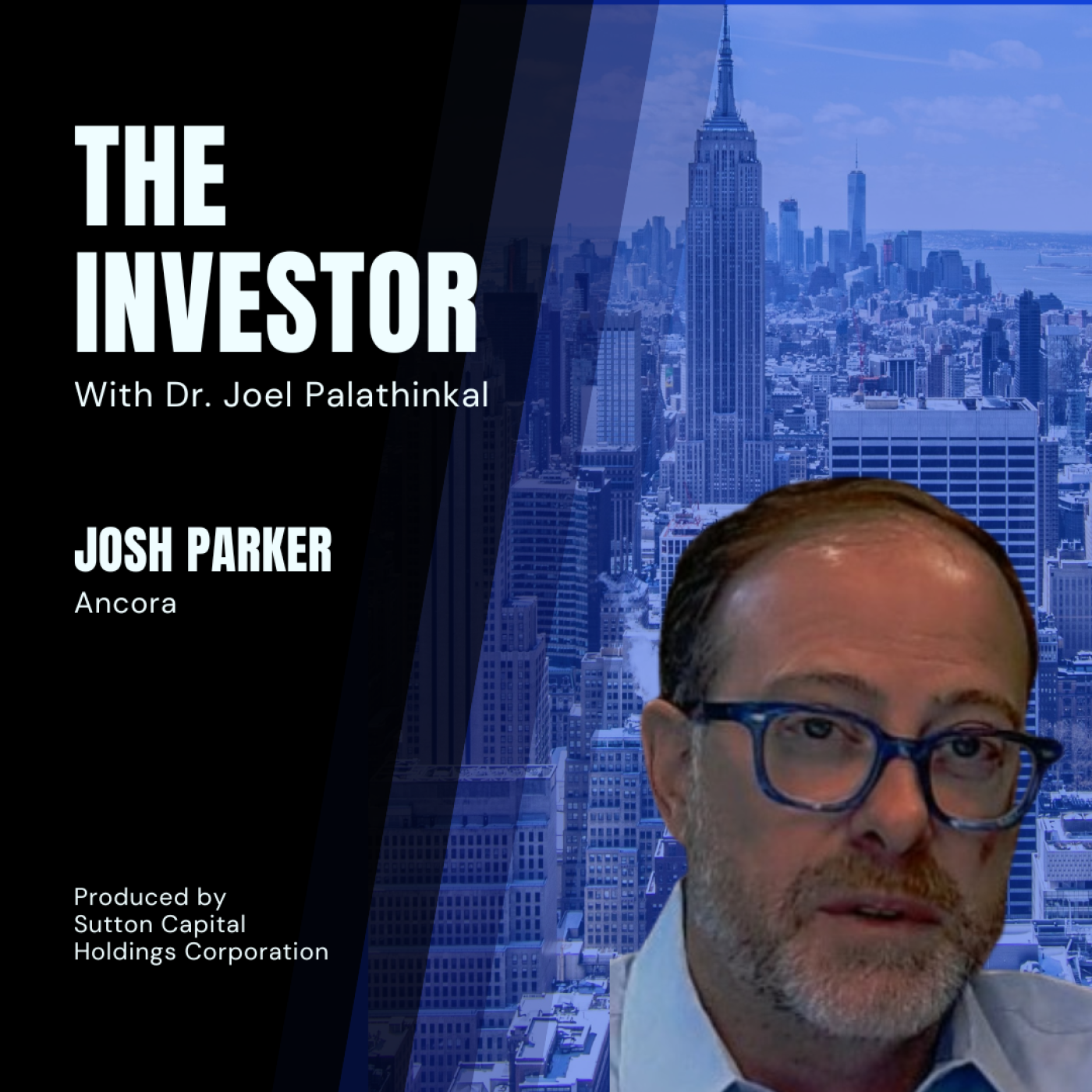
Welcome to the Investor, a podcast where I, Joel Palo Thinkle, your host, dives deep into the minds of the world's most influential institutional investors. In each episode, we sit down with an investor to hear about their journeys and how global markets are driving capital allocation. So join us on this journey as we explore these insights. All right, super excited for my guest today on the Investor podcast. I'm here with Josh Parker. He's a Chairman and CEO of Ancora. Josh Parker is the chairman and CEO of Ancora. He leads an investment manager that is purpose built to address the evolving real estate infrastructure and innovation needs of colleges and universities. By integrating mission driven capital, deep higher education knowledge and complete real estate expertise. He works hand in hand with university leaders to generate long term economic and social impact aligned with academic and research goals. He brings a fresh perspective on how institutional investors are reimagining real estate strategies with social outcomes in mind. And his practical experience working at the intersection of capital and mission is really impactful for the next generation of allocators. So, Josh, really excited to talk to you about just how we're going to go about community and, you know, university development. I hear it's an amazing opportunity to kind of invest in university developments. I mean, especially because there, there's cash flow. The children that are attending schools, I would assume most of them are, you know, guarantored by their parents. So excited to hear about the opportunity and, you know, the ways to generate wealth, whether it's through capital appreciation with a combination of depreciation along with cash flow that recurs. So again, those are my initial thoughts. But Josh, welcome to the show. Maybe you can start by giving a quick intro in your own words about yourself and also just kind of giving a, a high level overview of your kind of early days in your, in your, um, you know, upbringing, your family, where you from, where'd you go to school, all that good stuff.
- [02:13]
B
Yeah, sure. Well, Joel, it's great, great to be with you and it's, it's an interesting moment in the broader industry right now and the, the economy that we're in. And we've got a very specific niche and, and we're sort of playing our strategy across all of these different factors. And so a lot, a lot to dig into. But to, to answer your question, kind of going back to the beginning, I grew up in North Carolina in a period of enormous change. The economy was changing dramatically. Tobacco and textiles were going out. And as I grew up, I saw the community I lived in change pretty dramatically as jobs left and deterioration happened. This is in Durham, North Carolina. I got very involved early on in my life as he young person in theater and thought that was going to be my career and ended up in New York working on Broadway. And then 9, 11 happened. Everything shut down. I ended up coming back to North Carolina and I bumped into some guys who had played basketball at Duke or family, friends, and they had bought some buildings in downtown Durham and had this vision of getting people living downtown and helping sort of revitalize the community. And they said, why don't you come work with us while you figure out what you want to do? I didn't know anything about real estate, and it became an incredible opportunity to learn really from the ground up. And what was so impactful about that, particularly in hindsight, was Duke University was our partner and really backer. And so a lot of the risk that we were taking on, most of which we didn't really appreciate or know about at the time, Duke really mitigated that in a. In a substantial way. And so my first exposure to real estate was redeveloping historic buildings using a combination of tax credits and HUD financing and all sorts of boutique and creative products. I worked in our leasing office on the ground, leasing up apartments and an office space. You know, really worked with our contractors and our architects and doing the build and the ti. And I just. Just learned the business from the ground up. But really through this unique lens of how to invest in and transform communities. You know, we had read Richard Florida's Rise of the Creative Class and thought, if we can just get all these, you know, really smart, educated people coming out of Duke to. To stay in Durham and live here, wouldn't it. Wouldn't it, you know, make this a really awesome place? And I think at the same time, Duke was looking at it and going, we're not going anywhere. So it would be better if Durham was a stronger community. And so we're willing to put some of our muscle behind helping that happen. I was enjoying that so much that I wanted to keep doing it, but I also wanted to go back to school. And so I was able to enroll at North Carolina Central University and spent three years matriculating there while still working full time. So I worked full time, went to school full time, worked a side job. You know, I grew up in Durham. My parents were teachers. Didn't have a lot of resources growing up, but, you know, had a very comfortable existence. And, you know, I was not afraid to work hard and spend, you know, 80, 90 hours a week working, studying Getting it done now I feel like I got free time after, after that experience. So I, you know, I learned the business and then I decided to strike out on my own. I got a great opportunity not long after doing that to pick up one of the buildings in, in downtown that the, the original partnership I worked for was not going to move forward on and do that in partnership with Duke. I ended up selling that to a life science, science and technology developer out of Baltimore called Wexford Science and Technology. A guy named Jim Barronson started, started really incredible company. I then went to work for them running North Carolina and Missouri markets and again learned a ton, was able to experiment. We were developing what we called knowledge communities, which the market sort of went on to call innovation districts, where we were really trying to bring together entrepreneurs, industry and university collaboration. And then after we went public in a merger with Biomen Realty Trust, I spun out into another partnership in Baltimore called Cross street, which was really focused on social impact investing, still sort of leveraging some of these same things. And then in 2019, we spun out Ancora. And the goal at the time was to be the partner of choice for anchor institutions across their real estate needs. So really staying focused on the mission and strategic priorities of universities and other anchor institutions and delivering any sort of real estate they needed, we saw an opportunity beyond kind of just the innovation district or just the life science. And so we began building a company that was a vertically integrated real estate sponsor. We ended up selling half the business to a British pension fund in 2022 so that we could invest greater amounts of capital off of their balance sheet. And then in early 2025, we ended up buying the operating company back and pivoting to more of an investment management platform. What we saw emerging at the end of 2024 was a really deep demand for capital and expertise across the country. Just there's 4,000 colleges and universities in the US we really focus on the top sort of 430 or so credit rated institutions. And if you just look at that top 10% over the next decade, they're going to need about a trillion dollars of capital for their real estate facilities and infrastructure across all asset types. And we said, well, there's no way as a sponsor developer we can address a market share that size. And so we figured with our experience, with our scale, with our relationship driven approach, that the better thing for us to do would become of an investment manager so that we could partner with local sponsors. We could still provide real estate expertise where it's needed, but partner with local sponsors and really address that demand at a higher level. 2025 became a very interesting year as the new administration in Washington came in and sort of turned the table upside down on universities. It's really forced them to rethink their operating model. And you put that against some of the macro headwinds that universities have been seeing with demographic decline and lower enrollments projected into the future. It's just a really interesting moment to be able to bring a certain level of understanding about how they operate. They're very unique institutions, bring in expertise around real estate and capital and the ability to execute across multiple fronts. And then the final point I'll make just in sort of where the journey takes us now is the, you know, you have all of these factors happening within our specific niche and then you look at what's happening in the broader market and our economy, the disruption that's going to be coming to the economy and the job market with the adoption of an AI enabled workforce. You think about what's happening with the rise of private investments and private wealth seeking, privately held investments. There's just a lot of factors that are moving that affect the way our business operates day to day, the way all of our businesses operate day to day. So it kind of gets us out of bed every morning excited to sort of deal with what are typically fairly traditional problems in terms of how to, how to build and execute real estate, but doing it in a really complex environment while still working with these really long, long term thinking, long duration partners like universities.
- [10:36]
A
Yeah. So look, there's a lot to unpack there and there's a couple questions that already come to mind. Um, I read the book, Mike. I read Michael Dell's book. I mean, I think it's called Be nice, Play Nice. But when. And he talks about how he took Dell public and then he brought it back to being private. Right. So would love some learnings that you had. Number one, you know, selling it to a bigger platform. I mean there's that. We're starting to see a lot of that happen. So, you know, industry ventures got sold to Goldman. So we're seeing larger platforms just kind of get acquired or swallowed up by bigger institutions. And then we're seeing companies go public and then go back private again and then they have an exit, you know, three, four times. That's how private equity works. So, you know, any reactions to that and then just learnings, you know, from being acquired and then just kind of going, going back on the market.
- [11:34]
B
Yeah, it's a really interesting process that we've we've been through and I would say, you know, timing and situation matter a lot and so you, you always want to position yourself to be nimble and responsive to one the market but ultimately your investment thesis and, and the best way of executing it. And so I'd say at the moment that we decided to sell. So I was, I was having a bunch of conversations in late 2019 that felt like conversations I had in late 2007, like just, you know, it was very frothy. And I said, you know, I feel like there's going to be some disruption coming and you know, having a larger balance sheet that's readily accessible will be beneficial to us when that happens. Same thing we saw during the great financial crisis. And so we started looking around and having conversations for partners and ended up into, you know, before you even consider the COVID disruptions but ended up into what became about a two year set of conversations, engagement and ultimately closing with a group called Legal in General which is just a top shelf one of the best investment managers globally based out of London. They had an interest in expanding more in the US they liked the niche and the thesis that we had and they wanted us to kind of keep going in the way that we were going and building that up.
- [13:07]
A
Yeah.
- [13:07]
B
And so we ended up forming a really, really dynamic partnership with them and they are just really everyone across that organization is really fantastic and enjoy working with them. I will say it was fascinating doing a deal cross border like that. I learned a lot more about cross border tax and other issues. It's also fascinating. You know, we speak the same language but we don't always have the same meaning behind the words. And so it was a big learning for us in both in negotiating the deal but then also in managing the business together. You know, they had a CEO that had been there a long time, about 17 years, who about 18 months into our partnership announced he was retiring. New CEO came in, very thoughtful guy, wanted to think about where their business was going and ultimately they came back with a business plan and said look, we're going to move our group company in a couple of different ways and if we're going to continue investing in this strategy with you all, we want to own and control 100% and we're going to take it in a slightly different direction. And I said look, I've got a very specific niche. There's a thing that I, I and, and the team that, that we built are very good at and we want to stay focused on that. And so we determined the Best thing to do was just to split the partnership back up. We ended up selling them, you know, the assets that we'd invested in together. We sold them those assets. We were able to then buy back the operating company and, and essentially split that back up so that they, you know, can have control over the things fully that they invest in and we can stay focused in the niche. So I think the big learning there is just to, you know, you've got to. Things change and evolve. Organizations, all their, you know, their thinking and their strategy, their capital, all these things are not static. And so the best partnerships are the ones where you can have these direct, open, honest conversations. Okay, what are we both bringing to this? Are we both looking for the same things? If we are, we've got a way forward and if we're not, let's look for a way forward separately. And that's what we were able to do here in a way that I really can't say enough good things about that organization. Both going into partnership with them and coming out of partnership with them and including the years that we were in partnership together and the ways that we work together. You can't always say that about your business partners. And so the overarching lesson coming out of that is you really have to do due diligence on who you're going to be working with and whether you truly are aligned and then keep those conversations active and updated. And to your point, you come in and out of different partnerships, people go public, they go private, they go public again, they enter into strategic joint ventures. So I think know everybody needs to approach partnerships like that with a, with a very, very thoughtful sense of what they, what, what both parties are trying to accomplish. As you alluded to, the industry is changing dramatically. Like you, you either are going to have to get really big or you're going to have to be really focused. And you can still, you can still be big and it's, you're focused on. But I think the days of being sort of the next multi strategy platform in the middle market is kind of behind us. There's too much pressure on fees, there's too much pressure on operating margins for those businesses to work. And so what we said is instead of trying to fight for a seat at the table within a very large organization at the moment, we think we'd be better off offering a very focused product to our investors and which traditionally have been institutional investors. Although, you know, we're as, as with everyone, we're very interested in what's emerging with retail capital and the wealth channels, as those go. So huge, huge moment of change. And again, you know, the lesson is be adaptable to that change.
- [17:30]
A
So, you know, there's the retail side and then there's also the institutional side. And I would say retail. We're seeing a lot of emerging private equity kind of style investors that are coming in, they want to turn around a building, you know, so they have a building that needs a little bit of work. But because it needs a little bit of work, you're coming in at a better price point, especially if you're coming in at like a tertiary city. So what are the trends that you're seeing? Because you talked about some of the, it sounds like you were talking about kind of the higher, you know, higher income earnings cities or emerging cities. Maybe talk about some of the trends that you're seeing in some of the college towns that, that you like and are most interested about. And what, what I've observed too is from a tenant side, you know, people are looking for more amenities. Right. They want to go into a building. You could probably get a good price for a building that doesn't have all the amenities. It's like an older building that got fixed up but you pay like 500 more. And you've got the gym, you've got the pool, the indoor, the indoor, what is it? The indoor track. Right. So just would love to hear your insight because you're the expert here on the ground lines, seeing all these trends. You know, talk to me about kind of some, some of those high level things that you're observing.
- [18:48]
B
Yeah, I would say it's kind of the same thing you're seeing in the economy overall. We hear the conversation about a K shaped economy and I think we're seeing that in real estate. So the, the very top end, whether you're in a major metro or in an emerging secondary tertiary market, there is the flight to quality is real. Like folks are looking for both in, in terms of housing, residential options as well as office options. And you're really seeing the bifurcation Office folks want the, the highest quality, best location, you know, all of the amenities, everything you just alluded to and they're willing to pay, you know, a premium in the market. You're also seeing, you know, an affordability drive on the other end where folks are needing access to, you know, still quality but at a, at a much lower price point. So some of those kind of lower NB office buildings or what you're seeing emerge in like the build to rent market, you see the, the manufactured Housing and how much growth has been there. Right. So there's kind of two ends of the spectrum, I think, where the pain is being felt most acutely and where it's hardest to make the numbers work or in those high B to A office buildings or in those kind of secondary residential locations where the capital investments that is needed to kind of make it attractive is not supported by the rents that are coming back. And so, you know, one of the things that I've been doing through my role with the Real Estate Roundtable, chairing the Tax Policy Committee right now is thinking about the advocacy at the federal level for incentives that can help bridge the gap, particularly in those smaller markets. So one of the things that we were able to work with Congress on in the one big beautiful bill was an enhanced provision in the Opportunity zone extension. So opportunity zones were made permanent, which has been a great tool for getting capital into underserved areas. The New markets tax credit program was also made permanent, but there's a set aside in the OC program for enhanced benefits for rural areas. So those places that, you know, still need to have housing and where affordability is a real crunch, being able to make it a little bit more attractive for investment capital to go into those areas. Yeah, I think, you know, I kind of learned the business on the ground in a, in a, you know, redevelopment regeneration strategy in Durham where the numbers didn't work. Like I remember on our first deal, we were desperate to convince HUD we could get 90 cents a square foot for residential rents in a market. It's now probably $3.50 a square foot for residential rents. And so the cost at the time were not going to be supported even by those rents. And so we had to have some support from the university, we had to have federal historic tax credits, we had to have state historic tax credits. These other incentives that would bring down the cost in order to make the numbers were. And that's probably the hardest thing that we're seeing across the industry right now is just unless you are on that top end premier space where tenants are willing to pay a true premium, it's very hard to make the numbers work. For development right now, even redevelopment of existing, whether it's office to residential conversion or office upgrade or residential upgrade, construction cost and inflation and materials has been enormous. Labor is still very difficult to find in markets where we can make the numbers work. One of our big challenges right now is the amount of data center development that's going. Electricians are getting 65, $70 an hour to work at A data center. And so to be able to afford that rate, to build stick built apartments, just the numbers are going to fall apart on you. And so labor availability and labor rates have, have accelerated because of the enormous investment in data. So a lot of these factors are kind of pushing. And so again, you have to get that much more creative to make the deals work. You sort of have to pick, you know, pick your point where you're trying to be in the market and then you've got to be able to bring together not only the traditional debt and equity, you know, rates are higher, you know, therefore, you know, the yield expectations on equity is going to be a little higher. If you're, if you're facing that at the same time your build cost is higher, the only way you're going to make those numbers work is either to, to your point, buy something at a low enough basis because it's got some stress or distress, or find some partnership with incentives or subsidies because you're delivering a product that's, that's needed. Whether that's affordable housing or whether it's top tier office really depends on the local environment.
- [23:39]
A
And yeah, no, it's amazing. I mean those insights are really helpful. And I was just browsing your website as well and there were some interesting projects that was on your website. So you know, they had the General Electric campus in Fort Wayne, Indiana it looks like that was probably like, you know, something that was revived. So there might have been some alpha there. Right. Because you're coming in, taking this historic, you know, area of the community and modernizing it, looking at the, the also the project at Yale, that one looks pretty cool too. That's a really futuristic kind of looking building as well. So like when I look at the kind of, the designs, what do you guys think through as you're doing development in terms of the, the design and, and how do you think through that in terms of efficiency for, for, for the, the tenants and, and just any trends that you're seeing within regions for what the students want and need?
- [24:41]
B
Yeah, I mean, so we're always starting from a place of what is the mission and strategic priority of the anchor institution partner? What are they trying to accomplish? Is this, is this about expanding the research enterprise? This about enhancing translation and commercialization outcomes and growing entrepreneurship in the region? Is it, is it about, you know, sort of broad based community enhancement, economic development? Is it about a better environment for, you know, for student learning or for student living? A lot of different priorities. Universities touch just about every, you know, part of the human Experience. And so the real estate and facilities that support that have to start from a place of what are they trying to accomplish programmatically and then once we understand that we can, we can begin to think about a financial structure and a place based structure that enables it. Obviously the, the place making and activation thinking that goes into these environments is super important because this is a 18 hour a day, live, work, play, learn sort of approach. And so you've got to be thoughtful about having an environment that is open to and welcoming to a lot of different folks and different backgrounds and different income strata. And so creating an environment through design that makes that opening and welcoming is incredibly important. Thinking about that first floor experience, what we've really tried to think about, one of the trends we see emerging is taking that activation and place making approach that's really been accepted at the ground plane, thinking about how that moves throughout the building vertically. And you can think back to like how we work would have thought about things in their heyday where they were really trying to curate these multi business environments vertically throughout a building. And so, you know, without falling in some of the, the economic traps that we work fell into, how can you take that same approach to activating a building? Whether that's, you know, connecting floors in ways that maybe we wouldn't have done before, or whether that's creating moments for casual interaction and collision at different points throughout the building, driving people to different places within the building, getting them out, active. I mean, one of the best activation stories ever was at Amazon. You go to their main campus in Seattle, sort of three buildings around a central courtyard. And the guy that used to run their real estate out there since retired was out standing there with Jeff Bezos and they were watching people come in and out. And all these people were just sort of walking into their buildings, walking out of their buildings. Maybe they go down, there's a coffee shop in a lower level and they had this big courtyard space and nobody's really using it. So they came up with this idea and they put a banana cart out in the middle and they said, you know, it's like this perfect fruit, it's individually wrapped, has a pretty good shelf life. And they just started handing out free bananas. And suddenly all these people just started passing through the courtyard in order to grab a banana in the morning. They'd sort of leave it out through late morning, midday and they watched and just all the collisions that started happening with people there. So this idea of just how you activate a space to make people move around in different ways, we See this particularly in like an innovation district approach where you might have life science companies and tech companies and they're all doing really interesting things and building their business. But what's really impactful to the broader community is if you get those scientists and those engineers bumping into each other in the common spaces and, and striking up a conversation and, and just you never know where those ideas evolve. And so it's sort of, it's incumbent upon us as sort of the owner of and designer of the real estate, to just facilitate that. You know, we're not creating, you know, the new business idea. We, we just need to create the environment that's going to give people the greatest opportunity to, to either intentionally or unintentionally, you know, create the next big thing.
- [28:45]
A
Sure. No, absolutely. When it comes to kind of coming up with the development projects, maybe you can walk through for the audience how that, how the process works. Obviously you got to work with the regulators, you got to work with the city and all the governing bodies. But then what's kind of the actual process for doing these projects? Keeping in mind, a lot of the people in our audience come from different areas of asset management. There's hedge fund managers, private equity investors. So I'm assuming there's just a whole life cycle process for, you know, proposal to, talking to the architects to ground up construction. So maybe you can just walk through kind of a typical process to, to get some of these large projects set up on one of these campuses. Like, I mean, I'm really, really liking the design of the Yale University project. And it looks like their, their focus is really kind of building a biotech hub.
- [29:41]
B
Yeah, yeah. I'll give you two examples. Let's start with the electric works you mentioned a minute ago. I think that, you know, a very large complex, so, you know, over a million square feet of former manufacturing space. You know, at its peak, they employed 40,000 people. So there sort of wasn't a family in that community that hadn't been touched by that facility. And so is it know, the operations moved out of there. They made electric motors and transformers. As those moved to Mexico in the early 2000s, you know, that facility shut down and began to decay. The emotional weight on the psyche of that community just really couldn't be overstated. And so the first thing that we did there when GE approached us about purchasing that and redeveloping it was go out into the community and talk about, you know, what has this space meant? You know, where is this community going? What's going to bring back the energy and excitement that, that lets the next generation of residents of that community feel like there's, you know, a brighter future ahead. And so I'd say getting a property under contract and then getting out to the community is super important because if you're going to look to build a public private partnership in order to put the financing together, you're going to have to have community support. And we know in these large scale deals it requires, requires multiple stakeholders coming to the table. So we can run through our traditional process of, you know, getting the property under contract, going through our due diligence and evaluation of the environmental condition and the structural condition, all these things. But we know from the beginning what the rough economics are going to look like before we even get into design. So we're going to run through our traditional design and real estate process. But you know, that project, the first phase, 750,000 square feet, $300 million investment, including $60 million in local support from food and beverage tax, that was bonded into the project. The only reason that the community supported that is because we invested so much time working with the community to think about what the uses should be so that that space really became a community asset and the community felt like they had equity in the project. And we're going to get returned return on investment for, for what was coming in. Sure. And so when it came to the elected officials taking a vote, they were able to take a vote in support of it because the community was truly behind it. And so I think, you know, investors, I think, often overlook the importance of not only running the traditional investment process, but also running a process of engagement because real estate is, it's on the ground. You know, this is, sure, it's not all living on a spreadsheet. It's not living, you know, in the cloud like this. This is in people's neighborhoods, affecting their lives day to day. So you, you really have to be thoughtful about what you're doing there. We, we like to say, you know, we're, we're more gardeners than builders. Like, we like to think what can grow here as opposed to this is what we do and we'll put one here. And so that's just a slightly different approach and I think one that then enables you to build a capital stack with partnership that, that can make the economics work in places where they, they wouldn't. Often that's particularly important. We're working with universities because they're so deeply embedded in their communities. You know, Yale University is not going to pick up and move from New Haven, they're not going to relocate like, you know, like GE can relocate. Right. So, you know, being, you know, being sensitive to the integration of the neighborhood into the, into the project and thinking about the strategy and what they're trying to accomplish is going to run in parallel to the traditional sort of design elements. You know, we talk about the place making, the activation, the high quality design that's all in support of a programmatic outcome referenced in New Haven. The desire to build a biotech hub there, you know, that's going to be built on the back of a state workforce strategy, a Yale University research strategy and then a neighborhood strategy that brings all of those things together. Together into a central place. Sure. So this, this process, again, I'll just reiterate, I think developers, investors, the like really have to be thoughtful about the impact that they're creating in the community. It's one of the reasons I think you're starting to see pushback in what's happening across data center development. You know, I'm in Washington D.C. out in Northern Virginia. It's a huge issue right now where communities are pushing back on data centers because they're concerned about their electricity rates, they're concerned about the noise coming from diesel fire generators as backup, all these sorts of things. The investment case for data centers is so strong right now that folks can just run those on the numbers. But I think we might be doing ourselves a disservice in some of these communities to not build better connection and really tell the story of the long term economic benefit that's going to come from that in the tax base that gets created from these data centers if reinvested back into the community by those elected officials can really create great upside benefit. But if you're not working with the community and telling that story, you're, you really can set yourself for a much harder entitlement process and certainly for the type of deals we actually do need to partner with the community on a public private partnership. You're just not going to be successful.
- [35:13]
A
Yeah, no, absolutely. I'm also just researching a couple hot trends in student housing and a couple things I came up with is obviously the strong occupancy. So we're looking at like 94 to 95% in consistent pre leasing cycles and I'm assuming you can just reasonably increase the monthly rent yearly. The NOI growth has historically outpaced retail and office sectors and the transaction volume rebounded sharply in 2024-2025 as capital return. So that was pretty interesting. So what they're saying is, translation is, you know, pension funds, PE, REITs now view student housing as really a defensive yield with demographic backing. So it seems like that kind of aligns with the opportunity that you're going after. Are there cities that are underrated, that are just, you know, it's not the Harvard campus, it's not the Yale campus, but maybe up and coming hotbeds that we should think about that also have economic activity that we should, you know, keep, keep on our, keep on our, on our radar.
- [36:22]
B
Yeah, it's a great question. So to your first point about student housing, incredibly robust investment sector, still a lot of need for supply in certain markets. So you can imagine the largest schools are where the housing has been built first. You're starting to see in some of these secondary tertiary places. So, so I think still a very strong case to be made for student housing investment. The one thing I would say about student housing is a very operationally intensive business. It's like hotels, right? You're leasing by the bedroom and you're doing that on 10 month leases. It's just, it's a very different operational approach than traditional multifamily. And so I think folks just need to go eyes wide open on that or work with a experienced, incredible operating partner and manager because it's just, it's a much heavier operational business than other real estate. So I think in terms of up and coming markets, you know, again, there's, there are a lot of places that, that we think are interesting. All of the places that we invest are around universities. And again, we sort of come from the place of the university's mission and strategic priority. First is what's driving us to a location. So we don't do the typical screen of like where do we see demographic growth and let's go there and follow. But I think a lot of those tend to overlap. You know, Columbus, Ohio has become very popular. You know, the continued growth at Ohio State nationwide, children's and obviously what's happening in the tech sector there. I think Knoxville, Tennessee is sort of an underrated story. The University of Tennessee, the Oak Ridge National Laboratory, you know, some of the growth that's happening there and the technology sector, I think you're going to see that Pop Chattanooga has become an interesting place. You know, there's, there's some really interesting leadership that's, that's emerged across Tennessee, both in the university and at the state level that's thought about a strategy to make that state competitive and leverage off of its university infrastructure. And so everybody kind of Knows the Nashville story, but I think there's a couple other places in Tennessee that, that are destined to pop. Northwest Arkansas is, is on fire right now. Enormous growth and investment, you know, really on the back originally of, of Walmart's corporate presence. But the number of businesses that have grown up around that and the quality of place and quality of life that's grown up around it. We like northern Indiana right now for a couple reasons. South Bend, Indiana, Fort Wayne, Indiana down to West Lafayette. Again, really interesting quality of life and quality of place opportunity. The affordability is strong in those markets, you know, so I think it's, it's easy to kind of look at like the Sun Belt and a lot of the traditional places that folks are seeing growth. But I think if you look to those communities sort of just off the path. So like North Carolina is a good example. Where Raleigh, Durham is, has been growing, you know, double digit year over year. Just gangbusters growth. But just down the road in Greensboro, Winston Salem, North Carolina, a lot of upside potentially. Charlotte is very strong, but kind of right, right between those two you've got this opportunity. We still think Greenville, South Carolina is a great place. Charleston, South Carolina. So you see some of the overlap with these markets that institutional investors have sort of discovered over the last 10 or 15 years where we still think there's room to run and then the markets that are just outside of those markets, I think you start to see some real potential.
- [40:13]
A
Yeah, you mentioned Nashville. So you know, I'm in New York City and I have a family member that, you know, essentially was directed to go to Nashville. They're at one of the biggest investment banks and there's like two banks there, you know, so opposed to New York. You know, if you get laid off, there's thousands of companies, you know, you, it didn't work out, you go across the street and go to another company. Right. The challenge that I see, and I felt this too, living in smaller cities at some portions of my life and the options career wise are not as vibrant as some of these bigger hotbeds. But it's nice to see that some of these cities are growing a tech ecosystem, they're growing a corporate ecosystem. A lot of the financial hubs are now offloading to these smaller towns and reinvigorating them with economic activity. So what's interesting is when you think about the college students, they're going to grow up one day, right? And they're going to have to be adults and be in the real world and take on jobs and then they May move to the suburbs. So, you know, what are your thoughts on that? You know, I'm assuming you want to also have the, you know, along with the university, I'm assuming there should be some type of economic hub or, you know, financial center where people can actually go out and, you know, seek jobs, whether it's in technology or operations. You talked about data centers. Obviously there's a lot of new jobs now to be, you know, AI engineers. So, you know, any, any trends or learnings from, from, you know, complementing the, the academic hub to having the, you know, the workforce opportunity ecosystems too.
- [41:55]
B
Yeah, I think we're still in the early innings of what the stabilized post Covid environment's going to look like. So two really interesting things that came out of that is capital and talent became much more mobile.
- [42:10]
A
Sure.
- [42:11]
B
And I think the way that ends up shaking out may be different than the way it looks. So at first mobile talent looked like, oh, I can go anywhere and log in and just work remotely. And I think we're seeing businesses say, actually we need you, you know, to be present and be part of the team and collaborate more in person time. And so, you know, these hybrid work schedules are sort of shaking out to the new norm. But you're seeing that emerge into secondary and tertiary places. And I think that is a reaction to capital being more mobile. So one of the biggest deterrents for entrepreneurial growth and secondary and tertiary places was if you wanted to have a high growth startup and raise venture capital, those venture capitalists are going to say, all right, well you got to come to the Bay Area, you got to come to New York, Boston, wherever we are, because it's easier for us to keep an eye on you. That has shifted dramatically. Capital will go anywhere now and those venture capitalists are not forcing those moves. And that's probably a bigger impact on a place like Boston than it is on a place like Columbus. Because now that company can grow in Columbus as opposed to being pulled to Boston. The, the deterrent though, for that company growing in Columbus is exactly what you just pointed out, which is, you know, if you, if you start the company and you've got the first 10 or 15 employees, when it's time to go to 50, when it's time to go top 100, and you need mid level management when you need the specialized chief revenue officer, those, there may not be enough depth of talent in the market for those because, because people don't see as many of the opportunities. And so that's the growing pain. A lot of these Secondary and tertiary places have. So you see, companies would move into larger markets just so they could get access to a deeper talent pool. Yeah. As talents become more mobile, I think you're going to see some realignment. And Nashville is a great example where Nashville, you know, 15 years ago when it really started, this rise, had all that potential baked in, but it didn't have the depth. But it's its way into the depth where now you've got multiple investment banks, now you have Oracle, you've got a diversity of businesses that are choosing to be there.
- [44:18]
A
Sure.
- [44:19]
B
And that it becomes a flywheel effect where the, you know, you get concentrations of talent and then the talent can cross pollinate in those markets. So it's going to continue to be a story for smaller and emerging markets that even though capital is now a little more available, the access to talent is always going to be a throttle on the road. And so, you know, that's just, that's what the economic development officials and others have to come around. And again, the reason we like the university ecosystem and being around that is you, you've got this, you know, wellspring of, of talent that's evergreen. And you're always going to get the next generation of talent. You can work collaboratively on the workforce development and then by having that density there, you can create a quality of place, quality of life that then becomes attractive to those later careers, professionals to continue their career in those markets.
- [45:11]
A
Sure. Well, hey, this was a really stimulating and informative conversation. I always like to end these conversations with just one piece of advice, Josh. So, you know, a piece of wisdom could be from a family member, it could be from a past mentor of yours, could be just something that you learned from a project. Right. But what you got for us, in fact, terms of timeless advice.
- [45:34]
B
Yeah, I think it's a good question. I, I'll tell you what's been on my mind a lot in this market, and that is don't let your uncertainty get in the way of your conviction.
- [45:45]
A
Sure.
- [45:46]
B
You got to have a strong conviction. You got to have believe that, that that doesn't mean that you can't question it. Just don't let the uncertainty get in the way of what you know to be true.
- [45:55]
A
Yeah, no, I totally agree with that. I think even, you know, in any area of asset management, if you're going to be deploying capital, you're going to get a lot of data, you're going to get a lot of opinions from your peers, from other co investors and they're all going to share their two cents. And then you're going to have the qualitative and quantitative data that you're synthesizing as well. But at the end, you still have to kind of develop your own conviction. And you can get paralyzed by all of the analysis. Right. Analysis paralysis. So I think leading with conviction that's informed with synthesizing all that data is the way to go. So good, good piece of advice.
- [46:32]
B
Thanks, Joel. It's great to be with you. Appreciate the time today.
- [46:34]
A
Likewise, Josh. Appreciate it. And everybody else in the audience, have an amazing day. All. Right.
- [46:52]
B
It.