Loading summary
Transcript124 lines
- [00:03]
A
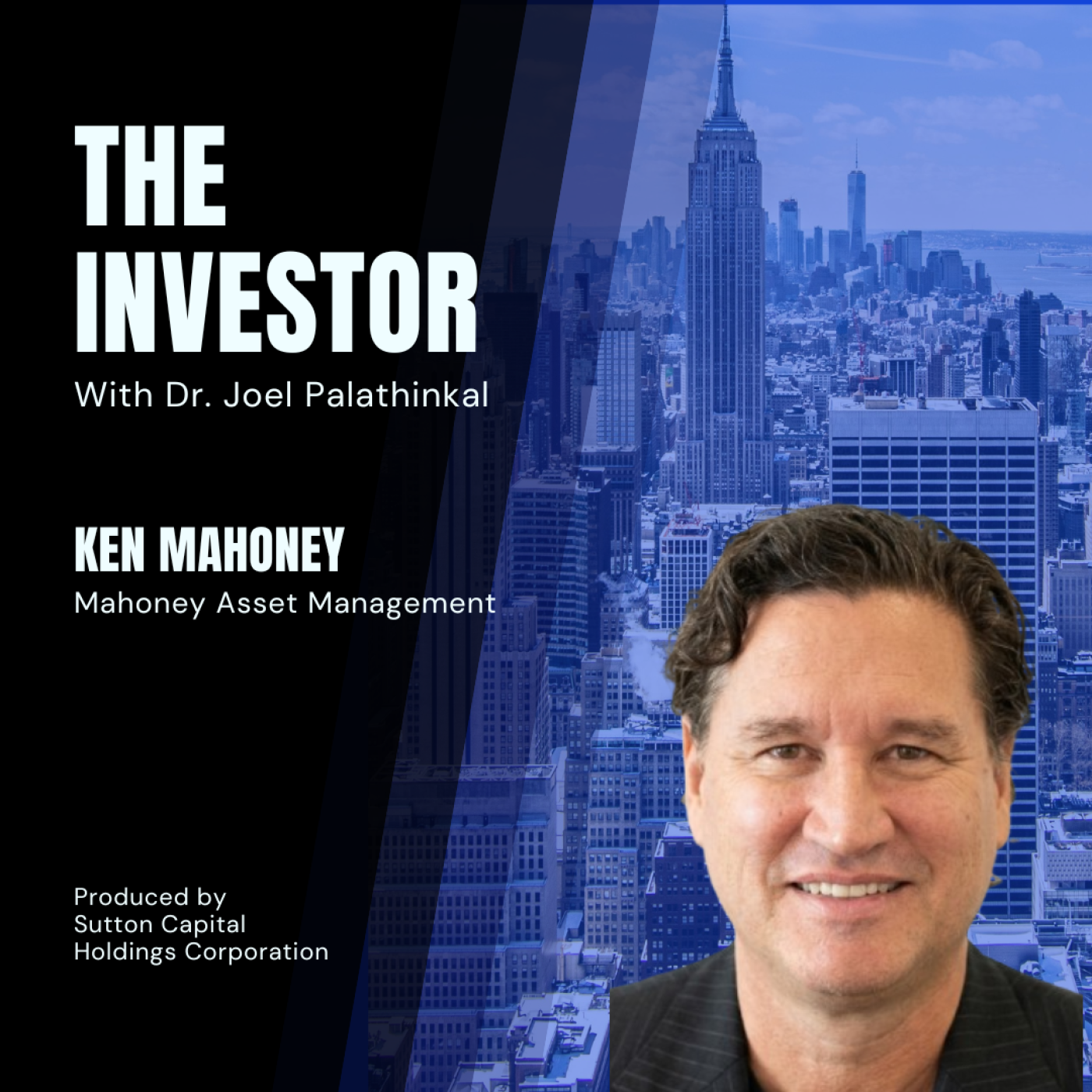
Welcome to the Investor, a podcast where I, Joel Palo Thinkle, your host, dives deep into the minds of the world's most influential institutional investors. In each episode, we sit down with an investor to hear about their journeys and how global markets are driving capital allocation. So join us on this journey as we explore these insights. All right, we are live here again for the Investor podcast. Really excited to have my guest on Ken Mahoney. Ken Mahoney is a CEO of Mahoney Asset Management where he offers clients tailored retirement solutions. He's using data provided by leading financial research companies Morningstar, Standard and Poor's and they provide detailed performance analysis and investment recommendations for goals like preparing to leave your job, purchasing a second home or, or planning retirement. You know, because all of us are kind of going through these different changes. Because of Ken's comprehensive financial experience, he sought out, he sought out after cnbc, Fox Business News, Mornings with Maria, the Today show, cbs, ABC, and the Investor podcast to speak on topics such as planning for retirement and stock market investment strategies. He's also frequently quoted in leading newspapers and magazines and including the New York Times, the Wall street journal, Chicago Tribune, CNN.com and Ken is on the radio daily delivering market reports on the whd, the Peak, the wrcr. And on Sundays, Ken hosts a well known radio program on WHD called a GPS for your finances. So Ken, you know, really excited to have you on the pod and happy to go deep on.
- [01:43]
B
You can tell I'm all in, right? I'm all in on this stuff.
- [01:46]
A
You are? Yeah. And I think it's important. I mean if you are not all in, it just takes like one day to behind, right? Because there's so many changes.
- [01:55]
B
If you're trading, if that's part of your thing and you have a cold or you have Covid and not feeling well, take the day off seriously. You really have to be all in sharp, ready to go every day of the week. I make mistakes. Again, that's just a little sidebar. But I thought about times where I'm
- [02:10]
A
like, you know what?
- [02:10]
B
I don't feel good. You know, pull back if you feel good, you gotta be all in. There's, there's nothing, there's nothing, there's nothing in the middle.
- [02:18]
A
Yeah, no, I totally agree. And a couple more plugs for you, Ken. You know, Ken is the an investor and author of nine books including 10 Things to Do before you retire and not your father's retirement and you know, licensed financial advisor for more than 35 years. And he's also considered by the financial industry. As an established financial professional, he was recruited to serve on the House of Representatives banking and financial services. And in this capacity he advised the chairperson of the committee, Congressman woman Sue Kelly, on the impact of new financial regulation. So congrats on, you know, just such a celebrated career, you know, Ken. And I know there's still a lot to come, so hopefully I did a good job with a high level overview.
- [03:01]
B
Yeah, I was, listen, I was like, who's got time to do all that? Oh, I did it.
- [03:05]
A
Yeah, exactly.
- [03:05]
B
You know, look, it's content creation, it's distribution, it's all things that, you know, that this show is known for. And again, nothing comes easy. Everything is a journey, you know, I love it. One day the Beatles became famous and coming to New York, you know, be spent about eight to 10 years, little club, 60 people. So nothing is an overnight success. Including the Beatles.
- [03:25]
A
Yeah, absolutely. I mean I, I know a woman who's raised I think over $75 million. And it was just, you know, over a period of a couple, I mean, a handful of months. And it was really because she built a huge following on TikTok. So people, you know, obviously you're not allowed to publicly solicit your fund, but you can share content, you can share your personal brand, you can share things that you're going through. And you know, I think that's the future of media, right? We're going to still have cnbc, but you know, people follow, you know, who do they follow? Right? They follow Mad Money, they follow a specific personal brand, a person that, that represents the face of that platform. So I feel like there's going to be a lot of people that are going to be empowered to build their own media platforms just with their mobile phone, essentially. And it's already happening.
- [04:10]
B
Right?
- [04:11]
A
Yeah. Well, why don't, look, why don't we start from the beginning, Ken? And you know, you, you probably do this periodically, but I want our audience to know who Ken is. Right. As everybody knows, our audience is mainly institutional investors, corporates, fund managers, LPs, people that are looking to get into the industry. We talked about, you know, some of your platform helping people think about what's next when they're trying to leave their job. Right. So a lot of people are in different situations in their life, right? They're, they're worried about their kids, they're worried about their parents, they're worried about if they're going to make their next mortgage payment. Right. So lots going on in their mind, especially with the, the people that are Listening in. But tell me who Ken is. You know, where did you grow up? What did your parents do? What did you think you wanted to become when you were earlier in your teenage years and, and you know, what was going on in your mind as you started college? And then we'll take it from college. And then I do have to start
- [05:05]
B
my teenage years or at least 18, because I tell my kids, they don't blame me. My first check was $3.40 an hour. I worked at the AP, pushing carts around. And I did get a raise some months later. I was very proud of this raise for $3.45. Now, even back then, I didn't buy much those my parents saying, like, you got to have your work ethic. So my dad was she metal worker, always in the elements, always wanted me to go to college and not go through what he went through. My mom stayed home. Mom took care of things and you know, the traditional kind of my three sons or leave it to Beaver, be home at 5 o', clock, dinner on the table, the traditional way, which we lost a lot of innocence, unfortunately, over the years. Anyway, so I ended up going to SUNY Oneonta and actually shade student, also in London, where I studied economics. Ealing College, West London. Then I came back to the States and finished my master's in psychology. Because I was like, I can't do two or three more years.
- [05:58]
A
So I come studying in London. What were some, you know, things that you experienced being in London?
- [06:04]
B
Yeah, you know, I don't know how I did it. So I was 19 years old.
- [06:07]
A
Yeah.
- [06:08]
B
At 18 years old, my mom was very sick and I stayed home. Thank God she got better. All my friends are zipping around the world, the country, and I'm like, still at home. And I felt like I want to do something. And how I picked it, Seriously. I went. I saw a little flyer back in the day, and you rip off part of flyer with a phone number. Again, no Internet. We're talking about pre Internet days and it's a phone number. And I called and say, yeah, they're looking for exchange students. And I thought that'd be adventurous. When I first got there. Joel, I have to tell you, while it was adventurous, how can I say this? I was really homesick. It was like, what did I just do?
- [06:44]
A
Sure.
- [06:44]
B
But it challenged me to learn that the world's bigger than the United States. €5 or €5 date euro pass. I went to pretty much every European country. Yeah, I was able to study economics. I was able to go to Bath Cambridge. So many institutions. And again, you know, 19 year olds, you can just suck that all in. And so I look back at myself and said, thank God I had that start.
- [07:07]
A
And it just kind of counted as a semester.
- [07:10]
B
Yeah. So one semester. And I traveled after that, and then I came back and it was like, okay, it's 1987. I was either gonna go to psychology or. Or the markets. Either way, I needed more time. And so starting 1987, remember October 19th, the stock market crashed. Not too many firms were hiring in 1987. So I said, I'll go back two more years. Masters. A lot of it was paid for because I was an ra. And then I came out and definitely I want to do the Wall street thing now. When I came out, I didn't have a lot of contacts. I went to Merrill lynch, was like, where's your book? My pamphlet? I don't know. So believe it or not, at that time was all these penny stock operators like F.D. roberts, and if you remember that whole Jackie Blinder, Robertson or blind you Robin, you know all this penny stock firms. Sure. So I don't want to go near there. The first firm I worked at was David Lerner Associates. They advertised a lot of CBS radio in New York. I met a couple of guys there that kind of liked them. And I was a bond broker. First couple years, I kind of cut my teeth in the industry with Dave and Lord Associates. And I learned a lot from that. But from there, I've always had a passion for stocks. And my kind of hop, skip and jump was to that of Paine Weber. People remember Pain Weber. They bought Care Peabody. Then they were bought by ubs. But there's some very famous. I don't know, Joe, have you ever seen these commercials? These old commercials? When Pain Weber talks, people listen. It was those days, you know, like they had a stock tip. If not, you should look it up or your viewers look it up, up. So that's. That's kind of where I got. And then from there, Prudential. And then at some point, I was your 1999, 2000. I was ready to go on my own. I want to do Mahoney Asset Management. I learned a lot through the wirehouses. I learned a lot that could go right. I learned a lot of things that can go wrong. I learned a lot of things from proprietary still. And so then I launched Mahoney asset management. About 25 years now.
- [08:59]
A
Yeah. I want to go back to your international experience when you. When you were just studying in London. Right. I mean, what Were some of the things that changed your perspective on the world when you, you know, like maybe things that you experienced is being in Europe and, and traveling and being in London. I mean, how did that change your perspective on life?
- [09:18]
B
And just kind of, I mean, there's so much history there, my friend. I mean like, you know, I go down New York City and I was working in the city of Ping Webber and all.
- [09:25]
A
Yeah.
- [09:26]
B
And you know, you see a building like 1955, like, wow, look at that building. Look at the architect.
- [09:32]
A
Sure.
- [09:32]
B
You know, you're now looking at things in Cambridge, where they started in 1485, or Buckingham palace, you know, the monarchs, the history there was like, it was hard to even wrap your head around it. That's. That building's 900 years old. Like, what holds that up? And my perspective in New York City, just one example was like say 55 year old built 1955 or after the war in the late 1940s and how cool that was. And you realize there's Europe was way, way. And I felt Europe was ahead of us at that time. Sure, whatever the technology was at the time, but definitely infrastructure, trains like it as a kid, you know, for three, four pounds a day I could zip along, use the bus, use the tube as they call it. But I could also bop around different countries. Like if you're in New York, you go to Connecticut, Jersey, you know, you're in London, you could go to Ireland, you can go to France.
- [10:22]
A
Just, you know, I remember when I was in my. Yeah, I was. It just gives me a fond memory. I mean, when I was in my early 20s, you know, I started out being, you know, as an engineer. So I was making good money as an engineer back then. And I met this guy that was kind of like minded and we were like, hey, we should go to Europe. And they had this group, it was. I don't know if it's still around. It's called Kiki. And essentially what you do is you pay a flat fee and, and they organize everything for you. And it was so cool because him and I went, obviously we had no, no responsibilities. Right. We were early 20s making money as engineers in the aerospace industry. And what was really cool was everybody there was from a different country. So people would just share like kind of their experiences, just like a huge cultural experience. And I think the time that we went that we were in London, it was, there was a World Cup. So it's just crazy. At that time everyone was just really, you know, going, going berserk over just kind of what's happening, you know, with the World Cup. But it was just a different culture. You know, people, you know, they say like, you know, when you go to Italy today, right, I mean, people are drinking wine, eating pasta, eating bread, three hours, right? I mean, so there's no, there's not the stress and, and kind of the things that people deal with over here in Europe. I mean, people are just kind of less worried about it. So, so yeah. Can you, can you still hear me, Ken?
- [11:52]
B
Oh, yeah, sorry about that.
- [11:53]
A
Yeah, no, it's okay. So, yeah, I was just saying, you know about Italy, right? I mean, people just kind of going there. It's just a different culture. People, their priorities are a little different than, you know, they're more worried about the human being versus here. It's like, you know, more, more, more. Right. How do I, how do I get more alpha?
- [12:10]
B
Well, Italy gets more and more, they get more and more vacation time. It's four weeks a year, then it's six weeks a year, then it's eight weeks.
- [12:15]
A
Exactly. Yeah, yeah.
- [12:17]
B
So I went to Italy, namely last year, the year before. We pretty much go once a year to Europe. Just still love going to London.
- [12:24]
A
Maternity leave. Maternity leave in Italy is like a year. I mean, over here maternity leave is two weeks, right. It's a, it's elective maternity leave.
- [12:31]
B
Everything's different. Yeah, yeah. Being too late. I have to say that's the only downside for me. Like around 9, 10 o', clock, I'm ready to wind down. You know, we have reservations. Day 30, leave there at 10:30, 11. Yeah, but you're right, it has to slow you down. And that's what's great perspective about Europe is that they have a work life balance. A life, work life balance that we all would probably want instead of the 12, 14 hour days that we put in.
- [12:56]
A
Yeah, I mean, I had, you know, so part of our team is remote. I hired somebody from Sweden and he's like, oh, I don't respond on, I don't respond on the weekends. And like, you know, I was just like, it's not going to work out. So, you know, what's that like, you
- [13:11]
B
know, you write to somebody, right. And, and the auto reply comes back, oh, we'll be, come back, we'll be back May 30th 30th. And you look in your account like what a month? If I ever reply saying, oh, I'm out, you know, for a month, I think there'd be nobody that's like the door. Yeah, the lights would be off. So. So to speak. But it's kind of funny. Every now and then you'll write to a European counterpart and you'll get this out of, you know, again, which is common. But then you look at the count, say, wait, that's 20 days. Well, 30. 30 days, sure.
- [13:45]
A
Yeah, yeah, absolutely. So, okay, so you started Mahoney Asset Management as kind of the next step. Right. Ken's worked in wealth management and asset management for. So tell me what was going on in your head and kind of the origin story of Mahoney Asset Management.
- [14:00]
B
Right. I've always liked the planning aspect of it. I mean, that's where I feel like I'm making the most impact and people making decisions around some of the stuff we do not. I trademarked a GPS for retirement, GPS for finances. But we created a gps, which really, it's a financial plan, but it breaks it down so the average investor can look at page eight, get a 30,000ft, what their expenses are with inflation and they're looking at all this stuff. And, you know, that changes lifestyle. For some people, it's like, wait a second, I could retire now. I was not retired three years from now. So it's very impactful. What comes out of these meetings again, asset management. We'll talk about that, I'm sure. But to me, where I feel like I have the most impact on family's life to help them, whether it's legacy planning, whether it's, you know, retiring sooner or maybe retiring later, or maybe they're saying, hey, my expenses are gonna be $70,000 a year. Why not make it 90? Be a little bit splurgy. An extra $20,000 per year, take that trip to Italy or Viking Cruise, whatever the case is, and still make the numbers work. So, yeah, again, it's great to see that you could elicit change, that you can help somebody and then they're all in. And then the asset management part of it is different, obviously. But to them, for most people, that's where they get the value added with our firm is the constant planning, updating on an annual basis. Are you on course, are you off course, Using some shades around gps. But we get it. If you go to GPS and you have a wedding draw this weekend and you're in the city, let's say, goes out to Long island, you're not going to wing it. Right. You can put your GPS and it's going to show you kind of how to get there. Some rerouting. Same thing here. Once you have a goal, you know, GPS is a goal. Whether that's a wedding or hey, I want $10,000 a month when I retire, then we back into that, Right. And there's some rerouting to have too. But then most investors who don't understand beta and alpha and you know, moving average convergence, divergence and all kinds of technical things, but they do know what a GPS and they know how to use gps. And now we're making it for them to create their own GPs and their own lives.
- [16:04]
A
Sure, that's helpful. I mean, what I think is interesting with the audience that we have is there's been a huge interest in asset allocation. So a lot of these families that have come into wealth, you know, would love to hear some insights in terms of trends that you're seeing obviously with it, with the higher tier clients that you see in terms of like wealth preservation, compounding wealth and then kind of thinking through, you know, how they're thinking about legacy preservation with their, with their next gens and, and you know, how these conversations are being made internally with the family, you know, especially in New York, Right. There's a lot of single family offices that are thinking through that they're family businesses. Sometimes the kids don't want to be involved in the family business. The kids want to do something else. You know, they don't want to run an Italian restaurant for another, for another, you know, for another turn. So. So we'd love to hear some insights, you know, and I know you're in Florida now, so we'd love to hear the flip side on that in terms of how families think about that, you know, in Florida. But you know, in your times in New York, you know, some of the, you know, wealthier families that maybe you've advised, you know, what was going on in their mind.
- [17:19]
B
Yes. So a lot of it they understand, especially someone more sophisticated with investments in the world, is that you really try to stack returns on top of stock returns. Right. You try to stay away from big drawdowns. If you're down 20%, takes you 30% to get back to break even, right. If you're down 50%, God forbid, you'd have to double get back. So they kind of get that and they also understand that the eighth one of the world, according to Albert Einstein, pretty smart fellow, is that compound interest. Right. So we're on the same page and sometimes you have to reduce the risk tolerance to make that happen. So we are growth managers, so we do get. It gets a little bit bumpy in the left lane. But this is a once in a generation, we believe last generation was 1990s. To be able to allocate money that you still do not gonna need for a few years even if they are retired and find yourself in that kind of bumpy left lane, growth lane, so to speak. We don't have an allocation for bonds right now currently we feel rates can go higher. Inflation may be a little bit stickier than most people like to talk about. So allocation stocks and cash and then we know we have volatility. We can make it a friend or a foe tend to make it a friend. And the strategy around that is big picture and then kind of narrow it down but be tactical. So let's say you like Microsoft. A lot of people will buy Microsoft, let's say one shot and they don't buy an increment. So if it falls against them like you know, it's 420, 400, 380, you know, go go in and add to the position. Most people it's one and done and so forth. So you know the tactical part of it your friend. And again this March was pretty ugly.
- [18:53]
A
Yeah.
- [18:53]
B
But we were looking at the oscillators which were deeply oversold. So many companies brought a 200 day moving average. So using some technicals there. Right. In addition to that, you know the Vix hit 30 at the worst level but was hanging in the mid-20s. And that's kind of, you know you have 25, 30, you're 2, 3% intraday moves Shakespeare but that's time to be adding to your portfolio. Conversely not to throw a wet blank and what's happening here in April. But we're taking some profits. You know, we want to build some cash for the next wish that we'll have down. Whether that's from my rent, we don't know what's going to come from. But that's how you make volatility your friend. You actually expect it. You make it part of your plan and then you execute when. When it happens.
- [19:34]
A
Yeah. And then when it comes to because I mean you're thinking through. When you think about wealth protection, obviously you're thinking about insurance products that could, you know, help with some of that. Right. And then when you're looking at compounding interest, what are your thoughts in terms of individual investing into consider into constituents versus just kind of having more of an index strategy for growth, I guess. Do you get higher alpha if you just kind of selectively, you know, directly manage, you know, individual investments or is it better to kind of have a blended, you know, fund to funds approach where you're investing in multiple, you know, indexes that generate some type of proven returns over time.
- [20:15]
B
Right. So yeah our kind of base would be ETFs. Our favorite still is QQQ, the NASDAQ 100, Apple, Microsoft, Google, the video of those names over the SB 500.
- [20:25]
A
Yeah. QQQ is a little more high growth as well. Right. I mean that's why.
- [20:28]
B
And then some individual ST which represent the AI. So again we like the infrastructure plays.
- [20:34]
A
Yeah.
- [20:34]
B
Gev, the spin off of General Electric and they provide all generators VRT Veritas, you know they cool down all these data centers. They're picks and shovels. We love picks and shovels. Sure. We don't know. We're not sure which is going to be the chat GPT the future. We're not sure what AI is going to be the kind of mainstream but we do know the picks and shovels are going to have to be used for the rollout of the data centers and so forth.
- [20:58]
A
How would you, how would you think? Through the weightings of the indexes. So like you know, with Q qqq. Right. That's high growth. To offset some of the risk of the high growth. What is, what would you recommend in terms of kind of balancing that out? Maybe do like a V or kind of like some of the, the, the well known S P500 indexes to balance that out.
- [21:16]
B
Yeah. So I'm not a fan of the SP 500. I think there's just too many industries that are out of favor. I think it's over diversified. But to your point, there's a lot of ETFs out there. I can name one, I can name a couple for you but QQQX the NASDAQ 100 selling calls against portfolio year over year. About 16% dividend or dividends created by selling calls 8% so again we kind of.
- [21:38]
A
Oh, that's pretty good.
- [21:39]
B
Yeah. We're trying to stay away from the income again. We really think rates can go higher.
- [21:43]
A
Yeah, yeah, yeah.
- [21:44]
B
Just for income. That's fine. Sure. Bonds mature but they don't mature. Coming again my background coming from a bond house, knowing that you know again we're hoping for a stronger economy. I'm hoping the Fed be careful. I hope the Fed doesn't cut rates that the economy's coming along. That's going to help grow stocks and so forth. That's our theory and but we'll be, we'll be tactical in between. So it's stocks and cash. Not really liking bonds too much but to your point how to generate some extra income in the portfolio. Again, we like some of these ETFs that sell calls, in this case QQQX, and generally reaching a 7,89-percent distribution of selling the calls, you know, collecting premiums.
- [22:23]
A
Sure. Got it. So be about. Yeah, so be the qqq and then also kind of the other vehicle with the X to kind of get some of those dividends.
- [22:31]
B
I mean.
- [22:31]
A
Yeah, it's looking like it's around 7.74, hovering around the 8x8% dividend, which I think is great. I mean, you're not going to get that a lot of times.
- [22:39]
B
And look what it's doing year to day. What's done in the last year and again. But again. And actually people say, hey, qqq. Yeah, a little bit too much risky. QQQX still gets the whole things, but selling calls and reduces risk because you're bringing an income.
- [22:53]
A
Yeah. And it hasn't been, you know, I'm looking at it from a year to five years. It hasn't been crazy volatile. I mean, you're looking on the high end for QQQX, you're looking at like a 30.$43. And then, you know, kind of the lowest, you know, the lower numbers, you're looking, you're hovering the 20s. Right, right. But all. It's kind of been pretty, pretty stable, period. Yeah.
- [23:16]
B
Nasdaq was down 200 yesterday, or give or take.
- [23:21]
A
Yeah. And then when it comes to like legacy creation, you know, when families are thinking about kind of passing this down to their, to their children or their grandchildren, you know, what are some of the conversations? Obviously, you know, could be spoken about more broadly, but just kind of some of the signals or just patterns that you've been seeing with, you know, just kind of managing essentially, they call it decumulation. Right. As you're kind of getting older. There's a book, I mean, I highly recommend. It's called Die with Zero. It's about just essentially after you pay, after you've paid your kids, after you've kind of given everybody what you think you want to give them, whatever's left for you. You know, you want to, you want to enjoy your life and spend that as long as you've kind of taken care of everything else. But that's, that's essentially kind of the decumulation process. So, you know, how have you kind of. What are some of the things that you've learned kind of working with people as they're kind of, you know, getting towards the later, later parts of their life.
- [24:17]
B
Right. So sometimes it's two camps. I mean, we've even heard like Warren Buffett again, not directly for me, but saying he didn't leave a lot for his children. He wanted his children. Mr. Wonderful Shark Tank also. So again, I say two camps, one camp that says, hey, you know what? I built my thing, you know, it's not going to help you if I just give you everything. So I got that camp. The other camp is like, hey, I'm gonna leave a lot for them. I struggled, you know, so it's coming from. But it's coming from different bases. So to your point though, I think most of our clients that are doing this, whether they're bequest or whether.
- [25:04]
A
Hey Ken, I think you broke up for a second.
- [25:09]
B
Just off to. I'm having to add the Internet guy coming.
- [25:12]
A
No, you're good now. You're good.
- [25:14]
B
Okay. You'll be able to edit that. Sorry about that. It happened a couple times. I'm rambling here. Ending up. So, you know, for those, for those clients that really want to give to the children, a lot of it with some strings attached, that is. Yeah, they understand, you know, someone getting $10 million, 25 years old can actually really work against you, you know, and I'm not blaming any 25 year old. I was 25 at once. And yeah, I'm glad I didn't have $10 million. I may not be here, but you know, let's say in that example.
- [25:39]
A
But you may not be alive.
- [25:41]
B
Yeah, give them a certain amount of income each month, give them amount of whatever, but make it over, you know, 25 years old and then another amount of money at 30. So if they didn't really figure it out 25, they still have a few more years to figure it out. Right. And then maybe a 30, 40 and so forth and so on. So I see a lot of that kind of laddering, let's say to the children to make sure that they still gifting, but not a one shot because
- [26:06]
A
they also know, and also, you know, the thing that I took away from that book, Diet with Zero is like, you know, you don't want to give money to someone when they're 60 years old. Right. That's not when they're going to enjoy the, the money. I mean, they, you know, when you're in your 30s, you may be starting a family you want, you know, obviously you could use it. You could buy a house when you're 60 years old. I mean, you could, you know, you're lucky if you can continue to, you know, have the same ability that you had, you know, in your 30s. Right. So I think that's, that's also an important point. It's like the prime years where you can kind of really enjoy that wealth is kind of essentially, you know, in your maybe early 40s to be on. So.
- [26:40]
B
Yeah, yeah, like every. And also what I like our approach, and again other wealth managers too is nothing we do is cookie cutter. Right. So even in that planning and in depth planning around legacy, everybody has different. So even the husband, wife sometimes have different views on it and they have to kind of figure out a strategy that they could both kind of live with. So it's not, again, there is no cookie cutter. Every family is different. Every family has goals and objectives and we try to work through it. I also tell a lot of our clients, whatever we set up, remember, we're not state planning attorneys, but again we refer them to estate planning attorneys. Most of it we recommend are revocable. Meaning also on your son, it turned out to be not that nice of a kid. Let's say you could always change it and that, that actually that flexibility gets people going forward. Right. So a lot of people say like, I don't want to do something because if I want to change my mind. No, you should set up with the most amount of flexibility that you may change your mind and you may be able to change the documents or who are going to be the beneficiaries primary contingent and so forth.
- [27:40]
A
Sure, that makes sense, I would say. Yeah, I mean, I totally agree with that. There are those two camps and there was somebody that I saw on my feed, you know, maybe about a year ago, I mean he was a billionaire and he was just saying it's like, look, you know, I mean there's, no matter how much money you're making, there's only so much that you can really spend. Right. Like if you, you know, like how even if you ate out every day and ate at a five star restaurant every day, but you know, 300, that's not going to really exceed more than maybe maximum like 30 grand a month. Right. So there's a point where like your living expenses just to kind of still have a good life, I mean there's, there's a number that you just can't really spend. You like if you really tried, I mean it's just tough to spend that amount of money. Now there are people that can you obviously they're buying, you know.
- [28:30]
B
Yeah. Start buying jets and yachts. Best days in life. I mean some of my Best days were hiking with my two boys. It cost nothing, get a sandwich, you know, so it's not always, you know, sometimes you may go to a restaurant, you said for 300 and you didn't see the weight of the entire day. The food wasn't good, you know, so again, how we spend money also we can live abundantly and we don't even have to spend a lot of money with so many different choices.
- [28:53]
A
Sure. And you know, along with just kind of. So, you know, obviously, you know, you think about, you need to think about the trust and you know, the estate, you need to think about obviously insurance products that can kind of, you know, have the protection that you need to kind of support your family if something happens, you know, be able to protect their family. And then obviously you want to have growth. Right. Are there any other components when you're thinking about a financial plan?
- [29:15]
B
Well, again, we said insurance. Most of the time we look at, again we have specialists at our firm. I don't handle that, but I know quite a bit about it being licensed and all that. But life in the hybrid, long term care, because you know, someone has a long term care and not have life, you know, you may be putting money towards that and thankfully, hopefully you never find yourself in a long term institution, but you're throwing money away basically because really that money should either go towards one's passing. Unfortunately, again, that's for legacy planning. But the law, the hybrids, long term care and life insurance are definitely a lot more. And by the way, sometimes we review a client's portfolio. Let's say they've had a good year, they've had good growth, but if they don't shut the door to risk, and that risk is a long term illness of one spouse can wipe out the other spouse and it can happen pretty quickly. You know, 10, 12, 15,000amonth is not unusual for nursing homes these days. And so if you're really going to get around planning and it's not a fun one to talk about with clients, but usually it involves long term care. But for us, the strategies we like are really the hybrids that include both life insurance and long term care.
- [30:17]
A
Yeah. And then with long term care, I guess there if you, so I guess if you were to kind of enroll in long term care, there would just be a premium that you would pay today. I guess in the event that that would happen, then the 10 grand or whatever, 10 to 15 grand, I guess. Would some of that be subsidized because you paid a premium or would you still.
- [30:36]
B
Yeah, yeah.
- [30:36]
A
Okay.
- [30:37]
B
Very expensive though is not easy. It's not easy call. It's not an easy call. I mean some, some clients say I'm doing it for my children because I can wipe down. Look, in our family, my grandmother, she took ill. My uncle took care of the house, which he didn't. And the house was, the house was sold to pay for the nursing home. And then my father said that's not gonna happen to you guys. We're gonna make sure we break that. So there is definitely the way to kind of deal with it. It's not just long term care for the spouse. Also long term care for the next generation that you know, one again spouse is sick for 10, yeah, 10, 12 years. There may have been, may not be much mistake left after all. God forbid that would happen. That's not to scare everybody. But it's also their expensive to get. It's not an easy decision. So I'm not. Yeah, it really depends on the situation.
- [31:23]
A
I think there's some, you know, look, I mean we know people from ethnic backgrounds that you know, end up sending their, sending their elderly, you know, family to just sending them back home. You know, you go back to India and you know the, it's just much more digestible, it's much more affordable. Right. And you know, the care that you're given there, it's essentially almost like in a luxury. I mean I wouldn't say it's like a, like a Ritz Carlton. Right. But it's, it's a nice facility that, you know, gets you the care that you need. Obviously all the support that you need and the staff and the medical attention is there and it's at a fraction of the price. So I think there's, there could be some innovations with. And there already is in like in terms of medical tourism. Right. If you got to get your dental work done, you could do it for. I mean I know that, I mean I haven't had to have any dental work, but I've had family members that have gotten stuff done for like a fraction of the price in India. They're going there, they're going there to visit family. Might as well get a crown in, you know.
- [32:19]
B
Yeah, no, I know family have gone to Brazil and for a fifth of what or tenth of what it costs.
- [32:24]
A
Yeah.
- [32:24]
B
Here in the States. So yeah. There's different ways to handle it and depends on some clients are all in as far as whatever it takes to make sure protect my son and daughter. And that includes life insurance, hybrid long term care. Let's do it. And Others say, hey, I work my tail off. I got this. Whatever's left is gravy for them. So it's two different schools of thought.
- [32:43]
A
Yeah, well, look, I mean, there's a lot of innovation, right? I mean, do you think you and I will be taken care of by robots?
- [32:49]
B
Maybe it may happen in next week. The way I just saw, by the way, I just saw out of Japan, one of these robots working with airlines, you know, out there, you know, and, you know, kind of cleaning the airplane and this and that. And you're sitting there saying, wow. The uses just go on. You can imagine. I mean, that's a tough job for someone to be down on a tarmac with the beating heat and the fumes and yuck. And yuck. You know, everybody's kind of all over this and saying, AI is going to galvanize jobs. That's not a really good job for most individuals. Right. So if you place those type of jobs, I mean, skip be here on this, but just reminds you where we're going. And when I saw this robot robots, I should say at this Japanese airport and things that they're doing, I'm like, you get kind of where this is going. Including, you said healthcare. Yeah. I went to a restaurant in Florida and it was a robot. Ish. And it came up with a tray and plopped in front of us. Now it was more for show. Yeah. Probably attract business. But it did. It actually stopped there. We picked a thing, it went off, we click some things, it came back over again. And of course this thing was running around the restaurant on a piece of it. But pretty soon that's not going to be just for fun. It was not going to be just for games. It's not going to be just for entertainment, for bringing in business. Pretty soon that's going to be, you know, where we are.
- [34:06]
A
Yeah, I mean, I think there's going to be a point where there's a, there's a inflection point where the cost will really drive people to just trust robots. Right. So right now people use Waymo. Waymo is completely autonomous. And if Waymo is, you know, probably 5 to $10 cheaper than u, people would probably stop using Uber, you know, and just because it's, you know, they're willing to take the risk.
- [34:27]
B
And I'm old school, I'm Uber still. I would still be like, you know, I still want to talk to somebody in case I cheat, whatever the case is. But I totally get it. My son was often Austin, Texas, where actually he was visiting some friends There and the first time he did a double tape, husband, wife, got in the back of a car. No, in the front and zipped off. And he just sat there, he said, with his mouth open and remember that they did a lot of pilots there, of course in Austin, Texas. He happened to be there visiting friends, but he said it was just, you know, it's going to take some time. You're going to have that reaction for at first, like what, where's it like Robocop or whatever the movie Last recall, whatever these kind of futuristic movies back in the 80s and 90s. And here we are.
- [35:05]
A
Yeah. Where, where do you think the innovation is going to be? In the investment space and also in the wealth management space.
- [35:12]
B
Yeah. So I think there's gonna be a lot of AI use. Look, we're using more in our practice for touches. We still have a rule again, we had a staff meeting the other day that we still want to hand write, type out notes. Again, some of these things look way too polished and it really, really wants to come from us. But for us, as far as asset managers, as far as screening, especially growth managers, we're looking for, you know, companies, let's say, you know, over the next six months, over the next three years, again, other criteria put in institutional interest, low, high, whatever you want to do. So we're using that and it actually matches with good. A lot of our research is. Which is quite cumbersome before as you know, it aggregates all this stuff. So I think in our practice we're using it for investment selection. But as far as the touchy feely that our clients like, and most of them are older, we still want staff to reach out by phone and email with their own notes and not get, I mean, I don't know if you received. But I'm turned off when I get an AI obvious letter that I don't feel someone's put any time into it. So I think, I think it works very well for productivity. But I also think if you're going to lose the customization or the personalization over AI, you know, be smart in your business about what you send out to the public.
- [36:24]
A
Yeah, no, absolutely, I totally agree. I mean I think people are using AI now to kind of maybe sanitize their emails, get feedback on maybe if the emails sound better or more empathetic. But then the problem is they start to, they, you start to smell that it was written by AI just because it was too polished. So at least, you know, at a minimum, you know, force a few typos in your paragraphs, you know, so.
- [36:47]
B
Right, yeah, I see a couple of misspellings. Then it looks like it's real.
- [36:51]
A
Exactly. I mean, I would say a big thing too is, you know, the companies that are really going to innovate are the ones that are going to have an in person component. Right. So really building, building a community around you. You know, obviously we're doing it, we're doing this digitally, but you know, have an in person cocktail party, you know, once, once a month, you know, a meetup group where like minded individuals can get together and share ideas, share notes. That was, that was one of the concepts that Benjamin Franklin, you know, talked about, like having an affinity group for like minded professionals, like almost like a mastermind. Right. I don't know if he might, if he coined the term, but you know, if you think about, there's this book,
- [37:27]
B
like a board of advisors, you know, for you.
- [37:29]
A
Exactly.
- [37:30]
B
You give, give them feedback to their company and they give feedback to you. And I think that's awesome.
- [37:35]
A
Yeah. There was a book that one of my professors wrote about just lessons from, from Ben Franklin. And one of them was not to drink. Right. But I, he had like 10 lessons.
- [37:44]
B
Next chapter.
- [37:45]
A
Next chapter. But one of them was like, you know, if you think about it, right, you're, you're, you're drinking, you're spending money on alcohol, obviously. Look, I mean I, I'm in New York, so I, I socialize and I go out and try to network with people, go to cocktail events. But you know, it's, it's interesting. There was some, there's fundamental lessons that are old school, that are timeless. Right. And one of them obviously, as we mentioned, is just like kind of building, you know, surrounding yourself with good people, you know, trying to, you know, obviously stay on top of things. I'm trying to like pull up something really quick to see if I can, you know, share a couple of them. But, but you know, those are some of the few that I, that came to mind, you know, in terms of just kind of sharing, you know.
- [38:26]
B
Right. That's like 200 years ago and it still applies now. I think again, what he's, what you're doing is socializing. I'm sure it's taken like to a point where people are drunk and mess and they don't present themselves well and they've done it for days. And we're not talking about going out to a nice steakhouse and ordering a cab. I don't think that's what was meant. But the point is that a lot of the things. And I guess you have a couple more quotes to share to this day here, 2026 still holds true all these many years before the birth of the Internet, before maybe before electricity. Some of the great quotes from Washington and so forth.
- [39:01]
A
Yeah, here it is. So, you know, couple timeless lessons from Ben Franklin. Right. Industry and productivity. Look, staying on top of things and just always trying to do something that's helpful. Right. Whether that's, that's building something or supporting someone. Just kind of constantly staying employed in useful tasks. That's one of them. Frugality, financial prudence. Obviously that still carries weight, I mean, especially in your line of work.
- [39:28]
B
Oh, yeah.
- [39:28]
A
Continuous self improvement, reputation and integrity. That's a huge one. And then, I guess.
- [39:35]
B
Yeah, yeah. And then connection. I read something again. I read a book about presidents and Ben Franklin went to, to England a number of times. Those boats and those waves. I don't know if I would be able to make it. I took them like three months or four months or forever. It was. And there was pirates out there. It was very dangerous. And he made several trips from the US to. And so when you hear these type of quotes that come from him, he's very real. I mean, he's, he's. These are not luxury liners back in the day. Right. These are not.
- [40:06]
A
Absolutely.
- [40:07]
B
Trips. And he did them. So again, hats off to him.
- [40:11]
A
Yeah. And then from poor Richard Zalmenack, you know, a couple. I'll give you a couple more. I mean, early to bed, early to rise. Diligence is the mother of good luck. So all these are kind of related to investing. Right? An investment in knowledge. Knowledge pays the best interest, and then haste makes waste.
- [40:27]
B
So, yeah, investing yourself, you know, again, I, I have to say for, for your viewing audience, like, we come in January, we all turn over a new leaf or try to. And I still like to snack. You know, some of these things I broke, but the one that I started a few years ago, that still works every week because I try to read a book a week now. It's usually one book every couple weeks. But that's been one of my best things, one of my best New Year's resolutions that stuck and that I love reading, especially about history and nonfiction and so forth.
- [40:57]
A
Yeah.
- [40:58]
B
Share that with your viewers. That, you know, I had a friend. Share that with me. And then I took to it and now we have a quasi book club. But there's just so many great books that are out there. And by the way, for your business and for my business, a book I Could Recommend Called scaling Dr. Hardy along with. Yeah. With solid. I'm sorry, Sullivan, was it? Dan. Dan Sullivan. Yeah. And there's like three or four books that are out there, you know, not how, but who.
- [41:23]
A
Yeah.
- [41:23]
B
And 10x is easier than 2x and this stuff will fill your, your mind and all soul and all that type of stuff. So yeah, I still believe that we still have to. Even though we're out of college and I mentioned my background in college. We're out of college. We still, we still need to learn and there's some great stuff.
- [41:42]
A
Do you think there's a market for people that want to still. You know, so I'm, I'm, I'm doing Audible now. Read books all the time. It's just tough to block off time, you know, with two, two little ones at home. So what I do is I just try to digest as many Audible books as I can while I'm working out. But I saw this in my feed. It's the only living trust book that you'll ever need. I just saw it like on an Instagram ad and I was like, oh cool, let me buy it. And I just bought it and you know, it's here. So at some point I feel like it'd be a nice little guide to read through maybe if I want to learn something more about trust. But do you feel now with, you know, Gen Z's, there's a need to kind of, you know, get away from screen time and have more in person connections and, and obviously like have more physical books versus kind of the. I, I haven't done Kindle as much. I mean, it's just again, you know, just sitting down and reading. It has been tough to kind of block off time. Although I do love reading but you know, wanted to, you know, just see if there's any other trends that you're seeing in terms of just kind of more human or manual physical connections?
- [42:47]
B
Yeah, but there are, there are definitely are some apps out there that condense the story down to like 10 pages, you know, so if you kind of want and if you like it, go deeper. Yeah, look, I'm more of a tangible guy. I come from a time where I was born before the Internet, let's put it that way. And I'm probably one of the only people in my block that still get a newspaper, the Orlando Centennial newspaper. And again, I like the tangibility of the book and I'm highlighting, I'm putting asterisks on it in the back notes and I just finished the book over the Weekend. I got to take those notes up in the back and put them into my organization.
- [43:21]
A
Sure.
- [43:21]
B
I guess the point is I really. Again, for me, anyway, that backlight never worked for me with Kindle for some reason. Of course, I do a lot of reading on a computer as it is, but that book is just something. It's like, hey, that's my free time. That's something I enjoy doing. And the tangibility of, again, yellow stickies and things makes it come alive a lot more.
- [43:40]
A
I feel absolutely. No, it's amazing. Well, I know we're coming up on time, Ken. You know, this was amazing. I feel like we had a fun time jamming.
- [43:49]
B
Oh, yeah.
- [43:50]
A
You know, I always end every conversation with just one piece of advice. Could be from a mentor, could be from a family member, could be from maybe a colleague. But just. Maybe just looking back, just one piece of advice that you want to leave us.
- [44:04]
B
So I'm a big Dr. Wayne Dyer fan. I got a chance to meet him over the years, and you probably saw him on PBS over the years. Sure. And he always says, think from the end, meaning, you know, you know, if your goal is this, put it out there in the universe, not getting. Not an egotistic way. You know, maybe it's through prayer, meditation, sublimity before you go to bed at night, which I. Every night I marinate. So I always make sure I put some good things. And look, there's always health scares. Always things are going on with the children, and there's always got. But again, I just love some of the messages from Dr. Wayne Dyer. He asked me to pick one, but live from the end, meaning it's already here. Whatever it is that you're trying to get, it's already here. Have the great emotions around it, and the universe will figure it out for you. Again, I would say anything to do with Dr. Wayne Dyer, and if his. Any of his quotes are really helpful, that's amazing.
- [44:52]
A
Well, hey, Ken, thank you so much. Thank you for all that you do for the community, and thanks for sharing all your wisdom. This was a lot of fun. And everybody else, a lot of topics. What's that?
- [45:02]
B
We covered a lot of topics.
- [45:04]
A
Yeah, that's what happens when you don't rehearse. You know, you just kind of. You just have a real fun conversation. So, sure. Really good time. And everybody else in the audience, have a great day. Catch up soon. All right. Bye.
- [45:15]
B
Bye. Sat.