Loading summary
Transcript94 lines
- [00:02]
A
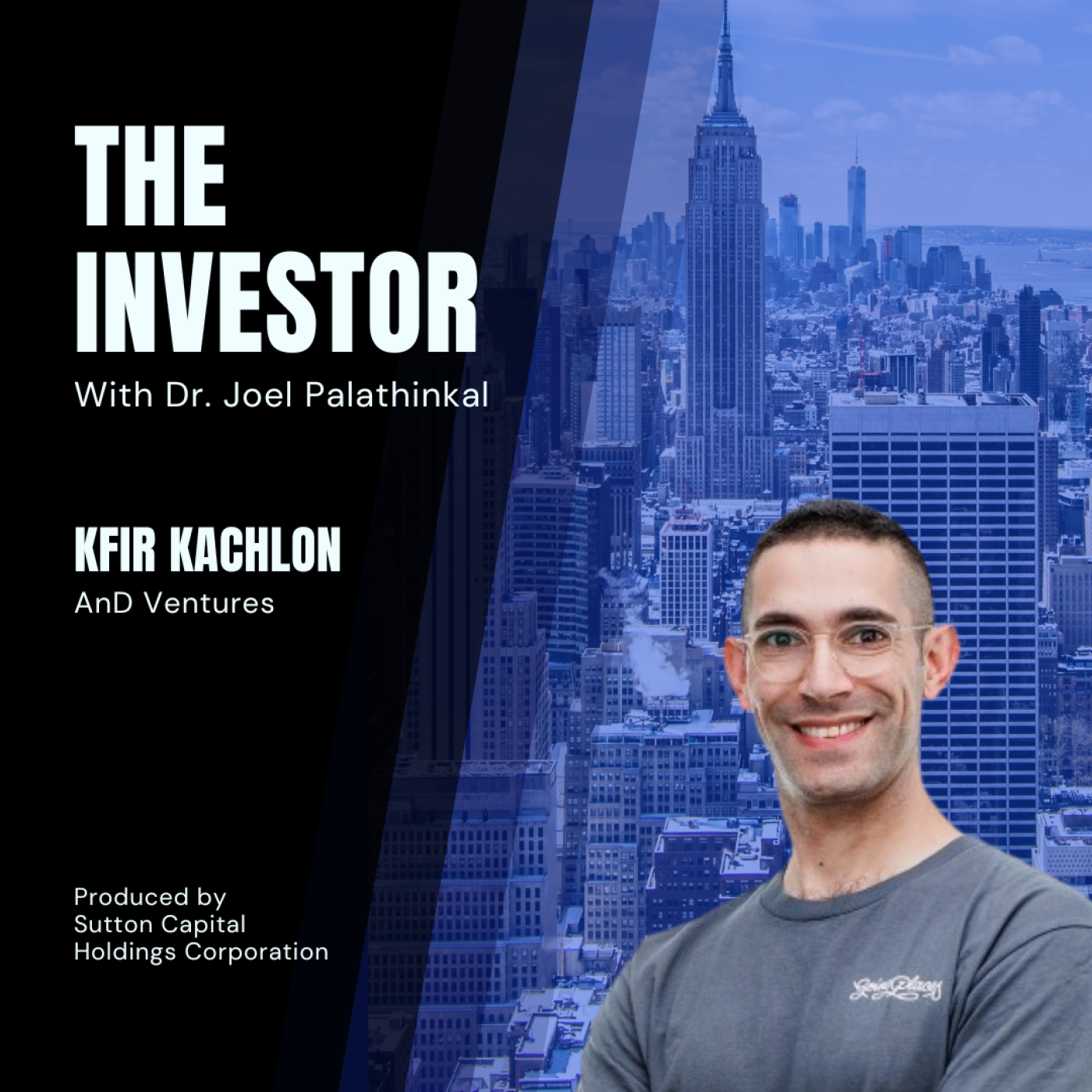
Welcome to the Investor, a podcast where I, Joel Palathinkel, your host, dives deep into the minds of the world's most influential institutional investors. In each episode, we sit down with an investor to hear about their journeys and how global markets are driving capital allocation. So join us on this journey as we explore these insights. All right, we're live. So we're here with Kafir Kahlon at and Ventures. Did I get that right?
- [00:34]
B
You got it right, yeah.
- [00:36]
A
Good. So, you know, excited to have you here. You're all the way out from Israel, and I just think there's a lot of great technology and venture activity happening there. So before we get into all that and talk about the ecosystem, I'd love to learn about you and your partner and how you got started. Maybe talk about your career first and how you got into venture and then how you guys started Andy Ventures.
- [01:02]
B
Yeah. So maybe I'll. I'll take us further back. Why I'm even interested in tech. Right. I mean, you know, I think in order to be a successful vc, you kind of need to have a spark from every entrepreneur that comes to you and speak to you about technology and about innovation and stuff like that. So as a child, I was maybe that generation that was lucky enough to be between the highly sophisticated computers to the very dumb ones. So we started, you know, as children, gaming. You had to write lines of code in DOS in order to upload a game. And then technology moved forward. So we, as kids, we were the geeks at school. So we were breaking down computers and waiting for the next Nvidia or whatever, graphics and card to come out and bought it and bought a motherboard, put it all together, created a gaming computer, and we were very much tech oriented. Most of my friends today are engineers and software developers, architects, algorithm developers. So this is my background. This is where I grew up and my career. After the army, I went straight to law school. I graduated from law and got my bar license and then started my legal career. Always with companies or with law firms that are high tech involved. Meaning, you know, creating the legal framework for entrepreneurs to put up their company when they just starting. Or creating a contract for software companies, the eolas that nobody reads or the license contracts, you know, when you. When you license the software.
- [02:57]
A
Yeah.
- [02:58]
B
And then after six years as a lawyer, I decided that it's great to be a lawyer. But with a small analogy, I would say it's like being the rabbi or the pastor when a couple gets married. You know, you are. You're just saying the last couple of words and agree. Agree. All right, you're now married. I want it to be the couple themselves, somebody on the cup on the couple side to see the beginning. When you first date, when you. When you first pick up, you know, somebody on a date or go out with, you get involved, you get to learn each other, you get in love with each other. And that's. Somebody told me, why don't you try going to the venture capital world?
- [03:41]
A
Do you know Jack Levy from More Ventures?
- [03:44]
B
Yes, of course.
- [03:45]
A
Okay. Yeah.
- [03:46]
B
He's actually on call with him a few weeks.
- [03:48]
A
That's hilarious. He was on my show like a few, maybe about a month ago, because one of the students in my program, we also have a venture training program as well. So one of the students was from Israel and he introduced me to a handful of VCs in Israel. So, yeah, Jack was amazing. He's from New York. But I remembered him because he was a lawyer as well. So I thought that's an interesting parallel. Maybe you can tell me what. You know, obviously, legal fees, you can maybe save some money, you know, but. But what are the other superpowers that you think, you know, you and Jack have as being a lawyer as a background, Because I was an engineer, so obviously I have some tech background. But I think there's also some really great superpowers being a lawyer and then. And then transitioning into vc.
- [04:33]
B
So I think maybe the one thing I would say that gives you an advantage if you want a lawyer going into VC is that you develop a sort of a. You become very cynical as a lawyer. Okay. People, you know, especially if you do. If you're a commercial lawyer, so you do due diligence and you go into the details and you have to study a new area of the law or a new area of an industry quite fast if you want to give an opinion or if you want to represent a party in whatever conflict. So you develop that analytical capabilities. You develop that very OCD approach where everything has to be filed. If you look at my Gmail, it's crazy. It's like all subcategories of subcategories and everything is filed. I never lose anything. Everything I do is written. So I have a very clear track of everything that is being said. And I think as a vc, so that when you start as an analyst, at least in the food chain of being a venture capitalist, coming from a legal background is very helpful for you because you need to go and analyze a new industry, a new company and their competitive landscape. Who did when where how much were others raising and stuff like that. And the cynicism, because you will sit with thousands of entrepreneurs, especially here in Israel, such a crazy ecosystem. And you know, some of them are amazing, but a lot of them are doing stuff that, you know, you need to be very, how do you say, to the point and really understand what they're trying to sell. Because everybody sells something and they are selling a vision. Right. And you invest mainly in a vision as a venture capitalist. So you have to be very cynical about it. And the ones that carry the weight and can convince you and can build you a story that is believable for you, then these are probably the ones you will end up investing in, of course, after you've done your due diligence. So I think those are like superpowers that lawyers have in them inherently. Lawyers that find their ways to vc, I think are a different kind of lawyers because they were sick of being assholes when they were lawyers. So I think it's kind of like a different kind of mentality that went into venture capital.
- [07:18]
A
And from my understanding, you don't necessarily always save money on legal fees because you probably need other special lawyers to, to like form a fund or maybe another special expert in ip. Right. Or could you. Do you think some people could be like a jack of all trades, But I'm assuming not. But you know more than me.
- [07:37]
B
So I think when you, you can't do both. Right. If you're a venture capitalist, you're a venture capitalist. You think like a venture capitalist.
- [07:48]
A
Sure.
- [07:48]
B
Going back to that thought process of being a lawyer and that work, you will not be good enough in it if you try to do it for your own fund or for your investors or when you do diligence a company. So you better spend the legal fees. Yes, you might get discounts because it's all an ecosystem that, you know, you know the other lawyers, you know the other partners in other firms that you've worked with, so they might give you, you know, discounts, but you are managing other people's money the gave you trust with the money. You have to make sure that, you know, you do the utmost research before you deploy it. So if you are true to yourself and you say, okay, I've been out of the legal game for the last four years from in my example. So I don't do that legal due diligence as well as I have in the past. I don't even have the tools. I don't have access Lexus, I have Pitchbook. So you know, so you better be true to yourself and not save where you're gonna end up losing stuff.
- [08:56]
A
That's a good point. Yeah, I didn't realize that, but that's a really helpful point to know. It's like, once you're a vc, you need to be all in and you can't wear too many hats because it might even cloud your judgment. Right. If you're too cynical. Right. I feel like sometimes, if you're way, way too cynical, sometimes you may not be able to bet on a founder based on your instincts because you're like, man, this person's gonna fail the first ac. I'm like, ah, he's not gonna, he's not gonna be successful. So I feel like you probably had to change a little of that to maybe bet on founders. I don't know if you guys do very early or more growth, but you know, as you know, in the early stage, they don't have any financials. You're really betting on the team and the execution and their ability to do well. I think there's things that you can do to de risk the investment, but I think in the early stage, you know, you, you have to, at some point, you know, maybe, you know, and you probably went through that journey, right. Kind of like, hey, it's like you can't always be the lawyer, but also have to maybe bet on this person. But maybe you can walk me through that. Like, what, what is it that helps you pick winners? And what is it as far as the founders that you think are going to be successful? What are some of the traits that you've seen?
- [10:08]
B
So I think to your first point, it's most cynicism towards the idea. Okay, okay. Rather than the people you know. Especially when you do early stage investing, you always kind of invest in the team. You look them in the, in the, in the eye and you try to gauge, do I believe that they can execute what they are planning on? Would they be able to convince the corporates if they're a B2B or would they be able to do the right marketing place? If they are, if they are B2C or D2C, you need to kind of review the idea. Can be cynical to, okay, are they really first to market? Is it really such a pain? You know, those are the things you need to be cynical, the people you know, I think that those are things that it's very hard to quantify.
- [10:59]
A
Yeah.
- [11:00]
B
In the end of the day, it's a lot of how you get connected with a person. You know, you can find an entrepreneur that you are, you hit the same level and you, and you really, really like, you want to work with them. And then you will find an entrepreneur that you can't stand. Both of them can be very, very successful and others can invest because they fit their type, which is okay because luckily there's so much deal flow and so much great companies to invest in. And you should never invest, I think, in an entrepreneur that you cannot, you don't really think that you can work with. Especially when you invest in an early stage, you will be involved.
- [11:38]
A
That's a good clarification too, I think. Thanks for clarifying that on the cynicism because I think you can be as cynical as you want with the idea, but I think if the right founder comes along, they can give you the right answers to address all those cynicisms. Right. Because you may be super cynical, but then maybe the founder is like, hey, you know what, I know you're worried about that, but hey, we got the right team and, and we can execute and actually address all those concerns. And if you have the wrong founder, they just won't, you know, they won't have a solution for your, for your questioning. And then I think that's an easy filter right there. So I think that's a good clarification to be super cynical still, no matter what with the idea, but then with the founder, you know, give them a chance to address your cynicism. So that's a good point. And what are you guys focused on? What kind of sectors are you looking at?
- [12:27]
B
So I would say something that not a lot of people like hearing, but we are very sector agnostic.
- [12:32]
A
Okay, great.
- [12:34]
B
However, we do invest in stuff in companies that are very deep tech driven.
- [12:41]
A
Sure.
- [12:42]
B
So for us it's important to see what is the level of technology being deployed into an idea. Right. You can have something that looks. Yeah, let's take an example of Lemonade. Right. Great company. We all know them though. Everybody knows about them right now. But think about it. What they did is take an industry like insurance and make it very accessible to the younger generations. They want to work with that, but in their core, they are super data driven. They take the data that they get and they leverage on it. And they do an amazing work by that. So here is an example of a company going into a kind of traditional industry, digitizing it in a way, revolutionizing it, and using very deep technology in the core to give it the competitive edge. So it doesn't always have to be startups that are producing the next semiconductor or the next silicon smart chip or whatever to run to be the strongest GPU in the market. But it can be stuff that are very easily digestible. But when you pop the hood and you look at it in the hood, they have amazing technology and amazing know how an amazing algorithms that they deploy. So in general that's what we do, that's what we look at. So for example, the alternative protein space, the food technologies, you know, you have products that are basically innovative recipes and then you have products that are, you know, like cultivating fish meat in a lab. Right?
- [14:40]
A
Yeah.
- [14:40]
B
That's crazy. That's like sci fi. That's something you read in, in the Hitchhiker's Guide to the Galaxy. Right. And that vision is super, super technological and we can invest in a thing like that and we can invest in a thing that is taking technology to the e gaming world, to the esports world. So for us it's more about the technology and rather than the sector itself.
- [15:07]
A
Sure, yeah. We also look at deep tech. So I invested in a lab grown meats fish company, Finless Foods. Finless Foods.
- [15:17]
B
I invested in Blue Nalu when I was in our crowd.
- [15:20]
A
Oh, nice, great. And then there's, there's a company now that I'm looking at, I always talk about this but they're, they're growing lobster in the lab. So I can, I can introduce you to those guys. But yeah, you know, I definitely have a huge interest in food tech as well. Where do you think the market is heading for lab grown fish? You know, part of my thoughts are it's still a little far away, but I could be wrong. You know, I think they're still getting out to market and there's going to be prototypes next year. But what are some high level trends that you think are going to happen for maybe the future of food and then how is that going to impact kind of the plant based market?
- [15:57]
B
You know, we can talk about what we see from World Health Organization, all those reports and where they think that the world of meat will be in 2050. I think you know that graph where it says like 30% will be lab cultivated meat can be red meat fish for example. I really believe in the lab grown fish or seafood alternatives. And why is that? It's because that today seafood is kind of problematic. You know, the oceans are overfished. There's a lot of metals found in the fish itself. There's microplastics, there's so many. My wife was pregnant last year. She gave birth in March. But you know, we couldn't eat sushi because sushi is problematic for a pregnant woman. But if you take the vision of companies like Finless and Blue Nalu, then their meat that they will produce in the factories are safe to eat by everybody. And they can reach at least on paper and not on paper, but on the plans that they have and the scale that they're showing with time and with budgets and with, you know, just give them the time. They can feed a Los Angeles sized city but with one factory. So you can feed more people with the protein which is cleaner, better, smells the same, tastes the same, acts the same when you cook it. And I think when you look at what's happening on the trends of the consumer spending, I think that it also goes there. I think consumers are looking for the healthier alternative. I think they are looking for the most sustainable alternatives, you know, alternatives that are good for the ecosystem. And a few years ago, I think like 10 years ago, you started looking at tuna cans to see that the dolphins are not being hurt while, you know, in the process of fishing the tuna, right? This symbol that they put on the can. So you rather pay a premium for a canned tuna to know that it doesn't hurt dolphins in the process. So I'm sure that the same clientele and the same customers will be willing to pay a premium for lab grown meat now that they know it's cleaner, they know it's safer for the environment, they know it doesn't hurt the oceans. It's, you know, there's not even a question of humane because no fish is hurt in the process. So I think this is really where the future is going. And if you take me as the geek that I am, then for the future of mankind, if we wanna, I don't know if you relate or not to the future of us going to Mars or whatever. So we have to find the technology to create food in labs and in closed environments.
- [18:57]
A
Even though you and I classify this as deep tech, right? Cause you're using a bioreactor to grow the food. I would also maybe look at it as an impact investment too, like a sustainability impact category too. So some of these deals that we look at, and you probably agree they kind of blend between a couple different sectors, right? If you do B2B sometimes they also have a consumer app as well. So then it's B2B2B2C and same thing. Some of the deep tech companies, you know, if they can help the environment, it's like bleeding on the edge of impact or sustainability too. So it's great when you can do both. Right. You can invest and hopefully get some upside long term as a venture investment. But then also if you can provide some positive impact, that's always great.
- [19:43]
B
Yeah, for sure. I mean, and we see that it speaks very loud when you look at the red meat alternatives. Right. You know, when you see Memphis Meats, Memphis and Alepharms in Israel and redefined meat and all those companies, you look at them and you say, okay, 18% of the emissions that hurt the planet, that create the gas. I forgot the name of it. Never mind. It comes from farming animals. Right. From the, from all the process. And there's a huge, I think two thirds of the agricultural land in the world is used to grow food, to feed the food that we are eating. The cows, the pork, the chickens. And it's just utterly unsustainable. Right. The world is growing in rapid pace. People are not gonna, you know, at least in all research that we are reading, you don't have, nobody ever says, okay, the population of the Earth is going to decline. It's only going to go up. Sure. And, and developing countries are going to eat more protein. You know, countries that are going on the upping the ecosystem, not echo, but the socioeconomic levels, they will eat more proteins. They need to give them the protein. You can't do it with animals anymore.
- [21:07]
A
Sure. And what else are you excited about with Deep Tech? You know, because we've looked at space, we've looked at quantum. I haven't done a quantum investment yet, but, you know, we've looked at space. There's like a SpaceX of India that we're looking at now. So I don't know if you've gone that deep or kind of looked at some other sectors in Deep Tech. What are you excited about?
- [21:30]
B
I think what I'm very excited these days are everything data. My last investment when I was in our crowd was Dataloop. So, you know, if our world is definitely going to be a more AI and machine learning capable world and people forget that to enable that. It's not only that you need great algorithms, but you need the data to train them on.
- [21:55]
A
Yeah.
- [21:56]
B
So, and that data can be, you know, video, text, pictures, whatever. And it can be also pii, you know, private information that, you know, credit card companies have on us. Whatever. Yeah. So how do you synthesize that data to create, you know, data that is more anonymous but still carries the true value of the data and nothing gets lost. So the algorithms are accurate. So I think building the infrastructure for machine learning AI driven future. I think that's very, very important. So I'm really focusing there. I know it sounds boring, but I think it's cool. Yeah, so that is something that we are very much looking at. We are looking at. So there was a company that we are looking at right now that is developing, I would say an AI engine to train you to be a better gamer, video gamer. So I think that is cool. It takes a lot. It's not very easy when you think about it. Okay, so how do you know what I suck at? Right. You need to understand the engine and the game's engine while I play, take the insights from it and put it into an engine that I understand. Okay. These are the insights that we have to work on. And how do you train me? So how do you build a plan for me? So there's a lot, a lot, a lot of technology going in here, but there is definitely, I think a future for that industry, especially as we see gamers getting scholarships for Ivy League schools so they can play esports, which is amazing, you know, So I think that that is something very cool that we are looking at. Yeah, so that's.
- [23:50]
A
So I didn't know about that. So you're saying if you win like in a gaming competition then one of the awards is getting like a full college scholarship?
- [23:59]
B
No, today, if you, if, I mean the, the competitions that they have today are price bearing. So you can win a lot of money.
- [24:08]
A
Sure.
- [24:08]
B
Amazing.
- [24:09]
A
Yeah. It's in the millions I think, right?
- [24:11]
B
Yes, yes. You know, all those game publishers they have, they take a percentage of their income and then they put it back into the ecosystem as prizes, which is a lot of money. But today if you, you know, if you, I think nyu, Berkeley, Harvard, they have scholarships for esports athletes and there are teams worldwide that sell merchandise. And you know, they are kind of like the Manchester United, but of their world. And maybe they even have a bigger following. I don't know, I haven't looked at the numbers. But just think about it, the scalability of it is crazy. I mean, I enjoy looking at video games and I'm not even in the age category anymore, but I enjoy it. And I think just as you have tools to train a better cyclist, train a better basketball player, better football player, once those sports become professional, a lot of money involved, then it's obvious that you will have to have a tool that somehow trains a person to be a better at their sport. And now it's esport. So that is amazing.
- [25:21]
A
That is really cool.
- [25:23]
B
But it also carries on it's like there's a lagging effect to it. Once, like gaming goes stronger and stronger, so streaming has to be stronger. So engineering that, the GPUs have to be stronger. Now those GPUs then go to autonomous vehicles. So it's like. It's kind of like a loop of a lot of things making, completing each other. So I think that is a very cool industry that I'm very excited about.
- [25:52]
A
Yeah. What's interesting too is, you know, you talk about some of these algorithms transferring to other applications, you know, and then that's when you get into the edge computing. Right. So you can even put eventually a computer that on the device, it trains a model manually on the device without the Internet. They have that now, I think in elevators. The elevators, when they go up and down, they can train to be more efficient with people. A lot of times one thing that I learned is the edge computing. And correct me if I'm wrong, you might have a little more knowledge, but the edge computing, a lot of times you can just compute onto a small microprocessor, onto a device. It can even extend to the mobile phone or, or another device. So you don't always have to leverage kind of one system to do the calculations. And especially when you can run algorithms offline, that's really powerful. But I'm not sure if you have any other trends or insights on just kind of edge computing or where you think it's heading.
- [26:49]
B
I mean, an investment I've done when I was in Arcad was Boardman 17. So they do exactly what you said.
- [26:56]
A
Okay, got it.
- [26:57]
B
Deep learning on the edge devices, they take them into the, you know, the CPUs of the phones and they can.
- [27:05]
A
Do it without Internet too. Right.
- [27:07]
B
A lot of times that's exactly what is very interesting about them is like, think about when you drive the future of the cars, right? The future car, and you go into a tunnel, then you lose connectivity.
- [27:18]
A
Yeah, absolutely.
- [27:20]
B
If something jumps in front of your car while you are in the tunnel, how does the algorithms on board of the car understand in real time, if it's a human being, if it's a rock, if it's a deal, they are not connected to the cloud. They cannot run the algorithms and drag information from wherever the infrastructure is. So you need to make sure that those cameras that are on the edge devices, which is basically the sensors that are in the front of the car or in the sides of the car that they are able to, to identify in real time what's happening in front of them. So this is cool, this is a very interesting. And then you take them to, you know, stupid cameras, not smart cameras, but you know, the CCTV cameras, which are very off the shelf. Right. And then you take, you take it into mobile phones. Mobile phones have strong processors, but how do you take it to the cameras? Right. I mean, real estate on a smartphone is very expensive. You want every bit of real estate to increase the computing power. So however, you have a sensor, you have a camera that is just grabbing real estate. So how can make it smarter? So definitely edge computing is very, very, very interesting these days, especially as we are going to a more connected future. Think about firefighters need to go and go up commercial real estate building and they have to trust on connectivity somehow, like send a robot or something to see if there's somebody in a fire and that robot that has a camera. They cannot rely on Internet within the building. So it has to understand if it's seeing a person, if it's sending a shadow of a person. So lots of use cases and definitely edge computing and enabling AI, deep learning, machine learning, pattern understanding is super important right now.
- [29:22]
A
Sure. And maybe you can tell me a little more in the audience, a little more about just Israel and the ecosystem and some of the trends that you're seeing with some of the VC investments. If you have a slide, that's great, if not, we can freestyle it. But just in general, the ecosystem, I know Jack is focused on clean tech, so that was kind of interesting to learn from him. And you're a generalist. I know there's a big booming cybersecurity ecosystem in Israel. Has that changed? And are a lot of people becoming generalists now like yourself, or are there still sector focused people that are like, hey, I'm only doing B2B, I'm only doing data. Or are more people turning into kind of like yourself, where they're becoming generalists to take advantage of all different types of opportunities?
- [30:06]
B
Yeah. So in Israel we see both. You have to remember, although a very small country on the map, there's a huge ecosystem of innovation and startups here. What's really interesting is there are sector oriented funds and then there are stage oriented funds. So some do only growth and some do only early stage. We are, for example, an early stage fund. Now. What does it mean as an early stage investor? It is very, very, very to be sector oriented. And why is that? It's because the technology is an ever changing dynamic. If in 2019, alternative protein was very, very hot, you saw new innovations, it was early enough to go and invest in Blue Nalu, Alepharans, you know, those companies. Now it isn't now there are no early stage opportunities. I mean there are, but there are less of them. So if you are vertically oriented fund doing early stage alternative pot innovations, then today you have less to play with. So in our, how do you say, in our thesis, because we are early stage, because we want to be the second money that the investor sees after he went to his friends and family. I'm sorry, that the founder gets after he went to his friends and family, then we have to be agnostic because now there are industry trends that are, like I spoke about esports and I can tell you a lot about small medium businesses and technologies for them. You know, there's a lot of work from home technology right now and you have to move fast and act on that. Those things are probably going to be. The winners will be already in their A and B rounds in a year or two from now. So an early stage fund, you always have to be fingers on the poles and understand, okay, what is gonna get hot soon, what is the next trend? You always have to be ahead of the curve. So that is kind of like how I think about it. And I think colleagues that have in other early stage funds, they are also in that kind of thinking, always trying to understand, okay, what is the next thing and what is the next innovation that we can be at. And you have to remember that we are not the smartest people around the table. We are at the end of the day, financiers. We understand structuring a deal and we understand stuff like that. But if we are the smartest people around scaffolds and mediums for culturing meat. No, we aren't. So we're going to get somebody who knows that to help us in the due diligence. And we're gonna cross that with people in multinational corporations that are gonna be the buy side for those kind of technologies and products. At the end of the day, that is our job. So it's kind of easy. Not easy, but it's kind of. When you think about what is the role of a vc. The role of a VC is to understand where is the next opportunity and to quickly gauge it with every tool that they have in order to understand if they have a winner or not. Once you do enough deals in a specific space, then you kind of understand what's playing there. So in Israel, I'm taking you back to talk about the ecosystem. There are funds that are focused only on cybersecurity because Cybersecurity is maybe almost the only ecosystem that is big enough in Israel that justifies having its own fund, a fund that is oriented for that. And then we have a lot of fintech, we have a lot of big data food, blah, blah, a lot of stuff. But not enough of that to justify a dedicated fund.
- [34:08]
A
Because I've seen, I haven't seen a lot of cybersecurity focused funds in the us. There's one or two that I'm familiar with in DC and that makes sense because they're obviously the nsc.
- [34:19]
B
Yeah, that's the government.
- [34:20]
A
Yeah, so that's a good point. You know, you guys have that sector expertise, so that makes sense. And I guess, you know, I think one good thing that's educational, I have my own opinion. But what do you think are the pros and cons with being generalist versus sector focused?
- [34:42]
B
So definitely the pro. Okay, so it starts from the whole lifespan of a vc, right?
- [34:52]
A
Yeah.
- [34:52]
B
If you are venture capital now raising your funds, okay, and you are sector oriented and now your sector is hot, then it will be easier maybe for you to go and raise the capital that you need to invest because it is a hot market. You have the market specialty, you have the professional, you know everything about it. So you can fly that flag. So that is one thing, when you are agnostic, it is very hard to raise your first fund because you know, people will say, okay, so why should we give you the money and not somebody else's agnostic? And then you have to justify them choosing you from a different angle. Right, sure. Do I have access to great deal flow? Do I know enough entrepreneurs and multinational corporations to connect them to et cetera, et cetera, and do I have a good hunch, do I have a good diligence process and stuff like that? I think when you do go and later have your fund running and you're a sector agnostic, I'm sorry, a sector oriented fund, then it will be kind of not easier, but it will be more natural for you to get the deal flow in that specific area. Alright, so if you are a food tech focused fund, then the food tech entrepreneurs, when they do their diligence and they do their analysis on what funds to approach, they'll probably approach you before anybody else. So you have a very proprietary deal flow engine. If you're agnostic, then you might not always have not get everything. You're not going to be the first one everybody approaches to. But because of the rule of the big numbers, you're gonna, you raise your chances of meeting the next unicorn that in a whole new industry you never thought about.
- [37:02]
A
Sure.
- [37:04]
B
So I think there are pros and cons to both. You know, I have to say that in my experience as a venture capitalist for the last four years, I was in our crowd, which is the biggest investor in Israel, the biggest, most active venture capital. I've saw hundreds of deals in different verticals. I have took every year to focus on a specific industry and to grow an expertise in IT and create a brand around it and create connections. But I also had the privilege to then go and identify, oh, that's a cool company that's doing something completely not related to the investment physics that I spent months writing on. But, you know, I think it was great to be able to identify new opportunities fast and that's what you need as a vc.
- [38:03]
A
Yeah, I think I agree. Yeah, I agree with all your points. I think that's. The pros and cons are spot on. And I. The only reason why I asked is I just want to get your opinion because I spoke to a VC in India like a few months ago and he's a deep tech fund and he said everybody in India is mainly focusing on B2B and consumer. Right. There's so many people using mobile devices. So because he's the deep tech guy, he has to go and partner with some universities and read research papers and really understand the technology. And some of the VCs just don't want to go that deep. So, you know, that provides sometimes an advantage to the sharp elbows. You know, you can avoid some of the sharp elbows trying to get into the deals. If you're the only one that really wants to go through the trouble of doing all that research versus everybody that's trying to get into some B2B ad tech company or, you know, some cool mobile marketing platform. Mobile, mobile retargeting platform, platform. You know, those are really frothy in India. So I was just curious, like from your perspective in Israel, what do you guys think about that? And I think it's also important to partner with the other stages. Correct me if I'm wrong, but I think if you're early stage and you just get something that's a little too late stage, you can pass that along and then same thing vice versa. You know, the later stage guys and gals, if they get something earlier, they can pass it to. So do you feel that's a great source of deal flow as well? Just kind of partnering with other VCs versus the traditional demo days and other sourcing Methods.
- [39:38]
B
Yeah, I think that's a great, great, great question. I think those things that people maybe do not understand when they look at this industry from the get go or from like from a side. You become good at what you do in this industry because you are, you know how to play it. And what I mean is, don't be an asshole. Yeah, you have to have relationships with other VCs, you feed each other. You know, maybe there's a company that doesn't suit you, but it will suit the other and that's fine. And you will find with a few years in this industry that There are some VCs that you love doing business with that you love doing deals with. And there are others that maybe you disagree too much. So you don't. You know, I often see companies that I say, okay, it's not for me, but hey, let me connect you to that VC friend I have in another firm. It does great service to the entrepreneurs. Entrepreneurs appreciate it, the other VCs appreciate it. And at the end of the day you're gonna get the good deals because somebody tipped you, somebody said, hey, this is really interesting. I think it's down your alley. Very rarely it will be a deal that you get because you've done investment phases and you have researched the market and went to the, you know, flew to Vegas to a show or whatever. I mean, I miss shows because of Corona. But you know, it really, it is rarely the case. It's mainly, you know, being, being a player in this industry and understanding that you are here because of the entrepreneurs. Okay? They are not here because of you. You are here because they have the courage to go and do stuff and they put their families on hold and they go and they build businesses so you have to give back to them. And if it's connecting them with another resil, connecting them with another multinational corporation that is a friend of yours, then that's the way it needs to be done. It's not holding the cards close to your chest. Maybe, I don't know, maybe in other ecosystems, but in the Israeli ecosystem, that's not how you will do good.
- [41:54]
A
Couldn't agree more. And I think one thing too for the audience is founders talk to each other. So if you do something that's nefarious with a founder, they're going to tell all their friends and be like, hey, this vc. And I don't know if you've heard the news, but they have that VC review site now. So founders can anonymously write reviews about the good, you know, which VCs are good ones and which ones were not bad. And you know what I think is interesting Too is the VCs have a chance to respond so they can say their side of the story, which I think is, I think is fair. You know, I think it's good to have everybody accountable. But yeah, I think that. I totally agree with that. I think relationships are everything. I think some of my best deals were either from a founder or another vc. And you know, even if we found the deal on our own, we spent some time with the VC to kind of understand what got them excited about that deal. So couldn't agree more.
- [42:48]
B
I think there's also the other end of it is when you pass on a company, that is the hardest thing in the world for me to do. Yeah, I hate passing on companies. The reality is that you will pass on 99% of them. And it is, is what it is. But you know, and I have to admit that sometimes it's my scene where I take longer than I would have wanted to pass on a company because I just want to diligently enough before I say the why not. And when I write a pass email or when I have a call with a founder, I will try to give them my perspective so they can maybe, you know, go and learn it and then use it for the good. Maybe they will be upset with me, but at least I wasn't just, you know, how do you say, give them just like a template answer. It's rude and disrespectful and those. There's no entrepreneur that I would not sit with. And that's, you know, I wouldn't tell somebody, ah, you're too early or too late. I would love to sit with everybody. If it's a fit, it's a fit. And if not, then I would try to think how I can connect them to somebody and why not. If they succeed, we succeed.
- [44:06]
A
Sure, absolutely. And it's a small world. And what I would say, and you probably agree with this too, is just always keep the door open because even if you pass on a founder, maybe eight months from now, they may have made some breakthrough progress and the timing is better later. There was a company that I passed on a while back and I ended up seeing him at my daycare, at my son's daycare. So his daughter, his daughter and my son ended up going to the same daycare. Right. So it's just, you never know, like I would say too when I, you know, you never know how someone is going to come back into your life and you never know. And I'm always paranoid that they might be my boss one day. Who knows? You know, maybe a young kid that I mentor. Maybe later down the line, they may be an lp, you know, So I always believe, like, you never know how they're going to come back into the life. So I just try to be nice to everybody, and not only because of that, but I just in general, like, the universe works itself out. So I think if you're trying. If you're just in general, not a jerk and you try to be valuable to other people, I think, you know, the universe somehow works itself out.
- [45:09]
B
So definitely.
- [45:10]
A
Well, hey, you added a lot of life lessons here along with just best practices for vc. I think we have maybe one or two people in. I think there's one person in the room. If they have any questions, feel free to send a chat. And what I always do is at the end, I ask for each speaker to maybe share one lesson that we can take back with us. Any piece of advice, Maybe something you got from a mentor or just reflecting on your career, Any advice you have that would be great if you have any. If not, no worries.
- [45:42]
B
So, you know, like, I think we said a lot of it. Like, what are my. How do you say? Credo? Right? Is that how you say.
- [45:53]
A
Yeah, credo?
- [45:54]
B
Yeah, yeah. But I think you touched it very briefly. I don't think if you noticed, but mentoring. Yeah, I think I want to say a few. Maybe mentoring is the most important thing you can do in our ecosystem. I'm very lucky that I was able to mentor others and to give them a, you know, entrepreneur, not entrepreneur. Internship. Yeah, internship. And some of them went and became VCs themselves. And it's so amazing to see it. It's rewarding. You know, I was once an intern from somebody, so I think that that is something that is super important in our world. You know, you can mentor somebody who wants to be a vc or you can mentor somebody who wants to be a stronger entrepreneur. You don't. For me, it's very hard to look at myself and say, okay, this is what I can teach, right? And, like, pinpoint, okay, like, this is what I can do for you. But, you know, I think people will really appreciate when you give back to the community. So I think that that's about what I want to say, like, mentor people and help them grow. You never know where you're gonna meet them. And, you know, it's do good, right? If you do good in the world, then the world will do good for you.
- [47:18]
A
Yeah. And I'll say one more thing. With mentoring, I think it. You know, a lot of times we think that mentors are somebody that's maybe 10 years older than you, Right. Or someone that's like a seasoned vc, right? For you and I, it's like, hey, we look up to Sequoia Capital or someone that's been a VC for 20 years or something, right? But, you know, it's crazy. It's like you can learn from people that are, like, 10 years younger than you, too. Because if you don't learn from those younger people, you're gonna just be an old soul, you know, and you're gonna be, like, blind to, like, the modern ways to look at things. So I think they call that reverse mentoring, where you gotta learn from the younger generation. Cause they may be able to do something much more efficient. I have an intern, and he's helping me with something. He's like, joel, like, this is like 10 steps. Can you. Why don't you just cut and paste? We're doing something with, like, a blog, and I'm like, cutting and pasting the whole blog and putting in, like, other things. And he's like, joel, you can just import into the RSS feed. And it's like, one step, you know? And I'm like, oh, yeah. So you gotta. You have to be open to that, too. Like, just learning from the younger generation, because they know all the latest tools and tricks that we may just not have time to work on, you know? So you learn a lot from there, too.
- [48:23]
B
So, I mean, I mean, it's. After all, it's their world. I mean, they are going to outlast us, and they know every cool new stuff and new anything. So definitely. I definitely share what you just said. Don't be a snob and open up and work with the younger people. They are amazing. Yeah. I think there's a cool question here. Do you have any life lessons to show from past failures? Wow. You want to hit it?
- [48:54]
A
Me? I think for me. Oh, wow. I wasn't ready for that one. I thought I just had to ask questions, but I'm okay. So past failures, I mean, there's a lot. You know, I think. Let me see here. This is a tough one. I wasn't ready for this. So past failures, I'd say, you know, I'd say a big thing is really not taking a chance. So a lot of times I missed out on opportunity, maybe because I was afraid. And I wanted to do the stable path. And I think if I took a risk, I Think I would have had more opportunities. And I ended up taking. So here's a lesson, I would say. So I ended up joining a company because of the money, because I felt when I was younger that I should be making a certain level of income. You're kind of comparing yourself to. To your peers. I'm from India, so obviously my parents are like, hey, you know, how come you're not doing this? This person's son is doing that. So it's kind of like sometimes it's tied up with your upbringing. But I was like, hey, I need to be making this income level because I'm this age, right? And I was so kind of stuck on that. And then I ended up taking a job because the pay was more what I thought it should be, but I just wasn't really happy. So I think when you can find an opportunity where maybe you don't get paid as much as you want, but you're doing what you love, I think the money will come over time. And I think for me, the money did come over time, but I did fail at that job. I ended up, you know, they let me go, you know, because it wasn't a good fit. And it was because truly, because my heart wasn't in it. I was too obsessed with the money. So I think that was a failure based on chasing money. And I think you mature over the, over your years to not be so enamored with money and just really be focused on happiness. And I think, Kafir, I think you got a little one at home now. I got a little one too. So the time is much more valuable. A lot of times like now, when I look at things, I'm like, if I can't do this, if I do this thing, then I may have to step away from my family. So I think just general things. I failed focusing too much on money instead of kind of investing in the maybe opportunities that pay less that set me up in the right direction. So hope that was a good answer.
- [51:11]
B
I think what you said, I mean, to the audience, it's such a huge lesson need to learn. I mean, a lot of times we compare ourselves to others and we forget that life is like kind of like a big keg, right? Somebody will open it up and then they have honey. And so they will eat through the honey and then they'll get to the reality of life, which is a lot of it is shit and you have to face. And then the others will open their keg and the keg that they got for their life and they'll find the sheet floating on the top and then they'll have to pick through it to get to the honey, the bottom. So you never know what somebody got or what the cards they have, what is their path of life. So comparing yourself to others is just a recipe to be, you know, to be, I don't know if weak, but fatigued maybe.
- [52:07]
A
Yeah.
- [52:08]
B
Because you're kind of in a race that, I mean, honestly, nobody knows what is the next turn that you will have to take in your personal life race. So that is a great lesson I think you gave to other people right now. From my experience, I think maybe the one thing I want to say is, you know, trust your gut. You know, as VCs who used to be very analytical and look at the facts and research and everything, we forget a lot of the times that, you know, we have a thing called gut feeling and we have stuff that we cannot. We cannot explain why we feel them or why we think that way.
- [52:46]
A
Yeah.
- [52:46]
B
But maybe they are kind of like a very sophisticated machine learning algorithm that gave you a result based on you don't even know what is the set that it read and digested. And I have made a very poor decision, a big failure for myself. And it was our own personal money that we invested because I did not trust my gut. I've let other things blind me and eventually it was just a very shitty investment. And from the get go, I was feeling something very cloudish in the stomach. I was feeling weird and I never knew why. And not trusting your gut, for me, it worked very bad. So I think a lot of times when you look at the company, you look at a founder, you feel something in there and you don't know how to call it, but you know, if it's not that, it's not that. So maybe. Yeah.
- [53:47]
A
Well, good advice. I apologize for being a few minutes over, but Kaffir, this was awesome, man. This is a great deep conversation. Really good meeting you, building a friendship with you. And please give your partner my regards. And hopefully, you know, I'll see you guys in New York or maybe Israel.
- [54:05]
B
You know, I can't wait. Just wherever we have to go, I'll come. Just get rid of this. Covid. Yeah, I'm here almost a full year without flying. I don't think it happened to me any.
- [54:18]
A
Sure.
- [54:18]
B
My history, so. I miss flying. I miss seeing people, you know, interacting, socializing.
- [54:24]
A
Absolutely. Take care of you too.
- [54:26]
B
Thank you for the time. It was.
- [54:28]
A
Yeah, thank you. Yeah, we really appreciate it. And have a good week. Thank you. Thanks a lot.
- [54:32]
B
You too. Take care.
- [54:33]
A
All right. Take care.
- [54:34]
B
Thank you, Joel.
- [54:35]
A
Bye.
- [54:35]
B
Bye.