Loading summary
Transcript122 lines
- [00:02]
A
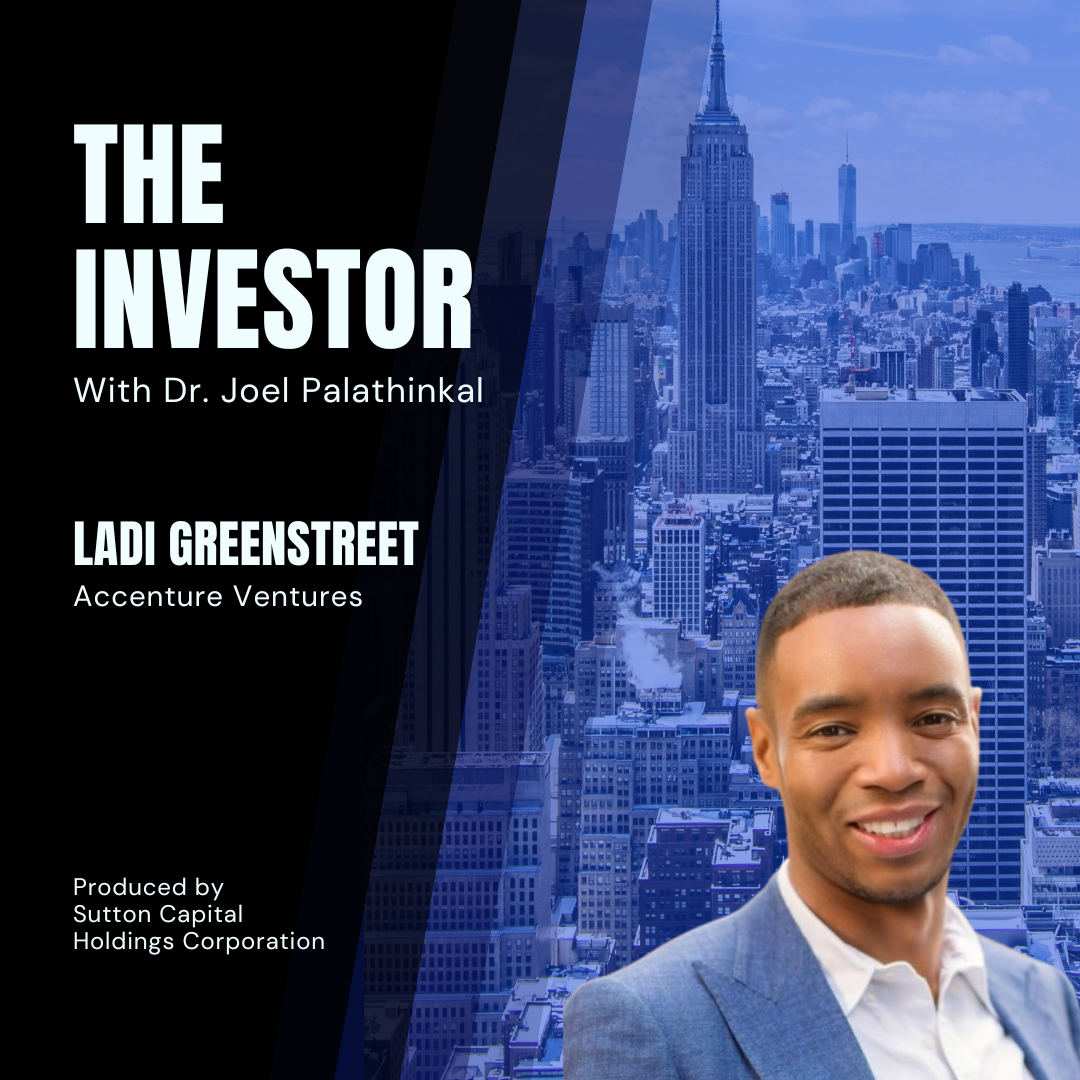
Welcome to the Investor, a podcast where I, Joel Palathinkel, your host, dives deep into the minds of the world's most influential institutional investors. In each episode, we sit down with an investor to hear about their journeys and how global markets are driving capital allocation. So join us on this journey as we explore these insights. Okay, great. I think we are live, so if everybody could go on mute.
- [00:34]
B
There we go.
- [00:35]
A
Great. Hey, so, Lottie, welcome to the show. We do this a couple times a week. We meet interesting VCs like yourself and family offices. So thanks for coming in and giving us a little bit of your time. I know it's really busy. I know you're really busy. So really appreciate you taking time for mentorship and sharing your story, you know, and maybe we can, you know. So this is Lottie Greenstreet from Accenture Ventures, excited to kind of learn about your journey into vc. Maybe you can take a moment now to kind of introduce yourself and tell us a little bit about your background. Where did you grow up, what did your parents do? And, you know, where did you go to school and how did you kind of navigate into venture?
- [01:17]
C
You won't go way back, Joel. Okay, we'll start from the beginning. So, I mean, I guess a bit about myself. So I'm a Londoner, born and raised, but you know, I'm from a mixed heritage family, so my parents are West African. So I actually spent a few years growing up in Ghana in Accra in my kind of my younger years. Parents. Mum was a doctor, did her MBA and ended up in pharmaceutical. So she now is heading up a big bio firm in Boston. Dad's an architect and I think fundamentally me. I've always looking back at it, been trying to marry being the operative word. These two sides to my brains, one's kind of the very creative, like my dad, the architect, very into design, and the other is much more of the business mind engineer. And so those two sides are something I've been playing off. And so when I was growing up, I grew up in a North London school with Adam, as you know, on this call. And you know, it was very much my dream was to become an innovator and entrepreneur. You know, I was obsessed by the likes of, you know, I mean right now it would be your Elon Musk, but back in the day it was people like Trevor Bayless who's invented the wind up radio. And forgive me if I'm sweating, it's just London is boiling.
- [02:54]
A
I don't even notice.
- [02:55]
C
I'm just trying to find Some a cool space. One of those cool Dyson fans yet. But like, yeah, James Dyson. Another one. So I was a kid growing up who was tinkering in his bedroom. I put one of the things my parents will remind me of. I almost killed myself twice. Once was I was trying to create like a wake up lamp and I burned through my mattress and my mom walked in and my whole room was. I was asleep and my whole room was like, full of smoke. And then the other one was like, I was trying to create a way to clean my bedroom by attaching a remote control car to a vacuum cleaner. And again, I didn't know what I was doing. Had no, like, had no engineering training. I had a soldering iron and a dream and, and. And ended up destroying half my room. And so, so basically what that taught me essentially was, you know, I have these ideas, but I can't turn them to reality. And so I wanted design. I wanted to call it design. But then when I was doing internship at 16 at a product design firm, the guy who headed up the. My friend's dad, who was a product designer said, hey, like, you've got great ideas, but it's best to know how to make, get them made. So instead of doing product design at university, do engineering.
- [04:15]
A
What's this location?
- [04:17]
C
Master mechanical engineering. And, you know, that that was the idea then, was to become a mechanical engineer, to then put my ideas into practice. And yeah, I never quite made it back to product design.
- [04:33]
A
Sure.
- [04:34]
C
Because, you know, life has a funny way of throwing new things in your path that makes exciting opportunities. And, you know, I think fundamentally, even now, as I look at being a. Being in the role I have now, it's supporting others with their dreams, their ideas, and getting them made. And thankfully, as a vc, I'm gonna have to support many ideas, not just one.
- [05:02]
A
That's interesting. Yeah. When you talk about product design, you know, I have a similar background because I, you know, I was a product manager for some time, but, you know, I thought I wanted to be a designer. I tried to do some design, and it's fun because I think as some product managers like me, we think we're hipsters, right? We think we are like designers. And then the designers get all ma. Get angry because we're kind of like, you know, stepping over their territory. And I like design, but the problem is, if you truly want to be a designer, you got to create like 200 screens, you know, and after like the second screen, I'm like, man, this is too much work. You know, I'D rather just kind of like give somebody guidance. So I think you're kind of the same way. You're like, man, I'd rather kind of be either invest kind of like a VC or maybe just kind of be the person that's orchestrating, you know, like a visionary, like the product person, I'm thinking, right, yeah.
- [05:51]
C
For real. And it's like, to be honest, it was one of the major. As I was moving into more of a secure role within Accenture Ventures and I was trying to figure out what I do and I'll stop in seconds and explain what Center Venture does, but I was trying to think, well, do I, do I now go, is it now that I jump into a startup, set my own thing up and be the CEO, be the, you know, the iconic leader of a tech company or design firm that I always wanted to be? And I was like, as much as, I mean one, I think what I've discovered is there's a certain type of person who does that and I have to look hard at myself and think, you know, I could be it, but maybe not now, but that's not who I am now. Like kind of throw everything, throw everything to the wind to focus on one idea. I still love helping many people ideas. I really see my role as helping others to become king. So rather than kind of being the iconic leader of a tech company, I really focused on the fact that actually my role is to be the king maker, not the king, and support others in making their ideas happy. And you know, there's, you know, put my ego to a site aside because there'll probably be stronger egos that can account for that. And so that's what I focus on in my work now, is supporting as many people as I can to help turn their ideas into reality. And the lucky thing I have is Accenture is a very well capitalized company with a lot of people with all the best clients in the world. So I have the most unique opportunity to do that in my client role. Sure.
- [07:35]
A
And walk us through. Before Accenture Venture, were you always at Accenture or did you have a couple other roles or, you know, other companies that you worked at before?
- [07:46]
C
No, I didn't. I saw when I. So I did a master's mechanic engineering.
- [07:52]
A
Yeah.
- [07:53]
C
You know, in that process I realized that I couldn't hack engineering more because, you know, I mean, very simple anecdote, but I designed a wheelchair for Africa now going back to where I was from and have a disabled relative. And I was trying to design the perfect wheelchair for Africa for the right terrain, for using local resource materials, yada, yada, yada. And I was trying to design it for a person of mine, my uncle. And when we came to design, the engineers I worked with in the school project I was leading, they tweaked something in manufacturing and, and they basically tweaked it so the wheels became so high that you couldn't actually climb in the wheelchair. And when I spoke to them they were all like, yeah, yeah, yeah, you can like look, they get up, walk in the wheelchair, sit down and they're like, yeah, you see, it's not hard, it's like, yeah, but you're walking, you know, people disabled that you're building sport. And it was one of those contentious moments that it was like no outvoted move, move through the process and actually did really well on a project and go high with uk, like you know, a high first for this project. And it was actually that which frustrated me was the fact that even our best tutors couldn't see the problem that was staring them right in the face. Yeah, I felt that was a very fundamental thing about engineering design and engineering. It's like it works, maths added up but no one could use it. And so I didn't want to do engineering. That was kind of summed it up. And I actually it was 2008 when I graduated, lots of people were getting good big banking jobs. That was no longer really option either for me. And I went to teaching. So it's a great scheme called Teach first which is like Teach for America in the U.S. sure. And I, yeah, I did a two year program there because essentially the idea was you, you teach for two years, get great leadership training, exposure and for me I was a very shy individual right back then. So I, you know, the idea of standing up, presented to people freaked me out. But this is where you're going to do that every day. You're going to be presenting five classes. And so I did that for two years. You know, I got some good, excellent training tied into this human centered element which was supporting people some of the social impact. And that's what I taught product design. So I got back into designing. Taught product design that helped kids understand the fundamentals of why design is so important. I knew teaching is challenging inner city school who they didn't really have a proper design teacher before but helping them understand that design applies to every walk of their life. Then it applies to business entrepreneurship where you resolving problems people want and how do you turn those problem solving into businesses. So I Tied up with a few entrepreneurship programs as well, and so help them think about becoming business leaders instead of just kids in ANC school trying to design something. So after that I got internship at Procter and Gavel, did that for close to a year. I was a brand manager in fabric and home care. That was a fantastic experience. Some of the best training I've ever got, I must say, in terms of how to do marketing and branding and brand building. But to me, I saw the role as being quite brand management, not brand building. And I really wanted to create. So I went to Silicon Valley, I packed my bags one Christmas, saw my family in the States and then decided I wouldn't come back to London. I'd go to Silicon Valley and try my hand at setting up a, a freelance consultancy in Silicon Valley and I have to work with a healthcare health tech company and set that up.
- [11:58]
A
So was that your first customer or were they like a partner of yours?
- [12:02]
C
They were like one of my first customers. You know, that then is very much word of mouth. So after I used, basically I used Prox and Gamble's framework and applied it to startups and did good things and I did that in a nickel company, another tech company, and all with a view that I didn't want to join Accenture. I wanted to find my own way to do something and grow a business and didn't want to join a big corporate that my mom had spent 30 odd years at and I understood the toll it can take on family life. I was trying to say, let's do something new. But the advice I got was from, I think I was in Vegas working with one of the casinos out there and a client was saying, well, if, I mean, the football analogy gave me, which is as being a Brit was, you know, if you're, if you ever play for Manchester United, you're always going to have a job. Like someone's always going to take a risk of you if you've got that big name by you and as much as you're doing well and you're, you're earning good money on this freelancing thing. Mm. Take the job at Man United and, and then you're gonna, and leave off for two years or a year, but that's always gonna be your cv and otherwise you have to build Man United from scratch. And that's. Not everyone does that. So yeah, that's what led into Accenture. And I started off in backend technology deployment, deploying SAP, far from designing people problems, far from a wheelchair in Africa, far from Silicon Valley. I must say, like it was, yeah, Accenture is a very different place back then. And so it wasn't. I must, I didn't like it, I didn't like it. I couldn't see the problems I was solving for anyone or impact it made in the world. But I saw a change, I, I saw a change could be had and I saw the opportunity. I'll give you this, the reason why I joined Accenture actually what the thing that took me over the edge was I spoke to the UK cmd, as we call it, the UK CEO and he said, and I was precocious back then. I was like, I'd been to Silicon Valley, I was speaking to this guy who headed up 70 odd thousand people, far my senior, my parents age. And I was like, I don't get what your company does, your consultants. It means you kind of listen to problems and then play them back to people. Like I've heard all about consultancies. It's like, yes, we're consultancy, but a technology consultancy. And lady, if you're so interested in solving problems that people problems and let's try and change the world, he says, number one, can you think of a problem out there that technology couldn't in some way alleviate? So can you think of problem that you couldn't apply technology to and it would help solve it in some way? And I was stumped, right? And again, this is why this guy, like the CEO of a company, he stumped a 22 year old kid. Not hard. But for me that was like a, okay, I can't. And then can you think of a place, any place better that can help you solve those problems than somewhere than 300,000 people as it were at the time, who are all focused on doing just that. And that's what got me to join, was thinking, okay, well if, how can I find, how can I solve the problems? And so after joining, despite being a bit the company that was solving his problems, I did my best to try and move towards a place which is closer to the humanity of the whole beast. And so I joined a digital strategy team. I put my teaching practice into and did some training. I did some Google Analytics as well for some companies and then joined when we bought Fjord. So we bought Fjord, a design agency similar to Ido Frog. And that's when I became a product manager. And that's the first time since the product manager experience, the first time that I got in front of the problem again from scratch. Hipster designers in a team and trying to manage their egos or something.
- [16:18]
A
Different.
- [16:18]
C
But that was the most fun I finally had when I felt like I'd found my niche, my people.
- [16:24]
A
So when you talk, I hear a little bit of the pain in your voice from being a product manager. So maybe you can tell me just high level, some of the drama that you faced with clashing between designers and developers. And I can vent a little too.
- [16:37]
C
But yeah, I mean, I think that was, was the gap. And I did see myself as someone who could traverse it, but it was two people speaking, using the same letters to speak a different language. Right. Which was you have a problem that everyone understands and is clear. And then you have your designers, who most of my designers, you know, would rock up at 10 in the morning, you know, and they had this ego towards a design principle philosophy that could never be detached from. And I have a client on one hand from Accenture actually saying that we need this to happen, and the designer saying, I'm not gonna do that. That's not, that's not as bad. I can't do that. And it's like, well, well, rather than saying you can't do it, tell me how you can achieve that, what you want in a different way and use your design skills. And they're like, no, I don't see why I'm not gonna do, I'm gonna come here and do design that I don't believe in. And it was like managing that ego. And then on the flip side, you have a technology team taking good designs and they, they have the same sort of principles, but from a different level. They say we can't do that. And you realize that actually everything can be done. You just have to massage the egos enough to make them feel like it's. Yeah, it's there. They're accomplishing the impossible. It's there. Only they could have done it. And yeah, it was, it was super fun. Frustrating because these are people problems managing people teams, but super fun to kind of manage both those sides. And we've got some really cool products out, like huge products that now in.
- [18:20]
A
Was your target customer. Kind of like a legacy company that was trying to like do a digital transformation. Is that kind of.
- [18:26]
C
Yeah. So we had, so we had a big, big beverage company, like one of the biggest beverage companies in the world. Right. And we had second or third largest bank in the States. Right. And probably second third largest insurance company in the States as well. And those my. The three clients, legacy systems. You want to redesign an app, the whole user experience. You want to achieve X, Y and Z, and you're Going to have to, if you want to do something new, you're going to have to break the old and sometimes quite get that as you, as I'm sure you know.
- [19:03]
A
Yeah, yeah, absolutely. Yeah. And it's, you know, what you initially think the problem is, you know, after you have several discussions, it's like you realize you're solving the wrong problem, you know, after you've already built it sometimes. Which is really, really difficult.
- [19:17]
C
Yeah, we had a couple of them.
- [19:19]
A
Yeah.
- [19:19]
C
So building something and then deciding that, yeah, we need to build it again.
- [19:25]
A
Yeah, so that's a challenge to the, you know, the whole waterfall framework. Right. You just kind of go right into development and you didn't do any experiments. And I guess the WHO product methodology, it's all about doing a small task, getting feedback and iterating. But it's tough when you're working with a big company. They don't always have the resources to do the quick experiments. So like look, we just want, you know, hey, we're Pepsi, we just want a new app, you know, stop telling us to do experiments, you know, we just want to build, rebuild our brand new app, you know, so that's a challenge. I think it's just, yeah. The different mentalities, right. You're working with like a big legacy brand. They don't understand the whole concept of agile and like you know, sprints and all that. So some of it, like you said, you know, your education background, part of it, you're probably doing some education and coaching too to help them understand the modern ways of building stuff. Probably too.
- [20:16]
C
Right? Yeah, I mean, I say, I mean, yeah, I couldn't agree more. I think that the. On the education bit I'll come on to in a sec, but I think with. It's all about really understanding the problem, understanding the consumer and when you have these legacy companies and I saw the same thing at P and G. Right. Which was you believe because you've done that for 10, 15 years, maybe 30 years, no one understands your customer better than you do. Sure. Your customers changing, right? Oh yeah. So it's getting them over that hurdle really trying to say like, you know, you've done this all the time, we know your customer in new ways. Let us help you understand how we see your customer changing. And to the education background, I think it's all storytelling. And so when you have to, when you have to essentially pitch a bunch of 30 kids each day and help them move from A to B and just in their mind and bringing new experiences, but help them move, you get Very good at making incremental steps and telling a clean enough straight line story that allows people to move from where they were to where they have to be. And I think that's. I couldn't, if I could never recommend anyone to do anything was teach in any way, shape or form, because you really start to understand what you know, what you don't know, and also how best to communicate to people who we need to know as well.
- [21:50]
A
So, yeah, I couldn't agree more. I think when you teach, you've really mastered that. You have the knowledge and then, you know, just validating that other people understand it, that's the best reward. And, you know, I had a question that was coming in my mind. It's kind of about a magical moment in your life when you close your first customer. So like, you know, talk, because I've done that. I've had that before where I've, you know, now I have a business. But you know, in the past, just kind of like my first entrepreneurial endeavor, getting my first customer, I felt like that was so magical. So like back in San Francisco, and I know this is kind of taking you back for a second, but when you went to San Francisco and you closed that first customer, kind of what was going on in your mind? How did you feel and how did you close that customer? I think that's a good story to really bring up.
- [22:34]
C
Yeah.
- [22:34]
A
So talk about storytelling too.
- [22:37]
C
Yeah. So I mean, way back in San Francisco, I think it's. It's interesting in terms of precocious is definitely what I was in my 20s. Right. So I having this being living in a bubble of frustration where I can always see things can be done better. Right. I can always see. But most people are quite happy with the status quo. Meant that I was always bit irritated by everyone and anything. And I also suffered, I must say, I mean, I think due to my. I'm a bit of an introvert and I grew up really shy. Suffered from actually the point of storytelling. I suffered from being able to articulate my vision for how things had to be. Now when I was in San Francisco, I still had this precociousness, But I had PNG's framework to rely on to say, actually I know how. I know what the mechanism of the framework, the engineering behind how to tell the story. Sure. So that provided me a lot of confidence. And so it has good ideas, very inspirational vision. But it has a framework in which you rely on to make sure I could put that into boxes that told with good flow.
- [23:55]
A
And you had that brand of Accenture too. So I guess when they looked at you as a potential service provider, you worked at Accenture also. Right. So it's kind of like hey, I worked at big brands like P and G and hey, I worked at, you know, these, these, you know, large, large entities and you probably just look super organized because you have that professional framework already coming in.
- [24:16]
C
Right. Well so in San Francisco's before Accenture.
- [24:18]
A
Oh yeah. Okay.
- [24:19]
C
Yeah, I think, I think where these big companies come in is they give you frameworks to readily apply to any situation that provides a comfort and it's, you know, it's a structure. Right. But yeah, that's certainly something that's still to this day from one teaching marketing P and D the most. And then Accenture has its own framework to which you apply and you know you're not going to get destroyed for. But yeah, I think I went in there with a big idea and I met a guy called Jordan Schlane who's a very entrepreneurial Silicon Valley doctor. He serves, he has a bespoke service that he serves some of the most illustrious clients in San Fran. Right. His Rolodex is huge and he was really talking about how to productize his service. He's the sort of person who would call up each person as I take a medication, check in with them, use a lot of data and create feedback loops so he could make sure they were on track and him to their regiment. And so I wasn't really expecting to close the deal but what I did when I met Jordan was one found someone who was akin to me and understood where we could take a product and what the future should look like.
- [25:47]
A
And how did you meet him? Did you just meet him at one of these tech events or.
- [25:51]
C
This was through a few, I think before I went to San Francisco it was messaging everyone I knew in San Francisco through parents relationships and then going to meetings and then meeting other people for back of it and you know what SF is like. It's a very, very. That's what I loved about the bars was a very. It's very entrepreneurial but it's very collaborative as well. Like meet people in that and you can network really easily. So I met him through one of my mother's friends and had a sit down chat with him. And after, you know, we had a chat which maybe for half an hour lasted three hours and by the time it finished we started to sketch out what this, this app, this service would be. And then once you start to build the vision with someone, they want you there to help execute it. Right. So sure, that was the next stage and, and it wasn't. It didn't feel like work, if I must say, and it didn't feel like a sale and it didn't feel like work. But, you know, being paid for it allowed me to at least feel like it was, you know, I was, I could survive another week or two in the Bay Area. Right. And I still think each sale as we go through today should feel the same. And one of the things I educate startups that I work with right now is, is positioning yourself as an innovation partner. So it's not about selling 10, 20, 100 licenses for your product. It's about going in and sitting there and saying, do we share the same vision? And how can I be part of your journey towards achieving that vision? And so the sales process, like you say, the face first sale I have is still the same sort of high I'm chasing now when I work with clients. But again, it's much harder now because it's not two people in the room, it's the wider Accenture, the wider organization and all the bureaucracy that comes in between those engagements. But still the same format I mentioned.
- [27:54]
A
Yeah, absolutely. And then, okay, so that's interesting. So now you're at Accenture Ventures and then you were kind of doing the product work. What was the next step after that? Was that the venture role or how did you actually navigate into Accenture Ventures?
- [28:10]
C
So again, it comes back to being outspoken, precocious. And you know, when I came into Accenture, I was talking about the fact I've been to Silicon Valley, I worked with emerging startups.
- [28:23]
A
Sure.
- [28:24]
C
In my mind all I saw Accenture working with was SAP, Oracle, Salesforce. And as great as and big as they were, they were our cash cows. You know, they weren't in my mind, the future. So I was always asking like, well, what about Facebook and what about Google? Where are these companies on our roadmap? How do they fit in? Why are we not working with them? And I think I became a bit of a broken record, but I was always asking for them, always bringing them into conversations throughout my work and digital strategy. And so essentially as a, a senior MD within Accenture, which started an open innovation practice and I happened to see, I think either came into my inbox or someone sent it to me that we start up. That was a thing I'd always been evangelizing about. So I got straight on and made myself known and also made it clear, based on my background, based on my interest, I'VE been thinking about this now for coming up to four years about why Accenture should work with it. So I had a very good business case.
- [29:40]
A
Sure.
- [29:40]
C
And again, that aligned with the role in the field to head up a accelerator in New York where I was program managing that accelerator, I think within healthcare. It had five or six of our clients were partaking in that healthcare accelerator and a bunch of really exciting startups in York. So there wasn't really a strategy, but there was a opportunity and it was Nadi. Can you go in their program manager accelerator that's being paid for, but can you find a way that we can use this opportunity in innovation startups with five or six of our clients involved to drive value for Accenture? You figure out, that's what you need to go, you figure out the rest. And so that was the opportunity that I took and yeah, essentially had to figure out the order strategy for healthcare and public service about why we should work with startups, how accelerators plug in, what our clients are after. And so essentially went from one accelerator when I started and then three years later, you know, we're working with 16 odd accelerators across North America. Sure. And we built a community practice of 600 people.
- [31:13]
A
Hey, Lottie, I think you're breaking up a little bit. I'm not sure if it's okay. Sorry my Internet or not.
- [31:21]
C
Is that better?
- [31:22]
A
Yeah, it's better. Yep.
- [31:24]
C
I think, you know what I think is I think.
- [31:31]
A
You gotta give it a little umbrella. Okay. So I think I got, I lost some of it. But I think what you said was, hey, you know, you, you kept kind of escalating your voice, talking about all this stuff and then they're like, you know what, Lottie, let's go ahead and create an accelerator for you in New York. Right. So you kind of worked on the accelerator and focused on healthcare. Is that what I got?
- [31:56]
C
Yeah, that's pretty much it.
- [31:58]
A
Got it.
- [31:59]
C
So I'm moving in, trying to get some fan for my computer. Yeah, that's pretty much it.
- [32:05]
A
Yeah. Okay, great. Yeah, I can hear you now. So you did that. And how long was the. I guess were you also recruiting? Do you have a team under you? Because that's a lot of work. Right. So no helping you find startups?
- [32:18]
C
No, no team. You know, as a professional services company. Right. We each person needs to be chargeable to a project and that's fundamentally. We are body shop. Fundamentally. Right. So, you know, I'm, I'm working where in good faith we have someone's co invested in me. To get this up and running. They believe in the mission and as well as some of my time has been paid elsewhere. And so it's very hard to recruit a big team which is going to be, which is not going to be on a client day to day solving problems.
- [32:55]
A
Yeah, because part of it I would say, you know, this is the work that you got to do to run accelerated. You got to go, you got to find and source the deals. And then did you guys also allocate some capital to support like a class of entrepreneurs as well?
- [33:08]
C
So we didn't. So to begin with, it was very much open innovation. To begin with. The idea was how do we, how do we connect better connect to the ecosystem. You have a finger, the pulse of what's next. And then when our clients ask us about the trends in the healthcare, that's why I was focused on. Right. Trends in healthcare or any industry. We at least know some up and coming startups that are interesting enough to bring into the conversation. As time evolved, we realized that we could actually not just bring them into conversation, more importantly work with them, generate new revenue streams for Accenture. So rather than wrapping our services around SAP or Oracle, we could wrap our services around a startup and provide unique services around those startups. If you get paid for scouting, some clients just paid us in subscription to scout for startups or more importantly, we can implement startups over time. We also brought in an ability to invest in startups too. And so we added that I think 2017, 2016. So and then since then we've done 40 odd investments. But the idea is all to promote our professional services. So is about if we invest in the company, it's a strategic minority investment, we take board seats. Part of the investment criteria, part of the partnership agreement is for us to have first right of refusal to any professional services to come in. So what I measured on each quarter is the amount of professional services revenue that I brought into Accenture through working with startups. Sure.
- [34:53]
A
And then hopefully we were talking about this yesterday. Hopefully. Also since you have an equity position in the company, there's a liquidity event. Hopefully you get some upside from that too. Right. I mean you probably do the typical 100k check size or 50 to 100k small check. And then I guess when you started investing now, did you guys have this cohort process where you have a cohort of startups and then they get some custom programming and mentorship? Did it?
- [35:20]
C
Oh, I see. Sorry, forgive me. We talk about the accelerator.
- [35:25]
A
The accelerator, yeah.
- [35:26]
C
Oh, I see. Yeah, sorry. Yeah. So with that was 50 ton of K in cohorts of 15. Yeah, yeah.
- [35:33]
A
But I was saying. Yeah, that's a lot of work though. That's what I was saying. Because you got to do all the programming, you got to source the deals, you got to, you know, you got to do demo days. So, you know, like that's why I was like wondering like, wow, that's a lot of work.
- [35:45]
C
Yeah. We had, we had a small team, like three, four people I think, sure focused on it. And it's a lot. Right. But for us, it was all very exciting. All of us felt it was new. All of us felt it had to be done. And one of the great things about the New York initiative was we were again focused on impact. In some ways we're measuring the opportunities that we create for New York. So as part of a New Yorker.
- [36:14]
A
Yeah, that's great. And then, and then later, Accenture Ventures was more of a larger fund, I guess to do venture bigger.
- [36:22]
C
Yeah. Yes. Now we invest off the balance sheet. So that was all very much seed stuff. So now we invest off the balance sheet. And that's something that's coming later.
- [36:33]
A
Yeah.
- [36:34]
C
And it's, you know, the beauty of our investment strategy is we have married up. The typical thing with corporate ventures is really hard to marry up these long term strategic games with a short term reporting metric cycles that you need to come into the big corporate. Right.
- [36:54]
A
Yeah.
- [36:55]
C
And the wonderful thing about what we did was by focusing on short term professional revenue, short term revenue, professional services, you can monitor how well you're doing each quarter and grow. Right. But at the same point in time we have those, like I said, liquidity events in five to seven years and even shorter. Some of our cases be our early investments, which also mean when those events happen, you have really big stories to tell that you can evangelize again and again. It just further promotes our brand investment.
- [37:31]
A
Yeah. And we'll open up for questions from the audience in a few minutes, but we'll figure out what the audience is interested in with their career. But I think it's a good educational thing from you, Lottie, to educate real quick on the difference between typical venture and then corporate venture and how the incentives can sometimes maybe be aligned or not aligned. Maybe if you can give a quick overview on just investing off the balance sheet versus a seven year open ended fund.
- [38:00]
C
Yeah, investing off the balance sheet means we, we don't have a fund to speak of. We're not trying to return investments, LPs. I mean, it's what we are trying to do is hit the strategic aims of our company. And so I think where CVCs in the past have fallen short is not really put that aim, outline that aim. Typically, I mean we also have to eat our own dog food because we also preach to clients about how to run CVCs and incubators and accelerators and everything else. One of the things we say is make sure we have a good strategy and make sure you can measure your metrics. And so our metrics are like I said, revenue in the short term and then yeah, we want some return on our equity that we've invested but fundamentally it's nice to have in long term. It means we've done good investments but actually if we are able to actually drive engagement with the startup across our business, those and we've made a good investment, those liquidity events are bound to happen, right?
- [39:11]
A
Absolutely.
- [39:12]
C
We are the ones driving that. We are the ones responsible for making sure that business is successful. I think why I find CBC very exciting is because you can be much more of a part of that growth and scale of the startup. It's less about maybe how much money we have in marketing and more about how we can scale a business. Not to say anything, no slight on VC because they are our partners and as a VC it's one of the fundamental things I like about the industry but we differentiate in such that we actually don't really compete for deals either. So most of VCs we work with, I work with most of VCs because you know, we are a small 5, 5 or 10% of the rounds. We're not competing to lead the round, we are additional to the round making sure that they have a good channel partner that's going to help ensure that startup successful. So sure, yeah, like I say, I think it's a bit of a different mindset as well. It's much more. I think the other thing you have to manage is on that growth and scale side is you have to manage the internal business relationships to ensure that startup is successful. And so that primarily I'd say the majority of my job is driving the existing investments successfully through the business as opposed to scouting out new investments all the time. Because again also the great thing about CBC is that we can leverage the wider, wider company to help do something like scouting. Scouting. Like I said, when I was in the US we had a community of practice of 600 people who were helping us do those scoutings across North America for healthcare. That's not something you get with a VC typically of a Company of an army, really of people.
- [41:07]
A
And some of the people in the audience are interested in trying to get a job in vc. So now, with you being quite senior and kind of doing this for some time, when you're looking to hire an analyst or an associate, what are some things that you look for?
- [41:21]
C
I mean, I think fundamentally it's grit. I mean, I think it's proactiveness. I think there's. I think my boss is always my boss. My new boss right now has a great phrase was like, tell me something I don't know.
- [41:36]
A
Right, sure.
- [41:37]
C
And I think that it really sticks with you because you realize like when people tell you something you don't know, you're going to remember them. And again. Right. So I think it's that great determination, proactiveness that allows you to come to me not asking me for a favor or an interview or some help, but actually saying, here's how I can help you. Pay it forward. They're going to pay it forward knowing that once you add value to my life, I'm not going to let you go. Right. And that's. That applies to anyone internally that talk to or anyone externally is tell me something I don't know that's going to be of value to me. And then I'm going to try and help to see how I can retain that value in the future. And so if that comes to building a thesis, providing an introduction even before you've met me, understand who I am, what my business does, how you can help. So actually the call itself is more about, I know this much about you. Here's how I think you can help and then you can validate.
- [42:37]
A
I see that even being how you got into venture, just kind of being the loud voice is talking about Facebook and Google and innovation. And I even see that as a tool of how you close that first customer. Because that doctor probably just didn't know how to do digital innovation. He was a doctor, but I think you coming in, telling him all these new ideas, he's like, wait a minute, I never knew about this stuff. Let me bring this guy on to help me. So I feel like that's a really good point. Kind of bringing in some thought leadership of your own that might maybe shock and amaze people in a good way, I'm assuming.
- [43:12]
C
Yeah, yeah. And thought leadership connections can be helpful, you know, depends on what you want to get in. But, you know, I know I like. I mean, going back to my teaching days, for me it's all about talent. So I like to grow nurture retain talent. And if. If there's a good fit and I can provide it to someone.
- [43:30]
A
Yeah.
- [43:31]
C
Similar to being an entrepreneur as well. Like if I can help and grow you. Help grow a business, help grow your career, that's something I'm going to be interested in helping to do. I just. We were limited by the amount of hours we have in a day. So it's about investing those two, right?
- [43:44]
A
Yeah, absolutely. Well, hey, we're about 12 minutes out. What I'll do is I'll open it up for questions, but before I do, I always ask this question at the end. All the guests. You know, any kind of life advice that you have that we can take away, that would be great. If you have any, you know, just life advice. Yeah. Or just maybe one lesson that you got from a mentor or just kind of one. One takeaway that you have for us.
- [44:08]
C
For me. For me. Learn to fail.
- [44:10]
A
Yeah.
- [44:11]
C
And I mean, I think the whole fail fast. It's not. Not really failing fast, it's learning fast. Right. So one of the things I do each year is I take up a new hobby and I suck at it for three months, Sometimes six months, sometimes six years. Right. But just the act of taking up something new that you've never done before you thought you'd never do, I think is a very powerful, powerful learning. Well message to show you how much you can learn.
- [44:37]
A
Yeah.
- [44:37]
C
If you stick out something and also it. You'll. You're just challenge yourself to be crap at something for a bit.
- [44:46]
A
Sure.
- [44:46]
C
Is actually just. And then look back and say, well, three months later, I'm actually not too bad.
- [44:53]
A
So what you do the last two years? So what you do this year and what you do last year?
- [44:56]
C
This year I took up singing.
- [44:58]
A
Nice.
- [44:59]
C
I took up piano and Spanish. So I've kind of accelerated with COVID Yeah.
- [45:03]
A
That's challenging. That's a lot.
- [45:05]
C
Last year was salsa dancing. Jiu jitsu. What else did I do? I did improv comedy. That was the hardest one.
- [45:14]
A
Oh, wow. A few years back.
- [45:16]
C
Yeah. I sucked at that, but that was a painful way to suck.
- [45:22]
A
You're like, you know, I'll just stick to being a vc, you know? Yeah, yeah, yeah, yeah. Well, great. Hey, this was awesome. I'll open it up for a couple questions and then we'll. We'll wrap up. I know it's, you know, after work for you, so I appreciate you taking time out and. Yeah. So anybody in the audience, if you guys have questions, feel free to unmute or you can chat, and if any of you guys are interested in venture capital. We also have a venture capital program that you can sign up for. So I just pinged that there as a little plug. But you know, anybody, if anybody has any questions for Lottie, this was an amazing polarizing talk. Feel free to just state your name and what you're interested in, your background and then kind of just ask a quick question. Anybody has any.
- [46:08]
B
I'll shoot, sure. First of all, I just wanted to thank you very much for taking the time out to us and this video might go out to some other members of the community and the cohort. So really a big thanks. I feel like I've caught up with you now firmly over the last 15 years or so just by listening to this talk. So that's been great in itself, you know, and you've seen a lot of startups, you know, especially over the last few years in health, tech and now in other sectors and you probably engage with a lot of founders. And I'm here in WeWork actually not far from Tel Aviv and there are hundreds of startups. You know, you just walk around the corridors and everyone's sort of working towards that dream, whether it's an exit or whether it's becoming like a fully fledged company with hundreds of employees. And it's not easy during these times, especially with COVID and I wondered over those years whether you've kind of identified or come across any specific factors that separates those startups that might be here in three years time as opposed to the majority that probably won't be here in three years time.
- [47:20]
C
Ah, it's a good question. I mean I think you've just asked like what the magic, how to define magic, right? It's finding those startups that are going to be successful. I definitely, it would be, I think I'd be arrogant to say I found it. I think no one has, but I think you learn that, you learn quite quickly that it's about the entrepreneur. The entrepreneur will be successful. It may not be the right company, maybe that time, but successful entrepreneurs will be, will always be successful entrepreneurs. Some people have it and what it is really hard to explain, but I think it's a. They're decisive listeners and learners. Right. So you know, I can speak to an entrepreneur. They may be a 16 year old kid with a wacky idea. If I describe why I think that idea is wacky, that entrepreneur is either going to do one of three things, either going to tell me I'm an idiot and go and do it anyway. Listen to me and pivot his idea towards my experience, what I know or not listen to me, but explain why he's not listening to me. Right. And it's like that discerning listens to be able to. They're going to be flooded with information from many different people and they have to really understand from both their customers that they're serving in terms of who they're building this for and problems they're solving, also the investors, as well as to discern which people to listen to, what not to listen to, and find the right path forward because they're going to pivot all left, right, center. So I think when you see the entrepreneur who can listen, understand, discern how to take that piece of advice, where to put it and soldier on, that's just kind of, that's the sort of person I back like nine times out of ten.
- [49:25]
B
Sure, it's interesting. So it comes down to a lot to do with the individual or the co founders in that case, which is fascinating.
- [49:34]
C
Yes. Certainly at the earlier stages. Right.
- [49:41]
B
Someone hasn't figured out the mute button.
- [49:44]
C
At the latter stages it's the same, that same discerning listening turns into a sales process. Right. Essentially it's a sale can they sell. And to sell is not going out there and shouting out what you do allow. This is about understanding the problems that you're solving for and who you're solving for, both as your direct customers, but also your partners and also the individuals like within the big corporate that you're talking to. How does your idea help that person get promoted? If you can understand that, you can start to get them as an advocate and then they can then promote your products for you. So I think it does always come down to the individual, the salesperson. But I guess as the company gets bigger, you have more of a team to help you do that sales process going forward and you set your strategy.
- [50:36]
B
Yeah, I think first of all, thanks for answering that. It's an interesting insight and I definitely can say that I've come across a lot of founders, just my time here in Tel Aviv and stuff, who are first time founders. I feel their pain a lot because a lot of them really believe in themselves, but they don't have that track record because they're first time founders. And it's like it's that desperation of almost getting, wanting people to believe in you the way that you believe in yourself. You know, it's like you were saying about your career. You know, you got that brand name behind you, that Accenture Ventures and they backed you and that is almost Half the job. And for second, third time founders, they're always, they always say how much easier it is, you know, to kind of.
- [51:21]
C
I mean we've started an initiative where we're backing in a seed stage, second, third time founders, entrepreneurs. Right. And again it comes down to yeah, it's a bit like getting your first job where, you know, believe in me, I will make it. And fundamentally, if you can sell, you will make it. Like if it's the right thing, right time, right product, you will make it. Often sometimes it's the wrong idea and they'll figure that out quickly and then move on to the next one. But when I've worked with second and third time founders like we do, there's a, it's like a complete, it's experience that creates a complete different mental shift and understanding of what they're doing, why they're doing it, how it's helpful. Which I think unless you've been through the process once as a founder, you're not able to articulate the future. You're not able to predict the future quite as well. And so really I trust in second, third time founders, as hard as it.
- [52:20]
B
Is to say successful founders.
- [52:21]
C
Successful founders, yeah, successful founders had an exit and speaking to them is a completely different conversation to speak to a first time founder. It's a marked difference and it's something that we've come across in our new strategy in the last couple of years, last year or so, and it's paying dividends already. We have to be deciding.
- [52:42]
B
Yeah, well, thanks again.
- [52:45]
A
Yeah, thanks for the good questions, Adam. Anybody else have any final questions for Lottie? I'm gonna pick on Saeed. So Saeed, what questions you have? He might be multitasking. Sarah, any questions?
- [53:04]
D
Hi, it's Hannah. It's not Sarah, but hey Hannah. Hey, I've got a question. Okay, so like I think you two have been around the startup and VC ecosystem for a while now. Like did you notice any mentionable changes since then? Like are there new players coming up? Did the relationship between VC and startups change? Any challenges that startups founders are facing now and really dealing with and just like calling you at 2am in the morning.
- [53:40]
C
Yeah, I think, I mean, I think there's so many ways to pick that question. It's a really good one, I think, you know, well, let me say this one. For a long time in the healthcare space, so I think a lot of the time within healthcare, they're waiting for the industry to change and suddenly the industry changed. Where people start to accept that Technology was coming in, I think. And again, I'm being very topical here with COVID I think Covid's been a inflection point in two ways for a lot of founders and VCs and so on. One, a lot of our clients, accentures clients have suddenly realized that now is the time to make that technology change, invest in technology and do something different. It's shocked everyone and people are taking action when they haven't before. On the flip side, I think investors have become more discerning. So whilst there were a lot of companies that were hanging around longer than they should have done because money was cheap, I think that's going to go away a bit given the present circumstances. And so I think you'll have maybe fewer, but higher quality pools of startups that remain. And as a cbc, it's better than having huge amounts of companies that have been had, lots of funding, have been around for a while, but you still don't quite understand what they're doing and no customer does either. But they're still notable and they're around. So I think that I really feel there's going to be a big shift and I see it as opportunity within my role to actually find more exciting companies and scale and grow.
- [55:34]
D
Thanks. So you think it's like more going into technology and like maturing of the whole system?
- [55:42]
C
Yes, lots more technology. You'll find lots of startups that previously found it hard to, you know, they're knocking on doors and couldn't quite break into that big sale at big corporate. They'll get that because the corporates need it. And this is a B2B side. Right. And then also those that can't, won't exist. And that's obviously tough for the market as a whole, but better for investors who want to spend the time talking to successful companies. Sure. Great.
- [56:15]
D
Thank you.
- [56:16]
A
That's great. Well, hey, thanks for that question, Hannah. I know we're at time, so, Lottie, thank you so much for, you know, giving us your time. I know you're busy with family and, you know, other engagements, so thanks again for your time. This is amazing. I loved your story and thanks for sharing that with us. Appreciate it.
- [56:33]
C
Yeah, thanks for having me on here, Joe. Appreciate it, man.
- [56:36]
A
Yeah, good chatting with you and take care. We'll catch up soon.
- [56:38]
C
Take care.
- [56:39]
B
All right, take care.
- [56:40]
C
Bye, Sam.