Loading summary
Transcript158 lines
- [00:01]
A
Hi, I'm PJ Vogt and I want to tell you about my podcast Search engine. We try to make sense of the world one question at a time. No question too big, no question too small. We will even answer your questions if you send them in. Stuff like what happens when a cemetery goes out of business? What should we do about teens using AI to do their homework? Who buys luggage at the airport luggage store? Follow and listen to Search Engine in partnership with Odysee. Wherever you get your podcasts. Foreign.
- [00:33]
B
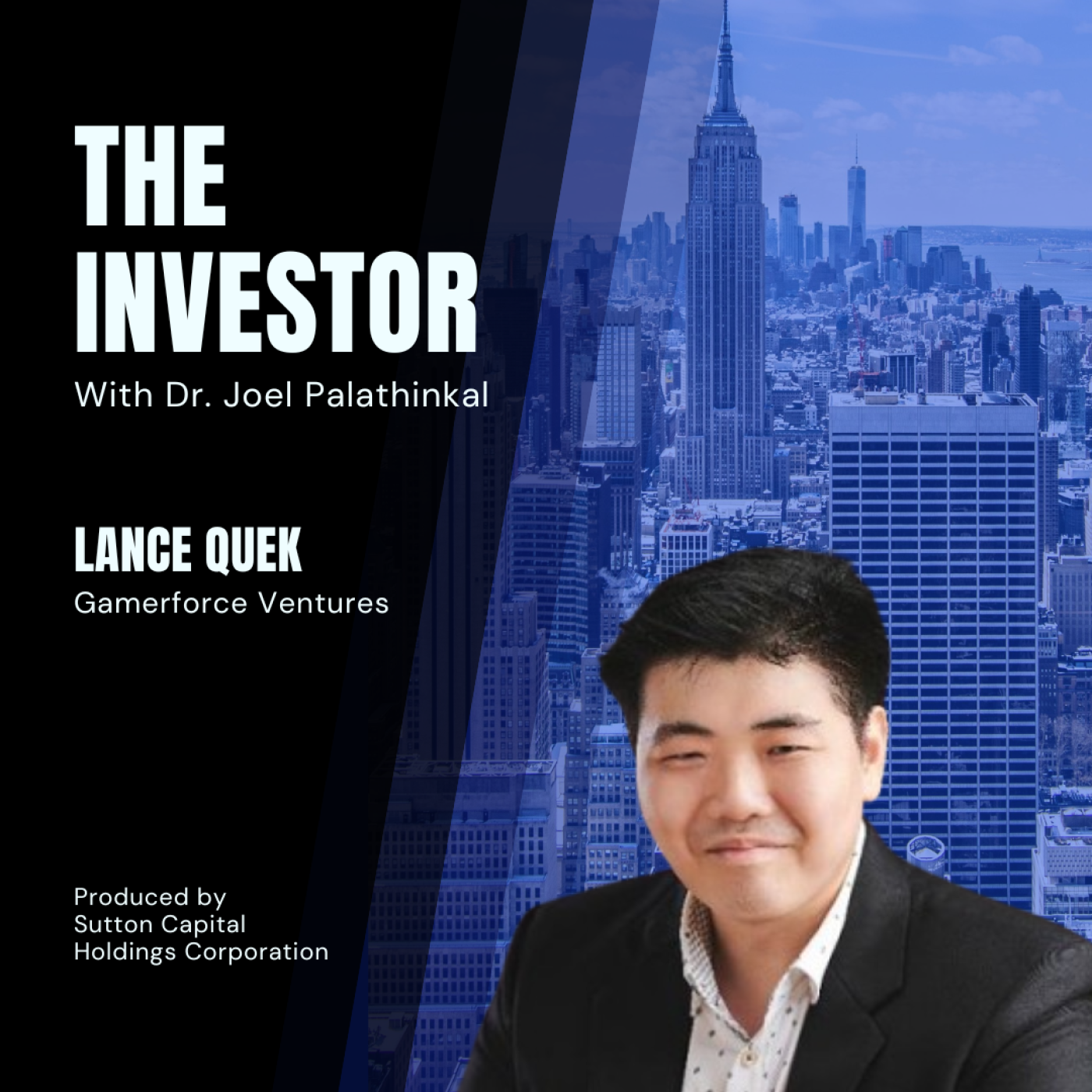
Welcome to the Investor, a podcast where I, Joel Palo Thinkle, your host, dives deep into the minds of the world's most influential institutional investors. In each episode, we sit down with an investor to hear about their journeys and how global markets are driving capital allocation. So join us on this journey as we explore these insights. All right, I think we're live here. Lance Kwek, welcome to the show. Excited to have you here. Thanks for giving us your time. Lance Kwek is at Gamer Force Ventures. Also came from a tech background. Excited to learn your journey of number one, starting a fund and just learning a little more about the venture ecosystem in Singapore and also just Asia as a whole. But before we start, I'd love to have you just go into a little detail on your background and how you navigate it to where you are now.
- [01:34]
A
Wow, Joe, thanks for the great introduction. I really appreciate it. Hi guys. My name is Lance. I'm from Singapore. Nice place to be in. Hope all is well with you. Thank you. For us, just a little bit about myself. I started a company in the past. I was doing a little bit of cloud computing stuff. Built that, sold that after seven years, not a big exit. So went into angel investing because I felt I wanted to give back to the startup community. Got hooked and I guess got addicted. Loved the ecosystem. Love how founders came together to kind of share their experiences back other founders and stuff. So I guess then I said, why? Why stop here? Right. Let's take it further and I guess start a fund and say and see what happens. So right now we're already, we're still raising some capital on our side, getting some traction in the Valley and which is quite interesting. We didn't expect that. So what we're trying to do, we're already warehousing some deals. So those are quite interesting. If you guys are interested, we can always share your flow.
- [03:00]
B
Absolutely.
- [03:02]
A
So yeah, that's just basically my journey.
- [03:06]
B
Yeah. So I always love hearing the origin story. So how did you start the cloud computing company? What was the problem you're solving? How did you come up with the idea and just walk us through kind of that story. Unless it was trauma. Unless it was, unless it was traumatizing, you don't want to talk about it.
- [03:24]
A
I guess sometimes the traumatizing stories kind of kind of like built you up as a person, as an entrepreneur.
- [03:31]
B
Right.
- [03:32]
A
So learn a lot of lessons from it. So the story started when, you know, it's kind of, it's kind of different from like a lot of founders. It was more of a kind of like a pride thing that, you know, because my family came from, I've seen how entrepreneurship has changed my family's life. Right. One of my uncles managed to take one of these companies to IPO on the Singapore Exchange. Got inspired by that. I said I wanted to do something similar. I want to do, I want to build something that the ecosystem can benefit. Didn't know what to build, then went into it blindly. Learned along the way and I guess sometimes the best. So eventually what we found out was cloud software doesn't talk to a lot of on premise software. So the idea is to build kind of like a crawler, slash, whatever you call that platform, Right. Sort of a platform that kind of like crawls the data from both sites and populate it across the different software so that it really streamlines the business processes for SMEs in particular, because sometimes, for example, if you talk about logistics, SME, they have their own delivery system, documentation system, all on premise, and then they may have something like zero that's on the cloud. So what we do is we try to integrate the two sites, get the data populated across and I guess then after that company almost went bankrupt, somehow we survived, learns that, you know, we cannot stay stagnant as a startup. So eventually we started evolving the business and I guess the rest was history.
- [05:19]
B
Sure. No, that's great. And you know, what did. Are you originally from Singapore? Have you always been there? Or did you grow up in another part of Asia and then move to Singapore?
- [05:30]
A
I would say I was born and bred here. But it's quite interesting because I had many friends from across the globe, namely China, India, you know, I mean, when I speak to them and I see the kind of desire that they have to succeed and that really drives me, you know, I joke with my friends. I was a former semi pro player. I used to play Overwatch. So if anyone plays Overwatch. Yeah, you know, I was. You know, the thing is usually when you're kind of like a semi pro pro player in the esports ecosystem, you're Kind of like really competitive person.
- [06:07]
B
Sure.
- [06:07]
A
And, you know, sometimes I take that, you know, and it really spurs me when I see a lot of my, my friends, my peers in the startup ecosystem trying to do something, you know, to make life better for small businesses, for consumers, for people around the world, you know, so that spurs me on. And I guess that's why a lot of my friends tell me, lance, your life revolves around startups. And I tell them, yes, it does, sure.
- [06:37]
B
And, you know, maybe you can educate us a little bit on the whole E gaming ecosystem and how it's evolved because now it's pretty much like a pro sport. But when did that start happening? When did it start blowing up? Has it been just in the last few years or is it pretty. Has it been around for a long time? Because I've been just seeing a lot more news on it. You know, people traveling and there's massive stadiums where people are watching these esports. So maybe you can walk us through just the history of it, the evolution and how you got started with that.
- [07:09]
A
I guess I would say that back in the. When you have. A lot of. It all started when people kind of like started. You know, I always believe that esports started when video games started. Right, sure. You know, when I always. The idea is, you know, what if we can take something that's virtual and create an experience out of it, right? Because people are. What we realize after a while is people are naturally competitive. People are naturally competitive creatures in a certain sense, and they're also collaborative creatures. So what happens in esports is you sometimes what happens, you form teams and you compete. Right. So what we realized is it has been around for a very long time, but I think because of the COVID and because of other factors such as digitization, such as technology improvements, I think we have seen a surge in the market over the past couple of years. We've seen large brands trying to move into space. I mean, one of my portfolio companies got partnership deals with people like Pizza Hut, with people like, you know, we have seen like other companies get partnerships with Monster and stuff like that, really big brands and you know, and what we realize is a lot of the younger consumers today, right, they tend to gravitate to, towards gaming versus, like, you know, the typical one way delivery of content. Right. It used to be, oh, let's sit in front of the tv, the actors and all that, they play a show or whatever, right. It comes out one way. But in the E gaming world, in the esports world, what happens is it becomes a two way thing, right? You get to interact with people, right. Virtually and sometimes, sometimes I guess that creates the kind of connection and when you have technology such as VR and all that coming up, I think it's going to be more in the next couple of years. I think because of cloud, because of VR, because of 5G, because of all these different types of technology. I think esports and gaming is going to be a more affordable, more accessible and more immersive. So I think that's the, that's going to be the kind of growth and we saw that. And the other thing was in Southeast Asia there were two unicorns that went ipo. One is Razer, one is Garena. Both were in the E gaming space. So that gave us a precedence. Looking at the states, it's huge. We've seen like tournaments that are $35 million pools and all that. I was just joking with some of my friends who are in the PC space that you know, if I were to get that price pool, I wouldn't be raising it. Fun. Now I will be using that price money to invest. So, you know, it's really huge, right? Today with all the sponsors, with all the consumer, the ecosystem is growing, right? And I think as a young VC it makes sense. When you speak to. Hey, what's up flies? This is David Spade.
- [10:32]
B
Dana Carvey. Look it, I know we never actually.
- [10:34]
A
Left, but I'll just say it. We are back with another season of.
- [10:38]
B
Fly on the Wall.
- [10:39]
A
Every episode, including ones with guests, will.
- [10:42]
B
Now be on Vimeo.
- [10:44]
A
Every Thursday you'll hear us and see us chatting with big name celebrities. And every Monday you're stuck with just me and Dana. We react to news, what's true trending viral clips follow and listen to Fly on the Wall. Everywhere you get your podcasts, LPs, typically they always ask you what's the investment thesis and why you are the right person to invest. I think Joel, you probably have went through that herself. And what we realize is if we were to invest and we were to come up with a thesis, this could be one of the thesis that our investors would say, hey, it looks like a growing market. You seem like the right person to do it because we have advisors in the esports and gaming space. So we're able to see things from different angles, right? I could see things from a consumer angle. My advisors are able to see things from a business angle. So that complements and creating that kind of ecosystem I think is important. If you want to like, if you want to let your company scale, which is Kind of like what brings me to kind of like topics where I see what we see in terms of venture ecosystem here in Southeast Asia. There are different themes in terms of venture globally. There's different investment thesis that maybe I should invest in Southeast Asia or I should invest in China or US the other type is should we invest in the sector like us, we invest in E gaming, esports. I know funds that invest only purely in health tech. This is going to be a big thing as well. And there will be also funds that invest in purely certain type of technology such as artificial intelligence or blockchain or AR VR. And I think different funds have different styles of investing and. Great, right. So it really depends on, I like to say the personality of the partnership, what is the kind of composition you have and how do you take that and capitalize on that to find an investment thesis that will be profitable for you and your LPs.
- [12:52]
B
Yeah, yeah. And they say it's a, you know, horrible, repetitive joke. But it's like when you met one family office, you only met one family office, right. So you can't really send them. You know what, there was a guy that came in a couple weeks ago and he was amazing. He's raised like $3 billion from.
- [13:09]
A
Wow, congrats.
- [13:10]
B
Yeah, he's done it, you know, years ago. But he was saying, and it stuck in my head, you know, you don't want to feed steak to a vegan. Right. If they don't care about gaming, then, you know, you can't keep stuffing gaming down their throat, you know. And same thing with any other technology. Right. If you're a healthcare focus VC and the VC is like looking at only, you know, gaming, right. Then it's, you can't. So you have to kind of like personalize it. So how do you, what do you do when you try to personalize it to the LPs? Do you just create like multiple different versions of the presentation and kind of like add things that you think that would be a value to them? Do you think that would help?
- [13:48]
A
Definitely. I think usually what we do during our. Usually we don't like to bring out a presentation during the first call. Yeah, we want to have a sensing of what they want. I always tell people that you don't throw at your customers what they don't want because they're going to run away. So the question is, can we fit into their mandate? Can we fit into what they are looking at? So speaking to them, understanding what they are looking at, what they are looking for. Then when we Come back and we discuss and we look at what we have on the table. Does it fit to them? Right. If it doesn't, it's fine. You know, you build that relationship. They might be co investors with you. They might be, you know, in the future, if you decide to expand into other sectors, they might be interested. You know, I've seen many. I mean, I've spoken to many friends who raised their funds recently, and they're telling me that Some of their LPs didn't come in on the first round. They came in on the second fund, third fund. Most of the time, what we realized, at least in Southeast Asia, because I don't know, Right. A lot of people are telling me that Asian investors tend to be more conservative than investors in Europe and the States. So what we realized is most of the family offices and institutional investors in Asia tend to invest when you are in your second fund or third fund, because they can kind of like reference it to your first fund and say, how well have you done? And this is the irr. This is the kind of numbers you have a track record and usually what happens. In fact, I just spoke to wavemaker Partners, Southeast Asia recently, and they're just telling me that your first fund tends to be funded by individual LPs.
- [15:46]
B
Yeah.
- [15:47]
A
So it's kind of interesting to look at that because usually angels tend to give people breaks, Right. You know, they always say angels tend to give people breaks. And you want to. If it's the same thing, right. When you're starting a fund, Right. Especially if it's the first fund, it's kind of like starting a new startup, right. Running a new startup and jumping into. It's kind of. I like to joke with my friends that it's a startup that is investing in other startups. So. But the mindset is essentially you're running a startup and you're going to find people that believe and, you know, know you and trust you and believe in what you believe. Yeah, yeah.
- [16:27]
B
Good analogy. A good analogy that I heard recently was the way that LPs pick their managers is almost like how you would pick your spouse if you were to pick your husband or wife. It's almost the same thing, right. I mean, there's only so much data. There's always so much data that you can look at. Right. And a lot of times the performance is good, but everybody has performance. Right. So at the end of the day, that final decision is really almost like the trust factor. It's kind of like, hey, you know what, you're a Good match for me. So I think it's really that putting over the fence, that was a really good analogy. I learned too. And it sounds like you feel the same way.
- [17:05]
A
Agree. I mean, we have spoken to people who we never thought we would have spoken to. We spoke to and we spoke to certain family officers that we think are interested and they turn out not to be a good match. We've spoken to individual investors who we thought were not interested because their businesses is in other areas.
- [17:27]
B
Yeah.
- [17:27]
A
But somehow or another it kind of like, you know, they say, you know what? I kind of like what you're trying to do. I kind of like you as a person. And you know what? I'm going to give you a bad break.
- [17:39]
B
Sure. I mean, that's the same way we invest in startups.
- [17:42]
A
Right? It's the same thing. Right. You know, that's why I kind of like to say if you're raising your first fund, if it's like a $10 million fund. Right. It's kind of like raising a $10 million seed round. Just that there are slightly more. People tend to be a little bit more conservative. People tend to be a little bit more cautious because it's after all a startup that invests in other startups.
- [18:09]
B
How's the ecosystem? Do the LPs also want optionality to directly invest as well or do they just prefer to invest in the fund? Because over here in the US sometimes they do want the. Sometimes they don't want to invest in the fund first. They just want to co invest, build a relationship with you and find quality deals. And sometimes they might even pay the carry and the management fee. But sometimes it's nice for them if they can invest in the fund, but then also have optionality to just directly invest and see their name on the cap table. So I was just curious if that's another common trend in Asia as well.
- [18:48]
A
I think it depends from LP to LP. Different LPs have different styles. What we see mainly my sensing is usually what happens if a corporate decides to become an lp. That usually happens because the thing about corporates is they're not there purely for financial reason. Sometimes they invest in the fund because they want to have an innovation strategy and they say, hey, my innovation budget is million dollars a year. Here's 500,000, right. We're going to inject into your fund. Right. Because we have no idea where to access the startups. But I want the option of investing the other 500,000 and my subsequent innovation budget. If we have into these startups that you're investing in because number one, you have vetted them as our gp. Number two, we've invested in our funds, so we expect some form of a write your first refusal to follow in that realm. As for the institutional investors, what happens typically is at least this is what I heard from my other friends who have raised the second fund and third fund. So they're telling me that a lot of institutional investors tend to enter at a later stage. So because early stage, typically they don't do early stage deals like, you know, they don't do series A to do series B. They wait till like when you're like series D, series E and they say, hey, you guys invested back then. You have somehow followed on. I don't know how right. Somehow or another you have followed on or you have not followed on. But we want you to assign that pro rather right to us because now they are right out our alley. I think we can bring them to the next level. So assign that right to us. We will jump in and we'll give them more capital than you can ever give them in that sense, and we'll grow that company together.
- [20:50]
B
Sure.
- [20:50]
A
So typically, I would say mostly corporates.
- [20:56]
B
Yeah, that makes sense. And I think one benefit to being sector. Every week on the Moth podcast, we share stories that are funny, strange, heartbreaking, and above all true. I myself have been married for 56 years.
- [21:13]
A
Unfortunately to four different women. It turns out the people I was looking for all my life is what you people would call nerds.
- [21:23]
B
Follow and listen to the Moth on the Free Odyssey app or wherever you get your podcasts focused is, you know, especially depending on the sector, you could be the market leader, you know, because you're the only person that's the expert. So I know a few people in New York. I think there's one or two people that focus on gaming tech. And that's one thing they said. There's only a handful of these investors that have that deep knowledge, so that's a benefit too, versus just being a generalist just like everybody else. One thing that would be helpful to be educated on from you is just the universe of gaming because there's hardware, there's software, there's content. How is it broken up? I mean, those are just three that I came up with. But maybe you can help just correct me or just help me understand the universe of what you look at as an investor and just how that ecosystem is. I mean, there's probably like streaming technology, like data, data providers, all that stuff. So what are you excited about? And Then kind of what's the universe of gaming and like the startups?
- [22:33]
A
I think the great question and interestingly I would say that there are thousand one ways to kind of like skin the cat, right? So you can break it down in different ways. How I like to break it is in terms of the sort of business model that they're looking at, right? So there is like this aspect of like teams or organizations. So good example recently in southeast for Southeast Asia is evos, right? They just raised like $12 million at a 40 million dollar valuation thereabouts for the Series B. So just for, just for our friends right here, Southeast Asia tends to have much lower valuations compared to the Valley. So don't be surprised by the kind of numbers we are looking at here. That's the team's business. So what they do is they feel players into tournaments and say hey, if you win, right, we're gonna get a kind of a prize pool. That's one part. The second part is content creation, right? So they get players to kind of like, you know, fight with each other and create content on Twitch, on YouTube. And when that happens, people subscribe, people jump people on board and say we're a fan. And from there they start to monetize in the E commerce, whatever, right? So that's one sort of business model if you ask me. The second sort of business model that I think is interesting is kind of like, I mean what's gaming without the game developers, right? So that's the game developers, they come up with new games every time. If you ask me, it's very much like investing in, if you ask me to invest in a game studio. I, I think there is a better VC here in Singapore that does that. It's called Playventures. You may want to take a look at them. Henrik is a really awesome guy. I think their first fund was like 40 million and really cool guy. He invested in many game studios. He sold his game studio to Kings if I'm not wrong. So it's pretty interesting. We don't typically invest in that space, although that, that's where a lot of unicorns are coming up from. Simply because it's really a hit or miss, right? For every unicorn that comes up in that space, unfortunately there are like 20, 30, 50 of them that die. And we don't want to place our LP capital into that kind of situation, right. Unless there is someone who is really, who understands space, is leading that round and say we assign the name, our name to it because we have done our due diligence we think that this game can be a hit. We think that this is the right team that, to run that studio, to take this game, to become a hit. Because for every game publishing project, right, it takes about $250,000 to kind of launch a game. So.
- [25:33]
B
That sounds pretty cheap. I thought it was a lot more.
- [25:35]
A
That's a. That's for a very basic package.
- [25:38]
B
Yeah, but that's still like a 3D looking like world like Warcraft looking kind of game. Right?
- [25:44]
A
Like that's gonna take. Yeah, that's gonna take more.
- [25:47]
B
Yeah, that's five millions. Yeah, got it.
- [25:49]
A
So. But the thing is, a basic package will set you back around 250k. A quarter million dollars.
- [25:55]
B
Sure.
- [25:55]
A
And if it doesn't get into a hit position, you burn the entire 250k. We don't want to do that. We're more comfortable, we're more excited and more comfortable is what we call the ancillary market. So that's where you have all your things like your hardware, software, your data providers and all that. All of that congregated. Right. That's where we are really excited about. You know, I called it the, you know, I like to, I like to kind of like have a. If I were to have coffee with Henrik, I would tell him, you guys invest in the front end, we invest in the back end.
- [26:33]
B
Sure.
- [26:35]
A
Right. So we look at the back end infrastructure. We talk about things like AR VR, we talk about things like. We talk about things like hardware, we talk about things that are really about data. And that is something that I'm really excited about because I believe that artificial intelligence is really making its way into this aspect especially. So there are a couple of things, right. There's one thing which, there's one deal that we're looking at that's coming out of sosb, which is pretty interesting, is a tournament kind of tournament app organizing technology that has some AI thing that runs on the back end to kind of match the right level of players. So you wouldn't have a situation where a pro fights with a complete amateur.
- [27:26]
B
Yeah, right.
- [27:27]
A
Based on the data, I mean, maybe for the first few times, yes, because you need to build up the database. But after a couple of times of playing on the app, what happens is realize that that practically doesn't happen because the data is being stored. And the other one that we are really excited about coming out of SOSV as well, for some reason, SOS has really good views. They have a deal that is doing, I think, think of it as AC Nielsen for like Esports data. So it's pretty interesting. They're selling a lot of, like, Chinese teams are buying their data. A lot of Chinese companies that are trying to sponsor esports leagues and esports teams are buying their data. So that's really huge. Right? I think that is going to be huge. Not just in China, but also in Asia Pacific in general, and even to the US to Europe, I think, you know, they always say, right, data is the new goal. And I buy into that because, you know, you need data to make the. To make better decisions. I wouldn't say it's going to be the best decisions, but at least it puts you in a better position to kind of like make a more informed decision, and it's going to be more and more important. So I would be really interested in data play. I would be really interested in new technology such as virtual reality or augmented reality or 5G cloud gaming, I think is going to be huge. Because think about it this way. Imagine, I like to joke with my friends, imagine playing Dota, which is now on the laptop. Imagine playing that on your phone with the same, with the same kind of quality that you get, with the same amount of, you know, the latency is really low. Low latency with the same kind of experience. Right. Combine it. If imagine. Imagine playing that on your phone. It's gonna make it so much more affordable, especially in Southeast Asia where, you know, people's incomes are not really high. I mean, outside of Singapore, you really see people who don't have that kind of high income, which is why I feel that with cloud gaming, gaming and esports will become more democratized, it will become more inclusive, and it will become more accessible, and that creates a much bigger market. I like to make a reference to the type of devices. How many people in Southeast Asia own a mobile phone? It's crazy huge. And imagine that. And imagine even just 10% of that going on mobile games and competing on mobile games. And that is happening right now. And I think that's a huge market and it's a growing market. It's 25% every year.
- [30:33]
B
Sure. So when you say mobile, it's still native in the app Store, but it's powered by the browser. It's the Internet powering it pretty much instead of. Because I think what's important to know is when you do gaming, there's a complex setup that you have to set up or you need some serious hardware. You need like a gaming computer. And you're usually, correct me if I'm wrong, usually connected to a hard line. Right, yeah. You can't just use WI fi for this kind of stuff, right? Yeah, because the latency issues. So the. I guess the future is getting it. So the performance is so well that you can just run it on any browser with no latency or breakup of the signal. Pretty much, right?
- [31:16]
A
Yeah, it's pretty much. You know, we like to say, what if we could have a Netflix like platform? Yeah, right, with.
- [31:25]
B
That's a good point.
- [31:26]
A
With the power of 5G and all that. Imagine, now we have Netflix for movies.
- [31:31]
B
Hey there. I'm Kendra Adachi, and my show, the Lazy Genius Podcast, helps you be a genius about the things that matter and.
- [31:38]
A
Lazy about the things that don't, and.
- [31:40]
B
You get to decide what matters. I'm not here to tell you what to do. I'm here to give you a new way to see. Episodes of the Lazy Genius Podcast are full of compassionate time management tips and permission slips to do what makes sense for you. New episodes drop every Monday. Follow and listen to the Lazy Genius podcast on the Free Odyssey app or wherever you get your podcasts.
- [32:01]
A
What stops us from having Netflix for games in the future?
- [32:05]
B
Sure. And it's that it's essentially. Yeah. So is there anyone that's getting close to that? Just building. It's almost like an app store, I guess, right? I mean, well, Netflix is their own content studio pretty much. Right. So you would almost have to be like Disney or a big media production company like Blizzard Games or one who's like the biggest gaming company that's, you know, similar to Netflix but for gaming.
- [32:31]
A
I think right now it's kind of like Steam.
- [32:34]
B
Steam, right. Okay.
- [32:35]
A
Everyone is kind of like most gamers that I know. We use Steam to kind of like, you know, download all the games that we want and stuff. So that's where I think Razer is trying to create their own ecosystem. I'm not sure how successful is it going to be, but I hope they will be successful. And I think there are a couple startups that are trying to break into that space. And I wouldn't be surprised if somehow, if, let's say they built a strong enough software or hardware, they could be acquired by the likes of Razer Garena.
- [33:13]
B
Like if somebody. Yeah, if somebody had the Netflix kind of Rails. Right. The platform, and it was just so good. It's a good point. Instead of Steam trying to build it themselves and hire their own engineering team, they could just acquire that and then just use that to pretty much display all of the content. Right. Almost their own platform. And how are they monetizing now, I guess. Do you just buy the games separately and then you just have access to that one game and then you download it locally to your. To your PC?
- [33:45]
A
I think there are different models today, thankfully, thanks to the cloud. One model is like you said, you download the game, you pay a fee, you download the game and you pay for all you want. The other model that I think is really interesting, which I think Microsoft is trying to explore, is kind of like you subscribe to an app store like system. Right. And you get access to all the games that are published there. Yeah, I think that is. That is the game changer. I think that will there has definitely reduced the kind of the churn cost and the cost and churn for gamers.
- [34:26]
B
Mm.
- [34:26]
A
And I think more and more gamers would go for that because they have more choice.
- [34:31]
B
Yeah. That's kind of like Netflix. That's pretty much like Netflix where you pay a monthly fee and then you can watch as many movies as you want.
- [34:37]
A
Yeah.
- [34:38]
B
So I feel like that would cut. That would keep people engaged because there's always something new.
- [34:43]
A
Yeah.
- [34:44]
B
And the cost, if you could democratize it enough where you could bring down the price enough, you can get critical mass, I'm thinking as well. And then you're right. I mean if it's on mobile, people don't have to have a fancy computer and have a fancy setup if it can run on any like Netflix. And I'm surprised that they don't because they. They do have mobile games. Right. But that's different than what you're talking about, which is the more high frequency, globally distributed type of games. Is that correct? Got it.
- [35:16]
A
Yep. So for us, we are more. I mean, the thing is, the question is are they able to. I like to say, are they able to democratize PC games to the mobile? Because here in Asia. Right. I think that is. That is taking over. I mean the mobile device is essentially where a lot of consumers go to. Right. If you look at the. I think there is a report that came out from. I think either it was either CB News or it was one of the research companies. They were saying that the mobile device is where most Asian consumers spend the time.
- [35:56]
B
Yeah.
- [35:57]
A
So I wouldn't be. If they are able to democratize to that level and the unique economics makes sense. I think that will be a huge hit.
- [36:08]
B
And how is the state of virtual reality right now? Because they do, you know, I have downloaded some of those games and then you put it in the headset, you know, so you download the mobile Phone and you put it on the headset and those have been pretty good. But you know, and then I've actually used the real VR, you know, heavy VR headsets and been in a virtual world. How has that evolved? And then what do you think is the next generation? Because I've seen in some of these sci fi movies you're kind of like in a room and it's a hologram. So have you seen any technology with like a hologram where you're just standing there? It's immersive. Because the issue too, I've used HoloLens. HoloLens is amazing. My first time putting on a HoloLens, I was blown away. But the problem is that unit is still a little heavy.
- [36:51]
A
Yeah, unfortunately we don't have the hologram technology for that right now. I hope it comes soon. I really hope it does. Here's the challenge for VR. Firstly, it's expensive, at least at this point for Asian consumers. We have seen what a lot of Chinese startups are trying to do, which is kind of like bringing other cost. I think that will be interesting. The other one that I kind of like, instead of VR, I kind of like to think of it in the future will be extended reality where you know, it's kind of a mixture of VR and er, where it's kind of like, okay, I have this goggles on and it's light, it's lightweight, it makes things immersive for me. But I can switch it on and off anytime and it can just be a normal set of goggles or spectacles or it could be a VR system. Sure, I think that will be interesting. People are trying to develop it. I'm not sure when it's going to come out and I'm not sure when it's going to have that iPhone moment as they call it. So I hope it comes sooner than later because I think that would change the face of gaming and propel that to the next level.
- [38:17]
B
Yeah. And then, you know, a little more boring topic, you know. On the streaming side, do you feel that the streaming demands are increasing every year? Because I was speaking to a startup a couple, maybe a couple months ago and they were just talking, they were focusing on the media space, like the media rights space. And on the media rights space they were just saying projecting the throughput of streaming and how it's just going to be accelerated. So with that in mind, are there technologies that you're looking at that just focus on just improving streaming and is that just infrastructure? Is that the same thing? That you're talking about just making things render faster or is just the whole concept of streaming and making that more efficient something else?
- [39:03]
A
I think streaming, it really depends. Firstly, the key question is there is a reason why a lot of gamers go to Twitch. Right. So the key question is, I like to ask them is number one, how are you going to grab gamers out of Twitch and start using your platform? Sure. Secondly, of course is like, like you said, how fast does it render and stuff like that. Those are the technical details.
- [39:33]
B
Yeah.
- [39:34]
A
But a key question I think is the competition, how they are going to be much better than company. What's the value proposition? How much better are they compared to the competitors, including Twitch, which has a huge critical mass in terms of gamers. Right. I mean, YouTube started a little late, unfortunately. Facebook started a little late, unfortunately. Unfortunately. So now you have Twitch, that is dominating that and Twitch was acquired by Amazon. So the question is, who's going to acquire the next thing is for VCs, most of, as you probably know better than I do, the idea is you build a company to a point where it becomes either really attractive for an acquisition or an ipo. So the question is, which, when does it happen? Right. How can you, what are the critical success factors? Right. Or I think like one of my, I think one of my lecturers back in my days in Triple U Pascal was saying, you know, what's the gestalt for that? Right. He's German, so he's saying that what's the gestalt and what's the kind of timing for that and how you know the frequency and of course the typical frequency, density and friction problem questions. But more importantly for me, I look at, I would say when is that particular point where you can be so much stronger compared to the incumbent players who are much more well funded because they have their list of companies behind their backs. You know, all it takes is just a rights issue to kind of like fund them to capture back your customers. Capture back the customers to take away from them. So the question is how far can you take that and how fast can you get there?
- [41:24]
B
Sure. And what do you, what are some of the characteristics as you're evaluating the founders that you see as a good pattern? So what are some good characteristics of founders when you speak with them?
- [41:38]
A
Funny story. Remember how I was saying we don't throw out the deck when we first speak to our LPs? Yeah. It's almost similar in the sense that we don't actually talk business with the founders when we first meet. Them, sure. We want to understand them as a person. And the key questions, and usually our style is if we were to have analysts, they wouldn't need the founders in the first meeting. It's always a partner because we always bring in, we like to bring in partners with entrepreneurial experience where either they have been an early employee in a startup or they have their founder startup themselves. Because, you know, sometimes we like to say that it takes a founder to understand a founder. It builds a bridge, right. So the question is, can we build that kind of bridge and can I trust you? As you know, when I speak to a founder, the key question I always ask myself is, if I were to get into business with this guy who we are going to copy, found something together, can I trust him to watch my back? Can I trust him that, you know, in the toughest of times he wouldn't just say, you know what, Lance, I'm sorry, I don't think I can carry on. Thank you for all you have done, but I'm sorry, I'm out. Right. I don't want that. Right. What we look for is I always ask them this question, right? Especially if they raised previous rounds before I ask them. I, I like to ask them, number one, what did you raise your round for? Number two, what have you done with the money and where are you now? That's one key question I ask. The other question I like to ask, which I think a lot of VCs, at least what I've seen here in Southeast Asia, they don't usually ask, is why do you start the business in the first place? Because I like to say that, you know, having been through that, that process of being a founder, I realized that that has been my anchor. That has been my anchor in the toughest of times when, sad story, when my company almost went bankrupt, Right. So that has been my anchor and I want to understand the anchor of the founder. And usually that question pops up over and over and over again.
- [43:53]
B
Yeah.
- [43:55]
A
And you know, when we ask them that question and we always try to figure out whether there's disparity between, between the first time we ask them and the final time before we make that investment, we always try to figure out whether there's disparity and if there is, then the question is what changed? What has changed? Or you know, could it be because the business has grown? Is it because a business has strong? Is it, is it because of COVID and it hit the business really hard? Or is it because of COVID and propelled the business upwards and stuff? So Things change, and therefore, sometimes the reasons of building a business change. But we believe that a founder needs to have a very strong anchor when they build their businesses, because that is how they convince really good, really smart people to come on board. That is how they. At least I realized the hard way, right. That when the. When, for lack of a better word, when the bad times hit the fan. Right. That's when. That's what holds the team together. And I'm trying to figure out what makes this person tick.
- [45:06]
B
Sure.
- [45:06]
A
And I guess that's the fun part, right, of speaking to founders and trying to figure out what they're trying to do, what they're trying to solve, how are they trying to make the world a better place? And that excites me every day.
- [45:22]
B
Yeah, it's really helpful advice. Yeah. I think really taking time to get to know them. And that's advice I've gotten in the past too. You know, ask them a question and then maybe ask the same question later and see if the answer is the same. And if not, you know, find out why it. It's changed. So that's definitely really great advice. What is some advice that you've gotten from a mentor that has stuck with you?
- [45:47]
A
I guess from my startup journey along the way, all the way until now, which I hold really dear, is, you know, always remember why you started. Which is the same reason why I keep asking that question. The same question. Right. Why did you start your business in the first place? For us in gamerforge, the key reason why I started this business was there were a couple of reasons. The first reason was because I realized that this is a space that is growing, and I've been really passionate about this space. Unfortunately, I couldn't revisit it until now. And I think there's a lot of room for growth. I think, number two, it's to support the founders that in this space, because the challenge today is, you know, you have a. I like to say, at least in Southeast Asia, you have a nascent ecosystem, but it's growing really fast. Everyone is having questions. Is this going to be a big thing or is this going to be something that will fizzle over time? Everyone is asking that question. So the sense of are trying to find out is, can we challenge how venture is done here in Southeast Asia? Can we challenge by trying to go global from day one? Can we challenge that by trying to go for an investment thesis that focuses on one sector rather than a geographical focus, which most of the funds here do so because they choose to go generalist can we change certain things? You know, people always say, you know, I kind of like what 500 says. Right. You know, you invest in 20 companies, you get two companies that will take an exit.
- [47:41]
B
Sure.
- [47:41]
A
Right. Here's the thing. I ask myself, why 2022? Why not? Let's try to tip the skills a little bit and say, instead of 20, get two, why must that be the number? Right. We challenge and we say, what if we can work together with the founders since we have gone through that journey ourselves and a partnership, what if we can take that experience that we had? What if we can take our contact connections? What if we can bring people who we know that can help add value to this founder and propel their business to the next level so that numbers are now tweaked. Instead of 20, you get two.
- [48:27]
B
Sure.
- [48:28]
A
Why not 20 get four, 20 get six, you know, so that's our, that's our sensing. So the key question is always for us, we always believe in challenging the status quo. That is here. Right. The other thing is, as you probably can tell, I'm sort of young for most VCs, the question, and the thing is, as a young VC, what happens, right. Is when you talk to LPs, they don't have the same amount of trust because they are thinking that, can this young punk handle my money? And it's a challenge, right?
- [49:06]
B
Yeah, it's true. Well, they question the experience and the track record. I think that's all.
- [49:10]
A
Yes.
- [49:11]
B
And that's, that's something that I noticed too. So the, there's the emerging manager, right? The emerging manager doesn't have all the track record in the infrastructure and the institutional tools. But I think one interesting insight is to stay, to stay alive, you have to outperform. So I think that's a benefit as well.
- [49:31]
A
And we tell all. And I agree, right. I tell a lot of my potential LPs. You want a track record. I don't have that.
- [49:40]
B
Yeah.
- [49:40]
A
At least, at least in terms of institutional level, you want a. You want what? You want someone who is. But I always believe that we could always make it up for. With hard work and we can make it up by aligning ourselves better. So most of the funds out there, you see, they usually charge a 220 structure. I'm not sure whether that's. That's the case in the states.
- [50:06]
B
Yeah. 2C2 and 20.
- [50:08]
A
Right. So what we said was, let's just make the management fees enough for us to at least keep the lights on. Right. And let's go for a High carry structure. So low management fee, high carry structure. It makes it. It makes it. Look at what we're trying to signal to our LPS is, look, here's the deal, right? You make money, we make money. You don't make money, we don't make money.
- [50:37]
B
Yeah, right.
- [50:39]
A
So I think by creating that kind of alignment, right, it makes people at least when we speak to LPs and they will say, okay, this guy doesn't have track record. Okay, it doesn't tick our boxes. This guy a little bit questionable in terms of his age. Can he manage our own money? But I guess at the end of the day it's just like building that relationship and building that trust and telling people that, look, today I don't have that, but I'm willing to make it up for. I'm willing to make it up to you by A, becoming more aligned to you and B, outworking everyone else out there. Right? And I think that applies to startups as well, right? Out working everyone else out there trying to build something that is similar to you trying to be your competitor. Because competition always pops up somewhere. So it's about, I guess having been through that startup journey really helps for me at least. And understanding that, you know, that hustle, right, that is needed. The kind of. And a lot of founders are telling Me Raising for $500,000 CPU is difficult. I tell them, try raising a $10 million one.
- [52:00]
B
Sure, yeah, no, that's really helpful. It looks like we've got a couple. I've got one last question and then we'll just take a couple questions if you got time. So what's the biggest difference that you've seen between just the US like American VC ecosystem versus just Asia as a whole as far as the culture and just kind of investing in exits? What have you seen? And if you have any insights on that, that'd be helpful.
- [52:25]
A
My sensing is, okay, this is just my personal little humble opinion kind of thing. My sensing is number one valuations, for sure, Asian valuations are lower than the American valuations vis a vis traction. If you talk about what we see here in terms of. And a lot of times if you talk about, for example, SaaS business, I'm not sure what's the multiple over there, but what we realize is pre revenue companies in America, or at least some of my venture partners in America are telling me ranges between 10 to 12 million.
- [53:07]
B
That sounds about right. Yeah. I mean if it's like a, if it's a seed round. Seed round, probably around like 10 to 20, depending on the company and you.
- [53:15]
A
Know, no way that's going to happen here. No way that's going to happen here.
- [53:18]
B
So it could be attractive for a foreign investor to invest cross border in Asia, I guess then, Right?
- [53:25]
A
I guess for us the key question is, you know, I think because we are trying to target global from the offset, our belief is we follow what's going on in that market.
- [53:38]
B
Sure.
- [53:38]
A
If that market type of valuation is 10 to 20, then we got to go with 10 to 20 because we're going to miss out on yields, we're going to miss out on great founders. And that is unfortunate if we decide to still continue to stick by our $5 million rule, 7 million dollar rule. But the thing is, valuations here are much lower. That's one thing. Second thing, I think that you have at least what I heard in China. It's pretty interesting. There's a lot of valuation adjustment mechanisms that are going on. I think Chinese investors are quite interesting, especially at a later stage. What they do is if you don't hit certain KPIs, we are going to cut your valuation by forcing. I mean, the usual way is a ratchet, but sometimes they use things like, oh, you got to pay me back in cash, certain things. And that is a little bit, if you ask me, a little bit more draconian. I think a ratchet is bad enough already given that the founder is being diluted really badly. But I guess that keeps them in check. Right.
- [54:51]
B
So sure.
- [54:53]
A
In the US I'm not sure whether that happens. Maybe you can shed some light on that.
- [54:59]
B
Yeah. As far as just the valuations and the step up, the multiples.
- [55:06]
A
Yeah, yeah.
- [55:07]
B
I mean, I think it all depends on the type of company and what valuation they're commanding. But you know, US is also very broad because, you know, I live in New York and you can get a high quality company for a lower valuation if you just go to New Jersey. So a company that's normally like 20 million in new York, you could probably get something like that. If they're based in New Jersey, you might be able to get something from like 10 to 12.
- [55:32]
A
Wow.
- [55:33]
B
Yeah. So the location in the US also matters if there's like secondary or tertiary cities. Obviously the prime cities like San Francisco and New York, you know, they're going to be much higher.
- [55:44]
A
Yeah.
- [55:45]
B
So maybe you guys are like, maybe it's comparable to like, you know, the second tier cities as far as the, you know, the valuation parity. But yeah, that's interesting. Yeah. And then what about just the ecosystem? Anything Else different besides the valuation that you've noticed?
- [56:05]
A
I think a lot of Asian investors tend to be more conservative.
- [56:13]
B
Sure.
- [56:15]
A
In terms of. Not just in terms of the valuations, but in terms of the way they look at companies.
- [56:23]
B
Yeah. Probably revenue and you know, path to profitability.
- [56:26]
A
Yeah. I think maybe it's just an Asian thing. I'm not sure. But being in Asia, when we look at all these things and having. And definitely we like to say that, you know, there are attractive opportunities over here and there are also attractive opportunities over in the US because. Because the thing is what we realized after a while is the US tends to have an exit faster.
- [56:53]
B
Sure. Oh really? I thought it would have been faster in Asia. So it's actually, you see the exit.
- [56:57]
A
Happening quicker at least on certain. On certain. Especially in the site of. In like gaming. We are not sure about that. We're still figuring that out. Sure. But usually an exit here takes about 7 to 11 years sometimes. Got it right. The fastest that we have seen so far is a sizable exit at least took about five years.
- [57:27]
B
Sure.
- [57:28]
A
I'm not sure what's the numbers over there in the U.S. yeah. So but what we know is Asia valuations number one, number two, conservative. Number three exits, depending on which sector you're looking at. But between 5 to 12 years. Like for example, property guru, which is the leading. Leading one of the leading property portals here in Southeast Asia up to today. They haven't exited it yet, but it's really profitable. The founder has already handed over to his CEO. So it's pretty interesting.
- [58:05]
B
Can you. They have an active secondary markets ecosystem if people don't want to wait.
- [58:10]
A
Oh really?
- [58:11]
B
Oh really? Okay.
- [58:14]
A
Yeah, I would say that it's not as active. Secondary ecosystem is not as active.
- [58:19]
B
Yeah.
- [58:20]
A
From my sensing. So. Because I think a lot of investors try to say, okay, I want to plow that money into the company so that the company can grow, not to buy out another investor.
- [58:30]
B
Got it.
- [58:30]
A
I think it happens sometimes.
- [58:32]
B
Yeah.
- [58:32]
A
Yeah.
- [58:33]
B
Just to get there. There may be just different things that happen to get liquidity. But I know we're over. So this is amazing. I think Gigi and people had a couple questions. Yep. So Gigi, I guess your question is how is VR expanding to other industries besides gaming? Is that your question?
- [58:54]
A
Yeah. So I just curious about your thoughts on how VR's outlook because I think you briefly mentioned the cost currently is too high at this stage. I feel the same too. I just wonder how do you think of VR's outlook? And also I think the second question is also how you're looking. Besides gaming space, what about some VR applications and healthcare? It was mentioned like three years ago. Wow, interesting. VR. Let me put it this way. Right now there is a. It's right now at a disappointment moment. Maybe I'll just quickly share one of my slides.
- [59:36]
B
I think I need to make you a collaborator here. All right, cool. You should be able to share now.
- [59:41]
A
Cool. I'll give you a moment. Let me just pull that out. Yeah, you know, it's kind of like, can you see my slides? Yep.
- [59:57]
B
Okay, that's interesting.
- [59:58]
A
Yeah. So this was, this was done by Pascal. So very. So shout out to him. So the interesting thing was, you know, if you ask me where VR is now, I would say it's somewhere around this disappointment area where everyone is saying, hey, VR will change the world, blah, blah, blah, blah, blah. But unfortunately, the thing is, if you look at a rate curve, I mean, the blue curve, I would say is the expectation and the red curve is reality. So there's a mismatch. Right. People expect more than what can really be done. So, like, for example, I think the Google glasses, it was a big flop. But eventually my sensing is, if you talk about VR in general, firstly, cost is going to come down because today it's too heavy, if you ask me. I have friends who have motion sickness and they get into VR and it's really uncomfortable. And the other thing is, but I would not be surprised that one day we're going to reach this point where we cross the iPhone moment. But when is that going to happen? Is it going to happen in the next five years? That could be interesting to. That could be an interesting thing to watch.
- [61:11]
B
Sure.
- [61:12]
A
But I would not bet on. I would say this, I wouldn't bet really heavily on VR, at least for the next two years, because I think there are a lot more. There's a lot more things to be done in the world of VR, be it for gaming or otherwise. But it's an interesting, it's an interesting, you know, application, especially in healthcare, because it's kind of like your trained surgeons, how to, how to do the operation, training, or if, let's say you're talking about like car repair and all that. So there's lots of. Really. So the thing, the key question is, are we able to find that now we have a weak signal about VR now can we change that in the strong signal? So that's, that's the key question that I think everyone is trying to ask. Everyone is trying to figure out as well. Yeah. So back To Gigi's question on that, healthcare is definitely a really interesting space for VR gaming at this point. For VR, not so much, if you ask me.
- [62:15]
B
That makes sense. And do you think something neat? Is it because just the way the hardware is designed, because you're wearing, like a mask and it can be kind of heavy, or is it just. I mean, what is it? Why is it not. Why do you think it's not catching on?
- [62:30]
A
I think firstly, like you said, it's the hardware.
- [62:33]
B
Yeah.
- [62:34]
A
Number two. And if you talk about hardware, the other issue that I had when I. When I. When I got. When I tried out a VR headset from Samsung was pretty interesting because I couldn't. I couldn't really focus my eyes on the. On the VR system itself, you know, so if they could make something that's much lighter, much more affordable, and something that could, you know, fit nicely, just like your glasses, something like Google Glass, but not. But that thing has flopped because I think they didn't do their market survey. So the key question for VR is when you're launching for an application, and I think that goes for any technology. When you're launching for an application, always do your market research, always speak to your client, speak to potential users, speak to potential customers, because fortunately or unfortunately, Google Glasses today is actually used quite heavily with manufacturing and healthcare. And that's an interesting insight that I think the Google Glasses team have when they first built that. So it's quite an interesting question. So thank you, Gigi, for that question. Really interesting.
- [63:53]
B
Yeah, it was a good one. Yeah, I thought that was really helpful. Anybody else, before we wrap up? I know we're, you know, I want to respect your time, you know, and I know we're 10 minutes over, but anybody else have any other final questions about just raising a fund or, you know, just the gaming industry? All right, well, I'll send them your email if they have any questions. That way they can shoot you. Note. And hey, Lance, this is amazing. I really love. I really love learning from you and hearing your story. This is super inspirational, too. I think you had some really helpful advice. So thanks for all your help.
- [64:34]
A
Thank you. Glad to be able to help. Thank you. Thanks, Joel.
- [64:53]
B
Every week on the Moth podcast, we share stories that are funny, strange, heartbreaking, and above all, true. I myself have been married for 56 years.
- [65:06]
A
Unfortunately, to four different women. It turns out the people I was looking for all my life is what you people would call nerds.
- [65:15]
B
Follow and listen to the Moth on the Free Odyssey app or wherever you get your podcasts.