← The Investor With Joel Palathinkal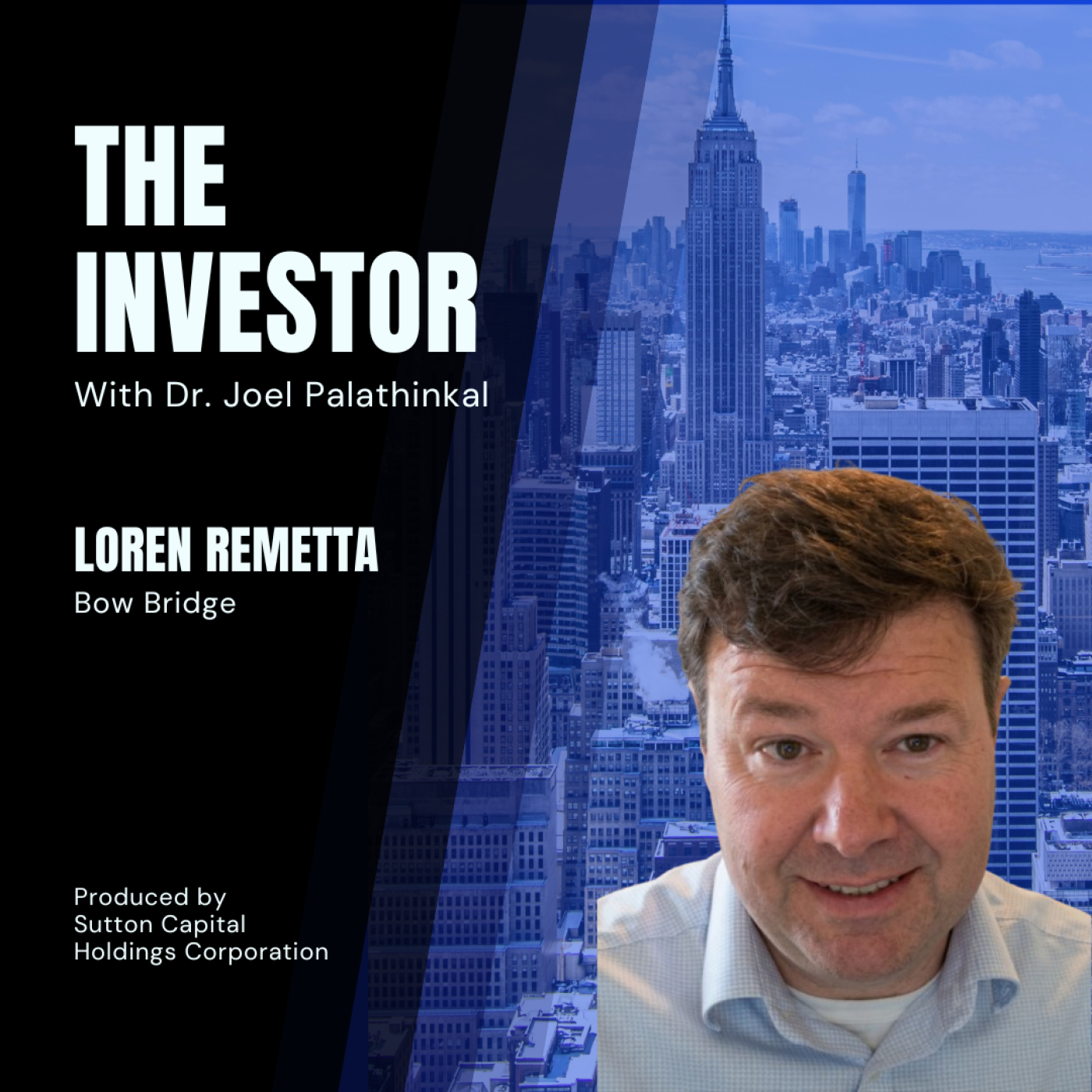
Loading summary
Transcript104 lines
- [00:03]
A
Welcome to the Investor, a podcast where I, Joel Palo Thinkle, your host, dives deep into the minds of the world's most influential institutional investors. In each episode, we sit down with an investor to hear about their journeys and how global markets are driving capital allocation. So join us on this journey as we explore these insights. All right, I am super excited for my guest today on the Investor podcast. I've got Loren Rametta. Loren Rometta is the CIO at Beaubridge Bobridge is a corporate credit and special situations investment company focused on asymmetric value driven and stressed investments across public and private markets. So it's going to be really interesting to kind of talk through that intersection. A lot of times there's a little bit of transcendence between, you know, investing in the private markets and then also possibly, you know, crossing over. Right. They call that crossover funds. But it'd be really interesting to kind of think through this strategy and how it's, you know, becoming more and more of a blurred line between private and public markets. I mean, sometimes public markets act like private markets and, you know, they're essentially a global long, short credit derivatives approach to structured credit. Previously before that, a long celebrated history, 24 years in global corporate credit investing and hedge fund management. Product expertise spans across structured credit, credit default swaps, corporate bonds and private markets. And he's demonstrated a robust track record in portfolio management, spearheading new initiatives and obviously extensive and impactful global business development networking. So, Loren, thank you for coming on the show. Excited to kind of go deep on all things asset management.
- [02:01]
B
Super, Joel, thank you. That's a great intro and it's a unique time within credit markets and there's a lot of discussion in press on private credit and what the ramifications are there. And I look forward to touching on a bit of all that and how that's impacting more vanilla markets and some of the interesting things that we're seeing on the deal specific side as well at this point in time.
- [02:30]
A
Absolutely. But why don't we back up a little bit, Loren, and just go back to your early days, you know, tell me about the young Loren, you know, the formative years, what was going on in your mind through high school. Right. And you know, tell me a little more about your upbringing, your influences in life, kind of what your parents did and how that shaped you kind of getting into your first foray into financial markets and asset management. And then obviously we'll talk about all the things that you built over the years too.
- [02:56]
B
Sure. I grew up in Pittsburgh Penns which spawned quite a few successful hedge fund managers. Actually my high school now borders the Tepper School of Management at Carnegie Mellon. But the Tepper School wasn't there that, that a long time before that. But I grew up in the south side of Pittsburgh, a pretty blue collar neighborhood. And we would the, the city at the time, as I was growing up was going through a transformation with a lot of creative destruction if you will, with the steel industry declining. But at the same time there had some great universities that were endowed by the early entrepreneurs and venture capitalists of that day with the Melons and the Frick family and so on and so forth. So they're they as that moved on and the focus in Pittsburgh really transitioned from industry to more technology and medical technology. And that's really benefited the to this time and where we are today. What was I thinking when I was going through high school? Probably not a lot. Sure. I thought I was going to go into medical school at one point. And my high school was located right in the center, right between Carnegie Mellon and the University of Pittsburgh. And I was actually an intern in high school in the genetics lab at the University of Pittsburgh. We were doing gel electric forresis forensic genetic maps of pedigree horses. And I was also a high school hockey player and ended up going to Penn State to play hockey. And that's when I started to get a little more interested in the business side and declared as an econ major in my sophomore year there. And from there it led to my, my internship in my junior year was with Credit Suisse First Boston in their London office. And I did not know much about Credit Suisse. Did not, you know, they didn't have a Pittsburgh branch at the time and came back from there and graduated in 2000, which was a pretty good time to come out of school. Fortunately, had multiple job offers and ended up with my first position which, you know, you come to forks and roads, sometimes you come to T's and roads and accidentally really fell into the credit derivative market at a unique time, really at the, at the early stages. And my first position was in the back office doing P and L calculations and trade reconciliation for credit derivative and structured products.
- [05:53]
A
What year was this? Was this during kind of the 2000, 2001. Okay, got it. So it was a couple years before actually the whole, you know, CDO.
- [06:05]
B
Yes.
- [06:05]
A
You know, situation that happened in 2007, 2008.
- [06:09]
B
Yeah, that's, you know, the company that I started with was a bond insurance company called ambac and they were doing bond Insurance. While I was there, all the insurance that they were doing were on corporate CDOs. Sure. Double wasting away or triple A rated with a. They, they were ready triple A. They went out and offered insurance policy on the CDO which took the rating up and reduced the spread and gave the buyer the insurance wrap, gave them comfort and that worked really well. Okay. And then at some point after I, you know, moved on, I was only there for about a year and change, they decided to start doing this with subprime mortgages. And you know, the spread between the alleged AAA subprime mortgage was about 6 to 7% to the corporate AAA CDO tranche. And you know that, that's some, some lights should have gone off at that point, but it didn't. And you know they eventually filed for bankruptcy and were restructured. But you know, there, there are a lot of parallels that are, people are trying to draw to what's going on in private credit now and what went on in the, in the gfc. And I, I think that's, you know, pretty misguided.
- [07:27]
A
Sure.
- [07:28]
B
What we have now is nowhere even close to what went on during the global financial crisis. It's not so, it's not even a fraction. So. Yeah, but that was, that was the early part of my career and, and then that I started trading credit derivatives at two German Landis banks and as a proprietary trader. And I did that for three to four years and got hired as a market maker at bank of America in, in New York after that. And our job was really to build their credit derivative business because they were one of the later banks coming to the product where you know, the market leaders were JP Morgan, Deutsche Bank Lehman and Morgan Stanley pretty much. And a lot of the other banks hadn't taken to the product for whatever reason strategically they weren't committing balance sheet to it. But that's how I switched from the buy side to the sell side. And, and that was I think an important switch because I was in my early 20s. So it was a, I was one of the youngest guys in the proprietary side. Most of the guys were in their late 30s, early 40s and but those guys before were on the sell side typically go to the sell side to the buy side. I went from the buy side to the sell side at that point. So it's a little bit, a little bit different. But I think it helped as a sell side trader, as a market maker having the buy side experience because you, you understood exactly what was, you know, kind of going on in the opposite side of the business. Not many, most guys are sell side guys typically weren't at the buy side beforehand.
- [09:24]
A
Yeah. So for the audience I think it'd be helpful to understand that delineation. Right. So when I think of the sell side, I think you're, you know, you're JP Morgan or you're Goldman and you're selling blocks of securities. And then obviously the way that you make revenue is obviously on the spread plus you know, probably trading fees, you know, and I would say in private equity if you have an exit, you're going to either transfer those shares with a transfer agent, then there's a fee that gets charged or you can just liquidate those shares. Right. In both of those there's, there's convenience fees and handling fees and commissions that, that happen. So in my mind that's kind of the sell side. Walk us through, you know, the role of a market maker and you know, how that incremental role plays in, in kind of the ecosystem and within your organization as well.
- [10:20]
B
Sure. So I was at, at bank of America in New York for about a year and a half and then I transferred to London and I was there for about three years. Sure. We were making markets in various credit derivative products. And just to keep it simple, a credit derivative is essentially bankruptcy insurance on a company. And as the market evolved and developed it, it started as a hedging instrument for bank lending portfolios. And banks had large exposures to General Electric, General Motors and Ford. So they created a bit a way to hedge this and then it quickly moved up the curve and there's probably a few hundred names after three or four years that were traded. And so to enable those trades to happen, it was, it's an over the counter market. And my, I was an auto, I was the auto sector trader and the credit index trader.
- [11:23]
A
Sure.
- [11:24]
B
And the, there's typically not always a buyer and seller. So it's not like a stock where you know, it's very quickly traded. Thousands of shares are going through in seconds. You try to, in a, in a non risk situation where you have the buyer and seller lined up, that's great. The two salespeople get tremendous economics on that.
- [11:46]
A
Sure.
- [11:47]
B
And in those days, in the early, early days, it could be almost 150 plus basis point bid ask on a GM trade.
- [12:00]
A
Yeah.
- [12:01]
B
And as the market matures now it's probably five basis points or maybe three. So and then trading is a little, is far more, a bit more electronic. But this, the credit derivative market is an area that hasn't been, hasn't advanced that much compared to other markets. It could be ripe for it, but it's, it's harder to do due to the bilateral nature of, of execution. But your customers are the proprietary bank Investment Desk pretty much went away after the global financial crisis with the Volcker rule. And that was a very large portion of, of our flow where bank prop Desk. Every, you know, pretty much every mid to large size bank, particularly in Europe, mostly large size banks here in the US had derivative proprietary businesses.
- [13:01]
A
Sure.
- [13:02]
B
And so that was a large portion of our business. Then you have the insurance companies, traditional asset managers and hedge funds. And as a market maker, you set a price when you're asked to. Sometimes you know which direction they're a buyer or seller of the credit default swap. And when you get fortunate, you get both sides. Often more often than not, you're, you're taking risk so you have to price it. You know, you have a view that, you know, it's just not a, a vanilla price without a bias. And as you know, you're trying to figure out how you want to be positioned. You work with your research analyst, you have your own, you do your own research. Yeah, you, you really have to have a view on the company that you're transacting in, but also you have to have a view on the market where you market prices are going to go. You might think it's a really bad company and the price of insurance should go higher. But if the macro trend overwhelms the company, you could be wrong for a bit before you're vindicated. So it had a lot of proprietary elements as a prop trader, but you had flow. So you had sales forces all around the United States, all over the world that particularly for autos, which was one of the most active segments of the market. So you had, you know, Chicago, New York, Los Angeles, Dallas, London, Paris were your main flow centers. And you're just moving back and forth and trying to manage your book, manage your risk and combine that with the view of how you want to be positioned. And the hardest part is as a market maker is keeping your best positions.
- [14:50]
A
Yeah. Well, you're essentially sitting on both sides. Right. You're essentially monitoring the bid price and the ask price at the same time, right?
- [14:58]
B
Yes.
- [14:59]
A
Yeah, yeah.
- [15:00]
B
The hardest thing is keeping your best positions and not allowing your customers to position.
- [15:04]
A
You got it. Yeah. And I mean there's also counterparty risk as well. Right. So how do you kind of manage that and kind of mitigate that? I guess there's probably some programmatic technologies to Kind of help as well. Right.
- [15:17]
B
It manages more of the counterparty risk. Yeah, but during the gfc, there wasn't. Now there's central clearing, so it's better managed and less risky. Sure, but during the gfc, the counterparty risk was, was, was meaningful. My book had one of the largest short positions embedded in it for Lehman Brothers, so it made a lot of money when Lehman defaulted. But I also had one of the largest positions in the bank for Morgan Stanley. So if Morgan Stanley had gone, you know, I, My book would be in flames.
- [15:53]
A
Yeah. You know, it's funny, I was cracking up the other day because I saw something in my feed. It showed how investment banks really are versus how they really are on, versus how they are on these theatrical TV shows. Right. And when you talk about London, I think about the show industry. Right. Because an industry, they're like, oh, the whole market is tanking. You know, you, you got to talk to the risk department. You know, the whole market is, you know, a bloodbath. And then, you know, they show like a clip of like what really happens in an investment bank. And it's like a banker sitting in a laptop, he's like, oh, the Excel that, that one cell in my model, like, was off by a decimal. So let me correct the decimal. Right. So I don't know what your reaction is to that, but just, you know, I don't know if you crack up ever seeing kind of the theatrics on like the, the TV shows like, you know, Billions and, and industry. I think it's a good show to watch for, to get into the industry and just get an idea for the different, the different Personas and different roles that work at an investment bank. Right. I mean, you're working in, there's wealth management, there's the product teams that are kind of offering different products on the sell side, and then there's sales and trading. Right. So I think just understanding the different Personas and just kind of a high level overview of like, you know, what it might be like, is interesting. But I, you know, I've heard from so many people. We've had several hedge fund managers come on our YouTube channel. They're like, yeah, man, it's nothing like that. At our shop in Connecticut, you know,
- [17:16]
B
I would say that, you know, that the first part of my career was in the banks and the second half is in the hedge fund world.
- [17:24]
A
Yeah.
- [17:25]
B
And what, what the one input to your trading and your market making is the rhythm of the floor on the sell side.
- [17:36]
A
Yeah.
- [17:37]
B
And when, particularly when I was in New York and the fixed income floor, there's probably 70 to 80 people in various products, all fixed income. And sometimes it's quiet, sometimes it's manic, sometimes pizza comes at seven in the morning on a Wednesday. So it's, there's a, there's a culture to, to it and when the rhythm of the floor shifts, typically something in the market has dictated that.
- [18:08]
A
Sure.
- [18:09]
B
And your own rhythm within your screen. It kind of sounds strange hearing someone say that, but your, your rhythm with your screens, with your pricing, with your salesforce, that interaction and that, some sort of market self awareness that, that kicks off and that shift in volume, you know, there's a gust that goes across the floor. You know, the activity is going to pick up and it's going to be pretty busy for a period until that calms down. Shift that to the, to the buy side, to the hedge fund side. It is so quiet, you know, that people communicate to each other in a chat room, they're 10ft away. It's, I would say it's, it seems to be more cerebral on the hedge fund side. But you don't have that edge as a sell side trader does with the, the incubator. Everything that goes on around you matters a lot more and on the sell side than the buy side. Sure. Through divisions, you know, I've only been in the sales and trading part of it, but going to the different floors, it feels like a different world. Yeah. And it has a different culture. In the early days, everyone in banking was largely in suits and ties, very rarely in sales and trading. When anyone have suits and ties, I don't think you'd have pizza at 7am on a Wednesday. On the investment banking floor. Sure. You know, when I like there at certain trading floors you work that they'd have a beer cart that would come around at 4 o' clock on a Friday. So it, so those things are different and, and all that varies by bank too. And each bank has their own nuances and subcultures, shall we say?
- [20:01]
A
Well, let's talk about the next step. And you know, you label this as a turning point. So working at PVE Capital in 2009, you know, joining as a portfolio manager. Right. Talk us through that experience. It sounds like you had a key role there essentially diversifying its business lines. Right. Leading, you know, the recognition and you know, becoming a partner in 2015, you know, tell me some of the biggest learnings in that experience. And then obviously later on you managed Pearl Vega Fund, which was a long, short corporate credit fund. So Walk me through kind of that experience and that what made that a turning point,
- [20:39]
B
Global financial Crisis kind of 2009.
- [20:43]
A
Yeah.
- [20:44]
B
Pushed me in that direction and I did a. I spent less than a year at ubs before joining PvE and I did not know a lot about hedge funds and how a hedge fund operates and all the work that is required to run one successfully. But I did know that I had to get out of the banking system because it was going to take a very long time for it to get back to its high water marks shall we say if it could even did. And the, the elements of trading pre GFC versus Post, you know it, it, it will never go back to that, probably shouldn't either but it just felt like in time that to move into a different section of the business. And PVE was founded by my business partner Journo Apucci and he was one of my largest customers at bank of America. So that's how the relationship began and we started talking about working together on something when he was at his prior fund before founding that business and they started, they were supposed to start with around 100 million and started with about 50. And that's when I said well this, that seems a little risky at that number. Why don't. I'm going to go to UBS for about a year and wait and see how the AUM develops and coming in there going back to the buy side after not being there for six or seven years. But it was a different part of the buy side being on the buy side in an investment bank where you have access to other information you're still in, you're still in their ecosystem. You still respond to the same shareholders and the same ownership. With a hedge fund you, you respond to your, your investors but you're not, it's very, you're almost on an island. And that's good, that can be good in ways. And you know if you look at the pod shops like a millennium, how they're up, how they operate, they keep their, their groups very segregated by design. But in a small boutique credit fund you're, you're only as good as the information that you can acquire through the broker dealers, through the invest investment banks. Sure. And so your money management investment process has to change. And being a trader versus an investor that's one of the biggest adjustments from the sell side to the buy side where on the cells you're kind of an investor. You're more of a trader.
- [23:33]
A
Yeah.
- [23:34]
B
At a hedge fund you're, you're far more of an information Gatherer. And your, your positions are only the positions that you want. You're not as, as a, as a flow trader. Your positions, you know, you have to take a lot of those positions even though you don't want them.
- [23:53]
A
Sure.
- [23:53]
B
And that process takes a while, that adjustment and some people never don't make the adjustment and you know, they, they move on to something else within a year or 18 months. So my advice to anyone who's going from the sell side to the buy side is to progress slowly. You know, even though the hedge fund probably wants you to deploy capital as quickly as possible, but that, that new process and you're going to take, you're going to transfer a lot of what you've already done, but there's 30 to 40% adjustment that's going to have to happen. And, and that'll take time. That's not an overnight, you know, you're gonna, that's learned. It's not something that it's innate.
- [24:40]
A
Yeah, no, that's helpful. What do you think are the skills of a successful portfolio manager? And you know, we've had a couple PMs come on. We've had some people that have worked at some large franchises and then later started their own hedge fund. And the biggest issue they had was just really finding the edge. Right. And they ended up kind of pivoting and doing something else. But what do you think are the characteristics of a good pm? And then I think as a pm, you want to build that team of, you know, either sell side or buy side research analysts. So how can you build a culture and find the right talent to kind of support you as you're, as you're executing with that portfolio strategy?
- [25:23]
B
The risk management people talk about it a lot, but there's a lot of different ways to look at risk management. And an important part of that is many people are also focused on the downside, which is important. But there's also upside risk management. And one thing that I think more people are guilty, particularly myself, is positions that are doing well, staying in them for longer than you might feel comfortable in and you know, it's easy to cut the cutting losses that sometimes that's predetermined. Sometimes risk manager does that for you.
- [26:05]
A
Sure.
- [26:05]
B
But that is, I think one of the arts that separates the goods from the greats is when the trend, when you have the right position, you have the right thesis. One, the sizing of the position and that, that the sizing is, is so critical. And two, the duration where you know, do you cut it 10, 20 30% too soon and, and focusing on not making money every day. But when you're highly convicted, being well positioned and having the right size is, it really makes the difference. And that's where I think a lot of alpha gets generated really through sizing and, and when to deploy leverage. And that's a whole, you know, different discussion with, when you're trading with other, with borrowed money and whether it's through margin or through, through contract leverage, being able to manage that and manage that well. And then the other major thing is in the fun side, you get a monthly, you have a monthly P L that goes to your investors in the investment banks. There's monthly, there's quarterly, but you really get paid at the end of the year.
- [27:34]
A
Sure.
- [27:35]
B
But if you have a drawdown that's significant and at the hedge fund you're going to get shut or your investor could redeem. So managing on a very incremental basis but maintaining a longer term term trend view or macro view, particularly macro credit, that's, that's really where the art is.
- [27:56]
A
Sure.
- [27:57]
B
That's something that takes a while to get adjusted to.
- [28:01]
A
Yeah. What were some of the biggest learnings that you could take away from your time at PVE Capital? And then it looks like you just kind of advanced at, you know, Pearl Vega Funds prosperize, you know, capital. It looks like that was part of PvE Capital as well. But maybe just couple high level nuggets from, you know, that firm. And then walk me through kind of the transition to Breen Asset Management.
- [28:29]
B
Sure. I think the value investor relationships and connectivity and transparency are extremely important. Sure. And it makes sense, you know, theoretically and at a high level. But to do that effectively and even when you're not doing well, when you want to hide under your desk, that's typically when you should be communicating the most.
- [29:01]
A
Yeah.
- [29:02]
B
And explaining what the position is, why it's not doing well, what the risk management process is, what's the timing of when you think the position is going to come back or the book's going to come back. And, and being able to explain that is 90 of the battle. And, and sometimes you'll see investors that will actually put more money in at that point. If, okay, sure.
- [29:27]
A
They just want to double down pretty much.
- [29:29]
B
Yeah, yeah. They think, okay, this is clean. And you say you can clearly articulate how much more downside there is. And you know, there's, there's two types of volatility. There's volatility that is explained and part of the investment thesis. And then there's volatility that you can't explain and it's not part of the investment thesis.
- [29:53]
A
Sure.
- [29:54]
B
And go into it saying okay, we have another 5 to 7% risk to the downside here, but we're still, you know, 30 plus percent to the upside. And some of the derivatives structured products can become illiquid. So a lot of that volatility can become just marking from the broker dealer where you're getting marks in, not actual trades that happen. So it's, it's monitoring that and being able to articulate that to, to your investors and your stakeholders.
- [30:29]
A
Yeah, that's really helpful.
- [30:33]
B
No. And then moving up. So Bring Asset management was, was, was an interesting, very interesting place. It was more of a multifamily office that it was an affiliate of Bring Capital and we were investing in credit markets, private markets. And that's where I got my introduction to independent sponsor investing and getting to appreciate the value of having synergistic businesses that didn't overlap and at times hedged one another as different revenue flows as market interest. We were coming out of a period of extremely low interest rates and credit volatility was very low. And that's when transitioned into the single single deal investing. But the nice thing about that was a lot of the family office relationships that I had from the credit fund side. We're moving in that direction as well.
- [31:38]
A
Sure. Into just single private direct investing.
- [31:42]
B
Yes. Independent sponsored value investing, distressed growth. So it was.
- [31:50]
A
So was it a comment? It sounds like it was a combination of both public and private.
- [31:55]
B
Exactly. It was a public and private markets business that was developed and that was, you know what, what did that take? It took a group of very talented investors but also with commensurate deep networks.
- [32:13]
A
Sure.
- [32:14]
B
And being able to transition between the markets is not simple and deal access is, is critical for that. And having the relationships and the networks, whether it's on the investor side, the corporate side, and then being able to bring that all together with a capital markets orientation and potentially forming your syndicate of investors to execute the transaction. And that's where as you said earlier, the lines tend to blur between public and private. Those businesses where you had a position in seeing the aviation sector and you're working on something in the aviation sector, having that information, that added information edge it would be, could be potentially valuable. And then as you went through Covid and where we are today, if you look at how Apollo is structured, if you look at how areas is structured, they're public and private investment companies. So the world has definitely moved that heavily in that direction. And private credit is the, I think the, the lever that has taken it there quite aggressively where you have Apollo, JP Morgan, bank of America all on a deal together. And that was a very foreign concept 10 years ago. So that the sources of capital and the ability to structure a deal has become, I guess, easier in many ways because you have, in the old days when you're a corporate, you went to your bank and got a price on a loan and that was that. Now, you know, we're working on a transaction at Bowbridge right now, and one of the potential investors said that they, you know, invest with regular private equity funds. They invest with independent sponsor groups like ourselves, they invest with family offices, and they invest with other. Other. If they have a fund to funds business.
- [34:38]
A
Sure.
- [34:39]
B
That's a pretty dynamic repertoire to be able.
- [34:45]
A
It's a pretty big. Yeah. Multi asset strategy platform.
- [34:48]
B
Yes.
- [34:48]
A
And many of the, many of the family offices. So I'm assuming, you know, that firm, essentially they were structured as a multi family office. Right.
- [34:58]
B
I was an ria, but it was largely investing for a handful of families.
- [35:02]
A
Got it. Yeah. So usually with the RIA structure or multifamily office structure, you know, they have to, you know, probably offer a suite of different products and offerings because that way they can catch all different type of family profiles. Right. Some of the families, maybe the family business there were entrepreneurs and then they kind of got into the private equity space and then there's probably a hedge fund family. Right. So if they can offer like some of those public and private market products, they can service more clients and then probably have, you know, manage more aum. So do you think that's kind of the case now? You know, with, with a lot of these other platforms spinning out? It's like, hey, you want, you want managers? We got a fund to fund, you know, strategy. If you want direct deals, hey, we do distress, we do credit, and then we also do venture and private equity as well. Right. So do you think it's beneficial to have a bigger suite, to kind of get more clients and get more aom, or do you think it's better to kind of have a niche and just kind of go all in on a certain, you know, focus area?
- [36:07]
B
I'd say it's, I'm, I'm in the middle of it where it, it's contextual. And I've been in businesses where we are very, we've been, we're very strong in a niche and moved away from that and it didn't work out very well. But I've also seen it where you'd have a niche and you go into another business line and it works pretty well.
- [36:33]
A
Sure.
- [36:33]
B
And that stabilizing it has an important stabilizing effect. And then I look at what we're building at Bowbridge, having an independent sponsors business and having the credit fund, there's, there's crossover elements between them with investors, but at the same time as an emerging business, an emerging manager, maybe the credit fund isn't interesting and we find there's a specific deal that we were doing that's very interesting. So having the ability to cross between and produce an opportunity that just staying in one silo you wouldn't be able to do, even though you get asked to look at this opportunity and you say, oh, that's not what we do, you miss out. So if you're smaller in size, you have the ability to do that. I think if you're larger in size, you also have that. But if you're in the in between spot, that's where it can get risky with your brand and being cognizant of that, where you don't want to, you know, the big, the big term is style drift. And whether that's in a fund where, you know, one day an investor wakes up and there's a lot of equity activity going on in a credit fund. So you have style drift there and then you can have style drift at the, at a more macro level between private equity or credit or private credit or private equity. And the LPs are typically being more understanding of that because it's helping potentially them with a more stable larger business that they're a part of. But some will question why you're. How much of your time is being devoted to this new business line versus managing their money in funding. So it, I think communication is, is important and having the, the requisite team in place to satisfy those questions is as part of the. It's an art and but is if the communication lines are there, you know, the players in the earlier years was harder to do, but now that how, you know, Apollo KKR areas are all structured or Blackstone it, you know, we're not saying smaller businesses can do that easily, but it's more normal.
- [39:02]
A
Yeah. What was the, you know, and I love that this is a great foray into getting into Bowbridge. You know, tell me a little bit about the origin story of, you know, why you built Bowbridge. What was the inspiration? And it looks like, I mean a lot of, a lot of managers build something based on their industry expertise. And you have a combination of both the buy side and the sell side and kind of sitting between public and private markets and specifically special situations. Right. I mean when I think about special situations, I think of you know, spinoffs, bankruptcies, restructuring, recapitalizations, buybacks, even activist investor situations. So how do you, when you think about the portfolio construction because once you go through the origin story, you know, how would you advise like an emerging manager kind of getting into this strategy to balance the public and private markets and you know, is there a point where they kind of converge into each other?
- [39:57]
B
For, for us, our, the, the credit fund we're building is. It's 100% public markets. It's very credit derivative focused structured products. So there, there's not a lot of overlap. And in, in the independent sponsor side, these are, these are deals that come to us from relationships that we've had for 10, 15, 20 years. And it's not a business that we're out there actively seeking deals. It's, it's very organic how opportunities come. And we probably look at 10 deals in one year, maybe get to an advanced diligence on one a lot of time commitment to an underwriting and especially if it's an area where depending on the structure of the company and whether it's audited or not and you know where it is in its lifetime, how many years have they been operations? Typically we're middle market with 20 million or EBITDA or less. So there's very specific criteria here for sure.
- [41:15]
A
Yeah. And when you say a deal and you're thinking about the kind of the, the transaction when it's public, you're saying it's already a public company and then they're kind of just spinning off or doing an M and A.
- [41:29]
B
No, no, not on the sponsor side. The. That's all private companies.
- [41:36]
A
Yeah, that's all private. Yeah.
- [41:39]
B
Yes. But on the public side that you. We're looking at index related products and large cap high yield issuers.
- [41:49]
A
Sure.
- [41:50]
B
So it's, it's a pretty well defined market and but they're very independent in, in where they sit and how they operate. The credit funds quarter, it's quarterly liquidity where private sides typically five years, five year lockup.
- [42:07]
A
Sure.
- [42:08]
B
And with the investor basis can cross over which is important.
- [42:15]
A
Yeah.
- [42:17]
B
That's where the value, you know, the network building a new. You know, this is the third time that I've been involved in building a boutique investment business and the network is. That's your ip, that is your weight and you know, being in Front of the right people at the right time and being able to be introduced to the right investors, you know, that's not an easy process. And you know, it's, it's, it takes, it takes multiple years and you know, would I recommend it? I don't know. Possibly. But you, you have to have the, you know, very precise ingredients in place. And even when you have the, the right framework and the right thesis, it, it's tricky. It's still true to get the execution and the initial dollars. Sure.
- [43:16]
A
And a lot of times it's, you know, you don't do it for the money in the beginning.
- [43:19]
B
Right.
- [43:19]
A
You're doing it because you want to build something and you want to build something enduring because you see in the beginning there's a lot of startup costs, right. To build a firm. So what advice would you have to give to maybe people that have been working in the industry for four to five years, even 10 years and like, look, I want to build something, what should they be kind of going through in their head when they're kind of going through this type of endeavor?
- [43:45]
B
I would, the first is to make sure you have two 24 months to really dedicate to it. And then if, if that, if you can answer yes to that, then you got to look at that day one capital and do you have 10 to 15 potential relationships that could do it? Not, not saying they would, but do you have that many? Or if you're, do you have two that you have like think that there's a 70 plus percent probability they would do it? Yeah, those are, you know, pre sounding conversations you have and book building exercises. But if you don't have that sort of visibility in that time, it's gonna, it's gonna be quite tricky. And, and then don't you know where you see a lot of mistakes made is that if you, if we build it, they will come and guys taking down 10,000 square foot floor plate in midtown and putting all the systems in and without any capital and eventually your burn rate's going to eat you alive. So you have to manage that as well. And what's your expected burn rate and what is it? Is this a solo endeavor? How many people are going to work with you on the project? Is there a creative way to do it where you go out and sell a portion of the business to begin with? That's not an easy thing to do, but it's a way to raise working capital.
- [45:35]
A
Yeah. When you say sell a portion of the business, are you talking about GP stakes? So giving up some of the. Yeah, I mean, look, there's pros and cons with that, right? I mean, there's a couple fund managers that I've spoken to that have actually successfully raised GP stakes capital. And it's a trade off, right? I mean, you can either save, you know, all of the business and own 100 of the business, but you haven't closed the fund yet or you give a, you know, you give a portion away of the business so that you can just get to work. And we had, we had a gp, a couple GP stakes investors come on the pod as well. And you know, essentially what they're saying is, look, you know, it's, it's a, it's a great business. You know, as a fund manager. It's also a great business for large family offices that want to just generate revenue from the GP stakes. But you know, essentially the main utility is let the managers do what they do best. They're good at deploying capital, managing money and generating returns and that way they're not on the road for 18 months trying to kind of raise assets. They can kind of get a lot of that taken care of and then just kind of go, go and deploy. Right. And I think that's, you know, those are the perspectives that I've heard. I mean, it's a trade off, right, because you're giving up some of the business. But you know, I guess what, what's kind of your reaction to that in terms of, kind of the, the trade off for that?
- [46:54]
B
I, you know, I always look at it if, you know, typically the smaller the percentage of your business that you own, the more successful typically you're becoming.
- [47:07]
A
Yeah.
- [47:08]
B
And the early stage GP investing, that, that's out there and available, it's uneven. And the very early stuff is, you know, pre, I guess there's, there's investor gps and there's just pure gps. Yeah, investors and the g, the pure GP side and that's, that's obviously a far riskier proposition for everyone. But the GPLP side, I mean, I think it's a fantastic business and you know, having gone through this a few times, I think it's actually one of the, the excess return that you can get depending on strategy. But if you're looking to do something in a credit strategy, your excess return can be 400 to 700 basis points a year, depending on the growth of the business. If you have a 20% stake in a revenue share doesn't have to be a gp. Most deals are revenue shares that most guys don't want to come into your GP for various reasons which you can understand sure. But the rev share business I actually think that's going to see a swing back up from a macro point of view. If you look at alternatives at a high level. Private equity has had problems with realization Private credit is I think the headline problems are greater than what's actually happening but the perception becomes reality and becomes reinforcing and with all the redemptions so those are, you know private equity was a darling around Covid. Coming out of COVID private equity became the darling and hedge funds, you know had it inflows but not, not meaningfully. Through that experience in PC and pe you've come to appreciate what quarterly or month of liquidity can mean and the ability to deploy capital outside the multi strats out of the big household names. It, it's. It's very limited and sure particularly for mid sized family offices who don't have the sophistication and I think the call it like fund of funds 3.0. I. I feel that that business will begin to is going to have a pretty good run in through this year into next year as alternative flows move more into hedge funds. With the macro backdrop that we have with there's a lot of dispersion across asset classes. There's a ton of dispersion within credit. We haven't even touched on that where looking at the software SaaS exposure between private credit leverage loans and high yield market one is it 20ish percent the others in the mid teens and the others below five and that's what's caused wide differences in valuation and where leverage loans are the widest they've ever been to high yield right now. So that's pretty unusual you know outside of a recession. But the, the things that you want to do with a hedge fund and why you invest in hedge funds. We have normal interest rates, you have more normal volatility. Credit spreads are you know depending on where you look. Some places are very cheap, other places are have some value to them. Articulate those types of cross asset strategies benefits the the small medium sized hedge fund players.
- [50:59]
A
Sure that's helpful. Well hey you know Lauren, I really appreciate all your time. I always like to wrap up every podcast with just one. One piece of advice could be from a mentor, could be from one of your past bosses, it could be from a family member. So what do you got for us?
- [51:19]
B
One investor when we were sitting in the summer sun one afternoon together and he said you know he, he had just retired and I said to him you know what, what's really the key here. And he, he's done extremely well. And he said keeping the mistakes small.
- [51:38]
A
Sure.
- [51:38]
B
And, you know, that can apply to a lot of things more than your trading book. And, you know, that's. I think that's important.
- [51:50]
A
Sure. Well, thank you for all the wisdom, Lauren. It was great, you know, just learning about your background and all the things you've been building. And congrats on all the success, Joel,
- [51:59]
B
thank you very much.
- [52:00]
A
All right. Take care. Thank you, everybody else. Appreciate it. Have a great day.
- [52:04]
B
Bye. Bye.