Loading summary
Transcript214 lines
- [00:01]
T-Mobile Advertiser
T Mobile is more than the best network in the game. They're now the best network in America, according to the experts at OOKLA Speed Test. So MLB fans are connected from home to home plate with the most advanced 5G, the most towers, and a signal that goes farther than ever. You can keep up with your teams on the road, overseas, even off the grid. For baseball fans, it's better over here.
- [00:24]
T-Mobile Disclaimer Voice
Based on analysis by Ooklift speed test intelligence data, 1H 2025 compatible device and plan required for T Satellite. See details@t mobile.com.
- [00:33]
Joel Palathinkel
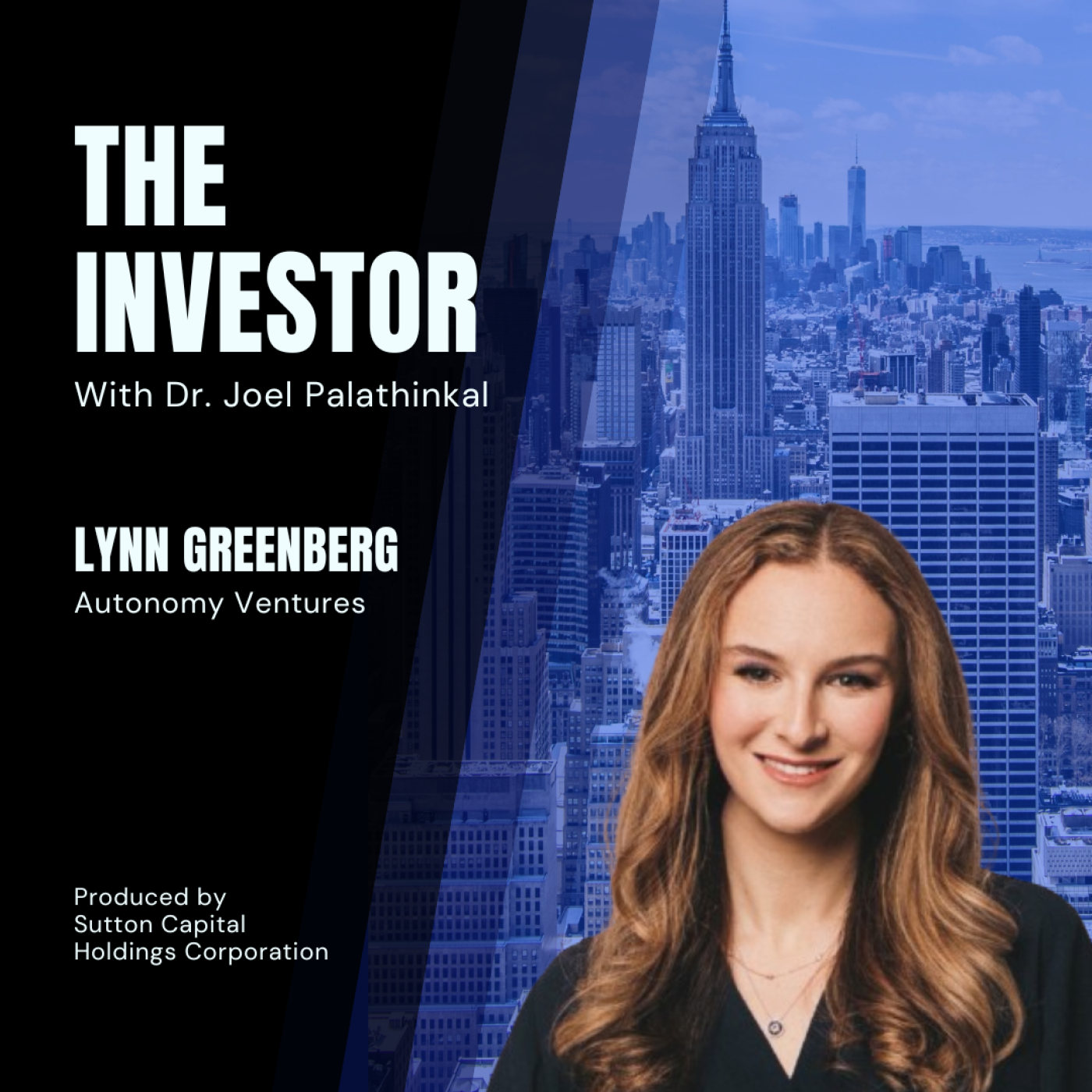
Welcome to the Investor, a podcast where I, Joel Palathinkel, your host, dives deep into the minds of the world's most influential institutional investors. In each episode, we sit down with an investor to hear about their journeys and how global markets are driving capital allocation. So join us on this journey as we explore these insights. Looks like we're live, so welcome to the Future 1 podcast. We have as a guest today special treat on a Friday, we've got Lynn Greenberg, who is at Autonomy Ventures and also a founder of Pivot. So it's a new app that's now actually pivoted to the enterprise space. So welcome. Lyn, thank you for giving us your time on a Friday morning. I know I'm stumbling a little bit with words, didn't sleep well last night, so excuse me. But it's good because the good thing about a podcast is you're supposed to listen and let the special guest share their story. So people are here for you. So I'd love to hear about your background, your story. Where did you grow up? We want to hear everything. What did your parents do when you were growing up as a child? Family life. And walk us through, just in a snapshot, that journey and where you are now.
- [01:58]
Indeed Advertiser
Cool.
- [01:59]
Lynn Greenberg
Well, thank you so much for having me, first of all. But yeah, so I grew up in Mamaroneck, New York, so about 30 minutes outside of New York City, in the same town that my mom grew up in, in the same town that my parents met and got married. So that was really special. And then grew up with two brothers, younger, but, but now very much bigger. And I was a really big athlete at one point, was on seven different teams at once. And that was a huge part of shaping who I was.
- [02:42]
Joel Palathinkel
I just wanted to chime in with one funny thing, too, when you talked about your brother. So I'm an older brother. My brother's like five years younger than me, and I used to be able to throw him around and flip him over. And now he's like 6ft, like 6ft 2 and he's like really jacked, so I can't really bully him around like I did before. So he's not big anymore. So it's probably the same thing with you and your brothers. I don't know if you bullied them or wrestled with them, but yeah, it's funny how kids just grow up. Especially the younger ones are just like twice your size.
- [03:14]
Lynn Greenberg
Yeah. I mean, you know, now my only weapon is really mind games.
- [03:19]
Joel Palathinkel
Sure, you can emotionally blackmail them.
- [03:22]
Lynn Greenberg
Exactly. If that even works, but yeah. So then went to college at a small school in Pennsylvania called Franklin and Marshall College, where I played soccer and absolutely loved it. Went abroad, studied abroad in Madrid my junior year and took on this whole new perspective about living abroad and saw things through a much wider lens and really, really enjoyed it. And then, you know, I graduated from M with a government major and a sociology minor. And I really kind of took part in those two majors because they were very people focused and really kind of around critical thinking. And that really caught my attention. And so I graduated. And about three weeks after graduating from college, I relocated to London where I worked for Bloomberg. And you know, I was 21 years old, didn't know anyone there, and landed in London and faced the issue that I think all people do when going to a new place, which is how do you go about making your new city feel like home?
- [04:39]
Joel Palathinkel
I think with London too, one thing I'll say, and you can correct me if wrong, but I think in London it's even really tough to get an apartment because you have to. You can't just do like a credit application that gets processed in like a couple days. That's like. I think there's a whole process right There absolutely is.
- [04:54]
Lynn Greenberg
And I actually. So one of the big problems I had is I didn't know where to live. And I was. I didn't have much time until I moved to London. Then right after I moved there, I was starting a job with Bloomberg, so I had to find my apartment before I moved there. And so, you know, the real estate market, or at least at the time was, was really fast. So I would wake up every morning at 3 o' clock in the morning, given the time difference, and go on the websites and try to find an apartment. And I ended up living in Notting Hill solely based on the fact that I had seen the movie. And that's all I read.
- [05:34]
Joel Palathinkel
How accurate were the reviews? Because what did you do? You just did Google searches and looked at the reviews. Were Those helpful?
- [05:41]
Lynn Greenberg
Yeah, I mean I knew where my office was, so looked for a direct subway line and I signed a six month lease or a one year lease with a six month break class. I thought, you know, worst case scenario, I'm there for six months and I can, you know, in the process try to find a better neighborhood.
- [05:59]
Joel Palathinkel
Yeah.
- [06:00]
Lynn Greenberg
But ended up staying there all three years.
- [06:03]
Joel Palathinkel
I'm sure that movie was great for like real estate. I'm sure like you're not the only one that moved to Notting Hill because of that movie. So I'm sure that place started to blow up after that movie, so.
- [06:14]
Lynn Greenberg
Exactly. So. Yeah. So, you know, that was one of the issues that I faced. There are two main issues that I faced. The first was how do you go about finding information on your city from people you trust?
- [06:24]
Joel Palathinkel
Yeah.
- [06:25]
Lynn Greenberg
Where do you live, which bank do you join? Where do I take my mom for dinner when she comes to visit? Things I didn't want to rely on a Google or TripAdvisor for.
- [06:34]
Joel Palathinkel
Yeah.
- [06:35]
Lynn Greenberg
And then the second piece was especially with starting a new job, how do you recreate your network from scratch? Because it's friends you need the most when you're adjusting to a new and unfamiliar place. And so I started speaking to other people at Bloomberg London because that's the expat hub and found that actually the problem was much bigger than just myself. So I started didn't have really a business background or a tech background aside from what I was doing at Bloomberg. I took one business class in college and so I started taking classes on top of my role at Bloomberg to learn how I might be able to solve this problem. So Everything from Marketing 101 to how to create a startup and the one piece I wasn't able to grasp through those methods was the venture side. And I was really interested in if I were to create a solution, how would I create something that's valuable and investable? So I actually joined Bloomberg Beta, the venture capital branch at Bloomberg on top of my main role at Bloomberg. Roy Behat just kind of let me source deals for them and would give me feedback on it. And I absolutely loved it.
- [07:54]
Joel Palathinkel
That role right there too. I am pretty positive as a well sought after role and I'm sure everybody would dream to, you know, to get that opportunity. And Roy can't accommodate everybody. Right. So what are some of the things that you did to help build that relationship with Roy and then also prove to him that you can add value? Because I think that's, that'll be helpful for maybe some of the people in the audience too.
- [08:19]
Lynn Greenberg
Yeah. So, you know, I reached out to him, obviously I was in London, he is based in San Francisco. And I, we exchanged dialogue a few times, was really transparent about why I really wanted to learn more about the space. And he said something very similar to what you just pointed out, that, look, not everyone can do this. So what he ended up having me do is create, I think, a list of 10 companies that I thought Bloomberg Beta should invest in and explain why. And you know, after looking at that, he then allowed me to kind of help do this further. And he also asked me, which was really, really interesting, you know, what, what are the methods that you'd go about finding these deals? Because what's really interesting about Bloomberg Beta, even more so than I think Autonomy Ventures, is they invest really, really early. So, you know, I would, I remember I looked on like co founders website, you know, other companies that were looking for other co founders that were in the stage that they were really kind of getting going and then creating kind of a system where you could track them.
- [09:40]
Joel Palathinkel
Oh, wow. So this is even pre. Sometimes even pre team. It's like maybe idea pre product, maybe even pre. Pre seed. Probably Right.
- [09:51]
Lynn Greenberg
Well, they like to be the first ones in.
- [09:54]
Joel Palathinkel
Yeah.
- [09:54]
Lynn Greenberg
So you have to kind of identify those companies, you know, first. And so they're not, you know, pre product. But in order to really make sure that you're first, you know, you got to kind of identify these people early on.
- [10:11]
Joel Palathinkel
Somebody also shared something about outreach and inbound connections to Bloomberg Beta. As far as the process, somebody told me that they usually don't really receive or rely on warm intros. It's really. They like the founders to kind of go into their portal because you just.
- [10:29]
Indeed Advertiser
Realized your business needed to hire someone yesterday. How can you find amazing candidates fast? Easy. Just use Indeed. Stop struggling to get your job post seen on other job sites. Indeed sponsored Jobs help you stand out and hire fast. With sponsored Jobs, your post jumps to the top of the page for your relevant candidates so you can reach the people you want faster and it makes a huge difference. According to Indeed data, Sponsored jobs posted directly on Indeed have 45% more applications than non sponsored jobs. Plus with Indeed sponsored Jobs, there are no monthly subscriptions, no long term contracts, and you only pay for results. And listeners of this show will get a $75 sponsor job credit to get your jobs more visibility. And@ Indeed.com listen, just go to Indeed.com listen right now and support our show by saying you heard about Indeed on this podcast. Indeed Dot com. Listen, terms and conditions apply. Hiring indeed is all you need.
- [11:26]
Joel Palathinkel
I think. I went to their website one time. It's really like a GitHub page pretty much. Right. But is that true? Sites, it's better for them to kind of have the founders do that. Direct outreach versus warm intros. Or I could be wrong. I was just curious if that's. That is true.
- [11:41]
Lynn Greenberg
It's been. It's been four years since I've been there and you know, when I was there, it was really helping to source deals.
- [11:51]
Joel Palathinkel
Yeah.
- [11:52]
Lynn Greenberg
So, you know, I had no. No part really in. In that aspect of the business.
- [11:57]
Joel Palathinkel
Sure.
- [11:58]
Lynn Greenberg
So can't really speak to that, unfortunately.
- [12:00]
Joel Palathinkel
No. No worries. And what were some tools, I guess, back then? Were you just were using Crunchbase back then or. Or Angel List? Yeah.
- [12:10]
Lynn Greenberg
You know, was Product Hunt, you know, was kind of seeing whatever I could to. To. To find deals.
- [12:20]
Joel Palathinkel
Yeah, that's a good point. I have. I've used Product Hunt. You know what I. I've used Product Hunt for whenever I want to complete something or be able to do something. So just example, like convert like a bunch of like take like five PDFs and merge it into one. Like, I use Product Hunt and I found this product that could do that. So sometimes if there's just some type of use case. But that's a good point. A lot of these products are like very early companies. That's really good advice to use that. Any other tips on sourcing that you think we could use?
- [12:55]
Lynn Greenberg
I mean, I learned, and I was learning the space and didn't really know. So I spoke to some people on LinkedIn that I called, reached out to and kind of asked for their advice. But I obviously learned a little bit of a better method when I moved over to Autonomy. And, you know, after. After that experience, I'd certainly speak to some better methods, which is, you know, getting out there, attending talks, attending pitches.
- [13:27]
Bonnie (Investor/Mentor)
Yeah, that's what I was gonna sign.
- [13:30]
Lynn Greenberg
Yeah. I mean, that's the main thing. And venture is so much of a. I think they call it the business for networking. Right. Because so much of it is about getting passive deal flow. Because the more people that know about what you're looking for, the more that they can refer companies to you that you don't have the bandwidth to go to all these pitches and events and whatnot. Yeah, so happy to speak about that. But my first 12 months at Autonomy was, you know, four days a week going to events and meeting people, you know, really trying to get the word out about what we were doing?
- [14:13]
Bonnie (Investor/Mentor)
Sure. Oh, I'm sorry, I was going to ask how has that all these zoom sessions and all these zoom pitches and there are a lot of them on both coasts and you can attend from anywhere in the world, which is fantastic. Has that changed? I mean, I'm sure you're networking, but are you attending a lot of those as well, the virtual pitch sessions?
- [14:32]
Lynn Greenberg
Yeah, I am. And actually a lot for my company. What's been really interesting. So my company is in the global mobility space and the global mobility community, whether it's been relocation management companies and corporates that relocate people, it's become really close knit through all of this. There's been a podcast host that has brought on different people throughout the industry and brings them on every single day and people will comment and it's one time a day that the entire industry will get together and then there's been happy hours and whatnot. So I've actually for the global mobility space where people are around the world, it's been a really, really interesting way to meet all these people and people have time for it. So, you know, in that respect it's been really helpful.
- [15:33]
Joel Palathinkel
Cool. And then. So you are. Okay, so from Bloomberg Beta, were you launching Pivot as well as a project or was this after Bloomberg? Because I guess so you were still, you were still in the UK though, right? So you're in the uk, but then you're virgin, virtually supporting Bloomberg Beta. And did you. Was your, I guess your team and your boss and your day job was still okay with that as long as you did your, you know, balance your workload, I guess, right?
- [16:01]
Lynn Greenberg
Yeah, exactly. And you know, I didn't help Bloomberg Beta for all that long. But, you know, after about three years in London, I felt like I gathered enough information and solidified my idea and my solution enough to really get Pivot off the ground. So after about three years, I moved back to New York and I wasn't at that point while we were building out our beta with an offshore team that I had to take it full time. And I loved my experience at Bloomberg Beta and I loved venture and so I decided to jump into that field and I got connected with Oliver at the time, who was starting up Autonomy Ventures and you know, became the sole associate to the two managing partners and just learned a ton.
- [16:58]
Joel Palathinkel
Sure.
- [16:59]
Lynn Greenberg
So, you know, that's what I. That was kind of the next jump.
- [17:03]
Joel Palathinkel
Yeah. And I think, you know, all that you learned at Bloomberg Beta, you know, I think that was really helpful too, because I think part of it too, this is like my interview experience, it's, it's really a lot of storytelling. So whenever I interviewed at the funds, you would just have kind of an organic conversation of one by one deals that you looked at or you passed. And was that similar or was it more of a structured approach towards it? Did they make you do a financial model or was it more like a research paper that you had to do?
- [17:40]
Lynn Greenberg
No, I mean, what was what I, what I'm so fortunate for is that, you know, it was really an all hands on deck kind of experience. And so, you know, I was involved in all the pitches, I sat in on all of the pitches. I would help with, you know, with deal flow, I mean, later on and decision making, you know, later on when I better understood it. Yeah, but the first, you know, year was really building a network, really understanding the business and then, you know, their autonomy invests in AI, robotics and autonomous mobility. None of the areas that we invested in. I was really familiar with and deep learning curve and very technical. So spent a lot of time reading about it and going to, you know, pitches and workshops about it. So that was, you know, the first year was really a steep learning curve.
- [18:42]
Joel Palathinkel
Yeah. So I guess even to kind of bring you on, I guess the interview process or just the process of just getting convincing Oliver to bring you on was really just kind of already immersing. You probably just gave you some deals and had you share what you thought about them and maybe already jump into some calls. I guess you just kind of, that was the better way to kind of make it a little more immersive as opposed to like a structured interview. Yeah, because I think there's different styles of choosing VC talent. I prefer that style. I'm not, I've never been really like a good test taker. I just like to immerse myself and try to get that hands on experience. But I know bigger funds, probably like NEA or Greycroft, they have like a formal structured test and like, you know, you probably have to do like a waterfall model or something like that.
- [19:30]
Lynn Greenberg
So yeah, I think the other interesting thing is autonomy. Invest. Invests so early.
- [19:35]
Joel Palathinkel
Yeah.
- [19:35]
Lynn Greenberg
So right, right past prototype that one of the most useful things was really being able to, to read the character of the founders, being able to know the right questions to ask. Even more so than financial modeling because a lot of these companies, you know, didn't have revenue. They had, they had pilots running at the time and asking them, why are you doing this? Because you know, what I learned and now I'm feeling it firsthand, is the startup world is just so difficult. There's so many ups and downs that unless you're doing it and you're really passionate about it because it's something you experienced or were affected by in some way, you're not going to make it because you're expecting the founders to pivot, you know, at one point or another. But they. It can't, you know, the story can't be, I graduated from college and didn't want to work for someone, so I created something.
- [20:34]
Joel Palathinkel
That's horrible. Yeah, yeah. You know, I've done a lot of these interviews and I just learned so much. So I always learn some helpful tip and couple tips I've learned because I think what you're talking about is the personality test. So one of them has been, hey, ask a founder a question and then ask the same exact question like three weeks from now, and then see what the response is. If it's completely different or if they tell you that they're gonna do something and then you check in when they were supposed to do that and it either never happened or they forgot that they were supposed to do it. Those are just good tests. But do you have any of those little personality tests that you recommend? I think you. Well, I don't wanna stress you out either, but I think you named one, which was, why do they want to do it? Right.
- [21:24]
Lynn Greenberg
Yeah.
- [21:26]
Indeed Advertiser
This episode is brought to you by Progressive Insurance. Whether you love true crime or comedy, celebrity interviews or news, you call the shots on what's in your podcast queue. And guess what? Now you can call them on your auto insurance too, with the name your price tool from Progressive. It works just the way it sounds. You tell Progressive how much you want to pay for car insurance and they'll show you coverage options then that fit your budget. Get your quote today@progressive.com to join the over 28 million drivers who trust Progressive. Progressive Casualty Insurance Company and affiliates price and coverage match limited by state law.
- [21:59]
Lynn Greenberg
How you went about, you know, solving this problem. And I always think what's really interesting too is how did you get connected with your co founders?
- [22:07]
Joel Palathinkel
And that's a good one.
- [22:09]
Lynn Greenberg
How have you built your team? Because, you know, it's really the team that you're investing in in that early stage. And so, you know, it's really interesting to kind of hear the criteria that they're looking for in early team members.
- [22:25]
Joel Palathinkel
That's a good one, Bonnie. You've seen so many startups. What. What's a personality test do you have?
- [22:30]
Bonnie (Investor/Mentor)
Wow. God, that's tough. That's because there's, you know, it's just, it's visceral. You can just, you know, I met this one founder and he was, he was up the New York Tech meetup. In fact, the company was called K. His name was Greg something. And I just loved this company. I loved his passion. I loved why he started it because his girlfriend, who's now his wife, kept losing her keys. So, you know, you'd.
- [22:53]
Joel Palathinkel
That's romantic.
- [22:54]
Bonnie (Investor/Mentor)
Yeah. So, you know, he created this technology and, you know, you upload it, you can go print out your keys because he was just tired of paying locksmiths all the time. And I could not condemn. This was so early. Every single investor I introduced him to said, and this guy had passion and was. I thought he was spot on. And they all said, oh, Amazon's going to copy this. And it's there. Kimi's doing very well. They're in 7 11. They're all over the place now.
- [23:21]
Joel Palathinkel
So what is it? It's a tracker.
- [23:22]
Bonnie (Investor/Mentor)
I don't understand.
- [23:23]
Joel Palathinkel
Is it a key? Is it a key? Is it a keychain that's like a tracker?
- [23:26]
Bonnie (Investor/Mentor)
It's not a keychain. You take your key, you take a picture of your key, you upload it.
- [23:31]
Joel Palathinkel
It goes, oh, okay.
- [23:32]
Bonnie (Investor/Mentor)
So you can just go into any 711 or, you know, Bed, Bath and Beyond or, you know, they're all over the place.
- [23:38]
Joel Palathinkel
Got it.
- [23:39]
Bonnie (Investor/Mentor)
And download it rather than call a locksmith. Cost you like a dollar.
- [23:43]
Joel Palathinkel
I've seen one of those in a 7. There's. There's a ran. There's a 7 11. There's a 711 on like Madison. No, it's on 5th and like 27th, like near 235th. There's like a random 711 there. So I actually saw one of those there, I think a few months ago because I was trying to make a copy of my key and. But I, you know what? I didn't do it because it was like 20 bucks for a key or something like that. It was like 10 or 12 bucks. And I was like, you know, I'll just go to Home depot and pay 50 cents. So I didn't end up doing it. But I think there are people that just. It's time sensitive and there isn't a Home Depot right nearby. So I'm just really lucky. Where, you know, on the east side there's like a Home Depot. But yeah, I mean, I think in those locations, you know, just being able to make a copy real quick is definitely, definitely good application. You said they're doing really well, Bonnie.
- [24:36]
Bonnie (Investor/Mentor)
They're doing really well. Well, it's especially helpful if you locked out of your apartment.
- [24:40]
Joel Palathinkel
Oh, yeah.
- [24:40]
Bonnie (Investor/Mentor)
Yes. That's. That was the real impetus for it because.
- [24:43]
Joel Palathinkel
Yeah. Well, then that's much cheaper than a locksmith, because a locksmith, number one, you have to probably set up an appointment.
- [24:49]
Bonnie (Investor/Mentor)
Yeah.
- [24:50]
Joel Palathinkel
And then. And then that's probably like, you know, a couple hundred bucks to get a locksmith to come out.
- [24:54]
Bonnie (Investor/Mentor)
Right. And if it's late at night. So I don't understand why found it, why investors don't always see what I see. But. Yeah, it's hard to put your finger on what it is.
- [25:03]
Joel Palathinkel
Yeah. And I mean, Lyn, you could probably agree with this. You know, we don't really know for. Right. Until, you know, several years. Right. So we're you're really. Especially because you're doing a lot of deep tech. I've done deep tech, too. There's no, there's never any revenue. And what I struggle with is. And we looked at some of these deals on Monday. I mean, it's just, how is it, you know, how is it completely different from some of the other companies? And then I think you mentioned this to the pilots. So if those pilots never convert, if it's just like many, many pilots, you know, that's kind of concerning, too. And it sounds like you share the same. Same sentiment.
- [25:42]
Lynn Greenberg
Yeah. And then, you know, how proprietary is your product. Do you have pat with deep tech, especially where it's so time intensive and, you know, do you have a patent on what you built to Bonnie, you know, why can an Amazon, you know, that has a lot more money than the startup, can they reproduce it?
- [26:07]
Joel Palathinkel
And I guess, yeah, with the hard. Because I guess the software may be tougher. So when you get to enterprise. Right. If somebody has like a patented algorithm, that may be tougher. But I think with the stuff you're working on, it's a lot of robotics and deep tech. So those are, Those are much more protectable, I guess. Right. With the, with the patents.
- [26:24]
Lynn Greenberg
Yeah. Yeah. The hardware stuff, the software is really hard to patent, unfortunately.
- [26:29]
Joel Palathinkel
And with the robotics, did you go down. You probably had to also go down to the schematic level and, like, understand the, the mechanics of the technology. Did you guys also have any experts that came in to. To also help look at the circuits and make sure that they're not bogus?
- [26:48]
Lynn Greenberg
So we mainly primarily did software plays. So, you know. No. And Oliver has been writing about, as Bonnie knows.
- [26:57]
Joel Palathinkel
Yes.
- [26:58]
Lynn Greenberg
Robotics for the last, you know, what is it 10 years?
- [27:02]
Bonnie (Investor/Mentor)
He was early in, very early.
- [27:04]
Joel Palathinkel
So he's an expert already.
- [27:05]
Lynn Greenberg
He's a subject matter expert, so he really knows it inside out.
- [27:09]
Bonnie (Investor/Mentor)
He's the Robot Rabbi. The Robot rabbi, right, exactly.
- [27:13]
Lynn Greenberg
Yeah. He has a, a publication that he, he writes every week.
- [27:17]
Joel Palathinkel
Oh, nice. And it's called the Robot Rabbi.
- [27:19]
Lynn Greenberg
Yes.
- [27:20]
Joel Palathinkel
Oh, nice. I have to check that out.
- [27:22]
Lynn Greenberg
Yeah. So, yeah, I mean, there was nothing that he didn't quite know.
- [27:28]
Joel Palathinkel
Yeah.
- [27:28]
Lynn Greenberg
But, but that said, you know, we had advisors in different areas around the world that we could, we could send deals to and they could, you know, take a second look and get their opinion on.
- [27:40]
Joel Palathinkel
Sure. And then with the, with the trends of robotics, what are some things that maybe we should look at in general? With the future of robotics? Is there going to be an emergence of, you know, we got Sophia the robot, but then is there emergence of like micro robots to do small tasks or more precision manufacturing or any other.
- [28:02]
Lynn Greenberg
I mean, look at Zumba. Right. It's already starting to make a really big dent. And, you know, automation and robotics is really going to be in every aspect of our lives. Starting to be in, you know, hospitals, it's doing, it's doing surgery. The one piece that, you know, I probably won't be able to completely take over or have a big dent in is the creative fields. You know, I think that's always going to have to be really human driven.
- [28:35]
Bonnie (Investor/Mentor)
I don't know. Microsoft is turning their, their journalism over to AI. They announced. Yes, they did announce it last week.
- [28:44]
Lynn Greenberg
Wow.
- [28:44]
Bonnie (Investor/Mentor)
Yep.
- [28:45]
Joel Palathinkel
But Bonnie, you're, you know, you, you're an expert writer. What, like, as far as the creativity, though, like, even though. Because I think, I wonder if those, those articles are optimized for clicks. But, like, do you, but the creativity, do you think the creativity will still be maintained?
- [29:01]
Bonnie (Investor/Mentor)
No, because robots, AI cannot think the way a person. They can't look at something from, I hate to say, 10,000ft, because it's dark at 10,000ft, but they can't see something. They don't get the full visual.
- [29:14]
Joel Palathinkel
You think we'll ever get there? You think they'll ever be able to, or do you think it's just impossible to ever replicate?
- [29:20]
Bonnie (Investor/Mentor)
I don't know. Because every writer has a different style.
- [29:23]
Joel Palathinkel
Yeah. Yeah, that's true.
- [29:26]
Bonnie (Investor/Mentor)
Is it going to be that, Is it going to be dry? Probably a lot.
- [29:29]
Joel Palathinkel
Sure.
- [29:29]
Bonnie (Investor/Mentor)
What happened with Microsoft when they, when they did their first voice tech and it was, it was very racist. Remember that? I can't remember the name of. You remember that?
- [29:41]
Joel Palathinkel
It was Yeah, I don't remember it. Yeah, I remember the name.
- [29:44]
Bonnie (Investor/Mentor)
Extremely racist.
- [29:46]
Joel Palathinkel
No. Really?
- [29:47]
Bonnie (Investor/Mentor)
Yeah.
- [29:47]
Joel Palathinkel
Okay, that's not good.
- [29:50]
Bonnie (Investor/Mentor)
So it depends on who's training it and, you know, if it's AI, who's training it. Not writers. Not writers.
- [29:56]
Joel Palathinkel
Yeah, that's my concern. I mean, I feel like it'll be programmed, the goals will be really tough, get the most page views and be the most searchable. So, you know, you may, you may sacrifice some of the editorial integrity, but I guess never say never, Right. So you could, I don't know, I mean, maybe you could replicate a couple writing styles and develop some type of conscience and. Synthetic conscience or something. But yeah, I mean, it probably is still. Still way out.
- [30:27]
Lynn Greenberg
Yeah. But I think what makes writing, you know, so wonderful, especially, you know, articles and is. Is the person behind it that generates a huge sort of credibility and trust.
- [30:39]
Joel Palathinkel
Yeah.
- [30:40]
Lynn Greenberg
So, you know, I'm not going to read a robotics article that's written from, you know, necessarily an art student, but, you know, someone that's been in the field for 30 years. I think that's an interesting perspective. I just don't know if you're going to be able to create that. That perspective and that particular point of view from automation.
- [31:02]
Joel Palathinkel
Yeah, I agree. And I think it's a story, right. The storytelling. It reminds me. There's this show. I don't know if any of you guys have Apple plus, but I just got it because it was like a dollar. But it's another streaming service for Apple, but they have this show, if you do get it, it's called Mythic Quest. So it's really funny. It's kind of like a Silicon Valley, but it's a story of this gaming company. And there's like this older gentleman that works there and he's the storyteller. So he's like this British guy and he's just like the brains behind the story. He's like, oh, well, this man, he was married to his second wife and then that's what caused him to have such a vengeance. So you kind of have to originate that character development and take the audience on that journey with the character. And I feel like that's still. To your point, Blynn, that's still hard to. To just synthetically generate.
- [31:57]
Lynn Greenberg
Yeah, absolutely.
- [31:58]
Bonnie (Investor/Mentor)
I would think that it's one thing if AI, you know, takes all the facts.
- [32:01]
T-Mobile Advertiser
T Mobile is more than the best network in the game. They're now the best network in America, according to the experts at OOKLA Speed Test. So MLB fans are connected from home to home plate. With the most advanced 5G, the most towers, and a signal that goes farther than ever, you can keep up with your teams on the road, overseas, and even, even off the grid. For baseball fans, it's better over here.
- [32:25]
T-Mobile Disclaimer Voice
Based on analysis by OOKLA Speed test intelligence data 1H 2025 compatible device and plan required for T satellite C details@tmobile.com.
- [32:31]
Bonnie (Investor/Mentor)
Some blah, blah, blah and you know, creates a story. But it's another thing when a reporter, journalist is sitting there and it, you know, it's more nuanced and they're gonna, they might come up with a gotcha because they might hit on something that AI is never gonna. Yeah, imagine it's not going to come up with it. It doesn't have that creativity.
- [32:48]
Joel Palathinkel
Yeah, yeah, because I feel like good storytellers, I'll. My past managers, several years ago, when he would tell a story or when he would give a talk, I mean, I would hang on to like every single word that he said and you could tell like the audience would too. So I feel like that's definitely a characteristic of a story, like when you can just really have the listener or the audience really just cling on to every word. But I don't know if you guys have any other insights on just good storytelling in general.
- [33:18]
Lynn Greenberg
I mean, Bonnie's a great example, right?
- [33:22]
Joel Palathinkel
Yeah, she's got a lot of stories.
- [33:24]
Bonnie (Investor/Mentor)
Yes. And I like to do that stories.
- [33:28]
Joel Palathinkel
But I think that's what makes her a good writer. You know, I think having, you know, those stories and then really trying to, you know, capture that effectively, I think that's what you need to do to, you know, definitely be a good writer and just content creator. So I think that all of that supports kind of your point, Lynn. Just really an area for opportunity possibly in robotics and just AI.
- [33:49]
Lynn Greenberg
Yeah, yeah. But I do think AI will help because I'm seeing this and more content is needed than ever for companies to really survive. It's about staying relevant and staying top of mind. And there's just so much content out there that I can imagine. Even if it's fact checking or giving you, you know, some, some sort of, you know, tip as to, to how you should, you know, streamline the article. It could be extremely useful.
- [34:20]
Joel Palathinkel
Yeah, there was an article that I read, I think two or three years ago and this discussion reminds me of that. So a couple years ago there was like a prediction of the future and they were saying, hey, you know, AI is going to replace all the job, you know, half of the jobs and Then when they actually looked at the statistics, AI only truly replaced a fraction of that. It was a really small percentage. And the real opportunity was really the boring back office tasks. So like if you could automatically QA an app with like a robot. Right. It just clicks on the same screens and tests that there's not a bug. You know, some of those boring and then just like accounting and checking numbers and running reports, doing calculations, I feel like those could be automated, but it definitely didn't meet the prediction of what their stat was. But that was a stat that I pulled a couple years ago. But with your expertise, I was curious if you guys felt the same based on what you guys have been reading on AI.
- [35:25]
Lynn Greenberg
Yeah, I actually think the new conversation for so long it was, is robotics going to replace jobs? I think with COVID 19, the new conversation is remote work. You know, is, is that, are all companies going to go remote and what is that going to do for offices? What is that going to mean for the travel industry? It's, you know, it's, it's a, it's similar in that regards.
- [35:55]
Joel Palathinkel
Yeah.
- [35:56]
Bonnie (Investor/Mentor)
But you know, it's funny because a lot of the lockdowns are ending now and travel is, is booming right now. I don't know if you've been paying attention. It's absolutely booming.
- [36:04]
Joel Palathinkel
Is the price back up? Oh, they are.
- [36:07]
Bonnie (Investor/Mentor)
People are flying again.
- [36:08]
Joel Palathinkel
Yeah, yeah, yeah. I spoke to somebody probably like 3 weeks ago and they were saying that they flew to San Francisco, there was nobody on the plane, they flew first class and it was like just a couple hundred bucks. So that's probably not the case anymore. No, my challenge is. Yeah, so I guess I lost the, the price advantage. But my challenge also is I'm stressed out. I'm worried that if I go somewhere that everything is locked down or there's nowhere, there's nothing to do, you know, so you really have to do research. Because we thought about it like a few weeks ago. We were like, hey, you know what, let's just go to, you know, my wife and I and my three year old, we were like, hey, let's maybe we can go to Hawaii. You know, if we get a really cheap price, we're all working from home, so we could probably, you know, and her job is on the west coast, so she's actually closer to work if we went there. But then when we did some more research, like there was a lot of resorts and just restaurants that were locked down, so. And then I think there's like a quarantine requirement too. So it's like, we went there for three days, we're just in quarantine. It's just a waste of the whole trip. So that's kind of the uncertainty too. It's like you have to definitely do your research to make sure that there's. There's stuff to do that's open as well.
- [37:21]
Bonnie (Investor/Mentor)
Caribbean. Look at the Caribbean. That's more open.
- [37:23]
Joel Palathinkel
Caribbean. Okay.
- [37:24]
Bonnie (Investor/Mentor)
Because they haven't been hit as bad because it's tropical and it's virus doesn't live in heat.
- [37:30]
Joel Palathinkel
Yeah, that's a good point. But, you know, it's funny. I mean, it's not funny. It's kind of unfortunate. I mean, I was speaking to somebody a couple days ago and they're like, you know what? It's crazy because with all that's happened in the last few weeks, it's like we haven't. I feel like nobody's really even been talking about COVID They've been talking about just all the other stuff that's going on in the news with rioting and just everything as a whole. So I feel like that has just been a whole new stressor just on society, you know, now. And, you know, you guys are near New York. I mean, we. We went to get some food yesterday and everything was closed at 6 because of the shutdown in 8. So now we have to make sure that we try to get something before. So that's just a whole new set of problems that we'll need another hour to go through. But yeah, I mean, it's been tough just with that as well.
- [38:21]
Lynn Greenberg
So crazy times we're in.
- [38:23]
Joel Palathinkel
Yeah.
- [38:24]
Bonnie (Investor/Mentor)
Where are you right now, Lynn? Are you still in Manhattan?
- [38:27]
Lynn Greenberg
I was in Manhattan. I'm. I'm now back in. My parents who live in the suburbs in. In New York. So, sure, it's. It's nice to have a little bit of green space. But I was back in the city and it felt quite a apocalyptic while I was over there.
- [38:45]
Joel Palathinkel
Yeah, I'm still here. And Bonnie, where'd you. Where'd you go? Did you go to Pennsylvania?
- [38:50]
Bonnie (Investor/Mentor)
We're in the woods of Pennsylvania, where it's fabulous.
- [38:53]
Joel Palathinkel
Okay, great. At least everyone's being safe. And you know, this has been. This has been a lot of fun. I know we got around 20 minutes left, so I think a couple other bullet points to cover I think would be helpful. Is so at. So pivot. Maybe you can give us an update on that. So, you know, I think you gave us good insight in your career in, you know, being at Bloomberg, Bloomberg Beta Autonomy and Slowly launching Pivot. And now you've, you know, not to sound cheesy, but you've made a pivot with Pivot where you're. Where you're now doing B2B stuff as well. Right, Right.
- [39:29]
Lynn Greenberg
Yeah. We have to do it right. Because it was in the word. But an interesting story because we launched Pivot. So, as Bonnie said, I launched Pivot initially with my brother, and he was living in Madrid at the time, studying abroad, and he saw my problem in a different lens. He was saying, you know, I am traveling to all these places on the weekends, and I, you know, don't know who's around me. And I only find out, you know, until someone posts on social media after the fact that, you know, my friends were there and we had no way to identify each other and to meet up. And so we launched Pivot originally as a consumer app for people moving and traveling to help acclimate in their new city. And we were on the App Store and Google Play for a few months. Launched in New York and London. We started getting approached by corporations, and they said, we came across your platform. We like what you're building. It's actually something we're struggling with internally with our relocated employees and business travelers. Is this something you'd be interested in building for businesses? So we went back to the drawing board, and we found that actually corporations, on average spend about $90,000 relocating a single employee. It's much more if it's with a family or if it's an executive, closer to a million. And because there's no social component helping these people acclimate, about a third of those people quit their job within a year because of social reasons.
- [41:10]
Bonnie (Investor/Mentor)
Sure.
- [41:12]
Lynn Greenberg
So when we figured that out and we found the hole in the market, we refactored our app to fit a business model. And that's been the route we've been pursuing since.
- [41:22]
Joel Palathinkel
And walk us through, because I think that is also a little bit of. I mean, that is product management. Right. So how did you make sure that you're building the right thing with the businesses? Did you do, like a whiteboarding? Because they were in the uk, Right. Or were they all in the US when you were collaborating with them? And how did you get there? How did you get their business needs? What's, like, the best way to do it? Is it just like a screen share or like, did you do it in person where you whiteboarded their use cases? Because a lot of times I think you're in a great position where people came to you, but I feel like some people could probably blow that opportunity if they don't build the right thing. And how did you kind of navigate that?
- [42:02]
Lynn Greenberg
It's really about staying as close to your customer as possible. And you know, even the three years that I was in London, I was constantly, I joined all these different Facebook groups with expats and relocated employees. And I started fielding questions and asking them, well, what do you do to compensate because you don't have this and whatnot. And it's the same thing for the businesses. What are your pain points? What are you doing because this doesn't exist and what are your KPIs, what are you looking to achieve and really show for? And of course, one of those things is churn and roi. And so we found that significantly, if pivot could help save 0.5% of relocated employees that return early, I mean, we could have a significant ROI just with 0.5%.
- [42:55]
Joel Palathinkel
Yeah.
- [42:57]
Lynn Greenberg
So, yeah, it's been, it's been really interesting. And it's been interesting being on the B2B side as opposed to consumer, where you're spending marketing dollars and you're, you know, we had community managers in London and New York for a consumer app. Yeah. Pizza at colleges, trying to get them to download. So it's just a, you know, a very different kind of business model.
- [43:20]
Joel Palathinkel
Yeah, yeah. And I'd say, you know, I've done, I've worked in B2B and I think the sales cycle, if you can make it sticky somehow, then you can have multi year contracts. But I think what's also helpful is the sales cycle. If you can close one customer, that's a pretty significant enterprise deal. And also I think another insight is making it so that it's one platform that multiple businesses could, at least 80% of them could use. And then you probably, I'm assuming you probably have some type of roadmap where you make enhancements based on what they're saying.
- [43:57]
Lynn Greenberg
Right, yeah. And, and the relocation industry has been really interesting. It's about 10 years behind in terms of technology.
- [44:06]
Joel Palathinkel
Okay.
- [44:06]
Lynn Greenberg
And it.
- [44:07]
Joel Palathinkel
So that kind of works in your favor, I guess a little bit. Right.
- [44:10]
Lynn Greenberg
So works in our favor in the sense that it's really hard to crack into the industry.
- [44:17]
Joel Palathinkel
Oh, got it.
- [44:18]
Lynn Greenberg
Reasons, they're, they're very close knit and you know, you kind of have to know people and be connected in it and have some credibility, whether you're, you know, writing articles for that, the specific mobility magazine or on certain talks. And then the second piece is they're reluctant to innovate. A lot of the times. And so, you know, when you are able to convince them to be adapters, then you're in the industry for a while because it's really hard to break into, you know, competitors and people kind of rising into the industry. It's just a really tough one to come into.
- [45:01]
Bonnie (Investor/Mentor)
Yeah, that's pretty much true of any legacy industry. I mean, look at how long it took prop tech to take off.
- [45:07]
Lynn Greenberg
Yeah.
- [45:07]
Bonnie (Investor/Mentor)
Because real estate tech, it's like they were still using pencils and papers. Yeah, it took a very long time.
- [45:14]
Lynn Greenberg
Yeah.
- [45:15]
Joel Palathinkel
And when you say the relocation industry, is it like the partners and all the people that you work with to just make sure the relocation package is done, or is it just the actual employers and just getting them to see value and like investing in relocation? Or is it both?
- [45:31]
Lynn Greenberg
So it's really. It's really both. So we started thinking corporate. As soon as we got approached by corporations and said, you know, we could really use this, we started reaching out to companies and their global mobility HR departments and we started talking to them and they loved it. But they said, look, you know, there's a lot of red tape. You have to get through a large corporation. It could take two years. Why don't you go to our relocation management company, which is essentially a consultant for these corporations that hold the hands of their relocated employees. And so these relocation management companies, you know, could take care of 100 different corporations. And so, you know, they're the ones that are slower to adapt. And so what we found is that it takes convincing the relocation management company, but then it also takes, you know, a corporation to serve as an advocate and really kind of point to them and say, we need this, we want this. You're going to lose our business if you can't do this. It's a little bit of a combination of the two.
- [46:43]
Joel Palathinkel
Sure. But it's great that you had some real quantitative metrics too, that shows that you're just doing amazing impact when you're building the product. And then at the end you see that, hey, we actually improved employee happiness because there is a. I mean, I think another insight is like how much they invested to train the employee and like onboard them. So even that in general, that's kind of another, like, that's like a hard revenue number. And if they're able to drop that down, which you're probably tracking too, but that's real money that you're actually saving, which in respect to kind of just paying for the enterprise fee, I feel like there's a huge roi yeah.
- [47:25]
Lynn Greenberg
And the other interesting part is we found that 70% of relocations fail not because the actual employee had trouble acclimating, but because their family members did.
- [47:37]
Joel Palathinkel
Oh, sure.
- [47:38]
Lynn Greenberg
So one of the first things that we did was we gave free access to our platform for family members. And this is really kind of the first holistic solution where they felt supported in the palm of their hands. They could connect with other people that were in their same situation and, you know, based on interests, goals, passions, you know, commonalities such as people that were from your hometown that live in your new city and workplace, university. And this is so, you know, the holistic solution with the family. And then the other piece is we give pivot to the relocated employees and the family members as soon as they find out about the move so they can connect to the people that they know and should know ahead of their move to get trusted advice and make plans, meet socially. So, you know, taking my example with living in Notting Hill, I could have, from my couch, reached out to a college alum or someone that was from my hometown that I could, you know, trust in in a little bit of a different way.
- [48:47]
Joel Palathinkel
Yeah.
- [48:48]
Lynn Greenberg
And ask them like, hey, I'm moving here in three weeks. Which neighborhood should I live in? Which bank do you suggest I join? Things like that.
- [48:58]
Joel Palathinkel
Yeah. And here's a stat that might be helpful to know, you know, based on all the data that you're looking at. So when couples move to the uk, maybe from the US or another country, is it usually both couples that have a job or is it usually just one person that just has an amazing opportunity and it's a high paying job and then they just kind of all go together? So the other, the other, the spouse or the other family member, they may have to like quit their job to explore. Yeah. Okay.
- [49:27]
Lynn Greenberg
And that's a lot of the problem. There's the resentment. There's, you know, I'm moving to a new place and I don't know anyone and I know where do I go to start. You know, the actual employee goes to the office every day and has some sort of routine and sees people and that, you know, that's a really big issue. And a lot of the time they can't get the necessary paperwork to even apply for jobs right away. Sure, yeah.
- [49:57]
Joel Palathinkel
Cause they don't know how. I mean, that's a huge gap too, right?
- [50:00]
Lynn Greenberg
Yeah, it's a problem for sure.
- [50:02]
Joel Palathinkel
Sure. Well, it's great. I mean, it's exciting to hear all the, all the traction and all the buzz that you Guys are getting with that and you know, glad to see that you're, you know, getting some product market fit. It's a true problem. So glad you're solving it. And this has been a lot of fun. I guess we got like around eight minutes left, so I'll see if anybody else in the, in the chat has any questions. So Chihat, Daquan, Greg, you guys have any questions?
- [50:31]
College Student
Yeah, hi. I was just wondering if this also has, I mean, if college students could also be potential customers.
- [50:41]
Lynn Greenberg
Yeah, so for sure. So one thing I learned through our consumer app where we had a more broad customer base is that it's really hard to build a great problem that solves a problem for a bunch of different groups of people. And so for that reason we've started with relocated employees and business travelers because that's where the biggest need is. But it can absolutely be used for college students, study abroad students. And now if they're working remotely, how do they feel connected to their classmates and how do you kind of know who else is attending your college? And there's that whole separate aspect to it. But the reason why we chose to go about the global mobility space first was the biggest need. And then second reason is when students either study abroad or yeah, I guess it's you know, study abroad or full time international students, they have at least the support of the school where they can, you know, enlist in different activities and you know, find other people through clubs and whatnot to really support them. A lot of these relocated employees increasingly. So where a lot of these companies now are just saying here's X amount of money, go have fun or just kind of drop there and don't have any sort of direction.
- [52:24]
Joel Palathinkel
Yeah, that was helpful.
- [52:25]
College Student
Yeah, yeah. I mean I'm a college student myself and I was doing study abroad this semester which did quite study abroad because I had to go home. But yeah, that was helpful. So thank you so much.
- [52:37]
Lynn Greenberg
Yeah, I hope we can really help that market. You know, there's definitely a need for it there.
- [52:45]
Bonnie (Investor/Mentor)
Yeah.
- [52:48]
Joel Palathinkel
Any other questions? Greg? Daquan, you guys got any?
- [52:52]
Podcast Audience Member / Questioner
Yeah, sure, I had a quick one. So I think it's really interesting that you've in like a relatively short amount of time have had a career in kind of a traditional financial services company. You've started your own company and then also worked in vc. So you've wrapped a lot into a really short amount of time. You know, I think most people don't get to nearly that much this quickly. So I wonder given that you've done it so early, and you have a lot of kind of career Runway left. Which one has been your favorite and why? And I guess kind of what are your goals going forward once, you know, I guess once Pivot gets kind of off the ground or maybe gets into its next phase.
- [53:32]
Lynn Greenberg
Yeah, no, it's a great question. And the fact of the matter is, I love both the startup and the venture space a lot. Corporate was fantastic. I wouldn't do it any other way. I learned so much, and I loved my experience at Bloomberg, but I really kind of like the entrepreneurial and venture learning curve and, you know, the mentality. And so it's something I've struggled with, you know, more so as I've spent more time on my startup is how do I kind of keep my foot in the door in venture? Because it's something I really enjoy doing. And I feel very fortunate that I've been able to make a lot of mistakes as a founder and also see a lot of mistakes made as an investor. And so, you know, the one way that I'm trying to kind of bridge those. Bridge those gaps is by doing some mentoring. So I do, you know, I'm involved with nyvc. I'm involved with a couple of angel groups, you know, try to mentor college students, and, you know, that kind of helps to kind of fill both those needs. I love Pivot. I am so passionate about what we're doing, and I wouldn't want to do anything else after the fact. It's going to be now. I understand how difficult it is to run a startup, both emotionally and physically. And so it would have to take a lot for me to do another startup. I'd have to be very, very passionate about it because it just takes a lot out of you. So, you know, after Pivot, I hope that I can continue to take the lessons learned to help other founders, and, you know, that might be in a bigger venture role or, you know, continuing to mentor. But one of the things I've learned through my career, as you can see, is that, you know, things have just. Opportunities have come up in strange ways, and so I want to be really open to kind of seeing what comes along and see how I can expand as a person, but also kind of help the world be a little bit better.
- [56:00]
Bonnie (Investor/Mentor)
Thanks.
- [56:01]
Indeed Advertiser
Very cool.
- [56:01]
Podcast Audience Member / Questioner
Thank you.
- [56:02]
Joel Palathinkel
Yeah, it was really helpful. And I guess. Daquan, do you have any final questions?
- [56:08]
Bonnie (Investor/Mentor)
Yeah.
- [56:09]
Joel Palathinkel
So I actually met with Lynn a couple weeks ago, so nice to meet you. I guess one question I had was, what do you think is the biggest thing that you've taken from your VC experience and that's helped you in your career as a founder so far.
- [56:27]
Lynn Greenberg
There's a lot. And one of the reasons why, I guess really understanding, really understanding first the fundamentals of a business, you know, what, what drives founders and what makes them successful and where, you know, a lot of startups fall short. And then also, and yeah, that, that's a big one. And then also the investor founder relationship and what that means. And so actually after being in venture for, for some time, I really held off on raising funds for a while because I knew that in the public eye it's glorified to raise funding. But I know that it brings a whole different types of stressor and that you really need to have that product market fit. You really need to be able to grow at 10x, you know, at that point. And so, you know, whereas I probably would have started raising very early on with our consumer app, I tried bootstrapping for much longer than I probably would.
- [57:40]
Joel Palathinkel
Have self love Ice.
- [57:44]
Bonnie (Investor/Mentor)
I wanted to add one thing, if you don't mind. I know we're almost out of time about working with investors and a lot of founders and I work with a lot of founders since I do mentor at civilization accelerators and you know, I run my investor breakfast. But a lot of founders think that once they get the check, that's great and blah, blah, blah. When David R. Caro from Laconia Ventures spoke at one of my breakfasts, he said something fantastic. He said, you know, how many times have you heard that taking money from an investor is like a marriage? He said, it's not. If the marriage goes south, you can get a divorce. You cannot divorce me. You are stuck with me. For the life of your company, you are stuck with me. So be very careful. That's your investors.
- [58:25]
Lynn Greenberg
Yes, it's true.
- [58:26]
Bonnie (Investor/Mentor)
I love that.
- [58:28]
Lynn Greenberg
That's great.
- [58:29]
Bonnie (Investor/Mentor)
Yep.
- [58:30]
Joel Palathinkel
Yeah. Well, thank you so much, Lynn. I mean, I wish we could hang out a little longer, but hope to meet all of you guys and catch up in person. Yeah, I'm just hoping we get through all this stuff, but thanks for your time.
- [58:44]
Lynn Greenberg
Thank you so much.
- [58:45]
Joel Palathinkel
Yeah, no, it was awesome. Thanks. This is really helpful.
- [58:50]
Lynn Greenberg
No, really appreciate it. And stay, stay healthy and well everyone.
- [58:54]
Joel Palathinkel
All right, take care.
- [58:55]
Lynn Greenberg
Take care.
- [58:56]
Joel Palathinkel
Bye guys.
- [59:13]
T-Mobile Advertiser
T Mobile is more than the best network in the game. They're now the best, the best network in America according to the experts at OOKLA Speed test. So MLB fans are connected from home to home plate with the most advanced 5G, the most towers and a signal that goes farther than ever. You can keep up with your teams on the road, overseas and even off the grid. For baseball fans, it's better over here.
- [59:37]
T-Mobile Disclaimer Voice
Based on analysis by Ookliff's BTEST Intelligence data 182025 compatible device and plan required for T satellite. See details@t mobile.com.