Loading summary
Transcript70 lines
- [00:03]
A
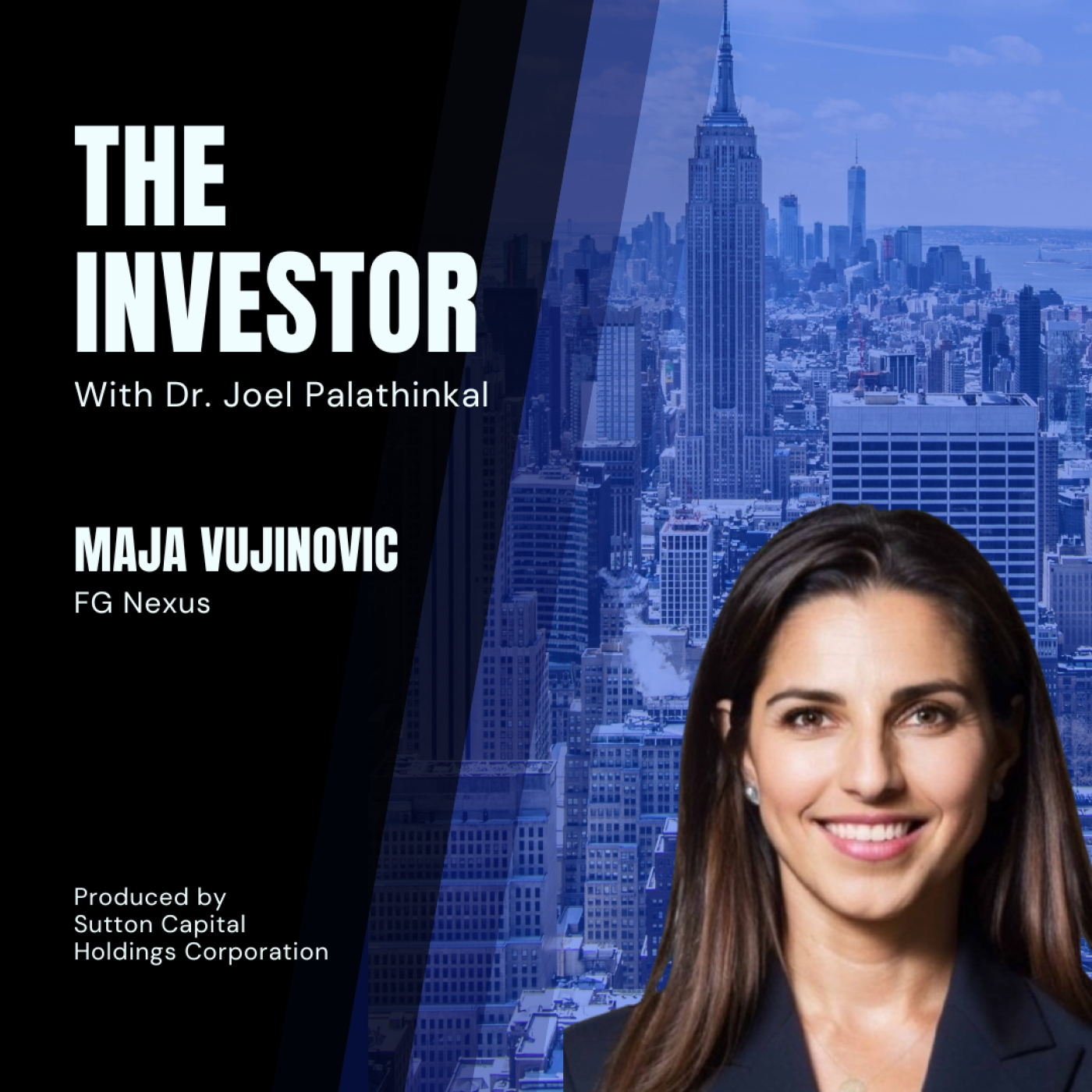
Welcome to the Investor, a podcast where I, Joel Palo Thinkle, your host, dives deep into the minds of the world's most influential institutional investors. In each episode, we sit down with an investor to hear about their journeys and how global markets are driving capital allocation. So join us on this journey as we explore these insights. Taking a moment here. All right. Yep. So we are live here. Really excited for my guest today. I've got Maja Vujnovic. She's the CEO of digital assets at FG Nexus, which is a.
- [00:43]
B
Let's try that again, Maya. Vienna, bitch. But okay, okay, cool.
- [00:47]
A
Sorry about that. Let me. Let me. Let me start over. So, Maya Vunovich. So we've got Maya Viunovich. My last name is worse, so I think yours is much more simpler. Mine, but she looked again. She's a CEO of digital assets at FG Nexus, which is a $200 million Ethereum treasury vehicle, acquiring, staking, and building around Ethereum. So, really excited about this. Prior to FG Nexus, she founded O Group, one of the earliest crypto and AI investment advisory firms, representing 4 billion in family office capital and deploying it into leading funds, scaling startups and shaping strategic, strategic blockchain initiatives. And she began her career building mobile payments and energy infrastructure across Africa and Latin America in the early 2000s, leading 700 million in asset development. So really excited. I think there's a lot of parallels with, you know, mobile first technologies and then moving to blockchain. And, you know, we have invested in space technology. Right. And when you get into space technology, there's no bank of America. Right. There's just really some type of rails that you can tap into that you can, you know, easily send things and. And send trade and send currency to people to exchange value. And I think we already have the rails and the infrastructure to possibly do that in space. But, you know, we'd love to hear your take on this, and, you know, we'd love to kind of start with just your career, your background and how you got into this space and how you got into the payment space. What was your, you know, your formal schooling and what did you think you got into? So maybe walk us through kind of early, you know, high school and what was going on in your mind as you started thinking about what you were going to major in college and take us through that journey.
- [02:36]
B
Yeah, I mean, you know, beginning of high school, I would say I just started speaking perfect English because my family moved to the U.S. you know, when I was 14. So, you know, not a lot was going on except trying to survive, which I think draws a parallel to a lot of things of what I'm doing today and what I've been able to do up to today. So look, I think for me, I always loved geopolitics from early days. I came from ex Yugoslavia originally. That was kind of by default. You know, politics and geopolitics were highly discussed. My parents are highly educated. And so that was a bit of a, you know, that was kind of natural. But I just to fast forward really, because what's more important, I think for a lot of people here is kind of how I recognize these strands. And you know, Joel, I never really, I didn't come through the corporate ladder. Right. I was never actually really interested. That was one thing that was quite obvious for me in college and then a bit later in law school. I have a law degree as well, and I never came through that corporate ladder where you spend kind of 10 years optimizing the internal politics and learning how to, you know, be political. I started in places that were extremely difficult. I came from a place, you know, that was a war zone, essentially went into the country that, you know, has such a strong constitution. I was fascinated with the differences of the two. And then I went off to Africa and Latin America, you know, where, you know, it's extremely messy. And if, if you're essentially in those places, if your product doesn't work, it's not anymore that you don't succeed and you start again. You just don't eat right.
- [04:21]
A
Sure.
- [04:22]
B
And so these are quite difficult places to make something happen. So back in 2000s, when I was building these mobile payments that you referred to earlier, and these payment rails across both of the continents, it was the real deployment with real carriers sometimes even carving out new licenses in order to compete with monopolies. Right before that, before even the fintech was kind of a buzzword, we were building these small applications, right. For people to have easier lives. So I think that kind of shaped and shaped a lot of what I did. And that's really later when we come to bitcoin. That's exactly why I realized this is something really interesting that I needed to double down on. From Africa and Latam, I went on to Fortune 100, right. I got hired into GE, was brought in, and I was brought in for completely different things. But I ended up really bringing them blockchain and ended up bringing Joe Lubin, where we the first ones in the world that launched a trade finance deal between a couple of banks and us. And so I ran that emerging Tech and blockchain inside that large org, which was extremely difficult at the time. And you learn the opposite skill there, right? You actually learn how to integrate the new system in the old ones, right, how to manage governance risk. So I went from emerging markets where there was no system whatsoever, there's no infrastructure, right? There's bunch of people coming in and selling different parts of a certain system, right? And then opposite into a really corporate America, right, where you integrate the new into the old and then you have to learn how to manage the governance, how to manage the risk, how to manage the compliance, you know, and how to make, you know, anything really inside a giant machine work. So today, just to bring it to today, I sit in this, in this middle, right, I'm building a institutional digital asset strategy. And really, as I've said, beginning of these debts, which was quite controversial early days, I said that all of these DATs will have to turn in some, some kind of a business. That's exactly what we're looking at at the moment, you know, and then Ethereum, you know, which on the other side is completely decentralized. And you know, it's, it was kind of created as a, as a form of, you know, saying we, we don't believe in centralization, we believe in decentralization. So it's quite interesting to sit in this middle at the moment and try to see how this develops.
- [07:01]
A
No, it's amazing. And I think you hit on a point that I think is important when you're trying to innovate. You know, they call it intrapreneurs, people that are trying to be entrepreneurs in big companies. But you know, another thing is, you know, I experienced this when I was working at tech for a public company. You know, there's like 10 layers of leadership just to, just to make a change. And then there's territorial drama as well, because maybe that old legacy technology, there's a bunch of engineers that was kind of their main project that they were working on. So there are some territorial things that you got to deal with. If you're integrating some new solution, you got to manage those people as well. And some of those people don't want change because it could impact their job stability. So trying to manage all those things on top of, you know, building on top of legacy technology that might be dated, you're dealing with that, I guess they call it technical debt, right? You've got all this debt from like the old rails and you're trying to catch up with new infrastructure, make sure you don't break anything as well, yeah, yeah, yeah. And you know, so tell me your, you know, and then you, you mentioned that you have a law degree as well. Right. So tell me some of the traits that a legal professional adds on to kind of understanding this technology. Because I'm assuming depending on which practice you focused on, obviously handling the regulatory challenges and the different people that are impacted and the compliance layers, especially when it comes to communication. Those are some things that I can think about, but would love to hear your insights on the legal background that's. That supported you as well.
- [08:39]
B
Yeah, I actually never practiced, never was interested in practicing. That's the biggest surprise to lots of people. I had zero interest of actually practicing law and going into the bank or a law firm to really learn any of this. I was very interested in tech and that's the reason why I went to Africa and Latam and then later focused on really just technology. But I do, I think it's very important what you bring up, which is analytical skills were extremely useful for me throughout and just an ability really to learn to read a contract. Right. Really quickly and understand where I need to look or who I need to ask certain questions. That for sure has been helpful that analytical skill feel. It really also helps in just broader aspect of technology. I mean, you've got the technology, you've got the engineers, right? But then you have to really make something happen. I remember early days of this technology when we brought in Joe Lubin and Vitalik and all of those executives said really don't understand a word that's coming out of their mouth. I mean, this is 2015, right. And so I realized that I have to really deploy analytical skills to understand what's the ultimate impact. How do I translate this technology into EBITDA for corporates and for leaders. Right. Because they have so many decisions to make throughout the day. There are so many things going on in a. I mean, General Electric was organization that had what, 380,000 people, right? I mean, that's a small country. And so you've got to. You've got to keep the machine running. And particularly at the time where technology was just coming at everybody and it's very hard to keep up when you're a large org. So I think using that analytical skill to pull everything together and think about it as a system versus in silos to what you referenced earlier about those engineers was extremely helpful because I found people within General Electric who were exceptionally smart, but they were working in their silos in blockchain. Right. Never thinking about that. This could, this needs to get out for our customers that we implemented, you know, that we need to implement it across the board. And so I think that ability is something that I think is going to be needed even more. It was very well needed then, but I think now in, in the age of AI, somebody who thinks more emotionally and the systems thinking is going to become even more important.
- [11:20]
A
Yeah, and I mean, your, your role at ge, you were the CIO of emerging tech. So I can imagine that's a really exciting role because you're on the forefront of innovation, you get to use some of the resources and you're backed by ge and it sounds like you did some really great pilots with JP Morgan, State Street. So really looking at how you can support financial markets, especially with IoT and these AI agents, where do you see, you know, because obviously now you're working on a new venture, but where do you see that heading from when you were working on agents? Now that we've got open claw and a lot of innovations now, I mean, we, we see innovations in the matter of three weeks in terms of kind of new ways to use, you know, Claude and chat GPT. So we run an accelerator for fund managers. And one of the things that we, you know, we have instructors teach in our educational platform is how do you use AI to build financial models? And one of the people I was speaking with, he gave a lecture on how to build a financial model and he's like, joel, it's completely changed. I don't think you can use the lecture from three weeks ago. So with that level of velocity and change and how people are using these tools and new tools coming out, where do you think that the agents are heading, especially in The Enterprise and IoT?
- [12:42]
B
Yeah, I think. By the way, Joel, I think this question is worthy of a full podcast and I'll touch on just a few things. Why I think it's really important because you just brought up two, three things that people kind of just. Oh, yeah, that's true, but it's extremely important. What you just said is things are moving so fast you can't work anymore how you worked a year ago. You really can't. In a certain industries, maybe different. There are certain sales cycles you can't do anything about, but are right now how you approach your business and how you pivot and, you know, how you change, how you speak to your team, I think needs to be completely changed and how people approach the tasks too, because early days. By the way, another thing you brought up, I think it's really funny how you have A lot of people come on podcasts and they present this perfection. How they had a perfect road and perfect plan where they're going to go from high school and college and how all is going to end up. And some people may, but I just want to tell you that I had zero idea. I was extremely curious and I am extremely resilient. And so what for me was I saw this tech. I already saw potentials of bitcoin when I read the bitcoin white paper while I was in Africa. And every time I talked to my friends in the west, they couldn't really compute because to them they had a visa, they had cash app, they had whatever they needed to have and it was fine. But I understood it just given my personal background and my professional background. It clicked with me that this could potentially be some kind of a form of payment in the future. And so when I was at ge, I thought, whoa, if these smart contracts are as smart as Lubin is telling me, right? And if everybody around me, because I was already part of a really early, you know, group of people who were looking at this deeply, I thought this could really change everything we do, including the IOT and, you know, everything else. And I just became curious. And I was allowed that by people at GE to be curious and to really nudge certain business lines and to say, hey, look, this is how you will change. Maybe not in the next two years, but in the next five to seven to 10 years, 100%. And one of them to which you're hitting on is AI agents. I mean, early days I saw a potential of, because at the time it was an AI. It's really, it was machine learning because it's mostly industrial. And I saw a potential of using the smart contracts with machine learning on devices on the edge. And I was obsessed with this. There weren't many people in my circles that were talking about it. It was mostly large companies like Siemens and George Microsoft, Amazon that were really thinking about these things and doing something about it. But that's really where I thought it would be game changer for customers because you could compute the data at the edge and never bring it into the central pools of data and have the customers play directly and access that through digital twin. That's where I had the thesis early days, is that if humans never use crypto, really, AI is going to use it. And what's really amazing to see is now a of a lot of these influencers on Twitter are saying the same thing. But it's only begun last month or two, right? Sure. And so to summarize, kind of, and then to give you some examples, I would say, like early days, it's. Some organizations didn't get it for sure. Some did, but it wasn't their priority. Some just didn't even care because it wasn't their priority. So back then, if you said blockchain, it was either seen very serious by CyberSecurity, right. And 3D, 3D guys, that's, that's who was looking at blockchain really seriously, or it just sounded like bitcoin. And bitcoin in that era was just something that you do for porn and drugs and things like that. Right. Where in reality, as you and I know, that's the most traceable tool you can use. Right. And so then it was privacy and confidentiality that was a big issue. Because, you know, every time I talk to customers about this, right. I mean, or talk to my boss about it, they would say, well, hold on a second, like, who, who owns this blockchain? Right. Where is this going to sit? Like, we need to, we need to make sure that you have some corporate responsibility on this. And blockchains were very different at the time. Today the use cases are revenue. They're not anymore R and D, Right. Stablecoins are doing real settlement volume globally on FX trades and everything else. Tokenization, I would say, is not anymore a science project. It's becoming a bit of a product category, right. And so, so I think when you look at a regulatory frameworks, you look at Mica, you look at uae, you look at Singapore, now you're looking at here, right? Hopefully we get this, you know, Clarity act passed and that's where you're going to start to get, you know, some real things moving. In terms of AI and specifics on that, I would say you, if you look at Microsoft Copilot Studio, the style, the agents that they have, you know, I mean, those are being deployed to handle support today, right. And they're handling internal workflows today. On the blockchain side, if you wanted to kind of put it together, it's not, it's again, it's a little bit further away, but it's still not anymore a science project. Right. I mean, AI agents, they need three things to have a commerce in a safe way. They need an identity, they need permission and they need a settlement. Right. And for all of that, blockchains are strong at verifying the settlement. They are programmable constraints and they create these audit trails that are native. And so this is where it makes that kind of A marriage, a perfect marriage between AI and blockchain. So I think with, I'm happy to make that prediction that I think within next two to three years, agents move from the single bot into what I've been calling like agent these, agent fleets. Right. On a blockchain. And you'll have a procurement agent, you will have a treasury agent, you will have a compliance agent. Of course, you will have all of that with the human approval. Okay, that's, that's particularly at certain key points.
- [19:28]
A
Yeah.
- [19:28]
B
And then, and then you're going to get these agentic wallets and machine to machine payments that I originally thought about in 2017, right when I was looking at this. And agents will hold these, these wallets. Right. With hard limits. And you have to do that, which, which is I think already happening. I think I saw at USDC Circle post something around this. You could spend X amount of dollars, Right. With this X vendor, only for the SKUs. Right. And so that becomes that bridge between AI decision making and the real economic action. And then the last one I would say to you as an example is tokenization kind of becomes this interface layer, not because everything suddenly becomes a token, but because these tokenized instruments are easier for software tokens to hold and they're easier for software to transfer and then reconcile automatically. So I think all of those things are going to happen with, you know, they're already slowly happening, but I think next year is when you start to see that exponential growth.
- [20:36]
A
No, it's really helpful and I think you're right. I mean, I think even with like authentication, when you're just logging into a platform, that's a token. Right. It's just a token that's passive, verifies that you, you know, you've signed in with the right password. So I think you have a good point. It's just that language, it's that machine language that translates effectively.
- [20:56]
B
That's right.
- [20:57]
A
So you had, you had an amazing experience at GE and you've created a lot of innovation with the financial industry. So tell me what happened after that? So after you worked at ge, then what was kind of the next step?
- [21:11]
B
I mean, I was already, you know, at the time there was no kind of any of these agencies really looking at anybody in crypto. Right. People forget about this. But it was a wild west. And so there were just a lot of smart people looking at this. There were a lot of people that left the banks and hedge funds and a doctor. I met a lot of doctors. And interestingly now I see more and more Surgeons in crypto, which is really interesting again, we should stop calling it kind of crypto. It's really digital assets. Sure. But it was, it was, you know, I was part of these really interesting super curious, smart intellectuals who were kind of curious about how these smart contracts may decentralize and may create more, you know, abilities for people to do different things. And so I left and started my own company. I already kept, you know, I was already an investor in a number of different projects and funds and I thought, you know, this makes, you know, all the sense in the world to be part of this because I couldn't see anything else. I really, the. When you start to understand how this technology marries into AI and how it impacts everything that we're going to live and you know, we're going to start to really, really see in the next two to three years. It to me was a no brainer to really do that. And so I went and ended up doing lots of work with different family offices, governments around the world and helping them really decipher because again, there is a lot of BS in the industry too. Just like in, just like in AI, right? Just like in any, any new industry. And a lot of these people really wanted to understand could this really impact our business in a positive or a negative way? Should they be, you know, using tether? Should they be using usdc? Like, should I be, what should I be building on? Solana vs Ethereum? Should they hold Bitcoin in their balance sheet? They own point of sales, let's say across Latin America or they own all the aviation? Do they use blockchain for their parts? It was all of these things that they would get a lot of consultants to pitch them, but they needed a second point of view on that. I wasn't biased. I was an investor across all the L1s and I really just needed to see what's going to become a reality because a lot of these L1s have raised based on some kind of a, you know, I don't, I don't know, false promise or some kind of a dream. But it really wasn't going anywhere because it needed to be rooted in the real problems. I mean it got, it got to a point where I would interview projects and I would say can you pitch me everything you did without using a word blockchain? Right. Because, because everybody was raising just on a, on the, on the word blockchain. Right. So, so yeah, it just, and from, and then from O Group just recently I partnered with somebody who I've known for a Very long time. We reverse merged into a company and we are doing the treasury eth. Treasury now.
- [24:21]
A
That's exciting. So, you know, with our, you know, platform that we've built, you know, it's mainly just two and 20 funds. And then obviously, you know, a lot of people, what they do is they build a track record with a syndicate. Right. So can you unpack the treasury vehicle and some of the use cases and, and also how we educate family offices on, you know, the, the Ethereum treasury vehicle too. Because to your point, right, there's a lot of family offices that get pitched on different deals, different opportunities. I think the families are looking for probably someone who can be an expert and give them support on. I think two things, how they can implement this in their business. Right. If they run a encryption company, right, Their family office, their wealth was from cyber and encryption. Hey, how can they, how can they benefit from using some of these, you know, layers and protocols? And then the other thing is just asset allocation. It's like, look, they've put in 40% in public markets, they put in 10% in real estate and 10% in venture. Right. So they have a little bit of a carve out of a smaller percentage left. Should they put some of that into another asset just for their portfolio construction? Right. So would love to kind of hear a little more on just kind of what the treasury application is and how that's structured and then obviously how we, how, how, you know, that's kind of been messaged to family offices.
- [25:56]
B
Yeah, it's a, it's a great question and I think one that a lot of people, I would say not, maybe it's a wrong word, struggle with, but they definitely think about because they'll, you know, a lot of people have said, hey, if I can hold, you know, if I, if I should, if I could just hold Ethereum, why do I need these treasury vehicles? Yes, yes, absolutely. But you know, how many people don't want to do that on their own? Sure. That's the thing that I actually, again, I don't sit in. This is also very, something very important. I don't sit on a, you know, on this train where you have to have these vehicles that just hold an asset and that's all they do. Right. I've been quite vocal about that. And it's part of the reason why we partnered with guys from a previous company is because they're tradified guys, they know how to build businesses. And my thought in the beginning was this is a very interesting opportunity in time right now. With our reg, with the current administration that Saylor has unlocked, there is an interesting opportunity to hold an asset. But we have to turn this into a business and we have to move into a business and that's exactly what we're doing now. Again, Joel, a lot of people don't believe this thesis. They will not do it. And they're just holding and waiting for that to go up. And the reason why, number one reason why we chose Ethereum is because it is a settlement layer where a lot of the digital finance already lives. That's not my opinion, that's a fact. A lot of defi is on Ethereum. Stable coins. Majority of stable coins are in Ethereum. Right. Collateral lives on Ethereum. Financial logic executes on Ethereum. Right. And so. So long term bet is that a lot of these institutions that have adopted Ethereum will be building on Ethereum and the price will grow. Yes, but with a caveat again, I said we have to build a business and that is what we're doing. And now comes the second part of answering your question. Some family offices. Absolutely, you're right. Will say, hey, like I will, you know, I will just buy Ethereum. And I mean it's great. But then you have to stake they
- [28:16]
A
just set up like a Coinbase account or something like that.
- [28:19]
B
Yeah. And they do that. They set up a Coinbase account or they go buy ETF or whatever that they choose. Right. But there are people that I again, I've been surprised that want to bet on certain management going forward. Particularly if you're going to use that asset and build something different. Right, sure. And so I think this is where we come into a bit of an interesting. Particularly now with the markets is down, everybody looks at these treasuries and say, okay, well they're all doing poorly. That's true. Because they've all been caught with their pants down in a sense. Right. Except Bitmi. I mean microstrategy is a completely different thing. I would say if you look at the second after that here in this country. Right. Is bit mine. And they were just in time before the Fed made the cut, Joel. So they were able to use their ATM to do what they did and go into market and then. Right. Just turn on the machine where everybody else coming after that, I mean we all know the market just went down and stayed down. Right. And so now they're all in a little bit of a pickle to say either we pivot fast or we just sit there and we wait for this asset to go further. Where Right. Now it's that period of time where you're going to start to see the managements either pivot or they're going to just kind of choose to sit there and wait for the asset to go up. And so I would say for those that are looking for active management and for the thesis that I said, which is that we have to build a company, I would encourage them to talk to different treasuries and say, okay, what do you want to build? Where are you going with this? What comes after this? Right. Reality is crypto prices will come back up, right? But again, that to me is not an answer for these companies. They will have to metamorphosize into something else. And so I would say a lot of family offices would like for me to guess the price, but unfortunately the more time moves forward and the more institutions are involved, the harder it is to guess the price. And I was just recently on CNBC talking about this because right now, right, crypto is really dominated by lots of institutions and there is a lot of manipulation and that's a lot harder to guess where things are going to end up. Right. Where before it was mostly retail and it was just kind of easier to guess those things. Now it gets a little bit harder with a lot of geopolitical movement as well. And so I would say if you're looking for a long term builder of business and you're never going to hold that asset on your own and you're never going to, you know, do it yourself, I would urge for you to talk to different, you know, management teams and see kind of what you like, where they're going next because they will have to change into something else.
- [31:20]
A
And you mentioned staking earlier. So can you just for the audience unpack how staking works and some of the best use cases that they use taking for, especially when it comes to Ethereum.
- [31:32]
B
Yeah, sure. So by the way, that's another question that a lot of these family offices say, okay, sure, I can do it or I can just pay somebody else to do it. Right. So what is staking in plain English? When Ethereum moved to proof of stake in 2022, it really changed how its original network was secured. Okay, instead of miners burning electricity like in Bitcoin, Right. Ethereum validators, they lock up eth as a collateral. That locked eth is called staked or it's staked for something. Right, sure. And I would say think of it like this. You lock your eth into a network and you help the validators transact. You have to you help validate transactions and secure the, the actual chain and in return the protocol pays your rewards. So it's not interest, it's not an interest for a company. It's a protocol level kind of compensation for securing the system.
- [32:45]
A
Sure.
- [32:45]
B
And that, that's the distinction that actually matters.
- [32:49]
A
Got it. And then the, the main difference with the treasury versus the just kind of holding your currencies and coinbase, I guess is just kind of building that relationship with the management that's kind of managing the treasury and also kind of getting advice on how to do the staking and stuff like that too.
- [33:08]
B
Yeah. Oh yeah. And you asked some of the examples on best use cases for staking. That's right. Okay. There are four kind of, I would say serious ones. Okay. There, there are others. But treasury yield on your strategic ETH exposure. So if you already believe in holding ETH as an infrastructure exposure, as that asset exposure. Right. Staking converts your idle ETH into a productive asset. So instead of holding a non yielding digital commodity, you're participating in network economics and you're getting rewarded for it. Right?
- [33:45]
A
Yeah.
- [33:45]
B
The second one is institutional balance sheet participation. Public companies or funds, holding eth can essentially enhance their return through staking rather than letting it sit passively. And it's similar how these institutions and securities are optimizing maybe like idle cash. Right. And then validator businesses, some institutions choose not only to stake, but they build validator infrastructure.
- [34:14]
A
Right.
- [34:14]
B
Some people have the validator infrastructure. That's an operating business by the way. You have to run the nodes, you have to manage the uptime, you have to optimize MEV and etc. Etc. I think families with cybersecurity or infrastructure backgrounds should definitely look at this angle and you know, they do like looking at the singles because it's very operational and it's not speculative. Right. Lets them play and really turn that asset into something else. Then you've got the collateral in the defi integration. And I'll just bring up like two advanced cases because you, that's still developing and that's, you know, that, that clarity act, you know, and, and a market structure bill should contain some of the defi rules and etc. You have the stake eth, especially liquid staking tokens. They can be used as a collateral in a defi. And what that means is that you know, the capital can earn this staking yield but then simultaneously what it earns the staking yield, it can be used in lending or in liquidity strategies in defi. And this is a Little bit more complex. Right. And it definitely has a smart contract risk, which I always tell people, because it is extremely concentrated still. We still haven't reached the point where it's extremely decentralized and it's not concentrated, but it is part of why Ethereum capital is really considered programmable is because you could be doing things like this. Right. It is not some, it is not something I would recommend to beginners or if you're a beginner, then you definitely need to go with Coinbase or Galaxies of the world, you know, and similar. But the opportunities are real. So again with all of that, there are real risks in all of this and you know, even for our own team, I have been kind of staying away from some of these things because it is exceptionally risky, particularly for publicly traded vehicle.
- [36:14]
A
Sure. So it's been amazing to see that you've been speaking at a lot of these top tier conferences and it sounds like you're really involved in the family office community. What are some things that you probably were surprised by when, you know, spending time with a lot of these family offices? I think a big thing that families think about is their succession planning. So, you know, their kids may not even be interested in the business that their parents were in. Right. I mean, you're a family that has a successful data center business, but the kids are interested in, in other things. So that's something that I, I think about and I hear about a lot, but maybe just some interesting learnings that you had talking to all these different families. And I know they always say one family office is one family office, so everybody has their own different nuances and challenges and goals that they have. But would love to hear from you because you're really, really involved in the community.
- [37:12]
B
Yeah. Interestingly with older generation is succession anxiety. I think they really think about the money they have, of course, but they definitely think more seriously about continuity. And it's not in any dramatic way. Right. But it is very quiet and very strategic. Although what I'm noticing is a very strong tension between the older generation and the new. The new generation just wants to be in AI in space that you mentioned in longevity in digital assets, crypto, you know, if you tell them about equities and real estate and all that, they're like, what? That's very surprising. Almost none of them want to be doing that. They want to be there in climate or in, like I said, AI, you know, all the cool buzzwords. That's extremely surprising, but at the same time not surprising. Right. And you know, when I look at public markets. Now that I'm, that I'm learning in this space, they think of these quarters. We are kind of forced to think a little bit further than quarters. I think that's going to change. Interestingly also with AI, that's a who different conversation. Venture is kind of like seven to 10 years, but that I feel like these venture funds, by the way, are becoming private equity firms, some of the big ones. But family offices are really thinking in these generations. And I think you're going to start to see a lot more tension between the younger and this inheritance of wealth and the older of how they're building it. And I think some of the younger ones that I meet unfortunately don't have a lot of experience operating experience in building. And so they're just, they have almost a limited amount of capital and they're just seeding everywhere. They're just throwing money everywhere. And some perhaps can afford it. Some, I don't think so at all. Because as we, as we've said, things change so, so fast that I feel like everybody, including my neighbor, is starting an AI company. Now. If you're going to fund everybody in this building. Right. You're going to run out of cash really fast. And so it's, it's really kind of interesting to see that dynamic play out.
- [39:40]
A
Yeah. One thing I've been seeing is some of these family offices, they host annual off sites. You know, they essentially have a family board meeting. And you know, they run, you know, they run the, the meeting almost as if the, the kids are employees. And, you know, they need to kind of understand the family business, understand their responsibilities. But I think part of it is just getting everybody aligned. And look, if you don't want to be in the same family business, that's okay. What is your plan? And you know, is there some type of distribution that happens? What's really interesting, I read this book called Die with Zero. It was really interesting. It was written by a hedge fund manager. And he talks about how, you know, kids that get their distributions that are given their inheritance, you know, the best time to receive it is in your 30s. Right. You don't want to receive your inheritance when you're 80 years old. Right. You're not really going to enjoy it. So if you can kind of give those distributions in a timely manner where they can use it the most. Right. They're starting their family and they can kind of spend that money to kind of obviously contribute to the family and, and maybe start a business, it's going to be better to do that. And be more meaningful versus kind of getting a distribution when you're, when you're on the edge of retirement and your parents already gone. Right. And it triggers much later on. So just kind of things like that in terms of timing and just understanding if the kids don't want to be in the family business, like what. What are they going to focus on? That'd be helpful to know, I feel. But what are your thoughts on that?
- [41:14]
B
It's a real. Yeah, it's a real conversation that is, that I know specifically is happening across family offices. Absolutely.
- [41:26]
A
Yeah, yeah. And then as far as portfolio construction, how are families? You know, so one thing that I've been seeing is multifamily offices. They usually advise a bunch of different families. Right. Some of these families come from the tech space. You know, they had a big exit and now they're just trying to manage their family office. So they're advising a certain level of exposure to two blockchain technologies to, to Ethereum and some of these digital currencies. Do you see that, you know, increasing over the years and just kind of being a heavier allocation across the other assets? Right. Across stocks, bonds, commodities, real estate. Do you see that kind of changing over time?
- [42:15]
B
Do I see digital assets, you mean increasingly being, what's allocations.
- [42:21]
A
So percentage of allocations to digital assets?
- [42:25]
B
Yeah, yeah.
- [42:26]
A
Against public markets and you know, you know, private alternatives and, and also real estate.
- [42:36]
B
I mean, that's a broad question. I think that digital assets move into a bit of an infrastructure play.
- [42:46]
A
Okay.
- [42:47]
B
And so you're not necessarily going to be investing in something that is just blockchain, but maybe you'll invest in an AI play that has a blockchain backend or vice versa. Maybe you'll invest in a payments tool that has all of the technologies in the back. So I think the digital assets in general is an asset class that is maturing really, really fast. We've seen it. I mean you see across the banks, everybody's hiring for head of digital assets. Right. Five years ago, most multifamily office, you know, they kind of treated a digital asset as a periphery speculative, you know, maybe, oh, I'll give it to my, you know, 32 year old son right now it's infra. Now it's kind of like, hold on, this is infrastructure. This is a backbone of the financial system in many places. So this is definitely moved to a lot larger exposure. And so, you know, in terms of real estate, I don't know, I don't know how that plays out. I do know that you know, lots of family offices that I know do own a lot of real estate, but I don't know how that increases. Again, I think every part of our world will be impacted by digital assets, technology and AI. So if I look at things that are being optimized, particularly like in real estate and AI, like it just, it's a no brainer. So I, I will be, it will be very curious to see how these DATs and other digital asset companies have gone public, how they grow over time and how people are going to start incorporating them into their portfolio. But as this class becomes more, like I said, infrastructure based and suddenly you're going to be investing companies that are going to have this in a back end. And I think this is a natural growth, right? And people are going to be looking at it more and more for sure.
- [44:58]
A
And then I think on the consumer side, obviously we've seen a lot of consumer digital apps that are built on top of Ethereum, right? And I think some of the applications that could be interesting is maybe shopping. So like maybe you have like some agents and kind of help you in the shopping workflow. But you made an interesting, but you made an interesting point earlier where there's a fleet of agents and I think the human is still involved in the orchestration. So still when you're using chat GPT, the human is still kind of orchestrating kind of what they wanted to shape. They wanted, they want to shape it to kind of become something. So that human, you know, to your point, is still orchestrating the, the use case. But then they've got a fleet of agents and they've got a bunch of different prompts that are kind of, you know, getting to that goal. And it might not be correct or you know, accurate in the beginning but you know, it's a refining process. So do you feel the same, you know, when you're kind of thinking about prompts and a human kind of orchestrating it, do you kind of see that same kind of parallel with, with agents and kind of these fleets of agents kind of having a human kind of orchestrating them?
- [46:09]
B
Yeah, I do, I do. Let me address, you know, you, you, I think you, you said it right now, all of this in the last couple weeks. I, I'm pretty sure you saw all this buzz on Twitter, right? Like everybody, oh, there's AI is taking
- [46:25]
A
over our lives, open claw and all that stuff.
- [46:27]
B
Yeah, yeah, yeah, it was, it was crazy. I mean to this day where I'm like, wow, you know, you've got to take, you got to Go outside and take a little bit of a walk. Right. I mean, all of these things are orchestrated by people, as you just said.
- [46:39]
A
Right.
- [46:40]
B
So we are moving into a world where human slowly disappears. Even though I said that, I'm saying now the opposite. It is interesting though. We are moving into a world where human does become an orchestrator. So they disappear kind of from heavy interaction, but they become this orchestrator. So I think you will see more and more of these use cases where you're going to prompt your agent, as you said, to book your trip and where are you going to eat and what you're going to do. It's going to do it on its own, but it needs your prompting. You will have these specialized agents, though, and maybe that's the fleet of agents that, that I refer, refer to, which is like you will have a price discovery agent in the back. Right. That will just do that. And then you're going to have somebody that's going to quality review something. Right. I actually talked about this last night, last night with my husband. Like how, you know, that would be so cool to, as you're looking for real estate, right? To say, hey, look, like I want it to be turned to southeast. I wanted to have this between the floor 10 and 23. You know, like it needs to just be working in a background selecting these versus just giving you the limited prompts that you have right now in Zillow, right?
- [48:09]
A
Sure.
- [48:09]
B
Then you're going to have the ones that are going to do payment and settlements. And so in none of these, you will have to, by the way, micromanage. They will all work in tandem to execute on something that you need. Right. You will just have to define the constraints. And those are going to be, that's my budget. Right. That's my brand preference. That's my xyz. Right. Whatever you want. And then the fleet executes within those guardrails. And you're still a principal, you're the operator. Right. As we said. So.
- [48:41]
A
Sure.
- [48:41]
B
I think, I think when I look at this, I think about, you know, in the next six months, like we're building, we're, we're. I'm personally and spending a lot of time understanding how you build these, how to automate a lot of my workflow. You know, I use Claude for that only. And, and I think about, you know, wow, I'm struggling here to learn and I'm learning so much. But in the next six months, you know, somebody's going to come up with some of these tools where I'll just Be able to click on it and it will be done. Right?
- [49:13]
A
Yeah.
- [49:14]
B
And so I think things are changing so fast that I would encourage everybody to kind of look at things. But I also, I would also say next couple of months, if you don't have time, all of these things are coming. Humans are not going to lose control. They will kind of shift from execution to oversight, heavy oversight I think, because cyber is going to become an issue, identity theft is going to become an issue. Right. And that will be a big transition because humans need to learn a lot of these tools and we need to learn very strong skill building and prompting and everything else.
- [49:50]
A
Sure. And then look, you mentioned a point earlier about PE becoming VC or just kind of adopting.
- [49:57]
B
No vc. VC becoming pe.
- [50:00]
A
What did I say? PE becoming vc.
- [50:02]
B
Yeah.
- [50:03]
A
Okay, yeah, I'm mixed up. But yeah. So VC is becoming pe. I mean the way I look at it, you know, PE is essentially the bigger umbrella and then there's early stage, there's growth equity and there's buyout. But I wanted to kind of list off a couple bullets and hear your reaction. Right. So the, the venture funds are creating these continuation funds. So like lightspeed. In 2024 they raised a billion dollars for a continuation fund to hold on to 10 of its mature high performing tech portfolio companies. And this allows the VC to behave like a PE firm. Right. Holding these assets for longer rather than forcing an immediate exit. Because what are we trying to do? We're trying to, if we have a closed ended fund, it's a seven year fund. A lot of times we have to sell to deliver liquidity and showcase. Dpi, General Catalyst, they set up as a registered investment advisor so they could hold more of those non qualifying assets mirroring essentially the flexibility of PE firms. And finally Sequoia, they've got the evergreen structure to hold on to public securities. Once these companies go public, they can kind of hold them longer with some of those PE charitable, the restricts and then Tiger Global Softbank. You know, a lot of these people have built the bridges between VC and private equity. Just investing large amounts into startups that have already gone through early stage and kind of getting them into the growth equity rounds. Right. So just wanted to hear your reaction to a lot of these bigger franchises. And then I think it was industry ventures. There was actually a buyout of a VC platform as well. Right. So yeah, I wanted to hear your thoughts on that in terms of actual venture funds getting bought out.
- [51:42]
B
Yeah, I've been thinking about that a lot actually and I think you're going to start to see that some people are just, some people in VC game are really tired and. Right. Because a lot of these guys who have raised, you know, fifty million dollar fund, 75, even a hundred, right, they have to feed the family, they have to survive. They have to, right? And if they don't hit that, one or two unicorns, right, is really hard. And you mentioned lightspeed earlier, raising that large continuous continuation vehicle. That's the trend that I was talking about. That's the broader structural shift that I. This is why I mentioned it. Because these VCs used to be for sellers because of the fun timelines, right? And now they're saying, hey, we're selling our best asset just because, you know, the calendar says so. Why are we selling our best asset just because a calendar says so, right? Like now they're kind of a gatekeepers, right? I mean, look at Stripe right now. They're saying, oh, hold on a second. You want, you want Stripe? Well, you have to invest in us, right?
- [52:49]
A
Yeah, absolutely.
- [52:51]
B
And that's why also interestingly, I think there is going to be this game between a very strong companies who have a lot of revenue that are going to be playing this game with VC against everybody else to say, well, we won't go ipo, but we'll just keep raising our rounds, right? And that's a little bit of that PE behavior. And these continuation funds are really powerful because it provides liquidity to early LPs. I mean it's. You know, Joel, I look at this and I go, okay, this is MicroStrategy just for VC. You layer these products and you just keep exiting the early investors, right? You provide liquidity for the early LPs, then you hold the high performing asset longer, then you compound the value, you know, like buyout funds do. That's a huge mindset shift, right, for what's happening. And I think it's a really interesting game that I kind of said about two, three months ago. I started to notice when I started to speak to some of the large funds and they keep raising and I'm like, hold on a second. Andreessen. Sequoia, right? I mean, a lot of them, they're just becoming large PE firms. I mean, Andreessen, you could argue is almost like a media platform more than anything else, you know. So I think this is very, very interesting. The risk, be honest, there is a bit of a risk when VCs kind of try to become PEs. There are two risks that I think about. You're drifting away from the style right. So LPs sign for a venture risk return, not this long duration, somewhat of a buyout exposure. And then you've got the valuation issue. Holding these assets longer means you must defend the valuation through multiple cycles.
- [54:57]
A
PE is also a lot more operational intensive too. Right. You're coming in, you're replacing the, you're replacing the CEO. You're going in and really, you know, operating the company and coming in strategically and, and create it's value creation. Right? Once you get into pe, it's value creation where vc, it's kind of early stage investing and outsized returns. But you're not really, you know, rolling up your sleeves as much. It might help with intros to kind of the next round of funding, but you're not rolling up your sleeves and kind of coming in and cutting management. But you know, an interesting parallel. There was a, there was someone that was on my podcast last week, what they do. This is the first time I've seen this. They come in to people that don't want to run their VC shop anymore. It's like, look, you're 55 years old, you just don't want to do this anymore, right? You're, you're on, you, you got maybe a year left, you've already deployed all your capital and it's like year four out of a seven year fund, you're already fully deployed. You just don't want to do this anymore. You don't want to send all the investor updates, you don't want to track all of the, you know, the markups. So this firm will come in, it's a consultancy firm, they'll come in and actually just run the fund for you. And you know, you just kind of don't do it anymore. And you know, there's some people that just don't have it in them anymore. And if you think about it, when you think about these mom and pop pizzerias, right, these mom and pop laundromats, the, the, those people are retiring, they just don't want to do it anymore. Their kids have no interest in taking over, so what do they do? PE comes in, they'll buy a roll up of those. So those things. So for me it was really interesting to see Goldman buyout industry ventures, right? And I think there's going to be a lot more activity where maybe there's an entire platform strategically where it just gets integrated into Goldman and essentially it provides a multiplier effect, you know, to Goldman on top of the 500 billion that they're already managing across all Those assets, you know.
- [56:48]
B
Yeah, for sure. I think it's really interesting. I've been actually really curious about this model and how it, how it turns out, because I know a lot of people that are really tired of running that.
- [56:58]
A
Yeah, well, I know we're at time, but you know, Maya, one thing I always ask every guest at the end of this episode is just one piece of advice. It could be from a relative, it could be from a past, you know, manager that you reported to. Just any piece of wisdom that you have to share with us.
- [57:17]
B
It's a really good one. I would take a couple of things, you know, relationships and playing a long term game with your relationships and staying genuine, really. When you want something, when you need something, when you don't need something, don't call on people, don't waste people's time. Sure. Be straightforward. I know that sometimes it pays a lot more to be political, but I would say choose the relationships, choose project and, you know, reputation that compounds and that, that you really can move the needle to some extent because our world is moving fast. But guess what? In the next year or two, it will move even faster. And compounding is what will give you an authenticity and compounding will give you that unfair advantage. Sometimes people don't like the straightforwardness and don't like the truth. But guess what? Every single one of them comes back two months, two weeks, two years later and says, you know, I could actually trust you. There's some, there is truth here. I want to work with you. Those are things that are really important, particularly with the world that everywhere it seems like everybody has an idea, everybody has capital, everybody has connections. Right. You really. Delivering and being authentic and building a long term value is what's really important.
- [58:51]
A
I totally agree. Well, really appreciate your time. You know, learned a lot in a short amount of time. And thanks for all that you do for the community and, you know, all the education and support that you do for the, the investors and the institutions.
- [59:07]
B
Thank you very much, Joe, for having me on.
- [59:09]
A
Thank you. Take care. Have a great one.
- [59:11]
B
All right, thanks. Bye. Bye. Sam.