Loading summary
Transcript86 lines
- [00:03]
A
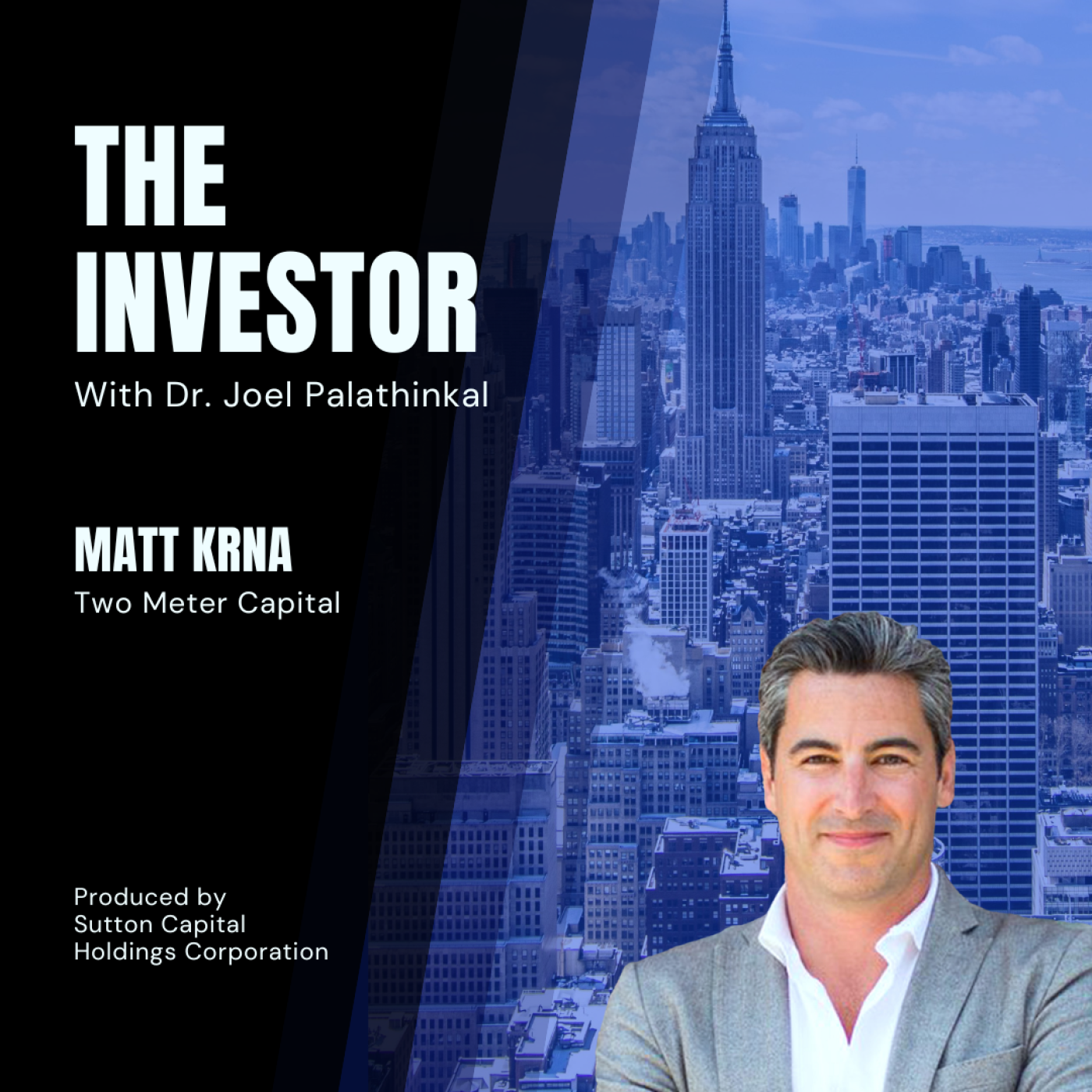
Welcome to the Investor, a podcast where I, Joel Palo Thinkle, your host, dives deep into the minds of the world's most influential institutional investors. In each episode, we sit down with an investor to hear about their journeys and how global markets are driving capital allocation. So join us on this journey as we explore these insights. Yeah, well. Hey, Matt, excited to have you on the pod. I just want to introduce everybody to Matt Krana. He is at two Meter Capital. Matt is a managing partner at two Meter Capital, which is a manager of growth stage and venture portfolios. At two Meter Capital, they take on the challenging task of bringing already deployed capital to fruition via hands on monitoring, follow on financing assessment, exit identification and end to end services management. That was a tongue twister, but I got through it. I think I covered it all. And growth stage technology investors and venture capitalists. For 20 years, he's an OG like me. He's been in New York, been in Silicon Valley, so hopefully he can share with me what he's allowed to share. He's got over 20 years of experience in the investment management space, track record of deal execution, capital returns, strategic value add, and direct experience as an investor and board director, observer at an array of companies in the online space. So, Matt, welcome to the show.
- [01:31]
B
Thank you for having me.
- [01:33]
A
Well, let's, let's go way back. I mean, tell me where you went to school, where you grew up, you know, how that kind of formed your thesis on life. And you know, maybe some of the influences it could be family members, could be mentors. There's a handful of people that I know that knew about private equity when they were in like middle school and high school. I mean, but you know, I mean, I'm in midtown Manhattan, so a lot of people, you know, come up from that pedigree and there's that influence there from family members, you know, especially, you know, even, even, you know, as you see different ethnic communities, their family has already built a family office or career on Wall Street. So it's kind of a natural early career step that you learn about in, in elementary school, you know. But let's talk about you, you know, where you grew up, you know, kind of some of those influences that, that push you into this industry. And, and you, look, you, I mean, you survived, you still stayed in the industry.
- [02:30]
B
Exactly.
- [02:31]
A
There.
- [02:32]
B
Yeah. I was definitely not one of those guys or gals that grew up around finance or really, you know, business in any way. I was born in Queens, New York and lived in the New York City area for the first 12 years of my life. Moved down to Florida after that. My, my parents had a small direct marketing business. Small as, you know, as defined as like a handful of folks. And so I never really understood their business completely until I was much older and in a professional life. And so my, I went to school at Harvard for my undergrad. And it was there where I first got some kind of exposure to what finance even was. My goal was to be a doctor. So when I was a kid, I sat in on surgeries before things got stricter. But my family friends would bring me in to observe surgeries, even scrubbing sometimes, which I should not have been doing at all. But that, that was the, that was the goal. I always have a deep interest in science.
- [03:44]
A
Yeah, so you studied like pre med, which is usually like chemistry.
- [03:49]
B
I was, I was pre med for about a semester, and Chem 10 just totally kicked my butt. And yeah, I was like, man, this is just, you know, some of the folks around me were, you know, just frankly, way smarter and, and wanted that pathway way more. And so, yeah, I, I, you know, during my second year of school, I kind of re. Reoriented myself. I was able to finagle my way into summer internship at dlj, which was an investment bank, through a connection that like, one of my old aunts had back from, like, old school days of growing up in, like, Queens and stuff like that. Yeah, she knew someone who was senior at the bank and I was able to get in and I worked at the document printing center for a summer. And then I bothered enough people that I got a little bit of deal exposure at the end of the summer. And then after coming back to school, I'm like, all right, that's cool stuff. That's what I wanted to do. I wanted to go and get that exposure. And so I ended up graduating a year early and just coming straight out and, and going back to DLJ and working as an investment banker for a few years. And when DLJ got acquired by Credit Suisse at the end of 2000, I started to work on some technology investments and deals, IPOs. At that point in time, the last IPO, DLJ was ever on the lead left cover of. And then I kind of joined Frank Quattro's technology group after the merger.
- [05:36]
A
So when you were doing kind of the. I think you were saying you were doing some secondaries, Was that through a merchant bank or was it just kind of a late stage secondaries fund?
- [05:46]
B
It was. So this was in the very, it was a funny story. It was during the time where DLJ was getting acquired. And so not a lot of companies are going to give their IPO or MIST to a bank that they know is going through like that, that kind of change.
- [06:03]
A
Yeah.
- [06:04]
B
And so I worked on a number of merchant banking deals, really more traditional like LBO type buyout for the merchant bank with some really brilliant folks there, among whom are like Tony James who owns Blackstone and some others. And so I, I was bored. Basically A lot of us analysts were just sitting around the cubes and I wandered up to the merchant banking floor, said hey, is there anything I can work on, any projects that are going on? And they had this idea for essentially a secondary fund called DLJ Strategic Partners. And so I helped really for the, the first business plan for that. I helped on capital raising. I helped hire the first employees of, of that, of that fund. And you know that. Yeah, and then I built the first models and all that and I thought it was interesting but you know, my heart was really in technology investing as the next step in my career. But sure, that secondary effort went on to become DLJ Strategic Partners, then Credit Suisse Strategic Partners, then Blackstone ended up acquiring it and now it's like a hundred billion dollar a like something ridiculous secondary funds that focuses just on very, very large secondary transactions. So it's fun, it's been fun to see how that business has progressed and how much more topical even, especially in the world of venture where I've lived last 20 years.
- [07:47]
A
Sure, absolutely. And then tell me, I guess what, what happened after that? What was the next.
- [07:53]
B
Yeah, so the next point for me was in, in 2002 I, I joined Canaan Partners which was, you know, that's a big.
- [07:59]
A
Yeah, it's a big platform.
- [08:00]
B
Yeah, it's a big platform. It was a multi billion dollar early stage fund when I was there and they, you know, from, from strength to strength and, and still, you know, absolutely love the team over there. Partners were great and, and that was really my first real job and venture as an analyst and an associate at Canaan. And I really learned the business there and I think what they were and still are as far as I, as far as I know just exceptionally, exceptionally good at was just having really robust intellectual discussions to try to get to the ground truth based on the information available and based on the experiences of the various partners about like what are, you know, what are the nature of these investments? How do we get down to the three or four key lever points of what are going to be the value drivers for this? What are the potential impediments what do we know about the inherent inertia in these markets, how hard is this going to be to sell into etc. Really drawing on the knowledge of all the partners in the room. And it wasn't a dynamic of, Hey, this is a partner pitching, you know, a bunch of other partners and like, I'll scratch my back, you scratch mine. Kind of my deal done, but I'll support your deal. It was really rigorously intellectual and that's been something I've tried to encourage, you know, in the firms I've been a part of and the firms I've led since.
- [10:06]
A
Sure. What advice would you give for people that are kind of looking to build their skills at a bigger platform versus kind of a mid sized platform? What are like, you know, obviously there's, there's a lot more processes. There's usually with bigger platforms, there's an execution team and then there's, there's actually kind of like a back end team that does a lot of the diligence and stuff like that. But we'd love to hear some insights and that'd be helpful too for emerging managers as they're looking to kind of tell that narrative to LPs, because a lot of times questions, questions asked, you know, fund managers like, how you gonna, you know, how are you gonna build the infrastructure and be a professional investor when you're at, you know, sub 300 million to half a billion.
- [10:48]
B
Yeah, I, I think that this, the skills you develop at a very large shop are probably very different than what you would develop as a solo or a 2 or 3 HP emerging manager. I've kind of been in both environments. Yeah, I'd say that the, you know, to me, you know, the way I was, you know, kind of grew up and trained in the industry was both, you know, on the sourcing front and also on the diligence and analytical front. I'd say that I tend to be, you know, more strong. It's it.
- [12:24]
A
Yeah. Hey Matt, I think I lost you for a second. Can you, can you still hear me? I think I lost your audio for a second. I was hearing. For a second. I think I lost you. Can you hear me?
- [12:41]
B
I can hear you.
- [12:42]
A
There you are. Yeah, yeah, I can hear you. Yeah, yeah, no, no worries. So just, you know, just if we missed that, so, so real quick, the bigger shops versus smaller shops.
- [12:55]
B
Yeah, yeah, so I was saying at bigger shops they tend to verticalize their operations in specific ways. It's just, you know, it's just classic, you know, we've Got people that are really outbound and they're great at outbound. They've got people that are really more analytical and they're great at developing those analytical skills. I think as a, you know, to really be a well rounded investor, to be someone who is, you really need to have both of those skills. I, I think you need a, the ability to go out and source really interesting opportunities and there's a lot of social aspects of that that you can't just be in your, you know, in your cave doing analysis 365 days a year. You just kind of have to get out there and build relationships and. Yeah, so my most valued relationships are folks that I met and got to know when we were all analysts together back in New York, when we were all in our early and mid-20s. And so those relationships take a long time to gestate. And you know, if you've been at someone's head, like one of the best pieces of advice that one of my first mentors at Credit Suisse told me, like if you've been someone's house for dinner or they've been over to your house, you may not get the deal, but you'll, you'll have a look at it like they're not going to you out. So, so I think you need to have that you need to have the ability to ask really critical thinking questions about an opportunity and, and, and identify the three or four key areas of, of diligence that sure are, are going to, you know, where an investment is going to hinge one way or the other and be able to present those in a really balanced way, I think. And finally, you need to have some degree of exposure to board work and knowing when you know when to speak up, when value should be added, when action needs to be taken, when an entrepreneur just needs a pat on the back and maybe a warm arm across their shoulder. And when that's not working and what comes next. And that just takes a lot of pattern recognition. It takes a lot of eq, I'd say. It's one of the things I love about the business. It's a very particular kind of environment where no two days are the same and every company presents just very unique challenges that may rhyme with stuff you've seen in the past, but aren't direct metaphors or direct analogs to anything you've seen in the past.
- [15:53]
A
Sure, that's great. So what do you think is the biggest thing that you learned being at Canon?
- [16:02]
B
The biggest thing I've learned at Canon, just that I think the way that the discussions were really structured. So I really thought that it was great how even as an Analyst at like 22 years old, I was able to, you know, I was not only able, but expected to have a voice around the table. And usually I was wrong. Usually I'm just spouting, you know, probably nonsense that was, you know, that the partners were probably internally cringing at. But, you know, they, you know, I was always encouraged and expected to, you know, to have a voice. And that's really how I was trained. And I thought that, you know, that was certainly. Yeah, no one around the table needed to hear what I had to think or say about those investments, given the handful of years I had professionally at that point. But it was. It was really a great training ground for me and building those skills and critical thinking and being able to narrow down again, what are those two or three key pieces that are going to make or break an investment case? Because deals move like the best deals move very, very fast and not waste time on things that are. That may be interesting questions, but not directly germane to the investment decision.
- [17:39]
A
Sure.
- [17:40]
B
Like, that's an incredibly important skill.
- [17:43]
A
Yeah, a big one that I think is important. I got another one for you. So a lot of the people that come through our career accelerator for private equity vc, they're, you know, a lot of them are experienced professionals. So I see that kind of you, you got some really good experience at Kanan, and then you kind of, you know, did a lot of investments, you know, and you became a partner at Softbank. So, you know, now with you being a leader and you building something as well, what do you think are the characteristics to be the best pick for that partner role? And maybe a couple nuggets of learnings for that you're allowed to share when you're at Softbank.
- [18:24]
B
Yeah, I think a lot of it boils down to I. I think collegiality is really important. And again, I've been at spots that
- [18:36]
A
are so the culture fit.
- [18:38]
B
Yeah, culture fit is super important. Right. I think that that's. That goes without saying. I think working with people that you like and trust coming to work every day, there's nothing worse than being a part of a partnership where you feel like you hate the person, you hate the person, but, you know, where you feel like, you know, everyone doesn't have everyone else's best interest necessarily at heart. Like, the thing that flummoxes me most about the business always has, has been the fighting and like arm wrestling that goes on amongst partnerships. That, that spins into a very kind of toxic environment and where a lot of partnerships fall short, I personally would much rather, you know, sacrifice, you know, another point of my carry to a partner that if it makes them happy and makes them feel like I've got their back and they're gonna come into work every day really jazzed to find the next great thing versus scrapping over credits and all these things. It's just, you know, I think like firms like Benchmark, right, are storied at being just very flat equal partnerships. And I don't know if that's true or not. You know, I've never, I don't know what's in their partnership agreements and so forth, but that to me always seemed like the right way where everyone is pulling in the same direction and every time you come into fundraising, it's not an opportunity for everyone to arm wrestle. So I think that's super important. I think the other thing that I really look for in a partner is someone who is intellectually honest and willing to adjust their views according to new information. Right. By nature, human beings have a lot of cognitive biases and to, to a great degree, they're unavoidable. Right? Like, we all have confirmation bias. We all are in the real life innately desirous to see our own past opinions being be proven true. And so it's an instinct that you have to acknowledge you've got to really fight against and you've got to have more of a desire to get to the right answer than to, than to be like, I was right. And so there's a degree of just intellectual horsepower and that comes with that, but also like intellectual humility where, you know, you have to just acknowledge that it's impossible to know everything. Like, and anyone making predictions more than a couple years out I think is, is completely insane because, like, yeah, who, who knew two years ago even how the AI landscape would, would evolve? And no one, no one's going to tell me that they know exactly how the AI landscape is going to evolve into 2028, maybe next year maybe, you know, maybe until like early 28. If you've got like, like really deep insight and, and, and like, and knowledge that's particular. But beyond that, I, I think the, the horizon for accurate prediction is a lot shorter than, than people tend to think.
- [22:36]
A
Yeah, no, and I mean, to your point, you know, you don't necessarily need to hate that person to just kind of get a weird energy or a weird way. I mean, I. Look, as I've gotten older, I'VE been really in tune with just wavelengths and just energy that people bring in. And there's people that like, they're not bad people, they're not mean, they don't curse or say anything. And they're, and they're not like crazy selfish people either. They're not out for themselves. But it's like. I don't know what it is. I mean as you get older, you, you kind. I'm a little bit in tune with like just the energy and, and some people, it's just, I just get like a weird vibe from them and it just, and I just try to listen to that a lot more. And the times where I've actually cut that out, I've like been a lot more piece. A couple other things and I'd love to hear your reaction to this, but it's just being able to sleep better at night and also time is everything. Right. So where I didn't really care as much about time and look, I'd work till 3:00am, you know, and now I'm like, you know, I could probably go to bed and you know, just get up a little earlier or just probably do it tomorrow, you know.
- [23:43]
B
Yeah.
- [23:43]
A
Where before it's like, look, you know, let me just bang out all of this stuff and I'll sleep for one hour and, and you know, I got family members that are like maybe 10 years older than me that, you know, one of them just had bypass surgery. Right. Yeah. Yeah. I think being cognizant of all those other things and like the things that compound over time with your health is a big piece of it too. You just want to be able to sleep well at night, you know.
- [24:07]
B
Yeah, that's right. And look, it's like, like any business, it's really stressful as a vc and I think one of the main sources of stress is that there is absolutely no short term feedback in this business. Like feedback like an, like knowing whether an investment is successful or not takes years, if not like a decade if you're investing early. And so unless you hit a lottery ticket and something that is just an absolute rocket ship, you're going to go through ups, you're going to go through downs. And again, I think having that sense of intellectual honesty and just knowing going in that you're going to be wrong, you know, it's that that's one thing and you're going to see bumps. But having, you know, the, and this is where just tenure and just age, you know, comes in. Right. Is knowing that you, you're going to do everything humanly possible. You know what to do in crisis situations, you know how to handle those. Another thing I learned from some of the. The partners that I worked with very early in my career is there was no panic. Right. If things go wrong, if we hit a 2008 financial crisis, which happened with one of my companies in the past, there were board members that were like, oh, my God, we've got to fire the CEO. We've got to do these other things. And the more senior partners, the ones that, frankly, were the ones speaking up at every school board meeting, but air and just, you know, and they were super calm and then said, here's what we're doing, here's the plan, here's how we're going to react, etc. Etc. Etc. Knowing that, you know, that you have the ability and the experience and the knowledge and the temperament to do those right things, and then acknowledging that even if you do everything right, you can still, you know, that investment can still fail. Right.
- [26:22]
A
Yeah.
- [26:23]
B
And there is a element to luck in this business that people hate to acknowledge. And the more successful you are as a vc, I think the more hubris you tend to. Tend to have. Oh, yeah, absolutely. Not true for everyone.
- [26:39]
A
Yeah.
- [26:40]
B
But it is a danger for everyone. This is. The more you think that, you know, you are, you know, convinced of your own infallibility or intellectual superiority, where, in fact, you know, pure luck, you may have had, you know, a very significant amount to do with your success. So I think acknowledging that, you know, and just being able to live with that, I find it insanely hard. Right, sure. But it's. It helps you sleep. But. But one thing that definitely helps you sleep at night is having partners where you feel like, all right, if shit hits the fan with one of my. One of my portfolio companies, it's not going to be like we're pointing fingers at you and you better go solve this problem. It's like, all right, let's. Something. Something's happened here problem. Let's all pull together and yeah, no one's going to be like, pointing a finger and be like, oh, this was like, this guy's fault. Yeah. When in fact, it almost certainly isn't right. You know, missing something critical and diligence or not doing your job or not doing the right background checks. And the CEO ended up being a, you know, a criminal, which could have easily been, you know, uncovered in a. And unfortunately never, never happened to me. But, like, that stuff, yes. Like, that's someone's fault if they haven't done their job, but something going sideways at a portfolio company after, you know, after a couple years, that is a symptom of shift in the market or something else that's, you know, that couldn't possibly have been foreseen. Yeah, that's like, hey, let's, let's sit down, let's work the problem. Let's figure out if there are some viable solutions that can help ameliorate things.
- [28:34]
A
Sure. No, absolutely. And then let's talk about kind of after Softbank. So it seems like, you know, a big, big thing is the, the collegial relationships and just the culture fit and, and also just kind of, you know, being somebody that you want to hang out with. I mean, because a fund is, you know, seven to ten year commitment and it's also a red flag to LPs if there's a partner that has departed recently. Right. Because that might impact the platform as well. Yeah, yeah, yeah. And then you got some really good experience. I mean, I see a lot of other board seats that you've taken and you know, just a lot of portfolio investments. But would like to fast forward to your recent role and now kind of a little more about 2 meter capital.
- [29:25]
B
Yeah.
- [29:26]
A
Because it sounds like the, the firm that you were recently advising or kind of partly advising now as a, as a partner. It seems like you guys are also pretty agnostic in your investments, it seems.
- [29:38]
B
Yeah, yeah. So in terms of 2 meter, the reason I started this business is I'm a, I'm a believer. I don't know who said this, I'm going to paraphrase quote badly, but you spend the first 10 years of your career really just learning, just soaking everything up. And the next 10 years really becoming a master of those skills and really becoming someone that's really good at executing against those established models. And then if you do those things well, you could get to spend the next 10 years of your career innovating and finding new ways of changing the industry that you spent 10 years learning, 10 years mastering and becoming kind of a partner level, kind of practitioner to really change things. And so that's kind of the two meter story in a way which is, you know, I perceived some really meaningful changes happening in the venture industry. That's, these are changes that, they are tremendously insightful but might be interesting to folks that listen to the pod is that number one, and this has been going on for decades, but companies are staying private way, way longer. And as a consequence of that, you have a challenge of liquidity where capital from in the venture asset Class is not getting recycled back to LPs, that is, you know, foundations and endowments and pensions and family offices. So all of this capital is captive in a lot of, a lot of companies. And so you're seeing the rise of secondaries having to, to having some effect on that. But these are investments that still need to be tracked, managed, reported on, et cetera, in a really considered way. And then the other thing that's going on now is really a consolidation in the vendor industry that again is similar in some ways to the consolidation and the maturation of what happened in the private equity industry a decade and more ago. And that is you have some very large firms in the venture industry like Andreessen, Sequoia, Excel, Thrive, that have been very successful historically at generating returns and are now just constantly have their nets out and they're raising these very, very large pools of capital. So they have teams dedicated to, to capital raising and they're building a lot of infrastructure internally that can help them, you know, ideally, you know, turn they're turning those business into really asset management businesses.
- [32:50]
A
Sure.
- [32:52]
B
Then I think what you'll end up with is, is those handful of big guys and their corollaries in the private equity world are guys like KKR Carlisle, right? Yeah, Blackstone. The really big dudes.
- [33:07]
A
Sure.
- [33:08]
B
Then you're going to have a lot of very focused specialist funds. You're going to have funds that are really expert in AI or digital health, like Healthier Ventures, which is Amir Rubin's new fund. Or you're going to have really specific, geographically focused funds, funds that are really, really great at investing and have like the most exposure in Israel or in Southeast Asia. But everyone that is not in one of those two camps, either highly specialized or mega fund, I think is you feel a lot of pressure around the fundraising environment. We saw that last year, we saw the year before. We're seeing it again this year where more and more of the venture capital fundraising is being aggregated among fewer and fewer firms. So that's a very long wind. Up to the pitch of Y2 meter. I started this firm basically to solve two problems. One was for those larger or even more specialist firms that are investing actively, but they're building these portfolios that are getting larger and larger and larger. So if you've been around for 5, 10 years, you've raised 3, 4 funds, you probably have at least 100 plus companies in older vintages of portfolios.
- [34:47]
A
Sure.
- [34:48]
B
Where it's just sucking up a lot of time and expense. So you know, like, if you do the math and we've done this for a number of clients and prospects. I mean it's in the millions of dollars. And I think some of that is fine. If you're a partner and you want to stay on a couple of these older boards because these are going to be really instrumental in the return of the solar fund or there are social reasons why you want to stay on that board. There are a lot of reasons to remain on for many, many years. You may not want to do that for 15 portfolio companies and these older funds because that's detracting from the time you have to spend on the three things you absolutely need to do as a venture partner. A fundraising B deploying capital into great new companies are going to be the value drivers of those new portfolios and three, really focusing in on those two or three investments that are going to be the ones that are going to move the needle on the performance of those older funds. Everything else is arguably non core and that's where we come in for those funds. And there are also firms that are not going to be able to cross the chasm in this difficult fundraising environment where they've raised a couple of funds. Maybe they had a vintage 19 fund, 21 fund. They don't have the DPI necessarily to go and fundraise or they just decide like hey, this venture business is not for me. I tried it, but they've got this portfolio, 20, 30, 50 companies and they want to go back to being an operator. And so what do they do? And so two meter we, you know, we stood up a business that, you know, I call Harvest Management. One of my old partners from Softbank came up with term, so I totally stole it. But you didn't trademark it. But Harvest Management is really what we do. And that comprises a bunch of these functions that are arguably non core but can be incrementally valuable for our venture clients. And so that comprises just collecting information from all the portfolio companies, making sure that we're collecting all the quarterly reports, writing all the, handling all the reporting, writing all the reports, even writing the quarterly investor updates that go after some of these older portfolios. It's helping to find and identify secondary buyers of states of different companies so we can go anonymously to co investors of one of our clients and say, hey, you know, would you be interested in acquiring more shares of this company? We have a client, not saying who, that's interested in realizing some liquidity. We write memos and analyses all the time for follow on rounds in companies to help optimize the deployment of a very scarce reserves sometime in those older, older funds. And then finally we handle, you know, we can be outsourced CFOs. We can, we can do capital call, handle capital calls, handle distributions to all those like financial skills that are mid and back office that we can help out with. So doing all of that and doing it really, really efficiently on an outsourced basis is attractive to a venture. Firms that are large, but not the most large. Andreessen has 500 some odd employees is what I understand. So they don't really need us. But the tier down from that, we can save millions of dollars a year in operating costs and free up personnel to pursue more interesting things. The metaphor there is a venture firm is a, is a team of McLarens or Ferraris. We're just Ford F1. Right. We're just going to do all the, you know, all, all the hauling around of bricks and lumber. And then for firms that are not moving, you know, moving on with additional funds, we can be a real partner. We can help them manage that, that fund out to 90 of the work while the, the, the GPS, they remain the GPS. Like all the decision making remains in their hands. But you know, but we do, you know, we really help them synthesize information and make hopefully the right decisions for their LPs to fill their ongoing fiduciary duties while they go on with their lives. Sure. And it's also relevant for family offices, corporate venture groups, secondary firms, which we work with, et cetera. So that's a part of our business. And then the other part of our business is a traditional venture business where we invest our own capital into companies that we have exposure to through our harvest management business that we build conviction in over time. We're like, these guys are actually starting to hit their KPIs. We're starting to see that inflection point and we are able to build that conviction over a period of quarters or years before we pull our own trigger to invest in those companies.
- [40:16]
A
Sure. Yeah. I mean there's three pieces here. Right. So there's the whole concept. I mean you see this all over the, the Internet now. The baby boomers that don't want to manage their laundromats anymore. I feel like. So you're kind of like the Cody Sanchez for VC funds. It's like, I don't know.
- [40:32]
B
Cody Sanchez is. But sure.
- [40:33]
A
So Cody Sanchez is like this influencer that, you know, she has this whole following and she has this whole theory of just buying boring businesses. Right. So it's like, you know, there's a 50 to 60 year old mom and pop couple. Yeah, they just don't want to, they just don't want to manage the laundromat anymore. They don't want to manage the laundromat, the car wash, the, the, the diner that they've been running for. They just don't have the energy or they just want to spend time with their grandkids. Same thing. Like, you know, a lot of these vc. The good thing about this industry, I see a lot of people that get into this industry from the tech ecosystem and the reason why is because I can't tell you right now. An 80 year old, you know, lead engineer, right. I think, I think you kind of cap out when you're using very dynamic thinking. You know, you're really using your back and your mind and you're writing code. You know, concentration time. You can't, you may not necessarily be able to write code probably at the age of 80. However, you know, those people can probably do investment activities later in their career. You know, if you think about Stephen Schwarzman, you think about Warren Buffett, you know, he's, he's kind of stepping down now at the age of 95. So there's people to your point that do it for the game. You know, Vinod Khosla is probably in his 70s now and he's still, I know someone that used to work for Vinod and he literally every weekend, you know, would still probably look at like 50 decks a weekend and mark them up. So he's in it for the game, not to make money or to survive.
- [42:12]
B
Alan Petroff, I mean he's still like, and you know, as far as I'm an active investor and you know, again like, you know, I, I, I am absolutely blown away by yeah, those guys because they, you know, there, there is benefits having seen like many, many cycles and like I've seen cycles since the early you know, 2000s back to like 1999. And so yeah, they're, that's absolutely right. You know there are a lot of guys that, that just, and gals that just want to keep doing that and keep hammering away but you know, they may not have the interest in doing the kinds of things that we're doing like management teams to hey, sending your quarterly numbers to us. And so we just make it very, very easy for our clients. We make it very, very easy for portfolio companies. We subscribe to the Hippocratic oath of venture first do no harm. Right. We don't get in people's hair. We just want to make sure that we're doing the best job possible, our business for, for our clients to, to your point, we want to, you know, we want them to be able to invest actively and intelligently with all the support that we can, we can help give them.
- [43:25]
A
Yeah. And I think it's a huge, you know, hole in the market because, you know, what you alluded to is super true. I've seen many of these cycles too, because the fund managers that graduate from our fund accelerator, I see a lot of them that are now on like fund two, Fund three, but then there's a handful of them that are like, look, I, I just don't want to do this anymore. I couldn't close my first fund and I'm doing something else. But there's still, there's still kind of back office work that you're still on the hook for because the gp and if you don't want to do it, you could still, you know, obviously you're still the gp, right? That's right. You know, you still have the expenses that you're going to still be carrying with you. But you know, if you can get your time back and have someone else do that for you, I think that's really valuable. I think there's also another piece where kind of like the baby boomer strategy thing, it's like you could actually just buy that practice. Right. There's, there's management fees, there's carries. There's carry. There's also just assets that are underlying in that GP business that you could probably just buy out. Right?
- [44:29]
B
Yeah, that's right. And so we're, that's where we're seeing the rise of secondary firms being really active in this market. That's not really our strategy. Our strategy is much more to part partner.
- [44:40]
A
Sure.
- [44:40]
B
Secondary firms, but I think we've seen the, the rise like the, the continuation vehicle. Right. The CV that's been around conceptually for quite a long time in the private equity industry. Now we're seeing it move more into the venture ecosystem. It's still not, I think, you know, terribly common, but it has to become more common because this liquidity needs to be unlocked. Sure. The, the, the challenge is that underwriting those, those deals for secondary firms is challenging. Right. I think oftentimes they're like, well, we like that one investment that's in this portfolio of 10, but we don't even want the other nine. And so we're just good. You know, we actively don't want it because we don't want to manage those 10 or 20 investments that, that are still, that are still active. So, you know, the, that CV that may solve one problem for the original gp, which is, hey, we're getting liquidity out. We're allowing our LPs the option to continue on as an investor in these businesses or, you know, or, or to cash out the bid. Ask spreads can be still quite, quite wide and too wide. But that also doesn't obviate the GP on the back end. So because you can manage those 20 companies. So that's kind of where we come in is we, you know, we can and have partnered with, with secondary firms that have acquired interests in either venture firms that are doing sale or venture firms that are, that, that your GP has just moved on and there is no real active management anymore where we come in and can fill in that role.
- [46:27]
A
And then the other piece, which is the opportunity, which it seems like could be great for you guys too, is just essentially venture as a service. So Tiger Global outsourced all of their investment committees and diligence to Bain Capital. And they did that for a while to kind of do that, to just get that scale and velocity because it's just going to take them a whole process to kind of recruit people internally. And then now they're employees. They got to deal with all the tax, you know, implications versus if you just got 10, 99 contractors that are billable hours for Bain, you know, it's super flexible, super scalable. So I think that's a huge market for CVCs, for family offices. Families may have a venture practice where maybe like the family member or the son comes in. I know a pretty big family office where they just hired somebody that worked in banking and that person, they were just like, hey, go out and build a venture strategy for us. Go out and tell us how we should invest. And that person came in and kind of figured it out. But if you've got somebody that can come in that's been in the venture game for 20 years and already knows the structure and the process and the principles around how to source, screen and deploy capital, that's going to be much more flexible and easier and probably more cost efficient than hiring a W2 employee.
- [47:42]
B
Yeah, I think that's right. There are a couple of things to unpack there. I remember that article on Tiger about how they were outsourcing all of their diligence. I think they were like Bain's, remember the article correctly. They're like the number one or number two client world.
- [47:59]
A
Oh yeah.
- [48:01]
B
And maybe someone else I can't remember, but I always found that very odd. Like diligence is one. I believe diligence and doing that work is one of the, the core things that a venture fund ought to be doing internally. Like that is, that is a core function. So philosophically I always wonder about that. But to your point on family offices, I think it's right. I think especially family office principals, they love investing, right. They love like I'm gonna, I want to go in and I'm gonna find, you know, a great new deal in my backyard and they got shown a lot of things. Yeah, but yeah, and they may actually have great instincts about where to deploy capital.
- [48:48]
A
Well, many of them are families, right? Their family, they're entrepreneurs, they're family businesses, right?
- [48:52]
B
Yeah, exactly. And so they may know like if they're in like the logistics business and they see a new logistics robotics business, like we really understand the utility of this and so they may have a quite great investment insights. But there's a lot of stuff that comes in after that that a is just simply not as interesting perhaps to, you know, to, to the, to the principal or to the head of the family office around track, you know, tracking that business over time, seeing how they're doing. A lot of times they'll get one of these inbound notes saying, hey, you know, we're doing a, you know, follow on round. It's a pay to play. Here, here's what you get if you, you know, if you participate, here are the consequences if you don't respond by the end of the week. This happens literally all the time. And so if you're ahead of a family office, you don't come from a venture background. Parsing all of that and really coming and really distilling it down in the time frame allotted when you've got like a lot of other things you have to manage as a, as a family office lead. Unless you have someone with that expertise that can, you know, like, like we have internally, it's really hard to do. And so, you know, we love fulfilling that role in, you know, what we call harvest management. It's like, you know, family. If you've got two or three investments as a family, you're probably too small for us. But if you have, you know, 15, 20, 30, we can come in and say, look, anything that's happening in those 15, 20, 30 investments, that note comes in and says, hey, do you want to participate or not? Do you want to participate or sell down into this transaction? Being able to spin up not a 90 page deck here's five pages of a write up. Here's what the company's done. Here's where their KPIs have been tracking because we've been following the company. Here's, you know, here's what the transaction looks like and frame up a decision for them that's based on the fact pattern that's been developing the deal structure, who the lead is, the valuation, future prospects and not make the decision ourselves and not try to tee up one way or the other because look, the family may need liquidity because they're chasing after another opportunity.
- [51:29]
A
Sure.
- [51:30]
B
And that's external to oftentimes the calculus that we're presenting. But being able to do that I think can be tremendously valuable because it's how you manage these portfolios over time that can really optimize the. Yeah. The returns that you're able to see. So the investment decision is certainly the most important decision. But also when to hold, when to sell, how to sell, how to, how to participate, how to, you know, where to double down. Those are also tremendously important decisions.
- [52:09]
A
What have you seen just historically over time just seeing these cycles with human beings like what's the main reason why they don't want to do this anymore?
- [52:20]
B
It's I think if it's someone coming from a technology like operating background.
- [52:26]
A
Yeah.
- [52:27]
B
What I've seen is like oftentimes there's a frustration that you don't have the ability to really get in and drive that business. You're like, I can see where you're going wrong and the instinct is always like I am going to grab the wheel.
- [52:42]
A
Sure.
- [52:43]
B
You cannot grab the wheel. Yeah, right. So I think that ends up being a big like yeah, those are great.
- [52:52]
A
I feel like pre seed investors that are super hands on in the beginning. Yeah. They give a lot of product feedback, they give go to market feedback. But you know I, I've met, there's, there's a, you know, group of two that is in Luxembourg and they parted ways with a bigger platform, a fun to fund platform and there's like look, we, you know, the other person wanted to do a lot more strategic stuff and roll up their sleeves and we just want to deploy capital. We just wanna, we just want to make investments and you know, we want, you know we, we want to raise more capital. One of the partners put in like 50 million of his own capital from the past franchise and that's just what they want to and like that's kind of what they have in common. So I feel like those two people will probably do this until they're 85, 90. Yeah, right. And then there's other people that just, they, they make shifts in their career every couple years. Right. They go out, they, they join a platform, they build a platform and they're like, look, I want to, you know, do a family business or something.
- [53:53]
B
Yeah, that's right. I, I think that is, that's also very, very common. Is like, like there is no industry that is like sexier from the outside, but more like frustrating in so many ways from the inside than Ventura, I think, in my opinion, because everyone's like, man, this is awesome. You get to go and invest in all these cool companies and, and you know, and go to all these like fancy cocktail parties and stuff. But man, it is, it is a very difficult business where you don't have full agency in terms of the success or failure of investments. A lot of times, a lot of times it's, you know, it's factors totally outside your control. It takes an extraordina, fairly long time to make a dollar and a cent in this business too. And yeah, and, and like I said before, like, there is absolutely no immediate feedback whatsoever.
- [54:48]
A
Sure.
- [54:49]
B
And so people get jazzed like, oh, I invested this company in seed and raising their Series A round now at a 3x step up. I'm like, man, you are so far from a proven winner here that you don't even understand.
- [55:02]
A
I've seen people also evolve barely at
- [55:05]
B
the, like a starting point.
- [55:06]
A
Well, I think also you just may not have the life Runway to see through the exit. Right. I mean, there's a deal that you, if you invest in Series A, right, and you're 45, 50 years old, like, you may not see through that exit depending on how you take care of your life. Right. So that's why I think a lot of people get into, I see people evolving into late stage growth, equity, pe, because they're investing at the Series D and maybe in five years, maybe there's some type of activity. Also there's less risk because the company is already making 100 million a year.
- [55:36]
B
Yeah, that's right. That's right. And people go through like they're, you know, people have lives, right. And so if you're a, you know. Yeah. 45 year old GP and you're like, hey, you know, or 55 year old GP for that matter. Right. And you know, 55 is new. 45. But yeah, like the, the, the tenure of these investments is really long.
- [56:00]
A
Yeah.
- [56:00]
B
And you may run into that point where you're like, yeah, I want to retire. Like I'm, I'm kind of done. Like it's, you know, if you know Brad Feld at Foundry. But I had to talk to the guy, he's like, look, we never set this, you never set Foundry up to be a multi generational, like you know, forever kind of platform to me. And it was like my friends and partners and we invested and now we're, you know, now we're done. Like, yeah, kudos to, you know, kudos to you. That's, that's amazingly self aware and, and, and it makes total sense. Right. Not every venture firm needs to go on forever. Like if, if things aren't working or you're just kind of like done, that's fine. There's nothing wrong with that. I, I think, you know, there's no reason to keep. Yep. Doing something forever or, or trying to set something up that's going to last forever if there's no utility to it.
- [57:01]
A
Cool. Yeah. Well, hey, you know what I appreciate all the time, I know we're about at time, but I always ask everybody at the end to just share one piece of wisdom. So could be from a mentor, could be from a past boss, it could be from a cousin. What's the one piece of wisdom you got for us?
- [57:16]
B
One piece of wisdom. Nobody really knows anything like that. That's the, that's the one piece of wisdom that I've got. And it's like, it's like reductive in a way and it sounds like sophistry, but I think once you start to understand, either if you're a young entrepreneur coming up or young VC coming up, everyone talks. Especially in the technology industry, especially if they're sitting in the venture seat with such authority and such like firmness and confidence. You just have to realize like, just because someone's speaking confidently about it doesn't mean they know anything about it or it doesn't mean they're gonna be proven right about it. And so that like, you know, especially for, for me, like, I've always struggled with like imposter syndrome syndrome, especially earlier in my career. And someone told me that once and that really stuck with me. And it's like, yeah, like, you're absolutely right. Like no one has a perfect view of the future. Anyone that tells you they know what's going to happen more than 24 months in the future is wrong. And anyone that sticks to their guns and says that they can, they're almost certain to be wrong. And so weirdly, that's helped my own confidence and help unlock decisions. A lot of times it's like, look, no one really knows everything. You collect information, you make your best hypothesis and best guess, and as new information comes to light, you adjust accordingly. And having that intellectual humility of no one, including yourself, knows anything is sure. It's a good piece of wisdom that I like to keep in the back of my mind.
- [59:17]
A
Yeah. Well, I totally agree. Well, Matt, thank you for your time. Learned a lot, and I think we hashed through a lot, a lot of.
- [59:25]
B
Joel, thanks a lot for having me. Great, great questions. And. Yeah. Really, really privileged to. Yeah. Spend time with you.
- [59:32]
A
Yeah, likewise. We'll have a good one. And everybody else, have a great week.
- [59:35]
B
Awesome. Hey, thanks so much. Take care, Sam.