Loading summary
Transcript100 lines
- [00:03]
A
Welcome to the Investor, a podcast where I, Joel Palo Thinkle, your host, dives deep into the minds of the world's most influential institutional investors. In each episode, we sit down with an investor to hear about their journeys and how global markets are driving capital allocation. So join us on this journey as we explore these insights.
- [00:27]
B
Foreign.
- [00:30]
A
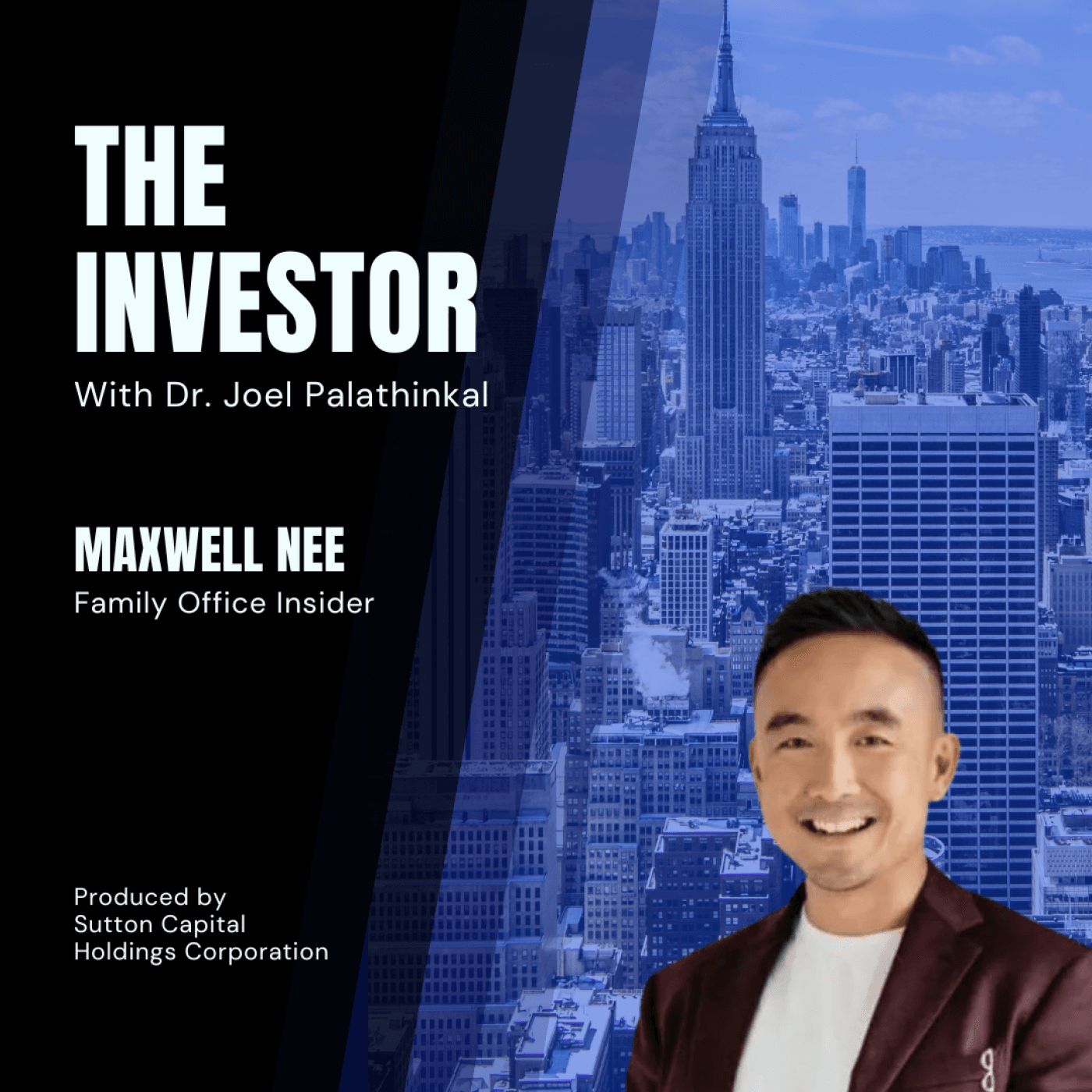
So excited to be bright and early up in New York City for the Investor podcast. Excited to have Maxwell here. He's actually on the other side of the globe in Singapore and we're going to be talking about the family office ecosystem in Asia. So Maxwell is an operator investor who builds deals long before capital enters the room. He's the chairman of Family Office Insider. So we've kind of been fortunate to build and kind of be part of the family office and allocator ecosystem in most of the US and internationally. But it's always great to have experts that are tied to the ecosystems in hyperlocal markets and geography. So Maxwell Nee is the chairman of Family Office Insider. So he's going to talk about the platform, the community, things that he's seeing in the Asian markets. But furthermore, he's an operator investor who builds kind of these opportunities early on before they really scale. He also invests and helps to get these companies to escape velocity, helping them scale. And he leads one of Singapore's largest unmonetized family office networks. That's important because there's a lot of platforms and communities that pay for memberships and there's no family offices there. Right. It's all just fund managers trying to pitch, you know, other fund managers. So that's, that's actually a good thing to keep in mind because we have a lot of fund managers in our community and you know, they, a lot of them, you know, through our, through our Slack channels and groups and communities, a lot of them kind of are complaining about different groups and then also applauding different groups that add value. But you know, unmonetized family office network uses a simple three part framework. So the A team, the funding and the market gap, you know, that's really what helps to shape deals early. And you know, I mean, I would say some of the best deals that I've gotten into have been from just a text message. Right. So we don't really work with brokers or, you know, intermediaries. It's really just you want to be with your peers. I think the biggest issue is a lot of times when they're intermediaries, you don't really know what their incentive is. Right. Those people are really just Trying to pitch a deal to get the commission or just to kind of get some type of placement fee. And it may not actually be a good investment. So I think that's why it's important to kind of build a peer group of people that have invested themselves. So we'll double click on that. But I think also just, it's important to also highlight that you've been active in renewable energy mining, pre IPO deals, data center projects, you know, especially with AI. I think what's going to be important is just the, the need for more electricians. Right? I mean, electricians in America and plumbers have not been, you know, kind of the sex industry for years. And those are really where the people are going to be millionaires because you're going to need people to actually maintain these data centers that have a technician background. And then obviously for cooling and H vac to make sure these data centers are maintaining certain temperatures is going to be important. But, you know, I think it's, it's really just kind of thinking through how you see deals, how you put them together, how you, you know, find the right partners to kind of get insights on them that have, that don't have, you know, misaligned incentives. I think those are a couple things to kind of kick this off, Maxwell. But, you know, welcome to the show, Maxwell. Thanks for coming on. Thanks for your time. Maybe, you know, you can take the high level intro that I kicked off with and just start with kind of a little more deeper reflection on your, just your early life, you know, your education, your family, your career and kind of what got you to, to build this community and kind of the investment thesis that you've developed over the years.
- [04:17]
B
Yes. Thank you. Thank you, Joel. Thank you for having me. So our family business is in private credit and real estate development. So we lend money, we build things, residential condos, apartments. And we, we had three buildings in various stages under, under construction during COVID And so, you know, we got really burnt, lost a bunch of money and really learned that, you know, everything we do is in the same cycle, you know, and it's in the same spike call, it's in the same supply chain. You know, when things are good, they're good, but when things are bad, they're really bad. Right. So since then we've looked at, I said to my brother, so my brother does more the real estate side of the private credit side. I, I said to him, you know, we really need to get outside of our comfort zone and you know, move more into, you know, whatever you Want to call it venture capital, private equity, but just you know, more, more operating type deals, growth stage deals, you know, deals that have a bit more tech enabled, a bit more scale, less capex heavy, just, just something, you know, and so we didn't know where to start. But what I did know is that I knew a whole bunch of friends that were doing a bunch of different deals. You know, some of them are in, you know, commercial real estate, some of them are in tech, some of them are in like healthcare. So I had an idea, my idea was, and they all have like family businesses as well, like quite, quite large scale, like some of them on the rich list in, in Australia. And my idea was to put them into a, a WhatsApp group. I put them into a WhatsApp group and then we just, you know, basically to share ideas and, and you know, see what they're up to, see and just learn and really, really just be a student. So I committed to just being a student, you know, not really asking for anything for at least a year. And what that ended up growing into, you know, Family Office Insider, where now we have like more than 200 families in the database. And you know, more than 60 of those have come from referral. So they, you know, they entered the, they entered the, the network not through me but through you know, other people that have referred it. So, so that's pretty cool, you know, and I just thought, you know, how do I do something? Because you know, my goal is not to like sell sponsorship, you know, my goal is to, to get equity, right? To get equity and something really amazing. And that excites me and also to learn how to most importantly de risk it. You know, learn how when people, you know, have a lot more money, a lot more money than what we do and have a lot more, you know, m. And a experience, advisory experience, investment banking experience of what we do. You know, how do they look at a deal and how do they look at de risking it rather than, you know, just throwing money at a problem type of thing. So that is the, the journey that, that we've been on that has, you know, sort of built the network and everyone sort of shares a common, common ethos.
- [07:22]
A
Sure, that makes sense. And I guess tell me some of the things that you've learned kind of building that community and what are some of the things that have aligned some of these families together and what's the criteria to be accepted into this community? Because I know you obviously want to vet for quality all the time and there's so many fake Family offices. Right. So.
- [07:45]
B
Yeah, yeah, exactly, exactly. So it's evolved over time. But what it is right now is that it's, it's, you know, people who are in principal parts, like actually in the family of a family that has, you know, an investment vehicle, an investment structure, and, and you know, it's someone that actually has also put their own money into things as well.
- [08:13]
A
Sure.
- [08:15]
B
And, and there are select advisors, you know, so there's some families that, they're very big and the CEOs in there rather than a family member. And that's, that's fine. That's the criteria. And so what I've really learned is that, You know, when, when these groups of people that have, you know, large amounts of money, you know, they're, they're just like everyone else in that their first circle of the first 10 deals that they do after they create, you know, after they come into $100 million is within their inner circle. And then things start to get really hard when they try to stretch outside that inner circle, you know, like, and that's identical of my journey. You know, my journey. I've made some good investments, made a whole bunch of bad ones. And all the good ones have been from, you know, longtime friends that were doing something that I knew they had experience in. I knew I could add value in that. I sort of knew the market enough to do the timing. But those come along like when once every five years, you know, like how many 20 year old friends do you have? You know, you don't have that many. Right. So, and then outside of that, you know, people move into much more into wealth preservation than growth, at least in this part of the world. You know, it's all about wealth preservation. You know, the, the, the common denominator actually is not to go out and find, you know, ex sequoia, you know, team member and hire them and have them to grow your portfolio like really aggressively. It's the opposite. It's actually to hire your private banker at UBS and then just say, hey, look, you know, instead of you being paid 180 at your gig, why don't you pay, why don't I pay you 250? You can't work for me. And then you do everything you do, tax you do, you know, you know, and I give you everything to do and your job is to basically just sit there and keep, you know, get risky opportunities from me and, and once in a while we'll do some, some, you know, growth opportunities. Yeah, so that's, that's really what I Learned which, which is a bit of a. I, I, you know, I understand it, but when I first learned it, I was a little bit disappointed, you know, because I thought that, you know, this, this edge of the market with so much capital and, you know, these really obviously very successful entrepreneurs that they would still want to have, you know, like, like real, a star, a team killers working for them and like pushing the envelope. Pushing the envelope. But, but, you know, I really learned that there's really, there's different stages of life and life's all about timing. You know, you, you catch an entrepreneur in their prime and you could do 20 deals with them and they'll, you know, they'll all be in a good space, but if you catch them at, you know, a different part of their life or something happens and they're slowing down and, and they've got different priorities, then, then you're better off, you know, starting fresh with someone else.
- [11:18]
A
Sure. And then your roots are they from it sound, it sounds like you had some roots in Australia and now you're based in Singapore.
- [11:28]
B
Yeah, that's correct. So I'm an Aussie. I was born and bred there from Brisbane. That's where our original projects are and I left ours about almost 10 years ago now and living in Asia at the moment.
- [11:44]
A
And tell me about Singapore. So Singapore seems like it's kind of the hub now for technology and kind of development and there's a huge venture ecosystem there. I got a couple of good friends that are based there. But, you know, how is the, the, the markets in Singapore evolved and, and kind of what's. What, what, what's kind of the pulse there?
- [12:10]
B
Yeah, good, good question. So there is, There's two sides to it. You know, the, the first side is what I would call like the vanity metric. So the vanity metric is there's these articles that say that, you know, there's 2,000 family offices that open up shop in Singapore. You know, the net millionaire migration is, you know, highest per capita in the world and all this type of stuff. And, and that, that's all true, you know, and there's lots of Ferraris, there's lots of Lamborghinis and, and, you know, lots of, you know, drivers that, that drive limos around and that type of thing. And, and cars are very expensive in Singapore, by the way. They're about, you know, four or five times as expensive in the U.S. sure. So, you know, you need some real money to buy a Lamborghini in Singapore type of thing.
- [13:01]
A
And.
- [13:03]
B
However, you know, actual deals being made and Actual capital being deployed. If you did a pitching roadshow and like went out and visited, you know, all the shops in Singapore is very, very little. Very, very, very little. You know, so there's, there's a big venture fund, I won't name it, but it's a name brand venture fund that has offices all around the world. Very, very big, like, you know, more than 20 offices type of thing. And I think they've raised in total 1.8 billion. And they have a hub in Singapore. And you know, one of the founders lives in Singapore, so all the public speaking and everything, you know, it's all happening there. And then they said that, that over there, I don't know, 10 years of existence, they've only raised $8 million out of the 1.8 million.
- [14:04]
A
You mean out of the, out of Singapore? The vehicle in Singapore. Okay. Yeah, yeah. So why, why are people moving to Singapore? I guess what's attractive about it is it just. Are there tax benefits to move into? Singapore is just a more modern city. I mean, what's. Yeah, yeah, everybody's moving there.
- [14:22]
B
Same reason Eduardo Severin moved. So, so tax tax is definitely a big part. You know, health care. If you want to attract rich people to a place, then you're gonna think about what they want, right? So they want, you know, safe, easy to get around. They want to be able to walk around with a Rolex late at night. Don't worry about being mugs. Right?
- [14:44]
A
Yeah.
- [14:44]
B
Any part of the city, you know, health care. They want this, their kids to go to the best schools. You got to have good education system. They want connectivity, they want a nice airport, they want clean streets. So, you know, Singapore, Dubai, Monaco, Switzerland or knock it out of the park. Yeah, right.
- [15:04]
A
Yeah. My cousin, you know, my cousin lived in Singapore for the longest time and it's a culture shock. I mean, he, I think his firm, you know, gave him a promotion and he moved to Silicon Valley. And he's like, man, life is tough here, man. I gotta like, wash my own dishes and I gotta, yeah, like, you know, take care of my own kids. You know, it's, you know, it's just in America, it's just, you know, they have that whole concept of people just eventually leaving at some point. Right. I mean, I mean, I would say people say that they're gonna leave, but then they never do, you know, and, and I think there's, there's the crunch, right? There's the personal burn rate. Everyone's dealing with the, the lifestyle expenses that they, that they have. People are you know, now it's the holidays, right. So everyone's going to the mall and you know, doing shopping. And there's a huge consumer culture here. People are buying 100, you know, square, square inch, you know, big screens for their homes, you know, watch the game and everything. So it's, you know, we're a spending country and I think the people are kind of really just trying to manage their burn rate. Healthcare is expensive, right. So I think there's a lot of things that go up against your personal burn rate, I think for the Americans. And so what are your biggest expenses? It's like essentially it's childcare, it's probably your mortgage and then healthcare. Right. So if you can cut two of those big things down, you know, having, I know in Singapore you can get like, you know, a maid or someone to kind of help with, with some of those efforts and you know, it's a fraction of the price that it is in, in the us.
- [16:39]
B
Yeah, yeah, so, so there's all that. But, but it's, you know, Singapore's not a cheap place as well. Right. So it's not really about cost, it's, it's more strategic. So you know, capital gains tax is zero, right. So you invest through a vehicle in Singapore, you know, you, you sell your shares in a secondary market. Maybe you, you bought Anduril really cheap and he sold out. You know, you're going to keep a lot more money. So that's one aspect. The other aspect is the big three banks of Singapore, some of the most robust in the world. So you know, people use this country simply just like a bank account, like, like an insured bank account. Sure, right. That's how they use Switzerland. That's why whilst there's a lot of money per capita, per capita here, actual investment decisions aren't necessarily made here, you know, because the founders are still in Europe or they're in, you know, Cayman or the Caribbean or the U.S. yeah, that makes sense.
- [17:43]
A
And what are some of the high level insights that you're hearing from the families? So I guess what may, it'd be good to kind of get the lay of the land in terms of kind of what their strategies are. So real estate, you know, there was a couple deals that I was looking at in Singapore for like modular homes. Right. Because a lot of the real estate is so tight.
- [18:04]
B
Right.
- [18:04]
A
So there's a lot of innovation especially in Japan and in, in, in Singapore for, you know, because if you think about it, right, like you don't use your bedroom in the daytime. I You know, I have like a three bedroom right now and right now those bedrooms, I mean, the, the bed is taking up the entire space. But I've seen some of these companies who, they install these modular homes where like your bed actually folds up and it goes to the roof or it kind of folds up and, and that's actually your living area. Because if you, if you really think about it, right, the bed is a waste of space. You're only using it when you go to sleep and then it's just kind of taking up the entire room.
- [18:41]
B
Right? So yeah, yeah, 100%. So what I would say is the, the local families is actually not that many of them. You know, before expats. I think there's less than like 3 million locals, right. In this country. So the local families are very mature in their placements. You know, they, they already have their fund managers, they're already in the blackrocks and the Apollos and they've been in there for a very, very long time. And there's no need to move any, any, any capital around. You know, you might have the next gen that might do some angel investments for a coup and that could be a way to, to, to, you know, get a foot in the door for a bigger partnership, you know, with, with a broader group that owns 25 hotels, that type of thing. And then, and then you have, you know, like the new money, you know, so the new money is people that have moved to Singapore, they're the expats, they're the people that have, might have moved from China. You know, there's a lot that I've moved from China.
- [19:47]
A
Sure.
- [19:48]
B
And the, the issue with a lot of new money in terms of, you know, tracking what they invest in is that they're more entrepreneurs than investors.
- [19:57]
A
Sure.
- [19:58]
B
You know, so, so, so entrepreneurs are typically like, like you speak for myself, I'm a terrible investor. You know, if you ask me that, my only way to make money was to sit there and read and analyze and find an edge in the market and find where to put money. I would do a terrible job. You know, what I like to do and what I feel more confident doing is being, you know, an operating investor where I'll come in almost like a business partner. It's like, hey, look, you know, we're, we're going after this market. Maybe we'll go after solar panels, you know, deployment on houses in the Philippines. And you know, I can bring, you know, sales, marketing and operations to the, to the venture and, and also put some money into, put some money where, where my mouth is. Right. So, so there's, you know, there's all these market forces that sort of push towards Singapore actually not being a good data point to be honest, for where people put capital and trying to get a pulse on things. But, but at the same time there's, there's. Yeah. You know, like, do they, do they want to be a Silicon Valley and is it is an amazing ecosystem support to be like the Silicon Valley of Asia? Absolutely. You know, but like, you know, it is, is it still easier to find money for, for high, you know, high risk, deep tech ventures in the US compared to Singapore and Asia? Absolutely.
- [21:24]
A
Sure. Yeah. It's helpful. On the venture side, what are, what are some of the sectors, especially in Singapore, that families are looking at?
- [21:39]
B
I know that I don't know if this is mutually exclusive to Singapore, but it's, you know, seems to be pretty hot right now. Most parts of, you know, everyone wants to put some allocation to this which is, you know, deep tech.
- [21:52]
A
Yeah.
- [21:53]
B
So people think, you know, if I'm gonna put a long shot in, that could be, you know, one out of 50, 100 chance. I'm not going to go for B2B SaaS anymore. Right.
- [22:04]
A
Sure.
- [22:06]
B
I'm going to go for engineering new batteries or gasification or healthcare clinical trial algorithms and things like that.
- [22:26]
A
That's really interesting. Then as far as these families, how are they thinking about their portfolio construction? So, you know, I mean some of the, you know, there's a saying that real estate families want to get into venture, venture, venture investors want to get into real estate. And I think there's pros and cons to both. Right. So venture, you're sitting on these deals for 10, sometimes now 15 years, you could be sitting into a deal. That deal now gets acquired by a new company. Now you're stuck with that new company for seven years. Right. So it's long term outsized returns, real estate, there's cash flow, but there's not really much cash flow unless you own like, you know, a couple hundred doors. The appreciation is not going to be outsized. But the benefit is you can pull, you can fix things up and run it like a business. And then I guess when you run it like a business, you can offset some of your taxes and then you can also pull money out from that to buy, to buy other real estate, but you're not gonna get the outsized return. So I think it's kind of a, a balance here. And then, you know, with venture, there's obviously further down the, the, the Pipeline. If you just do secondaries, right, you can get some, you can get some liquidity if you do like a series B or a series C if you do, if you do, you know, pre ipo. The only issue I would say is you just don't know what the share price is. Right. So there's some uncertainty there. So how are these families kind of thinking through that portfolio construction and how, you know, this is, this is actually something that I think could be helpful. How are you curating this? I've met some of these other bigger communities that have communities for founders that are making 3 million a year, like 3 to 5 million a year. Right. And there's also like a really big community for women professionals and they have like a facilitator, right. And then they have small groups that focus on different things. So I guess, you know, two pronged. How do these families think about their high level portfolio construction and you know, how are they sharing notes with their peers? You know, and maybe you can share a couple thoughts around that in terms of what you're hearing because you're, you're orchestrating this community. And then what advice would you have for someone like yourself or someone else that's trying to build their own family, like high quality family office community where people stay. How can you kind of cultivate that, that engagement and like have people still kind of be involved and, and stay in there?
- [24:58]
B
Yeah, yeah, got it. So first thing I'd say is I, I wouldn't be so bullish to be able to comment with any precision on portfolio construction just because I really believe that when you've what, met one family office, you've met one family office and you have to talk to 100 of them to get a data set. And I just haven't done that about their portfolio. But what I would say is that the period of cheap capital is definitely ended and that ending has been felt all around the world in that people might want to make an investment. Just giving venture as an example. People are expecting, you know, PE risk reduction in venture, you know, so where they might want like a seed stage valuation, but then they might want like a series A series B level of mature company, you know, like post revenue, that, that type of thing. So that, that, that's definitely being felt and that's definitely like, it's, it's like the whole, the whole category is shifting two notches towards lower risk. But, but I want the same price, I want the same, you know, cheaper valuation entry point. So there's that. And you know, obviously you Know, private credit had a bit of a, bit of a swing and a bit of a spotlight last couple of years. Yeah. So I think that's still definitely there. You know, people have worked out that they could make money in, in climate. So a lot of people seem to be talking about climate. You know, for example, we've reached this, this intersection of you know, solar panels reaching ultimate, you know, just ultimate efficiency and maturity in, in the quality of the product and the highest need ever for energy and the most capital, you know, available from all, all countries to, to, to want to invest in this and, and a focus and a mandate and, and a push and, and you know, regulatory, you know, headwinds. Sure. And you know, if, if you compare it to like in Australia where things are quite expensive, probably the same in the US as well. It's, it's cheaper to actually build a house out of Chinese solar panels than it is out of Ikea furniture. Like that's, that's, that's how, how cheap it is. So, so there's a, there's a huge opportunity there and people taking advantage of that in all way shapes and forms and there's a lot of money going to that because obviously it's a you know, 15, 20 year income generating asset when, when you get one of those in the ground.
- [27:48]
A
Yeah.
- [27:50]
B
And then you know, there's I, I still think that there's also still a lot of money on the sidelines. You know, there's still a lot of money on the sidelines and there's still a lot of money. You know, I follow the gold market pretty closely because we're, we're invested in a few, in a few gold mines and looking for a few more. And my business partner has been in gold for, for 40 years resource deals and you know, physical gold is, is not, you know, it's not crashing anytime soon is the pulse. You know, so there's a need, there's a forecast, there's you know, a future need that's priced in plus a lot more, you know, future disasters that you know, obviously haven't been priced in. So you don't know if and when they'll happen. But that's definitely at the forefront of, of everyone's minds. You know, we live in a very, very unique time. Like price of gold's high, but gold mines aren't getting funded.
- [28:49]
A
Sure.
- [28:49]
B
You know, countries are in recession and inflation but stock market's still climbing. So it's just like this head scratching macro trend around the world and you know, everyone's got money on the sidelines, you know, as a result of it.
- [29:06]
A
Sure. Tell me about the next gen. So how are these families thinking about their legacy and kind of carrying on the next generation and engaging them? A big concern I hear is that essentially, you know, sometimes the third generation, a lot of the, a lot of the wealth is squandered. So how are families kind of mitigating some of those risks and making sure that it doesn't happen? And I guess, yeah, I'm sure. And I think that's a benefit with the community. Right. A lot of these people are sharing notes about this, you know, so we'd love to hear your thoughts. And I have a couple thoughts about this too.
- [29:47]
B
Yeah. Yeah. So I think it's like what, 70. It's very common stats. You could find them 70, 90 of families, you know, lose most of it by the third gen. And that's simply because, you know, the first gen was the, the outlier entrepreneur. The second gen saw the struggle of the first gen and you know, had a chip on their shoulder that they wanted to carry it on. But then the third gen was just born into comfort. Right. And when you're born into comfort, you're just not going to have the killer instinct unless it's, it's deliberately put into you. So there's.
- [30:24]
A
Sure.
- [30:24]
B
You know, I, I really see this problem as, it's not just about money governance, it's also a parenting, you know, it's a, it's a deep investment in parenting and upbringing and, and you know, future planning by way of like, you know, boarding school, you know, all those things come into play.
- [30:47]
A
Sure.
- [30:48]
B
And I don't think that set will ever improve. In my opinion that 90% lose it by, I don't know, whatever year it is, you know, fourth gen, fifth gen, I don't think that's, that will ever improve because you know, how many people like sit down and draw a 20 year plan for parenting? You know, like they, they just don't, you know, you don't even do it for yourself, let alone do it for your kids. Like, like it just, it just, it's so rare that someone would have that discipline and be willing and also have the, the will to execute and stick to that execution over 20 years. Like just, it's just so, so, so rare. Like it's, it's a culture, it's like a, a culture in the family that has to be passed down by generation, generation. So you know, I know families where, you know, it was built brick by brick, they're worth, you know, Half a billion. And if they've gotten to, I think eight, eight inheritors by now. So each, you know, parent only had one or two kids.
- [31:58]
A
Sure.
- [31:59]
B
And you know, it's by the, by the third or fourth gen, whoever was doing the majority of the management, they're just sick of answering to everyone else and they're like, let's just split the money, let's split the money and we don't need to, we can live our own lives and you know, you do your thing, I do my thing and let's just let it go, you know, so that happens a lot, you know, so when you hear about these, you know, fifth generation or more families like that, those are true, true, true, true, true outliers in anywhere, any part of the world.
- [32:36]
A
Yeah, that's helpful. Yeah. I mean, one thing I'll say is, you know, I'm reading this book here. Let me see if I could pull this up. It's like a little blurry, but this is called Think Bigger. You can't really see it. I don't know what's going on with the, the microphone. But this is written by Michael sonnenfeld. He runs tiger 21. So one chapter in specific that I thought was really interesting was the, the chapter on your, you know, hiring your kids. You know, should you just hire your kids because they, you know, you've got, you know, eight figure business and your kids, you're trying to figure out somewhere to put your kids and you know, you really want to figure out if that child is the right hire for your firm. And there's a really interesting story because one of the, one of the children didn't really have an interest in working for his father and went to, you know, did his mba, worked in consulting for some time and then, and then he just kind of over time grew in interest and kind of proved himself to actually be a good candidate for, you know, kind of handling some of the investment activities. And then eventually kind of grew into kind of being a leader. And then obviously it's a, it's an honor to kind of carry the reins for what your father has built. But you know, again, you know, I've thought about that a few times and it was good, it was a good eye opener. So I think also what helps, you know, especially for the next gens as they're growing, you know, having peers that are like 10, 15 years older than you. You know, I, I've shared this with a few people but like I live in the city in New York and you know, have kind of Met a family office that's like about 15 years ahead of me. Right. His kids are like in high school. And he was like, hey Joel, you should buy a car. I was like, okay. You know, and then I thought about it. I was like, well, it's, it's a pain to kind of rent cars all the time, but he was the one that motivated me to buy a car. Almost as if he was like an older brother. Right. So I think kind of having that mentorship and just kind of not even about career advice, but just life advice I think is really helpful. And you're not necessarily going to get that from like these paid communities or these transactional communities. So talk to me about some of the circus acts that you're seeing in Asia with these family office communities. I've been to a few of these communities where they were curated, they were like VC and family office events. And then I was asking somebody what they're investing in. They're like, oh yeah, I don't invest in anything. I have a community, I have a family office community. So I guess tell me about where some of those communities are going wrong so people can learn and then some of the things that you're learning to make it right.
- [35:15]
B
Yeah, yeah, yeah. So, you know, a lot of people won't like my opinion on this talk because it's very, you know, brass and, and raw, but it's honest. So you know, when, when you set up. Okay, so let's talk about the typical event model. Right? So you have, you have an event engine, you do an event every year, I might do it every three months or whatever. And then you have sponsors, I pay for the event and then you invite the investors to attract the sponsors. Right. And sponsors might look like a law firm, a fund or whatever.
- [35:53]
A
So you gotta ideally figure out how it's valuable to the sponsor. Right. So figuring, I guess, kind of thinking through what the sponsor's customer base is and you know, why the sponsor will want to pay. And then I think if you figure that out, you know, a lot of these bigger, you know, law firms, accounting firms, their clients are essentially investors to your point, right?
- [36:11]
B
Yeah. Yeah, well, it's very obvious why they would want to pay. Right? So you're, you're, you're basically taking your black book of investors and you're selling the database but without them knowing. Right? So you're saying, hey, look, come to this event, you're going to meet 10 ultra high net worth individuals and your entry, your gate fee is 5k or whatever. Right. And that's a very, very easy thing to sell because.
- [36:41]
A
Oh, so you still sell the ticket to the investors?
- [36:45]
B
No, no, not to the investor. Typically the investors come from.
- [36:48]
A
To the sponsors. Yeah, to the sponsors.
- [36:49]
B
But you sell to the sponsors, right?
- [36:51]
A
Yeah. So that makes sense.
- [36:52]
B
So, so I, I hate that model because that in my mind, that model was designed to fail. It's designed to fail because it creates an anti flywheel. So if you think about it, who you want money from, like they're your client, so they're your real clients. So your client is actually not to do right by the investors, it's to do right by the sponsors, those ones that are paying you. Sure. But then the more. But then if you fill that room with 90 sponsors, 10 investors. Sure. Everyone's unhappy.
- [37:24]
A
Oh, yeah, that's true. I mean, you ideally want to have maybe one sponsor. Yeah, I mean, you ideally want to have one. I mean, so we, what we've done essentially is like, you know, I usually when I do these events, I have nothing to sell. Right. I just kind of. It's a great way to get the people together and the community. So that's always great. And then, you know, we partner with a few strategic partners, like maybe one. Right. And I think less is more. So if you do kind of a small intimate event or a dinner, I feel like people remember it and it's a win, win across the board because the sponsors, they're like looking and we get to meet some interesting people, we get to get our name out there. And then, you know, obviously you have to make it a high quality event where like the, the investors, they, they just really enjoyed the experience.
- [38:09]
B
Right.
- [38:09]
A
Because if they, if they just get one bad experience or if it was, you know, just horrible, they got pitched by people and they got solicited the whole time, then you're like everyone else, then they'll never come back again, you know?
- [38:20]
B
Yeah. Then you like everyone else.
- [38:21]
A
But what you're saying is the wrong way to do it is just have like 10 sponsors and there's like 20 logos on the website and then like just a few.
- [38:28]
B
Yeah, but it's the wrong way to do it. But it's also the most seductive. Right, because you're gonna get paid the most. And it's very easy to like. It's very attractive response to pay 5.
- [38:37]
A
I've been to one of those events and it was horrible. I mean, there, there were investors there, but literally on the stage. Instead of like, you know, the programming every five seconds it was almost like an ad. Like there was one of the sponsors. Some of the sponsors also are like, you know, founders. Right. So these founders come, they probably drop like five grand, they go on stage and they make their, their speed pitch and, and then they step off. So it was almost like, it was almost like an interruption with the ads. And then when you go into the common area, there's like all the easy ads. Yeah, it's all these booths. There's all these booths with all these logos. So that, that I think is horrible. I think if you got one sponsor, right. And it's like a strategic sponsor, I think that's great. But to your point, you're saying that the ones that go wrong are just, it's essentially just spam. Right?
- [39:23]
B
And yeah, yeah, it's spam. It's like YouTube ads. You're trying to watch a video, trying to listen to a song and then it keeps popping up. Right. So, so what I found that works really well, but takes a lot of discipline and obviously you need to be able to self fund. It is the complete opposite.
- [39:38]
A
Yeah.
- [39:38]
B
So we do events where I don't make any money, I don't charge any money, I don't lose any money. And you know, sometimes we've had a sponsor that will come in and pay for like a bar tab. Sometimes there is no bar tab. Yeah. You know, and it's just meet here at this point in time and you know, let's, let's hang out and I talk shop. And you know, that's very much playing like the long game. You know, I, I think I got like my first monetization like in kind where someone said, hey, you know, would you mind speaking at this event and inviting your network, I'll pay for your hotel. So I got a free hotel room. And that's like my, sure. My, my, you know, gateway into, you know, getting something out of the work that I do. But you know, the work that I do, I do it because I'm able to, to monetize in a very genuine way outside of cash where for example, I've got like four or five deals now that I'm able to bring, you know, networks and, and capital and assets to the table because I've built this network, you know, so, so everyone talks about, you know, if you think about a high flying, you know, PE guy that's left Carlisle and raises a, you know, $2 billion fund as like fun one type of thing, they're able to do that because they've invested 25 years into their network rep. Relationships. Yeah, right. So, so I don't have 25 years at Carlisle. But this is my way of, you know, expediting that, trying to, trying to compensate for my lack of 25 years at Carlisle.
- [41:22]
A
Sure. And you can get into those rooms much quicker where you normally wouldn't get into those rooms if you never had the platform, essentially.
- [41:32]
B
Right, yeah, exactly, exactly. You know, so, so there's, there's a lot of rooms, you know, a lot of people want to be a friend and. Yeah, you know, that, that is a job in itself to, you know, it's to be polite but also be firm with, you know, people that want to try to take stuff from you. So it is, it is an investment, but in my mind it's, it's, it's 100 to one worth it, you know, like, it's just so worth it. Yeah.
- [42:00]
A
What do you think of the membership model? I think the problem is, like, if you're trying to sell memberships, like, you really have to figure out what the, what you get, you know.
- [42:11]
B
Yeah, there's what you get. And also, like, you have to remember a lot of these people, like I, I'd rather keep them as my peers rather than my cl. Then your clients, because then if they, if they, if they become clients and I work for them, you know, and, and we were good friends, we would go, you know, and all of a sudden like, they could call me demanding stuff because I've taken their money and that's just not worth five grand. Yeah, it's not, you know, it's. I'd rather sit and wait and maybe we could do, you know, we could help put together 100 million dollar transaction together. Yeah, Yeah.
- [42:48]
A
I think the, the main thing is kind of thinking through, you know, how you could, how you could just kind of get people into the room where normally you wouldn't have to go to those rooms, you know. So I think that's kind of the big thing too because a lot of times some, some of these same people go to these, you know, $25,000 conferences all over. There's a whole conference circuit. Right. So a lot of the allocators and a lot of the fund managers, they travel like all the time. And. Yeah, I enjoy traveling, but I don't, I don't necessarily like going to these, you know, conferences with like 2, 000 people. So I think if there's a smaller events, I feel like you can actually, you know, build a relationship with people and connect with people better. So I think that definitely has.
- [43:33]
B
Yeah, yeah, the, the money's in the, the Money's in the side events. You know, everyone knows that. You know, there's. There's so much value. Like, I've. I've got a few people that will collate side events for, like, milking or whatever, and they'll share.
- [43:48]
A
That's a good way to do it. I think if you could do kind of a private dinner or like a private cocktail, and you're the only one that's doing it, I think that definitely helps. And you kind of build. You build a deeper connection because you maybe you see these people every couple months in different cities. So. And then as far as the engagement, you know, beyond events, how do you guys. What would you advise to maintain the engagement with these family offices? Do you do, like, weekly deal flow meetings, or do you do, you know, kind of some type of facilitation to kind of curate? Like, maybe there may be some families that like real estate, so they have their own chat group. Right. Some families like private equity, so they have their own community, I guess. What are some suggestions that you'd have to kind of help to curate and cultivate those communities so they stay?
- [44:39]
B
Yeah, so you can do all that. You know, you could create, you know, theme rooms and. And things like that. But. And I've tried that. And, you know, it's. It's a bit of work keeping one of those alive because you're basically creating a job for yourself.
- [44:56]
A
Sure.
- [44:56]
B
You know, what I've found is it's, you know, outside of this whole, you know, trying to build a transaction engine mindset, like, it's just really back to basics. And the basics is, you know, these are people who want to do business with people that they like and that. And they want, you know, real friends, and they want, you know, like, all the things that you and I would want, you know, like, if I. If we get along, then let's spend more time together, but if we don't get along, then let's spend the time that we need to have together.
- [45:29]
A
Right. Yeah.
- [45:30]
B
So, you know, it's. It's like the informal chats about, you know, where you're traveling to in Europe this summer that typically has the most yield, you know, which is totally counterintuitive. And if you don't have the. Yeah. And I've definitely made the mistake of just going in, you know, really, really hot and heavy. It's like on the first day, I'm like, hey, look, let's get married. You know, let's do this, do that.
- [45:56]
A
Yeah.
- [45:57]
B
And everyone has a, you know, has to sort of learn that. Right. But I think if you don't need to learn that, that's even better.
- [46:04]
A
Yeah, I think a big thing is, you know, I, I'm in a few family office, you know, slack channels and WhatsApp groups. And I think the, some of these people are asking for ideas on how they're managing, you know, like if they're a reference, if there's a reference for an accounting firm that they prefer to use. Yeah. Some of them are diligent in a fund that they're investing in and they'll share the fund and they'll, they'll. And then someone will DM and say, hey. And I heard about that. Fun. So I think just kind of basic, just referrals, I think is really valuable. And then I, I found some really cool software tools. You know, there was like a software tool that, you know, you can calculate your net worth, which I thought was really interesting. So I would have never known about some of those things if I wasn't at least in the channel, you know, so.
- [46:48]
B
Yeah, yeah, yeah. You know, there's one I was shared with me that I've started using. It's a tool that, that tracks your, your traveling days, you know, because, like, for example, in the US if you, if you travel a lot and, you know, you're like a McKinsey consultant, you know, not necessarily family office, you spend more time in New York than in New Jersey, then you know, you've got different tax obligations. Right. Or if you spend more time in Europe or whatever, you have different tax obligations. So it does all that for you automatically. And like, little things like that that you don't think about are super helpful.
- [47:24]
A
Yeah, there's a. I'm going to try to put together like a holiday book list, but I read this book by Bill Perkins. He's, I think he's a hedge fund manager in Texas, and he wrote this book called Die with Zero. And essentially what he's saying is, you know, once you've hit that certain amount of wealth and you've paid everybody, right, you've put aside enough money to, you know, give away money to your kids and you maybe did the Giving Pledge. You know, you want to kind of invest in experiences and, you know, hopefully just plan it out where, like, you know, you, you literally have spent all the money and enjoyed your life and experiences. And, you know, what's really, there's a lot of interesting data in there because, you know, people, if they get inheritance money, they're not, you know, they're not going to Spend that when they're 50 years old. Like the time that they're going to spend that the most is probably their early 30s when they're starting their family and they're maybe going to invest in stuff and kind of manage that money, but they're going to, they're not going to. You do anything with that once they're 60 years old. Right. So if you can kind of plan it where, like, you've been able to distribute your capital to your family at a good age where they can really enjoy it, and then after you've paid everybody, you can kind of really, you know, decumulate everything before you, you pass away. That was an interesting take. So I wanted to hear your reaction to that. And also just kind of, there's probably a lot of chatter with these families that are thinking about long term planning and legacy and kind of handing things down, down to the next generation. And I'm assuming there's. They, they have financial advisors that they're working with and maybe that's some of the chatter that you hear. But just wanted to hear your reaction to that.
- [49:01]
B
Yeah, yeah, I, I think it's a very personal thing, you know, like, I know a lot of people, maybe, maybe it's a bit more of an Asian thing where they just obsess about legacy, you know, like legacy, legacy, legacy. They want this, they want this business. They want all their hard work to be remembered.
- [49:18]
A
The reputation is a big thing.
- [49:20]
B
Yeah, yeah, the reputation, the, the pride and the face. They want, you know, all the hard work to be, to stand for something and to be there. And you know, they want their name on like, you know, a library at a university or, or whatever. And that's pretty cool, you know, like I, I want some of that. I'm sure, you know, I'll probably action some of that at some point, but, but yeah, I, I also agree with the ethos of dying with zero. Like when I hear that, I think, you know, like nothing, like leaving nothing left on the table, you know, just really, really, you know, living everything that you want to live right before you go.
- [50:03]
A
Yeah, I totally agree. I guess, you know, I know we're kind of wrapping up in a few minutes, I guess maybe few pieces of advice that you have for the audience. It could be from the people in your community and it could be about anything. It could be about investing, it could be about life, it could be from a family member, you know, that you look up to. So any, any couple nuggets of advice you want to leave us with.
- [50:30]
B
Yeah, so I would say that, you know, so I spoken and met with so many, like, wealthy people, and what I've really learned about them is that they don't rush things, especially when it comes to, like, doing something that they want to do. They sort of just, like, let it come to them. So an example would be like, I know this one guy, you know, he split his money from his family, and. And. And he's managing it on his own. And he. He was always tired and. And, you know, complaining, not complaining, but he was always just like, oh, you know, I'm so tired. I managed my money, my family's. Mommy, I'm untying it. You know, all this work, I'm like, dude, like, you know, you're worth 50 million bucks, and you could just hire anyone whenever you like.
- [51:25]
A
Yeah, but.
- [51:26]
B
But he just. And. And he just didn't hire anyone for, like, two, three years. And this is the two, three years that I knew him, plus, you know, however long he was doing this before I met him and he was telling me how unhappy he was, and he just didn't. Didn't feel the need or the urge to. To take the risk on hiring someone to. To not even manage the money. Like, this guy has no. No authority on. On the funds. But he obviously represents the brand. Represents the brand, the face, you know, the family by extension. And, you know, now he's finally got, like, an assistant, basically, like an assistant Maryland. Of. Of. Of his. His family office. And, you know, if I look back at all the times that I've, like, lost money or, you know, I got myself into a, you know, a situation of, you know, of not being in a strong position, it's always because I compromised on, you know, the team member or the person or the. The deal or, like, it was always the person. It was always, always a person that I. That I said, oh, this person's like 80 there. But, you know, I need to do something. And then I sort of did it because I felt like I need to do something, but not. Not because, you know, it was. It was the perfect, you know, the right setting and the right conditions.
- [52:51]
A
Sure. Okay. So really kind of make sure that you double down on finding the right person.
- [52:58]
B
Yeah. For whatever you want to do, you know, manage your money, build a new business, you know, sign a partnership, you know, like, hire a CEO. Like, don't compromise on. On that person.
- [53:09]
A
Yeah. And I mean, you make a good point. I mean, you know, most of the family office capital is quite patient capital, so they don't really need to. They don't have to follow a capital deployment cycle. They don't have to follow a certain portfolio construction, and, you know, they don't have to harvest those investments or raise the next fund or. Or return liquidity at some period. So I think there's a lot more patience there to kind of just make sure it's the right investment. And I think the benefit of that is you can just make sure that you're, you know, having your investment committee do the right diligence and. And, you know, just wait for the right deal to come in. Yeah. Great. Well. Hey, Max. Well, thanks for. Thanks for your time. I learned a lot. I think this is helpful, and I. I can imagine all the people in your community appreciate what you're doing. It's hard to cultivate a good community that also stays engaged. So it seems like you've been doing that quite successfully where all the incentives are aligned. So that's a rare thing to find. So congrats on all the success, and thanks for what you do for the community.
- [54:15]
B
Awesome. Thanks, Ben. Thanks for having me. Yeah.
- [54:18]
A
And look me up when you come out to New York.
- [54:20]
B
Yeah, we'll do.
- [54:20]
A
All right. Catch up soon.
- [54:22]
B
Bye.