Loading summary
Transcript66 lines
- [00:03]
A
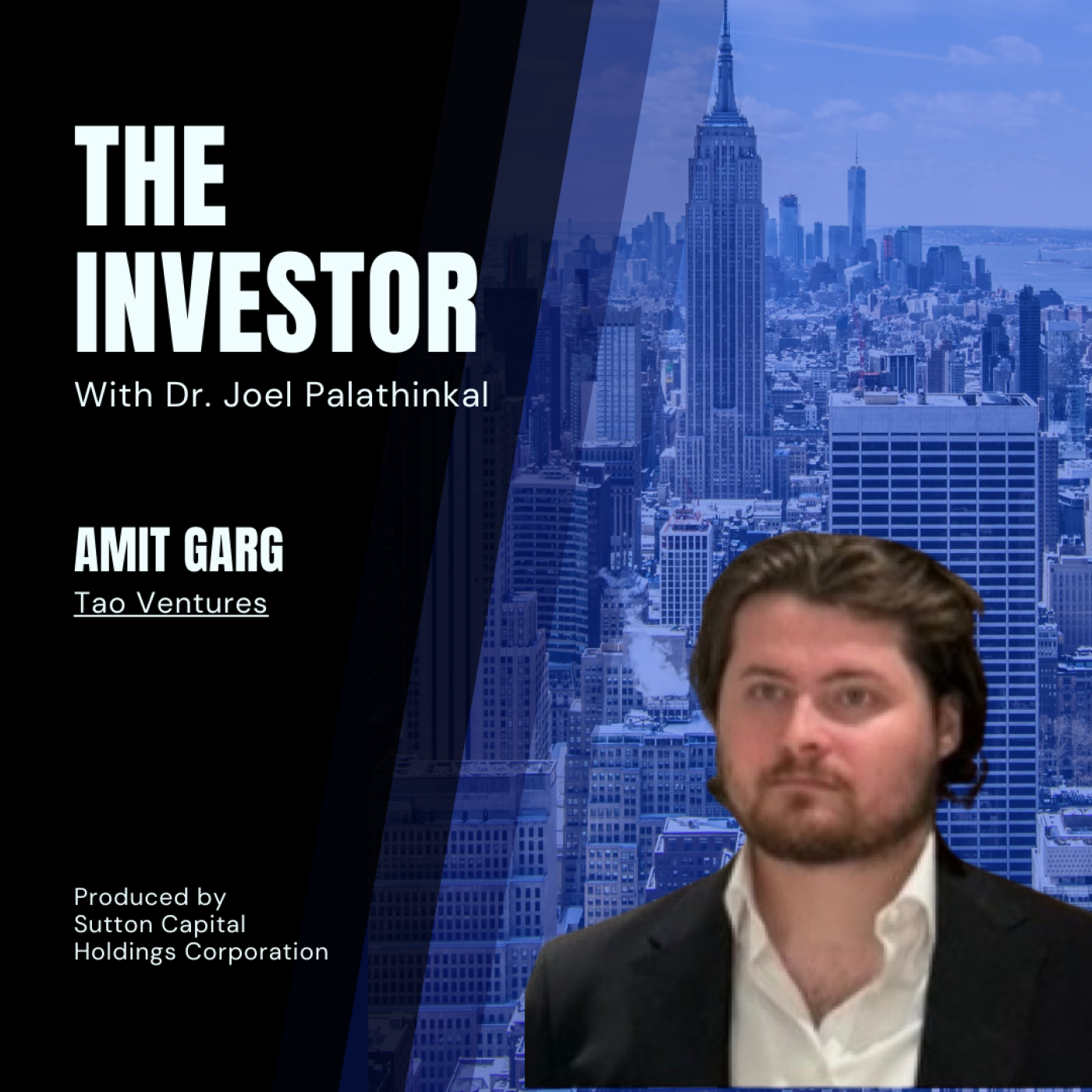
Welcome to the Investor, a podcast where I, Joel Palo Thinkle, your host, dives deep into the minds of the world's most influential institutional investors. In each episode, we sit down with an investor to hear about their journeys and how global markets are driving capital allocation. So join us on this journey as we explore these insights. All right, so I am here with a multi year friend. I was honored to have Amit go through our fund accelerator, the Sutton Capital fund accelerator. And it's just been amazing catching up with him recently and now getting him on the pod. He is one of the most real time people that I've seen. It's like, hey, let's chat. And like we immediately chatted and we immediately got on the pod. So I think, you know, in my experience, you know, speed is one of the biggest things that's going to be driving success. And I just have seen Ahmed build his firm and, and also build trust and just be a great person. So I'm going to give a quick intro and then Amit's going to kind of kick this off with me. But Amit, Garg, welcome to the show. He runs Tao Ventures. He's built his career in technology over the last 25 years in Silicon Valley as a venture capitalist. He focuses on seed stage applied AI, investments in digital health, automation, cars and robots, and enterprise. Some of his key successes are Oak street health sold for 10.6 billion. ABC, which IPO'd for 2.1 billion. And then NuTonomy which is, which sold for 450 million. And finally Misfit Wearables which sold for 260 million. His operational background is in product and analytics at his own startup and at Google he joined pre IPO and learned through hypergrowth. So Amit, just so many wins and just so much to learn from you and thank you for, you know, giving me your time and popping on the show and catching up.
- [02:01]
B
Wow, Joel, I don't know what to say after such a kind intro. Thank you. I could say the same about you. I followed your journey and what you've built with Saturn is really, really impressive. So kudos and it's an honor to be here.
- [02:15]
A
Thank you. Likewise. Well, I mean, why don't you, you know, go a few levels deeper than kind of the, the great bio that I gave you. Right? I wanted to learn. I mean, I think my goal for this conversation is for myself and everybody else to learn. And I gotten to know you pretty, you know, pretty personally too. You know, anyone that you text is I consider a personal connection. And you know, we've shared some, you know, detailed insights with each other, but, like, want to learn a little more about who Amit is. I know some impactful initiatives that you have focused on in the last couple years. But tell me a little bit about your origin story. You know, where'd you go to school when you were younger? You know, we talked about your parents, too, right? So when you were younger, kind of. Tell me a little bit about your upbringing, you know? You know, it's always a funny, you know, story to hear, like what your parents kind of were pushing you to do, you know, did they tell you immediately, hey, I'm it. I want you to, like, get into venture capital and private equity, or was there a different pivot in your career? So tell me a little bit about what you studied, what you thought you were going to do, and maybe some surprises along the way from your early childhood to, like, maybe high school and college.
- [03:22]
B
Wow. A lot to unpack there. Well, let me start from the start. So I'm born and raised in Brazil. Small city on the coast, a little bit bigger these days, and that's a bit unusual. I'm of Indian descent, I guess. Shows on my face and my. My name. But I grew up as the only Indian family that we knew in the whole state. It's a very unusual immigrant profile. And the way that happened is a whole other story. But the short of it is my parents are professors, and they moved to Brazil in the early 70s, and they had originally come to the capital of Brazil, and there was a dictatorship in Brazil at the time, and there was confusion, and my parents had to end up going as far away as they could. And that's how they ended up in this place. It's called Victoria. It's on the coast of Brazil. It's a beautiful place. I did till my high school there. And then democracy had come back to Brazil, and the government basically said, hey, sorry, what happened? Please come back to a bunch of professors who had left. And that's when my parents moved back to the capital. And for me, it was obviously just moving to the capital, and that's where I did my high school. At one point, I did get a scholarship also to the American school, and that gave me the platform to be able to come to the US Ended up doing my undergrad and master's here at Stanford in California. Eventually went to business school in the east coast, hbs, came back to Silicon Valley and joined the world of startups and venture capital. And that is what has led me to where I am today. Know Co founding and co running Tao Ventures. So that's just over 40 plus years. But who's counting the numbers? You alluded to a few other things here in your question, Joel. In terms of venture capital was not a word in my vocabulary. I don't think I even knew what it was until college. And not even college, actually, my master's really. We were building a startup in when I was doing my masters and we ran into these people who call themselves VCs. And I was like, oh, what is that? So that was my exposure. This is, you know, early 2000s nowadays, obviously you get exposed to venture capital in a much bigger way much earlier. I find that high schoolers know about venture capital, but I certainly was not exposed at that point. So in terms of my parents telling me to VCs, they have no clue of what the word meant. Neither did I, at least at that stage of my life. My parents are still in Brazil, by the way, so they're 54 years now, in the case of my dad, 56 years.
- [06:06]
A
Has a community involved. I mean, we're everywhere, right? But I mean, I'm assuming there's a lot more of a, you know, Indian community and the families have all, you know, kind of went there for work or other things.
- [06:17]
B
Yeah, not as much as you would think. Okay. So, yeah, it's. There's a. Perhaps an expat community, especially in the really big cities. So Paulo, Rio, but Brasilia, which is where they are, I don't know, maybe five, six families.
- [06:34]
A
Oh, wow.
- [06:35]
B
Plus the embassy. Sure, the embassy is there. That creates a deeper link perhaps. But no, no, I. There's. Here's my metric. And I don't know how true this is, but I tell people there's about 100 Indian families in Brazil and there's maybe 100 here in one corner of Silicon Valley. So it's a very small community at the end of the day.
- [06:56]
A
Yeah.
- [06:57]
B
I did live for a couple of years in India. I know you alluded a little bit to this, but I feel at home very much, obviously in Brazil, since I'm born and raised there. I grew up speaking Portuguese. I was educated in Brazilian schools until my high school. The friends that I have, you know, most of them have been many generations in Brazil. I feel at home here in the us I've been here for pretty much my adult life. I, you know, also an American citizen. I feel at home in India. I'm an oci, which is an overseas citizen of India. I have my own links to India besides family and friends and Obviously, the work that I do. But I took a backpack when I was 19 and I went to villages in the middle of nowhere in India. This is eastern part. It's now a state called Charkhan. It's at the time was the southern part of a state called Bihar. And I went from village to village, really no water, no electricity in many places. And I saw reality. I mean, I knew about it and I had experienced a little bit of it, but I really saw reality of a dollar a day people who are marginal farmers. They're not even subsistence farmers, because subsistence farmers implies that you can earn enough from your farm to make a living. And marginal means you don't even earn enough, so you have to actually get a job on top of that. But I was. I was quite moved by the work that people were doing there. There were some nonprofits doing really amazing work. And I decided to start helping. And that work has taken off a life of its own. It's now 25 years that I've been working with this region. We have a team of, at the moment, five of us who are volunteers. We don't get paid for this, but we put in a little bit of our free time if we've been putting it for 25 plus years, and try to help with infrastructure. And I can go into a lot more depth. But the short of it is that the biggest project we have done is we have crowdfunded and built a hospital there to serve very basic needs. But it's better than the alternative of not having any healthcare there.
- [08:54]
A
Sure. Did you use one of those traditional platforms like, you know, We Fund or Republic, or was it just kind of an organic crowdfunding vehicle that you built?
- [09:03]
B
No, it was crowdfunding before there was a word for it.
- [09:06]
A
Okay.
- [09:07]
B
So we really kicked it off for the hospital in 2008. And I don't think I knew the word crowdfunding in 2008.
- [09:15]
A
Sure.
- [09:15]
B
But the principles that we applied are very much the same principles that you see now. We didn't use any single platform, but we obviously use social media to our advantage. And we were very fortunate to find some really great partners. We found a partner in Seattle called Construction for Change. They've been incredible. Big shout out to them. We found a partner here in the Bay Area Silicon Valley called One World Children's Fund. Also really incredible to us. And this is one thing that we did that I think you also do at Sudden Capital, is you're not recreating the wheel. You're connecting, you're connecting different spokes. You're the hub of many different spokes, and that's how we did it. We found some really good folks, and we found ways to work with them so that if everybody adds a little bit and you channel those energies, you can really focus it.
- [10:06]
A
Sure.
- [10:06]
B
It's kind of like a laser, right? Like a laser is you take photons of light and the photons, you can channel them, and then suddenly you get a beam, a very strong beam. That's what we did here at Hospital for Hope also and for anybody interested in learning more. The website is hospitalforhope.org and we've spoken about this at Ted's and at the World Economic Forum. And there's 350,000 followers on Facebook. So there's a lot about the story online that people can learn from.
- [10:34]
A
Sure. And just backing up to your career. So it sounds like you went to Silicon Valley. Looks like you worked at Google for some time. Then you also launched your own company as well, right?
- [10:45]
B
Correct. There's a few years in between, but that is correct.
- [10:48]
A
Okay, so what were some of the biggest things that you learned from Google and, you know, what are things that you think have kind of evolved when you were there?
- [10:57]
B
Well, I joined Google at a very different time and company than what it is today. I joined specifically in 2004 when it was still a private company, and I got to see an IPO at the, you know, age of 21, which. 22. No, I just. No, no, no. I was still 21, 21, which is a very unusual thing to go through. Right. You see a company, you see an ipo, your first job, and then you see that company grow massively. I think there were less than 2,000 people when I was there. By the time I left four years later, there were 25,000. So it's very rare to have that kind of journey. I think it happens once, maybe twice in your life, if you're lucky. And the learnings that I got from. From seeing that kind of growth are just, you know, there's no price to it. I got to work with some folks who have gone on to do amazing things and continue doing amazing things. I got to see how to hyperscale a company. I got to see how you diversify a business model. I got to see how you try an idea, and if it doesn't work, you pivot. And Google had, obviously, the luxury of having a business model that was really successful, so you could try out many ideas, and all of that ends up serving me quite well for everything I've done. You know, in the rest of my career since then, whether it is as a founder of a startup, whether it's as a founder of a nonprofit, whether it's a founder of a, a fund, a venture capital fund, and let me emphasize the word co founder. It's. I, I think there's a proverb, right? If, if you want to go fast, since you were talking about speed drill, you go alone. If you want to go far, you go with others. So I really would like to go far, and I go with others now. I try to bring in speed to that too. But the going far, I think is the more important one.
- [12:57]
A
And sometimes the others can help propel you to get. Absolutely as well. So it's a win win, right?
- [13:03]
B
Absolutely. Absolutely. Absolutely. Everything that I've done, I deserve partial credit. Honestly. You talked about these companies that have been successes, partial credit. You talk about the fund, you talk about the hospital, you talk about startup, partial credit. In some cases, it's not even partial credit. It's minimal credit because you always do it with others. And I think that's what makes humans who we are. It's the capacity to collaborate and cooperate so that one plus one becomes 11.
- [13:32]
A
So I see a little bit of a playbook formulating for just building a company. I think it always starts with team. But you know, what has kind of worked with you in terms of just coming, you know, going from zero to one. Right. I mean, even, you know, a lot of people don't know this, but, you know, a fund is essentially another startup, right? You need a website, you need to, you need to do marketing. You got to build a team around you. So you're essentially building a new company. So what's been kind of the playbook that you've been using to launch the hospital, to launch the startup that you started, even the fund, what's kind of been your strategy and framework that other people can take away with it?
- [14:09]
B
Well, Joel, I think you already answered it. Just like in buying a place, we talk about three things. Location, location, location. When you are building something, you talk about three things. Team, team, team. So whether we have a bad idea or a good idea, you're limited by the skill sets around that idea. In fact, I do the same thing when I'm investing in startups. Is a good team with a great team with a good idea versus a good team with a great idea. I'll always take the first one because the great team will figure it out. And the playbook here is a very simple playbook, actually. You find people that you can cooperate with, collaborate with for the long term and that bring different skill sets to the table. So they're complementary to you. Right? A co founder, that's complementary, that can collaborate and that can cooperate. It's co really. It's kind of your own website. It ends with co. So I think that's the ultimate. Now how you express it, obviously for a fund, I do think having some experience is helpful. I don't know if that's as true of a startup because in a startup you can start from a blank slate and develop it for a fund, yes, you can start from a blank slate. But I do think that there's a lot of value, a lot, a lot of value, disproportionate value in you having had some experience as an investor before. Because there's a lot that you just learn that you bring in that if you try to learn on the job itself, you'll find out 10 years later didn't work. The mistakes can be quite expensive. So I co founded Tao almost 10 years in the industry, having worked at two different VC funds and having been a founder and once again, I'm not saying that's the only way to do it, but having worked at a very large fund, having worked at a smaller early stage fund, and having been a founder and having been an operator at a company that grew a lot, Google, all of these set of experiences helped me build Tao Co build in a better way. And I do think there's something to be said about doing that for a fund because you don't even know necessarily like what an LPA is and what American waterfall versus European waterfall is, what pro rata means and how do you see the cycle of a company to go from a seed all the way to an exit? And how do you actually make sure that you as a fund also get to participate in the upside, including at the exit. So for us, Sanjay, my co founder and I, we really want to see the whole cycle the 10 years before we started the fund.
- [16:58]
A
I think also, you know, working at a couple bigger institutions or even smaller ones too, I think there's pros and cons, right? If you work at a big institution, you get the rigor. You know, the larger teams have, you know, sometimes they have two separate teams, right? They have an execution team and then they have kind of the, the sourcing and screening team, the kind of the diligence team. So I've seen some larger platforms have them and they have multiple investment teams based on the industry and sector. And a lot of times you can get caught up in being a small fish in like a big pond versus if you're at a smaller early stage fund, like, your voice actually carries weight and you could actually probably move the needle with your insight. So I think some of those professional experiences carry some discipline, like, and a little more rigor that you could probably bring into your, your firm that you're starting as best practices, where if you're just kind of starting from a founder launching a fund, there's probably a community of other founders that have been angels and they've kind of done small pilot funds and then they, then they kind of graduate to fund one. But you're kind of figuring out, figuring it out with trial and error. And sometimes as an institutional investor, you know, there's some things that you can try out and some things that you can't.
- [18:08]
B
Right, Absolutely true. And for better, for worse, you. You kind of did my marketing here. I did both. I did a big fund and a small fund before starting, you know, my own fund. So I got to see, I think, things from both angles. But you're absolutely right. We, we got trained at Northwest. Both Sanjay and I met at Norwest Ventures. Big fun. Today it's like 13 billion under management. When we were there, it was fund 11, it was 1.2 billion. Still a big fund. We were among the very first associates that they had hired. And Saja and I shared an office, the deals together and got trained. And there's some really good folks. I'm going to give a shout out here to Seja Monsalve, Jeff Crow, Tim Chang, Josh Goldman. Those are the folks who worked the closest. But there was a whole set of ecosystem of about 20 partners that we learned from, obviously Pramod Haq, who is the head of the fund, who at the time was the head of the fund. And seeing the rigor here was really helpful. So we carry a lot of those practices here into Tao Ventures, like the practice of writing deal memos. We write deal memos for every deal that we end up doing and for around four times more deals that we don't do. I think it's very important to codify our thinking onto a piece of paper. But now we're not going to get stuck in analysis paralysis. And that's a learning from perhaps working at a, at a smaller fund and being agile. So we keep up our deal memos, we call them one pagers. They end up being sometimes a little bit longer than one pagers, but we really codify the core thinking, you know, what are the key risks, what are the key opportunities? What are the round dynamics? What are the key things you should know about the team? Right. Like the really important factors to make a decision at the seed stage. I got trained also at Samsung Next Ventures. It has changed its name a couple of times before, but now for almost 10 years, it's been called Samsung Next Ventures. And that's a take it or give it more like a $150 million fund. And it's also a different kind of fund because it had a single lp, corporate LP called Samson. It was an independent fund. But I got to see this side also of there's a whole world out there of corporate VCs or strategic investors and family offices, as you mentioned, and evergreen funds. And Norwest, by the way, was essentially an evergreen fund because it's a single lp, coincidentally also. But I got to see how to do deals. I was further along in my career, so I got to see how to do the deals and work actively with the portfolio. That was my biggest perhaps learning at Samsung, which is now that you've done the investment, you're serving on the board, you're helping the portfolio company with strategy, with marketing, with hiring, with product, with technology, with business development, with governance, obviously. And how do you help meaningfully be a partner, not just in words, but in actions to a founder. And you're looking for almost 10 years that you'll be working together with them if you're doing at the seed stage. So both of those learnings, I guess, core sets of learnings. I certainly tried to bring it here into Tao. And then Sanjay had his own journey after Norwest. He built a venture studio. And if you are here on the podcast, then he can share more. Andrew, feel free to invite him also to be.
- [21:14]
A
Absolutely. A lot of people have pivots in their career. We've had people in our platform that have come from healthcare, from it, from consulting, from accounting. And, you know, they have their own journey, you know, with you. You know, you came from a product and software analytics background, you know, working at a massive company. So what advice would you give for somebody trying to make that pivot, you know, beyond just, you know, doing an mba. What are some of the things that they could do more strategically to kind of get their foot in the door into maybe a venture or a private equity fund?
- [21:51]
B
So Google was a big company, although not as massive at that point in time. And I studied to be an engineer and a scientist. I was a computer science and biology minor, pre med. Got into med school, by the way, decided not to go And I did my master's in Healthy Eyes. So for me, I guess what I'm saying is that adapting and learning is a constant and I think it's going to continue being a constant. I think that being a venture capitalist by definition is somebody who is willing to learn and unlearn and adapt. So for anybody who is contemplating a pivot or a change, I would say the mindset is the most important. You might not have the training, like you may not know finance or you may be somebody who is very technical but has no business insights or expertise. I should say not insights. So figure out what your gaps are and then build towards those gaps. Yes, I did an mba and I, I did it, you know, very purposely because I have very, very little business training at that point in time. And I wanted to be more well rounded and that's a typical reason for going and doing an mba. But that's not the only reason or the only path I've come across folks who were very business minded but didn't have as much of a technical backgrounds and I suggested to them, many of them that go do a master's in a technical field like MSX at Northwestern or there's AI masters now or depending on what you're investing in. Right. Like I've met people who are passionate about clean tech and they don't have the credentials necessary for clean tech. And I say, well how, how can you position yourself to have that? Do you go work at a startup or a corporate or you get an academic degree? They're all paths available to you. The pivot is not the. Getting a degree is not the only way to pivot. But if you don't have the mindset to be able to adapt and evolve, it's not going to go anywhere. So that's the number one thing that I think all of us need to work upon.
- [23:53]
A
Yeah, let's talk about the mindset. So what should people kind of maybe transform in their mindset to kind of think about pivoting? And how can they? I would say, I mean a lot of people, what they do is they act like a VC already when they're not a vc. Right. They are in the practice of sourcing and screening deals and providing value to a relevant fund manager. Like if you're looking at pivoting into a healthcare vc, you source and screen a bunch of healthcare deals and maybe there's a VC that's hiring and you tailor it to that. So do you think that is kind of something that could help as well? And then what Are some other things that people should do with their mindset to get in the right mindset to already hopefully manifest getting into this space.
- [24:38]
B
Sure, sure, sure. And I appreciate you bringing healthcare because that's what I focus on. I do digital health, so software companies in healthcare, I'm not doing med devices or therapeutics. Those are obviously super important areas, but it's not what I do. And I think you alluded to a lot already, Joel, which is connect with people who are doing the kind of work that you want to be doing. And I think we, we are. You know, people say you are what you eat, your five closest friends eat, right? I think that's true also for professional growth, you are what your five closest contacts are thinking. So surround yourself with folks who are doing the kind of work that you would like to be doing. Learn from them, help them, pay it forward, all the things you already mentioned. Most specifically, I say figure out how do you position yourself to, to where you want to get to. Let's say you have a lot of investment experience, but you don't have healthcare experience. Well then maybe that's the answer, right? Like start working with some healthcare founders, maybe become part time with them, maybe even full time for a bit, but get that experience, the visceral experience of working with healthcare. And healthcare I think is one of those areas where there's no shortcuts. The business of healthcare is extremely complex in this country. The technology is not the barrier really. It's understanding the misaligned incentives. It's understanding what payers, providers and pharma are doing. It's understanding what the hell PBMs are. It's understanding how do you get a go to market that is sensible. And how do you overcome the 9 to 18 month sales cycle, typically in some of the larger players? How does policy interact? All the P's of healthcare, by the way, in case you notice the pattern. Payers, providers, pharma, policymakers, patients, etc. PBMs, profits. There's a whole bunch of P's in health care. That's a framework. But I would say there's also something to say about reading and writing. When you read, you learn, obviously. So I make it a point to always keep reading so that I keep my mind fresh with everything that's happening, but also with the act of, of maybe teaching, right? Like speaking in a podcast. In my mind is me sharing with others and in the process of me sharing, I'm also learning. You know, when you teach somebody, you also learn. So speaking at panels or maybe writing or maybe organizing events and being, you know, in that way, keeping your, your brain sharp, there's something to set. Hello? Joel.
- [27:20]
A
Yep, I'm here.
- [27:20]
B
Oh, I thought I lost you there for a second.
- [27:23]
A
No, you're good.
- [27:24]
B
Okay, awesome.
- [27:25]
A
Yep. So reading, writing and speaking at panels, hosting events.
- [27:30]
B
Yep. Yes, yes. Or joining events. And these are not mutually exclusive.
- [27:35]
A
Yeah.
- [27:35]
B
And obviously working with founders, working with VCs in many different capacities, you could be sourcing diligence, you could be sourcing companies. You could help them with diligence. You could be inviting the founders to finding out what their needs are and inviting yourself and them to help with those needs. One big thing for early stage founders is customers. How do I get my first customer? How do I get my second and my third customer? Sure, help them. I think the best VCs, by the way, especially the early stage VCs, are those that are cooperative. There is an image perhaps in the larger media that VCs are sharp, elbowed and inaccessible in an ivory tower. And that may be true of some, and that may be true especially of late stage. But I think that the early stage especially is let's actually do it together, like in a, in a seed financing. It's not rarely a single VC will take up the whole round. In fact, most of the time it's going to be a syndicate. I will be seeing a deal and I'll say, hey, this other person can add a lot of value. Let me show him our heart of this deal and vice versa. And let's build a syndicate here of good folks around the table. Not too many because too many chefs in the kitchen spoils the broth, but enough people that we will optimize for the success of the company. And same thing for founders, right? Like when founders are building teams and then founders are collecting with, deciding what kind of investors to bring on board. You're thinking about, this person can help me with this especially. This person can help me with this especially. Yes, we can all help with different things, but let's me optimize as much as possible. Last myth that I would like to share is people think that founders are, you know, guns blazing, falling down from a cliff. And same for VCs, right? Risk takers, I actually think they're the opposite. We are risk minimizers. We're trying to see what is the biggest possible leap I can take with the smallest amount of risk. I'm trying to basically, yes, I want to get the 10 X's and I want to do things that are, you know, not obvious to Everyone. But I want to do it with the minimum possible risk. So I'm always trying to figure it out. Is this a jump that we can actually make or am I just going to fall flat?
- [30:00]
A
Sure. When it comes to spotting unicorns, sourcing, screening, what's some advice that you would give to people that are, you know, probably already working in VC or looking to get into vc? And I think we could. Maybe the best way to educate it is just by talking through your process, you know, in terms of, like, how your investment committees go, how many deals are you looking at a week? I guess maybe your, your machine, whatever you're allowed to share. In terms of just best practices for sourcing, screening, diligence, getting into the deal and then obviously downstream, supporting them to get to the massive exits that we've seen on your bio.
- [30:40]
B
I'll give some stories. I think stories illustrate this better than anything. They can illustrate the principles. Right. When we started the fun, we came across a company that was doing AI and gi. Gi Gastrointestinal. Right. So helping people figure out what's going on with their tummies. We like the proposition. We didn't quite get there in that company, but that sparked an idea which is this space is stale. It needs improvement. A lot of areas need improvement, but this space specifically, there's a lot more to be done. So we decided to start mapping the space. And we looked at another company and we didn't get there. But then we found a third one. And the third one was actually an introduction from another venture capitalist. He said, hey, I'm looking at this deal. Why don't you take a look at it with me? And that one. Immediately, once we looked at it, we were like, oh, wow, this founder is really impressive. His name is Jonathan Ng, by the way. He has an incredible story, but I'll highlight one thing, is that at the time, he had collected, I think 20,000 videos from 40 hospitals to train his algorithm. And we're talking about a seed stage company. Right. The level of hustle you need to get hospitals to give you data so you can train your algorithm as a seed stage company is really impressive. So we leaned in, into the diligence and we talked to experts and the experts told us, yeah, sounds great, but it's not going to work. And we said, okay. And I'm not saying we ignored them, we factored their thinking, but we came up with our own conclusion that now it will work. There's reasons why it hadn't worked in the past, but now there's reasons this will work. One reason being the technology is now mature enough. Computer vision to detect colon cancer is now mature enough that you don't need to reinvent the wheel. And you're building on top of that. So we took the bet and we were the only VCs in the US that took the bat. Once again, I'm not saying to be contrarian for the sake of being contrary. I'm saying it that we took a bet based on conviction, regardless of other people being willing to take the bet or not. And now we obviously wanted other people in the deal also. So we ended up eventually sharing with five VCs and eventually sharing with 12 of our LPs. We brought the LPs, by the way. No fee, no carry into the deal. That's something we do on a very consistent basis. And we brought the VC firms obviously for free because we wanted them in. And we also realized that us helping someone means that they will also help us one day. It's not tit for tat, but it does mean that you paid forward. The company raised more money, we added more money, we believed in them, and then they really took off. And the numbers are not quite public, but when you're talking about unicorns, that's the kind of story that this company has done. It's essentially returning our first fund. And, and the hopefully the principles here illustrated it wasn't necessarily the first deal we saw. It wasn't necessarily we were the first investors to see the deal. It wasn't even necessarily that we were the only investors to do the. Among many that were doing the deal. And that's, I think, true. If it's very obvious, if a company is very obvious, it might be too late. And if it's very obvious in either way. Right, very obvious whether it will succeed or fail because it might be too early or too late to the market. But it's not obvious if it's somewhere there is a possibility that it succeeds and there is a possibility that it fails. That's where the biggest winnings usually are. That's where it's at the precipice of success and at the abyss of failure. However metaphor you want to use here, the data has shown this conclusively that there's no pattern really among obvious pattern on. On what a unicorn or what a big success is. The single biggest pattern is that it wasn't obvious.
- [34:37]
A
Yeah, that's amazing. I want to kind of wrap up with a couple lessons from building a fund. Right. So what was. So I think it's great. I Mean, you, you and Sanjay are technically spin out fund managers. Right? I mean, we see this a lot and we've had, you know, I'm proud to say we've had a lot of managers come through our program that spun out as, you know, big names like Softbank Tiger. So it's been great to see two people to work together, kind of take all their learnings and now they're kind of in the same specialist area. So that track record, especially if you can get attribution in some of those databases, that really carries a lot of weight. Just real quick, walk me through why you guys launched tao. What was that moment, right, like when you looked at Sanjay, maybe you caught up with them and, and maybe you guys got a couple cocktails together and you're like, hey, you know what, what do you think, Sanjay? You think we should, you know, build a fund and you know, this is what we think about. Walk me through that moment when you decided that you wanted to launch the fund and what was your.
- [35:34]
B
Yeah, yeah. In hindsight, it's always easier to connect the dots.
- [35:38]
A
Sure.
- [35:39]
B
But we, we are a spin out of Norwest. Super grateful. Although not a spin out directly. Right. It was a story almost 10 years making. Yeah, we, we kept in touch. Sanjay and I live reasonably close to each other here and would run into each other and we became good friends. But the key thing we kept coming back to is that we work well together. I think that's the key. If you're starting something with someone, the key thing is that you respect each other, you trust each other and you're willing to work well with each other. So we kept coming back to this idea that we were different, we are different, we look at things differently, we think differently, we have different specializations. He's MIT guy with enterprises, his core focus. I'm born bred at Stanford in some ways and I do more digital health, but that we had a lot of commonalities. We had that platform, we have done deals together and we both went to HBS different years and ultimately we thought both of us, that we could do it. And the reason for building TAO was multiple reasons, but one reason was we thought that we could do something bigger. You know, working for a fund is obviously incredible and there's many incredible people doing that. But we thought that when it came to us, we could do something bigger and do it the way we wanted it and move faster. And also, I won't deny that we would have had Carrie then and we wanted to optimize for carry. Yeah, we believed enough in ourselves that we wanted, you know, carry as a portion of your profits. That we believed more in carry than management fees. Right. That's the reason to leave a big fund. And I think that story resonates a lot with lp is that we're willing to bet on ourselves. So when starting Tao, that was one reason. The other one was those two were the reasons. And then the third reason was we saw AI really bubbling up. Go back to 2018. AI was just starting and people didn't even, most people didn't even know what ChatGPT was. It really came into the scene a few years later.
- [37:46]
A
Yeah.
- [37:47]
B
But we were both computer scientists and we saw, okay, it's, it's time, it's. We're hitting an inflection point. We have to build an AI first fund. When we started, we were really among the very first ones.
- [37:58]
A
Yeah.
- [37:59]
B
And we went back to our old founders, old co investors, and that's how we raised the fund.
- [38:04]
A
That's amazing. What advice would you give to someone who is day one looking to kind of build a fund? What are some of the things that they should maybe start thinking about and maybe start doing?
- [38:16]
B
It's very hard to give a specific advice because the context matters. Right. Where you're coming from and what you're trying to do. All of that said, I think the principle here applies is building a fund is a 10 year journey, at least, ideally more. I mean, Sanjay and I are committed for this for life. But chances are that if you build the first one successfully, you're in it for 10 years. So you got to have the right direction. Because if you shoot the rocket in the wrong direction, you don't end up at the moon. You end up in the middle of space. You end up in the middle of nowhere. So think through very carefully. What's your fund strategy? What's your portfolio construction? Who am I doing this with? What kind of check size will it take? How will I go about fundraising? And that's maybe Pareto. 80, 20. 80% is maybe that thesis, and then 20% is serendipity. Be open to changing, be open to pivoting, Be open for things that will happen that you haven't thought of. We started fundraising and very shortly thereafter this Covid thing happened. We didn't plan or predict that, to be honest. We planned and predicted for the unplanned. So we adapted also. So I think there's something to be said also, especially starting a first fund, is be prepared for the unexpected. Like very much so. Your first close may not happen as you expected, with the anchor that you expected. In our case, by the way, we did not have an anchor for our first close. We ended up crowdfunding it in quotes because we found a lot of really good folks who believed in us, and we decided not to focus on institutionals. That's a common strategy for our first fund. But that ended up being our strategy also. And our first close was about a third of the amount. That was a good number. And our final close was the final three thirds. But on the final day is when 20% of the LP said yes, sure. So that is also typical that it takes a while for people to sign up, and the very first people that sign up will be the result of really believing in you and many conversations typically. So the 0 to 0.1 is the hardest. And it gets less hard, perhaps, but continues being hard. I read this statistic that 75% of the people who try raising a fund don't make it. This is not a judgment on those people because there's some really good people. You have to have a. A combination of a good strategy, good substance, meaning you yourself have, you know, the skills and style. I think you have to do all three. And style. I'm gonna the three S's of fundraising. That's true for a founder. Also, the data shows that overwhelmingly a first fund, you're looking at a thousand meetings, so you have to be prepared for that.
- [41:04]
A
Sure.
- [41:05]
B
That's all 10 hit rate.
- [41:07]
A
Yeah. Any other key learnings from building the fund over the last few years?
- [41:18]
B
Continuous learning. I'm still learning every day something and sometimes unlearning things. What I thought was true is no longer true. What I thought was the plan is no longer the plan. So it's have enough conviction that you know will work, but also having enough humility to know that you don't know everything and that what you know may be completely wrong. So, very specifically, I'll throw this out. We keep about 50% in reserves, and that's a strategy. And that's because we want to not only find a good company, but increase the amount that we put into those companies. And last year, especially that strategy, we decided to really, really execute on it because for a few years we were holding back on those reserves until we saw that the companies were really taking off and the market was available. So we ended up, you know, almost 50% of our capital went into 20 of our companies. So that was a big learning that. I mean, we knew this academically and theoretically, but, yeah, things can change quite quickly. Within six months. We put a lot more to work that we hadn't purposely put for various reasons.
- [42:36]
A
Sure, that's really helpful. Well, as we wrap up this podcast, Amit, one of the things that. And you might have already shared a bunch of these already, but one of the things I always like to wrap up with is just one type of learning. It could be a life learning, it could be a professional learning, and it could be a piece of advice that you got from one of your mentors, it could be from a family member, but just one key piece of advice that you have to leave with us.
- [42:58]
B
I've worked for many years at Samsung with Brendan Kim. He's been a great mentor, continues being a great mentor. He was a co founder of Altos and keep in touch. And I think one learning that I had with Brendan is he is incredible about thinking through all the different scenarios, what, you know, you are right now here. But think about all the possibilities in the future of everything that could possibly happen. Right. And what the different alignments and what the different interests of different people will be at that point in time. So being able to play that, it's
- [43:39]
A
almost like chess, pretty much.
- [43:41]
B
It's in some chess, it's in some ways it's chess, yes. Combinatorial, factorial, whatever you want to call it. Right. Like thinking about those things. In some ways it's kind of like being a founder also, because as a founder, you are working with what you have today, where it could go in the future. The difference between a VC and a founder is that as a vc, you're doing it across a portfolio. Right. Instead of just one company. But thinking through all those different scenarios I think is very powerful. So that's in some ways a hard skill. Right. Being very analytical, being very thoughtful. But that also requires a high eq. And I'm not claiming to be perfect on both, by the way. Please. I'm always learning, but I try to exercise both. It's like let me think through the numerical possibilities, but let me think through all the emotional possibilities of what present could be coming to the future.
- [44:37]
A
Sure. Absolutely. Well, hey, Amit, really appreciate all that you do for the community. Really appreciate you coming on. And I feel like I've learned 40 years of knowledge in 45 minutes. So thank you for simplifying it and sharing all your learnings with us.
- [44:52]
B
You're too kind. Really appreciate it. Thank you to everybody who joined today or watching it later if you want to learn more about us. Tao ventures.com if you want to join our events, there's a subscription to the newsletter there. We're happy to have many people come and join our events. If you are a VC looking to collaborate, just connect with us. If you're a founder looking for ways in in which we may be able to help you, we try to do over justice to everybody who sends us a note. We are not able to get back to everyone, but whatever you send, we'll certainly take a look.
- [45:21]
A
Great. Well, thank you so much. Amit and everybody else have an amazing day.
- [45:25]
B
Thank you Joel.
- [45:26]
A
All right, take care. By.
- [45:35]
B
Sam.