Loading summary
Transcript90 lines
- [00:02]
A
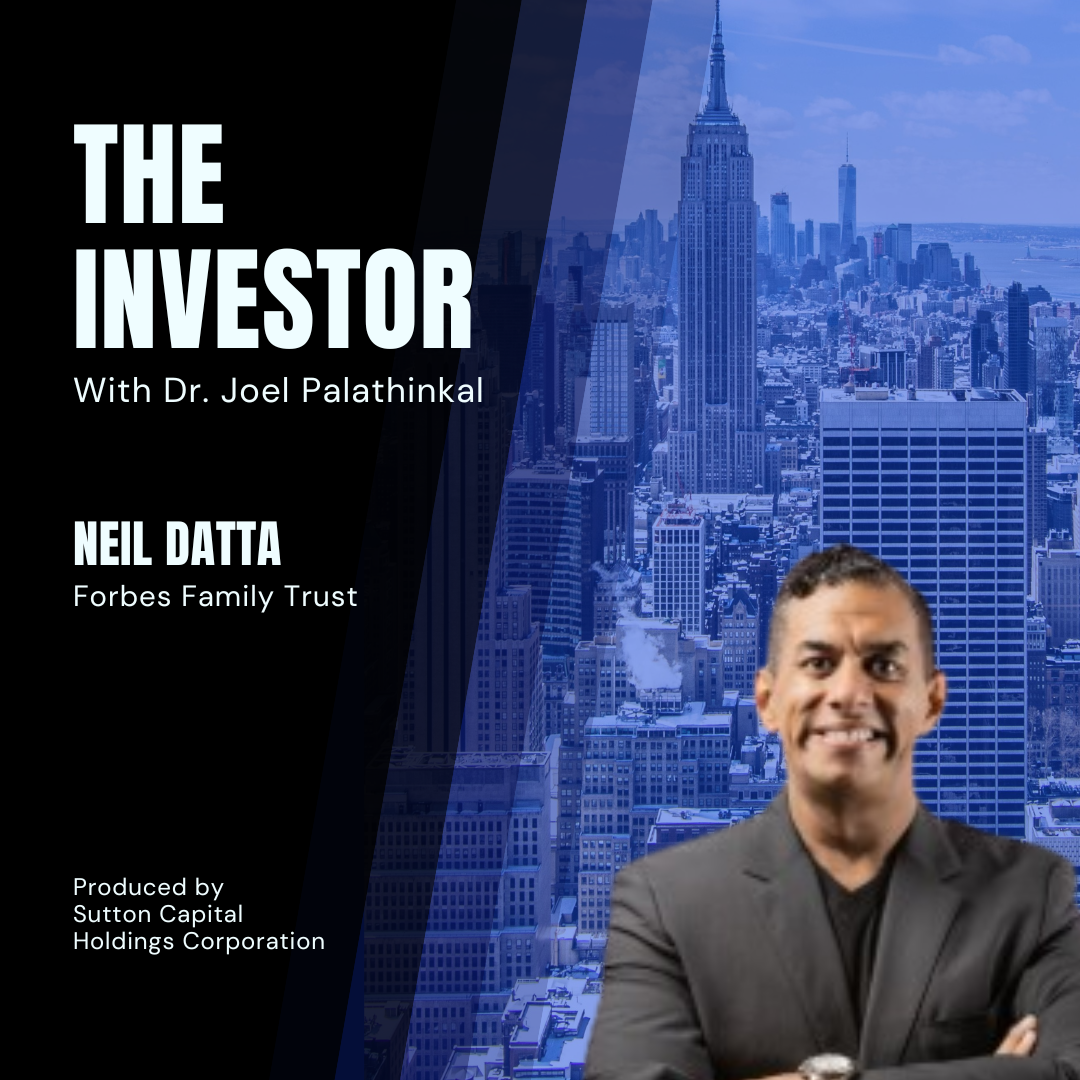
Welcome to the Investor, a podcast where I, Joel Palathinkel, your host, dives deep into the minds of the world's most influential institutional investors. In each episode, we sit down with an investor to hear about their journeys and how global markets are driving capital allocation. So join us on this journey as we explore these insights. Neil is with Forbes Family Trust, Family Office Trust, and he's also an entrepreneur as well. So I think what's going to be really interesting is kind of to hear, and you and I have kind of talked about this a few times, really just both sides of the table. Right. Being an investor and also an entrepreneur at the same time, I think it's really interesting to kind of look at that dynamic. But maybe we can start with just your background, where you grew up and, you know, how you kind of navigated to your career and kind of ended up at Forbes.
- [00:55]
B
Sure, sure. Thanks for having me, by the way, and looking forward to the conversation. Yeah, I grew up in Queens, New York. My parents were immigrants from India, kind of very blue collar, middle class background. I started my career kind of pre 911 working in what I like to say is kind of the basement of investment banking back office, settling trades, kind of really doing kind of the dirty work for Smith Barney back then, which was at the time we used to say it was one of the most active investment banks in the world. We had one out of seven, the largest accounts in the world were going through our branch at one time. So it was super interesting and active. So I did that for a couple of years and really got the basis of how Wall street works and how money moves. And really looking at it from interesting to see from the back end, you know, where assets are, custody and the mechanics of the way things work. And at the time I was, you know, working really silly hours, but not making a whole lot of money wasn't really fulfilling the promise of financial services. And my dad was working in government and he kind of made a suggestion, oh, you know, you can still make crap money, but work a lot less. So it was interesting. I made a pivot at that point and moved over working in government for a while. So I was an investigator looking for tax evasion, money laundering for the state of New York. And it was super interesting there for four years. Really kind of got a sense of forensic accounting and how auditors, and particularly government auditors, investigators look for nefarious activity, particularly the way money moves. We spent a lot of time with the bank Secrecy act and working liaising with the FBI and Secret Service, particularly When money was moving offshore. And you know people are creative when they're looking for ways to evade taxes. So that was you know, kind of my focus for about four years or so. And you know, I was there for a while and you know, working there I got contacted by a recruiter and they were looking for somebody that had Wall street kind of back office and you know, back office background, but also understood forensic accounting and looking for effectively looking for ways that people commit fraud and find ways to scam investors. And that's kind of my background. So I joined this group called our NASA management 2007 and that group at the time was one of the larger fund to fund allocators in the space. I think our AUM was north of 13 billion at the time. And they were a very traditional investment manager allocating large pools of capital to primarily hedge funds, Longshore Equity, Global Macro Credit. And it was a really great experience. It was kind of pre made off, it was pre credit crisis. And I kind of lived through that at Ardent, working there for really through the bulk of the crisis and Lehman failing and Bear Stearns and made off kind of the tail end of the year. So it was a really kind of interesting time. And my role there was, I was focused on due diligence and portfolio construction and risk management and making sure that our investors were really taken care of from a custody and from a fiduciary standpoint. Sure, yeah. So I was there for a while and then I moved over to this group which was originally called Optima, which was another New York based fund of funds group. We were another multi billion dollar asset manager. So I was there for a while running multi manager portfolios and mitigating risk for our clients and really getting a sense of global investing and hedge funds. And I think over the course of the last 15 years I've probably met in diligence thousands of hedge funds and allocated billions of client capital primarily to longshore equity and equity hedge fund strategies. And that was about a year and a half ago our group was acquired. So now we're part of as you mentioned, Forbes Family office which is a multi family office group. So it's really been one of these rare win win type transactions in the sense that they were a sophisticated family office with a bright team and rather than allocating to fund a fund strategies and rather than allocating hedge funds, they ended up buying one. So I was in that group. And since then it's been a really collaborative environment. We've been super active even this year, particularly through the Pandemic we launched a healthcare focused strategy fund January 1st of this year and timely before the pandemic, but it's actually done pretty well. And aside from that, we have a lot of strategies that we're considering co launching and it's really an interesting situation such that we're backed by the family and the multifamily office, but we also have this commercial side that was kind of the legacy Optima Group. So we're looking to expand that business and continue to run portfolios for ultra high net worth investors and other banks and other fiduciaries. That's us in a nutshell.
- [06:45]
A
That's great. Yeah. I got a question for you. So, you know, I mentioned in the past I worked in fintech, so I worked at factset and a lot of my clients were like high net worth buy side institutions. So one thing that they were pushing me to do is kind of study for the cfa. So there was like one volume in the CFA which was portfolio construction. So that was kind of a pretty good book. But I'm just curious for some of the people that are maybe looking into getting into asset management or already in it, trying to improve their skill sets, what do you recommend as far as just on the buy side, improving your portfolio construction or just refining that skill? Any references or any kind of, you know, workshops or communities that you think are good to kind of just improve portfolio construction?
- [07:28]
B
Sure. Cfa, I would say, is my number one tip, you know, especially from a hiring perspective. You know, we're constantly looking to get newer talent and you know, it's tough to do an apples to apples comparison, especially when people come from international, you know, jurisdictions and you're looking at degrees and resumes. But a CFA really is kind of a gold standard for the alts industry, I would say, in my opinion. So, you know, if you're a younger person and you're looking to break into the industry, just at least having progress towards a cfa to me should, you know, even more so than an MBA or a name brand degree, I would put more weight to that.
- [08:06]
A
Yeah, absolutely. And then any communities besides kind of the CFA community to join or they're kind of like some alternative asset, Because I know there's a lot. Right. There's a lot of noise in the community. So is there kind of some niche, smaller groups that you think are good to just kind of network with to kind of build that skill set?
- [08:23]
B
Yeah, there's a bunch of allocator groups. There's a bunch of meetups, there's, there's. Let's see, there's an institutional allocator group on LinkedIn. There's, there's, there really are a lot of communities, I would say, especially in kind of the institutional space. I've seen the same names over and over again. And so it is a pretty small community. But I think there are a lot of opportunities to network and meet up and really get your name out there. And I think for the most part, a lot of folks that are in my seat, we're very open to speak to folks and offer guidance and make introductions. So I think you shouldn't be shy and you should definitely be networking and reaching out to the extent you should.
- [09:03]
A
Absolutely. And then let's talk about manager selection, because that's part of the process for portfolio construction. So when you have these strategies and maybe your portfolio in general, there's usually a bunch of different assets that you're looking at and then there's probably a small pocket that you look at when it comes to hedge funds and private equity. So within that pocket, I guess deciding how much that percentage is, that's also part of your overall portfolio construction, right?
- [09:32]
B
Yeah.
- [09:32]
A
And then when you, and then you. So now you're kind of like, hey, you know what? We're going to do 3% of manager investments. So then how do you kind of whittle that down as far as just criteria like what are some things that really stand out? It sounds like some places have an emerging manager program, some places have, you know, just strict criteria on track record, I guess. In your opinion, kind of. What are some of the things that you think would be good to look at as a manager?
- [09:59]
B
I think it's a couple things at play. Number one, what is your. Just like whether you're managing your own personal portfolio or managing a large institutional portfolio, you have to look at what your needs for cash in the short term or medium term, and you have to look at what risk return targets you have. For us, we're a little bit atypical in the sense that rather than having one catch all bucket and looking to hedge that and make that really efficient from a long term perspective, we run lots of little vehicles. So each individual mandate has its own risk return targets, its own liquidity demands. And to your point, we have certain investor owners, if you will, who want to get more aggressive and want to have more exposure to things like venture and private and even these days. Because I think if you look at portfolio construction 20 years ago versus what it is now, it's really changed differently. I think one interesting conversation we had internally is that we're looking at things like crypto and blockchain technology and whether or not that has a place in our portfolios. We constantly kick the can and think about this. And one point I made internally to our investment team was that what is the likelihood that a institutional portfolio 20 years from now will have some exposure to blockchain or some exposure to digital assets? And in my opinion, it's 100%. So if we're going in that direction, we should be ahead of the curve and start looking at the assets. And that really opens Pandora's box of risk because you got to think about custody and transparency and whether or not if you want to be in a space, how do you be in the space and how do you do it in a institutional kind of risk managed way?
- [11:54]
A
When I look at. So that's interesting. And then also when you just look at emerging managers, I mean, my understanding of just the pros and cons, it's like, hey, you have to outperform to survive, right? So I think there's hidden talent. But then on the downside, you don't have the infrastructure and the support and all the resources that a big, that a big institution would have. But any other insights as far as just emerging managers, pros and cons? And are you guys excited about. Do you guys look at it?
- [12:24]
B
Absolutely. I think our core managers still are the folks that we probably have had money with 10 plus years and a lot of it is just a function of size. We tend to write bigger tickets and it's just tough to get. You wouldn't want to be 50% of somebody's AUM. So to be able to invest in a meaningful way, to move the needle, on our side, the manager has to have the AUM to be able to support our investment. But on the other side, I think there's a lot of studies that support this. Historically, investment managers tend to outperform in the first three years of their life cycle. When they're younger and they're hungrier and when somebody is 10 years into it and maybe the PM is in their 50s and 60s and maybe they spend a little bit more time golfing than trading, then you historically have seen some of the performance suffer. And I think as an investor, as an investor, you generally don't mind paying a performance fee, but paying consistent management fees year in, year out while you're not getting performance is what bothers you. So to answer your question, absolutely. I think we're looking for smaller emerging managers, folks that really at Alpha, it's hard to invest with somebody day one. I think we're not typically day one investors, but there are instances where we will be really early. And I think to your point, having infrastructure and having operations, having a team, you know, what do you expect a startup to have? A compliance officer? You know, probably not. You know, things like that, you have to, you have to make judgment calls in terms of what makes sense for that particular strategy. And then for us as investors, you know, we have to decide, you know, if you like the PM from an alpha generative generation standpoint, but you don't like their operations, is there a way to still work with them? And historically what we can do in a case like that is we may set up a managed account and say that person, you know, you do what you're good at and leave, you know, the accounting, the operations, the, you know, day to day management to us. So, you know, there are cases we can work with somebody who doesn't have an operational infrastructure that we expect, but we typically, you know, but in cases like that, it really has to be a unique situation where the person's a really stellar performer. But typically we expect a different, you know, a base level infrastructure and a base AUM to give us comfort that the manager will be around five years from now.
- [14:54]
A
And when the managers are doing kind of their outreach and essentially fundraising. Any advice on just do's and don'ts for managers, when they reach out to you, you're like, man, maybe there's an experience where you're like, wow, this guy totally should not have done that. Or maybe I'm assuming one of them is just don't show up to your office unannounced. But any other just, oh really?
- [15:17]
B
Okay. All right. It's actually a funny story.
- [15:21]
A
Showed up to your house?
- [15:22]
B
No, it was a couple of summers ago and it was this really early PM who kept asking for a meeting, asking for a meeting. And I didn't respond to all of his emails and he asked for a specific date and time, which I never agreed to. He just showed up in our office. Anyway, it was quite funny, but going back to the question, I think as an investor you hear lots of pitches and one thing I like to focus on is don't be all things to all people. I think it's important for PM or a fund manager to really understand what their expertise is, what each investor's expectations are of this fund. For example, if you're a healthcare fund and health care is down, we expect you to be down. And to the extent you're outperforming the index, then what we consider that alpha. But you know, if you're telling me that, you know, we're in all strategies, you know, like if it doesn't seem like a really repeatable process and we don't have an expectation, you know, you can't, you know, being right on Amazon or Tesla or some of these names doesn't necessarily, you know, translate to forward looking performance. And that's certainly what we're looking for.
- [16:32]
A
Absolutely. No, that's, that's a good, good advice. I think also I think it's important to just figure out what you care about, right? I mean, so if you don't even care about healthcare, then there's no point really bringing that up because it's not relevant. So I think that's a good point as well. So that's some of the public stuff, right? Looking at Tesla and Amazon, what about on the private side? Because obviously you don't have that public data. So then what are some characteristics of maybe a good manager that you've seen in the past on the private side, whether it's a hedge fund or even venture capital or Pennsylvania?
- [17:07]
B
Yeah, I would say the most of our private exposure is through managers that have private books within their kind of commingled structures. And I think the benefit of that for us is, for example, going back to healthcare again. We can invest as one team that we were quite bullish on. And it's a team of doctors in New York and they're practicing doctors and they see patients Monday, Wednesday, Friday, and they trade in between. And you know, I would make the argument that that's genual edge. Right? They're on the ground, they're literally trying things on their patients that they may or may not, you know, have experience to just sitting at a desk. So if someone like that who also runs a PE fund and runs a VC fund and also runs a hybrid fund, if they are talking about, you know, early VC or if they're excited about a company, then we're going to pay, we're going to pay attention because we put a lot of focus on that. So historically that's been a lot of our PE exposure. And then on the other side, our traditional PE VC investments have been kind of the more well named fund managers. And from that perspective, I think it gives us a little bit comfort that they have repeatable deal flow and they're able to participate and lead and they're able to, because as an entrepreneur myself, and I think I can appreciate that just because somebody's Willing to write you a check doesn't mean you want to take it or should take it or it's in your company's best interest. So the people that the investors from a P&VC side who really get the access and don't hear a lot of no's from founders are the ones that I think are compelling.
- [18:47]
A
Yeah. And with a multifamily office of your magnitude, it probably doesn't make sense to ever really go direct. I'm assuming, right. Or do you guys sometimes go direct or is it worth it? I'm assuming for you guys it doesn't, it just doesn't make sense. From a portfolio construction standpoint, it'd probably be better to either just go direct to a fund or like maybe even a fund of funds, right?
- [19:07]
B
Yeah. I mean, we have a long, decades long history, so I think historically we probably have done that. But I think these days it's just more efficient. And from a diligent standpoint. Right, like how do you. It's tough to diligence when I speak to VC funds these days. That's one question I'm asking a lot is especially post Corona and post the world shutting down, how do you get comfortable with a founder that you've never met? And I think from us, from a risk management perspective, it gives us a little bit comfort to go higher up on the cap table.
- [19:38]
A
That's a good point. So I think for you guys with your magnitude, I think it is important to be higher up. But what advice do you have for just emerging managers that are trying to build relationships with LPs? So some people have said, hey, you know what, let's, let's do some co investing. It's like, here's a family, maybe a single family office. It's like, hey, here's a really cool quantum computing company. And maybe that family came from like a data infrastructure. History of technology. So do you think it makes sense to do possible co investments or do like an SPV first and then kind of slowly build a relationship? Or do you think it's better to kind of talk about the fund and try to convince them to invest in the fund?
- [20:22]
B
I think as investors we love that. But typically they want you to invest in the fund first before they show you the deal flow. I think in terms of getting relationships probably start at the bigger managers. Just generally speaking, the bigger investors just from a safety perspective will tend to gravitate towards the names and you know, the bigger fund managers, you know, to the extent you have relationships there, or you can be a Feeder fund for them, that's to me probably the easiest, lowest hanging fruit.
- [20:56]
A
Yeah. And then as far as the career transitions for, you know, being at a larger fund. Right. At the larger family office or multifamily office. Right. So would the career progression really just be managing more AUM or would you be managing a group of people that have some aum? Is that kind of how the career progression goes or is there another step in their career development? When you're at a multifamily office or a larger institution.
- [21:29]
B
I know you could appreciate this that the term multifamily office is thrown around a lot and it means a lot of different things. And I have friends that are at a family office and they're just, it's just two guys and the other guy who's it's money, you know. So it really depends on the institution itself. Some family offices are very institutional. I would put us in that category. And then you know, if, if you're an institutional family, then you know, talking about registrations with, you know, regulatory bodies and FINRA and things like that, then you know, the more size and you know, kind of tentacles you have with, with different agencies and it just makes things more complicated. So I think from a career progression standpoint, starting at a bigger shop, it gives you more flexibility. Right. So it's tough to go from a smaller two man shop to an institutional shop because you don't have that regulatory background. But you can go the other way. Right. You can go from a big shop and kind of take it down a notch. But that's one thing that's interesting.
- [22:30]
A
Yeah. And then another question too. So you mentioned the healthcare fund that you guys launched. So is that the fund with the group of doctors that had the medical piece?
- [22:39]
B
Yeah, so that's one of our allocations is this fund and we have a couple of other allocations. And again, I think it's a strategy that there is a lot of embedded alpha. There's, you know, you can. And I would also make the argument that it's one of the rare fields where you can make money on all market caps. There's mega cap companies that have a lot of embedded upside from an M and a perspective. And there's you know, pre drug development company. So there really is lots of sources of alpha. But you know, having the right information edge is what makes it a repeatable process.
- [23:16]
A
So they're diversified across just healthcare in general. So they do drug discovery, pharmaceuticals and they just kind of have their own strategy to kind of measure the alpha.
- [23:25]
B
Right? Yeah. So we. Sorry, go ahead.
- [23:27]
A
No, I was just going to say that's interesting. And then, you know, as you answer the question, I'd also be curious to see your trends on just the technology powering some of this alpha too because I mean you're building a fintech company which we're going to talk about in a second. But how have you seen that change with just kind of access to Data? Companies like FactSet, Bloomberg, they have a lot more analytics and a lot more secret sauce than they did even like three years ago. So how are you seeing that change as you can answer this question about strategies.
- [23:56]
B
Yeah, technology and healthcare. It's really been a fantastic edge. One thing I like to point to is, and there's a manager that we work with and they've built this proprietary software and it's fantastic. It's in their office, they have a 75 inch touchscreen model of the human body and you can touch, and I played with it, you can say you touch the heart, it'll zoom in on the heart and then you could touch a specific part of the heart and it'll tell you all the possible ailments that could happen with that valve. And then you touch a specific ailment, it'll tell you who's making the drugs, what trial they're in and how you can invest in that and things like it's really, really fantastic next gen type stuff. And they have, you know, they're multibillion dollar funds so they have an army of people who just sit there and code this stuff in and make it a graphical interface. But it's, it's, it's existence purely is to fund their investment process, decide, you know, what to go long, what to go short. And you know, that's to me the definition of edge because they could put this in a way that really drives their investment process. And I think that's a lot of what you're seeing. And to me, what's the exciting point of this is that it's not limited to early vc. There's information and technology edges across public and private investing and kind of leads me to one of the reasons we built the platform. So the fintech, it's called Maritas and it all started a couple years ago where my co founder Gabe and I, we started looking at, we read an article, I think it was in the Journal and it was about these students that were on campus at Harvard and they were picking stocks and they were quite good at it. And the thing that caught my eye initially was that they beat The s and P, nine out of 10 quarters. And my first impression was half of my managers can't do that. So we actually just reached out to them and had a conversation. And the thing that was super telling was that they were booking stocks, they were actually running real money. They had a slice of Harvard's endowment and they were able to manage that for the endowment. And the aha moment while talking to them was that by any metric, these were the most elite university students maybe in the world. And they still had no mechanism to own their own research and even profit from these trade ideas. And only the endowment was basically trading on these ideas and profiting from it. So this is, we thought about and I know you're a sports fan, we thought about, you know, how does a kid get from like a small town onto the Yankees or to Lakers or Manchester United? And sports has a very well defined mechanism to source talent, to identify and promote talent. But as you know, our industry does not, you know, it's still, you know, old boys club of networking and relationships. And you know, me growing up in Queens as a young brown kid looking for opportunity, I wasn't necessarily on the same playing field as everyone else. And you know, it really feels like today 2020 technology should be fixing these, these, these things like gender bias and you know, people of color not being paid what, what other folks are paying. And this is, this is kind of what we wanted to create. So Maritas really is a platform, it's free to download. Anybody can start trading virtual equities in an authentic way. So it's meant to mirror kind of a Bloomberg port terminal. And we keep track of everyone's performance, we give out cash prizes, but we, most importantly, we allow users to facilitate their trading and push it to an employer for a job.
- [27:38]
A
Oh, interestor.
- [27:39]
B
Yeah. So if you, if you were running a health care fund and you're sitting in your seat in Boston and you want to do healthcare fund, and you say to me, I need a person who graduated from Harvard, B.C. or BU who's got experience in health care. And we can do that. You know, we could extract that portfolio and give you an output of folks who are in your area who have experience trading within your mandate, stocks that you care about. And there's really no other way to do that. So that's really.
- [28:07]
A
Yeah, I didn't know that you were going that far with that. I thought, you know, so. And then where, you know, you said that you have some capital to give them as a reward. I guess so if they, so then where do you get that capital to give them a reward if they're like the best performer?
- [28:21]
B
Yeah. So we had some seed investors who financed the build out. And it's kind of fantasy football rules. Okay. You know, you're competing with your portfolio. We give out cash prizes to the winner's circle. Who's our best people on the platform. And while you compete for the cash, you continue to build your own portfolio. And when you're in a position to apply for a job, you could push your portfolio to an employer as your proof statement. And we, you know, in my opinion, much better than a standalone resume.
- [28:52]
A
That is much better than a resume. I mean, especially for a fund. I mean, hey, it's great that you went to Harvard, but this person that went to small university in Queens is generating alpha. Right. I would, I would pick the one that's doing better for performance, that can do the job. But I guess we're stuck with some people that are really focused on the pedigree. But I think at the end of the day, it's like we're getting more. We're heading more towards a skill based economy, you know, Would you agree? I think it's just kind of like, can you do, can you complete the skill and successfully, you know, be the best candidate in general?
- [29:27]
B
Right? Yeah. And I would say that even 2020, you know, with the pandemic, you know, managers care less about where their folks work. Right. And even though they have historically cared about what their folks look like, they shouldn't care at all these days. And I really want to create this mechanism where let's be a matchmaker and the kid from Queens is a good analogy, but I would take the step further. The girl in Vietnam or the kid in Bangladesh or Talent is everywhere and talent doesn't care where you were born. And there's no mechanism to really match these folks. Do we really think the next Warren Buffett or the next George Soros is going to be some kid in New York or London? Probably not. And this is what we're excited about is as we start growing internationally, we'll have an army of analysts that are incentivized to feed us their best ideas in exchange for small dollar cash prizes.
- [30:22]
A
That's interesting. And yeah, I think the cash prize is huge motivator because it's just, you know, the concept of being in a sport and competing and just kind of gamifying it. But I think the real value too, on top of that is just having people potentially use that as something they can share as a Track record kind of like. Because if you think about it, the parallels that I think about is when you're a UX or UI designer, you have like your portfolio that you share.
- [30:50]
B
Right.
- [30:50]
A
I mean no pun intended. But then also when you think about like developers, when they're kind of applying for developer jobs, they have to do a developer test and they have to kind of submit some code. So I think this is the first time I've heard like in financial services where it's kind of like a tech portfolio construction test. I mean have any other like, like Two Sigma or any of these other funds, do they do something like that where they, you know, because you're, because I think your demographic is really the college kids. Right. But I feel like this could also be used for just professionals that are trying to get into like Two Sigma or like any other trying to even just go to Fidelity.
- [31:27]
B
Right.
- [31:27]
A
If you're trying to get a job at Fidelity, you know, I wonder how that process is and if your platform could also be used.
- [31:33]
B
Yeah, 100%. You know, I, we. It's really interesting to think about this. If you are a 22 year old first year Goldman Sachs analyst and you're a good trader in your portfolio and your personal account, there's no mechanism for you to prove that to a new employer. Right. Goldman will never let you take that with you. Right. So you don't own your track. Yeah.
- [31:54]
A
And you don't want to take screenshots of your homepage of your, of your Robinhood account or whatever you're using and share that to Goldman.
- [32:02]
B
Right. And one thing I didn't mention is that so being investors ourselves, we wanted to create an authentic mechanism to judge folks. Right. And what I mean by that is if you join the platform and you pick three penny stocks and one of them happens to be a 30x return overnight, I don't believe this person should necessarily win the whole competition and get the cash. So the way we correct for that is people are not judged by.
- [32:29]
A
One hit wonders.
- [32:30]
B
Yeah, exactly. We created an algorithm that takes all of their behavior within the platform. Things like consistency of batting average, originality of names, sector volatility. Same way we look at managers to extract alpha from each effectively portfolio. And the person who has the most alpha is what's going to win the competition. Not somebody who's got the best raw performance. And I think that incentivize folks to be thoughtful investors, not consistently swing for the fences.
- [33:03]
A
Yeah. And I think you and I were joking about this too because I think when you're selling it to your job. Because I think you had to disclose this at your job. And I think the funny thing was you're essentially this tool, essentially also assesses managers pretty much right at the university level. And I guess that's an interesting topic. And we've personally, you and I, gone through this as we've kind of collaborated with some other people. But how do you kind of change your hat? Because, I mean, you're meeting. It's a funny dynamic, but like, you're meeting a VC to kind of like, you know, get funding for your startup, but then the VCs like, oh, wait a minute, you're an LP too. So hey, by the way, I've also got a fund and you know, hey, we're on fund too. I was just gonna say before I hear your answer, it's just funny because there was an LP that I literally just talked to yesterday. And he's trying to just jump to the other side and he just wants to be a VC, but he's talked to a few VCs and like, oh, I don't know if we can take you, because if you join our firm, then we don't have the contact at the firm anymore.
- [34:09]
B
Burn the bridge, right?
- [34:10]
A
Yeah, burn the bridge. So they're like, ah, you know, it's kind of tricky. So, you know, that's just, you know, you and I have joked about this, but I wonder if there's any just, you know, issues or kind of just thoughts or funny stories about that that you got.
- [34:20]
B
Yeah, you know, it's funny because as an entrepreneur, in the beginning it was this like, you know, dirty little secret that I have this job. But I think, you know, now, as Meritas morphed from kind of a side project to a legit business, I definitely think it's additive on both sides of the equation. We're in a position to meet more folks and source managers. And so I would say I'm increasing my deal flow as an investor. There really isn't any overlap or conflict from the perspective of the folks that we would potentially invest in. You know, wouldn't be candidates for us as meritos. Cause we're too early. So, I mean, maybe knock on wood down the road would be a good problem to have. But I think as of now, it's just been interesting in terms of opening doors and having conversations. And as you know, I love pointing this out that the VC community is so small. You know, the global VC community in dollars is less than $200 billion. And that's one manager and Bridgewater is bigger than that. So because of the global VC community is so small, I think it's good to network and meet as many folks as possible because as you know, people change jobs and it's good to have a pretty wide and diverse network.
- [35:38]
A
But what I love about your app and then also just kind of day job, I feel like they both complement each other. Right. Because it's just like for a living, you're picking managers and looking at performance and that's what exactly what the app does. But I think you're right down the line. Right. Hopefully knock on wood for you. I hope you scale where it's kind of like the managers you're picking are the people that will eventually just be the talent pool that goes into your manager selection. Anyways, it's always great when those businesses complement each other. Why don't we do. So we got 20 minutes. Maybe we can do a quick demo or some screenshots if you're able to. That way some people can get some visuals and then maybe we can get. Maybe I can get you a couple downloads as we do your demo. Actually, you know what, while you do that, I'll pull up the app so I can maybe see if some people want to download it as well.
- [36:25]
B
Well, I should mention that we are only limited to specific edus right now.
- [36:31]
A
Oh, got it. Okay.
- [36:32]
B
Yeah. So what we did from a sort of growth standpoint was we really wanted to focus on building something that's compelling. And going back to an earlier question you had is I don't envision this forever being a college product. This is really. We're taking kind of almost like the Facebook approach where we're kind of growing with universities. But I do envision this being open. And going back to earlier question, I think if you are a first year Goldman analyst or first year Fidelity analyst, this is a perfect opportunity for anyone to start learning how to manage portfolios in an authentic way. So right now it's only for.
- [37:13]
A
Specific couple universities.
- [37:16]
B
Yeah, so we have 30 universities, you know, all the Ivies, plus kind of top schools in the US but eventually we plan on taking that.
- [37:31]
A
And it seems like it's also good for people who want to just learn about trading as well, so. Or do you have to kind of be someone that's at the level to. To join Goldman or could it be a beginner as well?
- [37:42]
B
That's a great point. I don't think you see that. Okay, we see that.
- [37:46]
A
Yeah, we can see it.
- [37:47]
B
Okay, I got it. All right, so this is Kind of. Okay, so this is kind of, this is live, right? So kind of, you see these kids are all kind of competing for small dollar cash prizes. So you notice that this is kind of a winner circle. And you notice that the score, the Maritas score, is kind of indicative of their performance. So this is portfolio. This way it looks like the super simple. So going back to your question, no, no information, no education needed, and it's purely an academic exercise. And this is what I mean by that is there's no, you notice there's no dollars you see anywhere. It's, you only get slots. So you have, in this particular portfolio, I have three, two long positions and three short positions. And if you, if you happen to only have one short idea, that's totally cool, you can do that. But we don't pigeonhole you in that way. And it's meant for people to focus on conviction, not dollars. So in this particular example, my highest conviction long trade is Amazon and my highest conviction short trade is pharmaceutical company. And that's what it happens to be. So this is kind of our job board. Right. So we allow folks to apply. And this is kind of our friending feature. You can PDP messaging.
- [39:05]
A
That's really cool. And then the jobs, you just pull that in from like a feed.
- [39:09]
B
Yeah. So we have relationships. So for example, job at Lazard. And the key thing is you can push your resume directly to them, plus your trading history. Right. So one thing to mention is it's not, it's mutual fund rules for trading. It's not, we don't want to incentivize people, earnings arbitrage or day trading. So if you wanted to add a name to your portfolio, it's mutual fund rules, you'd add it and it would, it would show up tomorrow. But again, it's, it's meant to incentivize kind of long term, fundamental, fundamental equity. So this is kind of like the front, the front page. And, and you know, so for example, like Hannah's are, Hannah's our leader right now. So if you click Hannah, that's a.
- [39:53]
A
Real, that's a real student at Brown.
- [39:55]
B
Yeah, yeah. So. So if I wanted to talk to Hannah, I'd send her a friend request and we could collaborate on portfolios and she could let me know or if she wanted to share, she could. But this is all I see in terms of the leaderboard. But this is what we see in terms of engagement, people logging in to see where they fit. And then, you know, obviously you can, you can compare like who's the monthly winner or if you wanted to just look at your friends or your school, you know, who's a winner on the Meritas team. So that's kind of platform in a nutshell.
- [40:24]
A
There was one. Oh, I'll take a look at it later. But there was one screen. I think when you looked at your profile, there's probably some summary performance view as well that says, hey, you know what, here's my higher level vision.
- [40:36]
B
Right? Yeah. So that's another thing we are focusing on is the analytics. And that's another piece of the puzzle because you think of long short investing, right. There's really no authentic way to do this. Right. Without money. If you wanted to run a long short portfolio, typically take the financial commitment and we wanted to really take out that piece of it and do it in an authentic way. So I think our algorithm solves for that. And if you think of using poker as an example, people playing online poker for play money versus playing real poker for real money are two different exercises. So the way we take that online aspect out of it is having these jobs and the cash prizes which make it an authentic experience without the financial risk and commitment that, you know, a real portfolio would require.
- [41:29]
A
Yeah. And what are some enhancements that the students. And then also some of the employers are looking for any, any things that they've asked for that you think is interesting alongside the, the analytics.
- [41:39]
B
Yeah, great, great question. So, so as you can see as an employer, if you're hiring, going back to our, our, our healthcare example.
- [41:45]
A
Yeah.
- [41:45]
B
If you tell me you're hiring for a healthcare fund, I can give you folks that have experience trading healthcare stock. What we want to do is we want to really facilitate good conversations between employers and potential employees. And what we'll do is we'll say, okay, you shorted Apple in the Q4 of last year. Why did you do that? So we're allowing users to add data point. Right. I'm putting this short on, here's why. And maybe five examples of, you know, a company stinks, whatever it is, or I'm going along, here's why. So not only will you see the trade, you'll see their thinking back then.
- [42:21]
A
Sure.
- [42:21]
B
And, and that is something that I think employers would appreciate because again, putting yourself in the position of, you know, is this person going to make me money, this person going to be a good analyst or good pm? I think that speaks to that more so than if they were in a club or had a good reference.
- [42:35]
A
And then the. I think the analytics is also kind of A good high level just report that just kind of gets shipped to the employee. Because you said that they can also send the resume as well.
- [42:44]
B
Right, right, right, right. So the first piece is the resume that's just basic, you know, resume biographical information. But yeah, there's three, there's three pieces. I would say there's a resume, there's the trading history and then there's the algo. So the algo is kind of the alpha snapshot.
- [42:59]
A
Sure.
- [42:59]
B
The, the, the portfolio is their actual transactional history and then there's the bio information. But I think all of it is a better snapshot of a person as a candidate than just a standalone resume.
- [43:11]
A
Yeah, it's really interesting. And then I guess for the students, is there anything else that they're asking for? Because I think the comments are great. I actually thought about that like when you showed the long and short screen, I actually thought I was like, that'd be kind of a cool feature to just say, hey, I'm doing Apple because this happened in the news. So you kind of read my mind. But anything, any other features as far as kind of just construction of the portfolio or on the student side that they're asking?
- [43:41]
B
Yeah. So one question we get all the time and we're debating internally is do we want to give them. So right now it's just equities, right. Long stocks, short stocks, do we give them the ability to trade crypto? Do we give them options? Do we give them fx? And I think we're debating the value of that and also whether or not that's something we want to incentivize. Right. You can buy crypto, you don't need us to buy crypto. But is it helpful in terms of portfolio management? And I think my answer may have been different three or four years ago, but now I think it is long term going to be part of a constructive portfolio management platform. So maybe that's one thing we'll change. We'll add other asset classes and give them that flexibility.
- [44:30]
A
Has crypto slowly grown into the, to the portfolio construction or has it kind of fizzled out a little bit like from the institutional side as far as just allocating a small amount?
- [44:45]
B
I speak to a lot of institutional allocators and quite honestly, very rarely when you're talking about portfolios over 10 billion, I don't know of anyone that has a meaningful crypto allocation. They all have it. Personally, everyone's got their own wallet. But in terms of doing it from a fiduciary standpoint of for one of your Clients. That's a different conversation altogether. But everyone's looking at it. Quite honestly, everyone's looking at it. And maybe the government could be helpful in this in terms of. Because from, from my perspective, you know, how do you verify custody? Right. So if I'm, if I'm buying, you know, obviously there's, there's ways to do that, but you know, from a fiduciary SEC FINRA regulated standpoint, it's really tough to get there.
- [45:28]
A
Yeah, that's what I thought too. And I guess on your end, you know, are there any other new types of asset classes that people are looking into that could be an opportunity? Like in the private markets? Are there. You know, I mean, the SPACs and all that, are there kind of like fractional shares of a SPAC that some people are hyping up now in the next few years or anything else you see kind of in the future? I guess it's for the future future of portfolio management. On the buy side, anything that you're thinking is like revolutionary.
- [45:55]
B
SPACs are the flavor of the month, right? Definitely. You know, Bill Ackman, it's got a big one. Yeah. Social capital is doing another one. I really think with the equity markets the way they are these days, I think it's a natural output of that if the equity markets change, if rates or financing. But having so much free money around, why would any corporate board want if they can avoid all the handcuffs and of an actual filing and get the capital another way? It's. It seems like a natural fit.
- [46:33]
A
Yeah. It's just the underwriting and the whole intermediary process that you get to. That you can hop. That you can hop and skip and jump pretty much with the.
- [46:40]
B
Sure. And at least 10% value savings. At least. If not 20.
- [46:46]
A
And I mean it works out for Chamath as well. You know, that 20% is so cool. Well, hey, man, this was awesome. I'll give a couple of minutes to. I'll give a couple minutes to the audience and really enjoyed the demo. So thanks for sharing that and I'll just give a couple seconds if anybody has any questions. So anybody in the audience have any questions for Neil? All right. Well, if anybody wants to jump in, they can. What I usually do is towards the end, just kind of ask every speaker to share if they have any. Just general life advice. Anything that you've learned from a mentor. I think you just have an amazing story because you've been an investor and an entrepreneur and you're doing both of them at the same time. Which is super commendable. But any life advice, professionally or just personally, we would love that, and we'll take that back with us.
- [47:38]
B
It's funny, I would say that over the last six months, the best thing I've done is not be shy with people, is just be active in reaching out to people on LinkedIn and other ways. And I think folks that, you know, maybe historically have, you know, you've had to go through multiple PAs or multiple levels to reach folks. Everyone's sitting at home these days, so if you're looking to raise, if you're looking to network, if you're looking to expand your business in any way, it's the best time. I think both of all the programs out there in terms of incentivizing small business and the money that's available, but also the people are actually available. I think it's a great time.
- [48:16]
A
Yeah. Super helpful advice. Well, hey, Neil, thanks for your time. I know your time is super precious and valuable, so really appreciate you taking time out to mentor us and tell us your story. And I look forward to kind of hearing more about your app and testing it out.
- [48:31]
B
Cool. Thank you so much, Joel. I appreciate the time and look forward to talking again.
- [48:34]
A
Yeah. Take care, Neal. Bye, guys. See you.
- [48:46]
B
Sam.