← The Investor With Joel Palathinkal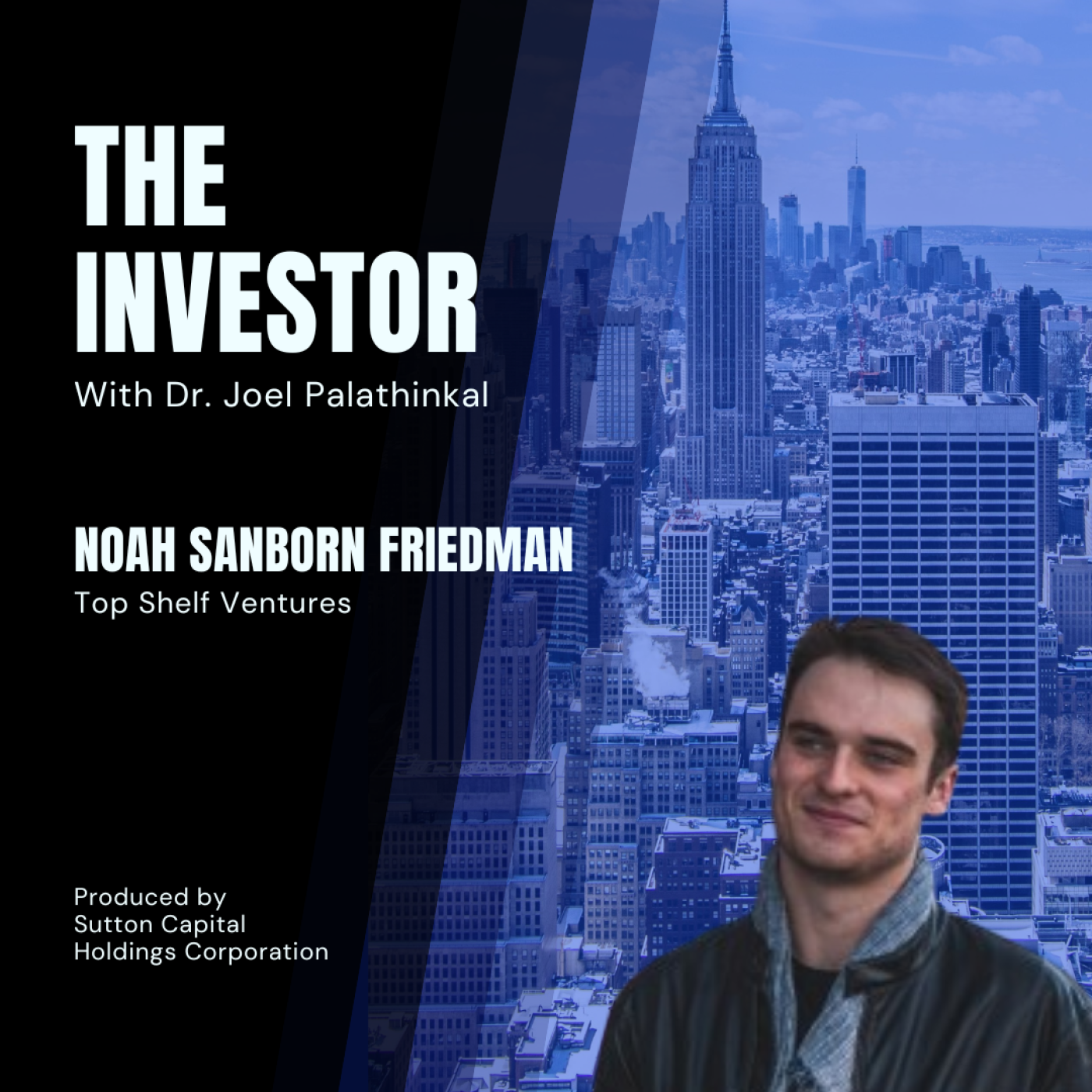
Loading summary
Transcript72 lines
- [00:03]
A
Welcome to the Investor, a podcast where I, Joel Palo Thinkle, your host, dives deep into the minds of the world's most influential institutional investors. In each episode, we sit down with an investor to hear about their journeys and how global markets are driving capital allocation. So join us on this journey as we explore these insights. Cool. So we're live. Excited for this weekly episode. I was out of the country last week, so excited to kind of get back into this. But I'm here with really good friend Noah Friedman, and he's at Top Shelf Ventures. So, you know, they focus on everything beverage. And he also runs an amazing community called Uncharted. So excited to kind of go into detail into those two things, but then just kind of learn a little more about, you know, your early life, your career, how you got into investing, and how you got into the beverage space. So why don't we start there? So, number one, welcome to the show. Thanks for coming. Thanks for being generous with your time to, you know, share, share information about you and what you're building. But, yeah, why don't we. Why don't we kind of just kick things off and learn a little more about, you know, your early career? What did you study, you know, you know, in your early days and kind of how you got into where you are now?
- [01:20]
B
Yeah. Well, thanks for having me again, Joel. It's really cool to be here and I've seen the show. So cool to be on it as well. And welcome back from vacation. It sounds like it was epic. So I'm sure everyone's happy to have you back. Here's the short version of the story, and I'm happy to dig into as much of this or as little of this as you want to, but like you said, I run Top Shelf. I started with my partner a few years ago. I also run Uncharted, which is a founder and investor community with Michael Loeb. Michael Loeb was an influential, still is an influential person in my sort of career upbringing, if you will. I was aspiring, super ambitious, entrepreneurial type when I was in school. I grew up in New York City and went to college, undergrad at Boston University. BU did not breed entrepreneurs. So I was, I would, I would say, a bit different than most of the other people who were on the consulting or accounting track. And I was just hustling, frankly. I was fortunate enough to get invited to an entrepreneurial boot camp type thing that happened over my spring break when I was a sophomore. The sponsor of that happened to be Michael Loeb. I looked up his career path and Was like, that guy's doing what I want to do when I'm older. And I was lucky enough to shake his hand and just have a very brief exchange with him that led to me having a meeting with him. That led to him saying, why don't you intern for me? This is before they built out what is now a phenomenal internship program at Michael's family office. But that was before all that. And by the end of that summer, we were very close, kind of trading emails daily, if not more frequently. I was getting to work on deals that I had no business with working on when I was 16 or 17. And fast forward, I ended up working very closely with Michael throughout the rest of my junior and senior years across his business, a number of his deals on the investment side, operations within his portfolio companies, just getting thrown into the deep end of venture, private equity and the like. And by the time I graduated, we were both close enough, had built up enough trust, and I'd kind of built up enough of a track record and internal competence and skill set to, I would say, graduate into more of a junior executive role out of school, helped them build and start a company that just happened to be in the alcohol space in the booze business. I knew nothing about the alcohol business other than being a somewhat active social person in college. So drinking some alcohol in college, I didn't know anything about the business side of it. And I was fascinated, getting deep into this business by not only how powerful and ubiquitous it was, but also the history and just, it felt like this beast of a business that was right under everyone's nose that nobody was talking about. And, and so by nature of having to be the eventual COO of this company, which I was when I was 24, I had to learn everything and anything about the booze business. And in doing that, like I said, I got very close with a lot of very powerful stakeholders within the alcohol business. And more importantly, I learned a lot of the nuances of how the business works. And I'll cut to the chase of how it led to top shelf. But after several years of helping build that company, which ended up processing tens of billions of dollars of receipt level transaction data from stores across the country, which, in other words, was showing us exactly how consumers were buying booze over time, what brands they were buying, I started to see these stories play out of brand X launches in New York or Connecticut or Michigan, what have you. And I saw their deck because I was in the scene, I was seeing how these companies were raising capital. Most of them were Raising money from friends or family. After a couple years we'd see them start to pop up in the data, sometimes even a couple months. And they were going from raising money at very reasonable valuations to all of a sudden these brands were blowing up and crushing it. And I just continued to see this story play out of good fundamental businesses were number one, I was seeing their data. Number two, they were growing quickly and number three, they didn't have access to really good strategic capital. I had gotten pretty good at connecting brands with the right people throughout the industry just because I was in the space. I was almost playing VC board member for brands. I was advising without even realizing it saying, oh, you're crushing it in this state. You need to be in this state. I know the retailer there. You guys should chat the whole nine yards. I ended up meeting my business partner, Jason Sherman, who at the time was running ab InBev venture arm. We got close. Over the next few years he built and sold his own tech company. And after a while we kind of both arrived at the same conclusion, that booze and really broader vice and highly regulated industries are a remarkably lucrative, profitable and dramatically underserved asset class when it comes to institutional capital. And we had the right skill sets, teams, personalities, all that to come together and build something special. And so in sort of mid-2021 we put our heads together and said what would it look like to start a fund? And we ended up doing a first close of top shelf in mid-2022.
- [05:55]
A
So tell me about some of the learnings. Just reflecting back, you know, being a young executive. Right. Being a COO at the age of, I think you said 24. What were some of the biggest learnings? Just looking back because I mean it makes you grow up really fast. Right. Most, most people that are a COO are in their late 40s or or 50s, depending on the type of startup that you join or, or you know, established conglomerate, especially in the, especially in the beverage space. Right. So what were some of the biggest learnings? And then I think, you know, because I'm a data nerd myself, coming from Fintech, what are some of the learnings that you're allowed to share about? Looking at the spend data like the consumer behavior. Yeah, because I, I, I like to nerd out on that kind of stuff and I'm sure there's people in the audience that do too. Totally.
- [06:38]
B
Well, I'll start with the first question, which is what were some of the biggest learnings? A total 180 and ridiculously steep learning curve not only learning how to like actually run a business and all the nuances of accounting and bookkeeping and all the things that you need to do to run a tight ship properly, also scraping our knees a million times on what it looks like to both forecast revenue, accurately handle client services, customer service, all the things that go into making a machine run properly. I'm very grateful that I had an opportunity to scrape my knees, get things wrong course correct, have good mentors around me that kind of showed me the ropes and just get to like fail and learn by doing. Which eventually led me to having some semblance of how these things are supposed to go. I think the people dynamics are remarkably important in big organizations and small organizations, startups. I mean, I talk about this a lot, but business at its core, certainly on the sales and marketing side, but really, even internally, it's so much about a people game, right? It's so much about understanding what motivates people, whether that's the customer that you're selling to or the internal team that you're trying to keep and hold accountable. You know, the art of dealing with and motivating people is in part, in parts it's science and in other parts it's art, right? Understanding what it is that says, all right, look, we are scaling this team, we are scaling this business. The business is growing. There's a whole bunch of fires happening at once. What is the right way to skin the cat that can solve for putting butts in seats, that can do the work necessary, Paying a reasonable amount to keep them motivated, but also giving them the right incentive plan to work even harder, not paying so much that you're underwater. All those things are just like, you kind of, you can read as many textbooks as you want and watch as you want, but a lot of it is just like, you kind of have to just see it live, right? Because there's a big difference between reading or watching a case study of, you know, Nvidia and how they hire people versus, like, all right, I actually have a problem in the business that I am responsible and accountable to the board for and I need to solve that thing with a human being. Unless I'm going to just do it myself, which at a certain point is impossible. Like, how do I do that? And it sounds easy and it sounds simple and we can go through a million of the different hiring plans and incentive plans and put okrs in place and hold them accountable and do check ins and all that, but a lot of it is just like, you got to learn who people are what motivates them and how to deal with them. Right. So a big part of it for me was learning how both with external clients and all the stakeholders that we were doing business with, whether that was Diageo and Moet Hennessy and, you know, really big executives of publicly traded companies or like very junior hires right out of school that reported into me that I had to hold accountable but also show the ropes. Like, it's just a really steep learning curve of understanding the nuances of how people work. But at the end of the day, business is people, right? Especially once you get into the highest levels of like, making decisions and allocating capital, raising money, doing deals. So much of that is about really looking people in the figurative eye, understanding what motivates them, understanding what it's going to take to get them. It's negotiation, it's motivation, it's people. And so I would say all of that went from learning it in a classroom to learning it on the fly and doing it on a fairly big stage early. And I'm grateful for it. In terms of the data, your second question on the booze side, it's an interesting one. Anybody who understands CPG will kind of follow along with the metrics I'm about to throw out, but I'll give kind of the very brief overview. When you're looking at retail sales data when it comes to a product and how it sells through a store, there's kind of a few key metrics that are baseline for any brand to be to wanting to want to understand and kind of need to have. And in no particular order, that's like rate of sale, sales through accounts, velocity, store reorder rate. And then there's some more nuanced things like adjacencies. What are you selling with? How much do discounts affect things? There's things like when you run a tasting in the store, what's the lift generated by the tasting? How much do you sell? How does seasonality affect things? And so all those kind of blend together. And if you're sort of fairly sophisticated, either analyst of data or in the business we were in, aggregator and analyzer and provider of that data, you start to get a pretty good sense for how all these things fit together. There's a whole bunch more sophisticated things that we don't have to go into at this point. But yeah, the thing that was most powerful was understanding how to benchmark both different product categories and different brands to understand relative strength of each brand. Right. I always give, I'm not in the brand just because I know this is live and I want to make sure I don't step on any wire. But there were many examples of, you know, as we got into the, as we were doing this, tequila was super high, right? Tequila is having its moment. Around the same time the business started to really pick up steam was when Clooney sold Casamigos for a billion dollars. And so tequila, this broader category became very much in the zeitgeist and certainly in the booze sector. Everybody wanted to know what's happening with tequila. And so just using that as an example, we started to get very clear and specific benchmarks like, okay, what is generally the category of tequila look like in terms of how it moves to the channel? What does monthly sales look like? How often do stores reorder? How many skus do they want to carry? And then you start to get more nuanced of like, okay, on a brand by brand level, who sets the ceiling and who's at the floor? Right? So if Casamigos is X, how are different brands benchmarking compared to Casamigos or Don Julio or Petrone Cuervo? And how does change it over time? And you can start to weave the story as you track the data of like, how have these brands evolved over time and what's happening on a store by store, market by market, county by county basis, what have you? And so the thing to bring this all full circle, that got me most excited about top shelf and started trying to be an investor in these brands is we would start to see stories of brands that were launching in local markets that were small boutique startup companies that had very low budget, certainly zero budget compared to Diageo, Pernod, Ricardo and Hennessy, et cetera, that were in a local store outselling on a normalized basis, some of these big multi hundred million dollar brands. And so you start to do the math, like, okay, what does that actually mean? If you can actually trace back to, let's just say 15 stores in Connecticut and see how a new product is outselling a national brand that everybody's heard of in those stores? Why is that happening and what does it mean? Right. Is it because they're spending crazy money? Probably not, because they probably don't have it. Probably. If you really peel back the layers and go deep and do the right diligence, it can and often does, if you're lucky, and if you find a diamond in the rough, indicate that there is something very unique and special about that brand and the way that it resonates with consumers. Right? And so I Started to see of a hundred, for example, new brand launches, you could find maybe 1 out of 100, 2 out of 100, 3 out of 100 that had these disproportionately high velocities and retentions in their local market. Right. Which I always refer to this as the bucket of, like, most brands launch and they have a leaky bucket. They can get shelves, but the people won't reorder it. So it's kind of just always playing whack a mole of like, patching these holes because the thing's leaking. Sometimes you find ones that are just really strong where they just outperform on this local basis. Brands that have much bigger budgets, all the resources in the world. And you can kind of do the math as a venture investor, investor in general or entrepreneur, and say, okay, if this thing I see here in this local market is outperforming in this small subset of stores that have different demographics, psychographics, and it's kind of showing me that this brand really has something and it's worth 5 million bucks at the time. You can zoom out and say, wow, okay, if that brand goes from 15 stores to 1500 stores, it will certainly be worth more than $5 million. And if it goes into 15,000 stores, it will certainly be a lot worth a lot more than that. Start to see how this all came together. And me saying, okay, I see how this story goes. I see how these brands launch. I see what bad looks like, good looks like decent, great, unbelievable, and super outlier. And it all kind of came together to say, look, if you can start to find the real outliers in a market that doesn't have a lot of institutional investors looking to allocate, there's some real. I hate to sound so cliche. There's some real alpha there.
- [14:42]
A
And then the company that you were supporting, is that. Was that like an analytics company? Was it like a data. Yeah, retail analytics company. Cool. So it was a tech software company. So that's really interesting. There's a lot of, you know, granular data that you can analyze. But, you know, one thing I'm curious about is just the idea of perceived value. So there could be mediocre products that are marked at like a premium, maybe, I'm assuming. And you're going to, you know, verify this, because I. I'm just guessing here maybe because of the perceived story, the packaging, the people that are behind it, you know, add maybe a 5x multiple on the value of the product when it really. When their peers are probably, you Know, much lower. So I guess is that accurate? You know, could people, how do these brands improve the value? And then, and then I have a follow up question after that. But I guess how, you know, if you're a new brand, you break out, you just, you just decide to say, look, I want to be a luxury high end vodka brand. How can I help people understand the value?
- [15:48]
B
Yeah, it's a good question. I have a couple answers. There are unequivocally very different ways that you can make alcohol and you can make any luxury product. And there is certainly a big spectrum in terms of the quality of manufacturing that exists. Right. I'm going to use the same example of luxury fashion because I think that's a good example. Something everyone can get their heads around is like an LVMH sweater or LVMH handbag. Objectively, it's probably better quality than something that sells for 100 bucks. Right. It is probably better made with better leather, etc. Than something that sells for less. But the margin comes from the brand. Right. That's why they can get away with charging that much. It's the same with any luxury premium item. It is all a spectrum to your point of perceived value. And so the truth in this is that a lot of the brands you see on shelves in booze stores come from similar types of background of where the product's being made. Right. There are massive manufacturers that make similar. It's honestly the same in automobiles too. Right. Luxury. Honda and Lexus are very similar. Or Toyota. Lexus are very similar. It's just about the perceived value and how it's marketed. Yeah, there's definitely a spectrum of how good the booze is and it generally tends to map to how expensive it is.
- [17:12]
A
Sure.
- [17:13]
B
The reality of this game, just like anything in marketing is it's about what does the customer feel when they drink it and buy it. Right. What does it make them feel? And a lot of that is storytelling. It's a marketing exercise. Right. So there's definitely better quality things and premium products will have higher quality goods in them. But the spectrum of, you know, $150 bottle of tequila versus 50 versus 20, you know, you're gonna, it should go in that order, but it doesn't always.
- [17:40]
A
Yeah, yeah. I mean, what I learned from some of our common friends right, in New York is, you know, I heard some of these bigger brands like Jim Beam, they, you know, there's an underlying, I guess, distiller, I guess. Right. Maybe you can unpack the industry a little better. But from my understanding, there's like, a lot. There's like a couple big distill and then they partner with like, Metallica or something and say, hey, Metallica is going to launch their own whiskey, but at the end, it's just maybe an iteration of Jim Beam at the end of the day. Right. So I think there's probably a business for these distillers to kind of leverage their manufacturing for, like, brands to kind of break out and launch. So can you talk about that industry a little bit? Like. Yeah, because I know there's a lot of celebrities that have brands. Right. So maybe you talk about Casamigos as one example and then just kind of the whole. The. The whiskey industry as well.
- [18:26]
B
Yeah. I mean, whiskey is a very. Whiskey is a classic one, Right?
- [18:30]
A
Yeah.
- [18:30]
B
Making very good whiskey is not easy. There is a massive manufacturer and distiller called MGP that is behind many of the whiskey brands you see on shelves. And if you are a celebrity or person who wants to start their own whiskey brand, the general strategy is to say, where are we going to try to compete? Are we going to try to compete on having objectively a very differentiated liquid? Because we're going to distill it and age it in a certain way that no one else can compete with, and it's different. And we can tell a real story about why ours is different for whiskey nerds, where whiskey nerds are going to understand, wow, Joel's. The way he's doing this is distinctly different. Sure. You're going to say, my advantage is in my route to market and my ability to get people to buy it off the shelves, which is generally where people who launch alcohol brands think they can win, right?
- [19:14]
A
Yeah.
- [19:14]
B
No idea. Most people who watch and you know, George Clooney was not actually in the agave fields. Right. P. Diddy was not actually, like, harvesting and doing, like, they're good at marketing. That's what they do. So the question becomes, where are you going to try to compete? So in the example of whiskey, most of the time, 80% of the time, someone's looking to launch a new whiskey. The easiest path to getting to market is going to be to buy and re bottle mgp, distill it and use their product because they have an engine that is designed to get you to the starting line where you say, all right, MGP is going to give us the juice. We're going to put it in this bottle, and I was going to market it, and he's going to handle getting it to distributors and getting it to Retailers and getting customers, most importantly to buy it. That's generally how these things tend to work. Most certainly startups are going to be co packed. It's pretty rare that someone like, it's just expensive, right? Like if you want a vineyard and start a wine company, we could call five people and have samples ready to be bought, bottled and sold tomorrow. Like we could have samples on your desk tomorrow.
- [20:18]
A
So they just buy like the liquid wholesale and then they just partner with a, a bottle creator that just designs their own logo and then they, they just, I guess the MGP is happy because they just get a huge bulk order and they, they probably get some additional. Do they request like a revenue share or something like that or how does that.
- [20:37]
B
They usually just sell it throughout. I mean, to be clear though, this is not, this is not very different from anything that happens in most venture or private equity backed businesses.
- [20:47]
A
Yeah.
- [20:48]
B
90% of the AI market is wrappers on top of chat, GPT back to a couple of companies that have accrued tremendous value and Nvidia, ChatGPT, et cetera. Where it's like the question is not who. Like the question is not can someone find booze that tastes good? I think anybody can figure out what booze is going to take. The question is how do you get it onto people's home bars, into their hands to get them to pick it off the shelf? That's, that's the art, that's the science, that's the brand. And you see in the booze business like the most wealth and the most money generally accrues to those that are best at doing that exact thing of saying, how do I get someone, how do I get Joel in New York to say, I'm a tequila fan, I'm going to drink Casamigos. Right. That is the art. Because that's where the margin is, right? Sure. So it's why Clooney made a billion and Diageo spent hundreds of millions or a billion to buy it. And why, you know, people spend lots of money on costamigos. Right. The people have done phenomenally well too. But the most wealth accrual, often, not always, but often tends to be in those who are the best at getting that said brand. That's why brands are so powerful.
- [21:53]
A
Yeah. And then, you know, what are some of the trends that you've been seeing with just the local brand? So I'm assuming you. Even for me, right, I go, you know, there's a bodega that's down the block from me and they just, they have all These cool, different, like, craft beers, they get like a hundred different cans. And, like, the designs of the can sometimes kind of grab my attention, you know, and I don't really care how much, you know, I'm assuming it tastes good, but I'll just kind of read the packaging and kind of look at the design of the can and I'm like, oh, I haven't tried this before. It's like, it's a beer that's got some chocolate hints to it. So I'm like, oh, let me try it out and I'll try, like, a couple different ones. And I kind of like the novelty of it just being a different brand. And if it's. If there's some story behind it, like, hey, there's a local brewer from Long Island City. Right. I'm in Midtown East. It's like, hey, this brewer is, like, right across the river. You know, maybe you just kind of want to support the local entrepreneur. But is that kind of the case? Like, what's causing, like, the virality or just kind of these products flying off the shelf in the local markets? And I. Were you saying also the local market markets outside of the US or is it like hyper local markets in, like, Michigan and New York and Jersey that you're seeing kind of, you know, fly off the shelves more?
- [23:05]
B
Yeah, we don't know the international market nearly as well as we know the US Market. Yeah, their strong suit there. There's a. There's a funny thing in the brand world where it's just like any brand that's really popped and crushed it, there is this je ne sais quoi, lightning in a bottle factor of just like you can reverse engineer and Monday morning quarterback all you want, all the things that went right. But oftentimes it is just like the perfect storm happened at the perfect time. It's why generally we're not in the business of trying to start our own brands. We're in the business of finding brands that are working, buying large shares of those businesses and helping them grow faster. Because the reality is the 0 to 1, getting Joel to pick that bottle off the shelf versus others is a remarkably difficult thing to do. And it takes the right combination of liquid margin, execution, packaging, timing. What market are you in? What subcategory did you choose to go in? Timing. All those things have to kind of align perfectly for something to pop. I'll give you an example. One of the gems in our portfolio is a premium box wine brand called Grazi. And you know, Steven, who's the founder, who is A certified killer and an amazing operator. He is not the first to think of the notion that it would be really powerful to get customers to, Instead of spending $20 on a three liter box of wine, spend $40 or $50. Right. That's not, that's not a Steven idea. Right. That idea has been tried before and it's been failed many times. Most brands have failed to launch. And Stephen ran a phenomenal playbook. He executed well, he put a good package together, he put great product together, he launched it in the right markets, he has a great team and it just worked. It is just absolutely blown up and it is sort of inarguably the market leader in the premium box wine segment and has kind of created a new category and reproved to the world that customers are willing to spend real money on premium box wine. Now, if I had gone back and honestly, many are trying to sort of steal the playbook and run it, which I think is good for the category. To be clear, if I'd gone back and started Grazzi at the same time with the same concept, with the different brand, I don't know that it would have worked just as well. Like at the right time and credits just made it all hit the right way. So I think with any brand that really pops, you can look at a Supreme, you can look at a kit, you can look at all these things that crush in streetwear or anything, they just hit, they just hit in the right way. And there's this resonance with consumers that the best marketers, branders, operators, strategists will just figure out. And once they catch the lightning, they blow it up. So that that finding and blowing up is the business that we're in. We're in the business of looking for that lightning and exploding it rather than spark it ourselves because we have kind of learned that that's better left to phenomenal entrepreneurs who just have the vision for what these things should be. Yeah, it's hard.
- [25:59]
A
So as an investor, what are some of the KPIs that you look for? I'm assuming obviously it's capital intensive, right. So they need to have the supply chain, the logistics, they have to have the inventory. So I guess what are some of the watch points that you're careful about when you're kind of diligencing these kind of investments?
- [26:19]
B
Velocity and reorder rate tend to be the two most important metrics for us. Everything else kind of falls back from that. I mean, we're obviously paying attention to what category they're in, how strong the founder is. But that kind of goes without saying. I think as a fundamental lever that we're looking to see these brands pull, it is having a deep understanding and proof point around the fact that their particular brand has disproportionately high velocity compared to its category competitors. And just what the market dynamics are. And in no uncertain terms. That usually means measuring and monitoring how quickly they're selling through the points of distribution that they're in. What does the average look like, what do the high points look like, what levers can they pull to increase it? And how often are those stores reordering? Very easy to describe. Remarkably hard to do. Well, right. Like any CPG founder, how hard it is to generate sort of best in class top decile velocity. And they're gonna, you know, they'll talk your ear off for days because it is, it is the hero metric. Right. And the reason for that is that if you have high velocity and high retention, you can generally solve for everything else. Right. If you put a product in store and it is just moving off the shelf, you can solve for optimizing supply chain. You could have better operators come in and perform professionalize the operation. You can fix all the things that may be tougher, you can put it into more stores. But if you have big distribution and low velocity, that's generally a tougher thing to solve for. Right. That generally issue with the product. Right. It's the same with any consumer app, any B2B SaaS product if you've got incredible revenue as a baseline. But the churn is off the charts probably short that business. Right. Because it means you're always going to have a leaking bucket that you're always working to refill. The best businesses achieve lift and that's kind of what we're looking for is that lift is retention and efficiency.
- [28:04]
A
Yeah, no, that's helpful. So about maybe 10 years ago I feel like McDonald's started having like health forward kind of menus. Right. So you got like salads and, and I'm just guessing, I'm assuming It's around like 10 years ago, right. 2014 maybe. But you know, you know and I'm assuming it's just to kind of cater to just the market looking more health conscious. So I normally do hard seltzer these days. Right. I don't do too much scotch unless I go back to Jersey and I'm hanging out with all my family and you know, they do, you know, our community, we do a lot of whiskey and scotch. Right. So I do it on occasion. But I'm wondering are you seeing any trends gearing in that direction where there's, you know, maybe younger people that are kind of more into fitness and why don't they have like a protein infused vodka so you can kind of like get, you know, get jacked and still get a buzz.
- [28:54]
B
I actually, I've seen a couple of those protein infused drinks so they have them.
- [28:58]
A
Okay.
- [28:59]
B
I think they're out there. I, I don't know, man. It's, to me, it's, I'm, I'm hard pressed to believe after workout the first thing I want is a vodka. But I guess if the workout's hard enough, you never know. Yeah, yeah. I think the health trend is real. I think people are optimizing. I am generally of the mind that a lot of the attention and hype that is going to this sober, curious movement is overstated at a moment in time. I think there's very clear evidence of many things related to health and how these things go and how people behave, being cyclical and being hype cycles. It's not to say that they don't have merit and longevity in them, but I think that consumers have proven certainly during and on the post peak and post Covid that people like novelty, people like to try new things and people tend to go back to the norm of how they behave for thousands of years. So there are certainly nuanced and moment in time evolutions towards health and health conscious people, etc. I have a strong sense and feeling that it's all going to come back to the norm and the equilibrium. Yeah, but we'll see. We'll see.
- [30:12]
A
Yeah, I mean I, you're, I mean, I, I think the same thing with food. I mean there's, if there's a wing and taco joint, you know, that's still, people are still going to be around the corner just trying to get some wings and Shake Shack is always packed.
- [30:25]
B
Right.
- [30:25]
A
I mean, and that's all fried food. So I think people still want to try good food. They probably try to balance it out. But yeah, I mean I, I just, personally I just kind of like lighter drinks. I just feel like it's less sugary.
- [30:39]
B
Yeah, me too.
- [30:39]
A
But I do enjoy a nice scotch, you know, with good company. Right. I mean, good friends and stuff. So. And then, and then when you're looking at your investment focus, are there certain categories that you like in the, in the beverage space? Are you pretty. Just agnostic and you just look at kind of those same KPIs you mentioned, quantitative first.
- [30:59]
B
So pretty agnostic there's obviously moments in time based on the cycles where certain categories filter crowded and others feel remarkably attractive. I think tequila is very crowded right now. It's really hard for me to see a tequila brand and see a path for them to be capital efficient to get to scale. You almost have to assume that you're just going to need to raise crazy money and run a really aggressive playbook to compete. And even then, there's just so much money in the space. So it depends on what the nature of the category is. You know, I think box wine is interesting right now. I think rum is interesting right now. I think vodka's got room. There's plenty in rtd. I think pre packaged cocktails. I think there's a lot of momentum and energy around. Like how do people actually consume occasion based. Right. You know, we just looked at a brand that's doing green tea shots, which is a big category where they mix peach knobs and whiskey and all this stuff and lime juice and they provided, like, why not prepackage that and sell it? I think pickleback shots, I think flavored whiskeys. But the reality, Joel, is that booze is cyclical. Right. Fifteen years ago, tequila was nowhere to be found in terms of most popular beverages. Right. And all of a sudden now it is the thing to drink. Now it's losing a little bit of steam. I have a suspicion rum is going to have a moment once consumers realize it really isn't any more unhealthy than tequila or vodka. Yeah, beer has been on the down. I have very publicly and consistently called that beer is in a bottom. And I think it's going to come back up. I've already started to see evidence of that. So the whole thing is cyclical. And yeah, I'm in the business of just timing the runs in any direction.
- [32:32]
A
So what about, like, you know, what are your thoughts on just Ryan Reynolds and the whole aviation gin thing? I guess. What are your thoughts on gin as a whole? Is there any, you know, ups or downs with. With that category?
- [32:44]
B
Yeah, I mean, look, Ryan Reynolds is a phenomenal marketer and he's written a playbook that I think Benny would be lucky to even execute 10% as well as he has. So I know the story of the Ryan Reynolds deal. I actually just wrote a tweet thread about is a phenomenal, phenomenal story. They ran an incredible playbook. People don't really know this, but he didn't actually start aviation. Aviation was a local Oregon distillery that was doing decently well. It was kind of big amongst Pacific Northwest bartenders and a group of very sophisticated and smart investors said we want to do something in the gin category. So they bought a majority share of aviation, paired it with Ryan Reynolds who came in as chief creative director and co founder and immediately afterwards sales started to explode. Yeah, just took off and it's been a hell of a story. I am very confident that Reynolds will do something again in booze. I expect we'll see that in the next year to two or three that it comes out whenever his sort of earnouts over with Diageo Ryan Reynolds team if you're listening, call me. We should do it together. Yeah. It's incredible what they've done. Gin as a category. I've seen like four or five gins launch in the last couple years. They're all like interesting. Ish. I don't know that the market is that hot for gin right now. Like I don't know, the consumers are begging for it in a new way. I think we might need to see a new wave happen before we see a lot of energy there. But look, it's a huge, I mean that category does billions a year. So there's clearly room in it. I just don't know that that's top of mind for us right now. But there's always going to be room in big spirits categories.
- [34:17]
A
Yeah. So there's a question here. What are your thoughts on. I think this came from LinkedIn. What are your thoughts on non alcoholic beverages? I think you talked about sober curious. Yeah, I mean I heard a little bit about that, you know, coming up maybe last year and I haven't really heard a lot of people talking about being sober curious. I to your point? I felt like that was a huge trend. I gave up liquor I think during Lent or something like that. But for me it's just kind of a fun social thing that I do in a controlled environment. But I guess are you seeing, is that something you'd even invest in as a beverage, like a non alcoholic beverage or do you like to just focus on the spirits?
- [34:56]
B
Yeah. Couple thoughts. We have not yet done an investment in a pure play non alkali. I'm not ruling it out. I just don't fully understand the market for it yet. I have a hunch that the ceiling for that market is much lower and smaller than many people make it out to be. Now I'll draw a distinction. Beverages that have an effect on people, whether that's hemp derived THC or eventually psychedelics, things like that, that actually give people a feeling that I'm bullish on. Right. The hepatitis THC market has had a remarkable run for the last couple of years. There's some brands doing real revenue and the entire premise there is that people, if they're, if they're looking to do something other than drinking, like it or not, the reality is that people want something that's going to make them feel something. It's just human nature. It's like that. To me, that is inarguable. And sure, if these are. If there's a difference between like the masses of consumers and people who have like substance abuse problems. That's not what I'm talking about. It's a wholly other category here.
- [35:59]
A
Yeah.
- [35:59]
B
Obviously that has all its own nuances and, and nothing but respect for that entire world. That's not what I'm talking about here. I'm talking about the masses of people who just like to be social and like to feel escapism and social. I, I think it's a huge part of the human experience. Yeah, I know it's a huge part of the human experience. So non elk in terms of like fake tequila or replacement mocktails. Mocktails. Like I think mocktails make sense in on premise I. E. Bars and restaurants for people less.
- [36:30]
A
Yeah.
- [36:31]
B
Whether or not people will continue to spend 15 bucks on something that doesn't make them feel buzzed. I don't know. We'll see. I think it's good for the world if they do. I just think it's a small market. Yeah, but I, I agree with you, man. I, I think that after Covid, there was a whole bunch of energy and attention of people saying I'm gonna stop. Stop drinking. Because they drank like fish over Covid. And people really like to. And I understand why. I respect it. Really like to podcast it. It's a really easy thing to post on Twitter or talk about. It's like, it's just like a nice common denominator thing to publicly broadcast that you're going to stop drinking. I've heard a lot about it. I haven't heard much about it recently. Yeah, it feels like people are back to their norms and whether that's good for their health or not, I think it's good. I think it means that they're living a more well balanced life. So I am generally of the mind that all of this talk about drink less is generally just a proxy for people in a phase of trying to figure out what it looks like to be healthy.
- [37:29]
A
Yeah, you make a good point. I mean there's so many dispensaries now, you know, in New York. And you know, there's so many more just, you know, across the U.S. right. So it's just kind of a more widespread accepted, you know, channel right now. So. And they've got gummy bears that have THC in them. So, you know, that's a sweet thing, right? So I could see some type of like fruity shot that, you know, is infused in that, in that material, that substance, to kind of get you that feeling. What else do you think is kind of the next generation thinking about, hey, the next iteration? Because we've got so many cycles, we've got so many beverages that have been in existence. Like when you kind of think about food science, right, like what's kind of the next generation for beverages?
- [38:11]
B
I think the next big category that's not beer, wine or spirits is most likely to be THC infused beverages. I think cannabis is objectively a massive market which clearly has huge commercial viability. The current infrastructure for the commercial rollout has been quite cumbersome to, to say the least. It's a bit of a cluster. And I think that for a number of reasons, not the least of which is the social dynamics, drinking marijuana or cannabis or THC is much more reasonable and viable as a consumption mechanism than smoking it. Smoking smells, you can't do it everywhere. It's very stigmatized. It affects other people. It's like, I just give the example all the time of like, Joel, if you and I went to have beers in the city later today and we were like, you know what, let's have, let's have some weed and we whipped out a joint, people would be like, whoa, like, what are you guys doing? Like, that is very forward. You guys are too professional. You can't just be smoking weed on the street. But if you drank it, no one would even know, nor would they care, right? I think that's like a very fundamental difference that most are not seeming to grasp. Where it's like drinking marijuana or drinking THC is not only viable and effective, but it's becoming more and more available. And so there's an interesting regulatory landscape that plays out over the course of the next like 3, 612 months where this new hemp derived market, which I'm happy to talk more about, we're going to see where this lands. If it lands where I think it should. I think the hemp derived THC market is going to continue to explode. Where you're going to start to see in every liquor store that can, you're going to start to See, sections that are going to be. It's not going to be alcohol, it's going to be cannabis, right? So I think that's probably the next big thing to fall, the next big opportunity in the space. We're looking at it closely and likely to make a big play there. I'm personally super bullish on psychedelics. I believe in it. I think it's really powerful. I think it can have a profound impact for people from both the social and escapism way. And also health benefits, I think are very real. The regulatory landscape, I just don't understand it as well. I think it's a little bit further off. I'm watching it closely. I'd like to make a move there. It's just too far away for me right now to think about how top shelf plays there in the near term. But I do think that's going to have a real place in society. Less cringy than it is now in the next five, ten years.
- [40:41]
A
I've seen, you know, I've seen trends in just the investment space because, you know, we have this fund accelerator, right? So every cohort we have around 35 funds. So I had, probably two summers ago, I had a wave of psychedelics funds come into our cohort. I've had, you know, Nick, who was in the, you know, he runs no Sleep. He was kind of the only beverage fund in our cohort. But then I had a whole wave of climate, right? So I haven't seen the psychedelics investors kind of come back, at least in our. Into our cohort and just kind of in the ecosystem and as much. But I do think it's a very sophisticated industry. And you know, it's, it's funny because I got like a coffee with one of the funds that came to New York and he was just telling me like, the just difference in New York, like when you go to a psychedelics conference in New York, it's literally like a life science conference. There's like, you know, very sophisticated medical doctors that are kind of talking about the technology. And then that's completely different from when you go to a conference, Miami, you know, so it's definitely a different, different investor, you know, ecosystem just in terms of how they look at psychedelics. And then I think if you can kind of change the, the material science of that into kind of a liquid form, I think that's even more interesting. And then I want to go into food science a little more. You know, I've spent some time with Sean o' Sullivan from sosv. You Know, they invested in Glyph, which I believe is like some type of lab grown technology to age the whiskey. So what are your thoughts on that in terms of just kind of new, innovative food science technologies to kind of create, you know, products without having to deal with time, Right. Space.
- [42:21]
B
The entrepreneur and geek in me who loves this type of stuff wants to love everything about that idea.
- [42:34]
A
Yeah.
- [42:34]
B
The pragmatist in me who knows how this industry really works is unfortunately pretty bearish. There was a brand that I think went through yc. Sorry, a company went through YC a few years back that was attempting to do the same thing for wine. And they built what I understood. I never got to try it, but I understood it to be phenomenal technology that could take a 1982 Chateauneuf du Pape and recreate it in two seconds in a lab and it would taste the same. And that's a pretty cool proposition. But the challenge with that is that the reason that a 1982 shot of the pop is valuable is because it's been aging for 40 freaking years. Right? That's why it's valuable. And because it's the story. The consumer of something that is that valuable and rare doesn't care. Ironically, they care about the taste, but they really care about the story and the narrative and the weight that they hold in the bottle when they can tell the story, how it's aged. And I think the reality for the booze market is that that's kind of how people behave. Right? And so I think, like, you know, Cliff is a very cool brand. And I think for them, the reality is that their material science component, just like any brand, has their marketing conceit, their main look, their main lever. For Casamigos, it was Clooney. For Patron, it's the history. For Bacardi, it's the Ramen. The fact that like for every brand has their thing that they lean into. I think for Glyph, it is that thing, right? That is the thing. Like their conceit, their edge, their advantage is a marketing lever to say we are made differently. You should try this. It's cool. It's different. The reality of whether or not people really care. I don't know. I don't know.
- [44:09]
A
I mean, I would say too, there's the incumbents that come into play. I would say I got two examples, right? So, I mean, if you think about like the health care industry, there's been technology out there that can completely replace radiologists. What do radiologists do? They look at like a X ray and they see if there's spots on the X ray, and that tells you if you have cancer. So now with AI and technology, there's platforms that can completely do that. I mean, they could also just be a great companion to the radiologist. They could also now give recommendations on the treatment. But is the medical system going to forego all of those billable opportunities just for the. For the sake of just seamlessness and kind of automation? Probably not.
- [44:52]
B
You know, maybe. But I think the big difference with that one, though, Joel, is that, that, like, for me to go get an X ray or a scan and want to know whether or not I have a risk of having anything serious that is solving a very specific problem to me, that is. That's very core to me and what I care about. Right. That isn't a problem. Sure. Like. And no one certain here. The thing is, here's the scan. Danger or no, that's all I care. Do I have danger? Do I need to know about it? Right. I need to know about it, if it's there. Whether a doctor does that for me or an AI. As long as I trust the outcome is kind of the same.
- [45:23]
A
Yeah.
- [45:24]
B
Escapism is different. Right. Like wanting to have a glass of wine with my friends to a certain extent. If I. If it tastes good, it's all it is. But like, if you're an actual connoisseur of these things.
- [45:33]
A
Yeah.
- [45:34]
B
The artisanship matters. Right. That's true. Because the problem that. The problem that the booze is solving for you ways is like, I have engagement and a desire to escape and connect with this emotional experience of drinking this thing. And so the background of that matters. Right. How I got it, how it came to be, the storytelling. Right. This is. This is more of a humanistic thing versus an acute problem.
- [45:57]
A
Yeah.
- [45:58]
B
I could solve. You know what I mean? I think that's a good point.
- [46:00]
A
But. But, you know, from the, from the regulatory standpoint, aren't there these kind of dinosaurs, like the liquor incumbents that are trying to kind of control, like. I mean, it's not just like, when you think about, like Purdue chicken. Right. It doesn't make sense. You know, I'm sure Purdue and a lot of these legacy chicken companies and even the energy industry, they're going to be, you know, energy. The oil industry is not going to be always promoting, you know, probably clean energy. Right. And same thing with, like Purdue chicken.
- [46:26]
B
Right.
- [46:26]
A
If there's ways to lab grow chicken, that's probably a great acquisition for Purdue. Right. So I would. I'm just Assuming, you know, maybe you can unpack kind of the regulatory landscape with like, whiskey versus kind of tequila. And, you know, David Tao walked me through this a while back, and I forgot kind of how it works. But yeah, it might be kind of interesting for, like, the audience to just kind of understand, like, the. The legality of it. Right. I mean, you can't just go out and, you know, you know, create moonshine. Right. So what's kind of like the thing, the. The regulatory things you got to think about if you are a founder trying.
- [46:59]
B
To build a brand. Yeah, the booze business has a pretty complicated and often misunderstood regulatory framework that dates back to Prohibition. I'll give the very simple overview. And if we want to go more into the whiskey stuff, honestly, we should have David Tao on, because he's the master. David Tower, Nate Gana. These guys know as much as anybody about how all this works. But I'll give the very simple version. After Prohibition, a series of state and federal laws are put into place that govern how alcohol can and cannot be sold. It's called the three tier system, and it manifests not too differently than most wholesale businesses. Where there's a retailer, a distributor, a manufacturer, and a consumer, where manufacturer sells to wholesaler, distributor who sells to retailer, who sells to consumer. That's not uncommon as a framework for how business is run. What is uncommon is the fact that there is mandatory channels that it has to flow through. Meaning at no point, Joel, could I actually just make booze and sell it to you directly as the company customer. It has to flow through those channels where distributors have to touch it and clear it, retailers have to touch and clear it, and then it can get to customers. So there's licensing and regulatory requirements at each step of the value chain that are mandated by federal and state governing bodies across the country, and those are the ones that control how alcohol flows. Now, it's not impossible to navigate. This happens all the time. There's thousands of alcohol brands that have figured this out. But unlike if we want to start a food brand or a cosmetics brand, there's all sorts of things you have to go through, but once you're there and licensed, you're kind of reincluded. To throw up a shopify store and start selling right, you have to have much more licenses, there's much more checks and balances and taxes and all these things. And a lot of it is a framework that's just been in place and will remain that way for a while. That is post prohibition era stuff.
- [48:44]
A
What's the license that you need to have. And how much does that cost? Like let's say you want to start your own whiskey brand or you know, I mean, is it, is it different if you just want to do a resell and just kind of, you know, package it and sell it or.
- [48:56]
B
Correct. You can cope. And this is what a lot of brands will do. They'll start by just using the license of the co packer, the manufacturer, the coman has a license to manufacture all the state national things. And then they. They'll often get an import license. But then they sell that to the distributor who's licensed sell it in each state and then to the retailer directly. So the most important thing you generally have to be aware of is like how do you get the right licenses, et cetera, to get it made? Whether that's you making it or often co packing it and then getting it to the distributors directly. Distributors are usually gonna have all the right licenses, et cetera. And then the question is just like, how do you get it to the shelves? How much does it cost? It's usually not that crazy. You know, it's in the thousands or something of the store plus renewals and all that stuff. What's more expensive is just like you often want to have good lawyers to make sure you're not violating any laws. Yeah world just because there are a decent amount of them and they're pretty serious. But it's like, you know, it's not impossible to start a booze company. It's just like people where people get caught and in trouble is they don't understand that it's different than most things. So they kind of scrape their knees without needing to.
- [50:03]
A
Sure. No, it's helpful. Well, we got about five minutes left. I wanted to kind of talk about being an emerging fund manager and this has been really fun by the way. I'm just coming off, I'm just coming up with all this off the top of my head. But. But you know, it's just fun to just pretend you're having a conver, you know, just a friendly conversation. But like, you know, just advice and learnings that you have for new fund managers. Maybe an entrepreneur that wants to kind of start an investment firm. You know, what are just kind of some of the building blocks. Do you think the think people should think about coming in from, you know, wanting to do it out to kind of day one like, hey, this is kind of how we're going to think about our thesis. And then you know, that path to get into the first close.
- [50:44]
B
Yeah, there's a couple parts. Number one, I think you have to have a very clear sense of the core whys. Right? Why me or why us? Meaning you and your co founder, why this, like why this particular niche or thesis or industry, why now? And just a broader why that ties all that together. Right? Like I think in a zero interest rate world we saw a lot of funds launch that launched because they could, not because they should. And I think that LPs I've seen this live are now much more skeptical for good reason of like, okay, so you're asking me to give you capital for seven to 10 years that's tied up often blind pool and you're going to put it into startups. Why are you going to be so remarkably good at that? Right? Like why do you have disproportionate ability to negotiate deals or get me into better deals, protect that capital and all that. Right? And it's. Most people may not have good answers for that. Right? And you know, sometimes an answer that was good five years ago is not as good anymore. Right. So I think, I think people have to have a good sense of the whys. The second is you have to be a good storyteller. Right? Funds just like companies. So much of this is about projecting a vision and telling a story that is going to get people excited, LPs, brand founders or company founders to take your money. All the stakeholders that you want to do to be a value add investor, you're going to have to get them to believe in you and why you. And you're really trying to create a compounding machine. That's really what a fund is to say I'm going to take in capital, put it to work, compound the value of that capital, bring in an ecosystem that can help accelerate things. And storytelling why you is important. Right. And getting people excited about it. I'd say those are the two most important things of like if you don't, if you can't solve for both of those from the foundation, you probably have some more work to do to get there. Yeah, storytelling and the whys are going to be super important.
- [52:32]
A
Yeah, I appreciate your packaging that, that was really helpful and I'll, I'll share. You know, I don't know if anybody read the, the article from Fred Wilson about recycling, but that was a great short piece on just kind of the concept of that. So I'll ping that, you know, in the comments too because I thought that was a great piece to think about when you're kind of thinking about fun too and, and you know, hopefully you do well where you're able to recycle and, and redeploy into, you know, doubling down on your winners. Any, you know, we got two minutes left. Any other final pieces of advice for, you know, fund managers, people getting into the, you know, into the spirits industry, or just life advice as a whole?
- [53:10]
B
As a professional, I think my biggest life advice right now is surround yourself with people that motivate you, inspire you, and push you to be better. I think that the idea that, like, you are the product of the people you spend the most time with gets a lot of airtime. I still think it's underrated. Getting yourself into the right room, staying in the right room, surrounding yourself with people that level you up, is a remarkably powerful life force and life hack. And I implore everybody who wants to continue to remain in a growth mindset to try to internalize that. And the second thing is that outside of top shelf, I run a business called Uncharted that hosts and gathers remarkable founders and investors. And email me at Noah Topshelf Ventures if you want to meet in person and potentially apply to attend an Uncharted event.
- [54:00]
A
Amazing. Well, thank you so much. No, really appreciate it and great to.
- [54:03]
B
See you, as always.
- [54:04]
A
Yeah, hope. Hope to catch up soon in person.
- [54:06]
B
We'll get that beer in the city soon.
- [54:08]
A
Yeah, absolutely. Well, I got something tomorrow. I'll send you a link. Hopefully we get. Get some FaceTime at. At some point, so.
- [54:13]
B
Sounds good, man. Appreciate you.
- [54:14]
A
Take care.
- [54:14]
B
Yeah.