← The Investor With Joel Palathinkal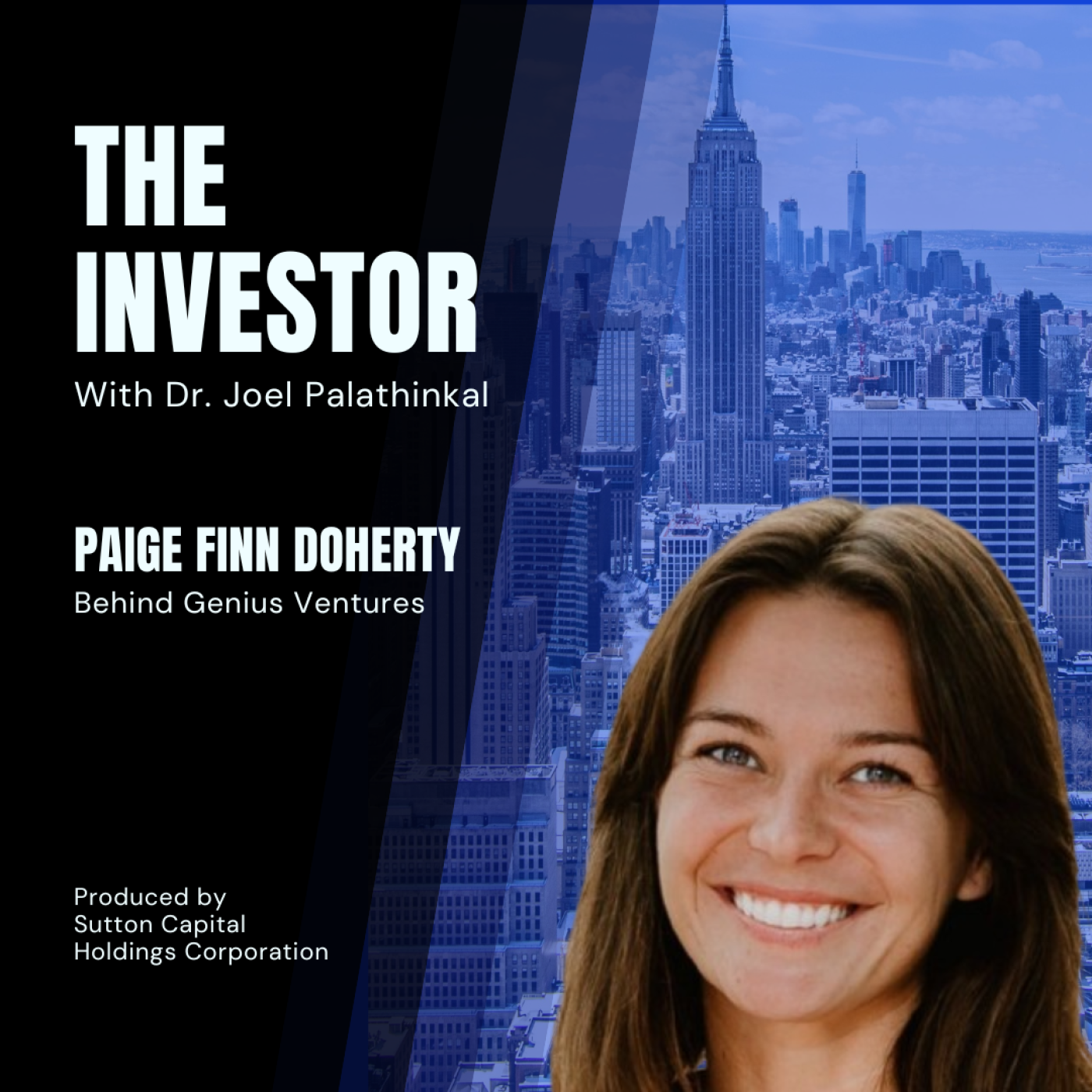
The Investor With Joel Palathinkal
Paige Finn Doherty: Co-founder and General Partner at Behind Genius Ventures (BGV)
00:56:51
Loading summary
Transcript108 lines
- [00:03]
A
Welcome to the Investor, a podcast where I, Joel Palo Thinkle, your host, dives deep into the minds of the world's most influential institutional investors. In each episode, we sit down with an investor to hear about their journeys and how global markets are driving capital allocation. So join us on this journey as we explore these insights. All right, super excited today. I've got a longtime friend and guest on our podcast today, we've got Paige Finn Doherty. She's an engineer, a writer. She got into investing by writing a children's book about venture capital. While an early employee at work os a San Diego native now based in sf, she enjoys reading, traveling, surfing music, and spending time with her family and friends. I'm proud to be part of this journey with her and just be. Know, be called a friend. And I'm a longtime fan of just the content community she's been building. So, you know, we're going to unpack a lot of things. As all of you know, you guys are part of this audience looking to kind of build the skills, get into venture, investment banking, private equity, and then eventually, hopefully launch a fund. Some people have done this in tandem, right? They're working in tech, and they're kind of building. They just go straight to building a fund on the side. We could talk about all those different permutations. Paige, you and I have a lot of peers that have got into this space from all those different types of permutations. But what we don't talk about is just who Paige is, what was going on. Maybe you could start out, Paige, with just a quick overview, but tell me what was going on in your mind as a Gen Z, Right?
- [01:48]
B
As a Gen Z.
- [01:50]
A
As a Gen Z. In maybe middle school, high school, because I feel like people are starting companies in high school and in, in, in middle school. And I, you know, I would say with me being a millennial, I, I never really knew about entrepreneurship until later in my career. And I wonder, you know, again, you know, hindsight is 20 20. I've been blessed with all the things that have happened to me in my life, and I am where I am now because things happen how they did. So never regret that. But I just think it's crazy how we're, we're now exposed to, you know, people that are younger than even you, Paige, and, and, you know, earlier generations, they're using AI now for a lot of stuff where with you, I think there was, you know, obviously content and, and, and community, and people are getting away from the digital world, as I would say, with the Gen Z'S but I feel like it's even going to be, you know, more, more unique. You know, I don't know what the, the. The gen is before Gen Z. Is it Gen X,
- [02:52]
B
like after or before?
- [02:54]
A
Before. Before.
- [02:56]
B
Wait. I think it's Millennial. Gen Z, Gen Alpha, Gen Alpha.
- [03:00]
A
I think that's what it is.
- [03:01]
B
Yeah.
- [03:01]
A
Yeah. I'll look it up while you go do your intro, but why don't you walk us through your background, your intro, just, you know, and then, and then kind of just start with kind of like what was going on in your mind through high school and, and talk us through college and, and, you know, just kind of your career. And then I'll pop in periodically and I'm going to look up the, the names of all the generations.
- [03:20]
B
Perfect. Well, Joel, thanks so much for having me on. I'm excited to be here and have some fun today together with you. It's been incredible to get to share this journey with you since the beginning, so thank you for your support. What was going through my head in middle school and high school? So to put it in perspective, I graduated high school in 2016, so I would have graduated middle school in 2012. I am so grateful to have had such an incredible childhood. I was born in New Hampshire, but we moved to San Diego when I was 6. So I grew up in San Diego. I was always outside. I would say my first job was my mom is an artist. You can see a painting of hers in the background. And my two younger brothers and I, we went camping a lot. So we would walk around the campground selling our mom's art cards. And that was how we made our allowance for the summer. And it was so fun. Like, I really enjoyed meeting people, sharing more about my mom's art. And getting to work with my younger brothers was just, it was just like such a fun experience and entrance into entrepreneurship at a young age. And then when I got to high school, I'd say I was always very future minded. Like, I was always thinking about what was next and what would I do after. And I loved engineering. I would grew up going to the lab in the manufacturing floor with my dad, who is a mechanical systems engineer. So I decided to study mechanical engineering. And then actually my last semester of high school, I had played competitive soccer like my whole life. So that's been a big part of my journey of, you know, being on a team and just really honing my craft in that. But I got an internship at Northrop Grumman when I was 17, so I actually would go to high school. And then after high school, I would change in my work clothes in the car and go to Northrop and learn more about applying technology to the real world, which was just an incredible entrance into what I do now.
- [05:23]
A
So one thing I'll say, which is crazy is, you know, so I have a similar background, so I don't know if I. We probably talked about this, but I worked at Rockwell Collins and then worked on the government side. And one thing I think that's really unique and I don't know if it's still available. Right. Because I mean, when I did this, this is before the recession, but like the DoD used to, you know, a lot of these government contractors. I think if you went to like a local school, you would get a full ride. Like they pay for your entire Masters. I did my entire masters for free. But I don't know if that perk was still there when you were at Northrop. But, but we were, you know, I worked at a similar defense contractor in the past and that's like usually a perk that you would never hear about now. Usually get like maybe a, you know, three or $5,000 stipend if you want to do an MBA or do something else.
- [06:12]
B
That's so cool. Yeah. I actually ended up applying and was selected. I think I was like one of five people across, like all of Northrop's high school interns to get a scholarship for college, which was amazing. It was, it was like a smaller one, so it helped. But I also ended up getting a full ride scholarship to San Diego State. So I'm very grateful for that. And that was like, through the school, through a memorial scholarship. Yeah, that was great.
- [06:37]
A
So you got exposed kind of early to entrepreneurship and learned that you can earn an income by doing something creative, not necessarily having to just go get a job. Right. So how did that, how did that flow into college? You know? And you know, based on some of the stuff that you told me, I mean, there's a huge entrepreneurial spirit and ecosystem at San Diego as well.
- [07:02]
B
Yeah. I'm so grateful for my time at San Diego State. It was like so much fun and I learned so much. So I started out in mechanical engineering. I worked at Northrop Grumman for three years in college, but then I ended up watching Silicon Valley. And before that I had never really heard of venture capital. And it was like a light switch went off in my head where I was like, this is what I'm being called to do. Like, I am meant to be running a venture firm. So I feel very lucky that I had that clarity of what I wanted to do and, and have just continued to take baby steps in like pursuing that for the past seven years now. And before that, like, I, like, I've run a podcast for almost five years now, but before that I would interview music artists at school. So I was part of the Aztec Music News Group at San Diego State.
- [08:01]
A
So was it like a radio? Because I know some colleges, they have like a radio station. So how did you.
- [08:05]
B
Yeah, no, we would like go, we would like go to the shows and interview folks like before, after. And Christian Lee, who was like the other person that I worked with, was an incredible interviewer. Like, I feel like he taught me so much about how to be an active listener, how to do deep research into folks, backgrounds. He could pull out random fun facts and they're like, did you find out that information? And so I, I took a lot of those skills into now my work with like due diligence with founders or interviewing people for the podcast. So I feel, I don't know. It's funny how your, your skill building and random side quests ends up being such a big part of what you do later.
- [08:52]
A
Yeah. And then talk me through what, you know, what was going on throughout your college career and then tell me what was going on in your mind in terms of your first job. You know, it looks like you were kind of probably doing internships and looking for your first full time gig, so. Well, because, because you said that you, you definitely knew that you wanted to get into vc. I went through this process myself. Right. I mean, I, I started out in a heavy tech role. But did you try to get into VC first or did you just want to kind of build the, you know, the, the startup chops and the entrepreneurial, you know, operating chops first?
- [09:33]
B
Oh, great question. So I was, if I had stayed at Northrop one more summer, I would have gone to work on the James Webb Space Telescope, which would have been amazing. But I had found this passion for venture and I joined our first undergrad team for venture capital investment competition, which is a program that I hold very near and dear to my heart. And through that I got recruited to join a growth equity firm in San Diego my senior year, summer. And so while I was there, I was able to actually spend time evaluating companies, talking to founders, helping build the firm brand and really build that muscle. And actually Covid happened my senior year of college, so it was a bit weird. I was interviewing for roles in March of 2020 and then like everyone was Having hiring freezes. Like I was like, what? Like what is going on? And then I started posting on Twitter. So I was spending like eight to nine hours a day on Twitter building a personal brand around my interest in venture and startups in general.
- [10:37]
A
So you were doing that while you were working at the growth equity firm as a summer intern?
- [10:43]
B
I left. No, I left in January of 2020 and then from then I was recruiting for full time positions and then I found Twitter and I was like, oh, this is so cool. Like all the VCs are hanging out and this feels like a great way to build a network in this ecosystem. And then I actually ended up getting recruited from my Twitter to work at work os. I have a Christmas mug here. But I was, I think I was employee 12 there at the time. They had just raised their series A and I'd actually done a project on single sign on and enterprise authentication. And just seeing how much cyber security was growing as a space was really interesting to me. So I was there for about, yeah, a year. Exactly a year.
- [11:31]
A
So jumping right into growth equity, you know, that's a very coveted role. And you know, it can be technical as well. Right. Because you're going beyond, you know, series. I mean everything is blended now. Right? A series A, Series B few years ago is probably like a series A now. Right. So sometimes it's.
- [11:49]
B
We did like TVC did like early growth, so we were actually looking at businesses between like 1 to 5 million in ARR. So ironically that's now kind of, you know. Yeah, exactly.
- [12:01]
A
So what advice would you give to professionals that are. And maybe what are some learnings again? You know, nothing proprietary, but what are some learnings that you think you took away from being the top candidate to kind of land that role for people? And this is for people that are like, look, you know what, I. Maybe I'm coming out of college, maybe I'm looking to pivot my career. What are the things that you did that maybe stood out? I can imagine you like creating some type of unique artifacts, writing a handwritten note.
- [12:32]
B
Yeah, no, I think it was honestly like a LinkedIn post that guy had posted about. We took second place to the reigning national champs at venture capital investment competition at Google. And I had posted about it and then Michael Sprinkles, who was a partner at TVC reached out and I was like, hey, I did the same program. This is super cool. So I think, I guess one transition I've been making is transitioning from building a personal brand to building the brand of behind genius which has been a very interesting transition because I think like a personal brand can get you into the position that you want to be in. But when I think about the legacy that I want to leave like behind, Genius is really the brand that I want to spend my time building now.
- [13:13]
A
Yeah, look, I mean all of my channels, maybe a couple years ago were all just Joel Paulothinkles, TikTok, Instagram and yeah, same thing. If you look at it now, it's all Sutton Capital. And I think that the challenge with starting with a personal brand is the entire business. You are the bottleneck of the entire.
- [13:32]
B
Yeah, exactly. And I'm an engineer. Like, I'm like, we gotta identify the bottlenecks and fix them. So that was, yeah, a lot of
- [13:40]
A
times with founders too. It's like founders don't realize this, but sometimes they're the biggest bottleneck because they can't, they can't find the right team to kind of take away some of those tactical things so they can focus on strategy. But, but I, after they kind of build a brand for a company, then they'll kind of focus on their personal brand later because that way they can use their personal brand as like another traffic channel. I mean everybody, everybody. I think Bethany Frankel has been getting a bit of fire recently on social media, but she's done a pretty good job. I mean she's pretty late in her career, but she's built a, you know, crazy personal brand. She gets a lot of large, high, high end brands work with her. I don't know if you've been following her, but like there's been some drama on Tick Tock because somebody, she, she wore somebody's shoes. It was given to her as a gift and she didn't tag them and post the link. So there was a lot of, you know, apparent backlash from that. But, but again, you know, I think when you've built the company first and the company's built its brand, I think on top, along with that brand still growing, you could, I think later when you have more bandwidth, you could probably build your own brand down the line. Right?
- [14:45]
B
And yeah, and kind of, it's just such a interesting journey because I feel so proud of the team that we built. So it's myself, Andy who is like just an amazing operator and then Chumba, who has supported us on our the what It Takes study, which is the study of the past hundred billion dollar plus exit. So he's done that twice now. It's like an annual study that we do. And yeah, I just had this Moment where I was like, well, I like, I want this to live beyond me. And yeah, it was very interesting, but I was like, okay, now I like, I have all the skill sets. And I think when you're building a personal brand, there's different questions that you evaluate when you're producing content. And I think at a certain point when your audience gets larger, it gets harder to like, calibrate. But if you're building a business brand, there's like almost a clarity to the purpose. And the brand that you build is an expression of your values and what you do. And I'm a big proponent of like, show, not tell. Like, our communication style should just be talking about the work that we do.
- [15:51]
A
Sure. Is your what it takes kind of. I mean, it reminds me of the Steven Schwarzman book is a little bit of a nod to Schwarzman's book, which I think is a great book.
- [16:03]
B
Honestly. It was an idea that Chumba spearheaded. He was really interested when he joined the firm in studying, like, okay, well, like, what does it actually take to get to a billion dollar exit? As a venture capitalist, you hear a lot of stories about outliers. And for us it was like, okay, well, what is the game on the ground and what are the lessons we can take away from studying these exits? And I think a couple of the lessons that we took out of it were one, orienting more towards very sticky, like, almost hyper specialized companies that fly under the radar of other firms that represent just these incredible, I'd call them, like opportunity vehicles for founders. So we spent a lot more time building bottoms up models of the markets that founders are attacking to more deeply understand, you know, how big is the field on which they can express that, that company's mission.
- [17:04]
A
Yeah.
- [17:05]
B
And how does that translate into, you know, building great returns for our investors and is it a journey we're really excited to go on with, with those founders?
- [17:15]
A
So you were. So then, then you started kind of build. Well, I guess just going back to the Thomas you started to build.
- [17:21]
B
Yeah.
- [17:21]
A
And then that kind of kind of dovetailed into working as an operator. And then I think you started, I think in tandem to that. I think you started to kind of build in public and kind of share your knowledge of what you were learning with syndicates. And then I think the syndicates and we've seen a bunch of people do this. I mean, there was one of the graduates from our cohort, he worked at Google and Google Payments and then built like a community for ain't, you know, he built like a syndicate and then that, that kind of, that community turned into like, I'd imagine a lot of those LPs and those angel list syndicates probably turned into kind of LPs. It just rolled into fun one.
- [17:58]
B
Yeah, yeah.
- [17:59]
A
You're doing all these deals deal by deal, but you like the exact same theme. So you might as well just invest one time and get one K1 into a fund structure, right?
- [18:09]
B
Yeah, yeah. That was very much my journey and it was great as I started leading syndicate deals. That's actually how I met my business partner in Fund One. Um, and also like a lot of other people in the community who I've stayed close with, like David, David's out at. He was at On Deck Angels at the time and I led a session on syndicates and was part of that first like On Deck Angels cohort, which was just a really great experience to get to meet other people who are going through the journey of learning what it was like to invest in startups. And now like I just saw him yesterday and we've remained friends like over all that time. So it's been cool to see some of those relationships come full circle or, and like grow and evolve.
- [18:53]
A
Yeah. What are some of the biggest learnings that you learned when you were an operator and starting to kind of build community and also just kind of start posting content.
- [19:05]
B
Oh, okay. The biggest lesson I learned when I was an operator was actually related to one of the work west value. So it was basically like focusing on developer joy. And my role as a developer success engineer was focused around technical pre and post sales. So I was working with our customers, helping understand what challenges they were running into and how to communicate that to our product and engineering team. And at the core of it, our key metric was developer joy. Where can we find the wow moment in that company and how can we continue to build off of our learnings to have developers experience more of that? And I think I learned so much about what it means to build an incredible brand as a business. Like I think work OS has done an incredible job of that and have continued with like events. At the time it was Covid, so it was very virtual first, but we do like release days where every quarter we would release new features and it would be live. And so I think that element of building in public and then also just working with like amazing talent. Like I worked with such talented engineers, designers and yeah, it was just like such a joy.
- [20:26]
A
Yeah. And kind of moving now into moving essentially back into investing. Right. But now also building your own company. What was going on in your mind as you were thinking about Fund one and obviously built a good relationship with Josh. And you know, every time you build a partnership, you're thinking, you know, do I, it's the airport test, right? Can I, can I be stuck at this airport with. Can I be stuck at an airport with this person for four hours? I feel like that a lot of people talk about that these days. What do you think is important when looking into partnering up with a co founder and what were, what were some of the things that was going on in your mind as you were building? Funwise?
- [21:09]
B
I mean, I can speak to this. So Josh and I worked closely together for, I would say like two years as I was invest raising and investing our first fund. And then I've been a solo GP and built a team for the past additional like three years. So in terms of when I thought about a co founder, I think when Josh and I met, we actually got introduced by someone who ended up becoming an LP in our first fund, Paul. And when he introduced us, he was like, you guys are exploring a lot of similar things, but come at it from a different angle. And I think a lot of it was like the complimentary skill sets. I think Josh is an amazing recruiter and operator and I brought a lot of the skill sets of like engineering and brand building. So I think that complementary skill set was really helpful because we had very clear delineations of what we were excellent at. And yeah, I mean I, I like love building the first fund with him. So that, that was really great. And he, yeah, decided to go on his journey to build a company. And yeah, we're still like great friends to this day. So I'm, I'm very grateful for that early chapter in my journey.
- [22:24]
A
And I would say big, big edge that you have is your distribution. So, you know, you've really built a distribution channel through content community. Feel free to plug in some of your prompts. This is kind of the, the lead into that to pull up some of the props that you have. But look, I mean you, you wrote a book on how to, how to break into venture capital. And you know, your brother, I believe, is a, you know, well known accomplished illustrator. I'm a proud owner of the book. I bought it, you know, because I have two little kids, so I be a good thing to, to review with them. But you know, in terms of distribution, you know, because for me I, I also think that you got to stick to what medium you're comfortable with and I haven't really.
- [23:15]
B
Actually, I disagree with that, but I'm excited to hear your question. But that's good.
- [23:21]
A
So you disagree with, you disagree with sticking to the, the media channel that you feel comfortable with.
- [23:28]
B
I think it's so important to push yourself and as channels evolve, to understand what is the best fit for your business. So when I started, it was like building a personal brand on Twitter. And then in 2021, I saw a lot of movement towards audio first content, and I felt that that was a very accessible medium. And I loved interviewing people.
- [23:48]
A
Yeah.
- [23:48]
B
And at the same time, like, I was fundraising for fund one, which is a 506B fund. Like, you can't actively talk about fundraising, but I was meeting all these amazing people, so I was like, well, why don't I start a podcast to like share these stories more broadly?
- [24:01]
A
Sure.
- [24:02]
B
And then that became like a top 10% globally shared podcast. I wrote a book and I think now I'm coming back to, as I mentioned before, like, building the firm's brand because ultimately, like, I don't want to be the bottleneck and can, like, I think building the. Our Behind Genius brand distribution engine is something I feel very confident in. And we'll have just incredible dividends. Like, if you think about a company's brand in consumer, like, it just adds an incredible amount of enterprise value. Or for example, like if you look at some of the best firms in the venture space, like a 16Z has done an incredible job building their brand across many different channels. And that is part of like, a big part of what has made them so successful today. And same thing with Thrive Capital. I feel like they've done an amazing job brand building and those businesses, like, become some of the most valuable ones in the space. And so that's been like some of the inspiration that I've taken as I think about the future of Behind Genius. So I actually think it's like, important to experiment with mediums and not be afraid to start over. Because, you know, it's. It's hard to feel like you're like, oh, I'm just starting over. I have like 100 subscribers or something. But like, we started a YouTube channel for seed to harvest. And I was like, oh, we like, at the beginning you're starting from zero. And now it's like, okay, well now we have like, you know, like an incredible amount of watch hours and timeless content. So I, I go back to like building timeless, valuable content and then experimenting with the medium.
- [25:46]
A
One thing that you've also done is you've built all these templates and resources for people too. So it's valuable. People consume it, they use it. Now with Lovable and all these other tools, it's easy to build like a portfolio tracker or like an LP dashboard or something like that. Right. So I think now I feel like we have the power to actually build like software widgets that actually do things that add value versus just like a blog post which is like, hey, here's, here's a step by step guide on how to launch a syndicate. Right now, here's like a syndicate portfolio model or you type in a couple buttons and it models out the return. So I think, you know, I think to your point. Yeah, that's a good point. We, we, I personally just have not been able to allocate my time to, to focus on just short form Twitter content. But, but you're right. I mean, there's a.
- [26:38]
B
Well, you're doing like the podcast, which is amazing.
- [26:40]
A
And it's amazing. We have the podcast and then we chop up. And then we chop up the podcast. But I think to your point, once you have a team, you can have other people kind of help you, give you extra set of hands and.
- [26:49]
B
Yeah, exactly.
- [26:49]
A
The short form. We have a couple, you know, we have a blog presence on our website, which I think helps. And a lot of it is just kind of like, hey, here's a, here's a financial modeling template or here's, here's.
- [27:01]
B
I have it on, on the, on the blog. Like one of the things that I think about is writing pieces that inspire action. Like that's our North Star when we write a longer form piece. So for example, he wrote this piece on the Technical storyteller during our Fund 2 deployment cycle. And that became like an incredible founder magnet. Like, people would read it, they would remember the phrase the Technical Storyteller. And whenever they would meet a founder who fit those characteristics, they would immediately send them to us. So I think that that's where long form can be really helpful in terms of creating these magnetic frameworks that help you. You know, they're working when you're sleeping and people keep them very top of mind.
- [27:44]
A
Yeah. And I'm biased too, because I think I'm just very video friendly. I think for me, I mean, as far as producing content videos is easier. I'm lazy and I just don't want to wait like two days to kind of like, you know, record it, edit it, push it out. So I just go live and hope for the best. There was one time where I did a live podcast with an institutional LP and I had somebody that was fixing like the outlet in the other room and the power went and I got back on and it still worked out but I think just kind of letting people embrace you as a human being and know that things could get messed up but like two short form pieces of content that I just shared in our Slack channel, which I thought was great, you know, from Nicole Wishoff was, you know one of the things she said was to increase your VC network, just generate a top 10 deal list monthly. So I think if you're an associate or even if you're just looking to get into vc, right, you're a product manager at a software company and maybe you do a small syndicate, a good way to kind of maybe build a relationship with a, with another associate and say hey you know, here's my top 10 deal list. I know you're investing in Gaming, here's like 10 gaming deals that I, that I source and look, I go to a bunch of events during the week and here's my top 10 deals and here's my memo. Do you, would you like access to it? Right. And you know, so that was one from Nicole Wishoff and and then I'll just, I'll let you kind of add your reaction then. The other one was really good. It was from Kate McAndrew. She said she led a million dollar pre seed round into a pre product company. What really got her was the founder slide. It was just a picture of the founder there. There was no logos of her universities, no logos of all her. I mean I think there are a few logos of where she worked but there's really just four pillars and the four taglines was number one. Not my first zero to one. I have a commerce instincts creator first insider perspective and I move fast and I think big. And Kate was just saying that's what really, you know, got her attention with that team slide. You know pre product just kind of back the founder with a pretty, pretty high conviction precede check side.
- [30:12]
B
So yeah, I think that speaks to like a simple story is oftentimes the hardest to tell. To just simplify down aside to four bullet points is, is really difficult. So that's incredible.
- [30:25]
A
Yeah. And then what are some of the biggest learnings that you learned as you were building community and as you're building community and as some of those have flowed into LP relationships. What were some of the learnings there?
- [30:44]
B
Oh, great question.
- [30:45]
A
Maybe from fun one and then we'll talk about fun two.
- [30:51]
B
Hmm. I guess I think about it as a continuum of one of the big learnings I've had is one of the reasons why LPs are so excited to work with Behind Genius is they actually get to spend time with the founders that we back. We do an annual summit every year when this year we had like 60 attendees, we had four portfolio founders present and our LPs got to talk with them directly about their stories. So I think one of the biggest learnings is my role in building Behind Genius is almost like connecting our founders and sharing their stories, the right people. So for example, when we had the annual summit, we had a founder, Randall Hom of Hosty Speak, and I got a few emails from our LPs and they're like, hey, I can connect him with. They are building voice AI for restaurants, Colonel's amazing award winning restaurant operator in San Francisco and his co founder Brendan is an early engineer from the voice AI space. And I had like three or four emails of like, here's potential customers. And so I think one of the big things that I think about is building an active LP community. And a lot of RLPs are really excited to help our portfolio companies and get involved and you know, they may be later on in their career have been managing large teams or have built their own really successful investment firms. And I think it's really fun to get in on the ground floor and help support these founders at their earliest stages again or you know, leverage their networks that they built over their careers to support them. So I think that's been like a big learning is introducing opportunities for our LPs to support our portfolio founders because ultimately that feels great for the LPs, it helps our portfolio founders. And so it's a very like symbiotic relationship within our community.
- [32:48]
A
Yeah, I mean a common thing that I've been seeing with the fund managers that have done really well is just raise and deploy, raise and deploy a lot of times at the same time. But I mean also it's kind of like, you know, you're raising, you're deploying and then you're sharing. Maybe that's the third piece that I missed. But you're sharing an update saying, hey, look, I just want to, you know, like, you know, just want to give you an update. Obviously when you're doing your email marketing, you're going to partition who's potentially a lead and who's maybe further down the pipeline if you do it right. But you know, there's people that they've been thinking about it and they've wanted to be part of this journey, but they just can't get over the line. Right. But a lot of times it might just be a couple more touch points to remind them the magical stuff that you're doing. So a lot of times like, hey, by the way, like, you know, I know where we're still connecting, we're still co investing together. But by the way, here's another one of our really hot deals. It's in the future of play AI gen AI space and this is what they've been doing and this is why we invested. And check it out. Let us know what you think. And I think that kind of stim it just keeps you in the conversations and I feel like that's a lot of times that nurturing and that relationship building on different mediums kind of continues continues on to kind of evolve to maybe more of a more intimate LP relationship that actually converts.
- [34:18]
B
Here we all show you a cool our investor update. So one of the things that I felt very strongly about when I started behind Genius. Let me see if I can.
- [34:30]
A
Yeah, I think if you just hit the share button and then you do and then you share entire screen, that's kind of the easiest way that I've done it.
- [34:42]
B
Was, was that going to share my whole screen or just one?
- [34:46]
A
I always just share my entire screen because whenever I do one tab it never shows up. Or you can send it to me, whatever's easier.
- [34:52]
B
Oh, okay, wait, maybe I can do an image file. Let's. Today. Okay. Okay. So I need to update this, but this is a, this is a block I made of all of our investor updates that I've sent out. And I just wanted to put it into perspective on, I think like communication and transparency is really important to me. So these are like the LP updates that we've sent across Fund one and fund two. And I think that that has been one of the best forcing functions in the business for me is to have that level of consistency of updating our LPs every month when we're actively deploying and then quarterly after the portfolio or after we're like done deploying.
- [35:45]
A
Yeah.
- [35:46]
B
And let's see. So I think that's been really helpful because every month I'm like, okay, what did we get done this month? What are we sharing? How can LPs be helpful? What are the asks our portfolio founders have? And that has helped build the relationship and build trust over time. And I, I like, I love that. And now we have years of updates to look back on and see what our learnings have been. So that's, that's been awesome.
- [36:17]
A
One Thing that we talked about in person is, you know, like, obviously there's the art of. Of building a fund. So I want to talk about that. Like, you know, what was going on in your mind as you were kind of prototyping this fund? There's a lot of great platforms and communities and support groups that. That have big brothers and big sisters that have. That are already on fund three. So that definitely helps. And I would say that hasn't been there probably seven, like, last five years or something.
- [36:47]
B
Yeah, five years.
- [36:48]
A
Yeah. And we've been. We've been really excited to be part of that as one of the communities.
- [36:53]
B
But, yeah, your program was awesome.
- [36:56]
A
Thank you.
- [36:56]
B
Yeah.
- [36:58]
A
But, like, I think, you know, that helps a lot because, I mean, what. What that offers is time travel. Right. You could figure it out and pro. And that's what everybody else did. Right. They figured it out. It might. Might have taken a lot of time and a lot of mistakes, but if you have people that can mentor you, you actually get to zip through time by a couple of years because, you know, you're learning off of their learning. So what were some of the things that your mentors were telling you that probably were also your LPs, when you were thinking about, you know, just the journey of launching a fund, and now, like. And then. And then, you know, let's talk about, like, how that's evolved or how. How you would advise to evolve that as people are thinking about their second fund.
- [37:42]
B
Yeah. So there's. I would say there's two moments that really stick out in my head. So the first was in the process of raising our first fund. I was on a zoom, and I was talking to this operator. They were like a potential lp. And he was like, you know, if you're ever in Palo Alto, like, you should meet my mom. And I was like, that's an interesting comment. And then I learned that he and his mom do a lot of investing, and she is a pioneer in the space of computing, had built and sold, like, eight technology companies. And I ended up booking a flight and flying to Palo Alto the next day. And we went on a walk around Palo Alto. And one of the things we talked about was my role in the ecosystem. So she had written this great book on the innovation economy by Judy Estrin. And in her view, like, one of the most important elements of the innovation economy is these almost like greenhouses to nurture ideas that are just beginning. And I think it can easily get overshadowed by everything going bigger, bigger, bigger, bigger. And I think that meeting really helped me clarify what our role in the ecosystem was is like nurturing the next generation of investors and founders and being very clear about that as like a key role in our stewardship of the firm. And then the second was when I moved to San Francisco, I was meeting, I made a list of some of the Midas list investors who I really looked up to. One of our values behind genius is the discipline, pursuit of excellence. And I wanted to learn from more of those investors who had achieved investment excellence. And I remember I met with Samuel Shah, who founded Haystack, who has built just an incredible firm and backed like 8 decocorns in his $8 million fund. And so I came to our meeting with I think my book and printed out pages of like the different investments we had made and why. And I remember he just looked at me and he was like, you know, Paige, like all that matters is that like your next decision is like the best possible investment decision you can make. And that's what you should focus like all of your time on. And that will be the thing that pays off in the future. That's what your brand will be built on. Because ultimately it's about like the investments that continue to grow and then how you treat those entrepreneurs and the journey. And then I, I think that same week I had a meeting with Pejman from Pear and he said a very similar thing. He's like, you know, it becomes like you're searching for the one company that will make your career and you want to set yourself up to like continue to make the best decision. So I think about that a lot is like, like I always want to be an individual contributor as an investor in building this firm. That's very important to me because I love like the art and craft of the decision making frameworks that go into building conviction. And we focused heavily in fundu around focusing on how do we improve our frameworks and then how do we back test them. So one of the things that we did was we started building more what we call like potential models to deeply understand, like, what is the potential of the business. And in one of those cases, like we had found this company we were really excited about. And that model showed us a path to a billion dollars in ARR with capturing like 5% of the market in the manufacturing space. And so it allowed us to have the conviction to double our average check size. So that's like our largest investment in Fund 2, which is Mineva AI. And I think that has been really helpful, especially in a world where things are going. It's like very volatile. There's a lot changing right now. So I think spending the past two years deeply understanding how to build conviction and just focusing on that and blocking out all the noise has been. Yeah, just like an incredible learning period.
- [41:54]
A
Yeah, that's amazing. Yeah. Because I mean one of the things we mentioned in person is really also evolving to just be a better investor. A lot of times people are looking to just learn how to build their first fund. Like, oh, what's my investment thesis? And how do I, you know, what's my reserve that I should be thinking about? Or, or how many checks over how many years at what, what check size? You know, it's really just kind of the construction, but once you've done that already and it works, you know, we talked about this too. Sometimes, you know, if it's not broke, you don't need to fix it if it works. And that's kind of a model and a, and a fund size. They say your fund size is your strategy. Right. So the size of your fund, if that is working and that's the strategy and it's kind of a repeatable money making machine, might as well just kind of keep doing that, right?
- [42:45]
B
Yeah, exactly. I mean as an engineer I always, like I was trained to. You always want to define the problem and like understand the constraints. So in venture it's like one of the core constraints is what is your fund size and strategy. And so for the future I think about building right size funds and having a concentrated yet collaborative strategy. So 80% of our deals get sent to us by other VCs. And it's been compounding over time in terms of the referral rates and then also the behind genius shaped referral rates because we publish content on what kind of founders we would like to meet. And I think that in building a portfolio construction, one of the things that was really helpful that we got feedback on was early on Eric, who was at Angelus and was their head of institutional capital, had a really great framework for kind of like a, like a Goldilocks fund structure. As they looked across the data of funds that had performed incredibly well, a lot of them were in that 25 to 30 investments. And yeah, just like really made every investment count. And at that portfolio construction you usually own a meaningful percentage of the company in relationship to your fund. So when an outcome hits like it really moves the needle from a returns perspective. So we've been pretty consistent about having like, yeah, similar portfolio construction so that all we are focused on is making the absolute best next investment decision. Sure, yeah.
- [44:31]
A
What have you learned in your evolution? I mean, because I'd say the evolution that I've also seen with you, Paige, is you've also not only evolved from the personal brand to a legacy brand that you're building as a corporation, as a company, but you've also evolved to being a leader. Right. You're a people leader now. So, yes, you do want to be an individual contributor. You probably lead the ICs and probably, you know, the partners meetings, and that's your contribution. But you're still going to be, I'm assuming, contributing at a different level. Right. It's a level of leadership. So what have you learned in terms of attracting, retaining and empowering talent?
- [45:11]
B
Oh, what a great question.
- [45:14]
A
Because you're a grown up now, you know, you got people that report to you.
- [45:18]
B
Yeah. I think one of the biggest things has just been very clear on what our values are. So Indian Chumba and I did an off site in December of 2024 in Venice Beach. I rented this awesome house on the canals. And I remember one of the exercises that we did was we did a guided meditation and then we were like, okay, we want to define our values as a firm. And we scribbled like a bunch of brainstorming on this Erewhon shopping bag from our lunch. And we came up with the disciplined pursuit of excellence, empathy. So understanding that everyone who we work with is human and they make mistakes and really trying to step into another person's shoes as we're making decisions. And then the third is equanimity, and I think this one is incredibly important because as a founder, as an investor, you will go through happy times and you'll go through very challenging times in running a business. And equanimity is the practice of maintaining a calm mind in challenging times. I think as I've been a leader of this firm through 2021 and an incredible bull run and then a pretty severe crash adventure in 2223 and working through that, I think that's been a really important value. So when I think about building a team, I think it's about aligning around values and then from an empowering perspective. I really want, again, as I said, like behind Genius as the brand to grow and be an expression of our entire community. Like, not just our team, but like our founders and our LPs and empowering our team members to shine. Like, Andy is like an incredible operator and he's written some of our amazing guides on, like, a guide to VC secondaries. He's like, very talented Analytically. And then Chumba is just so spiky on, like, he just wants to be the best investor possible and, like, learn about what the best founders do. And from my perspective, like, I want to build an incredible firm and have a diversity of opinions around the table that makes the shape of that firm unique. And I think that's, like, what really stands out in a world of very sameness. So I think about cultivating the. The, you know, the ability to have, like, differences in opinion is really important to me.
- [47:57]
A
Yeah. If you were, you know, and you went through this process already, but if you're looking to hire another associate, what are some of the skills you think you'd be looking for?
- [48:08]
B
What a great question. I. When I think about it, like, both Andy and Chumba are founders in their own right and have gone through the process of, like, building businesses, and Chumba also sold his. And then, like, I think that to me is really important that they've done something entrepreneurial in their career and have that ability to have, like, deep founder empathy from that perspective. And then I also think, like, very talented written communication skills and the ability to be inquisitive and that passion that. That, like, curiosity and passion comes from somewhere, like, deep within them and is innate to them. And I think a great sense of humor is also important. We like to have fun as a team. And as I said before, like, you go through challenging situations. I think it's important to be able to, like, have a sense of humor and, yeah, that they're, like, spiky in a dimension that we don't have on our team yet. So I would. I've been thinking a lot about, like, a story engineer position that would be kind of like a hybrid of like, a tactical operator on the media side and then potentially spending time on the investing side as well. So, yeah, thinking about that.
- [49:29]
A
That's interesting. So taking some of your, you know, investments and strategies and kind of really storytelling the way that you guys always have been, but taking.
- [49:39]
B
Yeah, like, I. I think it. I think, as I said before, as an engineer, you identify the bottlenecks and, like, I am the bottleneck in terms of, like, switching personal distribution to brand distribution from a company perspective for Behind Genius. And then also I would say I'm very talented at building, like, brand systems, so understanding, like, how to make it obvious, like, what to share from our story of Behind Genius and having, like, a really talented operator who could execute on that, that appreciates having a bit more structure. I would say, like, I'm able to build the Structure and execute on it. And I'm getting to this point where now I'm like, okay, I want to build the structure and have folks that are helping execute that element.
- [50:28]
A
I feel like that could be a great lecture. Like at some point, like when you, when you share your content, I feel like just sharing like a diagram in terms of how the brand could be distributed. We've been just trying to like repurpose as much as we can, right? We go live. That goes out on long form and it goes on short form. So that's. I just been trying to think of like the low hanging fruit. But you could take some of that content and then obviously create like LinkedIn slides. Right. And then do a lot of stuff on Twitter too.
- [50:55]
B
I call this like, I call this the accordion model. So I've wrote a blog post about it on my personal blog on pagefinderity.com called the Accordion Method. And it's like the idea of taking one idea or concept and like expanding or contracting it. So a lot of things start as medium format written pieces and then it's like, okay, well how can we extend that and make it to your point, like interactive with AI or how can we shorten it to make like a really engaging short form video? And then taking bits and pieces from. You know what I've learned, like, I've studied YouTube videos for a decade plus and like have a really deep understanding of how to construct a story that grabs and retains attention and tells meaningful stories. Like, how do we apply those learnings? Or like the learnings I've had reading books, like the Conversation, which is an amazing book about. Oh my gosh, what is his name? I'm blanking out on it. Walter Murch. I think he's like this incredible film editor and his focus was like on. He would always edit films standing up and with the sound off. So like the story had to make sense without sound, which was something I took into perspective. So like a lot of people on their phones, like watch videos of the sound off. So I was thinking that, yeah, so I think about the accordion method is like, what, how can we expand pieces of content? Then how can we also bring the principles of creation from other mediums into what we're building and like what makes something compelling and unique?
- [52:27]
A
Yeah, that's amazing. Any. So we got about three minutes left. Maybe a book recommendation. I mean, I think you shared one. But any other great books for people looking to kind of build their career as an investor?
- [52:42]
B
Oh, I mean, I feel like I'm a pretty extensive Reader. I think one of the ones that I've been reading that's been interesting recently is it's more woo, woo. But it's like this book called Conscious Dreaming and it's on how to remember your dreams better and like, ask for guidance in your dreams. And I think for me, like, so much of my career has come out of dreams. Like, the idea for Seed to Harvest was like a full dream I had where I was a gardener and I was like nurturing plants. And I, like, I had a dream about this in July of 2020 and I was like that, like, that's, that's the book. And like I had a dream that I was meant to move to San Francisco and I did. And so I think that listening to your dreams and almost your like, subconscious can illuminate paths that, that may have evaded you if you're just. Yeah, yeah, like listening to your more rational side, if that makes sense.
- [53:42]
A
Yeah. Like, I think I struggle sometimes with trying to prioritize books. I'm like, man, I should like, focus on, build, you know, just focus on the books that, you know are going to help me better as a, as a business person or help me be more professional versus reading books that could just kind of be like, hey, you know, how do I just be a better human being? Or what's the history that comes out
- [54:05]
B
as like an expression? Like, I think if you're working to become a better human, like in, in, in that like, you will become stronger from a business sense as well. But I think, like, I think like, business wise, I love Yvon Chouinard's Let My People Go Surfing. I'm like a huge fan of that book on the. The Story of Patagonia. And then.
- [54:31]
A
Oh, that's the biography of Patagonia.
- [54:33]
B
Yeah, it's really good.
- [54:34]
A
I'm gonna add that to my list. What was the name of the book?
- [54:38]
B
Let My People Go Surfing.
- [54:39]
A
Let My People Go Surfing. Cool. I'm posting all of this stuff within the comments too, so that way I. Everybody has it and I have it too, as an archive. And then. Look, we got one minute left. One piece of advice you want to leave us. It could be from a family member, could be from a past manager, could be from an lp, could be from anybody. But. But what's the one thing that you want us to take away from this?
- [55:11]
B
I think why not is a valid reason for doing something.
- [55:15]
A
Yeah, No, I totally agree. There's always a risk of not doing right.
- [55:19]
B
Yeah. Yeah. I mean, I guess to phrase it a different way is like, practice the leap. Like, you'll always be making decisions with incomplete information, and you just have to practice that leap of making a decision when. When you. You don't have all the information that you think you need and seeing where it takes you, not being afraid to fail. And occasionally it works out.
- [55:42]
A
Yeah, I mean, that's what investing is called, right? You're investing and you don't know what's going to happen, but you're using your. Your instincts, the qualitative data that you have, the information that you have. And if you take too long, you, you, you know, it may not be there. Right? So I think that's like the holy of just investing as well. So I totally, totally agree with that.
- [56:01]
B
So awesome. Well, Joel, thank you so much for having me on. This was so fun and I really enjoyed it. I hope the people listening did as well.
- [56:10]
A
I really enjoy this page and it's always great to catch up and, and learn so much from you. So I'm very confident. This is probably one of our top episodes and all of our audience, I'm very confident, has learned a lot. So thanks for your time. I know you're busy, so thanks for. Thanks for making time for me and in the community.
- [56:28]
B
Yeah, of course. This is awesome. Thanks.
- [56:30]
A
Absolutely. Have a good one. Take care.
- [56:32]
B
All right. Take care.