← The Investor With Joel Palathinkal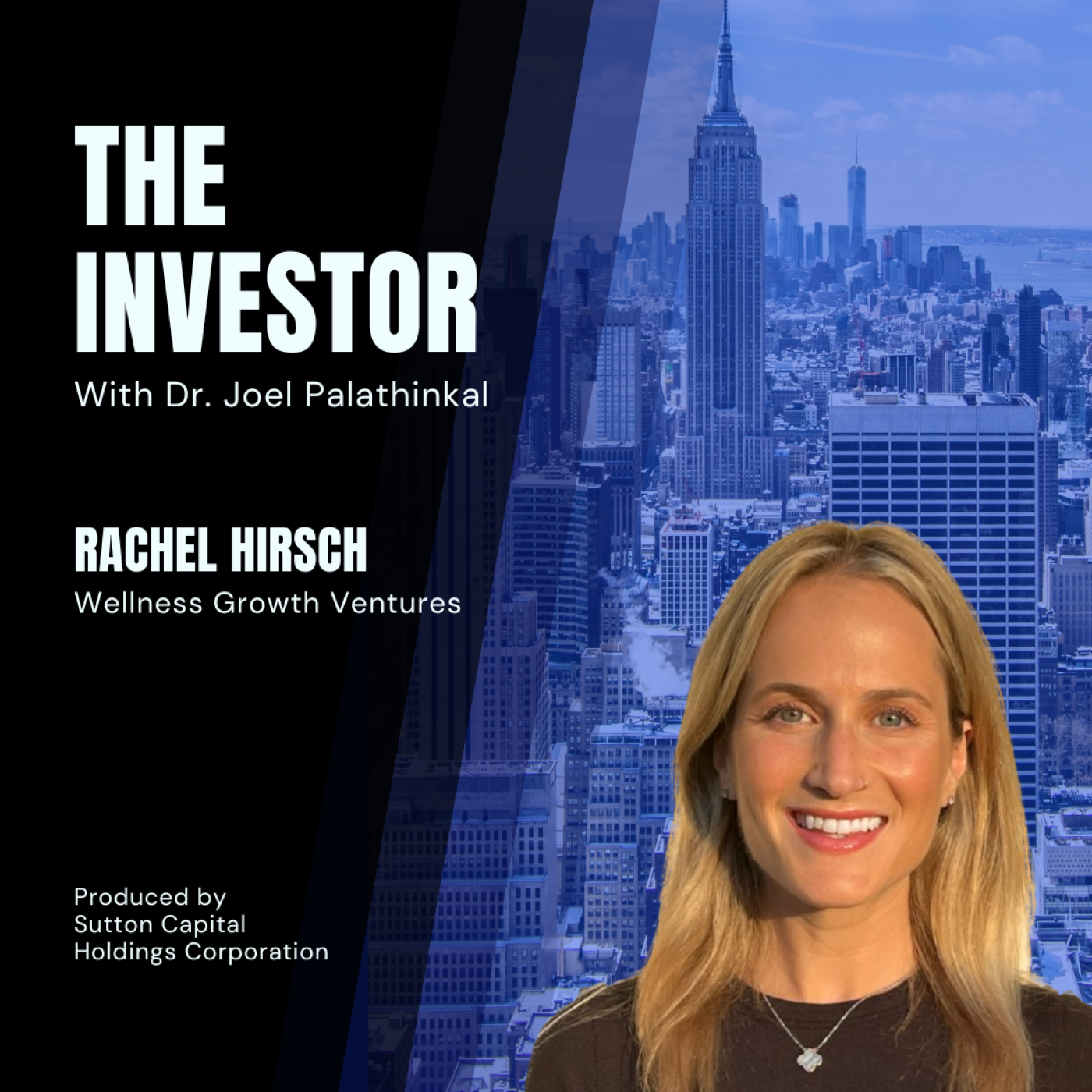
The Investor With Joel Palathinkal
Rachel Hirsch: Managing Partner - Wellness Growth Ventures
00:27:59
Loading summary
Transcript45 lines
- [00:03]
A
Okay, well, I'm here with Rachel Hirsch from Wellness Growth Ventures. Really looking forward to just spending some time with Rachel and learning more about her background and her career and everything that she's building. I got to know her over the fall, you know, within our, one of our community, you know, networking platforms that we were doing called the Fund Accelerator. And, you know, really got to spend some time with her, along with other great fund managers and LPs. So, Rachel, you know, number one, thanks for all of your flexibility, your patience, and for being part of the community. And also thanks for offering up to spend some time with us today and talk a little more about, you know, your story and your background and what you're building.
- [00:45]
B
Thank you. I have to say that being a part of your community and all of the educational programming you put on has been incredibly impactful. So very grateful for you and all that you do well.
- [00:57]
A
Thank you. And can't do it without people like yourself. So it's all about community. But, Rachel, hey, you know what? Why don't we dive in? Why don't we talk a little more about kind of your early career. Tell me a little more about, you know, what you studied in your career. A lot of people always say that, venture capital, private equity, banking, you know, there's no real traditional career path. And, you know, you can't really go to college and study venture capital. Right. So a lot of times there's some pathway or some pivot or some network or some community that helps you get into the industry. So would love to maybe start at your educational journey and, you know, kind of what your interests were and how you navigated through that career path to. To building what you've built.
- [01:41]
B
Yeah, well, I have sort of a silly, silly. As a child, I really wanted to be a bond salesman. I don't think I really knew what that was, but I was dead set on it. So I worked whole life learning about that and trying to make my way to Wall Street. I didn't. I was never quite a bond salesman. I was in debt capital markets for a bit, but so I made it. I made it there and I loved it. I loved the public markets. I've always loved finance. Numbers have always been sort of like my love language. And I went from UBS then to Tiger Global. So I keep saying I started public and then I ended up going like public private. And. And it was my time then post that I went to business school in London and that's really when I started to dig into venture. I didn't really know much about it, frankly. I at the time would have considered Tiger more a private equity fund, although I don't even know if that's really accurate in my mind. That's how I viewed it, at least. And working with these early stage companies, when I was in business school, I was obsessed, quite frankly, the impact you can have on these early stage founders and the excitement that exists there. And it's. It's a vastly different energy and community than what I had been grown up with, quite frankly, in terms of public markets. And so. Yeah, I can't imagine looking back now.
- [03:01]
A
Well, let's just go back for a second. You know, I have to ask, Rachel, what motivated you to want to be a bond salesman? Was it like, you know, movies that you saw? Was it like the. The Wall street movie? I mean, did you see Wall Street? Is that what kind of got you interested in.
- [03:17]
B
I didn't. I think so. I have two uncles that were bond salesmen and I had cousins then in New York, and I grew up in Chicago and I was very lucky to have grown up in Chicago. But I think it was almost like a vehicle for me to get there originally. And then when I started to actually learn about it. The markets aren't pure math. It's not a pure. It is a little bit of art to it. And that is fascinating to me. It's a constant evolution. It's constant learning. There's always more to learn. There's always more. And I was obsessed with that idea and the fact that it wasn't just straight math.
- [03:51]
A
Yeah.
- [03:52]
B
So, yeah, I think that was. It just fit me perfectly.
- [03:55]
A
And I think there's a home for everybody in the market. Right. You could be great at storytelling. You could be great at ir. Right. I mean, you could be good at marketing, where you build the decks and put together the collateral. And then, you know, help me out here. What are some other roles? I mean, there's the buy side, the. There's a sell side. There's wealth management.
- [04:13]
B
Yeah. Even operations of a fund. When, you know, I look back to some of my experiences, the back office, I say it in air quotes sometimes that was larger than the investment side of the fund or of the company. And those are such hugely important pieces, whether it's accounting, bookkeeping, even just like office management. There's so many pieces.
- [04:34]
A
Yeah. And I think what's really innovative, obviously, you know, we have an educational platform and a program and a community. But what I think is really interesting is a lot of these hedge funds now have a kind of rotational program where you can go in like point 72 has an amazing program and you know, I know JP Morgan has an analyst program. So there's a lot of large companies that are trying to almost like pre seed fund managers trying to retain talent in the earlier stage. And then, you know, I think the tough part is retention. So with all that's going on, you know, Jamie Dimon decides to require five days of work coming in. You know, so I don't know what your thoughts are in terms of kind of like people that are working at the trading desk. You know, I think some of those roles definitely have to be in person, but there's a lot of stuff that's happening hybrid. But then what's your reaction to companies that are now trying to, you know, Goldman has been doing the same thing too. So a lot of these bigger banks are, you know, trying to get people to come back into the office. So what are your thoughts in terms of like why you think they need to do that? Do you think it's for better productivity or it's better accountability or.
- [05:42]
B
I don't. It's really hard to say. I've been so far removed from that in office, like UBS type corporate structure now for so long that I don't know that I have like a valid perspective. You know, I can, I could argue it both ways. I see the, the value quite frankly of giving up that expensive real estate. But I also appreciate that so much learning and collaboration happens in person. So I don't know, I'm sure it's dependent on business unit, on team, but I think we'll definitely see the fallout in terms of as certain companies, whether it be in tech or in finance, start to go back, what type of talent is then lost or gained?
- [06:23]
A
Yeah, and I'll say too, I mean there's a few things that I've done recently that I haven't done since COVID So I, and I have no issue riding the subway. I just haven't had to because I've usually just taken, you know, I live in New York, right? So I live in midtown. So there's. And I have a 7 year old, so it's really fun to take the bus because the bus has these like huge massive panoramic windows and it's the same price and you can like literally go all the way uptown and see the entire city. So I haven't taken the subway in a really, really long time, almost like five years. But I was on the west side and somebody was like, oh, do I take the 7 train or do I take? And I was like, I have no idea. I usually just take an Uber and pay like, 30 bucks. And then. And then somebody was like, oh, the 7 train is right here. And I ended up taking the 7 train. And I think that bus station, like, near Hudson Yards is, like, completely brand new, so it's, like, beautiful. So I took the. I took the subway, and it was great. You know, it just hasn't been a long time. It's just been so long since I've taken, you know, the subway. Since COVID Right. So that was kind of something interesting. But. But anyways, I mean, switching gears, so. So you worked at Tiger. You know, one thing that I thought was really interesting with Tiger was just kind of their ability to outsource their sourcing and screening. So they'd get, like, you know, bane and love to learn a little more about, like, the timing of, like, you know, what. Of when you were there and kind of some of your focus areas there, if you're allowed to. But, you know, when. One thing that I know is, you know, when they were really, really trying to get to a fast velocity in terms of just doing deals, you know, they would hire outside consulting firms to go in and kind of do the diligence, do the ICs, and do so many ICs at scale, which typically, if you think about even just a traditional, you know, fund two or fund three, that's even deploying, like, a couple hundred million, there's still a more rigid process, and there's definitely, like, kind of a pipeline. Right. They've got a deal, they've got a Monday partners meeting, then they take it to ic, and they have their own internal processes. So, you know, I don't know what your thoughts are in terms of kind of, you know, trying to do deals at scale and maybe, you know, one or two bullets on, like, your experience at Tiger and maybe some of the things you learned, if you're allowed to talk about it.
- [08:37]
B
Yeah. I have only incredible things to say. I think they're some of the most brilliant people I've ever encountered. I think the way in which they, you know, continued to build so incredibly is admirable. And there was so much takeaway for me there. Yeah, I. I feel lucky to have had any time there. And. And I'd argue that it really impacted me into building wellness growth ventures, because they did have. I don't know if they outwardly say it was a consumer focus, but there was a bit of a consumer focus whilst I was there, and I was energized by a lot of the projects that I was working on because they were consumer to me, they felt consumer focused. And so it's definitely impacted the fact that half of Wellness Growth Ventures portfolio truly is a consumer portfolio. And so I'm very grateful for them for impacting me in this way.
- [09:37]
A
And I think it really helps. I mean, so one thing I'm excited about with this new fund accelerator cohort is I'm starting to see a few spin out managers that have come out from like big franchises. And I would say, you know, I would assume, like your experience at Tiger really built some really good discipline and good processes to put in place, you know, opposed to other managers that are just kind of figuring it out as they go. You can go back to kind of the process and the structure and kind of the, you know, the, the mentorship that you had from more seasoned veterans in the industry kind of working for a bigger firm. And I would say that also helped me. Like I worked at a couple firms before I started Sutton and just kind of their process was really like helpful because I took that back into my own practice as well.
- [10:22]
B
So for sure, let me be clear. I'm still very much learning so much every day. Like, I'm incredibly grateful for all of the learnings that I had whilst at every, you know, priority period of my life. There is, it's just a constant learning and that's part of why I love what I do. There's. I will always be learning. Every mistake is I'm grateful for because there's, there's so much learning in every mistake. Good, bad. So yeah, I'm definitely still learning.
- [10:48]
A
Yeah. Well, I'm gonna ask you a question, but maybe I'll start by answering it. So like, maybe a couple big learnings from 2024 for me. And I'd love to hear your opinion. But like one big learning is sometimes when you pay less, you pay more. Right. So like if you try to save money on some type or type of cheaper service service provider, you may be paying double in the future. And then I think I had another one which will probably come back to me. But any, any key learnings from 2024.
- [11:17]
B
That'S a good one. I like yours. I think I've had a few. I think 2024 was an interesting year where consumer was almost like a dirty word. And I put my pushback. I feel such conviction. I mean it's 2/3 ish of GDP. People are, you know, I appreciate that the economy affects and how people spend is changing, but it's consumers exist. That's what we do every single day. So I still feel this learning of. It doesn't, you know, there will be cycles, things will ebb and flow. But if I have conviction and if I have the data, the structure, all of these pieces that we've talked about, then I need to keep investing because otherwise I'm missing out on these great potential vintages, quite frankly. And I think you hear a lot of the fear from others and naturally it seeps in and affects you. So sticking to your conviction, I think was a huge piece that came out of that for me.
- [12:19]
A
Yeah. And I've done a few consumer deals and there are some that I really like that, you know, and there's some sectors that I just try to stick to because of my background educationally. But what, you know, tell me a little more about wellness growth. So let's hear the origin story and then let's learn a little more about kind of your focus on consumer and, you know, maybe your filtering criteria for founders that you eventually invest in.
- [12:44]
B
Yeah. So Wellness Growth Ventures came to be about three, three and a half years ago now, as I mentioned, during business school, I started working with some family offices, doing cap intro work, some diligence work, and I was obsessed. I ended up taking an opportunity out in California. That's what I was in London. That's what brought me to California to Exponential Fitness was previously a part of tpg. They spun out and they were pre ipo. And I'd been at UBS for transaction, I'd been at Tiger for transactions, but I'd never been in a company for a transaction. And it felt like an incredible opportunity. So Wellness Growth Ventures was a little bit in ideation phase during that. And then Covid hit and sort of the IPO transaction was still existing, but blew up a little bit. And so I had a lot of time to spend more back on Wellness Growth Ventures. And I'm incredibly lucky to have had support from brilliant LPs who some of them are finance background, some of them are more like family office background. They're all just brilliant operators and provided so much expertise and guidance and had enough faith in me to say like, you really need to do this. It's enough of, you know, these little SPVs are sending this out or telling us to invest. Like you need to really institutionalize this. So we created more of a fund zero. And the whole thesis is we invest in better for you cpg. Call it Food, Bev and beauty. And then the other side of that is women's health. So it's really the categories where women own 80, 85 plus percent of the purchasing power. And so we do we focus more on female founders because we're focusing on the female consumer. That mixed with the, with the generational wealth transfer women. 9, 10, 11, you'll hear different numbers of how women's wealth currently and by 2030, so five years women are going to have over 30 trillion in assets. So while we're already owning 85% of the purchasing power, the resilience and the speed sustainability that we'll have with this wealth growth is fascinating. So that's really, really where we focus at wellness growth ventures.
- [14:52]
A
So looking at kind of, and then what are some of the products and, and, and maybe some of the companies that you're, that you're, that maybe you've done recently that you're excited about.
- [15:02]
B
Yeah. So I, it's like picking a favorite child. But I every time because they're all truly.
- [15:08]
A
Well, maybe, maybe instead of playing favorites, maybe you just talk about a recent one that way. That's agnostic of favorite because I'm sure they're all great.
- [15:15]
B
Yeah, I actually, I hope they don't mind that I say this, but this is one of my favorite stories to tell because I think it speaks so much to the community of early stage venture. Go Nanas is a company that I had met really early on in my journey of wellness growth ventures. And it wasn't quite right for us at the time, but we kept in touch and they were raising, they raised from other people and it was very, I was supporting them as a consumer. I was checking in on them, they were sending me updates. They, you know, it was very community building but it wasn't quite right for us to make an investment. And they knew it wasn't personal and I knew, you know, it was everything was copacetic. Eventually they did hit a point where it was like it was 100% the right time for us to make an investment. And I couldn't be more thrilled with their skill. What they've done, how they're building, the strategy, the board they've put in place. I'm incredibly proud to be a part of it. So I think it's just a nice story that no is not a forever no and no is not something to burn a bridge over because you really never know where it will lead. So check out Go Nanas. They're you know, all your grocery stores, they're also D2C. They're a allergen free banana bread mix they also. It's pancakes and cookies. It's all the good things. But for people like me who are not a very good cook or baker, I rely on it heavily.
- [16:36]
A
Yeah, yeah. It's funny, you know, there was a TikTok that I saw with Kevin Bacon and you might laugh, but he made like gluten free pancakes but the whole batter was banana. So he just.
- [16:47]
B
That's exactly what it is.
- [16:48]
A
Okay, got it. Yeah. So. So there's no carbs. Right. Because it's just. Right, it's just a banana.
- [16:53]
B
And what's really interesting about it is so bananas are actually often a loss producing center for grocery stores. They go bad so quickly. And so when you place the Go Nanas products next to bananas in the grocery store, it helps the velocity of bananas that are slightly brown. So it's really incentivized for the grocery, which it's sort of a win for all. You know, there's so much food waste in this world and if there's a way for us to sort of work together and move things around, there's actually like a huge impact piece that unintentionally is a byproduct of this.
- [17:23]
A
Yeah. And you know, I remember one of my learnings so well. One comment I'll say is I think what they did kind of translates especially to emerging gps. Right. So if somebody passes at the moment, it's really important to nurture and like, you know, share updates, share stories. Because, because you know, people may still click on, click on the email and find out what you've been up to. So I'm imagining and just assuming that you probably opened up one of their email updates or maybe there was a continued follow up where maybe the timing worked out, I'm assuming. But like I would say kind of like that's the same thing with gps. Right.
- [18:01]
B
Keep in touch and like that's a beautiful thing and that's no different like just what you're saying with G&LP's for us to you know, keep in touch, keep updating people and keep. That's part of what I love about early stage venture. It's this community that we create where it's not, it's not a hard line, it's not a hard. No, it's. No, everyone still wants to help and support each other and there's really beautiful things that can come from that.
- [18:23]
A
Yeah. So. And then I remembered one of my learnings. So this is a big one for me at least. But I would say, you know, for fund managers or even just people that are in the sales pipeline. You know, you shouldn't be educating when you're doing your pitch. So the education I feel, starts like much, much, much earlier in the marketing. Right. So people should already know what you do, why you're valuable, why you're different. Maybe through looking at your socials, maybe just kind of seeing an event that you did. But then when you think about the sales process, which is like essentially the GP on the meeting, they shouldn't have to spend the entire meeting educating the client, like, because all the education should have already been done. Like that final meeting is really kind of the close. Right. To kind of maybe hit an emotional point and help them understand why, like your missions are aligned. But like all the education on the product of like the fun terms or like what you're doing, hey, you're focusing on wellness. You know, your brand is wellness, growth, ventures, and here's what you're doing. I feel like people should have already known that, you know, a long, long ago. And really that call to finally talk to you is like really, hey, you know what, what's like the minimum check size or when, when could we get in? What's timing? It's more like logistics. It's. I feel like sales or like the GPS in the final meeting is really just like logistics and then kind of like making sure if it makes sense to kind of close. But like, I don't know if that made sense, but I feel like a lot of times people, when they're trying to close, a lot of the education is happening on that call when it, when I feel like you can, you can take care of that like much earlier.
- [19:55]
B
Yeah. I think one of the things I love about the, the area in which I play in is sometimes we'll find founders who, they're just so excited and so things like that will happen where they, they want to keep talking about the end. And it's, it's. I, I value it because I appreciate the excitement, but it's part of our job. Then once we invest to help, like educate them on how to, you know, their next growth round, they need to be a little sharper, they need to be a little more buttoned up. How can we help them? Sometimes I don't, I don't ding them that much for. I 100% agree with you. But I think it's, I have a lot of faith in people learning abilities and so often betting on the founder and that your, your belief in their ability to grow and learn, which is again, I feel lucky to get to do What I do?
- [20:43]
A
Yeah, no, absolutely. Well, what are, what are some of the things that you look for in a founder? Maybe. And I know we, you know, we're running short on time soon, but like maybe tell me a little more about like the soft skills and maybe some of the KPIs that, you know, maybe the DNA of what, what makes wellness growth ventures and their portfolio companies. But then what are some basic KPIs in terms of revenue? In terms of, you know, if they're, if they're consumer, I'm assuming they're, they're doing a lot of paid ads. So like maybe they're, you know, cocktail TV ratio. I'm not sure how deep you go, but we'd love to learn like, hey, you know what, what's your screening criteria?
- [21:17]
B
Well, I'll give you two examples on that. So Becca is the founder of Fish Wife. If you've never tried it, it's tinned fish. It sounds, when I say tinned fish, you know, everyone's sort of like, what I'm, I take this advice to take this and I promise you will not regret it. It is like sort of life changing to the meals that I eat, but it's tinned fish. And so when you get this pitch on tin fish, everyone's sort of like, oh no thank you. They pass. But Becca, she is a killer. She is going to be studied. There will be a Harvard business case study on her. Undoubtedly. She is brilliant. She is gritty, she is kind, she is thoughtful, she is creative. She is the type of person that I would bet on her every time, every single time. And you can see it in the way she speaks. Her investor updates are unparalleled. I have never, even my time at Tiger, I never saw an investor update to this depth and intelligence. And while I actually personally love tinfish and I loved her products, her, she was the one I was betting on and the team and the way her team spoke about her and the way she spoke about her team, that's what gave me confidence. And Belly Welly is another interesting example because they've made huge pivots. So Katie again is really, she's the founder who I was, who I was betting on. But she was focused on the IBS market. And you talk to any woman out there, every woman's going to raise their hand saying, I have ibs. And she was, you know, talking about the, the millennial Gen Z variation of what used to be the outdated like Metamucil. But she is intentional with her market research. She's super intentional with how much cash she's putting out. Both her and Becca are profitable companies, which is incredibly rare for an early stage founder in the consumer space. But they are so intelligent and specific and how they outflow cash. That kind of thinking, that's what I look for. Because it's hard, it's nearly impossible, but they've been able to do it. I call us Late Stage seeds. So I expect a couple million top line revenue. With the appreciation the company is going to have to pivot dozens of times before they really find their footing. And again, that's part of why the human skills and the human is so important in these early stage bets.
- [23:34]
A
Sure. I don't know if you've been looking at like life extension all, but you know, we, we all look to like Brian Johnson. But you know, something that I thought was pretty interesting that somebody shared with me is it's not really about life extension and just living longer and like, you know, being on life support for just a longer time or just kind of existing. But I think an interesting term that I heard recently was health extension. So just. And I think like, I can't even, and this is kind of embarrassing for me to admit, but I can't even think of like the last time that I've done a sprint. Like I ran track in college and I don't know a lot of people that have like actually gone on the track and done a sprint, you know, I'm lucky if I can get a couple runs in a week. But that's kind of interesting for people to go out and be able to do, you know, because I know physically I can do a sprint, you know, but I just haven't made the time to do it. And really. And I feel like, you know, stretching and, and you know, lifting weights and all that is really important because I, I know for men especially once you hit 40s, you start to lose a little bit of your muscle mass. So it's important to continue lifting. So I don't know if you have any thoughts on like health extension and you know, maybe some, you know, products or companies that are kind of focusing on that and just kind of, you know, improving and just maintaining the, the muscle strength that we, that we all should be having.
- [24:53]
B
Not to leave you out, but I'm hyper focused on menopause space.
- [24:58]
A
Okay.
- [24:59]
B
Every single woman goes through menopause and I think the NIH estimates by 2030, 50% of the female population will be in menopause. And what's super interesting about that is there's really not loads of efficacious solutions, but what happens is we lose bone density, we lose muscle mass and it's a huge problem. And when you start to add on the layer of GLP1s, that happens even further faster. And kids at age of 12, you know, or might even be 6 are approved to take it. And so the long term ramifications of that muscle mass and bone density are potentially a growing problem for our society. I'm not saying that that outweighs potentially the benefits, but how do we combat that? And we're really focused on that right now at Wellness Growth Ventures on the women's health side. But from a personal experience I can say weightlifting is huge. And I think that's only going to grow and that's I think actually going to maybe become more popular than some of the cardio. As we learn about the importance of how that affects muscle mass and bone density.
- [25:59]
A
Are there any other sectors that you think are really exciting and I guess for menopause, are there ways to, what are some of the solutions? Are there solutions that you know, you take blood samples or what are, what are some of the ways to handle that?
- [26:14]
B
It's actually quite, quite sad. I don't not like on a, let's, you know, bring out the violin. But yeah, historically women's health is really under invested in. So if you take out oncology, 2% of research historically had been spent on women's health. So there's really not a lot of data, there's not a lot of information and there's not a lot of solutions. So we're really in the infancy stages of finding these efficacious solutions for a lot of these, these mass problems arguably. But what an exciting time then for us all to be investing in it and learning about it. So there's a lot of work to be done and that's why we're excited to be participating in this, in this growing, growing sector.
- [26:57]
A
Yeah, yeah. There was one company that I saw about four years ago that would take urine samples and they would provide additional data to your fertility, which obviously is another growing sector. But they could, you know, it was a little bit of AI because they would, they would detect like certain types of colors and like an applicator and like they could you know, predict like based on that data along with your blood data, like you know, your, your level of fertility, which, which I know is definitely a, a thing that people are always talking about as well. So. Yeah, well Rachel, you know, I really appreciate your time. I think this is really helpful and appreciate all that you do for founders. I appreciate you for, you know, supporting our, our community of other fund managers and, and mentoring other emerging fund managers and looking forward to hopefully catching up with you soon.
- [27:49]
B
Yeah, thank you so much for having me on. It was good to see you, and I appreciate making this time for me.
- [27:54]
A
Yeah, likewise, Rachel. Take care and we'll catch up soon.
- [27:56]
B
Yeah, Talk to you soon.
- [27:57]
A
Thanks. Take care.