← The Investor With Joel Palathinkal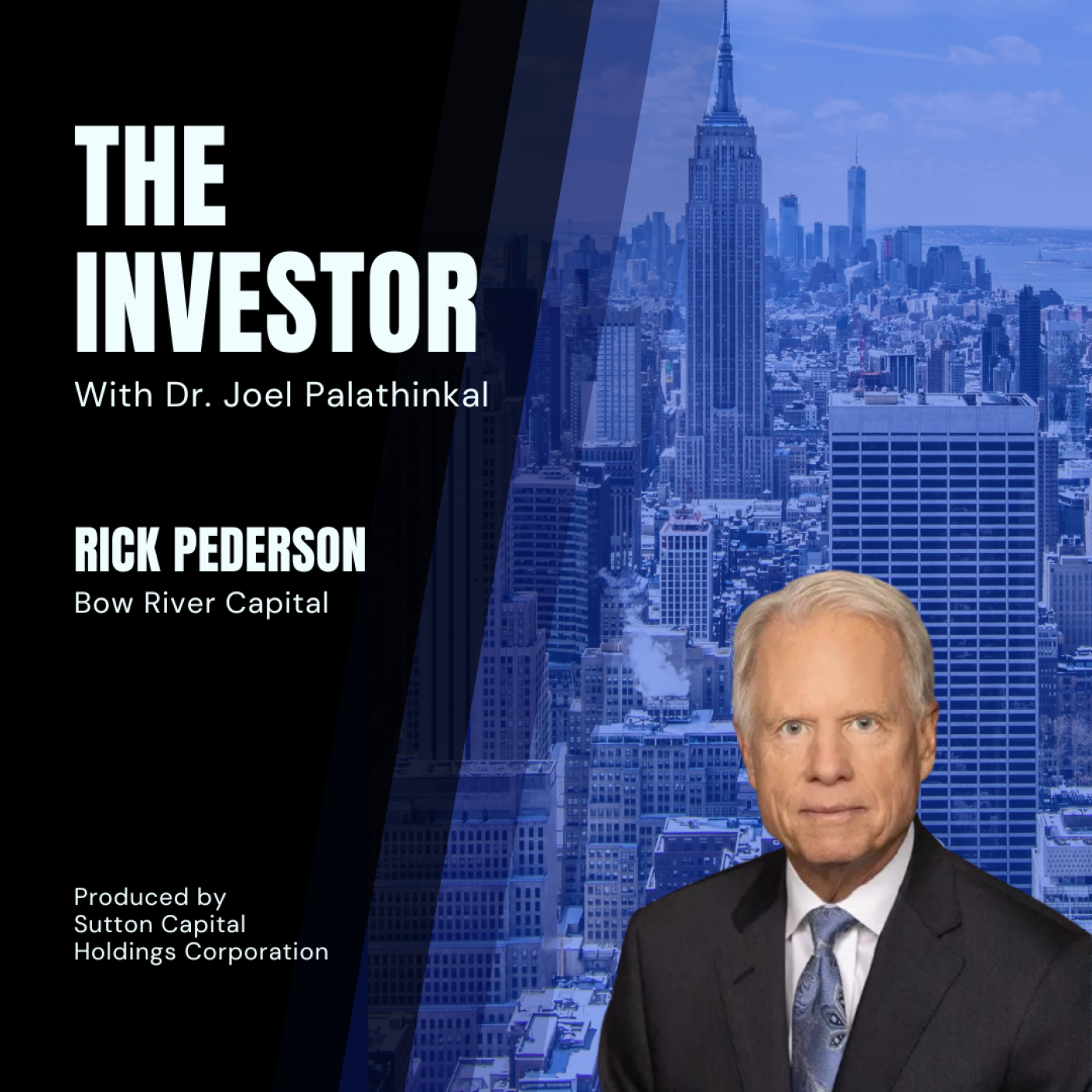
The Investor With Joel Palathinkal
Rick Pederson: Vice Chairman and Chief Strategy Officer at Bow River Capital
00:57:11
Loading summary
Transcript48 lines
- [00:03]
A
Welcome to the Investor, a podcast where I, Joel Palo Thinkle, your host, dives deep into the minds of the world's most influential institutional investors. In each episode, we sit down with an investor to hear about their journeys and how global markets are driving capital allocation. So join us on this journey as we explore these insights. All right, excited for my guest today, I've got Rick Pedersen on the Investor podcast. He's the Vice Chairman and Chief Strategy Officer at Bow River Capital, where he leads firm wide strategic initiatives and chairs the limited partner advisory boards across all investment funds. A seasoned institutional investor, he previously served as the President of Foundation Properties and founded Ross consulting group, advising Fortune 100 companies on capital asset financing and strategy. Earlier in his career, he worked with the Boston consultancy Harbridge House. Pedersen holds a bsba, msba, and JD Degrees from the University of Denver and has served on numerous investment in civic boards including Alps ETF Trust, SBHCI Mutual Funds, Principal Real Estate Income Fund, and the Bocher Foundation. So, Rick, thank you for coming on the show. Excited to kind of talk about all things asset management, finance, institutional, lp, relationship building. Happy to really take this where we want to take it. But Rick, why don't we start with learning more about who Rick is. Tell me a little bit about your early childhood. What did your parents do, reflecting on what you thought you would do kind of in high school, heading up to college, and then if there were any career pivots, that's great. And if there were not, that's great too. Some people just know they want to get into institutional asset management when they're in high school. I had no idea what asset management was. I was told to be an engineer or a doctor, so I learned about it later on in my career. So excited to hear your take on this. So I'll let you kind of kick this off and then we'll just riff off of, you know, where you kick off.
- [02:20]
B
Well, Joel, you remind me. Thanks for, first of all for having me on. But you remind me to say that not only did I know what asset management was, I didn't even know what business was when I came out of high school. I was a good student and had the fortune of being offered a number of scholarships and most of them were headed toward business school. And I remember going to my tennis coach in high school and saying, tell me what is business? And I think about that question, it was, it was a more difficult question than perhaps I thought of at the time. But anyway, I did go a business route with really no intention of landing anywhere And I think that is important. My career has not been necessarily goal oriented in the long run. It's been very much opportunistic in the short run. And that is my advice to young people today, is do not make the perfect decision early on because the circumstances change and your career path is likely to do that as well. But as you read off that string of degrees, yes, I have three degrees. Part of that was confusion, part of that was curiosity. I was interested in business, I was interested in law. But what I became very interested in is really the idea of problem solving and what it takes to solve problems. And so law school taught me, research taught me communication, business taught me, certainly numbers. But as I entered university and then exited university, I was still not exactly sure the direction that I wanted to go. And I was concerned about that at that age, as I think a lot of young people are. And it was, for me, a perfect place to be because, frankly, in the last 40 years, I've never been exactly sure what the next step was going to be, and it served me well.
- [04:24]
A
That's amazing. And walk me through kind of what was going on in your mind as you were kind of navigating that through your early years of college and what you thought that would kind of translate into, in terms of kind of like, you know, a formal career.
- [04:40]
B
Again, Joel, I wasn't sure I was interested in acquiring as much knowledge as I could. I outworked the competition, if you will, in many ways in the sense of I was prepared, I studied hard, but it was not with a, a job in mind. It was with personal growth in mind. I, I assumed that a career would develop with the accumulation of, of this knowledge, and, and eventually it did. But I really stayed in my mind a bit of a generalist. I mean, I certainly, I was in business school with a master's in law school. I managed to combine the two to create a joint degree at the University of Denver, which still exists today. But for me, stepping out of school and still being a bit uncertain about the trajectory, management consulting was a good place to be because I had some sense that it would offer me wide opportunity. And it turned out that it did. It was a perfect starting place for me.
- [05:52]
A
You asked me to shed some perspective on what I think, you know, some indicators of success is what I think consulting provides. And I think even like project management provides is the reliance on just jumping in quickly and picking things up. So, like, you know, you're on one consulting project. If you work at, you know, one of these big fours, you know, you're working on like, you know, PricewaterhouseCoopers. You may be working on a, you know, a three to four month project in the logistics space. Then you got to quickly switch gears and work in the healthcare space. So one of the things that I've noticed is someone that can really jump in and pick things up really quickly. Those are the people that can stomach change. You know, I don't think a government employee is going to be able to deal with that. Right. I mean, so being able to kind of be nimble and kind of handle multiple projects, you know, drink from the fire hose and also handle change, you know, we're going through a pretty crazy shift right now where, you know, Amazon is laying off 14,000 engineers. A lot of the jobs are getting replaced with, with AI. So how do you handle that change? And, and you know, can you navigate that to kind of figuring out what the next step is? But just my humble opinion, Rick, I don't know what your thoughts are or reaction is to my comment exactly that.
- [07:09]
B
My definition of handling change is being invited to or forced to become an expert very quickly. And I recall my first days at Har House, I was within weeks testifying before the state of New York regarding nuclear power plant sightings. Weeks after that, I was reorganizing a large energy company. The what, what comes is broad and challenging. And what I found interestingly is that the more uncomfortable I was, Joel, the more comfortable I was in the sense that if the challenge wasn't in front of me, I felt as if I wasn't productive, I wasn't learning. And so I, I thrived on the next assignment, the big assignment. And it wasn't personal recognition that drove me again, it was personal curiosity. It was knowledge acquisition. And as you say, that discomfort that being able to quickly learn about something that you don't. Didn't know about heretofore is, is perhaps a fundamental part of your career, whatever you're doing. I think.
- [08:29]
A
No, I totally agree. So tell me about some of the big things that you learned when you're working at. I think it was Harbor House, Harbage House.
- [08:37]
B
Yeah. Harvard's consulting firm in the mid century there. And we were a McKinsey, Boston Consulting Group type of firm. But we did a good deal of government work. We were designing water policy in California, for example. We were working for the Navy in some of its defense strategy. But we did a lot of corporate work as well. One of my large clients was John Deere and we, we did work with him all over the nation. And it, I loved it, Joel. It was a terrific start for me. It taught me to be self confident. Importantly, it taught me to communicate, as I said before, both written and oral, which is again a fundamental part of any career of successful career. But what I learned along the way at Harbor Chaffs was something interesting as I didn't find many consultants who were expert out there in what I'd call the hard side of balance sheets. And that became real estate. And so I was working with bank of America and some others trying to rationalize their real estate strategy around the world. And I elected about six years into my Boston stint to come back to Colorado and create my own consulting company that focused just on that. And so I was carrying my comfort zone of consulting into an area that I wasn't an expert in, real estate. And in the early 80s formed a consulting group. And it was just two or three of us. We, we began with local and regional real estate related issues and planning issues and eventually that morphed into work with large companies, Fortune 100 companies. And we did some extraordinary things, Joel. We, we helped hp, Hewlett Packard move into China and expand them in, in South America. We negotiated large real estate and finance contracts with Whirlpool Corp. In Australia. It was an excellent, excellent company and we did terrific things. And as I think about all of that time, it was a period of constant discomfort. How do we become an expert not only in an asset class or in a financing structure, but also with the politics and economy of another nation? And something I learned back to your question is it's important to be a micro expert understanding balance sheets, income statements, spreadsheets. But if you're not able to put that in the context of the macro environment, be it economy or tax policy or what have you today, it's immigration tariffs, it's suboptimal. And so you have to be a micro and a macro expert simultaneously to be effective, I think.
- [11:46]
A
Sure. No, absolutely. And I would say too, with consulting your, you know, you're really solving problems, I would assume, you know, back then, you know, we didn't have, you know, paid media to acquire customers at scale. Right. It's really through referrals and through, through other people kind of vouching for you. So your reputation is everything. And I feel like that cascades into the investment space as well. Right. So tell me, kind of what, what happened after that chapter of kind of doing consulting? What was kind of the next step? Well, how did you make that transition exactly?
- [12:20]
B
It was, it was a pivot that I Didn't anticipate, but I was, as I said, I was a consultant in real estate. I became arguably a real estate expert. Some of my clients were foundations who had invested in early funds with Prudential, I shouldn't say that name at the time, but a fund that was not doing well back in the late 80s. And so these investors, these not for profit investors, hired me to extract them from that fund and I did that and we were successful with it. They said, you seem to understand this world and understand real estate. Can we invest with you? So it was that unusual and happy circumstance where you have investors coming to you to say, will you advise us? And so I created a fund, a series of funds in the 90s. You mentioned foundation Properties. That was the name of the company. We had three closed end funds. We worked with university endowments and private foundations in the region. Here it was relatively small, $100 million. But we began buying real estate with them. And it was over a 20 year period, very successful.
- [13:34]
A
So how has the foundation landscape evolve since, you know, you were kind of working in that space with the real estate, you know, projects and closed ended funds? You know, I see a lot of endowments now looking at open ended funds and then obviously endowments themselves and university endowments are open ended. You know, some people say there's a difference between, you know, clear difference between evergreen and open ended. But, you know, many of these vehicles are, you know, have evolved since kind of the, the, the closed ended fund. So just in terms of like endowments and how they function and how they work with asset management firms, have you, you know, have you seen any kind of larger evolution from, I guess, when you were working with them?
- [14:18]
B
Oh, hugely, Joel. In. When we formed Foundation Properties in the early 90s, I was able to literally by referral of one foundation to another, one university to another, walk into a door and gather a group of investors. Today that really is virtually impossible. All of these entities are represented by large consultants. And there is our allocation policies. Very difficult for the advisor to win an assignment like that directly with the investors. So there are intermediaries. The allocation policies are significant. But something also occurred when we had that fund. In the late 1990s, Yale University and David Swensen began investing heavily in private assets. And as a matter of fact, David, who became a friend, wrote a book called Pioneering portfolio management in 1999, I believe. And it was revolutionary for foundations and endowments that it gave them permission and courage to invest in other than stocks and bonds. And it was revolutionary for me because this is exactly what I had been preaching. And so I now had a hornbook, if you will, to remind my clients, my investors, that this was a proper course. And so they professionalized, if you will, to answer your question. But number two is a mindset of adding private assets, real estate, for example, to portfolios. Really in the early 2000s, changed the landscape of investing.
- [16:08]
A
No, that's really interesting. And I've seen a handful of people, I do know, a few people that have worked at massive Ivy League school endowments and then they've spun off and had a similar model. So the open ended model has worked. And you know, LPs is certain types of LPs like that because, you know there's, you can kind of continue to reinvest and then from the fund structure standpoint, you can continue to gather new assets in kind of like an evergreen fashion versus a private closed ended fund. Obviously there's a portfolio construction around that and you know, you're really, you know, working against the deployment cycle and obviously monitoring the performance of that. So in my mind, you know, those are kind of the two big fundamental thoughts around just both of those structures, you know, but I think kind of working with these foundations, how can someone kind of engage with foundations in today's age? So I'm familiar with the gatekeepers that exist. So what have you seen that's worked? And you know, obviously what are, what are kind of the bigger fundamental challenges besides just kind of saying, hey, you know what, I got this gatekeeper. Because the gatekeepers, they get paid to say no, essentially, right? It's more risky for their job. If they do say yes, I, I'd assume right, they do.
- [17:28]
B
And as we all know, gatekeepers will often take the safe route. And the safe route is typically to invest in the largest managers. And so Apollo, Blackstone, for example, in real estate, there are dozens of others that typically see consultant recommendations. As a small advisor, it's more difficult to be noticed. Performance is going to be important, but it's not necessarily a safe route to go. But you mentioned how is foundation or endowment or frankly any investor thinking changing? I mean, it is moving to more of an open concept to some extent, but private assets are not all the same. Easy to say. And real estate tends to move in cycles. Product types tend to move in their own cycles within it, different than private equity, different than software. And so you can't just say, I'm going to invest in private assets. You have to pick a class and then you have to pick a strategy within. That seems easy but it's actually, it's complex and, and working, working one product type against another is, is important. I think we are going to see much more real estate open ended kind of thinking. Evergreen is certainly moving into everything and, and as you know, you met Jeremy Held, we are in Evergreen with co investments and secondary positions with private equity. We are considering right now the same in real estate. But a perpetual type of investment in real estate must rely on income in the long run. I've been in real estate a long time. There are two ways to make money in real estate in the very short term, capital appreciation. In the longer term, income plus capital appreciation. So you have to what the problem with closed end funds especially in a PE model of five or seven year holds is you can do okay, but you may miss a market cycle. On the capital appreciation side. Real estate in the last 20 years has become very interested in cap rate compression and making the most money it can. At the end of the day real estate is fundamentally an income proxy. And so I think real estate is probably best either in a very short targeted, what I would call rifle shot approach, two to three years taking advantage of dislocation or, or some distress or long term income. But sometimes seven and ten year strategies in real estate just don't work.
- [20:09]
A
Yeah, just the multiples don't make sense. Right. I mean you don't get the same type of. If you're gonna, you know, be sitting on something for seven to 10 years, you might as well do venture and then kind of, you know, get, get some type of liquidity from a secondary because companies don't stay, you know, companies don't exit within seven to ten years these days. Right. I mean SpaceX may be having an IPO soon but we'll, we'll see. But what's that valuation? Right. So I mean people could, people could essentially, you know, some of these companies, I wouldn't be surprised, would be still private for you know, 10 to 14 years.
- [20:41]
B
You know, and, and more of the public side is moving to private for good reasons as well. I mean we, I have fended off criticism inquiry about private asset valuation opacity. We're certainly Bow river and all of our brethren have not seen the distributions that we're typically seeing in the last several years coming out of COVID But we are very proud of our valuation policy. And even though we don't price every day like the stock market does, our analysis, our backup to valuation is, is good. And I think it's proven in a company like ours that sells assets every Few years. If you're selling close to your mark, your valuations are roughly right, you shouldn't be surprising your investors either on the upside or the downside.
- [21:38]
A
No, I totally agree. And I'll say this too. I mean, some of these companies, I mean, I wouldn't be surprised if they outlasted the fund life. You know, like there's a fund, there was a hypersonic jet company that I looked at years ago and they were, they were telling me that it was going to take 14 years for it to kind of come to commercial. That's like two fund cycles, you know, if you really think about it. So that's kind of the bigger risk. But, you know, if there is liquidity opportunities and, you know, I mean, there's risks going really early, but then there's also risks going really late because you don't know what the price will actually be when there is an, you know, an ipo. Right. You might actually. The IPA may be lower than the price point that you got in.
- [22:22]
B
Yeah, exactly.
- [22:23]
A
There was a downrun, you know, and.
- [22:24]
B
When you have investors interested in distributions like they are now, it influences you to potentially sell to someone else who may make money. And that's fine. I mean, as you say, the life, the success of many of our holdings goes far beyond our holding period. And we're fine with that. We do well, our investors do well, and frankly, the buyers do well also. That's the course. But as you say, not only does opportunity and upside increase over time, but risk does as well.
- [22:54]
A
Yeah, I was going to say many of the institutional LPs that I've spoken to, they haven't been as happy with the bigger franchises. Right. If you invest in some of these bigger tier one funds, these mega funds, you're not going to get the same cash on cash return because it's just a function of essentially proportions. If you've got a smaller fund, your multiple is going to be much bigger than just a bigger fund because it's just a bigger scale fund. You're not going to get that type of multiple, in my opinion. And then I think another interesting insight was there was pretty large institutional LP that I know that only invests in Fund 3s, because that Fund 3 is really where they start seeing a little bit of dpi. So I thought that was kind of an interesting insight as well. So I don't know, you know, if you have any additional tack on comments to or reactions in terms of kind of the LP perspective. And I think that dovetails in perfectly to your role as Chairing the limited partner advisory boards across, you know, many of these funds.
- [24:02]
B
Yeah, you mentioned that many investors, certainly large investors, will not invest certainly in fund ones of an advisor. And I understand that and don't disagree with it. There are many advisors out there unpracticed and before I invest in them, I want to see their process, I want to see their performance and I want to see that it's repeatable, which is a word that we see often in our industry. And so if I can show fund one and fund two and the types of investments, the methodology of operations and the performance is similar. It doesn't have to be identical, but similar. I'm much more comfortable going into a fund 3. And so I tend to agree that you need to understand manager competence and it takes a couple of funds to do that. And so we're now into fund threes and fours and I would say that our reputation, our recognition is moving up substantially. Part of that is our size and part of it is really consistency of performance and it's also self serving, but it's top tier performance. I mean there is a huge difference in top decile and bottom decile performance in private assets. And we happen to be in the former and that takes, that gets attention. So that's good. Yeah.
- [25:26]
A
On the contrary. Oh, go ahead. Sorry, sorry, Ray, go ahead.
- [25:29]
B
I'm happy to talk about what, what I do at.
- [25:32]
A
Let's do it.
- [25:33]
B
Yeah. Our company, now 24 years old, Denver based, is a private asset alternative investor. And we began with private equity and over the years we've expanded that to two credit platforms to software growth real estate. We have an evergreen product and so we are heavy into all sorts of alternative assets. For each of those, we build teams around them. But very importantly, Joel, my job in part is to make certain that these groups of experts in these product types and these asset types are talking with one another. And so we believe that there's a good deal of value for our evergreen fund when they're looking at something in technology to be able to talk to our technology group, all of our private equity industrials have real estate related concerns. They talk to our real estate people, even have them negotiate leases for them or potentially purchase of a building. And so there's a lot of cross in that and that is a good deal of what I think makes a company like our successful is that cross fertilization, that communication. My job as chief strategy officer is number one to, to deal with problems that we have and maybe more importantly, Joel, to prevent problems that we don't have my. I may look young on screen, but I've got a lot of experience and, and so there's not very much that I haven't seen. And so I'm always trying to look ahead both at the micro situation but also as we talked about the macro situation. I'm very interested in, in what the economic growth projections are, what, what interest rates may do, advising on, you know, our debt to equity structures in all of our assets. And so I try to have some fingers on that. It's, it's a great place to be and it allows me to kind of move back and forth between the assets to be valuable where I need to be.
- [27:45]
A
That's amazing. Yeah. The only thing I was going to say is there is a whole community of LPs that are seeding managers and they're coming in really early because based on some of the data, some of these emerging managers, you know, coming, I mean this was back in the day if you think about the, the Tiger cubs. Right, right. I mean Tiger Asset Management, they used to seed all these managers, these hedge funds. And then you know, some of these, some of these top tier funds have come out of that Tiger program. So I think a big thing is kind of, you know, you have this chair role where you're kind of advising all these funds and you're pretty much creating like a minehive. Right. There's all these managers that are kind of supporting each other. There's maybe one manager that focuses on, you know, high growth software. You could probably connect them to someone that's kind of been through your program or your, your cohort. So there's, you know, there's a lot of these GP seeders now that are coming in. Some of them do take a portion of the carry and you know, there's, there's really great revenue that can come from that. Right. If you got a piece of the carry plus you got a piece of the management fee over time you're essentially owning a stake of the business. Right. So that GP Stakes approach is really interesting. And then there, there was a program that was launched by, I think it was Sandana Capital a few years ago. They had this whole Nano fund program. There's a lot of these entrepreneurs that have exited and they have a huge ecosystem of other founders and they just don't have the fund yet because they just exited. But they'll anchor a little bit of their own fund and they've just built a huge network from that exit. So then there's other LPs that hear about it. And they'll come in just historically, if you look at the data, right? I mean, some of these emerging managers, you know, sub 50 million and less, some of them have produced like a 5x cash on cash. And the benefit of getting in early is, you know, you're that day one lp, right? You came in in the early days. You got to know them, you built a relationship with them. You're kind of paving the stones for the fund twos and the fund threes, maybe with preferential terms as well, to get early access, you know, so that's just kind of the contrary with not having the track record. You got to start somewhere, right? Stephen Schwarzman started. I mean, I don't know if he read his book, but I think he, he started the book with, I think it was like his small $10 million fund, and he went to the Harvard endowment and it was raining, and I think they, they, they flaked on him. Right. So. So what's your, what's your reaction to that? To that, to that new manager, that new breakthrough manager? What advice would you give that manager? Just getting started with no track record, no pedigree. They're just like day one, you know, deciding that they want to build something.
- [30:24]
B
Well, I would, I would argue that every good investor has some pedigree, some track record. I mean, you don't come out of college and just start a fund or you shouldn't. I don't think you should do some, some single asset investing, develop that track record early, demonstrate that you are indeed a good investor, because not everyone is. I'm. I think it's very healthy for these larger investors to come in to seed a general partner condition. I think it does accelerate the growth of certain advisors. Of course, there is risk in that. You're betting. I said just a minute ago that a lot of investors won't invest until fund two or three. This is sort of the reciprocal of that is you're investing before Fund 1 and coming into it now. You deserve to be paid well if it does well. But you, you're investing in not a track record of an entity, but really the track record of the individuals. And so that you have to build what you can in that as best you can. But we've all invested in something, whether it's homes or with our families. And so you're building a track record by doing that. Be mindful of how you do it in terms of your sort of product selection, your investment process, your. Your discipline around operations, you know, and managing that asset. And you do that One time you've begun a track record. So I'm, I'm all in favor of small manager acceleration and I'm all in favor of bringing young investors to the fore. It doesn't need to be a big firm model at all, but it does come with a certain amount of risk.
- [32:05]
A
Yeah, no, you make a good point and I think you, you hit on something that I think is interesting where, you know, everyone has the right and ability to create their own track record and their own pedigree. And a pedigree doesn't need to be that you went to, you know, you graduated from Harvard and you grew up in the country club. But maybe you, you know, you cut your teeth in consulting, maybe you cut your teeth working at a high growth startup and, and that turned into something and then maybe into your point, like I always advise to do a few small investments and create some type of synthetic track record, whether it's a series of small angel investments and then you can cobble together showing that there's markups across the board on half of them and they showcase a higher signaling in terms of a positive direction. Also, I think it's good to talk through what you learned from maybe the deals that didn't go through well and have that be part of your narrative as you're kind of presenting and you know, going out to market as well.
- [33:08]
B
Very, very important point. I think the culture of an investment firm is born certainly first from success, you understand what you did and why you did it and that on the, on the platform of that performance, you can celebrate that win as long as you understand why you won. But nothing more important to building the strength and culture of a firm, I think, than the, I'll call it failure, some adversity, an investment that doesn't go right, it took too long, it didn't perform as you wanted. That's. If I'm a limited partner, I'm going to look at that point just as you say what happened in the investment that didn't work? How did, how did that happen? Was it choice of investment? Was it how it was managed? Was it external market factors? But I want to gauge the strength, the competence of a manager based upon how they do when they don't do well. And so that's what I think you're doing as a young advisor is training yourself to understand what you're doing and why, why something worked and, and how you reacted, how you responded when it didn't work. You're building that portfolio of experience that you communicate to, to an investor to, to become a fund.
- [34:33]
A
Yeah. What are some macro high level trends that you're seeing related to your holdings? You know, maybe you can talk through, talk through that. I mean, AI is definitely eating software when software was eating the world. So, you know, and obviously we can't have a podcast without bringing up AI. Right, Rick? But any other top level trends or insights just kind of related to kind of what you guys review and analyze as you're kind of looking at investments and kind of looking at allocating. Yeah.
- [35:04]
B
Everything we do has some technology bent, whether, I mean, our software group is clearly technology. We talk about AI every day. All of our industrial and even healthcare holdings and our PE groups are, are technology enabled or we are making them that way. Technology is an AI is everything. One particular angle on AI that we're interested in, Joel, is this infrastructure investment in AI and data centers. Everyone is watching this now. Billions, hundreds of billions of dollars going into data centers. And this idea that we have an AI bubble. Well, one of the things that we're looking at is Bow river invented this concept 20 years ago that we invest in the rodeo region, which is basically the center of the country. 14 states in the middle of the country, from the plains to the mountains to Southwest. And I've been watching these data centers and semiconductor fabs being built in the last three to five years. More than half are being built in quote, the rodeo region. Texas, Arizona, Utah, etc. And why is that? Well, part of it is land availability, of course, but part of it is the type of regulation and permitting that's required. You can get a permit for a data center in Texas in two years, in Virginia takes seven and that kind of thing. And it's, it's important, it's an important economic generator for the rodeo region, this AI build out. We are concerned about the bubble sort of ingredients there. We think that some of the debt positions are going to be troubled. But on the other hand, we think we're techno optimists here. We're confident that AI is going to indeed be a new industrial revolution. Yes, we will overbuild some of this data center and stuff, but our real estate group is taking advantage of the significant investment in, in Texas, in Arizona and Utah by building related real estate or, or owning real estate that benefits secondarily tertiarily by those investments. So you mentioned AI. That's something that we are looking at and it has risk, but it also has great upside and it has some real geographic upside as well.
- [37:25]
A
Yeah. And I mean, think about the demand that you Know, I mean, we used to think about the electricians and the plumbers and kind of those type of roles. I was like, hey, it's blue collar, but you're gonna have a shortage and get charged a premium now for finding a good electrician that can kind of set up these data centers, right? So I think there's, there's a gold mine in those careers. And, you know, I mean, I'm in New York, right? So there's plumbers and electricians and a lot of that blue collar work nobody wants to do, right? So there's a premium on that type of skill. And I think people, I think some type of educational platform that can help people accelerate kind of learning that trade, because you're going to need those hard, like, little hard skills to actually, you know, build the infrastructure or find the right contractor to, to do it. Right? Especially for like, you know, processing the data, ingesting the data, and also just having, you know, a lot of the electronics and infrastructure put in. And then I would say also when it comes to plumbing, I'm assuming just like the cooling systems and making sure all of the H vac and cooling systems to just make sure none of those things overheat.
- [38:30]
B
So, and you're seeing exactly that in, for example, Phoenix, TSMC building those giant semiconductor plants there. They are also investing heavily in three community colleges in the area to create curricula to develop the type of workers they want. And it's not all engineering. It's. It is plumbing, it is water management, it is, it is some of the basics. And so I think that the, the employers themselves are recognizing that they're going to have to not wait in some cases for the educational platform to do what it needs. And so they are accelerating that by their own investment. They're creating their own schools basically to create pipelines for the employees. They know what they're going to need.
- [39:19]
A
Switching gears in terms of leadership and developing culture at a firm, let's say this manager is now on his second or third fund. He's got to hire some more people because he's got more assets to deploy. Right. So what's some advice that you've learned over the, you know, probably over the last 20 years, right, with Bow river in terms of building culture, leadership and teams and also just motivating talent to, to join, but then also stay and grow with the firm.
- [39:52]
B
It's an important subject because we obviously have been growing and adding to our staff and how we do that and where we find those people is all important to us. We're very careful about who we hire. We need to be. There is technical skill, but there's also chemistry that goes along with the culture in our teams. And so finding those people is difficult. And I'm asked often, how do I study what, what should I bring to your company? And of course, you need to bring technical skill. You need to bring competence, understanding numbers, being able to do those spreadsheets, understanding how businesses work or how real estate is valued, etc. All that technical competence are now table stakes. Joe, what what I look for and what our MDs are now looking for really is, is more of a well rounded candidate. Someone who really understands the macro side things, who understands as we're talking about economic conditions and how they may affect buy, sell or debt positions. We want someone who is frankly a very good communicator. And we sometimes have difficulty with that. Many students come out of school very, very good with spreadsheets and numbers, but not as good at communication. And we need someone who can not only understand the numbers, but communicate those and persuade others that they're right. And so these communication skills are important. The importance of psychology, something I learned along the way in my career back to that is all important. Everything having to do with performance at some point in time has to do with interpersonal relationships, being able to manage people, being managed by other people, persuading and leading. All of that has to do with personal interrelationships and psychology. And so some of that can be taught, but some of that has to be learned, I think, just by experience. But I think that students need to be a little more aware, explicitly aware of those interactions they have with their friends, their colleagues, their early business relationships in terms of how they're working. Because you can be the spreadsheet cap king of the world, but if you can't communicate the results of that, it isn't effective.
- [42:24]
A
Yeah, no, I totally agree. I mean, I think communication, confidence, those things are really important. You know, a lot of us have nerves when we have to do public speaking, but you mentioned this earlier. You know, you get comfortable by being uncomfortable. The more of these talks that you give, the more of these, I mean, these podcasts have been really helpful for me in my, in my confidence building, but just kind of getting out there, not only communicating, but, you know, cascading that communication over to leadership. You know, I don't know what your reaction is, and obviously, you know, Ray Dalio is kind of retiring now, but his leadership style, I mean, some of the things that I appreciated about his leadership style was the ability for. There's obviously a lot of other concerns that people had in general with, with his leadership style. But one thing was, you know, being comfortable to actually share your opinion with, with your manager. Right. And being able to have some type of transparency and be able to have that communication. And sometimes you do have to manage up. You know, you might be micromanaged and your, your manager may be cowering over you kind of, you know, checking on everything that you're doing. But you know, that's going to create more work that's going to slow things down versus enabling people to kind of have some agency and ownership and, and control of kind of some project. You know, whether it's managing, you know, one of the fund structures that you guys have and kind of having an incremental role in that. I think that's kind of a great way to kind of build leadership and obviously like get retention. Right. Have these people have, you know, be aligned with the mission and the bigger picture where the firm is going. But, you know, I wonder what your thoughts are in terms of like some different leadership styles that you've observed and maybe adopted portions of them from different asset managers as they, as they evolve and grow and, and obviously scale themselves.
- [44:29]
B
Everyone has their own leadership style. Mine is talk softly but carry a lot of knowledge with me. And so I'd like to think that when I do speak, which is infrequently, people do listen because it's typically on point. And I do have a point of view. If you're not managing up, Joel, you're, you're not, you don't have probably a career ahead of you. You have to be aware of managing a side down and up as well. Yeah. This idea of, I mean, leadership has to be, in my view, equal parts of competence, humility and transparency. I mean, you have to be respected for what you know and what you can do, but you also need to be respected for what you admit as your failures. And, and I think the humility is missing in, in many leaders. I think they. Sure. And, and I think there is a sense that respect comes from authoritarianism and it really, I think, comes from vulnerability sometimes. And you said something a minute ago, which is all important is you, you have to, in your firm, invite your people to have a point of view. Don't just go with the consensus and important with that point of view. Tell us what your point of view is, is ask the question that everyone is thinking but no one is asking. Be courageous enough to say that now. Have thought through what the answer might be so that you can respond to the next question. But you've also got to be willing to change your mind when the facts change, as John Maynard Keynes said. But it's important to have a point of view, be recognized as an expert in certain fields, not in all fields, but some of them, and really focus on not always being right at the same time, but getting better. And so yes, you want to be right, but you can't be afraid to be wrong en route to getting better. And that has this, is this transparency and humility elements that, that are important to leadership, but they're important to all levels of any organization.
- [46:42]
A
What would be some, you know, on the flip side, what would be some pieces of advice for institutional LPs as they're kind of building their portfolio construction? What should they think about when they're taking a chance on a new manager versus just continuing to re up? Obviously there's a track record, the data, but you still have to choose, right? And sometimes, you know, I'll be honest, I mean, some of these managers, they all look the same after a while. So how do you really, you know, think through that allocation process? And then obviously there's allocation cycles for each institution and maybe you can talk through a couple different Personas, right? There's foundations, there's institutional single family offices, there's obviously funda funds which obviously have their own portfolio construction and LPs they have to deal with as well. So maybe just, you know, top level highlights on just kind of the LP perspective and how they can be better LPs.
- [47:41]
B
One, one reason that Bow river has not to date focused on top tier institutions, pension funds, is for the following reason is I think that as you say, it's really difficult to understand how a manager is going to do. You can look at track record performance, you understand how they've done, but to understand an advisory shop like Bow river or one like us, you need to understand the people. You need to have a discussion like we're having today in terms of what is the culture of the firm, what is your investment process, what happens when things go wrong, all of that. The largest institutions allocating great deals of money don't really have the time, even through their consultants, to understand those smaller advisors. And so we have focused on large family offices and other smaller institutions who take the time to get beyond our performance. Yes, our top tier performance in a number of our funds has given us access to entry to their thinking. But our best investors are the ones who understand us, the best who get to know Us, we get to know them. It's a true partnership, which is overdone in our, in our world. But we do all of our fundraising internally. All of our investor relations are done internally at Bow river. And we do that very intentionally. We do that because we want to understand our investors and we want them to understand us. And so we develop relationships. We're talking with investors that may not invest with us for five years, but we want to know them, we want them to watch us, they have access to us in terms of our investment committees and the way we're thinking, how we change our thinking. And so we are comfortable in that world of not dealing with the large allocation assignments, awards from the largest. We're willing to work for some of the smaller institutions that we think gain respect and confidence more directly.
- [49:56]
A
What about, you know, you touched on, you know, in your past life, you know, kind of doing a lot of work cross border, you know, working with, working with businesses in China and you know, several other, you know, geographic regions. What have you seen has evolved internationally, you know, with, you know, a lot of the LP and GP ecosystem building? You know, I know there was a whole push for, I mean, just across the globe, you know, sustainability and impact. And you know, I've seen a lot of that go away in the U.S. you know, some of the, you know, we run like a fund accelerator and we've had a handful of climate funds that have shared that there's definitely challenges in the community current ecosystem. And some of them have also mentioned that they've had to kind of change their messaging, you know, to not say impact or say sustainability and maybe just kind of really think through the branding and that's common too. You talked about messaging earlier. Right. So trying to really think through how people can understand your product. I do still see a lot of infrastructure investments in both the Middle east and in, in Europe. But you know, we'd love to hear any other trends of color across the board, you know, whether it's, you know, software or, or technology in other regions that maybe you engage with.
- [51:18]
B
We are US focused investors. We have done some work in Canada, but we, we do keep abreast of what's going on out in the world. We do have interest from foreign investors in, in Bow River. They like exposure to the US and they especially like exposure to the Rodeo region. You are implying that things have changed in the United States in the past year. That's very much true. We're seeing a good deal of my, my colleagues outside of Bow river are still quite interested investing in, in Europe, in Latin America, we're not seeing as seeing more hesitation from the investors there to come into the United States because they don't quite understand the policies that they're seeing right now. And so there is a bit of a seismic shift in terms of international investment flows. I think it will settle the next few years as some of the unknowns, trade and economy settle. But our focus is, Joel, all us for the most part. And so we are, we're relatively sanguine. I'm relatively sanguine about the US Economy. It's fashionable these days to be looking for the next recession, although in my long career, it's always fashionable, but we don't see it ahead. And there are a number of reasons for that. Some of it is this business investment in AI we were talking about, the consumer is at least at the top of the K economy still, still fine. I think the jobs report that comes out this week, delayed, is going to show that employment growth is moving up again. Not spectacularly, but I think it's going to be stronger. And so I think in the next few weeks, months, people are going to see a stronger American, American economy than maybe consensus right now. But, you know, we were having a discussion yesterday, Joel, that's relevant to this. I worry a bit about the fact that we have had this long period of time without a recession excuse in Covid, which was very specific. But downturns are sometimes healthy and we have not really seen one since in 15 years. And maybe a third of the American workforce has not participated in any sort of real economic downturn. How does that affect investing? I mean, there, there is this sense, and I have friends who will tell me that they believe that much of what we see in front of us in the economy is too big to fail. And so we can capitalize gains, but socialize losses. There's going to be a bailout if something happens. And I worry what happens to investment theory and investment activity if there isn't a proper assessment of risk ahead. And so that is one thing that we're worrying about a bit is the fact that things are too good.
- [54:20]
A
Yeah, sure, yeah. You're wondering when is it going to pop? But you know, I think, look, it's also, in my opinion, it's just your perspective because the wealth is really created during a recession, Right. You're not going to get huge alpha when everything is up and to the right, but you could get bigger alpha when you come in at the right time. And you know, I remember with COVID I mean, that was One of the biggest years for. For IPOs, I think. Slack IPO, Airbnb IPO. So when you think about your perspective, if you're trying to get in and have a higher multiple, you want to buy low and sell high, you know, theoretically. Right. I mean, obviously, with some caveats around that. But. But you want to, you know, that hopefully there's dry powder where you can allocate when that time happens. We got about a minute left, Rick, so I always ask this at the end of the show, just a piece of wisdom. You know, it could be from a family member that maybe just has a quote that's barked on that, that. That you hear in the background every once in a while and it keeps coming back to you, or could just be one of your colleagues or a mentor. But just one piece of advice, one piece of wisdom, just kind of reflecting on, you know, your career that you want to take away with us.
- [55:33]
B
Two things come to mind, Joe. Two. Two simple thoughts. Number one is always maintain your curiosity and follow through with that meaning. Don't be afraid to learn something new. Don't be afraid to be uncomfortable. And if you allow that to guide your career, you'll find that being in a trajectory that's not a straight line is actually quite comfortable. So that was first, and the second is a very simple one. But my. One of my mentors, always, in situations where we saw conflict, we saw adversity, he would say, do the right thing. And it was a sort of a cowboy ethics statement that seems simple, but the right thing for us at Bow river and for me, has always been protect your investor, do the right thing for them in every case. So it comes back to. It comes back to the ethics of investing, which also involves everything else we've talked about. Humility, competence, etc. It all is wrapped into doing the right thing. Sure.
- [56:37]
A
Well, hey, Rick, thank you so much for being so generous with your time and sharing and dropping all this knowledge and stories and insights our audience is going to really appreciate along with me, and hope you have a good rest of the week along with everybody else to join.
- [56:52]
B
Thanks much, Joe. Enjoy.
- [56:54]
A
Take care.
- [56:54]
B
Bye. It.