← The Investor With Joel Palathinkal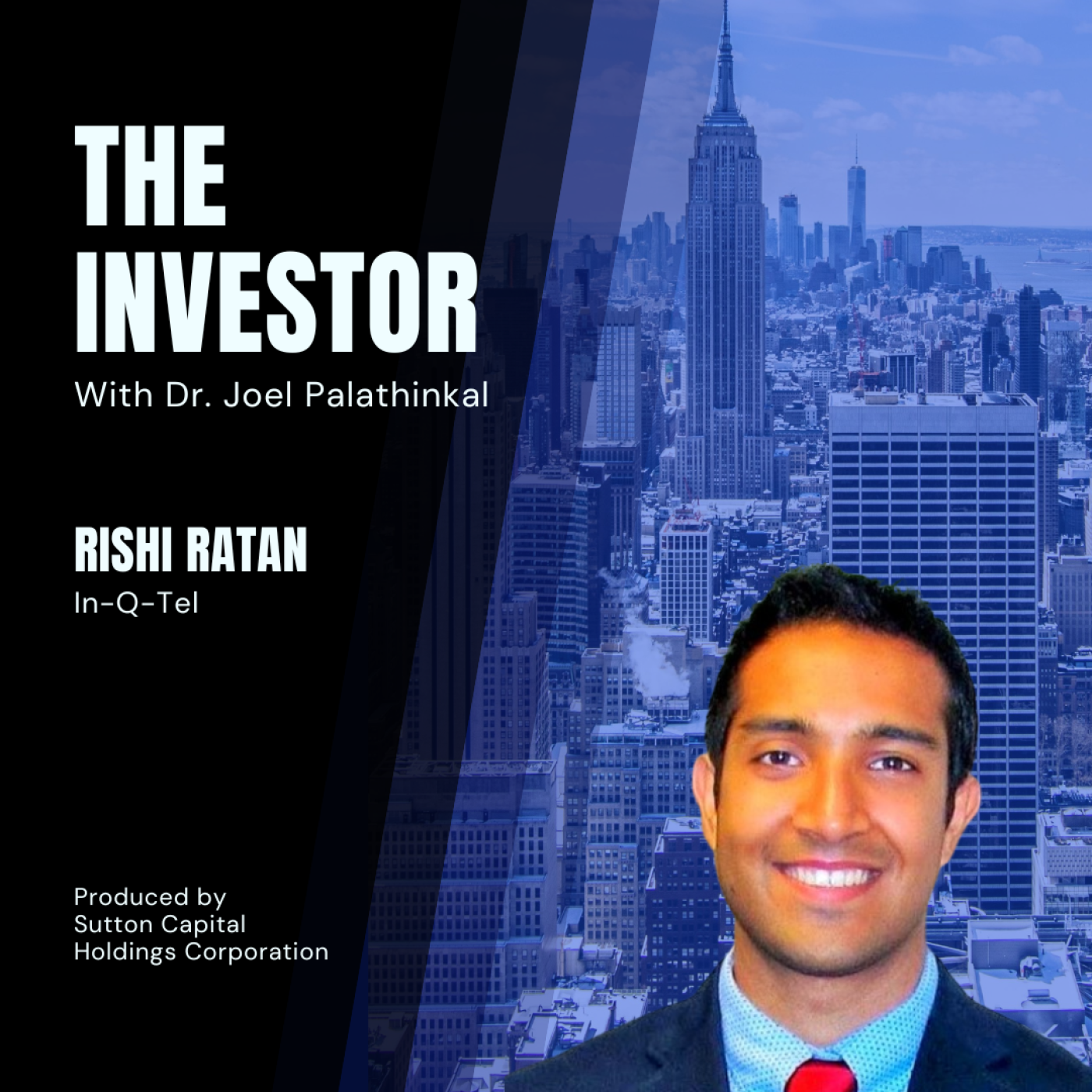
The Investor With Joel Palathinkal
Rishi Ratan: Venture Associate at In-Q-Tel (the CIA's Venture Fund)
00:58:58
Loading summary
Transcript119 lines
- [00:02]
A
Welcome to the Investor, a podcast where I, Joel Palathinkel, your host, dives deep into the minds of the world's most influential institutional investors. In each episode, we sit down with an investor to hear about their journeys and how global markets are driving capital allocation. So join us on this journey as we explore these insights. All right, I think we are live. So, Rishi, welcome to the program. There's a couple people popping in, so what we were just talking about was, you know, I was kind of prepping Rishi before I started this episode, and he was complimenting me on my jacket. So my wife hates this jacket. But, hey, you know, she doesn't have to be on the show right now. She's in the other room, so hopefully she didn't hear that.
- [00:55]
B
Hopefully she got a good chuckle out of this.
- [00:59]
A
So cool, man. Super excited to chat with you. We chatted briefly, literally, about the VC program a few weeks ago. I'm like, you know what? You should just teach my class and just be a speaker. You're too advanced. But why don't we do what I did with Jordan? Tell me about your background, your childhood. So you grew up.
- [01:18]
B
So.
- [01:18]
A
So Rishi knows one of my past speakers, Jordan Karen, who's currently at a family office. And it's funny just how small the community is. Right. You see speakers and people at common events in the investor community, they end up being related to you or they end up being a childhood friend. So awesome parallel there. I'll definitely say hi to Jordan for you, but. So you grew up in Long island, right?
- [01:43]
B
Yeah, so I had a bit of a interesting journey. So I grew up half my life in India, the other half in the U.S. so my dad used to be in the Indian Navy, so I kind of was a military kid growing up in India. Grew up, spent the first 10 years in New Delhi, then next was two years briefly in Mumbai, and then came out to the US Started off in Jersey City for a brief stint for two months when I first arrived to the US but then after that, spent, like, the all of my high school, like, 9th through 12th grade in high school in Long Island. So it's good to be back for me to do to New York City as well.
- [02:29]
A
Nice. So you went to high school in Long island, and then what did you study in college? Where'd you go to college?
- [02:36]
B
Yeah, so I went to University of Illinois Urbana Champaign to study electrical and computer engineering. So did my undergrad and then subsequently did my master's as well in electrical and computer engineering.
- [02:49]
A
Sure.
- [02:49]
B
And, like, I Kind of. I pursued electrical engineering because I was always interested in like kind of electronics and I would say still am in my VC path as well.
- [03:03]
A
Yeah.
- [03:03]
B
And it just had an appeal to me. I wanted, I really liked hardware and Illinois was one of those schools like, you know, the transistor has been invented and has been built by Illinois. First sound and film from uiuc. Yeah, so there's a lot of history on the circuit side there. So that really appealed to me. And I started off, you know, in the same vein. My first, like the first, I would say third of my career, kind of working as an engineer because I felt like that was kind of the fundamental training that really helped define like how I think about products, how I think all of my systems knowledge.
- [03:53]
A
Sorry, I was trying to mute somebody and I muted you. Okay, sorry. Everybody go on mute, please. Thanks.
- [04:04]
B
Cool. Yeah, so yeah, I mean like so, yeah, started off my first, you know, training in engineering. Did a couple of internships at Qualcomm. Worked now Even talking about 5G, I was, I was working on back then the advanced LTE group and then their corporate R and D working on 5G, like small cells. So it's, I've been like very fortunate to kind of see the development of like what I worked on like almost nine years ago come into fruition, like almost now and then like as I was about to start my full time journey, I joined the Surface group at Microsoft primarily because I wanted to sort of get a little bit of a feel of a startup, but also a big company. When I joined Surface, it was a 30 person team. It was one of the, it was a great time. Surface had just gone through a $1 billion write down. But the CEO Satya was very committed to the vision and know you've seen the fruitions of that over the last, I would say six, seven years. But back in 20, 20, 13, it was one of those things where it could have gone anyway. And that, that exhilaration was like very exciting to me. I like felt that this was an area I could probably get a lot of domain expertise and you know, build some cool products. So I'm talking to you from one of my prototype devices from Surface.
- [05:44]
A
Oh, nice. Tell me a little bit about Satya because I, you know, I watched a talk recently with Jason Calacantis.
- [05:50]
B
Yes.
- [05:51]
A
And they were talking about Bezos and how people are afraid of Bezos. Whenever he goes into a new space, when he goes in, he goes hard and he goes with conviction.
- [06:01]
B
Right.
- [06:01]
A
So whenever he's, if he's Doing pharmaceutical, you know, drug delivery. I mean, he's all in with conviction. So that's how Bezos is. But tell me about Sethia, because he really transformed Microsoft to really be a cloud company. Right. Everything, I mean, went to the cloud.
- [06:17]
B
Everything was more than even a cloud company. Like, I would even take it one step back.
- [06:23]
A
Yeah.
- [06:24]
B
So. So when I joined Microsoft, Satya had just been CEO for, I think, six weeks or eight weeks, something like that.
- [06:31]
A
Yeah.
- [06:32]
B
But still, fundamentally, the company, you know, was quite different than what it is today. And I will say to my two your viewers that I spent five years at Microsoft, but I am no longer affiliated with them. So these are just like my learnings.
- [06:47]
A
Your own independent opinion.
- [06:49]
B
So I will give a little bit of public service announcement. I think one of the biggest things that Satya did and still continuing to do that has really led Microsoft to be kind of this cloud first company, as you just rightfully talked about it, is taking all these disparate business units within Microsoft and aligning them onto one fundamental vision and culture. And that was kind of a very big thing to do because Microsoft, in many ways pre 2013, before Satya joined, was a conglomeration of many small companies into one big giant umbrella. And they all kind of had a separate roadmap, separate kind of working style, different cultures, and getting them all aligned into, you know, the same, I would say, core strategy and the network effect vision. I think that was like the biggest value add that Satya could do. And then, sure, you know, cloud is kind of that ultimate conglomeration of all of these spare things like, you know, you start from Windows devices, Office, LinkedIn, all of the different IoT and AI services, and they all tie into the cloud. I think that is a big thing that a lot of people generally don't see. And Microsoft has just been doing all this in the background.
- [08:18]
A
Sure, yeah, that makes sense. Where do you think Microsoft is heading, just in your personal opinion? They're doing the cloud, they're across all the devices, everything's connected. I think a big thing, because I worked in fintech and we looked at Microsoft as an example. A big thing with productivity is continuity. A lot of times the worker of the future is going to be at his desk and then he's probably going to have two or three workflows on mobile and maybe on a tablet. Most tablet devices don't have a data plan, so you still need to be connected to wi Fi cell phones. You do have data, but it's a smaller screen and you're probably not going to be doing real detailed work. So with that in mind, you definitely need to think through UX and ui. But what's next do you think for Microsoft?
- [09:07]
B
Yeah, I think it's on, I would say I classify it on three fronts. So at the base layer I think it is the interaction medium. So the interaction medium here sponsors spans from the devices you interact with. So that is where kind of like the hardware comes in. So you would have seen some of the flavors of this not just in the Surface devices, but kind of Microsoft's work that's been happening on the HoloLens side with them pushing the boundaries in augmented reality and also these new dual screen devices that are coming like Surface Dual. The main thesis here is that as you said, the worker of the future is going to have multiple interaction mediums and you want a device that can span across many different functions for a user in different ways. First is the hardware layer of having a lot of variety for different types of users. The second is the software layer and the interaction piece which is like what you have known Microsoft as. Like you know, Windows and Office, but really it is Windows Office and I will even add Xbox. All kind of like sharing the same code base now and all of them kind of like seamlessly interacting whether you are on an iPhone, whether you're on an Android phone, whether you're on a Surface, whether you're on an oem, like a Dell PC, whether you're on like a tv, like all of your experiences that this is something that you know, I would say Microsoft learned from Apple, that Apple has done a really good job at. So that's, I would say the first layer which is like getting you being involved in the user's journey across whatever medium of interaction. The second layer, what they're, they're focused on is more around kind of the, the back end. And I would say what is known as the modern workplace initiative in Microsoft, which is the productivity layer. So this is where your office and your, I would say all the dynamic services, all your interactions that you do on with your IT in a company, Microsoft wants to eliminate it as a function overall for companies. They want it to be very seamless. You know, Sutton fun. For example, like if you are going and scaling a five person company to a 10,000 person company, it should not be a hurdle. Yeah, you should be focused on kind of your core business and like let kind of Microsoft or even you know, Google is also getting into this take care of the IT functions for you now. So that is the second layer the third layer, where they're really kind of like spending a lot of the focus and trailblazing is kind of on the applications of artificial intelligence and the connectivity to the cloud. And this is basically what is the powerhouse that makes all of the other three bottom two layers actually function seamlessly. So that is where, you know, Microsoft has spent a lot of focus and initiatives on quantum computing. They've. They're investing heavily in not just like building a scalable quantum computer, but also teaching, bringing on developers on board onto their quantum platform and already allowing companies to use their classical computing data centers along with their quantum computing like prototypes. So I think like that is a function that Microsoft is going into where they're trying to take computing and democratizing that across industries. So that is something that, like that, you know, when you asked earlier about Satya's vision and what makes it special is that he really fundamentally drives and believes in empowering every person and organization on the planet to do more and achieve more.
- [13:20]
A
Yeah.
- [13:21]
B
Like that mission statement that Microsoft has, all the products really try to embody that mission.
- [13:29]
A
Sure. That was really helpful. So that's a great story on evolution with technology and just a company growing. Let's switch gears and talk about the evolution of you. So I have a similar background. I don't know if you know, but I also was a double A. I was an electrical engineer and then I pivoted into production and then got into vc. And I think you had a very similar.
- [13:53]
B
I almost had. I'm almost like 10, 15 years behind you.
- [13:58]
A
Yeah. Yeah. You're like the. I'm like you, like from the future.
- [14:01]
B
Yes.
- [14:03]
A
No, but so maybe you can tell the audience. Cause pivoting is, you know, as you know, quite a challenge. And we both have done the pivot twice in two different industries, so I think it's even difficult to get into product because it's very similar to VC where there's no real degree and there's no. It's very opaque as far as like how you break in.
- [14:26]
B
Yeah. It's also a chicken and egg. And so, I mean, I would not say I'm an expert in any ways as well. But some things, some trends that I. Underlying things that I would say that have worked for me and I've seen work for a lot of my mentors and people I have mentored in the past is you have to go down at the base level of like, what is your kind of like motivation and what drives you and interest you. And then when you start there, you always have to have like, I would say like whether you're a product manager or a vc, there always needs to be like one like layer of like core competence that like, you know, that fundamentally makes you a little bit unique and like that you are, I would not say a domain expert, but like you are somewhat of a subject matter expert in some area and you use that as a, as a lever. And also I would say a way to break in, into these fields so I can. So for example, like, for me like my like background, experience and interests all kind of the common thread was kind of hardware consumer electronic products. So I wanted to. So when I was like trying to break into product management, that was something that I could use as like I would say an advantage in breaking into product management within Surface, for instance.
- [16:00]
A
Yeah.
- [16:01]
B
And yes, it helped that I was already, I'd already worked as an engineer and shipped a couple of products as an engineer. So it helped me kind of bring kind of that, I would say system engineering knowledge to the, to the ground. Because every product manager needs to have a superpower. You are either the best at being the voice of the customer. You are either someone who can help the engineering team relate to the product features and be on board with the vision and implement the product in a timely manner, or you are someone who can really work with the, with the marketing and the business teams to, to take the product vision and roadmap and kind of outbound use that as a customer acquisition funnel. You need to have some, I would say lever that you bring to the table that really differentiates you.
- [16:53]
A
Yeah, I totally agree. I think it's the same with VC as well. So I think VC product and tech are superpowers. But I've interviewed almost like 100 VCs now and there's many VCs that are lawyers and Yeah, I guess that's great for term sheets.
- [17:10]
B
Yes.
- [17:11]
A
So I think we all have kind of our own. And then I think if you come from a certain industry, so we have some, you know, actually some medical professors or professionals in this audience and those people I think would be great for digital health. You know, any kind of sector focused industry, having that industry background really helps as a superpower, I would say. I don't know if you agree with that.
- [17:32]
B
I completely agree with that. And I think like, you know, I didn't get onto the VC side yet, but even for vc, like I would say like, you know, if you were to just look at, even from a mathematical standpoint, most VCs are not actually like getting the returns that you would, you would automatically associate when you hear the term VC to. But I think that the ones who are very successful and you know, you have had so much experience in this, do take a very thesis driven approach and a thematic approach. And I think that is another thing. When you're breaking into VC as well, you should look at VC as more of like an embodiment of all your past experiences rather than a new industry that is shiny and cool that you just want to break into.
- [18:25]
A
Yeah, totally, totally agree. It looks like Josh has a question here. Can you clarify what you mean by thesis driven approach?
- [18:34]
B
Yeah, so what I mean by this is, you know, I'll use the example that Joel used by digital health. Right. So digital health is, you know, it's a made up term, but it is also a thesis. The thesis here is that healthcare is going to involve, is going to leverage and utilize technology in various different aspects. Whether it be kind of, you know, you see from telemedicine, whether it be kind of you as a patient being interacting with your own health records on the digital platforms that you already use. The spectrum is quite wide. But taking this, that thesis here is that there will be an intersection point between healthcare and technology and you want to be in that sweet spot. So as a vc, you have to be able to look at the world around you and then see where the trends are going to go and then be one of the first movers into capitalizing on that trend. So that's what I meant kind of by taking that thesis approach being kind of, I would say first to market, even second to market. Like a lot of times VCs, like it's the pattern matching thing that Joel has interviewed several VCs, they would all say this, so it can sound cliche, but it really is true that you have to be able to see the trends and be able to have that conviction that you're gonna bet on something and you know, go all in.
- [20:02]
A
Yeah.
- [20:03]
B
And also at the same point know when to move out.
- [20:05]
A
Yeah. And I think, you know, there, you know, a lot of people talk about gut based investing using your gut, but a lot of times the gut is not enough. I feel like, yeah, the data and I think the data really, you have to do the unsexy stuff of just talking to hundreds of companies because you can look at like CB insights, you can go on Crunchbase and Pitchbook and find a lot of great quant data, but you're only really going to, I.
- [20:30]
B
Feel like by the time you've got you, by the time things get to that point, you're already like I would say a little bit behind in.
- [20:39]
A
Yeah. And I think, you know, you learn a lot from just talking to other VCs. So secretly when I talk to so many other VCs it's like a new lesson for me because I think the thematic approach to this is what I would say. It's how you see the world. Because I may think digital health is a certain way and that's like my thesis. But Rishi may be completely, he just may see the world completely differently and disagree and that's fine because we all have to have our own thesis and have conviction on that. That's what I would say.
- [21:11]
B
Yeah. And then the other thing, I also think that VC is, is a little bit of a very much a close knit community that you know, the best way to succeed at VC is to like talk to other VCs and entrepreneurs and engineers. Like you have, you have to like it is not a zero sum game. It is although it sometimes, you know, when you look in the media it may seem like that, but it really is an industry where collaboration is kind of the biggest problem.
- [21:43]
A
Yeah, yeah. And I think, you know, if you can meet VCs to share notes on. I think you know, Rishi and I literally just chatted this morning about like a space deal. You know, we were like, hey, you know, what do you, what do you think about space? And you just learn insights. You know, I spoke to a family office that focuses on space and they were telling me that launch is great. You know, it's a great space, but it's just a small fraction of the whole space market. You know, when you think about payloads and, and you know, doing multi mission travel, just launch is like such a small. But I, you know, you don't pick up those insights from just reading articles.
- [22:19]
B
Yeah, even I would say like so I mean I could talk about a deal briefly like probably not a deal, say, but I'll talk about industry because some of the deals from my background are not publicly disclosed. Yeah, but I would say like even on the, on the space side as an example, Propulsion for instance is a big focus right now within the industry because you saw a lot of the launch vehicles. I would say a lot of these companies, you take Rocket Lab, you take Capella. A lot of them do end up like leveraging SpaceX or now like Amazon's Blue Origin. Blue Origin. Well also Kuiper. Kuiper is also Bezos as you said. Like you know there's a, there's A very blurry line. Whether it's, it's Amazon Kuiper is Blue Origin or it's like literal cross pollination. Both. But one of the things, one of the, I would say low hanging fruit areas is this propulsion systems because there's a big flurry in electric propulsion. Because what that does for you is. And a lot of these entrepreneurs are actually all ex SpaceX, ex NASA folks who have kind of been able to come into the private sector and productize their innovations that they were passionate about.
- [23:45]
A
Sure.
- [23:46]
B
And the cool aspect in this space is that what electric propulsion systems do is they unlock an absolutely new frontier in space. So a lot of the satellites that you hear about right now are low Earth orbit or kind of just deep space.
- [24:04]
A
Yeah.
- [24:05]
B
And, but there's another emerging area called very low orbit. And, and that is something that is still untapped, but that's where a lot of the like Blue Origin, for example, like their, and SpaceX, one of their next big projects is to start operating the very low Earth orbit. And the reason why that's so powerful is because you're still in that atmospheric zone where you can harvest atmospheric oxygen as a fuel propellant source.
- [24:36]
A
Okay.
- [24:37]
B
And electric propulsion systems are kind of the way to do that.
- [24:42]
A
Sure.
- [24:42]
B
So chemical partial systems, like you still get into this kind of a, I would say roadblock, that you're limited in your space flight journey by the amount of propellant that you can store in your, in your satellite. But in an electric propulsion system you are, you're able to use the ambient oxygen from the atmosphere and then you can just be in that zone forever.
- [25:07]
A
So there, what are some of the applications with very low orbit. So that's, yeah. Just for, just for clarification, that's closer to the Earth, right?
- [25:14]
B
Yeah. So it is around the 700 kilometer, 1000 kilometer kind of zone. So like right above the stratosphere.
- [25:22]
A
So you can still have satellites in that space.
- [25:25]
B
Yeah, so, so the cool thing about this is that the way like most applications for this are powerful is that one of the areas that, and I'm sorry I'm going into like very much deep space here, but I've been like passionate about this area for a while. But what's interesting is that you would so a lot of these like mega constellations that are operating in low Earth orbit or just like all the satellites that are already, you know, in, in orbit right now. Space junk is one of the big challenges. And what that does is that it creates problems for future space missions. And also, you know, hasn't has a problem that you can have accidents by with space debris. So very low Earth orbit is a way for satellites to come in and out of the Earth atmosphere seamlessly so they come back to the very low Earth orbit orbital pathway kind of to refill up on fuel. Then they go back up into the traditional low Earth orbit. They can remove satellites can start removing some of these dormant space trunk satellites in there, bring them back down to the earth safely instead of them just like crashing. And then the other thing is that it also is going to give a lot more, I would say real estate ecosystem, an opportunity for company for initiatives like Starlink where you're trying to give Internet connectivity to areas where fiber optic or even like cell towers are not able to reach. And in the low Earth orbit space you because you have that mobility to move around from one location to the other. So an example I'll give to you is Astranis. Astranis is a space company which is kind of giving, focusing on Alaska right now and giving satellite connectivity to regions of Alaska that have not had Internet for like 50 years. And one of the cool things about this is that they are, that they can, they're not, they're not a very low orbit satellite. But once they start tapping in, they're a customer of satellite companies that make very low orbit products. But what's cool is like now the latency is that much smaller. So what that advantage gives is you can have like gigabit levels of Internet connectivity anywhere around the world.
- [28:09]
A
Yeah, that's interesting. That's great. I know we got around 30 minutes, so I think one thing I'd love to talk about is thanks for that additional detail on space. I'm super excited about going deep on that area too. We'd need another hour to go on that topic, which we should do. I know a few other space VCs, so maybe we can actually do a panel on that. But I'd love to talk about.
- [28:40]
B
Your.
- [28:40]
A
Final pivot into venture and in Q Tel. And I think you might have a couple slides that you're allowed to share on your investment thesis and possibly some things on In Q Tel. Or is it more just general VC slides?
- [28:58]
B
Yes, those are like kind of more like general deep tech.
- [29:00]
A
Okay, yeah, that's fine.
- [29:02]
B
Deep tech slides.
- [29:03]
A
Yeah, I know everything's probably a lot classified, so whatever you're allowed to talk about and if you have anything on Deep Tech, you know, I can definitely make you a presenter and maybe maybe fly through a couple of those slides and then maybe Leave like five minutes for questions at the end.
- [29:18]
B
Sure, sure. One sec.
- [29:21]
A
I'll make you a co host and yeah, maybe are you allowed to possibly just give an overview of what In Q Tel is and what their focus is?
- [29:30]
B
Okay, yeah, so yeah, I was some associate at In Q Tel on their venture investment team. So In Q Tel is a not for profit strategic investor that invests in cutting edge startups and technologies on the behalf of the CIA and also 11 other intelligence agencies on behalf of the US government. So it is, you know, you can go on iqt.org you can look at all the portfolio like it's been a very active investor over the last 20 years and they do about 55 deals a year, which is, you know, you can almost look at it like a deal a week.
- [30:14]
A
And are they based in D.C. in Virginia or do they have a presence in New York as well?
- [30:19]
B
Yeah, so in Q Tel is actually a global presence now. So there they have three main offices. One in Arlington, in Washington D.C. yeah. The second in Menlo park, third in Boston, Waltham, Massachusetts actually. And then they have, they recently opened up over the last year and a half international offices in London and in Sydney. Oh wow. So beyond the US government In Q Tel has also expanded relations to the UK government and the Australian and New Zealand government as well. Governments as well. Great. So the thesis I'll start with kind of like the, the main, kind of say high. I would say the higher level thesis. I'll try to like put my slide. Yeah, sure. It, my apologies.
- [31:52]
A
It's taking me to put you on the spot.
- [31:58]
B
No worries. Yeah, my bad. I actually initially thought that that slide deck was more for your class.
- [32:06]
A
Oh, my bad.
- [32:06]
B
I hadn't, I hadn't opened it up before call today.
- [32:11]
A
That's okay.
- [32:24]
B
So I don't know. Do you guys see my screen?
- [32:27]
A
Yeah, I can see it.
- [32:28]
B
Okay, great. Do you still see it? Yep. Cool. Yes. This is just getting a background about me. So I'll probably like spend in the interest of time the first like three or four slides and then we can do a bigger debrief in one of your classes.
- [32:53]
A
Sure, yeah, that'd be great.
- [32:55]
B
So you know, in Qitel, as I said, is one of, is, you know, strategic investor for the, for the intelligence agency. So these are right here on the, on the bottom right you will see all the different agencies that you all supports and you can see some of the prominent portfolio companies. So you would have heard of Palantir in recent times with the, with the direct listing that just gone up so Palantir was one of the first investments that in QTEL made like back in 1999. So the fund was established in 99 primarily at the tail end of the Clinton administration Because there was fundamentally a shift happening in the way innovation is taking place in the US and I would say globally but like especially in Silicon Valley at the time where a lot of the innovation was actually coming from startups and venture partners investing in these startups then kind of research labs that the US government was up until then tapping into mostly. So at that time the director of CIA established, helped establish in Q Tel as kind of a private, not for profit entity. So it can work across these three different, you know, industries, across government partners, the venture capital industry and then kind of startups. So that was kind of like the genesis and thesis behind in Q Tel's existence and kind of what their mission is focused on. They're very much of an impact oriented investor. They primarily are looking to invest in founders and companies that are looking to make a difference in the world in whatever application they're doing. So a lot of these companies that you would see are in their portfolio are some of the top unicorn status companies as well like Deepgram, Markforged, Advanced Navigation. They're thematic investors. They get into. They have two different, I would say broad areas of investing. One is on your traditional enterprise software side, the other is on what they call field technologies. So I worked in the field technologies area. Field technologies to cover for you is what VCs typically call deep tech, hard tech. So it spans across commercial space, satellites, additive manufacturing, AI and edge computing, autonomous systems, wireless communication, synthetic biology. So first the question would be a lot of people be like, well all these things seem like so much of buzzwords. How do you kind of differentiate between like hype versus something of substance here? And so that is kind of the biggest thing that ends up becoming a challenge, which is why I have this quote here that deep tech is objectively a function of technology market and then execution. And that is more so important in this area than I would say the traditional software service companies because the technical aspect and then also market timing and execution can play a very, very deep fundamental role in whether a company or even a founder will be successful. Yeah, and at the end of the day, like in the venture industry, you know, even if you're an impact investor, you, financial returns are just come or nature of the game, they come the job. So these do tend to be very important because you have to at the end of the day think that I will only invest in a company if I do see at the end high upside for return. So you would not. Even if it's a strategic investment, you wouldn't necessarily invest in a company unless you could see that founder and the company being successful. Sure. So this is a slide. I have one of the biggest deep tech investors in the world is sosv. And I'm not sure, Joel, I think you may have already interviewed someone from there or from hacs. I could be mistaken.
- [37:32]
A
I do. Yeah. I know one of the founders of IndieBio.
- [37:36]
B
Oh, nice.
- [37:36]
A
And one of my buddies knows Sean O'. Sullivan. So I'd love to get on the show. But yeah, you know this deck, if you go, I think for the audience, if you go to SOSV, Deep Tech Trends, they have like a 200 page deck that I think they keep updated. So.
- [37:51]
B
Right. And so this is from their latest deck that I felt like was one of the best slides I've seen put together that really show the impact of like, you know, deep tech is no longer just one of those like nebulous terms that are like science fiction. Like you. 1 out of 5 unicorns can be classified into a deep tech company.
- [38:13]
A
Sure.
- [38:14]
B
And you know, the biggest thing that I will say is that.
- [38:19]
A
All the.
- [38:19]
B
Fortune 500 companies in the next wave, you know, a big like driving quote that I, that I like that came in this pandemic time frame was from Marc Andreessen when he said that the US Needs to get back into building and deep tech founders and investors are fundamentally driven by companies that want to build physical things.
- [38:45]
A
Sure. What are your thoughts on. Just because you mentioned synthetic bio.
- [38:50]
B
Yes.
- [38:51]
A
Are you guys looking at like lab grown tissue and tissue engineering? Okay.
- [38:56]
B
Yeah. So you know, in Q Tel has been a. Has an investor in a lot of these life sciences companies like you know, Ginkgo Bioworks for example. And so the lab grown tissue. And like there's a lot of investment as you know, as you have invested actually Joel, in the past in these alternative like meatless companies. So that is definitely a big area. But they're also, they're also working beyond that kind of on the genomic side on kind of, I would say lab grown organ side of things as well.
- [39:43]
A
Like beyond kind of just bioprinting. So they have bioprinting for organs. And then I think one thing that I'm seeing now is for lab grown meats having a component system. So there's a company that's like looking at crustaceans. Oh. And yeah, I can send it to you later. But they. They can create a component which is like the lobster tail. Yeah. So they're actually cool. And each of those different components have different value. So I've been seeing some of that stuff. It's pretty interesting.
- [40:15]
B
Gotcha. And sorry, I was looking away because I had put your video on my second monitor.
- [40:21]
A
Oh, no. No worries.
- [40:22]
B
And I was. I'm not sure. Like, do you see your. Yourself also in the screen?
- [40:28]
A
I see. I see. I see both of us, and I see your deck.
- [40:31]
B
Okay. All right, cool. I'll remove that then. Cool. So the next thing I wanted to. Yeah, I know we're short on time, so I'll just, like, cover briefly. I think everyone has kind of bought into the driving forces, but I do want to spend some time kind of on the growth opportunities in this space because I think for your. For your cohort members and also, you know, listeners. As I said, there's a lot of hype in these areas, and it's hard to often differentiate between what is, I would say a good trend or. Or a good company or a founder versus you know, companies like, you know, Nikola, for example, right now that are. That are in the news for some of the wrong reasons. So the way, you know, I would say this is my. These are my thoughts. They're driven a lot by. By, you know, what in Q Tel is focused on as well. But I would kind of classify into these three areas of, like, you know, big growth opportunities. So on the application and content creation platform side, like, this is more the way I would classify this kind of is. Is that spatial computing and that worker of the future that we talked about earlier, that computing is no longer going to be limited to kind of your dedicated PC, tablet, or phone. So the 3D pipeline space, that is really interesting because there are a lot of companies like Spatial being one of them that are working on it sounds like science fiction, but, like, bringing like, immersive 3D holograms or immersive augmented reality applications to your everyday life. And you can already see, like, you know, big companies like Facebook with their recent announcements on Oculus series, Microsoft with HoloLens, they're all trying to, like, tap into the space. One of the biggest companies, I would say, from the startup land, that is both a cautionary tale, but also one of the earliest, I would say, innovators is magically. So I used cautionary tale because Magic Leap had huge investment rounds, promised a lot, but then ended up falling a little bit prey to just the execution aspect of that equation that I showed earlier. So they had all the tech probably good to market, but the execution was something that they struggled with. So that is why in deep tech investing, one of the things that is very important is how you always want to be bullish. And VCs will often not invest in a company if they are not shown kind of a broad lofty application possibilities. But as an investor, you always have to be the one who is coaching and also tempering your founding team on building a roadmap that is achievable and kind of lowers that path towards profitability. Because if the company is not going to be able to make money, at least having a path towards it, then a lot of the lofty goals will never be achieved. And that's where most of the deep tech companies end up falling.
- [44:08]
A
Sure.
- [44:10]
B
The second area on the deep learning and quantum side. So this is exciting in terms of computing because I think we've been through. You as an electrical engineer also will appreciate kind of the Moore's law, I would say, approach of building transistors and riding that wave of computation. I think we're coming towards the fringe sides of that now as you would see from, you know, Intel's latest struggles with their yield as well in their, in their chipsets for next generation silicon. But one of the great things this is where like you know, AI and deep learning and hardware kind of intersecting and quantum to a certain degree as well, is that because we have all this data now, we can now like transform our view of the world from the von Neumann architecture of building computers to now looking at building chips that take more of an approach like GPUs are taking of parallel computing and leveraging all that big data that we have available to have very specific application centric ICs. I think this is very important because a lot of the stuff that you see, like I'll go back to my 1 in 5 deep tech slide. A lot of these companies that you're seeing on the iot or even like the crypto mining sites, where this trend started from cryptocurrencies is that you don't need to rely on GPUs and CPUs to do like machine learning computation. And in fact like an application specific integrated circuit is in many, in many ways cheaper and more efficient. So that is a wave that is, I would say there's a lot of good companies in this, in this area that are going to continue to thrive. I'll give you a couple of recent ones that would be good for your audience if they're interested in like sentient for instance, is a company that Microsoft Venture Arm M12 just invested in early this summer and it is playing directly in this app, AI deep learning edge hardware chipsets. Sure. Quantum is the way that ties in into this area I think is more from the standpoint that coming back to that earlier conversation we had earlier on the data centers and cloud computing, Quantum unlocks this new possibility of high computational power for specific applications, but low power consumption. And I think that the biggest bottleneck that we're seeing, and this will go back to the environment concept as well, is that like data centers with the amount of electricity they're consuming, they're a big toll on our environment right now. And quantum computing is not only a way for us to look for new energy sources through new applications of new chemical discoveries in the chemistry and biochemistry space, but also a way for us to reduce energy consumption for our day to day computational powers. And the last area, the reason this is where I would say most VCs are still playing in this third bucket. And this is where I think where most of the economic returns and the near term possibilities lie are in the computation and I would say productivity data scenarios. So the containerized application ecosystem bringing down, you would have heard edge computing as a big term thrown away, thrown around in the space right now. And the whole idea here is essentially the latency of processing everything on the cloud is just not scalable. So bringing some of that computational power back to the edge here is just like a device that is something that is of huge value and can unlock a lot of new possibilities all the way from self driving cars to precision agriculture. The data management piece I think this is something that where most if you were to look into an enterprise offer investment trends within containers and data management, you'll probably get 80% of the recent investments in enterprise software. And the reason is because that data management is with the proliferation of big data that we have, it is so much more difficult right now to be able to effectively, I would say manage all the different data streams that it is just there's so many problems to still be solved there. So I think these are the things that I would say are huge drivers. I'll end my last slide kind of on the. This is kind of the fundamental investing thing that you would have shown to your players. But I will say that in the deep tech investment game this cycle that looks very theoretical, you go from reinvesting right into fundraising is a little bit more elongating. I think in deep tech investing one of the things to be aware of Is from the time you write your first check, you have to be willing to take a bet on that company for up to 10 years. Like, you know, I'll take the example of Palantir, for example. Like Palantir, yes. They've been profitable, I would say for the last, you know, six to seven years looking at their S1. But that was like a bet that the early investor Palantir had to take back in 99.
- [50:42]
A
And I would say one thing I would add to this is sometimes it's more than 10 years. So it's almost, sometimes it's like the life cycle of like two funds of the company or even like the fund. So the fund might only be like a seven year fund. The technology takes like 13 years to commercialize. So then as a fund manager, what do you do? Right? I mean you have to figure out if you, if you want to, if you're an evergreen fund, that's great. But if you're a seven year termed fund, the challenge is kind of like how do you get out? How do you get liquidity?
- [51:13]
B
Exactly.
- [51:14]
A
And sometimes you got secondaries.
- [51:16]
B
I'll end with this slide for you, for you. And we'll take like, sorry, five minutes of questions. Yes, sure. Which is like when you're picking a company, you always have to think about it. I put it in this matrix format which is are you going in from a strategic lens or are you going it from a technology or just investment trend lens? And you have to always be sure of where you lie on this matrix and have that conviction whenever you're making the investment. So I'll end it, I'll end my sharing here and leave like five minutes for, you know, questions from you or from any of your audience.
- [51:54]
A
Yeah, yeah, that was great. Hey guys in the audience, you guys got any questions? Can you guys hear me? So Josh Smither, you guys got any questions? All right, well. Oh, go ahead.
- [52:22]
B
Oh, I was gonna say, how do you manage with risks? You know, I guess they're all pretty well vetted, but I always wonder when you're in forward and onward looking into, you know, maybe it's very basic from my standpoint, but you know, how do you manage with risks when you're heavily invested in the more progressive technologies, so to speak. That's, that's a great point. I mean, honestly, like I think that is, you know, you would hear this a lot from VCs saying like, you know, at the early stage, team is one of the bigger, biggest drivers they're investing in. And then I would say market and problem. But in this area, that team really becomes very much more important. And that is kind of like how you're managing your risk a lot. And so you're looking for founders who in addition to having that passion and conviction for the problem area that you're solving, but also have a deep expertise in some aspect that is going to be very important to executing on the vision of the company. So that is one. But then the second part, which a lot of people end up struggling with, is the founder's ability to surround themselves with folks who have complementary skills, especially on the business side. A lot of these companies in this area are originating in research labs and by engineers who have worked in industry for a while. So you have to have a team in which there's a healthy balance between a technologist and a business referral. And here is where the sales and marketing aspects become very important. Because for these companies to be successful, they have to be going in and evangelizing their technology to customers. And oftentimes in the beginning when VCs are investing, they know that the early pilots are not going to be generating any money. So you have to have a balance between non recurring engineering work for companies and doing pilots and evangelizing your product solutions so you can see them. And then once you've shown a proof of concept, after that, it's kind of, I would say it comes back to how any other company would operate. You're writing the growth rate, but the initial stage, you have to have a very much of a targeted and strategic approach and you have, and the founder needs to be very good at like storytelling and kind of just tying the technology down to a customer problem that is like a lot of the customers. Like, you know, I think Josh mentioned a deep tech dental company. So I actually like, you know, heard about that company yesterday in your mentorship chat, Joel. Like that is, I forget what it's called now, but they have a computer vision application for being able to scan like people's dental X rays or whatever. And I think those are areas where the customer problem and the customer experience is kind of the most important thing. And the computer vision technology, the deep learning algorithms are more kind of, I would say ancillary. And they're just like table stakes.
- [56:01]
A
Yeah, super helpful. Well, hey, I know we're up for time, Josh, if you got any questions, feel free to jump in. Feel free to jump in if you got one. If not, what I always do is I always ask one real quick piece of advice. So any piece of advice that you have you know, in your career or your life that you want to share. Happy to take that away with us.
- [56:23]
B
Yeah, totally. And I will say also like, you know, we ran out of time today, but I'm happy to, you know, do a deep dive in any of your classes for your students. But the advice I'd give, you know, going back to kind of, I'd say how this would be more of a career advice is try to figure out like what is like your passion and driving you. And this may sound cliche, but really like use that as your biggest differentiator and power to break into. Whether you're breaking into engineering, to product management, to vc, at every given stage, you should be like trying to always reinvent yourself and going and getting a new skill or learning a new about a new area by building onto your passion.
- [57:16]
A
Yeah. And real quick, I guess, Josh Ping, the last question if you got one minute. How can deep tech VCs add value to their portfolio companies? So I guess developing the product, gaining customers, business development on a deep tech side, maybe that's different than.
- [57:31]
B
Yeah, no, I mean I think those are definitely there. I think one of the bigger things is in addition to that is being, I would say like VC's job always is to be a little bit of a hype person and like inspire the founder to continue to push the limits. But in deep tech, in one of the areas that VC should be doing a little bit more is coaching and being and tempering a bit on the over commitments that a founder can get themselves into early on in the company. It's like evolution and always bringing that lens of the customer voice because I think it is a journey in deep tech. The closer you are to solving the nuggets of whatever application your founder is working on to a specific customer application, the faster you will get to that long term vision.
- [58:32]
A
Sure. Well, this was awesome. Thank you so much, Rishi. Yeah, I know you're busy, so thanks for making time for us and we'll catch up soon, get you back in the class at some point.
- [58:41]
B
All right, sounds good.
- [58:42]
A
Take care guys. Take care. Bye Bye.