Loading summary
Transcript103 lines
- [00:02]
A
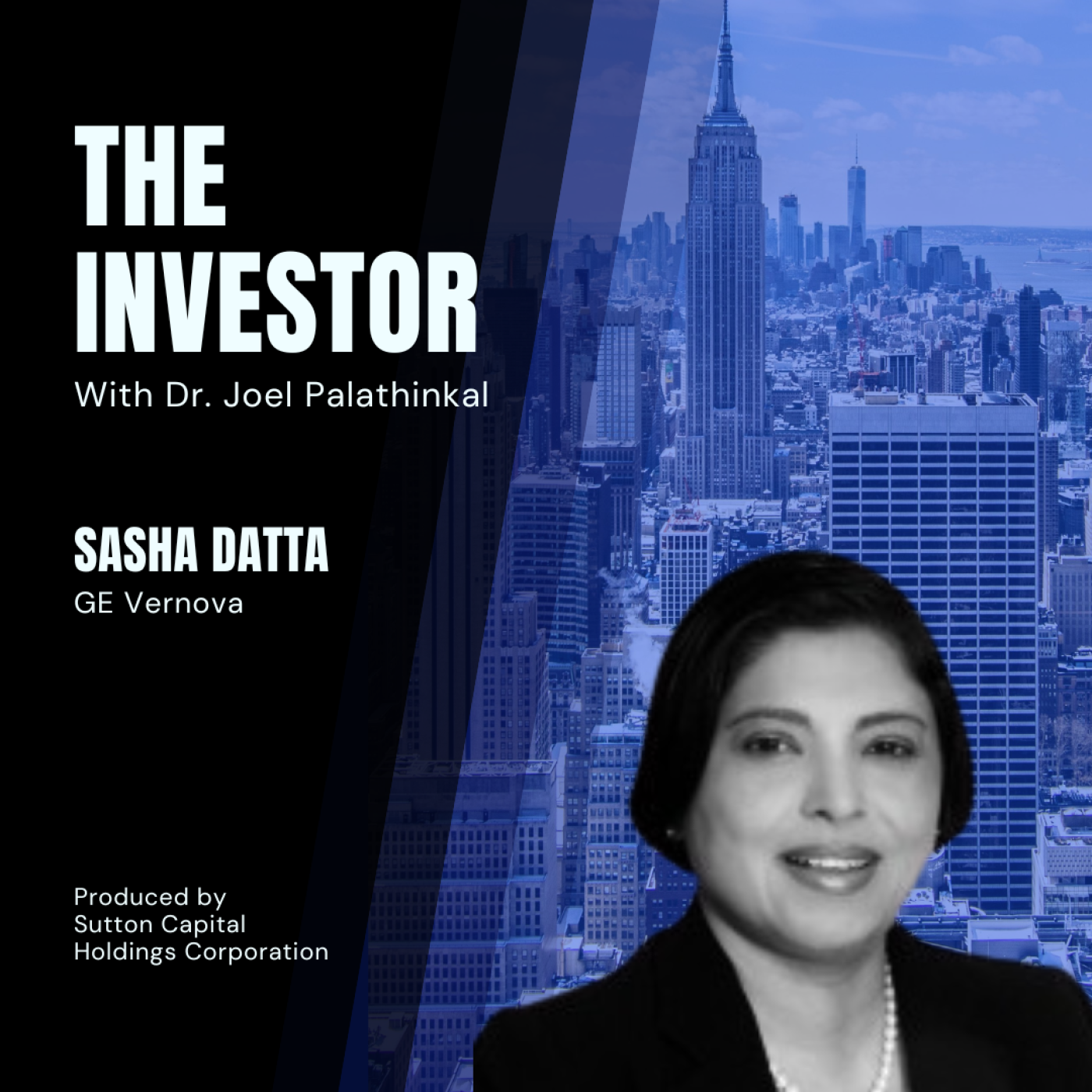
All right, so excited to have another podcast this week with Sasha Dutta. You know, really, you know, got to know her recently. Good, good new friend. You know, I'm just going to give a quick intro and then Sasha is going to go a little deeper on her career journey and kind of a lot of things that she's doing recently in her current role and just all the exciting roles that she's had in the past. But you know, just a quick overview. Sasha is the Senior Director of Pension and Retirement Solutions at GE Vernova's Defined Benefit and Defined Contribution plans. In her past role at Citi, she successfully executed on the Federal Reserve Capital stress testing report submission for comprehensive capital analysis and review and she did that for about three years. And she's also managed and responded to governance, regulatory, internal audit inquiries and you know, also has supported bank examiners and regulators. So really strong institutional investment and product background. So Sasha, you know, hopefully that was a good overview, but love to have you start out with your early education, you know, maybe just kind of what you thought you were going to do starting out in your career and kind of some of the surprises that came along in your career journey. And I'll probably interject with some questions along the way but you know, would love to kind of just hear a little bit about you, your family, kind of your upbringing, what you thought you would study and, and then we'll, we'll have fun, you know, uncovering this journey a little further.
- [01:36]
B
Okay. Right. So I grew up in India, as you know, and grew up in a big city, Calcutta and New Delhi. Split my time over there and then when I was out of high school, I came straight to the US to study over here. As for family background and that has a big role in who I am. My mother's side of the family, they were all lawyers, judges, tax lawyers, criminal lawyers, big well known folks over there. And then my mom's, my dad's side of the family, they were all professional folks in a way that they were, they worked for companies. They were either professors, teachers or they worked for companies. And my father had a 30 years, 30 some years of experience in telco, which is the Tatas, one of the Tata Engineering company and I was born in the Tata Hospital in Jamshedpur in India. So you have to understand that I grew up in an environment which was where you worked in a company for several years, you took a retirement, you got the watch and that's how it was, that's how I was taught. My dad was an engineer, he was one of the first graduates from iim, the management institutes in India. And so that's the path I was supposed to follow. I was supposed to go into engineering. I was going to go to iit. I didn't get into iit. I was smart, but not that smart. But that actually opened up a lot more areas for me. I was always curious, I was always curious how a company works, how they can really weave their effect into the fabrics of the society. And because I grew up in that kind of environment, that was absolutely very noble to me. So I was always interested and I knew somehow I'm going to work for big companies. I knew that much. But how I'm going to get there. I didn't want to be an engineer, but that's how people people think. You know, in India most of the time when I was growing up, things are different now. But things were different at that time where it was more traditional path. So I applied to the US A lot of my friends previous years in high school, they were applying to come to the us A lot of them were coming as a graduate students. But I actually chose to apply and get into a undergraduate program. I got into a small school where I got a good scholarship. Actually that made it easy. Back then we were not able to bring funds from India so we had to depend on a lot of scholarships. I got a good scholarship with Salem College in Winston Salem, North Carolina. And I actually applied for mathematics. I got into mathematics. I became a honor student in mathematics but also wanted to see how economics works. So in India you either go on bachelor of science, bachelor of arts. But here I could do a bachelor of science and bachelor of arts in economics. Took all the courses took sure. I did honors levels courses like graduates levels courses in undergraduate. When I was graduating I was so over qualified for a lot of things but which was good. Got me a job at Morgan Stanley in the fixed income area. Was intellectually it was great and also it was the first ranks of what you do, you know, as an analyst. Did that for a few years. They did my green card. Got that one out of the way, got a job around this time I wanted to see how the other big company again I was always drawn to large corporations. So MCI Telecommunications was a big well known name in the telecommunications industry at that time. And this is after the Bell Canada was deregulated. They were all baby bills. And a lot of these companies were also going into the local markets. MCI wanted to go into the local market. So became an analyst, corporate analyst with MCI in Washington D.C. moved for them. The whole telecommunications company, the whole industry was actually was going through a lot of upheaval at that time. People were buying each other, valuations was off the chart. And so our careers, people who were in that whole industry, it was going through an upheaval. As much as we were wanted and needed. If a company gets sold out, there's a chance the corporate functions are going to get consolidated and one's going to get. Some people are going to get eliminated. MCI gets bought out. Went to work for two venture backed startups. One was Diginet, one was light trade. I learned, my curiosity actually drove me that you want to learn how the business works, not just finance. Even though my background was in finance, really learned a lot. And the last stop on telecommunication was at Teleglobe. I became a product manager, I was a product pricing manager and then became a director. At that point I had a group and I was relatively young even then. And we get bought out by Bell Canada. And around this time I was a little bit distraught. What do I do next? And I needed a certain amount of stability. As much as I'm learning and learning was in overdrive, but I need certain amount of stability. What do you do? You know. But your industry is going through a lot of upheaval around this time. Back then you have to understand it was not very customary to apply to jobs through Internet. I did a company called General Electric. Their telecommunications and technology arm was gxs GE Global Exchange Services. And they did a lot of the technology stuff, everything for, for GE and outside vendors. They are third parties. So I applied there. They were looking for a senior director of finance and I applied. I get a call, I went for my interview and I got an offer after like 15 interviews. 15 people interviewed me. You have to understand I did not come through the GE rank and file. So I came as an outsider after like 9, 10 years outside in the industry. So it was a little bit of a shocker. But I embraced the culture. I loved G I became, I love their process, people management and their the kindness of the people. You know, GE was cutthroat. This was Jack Walsh's era. But there was a certain amount of kindness, honesty, you know, people wanted to develop people. That was one of the things that I really enjoyed. And I worked there. Within 18 months that particular company within the GE portfolio gets sold out. Now I realize why they bought me because they would know that somebody coming from that kind of environment, a people environment, I will be much more stable. And I was this company has never gone through any kind of changes, structural changes in 35 years. And here comes a major change. They get bought out by Francisco Partners in Millono, California. I wanted to stay with ge. I made a plea that what do I need to do to stay with ge and they actually made it happen for me. They said, well, you know, you want to go ahead and eliminate your own position. You run the risk that you may not get a job in ge, but you know, GE will be open to you. I interviewed and I got a job with GE Medical. This was before GE Healthcare Systems, which later on became Healthcare, but it was GE Medical up in Milwaukee. My first assignment was to go to the Midwest and buy a company that they were actually scheduling to buy, make that company. I had one year to make that company into a G business, which is basically people process, knowledge transfer. Everything has to be done, put that company under G Americas, G Medical Americas, and then move on to my next role. Great. I worked double shift, pretty much. I had two jobs. I had a GE job and I had the job at Ambassador Medical which we bought in Indiana. And you have to understand that I've never left a crossed over Ohio before this. So it was a cultural shock too for me. But I embraced it again. This is ge. I am sent to do some work and I'm going to get that work done. Got the work done, everything was done. And. And I'm looking at my next role to be in China, going and looking at the inventory, just the inventory line, all of G Medical, which is a pretty big role. And in my personal life at that point I brought my parents from India. My father got a job in the us so he moved over here. He and my mom, they moved over. I'm the only child, so they started living with me. They were in the east coast and I was in the Midwest. And I get a call that my dad had a stroke. So I had to pretty much drop everything and come back. You have to understand the GE jobs, they take pretty much everything out of you. Most companies, they do. So I could not do a GE job and take care of my father. So I had to leave the job, focused on my family, got my family back in gear. After that got better. I had my eyes open for ge, but I also started looking, what do I do next? You have to understand that I have already become the CFO for one of the G businesses. So for me I wanted to do something else. I wanted to expand my knowledge. And in order to do that, I got a call from a company Called Ernst and Young around that time. They wanted somebody to come and set up their entire risk management program and the valuations program. And I took that and set up the entire. There you go. I can see you now, Joel.
- [11:10]
A
Okay.
- [11:11]
B
I don't know what happened, but I just.
- [11:12]
A
Yeah, it's. It's been working fine the whole time, so no worries.
- [11:16]
B
So I concentrated and set up the whole process. I traveled quite a bit and worldwide, actually internationally. Set up a lot of process in a company, software development company in Israel. Then another GE business. They wanted to do a special purpose entity and go public in the New York Stock Exchange. Worked within with the Dublin based company and us. Set up the whole thing, did a lot of fantastic roles. And around that time I could see the financial crisis coming. And I realized that if I don't leave public accounting at that time, I will be stuck there for the next 10 years probably. And I knew the problem in the whole balance sheet for these companies, it's pretty great and it's going to take time to clean out. And around that time I got a call from General Motors Asset Management. They wanted somebody to come and set up the entire valuations and pricing program for their assets. So I went in, got that whole thing done. GM was going through their bankruptcy at that time, so it was very tough environment for all of us and, and we believed in this whole industry. It was hard for us emotionally, but we had a lot of good people. I've always depended on my mentors, formal or informal. I developed the relationships and the kindness of those people have actually always helped me. And I've always noticed that if I give back, I get 10 times over. So the universe keeps a tab. So basically what you give, you get back much more so probably. And GM actually decided that they are going to outsource that entire function. And I was, it was open to me that they wanted me to stay with the company, become an analyst. And I said no. I mean, I did not like that whole thing. I had to get jobs for people who worked for me, took care of everybody. And then around that time G calls me again. GS like, you know, I think the CFOs know, knew each other. GE Asset Management and GM Asset Management. I get a call from the CFO who knew some of the folks I have worked for in the past. So I walk over there and they know me obviously and I get the job. I became again valuations director at GE Asset Management in the pension fund. I set up the whole process and procedures and everything. And two years Goes by. And in the meantime, in my personal life, my father was diagnosed with cancer and he was at the last stages of his life. So I literally said that I'm going to leave GE again. I resigned. I was told that I can take a sabbatical, but I literally left. I took some time off, came back and I was moving. I moved to New York area. So around that time. So I came back to Washington again to take care of my family. My father passes away, six months goes by. I applied only to ge. There was a treasurer role in the GE Capital Americas. I got the role and became a treasurer. So fund management, risk management and cash management. So really understand everything. And with my background as a CFO and as well as in the valuations group, it was a very good job. But what I lacked at that time was some tactical work that I needed to really learn. Really did a lot of good work in the cash management area. There was a lot of problem. GE goes out on a buying spree. All of these companies, big companies, they buy all these companies, some of them, they don't get integrated properly. They have their own platforms and everything. There was some problems. So in order to fix those problem, I took care of the whole thing. I personally, I have a team, but I personally got involved, cleared out everybody who should be access, put the processes and procedures, went through audit, made sure everything was okay. That was one of the big things I did. Then when GE was getting. And right after that, GE decided to divest. Around that time, all the G Capital companies. Yet again, we are facing a situation where we have depended on a company, where the company, the trajectory is completely changed. There's a structural change in our lives and in the whole environment. So when I took it in stride, I always believe that tomorrow is going to be a better day, be positive, you know, something good comes out of it. Always, whenever there's a change, something good is going to come out. You're going to make it happen. Have that faith in yourself. So I actually worked and I got called. I said, they said, you know, you have evaluations, background, you know, I know how to build models, very successful financial models. And they asked me to go through 6,000 models that we have accumulated. I had a team of couple of people, we rolled up our sleeves. I have never had any problems. Ego never comes. I check that at the elevator and come in. So this is what I say. Generally, I'm like, okay, take that over there. You're going to do what you need to do. So tactically, I became very good in this very tactical. I understand the strategy, long term direction but you have to also get the work done results. You know, don't just talk about it, get it done, know how to get it done, understand the pain points. So I went through the whole thing and told them, you know, segregated the entire, all the 6,000 models, financial models, combinations. Basically divestiture. What's going to stay, what's going to stay with us, what's going to get eliminated, what's going to get combined, you know, consolidated all of these things. We got everything done. And around this time I'm thinking what's next for me? And I got actually called that GE money. Back then it was GE money but it became Synchrony Financial later on they were looking for somebody to go through that. They failed their model validation. And this was more of a project management job. And under no circumstances I was given an idea that I'm going to stay there forever, two years, get it done, you're going to move on. Okay, fine. Credit risk before went in over there really did the entire trajectory of the seven big models. This is credit risk. This is understanding what is the, what is the problem in the portfolio. I'm not going into too much of detail. What is the problem? What could be a write off? This is a money management, this is credit company, credit card company. So basically what the biggest cost that they have in their balance sheet is basically what's the write offs going to be? How do we reduce that? There are big models, fundamental models that's based on the macroeconomic factors. Understanding them, rebuild them, get them, pass. So got that done after two years. I. I liked credit risk but I don't. I realized that that is not what my forte.
- [18:11]
C
Yes, sure.
- [18:12]
B
What do I do? So I went and started doing some more work. Similarly similar work in the risk area and ended up at Citibank and doing regulatory risk. They needed somebody to go and streamline their entire area for regulatory reporting. Got that done. I'm thinking what to do next. I get a call from ge. Vernova is. GE is breaking up in three parts. Vernova has their own pension and they are going to have. They need somebody who has the knowledge, who used to be. How can you find somebody more perfect than me? I worked with. I know the building, I know everybody. So come in. Sasha, will you come in and do this one for us? Yeah, sure, why not? G is my love. You know. This is a love hate relationship. I keep leaving, I go back. But I like G, you know. So I came back and for the Last couple of years segregated the entire cache. I act as their CFO and coo. I used to have the CIO role but then I was the one who actually went to the board and basically said that you as a, as a company you don't want so much on your own responsibility for asset management. You want to outsource that entire capability because that way you don't have to hire very heavy hitters. You can depend on a major large companies and they will do a lot of the work for you.
- [19:35]
C
Sure.
- [19:36]
B
And that's the way we are going. When I look at the industry a lot of these companies are looking at fully funded nature and to get to fully funded they get. So we, I went through the selection process, went through 12 different companies and we selected BlackRock. BlackRock is our Ocio right now. So my goal is to manage them. Manage the ocio for the DC and the DB site manager. On the 401k side we have NEPC. This is a public knowledge and making sure that we set up the asset allocation in such a way that we get to a fully funded level in a couple of years. Hopefully that's where we are. There's a lot of more work to be done and lot of background processes and procedures those needs to be done. We are still going through that and I'm also started looking what do I do next and so that's where I would stop. Go ahead and ask me your question.
- [20:27]
A
Yeah, yeah. A couple things I'd like to unpack and I appreciate the high level overview on just your journey in your career. Some things that I think might be helpful for the audience is just unpacking a little more about the culture of ge, kind of some of the missions of GE and I guess the brand of Vernova would love a little more background on just kind of that platform and how that relates to ge. Is that an acquisition once you do that? I'd love to unpack those three pillars that you talked about. Fund management, risk management and cash management and how that ties together for just the entire asset allocation process. And then, and then I can, we can move on to the next topic after that. But I think those would be good to kind of maybe unpack slowly as we kind of continue going.
- [21:18]
B
So whenever I looked at a company, why did I like ge? Right. One of the reasons that I look at my life, how I behave and I like to see the value alignment with the company. When I joined GE it was a Jack Walsh's time. This was a rah rah time for ge, you know, things were great, you know, but the fundamentals of GE has not really changed a lot. Humility, at least in myself, I had that company was not that humble, but it had grown humble for all the time. Kindness and empathy, those are the three major things. Because as a human being, we can never forget that we are part of this broad universe. What we do here matters somewhere else to someone else. And ge, we were always given that idea that what do you do? Does that align with the universal value? We have the value system. Every year we would be getting four major values that will be on everybody's card, you know, everybody's desk, you know, so we would always keep that. And one of the biggest thing was alignment, value alignment, process alignment. Always we were told that, you know what, what you are doing, you can do it better, figure out a way to do it better. I became a Six Sigma certified person within six weeks of joining my G job because that's how I was aligned with the company. I believe that I actually made sure that I can eliminate my position at any time. And remember, the universe will take care of you. It's a tree. If one branch falls, the other branch is there. That's how it used to be. Now it's a smaller company, obviously, but it still is because we have a big network and the network always never fails for us. And so it's always with the humility. And then humility gives you the curiosity. Why? Because if you're humble, you know that you don't know everything. Right. So your curiosity should be able to supersede that and go out and learn as much as you can. Don't have to be in. When you're looking at a company like GE or any large companies, there's so much to do.
- [23:26]
C
Sure.
- [23:27]
B
Don't just be siloed. Learn other things. So I normally, a lot of times you cannot change areas. So what I do, and I tell this to younger folks, you know who comes, come to me, is that have coffee, coffee chats, develop these relationships. Have coffee chats with people from other areas. You have five days in a week. When we used to go into office, now at least two to three days, hopefully, and talk to people, you know, talk to people from outside your comfort zone and say, I'd like to know more about, would you like to have coffee one day? And most people will say yes. They will be flattered that somebody wants to know about them, their work. So go talk to them. And now what you just did that, you, you made them curious about you. They know you, they are. If they don't know you, they won't know what you're capable of. So you have to make people know you and show them that you're curious about that area. When they have a new job or something, positions coming open, they will make a call to you, hey, do you know anybody you know or you might be interested in that? So that will open up an area. Particularly when I was in the venture backed companies when I was very young, what I faced was that not just finance, I had to help out. In operations you take different roles but in doing that, in one year of venture backed company startups, I learned what I would learn in a big company in five years. It's such a huge, big amount of learning. Now the next one was kindness. The kindness, I look at it in a very different way. Kindness feels twofold, right? Like I said, universe always keeps a tab. You help people, you help anybody, and sometimes you do it, but most of the time I do it, I don't get any return. I know I'm not going to get any return. That's okay, you do it because it will come back to you in some other forms. And when I say kindness, I also mean honesty is also a kindness. Be honest to yourself as you go through your career. Reflect. Every three months I write down, where am I? Has my values changed? Am I still aligned to the values? I call that the mental health checkup. And I also look at people around me and if they need feedback, most people want to get up in the morning and do a good job and you want to be there to help them. People around you, if you see somebody who's not pulling their weight and happens a lot in big companies, you have to figure out, be empathetic again and to figure out what's going on with their life. Do they need help? Is this a process issue? Is this a knowledge issue? Or is this a something else, an attitude going on? You got to figure that out and then you have to work how to motivate that person to be able to help get to their potential. Because you're looking at the whole universe, right? You're not just looking at yourself. Take a step back, give yourself a feedback. What could you have done better in certain circumstances after a major meeting or a quarterly meeting, just go back and I take notes and I would go back and say, yeah, this could have been explained better, I could have made a better chart or I could have talked better and prepare, prepare, prepare. There is no question about hard work. You have to put in the Hard work. I still do. I mean I know the stuff, but I still will take a look at it, you know, give it. And sometimes I would say I need to focus on this area a little bit more on my own because there might be question, read the room, understand your audience. Every audience is not the same. Younger generations, they have different way of tackling them, giving them the knowledge, mid level careers, different senior executives. You have to give them enough but not confuse them. They have a lot more in their mind. Right. And then you also have to be. Your kindness will come from the honesty. One of the things. This is controversial but I want to say this to people. Be honest to the organization that you're working for. Right. That also means sometimes decisions are made which may not be what you want. Right. You have to handle it carefully but you have to go and ask your leadership why that decision was made and why you believe in it was not the right decisions. Okay. And then you take the feedback what they give. Now in most of the cases if you don't do it in public and do it in private, it's best. Okay, I, in my case I have actually raised the questions in public which has backfired. But remember, the company is paying you to be honest and not to be a yes man. People don't talk about this and this has hurt me into some extent in.
- [28:13]
A
My career in terms of being honest or in terms of not being honest.
- [28:17]
B
Or in terms of being honest too honest sometimes.
- [28:21]
C
Sure, yeah.
- [28:22]
B
But you always take a positive and proactive and that's where the communication factor becomes very, very important. You have to let the senior executive know why you're questioning them, where you're coming from and they might be able to squill. They might be that problem for you right there. No, no, we are thinking about this. This is a strategy. You don't know anything about it, that's fine. It is not for everyone to know. That's ununderstandable. There's stuff that you want to know and that's okay. You have to work without in the anomaly. Obviously in some cases we have to do, we all have to do. But you raised it, you gave them that thought and that's where it matters. Okay, so now let's go back. So that's. Those are the main reasons I went to GE and whenever I look at companies, those are the things that I normally look at because you know, we are, we just. People think that work, life balance doesn't work. I mean it did never work for me. But we still have a family to take care of whether it's traditional or a non traditional. Like I, you know, I had to take a day off because my mother was sick. So things like that, I had to take some time off from my career when my dad was dying. So you know, I mean those things happen, right? That's part of life. So you have to be, have that empathy. Sometimes you have to help out the people around you, which is not your job definition. You have to work their stuff too. But hopefully you will get them to help you when you need them to help you. And it comes back, trust me, in my life I have seen that too many times. So those are the main things. And then do you want to know more about the fund management, cash management and the risk management factor?
- [29:56]
A
Yeah. Before we get to that, real quick, Sasha, one more thing. So you know, just for background, you know, it looks like based on my research, GE Vernova was formed from the merger and subsequent spinoffs of General Electric's energy businesses in 2024. So would love to add that into the mix, I guess the unique nuance of you guys obviously being part of a larger conglomerate focusing on energy equipment manufacturing and services. So would love to tie in how that plays into breaking down fund management, risk management and cash management.
- [30:30]
B
Sure. So Vernova used to be. What is Vernova now? Present day Vernova is the energy. The entire energy sector of ge.
- [30:39]
C
Sure.
- [30:40]
B
The way it's set up now, it's power sector, grid, electrification and renewals. Those are the four major areas of business in Jeevanova. And those used to be generally all the power plants, the nuclear power plants, the, the windmills and everything. Those are the ones that went into different sectors. And now we also have the electric grids. And then we also have one area which is the consulting area where we do a lot of consulting work for the other power companies or the ipps. Individual, individual power producers. A lot of them are breaking in from the other areas of the world into the US market. But given what's going on with the macroeconomic situation and the government regulations at the moment, I think there is little bit of a pullback. But I believe there is a lot of work that needs to be done in that area. So you see it's reflected in the stock price of the company.
- [31:39]
C
Sure.
- [31:40]
A
No, that's really helpful.
- [31:42]
B
So those are the four areas. So when I actually went into treasury, when I took the treasurer role, I had already had some experience as a CFO on the treasury side. So I knew the fundamentals. Basically the fundamentals of a treasurer role is basically to make sure that your investment background, investors relations, your relationship with the rating agencies and all of them, they stay well. You also have to have enough money to fund the operations of the company and you also have to make sure that the liquidity is there, hence the cash management. Those are the main three pieces of treasury.
- [32:21]
C
Sure.
- [32:21]
A
Okay.
- [32:23]
B
So I as a cfo I already had the background, quite a bit of that. But what really became emphasis, the cash management, cash management and the risk management portion of it. And why? So basically when you are in the finance area, you're siloed. You're looking at the numbers, you're looking at how it's built, what is being produced, what is being sold, product or services. I'm talking in general. And then how you're billing them and how is the bill materializing into dollars. Right. So that's how you do it in a. As a CFO of a company, you're also looking at the business, but your role is basically counting the dollars mostly and keeping the investors happy, right?
- [33:03]
A
Yeah.
- [33:03]
B
When you're a treasurer, your role is mostly liquidity. I have to make sure there's enough liquidity. So how does that. You have long term and you have short term and then your medium term investments, your short term will give you. Okay, what do I need to buy today to be able to cover all the cost of General Electric company for sale.
- [33:25]
A
So would that be. Would that be mostly liquid securities investments or also possibly buying companies like you did previously.
- [33:33]
B
So there's two ways of doing that. Like we can go and get the money from outside, we can borrow the money to do that working capital or you can also buying company is separate. That is your top line. Sure of the numbers, right? Yeah, you do. You buy a company for two reasons, market share or cash. Really, they have a huge product. Basically you're taking them.
- [33:54]
A
It increases your balance sheet with having more cash and then. And then also just. Just owning the marker because you, you know, it's another electrical electrification company that now falls under your entire revenue projections pretty much.
- [34:09]
B
And you took it out for another competitor to buy it from you.
- [34:12]
C
Sure.
- [34:14]
B
Sometimes things are done so other competitors cannot come in from you. Right?
- [34:19]
A
Yeah.
- [34:19]
B
So the biggest thing that we also have to understand is the risk management factor. And that was new to me, even though I was with enterprise risk. When you're looking at the enterprise level, you're looking at different areas. Right. So basically what can go wrong? What is your risk appetite that as a company you have to do qualitative and quantitative measures. And you have to come into an understanding where you are right now, what kind of money that you see materializing, coming in, where is the softness, what is the probability of those falling in which bucket they are going to fall in and how much money do you have to keep in cash in your hand to be able to say I'm going to be okay to fund all your work. There is another twist to this because GE Capital was a significant financial institution. After the financial crisis we were told by the Feds that hey, you know what, you're a sifi, you know, significant financial institution. So you have to keep whenever you have very, I would say very products that's not very traditional products, very, you know, new products into the market. There are new fundamental lending products that GE was always coming up with. If you have those in the market, there is a chance that you're not going to get the money back. Okay. So in that case you're going to have to hold 2 to 300% of what you have deployed already now becomes a problem. This was part of the reasons why GE Capital decided to get out of that business.
- [35:52]
C
Sure.
- [35:53]
B
Because you're putting in, putting money away which could not be used. So you're not going to be in business much longer. And so those are the reasons that we had to really be careful on the risk management side. We have to really understand what is entire credit facilities that we are giving out and how much of that can go bad. Again write offs and which means basically how much in the long medium term. In the long term I may not see that. And each one of these products are. I learned product product line profitability in Telegram and that kind of flowed through for me. I actually sat down and we did a cost of capital for each one of the areas and we started assigning them like how much they should be putting in into the coffers, you know, how much money they should be putting in as a preserve. Like put that away so that we be able to pull that in when we need to. So that's mostly the cash risk management area. The risk management area went through a lot of flushing and then we also had to look at all the models. And this is where I came in. Because of my model background and because I was a treasurer, I was working very closely with the CFOs of the organizations to make sure that they are enforced. A lot of times you will have policies but they are not enforced. So I was looking at all the deals that the corporate finance groups, they were making the headquarters was making as an umbrella and making sure that the covenants are not breached. Each one of them, they would have their own term sheets. And basically covenants were not sheet. I mean they were not broken. And if anything that can get broken within few basis point I will get an alarm. We set those up. They were not there before we came in. The transfer pricing entire thing. There was a huge big backlog. I came in and I passed through, created a small, not big, it was small mini process improvement. We went through the whole thing. We cleared out the backlogs. So those are the major heavy hitters that I did. And because I was part of the. I've done risk before when we were working towards the enterprise risk for the whole company. I was a charter member and I'm glad I did that because I could put my 2 cents into that. And we created a very good system for risk assessment. And I would say risk appetite, how to figure that out and how to really be realistic about it. And that's still used in all the GE businesses at the moment. And some of the models I created in GE Investment Management years back, they're still using those.
- [38:26]
C
Sure.
- [38:26]
B
That's when you know that you actually did something correct.
- [38:30]
A
That's amazing.
- [38:31]
B
Yeah. So. And because now that I'm back, they say it's your model. You, you figured it out. So it worked. It was nice to be able to come back home again. That's the way I look at it. But GE is different. And at some point I'm probably going to have to think about what's next for me. And then one thing I want to hit when you looking at funding, liquidity, funding and cash management, they'll go hand in hand. Your cash management is your short term, medium term and long term cash management requirements. What is coming in? How do you predict them? There are lots of different ways of predicting them. You can do statistical analysis to be able to do the long term and the medium term. But the short term you should be able to tell where your cash positions are on a daily basis. And I used to be able to do that for all the businesses that was under me. And it was replicated pretty much everywhere. Then the other thing is the liquidity management. Right? Right. You have your cash and then you also have the borrowed money for the working capital. You also always remember during the financial crisis, the commercial paper market completely froze up. GE was big into commercial papers. It froze up and it came to a point that we had to borrow money from Warren Buffett at a higher interest rate.
- [39:54]
A
So when you say commercial papers, those are notes that you issued to borrowers. Got it. And then they were just insolvent. Yeah, yeah, got it.
- [40:04]
B
So we had to be very careful. So when we came over here, when I came over here, we. I worked very closely with the liquidity department to do a lifeline, three major lifeline that we created with JP Morgan, two with JP Morgan, one with Deutsche Bank. And these are public knowledge, by the way.
- [40:20]
C
Sure.
- [40:21]
B
And it was $3 billion. That's like when you have to close your door. Do not touch that.
- [40:26]
C
Sure.
- [40:26]
B
Any. Under any reasons. Okay.
- [40:28]
A
Yeah.
- [40:28]
B
Then you have your liquidity. So anywhere, whenever you're buying companies or doing projects, major projects, you're buying investments or you're, you know, releasing investments, you have to come up with a lot of liquidity. Right. It's like every, anything that we do also. So on a regular basis I would have like five different projects that needs to be funded. I would give heads up to the cash management group. Okay, this is coming. I would need this by Friday. And they will come and tell me this. We can do this. This much. I can do this much. I can allocate this much of fund for you. Okay, which one do you want to go first? And I know that they are not doing it for purpose. I'll say, okay, do 1, 2 and 3, maybe 4 and 5 on Monday. And then I'll give a heads up to the CFOs that this is what we are doing.
- [41:16]
C
Sure.
- [41:17]
B
Anything that needs to be signed over 20 or $50 million, that has to be signed by the CFO. So I better know what I'm talking about. Even though I'm a finance person and treasurer. Right. But I would be going and explaining to them this is why we need it, this is what's going to happen. This is the financials and I have to know so you prepare consistently. We had the asset liability management discussions meetings every quarter, every month. And then it became to every quarter. It's a prep work and they can ask anybody. Entire SLT is going to be their senior leadership. They will ask you any question they want anywhere. So you have to be prepared. And I'm not the only one who went over this. We had a whole group going over there, but we had our assigned areas, our businesses and we will do that. I had a total responsibility, about $50 billion, total 30 turnover between several of the businesses. And I also had the renewables and on the energy side. So that's part of the reason that I am actually I have a little bit more knowledge on the renewables side?
- [42:22]
A
Yeah, no, that's helpful. And then, you know, one thing that is an amazing experience is to do M and A for a larger business. So you got to oversee that process. So what's some advice that you would give to somebody that's maybe joining a bigger conglomerate that's now going to be doing, you know, corporate strategy, M and A. What are some of the things that you look for in a company in terms of revenue as far as qualitative aspects of the company? To be an acquisition target? Would, would love some wisdom on that because I think that'd be helpful for a lot of our private equity professionals in our community in terms of just buying an asset. And obviously there's a downstream process too, to make that business now part of ge. Right. So what's kind of the transition process, you know, maybe just for any big company? And I've actually gone through that process as well. You know, I was part of a bigger organization, a large massive insurance company that bought a fintech startup. And it was really interesting seeing that startup become now part of, you know, all those employees are now part of the bigger conglomerate. So we'd love, you know, some advice that you have on that.
- [43:26]
B
Right. So when we are looking at companies, particularly when I was at. When I've been on both sides, right, I got bought out and I also bought companies. So when we are looking at, particularly when you're buying on the one side of the seat and you're buying companies, you're looking at different things. People process revenue. Definitely it's going to be driven by the numbers. You know, you're looking at a revenue ad for like, you know, 7 to 10% through your top line. You're looking at processes that. How much, how, how can I integrate them? How difficult it's going to be to integrate this into a G, say a GE company? You know, sure, GE has very strong traditional portfolios and processes. Like, you know, the financial system is a process, IT system is a process, your order management is a process. Everything is a process. So you bring in different stakeholders. You don't know everything, right? So you're going to. Or you want to go into our whole thing, you're going to talk about the similar industry folks in your company. You're looking at stakeholders. You're going to bring them in. You're going to also bring in your lawyers, your accountants and your tax lawyers. Legal and tax lawyers separate. They will tell you where the benefits are as far as tax is concerned, which they will tell you on the entity Level like this entity. Do not put anything over here, put it on this side. You know, they will tell you, they will tell you everything. They'll give you the guidance. Then you talk to your corporate finance group. Start putting together the numbers, P and L balance sheet cash flow, do a discounted cash flow and see. Do the market comparables and see where you fall. What is the total valuation. Now you're looking at the contracts that the company will. In a service environment. You're looking at contracts that the company has, how far the services are, how valuable the contracts are, the key people on the organization that you want to keep in the company. Because a lot of the contacts that they have, businesses are done in a different way. So you want to retain them. That is one of the major factors, the key fact, one of the factors that Cisco used to look at, I know for a fact, because we had CFOs going over there and we used to talk, right?
- [45:40]
A
Yeah.
- [45:40]
B
They would say, I will not buy a company even if it's the best company in the whole world if I do not think the people can integrate. Culture is different. Culture of a company precedes it. Like, you know, I always say your character will precede you. People will talk about you when you're not in the room. And that depends. And that matters to you because that's how you're going to get your reputation or ill reputation. So you want to make sure that the culture of a company is such that it can be positive, it can be kind and, and it can actually look at themselves in an honest manner and be able to say, okay, I can integrate. I will be able to do this one. So people and the culture is a. If there is no cultural alignment, it's going to be very difficult. I'm not saying you cannot do that. I mean, many, many years back, I used to be part of. I'll give you one anecdote over here. I used to be. And again, I did a lot of things. That was because I wanted to learn the culture of Georgia. I used to become the registrar of the African American Forum. When I first joined, I became that. And so everybody had to go through me. I had to know every. Every senior executive that's coming in. So I had a chance to talk to some of them. One of them, he interviewed me years before and I went up to him when I saw him at the forum and I introduced myself and he said, what are you doing now? Because GE is a big company, nobody knows what they're doing. A lot of times, you know, Years go by and see. I told him that I was working on an integration. Basically we bought a company in the Midwest and I'm going to be integrating that in the G business. And he told me something and it stuck with me. He said, many, many years back, we bought a company. He was in the power sector at that time in Atlanta. And he said, many, many years back, we bought a company out in the Midwest. It was one of the renewable companies back then. Five years goes by. He went to visit. The name of the company outside hasn't even changed. It doesn't say ge. That's a problem. When I was actually at Midwest with that company, I saw the resistance to change. It's a small company of three owners getting bought by this large company called General Electric. There's a lot more work that people have to do. People, they don't have the knowledge, background or the process mindset to be able to get into that. When I first walked into that, I had a team of 17 people, only one working on $100 million. That doesn't happen in GE. So I knew I have to segregate out AP, AR, corporate finance controllership, and that's it. We're not going to have any now. That doesn't mean I'm going to let the people go either. I started putting people in different areas. People went into operations, people went to the shop floor. There were people who wanted to go and work there, move them over. I had a team. I come from, you know, ge. So everybody had a little bit of a polished. Basically a lot of education knowledge, college degrees, CPAs, you know, CFAs like that. I walk into a company, only two people had college degrees. Nobody had college degrees. That doesn't mean I'm not going to help them. I sent people to class at night classes. We will cover your cost. Go get the education, finish your college and grow with the company. You're always in the universe. Basically, it's a cultural fit. If it's not there, I wouldn't suggest buying the company. People buy companies for different reasons. So.
- [49:22]
A
And then you mentioned divesting. So divesting is essentially just kind of giving up control. So would they just kind of. When a company is kind of in that position where a larger conglomerate is divesting, I guess what usually are the options at that point?
- [49:40]
B
So the way it happened with ge, we realize these are the areas that's going to get divested. You know, first we thought it was going to be only the real estate portfolio. Then we got another email saying that everything is going to get divested. Right. So you look at how they are going to form. So there are a few options. You can help existing managers go and take that portfolio, help them monetarily set them up as a separate company. They're going to be better off running that show themselves. That's one you can sell to private equity. Who's going to do a roll up at some point different. That's what happened at GE Global Exchange Services. They brought three other companies, they rolled it up in 10, 10 years later and it's running very well. Then there are companies, other big companies, they will come and say, okay, we're going to take this portfolio and this portfolio from you, you sell them. And the people go with that. In GE people were part of the asset base. So they would go with that and there would be two years that they won't be able to come back. That's how it would work. Again, the cultural fit is very important. I've noticed that even when Goldman Sachs and then they go out and buy, sometimes people leave because the culture just changed. It maybe it was a lot more laid back, it's a lot more aggressive culture. Some people like, some people don't, you know.
- [50:59]
C
Sure.
- [51:00]
B
As you get older you tend to be able to go through that and say okay, fine, I'm going to live with this culture. Right. I, I faced that when I went to synchrony. It used to be a G company and it was a differently run company. When I, when it became synchrony it became a fundamentally different cultural company. And I figured that I was not a very good suited for that company. And I. That's something that I had to come to understanding and I had to get up, you know.
- [51:28]
A
Absolutely. So when I would. One more question I have is. And you know, feel free to share what you're allowed to share. But I would say when it comes to asset allocation, what advice would you give to allocators as they're thinking about investing in different fund managers? And then for fund managers, what is some advice you'd give as they're looking to kind of get to their first institutional check? Right. So they've maybe gotten some allocations from some smaller fund of funds, maybe some high net worth individuals, maybe, maybe some family offices. But now they want to graduate. Maybe they're on fund three or fund four. What should they be thinking about? Obviously there's the DDQ and there's a lot of those resources that the Institutional Limited Partners association offers a lot of those templates. But just what are some other Frameworks that they have to have in their mind as they're graduating to kind of now delivering an asset product to a portfolio of institutional large pension plans.
- [52:30]
B
In the pension plan, the way we are looking at it is that we have a goal. We want to be fully funded. Our goal is to be fully funded so the company does not have to put in too much money. They don't have to assume the risk. That's our goal. And our goal, because we are governed by ERISA laws, we can only do so much.
- [52:53]
C
Sure.
- [52:54]
B
We are really. We have the LDI portfolio, liability driven portfolio and then we have our growth portfolio in the ldi. Basically you're also looking at a cost, right? Cost containment. Because it's a company that's going to run, right. So LDI will give it to give you most of the benchmark that you need to follow. Okay. So it's a matter of where is that segregation? Where is that line? How much is LDI and how much is growth? And growth. Right. Look at companies where the funds are not fully funded yet.
- [53:27]
C
Sure.
- [53:27]
B
Because if you're not fully funded, once you get fully funded, you're going to move most to LBi. No risk. Why would you do, why would you take the risk? Right. But there are a lot of companies out there, they're not fully funded. Look at those. And how much growth do they want in our case, and this is, I can say we are a little bit more towards the growth because we need that return. Higher growth, higher return, Right. So basically we want that return. And in order for me to. But I cannot take too much undue risk, but I have to have some returns because I want to get to the fully funded level as soon as possible. But with rationality, I cannot say I'm going to be fully funded tomorrow. I am looking at a trajectory of like two to three years or five years out through. That's what you have to find out. Like, okay, talk to the managers. Talk to the managers. That's outside. And each one of them, they will have their investment partners outside. Like in our case we have ocio. There are. If you don't have an ocio, you will have a CIO where you can go pitch if you know they're not fully funded. And you can also reach out to the CIOs and also to the CFOs. They are also very much entangled into those money managers under the CIOs and also investment partners. A lot of them, they have investment partners approach them, find. And those are mostly very public knowledge. Most of the companies, you go and find them from them that okay, if you're an investment manager, this is my product. I believe the company wants to go to a fully funded status at some point. That should be the goal and is the goal. We can get you there. This is the kind of return we can get you. Your Sharpie ratio becomes very important. How much you have, your reputation becomes very important. Your returns becomes definitely important. How you did that. Okay. And so those are the things that we pretty much look at. We have a very good cheat sheet. Like we have a scoring card, scorecard basically. And we look at that when we look at managers, even though it's done by ocio, I look at the scorecards generally and see where they are falling, you know, and there are, there are lots of different variables in that, but major ones are the returns, lifetime returns, five year returns, you know, and then we are looking at the Sharpie ratios and we are looking at their reputation and churning investment churns in their funds. You know, how often they have done, how often they have hold on to, you know, returns, investment that were not good. You know, you want to give it some time. Two years, three years, four years. But at one point you're gonna have to draw the line. And did you draw the line? If you didn't, why didn't you? There's always an explanation for that. So sure you want to do something like that and from that side and from a. I mean that's what a money manager would do. Now as far as I am concerned, I'm an allocator, right? I am actually, I'm actually I was talking to BlackRock yesterday and we went through this whole thing that we are right now at a. This is a segregation of the LDI and the growth. We should stay over there. We have a certain amount of money that is also run by our parent GE Investment Management. They run our illiquid, right? The illiquid when I'm talking about we cannot really get. It's under a trust and the way the trust. And this is something the money manager should know. Also the way the trust is going to be set up because the company got sold out three parts spin off. The trust is between the three parties. We are the gen limited partners with GIM being the general partners. Now when a structure is like that, I cannot get out of my investment that easily. Even though I have said no more commitment, new commitments, right? But I still have my legacy commitments. I still have my legacy real estate portfolio used to hold major investments, major buildings and I was part of that, you know, I know those time. Right. So you cannot really get out. And that's a long tail, that's a 10 year still. How much can you go? But there are cliff within the 10 years period, right?
- [57:27]
C
Sure.
- [57:27]
B
Three years, five years, you're going to get some cash out. What do you do at that time? Right. What is your projection? EROA projection expected rate of return that we are looking as a pension managers. Right. I have my benefits that I have to pay and my return has to be above that in order for me to cover my cost and be able to pay that. Right. That's what you're looking at. Am I able to do that with my growth portfolio at the moment and even with all the illiquid investments and everything. And I would like to get out of it. But I'm getting good returns. Certain areas are giving me good returns. Private credit is giving me good returns, private equity is giving me good returns. So I'm going to stick with that as long as I can till the cliff happens. And once the cliff happens, I get the money. And at that point I'm going to think about do I really want to go into the LDI or do I want to keep on having some more cash. Think about what IBM did. It's good for the company to think that way. They had pension before they closed down pension. I'm sorry, we are coming to the ending of the time but I'll finish this. Yeah. So what they had, they closed down. No new entrants. Right. The existing people are still getting their pensions and they are still accruing the pensions.
- [58:46]
A
So they stopped allocating and they're just kind of then drawing from the cash that's developed from the assets they've invested.
- [58:52]
B
In in the meantime. Something happened the last few years. Except for a couple of years, 22 was a bad year. The returns were very high in the US markets. Right?
- [59:01]
C
Sure.
- [59:02]
B
So now they have excess cash sitting well.
- [59:04]
A
There's also tax efficiency things too because when you're sitting on that cash there's tax burden. So what some allocators do is they'll reallocate and recycle those proceeds so that.
- [59:14]
B
They'Re not in a different way you want to do is open it up. You're not asking people and you're not giving out extra people. Any investment. But you're going to in the 401k side company has to pay the money, right?
- [59:25]
C
Sure.
- [59:25]
B
It's going to come. Use this money, make it a hybrid, use that money to pay for the 401k, because you cannot really take the pension money and use it to the business, but you can reduce your cost. Else a lot of companies are thinking about. This is where a lot of opportunities are going to come up.
- [59:41]
C
Interesting.
- [59:42]
B
Because you want to make fully. Not only you want to have your pension fund fully funded, you want to go above and beyond. If you have 106% fully funded, then you got that 6% leeway right now. You can take the Money in your 401k, make it into a hybrid environment, change it, Change the whole structure, make it a hybrid, and then use your 401k.
- [60:05]
A
Got it. That's really interesting. Well, hey, I know we're up on time, but this was amazing stash. I feel like I can go another hour because I think you. You packed, you've unpacked pretty much the allocator ecosystem, how to buy a company and really how to navigate your career. What I really like to always end a lot of my conversations with is just a piece of advice. It could be a piece of life advice from a mentor, a family member. It could just be a corporate experience that you had from your career, or it could be both. So just if you will have some piece of wisdom to leave us, maybe a learning, we would appreciate that.
- [60:41]
B
My brand that I get known as is I get it done.
- [60:46]
C
Sure.
- [60:46]
B
You know, I cut through the bureaucracy. You can put any kind of stumble box in front of me. I will look past that. I know my goal. I will get it done. This is why people hire me. Right. Your character will always precede you. Remember that. So how you behave, how we talk, how you react, everybody's watching. You're always under the microscope. So remember that and behave accordingly.
- [61:14]
A
No, I really. I really appreciate that. I think that's a. There's two pieces to that. So I think what you're saying is, you know, you're gonna get known for something, right? So, oh, yeah, you know, you're at a cocktail party or something. I'm like, oh, yeah, that's Sasha. That's the person that just gets things done. And then there's an. On the flip side, there could be someone that's like, oh, yeah, you know, that person never gets anything done. You know, takes, you know, two months to get, you know, one task done. So I think that's really important as you kind of just grow as a professional. Yeah, there's. There's kind of something that you want to be known for and what you're striving for and then just kind of Your, your consistency in terms of how you're acting, you know, depending on like what you say and how you act. Yeah, that just, that just represents some type of higher level brand of who you are. And then I think the other piece is one of my favorite sayings is money loves speed. So it's just people that just get it done, people that just show up on time could probably get an interview versus someone else who just missed the interview because they were late. So I think just speed is a huge edge. And you know, along with speed is, you know, essentially the side effect is just getting it done.
- [62:23]
B
So again, honesty, being honest to yourself, be honest to your companies you work for. They're paying you, you know, they don't pay you to be lazy or lax or not tell the truth. Tell the truth, how you delivered the message. Right. And then also like, you know, be positive. Tomorrow is a better day. Tomorrow is going to be much better than today. With all the stuff going on in the world right now. You have to be positive, you know, keep your head above the water. Tomorrow is going to be a better day. We're going to get this done, going to move past this, Right?
- [62:50]
C
Sure.
- [62:50]
B
And I think this, the positivity that comes out when people talk to me, when I'm in the room or outside the room, you know, people know they can come to me and I, they will not, I will not fail them. People will call me from different parts of ge Even now, I mean, outside the network, somebody had given my name to somebody and they want to know more about cash management.
- [63:09]
A
How do I speak?
- [63:10]
B
Like, okay, you're going to go read this book, this book, this book. And then you're going to learn this. This is your cheat sheet. Keep that in mind. You know, you'll be fine.
- [63:18]
A
And I see a brick wall behind you, you know, reminds me of the saying, you know, I mean, some of the best founders, you know, even if you're just a corporate professional, you know, some of the best founders, they say the saying breaking through walls, right? So no matter what challenges you have, you got to just kind of steamroll those challenges and keep going and get to where you need to be as long as you know where you need to be. I think just breaking through walls compliantly if you have to, to just get.
- [63:44]
B
Sometimes it won't be quiet, but it's okay. And then, you know, I mean, you, you're gonna know that you what you don't know. Be honest again, be honest with yourself. Do a self assessment. Figure out when you get where is the resource, who can you go, you know, inside the company, outside the company? There's lots more resources now than when I was growing up. You know, we have an Internet, we have ChatGPT. You're gonna ask any question you want. You get the idea. You may not know everything, but the other person who you're talking to, they will know that you have the curiosity to know. Again, that willingness to go the distance, that will go a long ways.
- [64:20]
A
I would say my final comment to an observation with me, because I was working in corporate America years ago too, and I think two things. If you obviously have an opinion, sometimes it's frowned upon, right? Especially if you're saying it to your manager. And then I think the other piece is just sharing that you don't know. That you don't know. Right. A lot of times, I think previously, management styles, if you were asked a question on the spot, there's a lot of pressure to not sound dumb and not have the answer. But I think now, modern leadership, it's okay to say that you don't know something as long as you can say that you're going to get it done. It's like, look, I don't have the answer right now, but I will get you an answer by the end of the day. Whether it's not from my own mind. If I can find somebody else that's the expert, you will get that answer packaged to the right person in a timely manner.
- [65:13]
B
I said that in board meetings.
- [65:14]
A
And then also it's just. And then it's like, it's okay now, I think, to share your opinion. There's a lot of management styles, I don't know if. I'm not sure, and you don't have to tell me if they do this, but there's a lot of leadership styles now where they have reviews, where you review your manager as well. That was kind of not a common thing before because you're kind of like breaking the chain of command. But now they want to make sure that talent is happy. And if the issue is maybe from above, you know, the issue is from.
- [65:42]
B
Exactly every month you rate your managers. GE does that 360. You have to rate your managers, your peers, that they will rate you. And I've been rated several times, generally for the best.
- [65:56]
A
Yeah, it's helpful. Well, anyway, Sasha, thank you for all your time and appreciate it. It was great, you know, getting to know you and, you know, hope to see you soon in person.
- [66:05]
B
Hopefully I'll be able to come to the next event that you have and then I get to meet with the.
- [66:11]
A
Yeah. I'm honored to have you.
- [66:13]
B
And anything I can do to help your network, you let me know.
- [66:17]
A
Thank you so much, Sasha. Really appreciate it. Thanks a lot.
- [66:20]
B
Thank you.
- [66:21]
A
Thank you. Everybody else, take care. Have a great one.