Loading summary
Transcript93 lines
- [00:03]
A
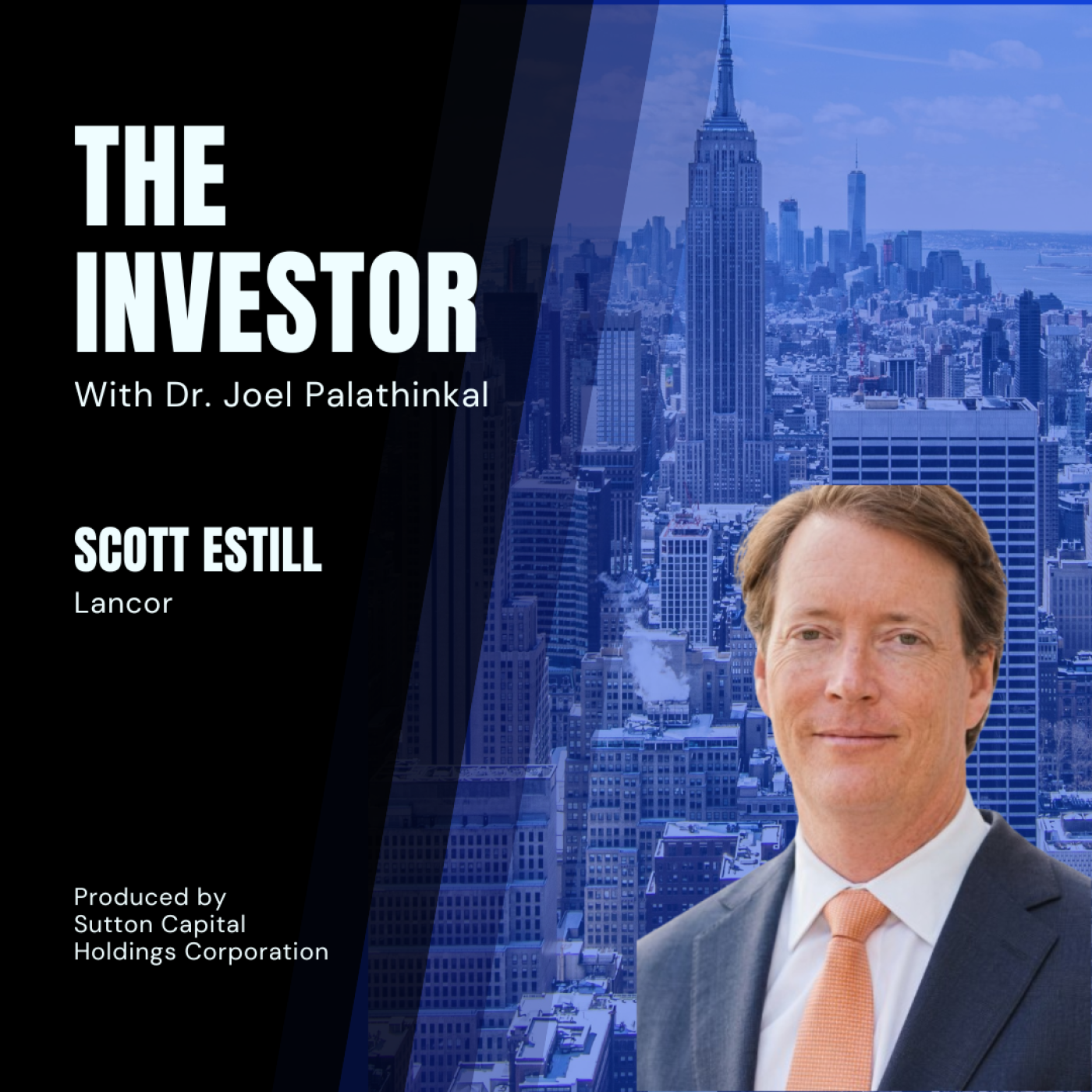
Welcome to the Investor, a podcast where I, Joel Palo Thinkle, your host, dives deep into the minds of the world's most influential institutional investors. In each episode, we sit down with an investor to hear about their journeys and how global markets are driving capital allocation. So join us on this journey as we explore these insights. All right, so excited for my guest today. I've got Scott Estill. He's a managing partner at Landcorp, running their New York office and co leading North America. He shaped his career around supporting private equity, family offices and portfolio companies through executive recruiting, deal origination and value creation. So I think that's a huge piece too when you're trying to, you know, fill a role, whether it's a cio, an associate, a principal, just going beyond just placement. But you know, maybe I being a super connector, building a community around those people. There's a couple bigger executive firms that I've, that I've met that have hosted breakfasts in the morning and I feel like breakfasts are a great way to get people together and you know, share notes, share ideas on the, the market. So I think just, you know, going beyond just, you know, connecting people, building, building the platform overall I think is really, really, really helpful in my opinion. But you know, we're going to go deeper on that. But especially now with boards facing tech disruption, AI risks and leadership transitions, Scott has been in the trenches helping investors map executive see sweet moves and make or break outcomes, all while juggling fast changing mandates in multiple industries. And Scott, you know, you bring in frontline clarity on how boards are now running outside of advisors. And again, like, you know, succession planning is super important, especially for single family offices because you know, the second generation, the third generation, they may not even have an interest in being involved in the family business. So really thinking through how they can kind of continue the legacy, you know, preserve and grow the wealth and hopefully compound the wealth is, is in my opinion something that's super important and one of the most overlooked risks in private equity is the skills that define the next generation. Right. Those backable leaders. You know, if the CIO is now kind of slowly thinking about retiring, should the CIO just hire their son or daughter or should they hire the right person? You know, so that's kind of a super important thing to talk through which I, which I know we're going to go deeper on and just managing those complexities. Scott has also taught at a couple Ivy League schools, active on industry boards and shares highly actionable real world stories based on what he's doing. In the real life. So, Scott, hopefully that was a good bio and maybe you can just kind of say hello and just start with your background, kind of your early education, what you thought you would, you know, get into in your industry and how that got into executive recruiting. And then, you know, let's kind of go deeper on the learnings that you've learned across venture private equity and what, what people are looking for now when it comes to talent.
- [03:11]
B
Yeah, listen, happy to do it. And you know, the old joke is the problem with experience is it takes time. So, yeah, happy to dig through how we got to where we are and you know, how we're trying to create value because things are changing quite a bit in the world of private equity and family offices and family run businesses. So we'll dig into that. But the background is, as you alluded to, I spend most of my life, unfortunately, perhaps as an investment banker. Right. It's one of my many shortcomings in life, as they say. But the reason I say that is that my frustration with traditional M A is that you would take two companies in the same industry in the same size. Sure. Four years later, one's a five times your money, one's a zero. And you say, well, wait a minute, everyone told me all the answers to life are found in Excel in the back. So why is one company in reality so much more successful if the numbers are penciling out the same? And to do the regression on that question, it's almost always about the management team, surprise, surprise, and their ability to pivot and transition during an ownership period to generate truly differentiated alpha as opposed to just financially engineering your way to a return. So I'm sure most people and listeners will say, yeah, of course, operations trump financial engineering. But you know, that's a hard pill to swallow for a banker who thought all the answers were in Excel. So, so that's one pillar of the model for us as a firm. Where does value reside operationally? And then the other one, the other pillar has to do with the bad math in traditional search stemmed from the conversation I had with folks in Heidrick where they're like, listen, they're trying to get you to take job A. You don't want it usually. And so at the end of one of these conversations, like, listen, I get, Scott, you don't want this job that I'm trying to get you to take. Well, you should join us at Hydric. And I said, no, that's a worse idea than the first one you were trying to take. Sure, but what I heard them say, and this will quickly come full circle is the problem they have is if Apex or Advent or Warburg or GTC or Carla. All great firms are looking for a new CEO to run a business. You reach out to a hundred people, more than half of them don't want the job. They're just curious about what's going on in the market. And I said, yeah, that's consistent with my experience. And of the remaining half, half aren't moving to New York, New Jersey, California, Cleveland, Texas, London. Pick your location around the world. So the pool of people that are both good and actionable search, it's like 5%.
- [05:46]
A
Yeah.
- [05:47]
B
So I said, all right, listen, if that's true, respectfully, you all have a bad business model public trade company. Here's what I would do if I were you. Why not reach out to these same folks and say, listen, on the one hand I'm calling you because I'm looking for a new executive and if you want the job, you know, lovely. But if you don't, why don't you a keep your job the same because whatever you're doing, you're doing it well. That's how I got your name. Two, let me introduce you to these private equity shops. Not when you're looking, but when you're not sure coverage. Third, you can co invest, that's of interest. Fourth, you get equity. That's how you make real money. Fifth, you can join the board all while keeping your job the same. And sixth, maybe you do want to be a buy in executive. Fine. But you don't have to change your job an awful lot of value.
- [06:37]
A
Yeah. If you're joining a board, how many hours a week? You know, if you got a full time job, you're maybe a COO or a VP at a high growth company if you want to do, you know, kind of board work. What are some of the benefits with that? I guess can you get some, you know, income on the side, you know, as a retainer and then I think on top of that, could you possibly, I guess how much time, you know, what are the demands of kind of being a board member? I guess how often do they meet?
- [07:04]
B
For the audience here I'll make some general topics because the point there is, and they're all true of course, but you know, two big buckets of publicly traded board members and private equity backed board members. Right. Different animals. The upside of the private equity backed boards is you, you're getting often a meaningful equity slug. That's why you're going to make Your money. The point about what I was going through was all the executives who run company A but used to run company B, they're not conflicted to work on company B because it's not the same subsector. Right.
- [07:37]
A
Yeah.
- [07:38]
B
So, so then how do you leverage the muscle memory in the scar tissue to sort of help get more return? So if your day job, which may be p back to maybe gain equity, whatever, it could be public, doesn't matter, it could be private. But if you can leverage in a non conflicting way what you've learned before because most private equity firms are, you know, they have a bunch of finance nerds like me. They're not operators necessarily. So board members getting paid cash, of course they're getting paid their travel and for their time and all that stuff. Third, they're getting equity. So you can make millions of dollars in equity in these roles by being a board member. Now there's two buckets of board members. One is independent board member and one is a chairman of the board. So you're doing more work on a weekly, monthly, quarterly basis. You're getting more, you're becoming more cash and you're getting more equity. But it's also more of a time commitment. So. And you can be on two or three or four boards, right. Depending upon what your current reality is. But chairman of the board, it's hard to be, you know, on two or three chairman of the board because that just takes a lot of time.
- [08:52]
A
Yeah.
- [08:52]
B
So. But they both provide equity, they both provide cash comp, they both provide an ability to create value in a non conflicted way. That's the thing.
- [09:03]
A
And then if you're on the board, I guess what are some of the responsibilities for the audience? Let's say you've got a full time job, you're a CMO at a high growth, you know, growth equity backed startup. They're making about 100 million in revenue. So you're probably making 400 grand a year as a, you know, CMO or something.
- [09:20]
B
Right.
- [09:20]
A
But that your specialty is supporting people and getting them from one to $10 million in the next two, three years. Right. So, so that's very valuable. But you got a family, you have, you know, obligations. I guess what would be some of the responsibilities of like a side hustling board member?
- [09:39]
B
Well, I think to your point earlier, I mean, what is the. You have to be precise about what. You can't have 10 number one priorities. Yeah. So what are the two or three things that are trying to be solved in the next two to Three years. Sure. Right now, one big bucket could be AI, which is first and second and third on everyone's mind on a board at the moment. Right. And it probably will be for a while because everyone knows they need to be thoughtful about what that means. But what does it really mean? So the point of that is when you're on a board, you, the management team is good at many things. They're rarely good at everything. None of us are perfect. Right. So the point is I'm bringing, whether it's marketing chops, whether it's AI appreciation, whether it's solving technical debt, whether it's thinking about the go to market motions, like what are the things that you've done as an individual and an operator in the past that you could bring to bear for this company? Because the management team needs, by definition, they need support around some of those two to three pillars on the investment thesis. And that's the point. Listen, I've stubbed my toe. We all have dozens of times. How about we do that less in this portfolio company or this. It could be a P backed or it could be a family owned, but this company, how do we see around corners better? How do we make a couple fewer mistakes Based upon what you've learned, and that is the point of a board because the CEO and C suite generally, but specifically CEO is a lonely job.
- [11:13]
A
Yeah.
- [11:13]
B
And so you're, you're supposed to have all the answers. Well, it's hard to have all the answers. So having independent board who can, you can bounce ideas off of, incredibly helpful to make better decisions.
- [11:26]
A
No, that's, that's interesting. And I don't know if you've seen the show succession, but that's a good crash course that, that show on, on. I think it was showtime in terms of, you know, how board members could be involved that are part of the family and you know, people could get voted off the board. I mean, I think the children were trying to oust out their father. So you know, walk me through kind of some, some things to be aware of and you know, kind of how governance is super important when it comes to, you know, structuring a board and having a cadence. Right. There's obviously meeting minutes and, and there's decisions and voting that happens. So we'd love to hear some examples or, or reactions to, to that. And I mean obviously everything on TV is much more theatrical. We had a hedge fund manager that came on and we're both fans of the show Billions and industry. I don't know if you've seen Those shows. But the hedge fund manager, she was like, look, even I, I worked on, I worked in Connecticut at one of those types of funds and billions of dollars of assets under management. And you know, what you see on TV is nothing like what actually happens in real life. So we'd love to hear your reactions to that.
- [12:40]
B
Well, whether that was based or wasn't based on Stephen A. Cohen and whether succession, you know, that they need to sell advertising dollars. But there's elements of truth in all those shows to what's going on. The people may not be as beautiful, but the, the, some of the issues are the same. So listen, the question is, you know, what's your day to day and what's, you know, what's the need and how do you think about governance at the end of the day, if it's a company, you got to figure out who owns it. Now to be. Technically, the board runs the company technically. And the CEO, he or she works for the board and you know, is working until the board says you're not the CEO unless there who depends on who owns the equity. So it's a founder CEO. That's a different animal than a hired individual running the company. So all things depend on the capital stack and who owns it, and that's who has the juice on making those. Now that being said, you know, the, I would argue historically private equity boards were filled with the investing professionals who did the deal because you have a fiduciary obligation to, you know, make sure the company grows. That's why the LPS gave you the money in the first place. Okay, fine, but do you, is it. I think the most underutilized arrow in the quiver of private equity is independent board director. Because listen, if you're, you're the partner at the PE shop, you own the company, full stop. Of course you have to be involved. But maybe someone who has more experience on issues A or B or C should be on the board as an independent board director and not using all those seats for people that are already in the private equity shop. And when people do that, they just get better operational insight. So I was on the panel last week and one of the guys from Bain and you know, Bain is saying, hey listen, 12 is the new 5. What the heck does that mean? Like back in the day, you know, 20 internal rate return IRR and a two to two and a half MOIC plus or minus the math would suggest you have to grow at 5%. Okay, fine. To get those returns. Those are good returns. Not amazing, but good. Now today you have to grow at 12 to get to the same return that you used to be able to get at five.
- [15:07]
A
Yeah.
- [15:08]
B
Why is that? It's because purchase price multiples, you that the delta there is smaller because people are paying borderline irresponsible purchase price multiples for companies free. So the lever to pull to get the returns you need and what the board needs to be focused on is growth. Cutting costs isn't easy, but it's a lot easier than growth. And so some of those levers that used to be easy to pull about cutting costs and, you know, levering up a company, paying down the debt, well, everyone's gone to the same business school effectively and figured how to do that. That's table stakes. The issue now that the boards need to focus on is growth. And the way to do that is operational insight.
- [15:54]
A
Go. Go a little deeper on that. So operational expertise, excellence. What have you seen with some of the best turnaround guides that you've seen have, have been done, you know, besides just cutting costs? It's all about the people. Right. So what are some things that you've seen with, you know, the people, the systems? Obviously technology, Right. AI is going to automate things, but then there's also new costs to pay for the AI and development and integration and transformation. So walk me through or just tell me a little bit about your reaction to going deeper on operational expertise.
- [16:27]
B
Well, I mean, you, you talked about turnaround specifically. It's interesting of all the search work we do, and then I'll answer the, the question. Super specifically. But the most, the biggest uptick is in Chief Transformation Officer. That used to be, oh, my gosh, the company's in trouble. How do I solve it? Bring in a cto and we're going to set up the PMO and we're going to just really turn this thing around.
- [16:51]
A
Yeah.
- [16:51]
B
I found that probably 80% of the CTOs that we're putting into place are in companies that are not in distress.
- [17:01]
A
Yeah.
- [17:02]
B
But they have to execute on a game plan to transform, meaning improve, increase real growth. So the issue is that everything looks easy in Excel. I love Excel. It's all you do is make an exception to sort of the rules and sort of figure out like, I'm going to assume A or I'm assume B or I'm going to assume C. All right. The problem is you forget about integration. You forget about how hard it is to actually execute on those things. So the Chief Transformation Officer, Transformation officers generally need to happen. And In a transformation, 95% of the work that's being done is being done by the same people that are there already. And so the transformation officer is like, they need to be the Pied Piper, like, hey, listen, we're going to view the world slightly differently or we have a game plan or you know, we're. The data isn't clean, so let's clean it up.
- [17:57]
A
Well, I would say too, you know, the transformation officer, you don't go to college to become a transformation officer, right? There isn't really a degree. So I would assume some of those people come from McKinsey or consulting firms that kind of come out and, you know, look at the efficiencies and reduce cost and optimize. But you know, there's a role that's been around for a little while. I mean, it's not new anymore, but it's product manager. So they come in. I used to work in product, you know, years ago. And I think they're really important because if you got a bunch of engineers in the room, you hire the CTO of IBM to now join your company, right? Because you're going to give them a million dollar salary. The CTO is probably just going to take marching orders from the CEO and there's maybe the business that tells them to add a bunch of features and they're probably features that, that nobody cares about, right? The business is kind of trying to close a deal, they're over promising and they just tell the engineers to build it and then the engineers just go out and build it. But the product manager, in my opinion, has been super important and many of them have evolved to kind of doing, you know, they're working jobs in digital transformation. But the product person is, you know, asking maybe why five times, right? The business is like, hey, we need to add this technology onto BlackBerry. Okay, well why do you want it on BlackBerry? And you know, you realize that if you get to the question, which is how many people are actually using BlackBerry and how many people actually, how many sales have you gotten from BlackBerry? If that's actually zero, then it's kind of that transformation officer to kind of prioritize, as you said, right. Like few glasses full. And you know those full glasses are like high in impact. So I totally agree with you. I think just really trying to come out and transform the right things versus just kind of having a bunch of technical people do, do technical work that doesn't create any impact. And then there was one other thing that I want to hear your reaction to. So there was, there was, there was something in my feed that I Saw recently where there was a hotel that hired a bunch of McKinsey people. Those McKinsey people came in and they said, hey, we're going to cut a bunch of costs. We're going to, you know, increase the revenue and we're going to cut the doorman. Right? The doorman is taking up a bunch of the revenue here. We're giving the doorman pension, we're giving him a salary, we're giving him a bonus. And we're going to automate everything with, with just digital sensors and doors and security. And it's all automated, it's all powered with AI. And the hotel tanked. And what you realize is the value is not really in saving maybe a couple hundred thousand dollars in firing the doorman. The experience and the actual value was from having the doorman. And you know, that value, you can't really calculate, right, but there's an intrinsic value when you, when you come into a building, that's that luxury experience of having somebody greet you, they're dressed up nice, you kind of get that VIP white white glove service, which you can't really calculate right. But that actually intrinsically it tracks the customer base and it gives them that elevated feeling. But anyways, I'll stop right there. I just wanted to hear some of your reactions to some of those comments.
- [21:18]
B
Listen, I think you're, you're, you're sort of making the point of why we built this business is that operations trump financial engineering. Like the bean counters. The world will say, let's get rid of that doorman. 200,000 bucks. Sweet. That'll go right to the bottom line, right to ebitda. It's gonna be amazing. The operator will say, wait a minute, there's an experience here that he or she is the doorman or is providing same thing like any industry. Like what's a, like car wash, right? Everyone's got a car wash business if you feels like now. And so guess what's important? Like, you know, the throughput's important. But there's a psychology that if you have four prices, you can have the, the low price, the better than price, the amazing price, the premier price. You pick which car wash you want and there's a whole psychology of where the mind goes to and they often go to the second cheapest. So then let's price it in the way that same thing with any business. There's inherent knowledge that someone has spent 20, 30 years burning calories. And you know, thinking about that industry, they're going to know. So just because it makes Sense in the numbers doesn't mean that's the right thing to do.
- [22:30]
A
Sure.
- [22:31]
B
That that is the key to all of this is making sure you understand. And to your point about the product manager, like how many times does the salesman say, hey, what do you need? Oh yeah, we can definitely do that. Then they go to the engineer and the team, I guess we need. And it's one off.
- [22:50]
A
Yeah.
- [22:50]
B
Is it leverageable? Have we thought about strategy and vision, understanding consumer needs, cross functional collaboration, prioritization, all the things that they do? Yeah, maybe they have, maybe they haven't. So you need to be thoughtful about at the end of the day. And I always say not all revenue dollars are created equality. So just because you add 10, 20, 50, $100 million, respectfully, who cares if the margin or profitability of that, of that revenue dollar isn't optimized?
- [23:23]
A
What are some of the skill sets or backgrounds that you normally see with someone who's an operating partner or a transformation officer? And how can people kind of, you know, maybe pivot into that role? Because I mean, again, you know, there's no, there's no degree in venture capital, private equity, investment banking, operating partners. So you got to kind of come from somewhere. So what are some of the trends that you're seeing with those kind of roles, especially at the leadership roles that pay, pay really well.
- [23:53]
B
Yeah, well. So for those roles, there's often what we call the quote, a bad movie or funny movie. Back in the day, back to school, the triple Lindy. What does that mean? Like the best of those folks. Operating partners and transformation officers often get started as a consultant and they have to, then they transition into an actual P and L role because they have to own the decisions, not just give advice.
- [24:20]
A
Sure.
- [24:20]
B
If they can then third touch private equity in some way, maybe the asset that was owned was PE or, you know, so if you have all three of those things, you're in a great position. But I say both of those. Whether it's operating partner, transformation officer, you need to control, convince, encourage, collaborate, whereas a CEO hits you with a stick. I'm being sarcastic, but you need to win the hearts and minds of folks as opposed to just tell them what to do. And they're very different. They're both equally important. But it's rare that someone can do both. Sure, the best ones can, but that's very unusual.
- [25:03]
A
Yeah. So you know, there's, there's an attorney I know and he was just talking about something that he was dealing with and he was like, look, you can either do the stick or the carrot. Right. So walk me through that in terms of leadership styles, right? So CEOs, when you think about the stick, it's like, hey, you know what? If you don't do this, you're going to get punished, you're going to get fired, or hey, we're gonna come after you to do something. And then obviously the carrot is like, hey, do this. And if you do this, we'll give you this. Right. So we'll give you that next bonus or we'll give you that extra incentive. So what are your thoughts on just both of those mindsets with leadership? Is there one that works or is it. Does it depend? I would love to hear your.
- [25:42]
B
The annoying answer, which is always the right one, is it depends. Yeah, more helpful answer is. So I did a study once, right?
- [25:52]
A
We.
- [25:52]
B
It was a couple hundred people. Why did they leave their job like three orders of magnitude more? It wasn't more pay as the real catalyst. Sure. Because like, that's the carrot thing. Or if you don't do it, it's a stick thing. You don't get it. The number one reason why people leave is they don't think their boss, whoever that is, the board, the CEO, line manager, whatever is helping them progress professionally.
- [26:19]
A
Yeah, right.
- [26:21]
B
They're like, I'm doing you a favor by letting you work for me versus, you're good at this. You have a goal to go to here. How do you progress? How do I give you more rope? The problem is that's tiring, painful, you know, for the manager to do, because you can't do that for hundreds. You can only do it for your direct reports. But I would say of all the things that management can do, it's not just lip servicing, proving that they are helping their direct reports get better and grow professionally. The money matters. I'm not saying this is a philanthropic exercise working.
- [27:04]
A
Sure.
- [27:05]
B
But what matters is that belief that I'm like, this person's got my back and it's helping me grow.
- [27:12]
A
I mean, it's, it's difficult now too because it's, you know, with, with so much transformation, there's changes. Jobs are getting replaced with AI, especially on the tech side. And then also jobs are getting outsourced. You know, even white collar jobs, you know, like CPAs, attorneys, you know, a lot of those are getting outsourced to India. There's a fund admin that I know, their entire operations is in India for a fraction of their cost. So they can increase their margin. So what I've seen is that senior Leaders at some point start almost competing with their direct reports. And like, I felt that in the past, I, you know, I, it's been, been a while since I've worked in corporate America, but I've been in toxic situations where I felt like my boss was like taking away my, my work and I was competing with him as a peer. So I don't know what your thoughts are on that, especially with your position here. Seeing a lot of senior leaders and obviously hearing tons and tons of people unhappy with their jobs, looking for a next step. You know, don't know if that's ever come up before that, that kind of weird dynamic where there's a little bit of competition.
- [28:14]
B
Yeah, well, listen, it comes down to the word that rhymes with good leadership, which is good leadership. So like, yes, you, you don't go in this. I mean, you can get an MBA and all this sort of stuff, but you often get promoted in a job because you're good at something. Sure. And then you have more responsibilities, but the job needs, your job needs to move from being more and more efficient at delivering the result.
- [28:44]
A
Yeah.
- [28:45]
B
Training, teaching, helping people do what you did. That is hard to do for some people to let go and then learn again and let go and learn again. But the best managers, if they see leader A competing with subordinate B, that leader's wrong and they need to be either helped to focus on what's more important, on growing a company, but not competing. Now there's a job security concern like, oh, if I don't do this job, if I let my cheaper person that works for me do the job, then I'm no longer needed. Sure. That is incredibly short.
- [29:27]
A
It's a huge issue. Yeah, right.
- [29:28]
B
But that's not, that's the wrong leader. Then that person needs to move up and say, here are other things I can do and I'm going to look better when I have people working for me doing my job efficiently. So, sure, that, but that, that's, that's finding the right leadership and the person who's above that person needs to do. And the person who's running the company needs to do it. So the hard part, for the regular, those of everyone who's meandering through that leadership sort of continuum, you know, if it's not the right spot and you're not getting the right support and you're not, and you are seeing what you suggested, it's probably the wrong spot.
- [30:08]
A
Sure. No, I agree. I mean, what are your thoughts on the, the player coach? So, you know, there are some organizations where they, they have a culture. It's kind of like a flow flat culture where you're a coach but you're also, you also own some type of responsibility. You know, do you think it's better to just be the coach only or do you think there's instances where it makes sense where a leader also kind of has his own project that he owns as an individual contributor?
- [30:34]
B
Yeah, I think about, you know, teams I've played on with, you know, the player coach mentality. Right. There's few and fewer of those these days, but it was more common back in the day. But does that player coach keep calling his or her number or plays for them? Sure. Or are they thinking about the greater good of the team? So as long as the mindset is where are we trying to get to? And I can, if I'm a player coach, I am a part of that solution.
- [31:03]
A
Yeah.
- [31:04]
B
Versus I'm keeping myself busy and paying myself and suggesting that I can do all the cool stuff and letting all the other people do the lower latency less stuff. That's not the right person. So, you know, I, I think your job is continually to make yourself obsolete if you're doing it right. And if you are, you're finding other ways as you increase your position in organization to create value and provide guidance and bring people up with. Because that engenders a lot of trust, it engenders a lot of loyalty, it engenders a good culture. But again, not all companies are the same. Not all leaders are the same. Right. So yeah, going back to private equity and institutional ownership, they need to. That's part of the assessment of do I buy the asset? Most of the time it's. Is it generating free cash flow, Is it generating returns? I get it. You need to make money for sure. But is the culture and the institution one that's going to engender that sort of growth? Because if it isn't, it may not be the right business to buy. And from a leadership standpoint or employee standpoint, you have to have to know that your. What your worth is not a good position. You gotta take the uncomfortable reality of finding that next gig and attaching yourself to a leader who views it as us, not me versus you.
- [32:41]
A
Yeah, absolutely. What do you think it takes for somebody to scale from maybe close to seven figures to multiple seven figures and then what do you think you've seen? Does it take to get to eight figures? With the private equity backed company, it's,
- [33:03]
B
it's rarely the same person to, to use in similar but different parlance. Like the person who goes from Napkin stage to 5 or 6 of EBITDA is a different person.
- [33:15]
A
Often.
- [33:16]
B
Not always often. To take it from 5, 6 up to 2530. And guess what? Same thing. Take it from 2530 is a different skill to get to 75 to 100. And you know, you can continue that on. So one's not better, one's not worse. They're just different because the person from Napkin stage to 5 is borderline maniacal about, like, sure, super optimistic. And like, this is going to be amazing. And they are the. The CEO and sometimes CFO and CTO and CEO, CMO and CRO, and they're like, they are the driving force for creating value. Sure. But to your point, just earlier, the person who takes it to the next level needs to delegate and they need to collaborate because you can't micromanage as the company continues to grow.
- [34:08]
A
Yeah, no, absolutely. Let's talk a little more about. I mean, I feel like we. It would be really great to know a little more about Land Core, some of your clients, and how you work with them on both sides, with the talent side and then also with the opportunity side. The firms that are looking to find talent, maybe talking through maybe the history of the firm and then I guess how you service both sides of the marketplace.
- [34:37]
B
Yeah, Well, I think the key to it is, as we were saying throughout this conversation, it's all about leadership and all about the. We call them 5 percenters centers, who are the best executives and then how do we sort of work with them? The problem with search, in my opinion, just generic search. It's a bad business model. I've got one arrow in my quiver, and it's to trick you to move to Memphis and to take this job. Memphis is awesome, actually. But, like, maybe not if you live in Cleveland, I don't know, wherever. So that what we're doing is we're saying, listen, on the one hand, I've got. We're doing 120 searches a year for people. We got tons of stuff to talk about. So if this role on the search is important to you, you know, let's talk about it. But if it isn't there, here's like seven other things we could do. So, for example, if I'm talking to you about taking a CEO role and you're like, scott, I love the business you're talking about, but I'm going to sell this business in nine months, most search people say, that's too bad. Joel doesn't want the job. What we hear Is we're selling the business in nine months. Awesome. So let's go figure out who the right buyer could be.
- [35:45]
A
Yeah, right. So you can also help strategically with thinking about buyers, because when you do that, there's a whole team of recruitment that you have to kind of handle as well, which I think is kind of a great funnel. Yeah, right. But it's also great to kind of. It's great to hear that you have a lot of, you know, kind of investment banking, private equity chops, you know, from your previous world on, you know, in finance and high finance specifically. But, but that, that, that sounds like that's the key kind of really strategically, holistically, not just filling in slots, but saying, hey, you know what? Let's actually. Let's actually figure out what your goals are. You want to. You want to sell your company. What, what, what after that, you know, what's kind of the next step. Maybe you could be a board member. You could, you know, think about your next venture. So there's a lot of other things for a soft landing for the person that sells as well.
- [36:37]
B
Yeah. We closed 10 deals last year. Created, closed 10 proprietary. The unicorns that never exist. Proprietary deals last year. Because we talk about executive A, about opportunity B.
- [36:50]
A
Sure.
- [36:51]
B
And the answer is often don't buy it for all the reasons you don't buy a company. That's usually the right answer, unfortunately, in M and A. But then we say, all right, you're so smart in fire and life safety and landscaping and MSPs and in sort of acid, like logistics, whatever. What would you do? Executive A. Here's a bunch of companies that we track. 15,000 of them. Let's cut industry and size and scale and scope and, you know, geography. Which of these have. What's the headwinds, the tailwinds, the systemic. Where the bones here. Now we're bringing that idea and that executive to a PE firm and saying, I've got an asset, it's coming to market. I got an executive. He or she used to run it. We've got an angle. It's proprietary. You want to hear about it? And they're like, yeah, of course I do. Like, what? What are you talking about? So that is super meaningful because now that executive can showcase his or her ability to create value, and they can pick the PE firm that best aligns with them as opposed to the search side, which is the exact opposite. Here's a hundred people that could run your business that you need. Which do you think is best? They both are valuable, but one's Way more valuable for the P firm. One's way more valuable for the executive. So to be able to change the world of M and A, which is. It's Friday, so we can be delusional with our capabilities. We're changing the world of M and A, which is a big goal. It's what we teach up at Columbia Business School. It's what we. All those different things is you need to be smarter about what to do before you own it, not just sort of look at the model and try and figure it out.
- [38:37]
A
Sure. No, absolutely. From the talent perspective. Tell me about the bar. Tell me about some of the different roles that, that you like to hire for and what it takes to kind of outperform in those interviews and especially stand out. Right. There's one role and there's maybe 200 people applying to the role. So how. How do you become the best candidate to. To essentially win the job offer?
- [39:05]
B
Well, let's be clear. Skills to do whatever the job is. Because CMO and CTO and CRO and CEO are all different. Right. So of course you have to have the skills, full stop. But assuming that is the case, the two things that matter most, one, intellectual curiosity and two, humility. Those do not go together often. Sure. But when they do, it is an awesome leading indicator of top decile investing. Because everything you're working on, by definition, it's hard to jam into a historic playbook.
- [39:38]
A
Sure.
- [39:39]
B
Like, oh, just follow chapter one. The chapter. So the curiosity is trying to figure out constantly bringing in people, not being afraid of bringing in independent board directors, other C suite executives that are better, smarter, more experienced in certain areas than you. So that's the intellectual curiosity and humility is knowing that although historically you've crushed it because you're a good executive, you don't know everything. And so those two things, there are sometimes opposing mindsets or views, but when you have them both, and you can articulate that in your interview.
- [40:15]
A
Yeah.
- [40:16]
B
I don't know all the answers to every question. But listen, at A, I did B, it's C, I did D, and to produce these results. And you've had this issue with this company that you want me to run or whatever. Like, it seems to me I would explore these as sort of the initial output. Like the interviewer is like amazing. All right, well, tell me more about that as opposed to I did this, I did that. I. You need. We. We. Of course you did it. You're. That you're running it. But like, the mindset needs to be weak. Collaborate. Right. That Sort of thing in your interview. And when you do that, everyone thinks need to come off, they have to come off as like the best thing since sliced bread.
- [40:57]
A
Sure.
- [40:57]
B
That'll come out in the capabilities, in the results. When it comes out and talking about how great you are, people are like, ah.
- [41:06]
A
So I think you're right on the mark here. I mean, there's the table stakes, which is kind of the, the hard skills to take, technical skills, having them hear what they want to hear. But then I think really that additional piece of character is those two pieces that you mentioned. What about storytelling? So, you know, obviously when they ask you a question in terms of how you handle the situation, what have you seen in terms of storytelling that has been successful? You know, I'm assuming it's like some data. Right. Some kind of measurable. Like maybe you started here. It's like three things. Right. We were here and then I did these things and then these are some of the metrics. But we'd love to hear some of your experiences in terms of like just the people that were able to communicate the best. Right?
- [41:53]
B
Yeah. Well, I think it's funny. I was talking to someone and we're, we talk about intellectual curiosity, humility, etc. But storytelling is something that is incredibly important. But it's how you tell the story to your.
- [42:07]
A
Sure.
- [42:08]
B
So you need to be again, transparent and honest and all those things. But it's like when I started at X, here was the problem. And so I, I. You never get 100 of it right the first go. So we did A, B and C. And guess What? We accomplished 60 of our goals. Fine. So then we have to say, all right, well how do we get the next 40? We had to think and like, all right, well, you know, we decided to do A and B. Guess what? We got another 50. 50 of that remaining 40. So now we got 80% of it and then this and so all the. But you can say that in 30 to 45 seconds, not five minutes.
- [42:45]
A
Sure.
- [42:46]
B
Because people are often talking and talking and listening to themselves talking. I'm keep talking and let me keep. It's have to be pithy, like be comfortable, but sort of thoughtful about that. So my suggestion on being a good storytellers. Here's what I'm gonna tell you. Here's me telling you. Here's what I told you. It's like what you learn in your like third grade. Writing a paragraph, like opening sentence and then the meat of it and then the closing sentence. But it's got to be precise if you can say it in three minutes versus better. If you can say in two versus three better and it is too little. But allowing the person you be working with or was interviewing you to actually ask questions. Sure, on that, that's important.
- [43:33]
A
No, absolutely. On the talent side, we talked about kind of what motivates people to leave. What motivates people to join an organization. Because I mean, it's a two way street, right? So the hiring managers obviously are trying to find the best talent with those two characteristics that you mentioned. Plus they kind of have to fulfill what's listed in the job responsibility. Right, but how can. What have you seen that's been helpful for two things, right? The company to attract talent but then also retain them. You know, people, I mean, Google was, you know, famous for what, like giving free coconut water and free lunch, breakfast lunches and dinners. Is that really what retains people these days? Or what is it now that you think you're seeing, especially in the private equity space that attracts people and then retains them for. And what does retention mean? Does that mean 18 months? Does that mean three years? What's good retention?
- [44:34]
B
So I'll reverse order it just because it's easier to remember. So retention means what, what happens is if it's PE anyway, the beauty of PE is you have to sell it, right? Because you have to give the money back to the LPs that gave you the money in the first place. So the, the goal would be to stay through an exit because then you can see it from soup to nuts. So that's. Now do you want to take another bite of the apple with a new owner? Maybe, maybe not. Like, doesn't matter, you can choose that. But if you can stay through the exit, that is super mean, meaningful. Sure. Why do you. What's motivating? I think the motivating part, of course it's economics, right? Everyone wants to make money and be rewarded for their. But I think it's not just making an extra dollar, but it's. I find the equity part is super important because I'm not gonna work just 9 to 5 if, if I'm not making a salary or whatever. Like, okay, I'll work 9 to 5, but if I'm getting equity, even if it's one share of equity, I'm going to work from 8 to 6 or on the weekend, whatever it is, because I'm trying to build the enterprise value of the nft. So therefore, to your point, when you're hiring someone, you need to get them. I think best practices is getting them to Buy into the growth of the entity, not just accomplishing your job. Yeah, because what's going to happen? I mean even in of front finance, which is the most like could be viewed as the most rear view mirror reporting the news, did we make a dollar or not? The best CFOs the world are going two or three layers into an organization and being viewed not as the police or whatever, like stop spending money on pens or you know, whatever the number, it's what are we measuring? And if we're on the two to three goals of our ownership. Period, period. Right. Not ten number one priorities. The CFOs even are asking, all right guys, are we measuring the right stuff? And often it's the VPs or the associates even, they're like, hey, wait a minute, if we're, if we're trying to accomplish A, we shouldn't be measuring B, we should measuring C, we should be thinking about me. That is what you need. Right. And so empowering that and knowing that's part of the goal is what attracts people. So yes, money's important and yes, enterprise value growth is important. But feeling part of that team and being having a sense of a mission is better than just showing up to do your job, clocking in and moving on.
- [47:08]
A
Sure. So the flip side, how can leaders build culture, you know, beyond just doing an off site, beyond, you know, going out for cocktails. How do you actually build that culture?
- [47:21]
B
Yeah, I think they need to be able to understand why it's important. You know, say culture eats strategy for breakfast. So like you need to really have everyone on the same page to really create value. But that takes, you know, we all people go to undergrad, people go to graduate school, people get varying degrees. The learning process, intellectual cure, curiosity, command back, never ends. You've got to constantly as a leader, be thoughtful about how to improve your leadership capabilities.
- [47:54]
A
Yeah.
- [47:55]
B
Part of that is building culture so it just magically happen. And like going out for drinks is lovely. Like, okay, but like, and not that you need to be overly Machiavellian about like I'm going out for drinks. But my secret alternative motive is to there's a balance of it all. So that learning needs to continue through leadership team to build that culture.
- [48:15]
A
Sure.
- [48:16]
B
And there's lots of ways to do that. Come back to the independent board director. Right. Who do you admire? Maybe you don't need the go to market motions of a strategic help that you would, you know, but maybe you have an independent board director who's killer at building culture. Awesome. There you go. Right what do we need to focus on and how do we get people to help us get smarter, better, more efficient?
- [48:40]
A
Sure, absolutely. Well, hey, Scott, this was really amazing. Thank you for educating us all on just the private equity space. I mean, how to really think strategically from a board perspective. I think also just engineering the exit, right. Thinking through that pathway to an exit, but then also after an exit, having a soft landing to kind of whatever your next destination is. So it's super interesting and I think it's a dynamic industry. I think things are, are changing and expectations are changing, but I think it's also increasingly more difficult to generate higher multiples of ebitda. So leveraging AI technology transformation is getting us there and it's going to be interesting how that's going to evolve over time. So look forward to staying close with you on all of these things because you're right on the pulse and appreciate all that you do for the community. Obviously helping executives really grow and scale themselves, but then also helping companies eventually become 8, 9, 10 figure businesses. So appreciate it.
- [49:41]
B
Yeah. Well, listen, thanks for having me on and it's nice to sort of to your point, whether it's, it's not overly philanthropic, we're making companies more efficient and making more money. But you know, there's elements of it that are important too, with teaching and trying to help. So when I'm perfect, I'll let you know. But it's nice to be on and hopefully someone will like get a nugget here or there. What you and I talked about.
- [50:02]
A
Yeah, well, I'll say too. It's like, you know, it's, you gotta, you know, you, if you want to do good, you have to do good, right? So you have to actually have a successful company. You need capital to create impact. If you don't have any capital, it's. You have all these good intentions, but there's not really much you can do. Right. Because you don't have the resources to do it. So you know what, maybe you can leave us with one nugget of wisdom. You left so many, you know, throughout the, throughout this episode. But if you're to leave one piece of advice, it could be from a family member, it could be from a past manager or a mentor. Would love to, you know, take away, take away something from that.
- [50:39]
B
Yeah, I mean, it's really sort of the nerd out thought process. Meaning read. Right. I love saying what if. What are you reading right now? It's that curiosity thing, like, you know, history repeats itself to some degree. But how do you find people in your life that are equally curious and spend time and learn from what they've learned and read what they're reading. Because you know, the problem of all of us as we get older, sure. We become more of a mentor. I look around like, wait a minute, when did I become the mentor? Are I still 22 years old in these? Answer is no or not 32 or 42, whatever. So you end up try to surround yourself with people that are equally as curious. Read a bunch, and it's going to help you ingest and make better decisions.
- [51:32]
A
Yeah, absolutely. Well, great. Well, hey, everybody, have a great, you know, Friday. And Scott, thanks for everything. We'll catch up soon, hopefully.
- [51:41]
B
You got it, man. See you. Thanks.
- [51:43]
A
Take care. Bye.