← The Investor With Joel Palathinkal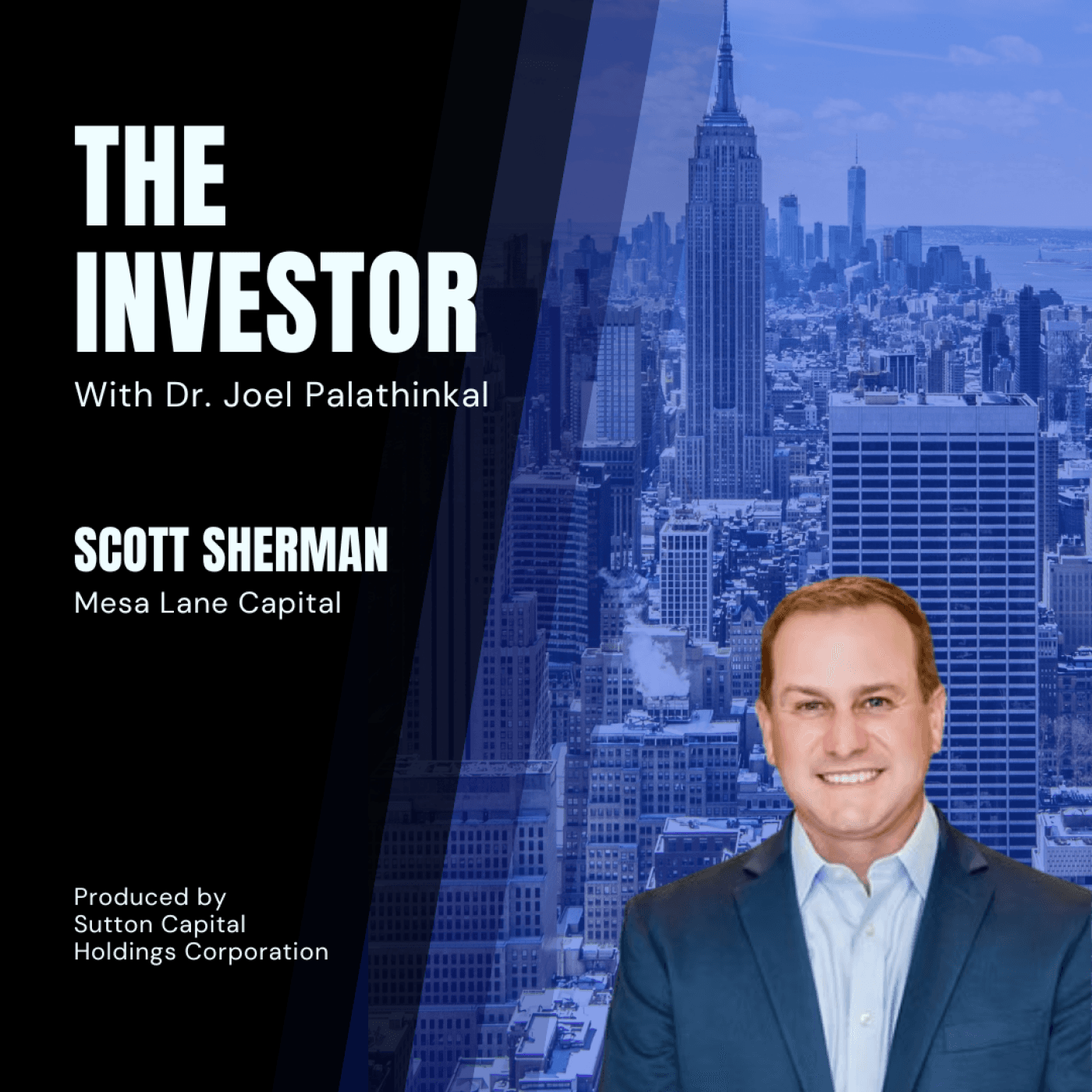
The Investor With Joel Palathinkal
Scott Sherman: Managing Partner, Mesa Lane Capital Partners
00:53:19
Loading summary
Transcript39 lines
- [00:03]
A
Welcome to the Investor, a podcast where I, Joel Palo Thinkle, your host, dives deep into the minds of the world's most influential institutional investors. In each episode we sit down with an investor to hear about their journeys and how global markets are driving capital allocation. So join us on this journey as we explore these insights. All right, so excited to kick off another one of our investor podcasts today. Have someone that I really respect. I've got Scott Sherman, who is the managing partner at Mesa Lane Capital Partners. I'm just going to give a quick high level overview and then we're going to go a little deeper. But you know, Mesa Lane Capital is an alternative investment firm that delivers multiple different revenue streams to investors by seeding and investing in the next generation of emerging venture capital, GPS. Scott has over 19 years of seating and structuring experience at industry leaders like Blackstone and Tiger. He seeded over 25 plus managers across various assets. Previously he was a general counsel, chief compliance officer and member of management committee at Tiger Management llc. Also he was a managing director at Blackstone Alternative Asset Management, co led the launch and operations of Tiger Gene Venture Studio and three portfolio companies. So excited to go deeper on that. The way that we're heading with a lot of these bigger franchises, kind of having a roll up strategy and then he also serves as a board member to multiple portfolio companies. So had the honor of spending some time with Scott a couple weeks ago in person. We got a bunch of fund managers from our Sutton Capital program and, and many of the institutional LPs that are our peers there. So good time. Got to really catch up with a bunch of old friends and meet some new friends. But Scott, welcome to the show.
- [01:58]
B
Thank you so much and thank you for having me. As I said to you directly earlier, thank you for everything you do. Not only for the emerging manager ecosystem which is so critical and needed, but just the community building that you do. It's so impressive and I personally appreciate it and I know a ton of others in the ecosystem do as well. So thank you.
- [02:20]
A
No, thank you so much. It's my pleasure. And look, at the end of the day, it's a lot of fun, you know, if you can do what you enjoy doing. And there's always so many changes in the market. It's so stimulating because you just learn so much, you know, and I think, you know, really kind of double clicking on the platform that you built. I think there's a, there's a lot of knowledge transfer because a lot of people don't know about this, this platform. And opportunity as an alternative to, to kind of building their firm. So excited to do, to, to double click on many topics, but I think one of the first thing, that's one of the first things that's important and it cascades across one segment of our community which is kind of aspiring people that are looking to just get into the industry, you know, get a job or pivot their career. And I was one of those people myself, you know, becoming like an engineer's engineer and then you know, being self conscious about being technical and kind of moving into the investment space. So you know, and you've worked, you know, you're kind of like someone that's worked at the top tier institutions that people dream of working at. You know, I mean, so I think it'd be good to kind of learn a little more about just your origin story, you know, where did you grow up, who are your influences, Kind of thinking about where your career would head, you know, maybe what your parents, you know, were doing for their careers and you know, would love to kind of talk through, you know, high school, college and kind of how that, you know, got you to where, you know, maybe talk about how that got you to Blackstone and Tiger and, and now at Mesa Lane. So a lot to cover but you know, within the time that we have, you know, we'll try to cover what we can.
- [03:58]
B
Sure, that that's going back a long way and I'll try to be brief but you know, it's really funny. I originally wanted to be a sports agent and I worked for, I grew up in New Jersey. I worked for the New Jersey Sports Next Position Authority one summer and then for an agency another summer right before I went to graduate school and very quickly realized that 10% and there are exceptions and I don't, you know, people love that industry and God bless them. But when a client called us for from Hawaii to say could you call the front desk of the hotel I'm staying at to tell them X, Y and Z rather than just picking up the phone and calling the front desk. I said I can't see myself being a babysitter for the next 30 years. Like, you know, I want to do something meaningful and impactful. And service has always been a big part of who I am. I led a community service organization both in high school as well as I went to college in North Carolina at duke and led 120 person community service organization. We had 13 weekly community service activities providing services to 11 different organizations weekly from 120 people in our club and Part of that was community building, as we just alluded to earlier, something that you're doing and that we're trying to do at Mesa within the emerging manager ecosystem. And so that has always been a part of the fabric of who I am. Number one, giving back, but number two, community building. And so ended up going to grad school Columbia, did my JD MBA there and started my career doing M and A and securities work at Wilkie Far. But after six months gravitated towards the investment management practice and started working on. And this is going back to like 98, 99, 2000. As the investment management industry was really growing up, so started out on hedge funds and was, you know, had a very fortuitous opportunity that a former colleague that I had worked with when I was a summer associate was at Blackstone and they were building out their alternatives group and they were looking to hire someone on the due diligence and investment structuring team. And I was fortunate enough to be given that opportunity early in my career and so joined Blackstone in 2003 and ended up there till 2016. When I joined Julian Robertson's firm, Tiger and helped. While at Blackstone we grew from 8 billion to 80 billion. And we launched multiple platforms, we launched a mutual fund platform, a seeding platform, a co investment platform. We were really pioneers, I think in the asset management space and obviously Blackstone still is today and have the utmost respect for that organization. Have a lot of friends that are still there. But when I had the opportunity to join Julian as a member of his management committee, the opportunity to invest across asset classes was incredibly attractive. And I ended up spending seven and a half years at Tiger until about six months following Julian's passing. But when I, at the peak of my time at Tiger, we had direct investments in 40 plus operating companies. We were invested in 19 venture firms, five of which we had seeded 24 private equity firms, four of which we had seeded obviously a number of hedge funds. That was Julian's legacy. And, and we're.
- [07:47]
A
That was a Tiger club. That was the Tiger Cub program, I believe.
- [07:51]
B
The Tiger Cubs and Seeds. That's exactly right.
- [07:53]
A
Many of them have gone on to be massive institutions, multi billion dollar enterprises.
- [08:00]
B
And, and really from my time at Blackstone where I worked with over 400 managers on our platform and built a manager community. And then what I did at Blackstone was I reached out to others in the investment management space and started almost like a networking opportunity whereby investors, COO, CFOs, attorneys, portfolio managers, and the group grew from about 1015 people to about 120 to the point where we needed bigger meeting spaces and we needed sponsors. And we were all able to share non proprietary ideas and things that if people had been going out on their own, would have cost them a lot of money to go to their attorneys or someone else to get the advice. We were able to build a community and provide that advice in real time from people who had actually lived it. And we did that as well at Tiger through the Tiger community. And I found that to be incredibly valuable because one of the things that most often derails emerging managers is that they get pulled in 20 different directions. They're spending 50% of their time fundraising, 20% of their time building a business, hiring service providers, vendors, operations, HR. And what does that leave them? It leaves them 25 or 30% of their time to focus on what they actually their superpowers supposed to be.
- [09:28]
A
Deploying capital. Yeah, right.
- [09:30]
B
You know, being a fiduciary, sourcing deals, investing capital. That's what they're great at.
- [09:35]
A
Yeah.
- [09:36]
B
And at Mesa and at Tiger and at Blackstone, what we wanted, we wanted to flip that script and have them spend 70%, 70 to 80% of their time doing what they do best because we think that accelerates their ability to produce top quartile results. So if we can help them with those ancillary things in terms of running a business, building a business, scaling in an institutional manner to become attractive to institutional investors and go through an institutional due diligence process, that's where we really try to forget the capital. We are providing a large anchor check, but beyond the capital we want, like they are helping their founders, we want to help them.
- [10:22]
A
Yeah, no, I agree. And I think, you know, we, we see a lot of that activity within our platform. Like there's a lot of chatter. We have like, you know, Slack channels and some WhatsApp groups and you know, a lot of the alumni that come out of our program, they, they already share, you know, pros and cons of like, you know, a certain fund admin that, that, you know, they, they recommend or you know, a back office provider. And then what's great is, you know, you've seen this. A lot of those fund admins, they, they kind of, you know, a lot of the service providers, they lean into the community too. They, they do experiential stuff to kind of build those bonds together. But that cuts, that cuts out some of the time because, you know, the time that you'd be spending, you're probably going to spend, you know, at least five to 10 hours. Diligencing the right vendor, you know, that accommodates your budget. And then obviously you don't want to sacrifice in quality when it comes to some of those back office functions. But to your point, you know, having that, that tribe of other people, that just helps to kind of shorten some of your diligence process. And then you probably have recommended vendors that you just trust and know and you know, those contact points are there versus you trying to cold email those websites and then wait two days for those people to get back to you. Right?
- [11:31]
B
Yeah. And I think it's also each of these shops, whether it's law firms, fund administrators, audit and tax firms, you know, outsource, CFO, fractional CFO firms, PEOs, what have you. It's so often dependent on the team that you work with the organization. One group may have had a terrible experience with that group and another may have a phenomenal experience because of the team that's assigned to them. So to your point, having that direct insight into, okay, who at these firms have you worked with and why has your experience been the way it is, I think provides even more value.
- [12:07]
A
Some of those people have gone to the lengths of just putting together a rubric. Like they put together a spreadsheet already and, and they already have like a, a pros and cons list. So some of that diligence, you know, why not recycle that and reuse it if someone's already done it? You know, so it's all, it's all about like, you know, leveraging smarter people that have already done the work. And then you know, obviously you, you know, you know, measure twice and cut once. Right, so, so yeah, no, I totally agree and I love that that kind of has cascaded to what you're building at Mesa Lane right now. You know, the next point that we're going to talk about is, you know, you were an attorney in the beginning, you know, you kind of had that, that background. So there's superpowers that attorneys possess. Obviously, you know, so many different things. You know, negotiation skills, confidence, you know, understanding what the, what the contracts mean. But you know, your past life, kind of wanting to also be a sports agent, I think of that show, what was the show with the, the Rock? He was like a sports agent. I forget was on hbo, but, but you know, I, I liked how that cascaded into asset management. Right. I mean, a lot of your clients are high net worth clients. You know, traditionally people that, you know, come out of football, you know, they last like Four to five years, you know, and I went to a really cool private equity sports event in LA and there was a bunch of athletes there. And I think it's really cool that, you know, having these firms like Next Legacy, right, that are kind of thinking about the next play, the next legacy, so trying to use your superpowers and really figure out how that has a niche in the market. Right. That, that relationship with the sports community, maybe that's the first community that you start out with to kind of think about your first checks as seed investors into the fund. If you come from like the. I've seen some people that come from like the cybersecurity space. Right. They've already built that community. So that's what they're going to have tunnel vision on and really have conviction on in terms of their fund size and their strategy. So we'd love kind of your reaction to that in terms of kind of leaning in and just maybe some of the things that you learned. I believe you're the, you know, like a general counsel for one of these firms too. Right. So kind of those legal, you know, skill sets and superpowers and how that kind of translates into how you're looking at managers too. You know, like, you've talked to me about some of the managers that you've seated and I've. I've learned about their background, their past life. And, you know, there are, there is some correlation with kind of, you know, some of that stuff kind of, you know, relaying over to your. Your next step in your life.
- [14:40]
B
Yeah, a couple things, and it's a great question and thank you. Julian and Alex used to say that there were several backgrounds in investors and business, people who are running businesses that are very attractive. And to your point, former athletes, Division 1 or even collegiate athletes at any level, professional athletes and military personnel, you know, people who have a discipline, people who are able to be rational when others are acting irrationally. And it could be other skill sets as well. And there are a number of them out there. But again, it's about people who are able to be calm under pressure, act rationally when others are not, and see the forest through the trees. And bringing this back to your original question, as an attorney, one of the things in your training and is the ability to understand both sides. One of the exercises that you do in law school is you have to argue both sides of a case. And so it teaches you early on to see multiple perspectives. And I think in anything that you do, forget investing, anything you do in life, perspective taking and Listening is critical, being able to hear people listen more than you talk. Because the more you can take in and understand and hear diverse perspectives, the better counsel you're able to provide. Whether it's legal advice, whether it's strategic business advice. Having the context and the perspective informs how you will approach that situation. So yes, being able to negotiate and being able to read contracts and things of that nature. But more than anything, being able to see both sides and understand both perspectives coming into a transaction, I think is the most, one of the most critical skill sets that legal training provides and that anyone can have in almost any industry.
- [16:39]
A
And then I think the final piece to kind of translate to invasion once you understand both of those sides, I guess making sure both of the incentives are aligned. Right. And it's a win win for both sides. So kind of really, really taking it to the finish line there. And then, you know, I've heard a lot of institutional LPs, especially larger families, you know, they like really the concentrated approach, they like specialists. So I wanted to hear your reaction to that, you know, in terms of just, you know, when you look at managers, you know, is it better to kind of focus on an emerging manager that, you know, has come from, you know, the space industry. Right. And now they're kind of going all in, kind of launching a, you know, a firm that's focused on space. It could be different pieces of the market as well. Like, I mean, many of these firms, I mean some of the ones that I've seen that have done really well, they're going out to market with like three funds at the same time. Right. They've got an early stage strategy, they've got a late stage strategy, and then, you know, they have a SPAC strategy as well. But you know, going back to the basics, you know, what's your reaction to, I guess my comment in terms of like having a sector, you know, focus as a specialist versus obviously being a generalist?
- [17:53]
B
Sure. Well, first I would say that as an emerging manager, do you have the infrastructure to support multiple funds and multiple platforms? I think the infrastructure and the personnel with expertise because investing in early stage, growth stage private equity, what have you, they are very different skill sets. There's very different due diligence that's performed at each stage of evaluation of an emerging company and a company that may be later in their life cycle. So do you have the experience and the expertise in each of those areas in place in order to be even able to do that? But to your specific question, we are both Strategy and geography agnostic we do have a 25% concentration limit in any one industry vertical in our fund. But what is most critical to us and you know that success in and we focus solely on early stage venture. It's not to say that our GPS won't do follow ons and things at a later stage, but primarily we focus on emerging managers in early stage which we define as pre seed Seeds series A and maybe a little series B. Primarily success historically has come from either an investing background, a founder background, an operator background, a number of other backgrounds. But what we like to see, we tend to prefer code GP teams over solo gps. It's not to say that a solo GP couldn't get through our process. We again from a differing perspectives and one plus one equals three standpoint, we tend to prefer code GPS with complementary skill sets from the areas that I just alluded to because if you compare an investor with a former founder or operator and bring those skills together in a cohesive way, we believe the value that they'll be able to add to their founders is exponentially increased. What we are really looking for though is and people throw around the term edge so I want to be very careful. There are a lot of gps that tout a track record and they were invested in this unicorn or that unicorn or I don't care. What I want to know is number one, at what stage did you invest but more importantly what value did you add to that founder and that company? What role did you play in their success? That makes your edge, that makes your expertise, that makes your fund management skills sustainable and repeatable. Because we are investing in firms, not just funds. So, so we want GP teams that are going to delivering 3, 4, 5x returns, delivering top quartile returns. That's the table stakes. Are you going to be able to repeat that? Are you thinking about business building the right way? Are you able to consistently deliver value to the founders that you're backing? And if I called all of the founders that you backed in a previous life or in your current fund, are they going to tell me that you're one of their first phone calls or when, when something goes sideways or something goes wrong or where they need advice because you are either helping them on go to market commercial application, maybe you're helping them think about valuation and the next fundraising round and who should be in and how they should think about valuation. Maybe you're thinking about, you know, product efficacy or, or how to position themselves from a brand standpoint at the portfolio company level there are any number of ways that you can be adding value to your founders and your portfolio companies, but is the manner in which you're doing that and the lens that you're approaching it from sustainable and repeatable? That's what's most important to us.
- [21:36]
A
Yeah, no, I totally agree. I think having a firm versus a fund is super important. And that's what's going to really take you to the second fund and the third fund as well. Switching gears, this is more of a career development question. So as I mentioned earlier, you've been at some of the most world renowned firms and these are firms that people, you know, like aspire to land a role at coming out of college. So you know, what career advice would you give to people you know, maybe coming out of college, maybe even mid career professionals that are looking to pivot and you know, some people that are pivoting kind of like myself and you know, some of the people in our platform. How can those young professionals build their network if they don't have one? You kind of organically built that, you know, in your current firm and in your past firms. And maybe some of those superpowers come from being in the sports industry as well, you know, kind of that camaraderie that comes with it. But, but yeah, on those two things, you know, maybe just general career advice in terms of the skills that you need to kind of really outperform at a top tier firm when it's very competitive. And then, and then, you know, how do they, how do they get in those rooms? How do they connect with those people and kind of get those people in their network?
- [22:55]
B
Yeah, I mean be persistent, be proactive, go to industry events, study, do your homework, do your research, learn who the key players are, learn what firms you'd even be interested in. Not all firms are created equal. Some of the large banks are very different from some of the other. Some of the, you know, obviously emerging managers, the space we play in, it could be two, three individuals. They may have venture partners or advisors or others, but these are very small firms. Learn the type of firm you think you will thrive at and seek out opportunities. Get your foot in the door at a young age, I mean at a very young age, get your foot in the door any way you can. And then once you're in the door, be the first one in, be the last one out. You know, establishment a reputation for yourself built on going the extra mile. Earn people's respect. Don't expect people's respect, rather earn their respect every minute of every day. Go the extra mile. Don't be a jerk, be helpful to others. I always believe in paying it forward. I still do interviews, you know, for Duke. I was on the HR committee at Blackstone. You know, was very active in terms of interviewing within our group. @ BAM. I, like I said, started a networking group within our industry. I always went the extra mile to reach out to the GPS that we had seated both at Blackstone and at Tiger to develop relationships. Because I find that once you earn people's trust, you're going to be their first phone call. And so if you can develop that type of relationship where people come to value. Your advice. Again, goes back to what I said earlier about being a listener rather than a talker. Don't just talk to hear yourself heard. Listen to what others are saying so you can actually give them what they need, not what you think they need. You know, these are all skills that quite frankly, take time to develop and only you can only get through experience. But that I think are probably the most valuable. Prove yourself every day and don't expect anything to be handed to you. Earn.
- [25:18]
A
It. Yeah, no, that's, that's good advice. I want to double click maybe one level deeper in terms of the, maybe the hard skills and the soft skills. And to add to that question, I want to play off of something that you mentioned earlier, which is the, you know, the approach, the diligence approach, the strategy and how you handle deployment of capital is going to be different depending on the strategy, whether it's early stage, late stage, you know, growth, equity buyout. So maybe, you know, it'd be helpful for the audience for you to talk through maybe three different types of strategy could be early stage. You know, that compared to obviously the diligence of, of late stage. You know, there's, there's revenue, there's, there's hopefully coming into profit, you know, EBITDA at some point, you know, as they're thinking about an ipo. But maybe, maybe if you could walk through maybe the technical skills, soft skills that are needed and maybe just cover that across maybe maybe two or three strategies. Right. Early stage versus late stage and maybe tie in a few stories that you're allowed to share to support that if.
- [26:27]
B
Possible. Sure. I mean, we, again, at Mesa, we're focused solely on early stage, but having previously looked across asset classes and stages of company growth, happy to focus a little bit on that as well. I think at the early stage, again, first and foremost, what makes these GPS qualified to be able, like we're attempting to identify qualified GPs, we expect them and what makes Them adept at repeatedly being able to to identify qualified founders. What about their background and experience enables them to successfully evaluate founders in a way where they will increase? Obviously everybody talks about the power law, but the more winners you have, the better your performance is going to be. And so if your hit rate increases because you are particularly adept at. And there could be a lot of reasons companies fail, particularly at the early stage and beyond. But what makes you adept at identifying founders that are particularly qualified not only to build businesses? Obviously you have to believe in the idea, the innovation, the technology, what the problem they're solving and then being able to identify those founders strengths and weaknesses and being able to offer complementary skills. What are you and your venture partners, your advisors, what are you and your team bringing to the table that maybe these founders don't possess? Where again, you're putting your finger on the scale to accelerate their chances of success? Because we all know that at the early stage, it's the wild west in terms of building a company. A lot of these companies, especially the hyper growth companies, are hiring people at the same time, they're trying to develop commercial application, they're trying to build a culture. And those are two very different skill sets, right? Being a manager on both sides. At the, at the founder level, you have to manage the organization from a culture perspective and build a brand, bring your product or service to a consumer and build your name in the marketplace. And at the same time you're doing both of those things. You're trying to raise capital and grow the company. So again, just like a GP we talked about is being pulled in 10 directions. So we're a fat. So as a founder and as a gp, identifying the founders that are capable of not only handling that stress, but multitasking in an effective manner is, is in my mind critical. At later stages, obviously the companies are more mature, they have more, in some instances more employees. They are, you know, attempting to maybe grow their consumer base or, or you know, they have very more strategic and narrow areas of focus. And again, what value are you bringing to the table? Maybe, you know, certain private equity firms have a stable of executives that have delivered in the past and they can plug and play to help these companies achieve their goals. Others, you know, again, it depends on what stage the company is in their life cycle. But you know, at the, at the growth stage, understanding the numbers and understanding the balance sheet and income statement and the finances of a company become that much more critical. At the early stage, some of these companies have no revenues. Certainly at the pre seed and even Potentially at the seed stage, you know, the revenues aren't there. At the growth stage, understanding the balance sheet and the financials of a company is much more critical because you're also. Valuation at the later stage becomes more critical in terms of your entry point and what you think the growth potential of the company is from the point at which you enter. So there are just different variables at different stages. Obviously there are a hundred variables at each stage and we're talking two or three to.
- [30:39]
A
Highlight. Sure. No, that was really helpful and I think that's really helpful for the audience kind of stepping back a little broader. Looking back at 2025, what are a couple nuggets of suggestions you have for gps? Obviously now we've got maybe a couple more weeks for anyone to get their, their first close or final close and then it's going to go dark. So that's kind of what I'm thinking about. Especially I was thinking about that when we had our Allocator summit. That's what we had it before Thanksgiving, because I, I was just assuming that's probably the last sprint. And then any just kind of, you know, suggestions to your peers that are LPs in terms of how they're thinking through things and, you know, wrapping up 2025 and then also kind of maybe gearing up for.
- [31:25]
B
2026. Sure. I think obviously the last few years have been incredibly challenging on the fundraising side. We all know the statistics in terms of the amount of capital that's flowed into established managers versus emerging managers, notwithstanding the fact that emerging managers have consistently outperformed established managers over a considerable length of time. You know, I think that from an LP perspective, it's important to understand that innovation never stops. I understand that DPI is limited. I understand the portfolio construction challenges that a lot of LPs are facing because there's been very little DPI and continuing to allocate to a strategy where you may have invested, you know, during the period of 2019 to 2022, where in hindsight valuations were probably excessive in certain sectors. And there was a lot of FOMO where anyone raising a fund could snap their fingers and raise 50 to 75 million dollars, despite maybe not having the strongest pedigree. And I'm generalizing, but it was a period of exuberance, particularly in venture. I think that that's clearly over. And the capital, particularly in emerging managers, is flowing only to the most qualified teams. And even the most qualified teams are having a tremendously difficult time raising capital. We're seeing funds close at smaller raises than their targets. And that's okay. Prove yourself, execute, build a track record and go to market with your fund, too. Maybe a little bit more soon than you otherwise would have. If you had launched a $50 million fund, maybe now you've launched a 30 or $35 million fund. But you know what, deliver results and execute. And when the market dynamics change a little bit, it'll be that much easier to. To raise fund too. But if you truly have conviction that you are adding value and that you are the answer to founders within your dedicated area of expertise, stay the course. Obviously, it's expensive to do so. Mark and I have underwritten our business and haven't taken a dime out now for two years, you know, but we have extreme conviction in what we're doing. We, we have had tremendous early success with the two gps that we've backed. And we love both Puma and New Build and what they've achieved to date. And we will continue to support the emerging manager ecosystem and build our brand in the marketplace. But, you know, it has been a challenging environment. But what I would say to LPs is this is the time to invest when innovation is strong. And, look, take AI, and AI pervades everything we do now. But when people talk about AI and valuations, maybe there are certain sectors where valuations are still high, but there are plenty of sectors and industry verticals where valuations have come back to historical norms. And there are attractive entry points. And if you can find gps that have a defined expertise, that have a repeatable edge in these areas, now is the time to invest. Because I think that these vintages, in hindsight, five, seven, ten years from now, will be some of the most attractive entry points we've seen in.
- [35:02]
A
Years. No, I totally agree. You know, going maybe one level below in detail, you know, I think it'd be good to actually just, you know, talk about your firm a little more in terms of the GP seeding strategy. So there's, you know, plenty of benefits to partnering with a firm like yours. So we'd love to kind of maybe have you share a couple highlights on, in terms of, like, GP seating. And, and, you know, I just see, you know, how it all connects, right? You, you were at some of the firms that have had a, that have done it the best. And I think, you know, with gps, to your point, you know, they don't, you know, they can just focus on investing, you know, and there's enough conviction in there to see that manager, they could just focus on what they do best, you Know, I mean it, it goes back to, I think there was a talk with El and Elon Musk is like, look, I'm a product person, you know, it's, it's fine that I'm a CEO, but like being a CEO comes with all the chores, right? You gotta get, you gotta get audited as a CEO. You get, you know, staff and personnel and culture. He's just the guy that does the, the show. Right. And showcases the, the Tesla bots. Right. And that's what he's good at and that's probably what he enjoys doing. So similarly, these GPS are good at finding, you know, outlier founders that are going to provide alpha. A lot of these other things like the back office, the, you know, obviously going out to market that, that does take up a portion of your time. As you kicked off this conversation with so and then, and then from a, from a GP seeding standpoint, I think long term, as you're investing in those firms, you know, getting kind of a piece of those firms I think is, you know, long term revenue generator as well. So we'd love to have you maybe just talk about the strategy as a whole and, and kind of maybe some trends that you've seen that have evolved from like your past careers to, to kind of where you know, the exciting things that you see in the future with, with this strategy and obviously this tool, the many managers don't, I would say all managers don't know about it. To take advantage of and, and.
- [37:06]
B
Explore. Sure. Look, I think coming from Tiger and we, as I said, backed five early stage venture firms and then started our own venture studio from which we built three portfolio companies. We had a lot of direct investments in operating companies. The need for a large institution to go early is critical in the emerging manager ecosystem. Within early stage, these firms are not getting large institutional checks in many cases because no firm is going to write a $30 million check into a $40 million fund. It's just not going to happen. And so the behemoth, you know, Even the large 10, 12 billion dollar family offices that aren't writing less than a 50 or $75 million check because it doesn't move the needle for them, they can't invest in this asset class effectively. And so a lot of them just overlook it. And early stage, typically even in an endowment style portfolio isn't going to be more than 10% of a true endowment style portfolio. And so again, it's an area that's overlooked oftentimes by large institutions. We sought to build a firm at scale that could accommodate large institutional checks, but do so in a diversified de risked, way to your point, through our partnership with our gps. And you know, I think it's important. The most important thing to us is, yes, we are a huge check to these emerging managers that is critical to them as they're launching their business because they can start warehousing deals and it's, it's helpful to them in marketing to say 40% of our fund is committed and all of that has value. But if we were just a check, we wouldn't be doing our jobs because five to seven years down the road, I don't ever want a GP to say, yes, you wrote me a check five years ago, but what have you done for me lately and why am I still giving you a portion of my revenues? We have to earn our GP's trust and respect every single day. And I'll give you a couple of anecdotes of things we've done to date and the type of partner we want to do. We will not meddle on the investment side. We don't micromanage. We don't tell our GPs what to invest in. They're the ones investing capital, they're the experts. We're choosing them because we believe in them. To source deals and invest capital. Where we want to help them is everywhere else. And two anecdotes. So one of our two gps had a large corporate pension investor that was looking to commit about five to seven million dollars and they served up a ten page side letter. This GP was going to go to their council and they have an excellent legal counsel where the partners are charging $2,400 an hour and they were going to go to that council and say, negotiate this side letter for us. We really haven't done much of this. Mark and I have negotiated hundreds if not thousands of side letters in our 60 plus years in the business collectively. Marcia as well. Marcia is the third member of our team, New York Ventures and ffvc. Prior to that we said, give us a shot at it. If you don't like what we do, you can still go to your council. Whatever. We marked up the side letter. We got them to a great place, they brought it to the investor, the investor committed, accepted all the changes, probably saved them 25 or $30,000 in legal bills. That to us is real value. Yeah, their bottom line, you know. Another instance, there was a prospective LP and it was about June 5th of this year. This particular GP was having their second closing on June 30th and the LP had completed their IDD. They outsourced their odd and their odd. Their outsourced odd professional was in Europe for two weeks and said I'm not back till the 19th or 20th of June, June and I'll never be able to complete it by June 30. So the GP came to us and said would you be willing. We have a 30 page odd report that when prior to us committing we do ID'd odd, legal due diligence, background checks, credit checks, reference checks, a full institutional due diligence process before we go to investment committee. So we signed an NDA with the prospective client. We gave them access to, to our ODD report. They signed an NDA that had a non reliance and everything else. So we were protected. They took our odd, leveraged that with their ODD and brought it to their investment committee and they made it in time for the June 30th closing again. Yeah, real value add to that GP and these are the things that this GP will remember and will know that anytime they need us, we're going to be there for them in an instant. And that's the type of partnership we strive to have with the gps. We back every.
- [42:14]
A
Day. Yeah, yeah, because it's still competitive to kind of find those great gps. A lot of the top ones get over subscribed but you know, you get, you get recommended by, you know, your GPS that you support. They go and sing your praises and that's how you kind of get connected to a lot of these other great managers. On the flip side, what are, what should managers have buttoned up as they approach you I guess on, on their, on their story, on their deck, on their portfolio construction? What are kind of some of your, you know, typical guide, guideposts in terms of kind of making it through the first Monday partners meeting. Right. I'm assuming you guys have kind of a pipeline of managers that you're talking to. So what, what are the first couple of things that stand out that say hey you know what, let's, let's actually, you know, take a second look. Let's actually take a look at the data room and look at some of these, look at some of their warehouse deals. So what's kind of the toolkit that managers need to have together? Especially when they're thinking about like a seating type of.
- [43:18]
B
Lp? Yeah, I think first and foremost be prepared, know your audience and you know, we've met with 450 plus GPS in the last year or so. You'd be amazed at how many of them have come to us before they even have a firm fund strategy before they have fully baked ideas on how they intend to build their firm, their brand, or even their fund. And what I would say to a prospective GP is take the time to develop a proper business plan at both the fund and the firm level before you engage in a conversation with a potential anchor or strategic investor. Because you only get, I mean, the old cliche, right? You only get one chance to make a first impression. And, and if you're coming to us and saying, well, you know, and we're asking questions about your strategy or your firm or how you're thinking about building either one of those things and you can't answer it and say, oh, we really haven't thought about that yet. We haven't. Oh, we're still iterating on that. We haven't gotten there yet. Like, how is that helpful to us if we're planning on committing, you know, 20, $25 million or more to.
- [44:46]
A
You? Well, you're gonna have to answer the, you know, you're gonna have stakeholders too. And, and you know, it's gonna, it's gonna, it's gonna bubble up to you as well at your level as well, right?
- [44:56]
B
Yeah. But you'd be amazed at how many GPS come in unprepared, just looking for guidance rather than. But it's a pitch. But they don't have anything fully baked. And, and you know, maybe we'll revisit them six months down the road once they've got their, you know, what together. But, you know, chances are we're only going to back 12 GP teams, give or take, out of our first fund. We're going to meet with probably a thousand, you know, so you really have to shine and excel in that first 30 to 60 minutes in order to get a second look. We're, on average, we're advancing about 15 to 20% at most of the GPS that we meet initially to even a second.
- [45:44]
A
Meeting.
- [45:45]
B
Sure. And to your point, then probably 15 to 20% of that 20% to where we're going to go into the data room, we're going to really take a look at past deals, present portfolio companies, what have you, and really spend a considerable amount of time and resources. And then we've got, you know, to your point, we've got our funnel, so we've got our top 10, and that's iterative. It changes to your point every week. We meet every Monday morning and reset Both our top 10 as well as each of the other categories. Folks, we want to move to the second meeting. Folks, we want to move past that second meeting to a deeper level of due diligence. But there has to be a KPI, a milestone at each stage of those where we see the potential that you could tick all of the boxes. It's not to say that you have all the answers or have everything figured out at that stage, but over the course of the 4, 612 months that we're going to do due diligence, get to know you both as investors and human beings. Because if we're going to form a partnership with someone, it's not just about their pedigree and their investing acumen. We want people with integrity, people with empathy, people who are going to be good stewards of capital, fiduciaries to their investors and to us, people who are effective communicators, people who we feel that are going to be responsive to their investors. Those are the types of people we want to partner with. And so understanding that complete picture of, of the type of human beings you're investing with, in addition to the type of investor you're investing with, those are all critical parts of our.
- [47:36]
A
Process. Yeah, no, that's helpful. Well, I know we've got a couple minutes left. Two more quick questions. So one quick question I have is I've had a handful of our alumni fund managers, you know, start thinking about fund two, and they're coming into bigger aum. They need to actually have more staff to deploy that capital effectively. So part of that has been to kind of build a culture around the team and obviously develop their own leadership. Many of these people have worked as corporate executives for several years and they've learned that in their past roles, as we normally do, by default. But when it comes to leadership and investment management and building culture, maybe based on some of the managers that you've seen, and obviously as your growing and scaling your own firm, what's some advice you'd have for people to kind of do that? And that also relates to attracting talent and retaining them as well, because the culture is so important. If you got a toxic environment, those people aren't going to last that.
- [48:35]
B
Long. Yeah, and that's part of what I just alluded to is understanding the type of human beings you're investing with, because those are the human beings to your point, and it's an excellent point, that are going to be building a firm culture. And so how did they think? Those are conversations that we have early. How do you think about building a team? What are the most important milestones that you're looking for when you evaluate the Growth of an employee, what do they have to do to advance from principal to partner or what have you, from analyst to principal or associate to principal, whatever. You know, however they're defining the different roles that they're hiring for. But, but most importantly, people that are self aware and that understand they may be good at a lot of things, but they're not good at everything. And there's always someone smarter than you and surrounding yourself and I alluded to this earlier, surrounding yourself with people with complementary Skill sets where 1 +1 equals 3, not 2. Surround yourself with people that bring in skills that you, maybe you have them, but if you're a great investor, maybe bring in someone with someone on the finance side that can really help you in terms of digging into company valuations and things of that nature or that can help you as you build out your own firm in terms of your expense structure and things of that nature on your own side. And how you can spend efficiently to maximize resources as you grow and scale. Scale. Maybe it's someone on platform that will help your companies think about different areas of their business that, that aren't front and center in your mind. It can be any number of skills. But how do you think about growing your business most efficiently with resources that will be additive but, but also redundant. Having redundancies and you you alluded to this is critical too because number one, we've all seen through the banking crisis and otherwise maybe having, you know, and as cyber fraud and other things continue to be prevalent in our industry, having two sign offs on cash movements and having just basic protections in place when you're running an institutional quality business, that's what investors want to see. And so having the necessary safeguards and resources in place at your own firm level to be able to scale efficiently and to do so proactively rather than reactively is also.
- [51:11]
A
Critical. Sure. Yeah, that was really helpful. And then we got one more for you, Scott. So just one final piece of timeless advice. It could be from a mentor, it could be from a relative, it could be from one of your managers. But any piece of wisdom you want to leave us as we enter the holidays and kind of look back at.
- [51:28]
B
2025. Yeah. My grandfather and my father both used to say it doesn't cost you anything to be nice to people. And that always stuck with me. There are a lot of people that choose not to, but you gain. I mean it goes back to the old saying, you get more with honey than vinegar. And look, there's a time to be firm and strict, but I find that people respond better and you build more meaningful relationships. Again, it goes back to perspective taking. Understand where the other individual is coming from. So where you can. And especially early on in a relationship when you're building trust, you know, as you earn trust and get to know someone more deeply, maybe you can have more candid and frank conversations in a way that won't offend. And maybe you can get a little deeper in a more meaningful way. But be nice. Be, you know, earn people's trust and earn people's respect. Don't just expect and don't expect things to be handed to you and given to you. Earn it and go out every day and embrace the opportunity rather than expecting things to just be handed to.
- [52:45]
A
You. Sure. Well, hey, Scott, this was amazing. Really appreciate you making the time for me and, you know, just want to re. Emphasize just all the impact that you're creating and all the people that you support. So thank you. Thank you and hope, hope, hopefully have a good holiday. We'll catch up soon and thanks for everybody.
- [53:02]
B
Else. Appreciate it. Thank you so.
- [53:03]
A
Much. Thank you.