Loading summary
Transcript75 lines
- [00:03]
A
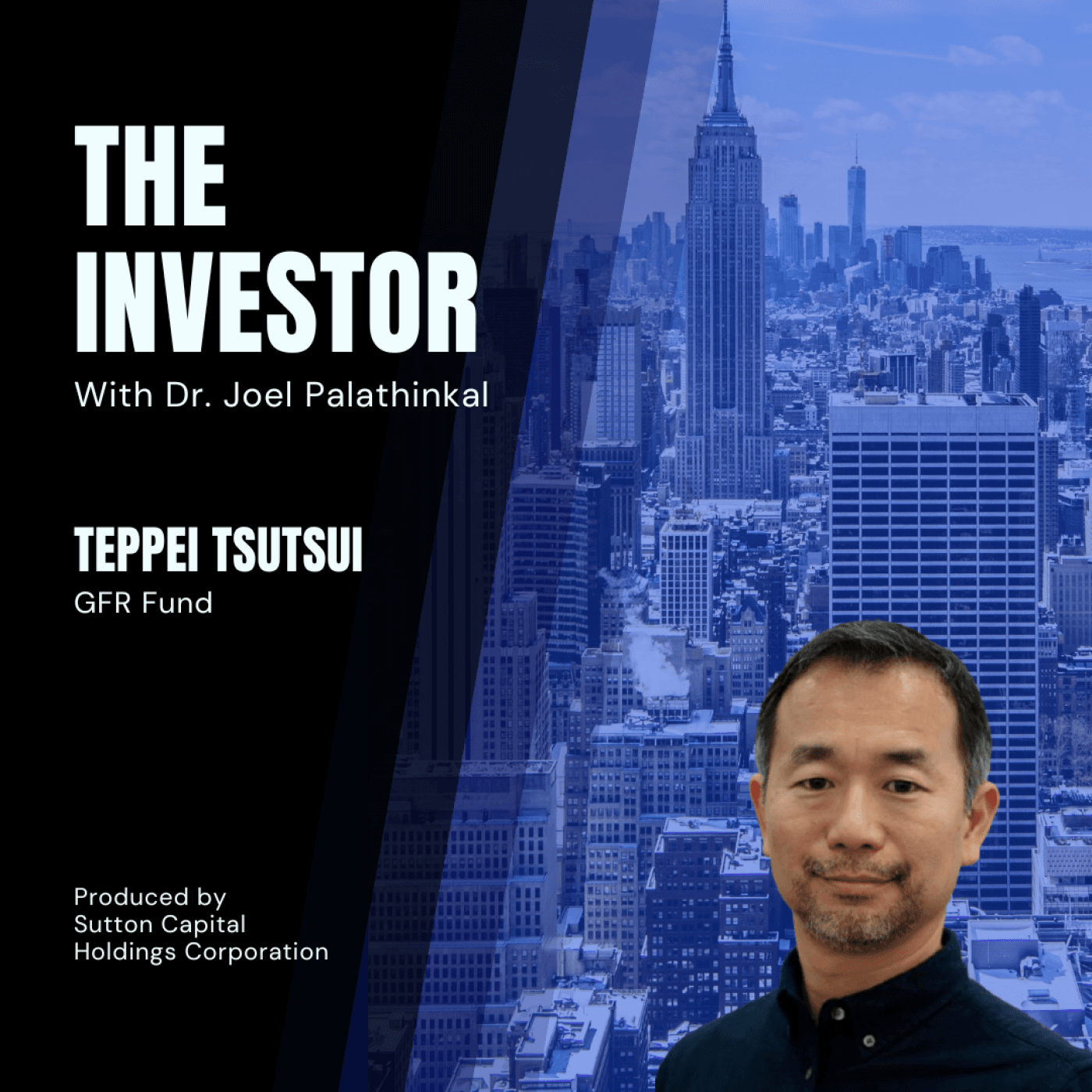
Welcome to the Investor, a podcast where I, Joel Palo Thinkle, your host, dives deep into the minds of the world's most influential institutional investors. In each episode, we sit down with an investor to hear about their journeys and how global markets are driving capital allocation. So join us on this journey as we explore these insights. All right, so we are live with Tepe Tsutsui from the GFR Fund. I've known Tepe for quite a couple years now. You know, I think the first time we met Tepe, I think it was when you came out to New York, right? I think you did a little private, you know, LPGP dinner and we got to spend time there and then we've just been friends over the years. You know, he's called me when he was in town. We got coffee and, and then they were very kind enough to invite me to their investor summit in Tokyo. So it's my first time in Tokyo, so it was a cultural experience. But what I really like about GFR is just their strategy on gaming and I did not know how scalable some of these gaming companies are and then just all the different categories. So we're going to go into all of that and we're going to unpack all of that. But you know, what we're going to do today, Tepe, is just have you do some reflection, you know, share a little bit about, you know, kind of your early childhood, your education, you know, maybe, you know, pivots in your career and tell me all of that stuff and walk us through how you got to where you are now. And then I might, I might stimulate the discussion with some additional comments and questions as we go.
- [01:43]
B
Got it. Sounds good. Yeah, thanks for like inviting me and really excited about sharing the myself and also the Jeffrey too. So, yeah, a little bit my background, I was born, raised in Tokyo, but I went to the high school in the United States. I went to like Iowa State. There's a little like very much small town called the Simile. And I was going to exchange students, so spend there like almost like a year. And I was like, only Asian, you know, kid among the, like a lot of the people from like, like a rural like Iowa town. And so I went back to Japan for college and I kind of joined the company called the Mitsubishi Corporation. It's like a big Japanese trading investment company. And I started helping the Colorado, the Japanese company getting into the US Market like other Asian countries was like a new market and more like a global business. And during that time, I think my first kind of exposure to the VC is when I read the book about a benchmark when I was in college. It's called the Eboys. And I was really. It's kind of stuck with me, like, you know, I wanted to become like, investor, like, at some point in the future. You know, not like right away after college, but I'm like, in 10 years and 20 years, I wanted to become like a VC fund, you know, in a second. So that was like, really the first moment that I want to like, mimic a dream about the VC fund or actually becoming a college.
- [03:22]
A
What did you. But let's talk about Iowa, though, because I spent about a year and a half in Iowa. Like, my first job out of college was in Iowa. And one of my life lessons is, you know, if you're taking a job, if you're trying to get into some industry, number one, if you're just trying to get a job, just go where the job is, maybe forget. You know, when you're younger, you're not too worried about living in, you know, a huge big city. You just want to maybe get the experience. So it was a really great career opportunity for me going to the Midwest. But, you know, I left after some time. Right. Because it just wasn't the melting pot that. That I wanted. So when, you know. So where did you study in Iowa? I went to Iowa City. So I was in. I forgot the. I guess it was Iowa City. Yes, I went to. I was living around there. But where did you live? And then I guess what did you think you would do at that point? You know, what were most other people studying? I know Iowa City had a huge engineering program. And same with Iowa State. So what was kind of your mindset in that, in that ecosystem? And then what was the trigger that helped you to embrace, you know, investments in public, in private and public markets as a career?
- [04:36]
B
Right? Yeah, I guess, like, I was like, really young when I. When I went to Iowa. I was only like 15 years old. So I, you know, I didn't really think about, like, my careers back then. I just wanted to, like, get out of the Japan. You know, Japan has like a really close country, like, really unique culture. So, you know, you're kind of like stuck in there and you want to see like, outside of G. To this country. So I, you know, wanted to like, we spend some time in the, like, outside of this, you know, a small country in Japan. And. And I kind of like the found this, like, exchange program called the like, Yu and Useful Understanding. So I took the deck program, I applied for it. And so it's like host family experience. So. Yeah, I think so. I spent. I got like host mom, host dad and host brother and sister. So we like a family of five and you know, just like is like out of nowhere, very small town. It's only 3, 000 people. So it's called Sibley. I think it's like maybe four or five hours drive from the Iowa State. Iowa City. So it's like really small nowhere. It's. Yeah, very. But I think it's at the same time it's like a really, I don't know, like a typical. Maybe like a US Middle west life, I guess. And yeah, you know, I got to know a lot of people. It's a small town, so we talked almost like I get to know a lot of the remote, almost everyone in the town because of this like a small, like a business city and also like really like a small community. And I play like a baseball, like a basketball, like golf and like a lot of the new experiences. And then. So to be honest, I did back then, I actually want. So like in high school, I want to like work for the United Nations. You not like VC fund, like investing at all.
- [06:31]
A
It's.
- [06:31]
B
I just wanted to like work.
- [06:32]
A
It's like almost like a government job? Pretty much, yeah.
- [06:34]
B
Government job? Yes. Yeah. That's why I kind of measure the international relations for the university too. So it's a little bit different from investment. Like a finance. Those. Yeah, like what I'm doing right now.
- [06:48]
A
How do you think that shaped your investment experience? I would say that the natural thing is kind of, you know, international relations, which is what you're doing now.
- [06:56]
B
Right.
- [06:57]
A
You're. You're going to Tokyo all the time and, and talking to founders globally. It's funny, I, I live like a block away from the un, so. So I see all these un. UN people, you know, going to work all the time. So, you know. So you kind of, you know, had that role, I. I guess, kind of with the un. What did you do after that? What was kind of the next pivotal move? So it sounds like when you were working in that role, you kind of discovered the investments career as well, kind of through talking to other people and building those relationships as well.
- [07:34]
B
Yeah, yeah, yeah, definitely. So I think the, the, the change from those like looking for like public sector to like a private sector, like working for the company, not direct government, is that when I took like a course at college, like I took the like a marketing class and the. So that's kind of. That was taught by the like ex McKinsey partner who kind of opened up the office in Japan and that was like a really eye opening for me. It's like a really interesting. So we did like a like deep analysis on the like all the Japanese mobile companies or pharma companies and any other like industry that is like a really huge in Japan. And that was really kind. I think that was maybe made me think about working for a company is actually much more interesting and also really exciting too. So that's how I decided to join this Mitsubishi, a big Japanese company. And then I think three years after I also helped the US company the startup to kind of get into the Japanese market. So I was assigned to the project and working with this company called the. So there's a. I think that was like back in 2001, 2002 there's reverse auction companies like really getting popular in the U.S. so I think name is blinking but. So that was like really huge venture backed companies but wanted to get into Japan and other Asian countries. So I was helping them to get into those like set up the US office. Sorry like a Tokyo office. Those are those kind of stuff. That sounds like a little bit of exposure to like more US startup scene for me. And I got invited to headquarters in like Silicon Valley. They got a conference in Florida. So it's really, really interesting experiences.
- [09:35]
A
And what were the founders looking for coming to the U.S. i guess they were looking for more ecosystems, more broader bases of investments. Were they also looking for ideas and innovation?
- [09:49]
B
Yeah, yeah, I think so. Just a big. So I'm we're helping the US companies are getting to Japan.
- [10:00]
A
Oh, it's the other way around. Okay, got it.
- [10:01]
B
Yeah, the other way around. So that way that one is more like they are like looking for more.
- [10:07]
A
Like a quick expansion. Yeah, they're looking to maybe expand their business and have a footprint there.
- [10:12]
B
Yeah. And they want to have someone who has a deep connection to a lot of the Japanese corporate. And Mitsubishi is more like a B2B company. So we have lots of those connections and partnership already in place with those companies. So we're kind of helping the. Helping them explore get to like a new customers like a new corporations new partnership. So that's like kind of hyper. You know how they grow the business in Japan.
- [10:46]
A
No, that's great. It seems like a win win because Japan you know, expands their customer base and expands new products from other countries and cultures into Japan but it also stimulates the economy for Japan. And then you know companies in, in California, New York, Chicago, even Iowa, they can just expand their revenue channels to new customer bases and then probably also do you guys help them also partner with just other areas in general of Southeast Asia? So you know, I mean because I think if they've got a footprint in Japan now, they can expand to Singapore and other partnering cities as well. Right?
- [11:24]
B
Yeah, yeah, we did help them like getting to like a Korean market in Singapore. Other Southeast Asian countries too. Yeah.
- [11:31]
A
How would this structure work? So they. Would they have to set up a separate entity that's like a Japanese LLC or would they just be like a Delaware based company and then they just have operations in Japan? I guess. Would they have to?
- [11:46]
B
That's good question. We ended up like setting up the joint venture between that like a US company and Mitsubishi so that we can maybe send some like someone like salesperson to just new entity and as a shareholder and also like. Yeah, more like so which so that we can work at work as like a new one company. Not like you know, two companies that are working together.
- [12:10]
A
Yeah, yeah. That's really interesting. So I went to an event for New York Tech Week. It was, it was a brand called Suntory. I believe they're a large beverage conglomerate and it was really interesting. It was like a corporate VC event. So you know we, we talk about corporate VC all the time. What are some observations that you can take away? You know, kind of working with some of these corporate VCs and you know, kind of what are they looking for? You know the, the general consensus is they're just looking for something strategic. Right. So if you're Mitsubishi, it makes sense to invest in mobility or maybe things that are going to be complementary to their business. But maybe there's additional takeaways that you had from your experience.
- [12:51]
B
Right? Right. Yeah, I guess a little bit about. So GFR has like a lot of the corporate PC as LP in the firm and those are like mostly gaming companies or like media companies. And because of GFR like investing in consumer and gaming tech. So that's why we work with them a lot. And it quite depends on company by company. But some, you know, some corporate is like looking for like a future M and A, you know, opportunities. So once we invest in those companies and they grew, they grow and if the recorded to just to be like more like exit or something and they'll try to acquire those companies. So the more like invest us as like more deal sourcing perspective.
- [13:41]
A
Yeah.
- [13:42]
B
And the other more like a co investment and also like a potential partnership and they're like try to find the new technology, new Partnership, not only Japan, but all over the world so that we can help them find those new tech or whatever they're looking for.
- [13:58]
A
No, it's a good point. Another example is there is a fund that I know that invests in food innovation and then one of their biggest LPs is one of the biggest cereal companies in the world. Right. So that cereal company, they're probably always looking for supply chain innovations, tracking and packaging technology. And you know, they may not have the infrastructure to, or the team or the expertise to go out and, you know, source and screen deals and have a Monday partners meeting. I knew someone that works at a large beverage company's corporate venture arm and you know, anytime they want to make an investment, there's like five levels of approval that they have to make, you know, versus, you know, @ a venture fund or an emerging manager. You know, you, you pretty much just have to ask yourself if you want to make the investment or ask maybe the gp.
- [14:47]
B
Right? Yeah, a lot of the longer process, yes, but it's much more like negotiations too. It's really lengthy, but once they decided, it's really committed. So I think the pros and cons, I.
- [15:07]
A
Think. Yeah, let's double click on that. So obviously there's, there's processes when you source the deal, you screen the deal. There's probably some associates, there's probably maybe a principal and there's discussions. Right. So I haven't actually gone really deep on this topic in a while. But yeah, walk me through that. Whatever you're allowed to share. But in terms of how you get to a decision. Right, so there's probably people sourcing and screening deals. You have the Monday meeting and then maybe walk through kind of some iterations of what you've gone through. And the goal is to just find the best founder to invest in to hopefully return the fun. Right. So feel free to share your thoughts on this and also maybe tie in how you can develop talent because you're a leader at the firm. So how can us, like people like us, also develop our leadership to motivate team members to be better.
- [16:12]
B
Investors? Right, right, right.
- [16:14]
A
Right. Got.
- [16:15]
B
It. Yeah, sure. I think yes, we do have those like a Monday meetings, like a deal, four meetings. And everyone has kind of bring in a new company so new meetings that they had like prior week. And we talk about, I think usually you have like first meeting maybe like with one of the partners or principal associate and there's a one partner, like a meeting with the. That will take more like a second meeting and then we Will discuss internally like whether we should spend more time with this company or not. So once we decided to dig in a little bit deeper into the one company we set up the more like a partner meeting. So all the partners we have like a three partners and one venture partner and so got together and also talked to these companies in discussion. So once we do that and then we'll come back again internally and decide we should pursue the investment or not. So it's more like maybe like a two phase approach and once we decided to dive into more, a little bit more, we'll conduct a due diligence and they'll have in the same committee. So it's not like really like a rocket science. It's just usually like you know, consensus building or more like you know, getting more confidence in those companies and also the founder.
- [17:38]
A
Too. And I would say part of your job and correct me if I'm wrong, I feel like part of your job. And for gps, you know, when they're developing leadership it's. Would you say some of it is also trying to isolate concerns. So it's like hey this is a great company, they got great traction. But here's three things that I'm concerned about. And then you know I would say it's maybe up to the principal or the associate to address those concerns, you know and, and see if it's. If, if the investment is still worth those concerns.
- [18:05]
B
Right? Yeah, yeah, yeah, definitely. Yeah. We do have. Yes we do. We have like a really transparent discussion among the team and maybe like one unique things about RC setup we have those overruling voting system where 1. Yeah like usually it's a consensus space but up to like certain amount per partner so he or she can make a decision without any other partner's agreement. So to track because it's like based on the like our belief data. Like if the company like all the like all the people or the partner like the one company, it's not going to be a big success. We should have kicked outlier. So outlier usually kind of you know, separate those like opinions. So we try to capture those like outlier by having this like overruling approach within the firm consensus.
- [19:03]
A
Process. Got it. So so one partner. So it's almost like so do you get, do you get like a certain amount of credits like a like like a year. So like you know like tepe, you already used your over rolling credit or is it. Yeah, walk me through that. So the, the leaders can. I mean I think it's just by default. It makes sense Right. So if everyone's pounding the table, they're like, we love this company. At the end day, it's the fiduciary duty of the general partner to still make the final decision. Right. So I think, I think by default you always have super, you know, voting rights and you can make the decision. And that's happened to me several times as like a younger, you know, vc. I really, really love the deal. But you know, it's just if the, if the partner is not sold on it, then it's, it's just not going to go through, you.
- [19:48]
B
Know? Yeah, yeah. So it's like a creative system as I described. So I got a credit.
- [19:53]
A
System. So you only get. So you have a limited amount of credit. It's almost like a game. Right. So like when you're playing Mario, you got like three lives left.
- [19:59]
B
Right. So yeah, that's not how it.
- [20:01]
A
Works. Yeah, that's good though because it kind of controls your. You're maybe more thoughtful in terms of when you're going to exercise that.
- [20:10]
B
Right? Yeah, of course, of.
- [20:12]
A
Course. And you want to use it when you really, really have conviction and it really.
- [20:16]
B
Counts. Yeah, yeah. And we got like a limited number of those creatives, only like one or two. So you have to make a really confident that we want to really use.
- [20:25]
A
It. Do you guys have a rubric as well, like in terms of like the different characteristics of the company? So I've seen, you know, and we have some of these templates we've given to the community. But there's sometimes there's a rubric or a scoring process. There's so many different ways to do this. Right. But some people have a scoring process in terms of the tam. Right. Or the traction that it has or the amount of revenue it has or just the grittiness of the founders. Do you have any kind of quantitative best practices for emerging.
- [20:58]
B
Investors? I guess we've been doing this for last 10 years or so. We launched the product in 2016, so but we haven't done any those Rubik or qualitative quantitative system or the decision making process. It's more based on the discussion, like research. Yeah, I don't think we can just quantify those like you know, score scorecard doesn't really work for those like a venture.
- [21:27]
A
Investment. Yep, that makes sense. What about the. What is a hard pass? So you find a deal. Maybe an associate brings a company in what you know and you don't have to bring in, you know, a specific example up. But like what is just definitely like a Showstopper for you especially when it comes to the gaming.
- [21:46]
B
Space. That's a good question. I think the. I don't. Yeah, maybe we, we have a kind of broader approach that I guess there are a few things that we really care about. One is actually like a community. So it's like a distribution. I mean for any gaming company or any consumer company distribution is a key. Right. So I think we always encourage the founder to build their own community just using a discord, Instagram, Twitter, so whatever they are really good at so that they can turn those early funds or early users into their paying users. Try out early customers of those companies too. So we try to look for the founders with that kind of mindset and usually gaming companies they try to maybe spend a lot of money for marketing and a lot of money for user acquisitions. We don't really like that. So I think which the founder at least like an early stage of this like company they have to expand or you know, they have to rely on the organic growth as much as possible and the building community is like the right way to do it. So we kind of look for those, you know the. So I guess to your question, to answer your question, maybe like the stop price like the one pounder just trying to spend a lot of money for the marketing or at user acquisition if stuff they have a deal like growth strategy or go to market strategy that's going to be like really like rip flat for.
- [23:39]
A
Us. Yeah. Because I mean a lot of those growth channels can dry up, right. If you're doing a lot of paid user growth on like Facebook or something. If Facebook changes their algorithm or your ads are not converting anymore, then you, you have a, you have a dry spell, right. Where if you already have kind of a native community that you're just building on top of, then it's just fuel to the fire. That's what the capital is for. Right. So you already have some organic traffic and then the capital you can kind of turn the dial on. And, and I think gaming is really interesting because it's, it's very, I feel like it's super scalable. Right. I mean if you invest in the infrastructure to be able to support the, the, the payload of the users, right. Then I think you could, you could come continue continuously, exponentially grow and probably also have upsells digitally as well like within the gaming experiences too.
- [24:28]
B
Right? Yeah, yeah, yeah, yeah, yeah. Gaming market is like 200 million market still growing, you know, rapidly. And interestingly like a lot of the, those gaming ecosystem, gaming culture, gaming structure is Actually applied to the other type of the consumer tech too. You know like a duolingo might be a good example like education tech. But I could using the gamification too. They could use the more engage the users or attract the users more frequently. So I think the actually so gaming maybe it's like a kind of single industry but actually affecting all the other consumer technology. So I think we tried, we're really excited about this I guess like a phenomenon for the last maybe five or six years. And that's why we I guess our most of us come from gaming background but we also get really excited about this consumer technology company.
- [25:20]
A
Too. Yeah, maybe zooming out. Look, I've had Young Grok on the podcast earlier so he talked about the GREE fund. Maybe we can zoom out and kind of tell talk a little more about how you got engaged with GFR and just kind of the origin story and the background of GFR and some of the roots back in Tokyo. And then after that I I'd like to dig in on just the whole gaming ecosystem.
- [25:45]
B
Sure. Yeah yeah. So kind of going back to my background. So I you know right after college I joined Mitsubishi and then I actually went to the banking like industry in banking. So I worked for like a Morgan Stanley for a couple of years and covering the TMT so technology and gaming sector. And I worked with a lot of the gaming company back then and one of the clients was actually granted the you know, Japanese gaming company and they were acquiring a lot of the US companies and European companies and I was like advisor of those like M and A deals. So after I worked on like one deal I joined the GRE as a head of investment. So you know we talked about the cvc. So I was actually cvc, you know using the Greece money to invest in other companies or acquire those companies too. And so yeah and the GREE used to have the big office in San Francisco. So I was relocated from Tokyo to SF like back in 2014 and I started investing in the US companies and couple years after I left the GRE to set up the GFR. This is back then, I mean still is that so 2012, 2013 there are not many funds that's investing in gaming company or gaming ecosystem. So I want to support you know, the industry and also like continue to support but like a different perspective because if you come like you know, investing gaming company in investing in another gaming company. So usually like there are some like you know, string attached, there's some like preferential like rights that can negotiate it but As a pure vc, it's more like a financial return perspective. And we want to support like, you know, incentivize. I think that the interest aligns much more aligned if the, you know, coming from the money, coming from like a gaming company or any corporate. So that's how we started our gfr, me and the other partner who also work for the GREE as an engineer and product manager. So two of us kind of started. So, yeah, that was like the origin of the GFR in 2016. And always we want to like, invest in the emerging technology or more like an intersection between emerging technology and the consumer and gaming. So we have done a lot of the VR AR, investment blockchain gaming companies and also like AI, of course, AI companies too. So, yeah, since then we launched the three funds. We are now active on the fund three, which is the. We launched it back in 2022 with about 55.
- [28:24]
A
Million. No, that's great. And tell me a little more about, you know, I'd love to go a little deeper on the. On the investment ecosystem for gaming. You know, we went through some of those pillars when I got to visit you guys in Tokyo. But how has that changed? I guess maybe from, you know, from that session and I'm assuming. Well, you know, one big thing that I learned when. When some of these founders were presenting it was really the distribution. So some of these, you know, gaming companies, I mean, it's just crazy how fast they can scale, you know, with being just completely digital and having that type of distribution. So I think in my mind what I learned is there's the infrastructure and the underlying technology, and then I feel like there's a whole consumer, you know, market as well. Right. There's people that are. And then I think there's like collectibles. Right. Which I thought was really crazy too. So in the gaming environments, people want to collect like a special type of sword or special type of shield. So there's a lot of additional revenue that you can build on top of with the. And then there's also franchises too, right. So I just got the. And I just. I still think this is an amazing product, has been around for a long time, but just the Nintendo Switch. You know, I played Nintendo when I was a kid, right. And I got it for my son. And it's just amazing how you can play it portably and then plug it into a docking station. It's like a full gaming console. So I just think also just the. The innovations in portability. So, like, you know, you take the games with you as long as you have an account. You know back in the day like we were blowing the cartridge. Right. And trying to make the cartridge work. Yeah, the old school console. So maybe you can just kind of give an overview on just the entire gaming market and just maybe comments about some of those sectors as.
- [30:12]
B
Well. Got it. Yeah. I think compared to the other maybe just like you said, scalability is the. Because gaming is always like a digital content so we don't have to worry about those physical. I mean accepting a platform like PlayStation, Switch or Xbox you need to have those hardware. But also like a PC game too. But it's more like yeah, I think a game is like a kind of huge market and it's now have like a PC game, a mobile game and console. So like a three type of different sectors and it's about like a 1/3, 1/3 or 1/3 in terms of like a market size. And I think mostly now the mobile game is kind of growing much faster than like a PC games and console game because of this emerging like market like countries and a lot of people actually have those like smartphones. So but I think at the same time mobile game is like a really red ocean, really competitive and the big company like you know Zynga Scope, like, like, like splashing like money to like for the marketing too. So it's really hard for like a startup like a new company or small companies that are going to thrive. So PC game is a really interesting market now. It's like Steam is like a really, you know like a lot of people know it and a lot of people like to play actually like you know play like a PC game. So I think it's like I think we as a, as a fun. We actually like the PC games a lot because I think it's more startup friendly and they can use the community to just attract more users. So that's like they cannot rely on, they don't have to rely on marketing spend. They use more organic growth approach and those are really interesting market to see. I guess AI is also changing how we create those games and also how we consume those content too. AI asset creation is a really obvious use case. A lot of companies or gaming companies using the AI to create those gaming assets. And if you look at the game development, asset creation is really time consuming and require a lot of investment too. So AI is definitely helping that out and much more like a faster, more efficient, more creativity as well. So it's definitely really interesting. And npc, a non player character is more like a character that you meet when you talk in a game. So, so there's certain group of people or companies trying to use AI to make the more character conversation more interesting, more personal and those kind of stuff. So there are definitely AI changing the way that a gaming company create those content and those experiences too. And for the consumer side, yes, it's also those personalization and I talked to like a few companies in New York City when I was in New York a couple of weeks ago and seems like so new, there are like a new type of the experiences. So people actually come to those AI creation tool, platform and they pay like monthly fees but they actually enjoy trying a lot of the other like different type of the models and create assets and just share those assets to any other users. So it's just like a creation but they enjoy it. They see more like a new experience, more like a gaming type of experiences. So it's really, we never seen this kind of a new behavior, like a user behavior maybe a few years ago, but now it's happening right now. So it's really, definitely really interesting market to see as.
- [34:32]
A
Well. I went to Chuck E. Cheese for like some kids event over the, over the weekend and you know what I noticed is a lot of those arcade games are not that different from like 30 years ago. So if you were to design an arcade and you go to a lot of these trade shows, right? So there's probably some next level stuff that you're seeing. What do you think the next arcade should look like? You know, because I mean a lot of those things like the, the shooter games, right? The turn, you're shooting aliens, you're shooting, you know, different characters or you're driving, right? You're riding a motorcycle, you're driving a car. And then they've got some of these things where you, you pull a lever and something spins, right? So what do you think the next generation of gaming is going to be now that we've got, you know, holograms and we've got all these different types of 3D experiences and there's AI, right. So you can actually have conversations with people. What do you, what have you thought about in your mind in terms of the.
- [35:37]
B
Future? Well, yeah, I think maybe so one thing that I it's, it can be done very soon is that if you go to those arcade, you can create your own avatar like right away at the spot. You can maybe version yourself and play the game with those like your avatar in the game too. So it's more like a really personalized and they can maybe Store like save your profile at the spot and the place so that they can when you come back a month later, a couple weeks later, you can still play the same game with the same avatars. And this you can keep a level or rewards or points that, that you aren't from a prior applies so that they can still continue. Not like you have to start over, but you can continue the levels or place for the same arcade place. So maybe that's like one thing. And we seem like a lot of the companies trying to use with the mobile phone as a controller too. So you don't really have to stuck with this physical rivers and buttons or using the smartphone and connect the smartphone to the actual like arcade machine so that you can play on your mobile phone as a control, as a mobile phone to play with the arcade games a physical.
- [37:03]
A
Place. You make a good point that I was also going to say you make a good point where gaming kind of cascades across other industries. So I think what I would say if you're thinking about rehabilitation, people that maybe lost a limb or you know, they have some challenges with, you know, improving issues physically or mentally, you know, having some type of gaming interface that challenges them to push further. I've seen that before. I've seen something for the military where there was people that dealt with post traumatic stress and they watch a game that's like a peaceful experience and that kind of helps them from their mental state. And then I also feel that, I also feel that if you're trying to learn something, you know, being able to, you know, gamify that is, is really helpful too. So like my son, I actually saw this the other day. My son was playing this game that his school gave him and he was actually managing a pizza shop. And I thought that was really interesting because you learn business so if you spend too much on ingredients, it actually shows you your profit. So it's kind of gamifying it and, and using that with teaching. So I thought your example with Duolingo was really helpful because it shows that you know, you have to, you know, kind of be a little competitive to, to push the envelope a little more. But would you agree with.
- [38:38]
B
That? Yeah, definitely. Definitely. I guess, like, yeah, gaming is like the, you know, good way for like any people. I guess like using the gamification or gaming like a system, like a point system, like a reverse system, a progression, like a built in, like a work, like a progression structure within this like consumer experiences, like really helps the like people to engage more with it and you know, retention, engagement, Is like really the key for the Cortosa. You know, new service, like a new technology. Sorry, new experiences. So definitely like a gaming component. Having those gaming components like real.
- [39:17]
A
Helpful. Yeah, no, absolutely. What advice would you give for people that are starting their career in investing and they want to continue being a better investor? What are some of the things that you learned in terms of sourcing, picking and.
- [39:33]
B
Winning? Right, right. I think the. Right now I think it's quite easy to like invest in startups. I mean I shouldn't say easy but it's like it's not like you need to have like some like a license or you need to have like you got to become a lawyer or anything like that. So I think if you're interested in those like a venture investing I think you should start like right away you should you know, try to you know talk to maybe like a startup friends or like a founders like you know and I guess you need I think to. To me it's more like you have to like do it or you gotta like more like learn by doing it. So I guess I can start investing as soon as possible. And if you like investing, not only invest one or two, it's more like you have to invest maybe 10 or 20 because you got to be able to say portorio like a personal portoro too. So I guess yeah, definitely you should start investing in those companies. And there are so many tools like NGLs like Carter that's kind of help the people start investing in a venture company as well. So use those tools wisely and. Yeah. And to talk to other people that have been investing in startups or more experience in startups how they. Because you gotta kind of you know, build your like own views, like own style, like investment style. So I think that's the. Yeah. And you gotta find that by just investing or by doing it, you don't. You can't really learn on paper like how to invest so you have to actually do.
- [41:27]
A
It. Yeah, I feel like it's a lot of reps as well. Right. The more and more you do it it becomes more second nature. That's probably why you say it's easy because over time you just do it over time and it becomes your, your natural routine.
- [41:38]
B
Right? Yeah, definitely.
- [41:40]
A
Yeah. Yeah. What, what are some other macro trends that you think is going to really change the game with gaming, especially with AI? So I've seen obviously people being able to have full conversations within interface and it's gamified. So I feel like just the ability to kind of allow people to just have a real relationship, a friendship with a different synthetic conscience. I feel like that's really going to help with engagement. I think the concern is sometimes part, you know, when people say they have distribution and they have a community, some of that community might be AI generated to maybe inflate the. The engagement, I.
- [42:26]
B
Guess. Right, right, right, right. Yeah, that's the point. Yeah. If you like building community you have to really care about this, you know, the sentiment or the user behavior or you got to also care about the moderation too so that there's not a bad behavior. Kind of try to distract other people. So it's definitely really important. I think other macro trend. I think the emerging market is definitely interesting to us because US market is quite mature. Asian market is also quite mature. Maybe like you know, but other type of other like part of the world maybe like Latin America or like India, Africa still like under. I mean like under. So the game is not like a penetrating those market yet. And think of people like with AI My thesis or our firm's thesis is that AI is kind of if AI is like taking over other people's job so people have more time, more like you know, maybe not the money but more time to just pursue whatever they want to do like hobbies, you know, fans, what. What they feel like really interesting and gaming or any type of entertainment might be like a good way to, you know, just pursue. So I think the more AI, more entertainment, it's like our like a thesis. So that's why we invest in those gaming, entertainment, consumer technology.
- [44:00]
A
Company. And you know, qu. Just a question I have that's that I'm curious about what are the biggest growth channels for gaming Traditionally I usually think that Facebook and probably TikTok is like the cheapest to get a user. But what is kind of like the marketing stacks if you got like a community based virtual world type of game, right. There was one that I think I saw when I was in Tokyo. Are people just driving traffic on short form content or do you think there's long form content or search that also helps people discover. And there's probably like a trajectory, right. They start with the cheapest type of ways to acquire users. And I don't know if there's a pattern that you've seen for gaming.
- [44:47]
B
Growth. Yeah, I think a discord is always a go to place for those gaming founders to build like a start building.
- [44:57]
A
Community.
- [44:58]
B
Interesting. And TikTok? Yes, I think a TikTok is kind of helping the especially like a younger like a generation of users. I'VE seen like quite success in like of using the TikTok for like user acquisition after a couple of companies. Yeah, I think so, yeah. Discord for sure. TikTok and those like a lot of their videos and working with the influencers like streamers and so that if you like a design a game or any, maybe any type of experience, you have to like think about how that content will be streamed on like a tweet or YouTube. So like working with the influencer from the like really early stage of the like product development is like a really, really key and, and maybe like adding some like a UCC component. So you know, anybody can be creators like these days. So just helping or incentivize or allowing people to create contents and share that with the other users is actually like, like a flywheel effect because more users, more creators and creators, more contents and contents that attract more users. So it's like adding more like a UCC function or features really helping build up the early phase of the user.
- [46:17]
A
Community. No, that's amazing. I know we're coming up on time here. One piece of advice that you have from maybe a mentor or just from your career. Right. You know, working in, you know, a large company to banking to now venture. Any piece of life advice or career advice that you have for.
- [46:41]
B
Us. Yeah, I don't know, I guess it's just be consistent or enduring whatever you want to pursue. Because my case I had this, you know, I read a book when I was in college that was like almost 20, 30 years ago. But that's kind of. I wait, I made a way through, you know, to get to that like my dream job. Like I guess like it took me like about 10, almost like a 15 years to become one, but I never gave up. So just to be consistent and also like vocal about what you want to do, maybe somebody can help you to you know, to pursue the dreams or. Yeah. So I think, yeah, be consistent, vocal and asking. Don't afraid to be like. Don't afraid to help the. Ask for the helps for the other people.
- [47:42]
A
Too. Yeah, I mean it's almost like building a house. Right? It's like one brick at a time. Right. And it takes, it takes multiple attempts, probably multiple levels of rejection. And this happens also when you're building an investment firm, when you're building a startup, you're like three steps ahead and then two steps back. Right. But you got to keep going. So. Yeah. Well, hey.
- [48:05]
B
Type.
- [48:05]
A
Hey. This was amazing. Really appreciate you sharing your story. I felt like I got to know you a little deeper and excited for the next time that we. That we hang out. And like I said, I really enjoyed the experience, going out to Tokyo and learning a lot more about the gaming ecosystem. So super excited for all the things you guys are doing and thanks for all that you do for.
- [48:30]
B
Founders. Cool. Yeah, really excited to be here. Thanks for inviting me. And we're going to have another one, like another LP event happening in September in Tokyo too. So.
- [48:42]
A
Amazing. Again, awesome. Well, thank you so much, Tepe. Catch up soon.
- [48:46]
B
Right? Yeah. Bye, everybody. Take.
- [48:48]
A
Care.