Loading summary
Transcript120 lines
- [00:03]
A
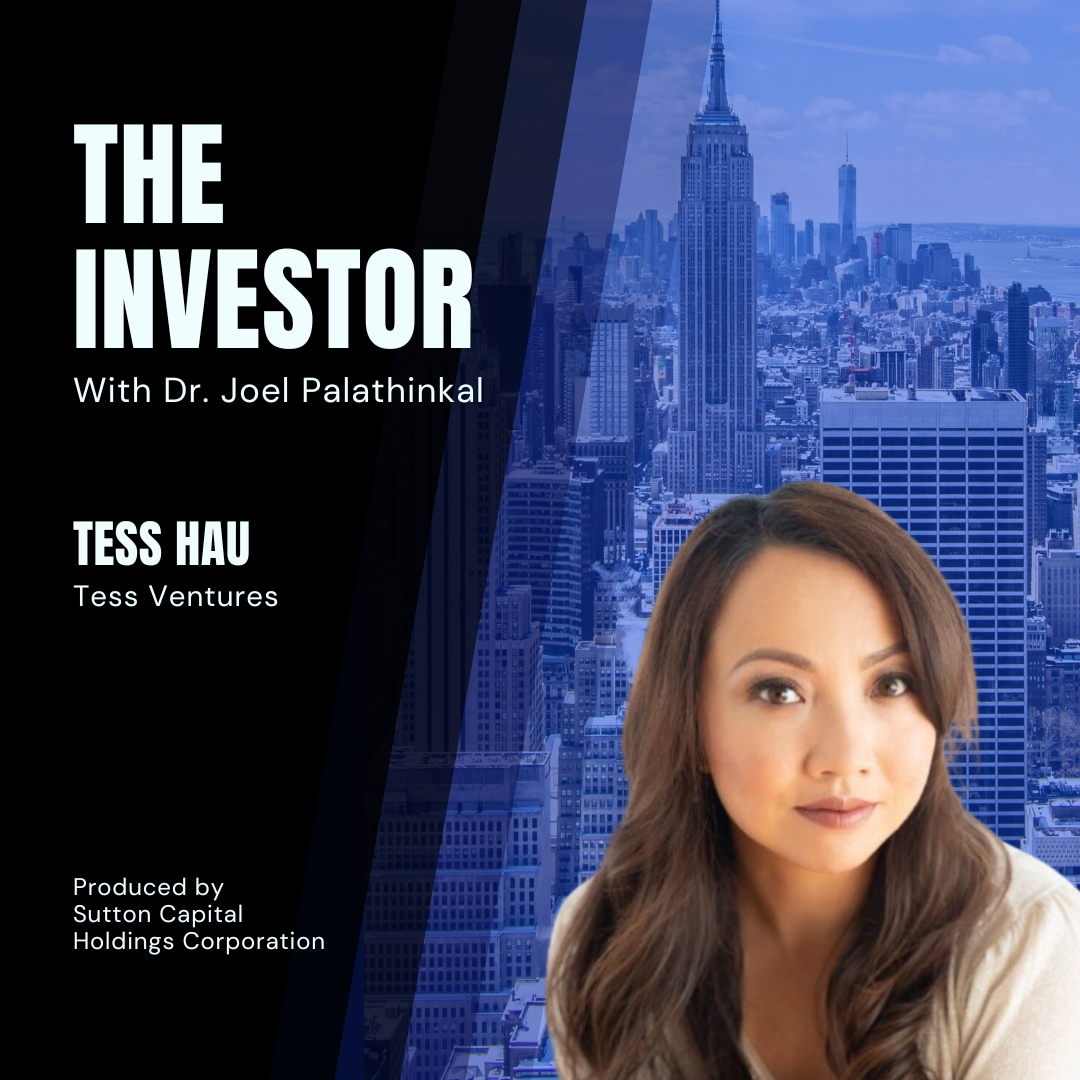
Welcome to the Investor, a podcast where I, Joel Palo Thinkle, your host, dives deep into the minds of the world's most influential institutional investors. In each episode, we sit down with an investor to hear about their journeys and how global markets are driving capital allocation. So join us on this journey as we explore these insights. Tess, welcome to our web show. We do this a couple times a week. Just try to find the most interesting people. You are the most important person this week that I thought was interesting. Thanks for joining our show. You and I have just been having some really great conversations the last few weeks, just looking at really cool technology and startups before we go deeper into tech and startups and entrepreneurship. You know, what I always do on this show is just kind of get to know the guest as a person. So just kind of learning a little more about you, your background, where did you grow up? Maybe a little bit about your early childhood. What were you interested in? And then kind of how did you navigate in your career to where you are now? Maybe we can start with that and then just see where the conversation takes us.
- [01:20]
B
That's great. That's exactly how I like to start. Because as a serial entrepreneur and as a venture capitalist, we look for the best founders that can build the best company in a company, fundamentally is made up of the people. So it's about how the dots connect in a person's life that I always feel when I ask a founder if I'm looking at a opportunity, if I want to invest or not, I always start with, since it's early stage, how the dots connect from the past, because that will reflect who they are now and then where they want to go. So for myself, I think it's very important to. I think about this a lot. So in moments where we can only have this little window that we have to really get to know each other. I would summarize my early start as being born into a, you know, amazing. You know, parents that were immigrants from Hong Kong, they were very early, wanted to raise their child, their family in Canada. So they went to Canada super early, Toronto. And I'm the oldest of two younger brothers, two younger sisters. So essentially they're my first management experience. And that was right from the start because we're all a year apart or a year and a half apart. So this really allowed me to quickly hockey stick, my management leadership experience thrown into the situation. And from there I just truly learned to embrace a diverse set of personalities, giving those four siblings and a very different personality. So team sports was always what I Cared about. And I was volleyball captain, baseball, first base woman, hockey goalie. Because my goal was not to be like the shiniest shining star. I wanted to always set up the team for success. And I think all this leads to why I organically end up being a venture capitalist. Because being a vc, it really encompassed serving the entrepreneurs and the founders. And because I myself was a entrepreneur from the get go, which I can talk about that in a few minutes. So I understand both sides of the table being the founder and also being the investor. So going back to my upbringing, so the sports, the opportunities, the entrepreneurship experiences, I got even right when I was 10 years old, I already decided that, wow, I have a workforce. My four siblings, my parents, who obviously were, you know, looking into real estate, you know, they owned restaurants and they tried to make their best in, you know, a new environment. So I saw how hard they work. So the values that I feel is important is having drive and grit. Those things are super important. Do any success of, you know, what you want to build. And we all came here to build dreams. So that's why, you know, I continuously hope to be able to help others build dreams. And, you know, very early on, you know, the newspaper routes I took at 10 years old, later then, you know, became sports counselor. And then later, by the time I entered undergrad, I was like, what else should I do? And that's when I said, startup. This is the time to take risks. University in Toronto, you know, it's difficult, but not as difficult, you know, as other places in the world. So had that spare time, started a startup with a co founder and it was supposed to be part time, but I guess, you know, I throw myself in at whatever I do and it organically became busier than my degree, so did both in parallel. And I was very, very fortunate that I was at the right place at the right time. So it was eventually we had a very good revenue stream, which some people call in the early days a cash cow business, along with some tech, but it was not high tech. So all in all, I felt I was able to make sacrifices early, bring friends and my siblings to these experiences as well, and do things as a team. And eventually, by the time we graduated, super fortunate a year later, we had three acquisition offers. And you know, from there we never looked back. And more importantly is we did not take venture capital money at that time because sitting in Toronto, you don't get the same exposure as New York and Silicon Valley. So that's one chapter of my life or many subsections I can go into too. But I want to pause here to let Joel or others ask some questions.
- [06:14]
A
Yeah, I have one question that is more of just your thoughts on a theme. So I just read people have been talking about this Michael Jordan documentary on Netflix. I haven't seen it, but I spent time with my cousins this weekend and they were telling me about it. I didn't think much of it. And then there was a post on LinkedIn today. I think somebody from B Capital Group talked about Michael Jordan and kind of the similarities with venture capital. And I think one of the quotes I think from Phil Jackson was your success is only, I don't remember the exact quote, but it's really your success is only based on the individual success that you had. So you can have one success and then that really is that one success.
- [07:00]
C
Right?
- [07:00]
A
So I think it's important to not get comfortable. You know, you had, you know, you did really well. You had an acquisition early on. So kind of, you know, with that lesson from B Capital Group, you know, how does that resonate with you and just kind of founders that kind of, you know, have a couple wins or even as a vc, right, you have a couple great wins, you know, how do you think we should coach people to kind of just think about that and not get comfortable?
- [07:28]
B
Yeah, that's an excellent question. If we didn't know, I would have thought we scripted this.
- [07:33]
A
You literally brought sports up and I literally read that blog like, like maybe an hour ago, like it popped up in my feed.
- [07:39]
B
That's exactly the reason why I brought this up. Made the decision to let the company be acquired because so much sacrifices was made. Like obviously think about an undergrad, everyone's partying, you know, in our days, everyone's karaoke, you know, movies. But I had to trade all that off or else how can you have both? And also my family responsibility. So we were able to, you know, financially and biz dev wise, you know, really be able to come up with the right model for the company that like I said, you know, it was cash cow rich. So while I worked hard, I felt, you know, how else can I enjoy a little bit of the hard earned money? So I invested into cars. So I'm a big car person and I use the car analogy a lot in my venture capital, you know, kind of investment. Because I say I love to pick teams that are already self sufficient winners. But with my investment and my proactive advising, my strategic advising and investment, I hope to accelerate them so that if they were a BMW or a Benz, when I invested I want to help them accelerate so they can get to Ferrari or Bugatti level. Because I do a lot of track racing, actually on the. I got professionally trained on the, you know, Formula one tracks, and I enjoy, you know, you know, driving manual. So, you know, those are part of the entrepreneur side of me. I like taking risks, but controlled risk in a track right, where we professionally trained. So to the point of what you just shared at the time when, you know, you know, being at that age, you know, there was like a lot of, you know, opportunities. I definitely invested a lot into stuff that we all, you know, very early would care about and traveled a lot and was able to, you know, have everything else that, you know, everyone thought was important at that time. And I also did this and, you know, also invest into the stuff for my family. So at one point, my family, my parents were saying, tess, you know, we don't understand startup, but as long as you're not dropping out, because in the Asian family, you're the oldest, so please, you know, you're gonna set the lead. No dropping out. Cause, you know, dropping out is what seemed kind of still sexy if you had a startup. So what happened was the reason why my co founder and I decided to sell the company truly is because we wanted to stay hungry, because we knew that we can continue this way and just invest it into real estate, invest it into stock. But I would never push myself to get into high tech. And high tech is the future, and high tech is how I want to learn more, to reimagine this world using technology as enabler. So that was crucially important to me. So that's why, to your point, I felt like when I got my first car, I thought I was going to just simply do like the Audi convertible tt. But then when I walked into the showroom, they were partnered with Porsche, and, you know, the person was telling me, you should look at getting the Boxster, because, you know, they felt like, you know, that would probably represent, you know, my entrepreneurship spent better. And I, you know, at that time, also, my co founder said, tess, why don't you just, like, think about the Ferrari? And I said, I am already, you know, lucky to work so hard, be so young to have this. If I drive the Ferrari now, what will I be driving down the road? I won't be hungry enough. So that's the reason why I absolutely said, I'm just going to absolutely let it be acquired and start fresh. And in that process, I took time off. I actually spent like six months in Bermuda to sew Search I read, I wrote, and I just journaled thinking, what do I want to do for the next, you know, five years of my life where it's transformative every five years? So that's why I absolutely just, you know, gave up a lot of different things to really transition into another stage in my life. And with the Bermuda experience, I thought I definitely wanted to start another company. But this time I want global impact, and that meant ipo. And you need that, or else how is the rest of the world going to pay attention? So with that, I need to learn venture. And that's when I said, if I want to learn venture, I need to learn how to invest and start investing myself. So I always set off my journey with knowing what my goals are. Then I reverse engineer and figure out what that checklist is. And from there I have to nail each step so that I can earn the results. And that's when I said, if I'm going to invest, I must go to Silicon Valley and I must spend time at Stanford. So that's why 2011, 2013, spent two years there. And people always laugh and joke and ask me what I studied. I said, I studied friendship and relationship, because that was the goal. And the Silicon Valley is full of amazing smart people. And I just want to learn. I wanted to learn biotech, VR, you know, quantum computing, everything. And that was the time. So that's why I said I just bicycled around campus, trade off all cars and just focus on what I felt was important. Building relationship, adding value to professors that were VCs, entrepreneurs, friends that just, you know, had their own music passion. Really learn about how passionate people always exercise every day, their interest so they can get to Olympic grade. And I was just building up my, you know, horsepower and, you know, endurance for everything. So I just meeting the right friends that I can learn from. And in this process, obviously there's a lot of failures too, and that's where you learn to be resilience. So I'm going to pause there for you to ask you some questions.
- [13:30]
A
Yeah, let me see here. When it comes to resilience, what are some things that we should keep in mind? Obviously, don't give up, but what are some things that kind of kept you going, especially when there were failures? Were there people that inspired you? Were there things that you kind of kept as a mental model in your head to say, you know what, this is just the process, but, you know, anything that you would pass on? Because I think, you know, it happens in VC too. You know, maybe making a Wrong decision or not picking the right company, you know, all of that stuff. So what's some piece of advice that you would have to just kind of stay, stay resilient, stay positive and maybe even embrace the failures?
- [14:15]
B
Absolutely. I think the first thing is really try to self awareness. For me, I believe understanding oneself strengths and weaknesses is the start. And then once you have that awareness, you know how to complement yourself with friends, you and team members around you and even investors that if you're, you know, a founder, an entrepreneur, you really need that. You really need someone to tell you what your blind spots are. And the ideal situation is fast iteration. So how software is is how I am. I, I would like to say I put myself at a rigor of iterating every hour if possible, and if not, table that so that it could be something that I iterate on the week after. Even if it's just like in my personal life, in my personal setting. Because the faster you iterate, you're able to take all the experiences that you have, set yourself up around you and apply that. Otherwise, if we mindlessly go through each day, even as a founder, you're just going through the grind. You're never thinking about how everything can be done better. The second one, I would think is recognize that if failures do happen or hardship, that doors really do close for a certain reason. And as painful as it is that day, when you get through it with a chin up attitude, you would be able to look back and think this is a better path. So you know, many times I tell my friends that some of the things that we worry about are first world problems. Right?
- [15:48]
A
Yeah.
- [15:49]
B
So many others have so many other issues. Every family, case by case, have, you know, different issues. So I think it's just important for you to apply what you have been given, whether it is something positive or negative, and think about the reason and just trust that fate and destiny has a reason that took you on this path. And I look back, I would be able to clearly articulate why those doors happen, those dots happened, or it closed, and it always leads to a better place. However, if people burn out in that process, or they get anxiety or get depressed because they don't stay chin up, it will be tough. Right. So I really do try to encourage others. I mean, I think I've been lucky. I was a caregiver, primary caregiver to a cousin who had bipolar and I saw the challenges. So, you know, in terms of altruistic nonprofit areas that I really would love to give back, or just areas that I Think I can hope to make a difference in cancer and in mental illness. So those two things are dear to my heart because close family members experienced it, and I was the primary caregiver. So that's why there's a lot that I have goals for in my life, and that fundamentally, it comes down to efficiency in your time management and how you can synergize your work life and your personal life together. Because if you can harmoniously do that, every hour is fun. There's no such thing as this is work, then this is, you know, like, offline.
- [17:24]
A
Yeah, yeah. No, I agree. And I think, you know, you. You're probably one of the rare people that don't sleep as much, similar to me. So, you know, we. We message each other, and it's like weird hours. So I think. But. But, you know, I stay up because I really do love what I do.
- [17:44]
B
I can tell.
- [17:47]
A
And I think you're the same way. So I think you make an important point trying to figure out what your life's work is. And I think sometimes we're struggling with that, probably because there's different constraints. We're trying to figure out what our path is, and there could be external factors, and I think helping people understand that. So I think cancer is still an opportunity to kind of find solutions for, but I think we're blessed with our network and having access to technology and people that are solving those things. I think finding those right people to help solve those big problems at some point is really great as a great life goal. And it's exciting to hear that you're passionate about that. And so that's part of something that you're looking to solve and part of your journey. A pivot is as a founder talks about their journey. What are some frameworks that you would recommend founders to storytell effectively? So they're either giving a pitch or they're really just opening up to an investor about who they are and what their mission is and what their company is doing.
- [19:03]
B
That's a great question.
- [19:04]
A
Yeah. Any helpful advice with that when it comes to storytelling? Because I believe, like, that's half of the presentation when you're really helping empower founders and also when you're trying to just enlighten investors on what problem you're solving. I feel like half of it is taking you along to that story. And I'm sure you just hear several different stories and several different ways of storytelling. So I guess my question is, any. Any tips on just good storytelling?
- [19:37]
B
Yes, Yes. I really do believe that. If you want to meet, you know, really very professional and very resourceful investors who also have great self awareness. The three points I think important, that's very important for founders and entrepreneurs to come across in when they share their vision and share why they believe this opportunity and this team is the right one that you should invest in. I believe it is truly being authentic and transparent. It may be something that some people think that's kind of difficult because we're selling a vision in early stage. So how do we do that? And I say it's very simple. You just got to recognize intel investors. You don't want to pitch investors that actually, you know, don't know what they're doing. You're picking, you're pitching to investors who absolutely have seen it all. So being transparent and sharing where you're, where you and your team is strong at and where you need, where you think you have weakness and asking for help allows an investor to immediately, you know, bond with you because they feel like they're not on uphill battle trying to find out what's underneath the hood, what is the question mark? Where are the yellow flags? So when you get that out right away they will be able to be impressed and think about now let's try and troubleshoot and solve some of this together. Because investors know there's no project that is perfect. When they see that, they worry that the founders are not realistic and there's too much of optism there and therefore how can they manage the investment that they make. So having said that, though it's even more important before that is how you narrate and tell the story in a way that is factual, but be able to evoke emotional response where an investor or your audience can tell right away what type of person you are. And that's critically important. And that's why for myself, I do help many founders. You know, I meet them, you know, and we if I think it's a team that I can invest, I really spend quite a lot of time with them and then I help them, you know, kind of storyteller, evangelize who they are and then very quickly they pick it up. But you know, the crash course of it is definitely sharing your principles in a way that people can relate and visualize. I mean, in my case I just need to emphasize I test love teamwork and I would never start a company as a solo founder. Definitely need co founders and I highlighted that with my team sports examples, right? With my track racing examples and you know, all these examples that an investor could quickly connect the Dots, like, you don't just say it, you actually do it.
- [22:24]
A
Yeah.
- [22:25]
B
And that's way easier for them to remember because, you know, it's about the analogies and the visuals that is important. So, you know, those are some aspects I think is critical.
- [22:35]
A
Sure. I think it's really helpful. And, you know, being on a team, you have to storytell and you have to sell the vision of getting people to stop what they're doing and join your vision, jump on your ship. So how did you successfully do that in some of your past ventures? Just get people to jump on board and they might have not even expected it. Right. They're probably working on something else. And you're like, hey, you know what? This is what I'm doing. Why don't you join me? So how did you. How did you help them kind of understand what you were doing and inspire them to join you?
- [23:09]
B
Absolutely. I am very lucky. I authentically love mentoring because I feel like I design my mentors around me where I learned one thing from each. I had a few mentors, but there were mentors in different spots, but no one really told me, no one really taught me under their wing, like the way I actually do help founders where I can see, you know, all the things that, you know, I went through trial and error, and I want to help them minimize some of it. But of course, they do need to experience their own failures. And many times, oftentimes I would ideally like it that they did fail before. And when we meet, we already have, you know, the resilience side of us, and we have the takeaways as to what went wrong and how we grew from that, which is critically important. So to the point of, you know, I think it's super important to, you know, just really be able to share in. You'll be able to calibrate and, you know, express to them authentically when you recognize people are busy, that there's going to be a mentorship component, there's going to be a component where I need to learn back from you, that you need to. You're the one with this domain expertise. And fundamentally, for me, I very clearly express it's about the friendship first, because I need to build a relationship to be able to work closely together, whether it's an investment or whether it is co founders or core team, because these are the people that are your work family outside of your personal. And you really need to make sure these are people you're going to be with for five years because you can't start something and jump off the ship. Right. Because they all traded off the livelihood for you and your vision. That's critically important. And also really managing people's expectation. If you oversell, people's always going to be grumpy and they're never going to be happy. And if you just manage it just right and break it down, what the goals and KPIs are, where we're going to meet this, then you're going to get a salary bump. If we get these metrics, you're going to get a title bump. Being very clear. And that starts with you yourself need to be clear with your goals, understand what the challenges are, where the strengths are and then presenting to others. Until then, do not try to start a company yet. Or you can try but recognize that you're going to probably start a few companies before the real one becomes successful. And that is also needed that that's why Google's model start something and then fail, fast learn and do it again.
- [25:49]
A
Sure.
- [25:49]
B
That's well said. Yeah.
- [25:51]
A
I got a kind of a deep question, but it may be just easy to answer. But it's how do you build trust and how do you build friendships? Because I think it starts with friendship and maybe they're the same thing or maybe trust is needed for friendship. But how do you build both of those? Maybe that'll be helpful.
- [26:09]
B
Yeah, absolutely. That's a great question. I think about that a lot.
- [26:12]
A
Yeah. And it sounds like so simple. Right. It's like hey, be friendly or be nice to people. But you know, I think if we really.
- [26:19]
B
Yeah, you can't do that. But then you just become one of the other.
- [26:22]
A
Absolutely.
- [26:22]
B
It truly is. If you find someone that you think you want to explore friendship with, you need to demonstrate you need to build trust and trust needs to be earned. And how you do that, get a common platform together meaning you know, you know, volunteer together or invest together or you know, be an advisor to their company. Demonstrate for before. I love saying this. Not every different people have different perspective but I believe, I really believe in build friendship, don't build transaction.
- [26:59]
C
Sure.
- [26:59]
B
So if one is like seen as transactional or like, you know, if it needs to be called out, what is it that I get or what is it that you get right from the get go. Yeah, it's hard, right? Because then people will feel like okay, but if everyone is just trying to help each other and build up goodwill and social capital, ultimately building up social capital is the best form of currency. And that's why I love to say starting at Stanford, I just want to Help give value to different people, learn from them. And then I got so, you know, so much reward and just knowing that I have so much credits back banked up. And then I was telling myself, wow, this is great. If I ever need a favor, you know, I can call on them.
- [27:41]
C
Sure.
- [27:42]
B
And then I got into a new level of enlightenment where it's even better if I never have to call on the favors and I can keep, you know, helping and giving back.
- [27:50]
A
Yeah.
- [27:50]
B
And I am very lucky. I think there was only one favor I ever had to call on and everyone else feel like, Tess, what is it that we can do for you? You've done this so much for me over the years. And that's why I think when I share some of my portfolio companies or share some of the opportunities that my friends are in and I endorse it, investors and friends and angel investors and VCs, family, office, they do listen because they really hear me share something. Or it's not even me asking. This isn't the case. The founder's asking, but they also know how high a bar I have as a person and also on when I diligence the company. So I would really say some of my favors and credits is going back to when I help my portfolio company articulate their message, bridge them to the right investors and, you know, truly strategic investors, not because they need money, but because you have something so great and you just don't want it to be in the hands of someone else who truly is there to monetize it, but may not want the best for the founding team. Right. Because we know that many times they want to split up the founders. You know, there's a bunch of different things that, you know, does happen in the investment world, but I am about really there for them, for the full journey and really trying to enable them and essentially, you know, be a king maker and queen maker, if that makes it simpler. I just want to champion other people to success.
- [29:16]
A
Absolutely. And I. What I do admire about you is you don't just diligence teams. You know, you're right there with them, you're spending time with them all day, and that's why you don't sleep that much, you know, because you're so busy and so committed. So I really admire that about you. And I think that's really what mentorship is. And, you know, reminds me of a quote. I think Oprah quoted this, but it's by Maya Angelou. And it's success is really based on the lives that you've touched in Your in your lifetime. And I think if you can touch tons of lives and really inspire lives, that goes way beyond just transactions that could be materialistic or diminish over time. But when you make somebody feel a certain way, I feel that's something that is irreplaceable.
- [30:07]
B
I could add on to that. I agree. And I started off small, where I took, I told myself, change one person's life at a time, even if it's small, even if it starts off with, you know, spanking the cashier and just telling them how great of a job they are or tipping them and really vocalizing and not just tossing the tip in there.
- [30:27]
A
Sure.
- [30:28]
B
They value that. And then later, you know, especially being in the Valley and having exposure at Stanford, it's about, you know, change lives, change organization, change the world. So that exactly is my own principle where start off with helping one person at a time and once you're really comfortable that depending on the nature of your job and your career, I now am very lucky to be at a new stage where if I help kind of like the, you know, I would say the platinum connector of a group and they obviously have built their trust just like I have in my group. What I call this is combining tribes together and that accelerates that process so quickly.
- [31:12]
A
Sure.
- [31:12]
B
And I mean fundamentally, I think I saw the power of that in the blockchain community in the last four years because I'm a fintech investor for the last decade. Right. Whether it's emerging market or later, of course frontier tech and blockchain is very important, the ability to just help each other because the senses are aligned. It's very fascinating. And the tech absolutely represents this. No matter what fancy word they say, the supernodes, everything else that they have, that is jargon, but it essentially just sharing aligned incentives and making sure everyone's incentivized so that the community or that tech can be fully optimized in this world.
- [31:57]
A
Sure. Yeah, that was really helpful. What are some trends along with fintech? Are there any other sectors that you're interested in?
- [32:06]
B
Absolutely. Three areas I care a lot about. One I already spoke about. Was anything cancer related? Because, you know, when my, my own dad got diagnosed and then, you know. Absolutely. When Steve Job got diagnosed, it was boy, my dad also got pancreas cancer. That experience let me understand we're not invincible. Because at that age I did have some success working hard. So I recognize that it's going to be one in three for someone to experience cancer. So that's why at Stanford I actually Spent a lot of time on impact investing and thinking through that. So one of my companies that I invested in, the founder is amazing and they are trying to help one area of cancer using a very unique approach which is dengue fever and happy to talk more about that. All the companies I invest typically is early stage, so that's where the journey is the most rewarding and the hardest. But they've done so well, they're already FDA one approved and everything is set for quite of a hockey stick trajectory. And the team works super hard because biotech is hard. There's no way I can say it. It is. So the second area that I care a lot about is reimagining the world without passwords. And obviously you know, that's login id. A company that, you know, the founders have such great domain expertise and they come with so much payment fintech experience, yet also able to, you know, take the company to a new visionary vision of really combining reimagining the world without password so that therefore it's convenience and conversion. Right. So every device is going to be biometric while Apple has that. They're not. I mean the standard is every device, every browser is going to have to be FIDO certified and you are Fido 2 certified, which means we have at least 18 months edge combined with the domain expertise and a great pipeline of sales. And then also eventually it's about identity management because there's so much data. So whoever actually owns that password gateway has that data and it's security and privacy. So that's where we have a compliance as a service compliance in a box aspect. And then later the identity management is where it owns everything and it's a B2B play. Yet also there is a B2C play, a self serve model where every SMBs can go to WordPress and then they can download. I mean they can actually just immediately use our technology so that they can have all their needs met and be Fido 2 certified and also the convenience and actually be at the standard that you need to because it's going to be regulated as well as we see with CCPA and gdpr. So privacy issue is big. So that's one area I care a lot about. And then of course the other area is in because I like cars which is reimagining the world through EV and that's electric vehicle. And recently one of my friends, she's a significant investor in what I would say is autonomous software for trucking.
- [35:36]
A
Sure.
- [35:37]
B
So they're not competing against Tesla. They're not, you know, a manufacturer, but they are the ones that's going to be able to retrofit trucks with this software. And in a year, the vision is in a year because they're already pre ipo. In a few months there'll be ipo. So in a year we'll be seeing our freeways have autonomous truck driving, which the problem of night shift drivers is not enough and the danger and everything like that is the real problem. So this company is able to solve one component of that. And you know, the technology is amazing. You know, ups, everyone is already on board. So this one is going to come out the gate strong. So that's electric vehicle, you know, autonomous driving area. That is very important. Yeah. And I love learning about all these spaces. Of course, fintech, blockchain, crypto, hands down, I can talk about in, you know, in my sleep. So, you know, that's an area that, you know, of course, I care a lot about. So Coinbase, Kraken and you know, Robinhood, all these are doing well. You know, they're traditional changes wallets that also have capability. I mean, Robinhood is traditional, but the others are in the, you know, in the crypto space. But it's going to be, you know, just as important.
- [36:54]
A
Sure. So we always talk and as I, as I manage. Right. As I, as I mentioned before. Right. I mean even those mature fintech companies have issues just logging in. So. Told you about my fiasco a couple days ago, just trying to log in. So I see opportunity with just, you know, portfolio especially. It's really exciting when portfolio companies can complement each other as well because then, you know, like you said, you can kind of connect across portfolios. Maybe a customer, maybe one of the companies could be a customer of one of your other portfolio companies. So that's always great too.
- [37:29]
B
And Joel, that's why I would love to survey your students, people around you in terms of who is interested in this autonomous vehicle space, who is interested in reimagining the world password list, which is biometrics authentication. Right compliance or privacy. And then who is interested in biotech, which is early stage cancer treatment. Because there's always going to be an opportunity because the founders of these different companies raise at different times and with their strong network in mind. Typically the round gets done pretty quickly. And that's why angel investors at even institutions sometimes don't get a chance to see it because so many people around them actually have liquidity that they want to support a vision at early stage and also see the fundamentals. Now there's robust Data rooms as to what they have done and all the other stuff. Definitely welcome. Just understanding if anyone's interested in any of these areas.
- [38:35]
A
Yeah, well, maybe we can open it up for the audience because I know I've been just. You and I have been talking for a while, so maybe we'll keep it interactive. Does anybody have any questions on some of those sectors?
- [38:48]
C
Hi, Tess, this is James. Thank you so much for being here. My question was around autonomous trucking for your friend that's interested in investing in the space. If you're not allowed to disclose the info, then that's understandable. I'm curious about, has there been any pushback from the Teamsters trucking unions?
- [39:08]
B
Yeah, actually, because they are not competing with the trucks, they're helping them get retrofitted with the technology. They're the software provider. They just love this. So, for example, remember how Amazon acquired Zoox? And then there's also another company that is called Nikola. They did a SPAC IPO in June 4th of this year. So that one obviously does make trucks. Right. Or this technology that enables it. I didn't follow that company. What my friends, particular company that they're focused on. Well, I can't share the name, but definitely offline. If anyone's interested, can ask. They are actually enabling all the trucking companies to be able to get to that level because they have the software that can first retrofit the semi trucks first and then later, of course, they can continue building off of it. The CTO is Caltech, and then the CEO is also an amazing entrepreneur. So therefore they want to. UPS is already involved. Volkswagen's trucking division already is involved. The patent that they have accumulated, just like how companies like Magic Leap, people have not seen the product, but the patents are what is so powerful as well. In this case, the software is already ready to go. So therefore there hasn't really been pushback because they're aligned with the industry. They're not cutting people out. Yes, some labor may be an issue in this world of AI and everything else, but they're actually trying to make it safer where the night shift drivers are the hardest to kind of keep employed and keep safe on the road. So overall, I think it's something trying to do more good than harm.
- [41:06]
C
Absolutely. Yeah. Makes sense since the folks on the night shift typically are driving 18 hours, 24 hours straight sometimes to make the timing. So that makes sense. Thank you for that. I appreciate it.
- [41:18]
B
No problem. On that note, if there's any family offices, because they only look at potentially considering you know, like, you know, minimum $1 million size checks. If any family office may be interested in these type of opportunities, largely Mostly they are $1 million minimum size checks. You know, feel free to let me know and I can share this with them. The reason why VC funds may not be appropriate because they set it up as an SBV themselves and as we know, you know, there's fees and carry. Carry interest on that. Right. So that's why it's family offices that really see pre IPO deals as being extremely attractive and desirable. That may make sense. Or individuals that want to do this.
- [42:02]
A
Yeah, yeah, yeah. And I think one thing that I've been seeing with the family offices too is they're having less of an interest to do the SPVs. If they do the SPVs, they want to still be direct the cap table to actually be directly on. So if they can use a vehicle, that's fine, but they still want to be kind of directly in.
- [42:25]
B
Agree. However, it depends on the deal, the opportunity. I agree with that opportunity. Like for example, this EV autonomous one, there's. It's exclusive to this particular, you know, individual person and everyone else is, you know, Morgan Stanley type that can get access to the min. Check size is 60 million. That's where people understand that fees absolutely makes sense.
- [42:48]
A
Yeah.
- [42:48]
B
Because there's no way to access it.
- [42:50]
A
Sure.
- [42:50]
B
However, the same token, there's so many opportunities. So some family office may be like, okay, if this one doesn't fit, I'll just do the next one.
- [42:57]
A
Sure.
- [42:58]
B
So it just, it's about exposure and you know, until family offices get familiar and, you know, used to this kind of investing and they pass on a lot and then they see that the ones they pass on made money.
- [43:10]
A
Yeah.
- [43:10]
B
Then they kind of then listen and be like, okay, I get it now. It's about failure and successes and yeah.
- [43:16]
A
It is a good point. I mean, some of these great deals you just got to pay to play. You know, you got to pay the, you got to pay the management fee and the carry. Sometimes they might give you a discount to kind of just build a relationship. But you're right.
- [43:29]
B
You know, let me just share one thing that I think is critically important and many times it comes with experience as an investor to know this. It really is about the relationship in a investment opportunity that sometimes one is paying fees for. Why think about this. Many people do now have access to discounted prices or ability to get into an opportunity early. Right?
- [43:54]
A
Yeah.
- [43:54]
B
And so the valuation is, you know, less.
- [43:57]
A
Sure.
- [43:58]
B
Think about that. Sure. You know, we all can get that and do that. I get tons of that and I used to absolutely believe that's the way to do it. But how do you know when you need to sell it? Right? Think about that. Like if you have that opportunity to get in. But who's going to coach and guide you? When is the right timing to sell? Right? Sometimes people sell too early, you leave too much on the table and you just made 1x. I mean you just made a 2x, right? Whereas if you kind of have the intel and the relationship that's going to help diligences with you and like have the, you know, net worth that's going to support you together, figure it out and maybe they even know the answers, right? And that's why you are, you know, in it because they're strategic investors. That's adding value and they know when the key KPIs are going to be met, which drives evaluation up, right? Just think about it. Instead of making that 2x, don't you want to be like what's happening to Tesla now? Many people sold when it was down, right? Because they were worried. But look at where it is now. If you had the crystal ball, if you are Elon Musk's friend, wouldn't we all want to know when is the best timing to sell? So what I'm trying to say is that no one's ever going to give you this question answer directly but if one is able to demonstrate social capital by adding value to people, you get to learn more, see more on your own and then you piece it together and then you triangulate your triages in full. So that's a simple model and it's not easy for I know sometimes individuals to grasp because they think right away why am I doing all this free work? What is it in it for me? And I keep telling individuals it's about the relationship, the long term friendship, right? But sometimes people are like, you know this helping them doesn't mean we'll be friends. And of course it doesn't. It really is about how you identify who you want to bond with. If you have value yourself, if you can learn from them and your principles, right? It is human is a art and like the relationship interpersonal skills. So one truly does have to be a little bit more wanting to learn about, you know, your own psyche and others. And then I recognize some friends are more introvert and they just love to, you know, be more interactive with, you know, devices, which is cool too. But you can still apply the same model to the individuals, the Smaller group of individuals that you meet.
- [46:18]
A
I think along with selling too, you and I have. Actually, there's a couple examples between you and I too, where not, you know, beyond just selling, even just kind of in between milestones or, you know, a certain funding round, it's like, hey, you know what this is, this is a good time to get in because, you know, X, y and Z KPIs are happening. So even in between those little increments is a good, good strategic thing that you won't have access to.
- [46:43]
B
Exactly.
- [46:43]
A
Trying to figure it out on your own.
- [46:45]
B
And Joel, I mean, I'd love to give some insights I have on blockchain and crypto.
- [46:50]
A
Sure.
- [46:50]
B
Just because it's fortunate that we're on this panel together. Yeah. I mean, I'm not giving financial advice and, you know, it's just something that is my own insight that I triangulated and triage and information. But if we see how btc, Bitcoin and Ethereum, the market is right now, you know, on a bowl. Right. Or maybe a slight bull. It's interesting because, you know, I try to, you know, collect information and, you know, really continue understanding the Ethereum technology. So they're in Ethereum 2.0 phase right now. And in that, you know, in that learning, I learned that, you know, every individual needs to hold on to at least 32 Ethereum and then they can participate in the technology advantages that they have been, you know, sharing and, you know, working on. And, you know, I think largely that's, you know, staking. So therefore this is a lot that people would have to learn. But the simple thing is this, you know, ETH is on track to, you know, having slight increases in the price of it because there's more demand. Bitcoin, which is something that I believe is important potentially in 30 days. Right now it's at 11,000. We can monitor it. But if the demand of it does bubble up and it keeps increasing like this, potentially within 30 days it can hit 15k. It doesn't need to take 30 days because these things just happen overnight. Because we also do understand there's also a speculative component to it. Right. And the technical analysis of everyone that knows how to read charts. So it's a combination of the different large groups involved. So that's why I say we can definitely start tracking and just seeing data points and seeing what's right or wrong. Largely, of course, people should not go into this blindly. You have to definitely have some fundamentals. That's why I said this is not financial advice. But we can just see how Ethereum is on a lift because of the technology release. The ETH. Ethereum 2.0 is about to happen in the coming six months or so, and that's where drive this excitement and momentum.
- [48:59]
A
Yeah. And I think the 2.0. Can you unpack that for a second? Is that really helping with the scaling and helping the transaction scale?
- [49:07]
B
Much too much. Everyone should absolutely look into it. Because there was one point, ETH was the game changer, and that's why smart contracts and investors started investing, which also created a bubble. And then the technology. There was a difference between Vitalik and the team in how they see things happening. So therefore, there was a big flat period and even a downward pressure on it because people thought the technology had, you know, some issues and there was competition coming into play. However, they have resolved some of it and the direction is again, in the right way. So that's exciting because fundamentally, it doesn't matter what price, you know, a particular, you know, project is or the crypto. It's about their technology and about their vision and their ability to execute. So that's why, you know, I just wanted to share this very quickly.
- [50:02]
A
Sure.
- [50:02]
B
And we can all track this and see if some of my, you know, analysis, you know, if any of this, you know, kind of comes true. I mean, even if it doesn't get 15, it's going to be 13 because of just, you know, the bullish in what happened with Bitcoin because of the halving. That really, you know, is the key trigger that happened already. And usually the ripple effect of it happens six months later.
- [50:24]
A
Yeah.
- [50:25]
B
So I've been charging, tracking, learning. I'm not an expert, but I just like to surround myself with a lot of smart people in the different areas I want to learn about. And then I just, you know, triangulate all these information and then I make my own decision.
- [50:40]
A
Sure. Yeah, that's really helpful. Yeah, I think that's. That's important too. I think, you know, one thing that I've tried to embrace is, you know, just tell people telling me that I'm wrong as well. Because if a lot of people are telling me that I'm wrong, it's helpful to understand, like, why they feel that way because maybe I'm truly missing something. So that's a framework that's been helpful for me.
- [51:02]
B
It is, Joel. And it's important because with crypto, it's gonna go up and down, it's gonna wiggle because nothing goes straight up. Right. Because that's the nature of the market, it's just like stocks, it needs to go up and down because people accumulate low, sell high. So, you know, it's just the fact that you just gotta watch it and see the behavior of it. Obviously, I recommend holding it long term. The value is there. Right. But for those who kind of also want to understand a little bit more on the granular level, and if suddenly, you know, it actually just drops the other side, the explanation is, you know, something in the market caused it to create uncertainty, and everyone just kind of, you know, thought, oh, my goodness, I should just dump it. Right. Just like how, you know, the dollar is being printed out, like, you know, as if it was paper money. And that's why people's turning to crypto, especially Bitcoin. So everything is triangulated what's happening in the actual market to what's happening on the crypto market. So you just really got to be on top of all this data, which fundamentally, if you are starting a project and a company on a startup, if you're using blockchain technology, you need to monitor all this because that produces sentiment of the investors. Right, sure. Yeah.
- [52:15]
A
Yeah, that was really helpful.
- [52:16]
B
But that's my Joel. At the end of the day, it's about people. Make sure you build friendships with different people at different levels, different backgrounds, and it all works out because then you'll be learning together in different areas and helping each other.
- [52:31]
A
Absolutely. Yeah. I totally couldn't agree with you anymore. Well, hey, I want to be respectful of your time, and I know that there's one or two people that ping some questions, so why don't we take a couple of those quick questions and then we'll give you back your evening. So I guess, Mike, you had a quick question? Mike Masonza.
- [52:50]
D
Oh, yes. So, Tess, thank you for coming and, like, speaking to us. That I think that's really great. But so my question is relating to, like, what you were talking about in terms of autonomous trucks.
- [53:06]
A
Right.
- [53:09]
D
So in the future, we're still going to need human intervention.
- [53:13]
A
Right.
- [53:14]
D
Like, in terms of, like, a truck cannot, like, literally move and, you know, move cargo without any, like, human supervision.
- [53:25]
B
Right.
- [53:25]
D
While someone being there in case of, like, you know, you know, if something goes wrong, because it's still technology at the end of the day.
- [53:33]
C
Right.
- [53:33]
D
Like, someone needs to agree.
- [53:35]
B
Yeah, agree.
- [53:36]
D
So with that being said.
- [53:40]
A
Do you.
- [53:40]
D
See Airbnb actually benefiting from that?
- [53:52]
B
Airbnb, yes. Can you help me rephrase your question? So I think I understand it, but I want to be spot on in my Answer.
- [54:01]
D
Yeah, so, like, our generation, millennials, Generation Z, they're not big into hotels, they're big into, like, Airbnb and stuff like that. So in that transition of, like, autonomous vehicles and, like, the way they like.
- [54:22]
C
To.
- [54:24]
D
You know, mean the way they like to, like, I guess I don't have a better word to say, but, like, rest would. Do you see the connection between, like, those two kind of aspects?
- [54:37]
B
I see, yes. In the sense that the world needs to embrace, especially the investors and entrepreneurs, when they decide to start something in technology, they need to know the audience. And we can absolutely use the example of Robinhood, because think about this. If it was not for the millennials that were using Robinhood, the interest of investors would not be that high. Because investors recognize, yes, there has been other great companies that has been able to do what Robinhood is doing, but Robinhood is one of the only top companies that has captured the heart and mind of the millennials. And yes, their average dollar per account is not that high. But we're going to grow up with them, right? And they're going to be earning more money, they're going to be inheriting more money, and they're going to be absolutely deploying more money. That's the same with the car industry. Why is it that Machete Benz and BMW only in the past offered cars that were kind of for the parents, but why did they come up with different lines of cars and it's come down to be so affordable, I can't even keep track that at 30 ish thousand or even 20 ish thousand, right. They can afford a BMW member Shady Benz, and that's the same with Tesla. Why did they come out with so many models? When I found out the Model 3 was like, you know, about 40ish thousand US and then with all the rebates that would come up to be 30ish, I couldn't believe it. Like, I didn't actually look at it. But the answer is that if the company and the founders and the team doesn't capture the earlier generation, then they have lost the market. Because think about it. Even if the parents drove the Machete Benz, the kids is going to buy a BMW, right? 3 Series. It's because you just have it. But now we see even the younger kids are buying the Mercedes because they come out with more youthful vehicles. So that's the same with Airbnb and trucking. You just got to capture that market and that lifestyle. What do you think, Joe?
- [56:45]
A
I agree. And I think you have to. I think those are Good indicators of good products too, because you're making it sticky, right? Because that person that bought that 20,000 Benz, what are they going to be doing in five years when they're five to six years older? They're probably going to upgrade. And if you can give them some incentive to stay with Mercedes and do a special trade in value to sweeten the deal, you've got them and you've got them for generations. And then guess what, there's going to be a newer generation trailing behind them. So I think you hit it on the nail. I think maintaining your customer and capturing, capturing them across the journey is important.
- [57:22]
B
So I think that's an analogy, Joel, and thank you for asking that question. It's about the relationship, the relationship with your brand, the relationship with that sales executive that knows the wife, the husband, the kids, the grandparents, and continuously sending the Christmas cards. It's about building friendship. And the best brands and companies in the world, no matter small, medium, large companies, their success is their interaction with the customer and with the clients.
- [57:54]
A
I got one more example. And then I know you got a run test, but just even if you think about how your money is being managed, you're gonna say, hey, my money's with Bill at Fidelity. Right? It's not, hey, my money's at Fidelity. It's really with that person. Because if Bill leaves and he goes to Ameriprise or if he goes to Raymond James, guess what? You're probably gonna go to Raymond James because it is that relationship and that trust. And I've had lawyers in the past that have changed firms and I've just stayed with them because I'm just used to working with them and I know them and it's that relationship. So I think you know, people and the relationships can be portable wherever they transfer as long as you have that strong bond. And I'm thinking you probably agree with that, Tess.
- [58:42]
B
Absolutely. And I would definitely close this with, again, my principle and values is build friendships, don't build transactions.
- [58:51]
A
Sure.
- [58:51]
B
And everything will work out, no matter on a personal level or in your career wise or for the company that you're starting.
- [58:58]
A
Sure. That was great. Super helpful advice and this was really inspiring. So thank you for your time. I know you're super busy, so it's. We really appreciate you just giving us a little bit of your time. So thank you.
- [59:10]
B
Anytime, guys. Anytime. I mean, I love, you know, being able to share experiences and if there's anything else I can help, you know, don't hesitate to ask. And you know, we. Anytime. Just ask me and I'll be back.
- [59:23]
A
And likewise for us. If there's anything we can help you with, I will help to funnel it. If you need any help with anything, let me know. And we are happy to support you as well.
- [59:33]
B
Thank you. I appreciate that.
- [59:34]
C
Yep.
- [59:34]
B
Okay.
- [59:34]
A
Take care.
- [59:35]
B
Take care, everyone.
- [59:36]
A
Bye.
- [59:36]
C
See you later. Bye.