← The Investor With Joel Palathinkal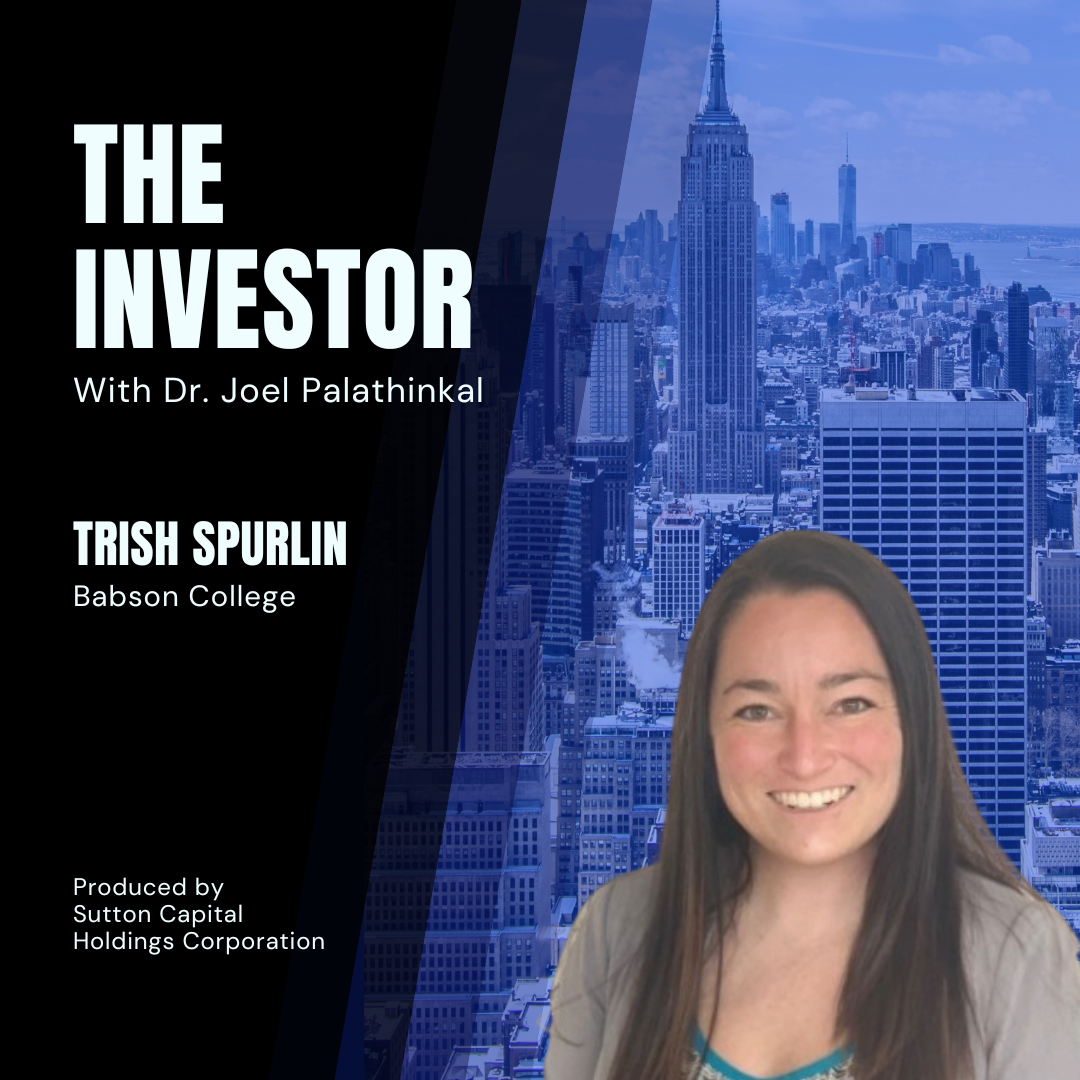
Loading summary
Transcript56 lines
- [00:03]
A
Welcome to the Investor, a podcast where I, Joel Palathinkel, your host, dives deep into the minds of the world's most influential institutional investors. In each episode, we sit down with an investor to hear about their journeys and how global markets are driving capital allocation. So join us on this journey as we explore these insights. Okay, well, super excited for this podcast. You know, I've got, you know, a really good new friend of mine and also someone who's just been a trailblazer and a role model in the industry. You know, we've got Tris Sperlin here who's a capital allocator with expertise in private equity, venture capital, institutional portfolio management. She's the investments director at Babson College. So she leads the private equity and venture capital strategy within the endowment with a focus on long term alpha generation, manager access, and really thinking through portfolio construction. So as you're building these portfolios, you need to think through not only your portfolio construction, but as you're investing in funds, how are they thinking through their portfolio construction? Because obviously that rolls up right at the top line performance and then really thinking about cultivating deep relationships. One thing that I observed with Trish is she holds these office hours which are super, super valuable. And I've actually collated a bunch of those FAQs. So, you know, I will share those write ups that she shared, which is seems like it's the output of those office hours. But on top of that, you know, would love to kind of just hear a third dimension. Right. Just talking through those things. But, you know, her career bridges through institutional capital and early stage innovation. She serves on multiple advisory boards and has a passion for amplifying underrepresented voices in finance as well. Holds an MBA from Babson College as well. So we'll talk about that. But Trish, welcome to the show. Hopefully that was a initial great intro and then obviously we'll go deeper into your career background as well.
- [02:04]
B
Yes. Thank you so much for having me. That was so nice. I need to bring you around with me to introduce me places.
- [02:09]
A
Yeah, absolutely. That's a service that I offer for no charge. So, you know, why don't you, in your own words, share a little more about your, you know, your initial education, kind of your initial upbringing, your family. Where'd you grow up? What did you think you were doing? What did you think you were going to do? And then, you know, what were some of the learnings as you kind of evolved in your career?
- [02:34]
B
Sure, yeah. So I grew up in Annapolis, Maryland. I actually lived in Maryland pretty much right up until I took the job at Babson when I went there for my mba. But I went to Salisbury University. I really went to Colle to play lacrosse. Honestly, I, I had no real idea what I wanted to do. There was a point in time where I thought I might be an athletic trainer. I did kind of like a shadowing of a football game and one person got hurt and I passed out. So that was like quickly off the table of, of options. At another point in time, I thought maybe I would go into fashion merchandising. I really have no idea why. Just like, seemed like a good idea. And so I really kind of bumbled my way into finance and accounting at Salisbury. It was the class I had. Once I decided to do accounting, I knew I needed 150 credits. So I decided to do finance too and ultimately decided to go into public accounting because I didn't want to move to New York. So investment banking was sort of off the table.
- [03:35]
A
Yeah.
- [03:36]
B
So I did three years in public accounting. I did the whole spectrum, audit, tax, consulting, everything. And I kept getting pointed towards tech. I had multiple partners at the firms I was at, as well as a recruiter, say, you know, doesn't seem like you're really happy in this role. Tech is looking to hire people who have accounting backgrounds that are a little more entrepreneurial, who want to work on other things.
- [04:03]
A
Sure.
- [04:04]
B
And so I went for it. I ended up at a tech startup in Baltimore, Maryland. I was there for three and a half years. I think I joined right as they were raising their Series B, which they raised from a lot of really big names that you and I would both know and still run into today. And I worked in corporate finance and operations for them up until we were sold in a stalking horse bankruptcy. So that was a really great learning experience. It taught me so much about the capital stack. I was responsible for cap table management. It was part of my role. And so I just felt like I had a really great understanding of the founder to VC relationship, but I didn't really understand what was on the other side of it, which is of course what I do now. Out of that, I decided to start a fractional CFO business. I felt like there were so many mistakes that were relatively simple that we had made that I could help other founders avoid. And that's how I ended up at Babson. So the CFO of the company that I was at said, you know, you should really go up and visit Babson. It's a great place for you to sort of build Your client base buy you some time. You can build your business there. They're very open to that. And that's what I did. So I went to Babson in 2018 for my MBA full time, built my business alongside of that full time while I was there. And I started helping out with the endowment because they were hiring people who had experience with vc. Much of Babson's private equity exposure is in venture capital. And so the fact that I had relationships there already I think was attractive. And I obviously had a finance background, and I really just kind of fell in love with it. I didn't. I didn't know this was a job. I. It wasn't as though I set out to be an allocator. But about halfway through the second year of my MBA program, there was some turnover in the Babson endowment, and they basically offered me to take over as investment manager and build their internal investment office. So before I graduated, I kind of pivoted quickly and took over as a then investment manager, now investment director, and I've been here ever since. It's been a really fun ride.
- [06:13]
A
That's amazing. So after digesting that overview, there's a couple thoughts I have which I'd love to kind of discuss with you. So one thing is, you know, career journeys are really like an exploratory adventure, right? You're kind of thinking through what you think you want to do, and then it kind of evolves to accounting, and then it kind of pivots to venture. But, you know, we never think that it would kind of turn out that way. So, you know, what are some thoughts that you had in your mind when you had some of these pivotal moments? I think that's kind of my first question. And, you know, it sounds like you just kind of just went with the flow and just were like, look, you know what? This is something new. Let me run with it and see how it goes. And that's what happened to me, right? I pivoted my career three to four times, and there was a time for me where it was just like, look, I think I'm kind of bored in what I'm doing and I want to do something new. So let me try this out. It seems interesting. Worst case, I can just go back to what I was doing previously.
- [07:10]
B
Exactly. Yes. No, that's something that I think I understood largely thanks to my parents from a pretty young age, that your career is kind of like a portfolio, right? So as you go along, you're gathering these experiences, and you're never going to be where you started again because you have all of those learnings from before. And so I think that's how I've always looked at it. I am the type of person who gets bored relatively easily. And so it wasn't shocking to me. I mean, Babson is the longest place that I've ever worked. I've never really been somewhere more than three years at a time until now. And I think I just saw it as I can either stay here and do what I'm doing, I know what that looks like, or I could try this new thing. And like you said, if it doesn't go well, I can always come back here. It's not like I need to start completely over. I also think I'm the type of person that has, like, a curiosity that is difficult to satiate in one role. And so being on the asset allocation side now, I get to look at a lot of different problems every day. And the further you go down that capital stack into all the way down to portfolio company, the more you're focused on the same problem every day. And so I think that was something that I started to piece together as I moved along that journey of. I like the variety of, of having multiple problems, and how can I find a career that allows me to work on different sets of those problems every day? I think another thing that I make sense now, at the time, it didn't. It didn't feel comfortable. But I've always tried to approach it as, like, what's the biggest risk that I can take in my career without totally messing it up? And that way I have found that, like you said, kind of looking back, seems like I just sort of went with the flow and it all worked out. There were definitely times where it didn't stick, seem like it was going to work out. But I think having that confidence that I could figure it out has allowed me some opportunities I wouldn't have had otherwise.
- [09:07]
A
Another thing that I extracted is the way that you built a business. And, you know, I saw something in my feed this morning. It was an email from Neil Patel. He's one of the most famous marketers in the world, right. And his point, his comment was, I think the headline was like, should you gate your content or should you just give away everything for free? And, you know, we're living in a world where everything is already free, right. If you want to find an answer to something, that information is there. You know, you don't have somebody really holding your hand all the time, but, you know, that's a great way to build Trust build value from just adding value first. So it sounds like when you went to Babson, you were just kind of maybe asking people what their problems were and helping them and then really kind of, you know, kind of building that connection point already. One other story that comes to mind is, you know, I knew this guy that ended up becoming a partner at a firm, but he kind of was in a weird point in his career. I think he was doing strategy consulting and then just like got burned out and took time off and went to Europe. And I think he met a VC and pretty much worked in his office for free for, you know, 40 hours and kind of built a lot of experience. And then when there was a reorg, similarly, they're like, hey, you know, like we had to get rid of one of our partners. Would you just want to come on as an associate? We actually have the budget now. We rave. We've raised our next fund. We could bring you on, you know, so I think sometimes just adding a bunch of value, you know, like if you're, if you're doing social media marketing for someone and you're trying to get them on as a client, maybe just maybe just schedule their, you know, first two weeks of posts. I hired a marketer that still works with me for one of my businesses. And you know, the way that he hooked me is he's like, look, you know what, I'll tell you what I'll do. I'll run ads for you for two weeks and if you don't want to work with me, it's fine and we'll just, we'll just make it super simple. And like, he ended up running ads and we, the business started getting really good leads and, and, and you know, now it's history, but, you know, kind of setting somebody up, giving somebody value already or just kind of, you know, giving them what they need as kind of like a, an entry point, you know, in my opinion, builds trust. But would just, would love to hear your reactions or comments, any of those examples or kind of parallels. And you know, how you built your business as a successful cfo, you know, consultant, advisory business.
- [11:35]
B
No, that's absolutely correct. I think people work, especially when you're going to be providing a service to someone that they're paying for out of their business. The value add has to be clear. And honestly, a big learning I had from my CFO business was there's certain things that founders are willing to give up equity for and there's certain things that they aren't. CFO work and finance work is one that they're not willing to give up equity for most often because it doesn't drive top line revenue. Right. It's more of a cost center than it is a sales or revenue center. And so understanding, like, what are the pain points here? The only way you find that out is by experimenting. I did a ton of work for free. I did so many. I mean, honestly, being at Babson was the best thing because the whole program is centered around these projects of building these sort of faux businesses, and some of them turn into real businesses for people. And it was an opportunity for me as someone who had that skill set already, it was easy for me to say, hey, I'll do the finance part of it. And then, then my classmates know me. The other businesses on campus start to know me. That spreads into the founder ecosystem. In Boston, obviously, I knew other VCs, so they would pass me along. But you're right. I mean, it's very rare that you off the bat, say, here's my scope of work. This is how much it costs. And someone says, yes, please. Like, you have to really prove your worth first. The other thing that I think about, and I'm cautious in how I say this because you always should be compensated for what you're doing, but I think people overlook, like, the price of learning. Right. Like, I mean, when I was first working on the Babson endowment, I think they were paying me, you know, I don't know, 20 bucks an hour. Obviously, I was doing CFO work alongside of that. That would pay me a lot more, but I wasn't qualified to do that stuff. I didn't. I wanted to learn it. And so the cost differential is me investing in myself and learning. Same when you're offering your insights for free. Right. You learn a lot from that and you gain people's mind share. Right. And so when you get. I can't tell you even to this day that I'm no longer doing CFO work. I have classmates that have started businesses in India and Singapore, and they call me and say, hey, we're looking for a cfo. I thought of you, which is so kind, you know, but that only happens if you keep putting yourself out there, keep sharing information, and like you said, all of it's out there anyway. You're not providing anything that they couldn't go find on their own. What you're providing is the ability to do it maybe a little bit better and saving them the headache of having.
- [14:10]
A
Yeah. And also maybe aggregating it in a appropriate way. So maybe it. You Know, starts with the basics and kind of gives them like the exact playbook of how to do it. I think definitely helps. And then, you know, another thing that comes to mind, look, I have a friend of mine, he, you know, I live in Midtown New York, right? So this guy lives like a couple blocks away from me, just left. But he had this successful CFO practice. It's more of a high end CFO practice, but you know, the value that he brings is essentially when you're, you know, a series B or series C company, you have meetings with your board and a lot of times the CEO is doing so many things right off the top of his head, he can't really, you know, derive how this number specifically came out, you know, from the financial. So the service that my friend provides, he'll actually serve on the board meeting as the CFO come in and, you know, very, very, you know, thoughtfully talk through all of the financials and answer all of those questions. Obviously the CEO should be cap to answer those questions, but probably not dynamically in real time. So that's kind of the value that he offers. But he, that's a great practice. But then what he realized is, hey, you know, this company, like I've been with this company now for four or five years and this company is almost worth like a billion dollars. And all I'm getting is like this retainer, you know, and I've seen, and you know, as we've discussed, we graduated hundreds of fund managers. Many of these managers have started with an operating company. There's a PR firm that now has a fund off the back of it. There's a very, very famous media agency, husband and wife couple. Now they have like a, you know, $100 million fund. So I've seen many people start out as business owners and one of my favorite quotes is from Warren Buffett. It's essentially, you know, I'm a great business person because I'm a good investor. I'm a good investor because I'm a great business person. So both of those things go hand in hand. And like, launching an investment business is essentially a business, right? You have a website, you obviously have P and L, you expenses. So wanted to hear your reaction to that kind of switching gears in terms of like all the managers that you're mentoring. What are your observations with seeing people that obviously have, with you doing this yourself, right? Having an operator led business and then kind of like building an investment practice off the back of that strategic. Or it could even be a strategic investment arm?
- [16:36]
B
Yeah, absolutely. I think It's, I'm careful to say it's necessary, but I think it's inevitable. Right. Even if you don't come from an operator background, like you said, running a fund is a business, so you are going to be thrown into that whether you want it or not. And I think that's where we get into this conversation around spin outs. Right. Someone's proven they're a great investor, but maybe they don't have that entrepreneurial operator background. And I think what it gives people ultimately, I think, is empathy and the ability to identify problems early or, or hone their picking of, like, what is a great business. I think something that everyone who's been in business, big or small, can tell you is the learnings are rapid of like, this works, this doesn't. Oh, I messed that up. Oh, no. You know, and so it makes it easier than when you're looking at someone else's business because you're sort of 30,000ft that you can see like the forest through the trees, you know, and you, and you can kind of predict, like, oh, you know, I've been through that before. I kind of have a sense of how this is going to go. There's certainly exceptions to that, right. Especially when we get into like deep tech or new technologies, you know, there's always going to be surprises. But I think it provides fund managers, particularly emerging fund managers, the empathy that is necessary to work with founders. And as an lp, I think it demonstrates a lot of times that they have the resilience to kind of keep going. Right. Because being in business isn't easy. It's like, one day you feel great, the next day you're like, oh, my gosh, I don't have any clients, I'm not making any money. How do I pay my rent? You know, and so if you've been through that before, like, the slog of fundraising might seem less daunting, you know.
- [18:19]
A
Yeah, well, you can, you can either work 9 to 5 or you can work 24, 7. Right. Being a business owner, essentially those are like your two options. Right? So, and you know, I, I, I've experienced that firsthand, switching gears, thinking about career switches or just kind of the career of breaking into private equity, venture capital. You know, we've seen people just come in from all walks of life and, you know, I would say there's probably a 75 to 80%, you know, skill set that you already have. If you're like a manager, if you work in sales, if you work in tech, you work in product management, what are you doing? You're managing stakeholders. You probably have to put together some type of research document to justify working on a project. So you're putting together investment theseses to invest in some area or to approve a budget. And then obviously you're dealing with all different types of personalities, some easier to work with than others. And then there's that knowledge transfer of hey, how do you look at deals, how do you put together some type of return analysis, how do you make investment decisions? And then obviously connecting the dots. But you know, what do you think are the critical soft skills and hard skills if people are trying to get into this industry? Maybe from a non traditional background.
- [19:43]
B
Yes. So I think hard skills, you know, you have to have some capacity of, of analytics. Right. So I think it can be taught. You know, it's not something that you, if you don't know it now, you're never going to be able to do it. I mean you, I know you have a very succinct way of teaching it. I think you just have to have trained your brain a little bit on like how a P L works, what do financial statements look like, where do I go to look at like whether things are going well or not? So that's, I think the hard skills I don't subscribe to. Like you need to be a technical engineer or you know, you know, you need a certain profile to be in this industry. I think what you need really is more soft skills and that looks like curiosity. Right. So being comfortable asking questions so that you can learn from the people around you I think is a skill that can be very hard to teach but is incredibly important. I think you also need a certain level of like social interaction. Right. Not everybody wants to talk to people all day long. That is pretty much what I do for a living. So if you don't enjoy that, it might not be for you. Right. It doesn't mean you have to be like the life of the party. It's most of the time it's one on one conversations. But that is the reality of the job is you are having conversations back to back to back all day long to determine which GP strategies you like and which GP strategies aren't a fit. And so like critical listening and takeaways is really important. You know, something that I didn't think was super important when I started and now I realize how important it is is like the ability to summarize information succinctly and to document it so that you're not asking GPS the same thing over and over again. I think in terms of, like, true soft skills, you have to be able to advocate for your ideas. Every person, even if you own the fund of funds or, you know, like work head person at an endowment. Right. I have 15 people on an investment committee that I have to convince that my decision is the right decision.
- [21:55]
A
Sure.
- [21:56]
B
And so that is something that takes a lot of reps, but it's also something that, like, I don't think you can 100% teach. Right. Some of it has to be innate, and I think you just have to be able to get people really excited about it and articulate why, like, so much adventure is a gut feeling. And you have to learn to put words around that gut feeling so that people come along for the journey with you. Because I think when people first start out, they say, like, this is really exciting. And then everyone says, okay, why? And then it's. That's the end of the conversation. Right. So understanding why you're excited about something, being able to relay that to the stakeholders around you is hugely important.
- [22:36]
A
Yeah. And reflecting in my college days, you know, I. I was not a straight A student. I think I was above average. But, you know, I did well because I had people that maybe took the exam, you know, like a semester before. They gave me some insights. I try to. Same thing. I try to, you know, connect with people that, that had the intelligence and, you know, find the help that I needed. And, you know, I. I was just good at, you know, interviewing and kind of communicating. But I, I, you know, noticed the kids that were like, straight A students, they ended up just staying in academia. They would stay in school and do their PhD, and, you know, the people that. I would be surprised, like, the people that got a job, like, after college. And these were kind of like average students, but they spoke very well. They were the people that did well in, like, the classes that, like, you were presenting something or there was team building. So for the longest time, I used to say the most important skill is sales. Right. You have to be able to sell yourself. You have to sell your ideas. But I've been recently thinking it's confidence, too. Like, it's, you know, sales and confidence. And then I heard something the other day. So we had the Motley fool on our podcast. And, like, the Motley fool essentially is talking, like, I guess it's. It's back. It's based on, like, the Jester back in the medieval times. And that's why there's like a. And then I saw something in my feed about a month ago, which was Saying that, you know, the most successful person in class is the class clown because he's able to kind of make light of things and he doesn't really care if he fails, but he has that confidence. Right. So would be curious to know like, your reaction to that and you know, in your, in your thoughts, like, what do you think, you know, indicates a successful candidate if you were to hire them? You know, outside of those two things, if there's anything else.
- [24:22]
B
Yeah. So this is really interesting because I think it probably depends on what the team needs. Right. And so, like, I think a lot of what you just described, I very much identify with. I was like a pretty average student. I maybe above average. I think everyone in my accounting program was shocked when I got a job. I think, you know, it was. I, I always did better in situations because I'm like a relatively decent person and I would be kind.
- [24:50]
A
And to, and to your point, real quick, I mean, I'm thinking of like a team of auditors, right. And I'm looking at their personalities, right. They don't seem like, in my opinion, right. I mean, just the average kind of super conservative accounting or auditing too. I don't see them as like these, you know, really hardcore, like type A personalities pounding the table. Right. They're probably looking at analytics and, and data and that's kind of what would be success for that role. I mean, just kind of thinking about that too.
- [25:14]
B
Yeah, I think so. Like being in audit rooms, it's funny because there's, there's clear roles that sort of evolve, right? Like my role was to go and talk to the client people. Oh, Trish, you go ask. Because we don't want to ask. Whereas, like, my nightmare was to sit and be in the Excel sheet all day. But that's what they wanted to do, right? But I think if you look at LP hiring, same applies, right? Like our associate, senior associate now, Luis, he's fantastic. He's opposite of me in a lot of ways, right. He's like hyper organized, very type A, also very personable. Right. But like, I knew in hiring that I needed someone that enjoyed building forecasting models and enjoyed, you know, archiving and documentation and things that like the gaps that I didn't want to do anymore, candidly. And so I think that's one thing is, right, finding the right puzzle pieces for your team. But I think in terms of the confidence piece, I do think that that's hugely important. I think where things tip over in Allocator world is it's very much just like Venture, an apprenticeship business. Right. And so you want someone who is confident enough to lead a meeting and interface with gps and you know, likable. But you also need someone who's humble enough to learn from the other people in the room. And finding that balance can be really tricky. Right. So I think that's like the biggest piece that I look for is are you savvy enough to understand that compared to these other people you don't know very much? And like, can you be a sponge to learn it all as fast as possible?
- [26:48]
A
Sure. One piece of wisdom that I love from you, you know, obviously being a leader now in the, in the organizations that you lead, you know, how do you motivate your team? How do you think about like, you know, what's important to them? And just kind of one thing that comes to mind is, you know, just an observation with the organizations that I built. It's you know, like everyone doesn't want specifically a leadership path. Some people actually just want to know what they're supposed to do and they want clear communication. So if everybody was a manager of a manager, then nothing really gets done. Right. There's no actual like spreadsheets that are built because everyone wants to delegate. So there needs to be people that actually have to be individual contributors. But you know, really thinking through like what's important to them, like is there roadmap to kind of one day be a comptroller? And, and they love being in the spreadsheets. They're not as client facing, which is okay because someone has to be analytical. And if everyone's on the road, you know, go into AGMs all the time, then you know, there's no reporting that's done. Right. So how do you think about building culture in an organization and motivating people to kind of obviously stay with your guys mission for the long term?
- [27:58]
B
Yeah. I think what's really important, no matter who you're managing, is understanding what incentivizes them. Babson's a really unique team in that we have a student team of five who do a lot of the analytics and like day to day number crunching, if you will. And then Luis and myself are the only other two full time people. And so I have to be really conscious that he's not burning out, that I'm not burning out. Right. We're managing close to $300 million of, you know, of our slice of the book. And it's a lot. You can be spread really thin. Right. And so I think what you have to a, you have to have the conversation. You shouldn't try to assume like this is what drives someone who doesn't. And you have to also understand that as people grow, their career goals might evolve. Right. And so like being flexible in that just because they liked doing this when they started, that might not be their goal anymore.
- [28:52]
A
Yeah.
- [28:53]
B
And I think the other thing that has worked and doesn't work everywhere, I think it depends on the culture of where you're at. But given the trajectory my career has taken, I tend to find myself in very entrepreneurial environments. And I think micromanaging people is just a surefire way to lose them. I think you have to like, great people want to solve problems on their own and you have to give them the space to do that or they will get bored and they will leave. And so that's something that I think when you're transitioning from this sort of whatever you want to call it, like a sole contributor or somebody who's maybe an expert in what they do, but you're not managing a bunch of people, people. It's a really hard switch to make because you're constantly looking at it and saying, I could do this faster than I can explain it. Right. And that you're going to find yourself alone doing everything yourself if you don't make the jump to giving people that on ramp period to make those mistakes and find what really fulfills them. And that's how you get, I think, retention super important to me at Babson and, and everywhere, but particularly in this role, because it is a proven fact that the tenure of the investment will drive the outcomes when it comes to LP allocation. Right. If you look at the top performing endowments, they often have the longest tenured investment teams. And so I think the more that you can keep everybody on the same page, the more success you're likely to have. And it's also just easier. Right. When you find someone you like working with, you don't want to have to do that again. Anyone who's ever hired knows how difficult it can be. The other thing, I mean, we just have kind of like a don't be a jerk rule. Right. Like treat everyone how you want to be treated.
- [30:37]
A
Sure.
- [30:38]
B
We don't hire people, even if they're all stars. If we wouldn't want to go out for coffee with them. It's not, life's too short. We want to work with people who are good people who share Babson's values. And I've, I've honestly been that way everywhere. I've managed people. You spend most of your Life at work. So you should like the people that you're bringing on around you. And I mean everyone's heard this cliche, but like you're the sum of the people you spend the most time with. Right. So you better like the people that are going to be around you 40 hours plus per week.
- [31:10]
A
Absolutely. What are some of the biggest learnings you've learned from your peers? You know, other endowments, maybe other family offices that are allocating? Obviously you don't have to mention any specifics, but just maybe some high level insights from maybe the last quarter.
- [31:24]
B
Sure. Yes. I'm very fortunate. Babson has a sort of formal structure of a private equity committee, which is essentially an advisory board to me. And most of the people on that committee are LPs in their day job. There's a few GPs as well. And so I have, I would not be able to do what I do today if I hadn't learned so much from these people so quickly. I think a lot of GP selection is reps and so having those resources where you know that this person has seen 40 times the GPS that you have seen and you can gut check what you're thinking against their thoughts about that, it's really helpful. It's like a quick way to steal their 10,000 hours. I think in terms of current day. Right. I have learned a lot about liquidity demands for institutions, what different exit environments look like, what that means for venture capital. Right. How should we behave in a time of, you know, I feel like we keep saying that it's not a strong economic environment, but the public markets are on fire. So this could be completely irrelevant, but maybe let's say a volatile market environment. You know, I started my career in 2012, so it's, I haven't been through, you know, I lived through the gfc, I had an internship then. But being able to take learnings from people who have lived in historically more value oriented markets or more inflationary oriented markets, that doesn't directly impact venture capital today, but it does impact how the stakeholders investing into this space think about it. And so having that those learnings of like, you have to keep going and keep consistency, you have to have a strong stomach, you have to lean in. This is the time. Right? This, you don't want to miss these vintages. And you have to be really prudent about your allocation and adjust sizing accordingly if you need to and manage your relationships through this period. It's been invaluable. Right. I mean that's, I need to learn just as Much as my team learns from me. And so having those relationships has been huge.
- [33:42]
A
So, you know, early in my career, I had a short stint at a trading desk, you know, so we were required to read Business Week and like the Wall Street Journal every morning. And then, you know, you hear Jamie Dimon. Jamie Dimon reads like four newspapers from like 4am to 6. So my question is, are there any, you know, periodicals or literature that you'd recommend to read? Could be digital, but just kind of to stay up to date on. Just kind of the. The ecosystem. Obviously LinkedIn is great because, you know, people that you follow are sharing their own thought pieces, but any. Anything that you think would be good to kind of religiously read weekly. Maybe I need to get back into that too.
- [34:22]
B
Sure. I read Axios Pro Rata every day. That's not like a revolutionary one, but it is a good one. Pitchbook sends out like a little newsletter every day, which I often glance at. I do read the Wall Street Journal, you know, I think in terms of podcasts, like, obviously your podcast is a great one to listen to. Super Clusters. David Joe. His is very good. David Weisberg, I think it's now called the Investor. It used to be called 10x capital. He puts out a lot of great information. The other one that I love, if you are really interested in the LP Allocator space, Beezer Clarkson puts together this sort of open LP blog. They send out different, various articles that are interesting. And then she and Nick Charles also host a podcast once a month called the Origins.
- [35:17]
A
Yeah, I've listened to that one. That one's really great, really good.
- [35:20]
B
So that's a great one for, like, if you're not panicked. But if you're concerned about venture as an asset class right now, they do a great job thinking about, like, what could it look like 15 years from now? Where are we going? But this was something that was so great when Luis started that and was told to me as well when I started is like in a role like this, reading is now part of your job, right? If you are interested in something, if there's something happening in the market, it is a good use of an hour or two of your time of work, time to sit and read everything you can find about that, as long as it is relevant to what we are working on in the portfolio. But that is like the only way you can stand out. I mean, it goes back to what we were talking about of being able to communicate why you're excited about something. If you don't understand the bigger picture. People aren't going to take you seriously. So I would almost say if it seems tangentially relevant, read it. You know it's not.
- [36:21]
A
No, I mean, so I, I worked at a large institutional public, it's a public company, they provide analytics to buy side investment managers. And like we had to kind of think through their workflow. Like we mapped out how they look at their holdings, how they look at their weightings of their portfolio and the common piece of feedback we got is these guys, they live in Connecticut, they're taking the train to the city, they're downloading all of these research reports, earning calls and it's tied to their portfolio. So they want to know at the top level what is happening in the news that's impacting the red in their portfolio. And then they're going two levels deeper and they're downloading the entire research report written by, you know, obviously sell side research analysts. And they're, they're, they're listening to that or they're reading that offline on the. Because there's a lot of times there's not Internet. So you know that, that definitely coincides with what you're saying. Just kind of hearing those two to three different dimensions of, or tangentially related dimensions of kind of what your holdings represent that could make or break your top line performance at some degree, I would say.
- [37:30]
B
Yeah, absolutely. Well, another great ones for that as it pertains to LP world is like the Equity podcast, 20 VC. Basically every GP in the world has a podcast today. So if you are interested in learning about managers, that full stack is important because the only way you're going to know if a manager is good is if you know they're investing in good companies. And the only way you'll know if they're investing in good companies is to learn about what's hot in the tech market.
- [37:57]
A
Yeah. And to your point, you know, you mentioned this earlier, some of the best ways to learn is actually by educating people. We just put out a blog today on paper lbos, right. And we did a lot of research and put together, you know, you know, a case study on like how do you think they're in a paper lbo? What is a paper lbo? So that's, you know, obviously helpful for us as we put together that content. And then, you know, what I'm essentially doing at scale is just learning from other people that are smarter than me with the podcast. So you learn so much with, you know, if you host a podcast it forces you to listen a little more and Just kind of get all that intelligence and insights, you know, in a streamlined way as well. So.
- [38:36]
B
And you get to talk to some of the coolest people ever, right? I mean, not, not me, but other people that you've had on. And so I can only imagine like the breadth of information that you cover that you wouldn't have otherwise.
- [38:48]
A
Yeah, well, you are definitely the, one of the coolest people and you know, definitely, you know, I, I feel like I'm digesting, you know, like a decade of, of learnings just kind of in one, in one session, which I think is very valuable. So, you know, I really, really grateful for you coming in. And we got about, you know, 15, 20 minutes. A couple things I wanted to dive deep on is really kind of switching gears and talking about the manager side of things. So like what I've done is I've actually taken time out to download some of those FAQ write ups that you've written. So, you know, for context, you know, Trish has had these, you know, I think monthly office hours, office hours sessions, which is huge. I mean, a lot of times it's very difficult to get in touch with these type of institutional LPs like yourself, Trish. But like, you know, just really want to say thank you for, you know, what you do for the community. And we've got some questions here, right. So I think it'd be good to kind of maybe we start with those and then maybe there's other hot topics that come to mind. But you know, this is FAQ number two and the question is the last LP that I spoke to said that they wanted to build a relationship. So you know, like there's a balance between being proactive and following up and then obviously overdoing it. Right. And then there's also the other side which is like, hey, you know what, like should I just respond to them in, you know, should I just follow up with them a year, like 18 months from now? Which is kind of the other end of the spectrum. Right. So how do you show proactivity without obviously being creepy and, and, and still, you know, staying on their radar and you know, we'd love to hear, you know, obviously we have the write up, which I'll share, but would love to hear maybe, maybe another dimension to that, you know, through, through your insights.
- [40:30]
B
Yeah, absolutely, happy to share. And I do just want to shout out. So I started doing this office hours through a platform called the Bridge Funding Global. The founders there, Emna and Sophia, are really awesome and supporting the emerging manager community. And I was Having so much fun doing it once a month for them that I started doing a second day a month through my own personal connections. But so big, big thanks to them because I would not have figured this out without that, that platform. And so, you know, I think in building the relationship, this is such a tough one, right? Because it is frustrating to fundraise, right? It is frustrating as a GP to be having, you're pulled in a thousand different directions. You are having umpteen conversations and it's hard to keep track, right? And so I think people get understandably, very flustered with LPs in that, like they feel like they had a really great meeting and then they don't hear anything back and then they are kind of left being like, well, what am I supposed to do? Right? And I think that can be discouraging. I think what is helpful is for them to understand the other side, right? LPs get hundreds of emails a day. It's honestly kind of scary and it would be physically impossible to respond to all of them. And so I think a lot of times when people say, you know, I just want to keep getting to know you, that is genuine, right? Like in a portfolio like Babson, like we have 12 active relationships, we'll maybe bring that number up to 13, 14. I mean, I can think of dozens of GPS that I love, right? We just don't have the room for all of them. And so I think maintaining some sense of like stoic response to that, to that conversation is really important. That's number one. Number two, I would say like a six month cadence is very reasonable, right? Try not possible for fund one, but if you're, if you're past fund one, you're on to the next thing. Try very hard to maintain that cadence outside of fundraising. The goal is that when you come back to raise your fund, the LP knows it's coming, they know you, they know your strategy, and that will enable them to either give you like a quick no and you don't have to waste your time anymore, or, you know, it could be an on ramp to a longer partnership. I think the other thing that is important to say and is very unpopular, but like, if an LP wants to work with you, you will know it, right? Just like you outbound prospect portfolio companies, we do the same thing with gps. And so I'm not saying you shouldn't keep following up, right? Certainly like two times, couple of times, say, you know, hey, just making sure you have what you need, perfect. But the chances that they have you in their forward Calendar and just completely forgot to respond to your three emails. Not high. Right. And so don't take that discouragingly. Right. Take that as an opportunity to save your time. So I'm not saying you should then say, oh, well, this LP's dead to me. Move on. No, yeah. You know, you don't have to reach back out to them until your fund is closed.
- [43:40]
A
Sure.
- [43:41]
B
Right. And I think that's like, that's the balance that is really hard for people to find. And then if you can, you know, get one of those two meetings a year in person. Right. Like, I think that's really how people get like, remember and build relationships is in person, time spent together. And just to be really clear, like, these two meetings a year should be outside of your quarterly update. I love quarterly updates. I really do try to read the ones that I get. But we have a huge volume of them coming in. Right. So don't rely on like, oh, well, I sent my quarterly newsletter. Don't need to check in with them. Right. If they are on your dream list, then you should be prioritizing two to three meetings per year outside of that.
- [44:26]
A
And this is a little bit of a provocative question in terms of decision making. You know, a lot of times we're thinking with our head, we're thinking logically, but then we're also thinking with our gut. Right. So you're, you're on the fence. You really, really like this fund. But you know, you only have one slot. There's two funds that are both great. Right. And there's one fund that you just really like as a person. The other fund has a little more performance, but they're almost exactly the same. And you like both of them. Right. And you can only pick one. So again, this is not an easy question to answer. And it's not like a one size fits all, but like, you know, maybe from your experiences, you know, and this is something that I would love advice on my personally, but just decision making, you know, how can we kind of frame that into a repeatable decision making process? Obviously you guys have the infrastructure, you guys have like the investment committee that's on top of like your own decision making. But how do you think through decision making? And this also cascades to managers that are investing in portfolio companies. Right. There's so many great AI companies. It'd be great to invest in all of them. Right. But there's only maybe 15 companies that they can invest in. So how do you think through that at the allocator level? And I think it's the same exact decision making when it comes down to investing in companies.
- [45:43]
B
Absolutely. So we look at it through the lens of four things. These four things are in every investment memo that we put together. Team strategy, track record and bats and fit is what we call it. But you know, insert your place there as portfolio fit, let's call it that. And so, you know, for me, arguably team is the most important one. I think most GPs would say that as well, is that you're backing the founder. Not necessarily necessarily the idea. Certainly those other criteria are important, but like the people that are executing against that strategy and that track record matter the most because without them those other two things don't exist. Right. And so are they good people? Do other, do founders want to work with them? Do other GPS like them? You know, what do their current LPs say about them? You know, I think that those are all referenceable and very important things that we do look at strategy wise. You know, there's a lot of opinions out there of like, all funds should be generalists. Sector specialist is the only way to go. You know, coverage versus concentration. We don't really subscribe to any of those being the right one. We do tend to go for people who have higher concentration in their portfolio a little bit more conviction driven just because that's how Babson, like that's how my portfolio is structured. Right. So yeah, you know, I think it's our, you know, kind of our preference. But I am a firm believer in that like as long as your strategy is the right fit for your background, then it can work. And so I think understanding the tie between the two is the next step for us is like, what is the stated strategy and do we believe they can do it? Right. And then the next question there is like, and do we think we need it could be not. And then track record for us. You know, I am a firm believer that historical performance is exactly that. Right. It's a lagging indicator, it is not indicative of future performance. And I think it's kind of a lazy way to assess a manager, right, is to just say like, oh, well, they, you know, they're new so they must not be any good. What we try to shift our mindset to, around this is like, have they done cool things before? Have they worked at maybe a bunch of really successful startups? Do they have an angel portfolio? You know, certainly, like I would say the main thing we're using historical track record for is assessing picking ability. And then finally, like all three of those things could be perfect, but the Big million dollar question is, do we need this in our portfolio? Right. So if, you know, there's a lot of really awesome. You hear people talk about like the mafias, right? Like PayPal Mafia, Palantir Mafia. It's amazing. And the talent that comes out of there is fantastic. But do you need all, every GP from that mafia? Probably not, because you're going to have a lot of overlap and exposure. You know, the counter argument to that is like if you have data bricks, wouldn't you want to have that in 10 GPS? Yes, of course, but those are, that's the exception, not the rule. Right. And so to structure your portfolio in a way that, that captures multiple networks I think is just as important as time diversification, you know, company diversification. And so we try to look like, take those three criteria first and then overlay it in our book and say, does this make sense for us do, is this a must have? Is our returns going to be infinitely better for adding this? And that's often where the funnel gets really narrow. Right. Because our concentrated portfolio.
- [49:27]
A
No, that's really helpful. So I'm going to move on to one of your spicier FAQs, Trish. So the one, the one that I liked was, and I hear this a lot and obviously we're thinking about liquidity. So should I execute some secondary sales to essentially put some darts on the board? Should I show that there's some dpi? I'm thinking about Fun two, you know, and you had some really interesting insights, but there's, there's some other layers below that in terms of like, obviously, you know, what is the, you know, valuation and what's the multiple that you're getting into. But so I'll share some of those insights, you know, as a recap, but we'll love any other, you know, thoughts around that. Obviously it's helpful, right, to kind of show that you have some dpi, which, you know, is very difficult to achieve. But at the same time, like what, what are the terms of that dpi? What's the output of that? So any other comments around that?
- [50:21]
B
Yes. So I think when I posted that, many people took it as me saying you should never do secondaries, which was not at all my intention. People were very flustered by that and I didn't, they didn't mean that. What I meant was there's a lot of nuance here. Right, sure. Every single one of these decisions should be made on a case by case basis.
- [50:41]
A
Yeah.
- [50:41]
B
And you should be able to articul why you are making the decision that you're making. Right. And so I think what we see is in a market where DPI is really important and maybe you have some winners in your portfolio, it can be tempting to take chips off the table early so that raising Fund 2 isn't quite so hard. Right. And that is not venture capital. Venture capital is. I'm going to play the long game and give you a 10x. So I don't want your best winner to come back to me at a 2x and then there's nothing left in that portfolio. That to me is not appealing. Right. I, as an lp, need to be educated enough on the asset to understand that like, you know, playing the long game is more beneficial and that's good portfolio management. Now if you are in a situation where you have secondary opportunity available, you want to sell half a quarter of your position and it's going to return more than half your fund, do it. Yeah, that, like, that's good fund management. Right. I would never advise someone against that. I think my point was I feel like emerging managers are being pressured to sell their best assets early to create DPI that shouldn't exist yet. And that, that to me is not long term sustainable or good for the ecosystem.
- [52:05]
A
Yeah. And it doesn't actually help the top line multiple of the exact fund. Right. I mean, you're looking hopefully at like a 5x cash on cash of like the entire fund, at least. Right. At some point. And then, you know, I mean, there was one episode, I think it was Jamie Rhodes, she was on one of these podcasts and she said like one of her funds, like they had a 75k, like angel check. It was like when they were starting out the fund, I think that that one deal like essentially returned the fund, you know, which was crazy to hear. So sometimes, you know, balancing that conversation and I think with everything, it's communication. Right. So kind of sharing why you're doing something and, you know, the benefits of doing it and kind of why it was a decision and how it's actually impacted the portfolio definitely helps. So.
- [52:52]
B
Yeah, absolutely. I mean, like you said, it's communication. I mean, the way that we manage this is no one's going to get the secondary call. Right. Every single time. Right. There's always going to be a chance you left money on the table. There's always going to be a chance that you should have got out and you didn't. What we're looking at is over the life of multiple funds, what is the logic that the GP is using to make these decisions? And are they right most of the time. Right. That's, I think what's. What we're evaluating for. But we want to see that critical thinking piece of. Every time it comes up, they're having these discussions with themselves of how do I get to the best return for my LPs. Right. That's. That's, I think the main point. Point.
- [53:30]
A
Yeah. So, Trish, you know, this was amazing. Really appreciate all the wisdom you shared. Usually at this time I ask every speaker to just share one piece of advice. It could be from a mentor or a big brother. And this is right before somebody rampages in. But you know, it could be a mentor, a, you know, family member, a professor, you know, maybe something that sticks out that you want us to take away from this along with a. The. The tons of takeaways that you've given us.
- [53:58]
B
Sure. I think the piece of advice, maybe that has been. I come back to it often. I'm a person that. That likes to be liked. Right. And I'm. I feel like I'm a. I. Sometimes having difficult conversations is hard for me. And my dad always told me just because conversation is hard doesn't mean you don't have it. Sorry, that's my dog. And I think that's really important in an LPT relationship. Right. Is to have those difficult conversations kindly and openly.
- [54:26]
A
Yeah, absolutely. Well, hey, Trish, thank you so much. Really appreciate you and I learned so much and so do the community. So hope to. Hope to catch up in person soon in one of our next of the woods.
- [54:37]
B
Likewise. Thank you so much for having me.
- [54:40]
A
Absolutely. Take care, Trish.
- [54:41]
B
Bye, Sam.