Loading summary
Transcript90 lines
- [00:05]
A
All right, I think we're live. Can you guys still hear me?
- [00:07]
B
Yes.
- [00:08]
A
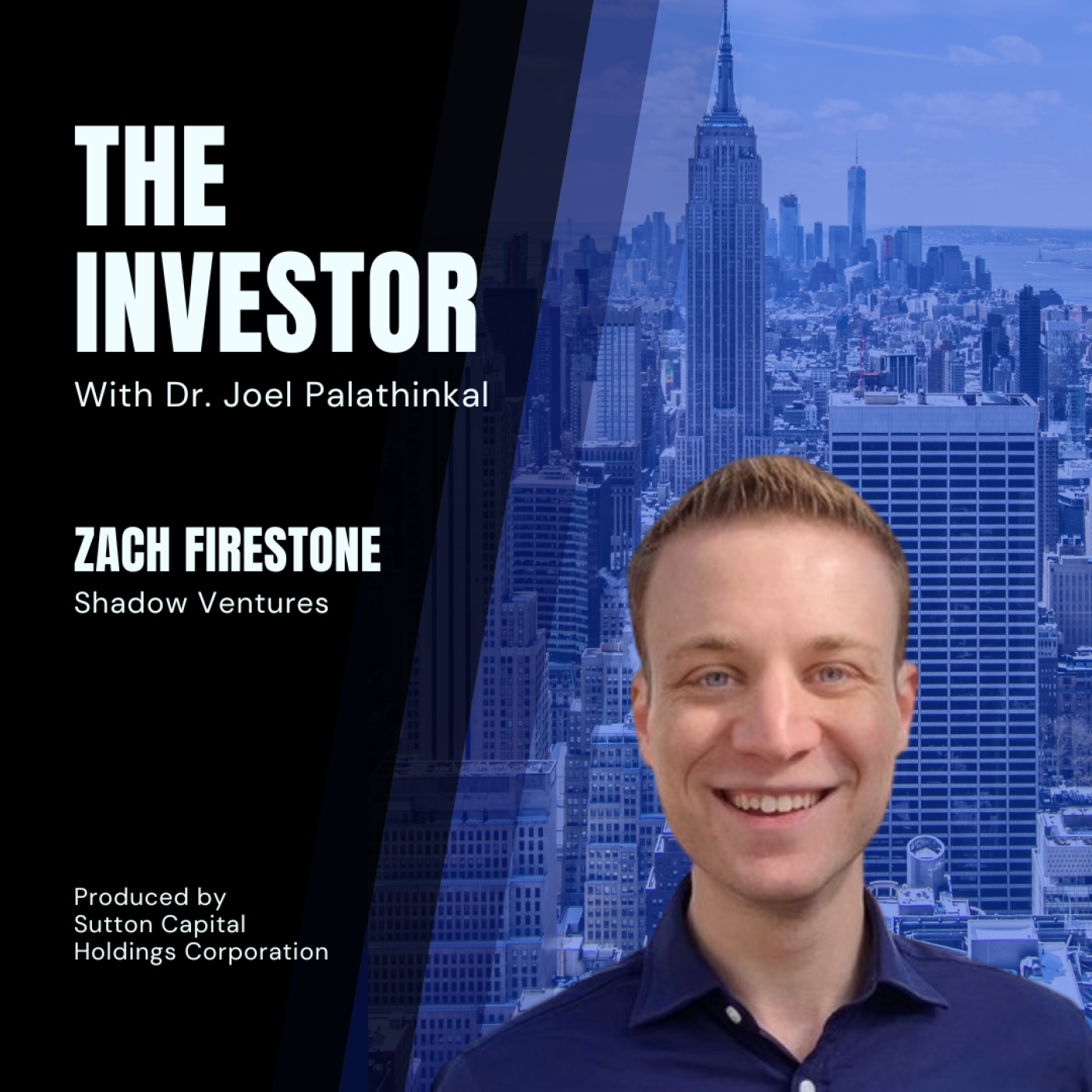
Great. Awesome. Well, hey, another fun show with Zach Firestone here from Shadow Ventures. So welcome to the show. We've got Zach, We've got a bunch of. Some of his buddies popped in as a surprise, and we've got a few people in the VC community and some people in my investor cohort as well. So excited to learn a little more about Zach. Zach, you have an interesting background, and there's an interesting model with the fund that you're at as well. So excited to learn about that. Couple other fun things that we want to talk about is just being a dad, trying to still be a working professional, still do good at work. So just on the personal front, those are a couple things we can talk about as well. One of the first things that I like to always ask is just learning about people from a personal standpoint. You know, where did you grow up? What did your parents do for a living? You know, your early childhood and how you transition in your career. A big question is, how do people get into VC or private equity? And everyone has their own unique journey. You actually wrote a blog post as well, so I think maybe you can fit in. And I'll find that blog post and post that as well. But as I do that, maybe you can take us on that journey of how you evolved into a venture capitalist.
- [01:25]
B
Sure. And first of all, Joel and Bonnie and the whole group, thank you so much for having me on today.
- [01:29]
A
Excuse me.
- [01:30]
B
It's an honor. Yeah. Let's see. So I'm 29. I grew up in West Bloomfield, Michigan, outside Detroit suburbs. Not that exciting. Always loved entrepreneurship. Just. It was always my thing. When I was a kid, you know, I did the lemonade stands, I built a computer repair business, you know, photography booth at bar mitzvahs and weddings, whatever it was. I was always finding something to, like, start a little business, employ maybe one or two of my. That kind of thing. My parents, my mother was a special ed teacher, and my father had an X ray corporation. I still don't really know what that means to this day, but when I was a kid, I would go to his big warehouse. They had trucks, and basically they would. They would sell X ray equipment and supplies to hospitals. They would service them, they would develop the chemicals and the lead and all that kind of stuff. And he dabbled a little bit in real estate. But at that time, real estate in the city of Detroit was not anything to speak of. So then I went to college, I went to Michigan State got into a whole bunch of entrepreneurial ventures there. Some we can talk about, some we can't on this show. But in particular, I was lucky with a couple of friends, co founders, to raise about a million dollars for a company called WellZoo. WellZoo was a homepage for charity. So basically you'd make us your browser homepage. Pick any nonprofit in the country. There were 1.6 million options at the time. We had the whole database. And just for landing on our site, when you'd open your browser, we'd have sponsored content. Those advertisers would pay us, and we would split that ad revenue with your chosen charity. It was a free way to support a charity, was not a unicorn, you know, did okay. Ended up moving from that kind of. First of all, that brought me to New York, so I moved to New York with that startup. A lot of our customers were here, a lot of the nonprofits were here, so we did a whole bunch here. And then I spent some time in several other startups, including charity Mevi gigameet in a variety of different capacities, some from a consulting angle. But I helped these charities in particular a lot with capital raising. I don't know why I've always loved it. Always just been really fascinated by kind of that finance portion of the entrepreneurial journey. I love the founding part, but I love that piece too. So I did that for a little while. Really like the idea of venture capital. And I mentioned this in that blog post that I actually just posted this week. From the beginning, meeting with VCs and angels and whatever, I always really admired that. In particular, I want to give a shout out. It's been a number of years now, but Jonathan Tries at Ludlow Ventures in Detroit was the first venture capitalist that I ever met. And that was when we were raising money for wellzoo. He was kind, he was patient. He sat with us right away. He said, you guys are too early for us, but here's some feedback. He gave us real feedback that was helpful and it was nice. So really, really appreciated that. Unfortunately, I've come to realize that not every VC behaves necessarily in that way, but I think that's the model to strive for. And I remember just sitting there and thinking to myself, like, wow, one of these days after, well, Zoo sells for $10 billion to Google, I would maybe love to be a venture capitalist. So always had that in the back of my mind. Tried a couple times quickly to get in, fell on my ass. Realized very quickly, like, okay, this is something that people write blog posts about how they got in because it takes such a long period of time and so many factors was getting married still, I'm married, we have a one year old kid, we can return to that. And it was just time to do something a little bit more stable. The last startup that I was working with had run out of funding kind of suddenly and so, okay. Real estate was something I always wanted to learn, always on my bucket list. And so I had an opportunity at Meridian Capital Group downtown in New York to work on commercial real estate deals, debt, some equity, investment sales, all kinds of different things. I took it, I did it for a little over three years. Great job, great industry, you know, got to build a really good Rolodex, do a bunch of great deals, all that kind of stuff. I liked it, I can't tell you. I love it the way that I love startups and entrepreneurship. And so I kind of forgot about it for a while, just kept doing my thing there. And then one day, like, I don't know how I missed it until then one day I woke up and noticed, oh my God, there's this thing called proptech and it's happening all around me.
- [05:31]
A
Yeah.
- [05:31]
B
And I'm working in real estate. Prop tech, for anybody who's not aware, is property technology. It's technology of all different types that are innovating real estate finally. And I say finally because real estate is the world's largest asset class and it is mind blowing how outdated it is as far as technology. I mean, even at Meridian where I worked, like walking around that room, you know, the huge room where all the brokers were and stuff, and seeing guys who were pulling in easily 5 million a year to their own pockets and their system of organization was just a pen and paper. Maybe the sophisticated ones had a Google sheet that they barely ever managed to like. It didn't make sense even on that basic level and everything else. And so suddenly I noticed proptech and I'm like, oh my God, this is the marriage of everything that I've done. It's startups, entrepreneurship, it's real estate, it's everything together. And so I just started taking meetings. I reached out to every founder that I could. Every operator, every investor, just had to learn more and more. And I didn't realize it, but I was sort of starting to do the VC job kind of accidentally by doing this and picking the brains of different founders and stuff like that. And so then I decided, okay, you know what, this is my ticket. I want to help innovate the built world through technology. But I Want to do it from the investing side. And this is how I can finally get into venture capital. I think if I'm lucky. I started meeting with every investor nobody was hiring. Kind of classic story, whatever. Kept meeting, kept meeting, kept meeting. My wife, that I've mentioned a couple times, is the youngest of five from Long Island. I just knew from the get go we're not moving to the Bay Area, we're in New York forever. And so I was laser focused on meeting with people here in New York. Incidentally, as you mentioned, a little over a year ago, about 14 months ago, we were very lucky to have our first child, a baby girl named Abby. She's amazing. I don't sleep anymore. As you can hear. I'm talking the mile a minute from adrenaline from not sleeping, but she's amazing. And I guess I'll just pause real quick to tell you, kind of that has changed my life in so many ways. It sounds cliche, but I think the most major way is that it's made me kind of a lot more serious about everything in my life and in particular in my career. Right. It used to be like it didn't matter if I didn't work my absolute hardest at every moment and went out and got drinks or whatever it was instead. But like now I feel like a real person. Like I'm a grown up, I have a child who depends on me and my wife. Like, things are different. I'm actually, despite less sleep, have been working a lot harder toward my goals, which has been really, really great. So where was it? Oh, so I'm meeting everybody, right? And I'll skip all the boring details, but a couple of highlights are. One, I tried to convince my real estate firm that we should open a corporate venture. Our CEO is a prolific angel investor. I don't know if I can, if I'm allowed to name any of the things he's in, but a lot of companies you've heard of, not in the real estate tech space, in the consumer tech space. Our CEO at Meridian was invested in. So I kind of put together a pitch deck. I actually went to Metaprop's office and I sat with Zach Aarons on his couch. And Zach was very kind to look at my pitch deck that I was going to propose to Meridian and tell me, this is absolute shit, you need to rewrite this from the ground up. Because you're not appealing to their emotions, you're just writing facts that they're not going to care about. Took that advice to heart, went and I pitched the executive team at Meridian. I said, this is why we should invest in proptech. We can easily get in the best deals and so on and so forth. And we talked about it and talked about it and talked about it. And then there was a firm, Lightstone Group, another real estate firm that I found out had just hired somebody to do basically exactly what I was pitching at Meridian. Sure, leveraged my network, whatever, managed to get in front of that person. He suggested that maybe if we did an internship on the side a few hours a week, that ultimately they'd be able to hire me because they were going to maybe need to team. I thought, this is great. But I said, wait, also, I'm trying to get my firm to do this. We put our heads together and we set up a meeting for the CEO of that real estate firm and the CEO of my real estate firm. And I was there, he was there, and we all sat together, we all pounded the table, and it was extremely exciting. And together we were all going to build a corporate venture arm jointly to invest in proptech. And it was great. And then it didn't happen. It didn't happen. Neither of Those real estate CEOs, in the end, really was ready to put their money where their mouth was. I respect the hell out of both of them. They're not venture capitalists, and I was wrong for even trying to make them into capitalists.
- [09:27]
A
Well, that's a good exercise of just being a connector, right? You found an opportunity and you brought everybody together, right? So that's only as far as you can go, Right? You can take them to the river, but you can't force them to drink. Right? So that's where you got to figure out, hey, you know what? Maybe this isn't my calling. Maybe there is another opportunity where I can. Where somebody is receptive to that, that maybe has a different thesis, right?
- [09:50]
B
Totally, totally. And then kind of. One other thing I just want to highlight until I get to the point of this long winded story is at a certain point, I reached out to Alex Ferber at Green Ventures. He's a founding partner of Green Ag Ventures, the B2B seed fund. And I've known Alex for a while. We have overlapping networks. We connect in many ways. He was also one of the early people who critiqued my deck at Wellsu. Really an amazing guy. And I said, hey, Alex, I'm trying to get into this venture game. You know, I'm seeing all these top tech deals. I don't have an address to send them to. Like, should Green Egg be my Address. And we said, we thought about it, and he said, I want to see more of that. Why don't we set up like an apprenticeship and you can, you know, source these deals for us, maybe some LPs, whatever you come across. So we did that. And it was. It was phenomenally helpful to me in so many ways. First of all, he's an incredible mentor, Alex, and the whole team there. But also that helped me get in the door with other firms. So I would encourage anybody who's trying to get into vc, if you know anybody at all that you can work for free, four hours a week, whatever it is, that's huge, try and do that. And I realize not everybody has access to do that, but everybody should try, you know, okay, whatever. So let's skip all the details. It was quite a roller coaster. Meetings, this, that, whatever. At a certain point, I crossed paths on LinkedIn with KP Ready. KP Ready is the founding partner of Shadow Ventures, which, of course, is where I am. Shadow is a seed stage venture firm focused on the built world. So real estate, construction, architecture, hardware or software, but true technology. The firm is based in Atlanta. Now, I couldn't move to Atlanta as we discussed. My wife is in New York, sure. But I crossed paths with kp on LinkedIn. I saw that he was, you know, in prop tech vc. I figured, good to know him, maybe he has an idea, whatever. The day that he and I were supposed to speak, Abby, my daughter that I mentioned was born. I'm pointing to her room through the door. Abby was born. And so, of course, I blew off the meeting. I shot him a note. Hey, I can't make it. So sorry, let's reschedule. But I never rescheduled because I totally forgot about it because he's not in New York. And I was so laser focused and I never reached back up. Okay, here's the real end of the story. Last October, I'm at the Brooklyn Navy Yard for the CRE Tech event. Michael Beckerman's organization. He's amazing as well, by the way. And I'm walking around between these meetings I have with different investors, you know, trying to find opportunities. And all of a sudden I look up on the stage and there's KP Ready, that guy from Atlanta from Shadow Ventures that I had totally forgotten about. So I go and I stand in the back and I listen to KP's talk and, oh, my God, he's clearly the smartest guy in the room. And he's letting people know that, right? He's not shy. About it. But he is the smartest guy, at least on that stage. And so I stand there in the back and I listen to everything he's got to say, and then I rush the stage right when he finishes. And by the way, so did many others. And so now there's a line of people waiting to talk to. So I don't have time to suddenly build a relationship and schmooze with kp. I just had to get to the point, hey, we were going to talk once I blew it off. You probably don't remember, blah, blah, blah, whatever. By the way, you're not looking to hire somebody in New York, are you? And he said, actually, I am looking to hire somebody in this area. Why don't you talk to Nick, my senior associate over there, about it? So I walked a few feet away and I talked to Nick and we had a great conversation. And then another, and then another. And eventually over the next month, I met each person, the team individually, completed a couple exercises that they sent my way. And then I was very, very lucky to get an offer from Shadow. So for just under a year now, I've been with Shadow Ventures full time. The head of the New York office, which is just me in front of a zoom screen at this point. It used to be a wework office, but I've been very fortunate to do a little bit of everything here. We're a younger firm, so everybody kind of does everything. We just closed our third fund in August. That was huge. So I spent a lot of time LP fundraising, got to actually leverage a bunch of my Rolodex from Meridian, which was very nice. And then, of course, sourcing deals, diligencing deals, bringing deals into our incubator program. I'm actually co leading an accelerator program. The first cohort that Eliade, who's here in the audience, is a venture partner for, we're focused on multifamily real estate tech. So just across the board, it's been an incredible experience, an incredible team, and I'm just so thankful. And the last thing I'll say, Joel, and then I'll shut up and turn it back to you, is kind of the lesson that I've taken away so far from all of this is luck is the most important factor in all of this stuff. Like, truly it is. It's very, very hard to get into venture capital not because you have to be Albert Einstein or you have to be the most special guy or girl out there. It's because there are so few positions in the industry compared to the number of people that want to get in. And so I look at it as at least 90% luck. But what I specifically look at as is creating that luck or creating that serendipity. I was extremely lucky that I had that opportunity when I bumped into KP at that event. But it was the months before that where I laid all the groundwork and I saw KP here and I knew him, and I showed up at that conference so that something like that could happened to me. So that's how I look at it.
- [14:40]
A
How do you add karma to this piece as well? Because now we got VC guide, right? So if you're a jerk, you know, hopefully it gets bubbled up. But if you're all. If you're also a good person. So I know Alex, you, me and Bonnie also know Andrew Ackerman.
- [14:56]
B
Yes.
- [14:56]
A
So. So I thought about. I thought about him right now because he was a founder as well. He was on my show and he had. I think it was like a summer camp app or something like that. So when you told me you did that, I was thinking about. So Bonnie, you know, so surprising. I think Bonnie, you know, has a lot of Comic Con comments. She knows Alex, too. But, you know, they're all great guys. So if I could.
- [15:18]
B
I'm sorry, if I could interrupt you, I just want to give a shout out to Andrew also. Andrew is the man. I sent him a cold email when I was looking. He had me in his office. He sat with me at a booth there for an hour. Gave me all of his advice, by the way. Last week, he gave me a book to read. He gave me a book he just finished that he loved. He's. I love that.
- [15:34]
A
So. So we just. Right now, we observed goodwill and karma. So I think we need to talk about that as well. How does that play into the luck as well?
- [15:44]
B
Can I ask something else?
- [15:47]
A
Because I'm always telling.
- [15:48]
B
I write this newsletter and I'm always telling people, you gotta be out there because you put yourself in the room, Zach. Every single time. You gotta get out there to meet people. It's gotta be face to face. You just gotta do it. Totally, totally agree. You have to. There's no other choice.
- [16:02]
A
Yeah.
- [16:04]
B
As far as karma, you know, I mean, I think the reason. And this is obvious, and it's gonna sound stupid, the reason to be a good person is to be a good person. Right. It's not because you want quid pro quo. You want favors. Sure. I actually just read a book called Give and Take, and the way that I heard about the Book. And the way that I received the book, it was gifted to me by David Hornick at August Capital, another amazing VC who responded to a cold email of mine, legendary guy David Hornick. And the premise of Give and Take is that there are takers in life who are always looking what's. What's in it for me. There are matchers who are like, okay, Joel, I'll come on your show if you'll come on my podcast next week. And then there are givers. And the givers. The question, the premise of the book is who does best in life and who does worst in life? And so the first punchline is the givers do worse than life, which is really sad.
- [16:49]
A
Yeah.
- [16:50]
B
Then the book surprises you with a curve ball that there are two different types of givers, and the givers who know how to give without being a doormat, but they're still giving to be genuine givers. They actually do the best in life. I don't think that's the reason to give and to be a good person, but it's definitely there. So as far as karma here, I would tell you that I met over a hundred people in those six months when I was looking to do this, and so many of them went out of their way to vouch for me to other people. They didn't have to do that. They weren't getting anything in return. And if I had been an asshole, okay, if I had abused them and wasted their time and just been about me, they wouldn't. Why would they have done that? You know, I'll give one more shout out. Corey Molis at Ground Up Ventures. He and I got drinks. He didn't know me. He said, oh, my God, I'm going to meet somebody tonight. A partner at a great firm that firm's looking to hire. Why don't you just come with me for dinner? Like, if I had been a jerk at that drink, why would he ever have done that? So people remember how you treat them. Just like I remember how Jonathan Tries at Ludlow treated me so many years ago. I think it's extremely important.
- [17:51]
A
Sure, yeah. There was a guy that came on my show. He's raised, like, $3 billion from family offices. And this always sticks in my mind. I think it's the most brilliant comment, but it's. The IQ will get people's attention, but the EQ will get you the allocation. And I think that's so, so true. And I was talking about this literally today. It's just kind of like knowing how to read people, knowing how to just interact and then also being self aware. Like, you know, we all have our own insecurities. You know, when we go to an event we're like a little insecure. We're like, hey, I don't say something stupid, but like being aware of that and like maybe tweaking that, maybe you can tell me a little bit about just emotional intelligence and that helps with working with founders, building relationships. Any power tips as far as just kind of connecting with people?
- [18:39]
B
Yeah, yeah, sure. I would say I'm very lucky that that's kind of my skill in life. I'm not like some quant modeling expert, like lasted insight. Like what I love to do and what I'm a little bit good at is connecting with other people and building relationships. And I think it's because of my genuine interest in it.
- [18:57]
A
Right.
- [18:58]
B
I love meeting people. I love learning new perspectives and kind of expanding my network in that way with founders. I guess I'm also a little bit lucky that because I've done the startup thing, I co founded one, I worked in a few others. Like I mentioned, like I'm somewhat able to empathize with them and understand what they're going through. Obviously each situation is different, but I think it's so important to try to meet the entrepreneur where they are and like understand what they're going through and understand. And really a huge piece is making the entrepreneur feel comfortable to be open and honest with you about their actual status and about their feelings. And you know, a lot of VCs talk about this and some actually live by it. Like you want to be the entrepreneur's first phone call. Even when shit hits the fan, you want, if something's going back, for them to trust that they can talk to you without you screaming at them or thinking about your own, you know, returns to your LPs, which is important. But entrepreneurs need to know that you're there for them on a person to person level. And so kind of one of my favorite things by far about venture capital is how much it's a people business at the end of the day, you know, if this was just numbers, we could have computers do our job. Like it's a people business. And so I think just always, always being good to people. And in particular when you're rejecting a deal, when you're turning down a deal, like don't ghost the founder, like give feedback and be kind. There's no reason not to.
- [20:11]
A
Sure, I totally agree with that. I think when it comes to building, maybe you can tell us a little bit about shadow ventures, the future of the built world. When I think about it, I think of IOT, I think about 3D printing buildings. Maybe you can just give us a little bit of an overview of that universe just so we can be educated. Then maybe your specific thesis that's kind of iterated on top of the funds thesis.
- [20:38]
B
Sure. So there are many names for this kind of newer sector. Prop tech, CRE tech, urban tech, whatever you want to call it. Different names of the same basic thing. We say built world technology. And the reason is because we look across real estate, construction, architecture, engineering and design. I personally am more focused on the real estate side of that, just given that I have a little bit of real estate experience. But for instance, kp, our general partner, you know, he's a civil engineer by trade. He comes from that aec, that architecture, engineering, construction world. And actually much of our team does. So we have a pretty wide spectrum but. And like I said hardware or software, but a big differentiator that actually makes our wide spectrum a little bit more narrow and niche is that we only invest in companies that we believe have true IP that are truly innovative. They're not tech enabled. We don't do marketplaces, for instance, you know, we don't do pizza delivery apps like we like. We're looking at companies that are really changing the game in some way. But within that it's a broad spectrum. So you mentioned 3D printed housing. One of my favorite deals of ours. Deals. One of my favorite companies that we have in our portfolio is Icon. Icon is an Austin, Texas based company that 3D prints houses in like 24 hours. Like imagine setting up a printer on a site, like clicking a button, going home, coming back tomorrow and you have a house made out of proprietary concrete blend that they've made that goes through their printer. That's pretty amazing to me. They work with a lot of nonprofits. They're working on building a village in Mexico. They work on low income housing projects. They have a new contract from NASA. I can't even, I don't even understand what that means. But they have a contract from NASA now. So that's an awesome company in my mind. Examples of other awesome companies, recent investments of ours? Well, actually some, I'm not sure. Yeah, I think we've been. Well I'll go with the safe bet. One that we have definitely announced and completed is Local Logic. Local Logic is a Montreal based, we're US and Canada by the way for our investments. Montreal based real estate data platform. They're really quantifying the more qualitative aspects of a real estate decision. So you know, if you want to buy a property, yes you can. Products like Reonomy and Property Shark and all that to look up, you know, the zoning and the far and the air rights and all that kind of everything.
- [22:45]
A
Square footage.
- [22:46]
B
But what you can't do is say, oh my God, there are 329 year olds who are looking to buy a house in this neighborhood of Brooklyn and all of them care about brunch spots as the most important metric. Stupid example. But it's my favorite one that would show you as a developer, like this is maybe the next Williamsburg and this is where you should develop or invest now before it's too late. So that's just a more real estate example. But we really crossed the gamut. Me personally, I mean, I'm more interested I guess in the real estate side just because I understand it more. Like sometimes admittedly I'll watch presentations by amazing construction tech companies that my team really geeks out about and they're talking about kukas and these things and all these terms that I've never heard. So I quickly go and learn them. But you know, that's, that's newer to me. So it's hard. It's been a little bit slower for me to identify as truly new versus in real estate. It's very clear to me right away. So in particular, I happen to really like the intersection of prop tech and fintech. You know, I've worked in that space, in the real estate finance space, so I know how much it needs to be innovated. So I've kept a close eye on a lot of those companies. One I really like in particular that I think we missed the boat on their seed route is Lev Lev Capital. Amazing company that's using technology to make that commercial mortgage process a lot more kind of, you know, efficient from a tech perspective. But there are many companies doing this on the debt side, on the equity side. So I'm personally very intrigued by that space.
- [24:07]
A
How many years do you think it's going to take for us to eventually just have robots? Just print like, and you probably get this a lot, but just printing like a community, like is that happening anytime soon or is it still really far away? Instead of hiring? Because normally what's the process, you got to hire a developer, hire all the contractors and it's like a multi year contract, right? So do you ever see now with the companies doing this stuff scaling where it's like, hey, we got to build a multifamily building. Could we just get a system to do it? Is it too complex to do that now or is it in the future?
- [24:41]
B
So it's too complex to do that now. But there are many companies kind of like icon that have really just started to hit the ground running. It's a long process. You know, we looked at one amazing company. Unfortunately it didn't fit our thesis, but a couple of other great VCs recently invested in it. That the way that they're looking at this is. And I'm probably butchering it, but I think from their seed to their A round, their goal is to build like two houses and then from the A round to the B round it's like 12 houses. So it takes time. It's very manual. The scalability here. But I think about 10 years out is probably plus or minus when these things will actually be realistic on a somewhat larger scale.
- [25:20]
A
Sure. And when you look at founders and you're finding good opportunities with founders, what are some of the things that you're seeing as common patterns as a strong founding team?
- [25:30]
B
Yeah, I think so. This is probably true in many or most industries and it's common kind of wisdom, but I think in particular in this industry, and I'm sorry my lighting is so bad in the built tech industry, I think it's very, very important that at least one of the founders really comes from the industry.
- [25:46]
A
Okay.
- [25:47]
B
Really have to have worked in construction or development or whatever it is that they're innovating and understand those pain points firsthand. They have to really know why they're solving for it and if their solution is actually meaningful and necessary and kind of the little tiny details they need to know. Obviously, I think it's obvious one of the co founders at least must be a technical co founder. I believe that in pretty much every industry, but in this one certainly as well. Yeah. I think that's the biggest thing they have to really understand from within.
- [26:17]
A
Yeah. And a lot of the technologies that you work with, they're more. There's a lot of hardware and facilities work as well. Right. So some of the technical people. What kind of background is that? Is that more like mechanical engineering or robotics?
- [26:29]
B
Yeah, either or. It depends. Or. You know, there's one company that I love. I don't think we've announced it yet, so I'm not going to say too much, but the person who's founding this company has worked in that space in, let's say, a more analog way years now and has firsthand experience of how it can be innovated and now he and his team are innovating it through amazing technology. Sure.
- [26:51]
A
Yeah. That's good insight. Thanks for answering that. And then one thing I think we wanted to talk about as well is just your unique model for liquidity. So just for background, when Zach and I were speaking a couple of weeks ago, one thing that I thought was innovative is looking to get to the exit in the Series A. You don't have to name any names, but there's some people that have given you some candid feedback about that model. So maybe you can tell us about that model, how it was received and just your thought on that of why you guys still have conviction on that.
- [27:23]
B
Totally. Yeah. No, we are very proud of our very contrarian model here. Basically, just in case anybody's not familiar, just in a very simple sense, venture capitalists typically will invest in a company, especially at the seed stage, and then they'll close their eyes for 10 or 12 years. I'm exaggerating. Hopefully they're helping the companies quite a bit. But usually when you invest in an early stage company, you're there for the long run. You're hoping that they're going to IPO or get acquired or whatever it is to return your capital. But years into the future, what we do as our fund model is we dramatically reduce that time horizon by investing today at your seed round and then typically exiting our position at your Series A round, maybe your Series B. So we're taking what could be a 7 or 10 or 15 year time horizon in particular with some of those types of companies. I just, you know that we were just discussing and reducing it to maybe 18 to 36 months and selling our position.
- [28:15]
A
Sure.
- [28:15]
B
How do we sell our position? Either the lead VC in the next round because we only invest in seed, so we wouldn't be leading the next round. Maybe that lead VC wants extra allocation. They don't want to dilute the founders more by buying more from the founders. So we're able to sell them ours. Maybe it's a family office that wouldn't otherwise be exposed to the deal and they want to get in the round. Maybe it's another vc. Maybe it's a. It's a corporation. One of our earliest deals that we've done this with was, well, I guess we can't really discuss returns, but within 18 months it was a very, very healthy return to two leading tech companies from the Bay Area that purchased our shares in that company. The reason that we do this is. Well, there are several reasons, but the primary reason and this was something that really I explored when I was joining the firm to understand it. We think that this particular sector within technology will not see the same number of, let's say unicorns or explosive returns as in other sectors. It's just much more manual selling into real estate firms. Like we said, everybody's very behind the times. It's a much more manual, excuse the corny pun, brick by brick type of process that takes more time. You're not going to see things spread like wildfire in the same way you'll see very large companies and certainly VTS is a unicorn and there will be huge companies, but we think that a lot more companies will just become great companies, but not billion dollar plus type of exits. So for that reason we think that it actually makes more sense from certainly an IRR perspective to sell our position at a great step up at the Series A, because we're very hands on and I know every VC says that we truly are hands on from the incubator before they join, we get to know them for quite a while, we make the investment and then we help them in every way that we can. In particular with customer acquisition. We know so many of the engineering, construction, real estate firms were constantly making connections between startups and large companies. And so what we're seeing is, or not what we're seeing, but the reality is, especially in our industry, if you go from a zero revenue company. Right. I'm just making up numbers here. Let's say it's a $5 million valuation and that company over the next couple of years brings on three enterprise clients, right? And now their revenues in the low seven figures that valuation might be going from 5 to 35. Sure. Right. So it's a disproportionate, it's a much higher proportional step up in valuation than revenue. And at that point we harness that. And that is when we sell to a group that we think is probably better prepared, especially if it's the lead investor, the next round, or a corporation to take them from that step to the next step. And so we are uniquely able in most cases to distribute back to our LPs because we're on that European waterfall model. So right away money comes in, we distribute it back out, able to distribute back to our LPs typically in a couple years versus making them wait 10 years, fund cycle to end. Now, as far as reception that you touched on, and you and I had discussed a little bit of this and we get wildly mixed feedback about this because first of all, people are just confused when they hear it. They have so many questions. How does that work? Is that venture capital? Venture capitalist in New York said to me, I don't think that's venture capital. I don't know what that is. But. And then the other piece is a lot of people ask us, well, isn't that a bad signal? Like, isn't that a horrible signal that you're leaving? Because why would other people. Okay, so. And there are. There are a couple other questions as well that I'll try to address. First of all, about the signal real quick. It's not a bad signal because we do it every time. So it's not like, you know, we have 10 companies in the portfolio and we say, okay, these three, we're going to sell. And then it's like, wait a second, so you love the other seven? More like, why wouldn't. Why would I ever invest in this one then? It's not like that. We do it every time, or at least we try our hardest to do it right. As far as the reception from others, people are very confused. People don't understand. You know, venture has always been this opaque asset. The whole idea of the secondary market, you know, really hasn't existed until extremely recently. Now finally, we're seeing these platforms where you can actually buy shares on the secondary market. And even if you're unaccredited in many cases, which is amazing, that's a whole nother topic. So I think people are more and more starting to come around to it. Another great firm here In New York, FJ Labs, they will often sell something like 50% of their position in the company. So not exactly the same, but it's the same idea. They want to generate that quick return. So, yes, we've gotten very mixed feedback. Another leading VC in New York pointed out to me that he thinks in his opinion, based on his experience, that we're probably leaving a lot of money on the table. Maybe we are, maybe we aren't. It depends on. It's a case by case. But what we are able to do, A, is increase that IRR and decrease the time horizon. So that's winner. B is because we're focused on doubles and triples in a short time versus on home runs or grand slams in a long period of time. We're underwriting our investments based on that thesis. We're seeing that a much higher percentage of our companies are exiting. From our perspective, it's not the typical kind of power law. One in 10 will exit and the rest will be zero or minuscule kind of exits. We're seeing that an enormous percentage of our companies actually do achieve that return for us. So it works out.
- [33:19]
A
Interestingly, can families also co invest in those interests as well? So like, you know, if they invest in the fund, can they also possibly invest in the deal as well and maybe buy some of those secondaries as well?
- [33:31]
B
Sure, yeah, absolutely. So they can buy secondaries. Typically when we make an investment, we have a sidecar. We'll go first to our LPs always to offer them. But then sometimes if there's anything left over, we'll invite others to join us as well.
- [33:45]
A
Yeah, I mean, to me it makes sense. Cause I mean, even if you go at the very tail end, right, if you're investing in Airbnb, that's still a 2-3x multiple and you can wait two years. So you're just offering it. And the challenge with the late stage secondaries is you can only get in with a block of 5 million. Where I'm thinking the access to get in is probably at a smaller scale. Right. Because you probably invested whatever your check size was. It's not going to be like 6 million because you're seed. So I think the flexibility of just having to wait two years and is huge because some family offices, they may not even have 10 years left in their life. You know, the matriarch may not even live to enjoy those returns. So I think the time is valuable. It's a time value money, Right. A dollar's worth more now than it is 10 years from now. So if you can get in and out, you can literally get to fund 5, like much quicker than somebody that's been doing it for like three, four decades. So that's, I mean, you're already on fund three. Seems like you guys have been moving pretty fast. I think it provides flexibility and it's just something you gotta balance, right? It's like, could you be greedy and hopefully get a 20x return and wait 10 years or could you 5x in like 2 years and onto the next fund? Right, exactly.
- [34:58]
B
It keeps our LPs happy, it keeps them wanting to reinvest. So knock on this plastic folding table that I'm using.
- [35:05]
A
But the unique IP that you have too is your network. Because anybody can't just do that. You need to know already kind of the business and you need to know the people and you have to have those people lined up to already be interested in even buying those secondary interests as well.
- [35:18]
B
Yes. Very often when we're working with entrepreneurs from the get go, we'll already kind of articulate to them. Okay. Groups A, B and C are groups that we're already planting seeds with. That was not intended to now potentially kind of, you know, share you with them, involved with what you're building as well.
- [35:35]
A
How often do the founders also want to sell their interest in two years? Do they? Is that a good. Because I've looked at some later, maybe growth equity or later stage deals where the founders just want to buy a house or they just want to get some liquidity because it's been like five, six years. Are you seeing founders also wanting to sell their shares out, like, in two years?
- [35:54]
B
So we haven't dealt with that yet.
- [35:55]
A
Okay. So mostly just earlier investors. They're just people that just want to buy those shares at possibly a better price. Possibly, yeah.
- [36:03]
B
That's great.
- [36:05]
A
And then I said that was interesting. And then I think one more thing. We touched on this. As far as, you know, being a father, being a vc, being an employee, how has that changed your perspective from before when you were just, you know, before even having a kid, just kind of being single, you know, you talked about. You touched on it a little bit when it comes to just having other people depend on you. But how is it? My challenge is time boxing. So it's like 6pm you know, it's family time. I got to turn the phone off. Do you have a different dynamic of like, managing and time boxing your time?
- [36:38]
B
So, okay, let's see a couple things. One is time, like, at this point is an illusion. Like, I don't mean everything is like running into everything these days, Right?
- [36:47]
A
Yeah.
- [36:47]
B
So I'm working entirely from home. You know, it's zoom back to back like everybody else.
- [36:52]
A
Yeah.
- [36:52]
B
I'm actually pretty excited when I look at a calendar, invite for a meeting in five minutes, and I realize, oh, this one's a phone call. I'll pop in my AirPods. I'll walk around outside so I can get away from my computer. But so my wife is home half the week. Half the week. The other half, she actually has to go in. She's a psychologist, she's doing a whole thing, but she has to go in half the week with everything. Face mask and stuff. Face shield. So what we have going on here is we have three workstations set up in our apartment, each with a monitor, mouse, keyboard, and dock. One in our bedroom, one in our living room, and one in Abby's room. If Abby's sleeping, then we only have the living room and the bed, but you get the idea. So we're right now I'm in the best room because I'm doing this. You know, in an hour, my wife has an important meeting. I'm gonna get kicked maybe to the living room. It's juggling. It's definitely juggling. We try to just find time for everything. Like I said, we're sleeping a lot less, which means I'm waking up a lot earlier. So actually, my days have more time in them, interestingly. But, no, there's a few things going on. One is right now we still live in New York City, but actually in two or three weeks, we're moving. We're doing the COVID thing. We're moving to Long Island.
- [37:56]
A
Got it.
- [37:57]
B
Within a couple miles of my wife's whole family. It's not like I had a choice at the end of the day, but we just decided with a kid now and stuff like that, having the extra space will help. Weekends are more flexible. Yeah, weekends in many ways, we have a traditional Friday night of Shabbat dinner for anybody who's familiar, that kind of thing. We're together as a family, you know, those periods. But, you know, we just. We try to make sure that we can squeeze everything in and just make it work. I will tell you that the other day, my wife and I went to lunch here on the Upper west side outside. It was our first time, the two of us doing lunch in many months. And it was just great. It was just like, okay, the middle of the day, we'll do lunch, and it means at 9pm I'll do work. But the flexibility of work from home, even though it is a grind, because it means that you're always on and you're always kind of working in some way. But it also is nice because it means once in a while you can go for an hour with your wife to lunch. Sure.
- [38:52]
A
Yeah. And I think it's the support system, too. You know, I think you've got, you know, you got family in Long island, so that definitely helps. My dad is like one out of eight, and he's got seven brothers and sisters in Jersey. So whenever we go to Jersey, you know, for the holidays, just kind of the community having that kind of gets you a little bit of a mental break, kind of, you know, allows you to decompress a little bit because you're kind of so much in the grind, so much in the zone. So I think it's just a blessing to have family nearby to kind of just unplug from the city, because we've stayed in the city ever since. We haven't left but if Jersey wasn't there, we'd probably go crazy. So we go, you know, able to go out there and spend time with them when we can.
- [39:31]
B
Totally. And let me add one thing to make it even more complex. And this is not to brag that I'm doing this. It's very much a side thing, but I'm doing an MBA at NYU Stern part time. It's a few hours a week. The reason I mentioned that is because that's another thing in the mix. So it used to be I was going down to campus, obviously. Now it's all on Zoom. So I take my iPad and wherever I am. You know, we went to Pennsylvania for the day, and then I sat in the passenger seat on the way back for three hours with my class. Right. It means I could be in class anywhere, which is really cool. But I think I'm kind of pissing off my group members in most classes because I very much have school as my lowest priority between work, family, you know, and. But it is what it is. It's just.
- [40:10]
A
That's how it is. I mean, you just gotta, you know, you gotta prioritize and just kind of tackle the most important things. And it sounds like you're doing a great job. So, you know, this was awesome and really appreciate your time. We'll give it. We'll give a few minutes to some people in the audience if they have any questions. So you guys, anybody in the audience have any questions? If not, we're just gonna call on you. Let's call your friends. So, Eliade, what comments do you have about everything that Zach said?
- [40:39]
C
Hi, guys. So I'm actually the first time I listened to Zach's story. We know each other from Shadows Venture. I'm the Israeli part that know most of the startups. So this is how we met. But we actually the same Zach. It's good to know, obviously. And I was really. It was awesome to listen to your story. And we hopefully, I think the nice part, we're gonna stay in our life. I know most of my clients, I'm a broker, so most of my clients go with me all the way. Because the service the way to give. This is our goal. To give and then to take or get. And we have a long journey.
- [41:34]
B
100%. Oh yeah. And Eliot and I recently met. Like I mentioned, he's now actually one of our five venture partners on our new multifamily tech accelerator. Everybody brings different expertise and different kind of input to these sessions. Actually, I see Bonnie Haber on this call. I don't know where you're finding all these people. He's another one. But Eliade is like truly an expert with startups. Like his knowledge, his understanding and in particular, for somebody who doesn't work in startups, really, he works in real estate, he's an expert and he knows certain sectors of prop tech better than anybod I've ever met. Certainly he knows the Israeli startups better than anybody I've ever met, but just in general. And so Elliot always has amazing input and feedback. So, Eliade, it's a pleasure to have you with us, by the way.
- [42:19]
A
Yeah, it's great to see the community grow and it's, you know, you'll be surprised how small the community is. You know, everybody knows everybody, so it's just exciting for me to see random people show up. I don't know who they are, but, you know, hopefully they can become new friends. So some of the people here I don't know but, you know, hope to meet you guys. Just shoot me a note. Joelutton Fund and Zach is.
- [42:41]
B
Can I ask a question?
- [42:43]
A
Yeah, sure.
- [42:44]
B
Sorry that I don't have my camera on. My Internet is very crappy and if I turn it on, everything goes. So it just has to be the voice call. I was just going to ask, could you recommend some good resources, preferably online resources, where I could read more about proptech and just kind of know more about proptech companies and just kind of what's happening within the industry? Yeah, absolutely. So first of all, shameless self promotion. I would encourage you to go to Shadow vc, which is our venture firm's website. We've got a page, I think it's called Insights, where we have a bunch of reports that our team has prepared on different sectors within PropTech. Nick Durham on our team just published his multifamily tech report this week. It's absolutely incredible. So that's one good resource. I would say CRE Tech that I mentioned, which is that conference organization, they're also doing consulting now. They're a wealth of knowledge and news, so all kinds of proptech news. You can go on their site to see it. CB Insights has various market maps they've published, if you can get your hands on a trial or you can find them kind of embedded in other people's articles somewhere. But another thing I would say is the two, the two books on PropTech that I've read, and I know what you said online, one is PropTech101 actually by the. By the metaprop folks. I read that early on in this journey, they have a Kindle version. Great primer on proptech. And the other is this book, Rethinking Real Estate by Dror Polig. I mean, this is just a comprehensive, in depth, like, philosophical breakdown of how the industry is being transformed by technology. So I highly recommend Rethinking Real Estate. I do not get royalties for this one.
- [44:22]
C
You know the funny story, right?
- [44:24]
B
What's that? Thank you so much.
- [44:26]
C
Me and Dror know each other from age of 12.
- [44:32]
B
Tell him I love him, please.
- [44:33]
C
He's an amazing guy. I will introduce between.
- [44:36]
B
Thank you.
- [44:37]
A
Most of these talks that I have, I don't have, like, everybody know each other, so this is kind of a magical episode. I didn't know you guys would all know each other. So. Some people grow up with each other. But this is great, man. I think this is awesome. Real quick, what were the books that Andrew Ackerman and the other mentor gave you? Can you call those out real quick?
- [44:55]
B
Yeah, yeah. So the book that Andrew Ackerman gave me is a book about spies in the Middle East.
- [44:59]
A
Has nothing to do with. All right.
- [45:00]
B
He just read it recently. David Hornick at August Capital sent me. He gifted me the book Give and Take, which was great.
- [45:07]
A
Okay.
- [45:08]
B
But I would say in general, the best books. If somebody's looking for a primer on venture capital, the bible of venture capital is Venture Deals by Brad Feld and his partner. His partner Jason, I think, also was part of that book. It just takes you through what a term sheet is, what the negotiation of. It is the Basics of vc. Secrets of Sand Hill Road by Scott Koop, who's currently the managing partner at Andreessen Horowitz. Incredible book. It's a fun read. It's enjoyable. It's written for the entrepreneur. So if you're a founder of a company, it's written for you to understand what the process with a VC is. But. Okay, so what's the same content? And then the third one I would recommend is the Business of Venture Capital. Incredible, comprehensive book. I always. Author's very long name. Yeah, I mean, I highly recommend. It's basically a textbook, but it's. It's not too dense. It's like 400 pages and it's easy to read, but it covers everything from LP fundraising to how to diligence a deal to marketing to this, everything.
- [46:03]
A
So highly recommend all three. The Business of Venture Capital definitely is really good. It's a good overview. And then the other ones, too, you mentioned are perfect. So those are great. Awesome. Well, hey, any other questions? Before we wrap it up and let Zach get back to his zoom calls and phone calls. All right. Oh, go ahead.
- [46:26]
B
Thank you so much. Thank you so much for hosting this. I'm honored to be on the show. You know, it was great to catch.
- [46:31]
A
Up a couple weeks ago.
- [46:32]
B
You incredible advice and insights and, you know, just. Thank you.
- [46:36]
A
Happy to help. You know, looking forward to hopefully catching up soon. And I actually want to email Andrew, so I'll shoot him a note and let him know we chatted. So.
- [46:44]
B
Absolutely.
- [46:44]
A
Yeah. Take care, man. We'll catch up soon. Everybody else, have a good day.
- [46:48]
B
Thank you all.
- [46:50]
A
Take care. Bye, guys.