← The Investor With Joel Palathinkal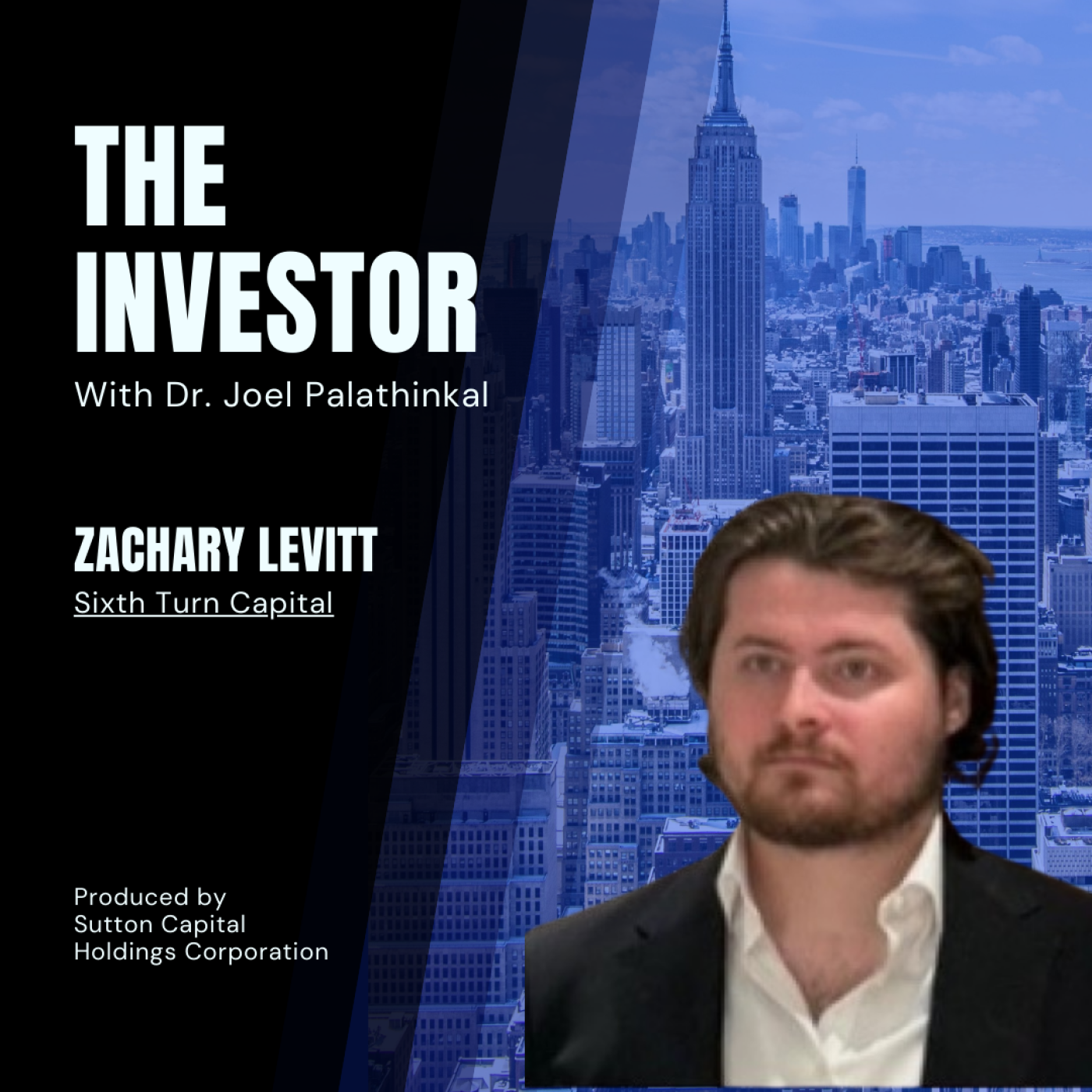
The Investor With Joel Palathinkal
Zachary A. Levitt: Chief Investment Officer and Founder of Sixth Turn Capital and Opus One Asset Management
00:42:51
Loading summary
Transcript68 lines
- [00:03]
A
Welcome to the Investor, a podcast where I, Joel Palo Thinkle, your host, dives deep into the minds of the world's most influential institutional investors. In each episode, we sit down with an investor to hear about their journeys and how global markets are driving capital allocation. So join us on this journey as we explore these insights.
- [00:27]
B
Foreign
- [00:30]
A
super excited for my guest today. I've got Zachary A. Levitt and just a really exciting, you know, interesting discussion that I'm looking forward to. Zachary is the Chief Investment Officer and founder of Six Turn Capital and Opus One Asset Management. At Six Turn Capital, he focuses on combining niche capacity constrained managers into a multi manager structure. While Opus One Asset Management provides quantitative investment solutions with customized mandates and full transparency for institutional allocators. So, you know, you don't always hear the term full transparency when you think about private markets and private equity. So I think that's one of the parts that's important to kind of consider with the DNA of, you know, hedge funds and public markets. It's the transparency that's required, the compliance and reporting that's required, and you will probably know by the end of day if you're up or down in essence. Right. And your approach is rooted in disciplined risk management, manager selection and leveraging technology to scale decision making. So excited to have you on the show, Zach. Thanks for coming on.
- [01:45]
B
I'm excited to be here and I look forward to our conversation today.
- [01:49]
A
Yeah, I think there's a lot of hot topics to cover. Well, why don't you kick off with just kind of your early education? You know, what did you think you wanted to get into and what, what were some of the steps that you took in the journey? What were the people that you had in your life that, that maybe were incremental, that were essentially instrumental in propelling this career in institutional asset management.
- [02:15]
B
So I definitely had an unconventional path. I was very interested in investing very early on, but mostly just from the sort of generic, concentrated value, quality oriented, long only buy and mostly hold sort of mentality.
- [02:31]
A
Sure.
- [02:32]
B
And that can obviously work and there's a place for that, but that's very different than where I ended up. So I started off with that mentality. And then as I went to university at Queen's University in Canada, I started a derivatives trading club that was useful for a few reasons. One, because how the structure was, was at our meetings I would be teaching a derivatives concept of the week to the club members. And everyone listening knows that if you're teaching something, then it forces you to understand it at a higher level than Just the base level. Yeah, be able to clearly and concisely explain how something works. So I was feeding into my learning curve quite quickly that way, just preparing myself to be able to teach the topics.
- [03:13]
A
And where was that capital coming from? Were you guys paper trading or was there actual student endowment capital that you guys, you know, were given to to manage?
- [03:22]
B
So started off paper trading and then it turned into trading a portfolio.
- [03:27]
A
Okay.
- [03:29]
B
And then what was useful too, beyond just that, even though that was great, was the most important thing was we had a year end conference where we went out and got guest speakers and I was able to get a number of the top hedge fund managers and portfolio managers in the world to agree to come via Zoom to be guest speaker. That was helpful getting in touch with those people. But then as we all know, you can only learn so much from anyone in an hour, hour and a half, two hour period of time. So then I bugged them to take me under their wing and mentor me, which they agreed to. Still to this day I refer to them as my personal board of advisors. And I bounce ideas off of them constantly and they refine my thought process. That was completely a breakthrough for me, having access to experts at all these different niches at the top of the hedge fund industry. So then Covid hit, I found myself bored. During COVID I was studying a bunch of hedge fund managers and then I came up with an algorithmic biotech trading strategy, bounced the ideas of how that worked off of those mentors. They thought it was really convincing. And then I went out and I raised a few million dollars as a proof of concept for that. And then over a four year, eight month period of time, when the biotech sector had its worst period of performance in modern history, my strategy held up very, very well. So then that led to a lot of institutional dialogue and the assumption by many, and when I started that journey even it would have been an assumption by myself that my goal was then to just start a fund to scale that same strategy further. And it would be me and maybe one sidekick just trading that biotech book. But that whole experience also got me in touch with a number of portfolio managers beyond just my mentors that I saw were thriving, doing completely unrelated things to what I was doing, but that were just as interesting and niche. So then I thought I wanted to build more of a real lasting business than just my own personal trading with client capital. So that showed me that the natural choice was to build a capacity constrained multi manager fund where I would have the luxury of not just scaling Headcount for capacity, but scaling headcount only when it would be truly additive and complimentary by being uncorrelated to what I was doing and then correlated by extension to what me plus the first PM we're doing, etc. Etc. And then that got us to where we are today with the commingled fund 6 turn capital. That's very capacity constrained and since its launch last March has only had one down month which was May, which was only down 0.13%. The rest of the time it's been up and to the right. So exactly according to our plans and then taking a similar mentality but in a different food group within the marketplace with Opus One Asset Management, which is multi PM team, that's an all star team specifically tailor made to be very scalable and to be designed to manage a very large separately managed account for very large institutional allocators that want a direct look through into daily holdings, etc, have very tight risk limits but can rate extremely large tickets.
- [06:37]
A
That's great. So just backing up, what advice would you have for people to go out and, you know, take a strategy and then raise their first 2 to 5 million? And what were some of your learnings as you were kind of going out to market, raising your first kind of, I would say pilot fund or proof of concept?
- [06:56]
B
I would say the biggest thing is be different in what you're pitching.
- [07:00]
A
Sure.
- [07:00]
B
Because a trap I see a lot of people fall into is they have an approach that could be quite common and they say that they're going to be quite good at that approach and there's a chance that that's true, a chance that's not. But even if it is true that they're going to be better than the rest at a common approach and that's going to be their edge.
- [07:18]
A
Yeah.
- [07:18]
B
Until you've done that for a very long period of time and shown that, it's very difficult for people to believe that, okay, this person's doing something that most of the world knows, but it's just going to for some reason be way better at it. Where what is believable out of the gates without a detailed track record is if the story that you're pitching and the data that you're pitching is involving you doing something that's genuinely different and not commonly seen in your approach to something, then one, it could be believed that different can lead to better results. But even if it leaded to, let's say, even if it led to, let's say, results that were in line with what Other strategies did, but it was completely uncorrelated. Well then there's a value in that for people that want to add a genuinely diversifying aspect to their portfolio. So go out there and pitch something that's truly differentiated because then one, you stand out and two, it's believable that you could be different, not just better.
- [08:14]
A
What are the best avenues, especially for these type of strategies, to build an LP pipeline? You know, a lot of people are going out and attending conferences, they're, you know, maybe hosting dinners. But what's kind of worked for you in terms of kind of getting out there and meeting people and connecting with, with, you know, new potential LPs in the pipeline just to kind of give advice for the emerging fund managers out there.
- [08:44]
B
So I think the biggest thing, once you've kind of branched out past your core direct network, then a lot of people kind of get lost and do one of two things. Either they don't know who to contact in a very targeted manner, so they don't or they don't know who to contact in a targeted manner, so they just kind of pepper every name they can think of and then neither of those really will give you a great outcome. But what does work are coming up with alternative ways to get your message out to new audiences in one very natural way that is very topical, given this is a podcast. Are doing industry specific podcasts because they have a targeted demographic group that knows what you're talking about, are interested in what you're talking about, and then also a lot of them are going to be people that you haven't personally met in your life before, but could be just as interested as someone who you have. And then given the long form nature of them, people that are interested and then reach out, who've invested from podcasts that have been on, have really liked the fact that by the time they got on a call with me, a lot of their questions that usually would be absolutes in a first call, they don't even need to ask because they were answered in the podcast. So that first call can be more like a third or a fourth call would be and then that allows the process to be much more streamlined by both sides. And usually it could be a one or two call process, then maybe some questions followed up on email along with some documentation being reviewed by them. And then they're comfortable to get involved because a lot of their just generic questions were addressed. Hearing about what my story is, what I do, why it's valuable on the pod.
- [10:21]
A
They also, I would say too they probably just get to know you as you evolve on the podcast. So they feel like they already know you. Right. Because they've kind of been following you along. And sometimes it's almost like meeting like a celebrity, right? I mean, even though, you know, we're just normal human beings, it's like sometimes there's like this weird celebrity effect. If you've seen somebody on YouTube multiple times and then you actually meet him in person, you're on a call, you're like, oh wow, it's you from like the, the screen, you know, now we're actually talking. To me, there is that effect too. So I totally agree. I think being able to kind of share knowledge instead of spamming people and, you know, just trying to go out and sell a product, building a personal brand, also building a brand around what you're building, I think definitely, definitely helps. So
- [11:08]
B
yeah, I definitely agree with that. And then what I'll add quickly there too is then that's also a natural area for referrals that then further grow the pipeline. Because obviously you're getting referrals from people that are very close to you. But then people who get to know you and your story through podcasts, some of them get interested, invest themselves and then refer out. But there's also others that listen to it and right away naturally think, oh, these two or three people in my network would love this product. It's perfect for them in their situation and investing in what they're looking for. So then they'll make an introduction and then that could be another way where I get to know someone who the product's a great fit for. I'm able to deliver great high quality returns for who I never would have come across just in day to day life.
- [11:52]
A
Absolutely. What are some specific things that you've learned kind of going out and talking to different institutions. You know, with this climate, what are you kind of hearing in the market and in the pulse as you're kind of going out and you know, grabbing cocktails of people, going to events and you know, mixers and stuff like that.
- [12:14]
B
Yeah, that's a great question. So the biggest thing I've been hearing sort of on the institutional side are that the big multi managers obviously have a product that works really well and has worked well for a long time and they have the confidence in their core tenets there. But then at the same time, to different extents, firm to firm, and some, I'd say not at all, but most, to at least some extent, they're now starting to branch out into different types of investing that they feel their skill set and hiring capability will lend itself to. So that's something where I definitely see the logic behind their thinking, given that they have a lot of resources, they have a lot of hiring experience, they've built out a lot of different businesses over the years within their fund. But now I feel like to an extent we haven't seen before, they're branching out into things that are quite different. So it'll be interesting to follow along and see how that one changes the return profile and or how it changes sort of how they're able to scale without altering sort of what they always were known for in terms of being uncorrelated, in terms of consistent returns, in terms of low drawdowns, et cetera.
- [13:24]
A
Sure. We'd love to learn a little more, especially for the audience, about how multi manager funds work. So you know, we talked about this previously before the pod. You know, it's essentially kind of an evolved fund to fund strategy. It looks like you're investing in different funds that are kind of internal, within the internal portfolio, Is that correct? So you've got a bunch of portfolio managers, some of them are kind of internally managing different strategies and approaches. But just would love to kind of learn a little more in terms of like how the structure is for some of these multi manager platforms and then you know, just kind of in the market, how are they structured as well, you know, and maybe mid sized institutions and then how do they scale with larger institutions?
- [14:15]
B
Yeah, so there's a few common themes. The biggest thing in the name multi manager means that there's multiple portfolio managers making investment decisions and they're making decisions independent of each other. So what one team is doing doesn't mean that they have to agree with another team. They each are given their own pool of capital in their own risk limits and then they're paid off of the other big things, are paid off of their own returns, they're not paid off of how the fund does as a whole. So the big benefit to that is if there's someone who's talented, that knows that they're going to go out there and perform, but doesn't want to worry about how the rest of the team does, they like the setup given that they're paid just on how their slice of the universe works out. But then within the multi venture setups, you're going to see huge amounts of differentiation in terms of how much collaboration is either allowed and or encouraged. Some of them don't allow collaboration because they think that collaboration could lead to correlation in returns, which logically you could see if people were talking every day about investing that their ideas potentially with the people that they agreed with the most and talked with the most, could lead to the portfolios getting more and more similar over time. But then there's other firms that understand that that's a possibility in terms of the correlations rising if that occurs. But one, just monitor that and then two, see that there is, in their opinion, more of a benefit from the collaboration in terms of building better portfolios overall than there is a loss in terms of a slight uptick in correlation. So there's just different schools of thought there. And like anything, there's one extreme, there's the next extreme, and then there's a lot of people somewhere finding themselves in the middle.
- [15:56]
A
And then when you say capital constrained, I think what you're saying is, yeah, I guess with your strategy, how many managers do you have right now to deploy the bigger pool of capital?
- [16:06]
B
Yeah, so we have the two different products for one of them. It's a much smaller team for Opus One, given that the firms that were dealing with there are already extremely diversified themselves and they're just looking for an uncorrelated return stream, not a million different PMs for the sake of diversification. So in that case, it's for a portfolio manager team.
- [16:32]
A
Well, I guess the, yeah, the SMAs, they're looking essentially to your point, they're probably looking for just like a sleeve that they can invest in. Right. And then that sleeve they get some types of, some additional types of flavor of returns, depending on what their expectations are. And then I guess with the other platform that you have, when you say capital constrained, you're just saying that there's an allocated pool of capital for each PM to kind of limit, I guess the loss, I guess. Right. Or manage the risk, I guess the downside.
- [17:06]
B
Yeah. And then also for that commingled fund, we have more diversification in terms of PM headcount from that standpoint. Given that as a co mingled fund with the target audience for that product being high net worth, individual individuals, professionals, and then mostly business owners making up our LP base though they have a lot of resources for an individual that they can allocate, they obviously don't have anywhere near the resources that a large institution would have. So they benefit and enjoy the experience of allocating to one commingled fund that then diversifies over a larger group of managers and gives them a full multi manager fund experience just on that one investment ticket. Whereas obviously if you already are a very large institution with a ton of allocations, then you're fine with allocating to a team that maybe has three or four, five or six portfolio managers only because you're just trying to find the most uncorrelated, like you said, return sleeve from your huge number of allocations you already have, where that individual is going to make this sort of either their one hedge fund allocation or one of a few hedge fund allocations. So they really like the fact that in an efficient manner, on a relatively small amount of capital compared to what an institution could deploy, they can get a similar amount of diversification to what that large institution would have in their overall investment portfolio.
- [18:34]
A
What types of. Is there a certain type of strategy or industry that each of the PM's focus on? And you know, what are some trends that you're seeing? You know, I mean, are a lot of people now doing a lot of tech investing? Do they kind of diversify the tech, you know, constituents alongside life science? What are some trends industry wise, with the, I guess the public strategy that you guys have?
- [19:03]
B
So what I would say is in our setup we have people that are an expert at one specific thing and we want people that are really good at that one thing to do it again and again and again in a similar way. We don't really want them branching out just because of different changes in the market or different opportunity sets. Obviously we want them reacting to changes within their little slice of the universe, but not leaving that slice of their universe to place trades in other places and spaces. So given we're so focused on experts in tiny niches, we don't really see them changing what they're doing or getting interested, that tech's hot or something else is hot. But for example, like I could describe the type of strategy that we would find interesting would be, let's say it was someone doing merger arbitrage as an example, rather than them coming to us and saying, hey, we do merger arbitrage and we do it on all of the most followed and closely watched large cap deals in America, where it's like pretty hard to say that they're going to have a big amount of differentiation in the return stream from everyone else doing that same strategy. And also it's much more competitive. We would prefer the merger arm specialist who comes to us and says, hey, we have a very high level of expertise at assessing merger arbitrage deals. But then why we're able to do so much better on top of just having good expertise is we fish in less watched merger arbitrage deals. And they could say either A they're small cap deals or B what we'd really like, they could say they're small cap deals in a specific geography. So as an example, they could say we only do merger arbitrage investing in small cap Canadian merger arm deals. So naturally, just due to the liquidity being so much lower there, very large merger arbitrage specialists who have arguably the most expertise and are the hardest to compete against intentionally aren't going to where these people are going just because of liquidity constraints. Where these people can go and fish where the fish are in the easier pond and put up returns that in a lot of cases could be many multiples of what a quite talented practitioner in the same strategy would put up in a large cap American sort of target base.
- [21:15]
A
And what are some KPIs that you look for? You know, obviously in most closed ended funds, you know, on the private side they're looking for, you know, obviously the, the golden number is dpi net irr. They're looking for TVPI multiple uninvested capital. So at the, in the, in the public market space with PMs, what are some of the key stats that people are looking at at you know, top hedge fund managers and, and pm. So especially when you kind of go through your filtering criteria, you know, I'd assume that's a big KPI, right? It's okay, I got this specialized merger arbitrage approach. But here's kind of the alpha and here's kind of the stats that prove it.
- [21:59]
B
So yeah, regardless of what someone's strategy was, there are a few sort of common themes of what I'm looking for. What I want, want to see consistency in returns, but then I want to do enough of a deep dive that I see that they're getting that consistency in returns without selling an excess amount of tail risk. So if someone was, let's say just selling out of the money put options, yeah it would look like they're making money really consistently with low risk because the volatility would be low. But then they'd have rare outsized, very large left tail events that lead to big losses on a one off basis. So that's not the type of return profile we, we like. We like people that are doing something that's very niche and has a high enough degree of alpha that they can hedge out the left tail outcome to a large extent but then still have enough alpha left over in return stream to put up an attractive positive return. So that's one of the Things we look for. Another thing we look for once they've passed that threshold is we want them to be uncorrelated in the return stream to our existing portfolio managers and to stocks and bonds, because it doesn't really do us much good. Even if the returns seem attractive to a limited partner, if at the end of the day those returns just come from relying on equity markets or bond markets performing well, we want to be giving them an independent attractive return source. So if all of those things are met, then that makes someone attractive and then beyond that, what a lot is. We also want what they do when they explain it on top of the data showing that they've done well. We want it to just look logically, make sense why they're doing well. And an example I'll give is, rather than a specific strategy, it's in any strategy, once you talk to them, you're not just saying, oh, this is a smart person and because they're smart they put up attractive returns. You're saying, no, this is a smart person that found a very niche twist or turn to apply to a strategy that we don't feel other people are doing or many other people are doing. And we want that Trister Twister turn to very quickly in our minds, make it click as to why. If you knew that thing and we're doing it that way, you would have meaningfully better returns in the strategy than people that didn't know that.
- [24:12]
A
What, when you say a minimum, you know, I guess an amount of alpha. Talk me through that. Is it a, you know what, what's the kind of percentage alpha that is acceptable? And do you guys also use the Sharpe ratio as well? It's kind of like a metric.
- [24:28]
B
Yeah, so we, we do use the sharp. We want to see people with quite high sharps. There's some exceptions that we would make to this. But right now all of our portfolio managers have a sharp ratio above 2, which is obviously extremely elite.
- [24:41]
A
So that's the benchmark pretty much kind of getting a sharp ratio of two.
- [24:44]
B
Yeah, that's what we want to see. And we would make exceptions there. Like if someone had a sharp below that but was very uncorrelated, that could increase the platform's risk adjusted return to a point where that would still make sense. But sort of the lower the sharp, the higher the burden of proof is on them being not just uncorrelated, but exceptionally uncorrelated or even negatively correlated. Yeah, so that's sort of how we view that. And then in terms of alpha, we want people Hedging out their beta exposure either completely or very close to completely. So we'd want to see people putting up return streams where, let's say, 80% or more of the return that they're putting up isn't attributed to beta and it would be attributed to alpha. So we want the vast majority of the return stream to be idiosyncratic alpha.
- [25:36]
A
How much is the quant strategies kind of coming into play now with the, with the market? Because you got some PMs, obviously a lot of these big hedge funds have quants that are essentially computer scientists kind of building algos. So just what's your kind of thoughts on kind of building the algos and the AI platforms? And how is kind of the resurgence of AI now impacting a lot of these hedge funds? Do you feel that the future of a hedge fund is going to essentially be a tech company, kind of just a machine that you put money into and it delivers alpha?
- [26:16]
B
So I think that it's trending in that direction. But at the end of the day, when you really think to yourself, well, what goes on at tech companies, who works there, etc. If you isolate even the most successful tech companies in the world, I think the part that most people kind of are looking past is there's a lot of very talented people needed at those tech companies to make them successful. So yes, I think hedge funds are trending in the direction of tech companies in terms of utilizing technology to carry out what they do day to day a lot more efficiently and with better outcomes as things evolve. But just like at the most successful tech companies in the world, it'll take an army of extremely talented people still to run that machine. Or a lot of people think, oh, if you utilize AI at a hedge fund, that means that all of your headcount goes away and it'll just be the owner and their machine doing everything. And there could be some efficiencies in terms of headcount in certain applications of AI, even within finance, but it won't be basically like the terrible situation that a lot of people are imagining where they're like, oh, this means that all jobs and finance will go away. I think that the job descriptions might change, but there's going to be people needed to run the AI operations.
- [27:32]
A
Yeah, I mean, you're going to need, yeah, you might, you might double your head count because you need the engineers, you need the back end people to kind of test the systems and QA them and then just, you know, there's a whole function of support. So like you know, off hours, if something happens, you know, they need someone to kind of be there and make sure that, you know, the lights are still on.
- [27:51]
B
So yeah, and one question I ask people when they're kind of going down that perspective of things is I'll say, well, is Google a tech company? And they'll go, yeah, of course it is. I'll say, well, are there people that show up to work at Google still or are they all gone? Yeah, oh, there's a lot of people at work.
- [28:07]
A
Oh yeah.
- [28:08]
B
Well that's one of the most successful technology companies in the world and they're using AI in a lot of applications and they love efficiencies that were so good that they could lay off 90 of their staff. But yeah, with how much they understand it even still, they know that that's just nowhere close to where we are.
- [28:26]
A
Yeah, and it's, it's definitely replacing some of the engine, I mean a good amount of the engineering talent. Right. So I think, you know, you will probably replace your engineering talent with AI, but you still need AI engineers to develop the AI. So you may be in the same level of headcount. It's just maybe there's automations and things that can make things faster and like, you know, reduce. I would say the biggest optimization is maybe some things that could be automated already using maybe robotic processing. Automation usually take three steps and with AI it takes one and a half steps. So I feel like the steps would be reduced, which can reduce time and then time is money.
- [29:14]
B
Right.
- [29:14]
A
So if you're reducing time, then you can kind of get to your outcome much faster, which helps you produce money faster. But you may not necessarily reduce headcount and provide cost savings. It would just be more efficiencies and speed.
- [29:28]
B
Yeah. And then even let's say you did reduce headcount, there's a lot of room to reduce headcount in organizations without making an entire industry go extinct.
- [29:37]
A
Yeah, and I would say too, I always say this as well, I mean it's just like in the healthcare space and even in finance, you know, high stakes industries, you know, if you're gonna get a heart surgery done, you're probably not gonna go to a robot today. You, you wanna talk to a doctor and you Wanna maybe get four or five opinions from a human, no matter how great ChatGPT is. And same thing if you're a, you know, if you're the pension fund for all, you know, if you're the pension fund for postal workers, you're probably not gonna just, you know, self serve a $300 million check into a portal, you probably want to get to know who the manager is, build a relationship with them. Sometimes you want to build a relationship with them over the period of seven years and see one entire fund vintage before you back that person. So I think it's very much still kind of a people business. But, you know, I wanted to hear your reaction to that.
- [30:36]
B
Yeah, that's definitely my takeaway on there. And then what we've all seen too firsthand using all the AI tools in the world is though they're definitely good at increasing efficiency and they have their applications where it really kind of shows its flaws currently that it will get better at, but for the time being really makes people not feel comfortable just giving it the keys to castle and saying good luck. Is anyone who's utilized AI for a niche topic that they're very knowledgeable about, it doesn't give glowing reviews on the type of feedback and information they're getting. Yet when they ask about a niche topic that they're complete amateur at, they're super impressed because it knows how to frame dialogue in ways that seem like it really knows what it's talking about. And it'll gain your trust by knowing more than you do about it because you're a beginner. But then as soon as you switch the dialogue to something you're an expert at that's very niche, you're like, wow, this is not so impressive.
- [31:36]
A
What advice would you give emerging fund managers? What advice would you give them to graduate, to becoming institutional? So look, they've, they've launched their pilot fund, they're showing that they have a sharp ratio of two, you know, or if they're on the private market side, they've showed some type of multiple or, or know, multiple on invested capital. So how, what are the things that they need to kind of change in maybe their identity and their strategy to now graduate from accredited investors, high net worth individuals, individual investors, to kind of now, you know, pension funds, endowments, you know, larger, more institutional single family offices. What are the things that it takes?
- [32:25]
B
I would say the biggest thing is, is team. No matter what the investment results are, you're not going to find too many examples of people raising large institutional capital without a meaningful size team and a very experienced team. And you would think that it was just, well, if your product can scale and your product has proven itself, then that's the only thing being assessed because investing is about the product. But at the end of the day, the largest allocators, though, they obviously care about your investment product and how well it'll do. They also care about how robust the system behind running that product is because at the end of the day they're a very institutional setup in terms of their decision making. So everyone kind of likes things to have behaviors that they have in anything in life. So if there's, let's say a 12 person investment committee having a meeting on a weekly basis about you, if you just had to take a wild guess, do you think that they'd like it if they heard that you had a number of experienced people that were putting serious amounts of thought into your decision making, whether it was a formal investment committee or not, or would they prefer to hear. Well, there's this one person sitting in a room and he's done well.
- [33:41]
A
Sure. Yeah. That's a good foray into the next topic, which is essentially the infrastructure. So you know, with, with people you need infrastructure, obviously you need compliance protocols. There's a, there's an old acquaintance of mine, really interesting. So they, you know, this person just had an exit, sold his company to a larger conglomerate and he's, he just didn't waste any time. He's launching a new company. What they do is essentially they collect all of your communications, whether it's text, email, slack message, and it doesn't allow you to send the message unless it goes through its AI and reviews every message and makes sure that it's 100% compliant with FINRA. So as you grow your team, people are going out and grabbing cocktails, they're texting potential clients and what they're texting may not essentially be completely compliant with finra. Right. So having those institutional guardrails in place. So we'll love to have you kind of expand a little more on just the, the institutional grade hedge fund infrastructure. And you know how that the expectations are kind of changing now in 2026 to, to, to evolve now with all that's happening, especially with it, with everything that's happening in the market.
- [35:09]
B
Yeah, I'd say the biggest thing is they want to see reputable service providers. That, that's number one.
- [35:15]
A
Sure. So they judge. Yeah, I would say, yeah, they judge you probably on who you bank with, who you, who your admin is, who your lawyer is, who your audit firm is. Right. Anything else?
- [35:27]
B
I'd say those are the major things and then other ones that would be sort of the next tier that wouldn't be like sort of immediate questions but would come up further along in the process is they also want to know, okay, if you have a risk management system. Is it purely in house or is it an off the shelf product? If it's an off the shelf product, which one? Or is it a third situation where it's an off the shelf product that's augmented by some bells and whistles that you add on around it or to it. So that's a big one. They want to know that for whatever your strategy is, you're equipped with high quality risk management tools so that you're capable of making good risk management decisions. You could prioritize risk management all you want and have the best intentions, but it's hard to carry it out effectively if you're not armed with the prerequisite information.
- [36:17]
A
Yeah, that's really helpful. Any other kind of infrastructure, things that they need to be aware of, especially on the, in the hedge fund space, especially when it comes to compliance and, and, you know, dealing with finra to be aware of. As a manager, I would just say
- [36:37]
B
it, it depends on the fund, it depends where they're registered, it depends what the compliance footprint is and needs to be. That, that's the big thing because obviously situation to situation, it's going to be wildly different what the requirements are and what best practices are. So that's important to look into and, and really do a deep dive on. And then the other thing that I think stands out is, is you also want to make sure that they're not just compliant with regulations, but also are compliant with best practices in a lot of cases. So you could see that in terms of even the investment process, where a lot of people kind of go for like registrations and compliance on one bucket and then investment on another bucket. But I think where there is overlap is in terms of that there's best practices for each. And you shouldn't just say, okay, because the return stream is good, that those returns are following best practices that are likely to be repeatable. So you kind of want to assess it that way too, after you go over the compliance checklist.
- [37:40]
A
That's, that's amazing. And then I think something to dovetail to tie everything together is really how mentorship and unconventional paths can help to accelerate in asset management.
- [37:52]
B
Yeah. So mentorship and unconventional paths are absolutely my story and my way of sort of getting to the door and then through it. And I would say that on the mentorship side, for whatever anyone's goals are, what they're trying to do, the most known, proven, time and time again, effective shortcut to any goal is to learn from someone who's done it and someone who's done it the exact way that you want to do it. Obviously, you're not always going to find the person that's done it exactly the way you want to do it, but you want to kind of get as close to that as possible. And if you don't know yet the exact way you want to do it, you want to get a few people that have done it different ways and find which approach feels the most naturally comfortable for you, that you're the most naturally sort of pulled towards. Because once you have that and that level of mentorship, then the biggest thing one is learning from them in general so that you can frame your own ideas. But then once you frame your own ideas, like anyone, you're still going to come up with some horrible ones that would lead you to chasing your tail and wasting your time. But by bouncing it off of your mentors or your personal board of advisors, as I said I like to call them, they can prevent you from those 1 month, 3 months, 6 month, 1 year long tail chasing expeditions purely because they've done it and gone through that before. So I was able to get towards where I am in such an efficient amount of time at such a young age purely because I probably cut off a decade of learning by experience and instead replaced it with learning from other people's experience. And obviously learning from someone else's experience can happen very quickly if you actually take their lessons to heart.
- [39:29]
A
Sure, yeah. It's essentially time travel, you know, in terms of like, comparing it to just trying to figure, figuring it out on your own and, you know, knocking on doors. If you can meet the right mentor, the right platform to support you, you're essentially skipping through time by decades. So I totally agree with that. It's just getting into the right room to the right people to. To get to your destination faster. So. Totally agree. Well, you know, Zachary really enjoyed this conversation. I always end this pod with one piece of advice. So it could be a piece of advice from one of your mentors, it could be, you know, a piece of advice from one of your family members, colleagues, whatever you got for us, you know, something that we want to. That you want us to take away with us.
- [40:20]
B
So I would say the single biggest piece of advice I got that was super impactful to me was that if you're going to do something really big, huh. Break it down into super granular, tiny steps. Obviously a lot of people say versions of this, and then people don't take it to heart. For me, my whole journey and getting towards where I want to go was sort of just through a constant obsessive focus at a very intense level on saying, okay, I'm here today. I want to be somewhere else that I have a very clear image of at a certain period of time from now. What is the exact path to getting there? What are all of the steps, and how can I break those steps down that I initially write down into a bunch more simpler, more granular steps? Because at the end of the day, almost anything you could want to aim for in life is going to involve a lot of very simple actions and a few very difficult actions.
- [41:21]
A
Absolutely.
- [41:21]
B
So you may as well make the simple ones clear so that you can just bang those ones out and then get to the hard ones and be armed with the information through mentorship on how to handle the hard ones. And if you can kind of marry those two ideals together and take them seriously on a daily basis with a serious amount of intensity, if you have any of sort of the natural skill set for what you're trying to do, you'll be able to do it then combined with that approach.
- [41:48]
A
Well, that was amazing. Well, I think that's super helpful. And I would say, too, it's like, a lot of things seem much more difficult in the beginning, and then when you kind of start peeling the layers, it gets more manageable. So totally agree with that. So great. Well, hey, Zach, thank you for your time. Really amazing discussion, and. And, you know, congrats on all the success.
- [42:10]
B
Thank you. I appreciate you having me. I really enjoyed our chat, and I hope that the audience takes away even one little thing from it, because if they did, then it was a big success.
- [42:19]
A
Yeah, I think it was total, total success. And I think this is a huge value add to the. To the community. And thanks for all that you and your platform do, and we'll catch up soon, hopefully in person. Yep.
- [42:32]
B
Yeah, look forward to it.