← The Jordan Harbinger Show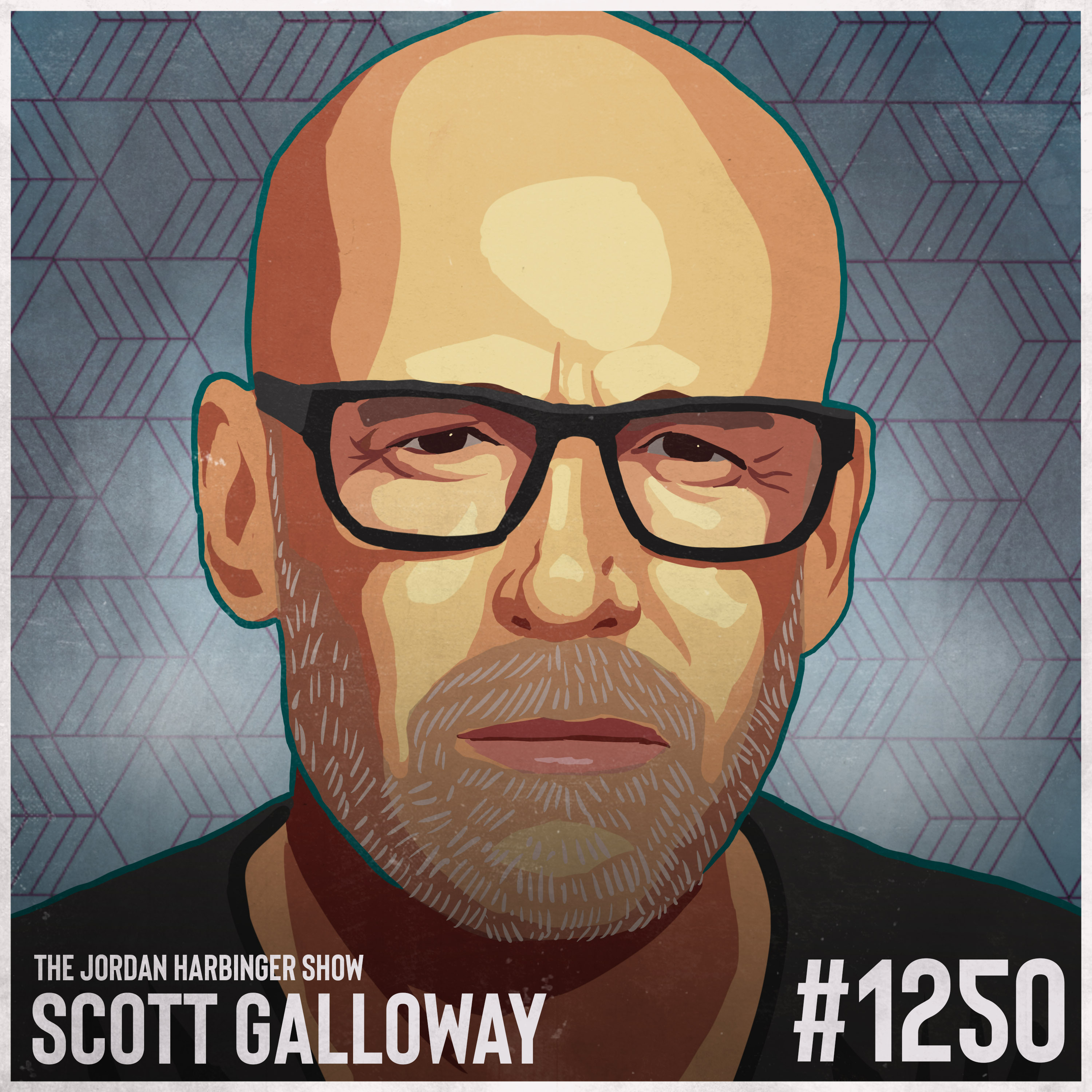
Loading summary
Transcript85 lines
- [00:00]
A
This episode is sponsored in part by LinkedIn. If you've ever hired for your small business, you know how important it is to find the right person. That's why LinkedIn Jobs is stepping things up with their new AI assistant, so you can feel confident you're finding top talent that you can't find anywhere else. The best part is that these great candidates are already on LinkedIn. In fact, employees hired through LinkedIn are 30% more likely to stick around for at least a year compared to those hired through the leading competitor. That's a big deal when every hire counts. Early on, I learned that hiring isn't headcount, it's do I see my family this week? Do we actually release episodes on time? Can I, can I take a few days off without everything falling apart? When I've hired the right person, my life got easier. They took real work off my plate, caught problems early and treated the business like it was theirs. That's when we actually grow with the wrong hire. I've spent months training, fixing mistakes, having the same conversations, and still ended up letting them go and starting over. You don't just lose money, you lose momentum, you lose morale and you lose time. That's why I'm big on hiring right the first time, even if it takes a little longer.
- [00:56]
B
Hire right the first time, post your job for free@LinkedIn.com harbinger. Then promote it to use LinkedIn Job's new AI assistant, making it easier and faster to find top candidates. That's LinkedIn.com harbinger to post your job for free. Terms and conditions apply. VRBO helps you swap gift wrap time for quality time. Go to VRBO now and book a.
- [01:17]
C
Last minute week long stay and save.
- [01:20]
B
Over $390 this holiday season. Book your next vacation rental home on VRBox. Average savings $396. Select homes only.
- [01:27]
A
Coming up next on the Jordan Harbinger.
- [01:30]
C
Show for me has been a goal around, not a transaction where I'm on the right side of it. But how do I find relationships where I can really leverage my skills, my generosity, whatever is my character to just give a lot and be that guy, be the guy, be the friend, be the boss I want to be and just put away the scorecard. But I would have been much happier in my 20s and 30s had I just put the scorecard away and just tried to be the man I want to be.
- [01:59]
A
Welcome to the show. I'm Jordan Harbinger. On the Jordan Harbinger show we decode the stories, secrets and skills of the world's most fascinating people and turn their wisdom into practical advice that you can use to impact your own life and those around you. Our mission is to help you become a better informed, more critical thinker through long form conversations with a variety of amazing folks from spies to CEOs, athletes, authors, thinkers and performers, even the occasional organized crime figure, four Star General arms Truck graphic or Russian Chess Grandmaster. And if you're new to the show or you want to tell your friends about the show, I suggest our Episode Starter Packs. These are collections of our favorite episodes on topics like persuasion and negotiation, psychology and geopolitics, disinformation, China, North Korea, crime and cults, and more that'll help new listeners get a taste of everything we do here on the show. Just visit jordanharbinger.com start or search for us in your Spotify app to get started. Today on the show, we're diving into a topic that somehow manages to be controversial, uncomfortable and way too easy to meme. So the collapse of young men. You've heard the tropes failure to launch manchild, toxic masculinity, neets doom scrolling themselves into oblivion. But under all that snark is something real. Because seldom has there been a cohort that has fallen further faster than young men. Today we're talking loneliness, role model vacuums, brain development gaps, skyrocketing housing and education costs, and a generation that's somehow less wealthy than the one before it. And while women are rightfully making incredible advancements, a whole bunch of young men are quietly sinking or loudly. Today's conversation is not about playing whose life is harder. This is about what happens when half the population gets written off and what it means for society, families, relationships, and the dudes out there trying their best not to get crushed by student loans, loneliness, or an algorithm designed to replace a functional life with 90 second dopamine hits. This is a big one. It's important. And if the idea of talking about men makes you uncomfortable, well, maybe that's a good thing. Let's get into it here with Scott Galloway. I love the book, man. I read it as I usually do. Had done shows before on similar topic, like with Richard Reeves, and I didn't think it'd be controversial, but for some reason that was one of my most controversial episodes. I got a lot of email from people that was like, there's no such thing as the male loneliness epidemic. It's fake. Or men deserve it because they're a bunch of losers living in their mom's basement now. So it's either Fake or men deserve it. And I thought your book took an interesting different take on that.
- [04:24]
C
The gag reflex is understandable, especially because to people on I may be the wrong messenger for the message because why? Well, if you look at from 1945 to 2000, America registered a third of the world's economic growth with just 5% of the population. So we had literally 6x the amount of prosperity crammed into our populace. And then within that populace, all of that prosperity was crammed into the third of the population that was white, male and heterosexual. So I have had so much unfair advantage, unearned advantage. I think anyone who argues against that, it's just not looking at data. But now what we're doing is we're holding a 19 year old male accountable for my privilege. And that is the same things that benefited me are just not there for a 19 year old male. And I would argue even there's some things now that put them at a disadvantage. Some of the feedback I've gotten and I've gotten a lot of pushback here and I see that a certain amount of pushback as a sign of your success. If everyone agrees with you, you're not saying anything. And I've always said I want to inspire a dialogue. I don't necessarily want to be right. I want to try and inspire dialogue to craft better solutions. But when you're just called like, this book is so misogynistic. It's like, why they haven't read it then? I mean, there's just no, no way. There's just no way.
- [05:31]
A
Yeah.
- [05:32]
C
Or his answer is he's blaming women for men's fault.
- [05:35]
A
No, I'm not having read it. You're very clear that the book is not here to crap on the progress that women have made. Female advancement has been stunning. I think that's a quote from your book. So it's not about teari down the amazing strides that women have made. It's about focusing on the fact that a lot of young guys especially have fallen behind and it's not getting better. And say like, even if we steel man it and we say my cousin Lindsay was like, oh guys, they're undateable. And I'm like, well, I feel for you and I get it and I sympathize with that a little bit. But that doesn't really help our situation here in the United States. If a huge cohort of men has fallen so far so fast that they've become undateable, unweddable, whatever it is, that's bad. Even if we Assume that the argument is correct. Oh, they all deserve it. They haven't done anything to earn anything to get ahead in life. Okay, let's steel man that fine. It doesn't improve our situation, so we still have to address it.
- [06:30]
C
Yeah. And also, it's not a zero sum game. We can still recognize the huge challenges that non whites and women face. Women go to 73 cents on the dollar when they have kids versus men. There's average household wealth of a black or Latino family is about 23 grand, 160 for white families. There's still huge issues facing these groups, but we can still recognize the problems they face while recognizing that no group has fallen further faster than young men. If you go into a Morgue and there's five people who've died by suicide, four men really, three times as likely to be addicted, three times as likely to be homeless, 12 times as likely to be incarcerated, so we can walk and chew gum at the same time. And also women aren't going to continue to flourish as long as men are flailing. Generally, what I'm finding is who wants more economically and emotionally viable mental health women. Something Jordan, that each of the genders have done a great job of is convincing themselves that it's the other gender's fault. And I don't like the framing of men versus women. I think a better framing is liberal versus illiberal. So a lot of feminists will push back and say, where were you when we were struggling? And I would argue that a lot of us men were there for them. And that is, if you look at the big thing that kind of inspired the increase in female attendance in college. It used to be 4060 in 1973 when Title IX was passed. Now, by the way, it's 60 40. And in terms of graduation, it's probably closer to 66 or 2 to 1. There's no discussion of a Title IX for men. And actually, nor should there be. But if you look at when Title ix was passed, 97% of our elected officials were men. So clearly there are a lot of men who recognize the struggles of women. And also there's a lot of women, especially mothers, who recognize the struggles men are on right now. So I think a better framing is kind of liberal versus illiberal thought because there's a lot of men who do celebrate the progress and want women to continue to make that progress. And again, a lot of men who are very supportive of this type of work.
- [08:30]
A
Look, I don't have the data that you have, but it does seem like from my inbox. Some of the people that are the most concerned about this are mothers of young men because they're going, what did I do? How come my son still lives in my house? Do I kick him out? I don't want to do that because then he's going to go live with one of his friends who's doing even worse than he is. Or, you know, he at least has a job doing this and doesn't smoke pot and play Xbox all day. But that's what his friends are doing. If I kick him out, he's going to go to them and then what? It's pretty dark. And to your point, I think you're right. I think many of the people who are most worried about this and most want men to succeed are women. And probably also not just their moms. There's probably also women their age who would love to marry somebody who is not getting an allowance from their mom when they're 30.
- [09:12]
C
So even saying this five years ago was triggering. But now, because of the work of Richard Reeves, who you've mentioned, it's become much more palatable. If you were to reverse engineer to the single point of failure for when a boy comes off the tracks and has trouble as a man, it's the following. It's when a boy loses a male role model through death, divorce or abandonment. And what's interesting, and we have the second most single family parent homes in the world behind Sweden.
- [09:37]
A
Sweden.
- [09:38]
C
Who would have known? The Swedes?
- [09:39]
A
I would not have. That would been like my last guess. If you'd let me guess, most of the countries in the world, somewhere in Scandinavia would never have occurred.
- [09:47]
C
A lot of divorce energy in Sweden. And generally speaking, divorce rates go up when women become more economically independent because quite frankly, they do the math and say, I'm no longer economically indentured to this dude. I'm out. So it's actually a sign of progress in some ways. But what's interesting is in single parent homes, girls have the same outcome. Same rates of college attendance, same rates of income, same rates of substance self harm. Whereas men or boys, the moment they lose a male role model, at that moment they become more likely to be incarcerated than graduate from college. What it ends up is that the research reflects that while boys are physically stronger, they're emotionally and neurologically much weaker than girls. I read a study that said two 15 year olds, boy and a girl, both sexually molested, neither crime is any more or less heinous in the other, but the boy is ten times more likely to kill himself later in life than the girl. It ends up that girls are much more resilient and much stronger than men. And they don't know if it's because throughout history, women have had to figure out a way to endure menstruation or childbirth, or quite frankly, they just have had to endure more hardship. There's no getting around it. Girls are stronger than boys.
- [10:59]
A
I mean, I can see that. I can see that. I think women probably throughout their lives have to put up with so much more, especially when it comes to, unfortunately, sexual violence and things like that, that maybe there's just a stronger support network around them that has that skill set, if you can even call it that, or that knowledge base to help them deal with that. I'd love to dive into this, I think, because you have some personal experience with this. What happens to men when male role models leave? Yes, they're at higher risk for a lot of mental health issues. But are you comfortable sharing your personal experience with this?
- [11:32]
C
Sure. I don't. And I got very lucky. So my dad left when I was 9. And it wasn't even though my mom was really good about getting male role models involved in my life. And my life was a little bit different or untraditional. And that is, you know, in media, there's oftentimes a reference, there's a character, and it ends up he has a second family. He has his main family, his kids, his life that he goes to church with everybody, and then you find out that he has an entire second family that he spends, you know, like dollar bill in billions and ends up had a second family. So I was that second family. My primary male role model after my dad left was a guy who lived in Arizona, had a wife and a son and a thriving business and a strong family. And then every other weekend, he spent time with me and my mom. My mom was the other woman, and I was the son of the other woman. So that was my primary male role model. And the initial kind of knee jerk reaction is, wow, this is a bad man. And that's not true. He was actually a good man. He was very good to me. And a lot of men entered my life mostly through sports. I had coaches who took an interest in my life. I had a stockbroker, my mom's boyfriend. I asked about stocks. I was about 13, and he said, Here's $200. If you haven't bought stock by the time I get back next weekend, I want the $200 back. So I marched into Westwood to a brokerage called DeanWitter Reynolds and said, I'm here to buy stock. And this guy with this Jufro came walking out, guy named Cyro, and said, hi, I'm Cysero. And he gave me my first lesson in stocks. He said, you know, when there's more buyers and sellers, the sellers raise the price until there's fewer sellers and it makes a market. And he said, what are you interested in? And I'm like, movies. I just saw Close Encounters of the Third Kind. I thought it was amazing. I was like, well, Columbia Pictures is the, the company behind that movie and their stocks at 16 bucks. So we bought 12 shares of Columbia Pictures. And for the next two years, every day at lunch I'd go to the phone booth, I'd put in two dimes in the middle of Emerson Junior High School. And I'd call Cy and we'd talk about my stock. And once or twice a week I'd go into his office in his cubicle and he'd teach me about stocks. And he'd call my mom and say nice things about me. You know, there was no money in there. We didn't have any money. But not only was that male mentorship really important for me, but I've made really good money starting and selling companies. But where I've become very economically secure is I've been buying stocks since the age of 13. And the last 45 years have been a really good time to own stocks. And then there was a guy across the neighborhood who used to come over with his girlfriend, just randomly knocked on the door. You don't do this anymore. Knocked on the door. My mom answered, hey, I've seen Scott around the neighborhood. Me and Lisa, my girlfriend are going to go horseback riding. Does he want to come with us? And this guy and his wife or his girlfriend took me horseback riding every weekend. So the thing we need in our society is more of a gestalt of apprenticeship, mentorship, and immediately getting men involved in the life of a boy when he doesn't have a lot of male role models. And unfortunately a lot of men aren't stepping up. In New York, there are three times as many women applying to be big sisters as there are men applying to be big brothers. And a lot of it is there's a taboo, unfortunately, and that is say you're a guy in your 30s and you're single, maybe don't have a wife or kids of your own, you're worried people are going to suspect something of you. If you express a desire to get involved in a 15 year old's life.
- [14:55]
A
It's the same with Boy Scouts.
- [14:57]
C
100%, by the way. There are no more Boy Scouts. Just to give you an example.
- [15:01]
A
Yeah. It's just scouts, which honestly, as an Eagle Scout, I feel like it actually is probably good that there's co ed scouts because I've got a boy and a girl. It's going to be different than it was with a bunch of smelly little boys running around with a bunch of adult men having conversations where you go, I've never heard my dad say those words. Or I've never heard my dad talk to another adult guy uncensored while I'm there next to a campfire when they're not really concerned about getting in trouble with their wives for sharing something, for example. I don't know if that's still going to be there, Scott. You know what I mean? It's just a little bit different.
- [15:34]
C
You're an Eagle Scout, Jordan.
- [15:36]
A
Yeah.
- [15:36]
C
Super impressive. So I would argue, I think the scouts are an interesting example of how with the right understandable intentions, things have gone a little bit too far. And that is there's Scouts of America, boys and girls. And I, you know, I don't disagree or agree with you that it's probably good to have co ed, but girls get their own single sex scouting. They get Girl Scouts but boys don't. I think there is an environment and it's productive to probably have single sex Girl Scouts. But why wouldn't we also have single sex Boy Scouts?
- [16:04]
A
I thought they just merged them. I didn't realize there was still single sex Girl Scouts.
- [16:08]
C
And Boy Scouts is now school get their own thing. And then there's Scouts of America. There's no more single sex Boy Scouts. Geez.
- [16:14]
A
I have mixed feelings about that. As I've just stated. I think that's gonna probably exacerbate that. There's so much I learned from scouts and I know it sounds nerdy to a lot of people, especially because the Eagle scout you're like 18 and people are like, don't you have anything better to do? And the answer was no.
- [16:27]
C
Actually, I didn't either. Were you a wee below? I was. Remember the transition year where you go from Cub Scouts to Boy Scouts and you have to wear a different scarf? Yes. Yeah, I remember. I don't know about you. I got the fire safety badge and every time I check into a hotel I look for the escape route. Yes, okay.
- [16:44]
A
Of course. Yeah. And you'll be. One day you might actually be glad that you did that.
- [16:48]
C
I still know how to tie knots.
- [16:52]
A
I. I don't think I could say the same. I probably. I don't even remember learning that. I know I did because it was part of. Of many tests, but. Yeah, man, those merit badges were a trip, dude. I definitely remember learning how to, like, raise rabbits.
- [17:07]
C
Weird things. Weird things. That's super impressive, though. I didn't know that about you.
- [17:12]
A
Yeah, look, it's a ton of work. I was thinking about it yesterday because you. One thing in your book that sort of triggered this in me was back then, in Eagle Scouts, you have to. And bear in mind, you're 17 years old. Your Eagle project is a community service thing, and at the time, it was 100 man hours of work. Doesn't mean you have to do the hundred hours of work. It means you have to organize people, get them to show up. I remember painting fences and redoing a playground at my elementary school. And it's like, you're calling the school, you're doing the paperwork. You get the permission. You make sure the insurance is in place. You go and buy the supplies. You get the Scouts and your friends together to come over and spread wood chips and paint fences and stuff like that. And looking back as an adult now, I'm like, I can't believe I was able to get my shit together enough at that age to do this. I honestly think it would be difficult for me to do now without. I'd probably be like. I'd call my assistant, be like, can you get all this stuff organized? I couldn't do it now without a degree of difficulty. So to be having done that at 17, I remember when I had to do other things that were a lighter lift. It just didn't seem like a big deal anymore. And that's kind of the point. It was like trial by fire that you just didn't have.
- [18:14]
C
And also, as you referenced, I think a lot of us in the Boy Scouts, let me just say, I'm not sure we had a lot of social capital, but it was nice to be around other boys that sometimes were a little bit more academically oriented or maybe just didn't. Quite frankly, we just weren't the cool kids. But I went camping. I don't know what your troop did. I went camping every month. And we used to. You developed a reverence for nature. You carried a heavy pack. You carried everything you needed several miles into the forest. And then, I remember, we would kind of go side by side and go through the entire camp and make sure that there were no signs of humans being there. Even our Footprints gave you a reverence for nature and just planning from the age of 13 how to get towards Eagle Scout. There's a lot of life skills involved in that. Discipline, achievements, testing. The whole is greater than the sum of its parts. I only got several merit badges, whereas you got enough to qualify for Eagle Scott. And then the, the rewards, I don't know if they still did it when you got your Ego Scout, but you get a letter from the President and the whole troop.
- [19:15]
A
Oh yeah, I got a letter from Bill Clinton.
- [19:16]
C
Yeah. And the whole troop gets together and honors you. And I'm a big fan of that stuff. As a matter of fact, a couple of my proposed solutions for public policy. Just literally two hours ago, I was on with the Democratic Caucus for Fathers. It's representatives, it's mostly family focused, but it's about 50 congresspeople. And they asked, they said if there was one public policy you could initiate, what would it be? And I said, mandatory national service.
- [19:40]
A
I agree.
- [19:40]
C
I think it's not. It wouldn't just be military. You could volunteer at a no kill shelter, senior care, be a smoke jumper or work at our parks. But I think there's so many young people who would benefit from meeting other great Americans from different ethnic, income and sexual orientation backgrounds. And if you look at Israel and Singapore, they have the lowest levels of young adult depression. And I think a lot of that is because of their mandatory national service. But anyways, along the same lines of Boy Scouts, I think a structured place that shrinks the world down to a group of young people doing something in the 80s, agency of something bigger than yourself.
- [20:13]
A
When I was an exchange student in Germany, my friends all had to go do national service after high school. And I don't know if it's still that way, but it's definitely super uncool or almost like gauche to go into the army. So everyone worked at a hospital or a university or something like that. And I remember going to visit them after this year and they were all kind of grown up because they had been in a hospital doing hospice care or something like that for older people or bathing the elderly in a nursing home, or like you said, working at some sort of animal shelter. And they just said you grow up like three years during that year because you're with a bunch of other students and you're having a good time, but you're also given real responsibility in a way that you've never had before. And you usually don't live well. I think a lot of people don't live at Home. It depends where they are. And we just don't. We don't have that here. So we don't build this. Sort of like you said with Israel, which is always rough to talk about because it always gets me a thousand emails just from mentioning the word. But in Israel, they have a different sense of national identity because they all have to go in the army. And it creates this sort of cohesive, hey, we're all in this together kind of feeling that we don't have as Americans.
- [21:19]
C
I think, yeah, they see themselves as Israelis before they see themselves by their identity. And I think a big part of the reason that we passed so much great legislation in the 60s and 70s was our elected representatives that all served in the same uniform. And they saw themselves as Americans before they saw themselves AS Democrats, Republicans. One out of two people my age feel good about America. It's one out of 10 young people. And as difficult as it is for young people, and I've written a lot about it, it's less difficult here than it is in most places in the US And I just don't think a lot of kids recognize how many great Americans are out there, how fortunate they are, how wonderful America is that they still have more agency here than in most nations. And Singapore has the most religiously diverse population in the world. And they recognized that if they weren't careful, those differences could be weaponized by a strong man and get them to dislike each other. And I think the biggest threat to America is not Russia or the ccp. It's us. And that is, we believe the call's coming from inside of the house. And that is, oh, my enemy is my neighbor with a Trump sign or it's the squad. No, Americans have a lot more in common than we think. And I like what David Frum said. We're actually not that divided. But unfortunately, the most talented, deepest pocketed companies in the world are in the business business of dividing us. So I do think we need more and more programs. Third place is more community. I'd like to see more religious institution attendance, even though I'm an atheist. We definitely need to restore some connective tissue among Americans.
- [22:52]
A
I'd love to see that. I don't have a plan for it, but I like the national service idea. I want to get back to the topic of men falling behind. There's this whole cohort of men that the abbreviation is neat and I'm going to get this wrong, but it's like not in education, employment, or training. Is that right?
- [23:09]
C
That's right. Exactly right.
- [23:11]
A
That is terrifying because back in, when I was a kid, there were like two kids in my high school that didn't go to college and weren't doing a job training program. And you were like, yeah, that makes sense, right? It was like, of course it's going to be these two guys. And I don't know how they turned out, but I expect not, not great. This was not the huge percentage of people that it is now. This was like the minority. It was very predictable kind of from the jump, from the way that they were brought up. Now it seems like that cohort is quite large, and that is terrifying.
- [23:40]
C
It's at an all time high. One out of three men under the age of 25 are living at home. One out of five men at the age of 30 is living at home. Only one out of three men under the age Of 30 is in a relationship. Whereas it's two in three women under the age of 30 in a relationship. And you think, well, that's mathematically impossible. It's not because women are dating older, because they want more economically and emotionally viable men. So young men are not moving out of the house. They're not attaching to work, they're not attaching to school, they're not attaching to relationships. If a guy hasn't cohabitated with someone else or been married by the time he's 30, there's a one in three chance he's going to be a substance abuser. And so what's really interesting, or one of the things I didn't realize and I found researching and researching the book, is there's this cartoon of a woman in her 30s, let's call her Lisa. And Lisa never found romantic love. And she's in, you know, it's the commercial or the movie of her in the windowsill with a big. A big plush sweater looking out at a rainy day. Maybe she's got a cat. And what a tragedy. She never found romantic love. The reality is she's fine. She pours that energy, that romantic energy into her friend network and her professional life, in which she'd be happier married, maybe, but who really comes off the tracks is a dude that doesn't have a relationship. It ends up that men need relationships more than women. A woman in a relationship does live longer, two to four years. But a man lives four to seven years longer. So men actually benefit more from relationships than women. Widows are happier after their husband dies. Widowers are less happy. So this myth or this cartoon of the tragic spinster, the woman who didn't Find romantic love. One of the things I say in the book that's triggered some people, I think men should always pay on dates. You mean?
- [25:21]
A
Yeah.
- [25:22]
C
My youngest son is like, dad's, that's just so boomer. Da, da, da. And I'm like, well, okay, first off, men benefit more from relationships than women. A woman's fertility window is much shorter than a man's. The downside of sex is much greater for a woman than it is for a man. So there's an asymmetry of value. When you're sitting across the table trying to establish a romantic relationship with a woman, you're asking her to enter into a construct where, on average, you will benefit more than her. And also, all mammals have some form of courtship. And I think one way you engage in that courtship and recognize the asymmetry of value is you pay. And also, just instinctively, and we don't like to say this out loud, what I tell my son is, okay, but just be clear. Any woman you ever split the check with is never going to kiss you because deep down, instinctively, for thousands of years, she has been taught that you can't protect her. Strength in a capitalist society is economic viability. And women, because they believe deep down that they'll be vulnerable because at some point they might gestate, want to feel safe around a man. And one way you demonstrate that valor is by paying. And I'm not saying that's, you know, in some cases, some people say fairly well, it should be whoever asked the other person out, if you're both making good money and. Or if your partner's making more money than you. I'm not suggesting that five dates in you don't do stuff because it's only you paying. But I think in the beginning, I think the default should be that the dude pays.
- [26:46]
A
Yeah, I don't hate that idea. I mean, maybe I'm too dated in the dating culture as well. Like, maybe I'm outdated here. I don't know. It does seem easier. And you kind of can't go wrong doing it as long as you're not a doormat. And letting people walk over you, all over you and use you for money, which I think is a different conversation. But it's quite easy, I think, for most people to realize when that's happening. If porn is keeping you indoors, unmotivated, and spiritually and physically dehydrated, here's something healthier to occupy your hands. The fine products and services that support this show. We'll be right back. This episode is sponsored in part By Chime. You know what drives me absolutely nuts? Bank fees, overdraft fees, monthly fees, minimum balance fees. It's like they're punishing you to hold on to your money. And I just, I don't put up with that nonsense anymore. And that's why Chime caught my attention. Chime is changing the way people bank. Chime is fee free, built for real people who don't want to get ambushed by surprise charges every month. And here's what I really like. Chime isn't just another banking app. They're actually doing things that make your life easier. With MyPay, you can get access to up to $500 of your paycheck anytime. And with direct deposit, you get paid up to two days early plus no overdraft fees, no minimum balance fees, no monthly fees, period. You also get fee free banking with overdraft coverage. Stress free credit building up to 3.5% APY on savings and real humans on customer support 24. 7. They're rated five stars by USA Today. So people clearly like banking with them. And the new Chime card lets you build credit with your own money and earn 1.5% cash back with qualifying direct deposits. No fees, no interest, no nonsense. So if you're tired of getting fleeced by your bank, check out Chime.
- [28:20]
B
Chime is not just smarter banking. It is the most rewarding way to bank join the millions who are already banking fee free today. It just takes a few minutes to sign up. Head to chime.comjhs that's chime.comjhs Chime is a financial technology company, not a bank. Banking services and debit card provided by the Bancor Bank NA or Stride Bank NA members, FDIC spot and eligibility requirements and overdraft limits apply. Timing depends on submission of payment file fees. Apply it out of network ATMs, bank ranking and number of ATMs according to U.S. news and World Report 2023 Chime checking account required.
- [28:47]
A
This episode is also sponsored by Function. I use Function because data is everything. You can feel healthy and think you're healthy, but unless you're actually tracking, you are totally just guessing. Function is the only health platform that gives me data most people never get and the insights to start doing something about it. Inside Function you get access to test over 160 lab markers annually. Hormones, toxins, heart health, inflammation, stress, all of it. You can even add MRI and chest CT scans for an extra fee. And everything is tracked securely over time so you can compare year after year. And that baseline is huge. Having data from when you're at your healthiest gives you something meaningful to compare to later. Catch trends early, see what's improving, see what needs attention. It's like giving yourself an actual roadmap instead of hoping the check engine light just never turns on and Function might be the most meaningful gift you can give someone this year. The gift that actually helps someone understand their health and make informed decisions all year long. I gave Function Health to my brother in law who was legendarily impossible to shop for and he was genuinely glad he did it. He got his results quickly and learned things about his health he never would have known otherwise. If you want to give someone clarity, real, actionable clarity and insight into their health, give them access to 160 plus lab tests annually.
- [29:58]
B
Own your health for $365 a year. That's a dollar a day. Learn more and join using our link. Visit functionhealth.comjordan or use the gift code jordan25 for a $25 credit toward your membership.
- [30:12]
A
If you're wondering how I managed to book all these great authors, thinkers and creators every single week, it is because of my network. The circle of people I know, like and trust. And look, today we're talking about loneliness. It is a big topic. It is a big deal. You can use sixminutenetworking.com to manage your network for business, but even more importantly perhaps your social life and relationships. The course really is all about improving your relationship building skills and developing and maintaining relationships in a super easy, non cringy, down to earth way that's not going to make you look like a jag off. Six minutes a day is all it takes and many of the guests on the show subscribe and contribute to this course. Come on and join us. You'll be in smart company where you belong. You can find the course free of shenanigans of all kinds of@sixminutenetworking.com now back to Scott Galloway. You mention in the book that there's nothing more dangerous than a lonely, broke young man. And you mentioned a higher risk of suicide. Substance abuse. What else gets added to this dangerous mixture when a guy is lonely and broke?
- [31:06]
C
Throughout society, the most unstable, violent nations and periods in history have all had one thing in common, and that is a disproportionate number of young men without economic or romantic opportunity. I mean, whether it was Hitler weaponizing them or the Islamic Republic, when you have a lot of young men who have don't have access to economic or mating opportunities, they get frustrated, they get Violent, and they're very prone to nationalist content or misogynistic content, telling them, it's not your fault and we need to go after the enemy. I think that's why Trump is President Jordan. I think that essentially, if you look at the three groups that pivoted hardest from blue to red, 20 to 20 to 24, it was Latinos. I think it's hard to make any assumptions about them, because Mexican Americans in Southern California are just much different than Cuban Americans in Southern Florida. But the number two group was young people. People under the age of 30 are 24% less wealthy than they were 40 years ago, whereas my generation is 72% wealthier. They can do math, they've had it. They realize they're not doing well. They just want change. Anything associated with the incumbent, of which Harris was, was not going to win. The third biggest pivot among groups was women aged 45 to 64. And I believe that that's their mothers, because there's still a lot of women in the US who will vote for who they perceive is in the best interest of their husbands and their sons. And when your son is in the basement vaping and playing video games, you don't care about territorial sovereignty in Ukraine or transgender rights. You just want change. And so I think that young men weaponizing young men who have a lack of opportunities, whether it's promising them sex in the afterlife. ISIS was actually taking sex slaves and then using that as bait to get people to enlist in their fight. Or put another way, I think the greatest innovation in history was not the iPhone or the semiconductor or vaccines. It was the American middle class. And how did the American middle class happen? The middle class is an accident. I think the far right will try and convince us that the middle class is a naturally occurring organism. And if we just let the market take over, it'll hail. It doesn't. It requires a redistribution of income from our most fortunate and our most talented to the middle class. But we had 7 million men return from war. They were in uniform, they demonstrated heroism, and then we shoved a bunch of money in their pockets through VHA loans, National Transportation Act. We basically made them, gave them money. They were thin, they were heroic in uniform, and quite frankly, very attractive to women. And it spawned the baby boom. And then there were enough loving, secure households where they thought, okay, wouldn't it be great to bring women and non whites into this prosperity? But if you don't have a preponderance of young men who feel good about themselves and quite frankly, are viable Economically and emotionally viable. You end up with an unstable society. And I always have to do a land acknowledgement here. I don't think it's women's fault. I don't think women have an obligation to save or serve men. But there is no denying when there are young men who are alone and broke, it is a recipe for an unstable society. And no amount of therapy is going to change that. I keep hearing on TikTok, men can find love from within. Yeah, good luck with that. I'm not suggesting that a man can't be happy without kids or a relationship. I'm suggesting that all of history says one thing. A disproportionate number of men with no economic or romantic opportunities leads to a violent, unstable society.
- [34:36]
A
You have almost like a throwaway line in the book. But I think it's an interesting idea of America if you would explain it. You said America is about watering as many seeds as possible, not picking and sorting and figuring out which will become redwoods.
- [34:49]
C
This is personal for me because as you get older, the good news is you get more thoughtful. The bad news is you get more thoughtful. And I want to reverse engineer my success to the reasons for my success and then try and invest in those things so more people have access to it. And I go all the way back to kind of the irrational passion for my well being of my mother. I just think that built a base of confidence. But I look at, okay, I got into UCLA when it had a 74% admissions rate. This year it'll have 9%. I got into UCLA with 3.1 GPA and 1130 on the SAT. That is not exactly remarkable. I got assisted lunch. You know, I didn't get free lunch, but I got assisted lunch. I got Pell Grants despite being an unremarkable student. I got into UCLA and I got Pell grants. And then this is the kicker. I graduated from CUCLA with a 2.27 GPA. And what happened, Jordan? The Haas School of business, a top 10 MBA program. Let me in.
- [35:41]
A
Yeah. I don't get it. No offense.
- [35:43]
C
Let me in.
- [35:43]
A
How did that happen?
- [35:44]
C
How did that happen? Right. Yeah. And then I got my shit together. And about the age of 25, all that education and opportunity inspired an upward spiral. And this is a flex, but I'm going to make it. I think I've paid 30 to $50 million in taxes in the last decade. So I think America works best. And the idea of America is to love as many unremarkable kids as possible and try and create as many millionaires and loving households as possible not to identify a super class of freakishly remarkable kids or the children of rich people and turn them into billionaires. I think we've gone from what America was supposed to be. And that is watering, as you said, as many acorns as possible and seeing what happens. Because here's the thing. No organization, institution or person can be the arbiter of greatness when a kid's 18. I just didn't have my act together. I don't know if you did. I've talked to you a little bit. You were a little scrappier, more technically sophisticated than me. I think people would have seen more potential in you.
- [36:38]
A
Oh, I don't know about that, man. I think I was more school shooter. Except they didn't exist back then. So teachers were kind of like, eh, it's fine. I mean, I got in trouble with the FBI when I was younger.
- [36:49]
C
I remember you telling me that. I love that story. Quite frankly, though, you were demonstrating excellence in its own weird way. I heard the story and I'm sure you've told it. The thing that summarized what America's about for me is UCLA. Amazing university. My total tuition, seven years undergrad and grad was $7,000. 74% admissions rate and I didn't get in. I was one of the 26% that didn't get in. I was installing shelving. I was living with my mother. I came home and I broke down. I was just really upset. I'm like, this is my life and there's nothing wrong with vocational work, but I want to be a doctor. I want to do big things. I was always been told I was smart and creative. And my mom said, well, is there anything we can do? And we found out there was an appeal process. And so I appealed. And the truth has a nice ring to it. I said, I'm installing shelving and I'd like to someday be a doctor. By the way, freshman chemistry disavowed me of that notion.
- [37:38]
A
Yeah, Orgo or whatever it's called, that'll do.
- [37:41]
C
Maybe I'm not going to be a doctor anyways. What's economics like? So I appealed and the person in the admissions office called me and said, you're not qualified, but you're a native son of California. So we're going to give you a shot. That to me defines what America's supposed to be. You're not remarkable, but this is America, so we're going to give you a shot. And I worry now that a lot of the ladders that I was able to climb up and then fell down and there was another ladder for me. Have been pulled up and said, nope, Unless you're a rich kid or unless you're building wells in the head of the lacrosse team by the time you're 15, we're not interested. It feels like it's become very much a Hunger Games economy where the winners lead this remarkable life and everybody else meets. Kind of an unfortunate end, by the.
- [38:29]
A
Way, appealing your decision to get into or the decision for letting you into a school, that worked for me, too. That's how I got into law school. I didn't get in. I got waitlisted at Michigan. I was on the waitlist all the way until the last cut or whatever. I got the letter that said, thanks for playing. Have a good life. And my friend said, why don't you write a letter asking them to let you in for the next year and just take a year off? And I said, that's probably a waste of time, but I'll do it. I got nothing else to do. Just sitting here, you know, feeling sorry for myself. And I did that, and I got into Michigan Law. And I think that's worth a shot. I don't know if that still works, but if it worked for you and then it worked for me, I don't know, whatever. N years later, maybe it still happens. Maybe it's so rare that they would love to see the initiative from somebody to do that. So, I don't know, give it a shot, folks. See if he can pull it off.
- [39:11]
C
Well, just on that moment, because it moves to solutions. Unfortunately, in my industry, there's a certain veneer of nobility that because we have cardigans and watch PBS and are petting a Labrador, people think academics are more noble than they are. I think my industry is responsible for a lot of what ails us, and that is we have embraced this luxury LVMH rejectionist positioning, where the lower the acceptance rate, the higher we go in the rankings, the more margin power we have and the more money we make. And we've lost the script in the sense that we no longer believe we're public servants. We believe we're luxury brands. And when my dean announces that they've rejected 90% of the applicants, what does the faculty do? They applaud. And the people who already have degrees have a vested interest in the admissions rates going down because it makes the asset. They have their diploma more and more valuable. The same thing's happening in housing. Once people own a home, they become very Concerned with traffic and get in the way of new housing permits. But the result is we have these unbelievable institutions with infrastructure that are creating artificial scarcity. Dartmouth has an $8 billion endowment and they let in 1100 kids a year. They're in the middle of nowhere. They could let in 11,000 kids a year. And by the way, they have about 15 people working at Dartmouth for every one that actually teaches because they've decided their luxury brand's no longer public servants. So I think we have to change our mindset, and that is these institutes and Michigan's actually better than most. They're pretty true to their mission. They've been growing their freshman class, but most elite universities have decided that they're in the business of rejectionism. And the way I would, the analogy I would use is that's tantamount to a homeless shelter rejecting 90% of the people who showed up last night. We're in the business of giving as many people a shot as possible. And instead we've decided, no. The tighter and the more artificial scarcity we can create, the higher our margins, the more administrators, the higher the salaries, the less the accountability and the better the alumni feel because the value of their degree goes up. And it's just, it couldn't be more un American. So in my view, if you're not growing your freshman class faster than population growth and you have an endowment over a billion dollars, I think you should lose your tax free status. Because one of the things that's really ailing young men is that fewer and fewer are getting accepted to and going to college. In the next five years, we're going to have nearly two to female to male college grads. And you think, well, okay, we leveled the playing field. Women are blowing by men. Yeah, I get it. And I don't want to do, I want to expand freshman class. I don't want to do anything to get in the way of more and more women going to college. But there are some real knock on effects here. And that is when a man does not graduate from college is not economically viable, he has real trouble finding a mate. And that is men mate socioeconomically, horizontally and down, women horizontal and up. And when the pool of horizontal and up keeps shrinking, there's a lack of household formation and a lack of relationships. So who wants more economically and emotionally viable men, women, and we're just not producing enough of them.
- [42:09]
A
Yeah, I think this jibes well with your quite humorous recounting of your mom helping you, trying to help you get laid back in the day. I Would love. I thought this was so funny. Most parents are afraid their kids are gonna get into a lot of trouble. Your mom was afraid you weren't getting into enough trouble. From the sound.
- [42:26]
C
By the time I was 16, I was almost 6ft, 120 pounds, 130 pounds, with bad acne. Like, I wasn't exactly Brad Pitt. And occasionally, the only way I could get a woman to go on a date with me was I was funny. That was the skill I developed. And I think there's a certain advantage to not being physically attracted when you're younger. I think it forces you to develop different skills and different sources of confidence. But what I wrote about in the book is if I ever had one of those rare dates, I would come home and my mom would have a bottle of wine uncorked. And ambitious mom, she would have put firewood in the fireplace with all the kindling set up and a match. So all I literally needed to do was strike the match to get a fire going. My mom was trying so hard to get me some action because she realized it was not gonna be easy for me. She realized if the pads weren't greased, it just wasn't gonna happen. And meanwhile, you know, people ask me for dating advice, and I always say, just keep in mind you're taking dating advice from a guy who lost his virginity at 19. I look at the research, and I think the research is really interesting. There's three reasons women are sexually attracted to men. The first is ability to signal resources. So there's just no getting around it. If you have a Range Rover and a Panerai, that's attractive. The good news is that it's signaling future resources. And that is if you have your act together and you're smart, you're not the idiot ordering drinks at 2am you're like, you got to go home because you have shit to do. The next day. You're working on stuff. You're going to vocational school. You have a plan to get your GED and then go start an apprentice. You just need to have a plan. Because regardless of what the Atlantic or the New York times tells you, 75% of women say economic viability is important in a mate. It's only 25% of men say that about a woman. Beyonce could work at McDonald's and marry Jay Z. The opposite is not true. So signaling resources is, number one. Two is intellectual, and that's somewhat instinctual. If you make good decisions, your family is more likely to survive. The fastest way to communicate, intellect, is Humor. And I jokingly say this, and it's a joke, but my impersonation of a woman is, I'm laughing, I'm laughing, I'm naked. I think if you can make a woman laugh, there's a good chance she'll grab a coffee with you. And by the way, you can't tell someone to be funny. Some people just innately don't have those skills. But one way to have a great sense of humor is to laugh a lot. She says something funny, you laugh a lot. Other people say something funny, you laugh out loud. You encourage an environment of humor. And then the third thing, and I think this is the secret weapon, because it's the most underleveraged and underappreciated skill for men is kindness. I wasn't born a kind person, but what I started doing was developing a kindness practice. And that is I, every day, starting with good manners, tried to do something kind of for a stranger with no reciprocal expectation. And after a while, it becomes like playing golf or tennis or working out. You get some muscle memory and you get kinder. Women instinctively believe at some point they'll go through gestation, they'll be vulnerable, and they need someone who's a kind man. It's not being nice. If you're being really nice to a woman, she figures out it's because you want to have sex with her. But when she sees you inadvertently, out of the corner of her eye, being kind to strangers, that is sexy. Dad is like, this is a good man. And over the long term, I want to mate with someone who is a good man. But those three things are, you know, when I talk to young men, I'm like, I can't give you dating advice. I'm so out of the game. You know, look at me, for God's sakes. But these, generally speaking, are the three reasons that women are drawn to men romantically and sexually.
- [46:06]
A
Men are getting physically and mentally softer, but here's something that'll make you harder. The deals and discounts on the fine products and services that support this show. We'll be right back. This episode is sponsored in part by BetterHelp. One thing I've been thinking about more now that we have little kids is how much they pick up from us, how we handle stress, disappointment, and the general holiday chaos. Kids are like emotional wi fi. They pick up every signal in the house. So I've started looking at the holidays not just as something we enjoy together, but as something that they are learning from. And part of that is showing them it's okay for grownups to take care of their mental health, too. Therapy doesn't have to be this big, dramatic thing. It can be a quiet little ritual that says, hey, even parents need help managing life sometimes. That's where BetterHelp really fits in. Their therapists are fully licensed in the US they follow a strict code of ethics, and it takes about a minute to fill out the questionnaire that matches you with somebody who fits your needs. If the match isn't right, you can switch easily. No awkwardness, no hassle. And with over 30,000 therapists and more than 5 million people served, plus a 4.9 out of 5 rating across 1.7 million live session reviews, it's a platform a lot of families rely on.
- [47:10]
B
This December, start a new tradition by taking care of you. Our listeners get 10% off@betterhelp.com Jordan that's.
- [47:17]
A
Betterhelp.Com Jordan this episode is sponsored in part by Airbnb. I've been so burned out cranking out content lately that all I can think about is travel. There's just something about stepping out of your routine that hits the reset button like nothing else. I got a trip to Patagonia coming up, which I'm ridiculously excited about. It's that magic of meeting new people, trying foods you can't pronounce, exploring new cities. That's really what travel's about, frankly. Not the checklist or the perfect itinerary, but the experiences and connections you make along the way. Those moments end up being worth more than anything you buy, which got me thinking. While you're off exploring, your home is just sitting there empty. Why not host it on Airbnb while you're away? If you ever considered hosting but you were worried maybe it'd be too much to manage, Airbnb's co host network can help. With Airbnb's co host Network, you can hire a local co host to manage everything from creating your listing and messaging guests to on site support and even design and styling. So while you're away, you can rest easy knowing your home is in good hands and your guests are happy. It's a smart way to turn your space into a source of additional income without adding to your plate. If you've ever thought about hosting but you want a little help, find a co host@airbnb.com host this episode is also sponsored in part by Quilt Mind. Most people don't post on LinkedIn not because they don't want to, but because nobody has time. Life gets busy. Work piles up. Posting keeps slipping to I'll do it later. Maybe I was the same way. But here's the thing. People who do show up, even with simple posts, instantly stand out. They get the visibility, the credibility, the opportunities. And if you want to stand out in any marketplace as a potential, hire a consultant, a creator, whatever. Being visible is one of the best investments you can make. Whenever I share something, I get DMs from people I haven't heard from in years. It keeps you top of mind, which is everything when people are deciding who to call for interviews, partnerships, collaborations. The hard part is staying consistent and having time to craft great posts every week. That is where Quilt Mind comes in. You give them your ideas, voice, notes, messy thoughts, whatever, and they turn it into clean, scannable posts written in your voice. It's like having a writing team dedicated to making you look sharp and active in your industry. If you want to see what my posts look like, find me on LinkedIn. And if you want Quilt Mind to help you show up the same way, message me or email jordanaudienceuiltmind.com that's jordanaudience U-I-L-T m I n d.com if you like this episode of the show, I invite you to do what other smart and considerate listeners do, which is take a moment support our amazing sponsors, those who make the show possible. All of the deals, discount codes and ways to support the show are searchable and Clickable over at jordanharbinger.com deals. If you can't remember the name of a sponsor, you can't find the code, please email me jordanordanharbinger.com we're happy to surface codes for you. It is that important that you support those who support the show. Now for the rest of my conversation with Scott Galloway. What do you think people should be doing in their 20s to set the stage for future success? You got some dating advice in there, but I'm curious what you think are, let's say, the top three things that people, not even just men, but people in general, should be doing in their 20s to set the stage. And I would love it if you could do that for the 30s as well. Because I think a lot of times we speak to young men and we don't get that middle 30 to 40 cohort very often.
- [50:22]
C
So there's a lie that parents are telling themselves right now and they say, whenever I hear someone say, oh, college doesn't matter, you don't need college. It means they're devastated their kid's not gonna get into a Good college. And they're trying to make excuses so they don't feel shame themselves. Because the ultimate failure right now in a capitalist society is if you're. It's like we shame parents whose kids don't get into a good school. And the reality is parents are shepherds, they're not engineers. The kid comes to you. Some kids just are not. Two thirds of kids aren't going to graduate from a traditional liberal arts degree. But if you have access in the discipline to some certification in your 20s, go for it. And it can be a Class 3 driver's license, it can be a scuba certification, it can be a degree, a two year degree in nursing, apprenticeship in vocations, or a Bachelor of Arts. But any, a cfa, anything that separates you into a smaller pool of people because of certification is really valuable. And the reason I say in your 20s is because as you get older you start collecting dogs and kids and you start getting used to money and it gets harder to go get certification, which usually means an environment where you're not going to spend a lot of money, right? Every year you don't go to college, the harder it is to go back. Any sort of schooling. So one certification. I think your 20s are about workshopping. And one of my things I talk a lot about is don't mistake your passion for your hobbies. And your job isn't to find your passion, your job is to find something you're really good at. Because if you're really good at something, the accoutrements of being great at it, if you spend enough time getting great at it, camaraderie, relevance, economic security, prestige, self esteem will make you passionate about whatever that thing is. And don't write off the boring shit because it's the boring things that make a lot of money. I had soapstone installed in my house here in London. The guy who does it is like the soapstone whisperer. He's an Iraqi immigrant, he can tell you everything about it. He knows the quarries, he makes £2 million a year, he clears £600,000. And I can tell you he is passionate about soapstone because it's given him a really good life. So try and workshop. Also try and be as social as possible. When Google puts out a job opening, they get 200 CVs within something like 14 minutes and they shut it down. They'll invite the 20 most qualified people in 70% of the time. Jordan, the person who gets the offer had an internal advocate for sure. And that is you want to be put in a room of Opportunities even when you're not there. So what do you do? You go out a lot, you say yes a lot. You really make a practice of trying to help other people because they'll remember it. You want to be put in a room full of opportunities even when you're not in that room. You want to workshop careers when shit gets hard, don't quit after six months. I like to do stuff in two or three year increments to give it a shot. See if you're any good at it. Develop a kitchen cabinet of people who can give you no mercy, no malice advice. Who can say no, you got a good job, buck up, you're fine, you just hit. Yeah, your boss is an asshole. Get used to it. Try and find another boss. But you're in a good spot, don't leave or you're banging your head against a wall here. This startup isn't working. There's no shame in shutting it down and moving on. You need a group of people who can advise you because it is really hard to read the label from inside of the bottle. So certification, if it's available, be as social as possible. Establish a kitchen cabinet and your job is to workshop. I think in your 30s. The first is to forgive yourself. Because what I find in people in their 30s who don't have a fragrance named after aren't Senator yet. They're really hard on themselves. And the number one inhibitor to their career is that they get paralyzed and stuck because they start feeling really bad about themselves. Keep in mind, if you're in your 30s now, it probably means you're going to live another 70 or 80 years. So it's not too late to go back to school. It's not too late to start another profession. It's not too late, you know, to try and kind of do what people in their 20s were doing. But you probably have a little bit more a financial commitment. And again, I don't know if it's a lot different if you're starting in your 20s, but also, I mean, the bottom line is in your 30s you gotta be really honest about what I'll call a path towards economic viability. So in your 30s you might want to think about something, what I call a geographic arbitrage. A lot of people coming out of their twenties who had some certification or some traction think like, well, I would never leave New York or la. And the reality is nobody has a birthright to live in New York or LA or San Francisco. And when I was living in New York in my late 30s and I just had kids. I came to the realization that I couldn't afford to be there. And it really was upsetting for me. It was like shocking. Wait, I'm so talented. I was making really good money. My partner was working at Goldman. I was starting to finally get some traction as an academic. We were probably making six or 800 grand a year. And with two kids and private schools and a three bedroom rent of 12,000amonth, I'm like, we're struggling to pay our credit card bills. So we moved to Florida. And it just made everything so much easier. We went from $12,000 a month to $5,500. We went from $55,000 a month in tuition to 12. We went from 13% incremental taxes to zero. Everything became easier. And just to return it to something very macabre, the zone of suicide, when a man is most vulnerable to harming himself, is in the year after he gets divorced. He loses his primary relationship. Sometimes he loses access to his kids. And the primary cause of divorce in young people is not a lack of shared values, it's not infidelity, it's economic strain. So one of the things I ask people in their 30s is, is a geographic arbitrage possible here? And you hear these people say, well, I live in San Jose. Well, why are you here? Well, I had a job here. Well, you got fired, you're laid off. Is this an opportunity to look for a job in Houston where quite frankly, you won't have the same pressure and expectations economically? I've been accused in the book of being too obsessed with money, which I think is an accurate criticism. But my self worth as a man, and also just anxiety in my relationships, money, specifically a lack of it, has been the primary cause of anxiety. And economic security is not only a function of what you make, it's of what you spend or specifically how much you have to spend. So in your 30s, assess your situation. Is there an opportunity for geographic arbitrage? If you're at this point where you have a relationship, I just think you need alignment. You need to have very open and honest conversations. This is where we are, this is where we want to be. We need alignment around our spending, around our earning. You know, if you haven't got a career yet, workshop some different ones. Kitchen cabinet. But more than anything in your 30s, forgive yourself if you're not a baller already. I got out of the gates really fast in my late 20s and was invited to Davos. And we make a shit ton of money. And by the time I was 34, the.com thing had busted and I was broke again. And I was just so hard on myself. And I think it cost me, probably cost me less time than most people. I think for a year I was kind of wandering in the desert feeling sorry for myself. But the key to success is your ability to endure rejection and disappointment and move on and just keep one foot in front of the other. But I think alignment in a relationship, if you have one by then, and the opportunity for some sort of geographic arbitrage that eases up the anxiety and pressure you might be feeling in your 30s as you start to think about kids or a family, or believing like, if I don't have a house, I'm a failure.
- [57:46]
A
What about 40s? Does it change much? I mean, I know this is podcast land and everything has to be geared towards 25 to 35, but selfishly, at age 45, I'm like, huh, what should I be thinking about and worrying about right now?
- [57:58]
C
Or focused on what changes? I think in your 40s is. It's just the bottom line is you aren't out of time, but you're starting to run out of time and your ability to adjust your lifestyle. If you haven't saved a decent amount of money, you have to start saving money. You have to figure out a way to spend less than you're making. And I think also the most devastating thing in your 40s economically, is typically divorce. We've been correctly finally sort of acknowledging the emotional labor women put in in the household. They're more empathetic, they're more relational, they do a better job of kind of keeping the house running smoothly. I think that we're finally coming to the point where a key component of masculinity or being a good man is also providing some emotional labor. And specifically a couple things. I'm assuming by this time maybe you have a wife and kids and it's hard trying to keep the marriage together. I'm not saying you stay in a toxic relationship, but the most devastating thing that'll happen to you economically if you get divorced in your 20s, it's kind of a do over. Liked each other, was wrong. You probably don't have kids. Divorce in your late 30s or 40s usually means you have kids in the house and it's going to take you. It's what took my parents down. It's what took them from upper middle class to lower middle class overnight. And it was like 10 years of rage, you know, my dad was 43, my mom was 38, so I think Showing up emotionally and really trying hard to make your marriage work in your 40s and then it sounds sort of passe, but I think the best thing you can do for your kids is treat their mother really well. But in terms of professional, I think it's just very situational at that point. Do you have trajectory and senior level sponsorship at that point, you're in your 20s and 30s, you can press the reset button, move to Madrid, try and find another career and live a happy life. Once you're in your 40s, if you've collected some dogs and kids, the reality is you have to figure out a way to start saving some money. Because if you want real anxiety and depression and stress in a capitalist society, wait till your kids need to go to college. You're getting a little bit older, you don't have and you haven't established any sort of economic trajectory. That is scary. That's a scary place to be. That will likely put huge strain not only on your relationship with your partner, but your relationship with your kids. But again, going back to that kitchen cabinet, you need a group of people to advise you because a lot of it's just situational. No, don't leave your job and go start a business. You're doing well, you're at IBM or you're at a company, you're in a union. People romanticize entrepreneurship. I can't get over how many people encourage other people to go start a business and take off in a camper.
- [60:40]
A
That's the influencer advice. Burn the ships, quit your job so that you can't pay your rent and you have to figure out how to do it next month with your new business flipping couches on Craigslist.
- [60:48]
C
I would say anyone who tells you to follow your passion is already rich, quite frankly. You just don't have the freedom to be is non pragmatic. And again, it kind of goes back to real alignment with your partner. And then at that point, it depends. A lot of people are going through divorce at that age. But something, I mean, I can just tell you how I changed in my 40s. One, I started thinking more about other people and trying to establish a kindness practice. Even if it was just stopping people on the street and saying older couple, you look great or whatever it is being nice to the people you work with. But I think the best thing, other than trying to establish a kindness practice in my 40s, probably the best thing I did was I realized that the best thing I could do for my sons was to be really good to their mother. There's a lot of research showing that with kids, they're very much. They don't listen to what you say, they model what you do. And the primary relationship, how you treat your partner really resonates with kids in terms of not only how they approach their relationships, but how they treat other people. So by your 40s, you probably have a partner or hopefully have a partner. And if you have kids, I think a lot of it is for men doing the emotional labor to try and stay married, which I didn't, by the way. I got divorced. The resentment I have for my dad, who recently passed away and resulted in me not having gaps of sometimes months and years where I didn't speak to him. It wasn't even that he wasn't there for me. He just wasn't very nice to my mom. That was the greatest source of anxiety in my life. And not having money was really hard. And my dad could have made our lives a lot easier if he had just been a little bit more generous with my mom. And I think it was a terrible role model and expectation for how I would approach relationships and women. Anyways, that's my therapy for the day.
- [62:39]
A
Do you think he regretted that?
- [62:41]
C
Oh, yeah. As he got older, he became very emotive and very generous and even loving. And he used to tell me he couldn't get off the phone with me when I was in my 40s without saying I love you. And I didn't say it back. And finally he said something. He said, you know, you could say it back every once in a while. I'm like, dad, I needed to hear that when I was 8. I don't need to hear it now. It's like, really could have used that about 30 years ago. And then one of the big unlocks for me, and this is a piece of advice I would give to people, is I had this tortured relationship with my father because the way I approach relationships, I inadvertently had subconsciously a scorecard. Dad, you just weren't that good to me as a kid. I'm not going to be that good to you, I used to think. I used to stop myself and say, I'm too good a son. I'm not going to talk to this guy for six months. Because he wasn't good to me as a dad. And what I decided was, I really enjoy my dad. My dad's one of these funny, charming, kind of alpha guy, Scottish accent, handsome, holds a room like no one's business.
- [63:40]
A
So you take after your mom?
- [63:41]
C
Yeah, that's right. Yeah. I got my mom's looks and my dad's character flaws. But essentially what I decided was put the scorecard away and just what kind of son do I want to be? Ignore what kind of dad he was, what kind of son do I want to be? I want to be a generous, loving son. And putting the bullshit away and just deciding I'm going to be a generous, loving son was this huge unlock in the last 20 years of his life. We just had this wonderful relationship that I benefited from hugely because as he got older and was just a better man, quite frankly, we just had this fantastic relationship, and the unlock extended the rest of my life, and that is across all my relationships. Jordan. I took this very capitalist, transactional approach, and that is, if I'm friends with Jordan, if we're going to dinner, I want you to come to my neighborhood for dinner as much as I go to yours. Like, I kind of picked up on, did you pay as much as I paid for dinner? You know, whatever. It was a transaction. And if I wasn't getting as much back from your friendship as I thought I was giving, I exited the relationship. If I had a girlfriend and her parents came to town and I hung out with her father, I would have this scorecard. Well, I expect you to hang out with my parents when they come to town. And the problem is, when you have the scorecard, you always end up unhappy. And it's very hard to sustain relationships because you will naturally inflate your contribution and diminish theirs. And so the big unlock for me with my father and then extended to the rest of my relationships is, now I just ask myself, what kind of friend do I want to be? What kind of coworker do I want to be? What kind of son do I want to be? What kind of boyfriend do I want to be? And I live to that standard, and I'm not a doormat. I exit relationships and shed relationships all the time. But hold yourself to that standard and then just enjoy it. And by the way, if you're adding surplus value to a relationship, that's kind of the point. I've done a lot of work on happiness, and what they find is that people who are loved are happier than people who aren't loved. But the people who are happiest are the ones that find a lot of people that let them love them. It's the people that give the most love that are actually the happiest. And so an enormous unlock for me has been a goal around, not a transaction where I'm on the right side of it. But how do I find relationships where I can really leverage my skills, my generosity, whatever is my character to just give a lot and be that guy, be the guy, be the friend, be the boss I want to be and just put away the scorecard. And that was really my unluck with my father. And what I realized is I waste not wasted, but I would have been much happier in my 20s and 30s had I just put the scorecard away and just tried to be the man I want to be.
- [66:18]
A
Scott Galloway, thank you very much.
- [66:19]
C
Thank you, Jordan. Always enjoy seeing Jordan.
- [66:23]
A
What if everything you've been told about building wealth is total bs? Scott Galloway joins me to dismantle the myths and lay out a brutally honest roadmap to financial security in today's economy.
- [66:34]
C
The greatest bump in mortality for men is one, when their spouse dies and two, when they stop working. And when they lose their social fabric and their purpose, they get inactive, sometimes depressed. And when you get inactive and depressed, your brain kind of sends out a hormone or a message saying, oh, it's time to die. This person isn't adding any value. Supposedly for every additional year you work, your life expectancy actually goes up. So what they don't teach you is the smart thing to do is the moment you have assets, start diversifying. And here's the thing. You don't need to be a hero. You don't need to find the needle in the haystack. Figure out what you're good at. Find a way to save more than you spend. Realize how fast time is going to go and diversify. This is what you become passionate about is when you get to our age, you become really passionate about taking care of your kids. You become really passionate about taking care of your parents and being able to take your spouse to really wonderful places. You become passionate about the absence of stress from your relationships that not having economic security injects into every relationship. Success in entrepreneurship is your ability to endure rejection, ability to endure failure. And entrepreneurship is really just a synonym for salespeople. Don't be an idiot. Follow these simple equations and you're going to be fine. Develop economic security for you and your family by finding something you're great at. Make some money, save some money. Understand how fast time is going to go, and diversify.
- [68:00]
A
If you've ever wondered why working hard isn't enough, check out episode 1074 with Scott Galloway. Big thanks to Scott Galloway for helping us crack open one of the most awkward, politicized, emotionally radioactive conversations of our time. Look, men are struggling. Not all men not only men, but enough men that ignoring it is no longer a really good option. And shaming it sure as hell is not a solution. If we want a strong society, if we want healthy families, stable communities, and fewer dudes spiraling into conspiracy rabbit holes or porn induced catatonia, we need real conversations about purpose, connection, risk taking, and building surplus value, whether it's through children, craft, career or community. But the takeaway here is not men are doomed or everyone else has it easy. It's that we can actually do something about this. We can be better role models, we can develop better friendships, we can engage in better parenting, better expectations, better willingness to endure rejection, better willingness to actually leave the house and be uncomfortable. You're not supposed to go through life alone. You're supposed to assemble a high council, prune your friendships assertively, help others, and find a partner who not only protects you from the world, but occasionally protects you from yourself. And hey, if you grew up poor, lonely, confused, or feeling like you were two steps behind everyone else, that doesn't have to define you. The point is not to become perfect. The point is to become better and ideally, to make other people better along the way. All things Scott Galloway in the usual place on the website, advertisers, deals, discount codes, ways to support the show. All@jordanharbinger.com deals Please consider supporting those who support this show. Also our newsletter Wee Bit Wiser. The idea is to give you something specifical, practical. I said specifical. Whatever. You know what I mean. Something that'll have an immediate impact on your decisions, your psychology, your relationships. In under two minutes. And if you haven't signed up yet, I invite you to come check it out. It is a great companion to the show. Jordanharbinger.com news is where you can find it. Don't forget about six minute networking as well. Over at sixminutenetworking.com I'm ordanharbinger on Twitter and Instagram. You can also connect with me on LinkedIn and this show. It's created in association with podcast one. My team is Jen Harbinger, Jace Sanderson, Robert Fogarty, Tata Sidlowskis, Ian Baird and Gabriel Mizrahi. Remember, we rise by lifting others. The fee for the show is you share it with friends when you find something useful or interesting. In fact, the greatest compliment you can give us is to share the show with those you care about. If you know somebody who's down on men, or maybe is a man, or maybe is raising one, definitely share this episode with them. In the meantime, I hope you apply what you hear on the show so you can live what you learn and we'll see you next time. This episode is sponsored in part by the Something youg Should Know podcast. Finding a great new podcast can feel like searching for a needle in a haystack. Let me save you some hassle. Check out Something youg Should Know with my friend Mike Carruthers. Every episode is packed with fascinating insights that you can actually use. Mike interviews top experts on topics that shape your life, like how to optimize your brain chemistry, the best and worst ways to apologize. Probably could have used that recently. Why Couples Hate to talk about Money. No matter the topic, Mike asks the questions you'd want to ask, getting straight to the good stuff. And the conversations are always engaging, always insightful, guaranteed to leave you a little smarter than before. They've got thousands of five star reviews, but do you even need that? I'm recommending it. And you don't need other people's opinion, right? At this point, I would hope. Anyway, give it a listen. Just search for something you should know. Wherever you get your podcasts, look for the bright yellow light bulb and start listening to something you should know.