← The Jordan Harbinger Show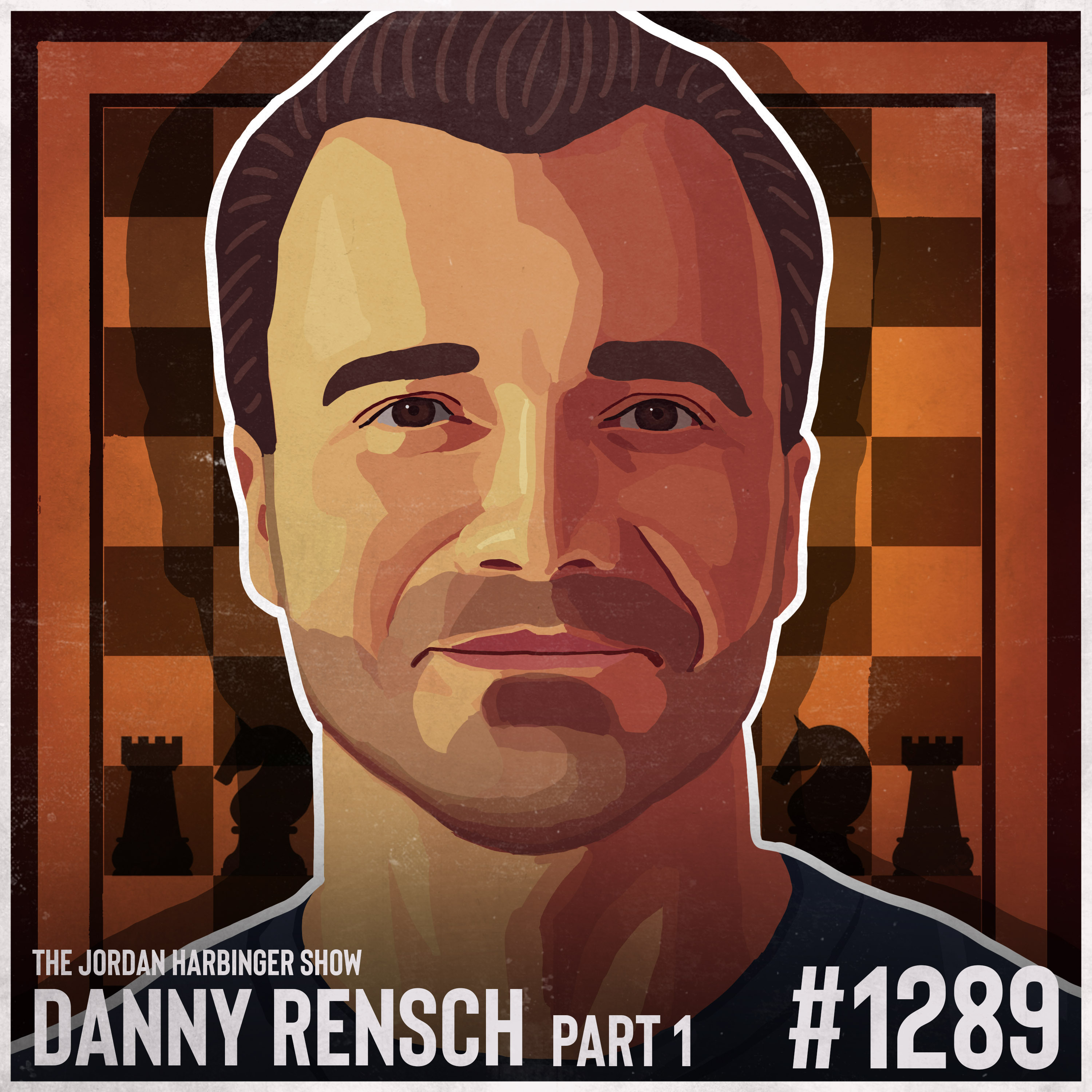
The Jordan Harbinger Show
1289: Danny Rensch | How Chess Freed Me from Life in a Cult Part One
00:59:08
Loading summary
Transcript129 lines
- [00:01]
A
This episode is brought to you by Progressive Insurance. Do you ever find yourself playing the budgeting game? Well, with a name your price tool from Progressive, you can find options that fit your budget and potentially lower your bills. Try it@progressive.com, progressive Casualty Insurance Company and affiliates price and coverage match limited by state law not available in all states. If you're the purchasing manager at a manufacturing plant, you know having a trusted partner makes all the difference. That's why hands down, you count on Grainger for auto reordering. With all on time restocks, your team will have the cut resistant gloves they need at the start of their shift and you can end your day knowing they've got safety well in hand. Call 1-800-GRAINGER click granger.com or just stop by Grainger for the ones who get it done. Coming up next on the Jordan Harbinger
- [00:53]
B
show, what were the real reasons for the Colt to start? And I always go back to money and power for this particular one. A lot of these cults have like a sex agenda. Even if the sex agenda didn't come out at first, it eventually rears its ugly head. This whole thing that we had that was this spiritual idea was actually just like alcohol, money, kind of narcissism, but it allows you to understand this was just not a good environment that was happening here.
- [01:22]
A
Welcome to the show. I'm Jordan Harbinger. On the Jordan Harbinger show, we decode the stories, secrets and skills of the world's most fascinating people and turn their wisdom into practical advice you can use to impact your own life and those around you. Our mission is to help you become a better informed, more critical thinker through long form conversations with a variety of amazing folks from spies to CEOs, athletes, authors, thinkers, performers, even the occasional extreme athlete, hacker or real life pirate. Apparently they still exist. If you're new to the show or you want to tell your friends about the show, I suggest our episode starter packs. These are collections of our favorite episodes on topics like persuasion and negotiation, psychology, geopolitics, disinformation, China, North Korea, crime and cults, and more that'll help new listeners get a taste of everything we do here on the show. Just visit jordanharbinger.com start or search for us in your Spotify app To get started today on the show, what if you grew up in a cult? Your dad left your mom to marry the 19 year old daughter of the cult founders, you kept accidentally asking out girls who turned out to be your sister and somehow in the middle of all that you became a chess prodigy. Today's guest was raised in an insular religious collective where money, healthcare, housing, even relationships were tightly controlled. Kids were passed around between families. Loyalty was engineered, independence was punished. And then chess entered the picture. What started as a way for the cult to win tournaments turned into international competition. A defected Russian coach who drank too much and played Don't Cry for Me, Argentina, naked at the piano. And a childhood spent on the road chasing titles. Instead of stability, we get into how cult leaders manufacture separation between kids and parents. What it's like to be groomed as the golden child of a movement, how chess became the battlefield for cold war intellectual dominance, how cheating actually works in modern chess online and over the board. And how AI might save chess, or at least make it more creative before it, of course, destroys humanity. And what it means to build a billion dollar company around a game that isn't really yours to own. And toward the end, we talk about something a little bit heavier. What does unfair even mean when the hand you were dealt in life feels completely rigged? Danny is brilliant and a fun conversationalist, even if you know nothing about chess like me. Here we go with Danny Wrench. So your upbringing was unusual.
- [03:28]
B
Yeah, it was. I was born into a cult. As I've talked about it more and more, I've gotten better at just saying that, naming it for what it was. But I grew up in a community, as far as I was concerned, a very small, niche, tight community that we didn't know many people outside of the collective, which is what it was called.
- [03:47]
A
Oh, they don't call themselves a cult.
- [03:48]
B
Yeah, they don't call themselves a cult. Surprise. But the collective itself was called the church of Immortal consciousness. It was founded by two people, Steven and Trina Camp. And Trina Camp was a trance medium. T R A N C E Trance medium. And the idea was that the collective was based on this idea that she was trancing a spirit that was providing sermons and advice and guidance for people. And so Steven and Trina had been traveling the world and doing this for years before they decided to start what became the collective, the commune. Eventually, you know, a cult. And of course, there's all kinds of opinions varying from people who were there at the beginning to people in my generation who were born into it, about whether it was always kind of the idea to start a cult, that these things sort of happen naturally or accidentally. As they say, absolute power corrupts absolutely. I think there's a probably an interesting debate on that. But that's the very quick version of what I grew up in.
- [04:44]
A
I always wonder, do you think these people believe what they're doing or is it like a traveling magic show? And they're like, dude, if we just say that this is real and not a trick, we can print money.
- [04:55]
B
When it comes to groups like this, it's all over the map, right? Because knowing the history of how it got there, given that they were also followers of this group called est, which was, oh, part of the self help Earhart, the second self help group, right. Which later was some of the foundings of the Landmark Forum. They were also into rebirthing, which is this idea that the most traumatic experience you will have in the body when you're born, your entire lifetime is the process of being born. And so rebirthing was a very popular kind of hippie movement for a while, where you sort of relive your birth under more calm circumstances to sort of rewrite some of the trauma and the neurosynapses of whatever happened. I'm explaining this because I think that knowing some of those parts lends itself to believe that they did have other things they believed in too. It wasn't just like the idea of like a roadshow of this trance, things that happens to be working out and people will pay for it. I think that there were all of these different elements coming together at once.
- [05:52]
A
It's so funny if you look at many modern cults, not all of them, and not the super, super crazy, like sex abuse ones generally, but if you look at a lot of the modern cults that have any sort of self help angle, they all come from that EST stuff, which is basically Silicon Valley, Redwood forest. Hey, you can reprogram your brain and then it leads to all these self help seminars and guru type people. It's so interesting. I mean, there's a hundred separate cults
- [06:18]
B
that came from this, maybe more, right? I mean, there are, I think, a lot of principles that have influenced things that probably wouldn't even be cults, but are out there, right. In terms of different things. So. So Steven and Trina were part of that group. My father and mother. My dad in particular was. I don't know, all the certifications was he s certified or like a rebirth or whatever. But they all came from the same sort of stuff. And so my parents were actually two of the earliest members of the collective. And I was born in 1985. By the time I was born, it had been established they were practicing in Mesa, Arizona. There were people there, and my generation, within a couple of years, was part of the first group of kids that were being born into the collective, which, again, at that point, it was full communism. Everybody was merged financially. It was sort of all bucks. Literally stopped with Stephen Camp. He was the boss. And so at that point, people's finances are merged. When you came to the collective, you gave up all of your material belongings. And part of that idea was like, okay, you are here to evolve spiritually. Any sort of material, worldly possession is holding you back in terms of your growth.
- [07:24]
A
Just give it to me.
- [07:25]
B
I'll take care of it. Exactly right. And it's funny because as someone who grew up in this, it's hard for me to talk about now, even, because when you have so much kind of indoctrination under the idea that, like, oh, if this is good for us, then I guess that makes sense. Yeah. Nobody should be more worried about a material thing than a relationship. I think even now you would go, oh, if you're framing it just under that, you would say, oh, I would definitely not value my material possessions over my wife and kids. And so there are benign ways that any message can be sort of used to empower or at least embolden someone to the idea. And then when you see it weaponized, it's the other side of it, right? Then you start to see, okay, that's true. But there's some real, like, inequality going on here. There's some shit that just doesn't make sense or check out.
- [08:08]
A
I mean, in the book, there's a shoe list where, like, you don't have shoes. And it's like, oh, when you ask your mom, like, can I get some freaking shoes issues? Oh, let me check the shoe list. And that's like a euphemism for stop asking me about shoes. There's a list of people that get them, and you're not on it. And then you talk about the leader who's, like, building a $400,000 house in the 80s or 90s in a place where that's like, basically a $4 million house in today's money in California or more. And it's crazy to me. Look, look, I would let this whole house burn down. I would save my wife and kids, obviously, and I wouldn't give it a second thought. But if you told me, give me the house, that's different. Yes, I don't value material things over my family, but I'm also not going to give them all away to someone else who's going to use them for their benefit.
- [08:53]
B
And that's why part of the transition that started to happen was that's an easier idea to get behind when you don't have anything and. Or you're like joining a collective that maybe they don't have more than you, but there's clearly like some sort of setup or infrastructure here that might allow me to be supported to some degree. It was easier to do for a lot of people before they had kids, when they didn't necessarily have a lot of money and maybe they were getting just as much out of it. But then as you start to have kids, as you start to become less of a young, free loving hippie in your 20s and into like, you're growing a family and maybe now you're a professional. And there's also the idea that later came on as I talk about in the book, that as people started to get inheritance and they started to get money from their dying parents, when real money hits the fan, for lack of a better word, a lot of the gloves started to come off in terms of how people were managing that and the inequality around money. And what was happening with people starting to get real money was one of the biggest things that did call to task what wasn't.
- [09:52]
A
Okay, yeah, it's a good point. If I was 19 and I didn't have any money and someone said, hey, we have a commune and all you have to do is like, work for stuff and everyone else is doing that, I'd be like, great. But if you come in and you're like a lawyer making 400 grand a year and you're like, hey, you have to give up all your stuff to all these kids who don't have anything, it's like, well, wait, what's in it for me again?
- [10:12]
B
But that's what it goes back to. Like, what's the debate about whether it was a cult or not from the beginning? I mean, if you know, like, history of, like, Jonestown, you're talking about a group that was, like, doing service projects and really diverse and interracially they were doing good things for people back when that was, like, really, you know, progressive. Obviously it became what it became. Right. If you think of knowing about, like, the foundings of, like, Synanon, this was a group that started by people who were in AA and taking some of the principles to try to help other addicts, like, get on their feet. Right. And then, of course, what happens with time and by the end, again, I'm not an expert on Synanon, but I know that it didn't end that way. Right. And so I think there's A lot of things that happen, I think, in the process of managing other human beings and when you're in the business of having to manage other human beings purely for the sake of managing them and their assets, like the manipulation and the expectations that go down, it's also the
- [11:02]
A
type of person that wants to be in charge of something like that. If you said, hey, Jordan, we want you to manage 20 other people's finances and make them all equal, I'd be like, no, thank you. That sounds like a huge headache. And if they're like, you can skim a bunch off the top for yourself, I'd be like, nah, that sounds like even more work and is also stealing. So the type of person who's like, wait a minute, I can skim off the top and I just have to tell these people what to do and they're going to do it, that's a very specific type of person who wants to be in that position. That's a cult leader who's maybe a narcissistic type of personality.
- [11:32]
B
Yeah. And the narcissism, I think, was strong among the leaders. But this is where the debate comes in is was there premeditated bad intent or are people having brainwashed even themselves to believe that they are the second coming of whatever? Right. They are the most enlightened spiritual path. And so you sort of wrap up your own justification around what you're doing based on your own belief of how good you are. And I think that's one of the things I touch on in my story, because for me, I'm telling it in a self aware, sort of unreliable narrator fashion, which is I've been wrestling with this myself and probably will my entire life. Right. When you have people who did objectively bad things, at least as far as how you evaluate it now, like what really were the motives, what happened? Making sense of that has been crazy.
- [12:15]
A
Yeah, I know everyone says this probably, but I don't think I could ever do it. Yes, maybe over time you start to believe what people tell you about yourself. But I don't know, it would be a very tall order for me to start a cult and believe, oh, actually I'm onto something.
- [12:28]
B
It says something about you, right?
- [12:30]
A
Yeah.
- [12:30]
B
I think at the time there was a lot of non denominational occult beliefs that were starting up and this was not just an isolated thing. You talked about EST maybe being the seeds that were planted for hundreds of future types of trees that grew. There were obviously the extreme cases that people will never forget, like Waco and Jonestown and whatever. But I think that there really was something to a generation of people rebelling against the mainstream orthodox, like Judeo, Western Christian kind of society. And so I think you did have more people who were like, hey, like, I've got my own way of doing this and I'm going to figure this out. And I think that there were just a lot of people. I think now you don't have that. Like, maybe you don't. I heard about a TikTok cult recently, by the way. There's crazy things that are happening everywhere, right? But I think there are different ways that people will always be taking advantage of those who, for whatever reason, their own damage, their own trauma, are willing to give away their agency. Whether it's their relationship with God or faith, whether it's their relationship with like money, because they have their own, like, shame relationship. There are all kinds of things that I think happen. And I just think that group, it was super unique what I grew up in. It was also in an odd way, like, less unique than I realized with time.
- [13:39]
A
One thing I always see in cult books is older men marrying really young women. And this is no exception, right? Your dad gets separated from your mom to end up marrying a 19 year old daughter of the founders. Which makes sense if you're the founder and you're like, I want to keep this person in because they're really, I don't know, wealthy or have money or smart or charismatic. I got to lock them in. How do I do that? Marry my daughter. Even though you're 40 or whatever, who's 19. And it was humorous irony in that you found out who your real dad was later in life because you kept asking out girls and they were like, she's kind of your sister. Oh, wait, no, she's also kind of your sister. So here's the problem. These are a lot of these women here are your sister. And it's like. Wait, explain.
- [14:20]
B
Yeah, that was how I first found out. My younger sister at the time, which I didn't know she was my sister, had a crush on me. And then later I wanted to ask another girl to a community date, collective date, and she was also my sister. My dad was bouncing around there for a while. And it's kind of weird because like, again, as I've like educated myself, I guess to use that term as like some weird historical patriarchy has always existed with this world of like young women being like used and married for land or for control. And so there's like this aspect to it that is worthy of its own reckoning. Historically. But then when it came to this cult group, you have a very modern day example. People go, wait, what? This is happening? Right. So you have. My dad was 38 and Marlo was 19. And there were other gaps of similar nature with other men and women. And so it's hard because so many of those things were justified under the guise of it being spiritual. Right. And what the collective was practicing was this idea that you are a spiritual being having a physical experience, not the other way around. Which means a 19 year old and a 38 year old could both be very old souls and kind of like get over it from a worldly perspective. Right. So this was the justification of this type of thing. And I'm only explaining that because I think that when people hear about these things for the first time, they go like, how was that? Okay. Right. And so I always. I try to give that context because I. Not because I'm in any way a cult apologist, but because I'm like, hey, like, this is something where I've learned, this is the problem with spiritual language or rappers being used to justify what may just be your base, like animal instincts.
- [15:53]
A
Yeah. I always wonder, do these people realize, like, huh, I kind of want to sleep with this 19 year old girl because it's kind of nice. I'm old now. Ah, let me rationalize this. Or does the rationalization come first? And they're like, so this allows me to sleep with a 19 year old girl. All right, I'll buy into it. I always wonder which part of this comes first, because as a 45 year old man, I don't know if I could get there. Again, I say that not being in a cult, so it's different, but what rationalization would somebody have to give me where I'm like, this is okay. You have to shed all of your not only societal conditioning that says that's not okay, but just like what I presume is a base level of kind of decency and common sense where you're like, she is still a child. This is weird. And you just go, it doesn't matter. Her soul is old. And you have to believe that enough to do it or be like a sociopath and not care and use that as a rationalization.
- [16:42]
B
Yeah, I don't even have the answer to it. My relationship with my dad is complicated. Him and Marlo are still together to this day, so they have figured out a way to make that relationship work. Although again, they were also knee deep in the cult and cult leaders themselves. I guess my answer for it has Been. I think it's a little bit of everything. First of all, I have done this exercise for myself. And if I know a young girl who's 19, I'm like, she's like my niece. I've had a very hard time rationalizing my father's behavior, like, full stop. There is no justifying it or rationalizing it. So saying that and I put it through both my own personal exercise and the worldly exercise. And then I try to go like, all right, so this was an environment where people were being convinced that this whole spiritual framework was the governing body, not the government, not the law, or let alone any sort of ethical guideline. And then a lot of these cults have, like, a sex agenda. Even if the sex agenda didn't come out at first, it eventually rears its ugly head. The collective that I was being raised in had this sort of, like, unjustifiable actions by older men and younger women, but it wasn't polygamous. And there were, like, things that don't exactly check the box. It's almost like every cult has its own unique thing. And what were the real reasons for the cult to start? What eventually tore it apart? And I always go back to money and power for this particular one. Whereas sex became something that I would argue was almost leveraged by Steven and Trina with the more successful men with their daughters for their motivation. It was often that they wanted their daughters to marry successful men because they actually, Trina came from a place where she was poor. She didn't want to be poor. They looked at the idea that some of the more influential men, whether because my dad was a lawyer, there was another guy who was a general contractor. The men who had real worldly money moving in, the idea that they would be literally in bed and wedded to their family was much more of a deliberate thought than was led on by. To most of the collective. We grew up thinking, oh, these are really spiritual relationships. And we were told this. And over time, I would learn that I was even told by one of Trina's daughters that literally my dad and Marlo were put together in a process, which is a word we use for a meeting one night when Trina was drunk and she was just like, oh, you're just going to be together. And so, like, this whole thing that we had that was this spiritual idea was actually just like, alcohol, money, kind of narcissism. And then this doesn't make my father a victim in any way. Again, what he did is not a situation to be victimized, but it allows you to understand this was just not a good environment that was happening here.
- [19:06]
A
Cults really do serious damage to those who fall into them. But you know what won't ruin your life? The amazing sponsors who support this show. We'll be right back. This episode is also sponsored in part by BetterHelp. Sometimes February makes it look like everyone else has their love life totally dialed in. And no matter where you are married, dating, single, it can mess with your head. But in reality, nobody's got it all figured out, even the people who look like they got it all together. And yes, that includes me. Shocking, I know. And yes, that's where therapy can be really useful. It's a way to get clear on what you actually want, what's been feeling heavy, and how to take some pressure off yourself, whether you're working on a relationship, recovering from one, or just trying to stop replaying the same unhealthy patterns. That's why I use and recommend BetterHelp. BetterHelp therapists work according to a strict code of conduct. They're fully licensed in the us. Just fill out a short questionnaire so they can pair you with somebody who fits your needs. They've been doing this for 12 plus years and their match fulfillment rate is industry leading, so they usually get it right one of the first few times. And if not, you can switch therapists anytime from their tailored recommendations.
- [20:03]
B
Sign up and get 10% off@betterhelp.com Jordan
- [20:07]
A
that's betterhelp.com Jordan this episode is also sponsored by Good Chop. I'm intentional about what I'm putting in my body, especially when it comes to meat and seafood. So we've been trying Good Chop and it's been great. They deliver high quality American meat and seafood straight to your door, vacuum sealed and frozen at peak freshness so you can keep your freezer stocked and cook whenever you feel like it. First thing I made was USDA prime ribeye. Great marbling, crazy tender, like something you get at a steakhouse. Another big plus. Everything is sourced exclusively from American farms and Fisheries so you're not only getting quality you can feel good about, you're also supporting local family farms and independent ranchers here in the US which I respect and the selection is solid. You can build your own box from over 100 options. Choice in prime steaks, grass fed beef, wild caught seafood, organic chicken, responsibly raised pork, basically whatever you're into. Plus they back it with a 100% money back guarantee. If you don't love it, you get your money back. Go to goodchop.com podcast and use code
- [20:57]
B
50jordan to get $50 off plus free
- [20:59]
A
shipping on your first order.
- [21:01]
B
That's $50 off plus free shipping at
- [21:03]
A
goodchop.com podcast code 50jordan. If you're wondering how I managed to book all these great authors, thinkers and creators every single week, it's because of my network. I'm teaching you how to build yours for free over@sixminutenetworking.com I know you probably don't care. You're not booking a show. You think you don't need it in your career. You're retired. Whatever. This is for you. Six minutes a day is all it takes. It's not going to make you cringy or awkward. It's going to make you a better connector, a better colleague, a better friend, a better peer. Whether you knew the job market or retired or in the middle of your career, many of the guests on our show already subscribe and contribute to the course. Come on and join us. You'll be in smart company where you belong. The course is free. 0 shenanigans@sixminutenetworking.com now back to Danny Rench. If you think about it, this is almost what most marriages were throughout most of history, right? Like, all right, you need to marry this French prince because you're my daughter and I don't want to go to war with France. And it's like, well, have you met him?
- [21:57]
B
No.
- [21:58]
A
Who cares?
- [21:58]
B
It's fine. No, this is good for the money and the family and the land and all the things. Yeah.
- [22:03]
A
And you're going to have heirs. And it's like, okay. And it wasn't like, what do you think? It's like, I don't care what you think. It doesn't matter what you think.
- [22:08]
B
And that's why I brought that up initially, like, the historical kind of patriarchy. I mean, the whole, like, institution of marriage. I am married and I believe in monogamy and integrity with my wife, whatever. But I am acknowledging that there's a lot of evidence historically throughout humanity that, like, the whole idea of the contract for the woman to be given for land is unfortunately a thing that has existed for way too long. I guess what I've tried to do is I've studied this. I'm in therapy, will be for the rest of my life. I have a relationship with my father. I've done the best I can to kind of make sense of my life. I go, you just sort of look at it and go, this was fucked up. This was not okay, there is no excuse to be made for this. And then also you appreciate that this was an environment that was completely out of control. Spiritual verbiage and language being used to rationalize base instincts of money and power and ultimately sexuality being leveraged, even if it wasn't polygamous or in that way. Unfortunately, a lot of those things have been done throughout history and justified under the auspices of the greater good. And so I guess that's what I was saying is, wow, this is really messed up. And also, yeah, people within the collective thought they were more spiritual than all of their forefathers. And in reality, they were just acting out like a pattern that had been there for many years.
- [23:20]
A
The way you grew up sharing bedrooms, but not two kids, but like just packed, sharing baths and water and stuff. In the book, it's kind of horrific how poor you are. Like, no electricity sometimes no running water. I mean, and you're moving constantly, which is, I think, by design. Right? Don't get used to this because we don't want you to ever feel like you're what, at home? Is that the idea?
- [23:43]
B
There's a principle right there that was justified under the spiritual idea that you should never value material comfort over relationships. By moving houses, by developing relationships with different members of the community. The horse was in front of the cart in terms of what brings you to God, which is like telling the truth, being kind. And in good relationships, I shouldn't even say being kind because I don't even know that that was a principle of teaching. It often wasn't. They were brutal to each other. I would say this relationships, telling the truth. Now, telling the truth is a very dangerous thing because truth with a capital T, if you're willing to weaponize that against anybody, can often be just absolute cruelty. And so I've never corrected myself on saying kindness versus truth. But as I'm saying that in real time, I realize that is really a defining difference between what I've come to embrace for myself in terms of truth with tact is kind. You say a different type of truth to your 6 year old. The collective was founded on relationships. Telling the truth was like the ultimate thing, right? That was how the process, which was a word that we use for these group meetings, everyone came together to tell their judgments and tell their truth and no secrets. So that ultimately was this idea that everything's out in the open. So your relationships, your housing situation.
- [24:54]
A
Well, except for who's your dad.
- [24:56]
B
Yeah, well, exactly who your dad is. That's a secret. No, that's fair. And so those things were like the governing principles. Put your relationships first, always tell the truth, and practice the process, which is this. No secrets, judgments on others, so that everybody is connecting. So what that meant in practice was that we were moved around. There were like a dozen houses where families were living in and out of all the time. We were sharing bedrooms with kids that weren't our family. Again, we're talking like 10 to 12 kids a bedroom, sharing bath, water. We were poor. You mentioned the shoelace. Welfare doesn't even cut it in terms of food was bought once a week in like mass amounts and then rationed in different baskets and delivered in the baraghetta, which was this huge truck. We called it the baraghetta. It was driven around and people would get their basket for the week, which was mostly like beans and rice and basics and some fruit and some things. And so all the things that were required to survive were sort of like secondary. In fact, it was literally a thing that, like, survival is not in this teaching, meaning your goal is to like overcome the idea of any of these things needed to survive. Because the spiritual process is what you did.
- [25:59]
A
You can overcome your protein requirements.
- [26:01]
B
Yeah, yeah, exactly. Those things were the governing principle that everybody had bought into. And again, everyone always listens to this and goes, how did nobody think that wasn't okay? But when you sign up for these sort of things, you are writing a covert contract between you and the cult leaders that they're in charge of the most important thing, which is your spiritual self worth and what people are willing to do when they feel like they are getting the kudos from someone else, that they're worthy of love, that they're God, that they can feel good. That's where you see the dangers creep in. Because now almost everything else can be justified, if you want to call it just like mommy and daddy issues, that you now have created this sort of guru and authority figure who's capable of telling you whether or not you're worthy of love and moving to God. And so all these other things that were crazy. Every time I talk about this, I have an imposter syndrome moment because I go, oh, yeah, that really was bad, like every single time. And it never gets old.
- [26:56]
A
So how did you get into chess? When I think backwoods cult with no running water or not enough running water, I also don't think like intellectual chess competitors. It doesn't match.
- [27:07]
B
The story is that in the summer of 1995, the movie Searching for Bobby Fischer. Great movie. You've seen it, right? A wonderful movie. Even if you don't love chess. That movie came out and I watched it on tv. And my stepbrother, he also got into chess at the same time, which in hindsight was super important because he was at, like, the top of the totem pole as far as the hierarchy of the collective. I was at the bottom. But we both got into chess and there were three things that came together. I like telling this because I think with any sort of really unique story, there are always, like, dynamics that you didn't know were sort of lightning in a bottle happening at once, like the outliers theory. But in hindsight, you go, oh, man, that was like lightning in a bottle. That happened the way it did. So the three things happening that summer were Searching for Bobby Fischer came out. The collective had a bunch of bodyguards around because Steven and Trina Camp had been threatened by some locals. As far as, like, death threats, which it was actually very scary. People showed up to the local community school with guns. And so they were accusing us of being a cult. And twist ending. We were a cult, but not that type of cult. There wasn't violence going on. This behavior was not justified. And so all of the kids who normally would have been outside being just village rats running around in the forest, like, we were all under house arrest, literally. So I watched this movie and learned how to play chess. I wasn't allowed to play outside, and neither was Dallas. And we both got into this movie at the same time, so we were playing chess all the time. And then the third thing that happened was Stephen Camp started to have health issues. He had a heart palpitation or something.
- [28:34]
A
Okay, and this is the cult leader?
- [28:35]
B
Yeah. So he was bedridden, but he loved chess too. So these three things that happened at once were. He loved chess and had been following this match in New York, this Gary Kasparov vs. Vishwanathan Anand, which was a big deal because coincidentally, the summer that Searching for Bobby Fischer came out, that was the first World Chess Championship match that had been held on US soil in decades. Right.
- [28:57]
A
Cause usually it's like a Soviet Union.
- [28:58]
B
Exactly. It's not a thing. And so all these things were. Western media was paying attention to chess for the first time maybe since Bobby Fischer in the 70s. This movie had come out and these two kids trapped in a cult were basically under house arrest and didn't have anything else to do. And so we went from learning how to play from, like, I think the beginning of the summer to literally, it was like all we did all the way up to this World Championship match that was happening in September. And in hindsight, it was like the kind of magic you would need for a kid to go from 0 to 60 in terms of not playing chess to being like, holy shit. Like, maybe I'm really good at this game.
- [29:35]
A
Yeah, I'm wondering. Cause I know you were learning chess at. And I'll air quote this at school, because it wasn't really school, but you're learning chess there constantly. They wanted a winning chess team. You start crushing tournaments. But when did you go from like, hey, this is kind of fun. To like, oh, wait, I'm a child
- [29:50]
B
chess prodigy kind of accidentally, right? Because the main reason I got really into chess, like, every kid was, okay, I did love the game, and I explained the magical trifecta of things that happened. But then I got really good at it because Stephen Camp was into it. And anything that Stephen Camp was fond of, everybody was into, right? He was literally in charge of every human being in the collective. And so I got good at chess because I was good at chess. And once I was getting kudos for being good at chess, all I wanted to do was get good at chess, right? So whatever chicken or the egg happened first, it's literally how I feel about it. And so I went from zero to being one of the top kids in the country. Within two years, I was already an All American. I was one of the top rated players.
- [30:30]
A
How old are you?
- [30:30]
B
I was turning 12. It was wild. And by the way, there were a lot of other really great players, too. That's just how crazy it was that I got so good and there were a lot of other good players, and we weren't thinking about it like, oh, like we're child prodigies. We were like, this is the most important thing for the community, because for Stephen Camp, this is the most important thing for the. And once we started winning, not just state, but national scholastic Championships, it just steamrolled.
- [30:57]
A
Surely they're like, oh, we want to come to your school and look at the chess program, since you're still winning. And it's like, rain check on that, because it's in a shed and we don't have a school.
- [31:04]
B
There were people who were already accusing the Shelby School of cheating, and we weren't cheating. We literally were in an environment that, like, they couldn't have replicated if they want to.
- [31:14]
A
We're not cheating. We just don't teach them math.
- [31:16]
B
We're reading. Exactly right. And so we went from zero to 60 because there wasn't anything else to do. Because we all wanted to perform to be good in Stephen Camp's eyes. And so there were already rumors that were starting, not just in Arizona, outside, like, because people go, like, first of all, where did the bleep did this kid and these kids come from? What is going on here? And then two. Are they breaking boundary rules? Are they recruiting in a way that's illegal? Because it just didn't make sense that a bunch of kids from nowhere got all good at the same time. And so there were conversations like that around just all the athletics and kind of the rules of it. But in this particular case, the truth was stranger than fiction in terms of what people didn't know about our environment.
- [31:54]
A
You know what, though? It does sound like an Eastern Bloc thing, where they're like, hey, this kid's good at gymnastics, okay? She's five. Don't care. Take her away from her parents and send her to this, like, gymnastics compound where she only does gymnastics until she's 18. She can visit her parents three times a year in Romania. It's kind of the same thing. I mean, if not, at least you lived with your parents for a while. Somebody who called your parents anyway?
- [32:17]
B
That's a really good point, because that was another thing. That generation of human beings, Stephen Camp, my mother and father and whatever had come in thinking maybe wasn't okay. But the idea of, like, a boarding school, the idea of, like, a kid being plucked because they were showing potential for something, I guess, was something they were, like, aware of, and so it didn't become an issue. While everything was going well and all the parents were rallied around this mission for a while, literally, the mission of the collective was the chess team. Everything was about it. Like, garage sales were being done to raise money to send us to tournaments. Everybody was in this together. And so there was this mission that if the chess team and Danny can be really good, that would prove to the world that we're not a cult, or if we are a cult, maybe they should learn something from us. This was literally like, a thing. We were all drinking the Kool Aid, for lack of a horrible metaphor to make. That was what we were doing. And then what ended up happening, of course, was as my chest starts to struggle a little bit and Stephen Camp starts to look at my relationship with my mom and wonder if there's a better way is when my life started to become more under his control and less under my mom's.
- [33:23]
A
There was allegedly a $40,000 bounty on Danny. 40 grand. Inflation really has hit everything. I was going to do it for 35. We'll be right back. This episode is sponsored in part by Momentous. When people talk about performance, they usually jump straight to protein, creatine, cold plunges, all that flashy crap. But gut health is often overlooked. When your gut is off, everything's off. Since adding Momentous Fiber plus into my routine, I've noticed more stable energy throughout the day, better digestion, even improvements in my cholesterol numbers. Nothing crazy overnight, just steady foundational progress. And that's the kind that actually lasts. Momentous Fiber plus addresses one of the most overlooked foundations of long term gut health. Fiber is not just about digestion. It is a key driver of gut health which directly impacts nutrient absorption, energy stability, recovery, focus, mood, overall performance. It's a complete three in one formula, soluble fiber, insoluble fiber, and a prebiotic resistant starch designed to support the whole gut process. Like everything Momentous makes, it's science. First clean and independently certified for sport. I got through that whole spot without making a poop joke. Right now, Momentous is offering our listeners up to 35% off your first order
- [34:28]
B
with promo code JHS. Head to livemomentous.com and use promo code JHS for up to 35% off your first Order. That's livemomentous.com, promo code JHS.
- [34:39]
A
This episode is also sponsored by NerdWallet. Running a small business is already a full contact sport. You're doing marketing, ops, finance, legal. And then you hit that moment where you need capital. Maybe it's making payrolls, smoothing out cash flow, covering a late vendor payment, buying inventory in bulk to protect margins, or investing in growth like advertising, or even a second location. So you do the responsible thing and you go to a big bank, Wells, Citi, whoever. And they say no. Not necessarily because you're a bad bet, but because their criteria are rigid. Then you go online. It's a mess of sketchy lenders, sky high rates, fine print that's confusing on purpose. And if you pick the wrong loan, it can seriously crater your business. This is your life's work. Don't hand it to someone shady. That's why we recommend Fundera. Powered by NerdWallet. It is a free, user friendly marketplace. You fill out one quick questionnaire. You get matched with options from 25 vetted lending partners. Plus a real person can call you and talk you through your situation. You can compare different loan types. There's no hard credit check to just explore. So if you're ever going to need financing, keep this one bookmarked and here's the best part.
- [35:31]
B
For a limited time, when you visit
- [35:33]
A
nerdwallet.com jorphdan and fill out the no
- [35:36]
B
obligation form, you'll get VIP treatment and
- [35:38]
A
talk with a real person who knows
- [35:40]
B
all the ins and outs of small business lending. Don't risk your business on unreliable lenders. Go to nerdwallet.comjordan to find funding you deserve. Fundera Inc. And MLS ID number 1240038
- [35:51]
A
if you like this episode of the show, I invite you to do what other smart and considerate listeners do, which is take a moment support the amazing sponsors who make this show possible. All of the deals, discount codes and ways to support the show are searchable and clickable on the website@jordanharbinger.com deals if you can't remember the name of a sponsor and you can't find a code, email me jordanordanharbinger.com we're happy to surface those codes for you. It is that important that you support those who support the show. Now back to Danny Rench. I also want to talk about your coach, this drunk Russian defector, Igor. This is like a colorful character in your life. Tell me about this guy.
- [36:26]
B
So Igor's a colorful character for the whole chess world. What's been funny since the book has come out is how many people in the chess world have been like, ah, that makes so much more sense now. That's where Igor went for those two and a half, three years. What happened to this guy's life and how did that go down? So Igor Ivanov has his own story worthy of whatever you want to call it. I mean, he literally defected from the Soviet Union by running across asylum lines during the Cold War on an emergency plane stop from a plane that was competing in the Capablanca Memorial in Cuba on its way back to Russia. Had to make an emergency stop in Newfoundland, somewhere like Canada, somewhere around here, right?
- [37:03]
A
No way.
- [37:04]
B
And during this emergency stop, he literally runs away from the KGB to get across boundary lines to claim asylum.
- [37:12]
A
So he just jumps out of an airplane and runs across the tarmac.
- [37:17]
B
You literally can't make this up. Like, it's crazy. And so he ended up being one of the top players in the country, one of the earliest defectors of the Soviet Union before the wall fell. And at this time, literally it was like the Soviets and the rest of the world. Like, literally there were events called like the Soviets versus the world because they were that good.
- [37:33]
A
I always wonder how these people know I should defect. A lot of them are young and it's like, how do you know it's better here? You don't have Western tv, You don't really know what you're getting into.
- [37:44]
B
I think it's because we underestimate just how bad it was. It must have been, because whatever the propaganda is, like, I've now been to Russia. I've seen the buildings that were built to show, like, this is a thriving apartment building. And you walk in the building and it's gutted. That was a thing that was being done to compete with the perception of the West. It was so bad. And even just having competed in any tournaments outside of it, they could already, like, physically see that life was different.
- [38:08]
A
I guess if you're with KGB handlers and they send you to like, I don't know, Poland or something, or even like East Germany, you're like, huh, Even this, still behind the curtain is better than where I live in like, suburban Novosibirsk or something. What does it look like in the United States?
- [38:24]
B
Yeah. So Igor defects. He's a character in the chess world in the Western chess scene now, like I said, one of the earliest defectors. At some point, many grandmasters were defecting from the Soviet Union. Eventually the west in the 80s and 90s became populated with tons of former Russian grandmasters, if you will. But Igor was one of the first. And he eventually makes his way to the southwest and at some point bumps into Stephen Camp, the leader of the collective. And we're in need of a chess coach and Igor is in need of
- [38:52]
A
stability and an unlimited supply of vodka.
- [38:55]
B
Unlimited supply of vodka, right. And so it was a bit of a match made in heaven and hindsight. And what's crazy is how quickly and I think about this now and how quickly. And this was Stephen Camp's way, the way the collective, it went from zero to 60 again goes from meeting Igor Ivanov at the Arizona Open or the Copper State Open to buying him a double wide trailer on a plot of land in the village because no one's really there. And this was now Igor's house. And this was where we went into chess with him every single day, me in particular. And so Igor went from this idea that he would do some training with us to literally being the drunk Russian chess master in residence for the cult. And we dealt with him every day. And so that was how Igor entered the picture.
- [39:36]
A
He is at least two full episodes in your 10 part docu series. Whatever's Coming, the whole defection thing, and the way you talk about him in the book is Funny man like you show up to his house, his trailer in the morning, and he's plastered on his bed from the night before. Make daddy a drink or whatever, literally. And you're like, okay, orange juice. And he's like, filling it half up with vodka.
- [39:56]
B
No, I mean, I learned how to make a proper screwdriver. I learned how to fill it up properly with vodka and orange juice.
- [40:01]
A
It makes me nauseous to think about that. Him drinking that every morning, hungover. It just makes my stomach turn over.
- [40:07]
B
Even now. It's crazy. And again, there was a lot of alcohol abuse in the community. We had never seen anything like that, at least not openly. Because the difference between Igor and a lot of the secret alcohol abuse, which I learned with time, how many people were filling a little bit of whiskey or vodka in their coffee, and there was rampant alcohol abuse, like, full stop in the community, because alcohol was partly encouraged as, like, a truth serum. Back to these principles. But regardless of that, or before going into that, Igor was the first, like, just open alcoholic, right? Because he didn't have to justify his presence. He was there under the understanding to make chess players. And nobody was going to challenge Stephen Camp's perspective about it, really, besides my dad. My dad and him went toe to toe on this a lot because my dad never liked Igor. And for all those reasons. But other than the place where they butted heads, like, Igor had carte blanche to do whatever he wanted to do. So it was the first time we really experienced that you end up getting
- [41:00]
A
passed around to different families. What's that all about? It seems like they tried to sever the relationship between you and your mother, but I don't really understand why.
- [41:09]
B
So this has probably been one of the things that I have had the most difficult time coming to terms with. This is the one conversation that I always get emotional about because my. My perspective of how this went down as a child and what allowed me to cooperate and essentially my own abduction that was coming up, was just a very different perspective. When you hardwire your thought about what's going on and even wrap up your own sort of spiritual story, oh, I'm on board with this, because I can do this. I'm strong enough. You look at it very differently. And with hindsight, I not only have a very different view about what was being done to take me away from my mom, but then also have heard evidence. And this is the hardest part of Stephen Camp was already considering whether he was just gonna directly take me from my mom and just put me under his wing. And adopt me. And apparently when that was suggested, regardless of all their faults, my dad and Marlo, like, both objected. They were like, no, you're not fucking doing that. If anything, he's Steve's kid. Even though he's not our kid, we don't want him. Which has been why the whole thing is so messed up. Cause they didn't want me. Stephen Camp wanted to control me because he believed in chess and saw that I was a prodigy. If anything, that made them resent me even more because I was getting all this attention. All that was agreed upon was that my mom was no longer, like, spiritually up to snuff to be in charge of my life. But before that, literally, Band Aid could be pulled, what happened was I was moved out of my mom's house to live with Lane and Nicole, which Lane is Steven and Trina's oldest son. And I've lived with them for a while. I lived with Trina, William. I lived with Roger and Amanda. I lived with multiple different families. And it was very traumatic because I got sick one winter. I talk about this in the book, where I was, like, the kind of sick where, like, I needed my mommy. I was an 11 year old kid and I was running like a 104 fever, and I was being told that I was making up the sickness in order to get my mom's attention. Right. So these sort of experiences were sort of making me more angry, hardening me a little bit. And ultimately, despite the fact that he was the abuser, with more and more perspective at times, all I really had was a relationship with Stephen K. Yeah.
- [43:08]
A
God, it's psychopathic, man. How they engineered the separation from your mother and then treated you like this. In the book, it is psycho. That's my impression.
- [43:17]
B
Yeah, it was. Again, that's why this is very hard. Because for me, it was like, okay, I'm being told that this is going to help me progress in chess. I'm already an All American. I'm still getting to play chess, which I love. I'm still loved by Stephen Camp. Okay, I guess this makes sense. The term used was fly the coop. I need to be able to be on my own in these things. And at the same time, now that I understand the level of kind of just intentionality that was going into this idea that they were going to try to put me on a path to become a world chess champion at any cost. It wasn't that I didn't want to be a world chess champion. I was a very talented chess kid, but not at any Cost, and that's not the kind of thing that anybody wants for their life. It'll break a person.
- [43:53]
A
It's interesting that it was any cost for you, but not for the guy pushing you to do it. He wasn't the one incurring the cost. He was just making you do it as a kid. And you had chronic. You have tinnitus or tinnitus.
- [44:05]
B
Right. Still have chronic hear loss. I am very, very deaf. 60% deaf in my right ear and 40% in my left. So I started developing ear infections, really right after I was, like, officially taken to finish that part of it. I went from being bounced around under this justification of it helps Danny be stronger, helps him develop relationships with different people in the community. And then the summer when he literally told me, like, hey, like, you need to go live with your dad and Marlo, and. Which, again, was a complete 180 of anything that had ever been told. Because when I first learned he was my father, after years of being kept secret, I was told very strongly, don't ever make any claims over this man being your father, because that would be spiritually out of integrity. That's unrighteous. And my mom and I were very much at the bottom of the totem pole. And so now it was like, you're going to go live with this man and Marlo because they'll help you reach higher heights. But then, the moment I was moved in with them, I was taken and sent to live alone in the Valley, which we called it. The Valley. The Block. The Block was a couple of houses on East 7th street in Mesa. It was referred to as the Block. And so I basically lived on the block alone with Stephen Camp as my remote parent.
- [45:10]
A
How old were you?
- [45:11]
B
I was 13.
- [45:12]
A
This is so wildly inappropriate.
- [45:14]
B
So I'm getting to that because it gets to my ears. So I was still already traveling a ton at this time, but now I was living alone. Igor was there a lot of the time. I saw my dad and Marlo come and go, but really, I was on my own with the idea being that living in the Valley, it was more convenient for me to hop on a plane and go to Vegas or go to Philadelphia for the world.
- [45:32]
A
Doing that yourself by yourself?
- [45:34]
B
Often by myself.
- [45:35]
A
So you're 13, traveling to Vegas alone to play in a tournament.
- [45:38]
B
Sometimes an adult of the community would come with us, but sometimes I would just meet somebody there, and they would, like, check me into the hotel. Sometimes I would show up with a bunch of cash and literally pay for the whole hotel, like, in advance with Cash. It's funny how quickly we went from everyone having debit card and credit cards. But at that time, like, the community didn't have a lot of credit cards, if any, besides probably a few that the leaders had. And so my life was literally traveling with enough cash to get through the whole trip on my own. I would meet adults there who were 18 who could check me into the hotel, because legally, you had to be.
- [46:10]
A
So what hotel is like, sure, bro, come on and check in. This is not weird as hell.
- [46:14]
B
Exactly. So that happened a lot. And there were different families that were surrogate in different ways, and there were different former members of the collective that I would get in touch with. It was always odd for them. In fact, I wonder if any of them will accidentally find my book or my story, because I would fly in and, like, someone would pick me from the airport. Random person named, like, Glenn. And I would stay with him and his wife that night. And at some point, they would ask questions about the community, and I would learn that they knew Stephen Campben this way. And I would stay with them one night, and then the next day, they would take me to the hotel where the chess tournament was, and I would stay at the hotel for the rest of the time. But those types of things happened often.
- [46:46]
A
You're so lucky. You did not get seriously abused. You were abused, but you know what I mean.
- [46:50]
B
Not in that way. And I wasn't. I had a different type of abuse that happened in the collective. But I will say, as far as that goes, I was not God. Could have.
- [46:58]
A
Could have happened, and nobody would have
- [46:59]
B
ever been able to. But there were scary moments, like, you know, the Tom Hanks scene in Big where he's shoving the dresser in front of the door because he's so scared of the city noise. There were moments where I was scared shitless out of my mind because I was traveling. I shared a story of flying into Rhode island and, like, being on a bus and there being, like, a knife incident that happened on the bus. And I was alone. There were some things that went down that were just like, I would not want any of my children or anybody's children in that scenario, but. But to my ears. So what happened was the main thing that I did besides chess, after being officially on my own in the Valley was I swam a ton, loved swimming. It literally was my thing besides chess. And I would hold my breath for as long as I could. In hindsight, I'm saying all this now knowing that I was probably going in and out of, like, diving to the bottom of the deep end and up. Not really properly dealing with swimmer's ear, getting on a plane the next day, not really having anybody to talk to about it. This was happening during, like my adolescence, from the age of 13 till 17, 18, even when I started dating my eventual wife. And so in hindsight, I now know that I was basically allowing severely neglected swimmer's ear to become like real infection that even further became not just tinnitus and started with early hearing loss before my kind of massive incident. But eventually it became, you know, the trauma that it was where I almost lost all my hearing and now have what I have.
- [48:19]
A
Nothing says healthy mentorship like a drunk naked Russian defector playing Don't Cry for Me Argentina on the piano while you prep for Nationals. Honestly, still more stable than most podcasters. We'll be right back. Don't forget about our newsletter, Wee Bitwiser. The idea is to give you something specific and practical that'll have an immediate impact on your decisions, your psychology, your relationships. In under two minutes, if you haven't signed up yet, I invite you to come check it out. It's a great companion to the show. Jordanharbinger.com News is where you can find it. Now for the rest of my conversation with Danny Rench. I have so many notes about this Igor guy. Like, he's just naked and drunk and playing the piano and singing. I mean, again, like favorite character of
- [49:01]
B
your upcoming docu series.
- [49:03]
A
Do you still have the chess set that he gave you?
- [49:05]
B
Yeah, it's still valuable to me and I have it sitting up in what I hope to be someday, my own kind of podcast studio. It was a warped board. So, like, for a long time, Igor and I, literally, there was a piece of cardboard that sat at the end of the table that I remember when we lost, we were so irritated, as if we couldn't just get other paper and cardboard. But we had the perfect piece of cardboard that you folded once and put under and it pinched just enough because it was this wobbly board. So eventually when I became an adult and had this board, I, like, got proper cushion and, like, had fixed the board since then.
- [49:34]
A
It's a metaphor. They're gonna show that in the scene one and then at the end of the season one.
- [49:38]
B
It is funny because I'm getting pitched on this right now, like both movies and series ideas, because people have just said that the book reads like a movie.
- [49:45]
A
It does.
- [49:45]
B
Yeah, it does. I'm being pitched certain scenes and I'm not saying that just to, like, name drop it it is true. And it's been very exciting and interesting to see people's take and how they want to bring it together. So I'm being showed a couple scenes of how, like Danny's first scene with Igor and this and that. So there probably will be a cardboard scene.
- [50:01]
A
It makes perfect sense to me, man. People are probably wondering how you went to school while doing chess tournaments, and is the answer you kind of just didn't.
- [50:08]
B
There were, like, basic expectations on a certain level of math, grammar, English. And so the one thing about the community that had a through line of English and writing skills, because there was always this pressure on how you presented externally for all kinds of reasons, we can understand why. One, to create the perception of not just being good and okay, but actually being better and on top of it. Right. My dad's a lawyer, an attorney by trade, and Steven Camp is a college graduate. I think he has a degree in psychology, which probably explains how he came to understand the human condition and do what he did so well. They both had their own, like, intellectual expectations on me. Despite the hypocrisy of basically was doing chess all day. The things they really cared about was he wanted me to get to my ged, that I had to at least be able to say that I graduated high school. And so I did enough math. The moment I was 16, I was able to take my GED. But the thing they really cared about was grammar and English, which I'm now very grateful for in the sense in the position that I am now. I do write a lot of emails all day, and I try to come across as articulate as I can, but they were both grammar Nazis. I had every paper I ever wrote, like, meticulously torn apart with a red pen, which, again, despite all the faults and all the abuse, like, that is something I look at and go, wow. Like, for someone who was essentially a high school dropout, uneducated, told to focus on being a chess prodigy and nothing else, I can hold my own in terms of an essay, in terms of the written word that we use to communicate. Although now LLMs, I guess, will be doing it for everybody.
- [51:39]
A
But you wrote a book. Unless you didn't write that book.
- [51:41]
B
And I did.
- [51:42]
A
Yeah, it's a good book.
- [51:43]
B
I had a collaborator who worked with me very closely, which was amazing. I always explained to people the difference between a partner who's an editor and a collaborator versus a ghostwriters. It's not like someone else is writing it and you're being asked to put your name on it. This was a process where, like, we got to have conversation that was transcribed, it was put together, and it's something that we both saw written, we both edited and wrote. And he was very helpful in terms of helping. Sometimes when you have a third party go, hey, you know, what makes sense is actually you shouldn't tell that story until we get to this. That type of feedback is invaluable, but it's not the same as someone else writing.
- [52:15]
A
No, it's not the same. Look, I got a law degree. I don't think I would try to write a book on my own with, without anybody else's input. I want somebody to go, you know what? This belongs at the end has more punch. And then you should tease this in the beginning. I don't know any of that stuff. So that makes a lot of sense to me. If anything, it proves that formal education may not be required. I mean, you run chess.com in part. So if all you needed to do that was a ged, okay, it is true.
- [52:39]
B
And like curious people who are a certain level of baseline intelligence are capable of way more than we as a society let them believe. Because if you are a motivated, curious, again, baseline intelligence person, motivated people can learn things a lot faster than in four years. They can learn things fast. And my wife and I talk about this all the time. That half the problem with the infrastructure of our education is like, we create environments where people are monotonous and unmotivated. But I think that what I would say is it is an interesting use case to see that a high school dropout from a cult in Arizona who is essentially focused on chess from a very young age. I had to get to algebra because that allowed me to do the ged, although now I don't think I could do algebra. I had to get to that. And then I had two very strong willed, abusive grammar Nazis at times helping me learn to write and express myself. That became probably the most important formal education I had, really was just them being all over me on that. But yeah, I was a curious kid despite that stuff, which I now know not only made me good at chess, but I was like, I was the kind of kid who, like, I didn't want to do the math that they were making me do to take the gd. I just wanted to either study chess or read all the King Men. Like, I always wanted to read. They were like, oh, read, read One Flew over the Cuckoo's Nest. Read this. Catch 22. Read all the King's Men. Like every American classic, I devoured and then I would write essays on it. So that was the only thing I did that I really don't talk a lot in the book that I actually enjoyed doing along with chess.
- [54:00]
A
I think a lot of high schoolers have not read most of those books and don't know what's in them. And probably myself included.
- [54:06]
B
I was so upset. I told my son the other day, I'm like, you know who Holden Caulfield is? And he's like, what? I'm like, catch her in the ride. They're like, no. I'm like, get out of here.
- [54:12]
A
If he goes to a private school, it's time to switch schools. Chess is a weird crew man. International chess was basically funded by the Soviet Union to be like, look how great we are. Because it was one of those sports or games, whatever you want to call it. It's like gymnastics or powerlifting where they're like, all right, put everything we have into this because we can show the world that we're a superpower because we're not good at, I don't know, technology or whatever it was other than space tech. But chess is so strange. It's like this intellectual game full of geniuses on the one hand, then there's like a cult and then the world championships are like in Libya with Gaddafi presiding over them. What a weird alien world this is.
- [54:49]
B
It really is. And one things you just touched on quickly has been a dichotomy or a parallel. We either subtly or not so subtly referenced that you could talk about chess, especially in regards to how the Soviet Union approached it as very similar to the cult that I was raised in. It was this investment in the perception of achievement that actually led to very real achievement in chess. So it started as this idea that we need to be respected intellectually as a world superpower in terms of our intelligence and strategic thinking became an actual badge in terms of having most of the world champions in history and more grandmasters in any other country. And so it became a bit self fulfilling for like the cult that was the Soviet Union. And that eventually leads to like gatekeeping in some weird way where like you have people trying to defect and escape the culture, but you also have people within the cult that kind of gatekeep the idea that anybody can be playing chess. And this was something that I slowly stepped into with Chess.com where this is something that my collaborator really helped with because I came here being asked by Hachette and I was very lucky that they wrote me a check to tell my life story because they're like, your story's fascinating. Please do this. So having someone work with me to go, Danny, do you not see the parallels of like your life being raised in a cult and being made to be a chess champion is literally like an indictment of what the Soviet Union did for it imploded and fell apart. And the cult of chess. And so there's this whole parallel to what that experience was. But you're right, it was also very feast or Famine, long before Chess.com and the digital revolution that has happened here. It was, you were either at the top, you were a cult leader, you were a top grandmaster, or you were starving, but still just as protective and gatekeeping over. Not anyone can call them a chess player like that. You can't just say that because chess players were the intellectually elite. We might be starving, but you're not allowed to tell us we're starving, that type of thing.
- [56:36]
A
One day, the encryption protecting your bank account, medical records and private messages will simply stop working. Not because of a hack, but because computers get smart enough to break it instantly. The scary part, that day is already being planned for and your data may already be saved for later.
- [56:50]
B
Quantum computers actually are a real step in evolution in the way that everybody knows about a binary state, zeros and ones, on and off. Well, that was and is the technology for the classic computers today. We've improved technologically much faster than we have been able to as a society, come up with ways to prevent the harm. Quantum computers can lead to what's called Q day, or I prefer to call it digital disaster day D day two, because that's the day when all the digital secrets that the normal computers can't crack through encryption are going to be cracked by quantum computers. And that is really what gets people's attention. Combine that with AI and boy, we've really got a one, two punch that can make humanity take these giant technological leaps that we had no idea could possibly happen. And that's one of the big fears is AI that a lot of people are worried about. Now quantum's coming around the corner, it makes it even twice as scary. It's a huge mixed bag of possibilities for everybody that are great and also danger. You know, Terminator level existential problems. All the doomsday preppers actually are onto something. If this does happen in the next few years, we're really going to be in big trouble. That's why I'm sort of an evangelist out there trying to speak on it and let people know this is a major problem. We can't just stick our head in
- [58:17]
A
the sand to hear from quantum expert John Young on what Q Day is, why it matters now, and what happens when our digital security hits its expiration date. Check out episode 1261 of the Jordan Harbinger Show. That's it for part one, part two out in just a few days if it's not already. All things Danny Wrench will be in the show. Notes on the website, advertisers, deals, discount codes, ways to support the show, all@jordanharbinger.com deals Please consider supporting those who support the show. And don't forget about six minute networking as well. Over at sixminutenetworking.com I'm ordanharbinger on Twitter and Instagram. You can also connect with me on LinkedIn and this show is created in association with podcast one. My team is Jen Harbinger, Jace Sanderson, Robert Fogarty, Tata Sidlowskis, Ian Baird and Gabriel Mizrahi. Remember, we rise by lifting others. The fee for the show is you share it with friends when you find something useful or interesting. In fact, the greatest compliment you can give us is to share the show with those you care about. If you know somebody who's interested in chess or cults, definitely this is one to share with them. In the meantime, I hope you apply what you hear on the show so you can live what you learn and we'll see you next time. Quick shout out to my friend Tom Harden. You might know him as Tipper X. If you haven't heard our conversation on episode 918, go back and listen. His story is nuts. Tom was a young hedge fund guy who made a few little, little tiny insider trades. You know, not yacht money. But that was enough for the FBI to flip him into one of their most prolific informants in the biggest insider trading investigation of a generation. He ended up wearing a wire more than 40 times. His new book is Wired on Wall street and it reads like a thriller, but it's also a brutal lesson in how easy it is to drift from harmless to illegal. It's out February 24, 2026. Definitely put it on your list. This episode is brought to you by Progressive Insurance. Do you ever find yourself playing the budgeting game? Well, with the name your price tool from Progressive, you can find options that fit your budget and potentially lower your bills. Try it@progressive.com, progressive Casualty Insurance Company and affiliates. Price and coverage match limited by state law. Not available in all states. Rover makes it easy to book pet care whenever you need it. Connect with loving pet Sitters in the Rover app today.
- [60:28]
B
Book your first pet.
- [60:29]
A
Stay on Rover.com or download the app today. Rover Loving pet care in your neighborhood.