← The Jordan Harbinger Show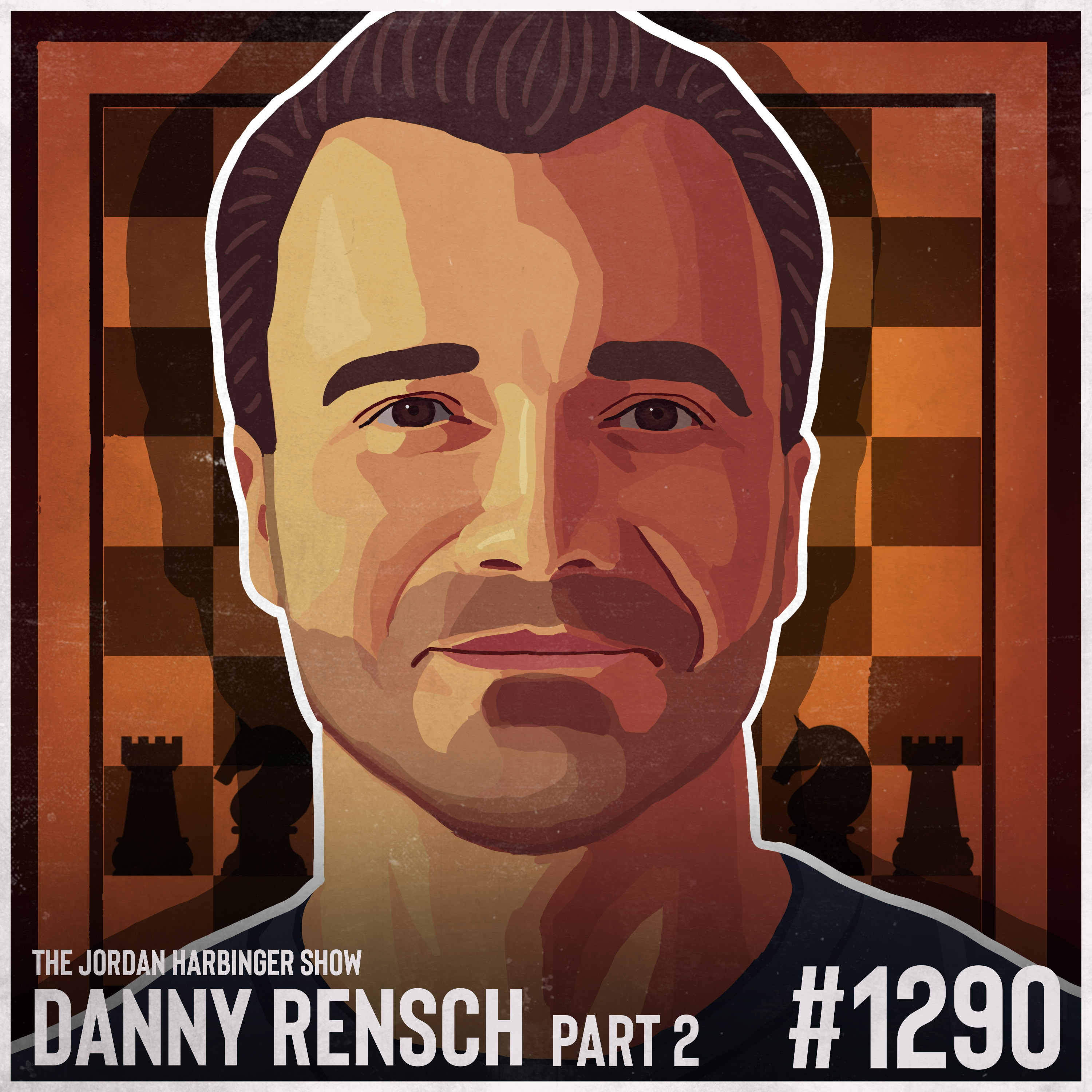
The Jordan Harbinger Show
1290: Danny Rensch | How Chess Freed Me from Life in a Cult Part Two
00:58:08
Loading summary
Transcript130 lines
- [00:00]
American Airlines Announcer
The American Airlines Advantage Business Program is changing the way companies book travel and get rewarded. Designed for fast growing businesses, the program makes it easy to earn rewards and it's free to join your company. Earns one Advantage mile for every dollar spent on business travel booked anywhere with American. Use these miles to help offset future travel expenses, transfer to employees and more. You'll also gain access to a suite of tools to streamline travel management EAs, including the ability to view employee activity, manage trip credits and report with ease. And it's a win win. Travelers can earn additional loyalty points on top of what they already earned through the Advantage program, helping them reach status faster. Earn more on business travel you're already taking with the American Airlines Advantage Business Program. Register today@aa.com AdvantageBusiness.
- [00:56]
Jordan Harbinger
Welcome to the show. I'm Jordan Harbinger. On the Jordan Harbinger show, we dec the stories, secrets and skills of the world's most fascinating people and turn their wisdom into practical advice that you can use to impact your own life and those around you. Our mission is to help you become a better informed, more critical thinker through long form conversations with a variety of amazing folks from spies to CEOs, athletes, authors, thinkers, performers, even the occasional mafia enforcer, former cult member or arms dealer. If you're new to the show or you want to tell your friends about the show, I suggest our Episode Starter Packs. These are collections of our favorite episodes on topics like persuasion and negotiation, psychology and geopolitics. You've heard this a million times. This is part two of a two part show. I probably don't need to tell you this anymore, but the playlists are at jordanharbinger.com start or you can search for us in your Spotify app to get started. You've already heard part one. If you haven't yet, go back and check it out. This is part two with Danny Wrench. Here we go.
- [01:47]
Co-host/Interviewer
Chess exploded during the pandemic man. Queen's Gambit aired on Netflix and the growth of Chess.com was insane. Tell me where you started before the pandemic and how the growth did the hockey stick thing.
- [01:59]
Danny Rensch
Yeah, tldr too long. Didn't read version of my book to say that now I'm in my early 20s, barely making a marriage work, surviving substance issues and a cult that's falling apart. And I'm at a tournament by the way, here in the Bay Area, the East bay international in 2008 and in walk two guys wearing chess.com polos early on and these would be my future co founders Eric and Jay. I was still trying to compete my life and the collective was all but falling apart. Like I said, I'm trying to make my marriage work. I had my first kid at 19. Just things are wild for me at this time. But I'm now 22. I think I just turned 23, actually, in October 2008. And so I'm with them at this event. And they would describe it as, I came off very desperate and very sweaty. And they had no idea how desperate and sweaty I really was. If anyone reads the book, you'll see there's a reason. The title of chapter 13 is why is Danny Wrench such a Fucking Asshole? It was an area of my life where I was trying to be very honest about how broken of a person I was, how desperate I was. But that was actually a line that is an actual phrase that Eric said to Jay after meeting me. He's like, why is this Danny guy such a fucking asshole? Now, remember, Eric was Mormon at the time. He's. No, he is no longer Mormon. So for him to curse was a big deal. I must have come across very abrasive. That just tells you what was going on. We worked very hard together. The shared vision that Eric and Jay and I had was that our different experiences. Me, broken cult, watching what chess had done to Igor, watching the lack of opportunities and the real feast or famine culture that existed. I didn't reach the echelons that I thought I was spiritually meant to reach. And I saw the lack of anything waiting for me if I didn't become world champion. I was not just a spiritual nobody because of my cult and collective upbringing, I was a nobody. So I saw just how broken that ecosystem was by Eric and Jay, had felt gatekept by the chess world in other ways, which was like, oh, if I'm not as good as Danny Wrench, I'm not an international grandmaster, then, like, basically, I get treated like shit, basically by this community. Or at the very least, those are the extreme ways to say it. What I would say is there wasn't a home for chess learners, chess fans, people who wanted to engage with the game and not be judged that they weren't a grandmaster. Don't you want us here loving the game? And for people who didn't become the world champion, oh, I have to go get a real job or be a vagabond like Igor, like, traveling the world. So where's my opportunity to, like, be rewarded for the fact that I know more about a game? I've forgotten more about this game than most people ever learned.
- [04:25]
Co-host/Interviewer
To use the phrase right, this is like podcasting. If you're not on top, it's not a job. You can't make a living doing it. It's a hobby. And people are kind of like, give a podcast, whatever, Dor.
- [04:34]
Danny Rensch
Like, what are you doing right? Your basement, naked on a beanbag chair, eating Cheetos.
- [04:38]
Co-host/Interviewer
I feel attacked.
- [04:39]
Danny Rensch
No, no, exactly. So we both came at it from that lane. And to get to the pandemic, we've joked that it became accidental success. 15 years later. This is 2008. The site had just launched in 2007, so they were the first two. And I joined them very early on and was a part of the crew that what we would do for the next 13 years, I guess, till 2020. And we had done a lot of things in hindsight, we had invested heavily in just this idea that it wasn't feast or famine, that we were creating ways for videos and articles and lessons to be made by coaches, like building an economy. As Twitch and YouTube became what they did, we built this sort of this early creator economy, before creator was a word and even before influencer was a thing, we sort of built a sustainable chess influencer network. And what we did was we set up everyone to play on our site and basically offered to manage their social media in exchange for them playing on chess.com in hindsight, that was like a very smart way to associate them as a publisher, because we're not Riot or epic, but chess.com as a domain, kind of became the publisher of chess for a game that we didn't own. And so suddenly, when the pandemic did hit and when the Queen's Gambit show did hit, anywhere you saw chess, whether it was Facebook or YouTube or Twitch or whatever it was, Chess.com, chess.com became synonymous with it. And now, in hindsight, five years later, after the pandemic, as we're recording this, people go, oh, of course you were going to win, because the domain is so strong. But people don't understand, like, there were tons of other platforms.
- [06:01]
Co-host/Interviewer
You could have gotten playchess.com there were so many others.
- [06:04]
Danny Rensch
Exactly. People don't appreciate that, yes, the power of a domain was powerful, but how you invest around it is really the key. Because there are. Even today, if I told you that there are 50 other sites to play chess for free, most people just literally believe that Chess.com is the only place to play. And a lot of that was because how we were building the perception of Chess.com. before the boom came, it's almost like we built a really great village on an island. And it was like everyone was happy, but we didn't know that a bunch of carnival ships were going to show up. And when they came, they were like, yeah, it is really cool here. You can hang out with us. But we weren't in control of the carnival ships coming. The global pandemic kind of compounded with a Netflix show. But when they did, we had done a lot of things right. In hindsight and of the growth that happened at that time, you know, we captured 99% of the world of chess that was growing because of where we were.
- [06:53]
Co-host/Interviewer
I'm surprised you didn't have crashes and stuff.
- [06:55]
Danny Rensch
Oh, oh, we did.
- [06:56]
Co-host/Interviewer
Oh, you did okay.
- [06:57]
Danny Rensch
It was insane keeping the proverbial lights on at that time. I remember, like, we were sitting at the shared table and we were joking that this is like the Millennium Falcon. Like, you know, you're crashing. There's no debate that you're crashing. Just hoping it's as gentle as possible. And there were times where it was, like, literally a country would be shut down and you could see the spike in the server until, like, the GFI switch would trip. It was like India boom. Like, Germany boom. And, like, so we were just scaling as quickly as we could to keep up. And it was wild.
- [07:23]
Co-host/Interviewer
Your bills must have been through the freaking roof.
- [07:25]
Danny Rensch
It was crazy.
- [07:26]
Co-host/Interviewer
We need a million dollars. What for? Literally electricity and server power.
- [07:30]
Danny Rensch
Like, literally server capacity. It was wild. But also at the same time, financially, things change very quickly, too, because the pros that came with the panic of the Carnival ships showing up came a lot of people who wanted to spend money too. Right. And so it took us ten plus years, took us thirteen years to get a hundred thousand paying subscribers. In eight months, we were at a million. Like, it was that type of trajectory overnight.
- [07:53]
Co-host/Interviewer
Yeah, I think you'd said 400,000 new members per day, which is even having 400,000 web visits to one page would
- [08:01]
Danny Rensch
crash pretty much anything, let alone sign
- [08:03]
Co-host/Interviewer
up, let alone signups. And I don't know if people have to pay. There's probably a free tier or whatever,
- [08:07]
Danny Rensch
but still, that's free. That was free.
- [08:09]
Co-host/Interviewer
Once you're doing payment processing, if you start processing 10,000 more credit card transactions per day, you need underwriters that have billions of dollars because the risk is through the freaking roof.
- [08:21]
Danny Rensch
It became crazy. We were not ready, and that's the truth. We were ready to capture the growth because of this, like I said, this sort of content Accidental influencers ambassador strategy we had built. So we captured the growth. We weren't ready to like deal with the growth. And so it took, I would argue, even till this year. I mean, we now have partners, our growth equity partners in General Atlantic. And they've been great to work with, all things considered, because the success has brought a lot of people who want to invest in our game. But they've been great to deal with. Not just making a private equity evil overlords joke, but we've joked that even for them, like things we told them when they first came in around the end of 21, 22, that look, we are not a real business yet, you have to be patient with us because these are multiple black swan events that happened in a time where we just weren't ready to scale to pandemic and massive Netflix series. And then the third thing that happened was, I call it now the short form content boom. Because the third thing that really compiled and I would say kept our growth continuing. We don't get 400,000 new members a day, but even today we're getting more than a hundred thousand new members a day, really, even today. And a big part of that was because what we pivoted the YouTube kind of twitch live streaming strategy into was then really empowering our creators to lean in heavily to short form, which was TikTok and Instagram, particularly before YouTube really got their shorts game going. And this was interesting because for our creators, we had built this massive, very symbiotic, great relationship. They were helping with Top of Funnel. We were providing an amazing product for them to serve. They get paid directly by the community who subscribes to their channel. It was a great relationship. But they were hesitant in some ways to jump on short form because short form didn't pay as well as long form from an advertising revenue point of view. Right. But a big part of where we were pushing them was like, look, the evolution of how people are going to consume content is about to fundamentally change. And we can talk about as a dad with kids, whether that's good for the world. But I remember literally doing a metaphor where I was like, take a phone, you don't hold it like this, you hold it like this. And I was like, this is going to change and you have to be on top of this. And in fact, for Chess, it became huge, because Chess is hard to watch sometimes for people because it's long, it's like an intellectual thing. But if you put it in like a 5 second highlight reel where someone is blundering Their rook and screaming people actually engaged more with the part of the game that is fun and silly and meme and I don't have to be a grandmaster anymore. I can blunder and it's okay because Gotham Chess blunders and Hikaru blunders and Magnus blunders. And so we leaned in so heavily to short forming the game and putting together a highlight reel of a seven hour match.
- [10:51]
Co-host/Interviewer
Seven hour match.
- [10:52]
Danny Rensch
Yeah, exactly. We take a seven hour match and we give you seven seconds and that clip gets 600 million views. Even if those views are not the highest quality view that immediately becomes a paying subscriber. We are fundamentally growing the awareness of the game and I think that has kept us at the top, if you will. And so that's one of the ways we have sustained.
- [11:12]
Co-host/Interviewer
You went from, hey, I hope we don't fail to We're a billion dollar.
- [11:15]
Jordan Harbinger
Are you a billion dollar tech company?
- [11:16]
Co-host/Interviewer
Surely, yeah.
- [11:17]
Danny Rensch
I will say this humbly because I've learned because a lot of what we skip past is we never raised any money. We're totally bootstrapped. And like, congratulations, we are in the like very small category of bootstrap unicorn companies. And now that we are there, it's a pretty awesome thing to say. Cause it wasn't something we were starting to say. Eric in particular, he was the one leading and he's really the original number was the one laughed out of investor rooms who told him, chess will never be anything. Why are you wasting.
- [11:42]
Co-host/Interviewer
Because you can't own it.
- [11:43]
Danny Rensch
Take a job at Palantir, take a job at Facebook. This was the advice, Eric.
- [11:46]
Co-host/Interviewer
No thanks. I'd rather be a billionaire. Wow.
- [11:48]
Danny Rensch
Obviously there's a little bit of now, but yes, General Atlantic came in later. We now do have private equity partners based on those who people took some money off the table. But we've been very fortunate that the success came before any sort of foundational change to the cap. It was a very small phenomenal.
- [12:05]
Co-host/Interviewer
Good for you guys. Good for you guys. That's amazing. I was under the impression that like most tech companies, you guys owned a single digit percentage or something like that because you needed $20 million in server cost to be invested.
- [12:18]
Danny Rensch
No, we're very lucky and we've been very fortunate. We have been pain in the asses because we own a lot of our own destiny. So there's a good balance there.
- [12:25]
Co-host/Interviewer
A lot of my friends are tech founders and I'm like, oh, how's it going? And they're just like, I want it out because they have investor calls and they're just like chewing their nails down because they got to answer to people that don't care if they just want their return and they want to sell the company even though it's too early or they want to cut the company to pieces. I mean, there's all kinds of stuff
- [12:42]
Danny Rensch
that can go wrong. It's awful. And knowing what I know about it now, even again saying this, we actually do like General Atlantic. I'm not just saying that so that you guys are listening. Literally, they have been very helpful to help us mature. But even just having the taste of what this world is, it's very frustrating when the thing you built, that's like your baby for me. It's like my fifth kid. Like the product, your users are now the product to your partners, not the product itself that you made for your user. And that switch has been a very eye opening thing where I go, ah, like ebitda, ebitda, ebitda.
- [13:11]
Co-host/Interviewer
I want to talk about cheating. I know it's the bane of your existence, but it's one of the most interesting parts of it and it's probably not the favorite subject of any chess player. But I would love to talk about how cheating works because I looked on my phone when I was reading your book. There are apps on my phone that might even work on my watch for all I know. That can beat probably any grandmaster in the world. Yeah. So I don't know how do you police that?
- [13:37]
Jordan Harbinger
Because don't you have a million, literally
- [13:39]
Co-host/Interviewer
a million games happening at the same time on chess.com?
- [13:41]
Danny Rensch
maybe more. So we have 25 million games a day. I think we have 623 games finishing every second. Something like that. Someone said that, I don't remember, but it was something crazy. That was a recent number that was pulled because when we get to the end of the year, we do our wrap like everyone else or we're preparing like a hey, here's the Chess.com Wrapped as a community. You played several billion games. Whatever. So anyway, yes, it is literally insane. Big step back. Not only are you right that your phone can beat Magnus Carlsen and there are apps for your watch, but that has been the case actually for more than a decade. Like, this has been a problem that we have been facing where we were thrust into a situation around 2010 where it wasn't even just that we couldn't stop cheating. We couldn't even detect how people were cheating anymore because there were too many ways to do it.
- [14:26]
Co-host/Interviewer
If you're playing in a tournament okay, fine, make sure the guy doesn't have his phone out or whatever, but if you're playing at home, you have no chance.
- [14:32]
Danny Rensch
So. So we can't stop it and we can't control the murder weapon, for lack of a bad metaphor. But one of the things that forced our hand, which ultimately has become a massive strength, and I made this joke. And now with everyone and their cousin obsessed with AI and tech, I'm not just saying it to be buzzworthy, but I really mean it. Like I made two jokes recently. Chess.com was mission driven. Before that was the cool thing all the corporate douchebags say. We really were mission driven because there was no money and we were laughed out of investor rooms. And two, we were using AI and building models to frankly navigate this existential crisis of cheating long before a lot of other people were like, this was a thing we had to do. And so the way we approached this was investing back when we really didn't have a lot of money. Hiring like an expensive engineer that was making a six figure salary and focusing on a server that's only job was to take the games that were being played and run the data and tease out patterns and help us develop the algorithm. People don't like that we're the algorithm that was going to help us to control this situation. And we eventually did it. And without getting into kind of the proprietary secret sauce that I can't explain. What I will say that we do is two major things, is one, when someone is playing cleanly, they have a certain amount of natural best moves they make where they're playing the best engine move. But if someone makes one best engine move, you can't say they're cheating. That's one move. And they have a number of bad moves they make. And there's cluster model statistics. When you look at the distribution of that, you can see a natural arc of someone's play. Everyone has this, from myself to Magnus Carlsen. So Magnus Carlsen's arc when we ran all of his games, is he the current world champion? He's the best player in the world. Yeah. And he's the one who was involved in the biggest cheating scandal that happened and kind of opened and closed my book with Magnus has an arc that looks a little different than mine. It's a little sharper because he peaks at a different space than mine, like more round does. But it's still a natural way to look at it. What happens when someone cheats is not just that they make more best moves, they also make less bad moves. And so one of the ways that we built this model that allowed us to sort of essentially say, that person's DNA is not the same as that person's DNA, and they're the same person that was a different person than this person. Those nine games were played by a different machine or human being than that machine or human being. And I told people like the IOC didn't get on top of blood doping until you start properly testing people in terms of what you think they're capable of, not when they're cheating, when they're clean. I see. You have to do testing rigorously so that you understand what someone's white blood cell count is, what their testosterone levels are, when you actually know they're clean, in order to have a proper baseline. And so what became our biggest, like, fear became our biggest strength because we were able to sort of use our data and the AI, the model that we built to help us use AI to be on top of AI. And so a big part of what we did, I think I'm obviously a layman. My job is to explain this in a way that people can understand. I do understand the math and have lived in the weeds of architecture for a long time, but I'm purposely avoiding our secret sauce. So anyone who listens to this is a real mathematician's gone. He's touching on some stuff that is a little more complicated. It is more complicated than that. But basically to say what we do is we do crime scene analysis. We don't try to stop the murder. We try to tell you whether the murder was done by, like, Komodo or stockfish. Those are two computers. A knife or a gun. We can help analyze by knowing how good someone is when we think they're clean, and even further, how good human beings are capable of when they're clean. It's a lot easier to dive into where foul play is happening.
- [18:05]
Jordan Harbinger
Pandemic hits. Queen's gambit drops. Chess explodes. 400,000 new users a day. Turns out if you lock people inside long enough, they either bake sourdough or learn the Sicilian Defense. We'll be right back. This episode is sponsored in part by Northwest Registered Agent. When we first started our business decades ago, I thought forming an LLC was just a quick paperwork thing. No, the filing is the easy part. It's everything around it that actually makes you look legit. Your business address, your compliance, your operating agreement, your website, your email, your phone number. All the business identity stuff you end up scrambling to piece together. That's why I wish we'd used Northwest Registered Agent from day one. They don't just file your LLC and bounce. They set you up with a complete business identity, registered agent service, a real business address, your home address, days off, public records, operating agreements, plus the tools for a domain website, professional email, a business phone number, all in one system. They've been doing this for nearly 30 years with over 1500 corporate guides. Real people who actually know your state laws and can help when you hit a question and privacy is built in. If you're starting a business, do it once, do it right, and make it look professional from day one.
- [19:05]
Sponsor Voice
Don't pay hundreds or thousands of dollars for what you can get from Northwest for free. Visit northwestregisteredagent.com jordanfree and start using free resources to build something amazing. Get more with Northwest registered agent@northwestregisteredagent.com jordanfree
- [19:21]
Jordan Harbinger
this episode is also sponsored by Zocdoc. Raise your hand if you've been putting off a dental cleaning, an annual checkup, getting that probably nothing little thing on your leg looked at. Yeah, you're not alone. Most of us don't avoid it because we're lazy. We avoid it because it's a pain in the butt. Calling around, sitting on hold, trying to figure out who takes your insurance, realizing the next appointment is next quarter. The whatever solstice eclipse thing is next. Let's not do that this year. I recommend ZocDoc. ZocDoc is a free app and website that lets you book high quality in network doctors so you can find somebody you actually like. They've got more than 150,000 providers across all 50 states. Whether you need primary care, dentistry, dermatology, eye care, one of 200 plus specialties. You can search by specialty or even by symptom and build a care team that fits your life. Want in person? Great. Prefer a video visit? Also great. You can read thousands of verified patient reviews, check real time availability, book instantly no phone tag. Appointments typically happen within 24 to 72 hours, sometimes even the same day.
- [20:13]
Sponsor Voice
Stop putting off those doctors appointments and go to Zocdoc.com jordan to find and instantly book a doctor you love today. That's Z O C D O c dot com Jordan zocdoc dot com Jordan thanks zocdoc for sponsoring this message.
- [20:30]
Jordan Harbinger
Don't forget about six minute Networking. I shilled it in part one. Well here it is in part two. Six minutenetworking dot com now back to Danny Rench.
- [20:39]
Co-host/Interviewer
When I read the book I was like God, how do you know if
- [20:42]
Jordan Harbinger
someone's not just really good.
- [20:43]
Co-host/Interviewer
And the answer is, even if you're the best in the world, you still do something where it's eh.
- [20:47]
Jordan Harbinger
If you were a computer, you would
- [20:48]
Co-host/Interviewer
have recommended this other more long term strategy.
- [20:50]
Danny Rensch
Make no mistake. Like if the best players in the world are cheating, it is very hard to catch them. But I will say we have closed and gotten confessions from multiple top hundred players. So it is something that we now have a track record. And so the better you get at it, like the better you get at it a little bit.
- [21:07]
Co-host/Interviewer
It's also crazy that the top 100 players, many of them are also cheating occasionally.
- [21:11]
Danny Rensch
Like why a lot of the top hundred players have not cheated of those who cheated. This is going to be funny because it probably goes back full circle to the cult how I make sense of people who did me wrong. I almost make excuses for them in my head because people were surprised by how good we were at catching cheaters, that it was almost like not their fault that we caught them. They just didn't realize we were capable of teasing out information when they're like, I literally only reference the computer like once or twice in the game. And how could you guys do that? So what I'm saying is we've gotten in a place now where despite major cheating scandals, the truth is most of this is under control. And the people who have the most motivation to cheat because prices have gone up, the vanity economy is very real. If you're a creator, there's reasons to cheat in chess like there never was before. They're also the ones who are kind of most aware of the secrets of our game that like weren't coming out. Meaning everyone knows a few of the top hundred players that were closed for cheating, even though no one talks about Bruno. So they're also luckily with time, became the ones who were most educated. But for a long time we were losing the PR battle. But I always told, I said internally, guys, we are going to lose the battle on the way to winning the war. We're going to make sure that when we close someone, we're ready to go to court because we're not going to act on this line, maybe someone is innocent. We're going to be so confident that, that even though people might think they're getting away with cheating, with time word of mouth will spread. Eventually people will understand that they're not getting away with cheating and you will win the war on the way of losing some of the PR battles that were happening.
- [22:38]
Co-host/Interviewer
That's right. And man, it makes sense. You got to sort of monitor people when they're quote, unquote clean. Because if a Grandmaster gets like a. Or whatever, the high level gets like a 1% edge. That's really all you need to dominate other things. It's obvious if somebody like me signs up for Chess.com and the first games I play are like, oh, he doesn't
- [22:55]
Danny Rensch
know what he's doing.
- [22:56]
Co-host/Interviewer
And then I.
- [22:56]
Danny Rensch
Happens all the time.
- [22:57]
Co-host/Interviewer
And then I start beating, like, people with 20 years of experience, it's clear what's happening because nobody's that smart. But yeah, if you're already like a black belt and you just get a 1% edge, and there's an incentive to get that edge because maybe I'll get sponsored by some company and make five grand a month off social media, doubling my income. That's pretty good.
- [23:16]
Jordan Harbinger
But, man, you gotta be right pretty
- [23:18]
Co-host/Interviewer
much all the time if you're gonna accuse a literal professional of cheating.
- [23:22]
Danny Rensch
It's weird because, like, we've learned that if you tell someone you're right all the time, they actually trust you less than if you tell them you're right, like 98.6% of the time. This is a fun human experiment. You'll like this. There's actually been studies done on this that if you're right all the time, people can only assume something nefarious is going on. Like, they make, like, mafia accusations because they just have a hard time doing it. So what I like to say is, like, we will not act unless we are ready to go to court. And nobody who operates in the field of statistics operates outside of the possibility of an anomaly. Anomalies happen. But what I'm trying to do is say, if I was in court and someone says, I lifted that fridge with one hand and we say, do it again, you can't prove I didn't and I'm not going to do it again. You can't prove a negative. But for someone to be able to do that would be so anomalous that beyond reasonable doubt in the court of public opinion, especially if they can't play like an engine again to the same degree, we're winning that argument. Yeah.
- [24:21]
Co-host/Interviewer
This reminds me of something funny. So I took the gre, which is like, think of sat, but for graduate school. And the math section. I'm not good at math, and so there's a math section. And my strategy was, screw it. I'm not taking this for the math element. I'm just going to do my best.
- [24:35]
Jordan Harbinger
It gets harder if you get it
- [24:36]
Co-host/Interviewer
right and easier if you get them wrong. Supposedly I'm just going to guess on the ones that I don't know because there's no point in me trying to figure out non Euclidean geometric equations. How could I do that? So I started guessing on the questions and at the end of the test, it doesn't tell you how you did it. About six weeks later, whatever it was, I got a letter from MIT saying, hey, we want you to come in for this other test. We think you might be scholarship material for our mathematics program. And I was like, yeah, no, I literally just had guessed my way to something where they were like, look at this math genius that we have to have here at mit. And I was like, guys, you're not even barking up the wrong tree, you're in the wrong hemisphere.
- [25:15]
Jordan Harbinger
This forest is out of reach for
- [25:16]
Co-host/Interviewer
me because I would just look at parabolas and be like, sure, see, okay, I'll pick the one that's upside down. I'll pick the one that looks left.
- [25:23]
Jordan Harbinger
And so I would love to see
- [25:24]
Co-host/Interviewer
my test results that convinced MIT that I was potentially scholarship material. But to your point, they were like,
- [25:29]
Jordan Harbinger
we want you to come in for another test, probably to make sure that
- [25:32]
Co-host/Interviewer
you weren't just guessing your way through the gre, which I was. I didn't, of course, I didn't even chill.
- [25:36]
Danny Rensch
Because what you're saying is also a good reason why we act conservatively, why we have to have more than one game for sure, and why we try to have the DNA of, we try to have enough games of someone outside of the moment or the tournament where we thought they were cheating. Because that puts us in a situation where the anomaly is way less likely. Right. Because what you did one time in theory is not repeatable. But if we were acting and giving you a scholarship or closing someone for cheating on a one time thing, like that's not a responsible way to do it. So there are 30 salary employees who work in the cheat detection department. Dang.
- [26:09]
Co-host/Interviewer
Wow.
- [26:10]
Danny Rensch
Literally like research scientists, which are just engineers doing super complex math to those in the middle world, as I like to say, between like the research department and then the data kind of execution, which is where we're building the machine, the algorithm to do it. And then there's a department of literally, we call them detectives, they're analysts and their job is all day they submit bunches of games, they watch for anomalies, they look at our tournaments, and all day they are running people's games to see whether anything weird is happening. And they are brilliant. They're very good at what they do. And so that is literally what it takes to do this. So I guess what I'm saying is you have to do statistics responsibly because if you're not measuring against the probability that you might be wrong, you're not doing it ethically. It's not just about whether you think you're right. Because I've done this analogy before. If I got my hand really close to your camera over there, really up close, you would not be able to tell what that is. Is that a baby's butt? Is that like a hamburger? Is that like someone's chest? And then as it zooms out, you start to see if you're too close to something, you don't see it clearly. You can think it's something it's not. So there's a certain level of focus that is better before you then start to lose detail. So our job is to arrive at the signal of clarity as quickly as possible with the least amount of information possible.
- [27:23]
Co-host/Interviewer
You can basically only detect it retroactively and then go, hey, these last five games, we're pretty damn sure you didn't do that, right?
- [27:29]
Danny Rensch
Except for the rare cases where someone is being so egregious, it's only those who are dumb enough that they're using the same device they're cheating on, meaning the same device they're playing on they're cheating on if it's on the same device. Not even because we're tracking anybody doing anything weird. It's just there's too much information we have now about someone's computer or device that we can't tell anybody who's doing smart cheating is viewing it on a different device either a second computer, whatever.
- [27:53]
Co-host/Interviewer
That makes sense, right? App in focus. App out of focus.
- [27:55]
Danny Rensch
Exactly. There are rare cases where someone is that dumb where we can close them in the middle of a game because they're making the best engine move every move and they're using it on the same device. Yeah.
- [28:04]
Co-host/Interviewer
User Jordan A45 chess history. Three games now. Crushing it at the highest levels while doing something else.
- [28:13]
Jordan Harbinger
Not even focusing on the game.
- [28:15]
Co-host/Interviewer
Yeah, he's on doordash, ordering lunch while destroying an international grandmaster. There's something that's gotta be humbling. You're doing this chess thing your whole life, you're best at it and then it's. But you're never gonna be as good as this app that a 15 year old kid made on his phone that comes up with every possible outcome.
- [28:33]
Danny Rensch
It's literally an exercise in humility on A regular basis. And then now you're playing and you show up at a tournament or on your phone, depending on people sharing their profile information. Oh, I just lost to a six year old. Plus, the way technology has sort of shrunk access to the best players in the world because chess is the same game digitally that it is IRL over the board as we say otb. It's really unique in that no kid is growing up with Roger Federer and they're like shared backyard. But on Chess.com, like you can play with Magnus Carlsen or Hikaru Nakamura or one of the best players in the world as an up and coming player. And that's super unique because again, not just to kind of like romantically combine the online and real world, but chess really is special in that even if you're really good at NBA 2k, you are not LeBron James in real life. You can't dunk. Even if you're really good at League of Legends, you're not a wizard. It's not my check, right? Chess online at scale with thousands of games you can play against some of the best players in the world is the same game if you show up at the World Chess Championship. And so what we've seen happen and what we've been able to do is we have literally shrunk the learning curve. Like we are seeing some of the best players in the world at the youngest ages of all time. Kids from India, there's this up and coming kid from Argentina right now. They literally call him the Messi of chess. This kid is maybe on pace to break the youngest grandmaster in the world history. He's 12 years old and he's got like three months to do it. And so everyone's following this kid's path right now. And he grew up playing on chess.com and so what you have is this is the real chess community that has existed for hundreds of years and may exist after the Internet and AI destroys us all, but chess is the same game. And now you just have the ability to get access to the best players in the world at scale. And so I actually don't even know where the next revolution is going to go is are we going to see the best players in the world literally be children? Because you don't know what they're capable of when they get access to it so young. I guess I'm validating that it is humbling with the app, but it's also an amazing time to see like what is happening with young people in the game.
- [30:34]
Jordan Harbinger
Why do you think chess is one
- [30:35]
Co-host/Interviewer
of the first things we program computers or AI to do against humans?
- [30:39]
Danny Rensch
That's a great question. I'm getting this question more and more now.
- [30:42]
Co-host/Interviewer
Oh really? Yeah, that makes sense.
- [30:44]
Danny Rensch
The world of where we're going with AI and not just was the first computer taught to play chess by Alan Turing back in the day, and then MIT first machine. When AlphaZero and the team at DeepMind and Google had their real breakthrough, it was because of this project they launched where AlphaZero taught itself to play chess, which was really the first machine learned moment. The terms machine learning and artificial intelligence have been used probably longer than they were appropriate. But that was a real breakthrough because that was actually a moment of self realization in a way that might be very scary depending on how people think about where we're going. But regardless of that, chess has always been tied to these major breakthroughs in technology. I'm saying that to validate your question and then I'm going to end with I don't necessarily know. I think I have my opinions. Which is on the one hand, it's an easier game to program than people think. Because unlike games like poker or games with like dice, especially if you think of the early computers who were trying to just manage information and deal with the calculus of the odds, chess is a complete information game. It is 64 squares, black and white. The pieces move exactly the same way. There's no dice that gives weird superpowers that you have to calculate. There's no map that's changing like Fog of War, like a video game. There's not even poker where you're making calculated risk assessment without really being able to control the variables. And so I think that part of the answer is that chess was sort of a perfect game to say, let's see what it can do when we give it all the rules and kind of define it. And then the flip side of that, like that amazing yin and yang, it is a game of defined information that is still unsolved. There are lots of games of defined information that humans take for granted that checkers have been solved forever. And we even think of chess and checkers being the same. And I don't just say that as the chess guy. Checkers is not in the league of chess. Right? Literally from a possibilities perspective, there are more possible chess positions than atoms in the universe. I think there are 140,000 possible checkers positions. Just think about that. As humans, we still can enjoy it, but the game is simple and has been solved forever. You remove Games that have variables you can't control for computing and then you basically look at games that are simple chess and go. AlphaGo was the next project after AlphaZero for DeepMind are actually the two most globally recognized and probably the most powerful examples of extreme complexity. It's not solved yet. The information is perfect. There's no variables that we don't know. So you could in theory give a computer this task and see what they do with it. And I think that again, I'm trying to get better at answering that question because I'm being put on the spot more and more. And we have also had this whole secret world of cheating that people don't know about, that we've been dealing with, where we've been leveraging AI. I would say long before it was sexy and cool to be leveraging AI because we were dealing with this existential crisis that was computers. And we'll get into that. And so the truth is like, this is a question I'm being asked more. And while I don't know how we got here, regardless the chicken or the egg, is that chess, for better or worse, has always been very closely tied to major breakthroughs in tech.
- [33:44]
Jordan Harbinger
You spend 20 years mastering something and a free app on a cracked Android can smoke you in six moves. Humbling. Almost as humbling as shilling mattresses for a living. We'll be this episode is sponsored in part by Quiltmind. If you're not on LinkedIn, you're probably making a mistake. Not because it's so cool, but because it's practical. If you're trying to get hired, recruiters are there. If you run a business, people are absolutely looking you up before they take you seriously. LinkedIn is your built in credibility. This person really exists. Check. But here's the bigger having a profile and never posting. Most people treat LinkedIn like some kind of static resume. The moment you start posting consistently, you stand out, because almost nobody does. Every time I post, I get DMs from people I haven't talked to in years. Like, man, that hit home. Suddenly I'm top of mind. That turns into intros, partnerships, opportunities. That's not luck, it's visibility. And that's why I use Quilt Mind. They help busy execs get LinkedIn famous. In about 30 minutes a week, I do a quick call. They pull out my stories and insights, turn them into short, punchy posts that sound like me. And they keep me accountable because my default setting is I'll do it later. And you know how that goes. And I'll share stuff there that I don't really talk about on the podcast. So if you're curious, look me up on LinkedIn. If you want Quilt Mind, email jordanadienceuiltmind.com that's jordanaudienceu I l t m I-d.com I've got homes.com as a sponsor for this episode. Homes.com knows when it comes to home shopping, it's never just about the house or the condo. It's about the homes. And what makes a home is more than just the house or property. It's the location. It's the neighborhood. If you got kids. It's also schools, nearby, parks, transportation options. That's why homes.com goes above and beyond to bring home shoppers the in depth information they need to find the right home. It's so hard not to say home every single time. And when I say in depth information, I'm talking deep. Each listing features comprehensive information about the neighborhood, complete with a video guide. They also have details about local schools with test scores, state rankings, student teacher ratio. They even have an agent directory with the sales history of each agent. So when it comes to finding a home, not just a house, this is everything you need to know all in one place. Holmes.com we've done your homework.
- [35:47]
Danny Rensch
All right.
- [35:48]
Jordan Harbinger
Support our sponsors if you like the show. They're all@jordanharbinger.com deals. Thank you for supporting those who support the show. Now back to Danny Rench.
- [35:58]
Co-host/Interviewer
So, like, also, it's a really understandable arbiter of intelligence. Like, I know that I'm not good at chess, but I know that Gary Kasparov is good at chess. So if Deep Blue can beat Garry Kasparov, that's pretty impressive. And I don't have to really understand chess to know that go is supposedly more complicated. But I don't understand go at all. Most people don't.
- [36:19]
Danny Rensch
So that's a really good point. And I'll add that to my repertoire of answering this because I think in addition to the speech I gave, the last answer is what you just said, which is even people who don't know how to play, they know what chess is. They see it. It's like you see the king and the queen. There's like this sex appeal to the romantic nature of this medieval game that has always been a symbol of intelligence, right? Look at paintings. Look at the latest Mercedes Benz commercial. There's a reason they're playing chess, because what you're saying without saying is that I'm smart, I'm sophisticated, now smart and sophisticated is the new sexy. And I want to be revered for how I think about things like others. There's a reason they say it's a chess game out there between the coaches, not a checkers game, right? And so like, I think that what you're touching on is the last part of it, that the other thing was that from the optics point of view, everyone knows what happened to IBM stock when they beat Garry Kasparov. You could argue it catapulted them to becoming for a very long time. And now we're dealing with much bigger tech companies. But it's a history lesson. Look at what happened to IBM stock after they beat Garry kasparov in the 90s. The company was changed forever.
- [37:17]
Co-host/Interviewer
Is AI finding new elements or creativity interest because it has such an ability to think from first principles, right? Because it could do something that looks like a mistake and then you find out it's just playing like 600 moves ahead.
- [37:30]
Danny Rensch
The answer is yes, AI is doing that. And the last major breakthroughs happened round Alphazeros sort of burst onto the scene. The DeepMind contribution there from a chess creative perspective was really real because there were certain things we had thought about chess, like central control and like never rushing your edge pawns and bishops are better than knights because they control more squares than like the open board. And there are things that AlphaZero did that are like, no, no, no, no. Like rushing your edge pawn is like a really strong idea because in the end of the game, like full circle, that asset consistently pays off. And like we literally have called it the alpha pawn, like when people rush it up the board. Because this has influenced how all the best humans are playing now, right? We're like, oh, he's gone alpha zero on the side of the board. This has become lingo, right? The knights being better than bishops in more positions than we thought. The ability to maneuver has reinvented the way we're thinking about a lot of closed positions. And then also from an opening's point of view, an openings prep in chess is it's like the footwork of like a heavyweight boxer. If they have their style of how they like to hang their body or like move, like the opening theory of how to approach positions. There were some positions that were literally thought to be like dead or at least dubious and like completely burst back onto the scene because of just different ways to think about the position. So the generation now that has grown up with these things as a part of their life is playing the game in a different way than like Yuri Kasparov and the Generation Boy.
- [38:52]
Co-host/Interviewer
For them, it's amazing. I mean, AI might still kill us all, but it saved chess.
- [38:57]
Danny Rensch
Yeah, it did. That's a great way to put it. AI might still kill us all, but it did save chess.
- [39:02]
Jordan Harbinger
How do people cheat in real life?
- [39:04]
Co-host/Interviewer
I read this article about somebody who, like, had a butt plug in or something. Like, is that real?
- [39:08]
Danny Rensch
As far as I know, no.
- [39:10]
Co-host/Interviewer
Okay.
- [39:10]
Danny Rensch
The reason the accusation came is because this was what happened with Magnus Carlsen and Hans Niemann, the person you just mentioned, and he was accused of cheating, and Magnus did not accuse him of using any type of anal bead or whatever. What happened there was Hans Niemann had a history of cheating online. This, at the time was known in the top levels of chess. It wasn't known to the outside world. Right. All of us that were sitting in this sort of pressure cooker knew that this was less lightning in a bottle than the rest of the world did. Now, again, that didn't necessarily justify Magnus Carlsen accusing him in an over the board event, but at the time, there was a lot of thoughts and what they perceived to be circumstantial evidence and reasons to believe that maybe he was cheating over the board. And so these were the rumors that were going around, like, none of it confirmed. And I'm not justifying what Magnus did, but what happened in that accusation was rumors of how could someone cheat in plain sight happened in the Internet chat rooms. And in the Internet chat rooms, it was like, well, there's vibrating Bluetooth anal beads. This made its way to a screenshot. I think it was like, at the top of Reddit, like a live stream fail moment or something. Elon Musk, before verifying tweets, this people don't even know this story. So Elon Musk tweets that, like, chess player cheats using anal beads. Before any verification. It was literally like on Stephen Colbert, like, that night. It was on, like, Trevor Noah, like, Daily show the next day. This thing went crazy. I actually heard a thing that in 2022, the top two stories in terms of TSN, the total social media reach were the queen dying. And this story. That's how big this story was in 2022. So, no, Hans Niemann did not cheat using anal beads. Again, I have no proof either way. Hans Niemann did have a history of cheating online. There's no evidence that he cheated over the board. There's a lot of rumors and accusations and things that happened. And again, that's its own wild story, and that's what happened? Yeah.
- [40:59]
Co-host/Interviewer
Wow. Oh my gosh. That's a hell of a fake legacy for the guy wrongly accused of that. I assume this guy's nickname is now like beads or colon Buzz.
- [41:08]
Danny Rensch
There are a lot of jokes, unfortunately. And again, Hans is his own, like very larger than life personality. Like his sort of bravado and the way he has been along with actually being an admitted cheater online hasn't helped his case so that people don't like him. If I was in Hans corner, I think there were ways he could make himself a little more affable and likable and he would probably endear a lot of people to him very quickly because what he went through was like traumatic. Like you said, not fair to be involved in this fake anal beads chest legacy. That isn't true. He didn't do that.
- [41:43]
Co-host/Interviewer
I assume a lot of people are doing that now though. Like, they're like, oh, that's not a bad idea.
- [41:46]
Danny Rensch
Funny is. So there's been a ton of YouTube videos of people trying this. I don't know if you. There was an Always Sunny in Philadelphia episode where Danny DeVito goes to a chess tournament and has the anal beads and they're buzzing him from the crowd. Like, there's been so much pop culture on this that people don't even know it at tournaments.
- [42:00]
Co-host/Interviewer
I assume they look in your ear and scan you or something.
- [42:03]
Danny Rensch
Now that's been one of the problems is that the over the board chess community, I would argue, took for granted what the online community meaning. We did not because we were faced with the idea that we couldn't see anybody who was playing on our side. They could be doing anything. We had to invest in a different approach. Like I said, the CSI of the game, the Data that drives Chess.com Sweet detection, is really relied upon also in over the board worlds now, like, people look at our system as by far and away the best. But as far as investing in infrastructure to try to prevent cheating, which would be a lot easier over the board, we can't do that online. At scale, I can't send you a thing to your house and say, jordan, you can't play on chess.com unless you're scanning yourself in. But you could do it over the board. There could be way better testing, There could be way more just understanding of what's available with the radio transmission frequency stuff. But they have done very little of it, to be honest. And this has been a thing I've been on record about since we were thrust into the middle of this scandal and all the stuff that happened, we were like, hey, we have an algorithm, we can investigate the data, but to some degree, in one individual game between Magnus Carlsen and Hans Niemann, nobody could answer this. On a data level, there's not enough. But what you guys aren't doing on an infrastructure level is like proper scanning, proper checking. Eliminate the concern for these players so that when they're competing for hundreds of thousands of dollars in prizes, they feel better. So I'm actually answering with no. The truth is they have not done enough to improve over the board infrastructure when it comes to catching here.
- [43:31]
Co-host/Interviewer
And it wouldn't even be expensive. I mean, you just need a TSA scanner and it's like, hey, man, you got something in your butt, you want to go ahead and handle that and come back again.
- [43:39]
Danny Rensch
Exactly. Especially the wealthier events. They have enough money, there's enough millions of dollars in prizes. At a certain point, it's just insurance. You have to do this at this point. Yeah, I think a larger technological reckoning that will be coming to the over the board community because regardless of this scandal with Hans and even there have been other scandals, there have been other attempts, there have been people who are doing it in more elementary ways than maybe, you know, a hidden sex toy. They just hide a phone in their bathroom or they strap a buzzer to the back of their leg and then they've got someone looking at. So this needs to be a thing that is taken seriously, like, for sure.
- [44:13]
Co-host/Interviewer
The problem with cheating, though, is it always begets cheating. So if I know that tons of people are cheating and getting away with it, I'm like, crap, if I want to keep my rating, I have to cheat. When I play against those people, or at least when I play against people, I suspect, which means that everyone's just cheating and then what's the point of the game?
- [44:28]
Danny Rensch
What you're touching on is a big thing that I've been personally not just worried about, but been vocal about. I talk about this in my book. When we look back at the steroids era of baseball, right? If you were the guy who wasn't doping up, you were judged not just the McGuire Sosa home run chase, but just the expectations the players had and the advice that we's being given to try to evade the drug testing. You were judged if you weren't getting ahead. So this has been something that. Part of the reason we've been more outspoken about this and continue to be is because we are trying to one, not just flex the truth, which is, hey, we will catch you this. We're actually better at this than you think, despite the scandals, at least on Chess.com, but two, because I am trying to stop the moral compass from shifting where people think they can get away with it. I gave a lecture here in Berkeley last night, and at the end, just getting some general questions about Chess.com and there were a bunch of young people in the room. Somebody poked a bear, and I, like, hopped on a soapbox and was like, hey, you're a young person here. If your friend tells you they think they're cheating and getting away with it, like, they're wrong, you're going to get caught. We don't care who you are. I have closed more kids in the top 100 than you would want to know. Don't mess with us. Just because you're a talented player doesn't mean you can cheat and get away with it. And it's a thing that we will continue to need to educate about this because there's also the other side of it, which is paranoia and false accusations, which we've been very protective over. The innocent right here. It's not just the idea that we need to catch those who are cheating, but protecting young kids who are being accused. But actually, this is just a really talented junior who you might be seeing competing for the world championship one day, right? Back off a little bit. And so we've also navigated it the other way, which is in our terms of service and in sort of educating the community. Look, there will be consequences for false accusations going forward, especially in the last few years with some of this explosive stuff happening to be like, look, you can't just run around and do that or go to somewhere else and do it. But not, at least on Chess.com we're not going to look the other way if you don't have any evidence of accusation. There are proper ways to do it. We made it easier for people to report someone anonymously. We made it easier for people to send a message. We're trying to do both right, Stop mass paranoia, but also make sure no one's getting away with it.
- [46:39]
Jordan Harbinger
Competitive chess, the only sport where a vibrating butt plug can cause an international incident. You train your whole life and then suddenly your legacy is colon buzz. We'll be right back. This is the part where I tell you about our newsletter. Jordanharbinger.com News is where you can find it. It's a great companion to the show. You've heard about it many times before, but maybe you haven't signed up yet. Jordanharbinger.com News is where you can find it. Now for the rest of my conversation with Danny Rench.
- [47:08]
Co-host/Interviewer
Man, you're a polarizing guy in the world of chess. There's a 40k hit on you on
- [47:12]
Danny Rensch
the Dark Web that actually was related to our stance on Russia's invasion of Ukraine. In fact, Chess.com turned heads at one point because we were one of the first companies to be publicly blacklisted by Russia. And now a lot of people in Russia use VPNs to access Chess.com so we're. We're not that stressed about it. But, yeah, that was actually related to that. And I'm polarizing in other ways. I think Chess.com's success and in some ways, some of the ways we've handled these cheating scandals, because there are people on all sides of the fence of you guys are not doing enough, and people who are like, you're not being transparent enough, you're not closing enough cheaters, you're closing kids without giving evidence. There's all kinds of things which are like, we have a terms of service, we're operating legally and ethically, and regardless of what they say, we're being told that by courts of law that we know what we're doing. But in the court of public opinion, there's all kinds of reasons where people feel like, hey, who gave you all this power? And we've been like, we had a domain name that was laughed out of investor rooms and kind of just wanted to build an online community for one that didn't exist for a kid who was struggling with ear surgeries and a couple of guys who were locked out of the room, meaning the co founders. And because the governing bodies didn't get their hands around cheating, Chess.com invested in a way that made us judge, jury, and executioner over this space, for lack of a better way to put it, because no one else has the technology to put their hands around it, which means no one else is being called to task to answer for the paranoia either. So we're sort of balancing both sides of this thing. But, yes, the Dark Web hit, unfortunately, was because we took a very strong and public stance against Russia when they invaded Ukraine. And we stand by that.
- [48:49]
Co-host/Interviewer
That's kind of scary because that sounds more serious. I thought maybe somebody was like, oh, he accused me of cheating.
- [48:54]
Danny Rensch
I'm mad. Here's a fake hit. Oh, we've had those. And those do scare me. And I'll be honest. I pay for services that keep my information off the Internet as best as Possible as far as where I live and what I do, it's very hard because at a certain point threats become white noise, which is also sad because then one day, maybe one of them's real. We had one really scary one in particular that one of the first title players who was known in the community, who we shared, who kind of lost his mind, literally scared me out of playing over the board chess myself because he was specifically tracking where I was going. And at one point he said in the email, if you feel something behind your neck, that's my gun. Boom. And we reported him to local authorities. And I don't know if the sheriff's office ever took action, but he did eventually stop. And this has been, I think that was in 2018. This is before pandemic. So there has been some very scary stuff. But I try not to talk about it because one, it's not healthy for my brain and my wife hates it. But also you try to realize that most people want to throw a shoe to see you duck. Most people abuse is not so much even about the act, but the story they're telling themselves about what they're doing. And it's super sad that's the case. But I try to focus on real feedback can only come from people in the arena with me. And most of this negative stuff is really just anonymous 16 year olds living in their parents basement and the very few things that are there. Even that is usually people want to know that they're hurting you more than they actually do want to act. And so that's the thing that I've learned, or at least I tell myself,
- [50:28]
Co-host/Interviewer
yeah, sure, no, that's a. That's an interesting perspective. Do you keep in touch with anybody from the cult besides your actual wife who you met there?
- [50:36]
Danny Rensch
Yeah, my younger siblings on my mom's side, I have no full biological siblings, but since our mom died, we've stayed in touch and have a good relationship. I have varying different levels of relationships with my siblings. On my dad and Marlo's side, a number of them are my half siblings, a step sibling. So those relationships are complicated and especially since I wrote the book, a lot of that has been hard because people feel like, you know, why'd you do it? And I'm in a chair to say, look, this was a story that I started writing, frankly, because I was asked to write it. And selfishly, I think I wanted to understand for myself how I felt about what I went through. And respectfully, as I tell them, tell me a single thing that I said that Wasn't true. Because I can tell you about 50 stories that I kept out of the book. I bet that's kind of where I come around to it. And in the end, I was given really good advice from a friend of mine, Bobby hall, who's Logic, the rapper. Hey. He's been on the show, so Bobby's great. He was like, if it really gets tough, Danny, and someone says, why did you write it? Your answer is just, why did you do it? Because as long as you're telling the truth, then the answer is, why did you do it? And at the end of the day, like, I didn't do it, like, for blame. In fact, I've worked very hard to heal my relationship with my own abusers. Not because I'm trying to excuse their behavior, but because I really do believe that forgiveness is not rewriting the past. It's freeing yourself from it. You can have a different relationship with your experiences if you want to. And I find that I'm better with that. So I do have a different perspective about what I went through. And I've tried to find the Carl Jung version of, we are not what happens to us. We are what we choose to become. And so I've worked very hard on that. I didn't do this to spray a machine gun of blame, but I wanted to tell a story that was honest and real. And hopefully, I think an example of the obstacle can be the way and that you can overcome hard shit. That was my goal with this. Right. It's been complicated, though, and as far as anyone, but outside of my immediate family, 99% of the reception has been very positive. There's been, like, a few outliers of people who are a little bit. Not even necessarily would, like, discredit anything or whatever. But just talking about it in the way I do is hard, and I understand that.
- [52:38]
Co-host/Interviewer
So you ever feel like the hand you were dealt in life, early in life anyway, was unfair?
- [52:44]
Danny Rensch
No. I mean, I'm going to say this, like, carefully, because there are people who went through very harder things than I did in deflective, for sure. And I also don't want to be one of those guys who's like a rich white guy saying how the obstacle is the way when it's like there's really difficult things that people are faced with. And there are people who are truly disadvantaged by their experiences. And I'm not saying that's not true. Right. There are people who are hurt and unfairly victimized by bad experiences. That said, as long as you are still Here, as a human being on the planet, you have to take the next step and you have to do your next day. And so my perspective is that believing that something was unfair is just not productive. And so even if you objectively believe that this person who put me on my road did bad and this person did good, they both put you on your road. And so as long as you're on the road and you're trying to make the best of the situation, then it's actually more productive for you to believe that everything happens for a reason. And now you get to choose the reason. I take back the power. They don't get to decide what happened or what was unfair. And from a heartfelt, just human being perspective, I lost my mom after being abducted and taken from her, having no relationship and then really only healing right at the end of the collective, and then for her to die to a massive stroke. There's a tragic ending in that. In regards to that relationship, that has been one of the hardest things I've ever dealt with in my life. And that has been. If you want to say something that I sometimes go like, you know, my mom didn't have to die. I wish she was still here. If you want to say something that feels unfair. At the same time, I've also shared that how do you make sense of gratitude and grief that you now have that you basically you feel like you're an even better person because of the tragedy? Does that mean you're happy your mom died? I don't think so. I'm not saying I'm happy she died, but I also can't deny that I have a perspective about living my life in a way that I think is probably even more informed and even more empowered because my mom died. And that's the direct example of answering like, I don't know that anything is unfair. I think you make your own kind of fairness based on what you're given. And even if that sounds again, to wrap a ribbon on it, like I'm saying every bad thing happens for a reason. I'm not justifying the bad thing, but I'm saying you have no choice but to choose your situation and to find a relationship that makes you the best version of yourself with anything you went through, unfair or not.
- [55:02]
Co-host/Interviewer
Danny Rensch, thank you very much, man. Great conversation.
- [55:04]
Danny Rensch
Thanks for having me.
- [55:07]
Jordan Harbinger
We'll spend hours optimizing diets, workouts, and morning routines, then sit in rooms with air bad enough to quietly wreck our focus, mood, and sleep after the LA wildfires. Air quality expert Mike Feldstein saw just how toxic invisible can get and why fear, misinformation and neglect are making it worse.
- [55:24]
Mike Feldstein
My background was in wildfire remediation, floods, hurricane cleanup. So my career was traveling around to Hurricane Harvey and California wildfires. Like wherever the most toxic disasters were, that's where I would go. The reason that I got into Jasper making these air scrubbers is because the machines that we would use on the job site were these big, large industrial machines. And when you would compare that to little air purifiers in the store, I was able to see like, these little things don't work. Basically, let's make the world's first air scrubber designed for your home. So now I'm kind of on a mission to just talk about air quality. Anyone who's thinking about water and hasn't thought about air. My mission for the next 20 years is to increase people's awareness of the
- [56:04]
Danny Rensch
air that you breathe.
- [56:05]
Mike Feldstein
In the mold industry, they have two things. One is the mold rush and the other one is mold is gold. A lot of people get triggered by mold, but it's become a very fear induced industry because there is a dark side of the mold industry. Not everybody's a bad actor, but you have to be quite careful when you're navigating. People often go into debt of hundreds of thousands of dollars, rip their homes apart, move into apartments or homes that were moldier than their first home, and debt and stress, and then they get much more sick. So I've been seeing this increasing at a large scale. And that's why, as a mold remediation guy, how would we do mold removal? We'd remove the physical mold and we would scrub the air. It was very simple. The average in indoor air is five to ten times dirtier than outside. When you turn your bedroom into a clean air sanctuary, your body can heal itself if you get out of the way.
- [56:53]
Jordan Harbinger
If you think clean air is a given, check out episode 1246 with Mike Feldstein. It might completely change how you think about the air you're breathing right now. If this episode did anything for me, it reframed the idea of unfair. Some people are dealt a bad hand. Some people are dealt a rigged game. And some people are handed a board where the pieces are already moving against them and they still find a way to play. Today's story is not just about cults. It's not just about chess. It's not even really about cheating. It's about control, about identity, and what happens when your childhood is engineered and how you reclaim it anyway. Life might not be fair, but you still have to decide how you're going to play the position. All things Danny Wrench will be in the show. Notes@jordanharbinger.com, advertisers deals discount codes ways to support the show. Also on the website@jordanharbinger.com deals please consider supporting those who support the show. I'm ordanharbinger on Twitter and Instagram. You can also connect with me on LinkedIn. This show is created in association with podcast one. My team is Jen Harbinger, Jace Sanderson, Robert Fogarty, Tata Sidlowskis, Ian Baird and Gabriel Mizrahi. Remember, we rise by lifting others. The fee for the show is you share it with friends when you find something useful or interesting. In fact, the greatest compliment you can give us is to share the show with those you care about. If you know somebody who's interested in chess, cults or just loves a great story, definitely share this episode with them. In the meantime, I hope you apply what you hear on the show so you can live what you learn and we'll see you next time. If you like this show, there's another podcast you should check out if you want to stay informed about what's happening around the world without drowning in noise, check out the President's Daily Brief. It's built for people who want the big stories fast and clear. Think 20 minutes in the morning, then a quick 10 minute update in the afternoon. Just focused coverage of the developments shaping the world right now, from the Middle east and Venezuela to China, Russia and beyond, with an emphasis on what actually has real world consequences for the United States. The show's hosted by Mike Baker, a veteran of the CIA with decades of first hand experience. So you're getting smart analysis from somebody who's been inside the system. You get straightforward context to help you understand what's happening and why it matters. Follow the President's Daily Brief wherever you get your podcasts and stay ahead of the curve.