← The Jordan Harbinger Show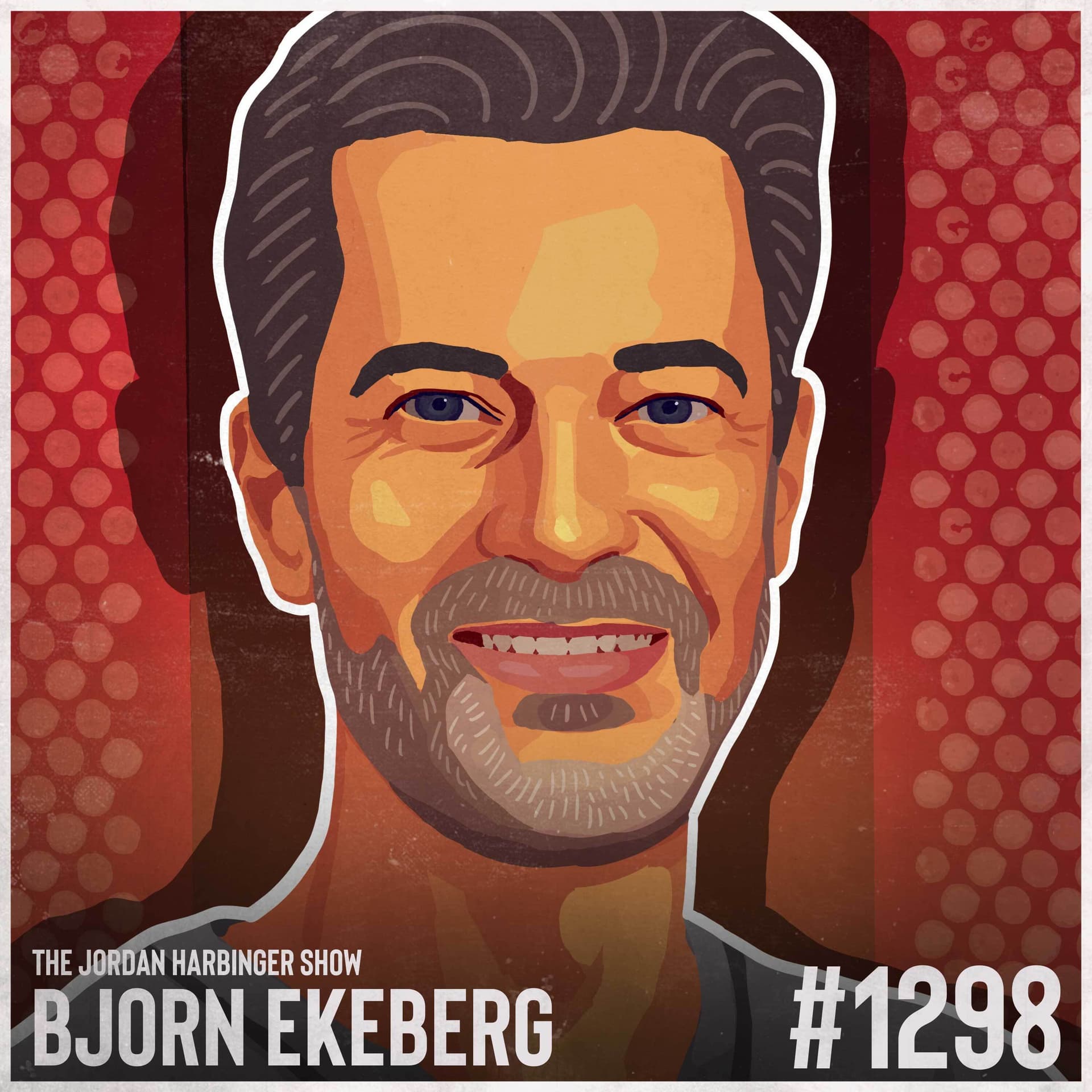
The Jordan Harbinger Show
1298: Bjorn Ekeberg | The Evidence-Backed Benefits of Red Light Therapy
00:58:20
Loading summary
Transcript158 lines
- [00:01]
A
Don't you wish everything was more rewarding? With Rakuten, almost everything is. You can earn cash back on those new shoes you've been wanting. You can save on the next trip you book. You can cash in on groceries. Just join, shop your favorite brands and save Target, Instacart, Expedia, Macy's, Sephora, cvs. The list is long. Save online, in store and at over 22,000 restaurants.
- [00:29]
B
And when it's time to redeem those rewards, get your money exactly how you want it.
- [00:33]
A
Choose PayPal, check, Bilt points or Cash out with gift cards.
- [00:38]
B
Eligible amex card members can choose to earn membership rewards points instead of cash back.
- [00:43]
A
Terms and conditions apply. So go ahead, take a trip, fill a cart.
- [00:48]
B
Order dessert. Rakuten is a world of rewards.
- [00:51]
A
Join today for free.
- [00:53]
B
Go to rakuten.com or get the app that's R a K u T E
- [00:58]
A
N this podcast is brought to you by Progressive Insurance Fiscally responsible financial geniuses, Monetary magicians. These are the things people say about drivers who switch their car insurance to Progressive and save hundreds because Progressive offers discounts for paying in full, owning a home and more. Plus, you can count on their great customer service to help you when you need it. So your dollar goes a long way. Visit progressive.com to see if you could save on car insurance, Progressive Casualty Insurance Company and affiliates. Potential savings will vary. Not available in all states or situations.
- [01:30]
B
Quick heads up before we this episode is sponsored by the company behind the technology that we're discussing today. They paid for this episode. That means this conversation is a bit different from my normal interviews. I'm still asking questions I think you'd want answered, but this episode should be understood as sponsored content rather than an independent investigation like most of the show. As always, do your own research, make up your own mind and consult a qualified expert before doing anything that affects your health and well being. Welcome to the show. I'm Jordan Harbinger. On the Jordan Harbinger show, we decode the stories, secrets and skills of the world's most fascinating people and turn their wisdom into practical advice that you can use to impact your own life and those around you. Our mission is to help you become a better informed, more critical thinker through long form conversations with a variety of amazing folks from spies to CEOs, athletes, authors, thinkers and performers, even the occasional arms dealer, drug trafficker, former jihadi or real life hacker. If you're new to the show or you're looking for a handy way to tell your friends about it, I suggest our episode Starter packs. These are collections of our favorite episodes on topics like persuasion and negotiation, psychology, geopolitics, disinformation, China, North Korea, crime and cults, and more that'll help new listeners get a taste of everything that we do here on the show. Just visit jordanharbinger.com start or search for us in your Spotify app to get started today on the show. Bjorn Ekerberg is the co founder and CEO of Recharge Health, creators of FlexBeam. This is a targeted infrared therapy device designed to naturally accelerate recovery time for active individuals looking to heal injuries, to manage musculoskeletal pain or improve energy, reduce inflammation. There's a lot of things that red light therapy does that is actually kind of surprising. I was taken by surprise a lot of the research I did for this episode, actually. He's got a PhD in the philosophy of science, speaks internationally on the universe and the nature of light, which is like, this is a pretty heavy topics here. However, we're going to talk about red light therapy. I'm a skeptic, y' all know that. But this actually does have evidence that it does real things, just not everything that you read on the Internet. Of course. Bjorn talks some sense into us and talks about his device, the Flex Beam, which I've got here in my hand. And it's quite a high quality, quality production. I was quite happy with it. This sponsored content is brought to you with limited interruption by Recharge Health and Flex Beam. So thanks to them for sponsoring this episode. Here we go with Bjorn Eckerberg. I will say, when I got this thing, I was like, oh, this is pretty. It's hefty, right? It's heavy, a heavy item. I get a lot of stuff in the mail, you know, I get a lot of stuff from sponsors or get a lot of stuff from health companies. And it's amazing how when you open it, you are, you go, oh, it's
- [03:55]
A
one of these things.
- [03:55]
B
Or you're like, whoa, this thing is. So this thing was heavy and it came in this nice case. And I know that this is cognitive bias in part, but you can kind of tell how much somebody's invested at least into a product by the case and the battery capacity. And even this could be half my imagination, but even the type of plastic on the outside or the amount of metal they use, because there's just a huge difference between something that costs like $40 to manufacture and something that costs $400 to manufacture. And I know, again, I know it's partly cognitive bias, but it's like, okay, if you're going to put metal on here and it's going to come in a nice case and it's going to have like heavy abs and it's going to have good quality Velcro straps, then they at least care about the quality of the product. And it's like, yes. That doesn't say that all of the science is settled behind whatever principle is in there, but it does say that this is not a ridiculous sort of sham where they're selling a high margin product made, you know, in a crappy way to rubes. Hopefully.
- [04:55]
A
Indeed.
- [04:57]
B
When you order something like this and it comes with safety goggles, you're like, okay, well it's a little concerning. But then you're like, oh, okay, well if it can do something to your eyes, hopefully that means it can do what it says it does on the tin. As far as recovery.
- [05:10]
A
Yeah. I mean, honestly, it's because of us loss of like lawsuits and stuff that we have these goggles. You don't have to wear the goggles really, but okay, yeah, the goggles that
- [05:19]
B
it comes with, they're not ridiculous. I don't want people to think it comes with like, you know, a welding mask, but it's those things you would wear, I guess if you went to a tanning bed or something, they'd be like, hey, put these over your eyes. It seems to me you'd have to really stare at the lights on this thing to have which are also facing your skin. You'd kind of have to try to hurt yourself with this. Right?
- [05:40]
A
Yeah, I wish we could take them out. It's just, it's legal advice in case somebody decides to stare into the device. US is one of those markets where you then can get sued if you didn't include it. Right. So it might just be a little bit like, you know, the cat in the microwave story.
- [05:56]
B
Yeah, well, we got to make this product non toxic because people are going to eat it. And it's like, why would people eat a package of plastic wrap? And it's like, I don't know, man. Welcome to litigation 2026. Like, you know, you got to, you got to put a sticker on the iPhone. This is do not remove the battery and chew on it. Yeah, I don't know, it's a, that's a whole separate podcast, I suppose. Well, I want to start off with your background, which is in philosophy of science. So not engineering, not medicine. But I'm curious how your training and philosophy shapes the way you approach a health tech innovation. Because I think a lot of folks are kind of wondering like, oh, this person must be a doctor. And it's like, well, not quite. But that doesn't mean that you didn't find something quite special here with this concept.
- [06:38]
A
I mean it's quite a leap clearly that you don't set up studying philosophy and jump across to start a health tech business, I think.
- [06:47]
B
Right.
- [06:47]
A
For me, there are two things I carried with me from my PhD and my depth focused work on the foundations of physics and cosmology, which I studied for many years. Basically trying to understand how is it that we know what we think we know about the universe and what are these assumptions that we make around Big Bang theory and these kinds of things. This was many years before I met Dr. Zulia Frosk, my co founder. But when I did meet her, who is a pioneer within this field, and I started looking into research articles behind this and NASA research and peer review, obviously having researcher training as a background was helpful to try to differentiate what is really going on and to sort of dive deeper and understand some of the background, even though it's not my field. So that was an aspect. But for me it was really the clicking point was understanding that I had focused a lot on the cosmic perspective of energy, you could say about sunshine, which is what fills our part of the universe with all the energy that we know can be traced back to it. I try to understand this from a perspective of physics and how we know this, what do we know about light and so on. And when I met Dr. Zulia and we set out on this journey to start this company, it was because this missing piece was actually the body as an interface, the biophysics. Right. So physics tends to study things very much mathematically and abstractly and conceptually, but realizing the impact it has on our physiology potentially, if you know how to harness it, that became a real source of fascination and interest for me.
- [08:24]
B
I will say when someone said probably 10 or 15 years ago, hey, there's this red light panel that you can use to. I was just like, okay, I will never hear about this again, or I will hear about this every day for 90 days and then never hear about it again. And here we are in 2026, like I don't know, 15, 16 or more years later, red light therapy is having. I don't even know if I can say a moment. It's been a long moment, it's kind of here. And a lot of most of the athletes I know use it. My neighbor, my old neighbor was in an he was a, an NFL linebacker. And I remember being like, why do you have a room that's all red lights everywhere? And he's like, oh, I stand in here and recover or something like that. He. He was using it. And I said, why? What a kooky, weird thing. You know, again, this is like five plus years ago. And he's like, no, everybody on the Patriots has one of these things. Like every single one of us has this. This is like more as important as my bedroom almost. And I was pretty surprised by that. But again, it's having kind of a moment and it's. I know it's like a NASA inspired technology and athletes are into it, but it's pretty cool that you can sort of package it like this now. You don't need to have a. I don't even know how many hundred thousand dollars worth of light bulbs in a room in your house.
- [09:36]
A
Yeah, I mean, it's where we started seven years ago, those panels were already on the market. And people who subscribe to Biohack, whether they identified with that or not, were the first to sort of use this technology. And we saw the migration into sports and top sports already seven years ago, that was like starting to happen. But it's shifted a lot in the last three to five years. I would say it's become closer to mainstream awareness, especially in the U.S. that said, it is a jungle. It's full of confusion, it's full of junk. There's a lot of hype around it as well. So the reason, I mean, that we are in this and why you're saying it still has a moment, I think is because at the core, it is something that fundamentally works at a physical level. But you have to know how to use it, and you have to use it the right way to get those results.
- [10:28]
B
One of the things that I noticed that you just sort of sparked my memory here is one of the things that was a huge red flag was if you go on, let's say Amazon to buy a red light device, you can get them for like $5 or $10, and then you can get them for a thousand dollars. And it's like, what's the difference? You know, again, besides the quality of the plastic and the case and the metal, you know, what's the difference? And I've seen people say, oh, you know, I'd use red light therapy for this. I use red light therapy for that. And it almost turned into a kind of like a spray, some Windex on it. It's all, you know, it's in Danger of becoming a thing where you just. It biohackers again. They're using it, but they're using, I don't know, a red LED that doesn't do anything. And they're using it in a weird way, like they're wrapping their elbow in it to stop arthritis. And it's like, this is, at best, placebo, and at worst, you're putting some weird thing on your arm that's giving you a light sunburn or just not doing anything at all.
- [11:23]
A
Yeah, you're putting your finger on something that is a source of irritation. As we are highly focused on building, I mean, with this particular device on the clinical side and really trying to create something that works for people for the long term. But I've seen a lot in the last couple of years as the space gets more littered with different kinds of contraptions. Just very recently, there's a red light company that has really taken off in the last year due to a big podcast that they actually were a sponsor of.
- [11:51]
B
Surprise, surprise.
- [11:52]
A
Yeah, surprise, surprise. Which started with a face mask. And there are some face masks that work and others that don't. And we can get into why on that. But I saw very recently they launched red light toothbrush, A red light shower head.
- [12:07]
B
I've seen that.
- [12:08]
A
And I see gyms are installing, like, you know, red light in the room so that you work out, I don't know, 30ft away from the bulb, and you have an ambient glow from this red light. And somehow that's supposed to help you recover faster shower heads. I mean, this is, for lack of a better word, this is bullshit, right? This is not physics. It's not possible that you can get any effect from it. And my source of irritation is that it threatens the whole potential of the technology that people say, oh, yeah, this is bullshit. This is another hype thing, right?
- [12:38]
B
I have a toothbrush at home, a normal one that I use every day, a couple of times. But I also have this quick between meals toothbrush that I'll take with me to, like, a restaurant or something like that, where it's basically. It's kind of like a mouth guard, right? And it vibrates and you swish it around and basically you can brush your teeth in a really easy way. But this thing that fits in your pocket, if you're, you know, gonna be gone for a few days and you're not gonna have a chance to brush your teeth in the morning or where, camping, whatever, and it has a red light setting. And I was like, oh, no, not you too. Toothbrush. And it's. Yeah, it's a toothbrush that shines a red light on your gums, I guess. But here's the thing. It's shining it through like a plastic mouth guard. So it's obviously just. And it's like one LED down in the. It's so obviously not going to do anything other than turn my mouth red while I brush my teeth. And I just thought this is the dumbest thing and a perfect example of what you're talking about. Like, oh, I have a red light shower head. Okay. So my hair, the top of my head is getting a slight LED red glow from the water. That's. I mean, it's just dumb. It's actually just dumb. And it makes you think. Yeah, anything with red light therapy is obviously just bullshit because look, they make shower heads and toothbrushes with it. It's just another scam. It's snake oil, but it's light.
- [13:47]
A
Yeah. It's this moment. Maybe we look back on it as sort of the peak red light or something. When you get these kinds of attempts at selling things that obviously cannot work, at least from a physics perspective. But I mean, placebo is also a big driver in health and wellness and in biohacking. And maybe if you love your toothbrush so much and you think you have the trendiest toothbrush and if this is some, I mean, if you believe in it, you may get results. Right?
- [14:14]
B
Sure.
- [14:15]
A
But.
- [14:15]
B
Well, I should have started with this question. What results are we looking for when we use a red light therapy device? What does red light therapy do? Because if you look at the Internet, it does everything from make your you know what, bigger, it could make you taller, it can make you funnier and better looking. I mean, what does it actually, actually do? Clearly it's for air quotes. Recovery. That's what my athlete friends use it for. But I don't even necessarily know what that means either because sometimes recovery is muscular, sometimes it's skeletal, sometimes it's just psychological. What are we talking about? What does this thing do?
- [14:44]
A
Yeah, so it does a lot of things. And this is where it can also be off putting and potentially turn to skepticism. Right. When you see a list of oh, it can do this and can do this, or as you said, it can make you taller and longer and you can like iron your shirts and like your dinner, everything. There are some focused areas and I will talk here mostly about our wearable device. Flexbeam is like designed specifically for like to be straight on the body and to give a certain kind of effect. The three main parts, I would say anything Muscular skeletal pains, inflammations, recovery of muscular skeletal conditions respond really favorably to the right dose of red and near infrared light. So this is a key driver. We designed this as a wearable because it then gives you a targeted dose where you need it.
- [15:33]
B
So this is where it's going for people who are watching. It's going over my traps and shoulder because this is always sore and you
- [15:41]
A
probably don't want to undress now in the studio. But it's important to have it straight on the skin.
- [15:45]
B
Yeah. To be clear, it's not going through a T shirt again. United States audience, you have to say that stuff.
- [15:50]
A
Yard.
- [15:51]
B
You can't, you can't just keep it in your car and turn it on and make sure you wear those safety goggles and don't eat it. Don't eat the battery.
- [15:58]
A
No, don't. Don't eat it. And don't put it in the microwave.
- [16:00]
B
Right?
- [16:01]
A
Yeah. So any body part that needs basically a boost, a recovery boost of some kind. Muscular skeletal responds really well. Pain is a big driver for our device. We see a lot of use cases around this. So again muscular skeletal types of pain can be significantly reduced. And this is also true of inflammation which is often linked to pain. Lots of people have a sort of a low level inflammation in their bodies. And back in the 90s, the first studies that came out and really showed efficacy of Right. Use of red light therapy focused on inflammation. That was the first part that got really well documented and studied. We have seen a lot of what we call health optimization uses that we weren't expecting actually when we started out with a much more this targeted approach. Any part of your body that's aching or muscle that needs to recover faster, et cetera, it's a no brainer. It will give you kind of benefits if you use it. Right. But then to see that it can assist significantly in sort of more inner health of organs like gut health, really better sleep if you use it the right way. We have a certain protocol for that. Any spot check of organs, like organs have more mitochondria. This is something we can come back to. But that's one of the reasons why. Okay, like how it works. So you can get use cases where people have for example certain liver issues or spleen issues. If you know you have organs in imbalance, you can shine this light straight on it and actually produce then local effects. Right. So there's a whole host of sort of health improving conditions. I'd say immunodefense boost Is a very common use. Right. So you build this over time and you can track this if you track your hrv, for example. Yeah, I do that in one of those tracking devices. I don't know if you have one of those.
- [17:54]
B
Got an OURA ring that I wear, except for now when I'm sitting on my desk all night. But usually. Yeah, and it says your hrv. My HRV is so low that it's
- [18:02]
A
almost like, yeah, but you're only comparing to yourself. So that's like it's your own baseline that counts. And so we see, for example, systematically in people who use our SO design protocols for Max System boost, that you use it in the core of your body, like say your gut or your spine, et cetera, will, over time, the baseline for your HIV will improve over time.
- [18:24]
B
Wow.
- [18:24]
A
This is again, just a sign that something is happening at the physiological level.
- [18:29]
B
Some of this stuff is tricky, right? Like I totally see. Have seen evidence that it helps with skin, that it helps with. Or collagen. There's hair regrowth stuff that there's evidence for. I suppose I don't use it for that because I'm so far still blessed in that area, at least on the top of my head, thank God. Can reduce inflammation and help with chronic pain. And some people say, oh, that's placebo, fine, whatever. Wound healing, which is pretty amazing actually, because I've had friends use it for. Swear by it for different types of stretching and wound healing and things like that. But it's like, okay, but how deep can light go? I mean, you said organs. Gosh, there's layers of skin, there's muscle under there, there's different sorts of. I forget what those sheaths are called that organs find themselves in. But there's so much tissue to go through before it gets into, I don't know, my pancreas. Right. Can it really penetrate that deeply? That's crazy to me.
- [19:24]
A
That is crazy. And that is the insight that we started with. And the reason we designed this device the way we did was realizing the physics of it. That if you stand, say 10 to 20 inches away from a light panel, or even sometimes 30, like far away, they actually tell you not to stand too close to the panel because A, it gets hot and B, it has EMFs or electromagnetic frequencies. So the whole purpose, the way you usually use a red light therapy panel, is you stand at a distance. What they often won't tell you is that then 80% of the light is gone before it reaches your skin. So you're. You're blasting energy and you're sitting in the glow, and some of that will migrate into the body. But if you have a device that you can use straight on the skin that has a similar kind of power density to what you have in the panel, then this is going to penetrate more deeply or send more energy into the different layers. And these are some of the more surprising results. When I started looking into this research, I was like you. When I met Dr. Zulia as well, I was like, okay, this sounds crazy. Why haven't I heard about this before?
- [20:29]
B
Or why have I only heard about it from people who are online selling supplements that they make. Right. That they brew in their garage, like, all right, Biohackers.
- [20:39]
A
Which immediately triggers also my own skepticism alert. So it took me some sort of digging and wanting to understand it myself. And when I came across this penetration aspect, that was the most, I think, crucial part of the early research phase when we developed this device, is to realize that you can. That this treatment depends on a kind of wavelength that is called near infrared. That is a part of the spectrum is actually not the same as red light. It is an invisible wavelength that is just off the red, off the spectrum. The special thing about near infrared light is that the wavelength is just long enough that it penetrates the skin. And this is actually what happens when you're out in the sun. So if you sit out in the sun, when you're exposed, you take your shirt off. Whatever the light that comes from the sun, it's full spectrum. You get everything from, you know, gamma rays on the one side or ultraviolet, you get visible light. And then there's a huge part of the spectrum is infrared which is associated with heat. The very first part of that infrared spectrum is called near infrared. They're only these wavelengths, so they're able to penetrate the skin. So you actually get near infrared from the sun. Naturally, the. And your cells convert it into energy. There is a more technical explanation that we can go through and a biological explanation. But in a nutshell, that is basically what happens. I see this happens when you have huge sun exposure. You feel the, you know, you see the tan or whatever happens to your skin, pigmentation wise. So that comes from ultraviolet.
- [22:11]
B
You're not putting the flex beam on and getting a, like, whatever shape this is. Tan on your back or your leg.
- [22:17]
A
No, no, there's no tanning or anything. But it's that part of the spectrum that actually goes into your cells, so your cells thrive on it. And if they don't get it, if they don't have any of this energy, it will like the whole, your whole system will start fading.
- [22:31]
B
That makes sense and also makes me feel slightly better that this isn't just like a brand new wave of light that you never get otherwise. Because I'm like, okay, if we're evolved to respond to something, then making something that we are not evolved to respond to is unlikely to do anything. Right. If your body doesn't respond, your body doesn't respond. So it sounds like reading between the lines or stop me if I'm putting words in your mouth. But you can get a similar effect from the sun. The problem is you just need to get way too much sun, which includes all these other forms of light that you don't actually want. And also, well, you can't get them at night in your office at 7pm when you actually have time. Right. You'd have to go out during the day, stay exposed for way longer than you want to to UV and other things. And you might not be able to get it on, I don't know, your right glute or wherever you happen to need it at that moment. Right. Without getting arrested.
- [23:16]
A
No, that's right, Jordan. It's basically those wavelengths that your body responds to that comes from the sun. It's only those wavelengths, but in a concentrated form. So if you have, say, just a cheap. You Refer to an Amazon $10 device with a LED diode has practically no output. So there's no energy there that can really go anywhere. Right. So it does need quite a bit of power. And we concentrated this light. So even on a summer day, if you wanted to like, say you wanted to treat your shoulder and you took your shirt off, you expose that same part of the shoulder as you put a flex beam on. If you compare the amount of near infrared you get from 10 minutes of sunlight versus 10 minutes of flex beam, even on a sunny day in the summer half of the year, the flex beam is still twice as powerful and concentrated within those 10 minutes in wintertime. Where I am based right now is like snow everywhere and there's almost no sunlight at all. You need to be outside for between three to eight hours.
- [24:17]
B
Okay.
- [24:18]
A
In order to get the same amount of near infrared you can get in 10 minutes in this flex beam. So it's a natural energy your body responds to, but it's in a concentrated form. So that means that even if you are out in summer and you're like, you're basically running half naked, marathon, et cetera, if you have a hip or knee issue or anywhere that you want to target a bit more, you can still use that as a concentrated form of the therapy.
- [24:42]
B
This episode is brought to you by FlexBeam and the following sponsors. This episode is brought to you by Progressive Insurance.
- [24:52]
A
Do you ever find yourself playing the budgeting game?
- [24:55]
B
Well, with the name your price tool
- [24:57]
A
from Progressive, you can find options that fit your budget and potentially lower your bills. Try it at progressive.com, progressive Casualty Insurance Company and affiliates Price and Coverage Match
- [25:07]
B
Limited by state law.
- [25:08]
A
Not available in all states.
- [25:09]
B
Now back to Bjorn Ekerberg. Is there a maximum that you would kind of want to get in a day? You know, like, let's say you did run outside for three hours or something like that, and you ran, I don't know, 15 miles. Do you still want to put a flex beam on for 10 minutes? Or is it, yes, fine, 10 minutes, but maybe you don't want to do it for an hour or something like that every day. Or is there kind of a limit to what your body can absorb from these kinds of, of wavelengths of light?
- [25:37]
A
Yeah, there absolutely is, and I'm glad you asked that question because dosing is the key. And dosing is the reason why a lot of devices won't work and why a lot of use cases won't necessarily change. Right. If you don't have the right dosing. And one of the fascinating but somewhat difficult to explain features of light therapy and specifically red and near infrared light, is that it happens within like on a spectrum where too little gives you no results, but if you do too much, you also get no result. Why? Because there is an adaptive window.
- [26:14]
B
I see.
- [26:15]
A
So there's a dosing window which is a little bit individualized to you. Like you would require a somewhat different dose from your grandmother or your child. But relatively speaking, most people are within certain ranges. And if you have the right dosage within that range, your body responds. Your mitochondria in your cells will respond by converting it to energy if you use it too much. And this happens, we've seen it a lot and I worked with athletes, top athletes who were like, oh yeah, cool, I'll just use it for two hours while I'm watching tv. And then afterwards you tell me I felt nothing.
- [26:49]
B
Yeah.
- [26:50]
A
And that's typically what will happen, is your body will over adapt. So it's a little bit similar to, or to draw an analogy, if you go to the gym and you do your hard workout, you're stressing yourselves, right, Your muscle cells and you get to your threshold and then you leave. And by the Time you leave the gym, you just go back in again and you do the same exercise three more times and add two more hours of the gym, you're not going to get any stronger to your body kind of is over adapted. It doesn't have the, it's not the right stimulus response for it to get a reaction. So it's very important not to use it too much. That said, it's not dangerous. There is no known side effects of using it too much that anyone gets like ill feeling or anything. You just don't get any results and you're wasting it. There's a precise window you have to stay within. And that is one of the reasons I wanted to start this company with a doctor who has clinical experience. And it's finding the dosing and guiding people with protocols for where to place it for the best effect and how long and general guidelines. This is what gives you results, not a toothbrush every second day.
- [27:55]
B
Yeah, that makes sense. How do you know if you're getting results from something like this? Because it seems so subjective in a way. Right. It's like, does this feel better or did your pain lessen? I mean obviously when you're doing clinical trials or something like that, you have ways to control for that. But what about somebody who just buys this or you know, like me, I have it on my desk, how do I know if it's working for me?
- [28:16]
A
Very common and understandable question because the treatment itself is somewhat invisible. Right. Happens under the skin and you know, if you try. Did you try O Flexbeam yet like on yourself?
- [28:27]
B
Yes, but like if I tried it twice, it's not like, oh, I got
- [28:30]
A
taller, you know, it's a light warming effect. So there and then you won't be able to tell immediately what it's doing. Right?
- [28:36]
B
Right. I can endorse that it got warm like, you know what I mean? But that's what I'm asking.
- [28:41]
A
How do you know it works?
- [28:42]
B
Right.
- [28:43]
A
Obviously depends on what you want to use it for. Right. So generally speaking, if you have something really fresh and acute injury, you just pull the muscle at the gym and you're in pain. If you use it very soon after, you may experience results within a day. Like that is immediately that has a relieving effect for most cases that are more say chronic or that you've had that nagging back thing that you've been dealing with for several weeks. It also will take several days of consistent exercise or consistent use before you see results, if it's any muscular skeletal thing. So it does Vary a bit for pain. It is relatively. It's really effective to reduce pain. So that's usually how people feel it the most if they are in pain. For users, like when I got it, for example, I started trying the first prototype and I was eager, I am blessed to not have a lot of sort of injuries or major health challenges and stuff in my life. So in the beginning, I actually, I remember this the first time I used it, and it was like, I don't feel anything. I don't know it's doing anything. I don't know what it's doing. The switching point for me was putting it on my stomach and trying to treat my gut for 10 to 20 minutes. And for one or two, or if I did three days in a row, I usually tell most people who want to try and just want to feel that it actually does something. When you go to the bathroom the next day or after two days, you will feel a difference. You will undeniably feel like something is shifting, something is moving differently. It's having an effect, really, on your gut.
- [30:18]
B
God, that's again, going back to my earlier sort of quip. It's like, man, that's so deep in there, right? I mean, there's like abdominal muscle over it, there's skin over it, there's. And then in the intestine, I mean, you're really. That's really getting in there. And it's like, is that possible? Obviously, I guess it is, but my goodness.
- [30:36]
A
We did in vivo testing on, like, body, like, how do you say, like muscle mass, basically, but on a live person and measured how deep. We could measure some of the energy going in with this treatment, and obviously it dissipates. It's mostly closer to the surface. But even at 2 inches in, we could still register energy. Right. So if you say, like, how deep is your gut in from the skin, for example? I mean, only one inch in, you're already like, stimulating right in where there's stuff happening.
- [31:09]
B
Yeah, I suppose on the. On that sort of absolute scale, it is quite thin. I know that there's trials that they've done on rodents for, or I should say animal studies. You know, reducing intestinal inflammation, improving healing of intestinal tissue. I think there was another thing that's escaping me, like colitis markers or something along those lines, but. And people are going to. Well, humans aren't rodents and I get that. But I do know that also there's some trials that use light internally, which is exactly what it sounds like.
- [31:36]
A
Right.
- [31:36]
B
An endoscopy or A rectal probe for inflammatory bowel disease. So they are using the light to try to heal this. It's just usually it's coming from the inside. And again, we have to put a label on this. Bjorn, do not shove Flex Beam up your butt.
- [31:50]
A
Yeah. For your US audience specifically, we set it here, right?
- [31:54]
B
That's right. Do not stick it in your butt. But yeah, it's quite amazing to me that light can do this. And I think it's because I'm so used to seeing the chamois underpowered stuff. This thing is quite powerful. I mean, you can just sort of tell when you're using again. It gets warm and it's really like. It's different from a shower head that's maybe got an LED in it or my toothbrush, which of course you don't feel anything. I suppose now's as good a time as any to ask about how it actually works. You mentioned mitochondria. I think people need to. Some people say, oh, the powerhouse of the cell. And that's all they remember. How does this work? The light stimulates the mitochondria, makes more energy. ATP, I guess it would be. And then, like, what happens? Why do we want that? What is that doing?
- [32:36]
A
I mean, the typical reduced explanation is that it's energy that your body or your cells already need and convert to energy. So therefore the light energy is converted. So it's like similar to the battery analogy, which is not really a metaphor because your body actually is a battery. This is one of those moments when I met Dr. Zullia and she talked all the time about, oh, energy in your body battery. And I was like, oh, yeah, okay, I see it as a metaphor. Or like sun, a solar cell panel. Okay, like an analogy, but actually not when you look into the physiology, your body is a battery. I think that there are now even tracking devices that are trying to use this as a sort of your body battery is like this. And this percentage, however they can measure that probably not so accurately. Maybe not the energy idea. That's sort of one level of explanation. It is a bit of a shortcut because there is kind of a biological chain reaction that happens with the light. So some wavelengths on the red and near infrared spectrum. And it's very specific to near infrared. Right. So when you say that light can do this, I am also amazed. But it's only near infrared light that can do this. Not any other wavelength of light, but some wavelengths in the spectrum. They interact with mitochondrial enzymes that are involved in the respiration of the cell so this interaction of the light can improve efficiency of ATP production and it can reduce what's called oxidative stress signaling. So oxidative stress is sort of like your car battery needs to have something around that cools the power, otherwise it would overheat. Oxidative stress is a response in your cells to something being overstimulated. So it has to produce a lot of other, like another mechanism to actually offset the stimulus. So this interaction of light that happens with near infrared wavelengths, it reduces oxidative stress, which is another bonus for the cell. So it's not technically supercharging the cell directly, but it's improving the efficiency of the cell to do its job. And the job of the cells is really to repair and to recover. Your body is working nonstop to just repair and recycle what can be used and so on. This entire process, which involves a chain reaction with fun names like cytochrome C oxidase and reactive oxygen species, and a release of nitric oxide, which is a vasodilating principle that means you get more blood flow and oxygenation downstream from when the cells actually receive this signaling, all of this chain reaction, it boils down to an improved efficiency in how the cells operate. That's what you can harness with this light. You can basically force the cells into this mode in which they become much more efficient.
- [35:29]
B
I suppose humans were probably mostly in that mode when we spent all of our time outside. So being indoors and not getting even 10% of the amount of sun we used to get as humans back in the day, back in our sort of out of Africa kind of days. Right. I think that probably there's a huge difference because I'm always like, okay, why didn't we evolve to need less of this? And I guess the truth is we evolved to use the sun when we were in the sun for 10 hours a day or 8 hours a day. Or are you up in Norway 4 hours a day or however much sun you get over there. Because now I'm inside all day, never getting any of that. So I have to either go outside for, like you said, a few hours at a time, or use something on a specific part of the body. Yeah, that's a good argument for going outside more as well, I suppose, because your whole body, in theory, needs this. Right. It's not just like the sore neck that you have or your sore. The muscle you pulled in your leg.
- [36:26]
A
Yeah, your body absolutely needs it. And if it doesn't get this at all, if you live in a cave or if you are an astronaut in a space station in a suit, encapsulated that blocks everything. Your body doesn't heal. Like that was the initial research that showed the NASA research that sparked a lot of this interest in the field is to see actually if you don't get any of these wavelengths, your body will just stop healing and eventually you will die if you don't have any sunlight at all. That's of course an extreme case because mostly we have some access to it. But something shifted in our culture around a century ago, where we also have. The rise of modern medicine is hyper focused on pharmaceuticals and molecular biology, which has a lot of good uses. And there's all kinds of reasons to be supportive of some of that. But it happened at the same time as we kind of neglected or lost our appreciation for what the sun does. Because if you got really ill, your body was struggling with infections and stuff 100, 150 years ago, what many doctors would do, they would send you to a place called a sanatorium. It's a place where you would just literally be sunbathing, taking saltwater baths, maybe mud baths to get more electrons going and then back in the sun, because that's actually what would heal the body. But somehow we lost a little bit of this knowledge that the sun is the ultimate healer and focused entirely on precision medicine with pharmaceuticals. And now it's accelerated in the last two to three decades as we also got indoor LED lighting and everything is very sort of indoor focused. Right.
- [37:58]
B
So with the NASA thing that you mentioned before, is that kind of where the research began? Because I know that there's always this sort of a lot of red light therapy devices are like based on NASA research. And FlexBeam also does that. I'm like, okay, well what was NASA doing with red light therapy? So you're saying it's because the astronauts are up there not getting enough sun and they need to be exposed to that to stay healthy.
- [38:18]
A
It was in the early 2000s they looked into some of the research. So there was research before NASA, but NASA accelerated it. So NASA basically turned to the first peer reviewed papers on the effect of light. Therapy was about lasers. This is really downstream from the invention of laser. And in the 70s already their first experimenters were seeing effects on hair and skin and stuff from using lasers that they didn't quite understand. In the 90s, they were the first peer reviewed studies came out in the early 2000s. NASA set out to try to solve a problem they had or test out a solution to a problem. And it is that if an astronaut injured themselves in space or got a, I don't know, pulled something or injured themselves, they wouldn't heal.
- [39:00]
B
Sure.
- [39:00]
A
So they started experimenting with this. What happens if we just give them red and near infrared light? Well, then the recovery process started. So in a way, NASA, I would say, was a catalyst and not the inventor of this.
- [39:12]
B
It's not that they wouldn't heal at all. Right. That can't be right. Like if you pull a muscle and you don't get any light, you just don't heal at all. It has to heal a little bit, Right. Or not.
- [39:19]
A
Like it heals slower and slower and slower.
- [39:21]
B
I see.
- [39:22]
A
So yeah, it's not like it cuts off the moment you don't have any sun. Like your body has stored a lot. But over time, if you don't get any additional, any sunlight or outdoor light, even ambient light for a long time, this is analogous to living in a cave. It's not the lack of food that necessarily will kill you in the cave, it is the lack of sunlight.
- [39:43]
B
I did not know that. I guess humans are sort of like plants in that way, right?
- [39:47]
A
We are. Exactly. And that's exactly the insight which is so mind bending. But that's what the research reveals. We need sunlight the same way plants do. We have a more complicated photosynthesis, you could say, through the mitochondria, than plants do. But it's the exact same principle. And everything we think of as energy also is downstream from the sun's energy. Right. So whether we're burning, I mean, fossil fuels underground is just an energy layer that's stored all the food that we consider to be energy. It all gets its energy from the sun and the same kind of wavelengths. Right. So what has been rediscovered is that this direct exposure to these wavelengths actually has a direct impact on your health. I mean, I would argue from the research, it's the most fundamental condition for your health is light. If you don't have any light at all, nothing else is going to work. But it's mostly overlooked as a fundamental because it's seen to be just. We just have it, we take it for granted.
- [40:43]
B
Is there a limit to how much power you can put in this thing and still sell it legally? Is there a difference between, I don't know, one that you can use in a hospital and one that you can buy at home? Is that sort of regulated? I have no idea about any of this. In the United States especially, there are
- [40:57]
A
regulations on this that have to do with how much you heat up or if the devices get too hot and things like this.
- [41:03]
B
I see.
- [41:04]
A
So there is a way to calculate what's the max wattage you would put and so on.
- [41:08]
B
Got it. Okay. I was just curious because I figured it's like, well, this is also not a more is better situation, like you said, with the dose. Right. So you don't want to just absolutely blast yourself with this because it's. I don't know, it'd be like, well, first of all, it's unnecessary. What's the difference? You save five minutes. But the thing cost 10 times more and is heavier and can't be sold in the eu. I don't know. It doesn't make sense. What do you think is the biggest lie in the red light therapy industry? Besides what we've covered so far? Right. Where you can put an LED in a toothbrush and have it do something.
- [41:38]
A
Yeah. Besides these sort of most outrageous things that you see that people put into it.
- [41:43]
B
Yeah. Like instead of just outright scams of, you know, hey, there's an LED in my toothbrush or there's in the shower head or something like that. What do you think is sort of the biggest myth or lie in the industry that you're. That you're constantly fighting against, battling with?
- [41:56]
A
There is no. I wouldn't say it's not. At least it's not a lie. I haven't seen lies other than I see people cheating on their tech specs and things like this. When we tested that, they claim they have a power that they don't do, et cetera.
- [42:08]
B
Got it.
- [42:09]
A
So I guess there's some actors in the space that lie about their own research and overstretch their claims. But for me, the biggest misconception or the difficulty I have with this is around the use of the word red light therapy, actually, because it glosses over the near infrared aspect. And right now, red light has an explosion of cosmetic applications. A lot of bullshit products also that are running the hype. But it's true that red light can work really well on the skin.
- [42:39]
B
That was the number one sort of most evidenced thing that I found when I was looking at this is like, that it can. That's got the most evidence is that it can help your skin.
- [42:47]
A
From what I understand, it's the most use cases. It isn't studied as much as many of the inflammation and other like, okay,
- [42:54]
B
I misunderstood that aspect.
- [42:55]
A
But it has so many use cases and people can usually see it if they have a good device and so on. But that's only. That's skin deep. Right. So when we talk about red light therapy, we understand red and red light and red light and skin go together, but often neglects the real power driver of the switches, the near infrared, those wavelengths that can actually penetrate your skin. Because red light won't. It will just work in the surface. Right. So you can't take your face mask and put that on your gut or heal your knee.
- [43:23]
B
That makes sense, I suppose, because if it's designed to go 2 millimeters deep or 1 centimeter, whatever, it's going to go 1 centimeter. And if you want something to go down towards the. All the way through the tissue as much as possible, that's not going to be something you necessarily put on your face. It's going to be a different device with a different set of specs.
- [43:41]
A
Yeah, yeah. And so my fear, as I am trying to navigate this shifting landscape between science on the one hand, marketing on the other, and consumer adoption, and trying to stay true to our vision of what we think this technology is really good for. Red light therapy for cosmetics is kind of a distraction a little bit. Or it's like it's an overhyping distraction. Yes. I mean, you can use. FlexBeam has a setting with red light in it. You can use it for your face, or you can have a face mask and you can, you can get improved collagen production in your skin. But if people associate the power of red light therapy with only cosmetic surface, it's something that you do just to look pretty. You've completely glossed over. What's the real potential here? What's the real health potential?
- [44:31]
B
Once again, this episode is brought to you by Flexbeam and the following sponsors. Now for the rest of my conversation with Bjorn Eckerberg. What do you think is the most outrageous claim you've seen in this space? Cause when I was researching this, I. I found some whoppers, for sure.
- [44:50]
A
Oh, I would love to hear them.
- [44:51]
B
Just people saying that it can cure things like ibs, for example, or just products that clearly don't go, that can't penetrate because the wattage is like very, very small. You know, like a bulb the size of a watch face that, you know, you're supposed to move around various parts of your body to. It just doesn't make any sense. Or things that claim they can act on bones themselves in a shorter period of time. And I'm like, even if your bones are responding to this, it would take months of use to heal a spinal fracture, for example. Just stuff like that. I just found some complete nonsense out there.
- [45:30]
A
Yeah, there is a lot of nonsense. I've become used, I become almost desensitized. Desensitized to it over the years when I see it. But most of the outrageous claims are in the disconnect between physical output and what's required for the body and what the claims say. So for example, a fifty dollars or a hundred dollars Amazon wrapped belt with lots of LED diodes, you measure this thing, it has almost no power output of any significance to go anywhere. But they will quote the same things that we do or any red light therapy panel company that has like huge power source. Sure, right. Just like to bookmark the same sort of references of what it can do. So the overstating of claims, that's what I find the most outrageous. There are some things that you cannot fix. If you say ibs, for example, we actually have positive results with ibs, but over a long time, like with this device, because you can get it close to the skin. But I mean, red light therapy won't fix an autoimmune disease. There's a lot of neurological forms of pain that it will probably not help with. And generally speaking, it's about your health condition as well. If you're sleep deprived or you are inflamed from diet, you're stressed out, you're sedentary, all of those big physical health markers, getting one light device is not going to change that in an instant. Right. But using it as a, say, a very strong, like a powerful biological nudge, and you also want to make some other changes that are positive for you. You can see compound effects. Right. So it's usually not just one thing. And I think very often the outrageous claims, they exist in the space in which people also project kind of magic fixes onto devices. It's playing with the consumer's own projections of, oh, maybe this thing will fix me or this thing will cure me.
- [47:16]
B
Very common in the wellness and biohacking space. Biohacking. The problem with it, the whole space, right. Is it starts off with science and then it quickly sort of devolves into marketing. And it does a disservice to everything because then you end up with a lot of skeptics like me actually, who say, hey, look, a lot of these wellness claims, they just far outpace the actual evidence. And then it's sort of almost like a race to the bottom. I mean, one of the things I didn't mention because it was too silly, but I'll mention it anyways. One of the things I found was there were guys that were doing some kind of penis exercises. And then they had these wraps that they would wrap of red light around it. And I was just thinking like, this is probably the height of that's not doing anything right? Like, but people go, oh, it makes your dick bigger. And it's like, wow. Literally people think that. And they are wrapping LED kind of sleeves that have, you know, a double A battery attached to it or usb, you know, power source. And they're just leaving that on there and just thinking like, this is peak stupid.
- [48:17]
A
Yeah, that would be peak stupid. It does have an effect on testosterone if you use it right, but probably not size and like that anything would grow. It reminds me also, when we launched our product, like our flex beam, initially, there was another device that came on the market was a fat iron and that was also using light and all kinds of things. Sure. I had problems sleeping that night. We were launching on the same platform that also marketed to the same audience. You know, like, oh, just melt the fat away with like an iron. You just run over and just like, this is crazy.
- [48:48]
B
That is crazy.
- [48:49]
A
But these things don't really survive. And I think we also live in a world with enough information accessible that over time, if you just have outrageous, stupid things and maybe you get some quick sells and some quick fixes, but these things don't have substance after all.
- [49:03]
B
You mentioned testosterone. How would you affect testosterone with red light therapy? Do you have to actually put it on your testicles? Does it just work in general on your body? How does that work?
- [49:16]
A
Yeah, Dr. Zulli has devised a protocol for this and tested on users and refined it. It's very specific. With testosterone, there's a placement, you want to have it, but on your lower back is where some of the glands that support testosterone. So you don't necessarily put it straight on your balls. And there is.
- [49:33]
B
That's a relief.
- [49:35]
A
So knowing something about how your body works, this is also where that clinical expertise comes in handy, that you use it the right way. From what I remember, her recommendation for exposing your testicles is a very, very limited time because it doesn't need a lot. And they're very sensitive. Yeah, but there is a protocol for that.
- [49:52]
B
Very little skin on the outside of those. I mean, not a whole lot of tissue you have to go through.
- [49:56]
A
So a couple of minutes with stimulation some of the glands over time. We have use cases with data points that we measured in blood and so on over time. So it can work in the right sequences. This is not the main reason why people buy our device, but we do get these questions a Lot testosterone. Hair growth is very common as well that I've seen.
- [50:16]
B
That's another one where I've seen, like, hair growth. And again, that's where there's one that's $15, and then the other one that's 1500, and you're just like, okay, wait a minute. The $15 one is a what, a velcro hat with LEDs on it? Which it, you know, is.
- [50:30]
A
Yeah. I have to say, very, very questionable. There is, like, evidence around hair growth and red light, like, a positive correlation over time. But a lot of these devices I see is just like, whether it's a cap or a helmet, the quality and the output, the consistency over time and so on, it really varies. It's not a universal quick fit. It can help a lot of people. But also if you're losing hair super quickly, that's like, you can't turn a tide.
- [50:56]
B
Right.
- [50:57]
A
But for some men with certain baldness, it can help to prevent and stop. And then slowly you can potentially regrow some hair. I mean, one of our ambassadors is Brian Johnson, who has used his own devices for this and try to gain hair growth. So I know it can work, but he's also taking a ton of supplements to support it and so on. When I look at the research, I think hair is potentially, it's promising, but it's nowhere near. I wouldn't even put in the top 10 of potential strong applications for red light therapy. I think it speaks more to where consumers are and that people are desperate for solutions.
- [51:34]
B
Yeah, you're right. It's one of those, like, okay, what's trending right now? Red light therapy. What problem is trending right now? Hair loss, erectile dysfunction. Right. And then they just go, ah, let's just make a red light therapy. Erectile dysfunction dick wrap. It's like, you know, all right, sell it on Amazon, 20 bucks and it's 2 bucks to manufacture because it's just red LEDs like the ones in my toothbrush. I know we're running out of time here. I'm curious, what's the most surprising physiological effect you've seen users experience? Was there anything that even surprised you where, like, oh, this is happening in the body when we use this? I didn't expect that.
- [52:10]
A
So for myself, I've mostly just had these muscle improvements from sore muscles and what you would expect, like, I have a lower back sort of that often has been pulled out too many times, and that can flare up and it's kept in check by using Flexbeam, these kinds of things. I had in my first year of trying the device. So I don't have, for my personally, some amazing benefit beyond what the typical musculoskeletal benefits are. But in the early days when we just started, we launched the device and we interacted with a lot of our users to try to get sort of case studies back and those that were tracking devices. And so one of the first things that we that popped up was a guy who used it with his OURA ring and he had a deep sleep problem, persistent for a long time, and he's really concerned about it. And he had a huge response. Like the first night after using FlexBeam, he had about two hours of deep sleep. And then he started documenting this over time. We gave him a protocol and he was consistent over time that for him it really worked, like clearly shown in the data that it improved his deep sleep overall sleep pattern over time. And, and that's the moment when I realized that this is going deeper. It's affecting something that is not just like healing a sore muscle, that it has some sort of other capacity and this capacity to go deep and have that kind of effect. It was initially surprising to me because we didn't design the device to help people support their sleep.
- [53:36]
B
I would like to try that. If you wouldn't mind sending me that protocol. I would like to try that because I also get like 14 minutes of deep sleep most nights and I've tried everything. And night masks, cold shower before bed, you know, I've done everything and I just kind of, you know, the sleep doctor was like, maybe you just don't need that much deep sleep. And I'm like, I don't know. That's the thing, you know, it's a
- [53:54]
A
good thing to try. From my own experience, we tried it on lots of people now. We got lots of feedback. It isn't 100% works for everyone. Some people get a little bit more stimulated, but a lot of people respond favorably to using the protocol. It like, puts them more into deep sleep. And the protocol also calls for you to use it in the morning so to help reset the circadian rhythm. Because actually if you get sunshine in the morning, also will help your sleep. That's another. You don't need a flex beam for that, but if you have that in addition, it will help. So that was the first sign to me that we're onto something more than a targeted injury thing. It's a very powerful application and it also changed my perception of what this is from just muscular things.
- [54:34]
B
I mean, look, hopefully we're onto something with this. But besides, in closing here, besides red light therapy, what's one belief about human biology that you hold now that you think is going to be obvious to everyone in 20 years, but seems maybe a little bit fringe today?
- [54:49]
A
I mean, honestly, is what we've been talking about here for the last hour, the effect of light and sunlight, and I think it's twinned. It's one thing is the energy that comes from the sun that we become more mindful of this all the light we don't see, because this is really what it's about. It's the invisible light that we're bathing in and that it's affecting us in ways we don't understand. And that's been my discovery now through the research and doing all of this work. And I do think that this is going to become or like, just become something that everybody knows and realizes within a certain amount of time. The twin aspect of that in our modern lifestyle is the lights that surround us daily indoors, and how terrible they are for us. Most of the indoor LED contraptions. There's growing awareness of this as well. But I don't think it's entirely understood how what a potential driver this is of disrupting people's rhythms and disrupting sleep, disrupting all kinds of biological signaling.
- [55:45]
B
Yeah.
- [55:45]
A
So we have supplanted the sun with some really strange modern inventions that have been designed for one purpose. And that design was. That purpose was not health.
- [55:55]
B
Sure.
- [55:56]
A
Yeah.
- [55:56]
B
Do you use blue blockers and things like that at night before bed? Those. The glasses that block?
- [56:01]
A
I've tried them. I fell into that biohacking bucket 12 years ago. I discovered that. That stuff. And I adopted a lot of those kinds of principles around dieting and sleep and exercise and all of this. I don't call myself a biohacker because I think the term is super silly. And since then, what I've seen is that it's become a commercialization engine.
- [56:21]
B
Yes.
- [56:22]
A
Where it's maybe more marketing than it is science. And it's actually been surprising to me over the 12 years. It's still the same stuff like what they're touting now as 12 years ago. It's just now it's hyper commercialized. And you can see the. You know, the grandfather of biohacking will go on a show and talk about science and he will sneak in a discount code at the end. Right. For a product that he's selling that's not his own. This has now become common in that field. And I think, like you, that it's Sort of. It's a threat to wider adoption.
- [56:53]
B
Yeah, I think that's one of the main issues, is that you look at something, you know, people will see something like this and go, okay, that's just snake oil. It's a bunch of nonsense. And for me, I was kind. I have to say, I was almost doing the same thing. I was like, oh, it wants to talk about red light therapy. Isn't that like one of those scammy things? And then I started really. I researched it, and I had my producers help me with that because I was like, okay, what does it actually do? Probably nothing. But that's not true. It does a bunch of things. Just that it doesn't make you taller, make your wang bigger, and make your hair grow back within three weeks or whatever. And so it's just. Yeah, it does a disservice because people take it and then make a whole bunch of wild claims, and then we throw out the baby with the bathwater, which is a shame.
- [57:32]
A
Yeah, that's kind of how I feel about biohacking also, though, because there's a lot of key principles I learned back in the day and that some of people are touting that may not be in the form of, you know, supplements or things you can buy that are commercializable, but that are sound principles for living around diet and sleep and exercise and these things that. That isn't really anything new. It is just kind of a distilled knowledge.
- [57:55]
B
Yeah.
- [57:55]
A
I think that there's still a place for that. And we're in a point in our culture where medicine moves slower than wellness, but wellness moves faster than evidence. Right. So that's kind of the cycle that we're in. And we keep trying to navigate this to find a sweet spot somewhere in between, because this kind of therapy is actually medicine, but we just don't sell it in the medical way. You don't have to be sick or identify as a patient or go to a doctor to use it. So it sits right in the sweet spot between medicine and wellness.
- [58:28]
B
Bjorn, thank you very much. Fascinating conversation. Really interesting. And thank you for sending me this. I definitely want to try the deep sleep thing because that's like a sore neck is one thing, but if I can make my sleep better, I mean, that's a massive quality of life improvement. So I definitely want to give that a try.
- [58:45]
A
Yeah, it's definitely worth trying. And if you have your aura, you can easily see it over time as well, so I'll send you that. And anyone who buys a flex beam also becomes part of a membership program where we have these protocols accessible to people. So that's one of the ways in which we want to give people real guidelines to get results and not just buy a device and use it two, three times to tell their friends and leave it in the drawer. Because results come from consistency and from dosing.
- [59:14]
B
Perfect. Thank you very much.
- [59:15]
A
Thank you for having me on. John.
- [59:18]
B
Thanks to Bjorn for coming on the show. All things Bjorn and Flexbeam will be in the show. Notes@jordanharbinger.com, advertisers, deals, discounts, ways to support the show all@jordanharbinger.com deals Please consider supporting those who support the show. That includes, of course, Flex Beam, today's sponsor. I'm ordanharbinger on both Twitter and Instagram. You can also connect with me on LinkedIn. This show is created in association with podcast one. My team is Jen Harbinger, Jace Sanderson, Robert Fogarty, Tata Sidlowskis, Ian Baird and Gabriel Mizrahi. Remember, we rise by lifting others. The fee for the show is you share it with friends when you find something useful or interesting. In fact, the greatest compliment you can give us is to share the show with those you care about. So if you know somebody who's interested in red light therapy, wellness, health science, or just the healing power of light, definitely share this episode with them. Hey, in the meantime, I hope you apply what you hear on the show so you can live what you learn and we'll see you next time.
- [60:13]
A
This episode is brought to you by Progressive Insurance. Do you ever find yourself playing the budgeting game?
- [60:18]
B
Well, with the name your price tool
- [60:20]
A
from Progressive, you can find options that fit your budget and potentially lower your bills. Try it at progressive.com, progressive Casualty Insurance Company and affiliates. Pricing coverage match limited by state law not available in all states.
- [60:32]
B
If you work in university maintenance, Grainger considers you an MVP because your playbook ensures your arena is always ready for tip off. And Grainger is your trusted partner offering the products you need all in one place, from H VAC and plumbing supplies to lighting and more. And all delivered with plenty of time left on the clock so your team always gets the win. Call 1-800-GRAINGER visit grainger.com or just stop by Grainger for the ones who get it done.